Sample Category Title
Implications of the German Elections for the Eurozone
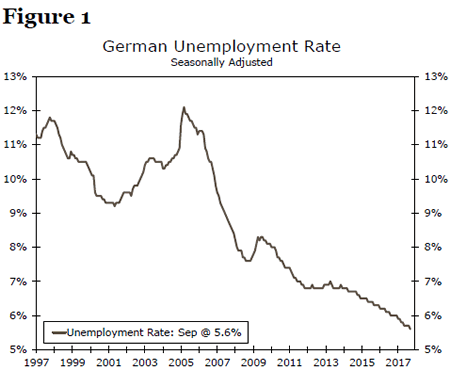
Voters in Germany went to the polls on September 24 and returned Angela Merkel to the chancellorship for her fourth term. In some sense, the result was not very surprising. The German economy has been expanding steadily for the past four years, and the unemployment rate has dropped to its lowest level in the post-reunification period (Figure 1). However, the electoral results were not all positive for Chancellor Merkel. Yes, Merkel's Christian Democratic Party (CDU) won a plurality with 33 percent of the votes cast.
However, this percentage was down sharply from the 42 percent the CDU received in 2013. Moreover, Alternative für Deutschland (AfD) garnered 13 percent of the vote, which means a farright party will be represented in the Bundestag (the lower house of German parliament) for the first time since the end of World War II.
The center-right CDU has governed Germany in a "grand coalition" with the center-left Social Democrats (SDU) over the past four years. However, following the electoral debacle suffered by the SDU - its vote share fell to a post-WWII low of 21 percent - party leaders said they would not enter into another "grand coalition." In order to govern effectively, the CDU needs to form a coalition with other parties. The CDU has said that it will not govern with the AfD, which essentially leaves the Free Democrats (FDP) and the Greens as potential partners. However, there are big ideological differences between the economically liberal FDP and the environmentally conscious Greens. Forming a coalition will not be easy.
Reforms to the architecture of the European Monetary Union (EMU) will be one area of philosophical tension among potential coalition partners. The election in May of Emmanuel Macron as the president of France gave new hope to proponents of EMU reform. Macron has proposed that centralized fiscal authorities should have a larger budget that can be used to stabilize economic growth when shocks hit the Eurozone, and he also has called for a deeper banking union among the 19 economies of the euro area. Chancellor Merkel had expressed some interest in these reforms prior to the German election. However, the FDP is not in favor of deeper EMU integration. It may be difficult for Merkel to make a deal with Macron if the FDP is part of the governing coalition in Germany. In addition, the presence of the EMU-loathing AfD in the Bundestag will pull debate in that legislative chamber further to the right.
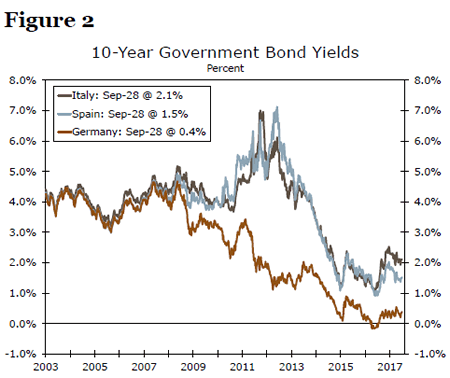
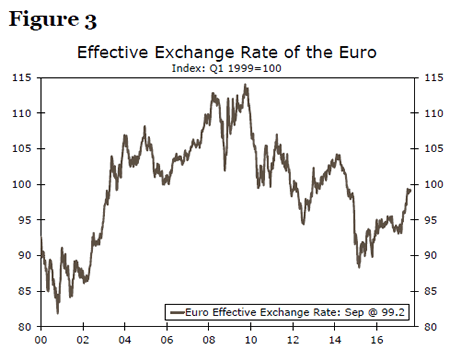
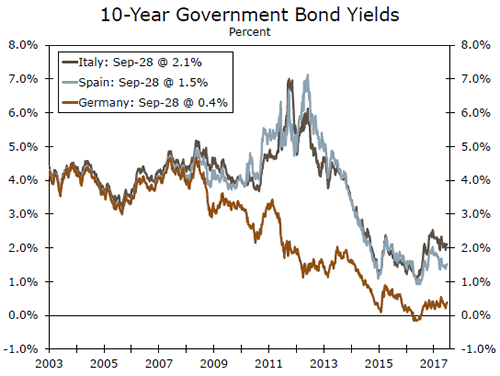
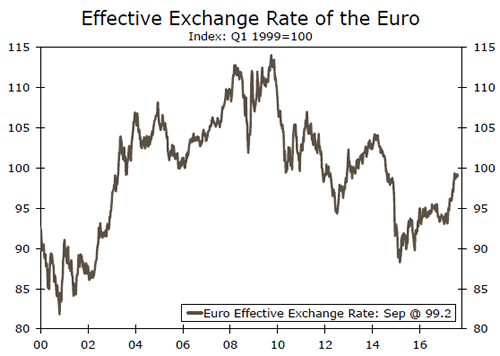
For now, financial markets in the euro area generally remain buoyant. Spreads on Spanish and Italian government bond yields relative to their German counterparts, which tend to widen whenever there is financial market tension, have been stable (Figure 2). The euro, which has trended higher versus most major currencies this year, has shown little signs of weakening (Figure 3). But the wide discrepancy in unemployment rates in the euro area, see Figure 4, is a stark reminder that the EMU is far from being "fixed." Financial market tension could rise anew if economic shocks buffet the euro area before the architecture of EMU is reformed. Stay tuned.
Weekly Economic and Financial Commentary: Housing Data Slide, but Factory Sector Firms
U.S. Review
Housing Data Slide, but Factory Sector Firms
- U.S. housing data released this week came in on the soft side, as new home sales and pending home sales were both weakerthan- expected. Amid a low inventory environment, home price growth remained firm.
- Capital goods orders were strong in August, an encouraging sign for business investment and the factory sector.
- Consumer confidence in September was dinged by Hurricanes Harvey and Irma, but only modestly so.
- On the inflation front, price growth was weaker-than-expected in August based off of the PCE deflator.
Housing Data Slide, but Factory Sector Firms
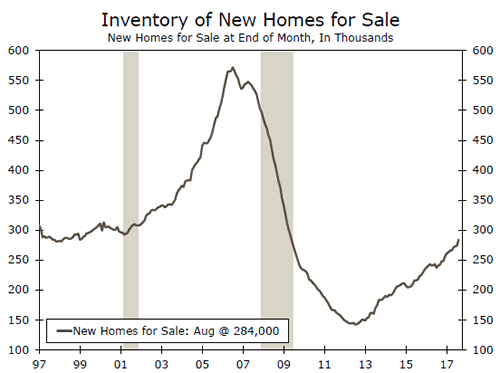
Housing data kicked off the week in what was a relatively light data week in the United States. New home sales fell 3.4 percent to a 560,000-unit annualized pace in August. The Houston metro area accounts for about 5 percent of new home sales, providing an indication of the magnitude of hurricane-related disruptions. Inventory of new homes for sale at the end of the period spiked in August, largely in the South. Most of the increase was in homes not yet started or under construction, which is consistent with earlier reported data on completions, which fell sharply.
The inventory of both completed new and existing homes for sale remains near historic lows (top chart). The lean inventory has weighed on home sales in the United States. We also learned this week that pending home sales fell a larger-than-expected 2.6 percent in August, the fifth drop in the past six months and a sign that existing home sales will likely continue to slide during the next few months. Amid this lean inventory environment, home price growth has been firm. The S&P CoreLogic Case- Shiller National Home Price Index rose again in July and is up 5.9 percent over the year, continuing the steady price gains of 5-6 percent seen over the past few years.
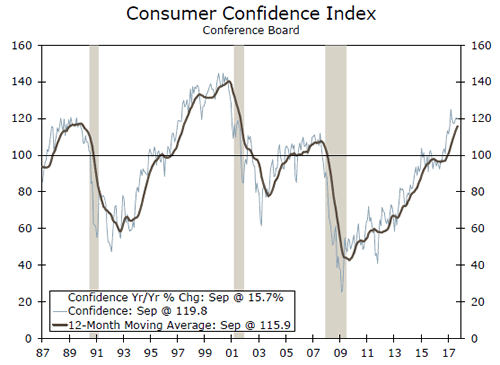
September consumer confidence was also dinged by hurricane effects, but only modestly so. Consumer confidence fell 0.6 points in September from August's downwardly revised reading (middle chart). The decline was concentrated in the present situation component, however, as expectations for the future were stronger in the month. The Conference Board noted that "confidence in Texas and Florida decreased considerably," as those two states were most severely impacted by the hurricanes. On balance, despite the hurricane effects and limited progress on economic policy from federal policymakers, consumer confidence has continued to hover at a relatively high level after surging in the wake of last November's presidential election.
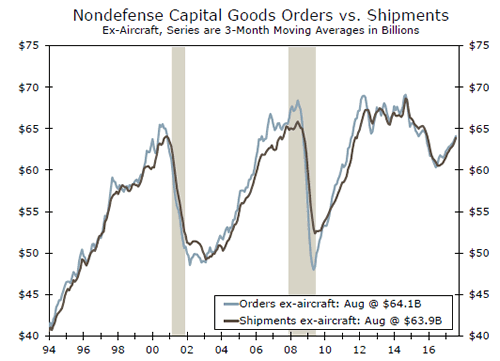
Durable goods orders were the notable bright spot this week. Durable goods orders rose 1.7 percent in August, aided in part by a bounce back in the notoriously volatile aircraft orders component. New orders for nondefense capital goods excluding aircraft, our preferred measure of business investment plans, rose a strong 0.9 percent in August, bringing the three-month average annualized pace of growth to a healthy 6.4 percent. The regional purchasing managers' indices released thus far this month have all also improved, with new orders expanding at a faster clip according to the New York, Philadelphia, Richmond and Dallas Fed manufacturing surveys. As the chart on the front page illustrates, spending on core capital goods has finally turned the corner after a steep slide that began in early 2015.
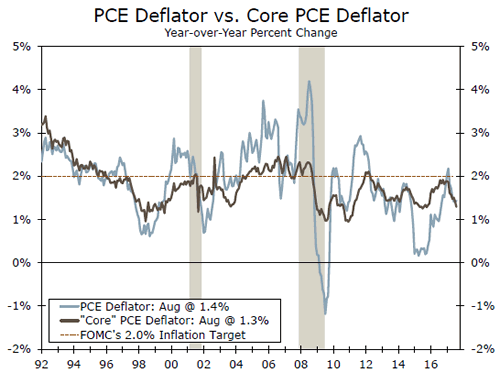
Personal income & spending met a relatively low bar in August, with spending rising 0.1 percent over the month. Inflation, as measured by the PCE deflator, was 0.2 percent in August and 1.4 percent a year-ago (bottom chart). Excluding food and energy, the core PCE deflator rose just 0.1 percent and, at 1.3 percent year over year, it is at its lowest point in two years. Inflation continues to remain quite tame headed into the final quarter of 2017.
U.S. Outlook
ISM Manufacturing • Monday
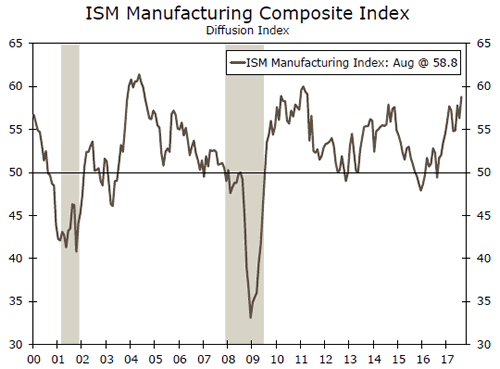
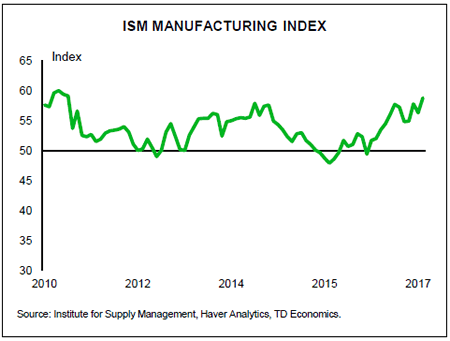
The ISM manufacturing index hit its highest level in six years in August. Recent data from the factory sector has finally started to align after hard and soft sources posted conflicting signals during the first half of 2017. We take the high point in August as assurance the manufacturing sector is making progress toward its recovery from 2015-16 when slow global growth, inventory drawdowns, oil price declines and the strong dollar formed a perfect storm for the factory space. Now it seems the sector is enjoying the weather.
However, actual weather over the past month likely had some sort of impact on business conditions for ISM respondents. Hurricanes disrupted supply chains which likely caused increases in prices paid and supplier lead time. New orders were likely slowed for most, while some producing goods used in construction or repairs may have seen orders spike. Still, the solid string of factory reports prestorm indicates the factory sector will weather disruptions in H2.
Previous: 58.8 Wells Fargo: 58.2 Consensus: 58.0
Factory Orders • Thursday
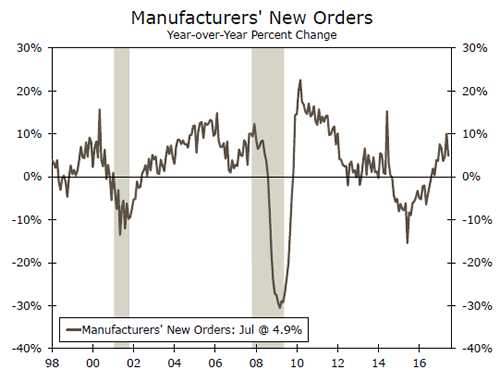
The historic month of hurricanes slamming into the Southeast over the past month will undoubtedly make interpreting incoming data over the next few months more difficult. Factory orders are not immune, though we still expect orders rebounded in August mostly due to the volatile aircraft component driving July's decline. The durable goods report this week was also positive, even excluding aircraft. The solid showing for core orders highlights the recovery in the factory sector was going strong when the storms hit. Harvey made landfall on August 26, so we expect most of the hurricane impacts to begin showing in the orders and shipments data starting in September.
The solid string of performances over the last few months gives us confidence that manufacturers had built up a solid cushion that will help to offset hurricane-caused weakness elsewhere in Q3.
Previous: -3.3% Wells Fargo: 0.7% Consensus: 0.9% (Month-over-Month)
Nonfarm Payrolls • Friday
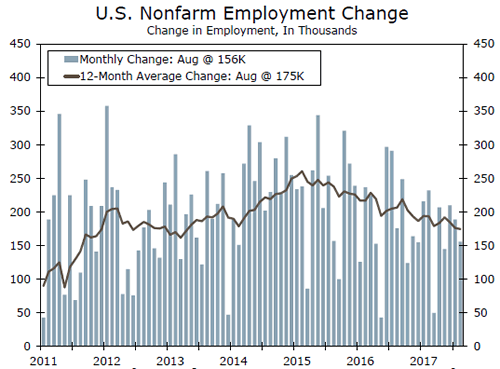
The BLS measures employment during the week that contains the 12th of the month, so Hurricane Harvey hit Texas too late in August to be reflected in that months' report. August's gain of 156,000 jobs with a 4.4 percent jobless rate reflected the continued strength in the labor market before major hurricanes shut down two critical states to the U.S. economy.
Any differences in Texas' payroll levels, hours worked or labor force status that resulted from Harvey will be caught in the September jobs number next week. Irma shut down the state of Florida during the heart of the survey period. Consensus estimates no change in the jobless rate and a monthly payroll gain of 75,000. We think that is optimistic and are calling for an uptick in the unemployment rate to 4.5 percent with a monthly gain of 55,000 jobs. Be wary if wages surge; it might just reflect fewer hourly workers able to make it to work, removing some lower wage positions from the calculation.
Previous: 156K Wells Fargo: 55K Consensus: 75K
Global Review
Implications of the German Elections for the Eurozone
- Voters returned Angela Merkel to the chancellorship of Germany for her fourth term. However, it hardly will be smooth sailing ahead for Merkel due to the presence of a far right party in the new Bundestag and gaping ideological differences among Merkel's potential coalition partners.
- French President Macron has given new hope to proponents of EMU reform, but the electoral results in Germany have thrown some cold water on those hopes. Financial markets in the euro area are stable at present. However, volatility could rise anew if economic shocks buffet the euro area before the architecture of EMU is reformed.
Implications of the German Elections for the Eurozone
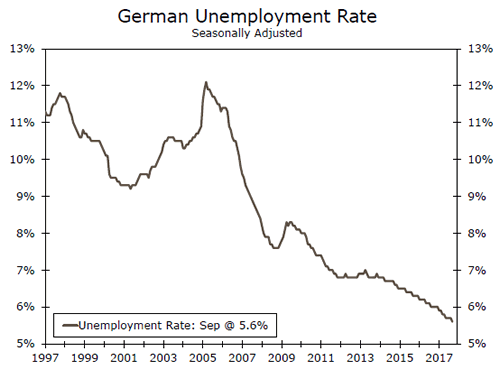
Voters in Germany went to the polls on September 24 and returned Angela Merkel to the chancellorship for her fourth term. In some sense, the result was not very surprising. The German economy has been expanding steadily for the past four years, and the unemployment rate has dropped to its lowest level in the post-reunification period (top chart).
However, the electoral results were not all positive for Chancellor Merkel. Yes, Merkel's Christian Democratic Party (CDU) won a plurality with 33 percent of the votes cast. However, this percentage was down sharply from the 42 percent the CDU received in 2013. Moreover, Alternative für Deutschland (AfD) garnered 13 percent of the vote, which means a far-right party will be represented in the Bundestag (the lower house of German parliament) for the first time since the end of World War II.
The center-right CDU has governed Germany in a "grand coalition" with the center-left Social Democrats (SDU) over the past four years. However, following the electoral debacle suffered by the SDU—its vote share fell to a post-WWII low of 21 percent— party leaders said they would not enter into another "grand coalition." In order to govern effectively, the CDU needs to form a coalition with other parties. The CDU has said that it will not govern with the AfD, which essentially leaves the Free Democrats (FDP) and the Greens as potential partners. However, there are big ideological differences between the economically liberal FDP and the environmentally conscious Greens. Forming a coalition will not be easy.
Reforms to the architecture of European Monetary Union (EMU) will be one area of philosophical tension among potential coalition partners. The election in May of Emmanuel Macron as the president of France gave new hope to proponents of EMU reform. Macron has proposed that centralized fiscal authorities should have a larger budget that can be used to stabilize economic growth when shocks hit the Eurozone, and he also has called for a deeper banking union among the 19 economies of the euro area. Chancellor Merkel had expressed some interest in these reforms prior to the German election. However, the FDP is not in favor of deeper EMU integration. It may be difficult for Merkel to make a deal with Macron if the FDP is part of the governing coalition in Germany. In addition, the presence of the EMU-loathing AfD in the Bundestag will pull debate in that legislative chamber further to the right.
For now, financial markets in the euro area generally remain buoyant. Spreads on Spanish and Italian government bond yields relative to their German counterparts, which tend to widen whenever there is financial market tension, have been stable (middle chart). The euro, which has trended higher versus most major currencies this year, has shown little signs of weakening (bottom chart). But the wide discrepancy in unemployment rates in the euro area (see chart on front page) is a stark reminder that the EMU is far from being "fixed." Financial market tension could rise anew if economic shocks buffet the euro area before the architecture of EMU is reformed. Stay tuned.
Global Outlook
RBA Meeting • Monday
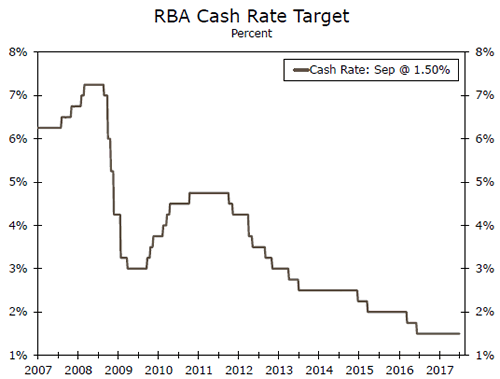
The Reserve Bank of Australia (RBA) has kept its official cash rate at 1.5 percent for a little over a year now. As we wrote in a previously published piece with our colleagues in the currency strategy group, Catch-22, the RBA is faced with balancing rising consumer debt amidst a run-up in home prices. What has arguably changed in the roughly five months since we published that report is that there are signs of firming in the Aussie economy.
Acknowledging this dynamic, the latest official statement from the RBA noted, "[t]he recent data have been consistent with the Bank's expectation that growth in the Australian economy will gradually pick up over the coming year." With inflation still low and wobbly fundamentals in housing, we still see the RBA on hold well into 2018. So while we expect no change in the Cash rate next week, we will watch for indications of a tightening bias look for cues on timing when the official statement prints on Monday.
Previous: 1.50% Wells Fargo: 1.50% Consensus: 1.50%
U.K. PMIs • Monday and Wednesday
Speaking of central banks, the Bank of England is on hold as well and, we expect it will refrain from increasing rates until well into 2018. That accommodative monetary policy stance is helping to underpin economic activity in the United Kingdom, but some measures of business spending have softened.
In fact, until some of the uncertainty surrounding the Brexit process is cleared up, businesses may take a "wait-and-see" approach which could hinder investment spending.
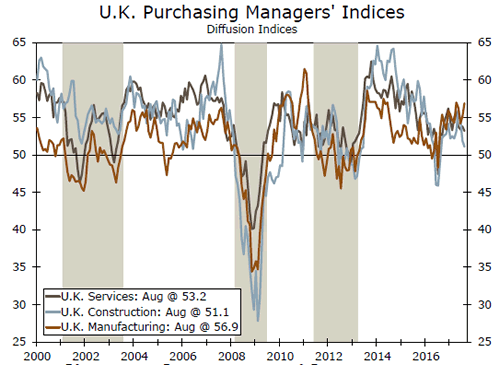
We will get some survey data on the state of the British business sector next week when the manufacturing PMI comes out on Monday and the service-sector counterpart is released on Wednesday. While both measures have bounced off their post- Brexit lows, the momentum has weakened more recently.
Previous: Manufacturing: 56.9, Services: 53.2 Consensus: Manufacturing: 56.2, Services: 53.2
Canadian Employment • Friday
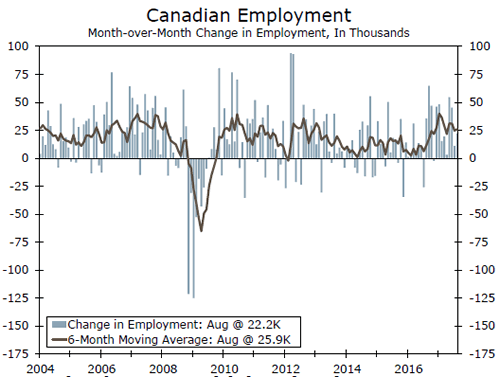
Over the past year or so, Canada's labor market has been adding jobs at about as fast a rate as it has at any point in the past decade or so. While monthly jobs number can be notoriously volatile in Canada, the 6-month moving average plotted in the graph at right shows sustained job growth north of 25K for the better part of the past year. September jobs numbers come out on Friday and will give a contemporary read on how the labor market finished out the third quarter.
Canada's GDP growth in each of the first two quarters of 2017 was the fastest of any of the G-7 economies, an outcome that not too many forecasters expected at the start of the year. The better-thanexpected outturn is partly a function of low base-effects after a retrenchment in business spending in 2015 and 2016 along with a rebuilding of inventories. We worry that without those supports, growth in Canada will moderate in the second half.
Previous: 22.2K
Point of View
Interest Rate Watch
Yellen Ponders Inflation
Weaker inflation since the start of the year has been a source of doubt about whether the FOMC would carry on with its campaign to normalize policy in the months ahead. In a speech this week, Fed Chair Janet Yellen focused on the recent slowdown and three areas of uncertainty surrounding key assumptions to the inflation outlook.
First, many policymakers' framework for inflation continues to rest on the degree of slack in the labor market. While labor conditions continue to tighten, the Fed Chair acknowledged that there might be more slack than currently estimated, indicating the labor market is further away from full employment—and therefore upward pressure on wages—than currently estimated.
Second, long term inflation expectations may not be consistent with the Fed's 2 percent inflation target. Although the FOMC has routinely touted long-term inflation expectations as well anchored, expectations have slipped the past couple of years which would make it harder for inflation to strengthen.
Third, there may be a more fundamental problem in that the current framework for inflation may me missing a key factor. The possibilities range from the importance and non-macro considerations for healthcare prices, global rather than domestic resource slack, and the role of e-commerce in price setting.
Pressing On
While these sources of uncertainty for the inflation outlook are likely to persist in the coming months, they do not appear to warrant the FOMC hitting the brakes on tightening. Yellen highlighted that FOMC members still anticipate that inflation will strengthen toward the committee's target and emphasized the risks to the labor market and financial stability of moving too slowly.
Therefore it appears that an additional rate hike later in the year is still on. Indeed, the probability of rate hike in December jumped following her speech and currently sits at 67 percent.
Credit Market Insights
Consumer Outlook Remains Stable
The Federal Reserve Bank of New York's Survey of Consumer Expectations (SCE) for August points to generally positive consumer conditions across the three survey categories of inflation, labor market, and household finance.
Consumers' inflation expectations remained the same at the one-year time horizon, while one-year ahead home and gasoline price change expectations ticked up slightly over the month. Expectations of earnings growth moved lower in August. However, the probability that the unemployment rate will be higher a year from now declined to 35.4 percent, the lowest reading since February 2015.
Perceived credit availability was slightly lower for the majority of respondents in August. However, fewer respondents reported credit as "much harder" to obtain a year from now, and an increased share of respondents reported credit as "much easier" to obtain a year from now.
Respondents had a generally positive outlook for overall household finances, with expectations of being financially better off a year from now up 13 percent on a year-ago basis. Steady projections for rate increases at last week's FOMC meeting and the Republican tax reform framework released earlier this week will likely influence expectations on changes in interest rates and taxes in next month's survey. For now, the consumer outlook remains relatively stable.
Topic of the Week
Quantifying the Housing Recovery: Which MSAs Are Experiencing Bubbles?
The housing market is one of the most cyclical components of the U.S. economy and played a leading role in the Great Recession. While house prices have recovered, the extent of the recovery varies considerably across markets. Some markets have fully or even more than fully recovered, while others have lagged. Our recent study analyzes house prices across different markets and helps decision makers design appropriate policies to reduce the potential fallout from another housing bubble.
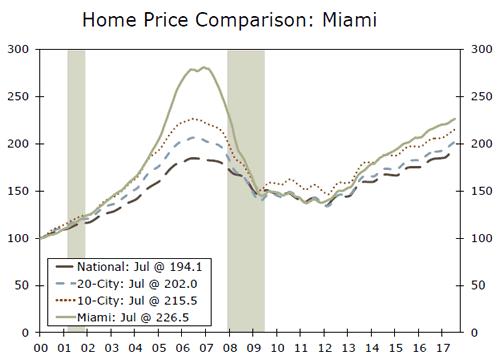
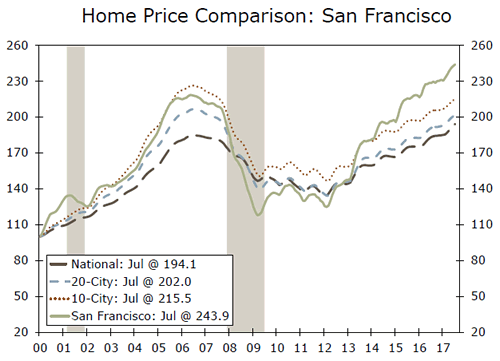
We utilize three different methods to evaluate housing prices in 20 MSAs along with three different measures of national home prices. Our first method characterizes MSA HPIs as having consistent or inconsistent behavior. That is, if an MSA's HPI stays above/below the national HPI line then we can call that a consistent behavior, otherwise it exhibits inconsistent behavior. For example, Miami's HPI shows a consistent behavior (top graph) while house prices in San Francisco MSA show an inconsistent behavior in our analysis (bottom graph). We find that 12 out of 20 MSAs show a consistent behavior, while 8 cities' house price indices are characterized as having inconsistent behavior.
Our second method found structural breaks in all the HPI series, which confirms different HPI series behave differently in our sample period. Furthermore, some MSAs, such as New York and Miami, began to recover much sooner than other MSAs, which may suggest that some regions lead the housing market. Finally, the Granger causality test results suggest certain MSAs are leading the national average and most of the other MSAs house markets. The leading MSAs markets are Las Vegas, Los Angeles, Miami, New York and San Francisco.
In sum, our study suggests leading behavior for some MSAs, which indicates that changes in the housing markets of these MSAs would provide an early warning for prices at the national and regional levels. Decision makers can closely watch activities in the leading markets to gauge and predict the near future path of the national housing market. In addition, the extent to which conditions overheat in these leading housing markets may provide important clues about how much prices will overshoot nationally.
The Weekly Bottom Line: Equities Soar on Trump’s Tax Reform Proposal
U.S. Highlights
- Investors paid close attention to developments from the White House this week, with President Trump's tax overhaul proposal helping to send the S&P 500 to new highs.
- Inflation disappointed again in August, but some states are beginning to display meaningful wage acceleration, as we noted in our Quarterly State Forecast this week, which bodes well for the inflation outlook.
- Next week, investors should look for hurricane impacts to inject volatility into September's U.S. data. As a result, auto sales should see a boost while net exports should experience a drag.
Canadian Highlights
- Markets were focused on a speech from Governor Poloz which marked the first major communication from the Bank since it shifted into tightening mode. The governor noted that there are many unknowns overshadowing the outlook for inflation, so the future of monetary policy will be highly data dependent.
- This morning's GDP report showed that economic growth came to a halt in July - the weakest performance since last October.
- The Canadian dollar hit a 4-week low while the S&P/TSX extended its gains thanks to a rise in oil prices to over US$52 per barrel.
U.S. - Equities Soar on Trump's Tax Reform Proposal
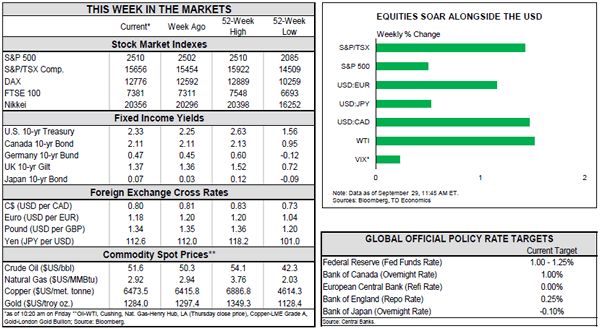
Investors paid close attention to developments from the White House this week, with President Trump's tax overhaul proposal sending the S&P 500 to another record high at the end of the week. Exchange and fixed-income markets were also impacted, with the greenback appreciating and the ten-year yield rising to its highest level in two months. The proposal contains a sharp reduction in the corporate tax rate to 20% (from 39.1% currently), in addition to the consolidation of personal income tax brackets from seven to three. But the Devil is in the details, of which the plan was largely barren. If delays or opposition to the proposal prevail, equities could pare their gains on diminished expectations for future earnings.
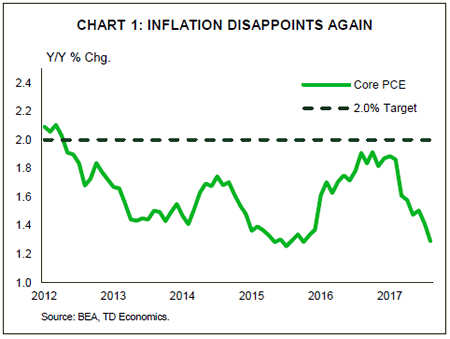
Meanwhile, on the economic data front, Friday's PCE report marked another month of decelerating inflation in August (Chart 1). Consumer spending was also weak, but that is partly attributable to Hurricane Harvey's disruption. The report disappointed markets, but not by enough to reverse the equity gains accrued as a result of President Trump's tax plan announcement earlier in the week.
Fixed income markets were also impacted by Fed Chair Janet Yellen's speech on Tuesday that reiterated her view that growth prospects should support an advance in inflation in the near future. Outgoing Fed Vice Chairman, Stanley Fischer, on the other hand, injected more caution into his remarks made on Thursday in London by stating that he would like to see solid proof of inflationary pressures mounting before proceeding with tightening.
Across the Atlantic, the Euro Area is also grappling with missing inflation coinciding with solid economic growth. Underlying inflation in September remains subdued, reinforcing the ECB's stance of cautiously tightening monetary policy. The first steps in winding down asset purchases are expected to begin next year, with further details anticipated following the ECB's October meeting. Consumer and business confidence indicators have recently returned to pre-recession levels and investors have taken notice, with both the DAX and the FTSE ascending this week while German and UK government bond yields rose.
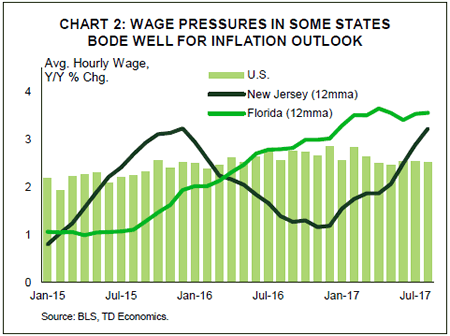
Next week, investors should look for hurricane impacts to inject volatility into September's U.S. data. Specifically, auto sales should see a boost while net exports should experience a drag. This volatility should fade as rebuilding begins in the fourth quarter. While the Fed will look past hurricane disruptions in the data, inflation data will remain central in guiding monetary policy. We still expect a rate hike in December, assuming that price pressures will have had enough time to accumulate over the remainder of the year. Some regions are already beginning to display meaningful wage acceleration on account of tightening labor markets, as we noted in our Quarterly State Forecast this week, which bodes well for the inflation outlook. For example, in both New Jersey and Florida, wage growth this year is running at above 3% year-on-year (Chart 2). This strength should translate into firmer price pressures in the coming months as the increase in producer costs is absorbed by consumers.
Canada - Focused on Central Bank Communication
All eyes were on the Bank of Canada this week, as a speech from Governor Poloz on Wednesday marked the first major communication from the Bank since it shifted into tightening mode. Prior to the first rake hike in July, the central bank had signaled that it felt emergency level interest rates were no longer needed given stronger-than-expected economic growth. The second hike earlier this month came as a surprise to some since there was no prior communication from the Bank.
In his speech this week, the Governor underscored the fact that there is no predetermined path for interest rates, and that it will be closely watching four key areas as it sets monetary policy. These include economic capacity, the impact of technology on inflation, wage growth and elevated household debt. There was also a lengthy discussion on the Business Outlook Survey, suggesting that the central bank will be paying close attention to the results which are set to come out on October 16th - the week before the next Fixed Announcement Date. Indeed, with the Governor signaling that this is an unusual time and that there are many unknowns overshadowing the outlook for inflation, the future of monetary policy will be highly data dependent.
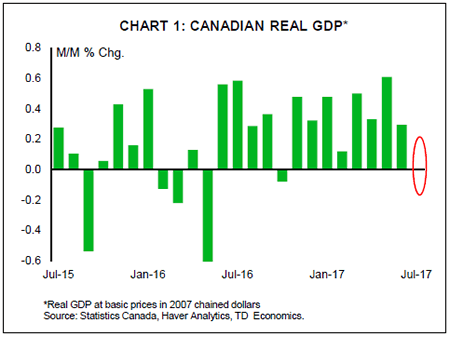
On that front, the data this week was not very encouraging. This morning's GDP report showed that economic growth came to a halt in July - the weakest performance since last October (Chart 1). While certainly softer than the blistering pace recorded over the first half of the year, it still points to an above-trend annual pace of about 2.2% in the third quarter given the healthy momentum heading in. Meanwhile, the CFIB small business barometer showed that optimism among businesses deteriorated for a fourth consecutive month in September. With this typically seen a leading indicator of growth, it is consistent with a slowing in overall economic activity in the coming months.Together, these data reports cast some doubt as to whether an October rate hike is in the cards.
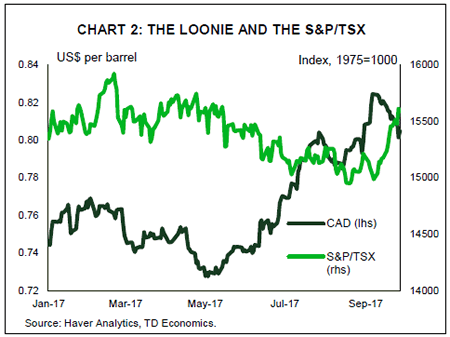
Markets interpreted the rather dovish tone from the central bank this week as a sign that the Bank will take a more cautious approach going forward. This, combined with the soft data, drove the Canadian dollar down to a 4-week low of 80 US cents (Chart 2). The loonie has now erased roughly half of its gains since mid-August.
In contrast, the S&P/TSX extended its winning streak that began in early-September, with oil contributing to this week's lift. Indeed, the WTI benchmark hit a 5-month high of US$52 per barrel on Wednesday, with a number of factors bringing out the bulls. An unexpected draw on U.S. stockpiles, forecasts for increased demand as refineries resume operations after Hurricane Harvey, and geopolitical issues in Turkey and Iraq which could halt exports from the region, all worked to boost prices. With prices over the US$50 per barrel mark, hedging activity - particularly among U.S. shale producers - has likely picked up. Hence, further sustainable gains are doubtful. Oil prices are expected to hover in a tight range around the US$50 per barrel mark for the foreseeable future.
U.S.: Upcoming Key Economic Releases
U.S. ISM Manufacturing Index - September
Release Date: October 2, 2017
Previous Result: 58.8
TD Forecast: 58.2
Consensus: 58.0
TD expects the ISM manufacturing PMI to slip back to 58.2, reversing only part of the August jump. Risk for a negative hurricane effect appears limited, as August data appeared unscathed while regional surveys for September registered notable improvement. The Dallas survey in particular rose more than 4 points to a 7-month high, with a pickup in orders. Meanwhile, the national Markit manufacturing PMI moved up to a 2-month high, though month-to-month tracking with ISM is not reliable. Only a modest reversal in September would underpin above-trend Q3 GDP growth trackings near 2% while also suggest that adverse hurricane impacts may prove to be on the lower end of estimates.
U.S. Employment - September
Release Date: October 6, 2017
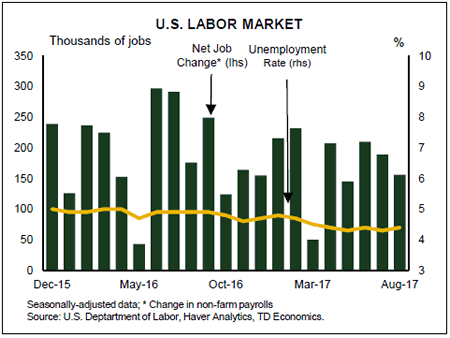
Previous Result: 156k, unemployment rate 4.4%
TD Forecast: 120k, unemployment rate 4.4%
Consensus: 80k, unemployment rate 4.4%
We expect a 120k print on nonfarm payrolls. The September jobs report should be taken with caution in light of Hurricane Irma, which may impart a significant drag on payroll figures. Estimates suggest a sizeable drag of more than 100k. We lean on the more optimistic side of consensus as indicators are consistent with payroll growth near 200-230k, while jobless claims (259k vs 236k before the hurricanes hit) came in better than expected for the week ending September 15th. Accounting for a moderately negative impact from Irma, we look for payrolls to print 120k. We expect the unemployment rate to be unchanged at 4.4%, with upside risks due to the slowdown in employment growth.
Meanwhile, we expect average hourly earnings to post a 0.3% m/m increase, leading annual growth higher to 2.6% y/y. Calendar effects along with hurricane distortions suggest risks are to the upside this month, though past disappointment suggest another downside surprise cannot be ruled out.
Given the noise associated with the hurricane, Fed implications of payroll gains will be limited this month as officials will look on to October for a better gauge of the underlying trend. Moreover, significant downside to payrolls if realized should not draw undue concern. But combined with disappointment on wages, the report could yield a dovish tone for markets.
Canada: Upcoming Key Economic Releases
Canadian International Trade - August
Release Date: October 5, 2017
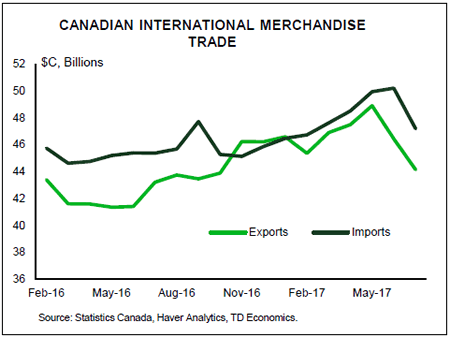
Previous Result: -$3.04bn
TD Forecast: -$2.7bn
Consensus: N/A
Canada's trade deficit is expected to narrow to $2.7bn in August, leaving the deficit still wider than its Q2 average (-$1.9bn). US import and shipment data and higher oil prices point to a moderate rise in energy exports, offsetting its prior decline. We also expect non-energy exports to post a solid comeback underpinned by solid US demand, though rapid currency appreciation in the prior two months poses a risk. One category driving growth is likely to be motor vehicles, based on advance US trade data, while we also see scope for rebounds across metal products, machinery and electronics. Producer price data suggest the volumes should modestly underperform this month. A modest narrowing in August would be encouraging if driven by a rebound in non-energy exports, though net trade is still likely to contribute negatively to Q3 GDP. Stronger US demand, as revealed in recent orders data and sentiment surveys, points to some improvement into Q4, but sharp exchange rate appreciation warrants caution over the near-term path.
Canadian Employment - September
Release Date: October 6, 2017
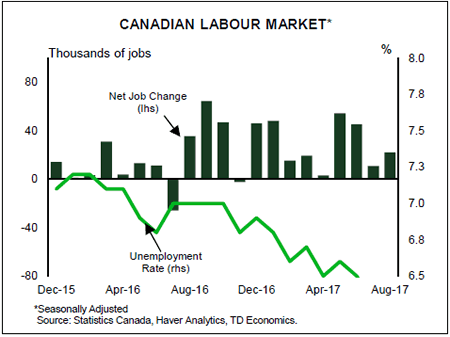
Previous Result: 22.2k, unemployment rate 6.2%
TD Forecast: 20k, unemployment rate 6.3%
Consensus: N/A
The labour market is expected to remain on a firm footing in September, with net employment forecast to rise by 20k. This report may be noisier than usual due to the presence of some large moves in last month's data - full and part-time job growth diverged by 210k in August. While we look for full time employment to outperform in September, we do not expect anything resembling a full correction after observing a similar dynamic in February of this year, but there is potential for a large unwind. On the industry breakdown, we expect to see an outperformance in goods producing employment, led by a rebound in manufacturing.
Adding to the upbeat tone of the jobs report will be wages. Wage growth has been on a steady uptrend since bottoming in April and we expect further improvement in September. This is due to the combination of diminishing labour market slack as well as favourable base-effects, which could combine to push wage growth for full time employees back towards 2% from 1.7% y/y. While important to the BoC policy outlook, Poloz likely seeks additional evidence on firming wage growth in line with his recent remarks. Finally, the unemployment rate is likely to drift higher to 6.3% on increased labour force participation.
Dollar Firmer Ahead of Jobs Week
Dollar higher after Fed comments and Tax Reform proposal
The USD rebounded against majors in the last week of September. Hawkish rhetoric from the U.S. Federal Reserve and the Trump administration tax reform proposal boosted greenback ahead of a busy week that will be wrapped up by the biggest indicator in the markets the U.S. non farm payrolls (NFP).
Geopolitics continue to play a big part in daily trading with the situation with North Korea still developing. The referendums in Catalunya and Northern Iraq could have direct impact on the EUR and the price of oil.
The U.S. non farm payrolls (NFP) will be published on Friday, October 6 at 8:30 am EDT. The US economy is anticipated to have gained less than 100,000 jobs due to the disruption caused by Hurricanes Harvey and Irma. The unemployment rate is forecasted to remain at 4.4 percent. Fed Chair Janet Yellen has continued to push for a gradual rate hike path despite stagnant consumer spending and low inflation which has increased the probabilities of a US benchmark rate hike in December.
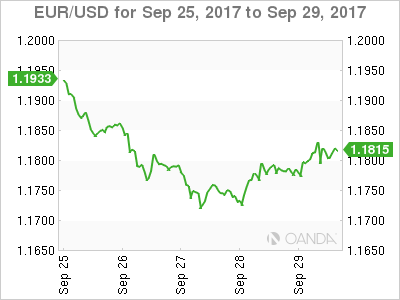
The EUR/USD lost 0.992 percent in the last week. The single pair is trading at 1.1824 after US central bank comments and a strong tax reform push by the Trump administration turned around the decline of the USD. The referendum vote on Catalan independence is not a legal one, as Spanish courts did not approve, but the government risks radicalizing moderate and undecided voters if it tries to intervene. Given the results of the Brexit votes and the French and German elections had so big a stake in the future of the Eurozone, investors will be tracking the Catalunya vote this weekend.
Central bank divergence continues to be one of the main drivers of the pair. The Fed kept its main speakers on point arguing for another rate hike this year. The market is now pricing a higher than 70 percent chance of a December hike at the end of the Federal Open Market Committee (FOMC) meeting. By contract European Central Bank (ECB) President Mario Draghi is not ready to commit to removing stimulus and has pushed to October the details on tapering the EU's QE program.
Employment data out of the US starting with the release of the ADP on Wednesday, October 4 at 8:15 am EDT, Unemployment claims on Thursday, October 5 at 8:30 am EDT and the NFP on Friday, October 6 at 8:30 am EDT will be big factors in a week that saw the USD record a positive week against the EUR. There will be little European data on display with US indicators and advances on the American tax reform efforts driving the dollar.
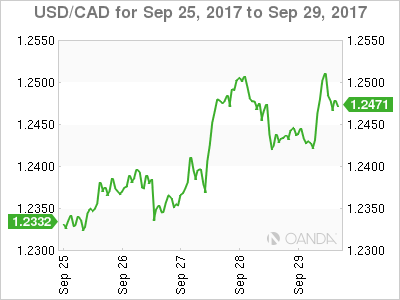
The USD/CAD gained 1.098 in the last week. The currency pair is trading at 1.2469 in a week that featured NAFTA negotiations, central bank speakers and US tax reform in the agenda. The pair touched weekly highs of 1.2533 on Thursday only for the CAD to regain some ground but still finish lower versus the USD in a weekly basis.
Governor Stephen Poloz said on Wednesday there is no predetermined path for theinterest rate and that the central bank would proceed with caution. The rhetoric was less hawkish than that seen in the summer. Unknowns are making estimating the appropriate rate path hard, but then again that has been the situation in all of 2017. The loonie has been one of the best performers this year after the two rate hikes, but has lost momentum after the Fed has signalled a third rate hike of the Fed funds rate while Poloz seems to be pumping the breaks. The comments from the BoC indicate a slower rate path that could see the central bank standing pat for the remainder of the year.
Canadian employment data will be released on Friday at 8:30 am EDT. Canadian employment has impressed with steady gains in the number of jobs. The 22,000 new jobs added last month were for the most part part-time positions. The economy is consistently losing full time positions and with the worries of the central bank about high household debt the CAD could be under pressure for the remainder of 2017.
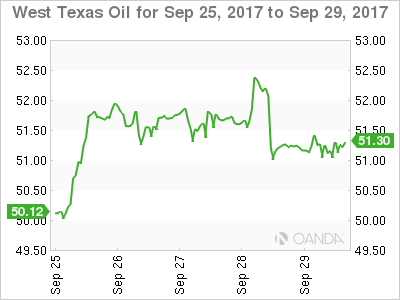
Energy prices gained 2.018 in the last week. West Texas Intermediate is trading at 51.21 as the threat of supply disruption in Northern Iraq has increased the price of crude. Global demand has been forecasted to be higher, but so supply continues to create a glut. US oil production rose 9 percent during the last three weeks offsetting reports of stronger forecasted demand and a possible Organization of the Petroleum Exporting Countries (OPEC) cut agreement extension. Saudi Arabia used overproduction as a strategy to grab market share and drive prices lower with the intent to drive the US shale industry into bankruptcy. The strategy backfired as the flexibility of US drillers and low rates made it easier to service the debt and wait for the OPEC to reach an agreement with other major producers.
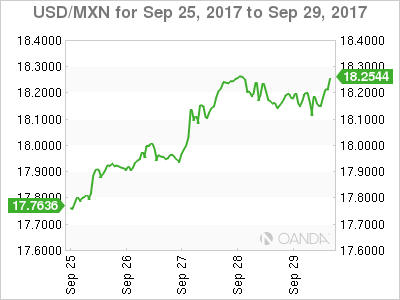
Oil traders continue to monitor the situation in Northern Iraq. Supply disruptions have been one factor driving prices up in the past. The referendum for independence for the Kurdish region in Iraq has not been recognized. Turkey and other allies of Iraq have threatened the oil-rich region with cutting off the access to international markets of their oil if they continue on this path. The potential impact to global supply would be of around 500,000 daily barrels.
Monday, October 2
- 4:30 am GBP Manufacturing PMI
- 10:00 am USD ISM Manufacturing PMI
- 11:30 pm AUD Cash Rate
- 11:30 pm AUD RBA Rate Statement
Tuesday, October 3
- 4:30 am GBP Construction PMI
- Wednesday, October 4
- 4:30 am GBP Services PMI
- 8:15 am USD ADP Non-Farm Employment Change
- 10:00 am USD ISM Non-Manufacturing PMI
- 10:30 am USD Crude Oil Inventories
- 3:15pm USD Fed Chair Yellen Speaks
- 8:30 pm AUD Retail Sales m/m
- 8:30 pm AUD Trade Balance
Thursday, October 5
- 8:30 am CAD Trade Balance
- 8:30 am USD Unemployment Claims
Friday, October 6
- 8:30 am CAD Employment Change
- 8:30 am CAD Unemployment Rate
- 8:30 am USD Average Hourly Earnings m/m
- 8:30 am USD Non-Farm Employment Change
- 8:30 am USD Unemployment Rate
Canadian Dollar Lower After Softer Monthly GDP
The Canadian dollar finished the week lower versus its US counterpart after the gross domestic product in Canada was flat in July. The economy had registered 8 consecutive months of strong growth that prompted the Bank of Canada (BoC) to raise interest rates twice in the last three months. Dovish comments form the central bank governor Stephen Poloz earlier in the week and the slowdown in the momentum of the economy raise serious questions about another rate hike this year.
Oil offered little support for the currency despite prices rising during the week after concerns with a potential disruption in Northern Iraq. The referendum vote in the Kurdish region has not been recognized by the central Iraqi government. Allies of Iraq have pledged to cut off the region from selling its natural resources. US energy production has recovered from the effects of hurricanes Harvey and Irma and has balanced the potential losses in supply in the short term.
Gold is trading lower on Friday as geopolitical risks have dampened, but with the ongoing situation with North Korea as well as the upcoming Catalunya referendum in the horizon the yellow metal could catch a bid.
Next week's economic calendar is packed with the highlights for CAD traders being the US crude oil inventories and a speech by Fed Chair Janet Yellen on Wednesday, Canadian trade balance numbers on Thursday and Canadian and US jobs numbers on Friday.
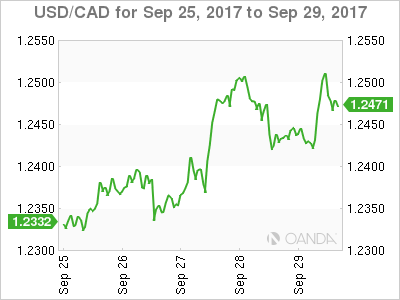
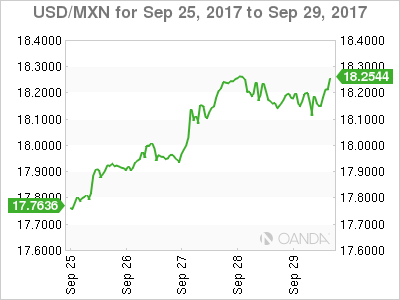
The USD/CAD gained 1.098 in the last week. The currency pair is trading at 1.2469 in a week that featured NAFTA negotiations, central bank speakers and US tax reform in the agenda. The pair touched weekly highs of 1.2533 on Thursday only for the CAD to regain some ground but still finish lower versus the USD in a weekly basis.
Governor Stephen Poloz said on Wednesday there is no predetermined path for theinterest rate and that the central bank would proceed with caution. The rhetoric was less hawkish than that seen in the summer. Unknowns are making estimating the appropriate rate path hard, but then again that has been the situation in all of 2017. The loonie has been one of the best performers this year after the two rate hikes, but has lost momentum after the Fed has signalled a third rate hike of the Fed funds rate while Poloz seems to be pumping the breaks. The comments from the BoC indicate a slower rate path that could see the central bank standing pat for the remainder of the year.
Canadian employment data will be released on Friday at 8:30 am EDT. Canadian employment has impressed with steady gains in the number of jobs. The 22,000 new jobs added last month were for the most part part-time positions. The economy is consistently losing full time positions and with the worries of the central bank about high household debt the CAD could be under pressure for the remainder of 2017.
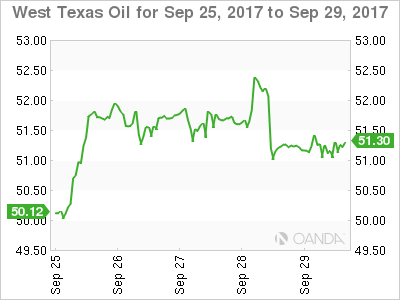
Energy prices gained 2.018 in the last week. West Texas Intermediate is trading at 51.21 as the threat of supply disruption in Northern Iraq has increased the price of crude. Global demand has been forecasted to be higher, but so supply continues to create a glut. US oil production rose 9 percent during the last three weeks offsetting reports of stronger forecasted demand and a possible Organization of the Petroleum Exporting Countries (OPEC) cut agreement extension. Saudi Arabia used overproduction as a strategy to grab market share and drive prices lower with the intent to drive the US shale industry into bankruptcy. The strategy backfired as the flexibility of US drillers and low rates made it easier to service the debt and wait for the OPEC to reach an agreement with other major producers.
Oil traders continue to monitor the situation in Northern Iraq. Supply disruptions have been one factor driving prices up in the past. The referendum for independence for the Kurdish region in Iraq has not been recognized. Turkey and other allies of Iraq have threatened the oil-rich region with cutting off the access to international markets of their oil if they continue on this path. The potential impact to global supply would be of around 500,000 daily barrels.
Monday, October 2
- 4:30 am GBP Manufacturing PMI
- 10:00 am USD ISM Manufacturing PMI
- 11:30 pm AUD Cash Rate
- 11:30 pm AUD RBA Rate Statement
Tuesday, October 3
- 4:30 am GBP Construction PMI
Wednesday, October 4
- 4:30 am GBP Services PMI
- 8:15 am USD ADP Non-Farm Employment Change
- 10:00 am USD ISM Non-Manufacturing PMI
- 10:30 am USD Crude Oil Inventories
- 3:15pm USD Fed Chair Yellen Speaks
- 8:30 pm AUD Retail Sales m/m
- 8:30 pm AUD Trade Balance
Thursday, October 5
- 8:30 am CAD Trade Balance
- 8:30 am USD Unemployment Claims
Friday, October 6
- 8:30 am CAD Employment Change
- 8:30 am CAD Unemployment Rate
- 8:30 am USD Average Hourly Earnings m/m
- 8:30 am USD Non-Farm Employment Change
- 8:30 am USD Unemployment Rate
Consumer Sentiment Proves Resilient in September
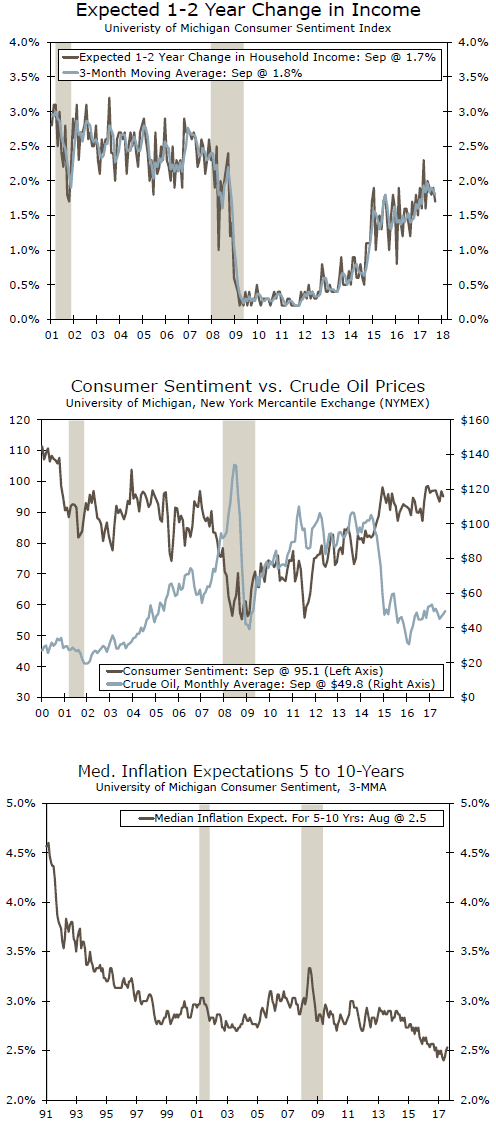
The University of Michigan's Index of Consumer Sentiment fell 1.7 points in September, as concerns about hurricanes Harvey and Irma offset growing optimism about current economic and financial conditions.
Consumers Appear to be Weathering the Storms
Consumer sentiment fell modestly in September, but views on the economy have largely held up well given the extent of damages from hurricanes Harvey and Irma. The survey is said to have included responses from Texans and Floridians, so it should be a fairly good assessment of how the economy will hold up after the storm. Consumers appear to be particularly upbeat about employment and income prospects and a relatively big proportion of consumers expect the country to have 'continuous good times over the next 12-months' and their household finances to improve.
The mechanics of the University of Michigan Survey suggest the economy should withstand the hit from hurricanes Harvey and Irma. While the overall sentiment index fell 1.7 points over the month, it remains consistent with its recent average and the average for the past 12 months. September's drop was entirely in the expectations series, which fell 3.3 points to 84.4. The decline reflects increased concern about the disruption to households and businesses impacted by the storms. Expectations improved from their mid-September reading, which suggests that more businesses and households are returning to normal operations.
Given the extent of the damages from the storms and related interruptions to business activity, the small drop in consumers' assessment of their current finances is encouraging. The proportion of households reporting that their finances were better today than they were a year ago fell 2.0 points to 49 percent in September. The proportion expecting their finances to improve over the next year also fell by 2.0 points. Both series have been trending higher, however, and the proportion expecting their finances to improve remains near its cycle high. Household finances are being buoyed by growing confidence about employment and income prospects, as well as a resilient stock market, which has plowed right through a series of natural disasters and geopolitical concerns.
With a large proportion of households stating that their finances are in good shape, buying plans for major household appliances and motor vehicles remain near their highs for the cycle. The proportion of consumers that believe now is a good time to buy a home continues to decline, however, with consumers citing increasing concerns about affordability and the lack of for-sale inventory as their key concerns. Conversely, the proportion of consumers that say now is a good time to sell a home has increased, with rising home prices cited as the primary justification. Rising home values were reported by 66 percent of all homeowners, which is the highest reading in 10 years.
Rising home prices do not seem to be influencing consumers' view on overall inflation. Median inflation expectations for the next 5 to 10 years have trended lower over the past few years.