Mon, Feb 16, 2026 18:49 GMT
More

    Sample Category Title

    Political Uncertainty Continues to Weigh on Sentiment

    MarketPulse

    US equity markets are poised to open slightly higher on Tuesday but traders are maintaining some caution given the increasing political risk environment in both the US and Europe.

    Investors got very excited about the potential for tax cuts, fiscal stimulus and deregulation in the weeks following Donald Trump's election victory but the focus appears to have shifted recently, with the less market friendly immigration, trade and fx policies coming to the fore. Trump has been very active in the early days of his tenure but with traders not knowing what policies he'll target next and with details on tax cuts and stimulus lacking, there is some understandable unease at the moment.

    This isn't being helped by the growing political uncertainty in Europe, where some massive elections will take place this year. The increasing popularity of Marine Le Pen ahead of the French elections, coupled with growing disapproval towards the mainstream parties and general anti-establishment feeling in the US and Europe over the last 12 months could seriously add to the political instability in Europe. This is adding to the feeling of uncertainty and may continue to do so as the elections approach.

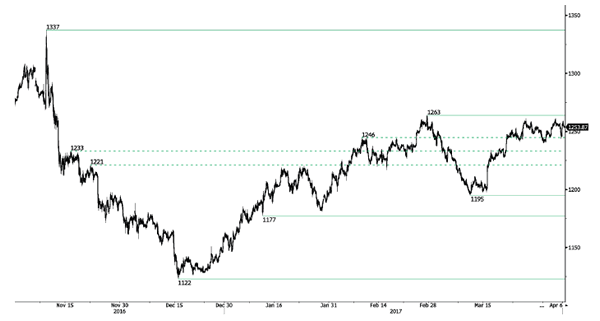
    The more cautious environment has favoured Gold, a traditional safe haven play, aided by Trump's attempts to drive down the value of the dollar. Gold has come off its highs today, down around one third of 1% on the session, but continues to look a little bullish in the short term. It could face resistance around $1,250-1,255 which will be the next major test to the upside but if the dollar weakness continues - although it is showing signs of stabilising - and caution remains, this could easily be broken.

    It's going to be another quiet session on the economic data front, with US JOLTS job openings and trade balance the only notable releases, while 28 S&P 500 companies are also due to report fourth quarter earnings throughout the day.

    Political Worries Supports Dollar, Backs Up Euro Periphery Yields

    Tuesday February 7: Five things the markets are talking about

    Capital markets remain on tenterhooks as a rising tide of economic and political concerns add to investors' anxiety over expectations.

    One day its risk-on, and the next its risk-off. Overnight, it seems that investors are willing, for the time being, to step back after acquiring haven assets in yesterday's session, but, for how long?

    Currently, the overall market theme of a Trump-fueled equity rally continues to be challenged as dealers and investors assess how the new President's team will balance protectionist trade rhetoric with promised tax cuts and spending increases.

    While in parallel, the market is assigning a greater risk premium to European countries (Netherlands, France) where the rise of populism is gaining traction ahead of national elections.

    Note: Widening Eurozone peripheral spreads will continue to have a negative effect on market risk appetite

    Also helping the dollars cause is China's foreign exchange reserves falling again last month. It fell below +$3T for the first time in six years.

    1. Global equities a mixed bag

    In Japan, stocks dropped to a new two-week low in thin trade overnight, hit by weakness in global indices and a stronger yen.

    The Nikkei dropped -0.4%, while the broader Topix dropped -0.3% on thin volumes.

    Note: Japanese investors remain particularly cautious ahead of Friday's meeting between PM Abe and U.S. President Trump (Feb. 10 and 11), with trade and currencies likely to be on the agenda.

    In Hong Kong, stocks were little changed, with buying interest from the mainland countered by weakness in global markets. The benchmark Hang Seng index dropped -0.1%.

    In China, stocks pulled back on fresh signs the government was moving to deflate potential credit bubbles in the broader economy. The CSI300 index fell -0.2%, while the Shanghai Composite Index dipped -0.1%.

    In Europe, indices are trading mixed across the board. The Eurostoxx is being weighed lower by financials, while the FTSE 100 is outperforming with commodity and mining stocks trading higher in the index.

    U.S equities are set to open in the black (+0.2%).

    Indices: Stoxx50 +0.1% at 3,243, FTSE +0.6% at 7,213, DAX +0.4% at 11,555, CAC-40 +0.1% at 4,783, IBEX-35 -0.2% at 9,338, FTSE MIB -0.2% at 18,654, SMI +0.7% at 8,388, S&P 500 Futures +0.2%

    2. Oil prices steady, gold trades atop of its three-month highs

    Crude oil prices are somewhat steady ahead of the U.S open as lower production by OPEC and other exporters is balancing growing evidence of a revival in U.S. shale production.

    Brent crude futures are trading at +$55.72 per barrel, unchanged from the close. On Monday, the Brent futures contract closed down -$1.09 a barrel. U.S light crude (WTI) is also unchanged at +$53.01 after closing down -82c yesterday.

    Note: Despite OPEC cutting production, investors can expect higher stock levels, rising rig counts and growing U.S. production to cap intraday gains.

    Gold prices continue to hover near its three-month high on investors political concerns. Spot gold is down -0.04% at +$1,231.60 a troy ounce, after closing at the highest price since early November yesterday.

    The precious metal has gained nearly +5% over the last month, and nearly +7% since the year began.

    3. U.S rate curve steepens, Bund yields fall

    Prices of U.S treasuries and German bunds continue to rally, as Euro political uncertainty convinces investors to seek assets considered safer when trying to protect capital.

    On the flip side, investors continue to sell bonds in France, Italy, Spain and Greece, sending the yield on the 10-year French bond to the highest since September 2015.

    Note: The 10-year France/Bund spread has widened to the highest level in nearly five years.

    In the U.S, the Treasury curve is following last week's trend and continues to steepen - the 10's/30-year spread has reached +64.5 bps; the U.S long bond backed up +6.5 bps over the 10-year note as investors see a slower path of rate hikes by the Fed. Yields on U.S 10's are at +2.41% after the biggest drop in more than two weeks Monday.

    4. Dollar finds support across the board

    Europe's single unit trades atop of its 12-day low outright, falling -0.7% overnight to €1.0657, while the pound follows suit, dropping -0.9% to a two-week low of £1.2347.

    Weighing on the EUR are concerns about the outcome of European elections (Netherlands and France) this year.

    In France, the presidential ambitions of right-wing candidate Fillon took a blow from a scandal related to employing family members as parliamentary aides. This is giving further support to the anti-Euro, National Front candidate Marine Le Pen.

    There are a plethora of reasons to be wary of the EUR. First, there are the 'dovish' comments from the ECB's Draghi yesterday. Second, there are concerns about the possible far-right success in the Dutch elections. Third, there is the outlook for Italian banks and Greece's public finances.

    The 'big' dollar is +0.5% higher against the yen at ¥112.32.

    5. RBA on hold with an upbeat view of inflation, German production falls

    Overnight, the Reserve Bank of Australia (RBA) left rates unchanged (+1.5%), but was more hawkish on inflation, forecasting headline CPI to pick up this year above their +2% threshold. In his communiqué, Governor Lowe also added more positive tones on the economy, stating that consumption and non-mining investment are expected to pick up this year (A$0.7620).

    Data this morning from Germany showed that industrial production's fell -3% in December. On a seasonally adjusted basis, it was the biggest such drop in 8-years. The decline was led by a -3.4% fall in manufacturing output.

    However, Germany's economics ministry says solid order books and positive business sentiment still point to a pickup in industrial activity near-term.

    Dollar Rebounds, Pushes Above 112 Yen

    The US dollar is broadly higher in Tuesday trading. USD/JPY is also higher, as the pair currently trades at 112.40. On the release front, there are no major Japanese events on the schedule. Over in the US, the trade deficit is expected to edge lower to $45.0 billion. On the employment front, JOLTS Jobs Openings is expected to improve to 5.56 million.

    Japanese Prime Minister Shinzo Abe will meet with President Trump in Washington on Friday, and the Japanese are hoping to sooth some ruffled furthers on the American side. Trump recently accused Japan of unfair trade practices in its ultra-loose monetary policy, which has kept the yen at low levels and helped boost Japanese exports. The Japanese have argued that they are not targeting the yen's value, but have their work cut out for them in trying to assuage Trump, who hasn't hesitated to fire verbal salvos at the United States' closest trading partners. Japan is heavily reliant on its export sector, and Abe will be hoping that Trump's protectionist rhetoric does not translate into actual moves against Japan, which can ill afford a trade war with the US.

    Just a few weeks on the job, President Donald Trump continues to create controversy and his protectionist rhetoric is not endearing him to the markets. Moreover, the lack of an economic policy from the new administration is a major source of concern and the the post-election euphoria which sent the markets higher has dissipated. The Federal Reserve, which had trumpeted that it was planning a series of hikes in 2017 (sound familiar?), was more cautious in its recent rate statement and is expected to adopt a wait-and-see attitude in the coming months. If the economy continues to grow, there is a strong likelihood of another rate hike in the first half of 2017, which is bullish for the dollar. On the other hand, if Trump makes good on his promises to "make America first" and implement protectionist policies, the greenback could lose ground against major currencies such as the yen.

    Euro Drops on Dovish Comments from ECB

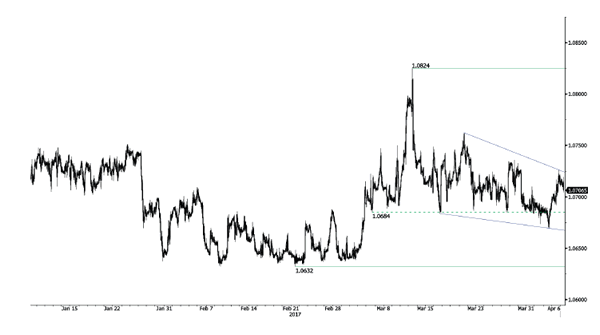
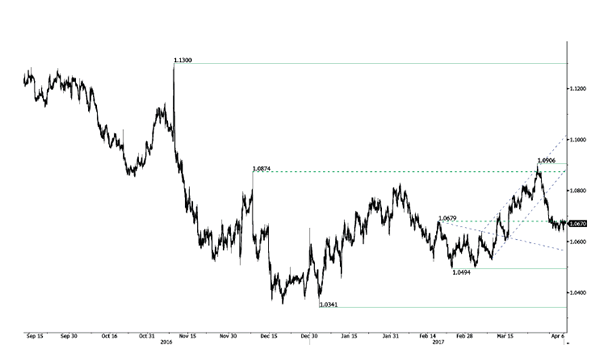
    EUR/USD is heading lower in the Tuesday session, as the pair trades at 1.0670. On the release front, German Industrial Production dropped 3.0%, well short of the estimate of +0.2%. In the US, the trade deficit is expected to edge lower to $45.0 billion. On the employment front, JOLTS Jobs Openings is expected to improve to 5.56 million.

    Eurozone growth and inflation numbers have been moving higher. Inflation, which has been at low levels for years, and climbed in recent months, buoyed by higher oil prices. This is positive news for the ECB, which has long tried to raise inflation with an ultra-loose monetary policy. Still, inflation levels remain well below the ECB's target of 2 percent. On Monday, ECB President Mario Draghi poured cold water on hopes of a change in monetary policy due to the improved economic climate. Draghi said that the Eurozone economy was not yet strong enough to withdraw the bank's stimulus program. Draghi's comments have sent the euro lower, as EUR/USD finds itself below the 1.07 level for the first time in February. There are also market jitters over Marie Le Penn, who kicked off her election campaign on the weekend. Le Pen has promised a referendum on taking France out of the European Union, which has put further pressure on the euro.

    Just a few weeks on the job, Donald Trump continues to create controversy and his protectionist rhetoric is not endearing him to the markets. Moreover, the lack of an economic policy from the new administration is a major source of concern and the the post-election euphoria which sent the markets higher has dissipated. The Federal Reserve, which had trumpeted that it was planning a series of hikes in 2017 (sound familiar?), was more cautious in its recent rate statement and is expected to adopt a wait-and-see attitude in the coming months. If the economy continues to grow, there is a strong likelihood of another rate hike in the first half of 2017, which is bullish for the dollar. On the other hand, if Trump makes good on his promises to "make America first" and implement protectionist policies, the greenback could lose ground against major currencies such as the euro.

    European Market Update: China FX Reserves Continue Descent, Fall Below The $3.0T Level For 1st Time In Six Years

    China FX Reserves continue descent; fall below the $3.0T level for 1st time in six years

    Notes/Observations

    Widening Euro Zone peripheral spreads and China keeping monetary conditions tight said to have had a negative effect on risk appetite

    China FX Reserves fall below the $3.00T level for first time since Feb 2011 (7th straight monthly decline)

    Overnight:

    Asia:

    RBA: left its Cash Target Rate unchanged at 1.50% (as expected). Reiterated that policy was consistent with growth and inflation targets and that a rising AUD currency could complicated economic transition. Inflation expected to remain low for some time but was expecting CPI to pick up over 2017 to be above 2%

    Japan Fin Min Aso: FX stability is important; improving economic links with US in both countries' benefit. BoJ easing not aimed at weakening JPY currency and would not engage in competitive devaluation

    New Zealand Central Bank (RBNZ) Gov Wheeler will NOT seek second term; Dep Gov Spencer to be acting Gov starting Sept 27th

    RBNZ Expectation Survey for inflation/GDP/employment outlook over next 2 years saw improved conditions across the board.GDP seen at its highest level in 2.5 years, while unemployment the lowest since Q3 2008. - PBOC again skipped its OMOs on Tuesday in order to keep liquidity stable in banking system (3rd consecutive day that daily reverse repos skipped). PBoC usually drained liquidity after the Chinese New Year, though it is rare for it to completely skip an OMO

    China Jan new Yuan loans said to top the prior monthly record of CNY2.5T

    Europe:

    ECB's Villeroy (France): exiting the euro and devaluing our currency would increase French borrowing costs; If French growth lagged other similar countries it was because of a lack of reform efforts, not because of the euro currency

    IMF completed 2016 article IV consultation on Greece; most directors agreed Greece did not need further fiscal consolidation at present but further relief might be required to restore debt sustainability

    Americas:

    Fed's Harker (hawk, voter): March FOMC should be on the table for rate decision; don't want to get behind the curve

    Economic data

    (JP) Japan Dec Preliminary Leading Index: 105.2 v 105.5e; Coincident Index: 115.2 v 115.1e

    (CH) Swiss Jan SECO Consumer Confidence (beat): -3 v -11e

    (DE) Germany Dec Industrial Production (miss) M/M: -3.0% v +0.3%e; Y/Y: -0.7% v +2.5%e

    (FR) France Dec Trade Balance (beat): -€3.4B v -€3.5Be

    (CN) China Jan Foreign Reserves (miss): $2.998T v $3.009T ((7th consecutive decline and falls below $3T for first time since Feb 2011)

    (TW) Taiwan Jan Trade Balance: $3.5B v $3.7Be; Exports Y/Y: 7.0% v 8.0%e; Imports Y/Y: 8.4% v 10.4%e

    (CH) Swiss Jan Foreign Currency Reserves (CHF): 643.7B v 646.1Be

    (UK) Jan Halifax House Prices (miss) M/M: -0.9% v 0.0%e; 3M/Y: 5.7% v 6.0%e

    (ZA) South Africa Jan SACCI Business Confidence: 97.7 v 93.8 prior

    (BR) Brazil Jan FGV Inflation IGP-DI M/M: 0.4% v 0.5%e; Y/Y: 6.0% v 6.0%e

    Fixed Income Issuance:

    (BE) Belgium Debt Agency (BDA) opened its books to sell 7-year and 40-year OLO bonds via syndicate

    (NL) Netherlands Debt Agency (DSTA) opend its book to sell 2027 DSL Bonds

    (AT) Austria Debt Agency (AFFA) sold total €1.43B vs. €1.43B indicated in 2023 and 2026 RAGB bonds

    SPEAKERS/FIXED INCOME/FX/COMMODITIES/ERRATUM

    Index snapshot (as of 10:00 GMT)

    Indices [Stoxx50 +0.1% at 3,243, FTSE +0.6% at 7,213, DAX +0.4% at 11,555, CAC-40 +0.1% at 4,783, IBEX-35 -0.2% at 9,338, FTSE MIB -0.2% at 18,654, SMI +0.7% at 8,388, S&P 500 Futures +0.2%]

    Market Focal Points/Key Themes: European equity indices are trading mixed across the board but weighed lower by the major banking stocks; shares of BNP Paribas leading the sector losses seen in the Eurostoxx after releasing Q4 results; shares of Munich Re leading losses seen in the Dax after releasing their Q4 results; FTSE 100 outperforming led by shares of DCC after announcing an acquisition of Esso Retail Norway; commodity and mining stocks trading higher in the index; shares of BP the notable laggard however after releasing lower than expected Q4 results.

    A plethora of upcoming scheduled US earnings (pre-market) include Asbury Automotive, Aecom Technology, Archer-Daniels-Midland, AGCO, AMETEK, Aramark Holdings, Arrow Electronics, Cardinal Health, CDW Corp, Church & Dwight, Centene, Emerson Electric, Fidelity National, Glatfelter, General Motors, Graphic Packaging International, ICE, Michael Kors, Lennox, Mednax, Mallinckrodt, Mosaic Company, NGL Energy Partners, National Oilwell Varco, Omnicom, Penske Auto Group, Sabre Corp, Spirit Airlines, S&P Global, Steris Corp, TransDigm, Tenneco, Vulcan Minerals, Wellcare Health Plans, and Westjet Airlines.

    Equities (as of 09:50 GMT)

    Consumer Discretionary: [Axfood AXFO.SE -4.8% (Q4 results), Caverion CAV1V.FI +2.8% (Q4 results), Connect Group CNCT.UK -0.4% (RM acquires Education & Care business for £56.5M), DCC Plc DCC.UK +6.6% (to acquire Esso Retail Norway for NOK2.43B), First Group FGP.UK +4.8% (Q3 trading update), Metro MEO.DE -0.5% (Shareholders voted in favour of split into two companies), Pandora PNDORA.DK -4.9% (Q4 results)]

    Energy: [BP BP.UK -3.0% (Q4 results), Neste Oil NES1V.FI -6.3% (Q4 results), Statoil STL.NO -1.6% (Q4 results)]

    Financials: [Banco Sabadell SAB.ES -0.5% (strategic update), Bellway BWY.UK +3.7% (trading udpate), BNP Paribas BNP.FR -4.6% (Q4 results), Hannover Re HNR1.DE +1.2% (prelim FY16 results), Munich Re MUV2.DE -1.7% (Q4 results), St Modwen Properties SMP.UK +1.8% (FY16 results)]

    Healthcare: [ALK-Abello ALKB.DK -1.0% (Q4 results), Fagron FAGR.BE -2.3% (FY16 results)]

    Industrials: [DX Group DX.UK -59.7% (trading update), GEA Group G1A.DE +5.6% (prelim FY16 results), Jenoptik JEN.DE +2.5% (prelim FY16 results)]

    Speakers

    ECB's Coeure (France) stated that the Euro currency was at an appropriate level for economic situation

    EU's Dombrovskis: Structural issues remain in banking sector; overall the Euro Area has shown resilience

    Italy Stats Agency (ISTAT) Monthly Economic Note: Domestic economic growth seen maintaining its current pace

    Iran Supreme Leader Khamenei: No enemy can paralyze the Iranian nation. Iranians to show response to President Trump's threats on Friday's anniversary of 1979 revolution

    China FX regulator SAFE stated that its FX reserves were ample; fluctuations in forex reserves were normal. Cross-border capital outflows had eased

    Chinese Foreign Exchange Trade System (CFETS): CNY currency (Yuan) to show two-way fluctuation and remain stable at the equilibrium level

    China Foreign Minister Wang: President Xi's phone call with President Trump was very positive. China studied official US policy, not campaign rhetoric

    Currencies

    The USD maintained a firm tone despite the recent decline in the US 10-ear real yields since Friday’s employment report. Euro Zone peripheral spreads and China keeping monetary conditions tight has had a negative effect on risk appetite. Several Fed officials (Harker and Williams) have kept the March FOMC meeting as a ‘live’ one for the next possible rate hike. The FX rhetoric continued to heat up as various ECB and Japanese officials denied their respective central banks were currency manipulators

    EUR/USD was softer by over 0.7% to approach the mid-1.06 area. The miss in German Dec Industrial Production data did not help sentiment in Europe. The upcoming elections in Europe also seemed to instill some headwinds as the political worries weighed on euro

    The USD/JPY tested 111.60 during the Asian session but recovered to move back above the 112 handle in the session.

    Fixed Income:

    Bund futures trade at 163.46 up 28 ticks but off highs as European Equities recover off lows. Futures touched a high of 163.74 with a move back above targeting 164.28 then 164.45. Support moves to 162.92 followed by yesterday low of 162.44 then 161.63.

    Gilt futures trade at 125.22 trading back above 125 a 3 week high. Futures have faded the early highs of 125.44 with support moving to 124.38 followed by 123.81 , 123.17 with Dec low at 122.08 the eventual target. Resistance lies just above highs at 125.73 followed by 126.00. Short Sterling futures trade flat to 2bp higher with Jun17Jun18 continuing to flatten trading at 18/19bp some 10bp lower then last weeks high.

    Tuesday's liquidity report showed Monday's excess liquidity fell to €1.317T down €1B from €1.318T prior. Use of the marginal lending facility fell to €106M from €171M prior.

    Corporate issuance saw $6.2B come to market via 6 issuers headlined by Estee Lauder 3 part $1.5B offering and Discover Financial Services $1B 10 year offering.

    Looking Ahead

    (US) 9th Circuit Court of Appeals to hear challenge to Trump's immigration (during evening hours)

    (RO) Romania Central Bank (NBR) Interest Rate Decision: Expected to leave Interest Rate unchanged at 1.75%

    (IL) Israel Jan Foreign Currency Balance: No est v $98.4B prior

    (MX) Mexico Jan Vehicle Production: No est v 242.5K prior; Vehicle Exports: No est v 216.7K prior - AMIA

    (AR) Argentina Central Bank 7-Day Repo Reference Rate

    05:30 (UK) Weekly John Lewis LFL sales data

    05:30 (EU) ECB allotment in 7-Day Main Refinancing Tender

    05:30 (HU) Hungary Debt Agency (AKK) to sell 3-month Bills

    05:30 (DE) Germany to sell €500M in 0.1% I/L 2046 Bonds (Bundei)

    05:30 (UK) DMO to sell £3.0B in 1.75% 2019 Gilts

    05:30 (BE) Belgium Debt Agency (BDA) to sell €1.7-2.1B in 3-month and 12-month Bills

    06:00 (TR) Turkey to Sell Zero 2018 Bonds

    06:00 (RU) Russia announces weekly OFZ bond auction

    06:30 (CL) Chile Jan Trade Balance: $0.4Be v $1.2B prior, Total Exports: $5.3Be v $6.2B prior, Total Imports: $4.8Be v $5.0B prior, Copper Exports: No est v $2.9B prior

    06:30 (CL) Chile Jan International Reserves: No est v $40.5B prior

    06:30 (EU) ESM to sell €1.5B in 3-month Bills

    06:45 (US) Daily Libor Fixing

    07:00 (CL) Chile Dec Nominal Wage M/M: No est v 0.2% prior; Y/Y: 4.8%e v 4.9% prior

    07:45 (US) Weekly Goldman Economist Chain Store Sales

    08:00 (PL) Poland Jan Official Reserves: No est v $114.4B prior

    08:00 (RU) Russia Jan Official Reserve Assets: $386.0Be v $377.7B prior

    08:15 (UK) Baltic Dry Index

    08:30 (US) Dec Trade Balance: -$45.0Be v -$45.2B prior

    08:30 (CA) Canada Dec Int'l Merchandise Trade: C$0.2Be v C$0.5B prior

    08:30 (CA) Canada Dec Building Permits M/M: -3.0%e v -0.1% prior

    08:30 (SI) Slovenia Debt Agency to sell 3-month, 6-month and 12-month Bills

    08:55 (US) Weekly Redbook Sales

    09:00 (EU) Weekly ECB Forex Reserves

    09:00 (NZ) Fonterra Global Dairy Trade Auction

    09:00 (RO) Romania Central Bank gov Isarescu to hold post rate decision press conference

    09:00 (BR) Brazil to sell I/L 2022, 2026, 2035 and 2055 Bonds

    09:50 (UK) Bank of England (BOE) Bond Buying Operation (over 15 years)

    10:00 (US) Dec JOLTS Job Openings: 5.57Me v 5.522M prior

    10:00 (CA) Canada Jan Ivey Purchasing Managers Index (Seasonally Adj): No est v 60.8 prior

    10:30 (CA) Canada to sell 3-month, 6-month and 12-month Bills

    11:30 (US) Treasury to sell 4-Week Bills

    12:00 (US) DOE Short-Term Crude Outlook

    13:00 (US) Treasury to sell in 3-Year Notes

    15:00 (US) Dec Consumer Credit: $20.0Be v $24.5B prior

    15:00 (MX) Mexico Citibanamex Survey of Economists

    16:00 (NZ) New Zealand Jan ANZ Truckometer Heavy (heavy traffic) M/M: No est v -0.1% prior

    16:30 (US) Weekly API Oil Inventories

    USD Bounces Back As Gold Slides


    News and Events:

    NZD holds ground as USD takes off

    The New Zealand dollar over performed against all of its G10 peers on Tuesday amid an unexpected jump in inflation expectations. Inflation expectations 2-year ahead rose to 1.92%y/y compared to 1.68% in the December report. Similarly, the 1-year ahead measure climbed to 1.56% from 1.29%. The solid pick-up in commodity prices that was initiated early last year is one of the main reasons behind this substantial shift in expectations. Gross national product growth was also boosted to the upside as the survey respondents now expect a 3.11% expansion in two years’ time compared to 2.75% three months ago.

    All in all, the solid growth expectations, combined with higher inflation, considerably reduce the likelihood of another rate cut from the Reserve Bank of New Zealand, which had the result of lifting the currency to $0.7376. However, the broad USD rally that has rattled FX markets this morning has evaporated these gains. The currency pair fell below its US session closing price of 0.7320, sliding as low as 0.7291. We maintain our positive bias on the currency pair as the export driven country should continue to take advantage of the stabilisation in commodity prices. The $0.75 level will nevertheless remain a solid resistance that will require more than a short-term weakness in the dollar.

    French elections: Marine Le Pen lays out Frexit plans

    The French Election are one this first half of the year’s hot topic. The election will take place the 23rd of April and the outcome remains uncertain since Francois Fillon is having deep issues and the ability of Benoit Hamon, the Socialist candidate, to win is very unlikely. For the time being, Marine Le Pen still top polls and she is trying to drive the debate into the exit of France from the European Union. The French candidate wants a “Frexit” Referendum.

    It is true that amid the “Brexit”, the promised nightmare is not happening in the UK and the British economic data are on the rise. The fact that the pound devalued is a strong points for exports and it gave some relief to the BoE.

    Benoit Coeuré, the ECB member said lately in an interview, that French people do not want to exit the Eurozone. In the same time, Draghi has mentioned that an exit of the EU is possible if and only if a country pay off its “bill”.

    We believe that there is definitely room for further euro weakness in the medium-term. Currency war against the greenback, which Trump considers as overvalued, should accelerate.

    Advanced Currency Markets - Forex Issues and Risks

    Today's Key Issues (time in GMT):

    • Dec Industrial Production MoM, last 6,60%, rev 5,10% DKK / 08:00
    • Jan Foreign Currency Reserves, exp 646.1b, last 645.3b CHF / 08:00
    • Jan Budget Balance, last -75.2b SEK / 08:30
    • Jan Halifax House Prices MoM, exp 0,00%, last 1,70%, rev 1,60% GBP / 08:30
    • Jan Halifax House Price 3Mths/Year, exp 6,00%, last 6,50% GBP / 08:30
    • Istat Releases the Monthly Economic Note EUR / 09:00
    • Jan SACCI Business Confidence, last 93,8 ZAR / 09:30
    • Jan FGV Inflation IGP-DI MoM, exp 0,48%, last 0,83% BRL / 10:00
    • Jan FGV Inflation IGP-DI YoY, exp 6,01%, last 7,18% BRL / 10:00
    • Jan Official Reserve Assets, exp 386.0b, last 377.7b RUB / 13:00
    • Brazil Central Bank Head Goldfajn Hosts Discussion of Spreads BRL / 13:00
    • Dec Trade Balance, exp -$45.0b, last -$45.2b USD / 13:30
    • Dec Int'l Merchandise Trade, exp 0.20b, last 0.53b CAD / 13:30
    • Dec Building Permits MoM, exp -3,50%, last -0,10% CAD / 13:30
    • BOE's Forbes Releases Speech GBP / 14:00
    • Dec JOLTS Job Openings, exp 5580, last 5522 USD / 15:00
    • Jan Ivey Purchasing Managers Index SA, last 60,8 CAD / 15:00
    • Bank of France Governor Villeroy de Galhau Speaks in Florence EUR / 16:30
    • ECB's Weidmann Speaks in Mainz EUR / 16:35
    • Dec Consumer Credit, exp $20.000b, last $24.532b USD / 20:00
    • Jan ANZ Truckometer Heavy MoM, last -0,10% NZD / 21:00

    The Risk Today:

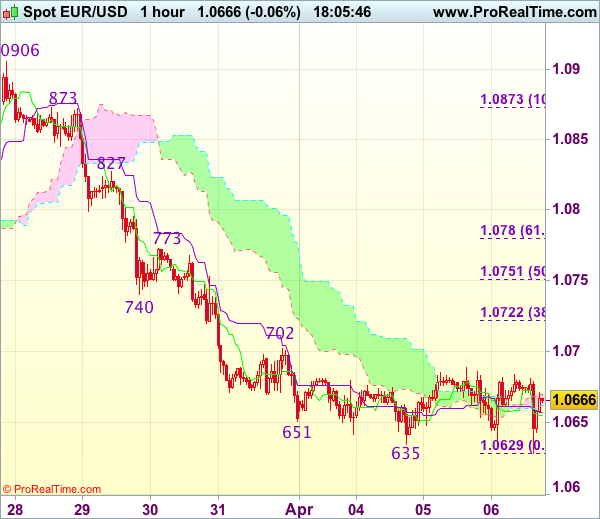
    EUR/USD's selling pressures have increased. It seems that strong hourly resistance area is given around 1.0800. Hourly support lies at 1.0590 (19/01/2016 low) and 1.0341 (03/01/2017 low). Expected to see continued consolidation. In the longer term, the death cross late October indicated a further bearish bias. The pair has broken key support given at 1.0458 (16/03/2015 low). Key resistance holds at 1.1714 (24/08/2015 high). Expected to head towards parity.

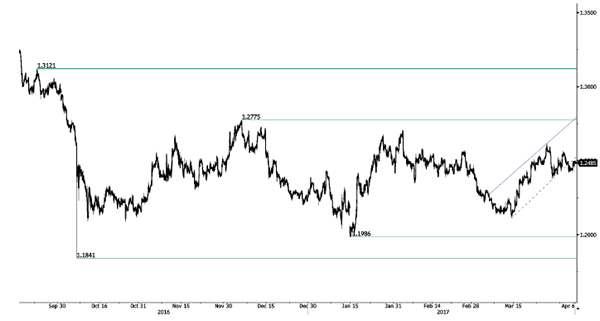
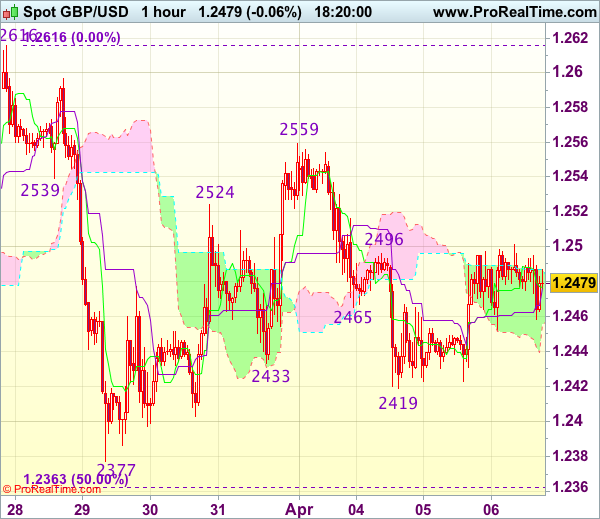
    GBP/USD is still trading below resistance given at 1.2771 (05/10/2016 high). The pair keeps on bouncing lower towards support given at 1.2254 (19/01/2016 low). The long-term technical pattern is even more negative since the Brexit vote has paved the way for further decline. Long-term support given at 1.0520 (01/03/85) represents a decent target. Long-term resistance is given at 1.5018 (24/06/2015) and would indicate a long-term reversal in the negative trend. Yet, it is very unlikely at the moment.

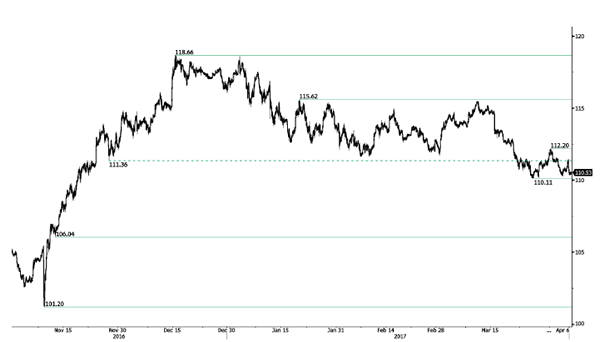
    USD/JPY is slowly pushing lower. Hourly resistance is given at 115.62 (19/01/2016 high). The technical structure suggests further downside momentum. as the break of hourly support given at 112.57 (17/01/2017 low) has confirmed bearish pressures. We favor a long-term bearish bias. Support is now given at 96.57 (10/08/2013 low). A gradual rise towards the major resistance at 135.15 (01/02/2002 high) seems absolutely unlikely. Expected to decline further support at 93.79 (13/06/2013 low).

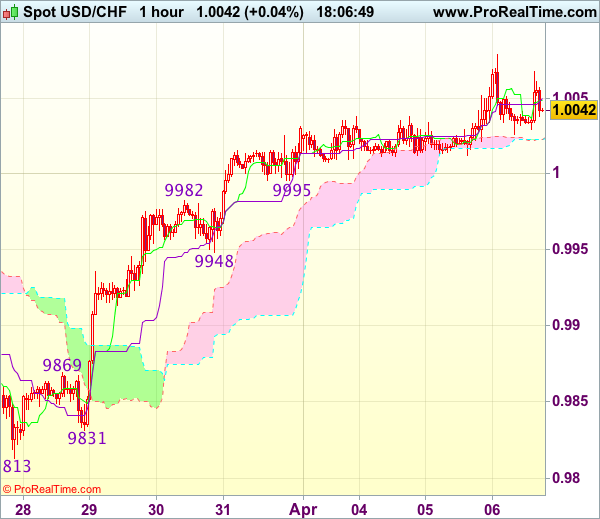
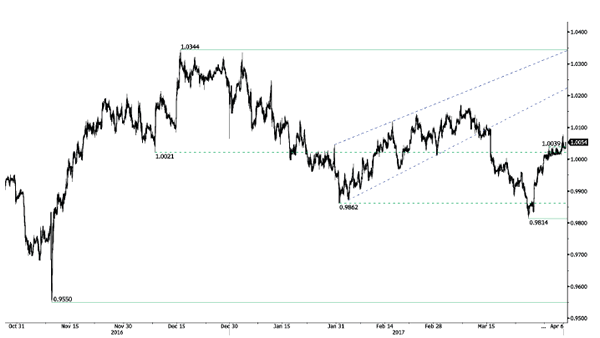
    USD/CHF's momentum is definitely bearish despite ongoing increase. Key resistance is given at a distance at 1.0344 (15/12/2016 high). We believe that the road is clearly wide-open for further decline. In the long-term, the pair is still trading in range since 2011 despite some turmoil when the SNB unpegged the CHF. Key support can be found 0.8986 (30/01/2015 low). The technical structure favours nonetheless a long term bullish bias since the unpeg in January 2015.
    EURUSD GBPUSD USDCHF USDJPY
    1.1300 1.3445 1.0652 121.69
    1.0954 1.3121 1.0344 118.66
    1.0874 1.2771 1.0045 115.62
    1.0660 1.2366 1.0001 112.37
    1.0341 1.2254 0.9680 111.36
    1.0000 1.1986 0.9632 106.04
    0.9613 1.1841 0.9522 101.20

    EUR/USD Below 1.07 Mark

    'Because last week was a big outside bar, this week might be an inside bar.' – Al Brooks, Brooks Price Action (based on investing.com)

    Pair's Outlook

    During the early hours of Tuesday's trading session the common European currency fell below the 1.07 mark against the US Dollar, and there were no signs of the fall stopping. The currency exchange rate passed the 20-day SMA at 1.0695, which was the last support level before the 1.0659 level, where the weekly S1 is located at. Due to these factors combined it can be assumed that the pair will fall as low as the just mentioned support level by the end of Tuesday's trading. However, it is most likely that that support level will also stop the decline of the Euro.

    Traders' Sentiment

    SWFX traders remain bearish regarding the pair, as 52% of trader open positions are short. In the meantime, 57% of trader set up orders are to sell the Euro.

    RBA Keeps Rates on Hold; Maintains a Confident Tone

    Overnight, the RBA kept its policy stance unchanged, as was widely expected. Overall, the officials maintained an optimistic tone, which was a surprise for us, as they disregarded the latest mixed data out of Australia. They indicated that although GDP growth was negative in Q3, this was due to temporary factors, and a return to reasonable growth is expected in Q4. With regards to the slip in the underlying inflation rate in Q4, the RBA simply indicated that the CPIs were more or less in line with their forecasts, and that even though inflation remains low, it is expected to return to target over time. On the negative side, they reiterated that a rising AUD could complicate economic transitions in the economy and that medium-term risks in the Chinese economy persist, but these comments were not enough to offset their confident view on the domestic economy.

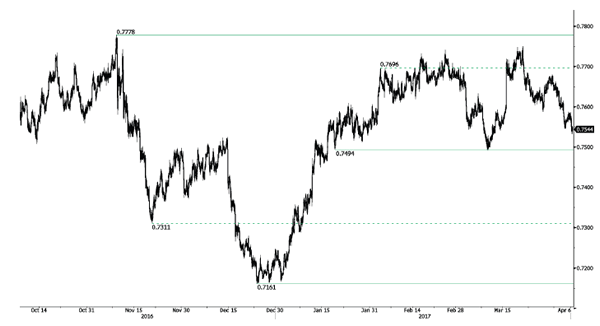
    AUD/USD traded higher on the decision after it hit support near 0.7640. Given that the Bank is likely to remain on hold in coming months, we expect the Australian currency to remain supported. The short-term trend is already positive and as such, we would expect a clear break above the 0.7700 territory to open the way for our next resistance of 0.7740. As for the longer-term outlook though, we would like to see a decisive close above 0.7800 before we get confident on larger bullish extensions.

    Overnight: New Zealand's 2-year inflation expectations surge

    New Zealand's 2-year inflation expectations for Q1 rose to 1.92% from 1.68% previously, data showed overnight. Expectations are now almost at the mid-point of the RBNZ's 1% - 3% target, which in our view greatly diminishes the likelihood for any further action by the Bank in the foreseeable future. Let's not forget how much attention the Bank pays to this indicator. When the figure unexpectedly slipped in Q1 2016, it triggered a surprise rate cut, mainly to ensure that expectations do not become de-anchored from the target.

    NZD/USD surged overnight after the 2-year inflation expectations came out and emerged above the resistance (now turned into support) zone of 0.7230 (S1). Now, the pair looks to be headed towards the next obstacle area of 0.7400 (R1). The price structure on the 4-hour chart suggests a short-term uptrend, while the pair is now trading above the prior downside resistance line taken from back at the peak of the 7th of September. As a result, we would expect the bulls to remain in the driver's seat and if they prove strong enough to overcome the 0.7400 (R1) territory, we would expect them to target the next resistance of 0.7440 (R2).

    Attention now turns to the RBNZ meeting tomorrow. We expect the Bank to be quite pleased with the progress towards its mandate, as both the Q4 CPI rate and 2-year inflation expectations rose notably, something that could lead to a rather optimistic statement.

    Euro takes a hit as political risks loom

    The common currency took a hit yesterday while safe havens rallied, as Eurozone's political risks came into the market's focus. In France, the center-right presidential candidate Francois Fillon apologized over payments his family members received for parliamentary work. In our view, this diminishes his chances to win and in turn, increases the probability that the far-right candidate Marine Le Pen is victorious. Le Pen is an outspoken Eurosceptic, who wants to hold a "Frexit" referendum. As such, the possibility of her election represents an existential threat for the European Union, one much greater than Brexit we think, considering that France was among the founding members of the EU and is also a member of the Eurozone.

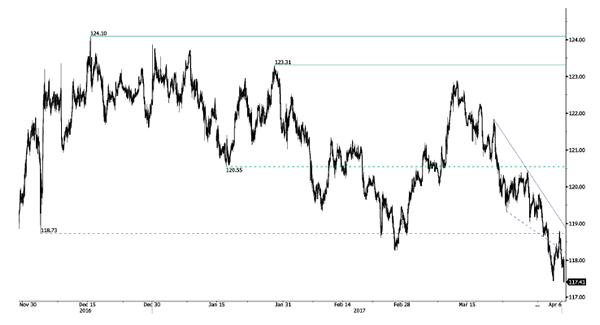
    EUR/JPY tumbled yesterday breaking three support (now turned into resistance) barriers in a row. Now the rate is trading below the psychological figure of 120.00 (R1) and looks to be headed towards the 119.50 (S1) barrier. Given that the pair is trading within a downside channel since the 27th of January, we would consider the short-term trend to be negative. A clear dip below 119.50 (S1) is possible to open the way for the next support territory of 118.70 (S2).

    Without trying to predict how French citizens will finally vote, we expect the period ahead of the actual election in April to be marked by heightened uncertainty, and we believe that investors are likely to concentrate more on incoming polls in coming weeks. If Le Pen is seen as increasingly more likely to win as we approach the election, we could see investors pricing in greater risk of European disintegration, something that may weigh further on the euro and may support safe haven assets.

    Today's highlights:

    During the European day, we get a lot of second tier indicators. In Germany, industrial production data for December is coming out, while from the UK, we get the Halifax house price index for January.

    In the US, the trade balance for December is expected to show that the nation's trade deficit narrowed, albeit slightly. The JOLTS survey for the same month is due out as well, and expectations are for an increase in the number of job openings.

    From Canada, we get the Ivey PMI for January, though no forecast is currently available. Our own view is that the Ivey index is likely to have risen, something supported by the nation's Markit manufacturing PMI for the month, which showed the fastest growth in the sector since late 2014. Something like that could bring the Loonie under renewed buying interest. We also get the trade balance for December.

    We have only one speaker on today's schedule: ECB Governing Council member Jens Weidman.

    GBP/USD Continues To Slide

    'Sterling is stuck in a range. It's very cheap on most measures, but then real yields are very low and the current account deficit is very big.' – Societe Generale (based on PoundSterlingLive)

    Pair's Outlook

    The GBP/USD currency pair weakened for the third consecutive time on Monday, but managed to remain above the immediate support cluster. Even though this cluster keeps providing strong support today, the Sterling still remains on the back foot. As a result, the Cable is expected to close in the red zone again; however, a full-blown breach of the immediate demand area is unlikely. The Pound is expected to stabilise somewhere between 1.2430 and 1.2415, unless fundamental data turns into Sterling's favour. Meanwhile, technical indicators are unable to confirm either scenario, as they retain mixed signals.

    Traders' Sentiment

    Market sentiment remains moderately bullish, being that 60% of all open positions are now long (previously 59%). The share of sell orders edged higher again, namely from 56 to 57%.

    USD/JPY Attempts To Trim Monday’s Losses

    'Dollar confidence and positioning is being eroded by erratic policy emissions from the White House. USD has retraced 45% of the Trump rally, but we believe risk-reward favors a deeper setback to USD vs. those pairs that have lagged, most notably JPY.' – J.P. Morgan (based on Market Watch)

    Pair's Outlook

    The Japanese Yen managed to outperform the American Dollar on Monday, ultimately adding 76 pips during the day, with the immediate demand area limiting the losses. The successfully close above the 111.50 mark suggests the USD/JPY pair could rebound today, even though technical studies are unable to confirm this possibility. There are no solid resistances in close proximity to the spot price, implying the pair could keep recovering until the 113.00 level is reached within the next two days. On the other hand, Monday's decline caused the strong psychological support around 112.60/50 to be pierced, which can now lead to more weakness, with the main target being 110.30.

    Traders' Sentiment

    Today 59% of traders are long the US Dollar (previously 58%), whereas the portion of buy orders inched up from 61 to 62%.