Sample Category Title
GBP/USD Slides Further and Bears Are Not Done Yet
Key Highlights
- GBP/USD gained bearish momentum below the 1.2640 support zone.
- A major bearish trend line is forming with resistance at 1.2670 on the 4-hour chart.
- Gold prices rallied further above the $2,260 resistance.
- The US ISM Services Index could increase from 52.6 to 52.7 in March 2024.
GBP/USD Technical Analysis
The British Pound started another decline below the 1.2740 zone against the US Dollar. GBP/USD traded below the 1.2650 and 1.2620 levels to move into a bearish zone.
Looking at the 4-hour chart, the pair even settled below the 1.2600 level, the 100 simple moving average (red, 4-hour), and the 200 simple moving average (green, 4-hour). Finally, the pair traded below the 1.2550 support.
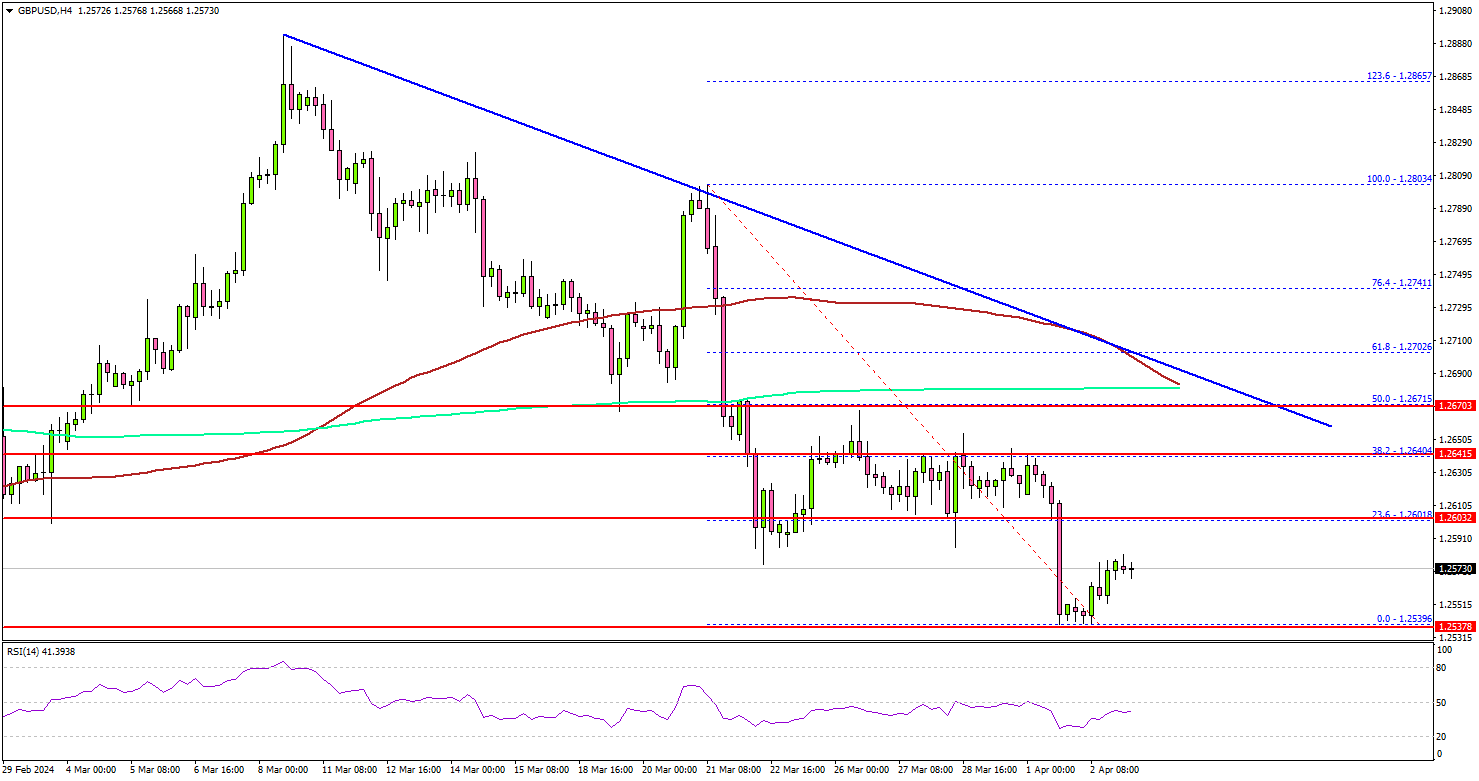
A low was formed near 1.2539 and the pair is now consolidating losses. On the upside, the pair could face resistance near the 1.2580 level. The first major resistance is now forming near 1.2600 or the 23.6% Fib retracement level of the downward move from the 1.2803 swing high to the 1.2539 low.
The first major resistance is forming near the 1.2640 level. The main resistance is now forming near 1.2670. There is also a major bearish trend line forming with resistance at 1.2670 on the same chart.
A close above the 1.2670 zone could open the doors for more upsides. The next stop for the bulls might be 1.2800. If not, the pair might continue to decline. Immediate support is near the 1.2530 level.
The next major support is at 1.2500. If there is a downside break below the 1.2500 support, the pair could decline toward the 1.2440 support. Any more losses might send the pair toward the 1.2350 level in the near term.
Looking at Gold, the bulls remain in control as they were able to push prices above the $2,260 level and there could be a move toward $2,300.
Economic Releases
- US ISM Services Index for March 2024 – Forecast 52.7, versus 52.6 previous.
- Federal Reserve Chair Jerome Powell’s speech.
China’s Caixin PMI services edges up to 52.7, matches expectations
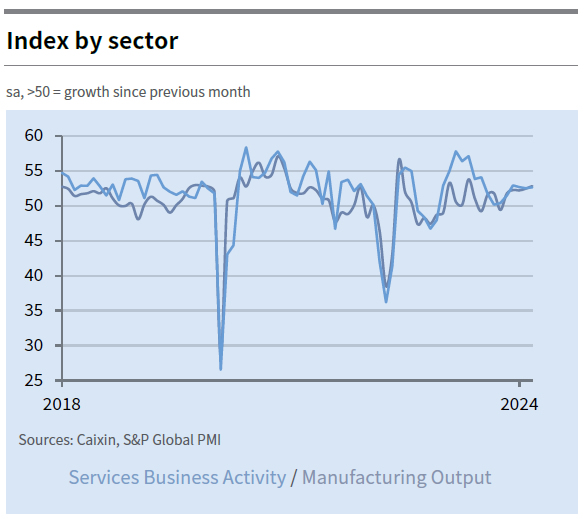
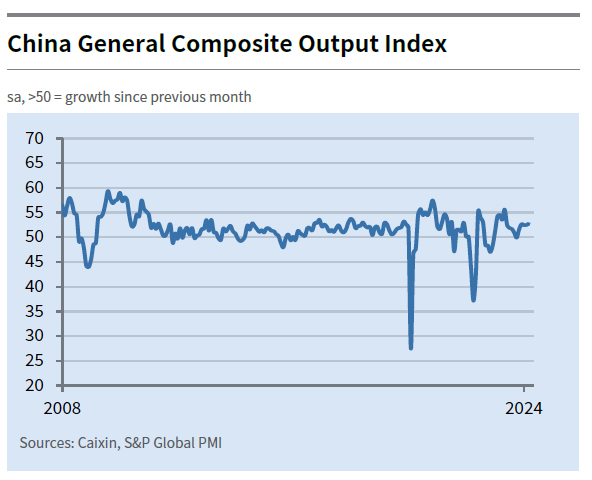
China's Caixin PMI Services edged up slightly from 52.5 to 52.7 in March, matched expectations. PMI Composite, which tracks both manufacturing and service sectors, also increased from 52.5 to 52.7, indicating the most pronounced expansion of overall business activity since May 2023.
Wang Zhe, Senior Economist at Caixin Insight Group, highlighted the favorable economic performance in the early months of the year and the manufacturing sector's five-month run in expansionary territory. He stated, "This indicates a generally stable and positive economic recovery".
Despite these optimistic signs, the economist pointed out several challenges facing the Chinese economy. Wang Zhe identified persistent downward economic pressures, subdued employment levels, low prices, and insufficient effective demand as critical issues that have yet to be fully addressed.
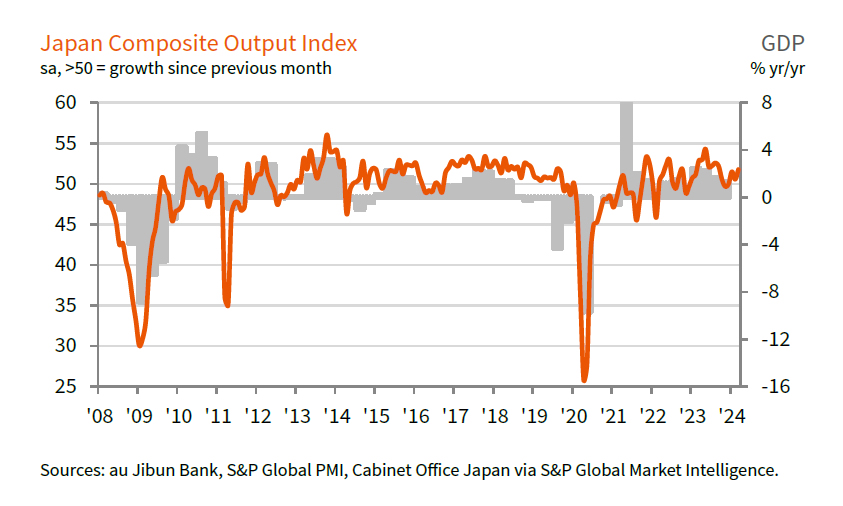
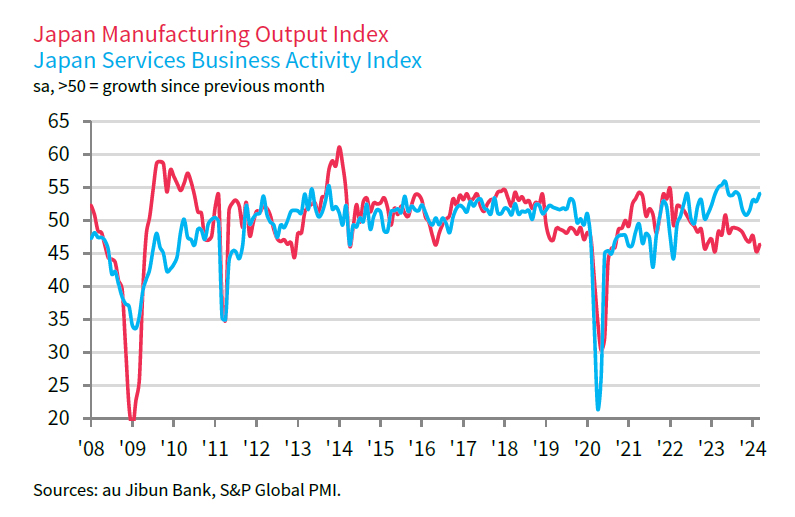
Japan’s PMI services finalized at 54.1, marked increase in cost burdens
Japan's PMI Services was finalized at 54.1 in March, a notable improvement from February's 52.9 and marking the most significant growth for the past seven months. PMI Composite also rose to 51.7 from the previous month's 50.6.
Usamah Bhatti, economist at S&P Global Market Intelligence, noted that near-term outlook for the service sector appears "robust", as outstanding business, a key indicator of future work, continues to rise at "near-record rates". Confidence regarding the 12-month future also remains strong among service providers.
However, the sector is not without its challenges, particularly on the price front. Businesses signaled "another marked increase in cost burdens," underlining ongoing inflationary pressures. These pressures are mirrored in the broader Japanese private sector, where cost inflation has hit a "five-month high".
Bhatti added that inflationary pressures, alongside BoJ's recent shift away from negative interest rates, "will likely remain a downside risk to the Japanese private sector economy in the coming months."
Fed’s Daly: Three rate cuts very reasonable, but not guaranteed
San Francisco Fed President Mary Daly offered described three rate cuts this year as a "very reasonable baseline." However, she was careful to clarify that such a projection should not be interpreted as a commitment, stating, "not a promise."
Daly highlighted the current state of economic growth as a factor tempering the immediacy for policy adjustments, noting, "Growth is going strong, so there's really no urgency to adjust the rate."
Furthermore, Daly voiced concerns over the risks associated with prematurely lowering interest rates. She warned of the "real risk" that too early a cut could entrench the "toxic tax" of persistently high inflation.
Fed’s Mester views three rate cuts as appropriate, yet decision tightly contested
Cleveland Fed President Loretta Mester said overnight that three rate cuts might be appropriate this year, though she mentioned, "it's a close call" on the possibility of fewer reductions being needed.
Addressing the upcoming meeting scheduled for April 30-May 1, Mester expressed that it is unlikely there will be sufficient information available to make a decision on reducing rates by then. However, she left the door open for a rate cut in June, stating, "We have to be data dependent so I don't want to rule that out."
Mester highlighted the importance of upcoming data to gauge whether the disinflation process is merely experiencing a "temporary detour" or if there are signs that efforts to bring inflation back down to the 2% target are faltering.
She cautioned against premature or overly rapid rate reductions, warning that such actions could jeopardize the progress made on inflation control. "Moving rates down too soon or too quickly without sufficient evidence to give us confidence that inflation is on a sustainable and timely path back to 2% would risk undoing the progress we have made on inflation," Mester remarked.
GBPUSD Wave Analysis
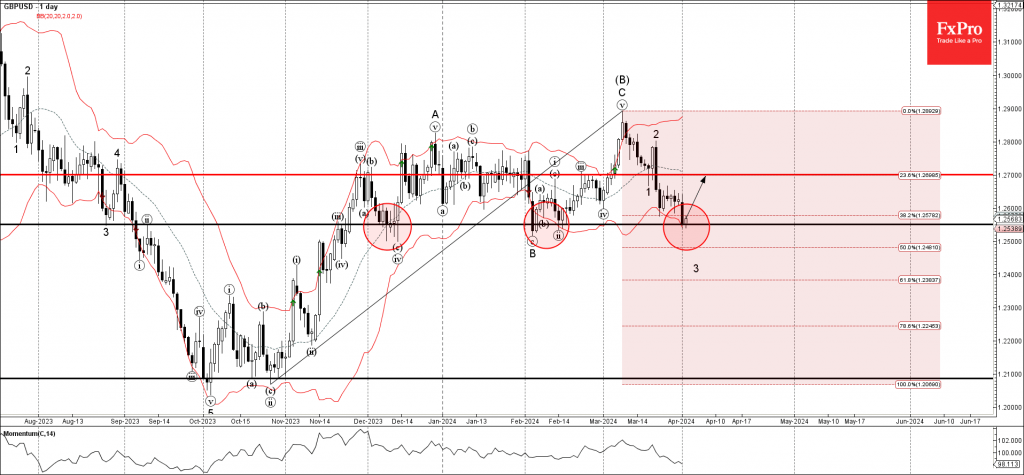
- Sterling reversed from pivotal support level 1.2550
- Likely to rise to resistance level 1.2700
Sterling recently reversed up from the pivotal support level 1.2550, which has been reversing the pair from the start of December, as can be seen below.
The support level 1.2550 was strengthened by the lower daily Bollinger Band and by the 38.2% Fibonacci correction of the upward impulse from October.
Given the strength of the support level 1.2550, Sterling can be expected to rise further to the next resistance level 1.2700.
Brent Crude Oil Wave Analysis
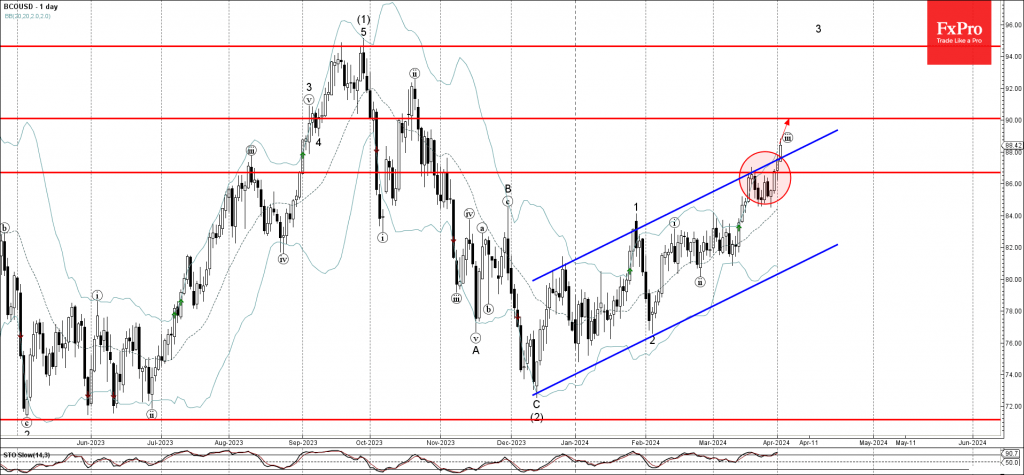
- Brent crude oil broke resistance level 86.70
- Likely to rise to resistance level 90.00
Brent crude oil recently broke the resistance level 86.70, which reversed the price with the daily Evening Star in March.
The breakout of the resistance level 86.70 was preceded by the breakout of the resistance trendline of the daily up channel from December.
Brent crude oil can be expected to rise further to the next round resistance level 90.00, target price for the completion of the active impulse wave iii.
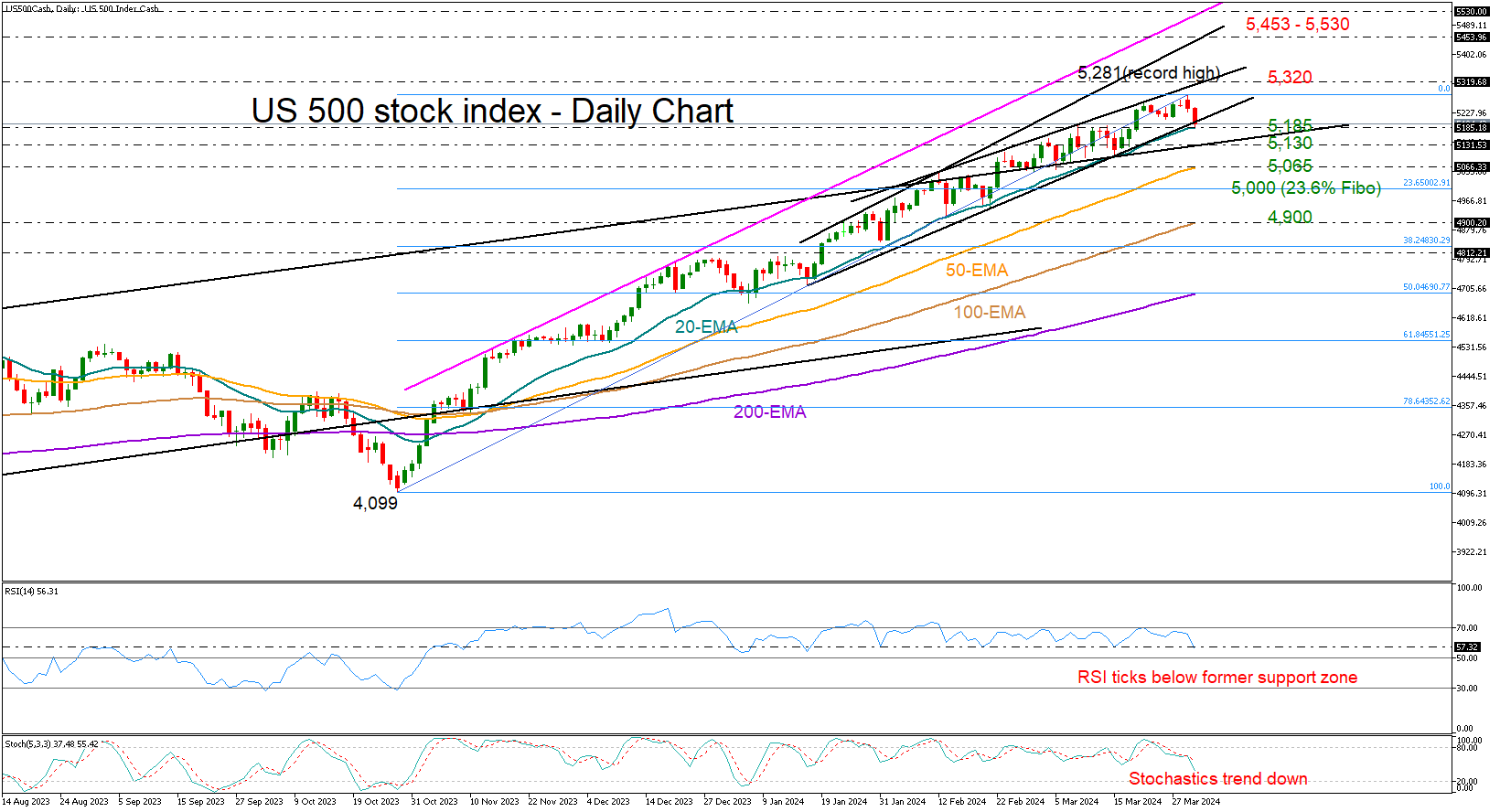
US 500 Index Retreats from Record High
- US 500 faces downside pressures for the second consecutive day
- More weakness possible, but key support levels are nearby
The US 500 stock index (cash) opened negative on Tuesday, strengthening its negative momentum towards its 20-day exponential moving average (EMA), which has been buffering downside movements since the start of the year, around 5,185.
With the RSI marking a new low below an important support area and the stochastic oscillator decelerating, the odds for a bearish impulse have increased.
If the bears stay in charge, the ascending trendline, which connects the December 2022 and July 2023 highs, could add some footing around the 5,130 level ahead of the 50-day EMA at 5,065. The 5,000 round mark, which overlaps with the 23.6% Fibonacci retracement of the ongoing rally, could be the next destination on the downside. Should selling forces breach that floor too, the door will open for the 100-day EMA at 4,900.
On the upside, the price will have to run above the resistance trendline at 5,320 in order to reach the ascending trendline at 5,453. There might be another obstacle around 5,530 before the 5,600 psychological level comes into view.
In a nutshell, the positive trend in the US 500 stock index is still intact, though given the discouraging short-term signals, the current weakness in the price could persist.
Australian Central Bank Meeting Removes Rate Hike Option – Minutes
The Reserve Bank of Australia minutes of the March meeting indicated that there was no mention of raising interest rates. This points to a less hawkish stance but the Australian dollar is unchanged following the release of the minutes.
Reserve Bank drops reference to rate hike
The RBA maintained the cash rate at 4.35% at the March 19th meeting. This marked the third straight time that the RBA paused. This move was expected and what was of more interest to traders was the slight change in language in the rate statement. The February statement said that “a further increase in interest rates cannot be ruled out” and this was changed to the “Board is not ruling anything in or out” at the March meeting.
The markets focused on this slight change in language, viewing it as a signal that the RBA had removed its hiking bias. This sent the Australian dollar sharply lower in the aftermath of the meeting, although it fully recovered by the next day.
The minutes have strengthened the view that the RBA is moving away towards a more neutral stance and is more open to rate cuts sometime this year. The markets had dismissed the possibility of a rate hike and the minutes appear to have laid to rest any lingering concerns that the central bank could continue to raise rates.
The minutes are a clear indication that the Board is becoming more confident that the battle against inflation is on its way to being won, although there is still some way to go before inflation is brought down to the target range of 2 to 3 percent.
Inflation dropped to 4.1% in the fourth quarter of 2023 but that is still high and the RBA is unlikely to lower rates before inflation drops closer to the target range. As we are seeing with the Federal Reserve and other major central banks, inflation is moving in the right direction but the RBA is not in any rush to lower rates. The central bank is widely expected to pause again at the next meeting on May 7.
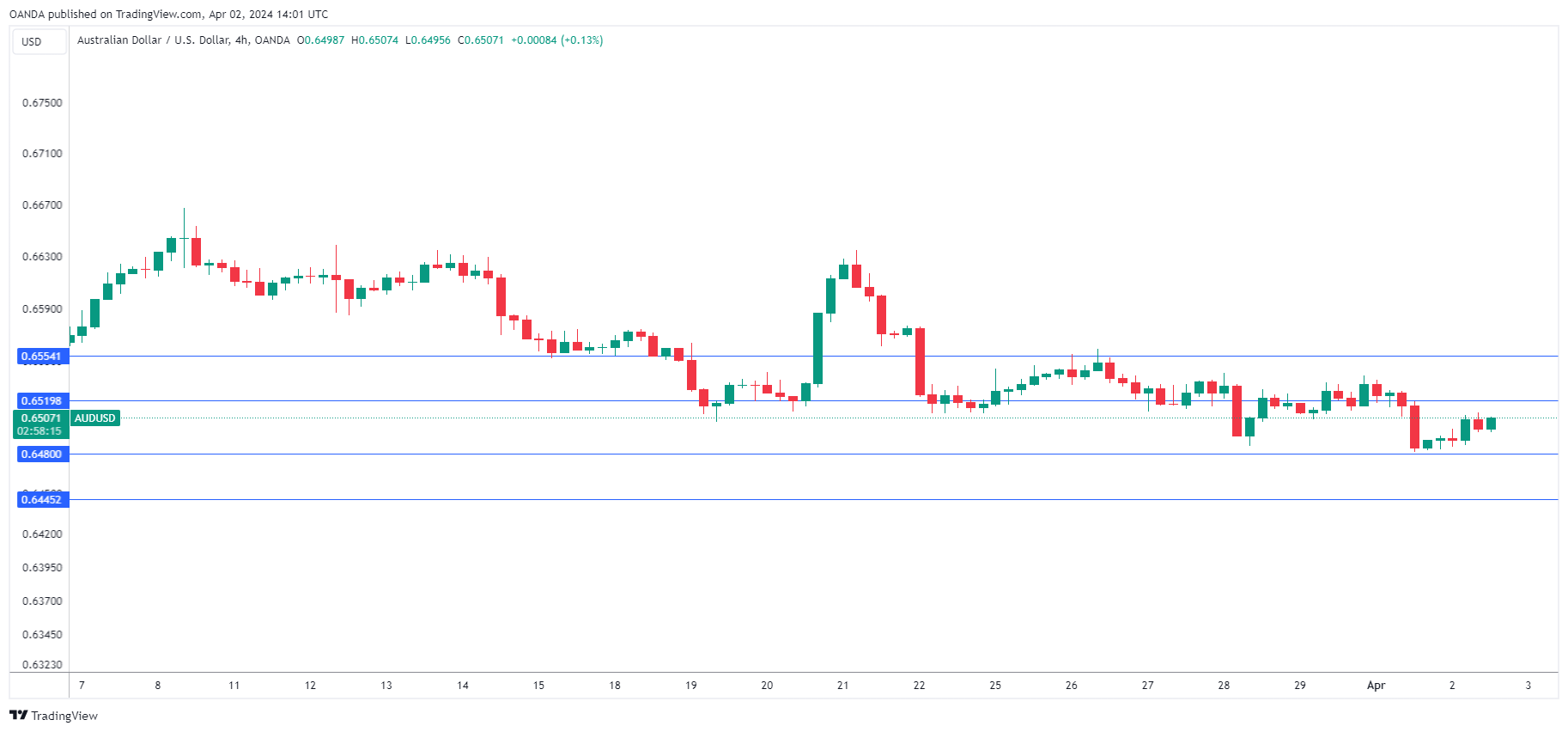
AUD/USD Technical
- AUD/USD is putting pressure on resistance at 0.6519. Above, there is resistance at 0.6554
- There is support at 0.6480 and 0.6445