Sample Category Title
What To Trade In January
Hey friends, as we prepare for the new month, and the new year, here are some of my anticipated trade ideas for January. Do note, however, that these are long-term views and would therefore require patience as they unfold.
EURUSD - W1 Timeframe
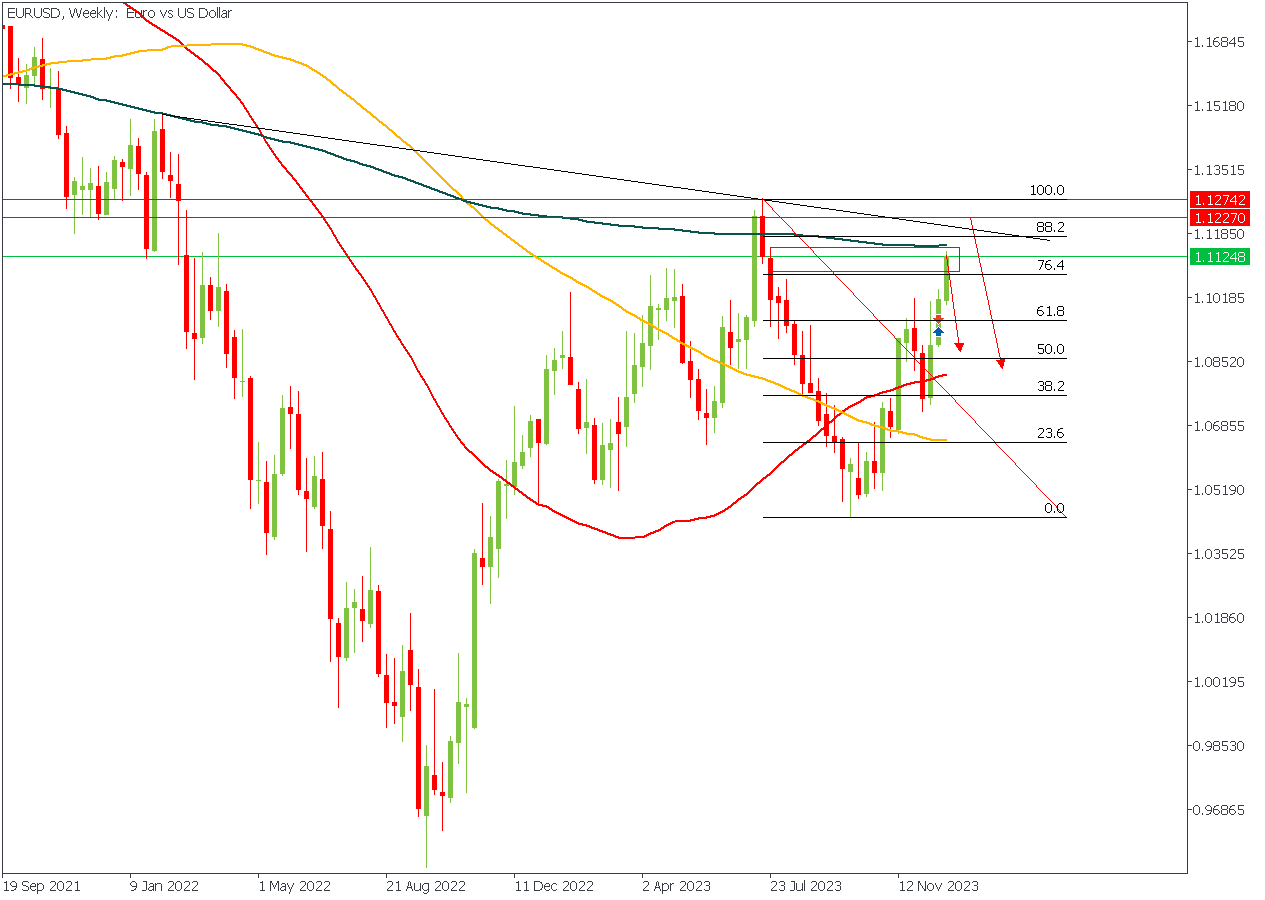
EURUSD on the Weekly timeframe has reached a supply zone, and price could begin to fall from that region. In addition to the supply zone, there are also other confluences present, including; the 200-period moving average resistance, the Fibonacci retracement level, Quassimodo reversal pattern, and a resistance trendline.
Analyst’s Expectations:
- Direction: Bearish
- Target: 1.08659
- Invalidation: 1.11551
GBPUSD - D1 Timeframe
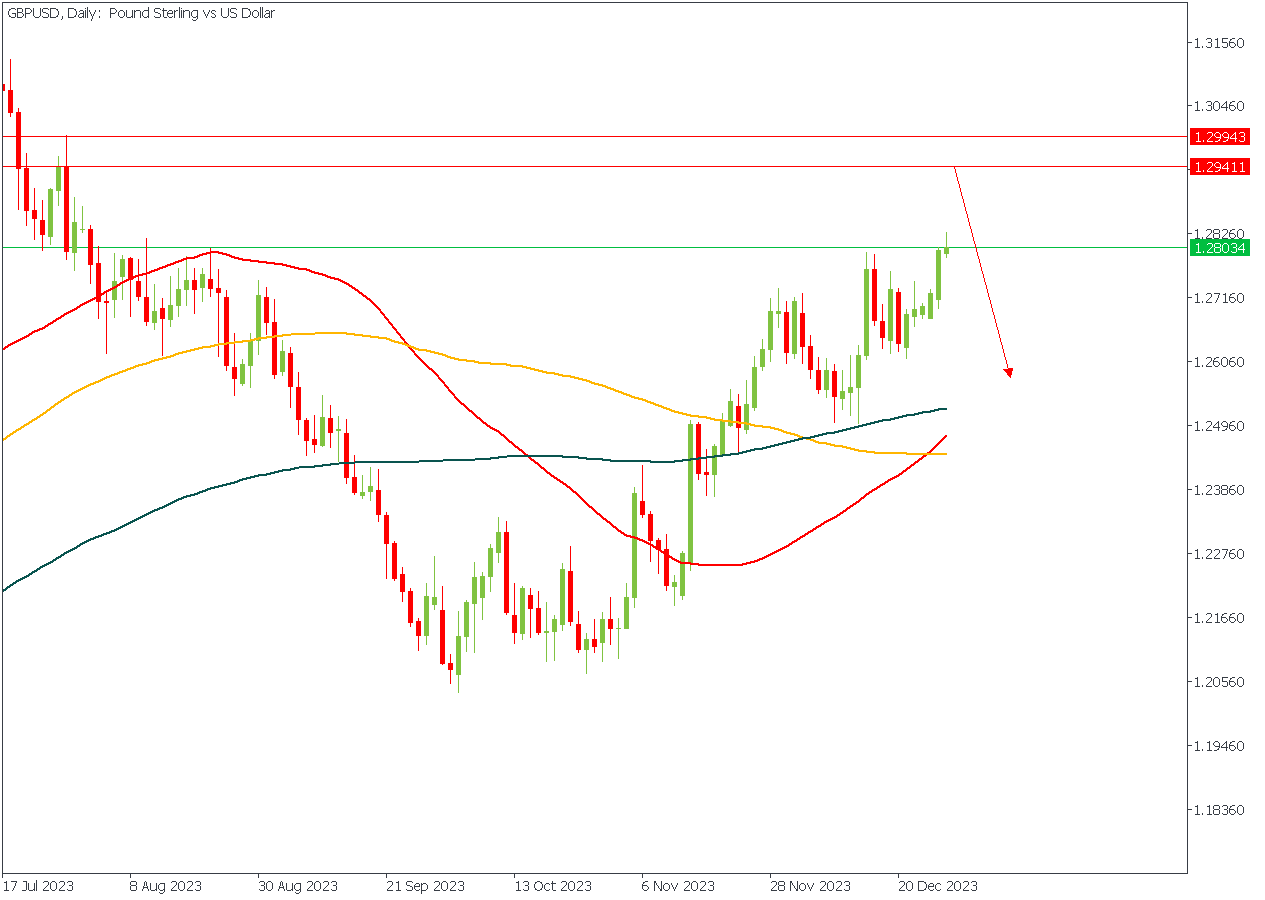
In the case of GBPUSD, price has not yet reached the supply zone. It is my expectation, however, that price would make a quick bounce away from the supply zone as soon as it reaches it. Another possible scenario is that price could begin to decline any time from now, provided that we get to see a change in the market structure (ChoCh).
Analyst’s Expectations:
- Direction: Bearish
- Target: 1.09328
- Invalidation: 1.11535
USDCHF - W1 Timeframe
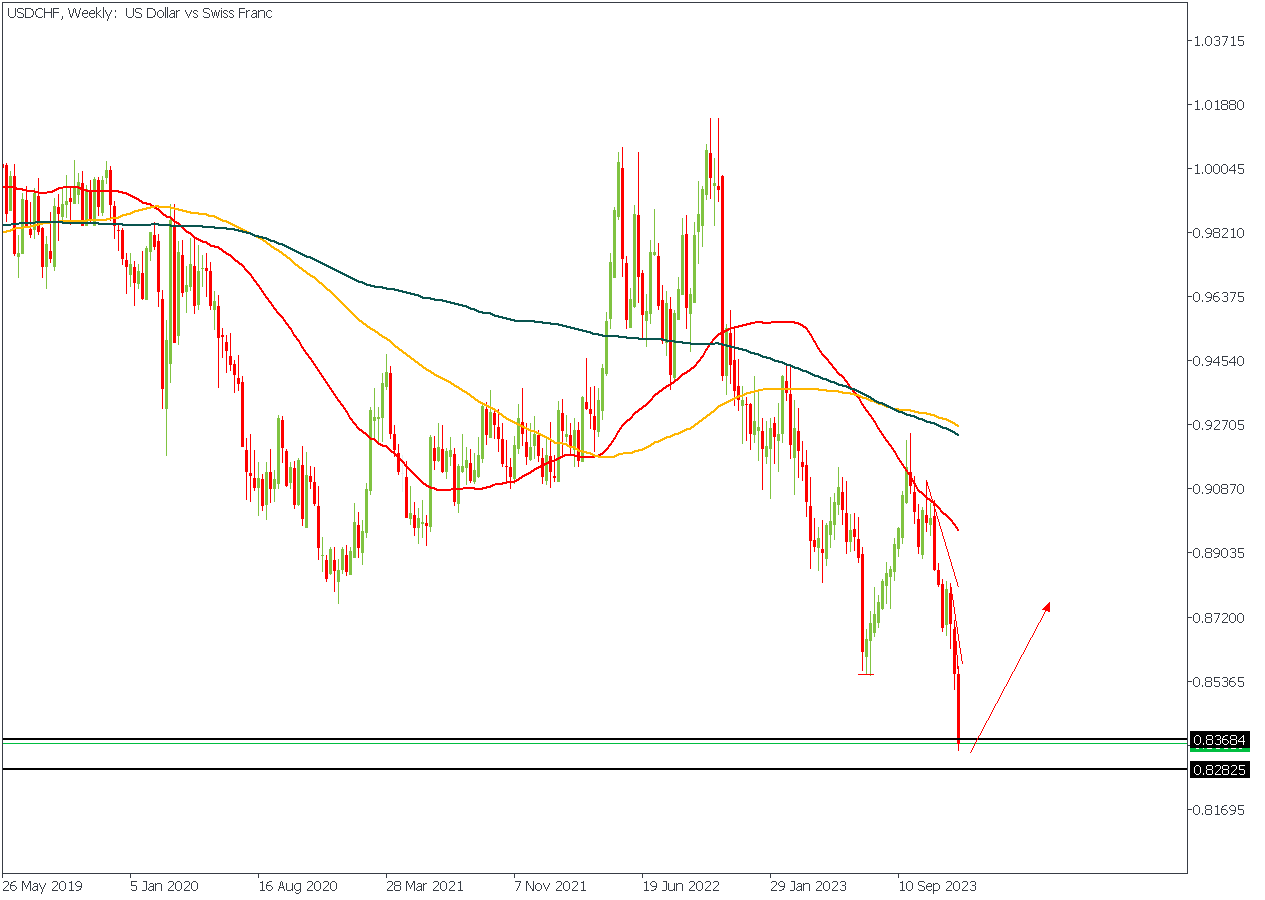
The weekly timeframe of USDCHF presents us with an interesting scenario as we see price trading within the demand zone. Within this demand zone, I will be waiting patiently for a clear reversal pattern before I take a long position, however, I am certain the overall sentiment is bullish since price has not created a new lower high yet in recent times.
Analyst’s Expectations:
- Direction: Bearish
- Target: 0.85041
- Invalidation: 0.82790
CONCLUSION
The trading of CFDs comes at a risk. Thus, to succeed, you have to manage risks properly. To avoid costly mistakes while you look to trade these opportunities, be sure to do your due diligence and manage your risk appropriately.
USDCAD Stages a Rebound After Sharp Selloff
- USDCAD is recovering following December nosedive
- Positive momentum is gaining traction but sustained rebound not certain yet
- Is this just a temporary respite?
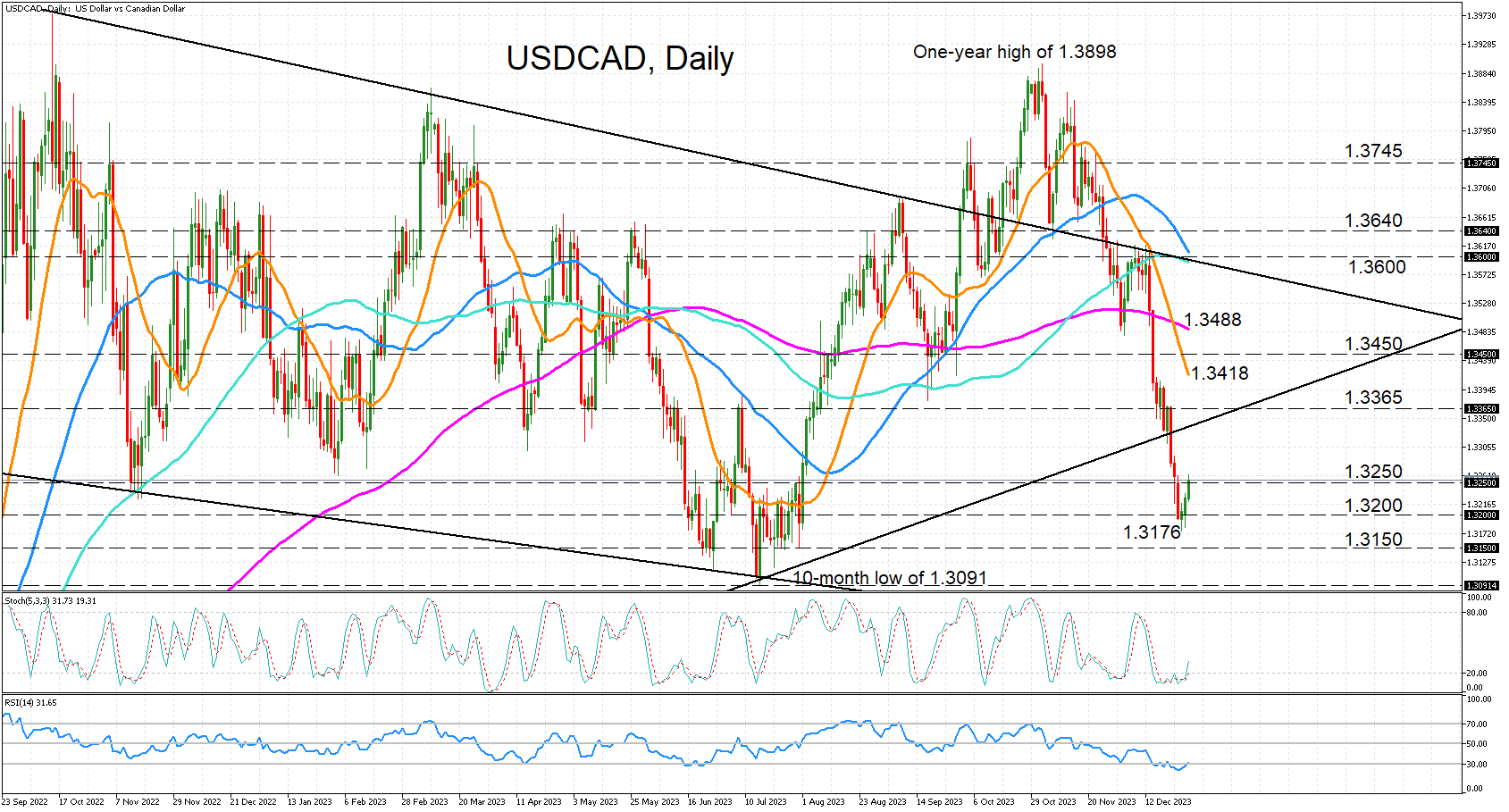
USDCAD is headed for a third straight day of gains as it recovers from Wednesday’s five-month low of 1.3176. The pair’s two-month old slide accelerated in mid-December, pushing the momentum indicators deep into oversold territory.
But the bearish pressures have started to ease, with the immediate bias turning positive, as both the stochastics and RSI are attempting to exit their oversold zones. However, there is some way to go before a clearer picture of a durable recovery starts to emerge.
The pair is testing the congestion region of 1.3250 today. A daily close above this level followed by a break above the next hurdle of 1.3365 would provide more tenacity to the bulls. But ideally, the price would need to climb to at least above the 20-day simple moving average (SMA), currently located at 1.3418, for the rebound to become more sustainable. If successful, this would lay the groundwork for a push towards the 1.3600 area where the 50- and 100-day SMAs are about to intersect.
However, if the bullish momentum fades and the price reverses lower, the 1.3200 level is the nearest and only support preventing USDCAD from resuming its medium-term downtrend. A drop below 1.3200 would clear the path for the 1.3150 area before revisiting the July trough of 1.3091.
In brief, this week’s bounce for USDCAD is still in its infancy and for the short-term picture to improve convincingly, the bulls need to reclaim the 20-day SMA. Otherwise, the pair could be headed for fresh lows.
Japanese Yen Edges Higher
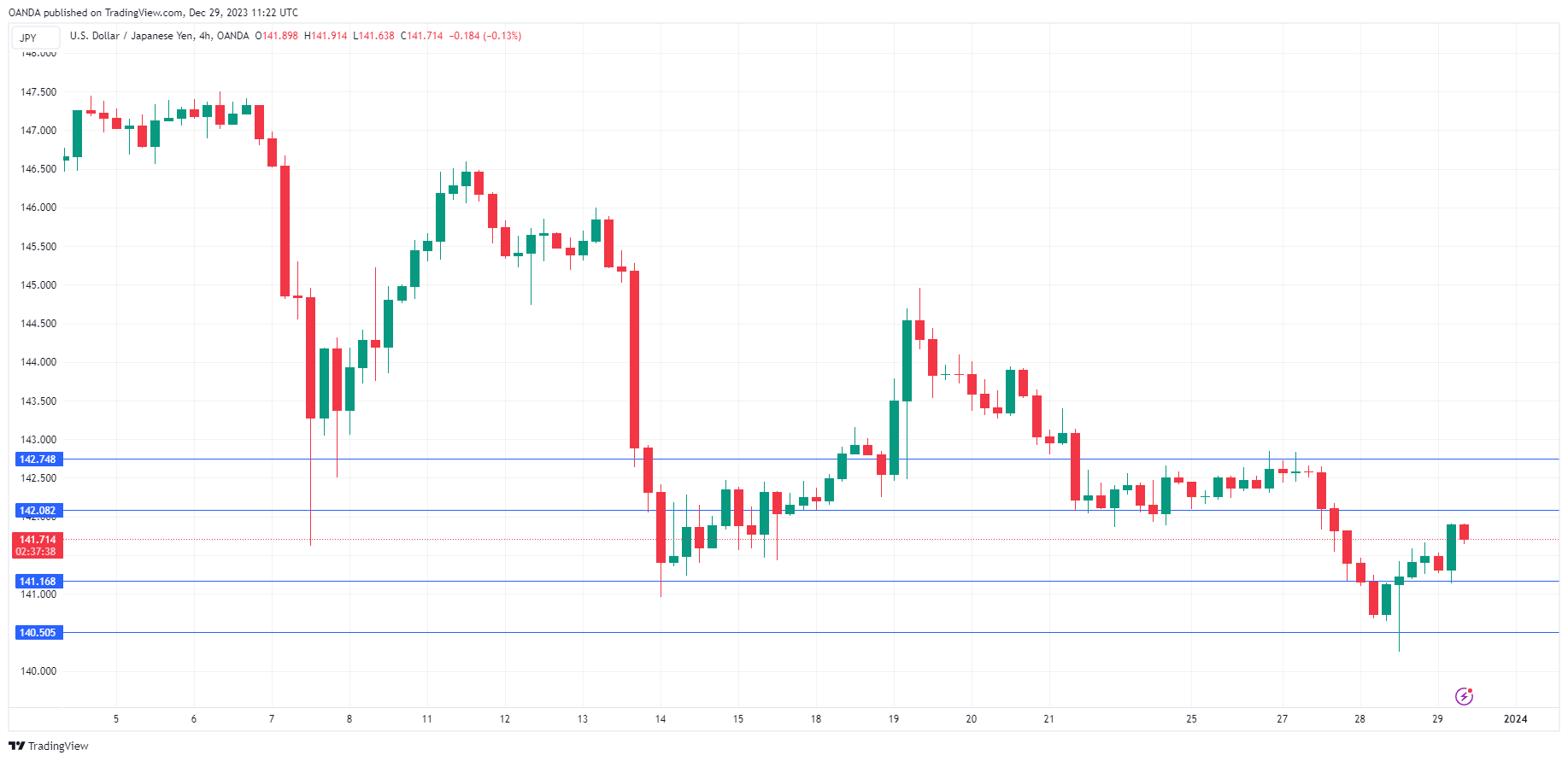
The Japanese yen is slightly lower on Friday. In the European session, USD/JPY is trading at 141.75, up 0.27%.
The US dollar has taken a tumble in recent weeks against most of the major currencies, including the yen. Since mid-November, the yen has jumped 6.4% against the ailing US dollar. This has relieved pressure on Tokyo to intervene in the currency markets, which was a serious concern just six weeks ago when the exchange rate was above 151.
The Bank of Japan didn’t adjust its policy settings at the December meeting, although speculation was high that the BoJ might make a shift after Governor Ueda hinted at a change in policy before the meeting. The BoJ could make a move in January or perhaps in April, after the annual wage negotiations in March.
The markets are expecting the Fed to hit the rate cut button early and often next year. The markets have priced in a rate cut by March at 86% and anticipate 150 basis points in cuts next year. The Fed is more cautious, and Fed members have urged the markets to lower these expectations.
Chicago PMI expected to decelerate
The US releases Chicago PMI, an important business barometer, later today. The PMI was unexpectedly strong in November with a reading of 55.8, which marked the first expansion after fourteen straight months of contraction. The 50 line separates expansion from contraction.
The upward spike may have been a one-time occurrence due to the end of the United Auto Workers strike as activity rose in the auto manufacturing industry. The consensus estimate for December stands at 51.0, which would point to weak expansion.
USD/JPY Technical
- USD/JPY tested support at 141.16 before reversing directions. The next support level is 140.50
- There is resistance at 142.08 and 142.74
New Zealand Dollar Under Pressure, Chinese PMIs Next
- Chicago PMI expected to decelerate
- China releases PMIs on Saturday
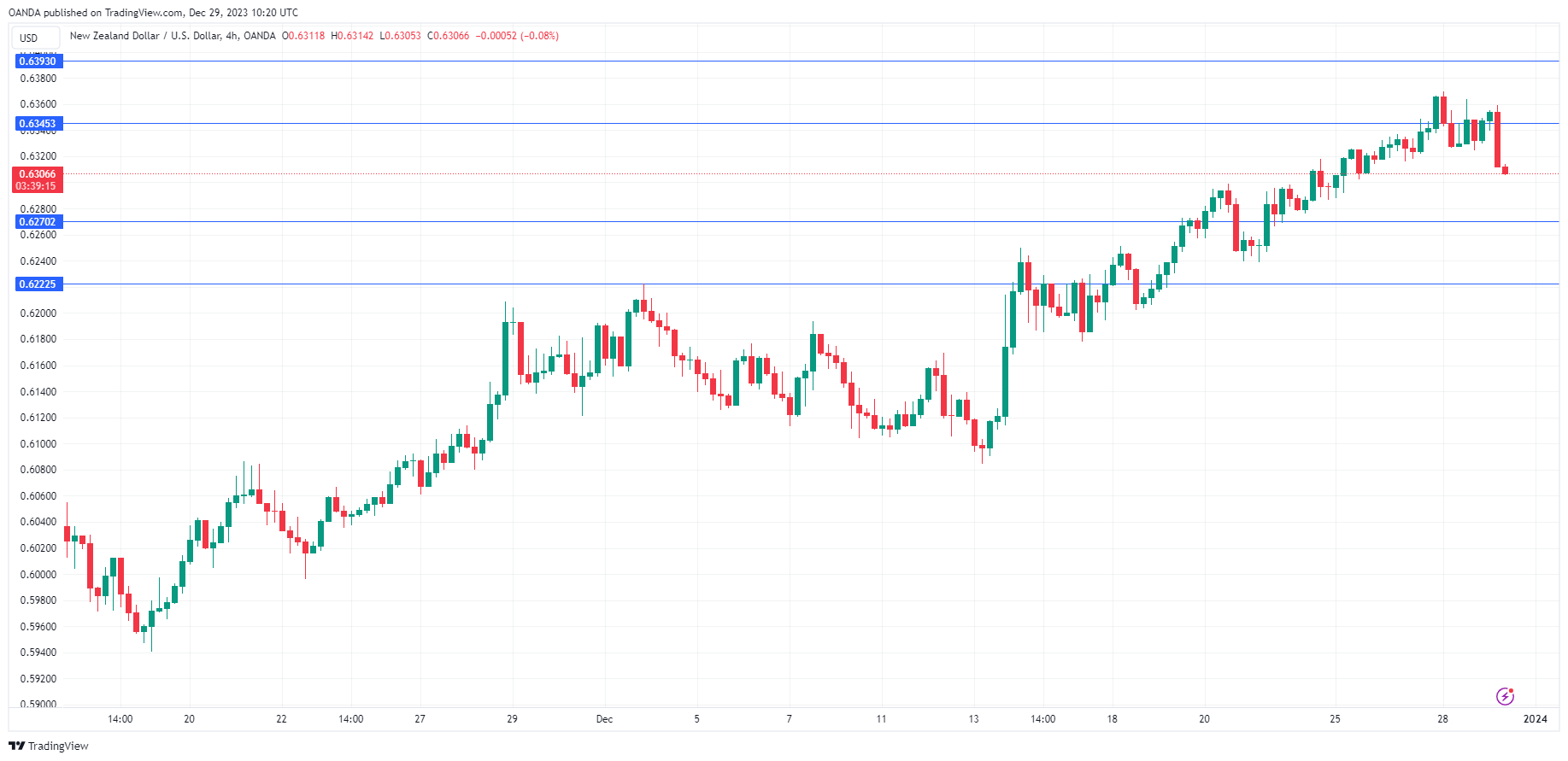
The New Zealand dollar is in negative territory on Friday. In the European session, NZD/USD is trading at 0.6308, down 0.37%.
The US dollar has hit a rough patch lately and retreated against most of the majors. The New Zealand dollar has been full marks, climbing some 400 basis points over the past five weeks. The Federal Reserve meeting earlier this month has boosted risk appetite, as Fed Chair Powell jumped on the rate-cut bandwagon, signalling that the Fed is finally done raising interest rates.
Powell pencilled in three rate cuts next year while the markets have priced in double that. Fed members have urged caution, but the markets remain exuberant and have priced in an initial rate cut in March. Inflation is getting closer to the 2% target and with the labour market in good shape, it looks like the Fed could guide the US economy to a soft landing and avoid a recession.
New Zealand doesn’t release any tier-1 events until mid-January, but Chinese PMIs, which will be released on Saturday, could have an impact on the direction of the New Zealand dollar. China is New Zealand’s largest export market and the PMIs will provide a report card on the health of China’s service and manufacturing sectors. China’s recovery has been patchy and the slowdown has resulted in deflation in the world’s number two economy. The manufacturing sector has been stuck in contraction for most of this year and non-manufacturing expansion has been steadily falling and has stagnated over the past two months.
The US releases Chicago PMI, an important business barometer, later today. The PMI shocked in November with a reading of 55.8, which marked the first expansion after fourteen straight months of contraction. The upward spike may have been a one-time occurrence due to the end of the United Auto Workers strike as activity rose in the auto manufacturing industry. The consensus estimate for December stands at 51.0, which would point to weak expansion.
NZD/USD Technical
- NZD/USD tested resistance at 0.6345 in the Asian session but has reversed directions. Below, there is support at 0.6031
- There is resistance at 0.6150 and 0.6195
EUR/USD Steady as Spanish CPI Lower than Expected
- Spanish CPI lower than expected at 3.1%
- Chicago PMI expected to decelerate to 51.0
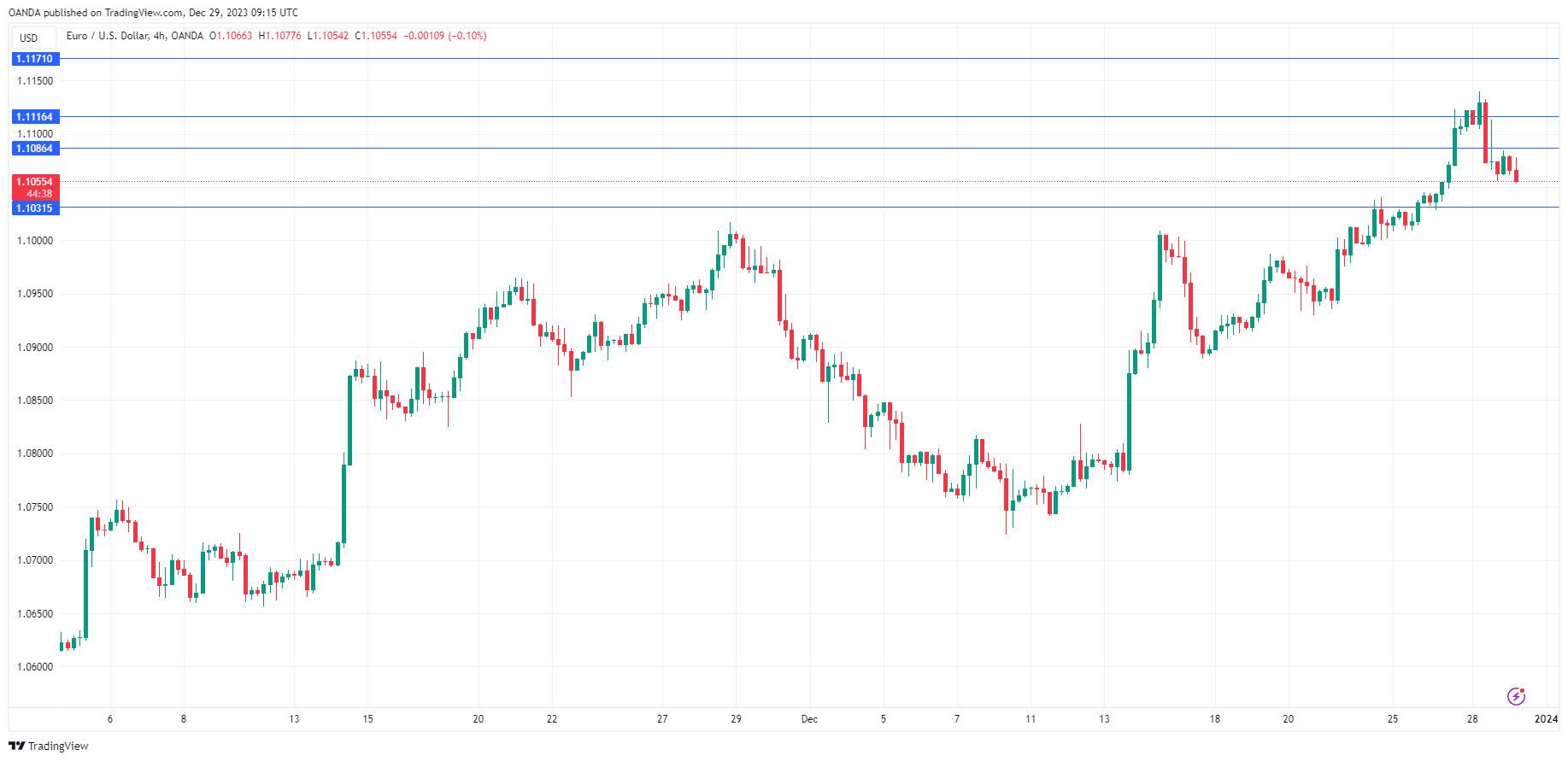
The euro is calm in Friday trade. In the European session, EUR/USD is trading at 1.1053, down 0.08%.
Spanish CPI dips to 3.1%
Spain released the December inflation report today, with CPI dipping to 3.1% y/y, down from 3.2% in November. This was better than expected as the consensus estimate stood at 3.4%. The reading was the lowest rate since August, with the drop attributed to lower prices for fuel, food and electricity. Monthly, CPI rose from -0.3% to 0.0%, but this was lower than the consensus estimate of 0.3%. Core CPI dropped to 3.8% y/y, down from 4.5% in November.
Germany, France and the eurozone will follow with their inflation releases next week. If the data shows that inflation eased in December, it will put pressure on the European Central Bank to cut rates in the first half of 2024. The ECB has not followed the Federal Reserve and continues to push back against rate-cut expectations. The markets have priced in 150 basis points from the ECB next year, with an initial cut expected in April.
ECB President Lagarde has poured cold water over rate-cut fever, saying that the ECB should “absolutely not lower its guard”. Lagarde may have to shift her hawkish stance or risk tipping the weak eurozone economy into a recession. If next week’s inflation report indicates that inflation is falling, we can expect the voices in the ECB calling for looser policy to get louder.
The US releases Chicago PMI, an important business barometer, later today. The PMI shocked in November with a reading of 55.8, which marked the first expansion after fourteen straight months of contraction. The upward spike may have been a one-time blip due to the end of the United Auto Workers strike as activity rose in the auto manufacturing industry. The consensus estimate for December stands at 51.0, which would point to weak expansion.
EUR/USD Technical
- EUR/USD continues to put pressure on resistance at 1.1086. Above, there is resistance at 1.1171
- 1.1116 and 1.1031 are providing support
GBPUSD Halts Advance But Retains Bullish Structure
- GBPUSD pares some gains after posting a 4-month peak
- Positive bias holds as momentum indicators are skewed to the upside
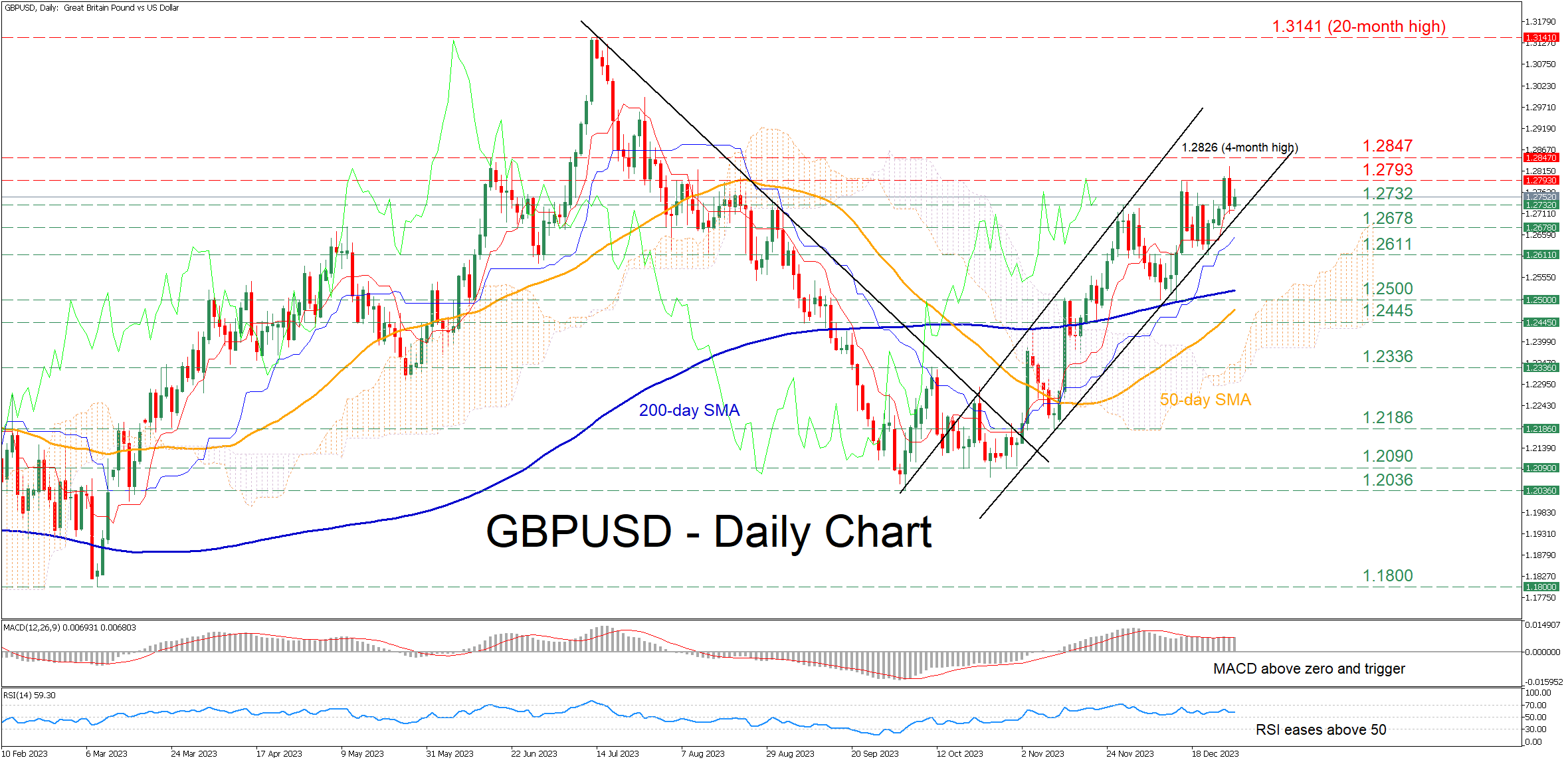
GBPUSD had been forming a profound structure of higher highs following its break above a crucial descending trendline in early November. Although the pair’s rally has temporarily paused at the four-month peak of 1.2826, the impending completion of a golden cross between the 50- and 200-day simple moving averages (SMAs) could infuse upside pressures.
Given that both the RSI and MACD are within their positive territories, the bulls could attempt to erase the latest weakness and conquer the recent resistance of 1.2793. A violation of that hurdle could open the door for the four-month peak of 1.2826. Failing to halt there, the pair might advance towards the June high of 1.2847.
On the flipside, if the pair reverses lower, a couple of previous resistance territories such as 1.2732 and 1.2678 may now act as initial lines of defense. Piercing through that floor, the price may then descend towards the recent support of 1.2611. Even lower, the December bottom of 1.2500 could provide downside correction.
In brief, even if GBPUSD’s advance seems to be losing steam, near-term risks remain clearly tilted to the upside. For that to change, the price needs to decisively break below its upward sloping channel.
EUR/GBP Daily Outlook
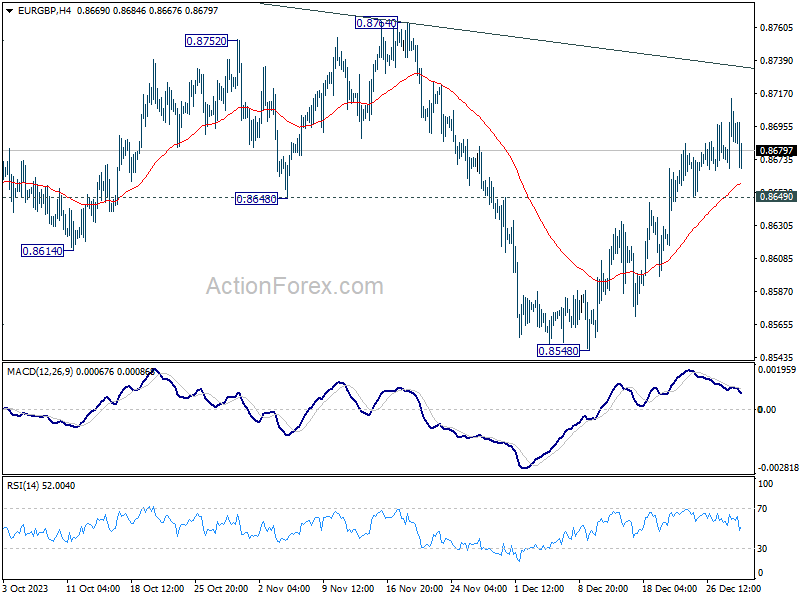
Daily Pivots: (S1) 0.8667; (P) 0.8691; (R1) 0.8713; More...
For now, further rally could still be seen in EUR/GBP with 0.8649 intact. Rebound from 0.8548 could extend to 0.8764 key resistance. Nevertheless, break of 0.8649 will argue that the rebound has completed, and turn bias back to the downside for 0.8548 support instead.
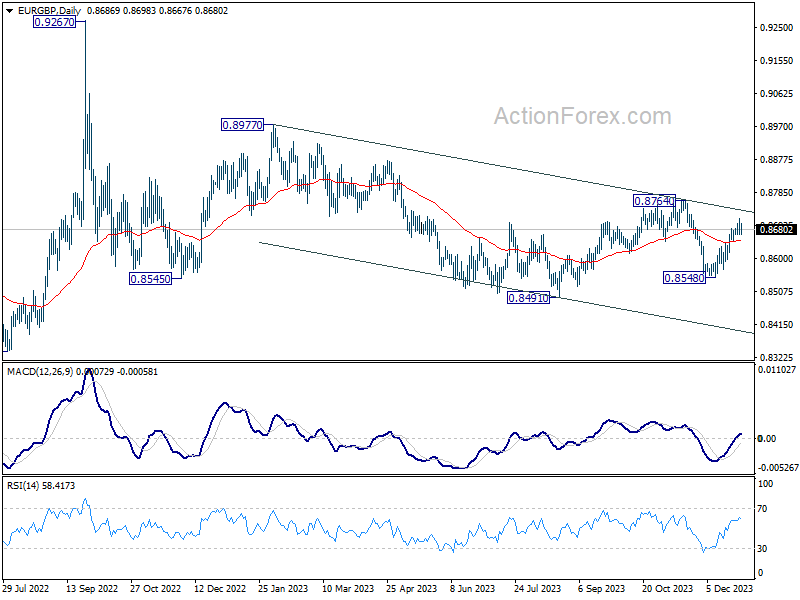
In the bigger picture, current development suggests that down trend from 0.9267 (2022 high) is still in progress. This decline is seen as the third leg of the pattern from 0.9499 (2020 high). Break of 0.8201 will target 100% projection of 0.9499 to 0.8201 from 0.9267 at 0.7969. In any case, outlook will stay bearish as long as 0.8764 resistance holds.
EUR/AUD Daily Outlook
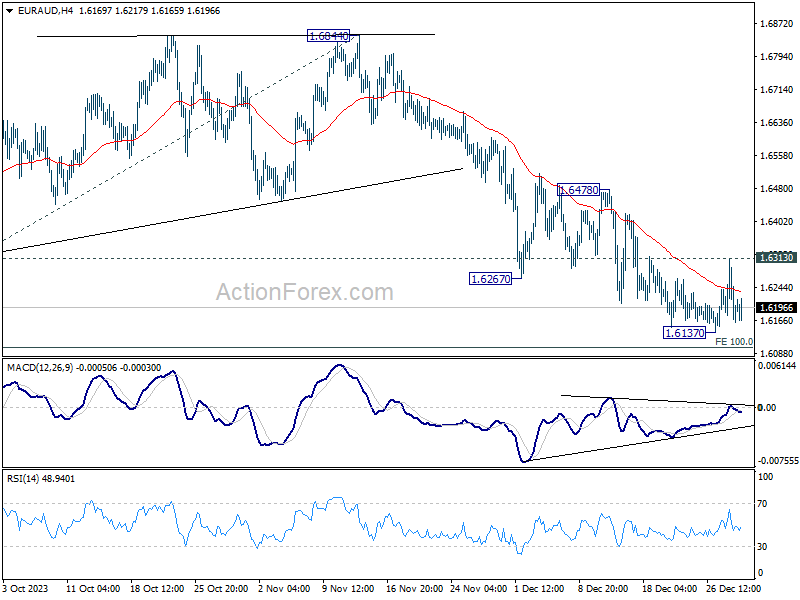
Daily Pivots: (S1) 1.6137; (P) 1.6226; (R1) 1.6288; More..
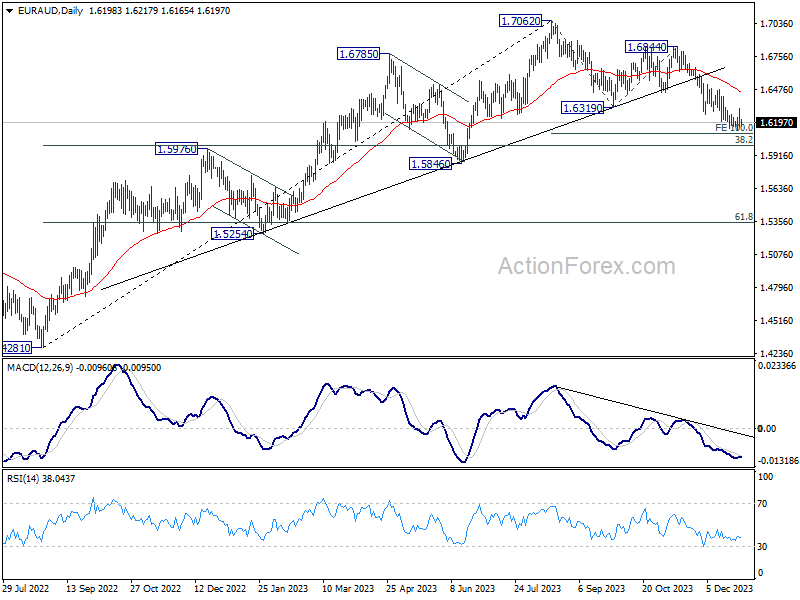
EUR/AUD quickly retreated after recovery to 1.6313 and intraday bias stays neutral. On the downside, below . 1.6137 will target 100% projection of 1.7062 to 1.6319 from 1.6844 at 1.6106. Meanwhile, considering bullish convergence condition in 4H MACD, firm break of 1.6313 resistance should indicate short term bottoming, and turn bias back to the upside for 1.6478 resistance instead.
In the bigger picture, fall from 1.7062 medium term top is seen as correcting the whole up trend from 1.4281 (2022 low). Deeper decline would be seen to 38.2% retracement of 1.4281 to 1.7062 at 1.6000. Strong support could be seen there to bring rebound on first attempt. But risk will stay on the downside as long as 1.6844 resistance holds. Sustained break of 1.6000 would bring further fall to 61.8% retracement at 1.5343.
EUR/JPY Daily Outlook
Daily Pivots: (S1) 155.71; (P) 156.59; (R1) 157.34; More..
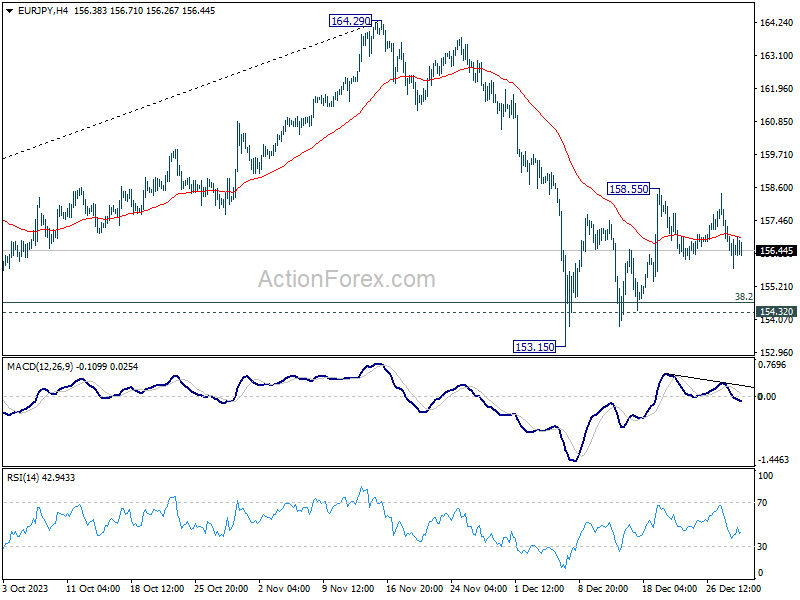
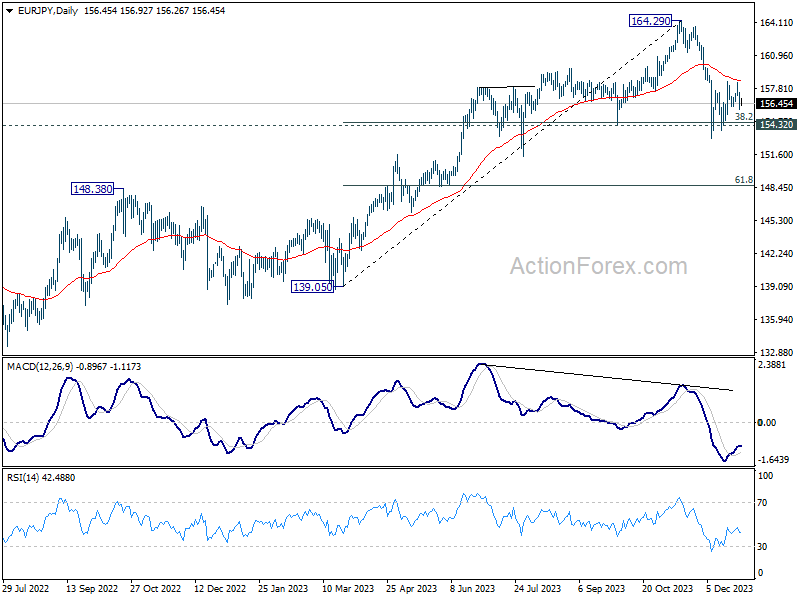
Intraday bias in EUR/JPY remains neutral as range trading continues inside 153.15/158.55. On the upside, above 158.55 will resume the rebound from 153.15. On the downside, break of 153.15 will resume whole fall from 164.39 to 61.8% retracement of 139.05 to 164.29 at 148.69.
In the bigger picture, price actions from 164.29 medium term top are tentatively seen as a correction to rise from 139.05 for now. As long as 148.48 resistance turned support holds (2022 high), larger up trend from 114.42 (2020 low) could still resume through 164.29 at a later stage.
GBP/JPY Daily Outlook
Daily Pivots: (S1) 178.86; (P) 180.18; (R1) 181.35; More...
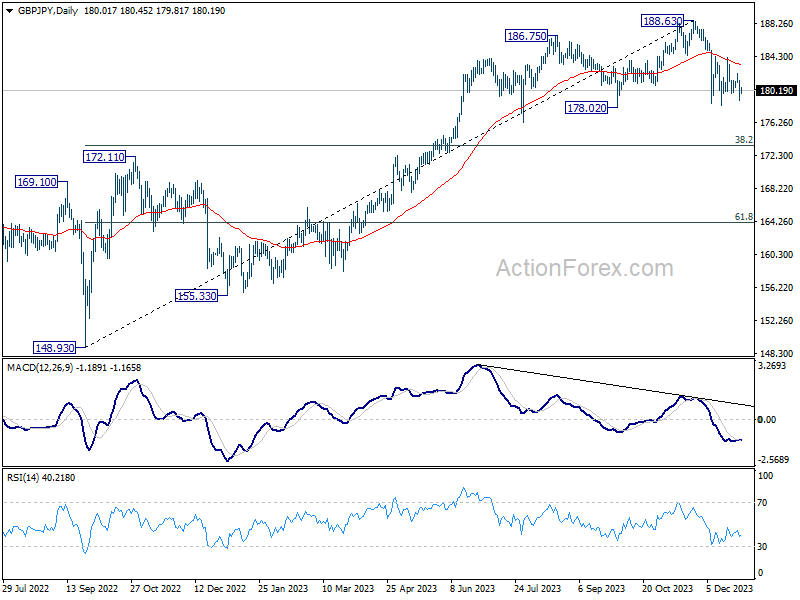
Range trading continues in GBP/JPY above 178.32 and intraday bias remains neutral. Further decline is expected as long as 184.15 resistance holds. On the downside, break of will resume the decline from 188.63 and target 38.2% retracement of 148.93 to 188.63 at 173.46. However, decisive break of 184.15 will argue that pull back from 188.63 has completed and bring retest of this high.
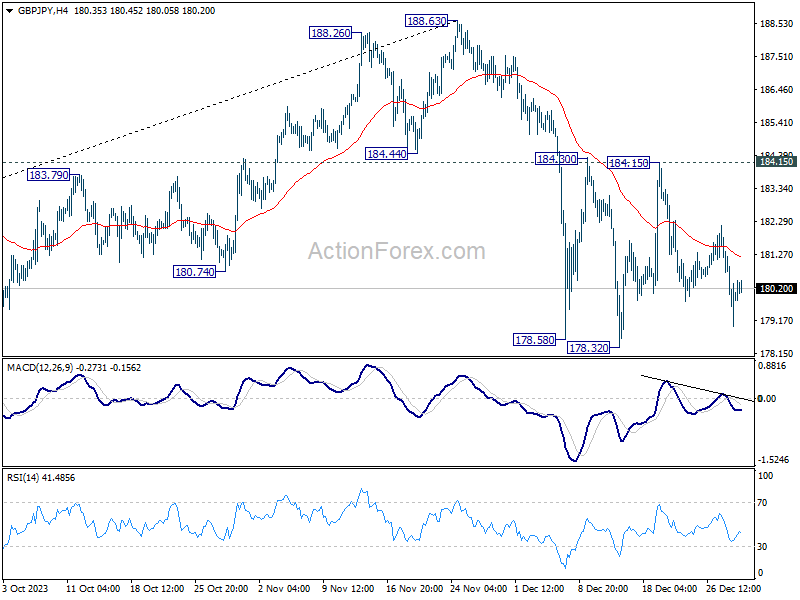
In the bigger picture, price actions from 188.63 medium term top are currently seen as a correction to the up trend from 148.93 (2022 low) only. As long as 172.11 resistance turned support holds, larger up trend from 123.94 (2020 low) is still in favor to resume through 188.63 at a later stage.