

Sample Category Title
GBP/USD Weekly Outlook
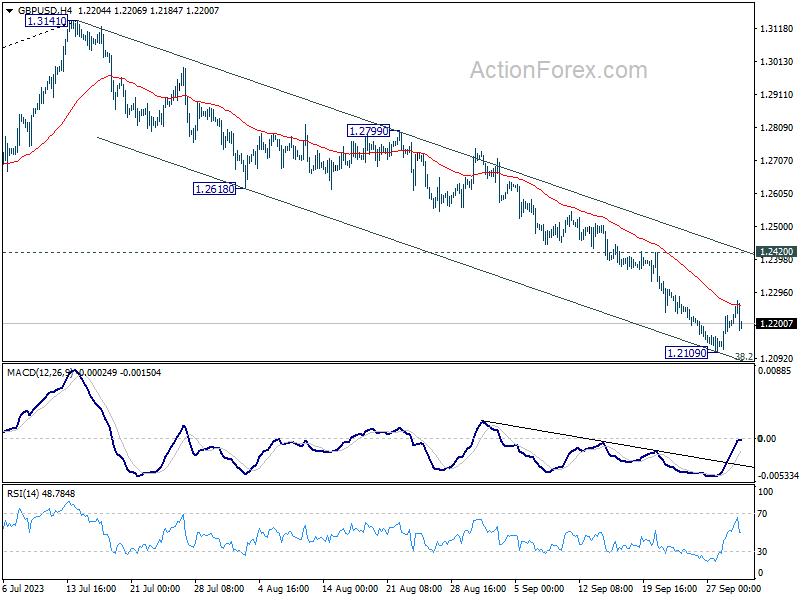
GBP/USD's fall continued to as low as 1.2109 last week before recovering mildly. Initial bias stays neutral this week for some more consolidations. While stronger rise cannot be ruled out, near term outlook will stay bearish as long as 1.2420 resistance holds. On the downside, decisive break of 1.2075 fibonacci level would carry larger bearish implication and target 1.1801 support next.
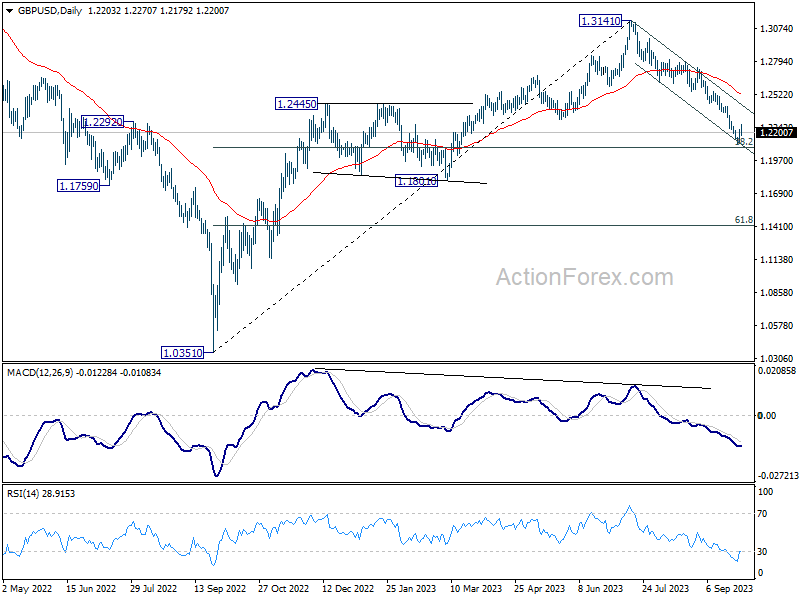
In the bigger picture, fall from 1.3141 medium term top could still be a correction to up trend from 1.0351 (2022 low) only. But risk of complete trend reversal is rising. Sustained break of 38.2% retracement of 1.0351 to 1.3141 at 1.2075 will pave the way to 61.8% retracement at 1.1417. For now, risk will stay on the downside as long as 55 D EMA (now at 1.2517) holds, in case of rebound.
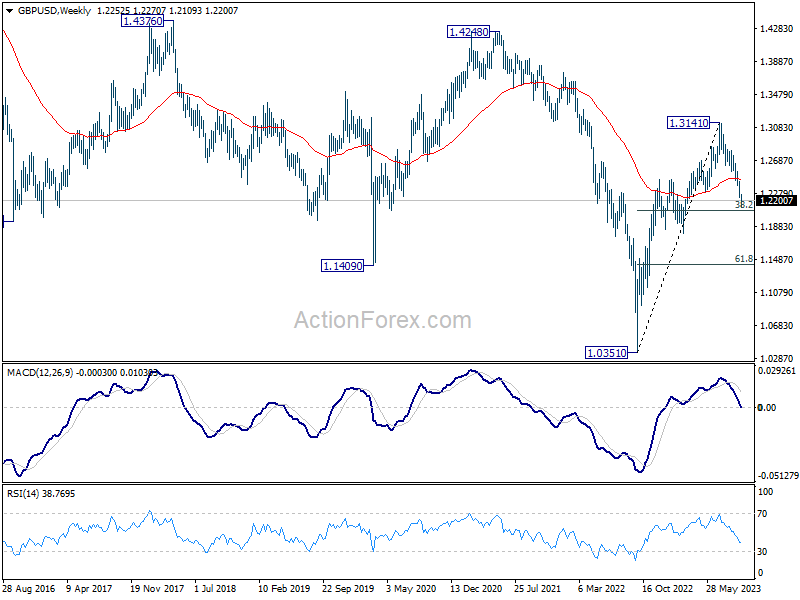
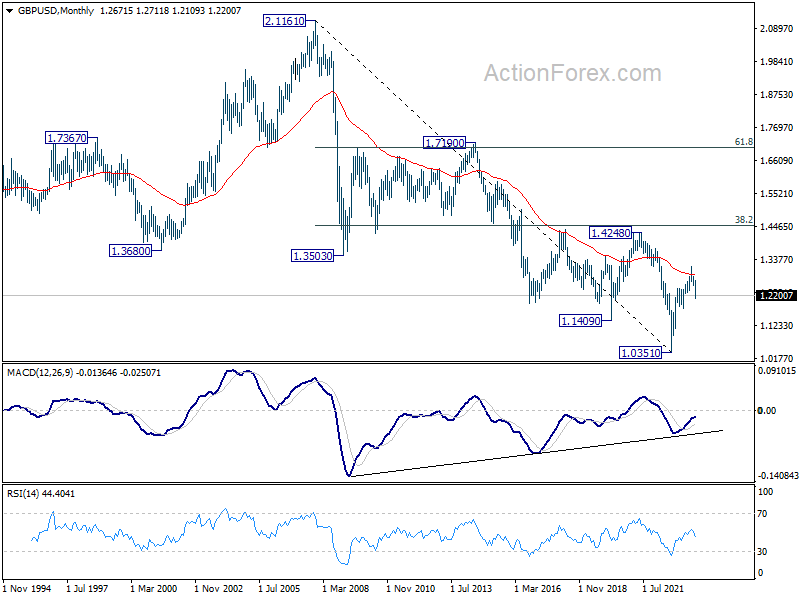
In the long term picture, there is no clear sign of trend reversal yet. Rise from 1.0351 could be part of a consolidation pattern to down trend from 2.1161 (2007 high). Rejection by 55 M EMA (now at 1.2900) will retain long term bearishness for extending the down trend at a later stage.
USD/CHF Weekly Outlook
USD/CHF surged further to as high 0.9224 last week before retreating. Initial bias remains neutral this week for some more consolidations. While deeper pull back cannot be ruled out, near term outlook will stay bullish as long as 0.9019 support holds. On the upside, break of 0.9224 will resume larger rally to 0.9439 resistance next.
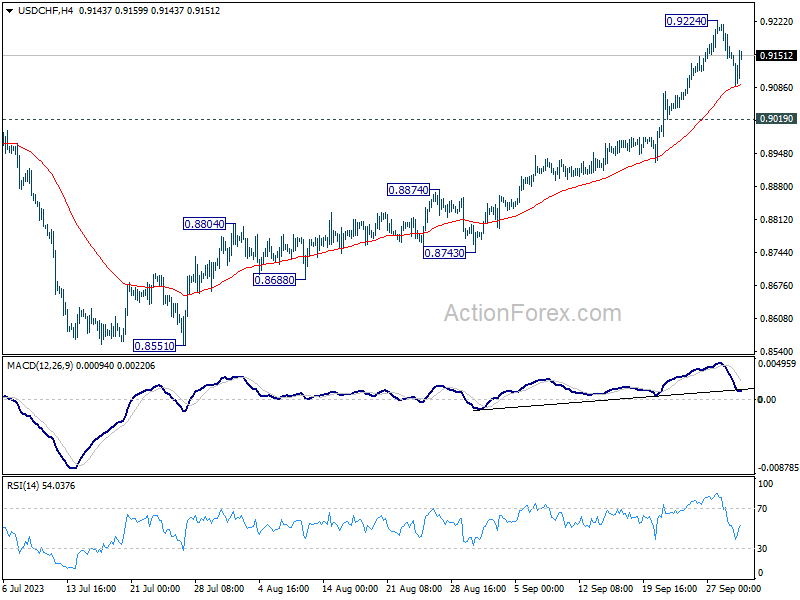
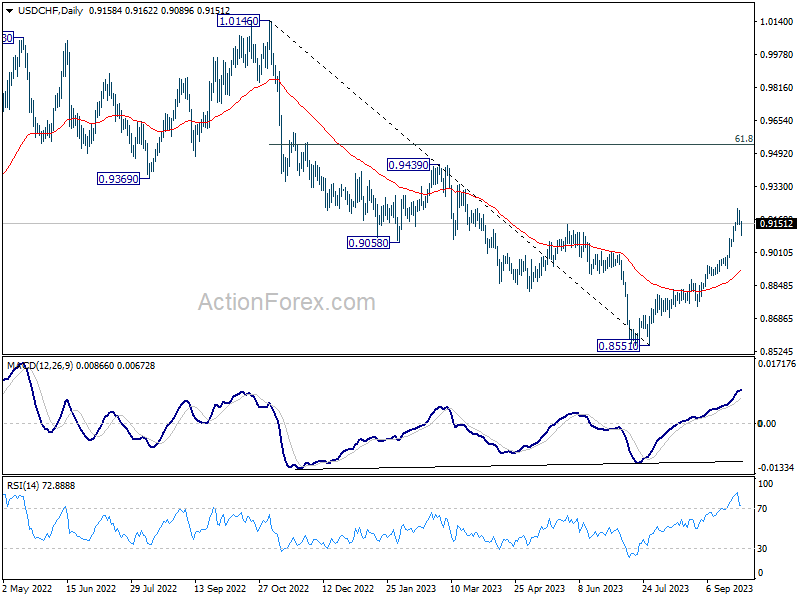
In the bigger picture, current development indicates that rise from 0.8551 is reversing whole down trend from 1.0146. Further rally would then be seen to 61.8% retracement at 0.9537 and above. For now, this will be the favored case as long as 55 D EMA (now at 0.8923) holds, even in case of deep pullback.
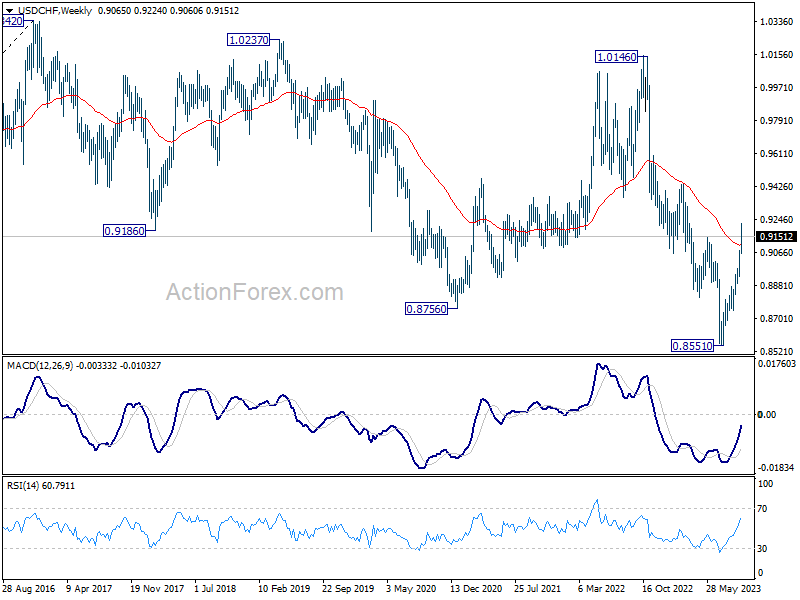
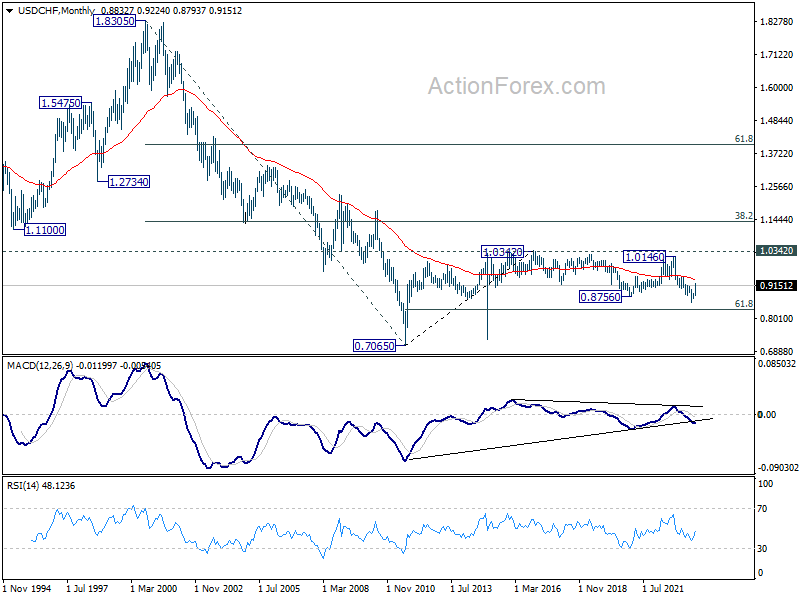
In the long term picture, there is no clear sign that down trend from 1.8305 (2000 high) has completed. With 38.2% retracement of 1.8305 to 0.7065 at 1.1359 intact, outlook is neutral at best.
AUD/USD Weekly Report
AUD/USD rebounded strongly after initial fall to 0.6630 last week. But upside is capped below 0.6510 resistance. Initial bias remains neutral this week and further fall is in favor. On the downside, break of 0.6330 will resume the whole decline from 0.7156 to 100% projection of 0.7156 to 0.6457 from 0.6894 at 0.6195. However, firm break of 0.6510 will confirm short term bottoming, and turn bias back to the upside.
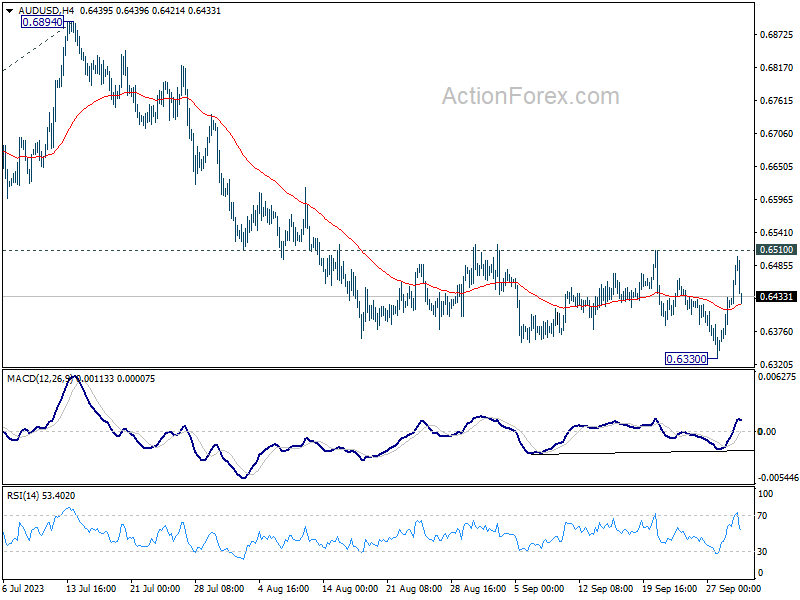
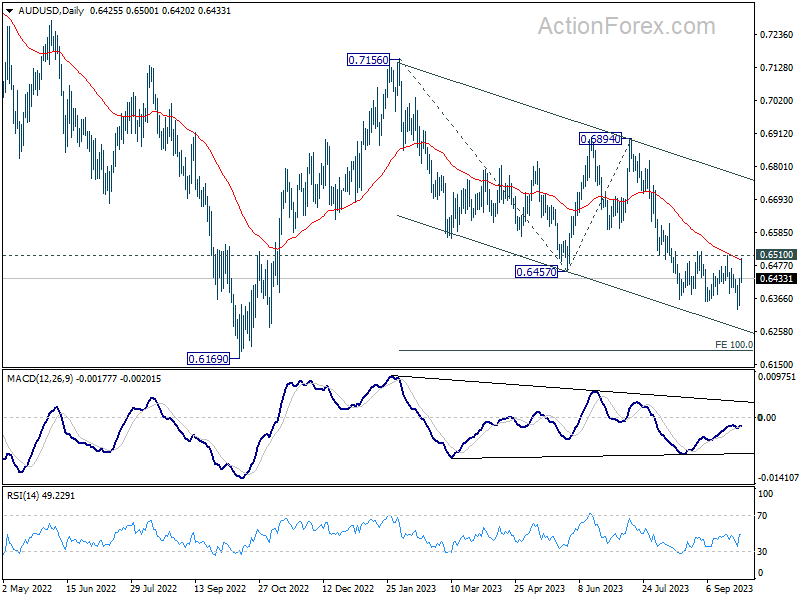
In the bigger picture, down trend from 0.8006 (2021 high) is possibly still in progress. Decisive break of 0.6169 will target 61.8% projection of 0.8006 to 0.6169 to 0.7156 at 0.6021. This will now remain the favored case as long as 0.6894, in case of strong rebound.
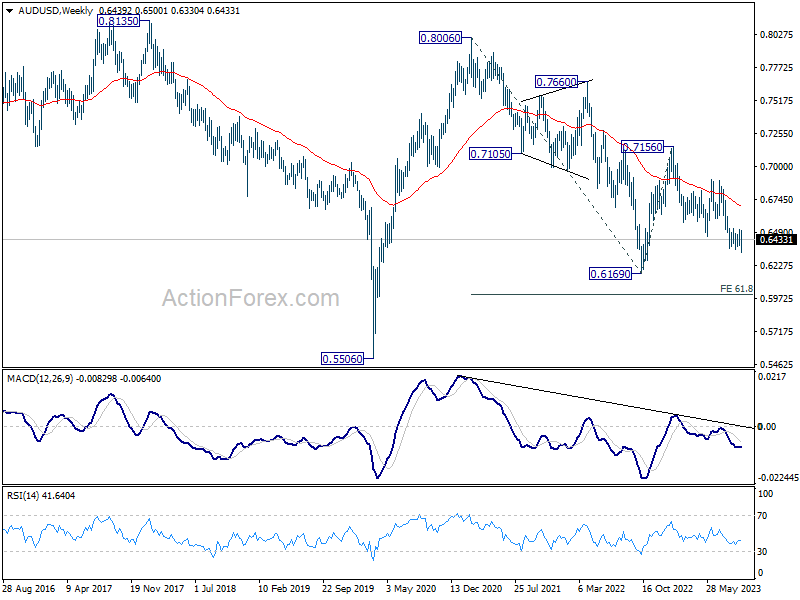
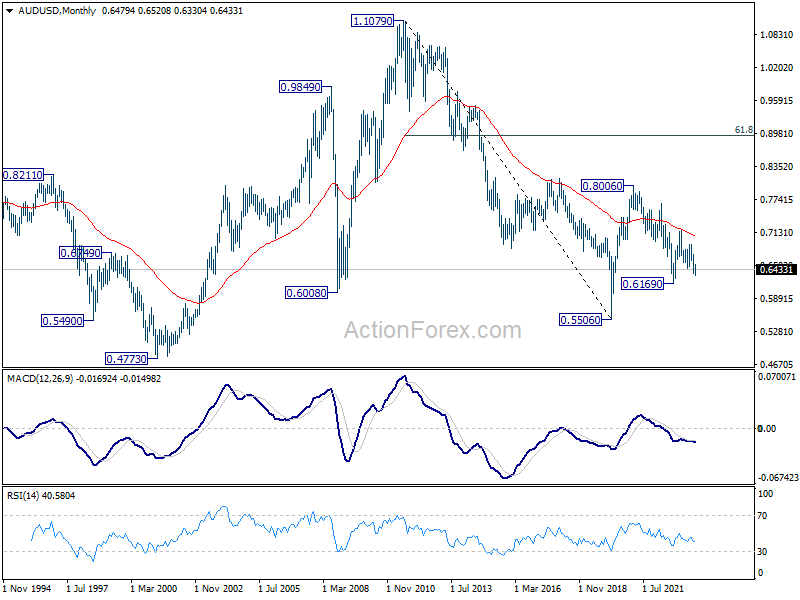
In the long term picture, while fall from 0.8006 might extend lower, the structure argues that it's merely a correction to rise from 0.5506 (2020 low). In case of downside extension, strong support should emerge above 0.5506 to bring reversal. But still, momentum of the next move will be monitored to adjust the assessment.
USD/CAD Weekly Outlook
USD/CAD's late rebound last week suggests that pull back from 1.3693 has completed at 1.3378. Initial bias is back on the upside for retesting 1.3693 high next. Strong resistance could be seen there to limit upside on first attempt. On the downside, below 1.3415 support will resume the fall from 1.3693 through 1.3378 to 61.8% retracement of 1.3091 to 1.3693 at 1.3321.
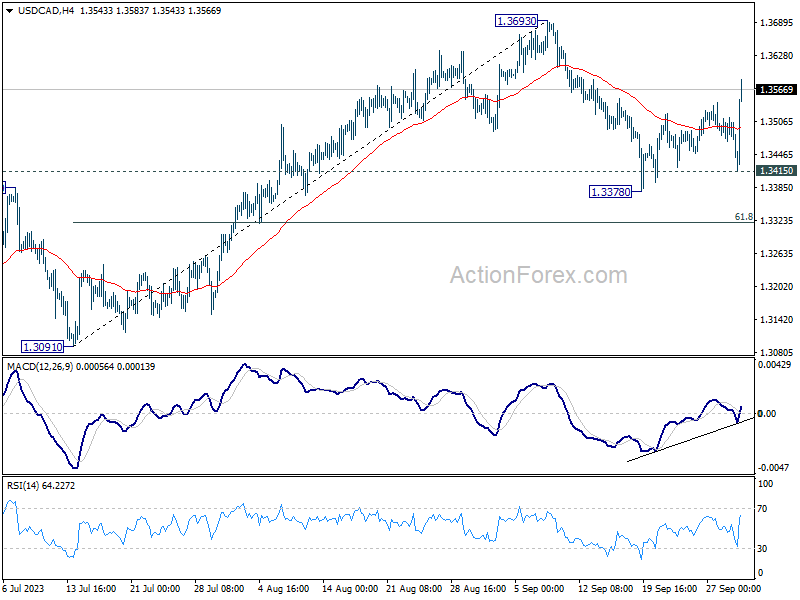
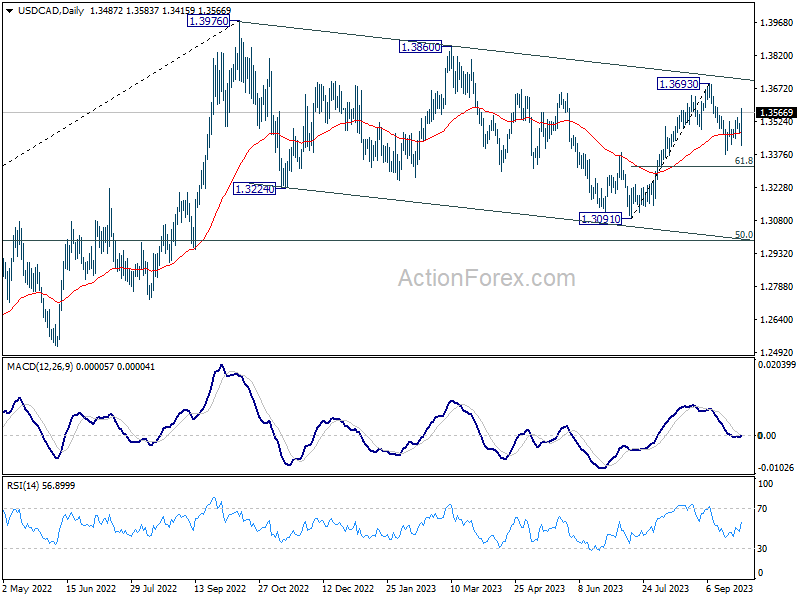
In the bigger picture, no change in the view that price actions from 1.3976 (2022 high) are a corrective pattern to up trend from 1.2005 (2021 low). The question is whether it has completed with three waves down to 1.3091, or still extending. But even in case of extension, downside should be contained by 50% retracement of 1.2005 to 1.3796 at 1.2991. Meanwhile, firm break of 1.3693 should validate the former case, and target 1.3976 and above.
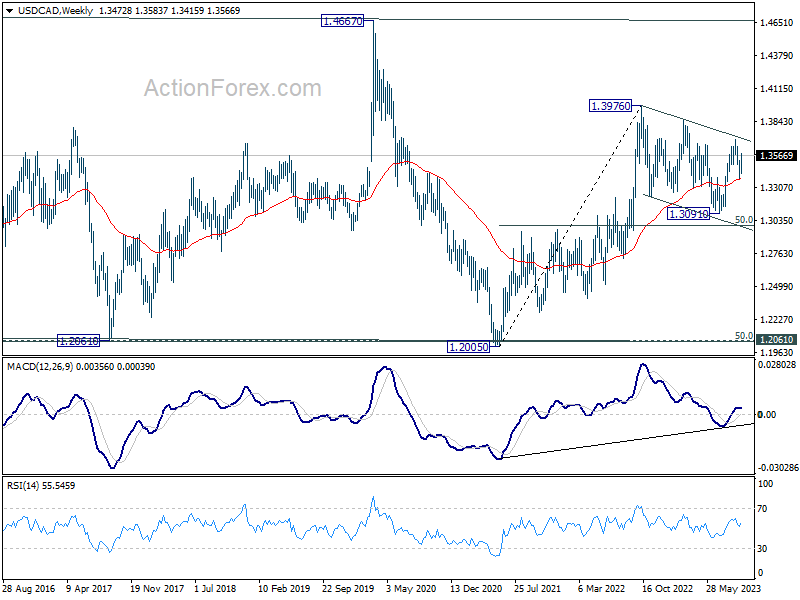
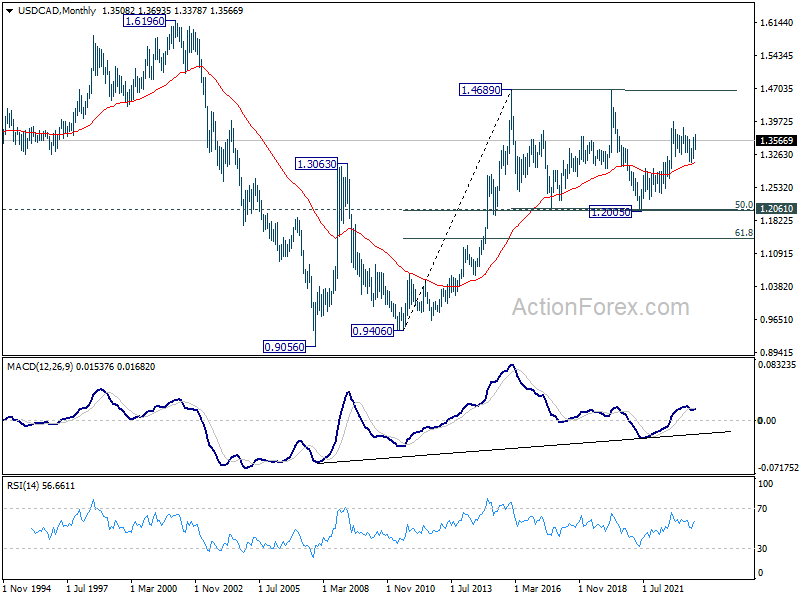
In the longer term picture, price actions from 1.4689 (2016 high) are seen as a consolidation pattern only, which might have completed at 1.2005. That is, up trend from 0.9506 (2007 low) is expected to resume at a later stage. This will remain the favored case as 55 M EMA (now at 1.3082) holds.
GBP/JPY Weekly Outlook
GBP/JPY turned into sideway trading last week and initial bias stays neutral this week for more consolidation. But deeper decline is expected as long as 183.34 resistance holds. On the downside, break of 180.78 will resume the fall from 186.75 to 176.29 support next. Nevertheless, firm break of 183.34 will turn bias back to the upside for retesting 186.75 high.
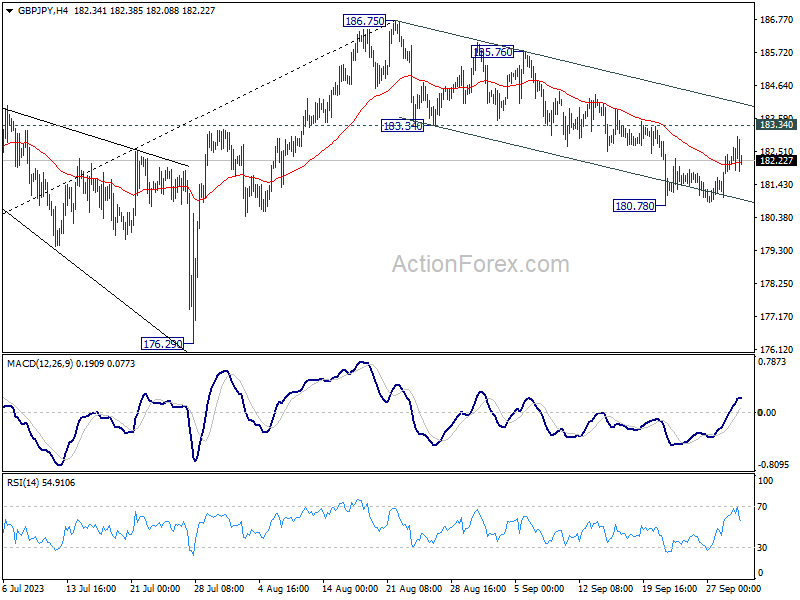
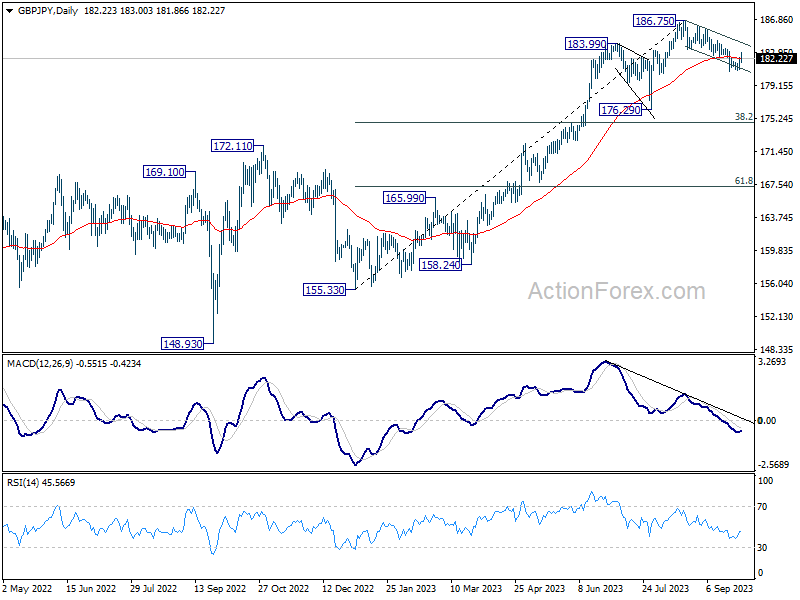
In the bigger picture, fall from 186.75 is currently seen as a corrective move only. As long as 176.29 support holds, larger up trend from 123.94 (202 low) should still be in progress. Break of 186.75 will target 195.86 (2015 high). Nevertheless, firm break of 176.29 will confirm medium term topping, and bring lengthier and deeper consolidations.
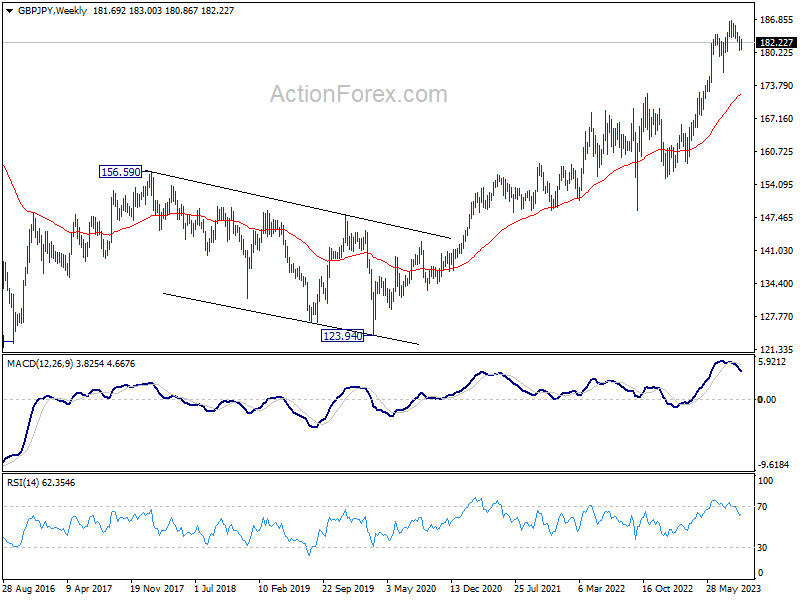
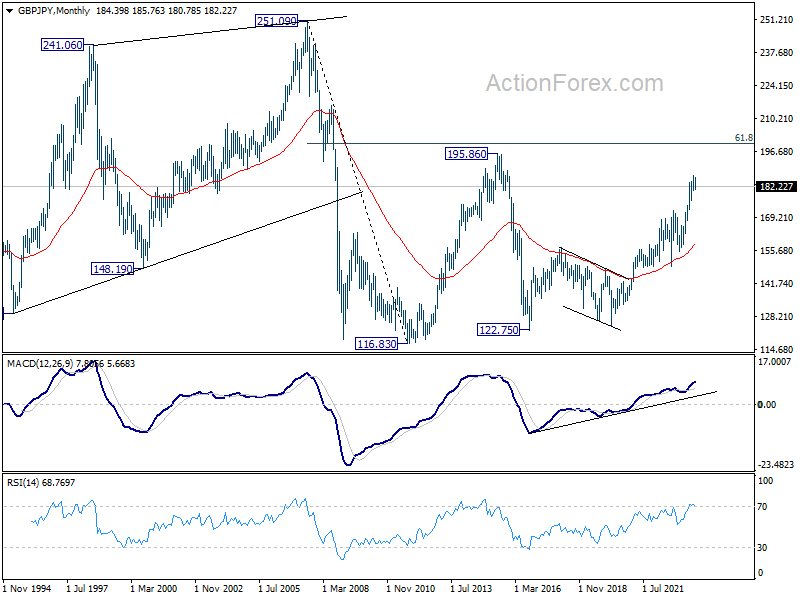
In the longer term picture, rise from 122.75 (2016 low) in still in progress but started losing upside momentum as seen in W MACD. Further rise will remain in favor, though, as long as 176.29 support holds, to retest 195.86 (2015 high).
EUR/JPY Weekly Outlook
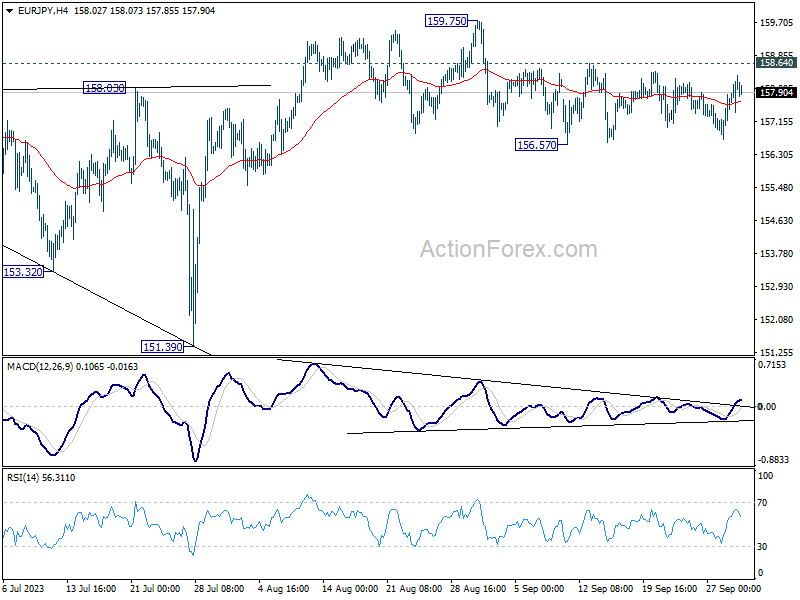
EUR/JPY extended the sideway patter from 156.57 last week and outlook is unchanged. Initial bias remains neutral this week for more consolidations. Deeper decline will remain in favor as long as 158.64 resistance holds. On the downside, break of 156.57 support, and sustained trading below 55 D EMA (now at 157.02) will argue that fall from 159.75 is a larger scale correction. Deeper decline would be seen back towards 151.39 support. Nevertheless, above 158.64 would bring retest of 159.75 high instead.
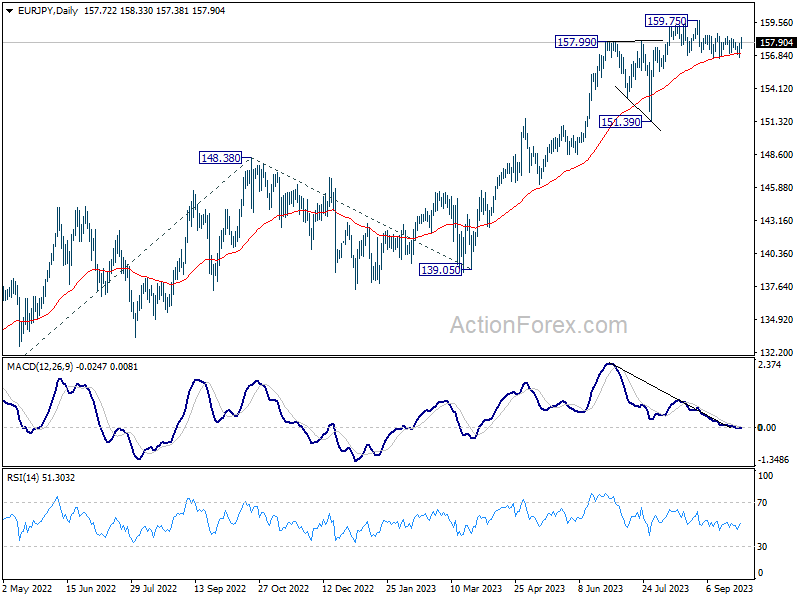
In the bigger picture, as long as 151.39 support holds, rise from 114.42 (2020 low) is still expected to continue. Next target is 100% projection of 124.37 to 148.38 from 139.05 at 163.06. Sustained break there will pave the way to retest long term resistance at 169.96.
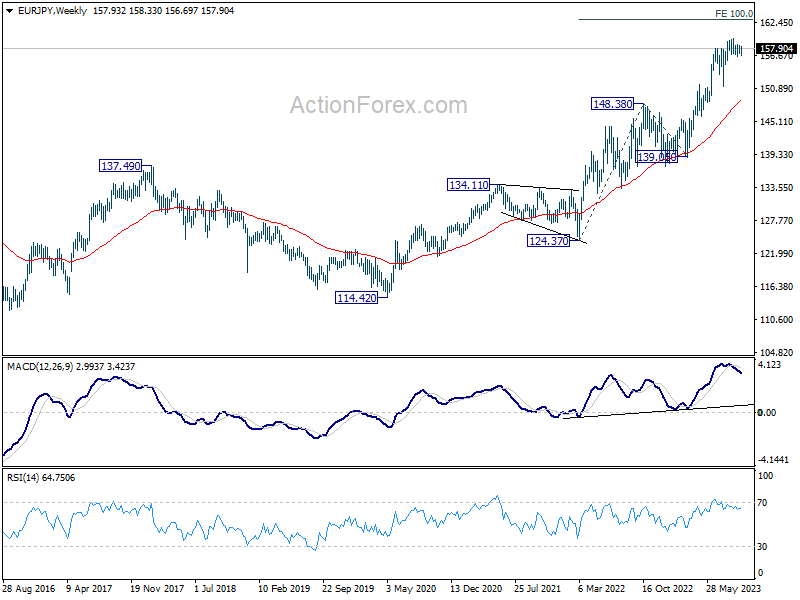
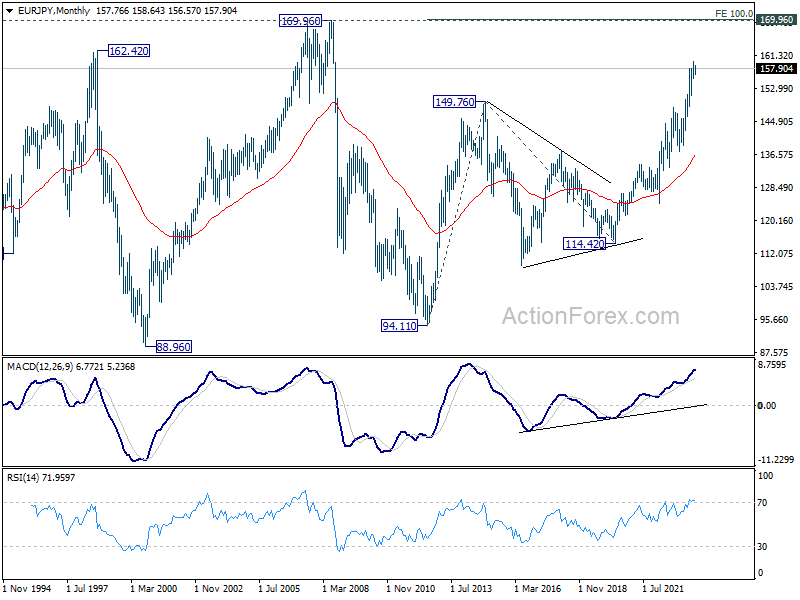
In the long term picture, rise from 109.03 (2016 low) is seen as the third leg of the whole up trend from 94.11 (2012 low). Next target is 100% projection of 94.11 to 149.76 from 114.42 at 170.07 which is close to 169.96 (2008 high).
EUR/GBP Weekly Outlook
EUR/GBP failed to sustain above 0.8700 last week and retreated. But downside is contained by 0.8629 support so far. Initial bias remains neutral this week first. On the upside, decisive break of 0.8700 resistance will carry larger bullish implication and bring stronger rally to 0.8874 resistance next. Nevertheless, rejection by this resistance will maintain bearish outlook that larger down trend is not over. Firm break of 0.8629 resistance turned support will turn bias back to the downside for 0.8568 support first.
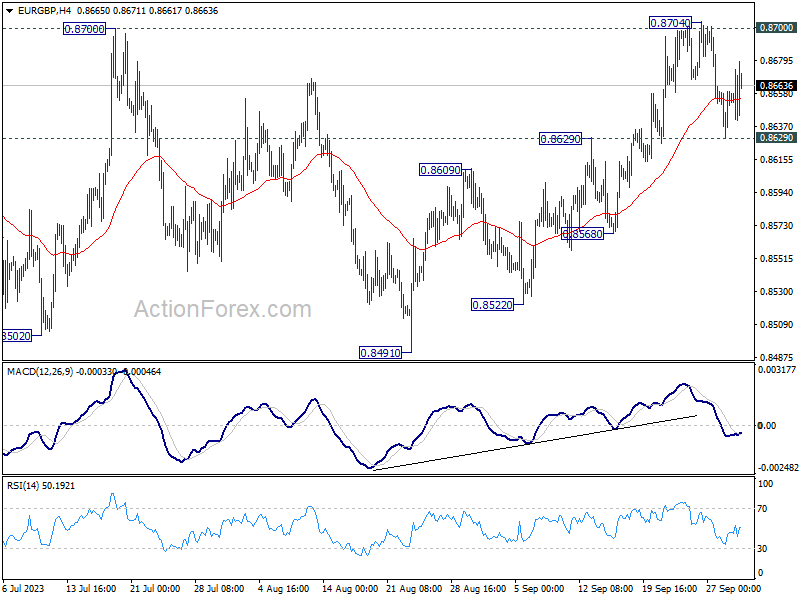
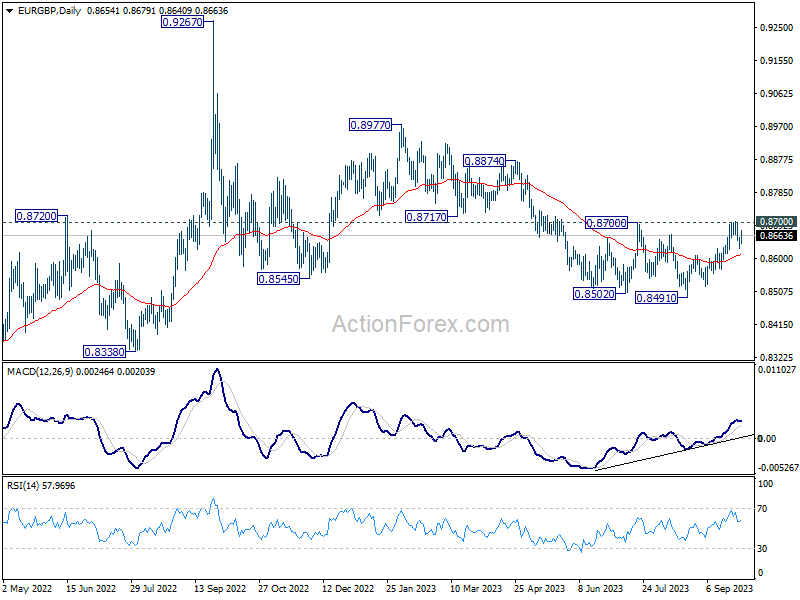
In the bigger picture, the down trend from 0.9267 (2022 high) is seen as part of the long term range pattern from 0.9499 (2020 high). Decisive break of 0.8700 resistance will argue that this decline has completed with three waves down to 0.8491. Rise from 0.8491 could then be another leg inside the pattern and targets 0.8977 and above. However, rejection by 0.8700 will keep the down trend alive for another fall through 0.8491 at a later stage.
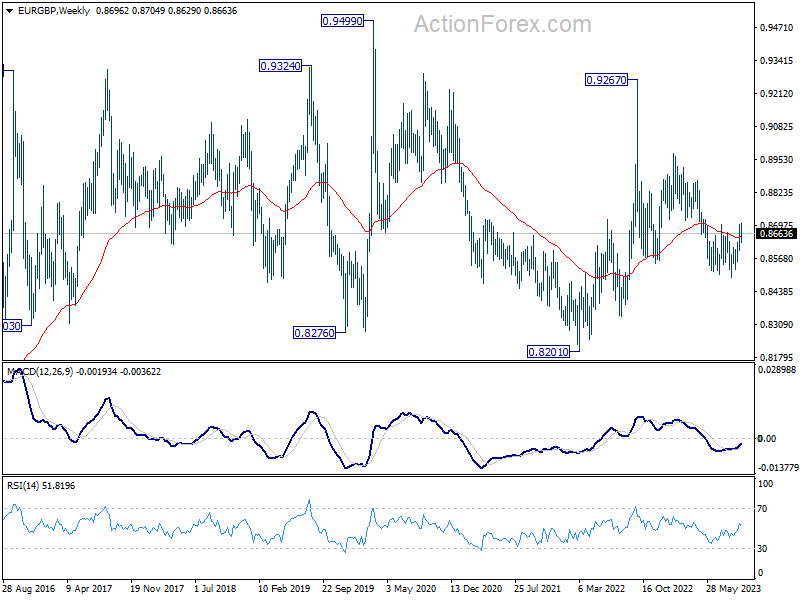
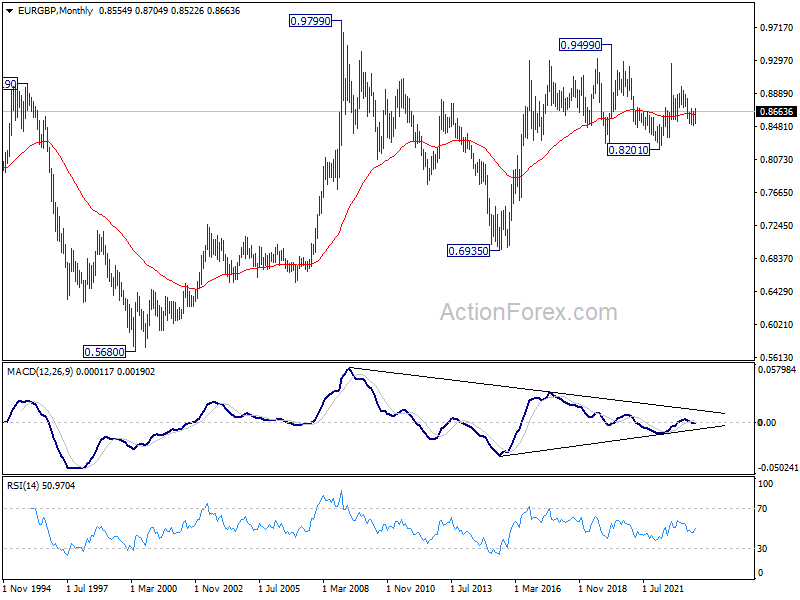
In the long term picture, long term range pattern is extending. But rise from 0.6935 (2015 low) is expected to resume at a later stage, to 0.9799 (2009 high).
EUR/AUD Weekly Outlook
EUR/AUD's fall from 1.7062 resumed last week and hit as low as 1.6319. Outlook is unchanged that this decline is seen as a larger scale correction. Deeper fall is expected as long as 1.6650 resistance holds. Next target is 1.6000 fibonacci level.
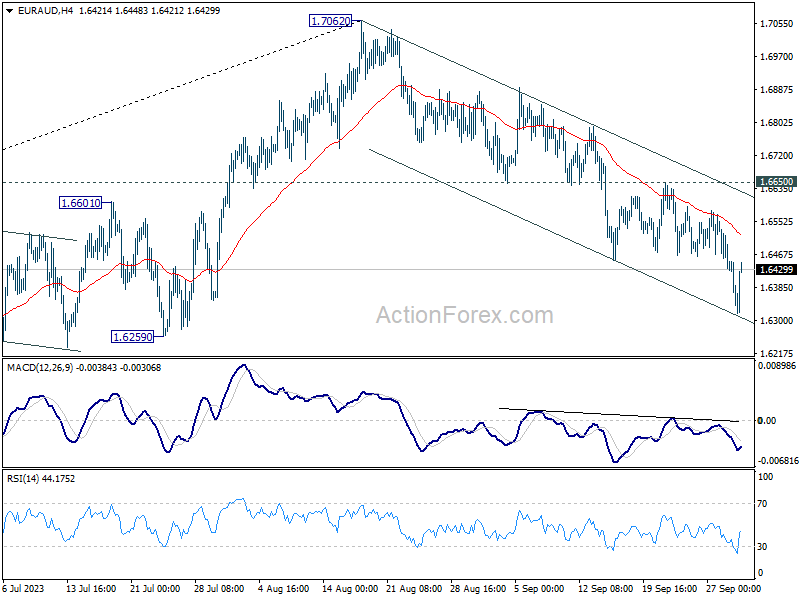
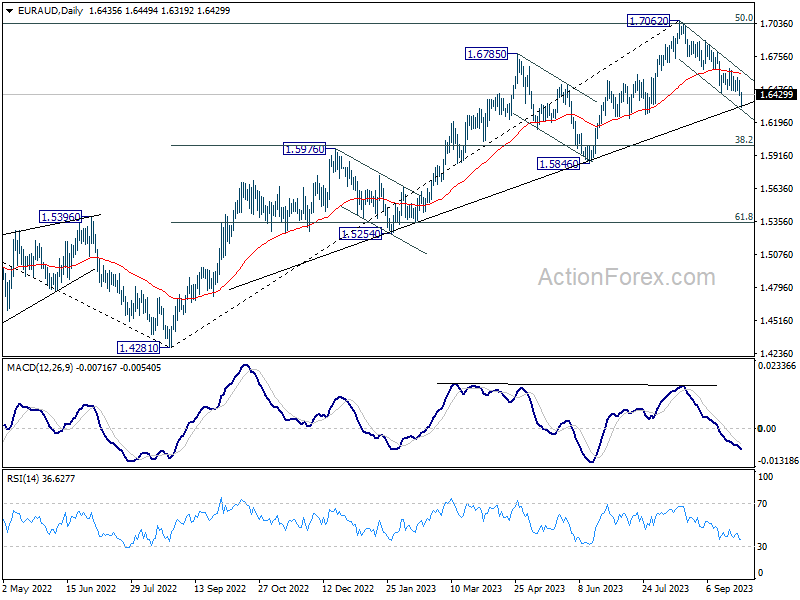
In the bigger picture, fall from 1.7062 is probably correcting whole up trend from 1.4281 (2022 low). Deeper decline would be seen to 38.2% retracement of 1.4281 to 1.7062 at 1.6000. Strong support could be seen there to bring rebound, at least on first attempt. This will remain the favored case as long as 1.6650 resistance holds.
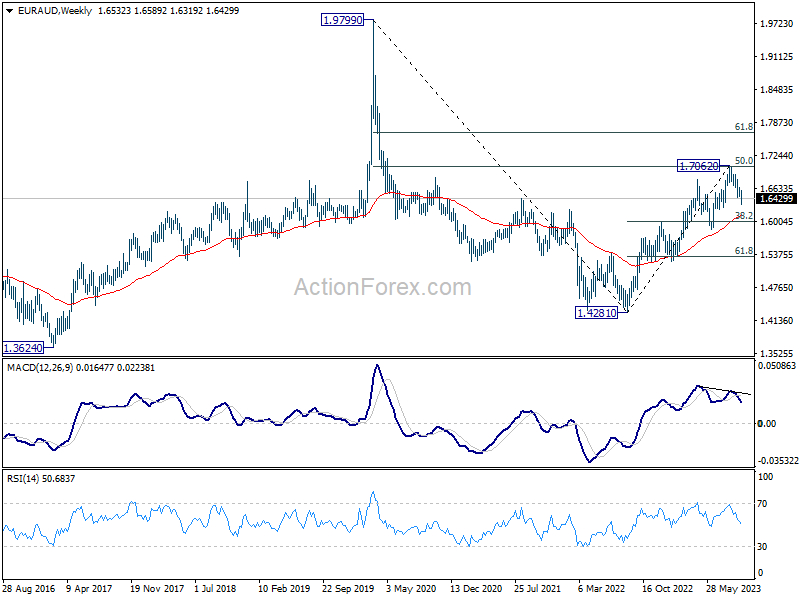
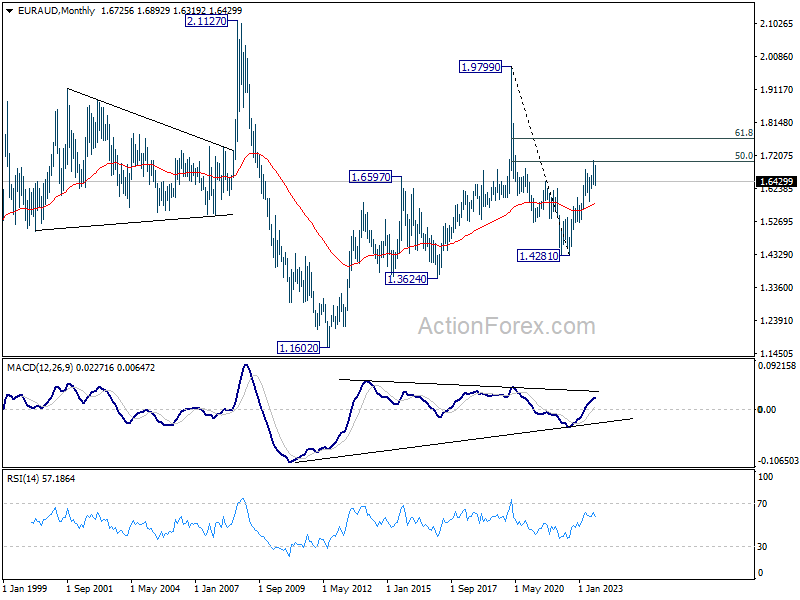
In the longer term picture, loss of upside momentum as seen in 55 W MACD at this stage argues that rise from 1.4281 (2022 low) is more likely a corrective move. Further rise could still be seen as long as 1.5846 support holds. But upside will likely be limited by 61.8% retracement of 1.9799 to 1.4281 at 1.7691. Firm break of 1.5846 support will argue that the rise has completed, and another medium term down leg has started.
EUR/CHF Weekly Outlook
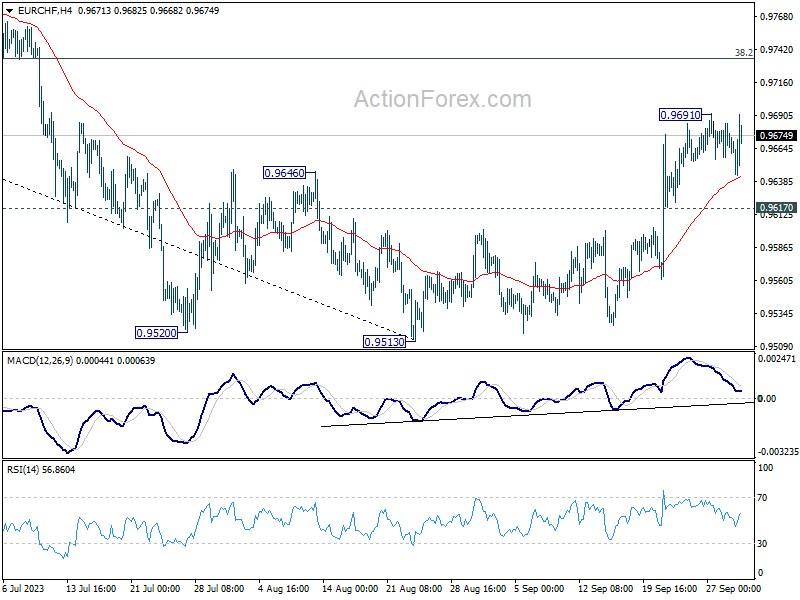
EUR/CHF edged higher to 0.9691 last week but turned sideway since then. Initial bias remains neutral this week first, and outlook is unchanged. Further rally is expected as long as 0.9617 support holds. Above 0.9691 will resume the rebound form 0.9513 to 38.2% retracement of 1.0095 to 0.9513 at 0.9735. However, firm break of 0.9617 will turn bias back to the downside for retesting 0.9513 low.
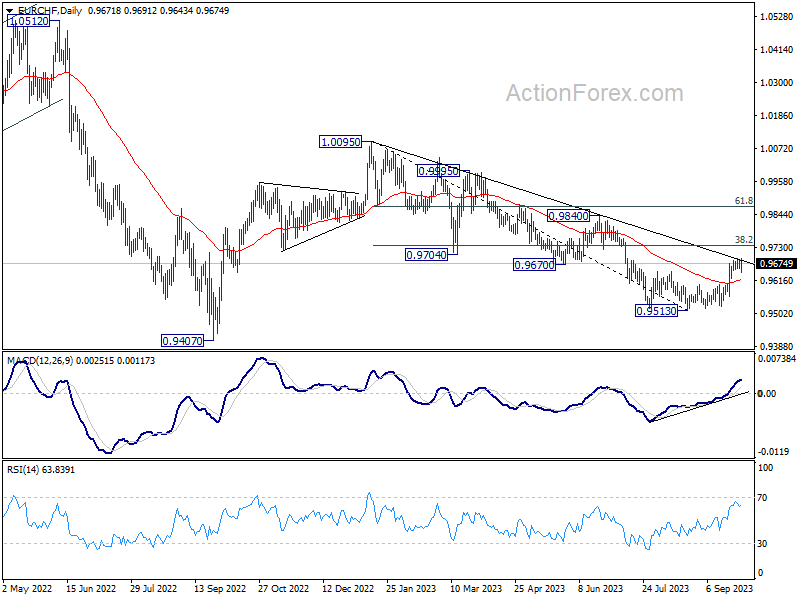
In the bigger picture, medium term outlook will stay bearish as long as the cross is capped well below falling 55 W EMA (now at 0.9804). That is, down trend from 1.2004 (2018 high) could still resume through 0.9407 (2022 low). However, sustained trading above the 55 W EMA will raise the chance that 0.9470 is already a long term bottom. Further rise would then be seen to 1.0095 resistance to indicate bullish trend reversal.
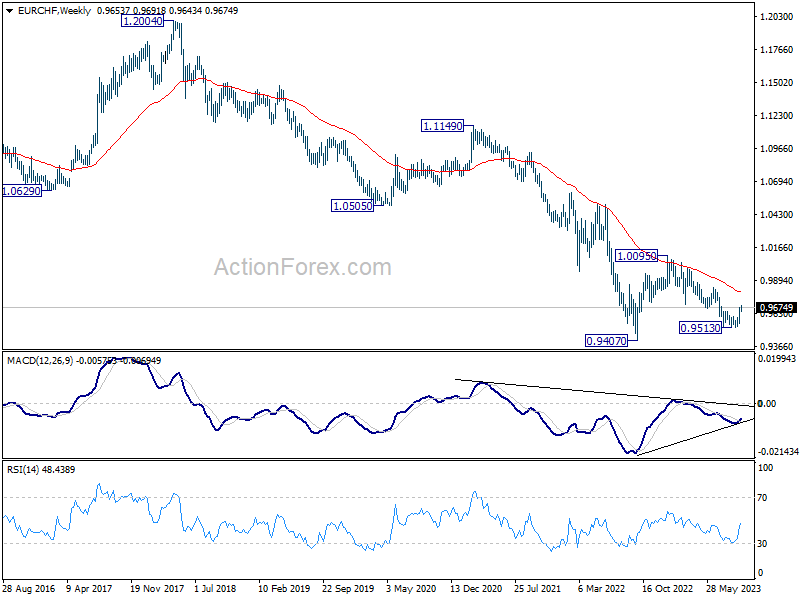
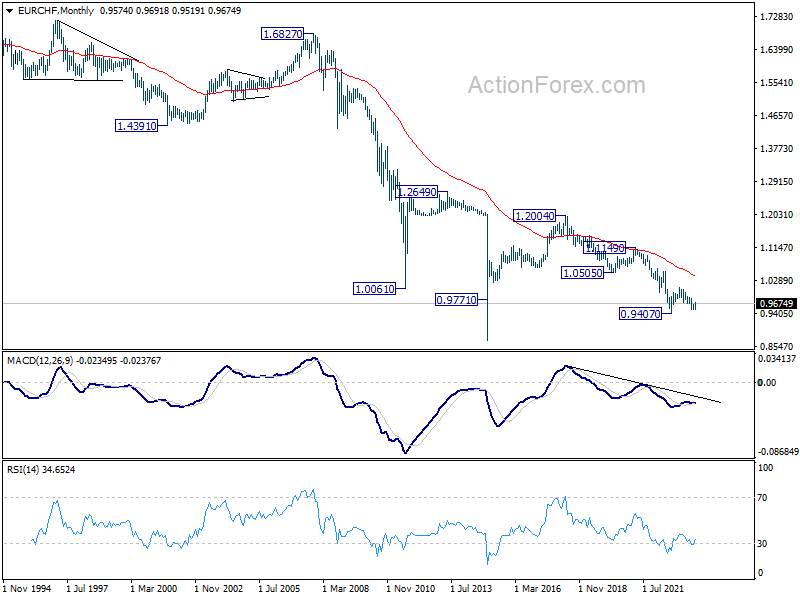
In the long term picture, outlook remains bearish as it's staying well below 55 M EMA (now at 1.0394). Break of 1.0095 resistance is needed to be the first sign of bottoming, or the multi-decade down trend is expected to continue.
The Weekly Bottom Line: Yields Realign to Higher-for-Longer
U.S. Highlights
- Revisions to GDP data left Q2 growth unchanged, but consumer spending growth was cut in half. Monthly consumer spending data showed that following at strong gain in July, real consumer spending slowed in August.
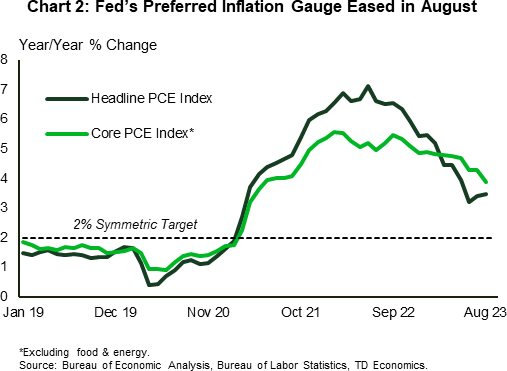
- The Fed’s preferred inflation gauge, the core Personal Consumption Expenditures (PCE) deflator, eased from 4.3% year-on-year to 3.9% in August. However, headline PCE inflation ticked up a notch as energy costs surged higher on the month.
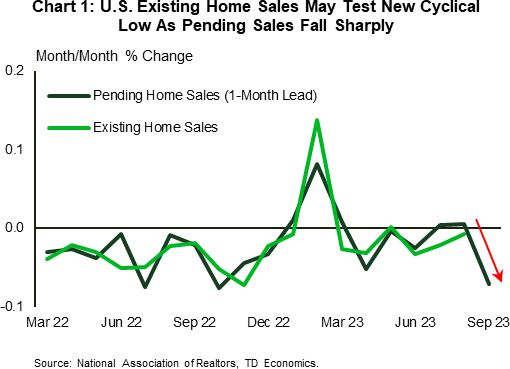
- Pending home sales, which lead existing home sales by 1-2 months fell a sharp 7.1% in August, as mortgage rates crept above 7% that month.
Canadian Highlights
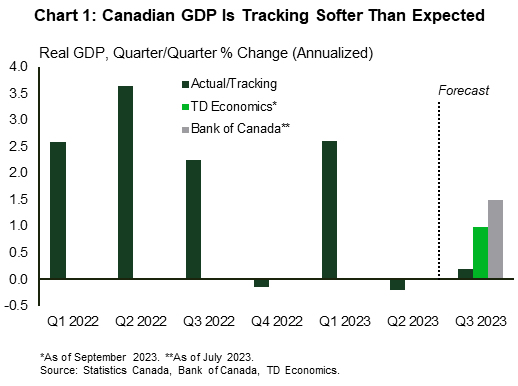
- The monthly GDP report suggests that growth remained stagnant in the third quarter – slower than expected in our recent forecast.
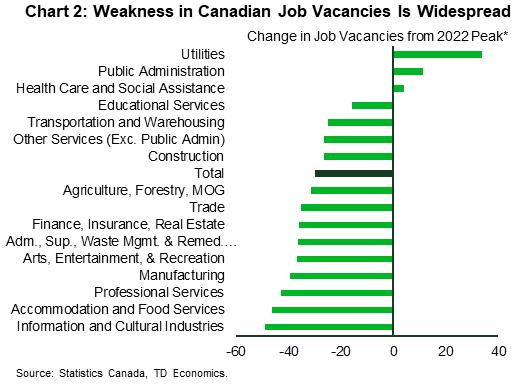
- The labour market is finding a better balance, with payroll employment remained largely unchanged and job vacancy rates reaching the lowest level since May 2021.
- Acceleration in July’s average weekly earnings is one data trend that doesn’t fit the pause story. The Bank of Canada will watch closely the next week’s more timely wage report for September.
U.S. – Yields Realign to Higher-for-Longer
The Fed has been beating the drum to the “higher for longer” interest rate tune for a while. Following last week’s FOMC projections, investors are recalibrating their expectations more in line with this view. Long-term treasury yields pushed higher in the week, with the 10-Year yield rising temporarily to a new 15-year high on Thursday, before easing to 4.53% at time of writing – still almost 10 basis points above last week’s close. Equity markets trended lower through the week, but managed to recoup most of the lost ground after Friday’s soft inflation print.
Revisions to GDP data led to a minor growth upgrade for the first quarter, but left the second unchanged. However, the picture was more nuanced underneath. Most notably, second quarter consumer spending growth was cut in half, to only 0.8% q/q (ann.). August’s Personal Income and Spending data out Friday help fill in the picture for the third quarter. Real disposable personal income fell for the third month in a row in August, while real spending (PCE) growth eased to 0.1% month-on-month (m/m), following a strong 0.6% m/m gain in July. That strength early in the quarter will still make for a strong showing for the consumer, however many hurdles are looming for the fourth quarter (see forecast). Our view is that consumer spending and economic growth will cool along with the weather this autumn, with September’s pullback in consumer confidence reinforcing this view.
Housing, which was the first part of the economy to weaken in the face of rate hikes, continues to struggle. Pending home sales, which lead closed sales by 1-2 months, fell a very sharp 7.1% (m/m) in August (Chart 1). This suggest that existing home sales could soon test new post-2010 lows. The shortage of existing homes for sale has been an added obstacle for transactions. Until recently, homebuyers appeared to have found some solace in the new home market, aided by healthier inventories and builder incentives. But with mortgage rates creeping above 7% in August, this sector is also feeling the pinch. New home sales (an inherently volatile series) trended lower that month. Daily measures show that mortgage rates have risen even higher recently and are now hovering in the 7.4%-7.6% range, a level that will surely further limit the pool of homebuyers.
Besides the challenges faced by the consumer, the UAW’s decision Friday to expand its strike and the increasing likelihood for a government shutdown next week, mark two other major potholes for the economy heading into the fourth quarter (see report). The shutdown would not only act as a drag on growth but would also delay access to key economic data, with next week’s payrolls report and the October 12th (CPI) inflation report the next two major items on the list. Having timely access to these reports is crucial with inflation still running well above target.
Thankfully, Friday’s PCE report carried some good news on the inflation front, with the Fed’s preferred inflation gauge easing from 4.3% to 3.9% year-on-year in August(Chart 2). However, the headline measure moved in the opposite direction, given an acceleration in food and energy costs. With the price of crude oil creeping higher to $93 per barrel, energy costs are likely to continue putting upward pressure on the headline measure over the near-term. All in all, it’s still a mixed picture, one that may be further complicated by a government shutdown.
Canada – More Evidence for A Pause
As we draw closer to the Bank of Canada’s next rate decision on October 25th, market participants are digging into the latest data to gauge what the Bank will do. This week's data provided some supporting evidence for a pause, although next week's jobs report will likely bear a heavier weight in the final decision. For now, markets have shifted their bets for another rate hike from a 50% chance to a 35% one.
Fresh off the press, the monthly GDP report suggests that growth remained stagnant in July and edged up just 0.1% month-on-month in August. With two months of data for the third quarter in hand, real GDP growth is tracking only 0.2% (annualized) – below our recent forecast(Chart 1). This suggests that the recovery from wildfire impacts in the mining and accommodation and food services sectors wasn't enough to weigh against the drag from the B.C. ports strike, and more restrictive monetary policy. Worryingly, the manufacturing sector contracted for the second month in a row, accounting of the largest share of today's drag. But there too, Statistics Canada pointed out that the B.C. port strike contributed to weakness in the chemicals industry, which contributed to manufacturing's soft showing.
The labour market is also finding a better balance, supporting our view that the bank will remain on pause. According to the Survey of Employment Payrolls and Hours (SEPH) for the month of July, labour demand continued to ease. Job vacancy rates declined markedly, reaching a low not seen since May 2021. Weakness was broad-based, but sectors bearing the brunt of this decline included retail trade and accommodation services, which suggests that cooling is migrating to the biggest recent contributors to labour demand. Since May 2022 (when job vacancies reached their peak) the number of unfilled positions fell by more than 30%, with vacancies in accommodation and food services and trade contributing more than a third of this decline (Chart 2).
The one area that doesn't tick the box in the Bank of Canada's checklist for a pause is average weekly earnings, which picked up the pace in July just as average weekly hours declined. Juxtaposed with the decline in job vacancies, it makes one wonder if this wage increase is sustainable or just a temporary blip. The sentiment from the CFIB small Business Barometer suggests that there might be more staying power, as average wage increase plans for the next 12 months registered a small uptick in September. With that, small business optimism tumbled to its lowest since the pandemic began, signaling apprehension about future economic conditions among business owners. We'll get more timely data on wage growth next Friday with September's Labour Force Survey.
All said, while the path ahead for the economy remains nuanced, this week's data provides a solid case for the Bank of Canada to stay on the sidelines.