

Sample Category Title
Are US Retail Sales the Dollar’s Next Big Test?
Last week, it was again confirmed that the US inflation data is the dollar’s biggest nightmare. The currency tumbled and hit a new 7-month low on Monday as investors were further convinced that the Fed may eventually need to cut interest rates at some point this year. As they seek extra validation to their view, this week, traders are likely to pay attention to the US retail sales for December and the PPIs for the month, both due to be released on Wednesday at 13:30 GMT.
Inflation data confirms rate-cut bets
Last Thursday, both the headline and core CPI rates for December declined to 6.5% y/y and 5.7% y/y from 7.1% and 6.0% respectively, matching expectations. However, what came as a surprise and perhaps prompted traders to sell more dollars may have been the monthly CPI rate.
Instead of stagnating as the forecast suggested, consumer prices declined 0.1% m/m, adding credence to the view that inflation may be on a sustained downtrend and that the Fed would eventually need to cut rates later this year, even as some officials continued arguing after the data that no cuts are on the table after interest rates hit their terminal level.
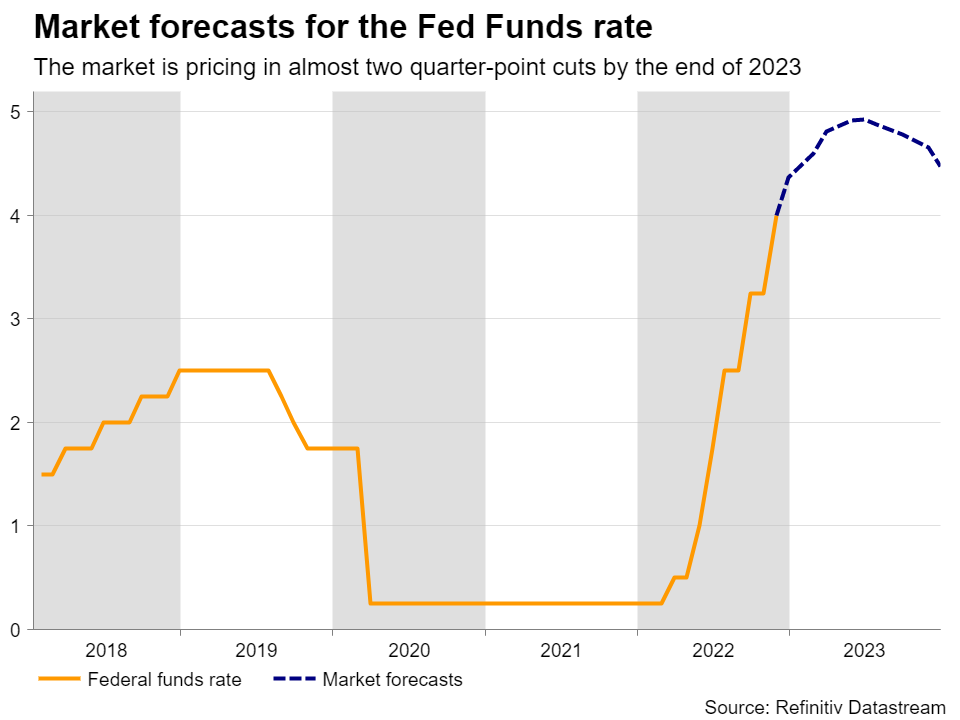
Market participants are now pricing in a 90% chance for the Fed to proceed with a 25bps hike at its upcoming gathering, something also supported by some officials lately, and they are anticipating a terminal rate of around 4.92%. That’s below the Fed’s median dot for 2013, which is at 5.125%. Most importantly, investors are still expecting 50bps worth of rate reductions by the end of the year, while various Fed speakers have suggested that rates will remain steady for many months, once they reach their peak.
US retail sales to continue deteriorating
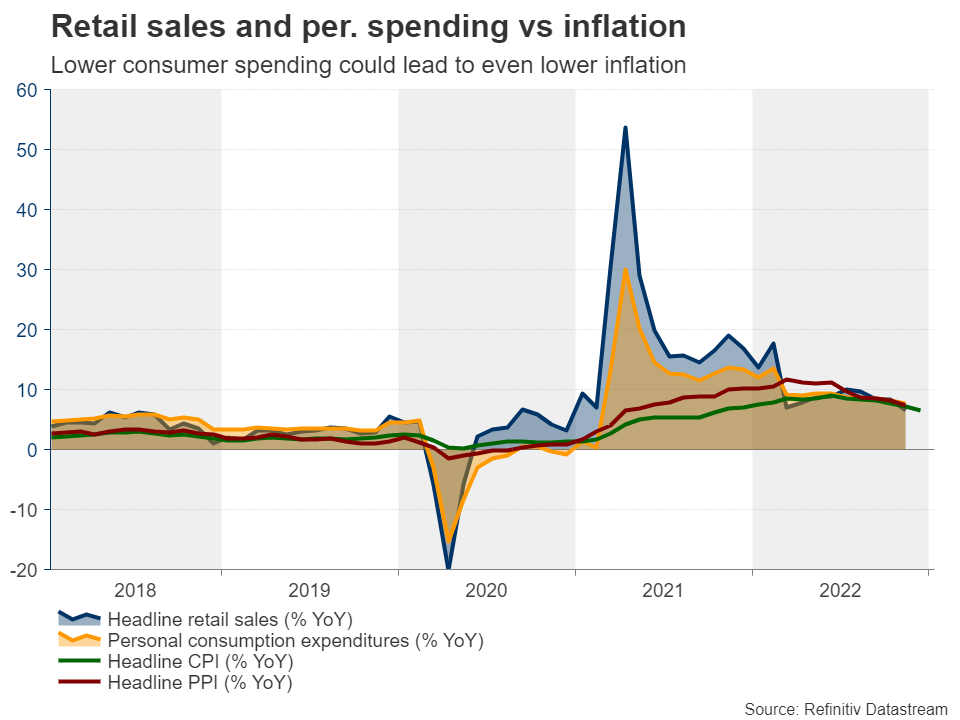
This week, both headline and core retail sales are forecast to have declined further and more than in November. Specifically, expectations are for both rates to slide to -0.8% m/m and -0.4% m/m from -0.6% and -0.2% respectively. This means that consumers are becoming more reluctant to spend, which could bring inflation further down in coming months, something also supported by the PPI forecasts. Both the headline and core PPI rates are expected to have continued declining, with the monthly headline print expected to tick into the negative zone just as the CPI rate did.
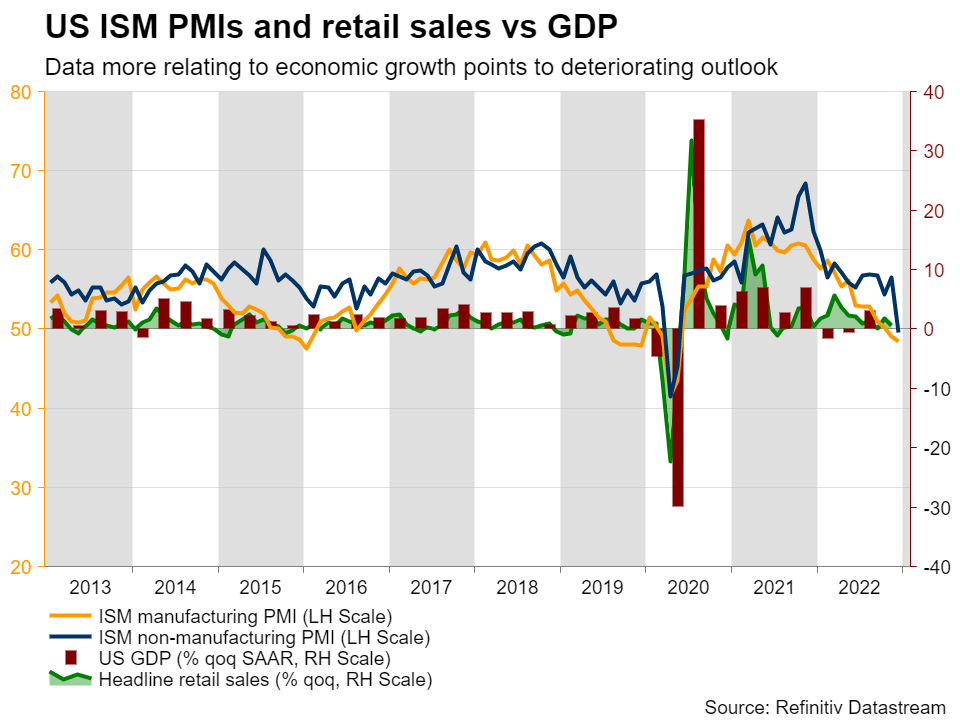
Having said all that though, deteriorating consumer demand also means softer economic growth. Releases relating to economic growth prospects have been worsening, with one of the latest examples being the ISM non-manufacturing PMI for December, which fell into contractionary territory for the first time since May 2020. Coming on top of the further contraction in the manufacturing sector, a shrinking service sector (which accounts for around 77.6% of US GDP) is anything but encouraging. So, another soft retail-sales data set could ring more alarm bells.
Dollar may continue drifting south
Expectations of softer inflation blended with concerns about the performance of the US economy could further solidify investors’ opinion that the effect of the prior interest rate hikes may not be fully reflected in economic data yet, and that consequently interest rates may need to be cut at some point later this year. This could result in much more dollar selling, especially against the euro and the yen.
With underlying inflation in the Eurozone continuing to accelerate, the ECB is expected to keep raising interest rates more aggressively than the Fed henceforth. As for the BoJ, last week’s reports that officials may proceed with additional action at Wednesday’s meeting to correct distortions in the yield curve added to speculation that the BoJ may be starting its own tightening crusade at a time when the Fed is headed for the exit.
Will euro/dollar extend its recovery to 1.1175?
After the US inflation data, euro/dollar emerged and closed the day above 1.0800. Now, it is pulling back, but even if it falls back below 1.0800, the prevailing short-term trend will remain positive as a higher high is already confirmed.
A potential setback below 1.0800 could trigger buying orders near the 1.0715 barrier and another round of soft US economic data could result in a rebound back above 1.0800. Such a move could pave the way towards the 1.1175 territory, which acted as a resistance on March 31 and provided strong support between November 2021 and February. 2022.
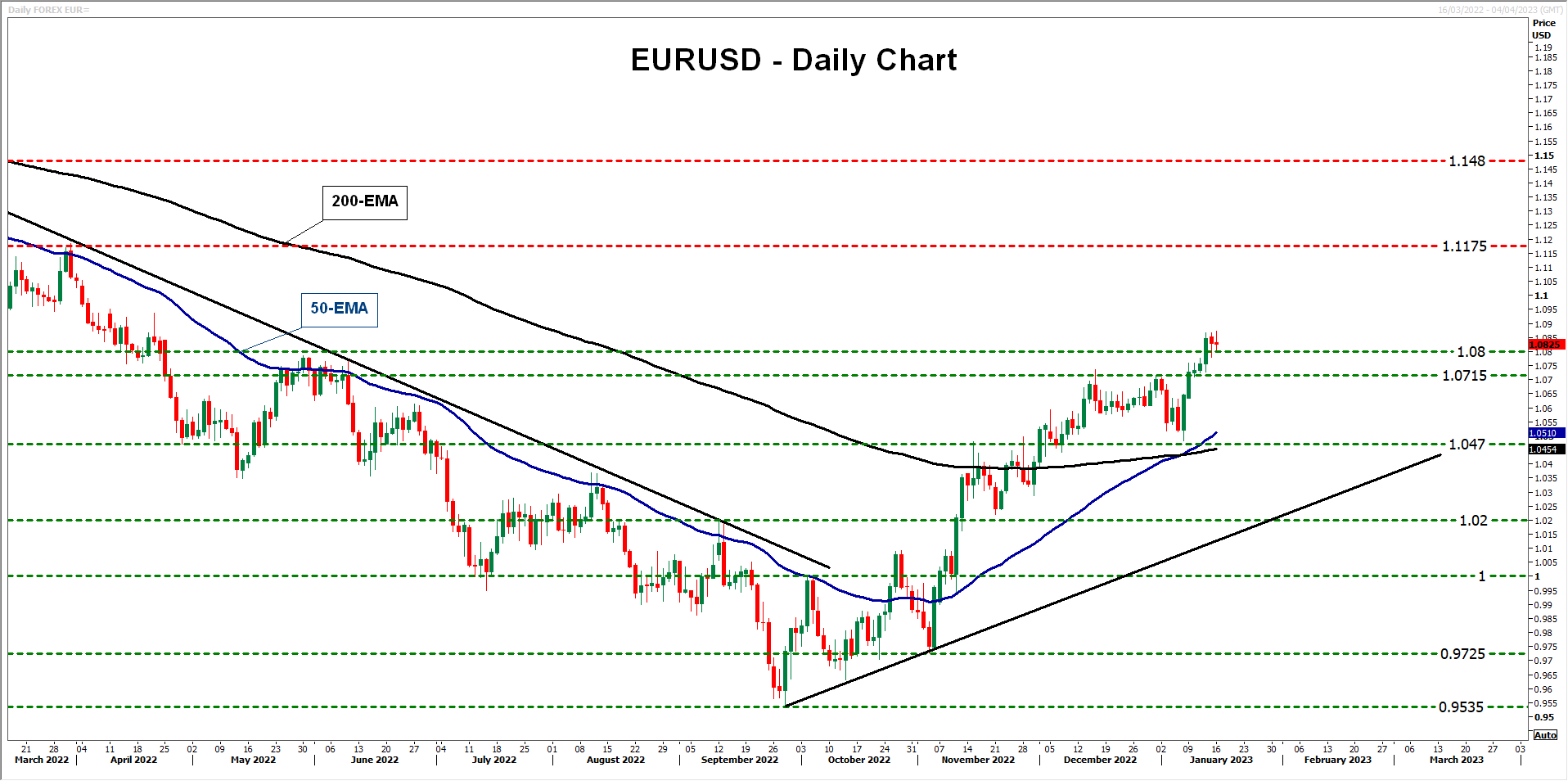
On the other hand, stronger-than-expected US retail sales could encourage some dollar buying and perhaps take euro/dollar below 1.0715. However, the pair would still be above the uptrend line drawn from the low of September 28, and thus, such a retreat may be seen as a corrective move before the next leg north. For the outlook of this pair to shift to bearish, a clear break below parity may be needed.
Japan’s Inflation Acceleration Sets Up a Hawkish BoJ Stance
Japan’s Domestic Corporate Goods Price Index rose 0.5% m/m and 10.2% y/y in December after 0.8% m/m and 9.7% y/y. This is near the peak of 10.3% set in September. Despite lower commodity prices, prices are stubbornly reluctant to fall in Japan. And this is discouraging as more than one generation of economists has seen Japan as a prime example of deflation, citing demographics. We may continue to see a secondary effect of the yen weakening.
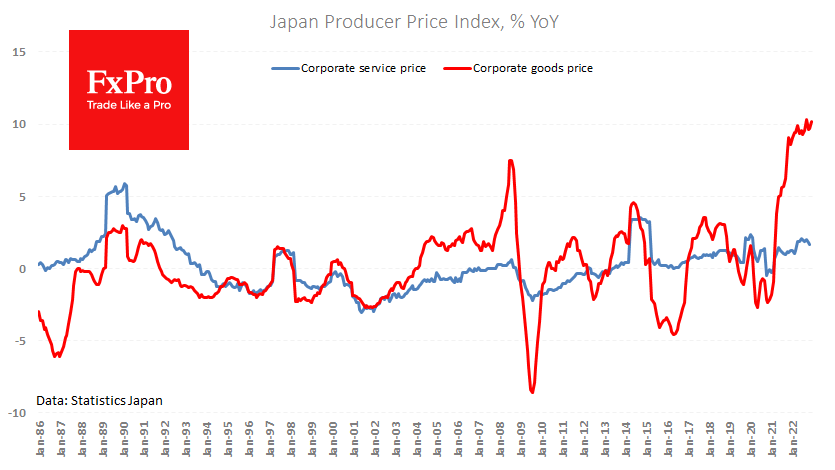
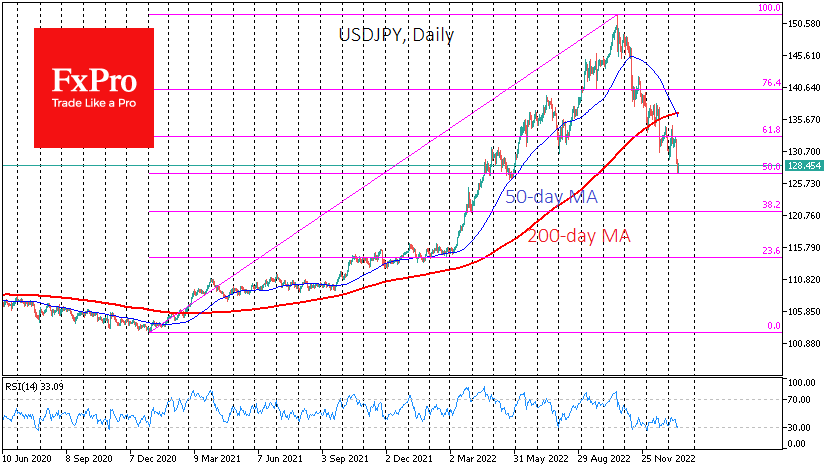
The Bank of Japan has halted the yen’s weakening spiral by reversing about half of the losses since the start of 2021. Nevertheless, increased exchange rate volatility pushes sellers to impose higher margins on prices, which prolongs inflationary pressures and risks triggering the price-wage spiral that every central bank in the world fears.
With this kind of resilience in inflation, investors expect to see a tougher central bank stance. From that point of view, it is logical that the Bank of Japan has had to go out with record purchases of Japanese government bonds in recent days to keep their yields from rising.
However, rising government bond yields are increasing pressure on the budget. There are doubts about the sustainability of the Japanese finance ministry, given the country’s massive national debt, chronic budget deficit and sluggish economic growth.
The BoJ remains the only central bank to maintain negative interest rates, probably out of fear of triggering unnecessary pressure on the economy. Therefore, with double interest, we should watch for the decisions and comments of the BoJ on Wednesday morning, where no options can be ruled out.
We could see a decisive turnaround from the policy targeting government bond yields and even a key rate hike. If that is the case, the yen could continue to strengthen towards 120 before the end of the first quarter.
The opposite surprise cannot be ruled out when the central bank strengthens its negative rate policy and puts the yen back on a sustained downward path. This turnaround could be particularly dramatic for the currency as market prospects are now skewed towards an expectation of tighter policy, albeit less dramatically than we see in the USA or the Eurozone. In that case, the USDJPY might hit 133 very quickly and then aim for 140 before the end of March.
A dull scenario is also possible if the BoJ balances out its signals and does not cause market turbulence as it did at its last meeting in December. The inflation picture is pointing towards a policy-tightening option despite the risks of losses for the economy.
Sunset Market Commentary
Markets
With US cash markets closed for Martin Luther King Jr. holiday, trading remained very subdued at the start of the new week. It doesn’t help either that there were no important economic data scheduled for release. The World Economic Forum kicked off in Davos today but there too the news flow still had to pick up. Comments from central bankers were limited to ECB’s Rehn repeating the current mantra that policy rates will still have to rise significantly to levels that are restrictive enough to bring inflation timely back to target. By acting swiftly, Rehn said, the ECB should be able to avoid a so-called Volcker shock. But German/European yields weren’t really impressed. An early upleg that brought them several (4 to 5) bps higher was based on air and evaporated soon enough. Yields currently trade close to unchanged. That intraday reversal also capped the euro’s upside momentum. EUR/USD tested recent highs below 1.09 before paring gains back to the low 1.08 area. The Japanese yen (USD/JPY 128.49) underperforms peers today after a stellar run over the previous days. This brings us to one of the most closely watched events for this week; the BoJ.
The Japanese central bank meets this Wednesday. Back in December, it unexpectedly doubled the allowed deviation from the 0% 10-y yield cap from 25 to 50 bps. The news sent shockwaves through markets. The BoJ said this was to improve bond-market functioning with markets consistently pushing yields against the 0.25% upper limit in a context of rising inflation. It triggered near-constant BoJ bond-buying over the past few months. This is still the case today even with the higher cap. Investors saw the move as the beginning of the end of YCC and will probably see their case confirmed if, as currently is speculated here and there, the BoJ raises the yield bar again this week. Eventually, the BoJ twist could even lead to rate hikes when the new governor takes over from Kuroda in April. Upgraded inflation forecasts (nearing 2% at the end of the horizon, as cited by Japanese business newspaper Nikkei) could serve as the decisive argument. The Norges Bank also meets this week (Thursday). There are no new forecasts this time around. Headline inflation eased slightly more than expected in the December projections but the more sticky core inflation unexpectedly rose (5.8%). In this respect, we’re keen to see whether the central bank sticks to its forecasted terminal rate of 3%. The NOK weakening since Norges Bank (in particular vs the euro) was also bigger than expected. Other things to watch this week include Chinese Q1 GDP numbers, earnings season kicking in higher gear and an extensive UK economic update with the labour market report tomorrow, December inflation on Wednesday and retail sales on Friday. Sticking to the UK, the country got some bad news coming from DBRS Morningstar this morning (see below).
News Headlines
DBRS Morningstar, the number 4 global credit rating agency, downgraded the UK credit rating from AA (high) to AA with a stable trend. The downgrade reflects UK policy becoming less predictable and no longer compatible with a higher rating. DBRS specifically refers to the volatile period in September/October of last year where the interim-tandem Truss/Kwarteng was throwing away the UK’s credibility via unfunded spending proposals. Although the high degree of uncertainty has receded, the swift changes in economic policies in recent months have affected the predictability of UK policy. The UK is rated AA at S&P and one notch lower at both Fitch (AA-) and Moody’s (Aa3). All ratings come with a negative outlook attached.
US Treasury Secretary Yellen will hold a surprise meeting with Chinese vice-premier Liu He on Wednesday morning at the sidelines of the World Economic Forum in Davos. It’s their first 1-on-1 live encounter which stems from US President Biden and Chinese PM Xi Jinping’s meeting in November of last year at the G20-Summit. Both countries aim to dethaw their relationship which hit rock-bottom during the Trump presidency although they remain at odds over thorny issues such as trade, Taiwan, human rights and access to technology. The meeting will probably be highly symbolic in nature while nevertheless laying the groundwork for a visit by US Secretary of State Blinken to China early this year.
USD/JPY Mid-Day Outlook
Daily Pivots: (S1) 127.07; (P) 128.25; (R1) 129.04; More...
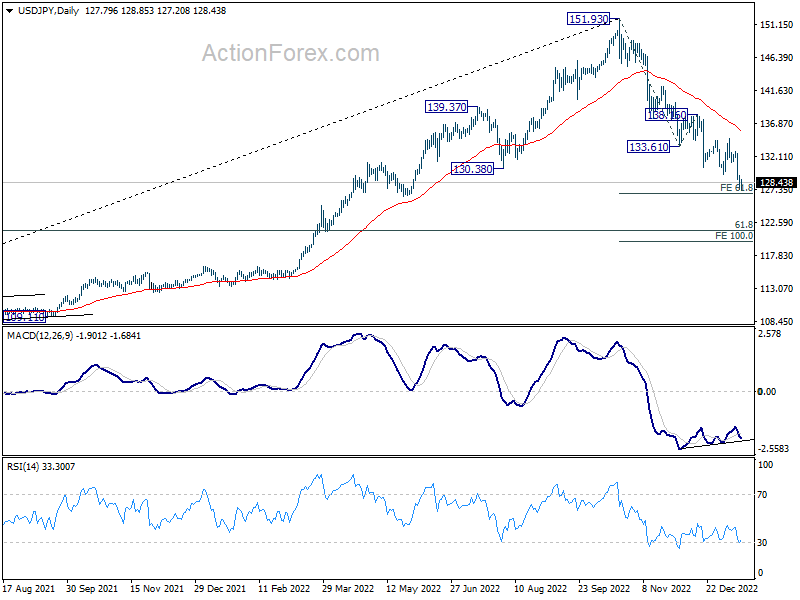
Intraday bias in USD/JPY is turned neutral with current recovery, and some consolidations could be seen. But further decline is expected as long as 134.76 resistance holds. Break of 127.20 will resume the fall from 151.93 to 121.43 fibonacci level next.
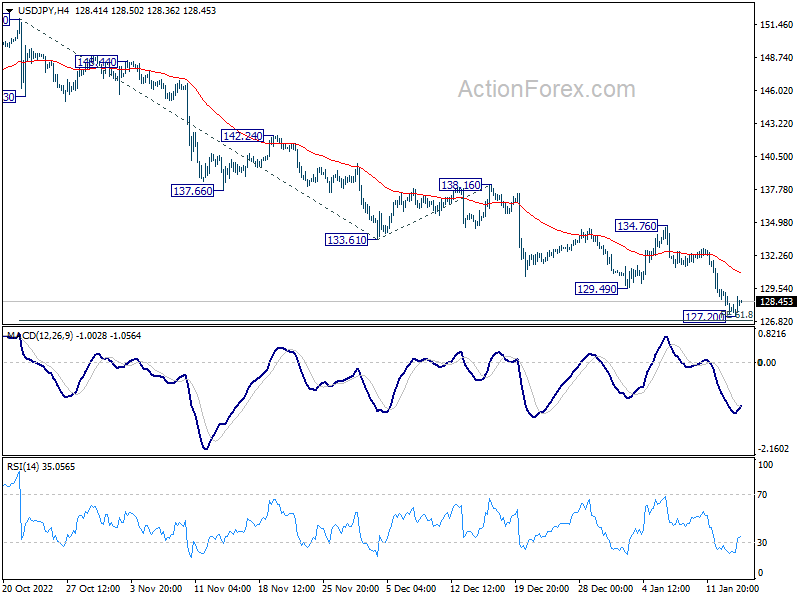
In the bigger picture, the firm break of 55 week EMA (now at 131.59) raises the chance of medium term bearish reversal, but that's not confirmed yet. Strong support could be seen around 61.8% retracement of 102.58 to 151.93 at 121.43 and 38.2% retracement of 38.2% retracement of 75.56 to 151.93 at 122.75 to bring rebound. But break of 134.76 resistance is needed to indicate bottoming first. Otherwise further fall will remain in favor.
USD/CHF Mid-Day Outlook
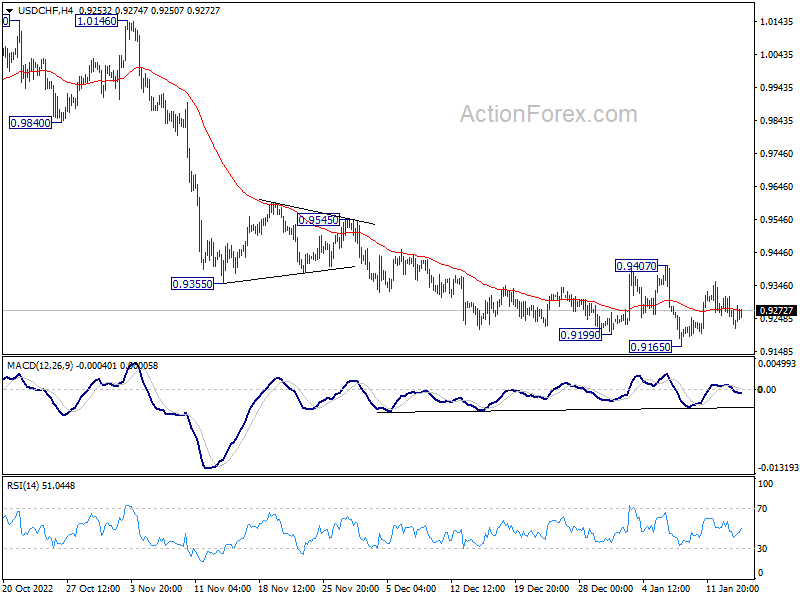
Daily Pivots: (S1) 0.9242; (P) 0.9279; (R1) 0.9303; More...
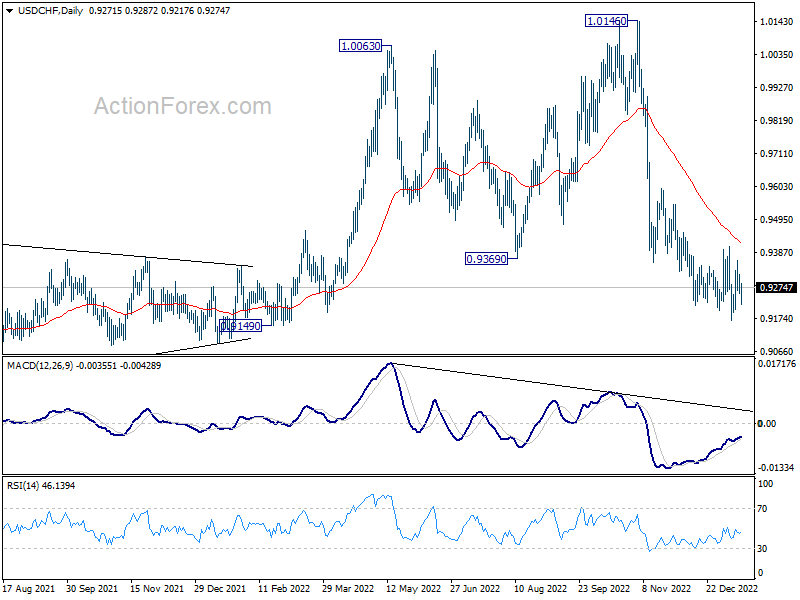
Intraday bias in USD/CHF stays neutral at this point. Outlook stays bearish as long as 0.9407 resistance holds. Break of 0.9165 will resume whole fall from 1.0146. However, firm break of 0.9407 will turn bias back to the upside for stronger rebound.
In the bigger picture, rise from 0.8756 (2021 low) has completed at 1.0146, well ahead of 1.0342 long term resistance (2016 high). Based on current downside momentum, fall from 1.0146 should be a medium term down trend itself. Next target is a test on 0.8756 low. Strong support should be seen there to bring rebound. Still, further decline will now be expected as long as 0.9407 resistance holds, in any case.
GBP/USD Mid-Day Outlook
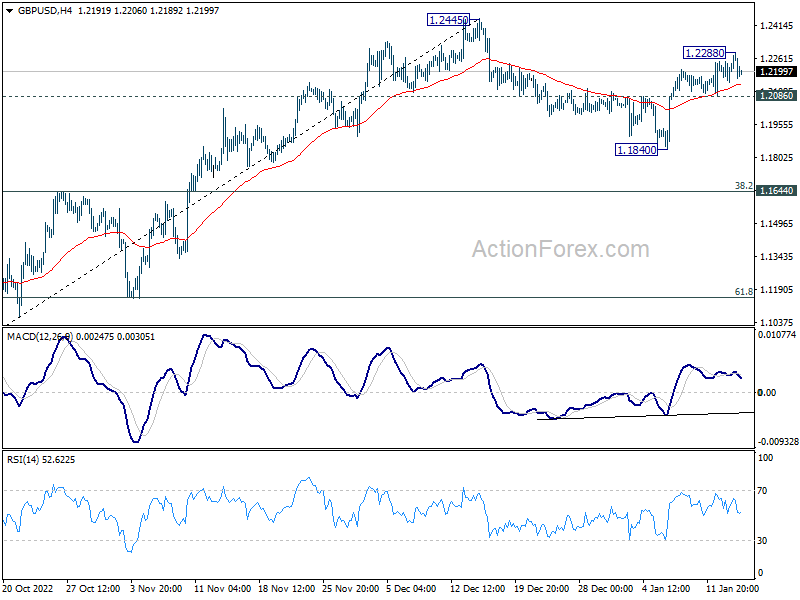
Daily Pivots: (S1) 1.2173; (P) 1.2211; (R1) 1.2270; More...
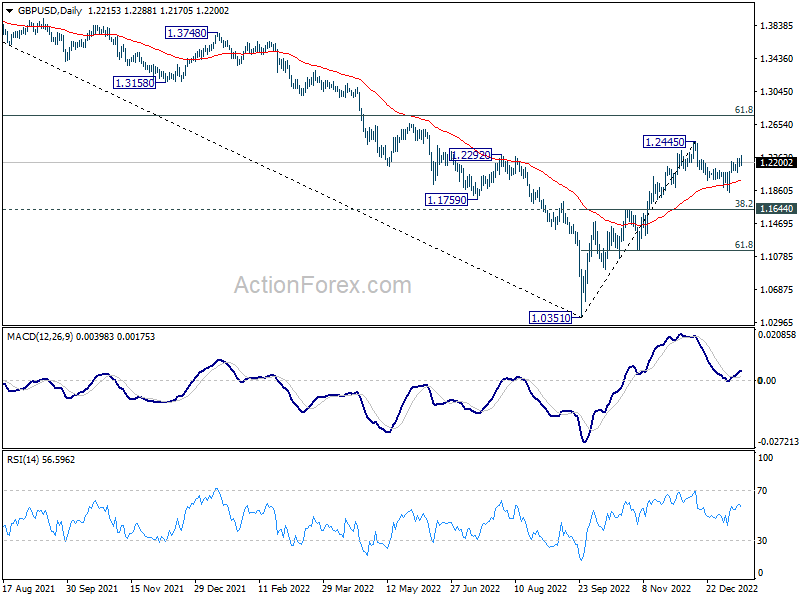
Intraday bias in GBP/USD is turned neutral first with today's retreat. On the upside, above 1.2288 will resume the rebound from 1.1840 to retest 1.2445 high. Decisive break there will resume whole rally from 1.0351 to 1.2759 fibonacci level. On the downside, break of 1.2086 minor support will turn intraday bias back to the downside for 1.1840 support instead.
In the bigger picture, rise from 1.0351 medium term bottom is at least correcting whole down trend from 1.4248 (2021 high). Further rise is expected as long as 1.1644 resistance turned support holds. Next target is 61.8% retracement of 1.4248 to 1.0351 at 1.2759. Sustained break there will pave the way back to 1.4248.
USD/JPY Rally Takes a Breather
The Japanese yen has awoken from this week’s slumber and is sharply higher on Thursday. In the European session, USD/JPY is trading at 130.96, down 1.16%.
BOJ may be planning review of policy
The BOJ has been in the headlines since the December meeting when it widened the band around its 10-year bond yield target. The move caught the markets flat-footed and the yen gained a staggering 3.8% the same day. The central bank meets on January 17th and 18th and investors will be keeping a close eye on the meeting.
There have been reports that the BOJ will raise its inflation forecast at the meeting, and the Yomiuri newspaper reported today that the BOJ will review the side effects of its ultra-loose policy and could take measures to address distortions in the yield curve. The yen has soared in response to this latest report, as any steps towards normalization are bullish for the yen. Will the upcoming meeting be as dramatic as what we experienced in December? That would be a high bar to reach, but the meeting should be treated as a market-mover.
There is a feeling of optimism ahead of today’s US inflation report. The forecast is for inflation to continue to fall, which is exactly what investors want to hear. The consensus for headline inflation stands at 6.5%, following the November gain of 7.1%. The core rate is also expected to ease, with a forecast of 5.7% in December, compared to 6.0% in November. If inflation, particularly the core rate, falls as expected, the US dollar will likely lose ground, as the Fed would have good reason to slow the pace of tightening and could afford to be less hawkish in its stance.
USD/JPY Technical
- 132.13 has strengthened in resistance following the yen’s strong gains. 133.28 is the next resistance line.
- 131.68 and 129.49 are the next support lines
EUR/USD Mid-Day Outlook
Daily Pivots: (S1) 1.0787; (P) 1.0827; (R1) 1.0874; More...
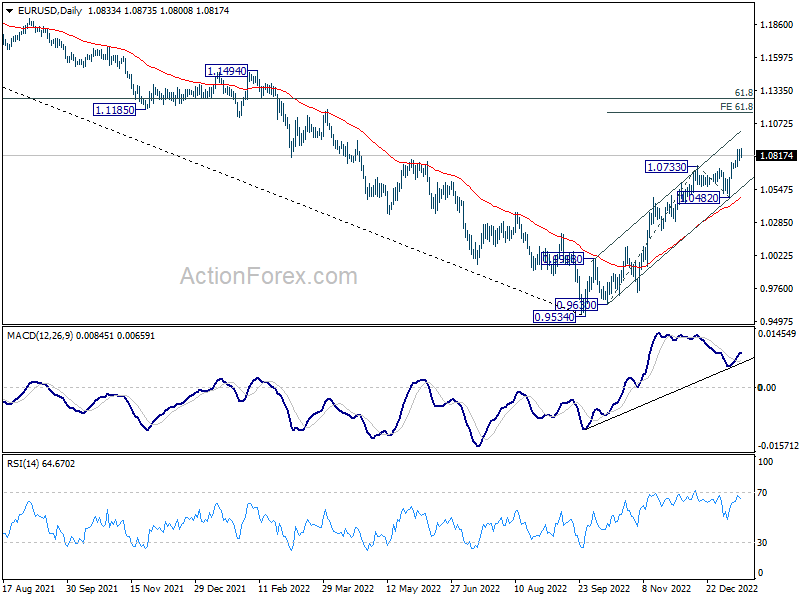
A temporary top is formed at 1.0873 with current retreat. Intraday bias in EUR/USD is turned neutral for consolidations first. But further rally is expected as long as 1.0482 support holds. On the upside, break of 1.0873 will resume larger rally from 0.9534 to 61.8% projection of 0.9630 to 1.0733 from 1.0482 at 1.1164 next.
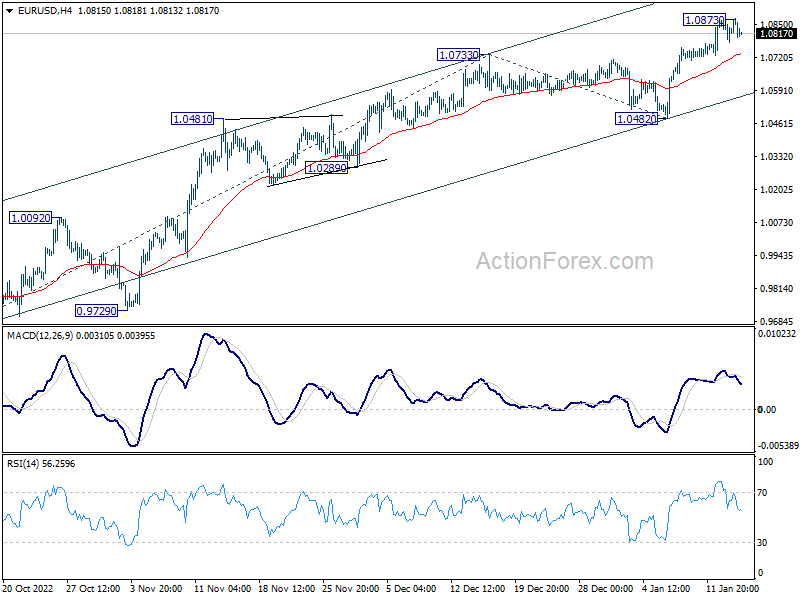
In the bigger picture, current development suggests that the rally from 0.9534 low (2022 low) is a medium term up trend rather than a correction. Further rally is in favor to 61.8% retracement of 1.2348 (2021 high) to 0.9534 at 1.1273 next. This will remain the favored case as long as 1.0482 support holds.
Dollar Recovering Slightly as Markets Turned Mixed, Treading Water
The forex markets turned mixed with an ultra-light economic calendar today, while the US is on holiday. Dollar is recovering slightly but it's outperformed by Swiss Franc and Canadian. Yen is paring some of recent gains, as eyes turn to Wednesday's BoJ policy decision. Sterling and Aussie are turning softer together with Euro. Overall, though, most major pairs and crosses are staying inside Friday's range.
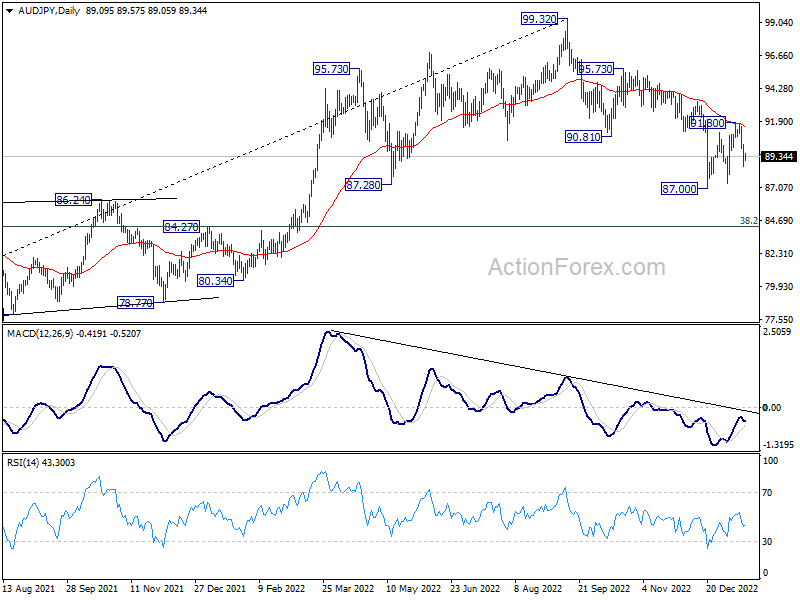
Technically, AUD/JPY could be a pair to watch in the upcoming Asian session with a batch of China data featured. So far, price actions from 87.00 are corrective looking. Rejection by 55 day EMA also keeps outlook bearish. Retest of 87.00 low should be seen on next move. Firm break there will resume whole fall form 99.32 to 38.2% retracement of 59.85 (2020 low) to 99.32 at 84.24.
In Europe, at the time of writing, FTSE is up 0.10%. DAX is up 0.41%. CAC is up 0.37%. Germany 10-year yield is up 0.0250 at 2.165. Earlier in Asia, Nikkei dropped -1.14%. Hong Kong HSI rose 0.04%. China Shanghai SSE rose 1.01%. Singapore Strait Times dropped -0.31%. Japan 10-year JGB yield rose 0.0026 to 0.514.
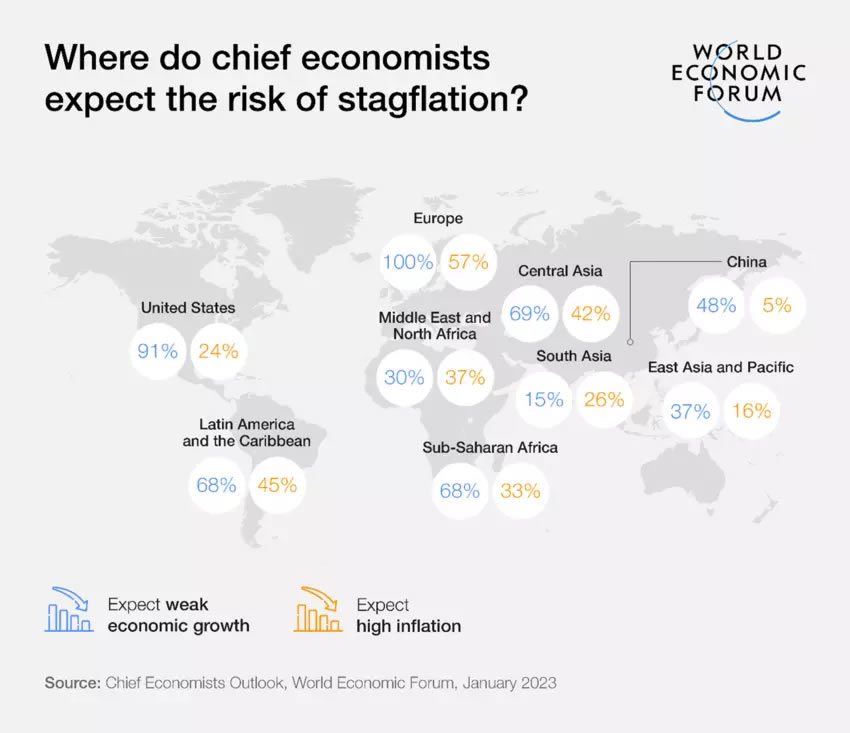
WEF: 63% chief economists expect global recession in 2023
In the Chief Economists Outlook of the World Economic Forum, 63% of survey respondents said a global recession is likely this year, with 18% saying that it's "extremely likely".
Prospect for growth was also bleak, all respondents expecting weak growth in Europe, (68% very weak and 32% weak). 91% expect weak growth in the US (9% very weak, and 82% weak. Even for China, 48% expect weak growth (10% very weak, 38% weak).
Inflation expectations saw significant variation across regions. All respondents expect high inflation in Europe (43% high, 57% very high). Also, all respondents expect high inflation in the US (76% high, 24% very high). But only 53% expect high inflation in China (48% high, 5% very high).
Canada manufacturing sales flat at CAD 72.3B in Nov
Canada manufacturing sales were flat at CAD 72.3B in November, below expectation of 2.3% mom growth. higher sales of durable goods (+1.8%), led by motor vehicles (+12.7%) and fabricated metal products (+2.7%), were offset by lower sales of non-durable goods (-1.7%), led by the chemical (-4.4%) and petroleum and coal product (-2.1%) industries.
Japan PPI up 10.2% yoy in Dec, second highest on record
Japan PPI rose 10.2% yoy in December, accelerated from 9.7% yoy, above expectation of 9.5% yoy. The reading topped 10% handle for the second time in 2022, marking the second-largest gains on record, following the 10.3% yoy jump in September.
For 2022, wholesale prices rose 9.7% on average, hitting a new record high since comparable data became available in 1981. It's also twice as fast as in 2021 when a 4.6% increase was reported.
Japan yield curve distortion worsens, Nikkei down
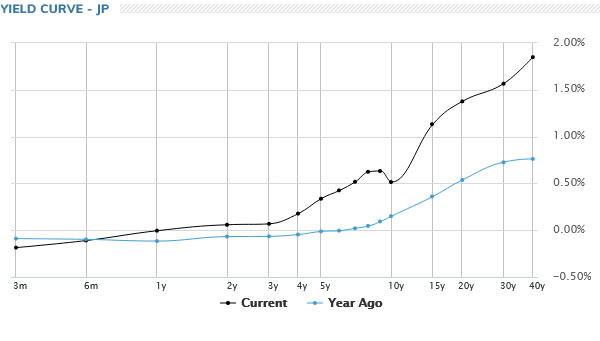
Japanese stocks, bonds and currency market remain rather nervous today, as traders are eyeing BoJ policy decision on Wednesday. The yield curve "distortion", as described by the central bank, was getting more serious after 8- and 9-year yield surged past 0.6% handle last week. At the same time, 10-year JGB yield, closed at 0.514, is still firmly tied to the 0.5% cap. Both 8- and 9-year yield closed down but stayed above 10-year's level at 0.624 and 0.632.
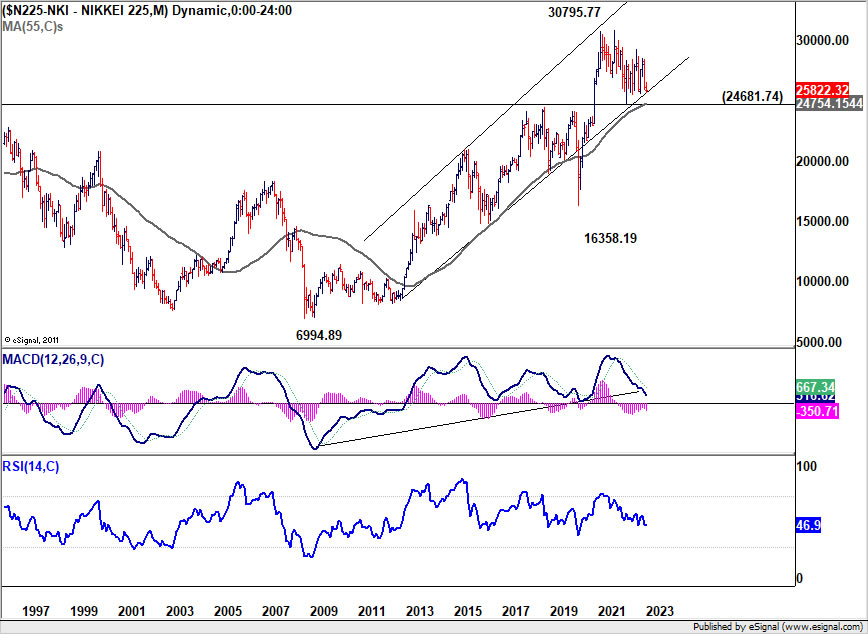
As speculation on a YCC tweak to rectify the distortion intensified , Nikkei declined -1.14% to close at 25822.32. Technically speaking, while deeper decline is possibly for the near term, strong support should be seen around 24681.74 to contain downside. The level is close to 55 month EMA, which stands at 24754.15. Nikkei has been continuously supported by the EMA, as well as the long term channel, for a decade, barring the initial two months of the pandemic. But a firm break of 24681.74 will indicate something rather substantial is happening.
EUR/USD Mid-Day Outlook
Daily Pivots: (S1) 1.0787; (P) 1.0827; (R1) 1.0874; More...
A temporary top is formed at 1.0873 with current retreat. Intraday bias in EUR/USD is turned neutral for consolidations first. But further rally is expected as long as 1.0482 support holds. On the upside, break of 1.0873 will resume larger rally from 0.9534 to 61.8% projection of 0.9630 to 1.0733 from 1.0482 at 1.1164 next.
In the bigger picture, current development suggests that the rally from 0.9534 low (2022 low) is a medium term up trend rather than a correction. Further rally is in favor to 61.8% retracement of 1.2348 (2021 high) to 0.9534 at 1.1273 next. This will remain the favored case as long as 1.0482 support holds.
Economic Indicators Update
| GMT | Ccy | Events | Actual | Forecast | Previous | Revised |
|---|---|---|---|---|---|---|
| 23:50 | JPY | PPI Y/Y Dec | 10.20% | 9.50% | 9.30% | 9.70% |
| 00:00 | AUD | TD Securities Inflation M/M Dec | 0.20% | 1.00% | ||
| 06:00 | JPY | Machine Tool Orders Y/Y Dec P | 1.00% | -7.70% | ||
| 13:30 | CAD | Manufacturing Sales M/M Nov | 0.00% | 2.30% | 2.80% | 2.40% |
| 15:30 | CAD | BoC Business Outlook Survey |
WEF: 63% chief economists expect global recession in 2023
In the Chief Economists Outlook of the World Economic Forum, 63% of survey respondents said a global recession is likely this year, with 18% saying that it's "extremely likely".
Prospect for growth was also bleak, all respondents expecting weak growth in Europe, (68% very weak and 32% weak). 91% expect weak growth in the US (9% very weak, and 82% weak. Even for China, 48% expect weak growth (10% very weak, 38% weak).
Inflation expectations saw significant variation across regions. All respondents expect high inflation in Europe (43% high, 57% very high). Also, all respondents expect high inflation in the US (76% high, 24% very high). But only 53% expect high inflation in China (48% high, 5% very high).