

Sample Category Title
Swiss Franc Reverses Slide after SNB Hike
SNB raises rates by 50 bp, Swiss franc rises
Major central banks were in the spotlight this week, as the Federal Reserve and the European Central Bank raised rates by 50 basis points at their final meeting of the year. These moves overshadowed a 50 bp rate increase by the Swiss National Bank, where rate moves are unusual – this week’s rate increase, which brought the benchmark rate to 1.0%, was only the third hike this year.
The driver behind the rate hike was the all-familiar battle to curb inflation. Switzerland’s inflation rate of 3% pales in comparison to the eurozone (10.0%) or the US (7.1%), but is above the SNB’s target of 0-2%. The SNB has been aggressive, raising rates by 50 bp in June and an oversize 75-bp hike in September. After years of negative rates, the Bank has dramatically changed policy, responding to what it called a “challenging situation” in a press release after the meeting.
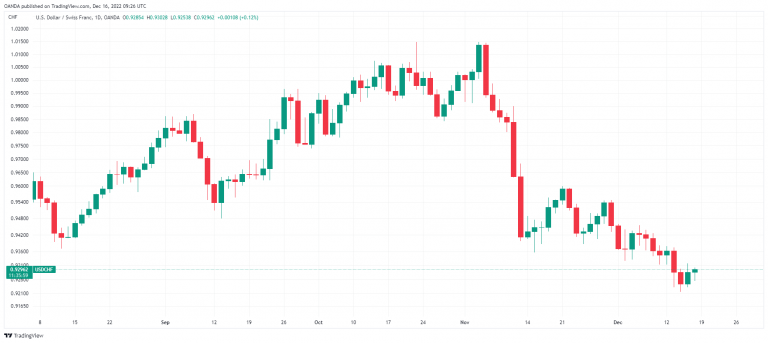
The SNB also reminded the markets that it was “willing to be active in the foreign exchange market as necessary”. The Bank has not hesitated in the past to intervene in order to prevent the Swiss franc from climbing too high and damaging the export sector. USD/CHF has declined over 7% since November 1st, and the SNB will be watching to see if the Swiss franc’s appreciation continues.
The markets are still digesting the Fed’s hawkish stance at this week’s meeting. Actually, anyone who has been listening to Jerome Powell and FOMC members would see that the Fed reiterated that it would continue to raise rates and that inflation remained far too high. The markets, however, have been marching to their own beat, expecting that a series of soft inflation reports might change the Fed’s tune.
There was talk of the Fed winding up its current rate cycle in February, but the rate statement dampened such hopes, stating that the Fed expected “”ongoing increases” in interest rates.” Powell dismissed the recent drop in inflation, saying more evidence was required that the downward trend was sustainable. It seems a given after this hawkish meeting that the terminal rate is likely to rise above 5%, with some forecasts projecting that rates will go as high as 5.6%.
USD/CHF Technical
- USD/CHF is testing resistance at 0.9285. The next resistance line is at 0.9372
- There is support at 0.9228 and 0.9144
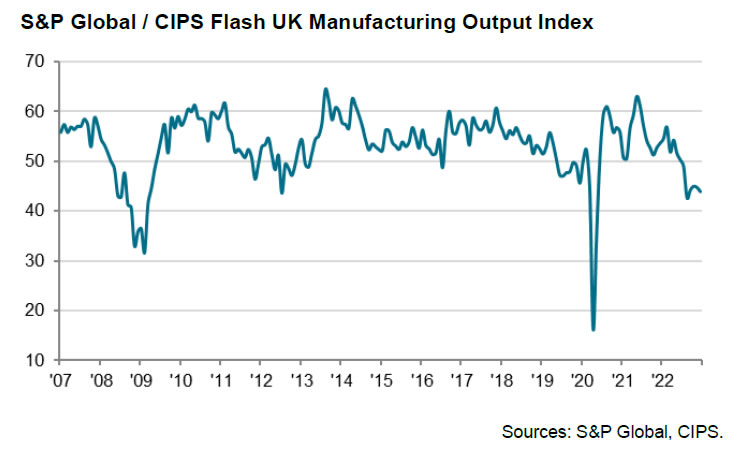
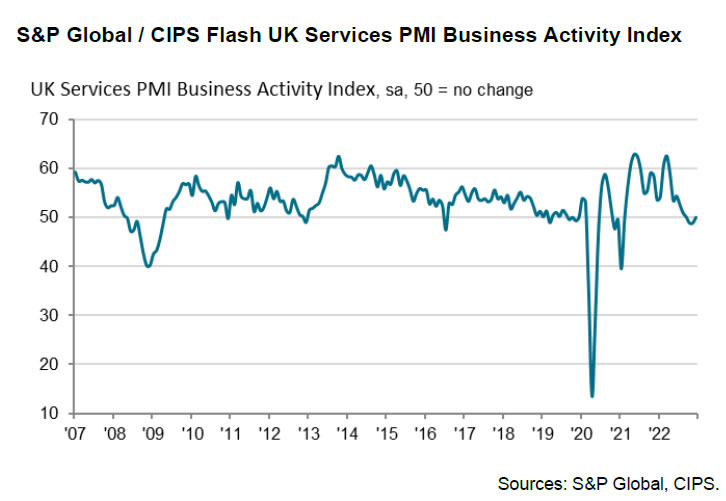
UK PMI manufacturing fell to 44.7, services recovery to 50.0
UK PMI Manufacturing dropped from 46.5 to 44.7 in December, a 31-month low. PMI Services rose from 48.8 to 50.0. PMI Composite rose from 48.2 to 49.0.
Chris Williamson, Chief Business Economist at S&P Global Market Intelligence said: "The December data add to the likelihood that the UK is in recession, with the PMI indicating a 0.3% GDP contraction in the fourth quarter after the 0.2% decline seen in the three months to September.
"For now, the downturn looks to be relatively mild, and the easing in the rate of decline in December is encouraging news, as is the further marked cooling of inflationary pressures. However, the fact that the downturn has moderated compared to the turmoil created in the immediate aftermath of the botched "mini budget", most notably in financial services, is no real cause for cheer. It is especially worrying to see business confidence and order book indicators remain so low by historical standards, with both of these key gauges signalling heightened degrees of economic stress.
"Hence it's no surprise to see that businesses are battening down the hatches, most notably by reducing headcounts, in a sign that the downturn not only has further to run but could yet accelerate again, especially given December's further hike to interest rates."
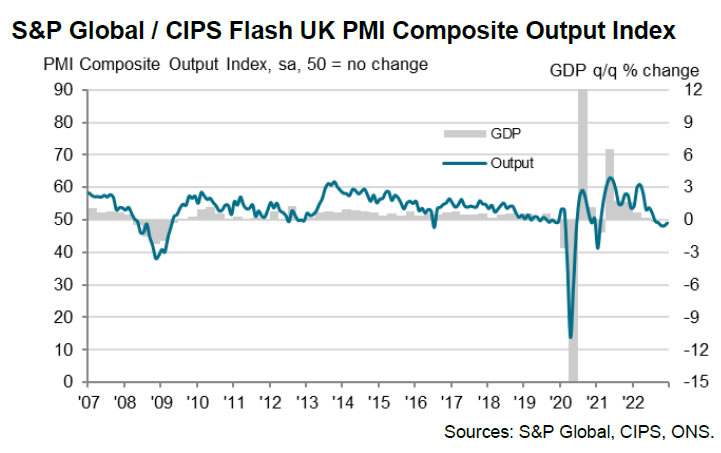
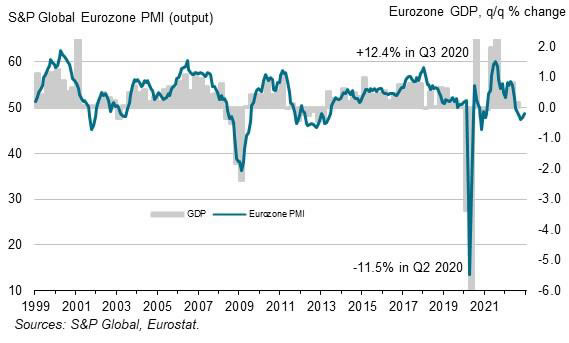
Eurozone PMI composite rose to 48.8, consistent with -0.2% GDP contraction in Q4
Eurozone PMI Manufacturing rose from 47.1 to 47.8 in December. PMI Services rose from 48.5 to 49.1. PMI Composite rose from 47.8 to 48.8. Still, the downside extended into its sixth successive month, even though rate of decline moderated.
Chris Williamson, Chief Business Economist at S&P Global Market Intelligence said: "While the further fall in business activity in December signals a strong possibility of recession, the survey also hints that any downturn will be milder than thought likely a few months ago. The data for the fourth quarter are consistent with GDP contracting at a quarterly rate of just less than 0.2%, and forward-looking indicators are currently boding well for the rate of decline to ease further in the first quarter."
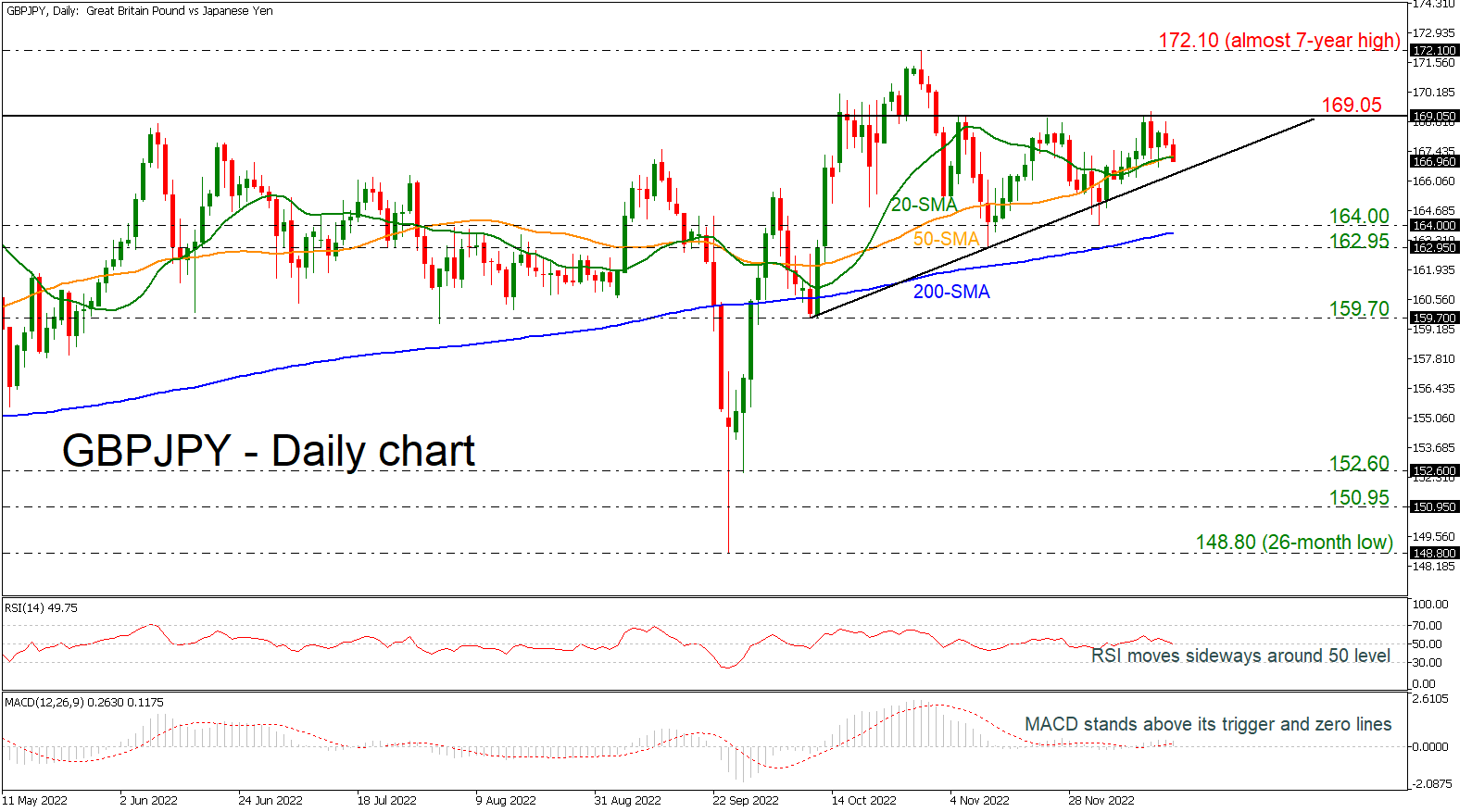
GBPJPY Hovers in Ascending Triangle Near 167.00
GBPJPY reversed to the downside to test its short-term simple moving averages (SMAs) after the pullback off the 169.05 barrier.
Although the pair has been printing higher lows above September's trough, it was unable to find enough buying power to chart new highs. In other discouraging signals, the RSI is pointing downwards near the neutral threshold of 50, while the MACD is moving with weak momentum near its trigger and zero lines.
Should the pair stretch south and break the upward line, it may find immediate support at the 164.00 round number and then near the 200-day SMA at 163.65. A significant step lower could worsen bearish sentiment, sending the price probably to 162.95. Then, a sharper decline could follow towsards the 159.70 support.
On the flip side, the 169.05 obstacle may halt again bullish actions, preventing a rally towards the almost seven-year high of 172.10. If traders continue to buy the pair, the price could rise until the inside swing low from April 2015 at 175.00.
In the short-term picture, GBPJPY is trading within an ascending triangle. While the formation is a bullish signal, traders will wait for a climb above 169.05 before they drive the pair higher. Alternatively, a break below the diagonal line could renew selling pressures.
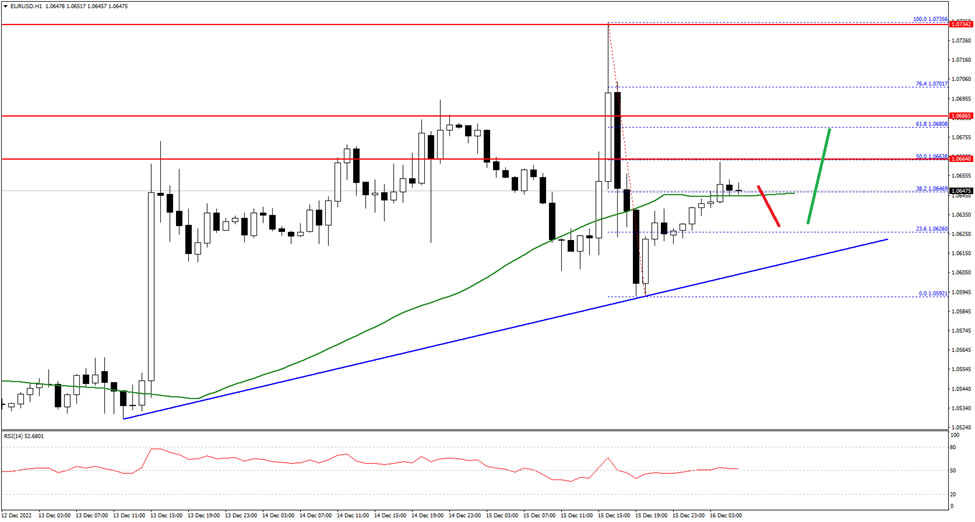
EUR/USD Pair Started a Fresh Increase Above 1.0650
The Euro started a fresh increase above the 1.0650 and 1.0665 resistance levels against the US Dollar. The EUR/USD pair gained pace above the 1.0680 level to move further into a positive zone.
It tested the 1.0735 zone before the bears appeared. The pair corrected lower and tested the 1.0600 support zone. It is now rising and above the 1.0620 level and the 50 hourly simple moving average. An immediate resistance is near the 1.0665 level.
The first major resistance is near the 1.0680 level. A break above the 1.0680 resistance level could start another increase. In the stated case, it could rise towards the 1.0740 resistance.
Conversely, the pair might start another decline below 1.0620. The next key support is near 1.0610 and a trend line on the hourly chart, below the pair could drop towards 1.0565 on FXOpen. Any more losses might send the pair towards the 1.0540 level.
Bundesbank expects no severe economic slump in Germany
Bundesbank projects that the German economy will contract -0.5% in 2023, then grow by 1.7% in 2024 and 1.4% in 2025. President Joachim Nagel said, "Economic output is likely to shrink initially, but we expect a gradual recovery from the second half of 2023... Compared to the June projection, the rate of change of GDP for 2023 has been revised significantly downwards."
HICP inflation is projected to decline to 7.2% in 2023, then to 4.1% in 2024, and 2.8% in 2025. HICP excluding energy and food is expected to increase slightly to 4.3% in 2023, then gradually decline to 2.9% in 2024 and 2.6% in 2025. .
NAS 100 Breaks Major Support
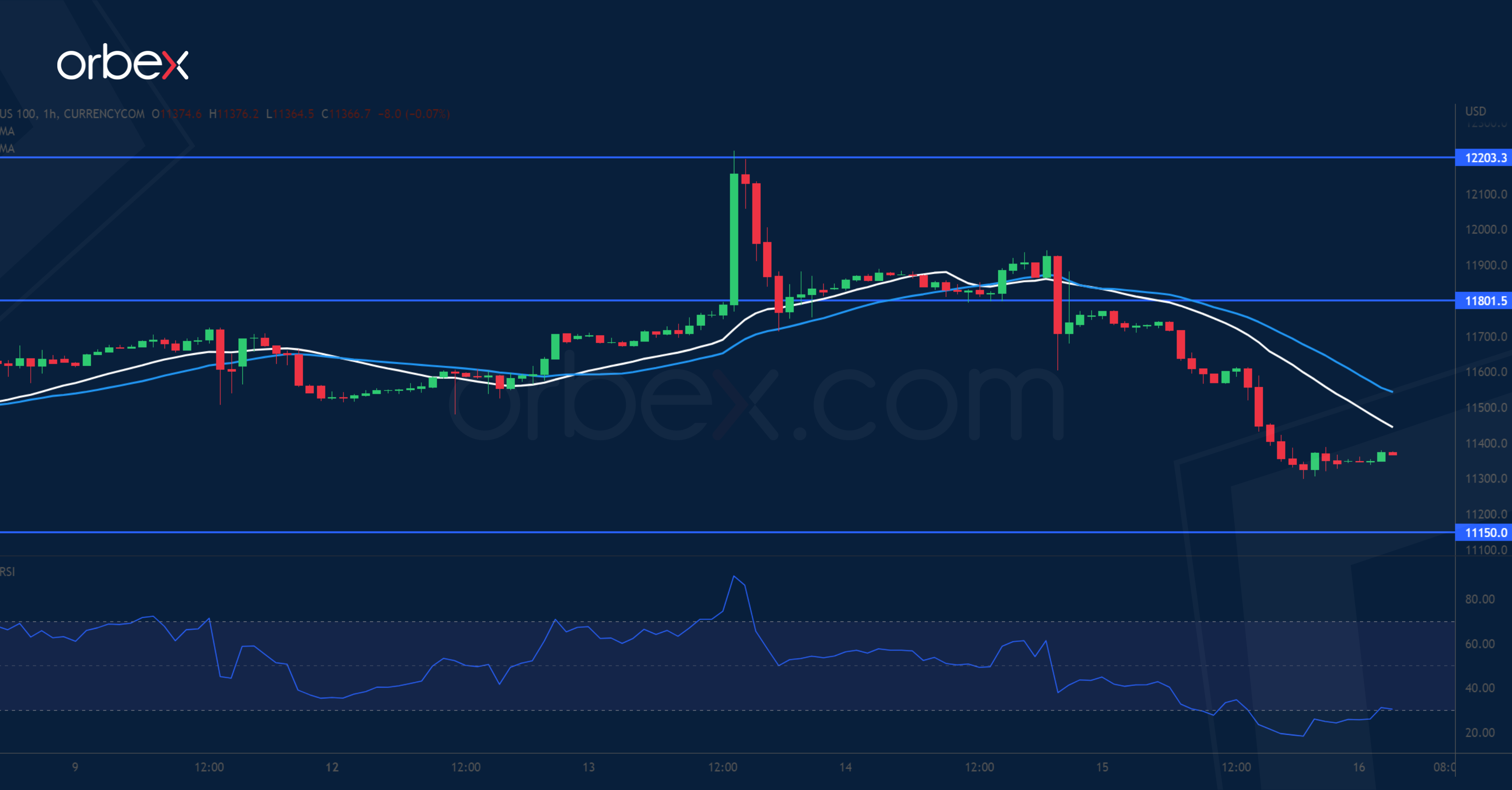
The Nasdaq 100 plunged as global central banks' hawkishness rattled investors. The choppy price action was due to multiple catalysts this week and layers of resistance from last September’s sell-off. The most recent rally reversed its course at 12200, a support-turned-resistance from mid-September. A breach of the lower end (11500) of the consolidation confirmed a lack of buying interest and might cause a test of the origin of a previous bullish breakout at 11150. As the RSI goes oversold, 11800 is a fresh hurdle in case of a bounce.
NZD/USD Drifts Lower
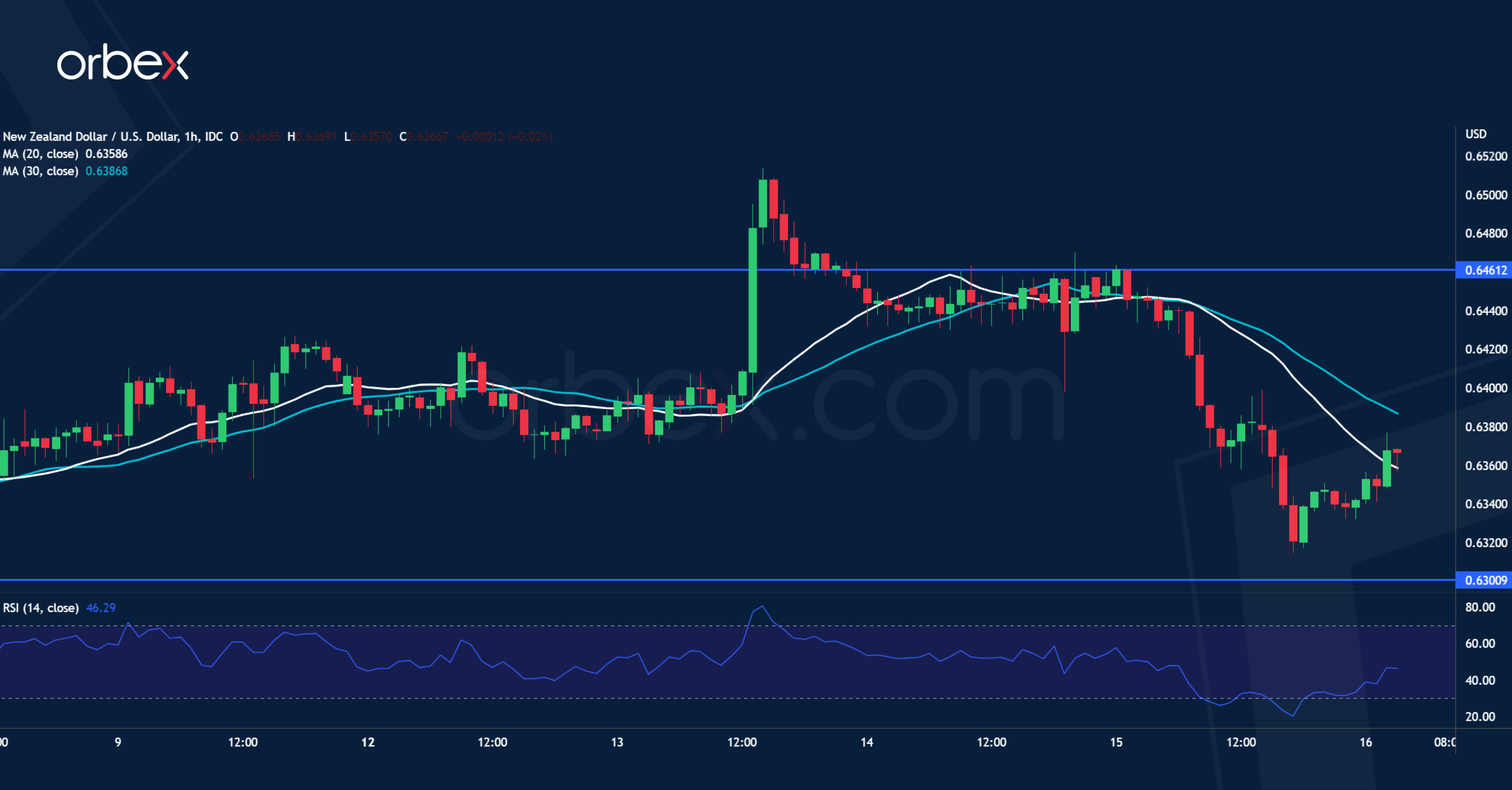
The New Zealand dollar slipped after the Fed stressed on keeping the interest rates high for longer. The kiwi’s break above the August high of 0.6460 has helped improve sentiment. Now the bulls will need to consolidate their foothold before they could push higher. A fall below the origin of the latest bullish candle suggests a lack of follow-through, and in conjunction with signs of overextension from the overbought RSI, may prompt buyers to take profit. 0.6300 is the closest support and 0.6460 a fresh resistance.
USD/CHF Attempts to Bottom Out
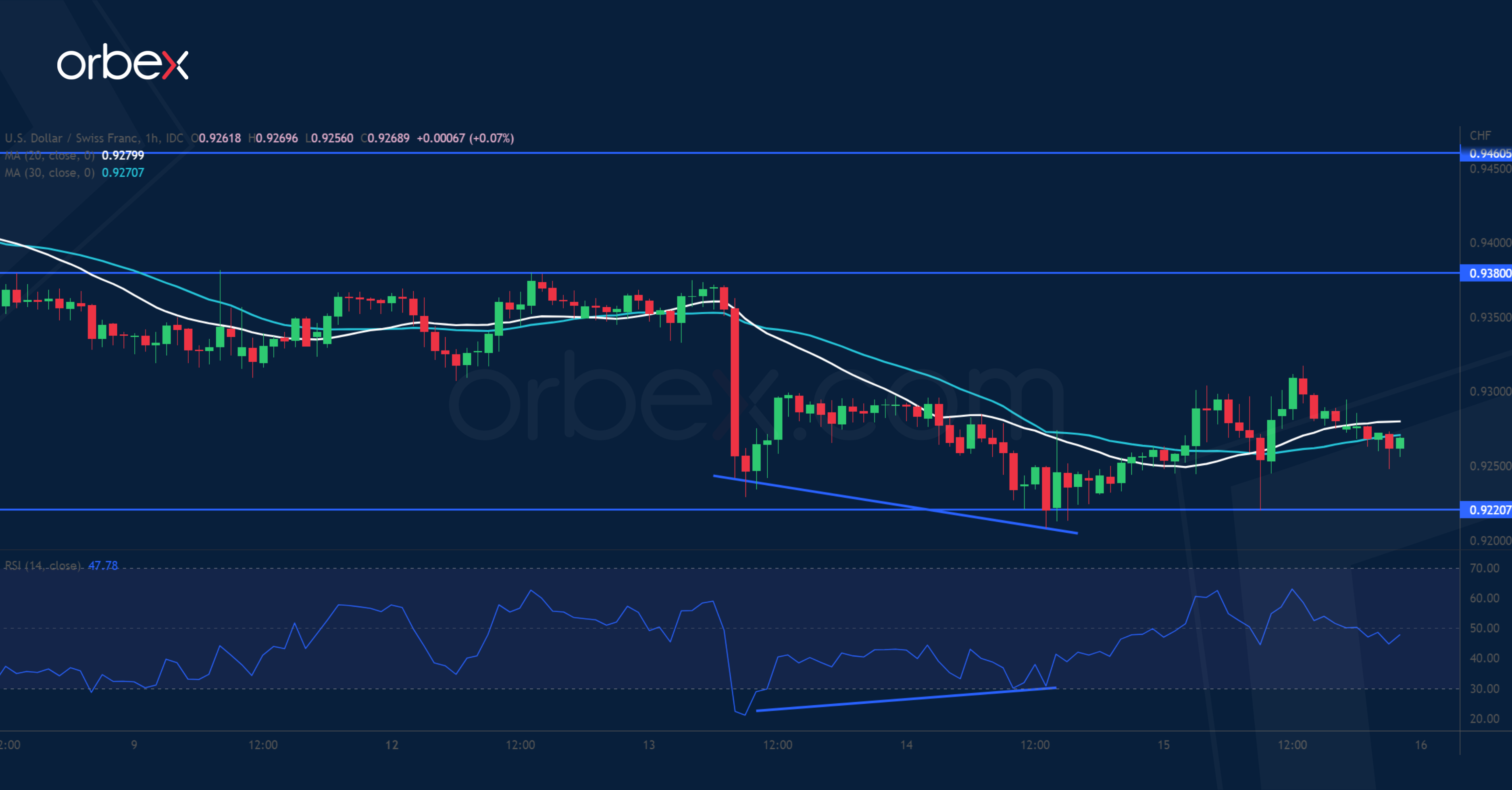
The Swiss franc retreated after the SNB raised its policy interest rate by 50 basis points as expected. On the daily chart, the US counterpart is testing last April’s lows near 0.9220 after giving up all gains from the most part of this year. As the RSI shows a bullish divergence in this demand zone, bargain hunters have scooped the bottom but the mood is too cautious to warrant a reversal yet. 0.9380 is the first hurdle ahead and its breach would ease the downward pressure. Failing that, the dollar could tank below 0.9220.
Back to Economic Data With All-Important European PMI
Markets
The ECB delivered a 50 bps hawkish-to-the-bone rate hike yesterday. More than a third of ECB governors wanted a third 75 bps move, Bloomberg reported. To get the hawks on board, the ECB’s communication was very aggressive. Rates “will still have to rise significantly at a steady pace” the statement said. President Lagarde explained this meant that 50 bps is the standard “for some period”. In addition, the balance sheet roll-off (APP) will start at the beginning of March, at a (cautious) monthly $15bn. Lagarde stopped short of calling markets outright wrong and stuck to a more elegant “The ECB needs to do more than markets price” (terminal rate then less than 3%). Ceci n’est pas un pivot and complacent markets were shoved it in the face. German yields rallied 14.3 bps (10y) to 25.4 bps (2y) higher and from a technical perspective call off the immediate downside alert. Swap yields jumped between 11.9 and 18.5 bps. Peripheral yield spreads rose brutally in Italy (+16 bps). European rate action failed to inspire the US though. The front still added up to 3.3 bps but the longer end slipped about 4 bps following disappointing US data across the board (Empire manufacturing, Philly Fed outlook, retail sales, industrial production). Hawkish ECB language reverberated through European (-3.5%, Stoxx50) and US equities (-3.2%, Nasdaq). This risk-off cut the euro rebound against the dollar short – but not against most other G10 peers. EUR/USD retreated from a 1.0735 intraday high to close at 1.0628. The dollar flourished, with DXY rising back above 104. Sterling got a double whammy from the risk climate and the BoE. Growing internal division and cloudy (sometimes simply confusing) communication trumped a 50 bps interest rate support (with more to come). EUR/GBP rebounded from 0.86 to 0.8727, calling an end to the multiple tests of the 0.8567 critical support area.
After the monetary heydays it’s back to economic data with the all-important European PMI’s. In November they showed tentative signs of bottoming, be it still below neutral levels. But that came as a positive surprise nevertheless. The bar for today is set at a status quo. There may be some room for another upside beat with the general trend of confidence bottoming out to continue. The first real winter stress test from this week probably hasn’t filtered through in the survey yet. Either way, we’ll be looking for European yields to extend yesterday’s dramatic surge going into the weekend. A weekly close in the European 10y swap yield above the June high (2.72%) would be a nice-to-have. Germany’s 10y yield should take out the 50% recovery level of the Oct-Dec correction (2.136%). Next resistance in EUR/USD is located at 1.0787 but that requires a neutral equity sentiment at minimum.
News Headlines
Slovak PM Heger’s minority government yesterday lost a vote of no confidence by 78 votes to 72. Heger turned PM last year after swapping portfolios with previous PM Matovic who had to take a step back over the purchase of Russian Covid vaccines. This Summer, junior coalition partner SaS demanded Matovic’ resignation as Finance Minister over what legislation the government should adopt in the battle against safeguarding disposable incomes. Heger refused to scupper his party member after which SaS exited the coalition. A last-minute offer to eventually sack Matovic came too late with Heger thus losing the vote of no confidence. Slovak president Caputova now has to decide whether Heger can continue as caretaker PM or appoint another political leader with the aim of avoiding snap elections. The next Slovak parliamentary vote is scheduled in early 2024.
The Danish central bank (Nationalbank) raised its current account rate from 1.25% to 1.75%, matching the ECB’s rate hike earlier on the day in order. The Danish krone trades on the strong side around parity against the euro (EUR/DKK 7.4375 area vs 7.46038) which triggered FX intervention selling van het Nationalbank. Some therefore expected that the central bank would no longer follow the ECB’s tightening pace 1:1 (as it did in October) even as the Danish Nationalbank has its own inflation issues to tackle.