Sample Category Title
BoE Cunliffe: There’s no intrinsic value around crypto assets
BoE Deputy Governor Jon Cunliffe said at a web event, "There's a long tail of retail investors who have invested in cryptoassets. Do they all understand what they've invested in? I think not. For that long tail of retail investors, I'm not sure they do understand. They don't really see this as a financial investment."
"There's no intrinsic value around crypto assets," Cunliffe said. "They move with sentiment. They're being moved mainly as a risky asset, and prices have been going down pretty consistently."
"If you have that as a proportion of your portfolio, you have to realize it is highly speculative," Cunliffe said. "You could lose all your money. You could make a sizable capital gain. It's important for investors to understand the characteristics of this investment."
Fed Kashkari: What I don’t know is how much are we going to need to do
Minneapolis Fed President Neel Kashkari said yesterday, "my colleagues and I are going to do what we need to do to bring the economy back into balance... What I don't know is how much are we going to need to do ... if we get some help on the supply side, then we won't have to do as much; if we don't get any help on the supply side, we are going to have to do more."
But he also cautioned, "if the recession is effective in bringing inflation down, but then you're pushing the unemployment rate way up, now all of a sudden you might be moving from one type of imbalance to the opposite type of imbalance. Like any kind of system, you want to avoid over-correcting if you can."
Fed Powell wont’ hesitate to move past neutral rate to tame inflation
Fed Chair Jerome Powell said yesterday, "this is a time for us to be tightly focused on the time ahead and getting inflation back down to 2%.... What we need to see is inflation coming down in a clear and convincing way... If we don't see that, we will have to consider moving more aggressively".
"If that involves moving past broadly understood levels of 'neutral' we won't hesitate to do that," he added. "We will go until we feel we are at a place where we can say 'yes, financial conditions are at an appropriate place, we see inflation coming down.'"
"We'll go to that point. There won't be any hesitation about that," he said.
Aussie Fires Up Ahead of Jobs Data and Australian Federal Election
The Australian dollar is in the midst of a rebound after last week plumbing almost two-year lows, but the path higher could get trickier as employment data is incoming and a federal election is days away. As the Reserve Bank of Australia embarks on its rate hike cycle, wage figures for the first quarter will be watched on Wednesday along with the April jobs report on Thursday, both due at 01:30 GMT. But political risks are on investors’ radar too as Australians could vote for a change in government when they head to the polls on May 21.
RBA begins tightening cycle just as China shuts down
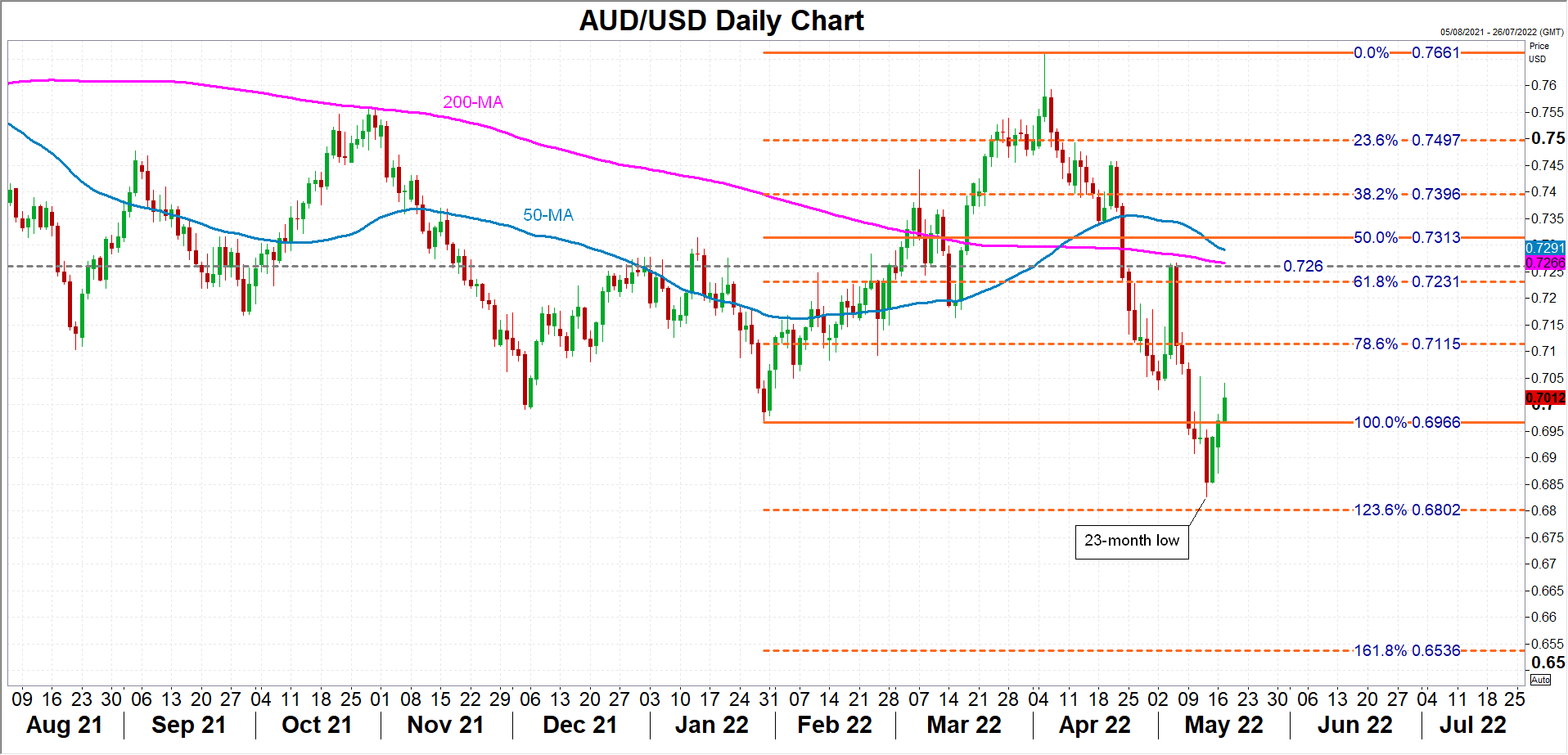
The commodity-linked aussie hasn’t been having a very good time lately. Although the currency came out of the Ukraine geopolitical storm not only unscathed but even managing to rally along with most commodities, the China slowdown scare has been less kind to the local dollar. China is Australia’s largest export market so the recent lockdowns in Shanghai and Beijing have prompted concern about both country’s growth prospects. Subsequently, the aussie plunged more than 10% from the April peak of $0.7661 to the May trough of $0.6827.
But like most other central banks, the RBA has a more pressing issue on its hands – high inflation. The consumer price index jumped to a two-decade high of 5.1% y/y in the first three months of the year. This probably influenced the Bank’s decision to raise the cash rate by 25 basis points instead of the expected 10 bps in May. The minutes of that meeting revealed that an even large increase was also on the table.
Labour market is key to pace of rate hikes
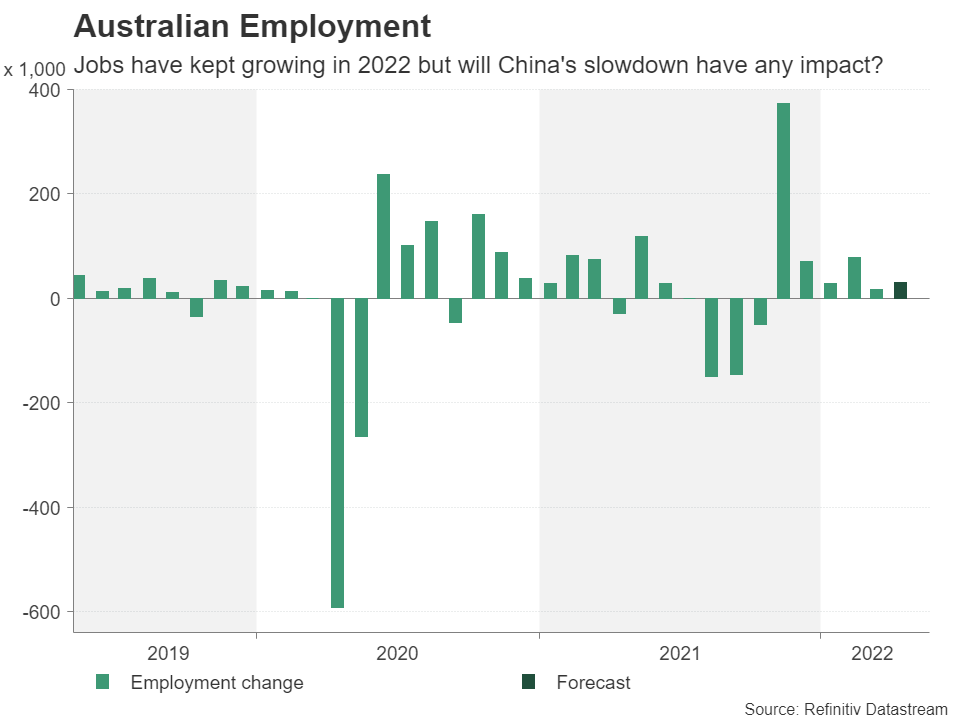
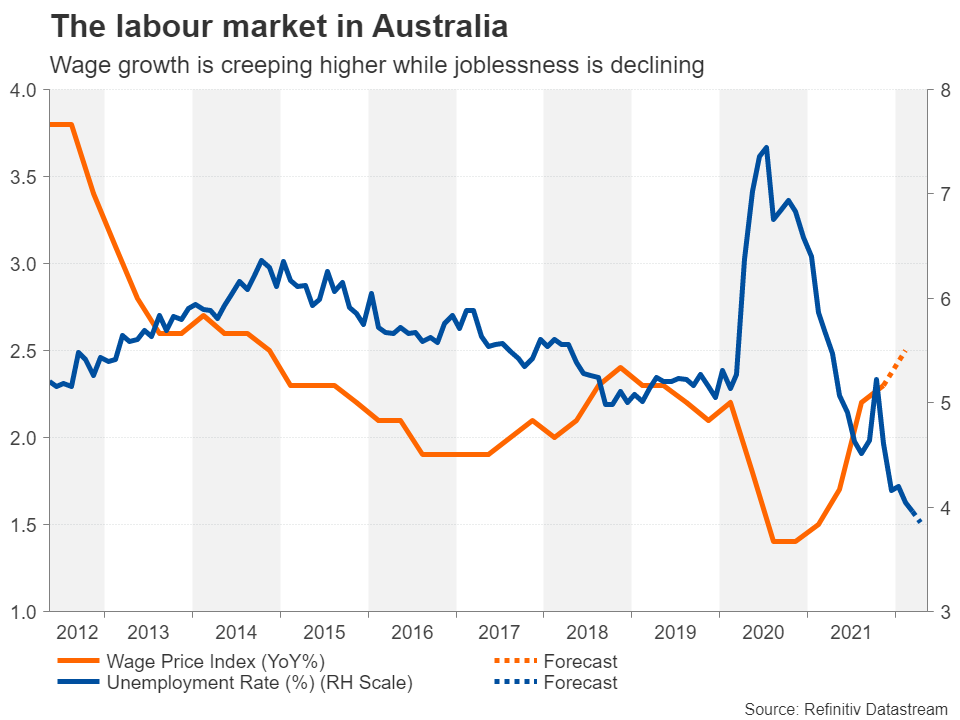
Expectations are now growing that the RBA will hike rates by 40 bps to 0.75% in June and this time round, it could be this week’s jobs numbers that sway the decision. The unemployment rate has fallen to 4% - a level not seen since early 2008. It’s expected to have dropped even lower in April to 3.9%. Employment is forecast to have risen by 30k, picking up pace from the prior month’s 17.9k gain.
Just as important, if not more, for policymakers will be the wage price index. The RBA had repeatedly stressed in the past that it wants to see higher wage growth before beginning to tighten policy and it may now be getting what it wished for. The wage price index likely grew by 2.5% y/y in the first quarter, accelerating slightly from 2.3% in the prior quarter.
Can the aussie extend its rebound?
If the wage and employment figures reinforce the view of a tight labour market, the aussie could stretch its rebound towards the $0.7260 area that encapsulates both the May highs as well as the 200-day moving average.
However, there are still several downside risks that may pull the aussie back down again. If the recovery falters, the aussie could surpass May’s 23-month low to breach the $0.68 level and tumble towards the 161.8% Fibonacci extension of the January-April uptrend at $0.6536.
China and election risks
The main threat to the Australian economy right now is if there’s a fresh virus outbreak in China that sparks a new round of lockdown restrictions just as existing ones are about to be eased. But another potential risk is the federal election on Saturday.
The ruling coalition between the Liberal and National parties led by Prime Minister Scott Morrison is lagging behind the opposition Labor Party in the polls. Although the gap has started to narrow in recent days and in some polls the coalition has regained the lead, it’s unclear if Morrison will be able to turn his fortunes around on time.
Coalition is struggling in the polls
Having enjoyed a boost in popularity from its handling of the pandemic, the government has come under pressure to do more to alleviate the burden on households from the surge in living costs. The timing of the RBA’s first post-pandemic rate hike hasn’t done it any favours either as borrowing costs are going up too.
The Labor party is proposing a rise in the minimum wage as a way to minimise the pain for households, something the coalition was initially opposed to before backtracking after coming under criticism for its stance.
Another concern for voters is climate change as the increased frequency of floods and fires in recent years has made this a hot topic during the elections. But the main parties’ policies fall short of cutting emissions as a priority, although Labor’s targets are slightly tougher.
No standouts in economic policies
But as far as markets are concerned, economic policies are what matter and there isn’t a great deal of difference separating Labor from the Liberal-National coalition. This is especially true after Labor said they would not repeal the tax cuts introduced by the current government.
If the coalition does have an edge over the economy and business policies, it might be offset by Labor’s less hostile stance towards China. The two countries’ relations have featured heavily in the election campaign as Australians are wary of China’s growing influence in the Asia-Pacific region. Morrison has put trade links with China on the line several times during his tenure. For example, he led the global calls for the origins of Covid-19 to be investigated. China responded by banning the import of Australian beef, wine and other products.
Is Australia headed for a hung parliament?
Hence, market reaction to the election outcome will likely be limited, with a win for the incumbent prime minister boosting the aussie and domestic stocks only modestly. The worst case scenario for investors, however, is if neither party is able to achieve a majority and the election results in a hung parliament.
This often creates some uncertainty while new political alliances are hashed out. If that were to fail, a minority government would be the only way forward, which might bring about a period of instability. So traders will probably be only slightly bothered if the coalition is voted out but Labor wins a clear majority, while a hung parliament could weigh on the aussie more significantly.
Technical Outlook and Review
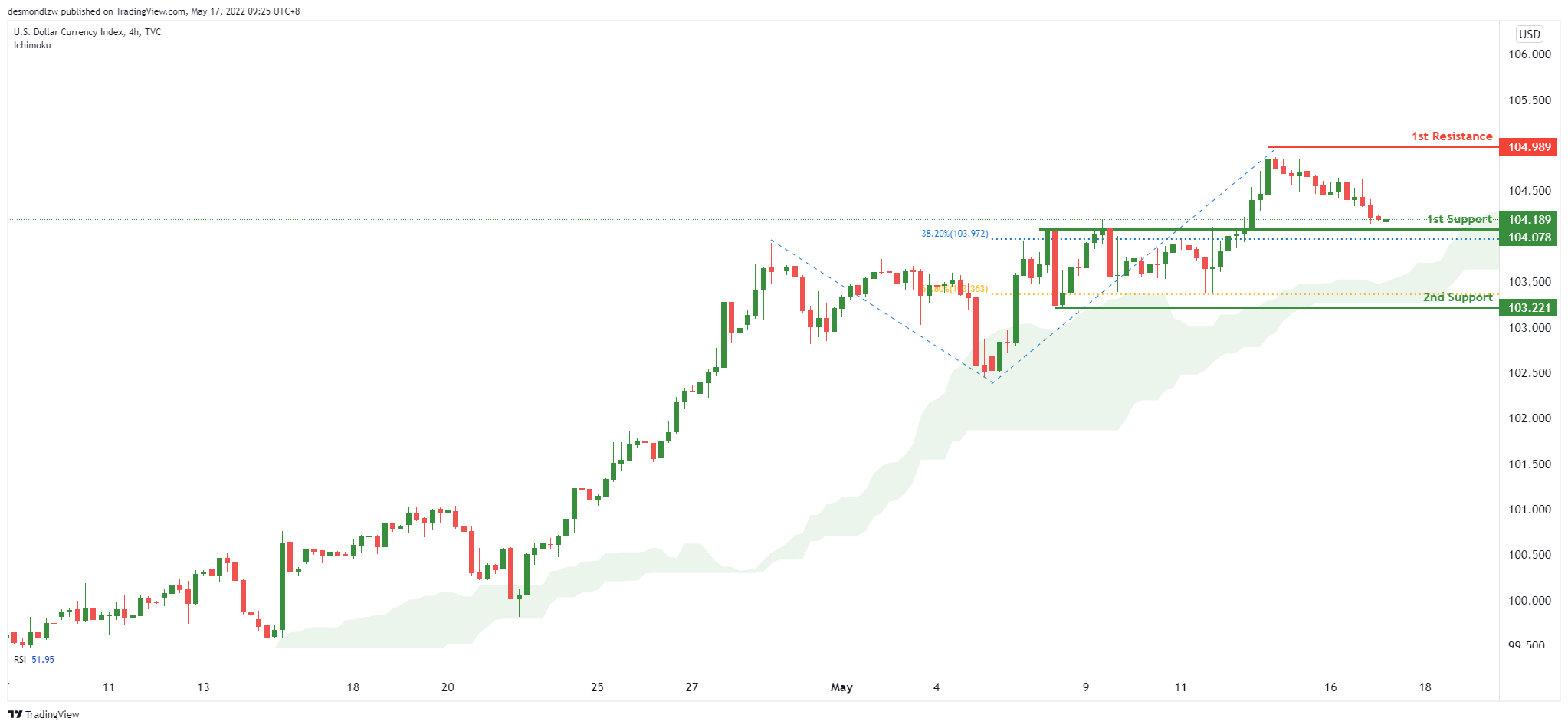
DXY:
On the H4, with price moving above the ichimoku cloud, we have a bullish bias that price will rise to our 1st resistance at 104.989 where the swing high resistance is from our 1st support at 104.078 in line with the horizontal pullback support and 38.2% Fibonacci retracement. Alternatively, price may break 1st support structure and head for 2nd support where the horizontal swing low support is.
Areas of consideration:
- H4 time frame, 1st resistance at 104.989
- H4 time frame, 1st support at 104.078
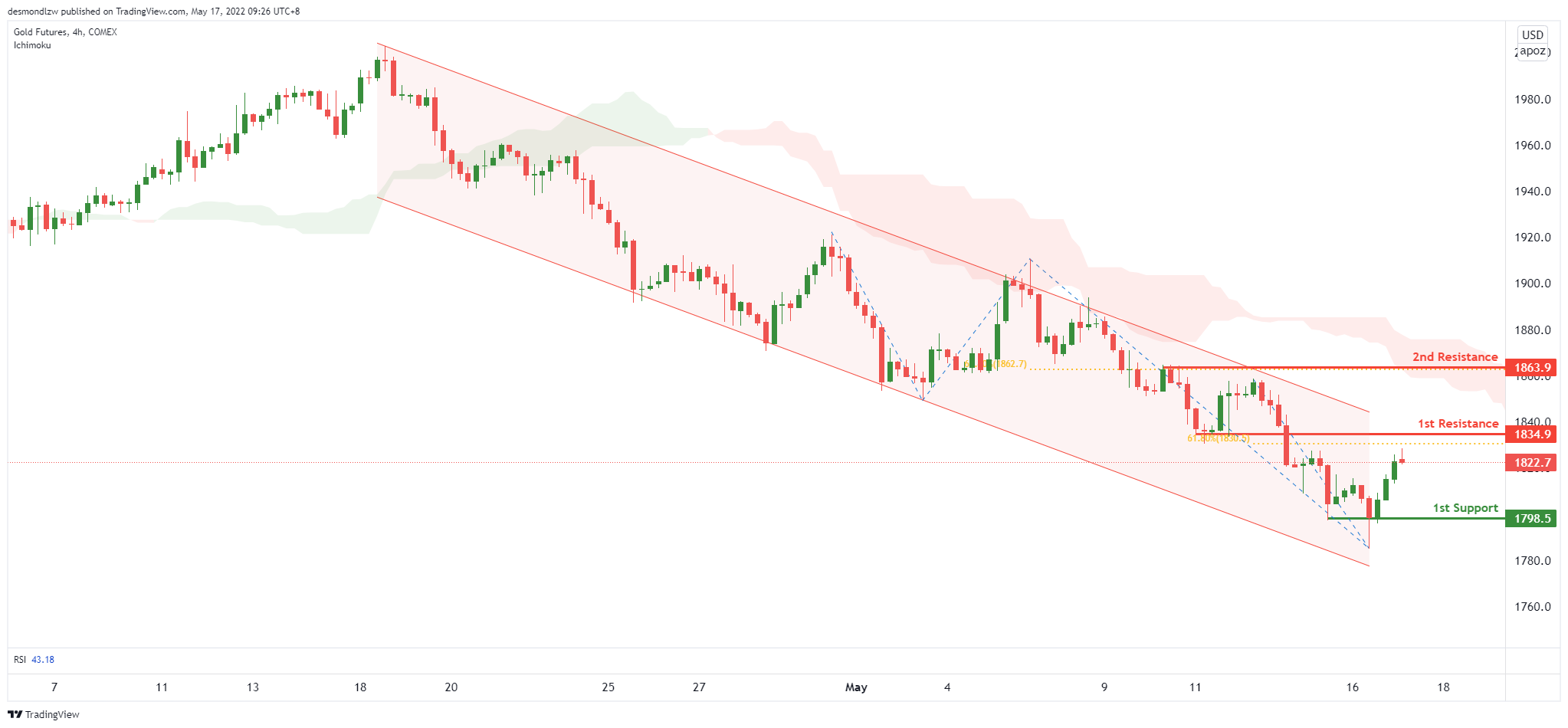
XAU/USD (GOLD):
On the H4, with price moving below the ichimoku, we have a bearish bias that price will drop from our 1st resistance at 1834 where the horizontal pullback resistance and 61.8% Fibonacci retracement is to our 1st support at 1798 in line with the swing low support. Alternatively, price may break 1st resistance structure and head for 2nd resistance where the horizontal pullback resistance is.
Areas of consideration:
- H4 time frame, 1st Resistance at 1834
- H4 time frame, 1st Support at 1798
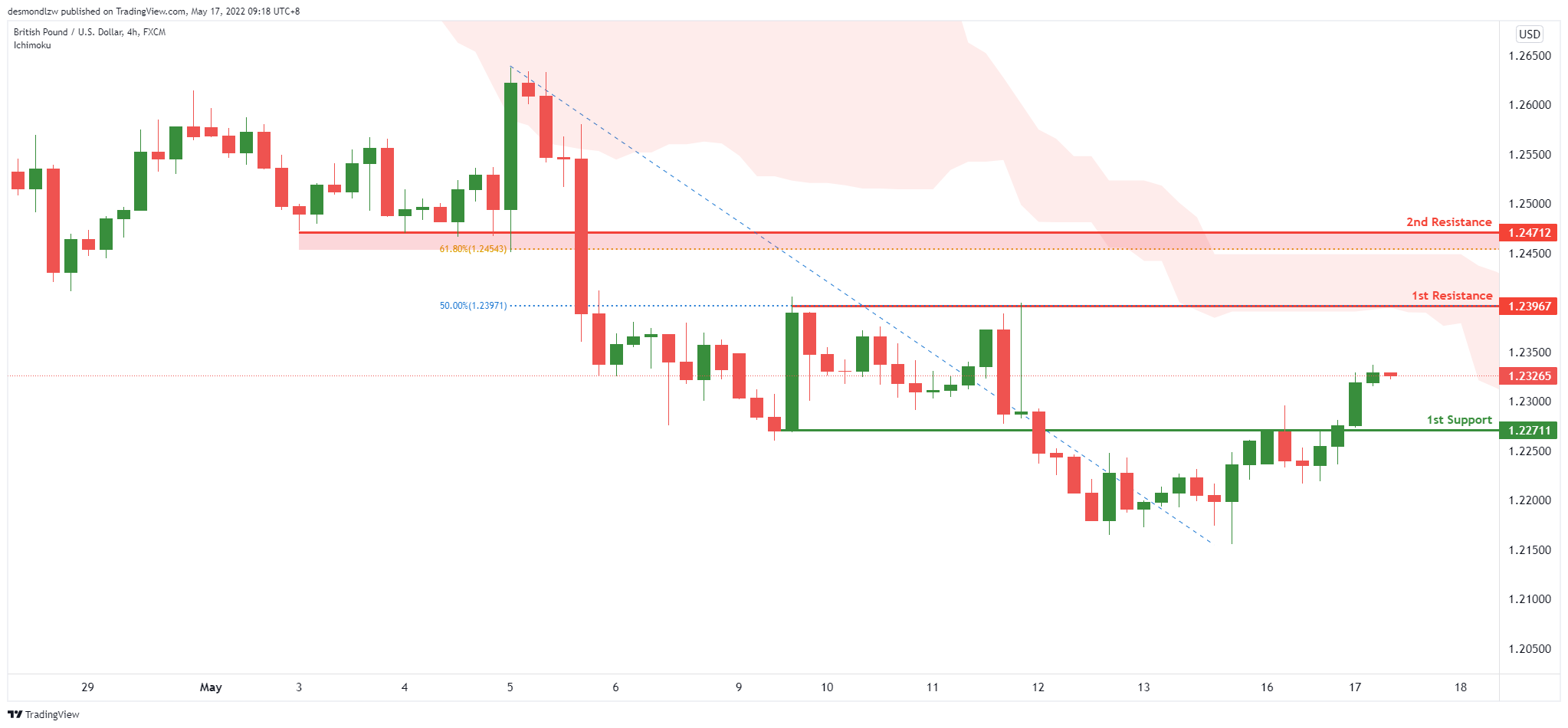
GBP/USD:
On the H4, with price moving below the ichimoku, we have a bearish bias that price will drop from our 1st resistance at 1.23967 where the 50% Fibonacci retracement and swing high resistance is to our 1st support at 1.21711 in line with the horizontal overlap support. Alternatively, price may break 1st resistance structure and head for 2nd resistance where the horizontal pullback resistance is.
Areas of consideration:
- H4 1st resistance at 1.23967
- H4 1st support at 1.21711
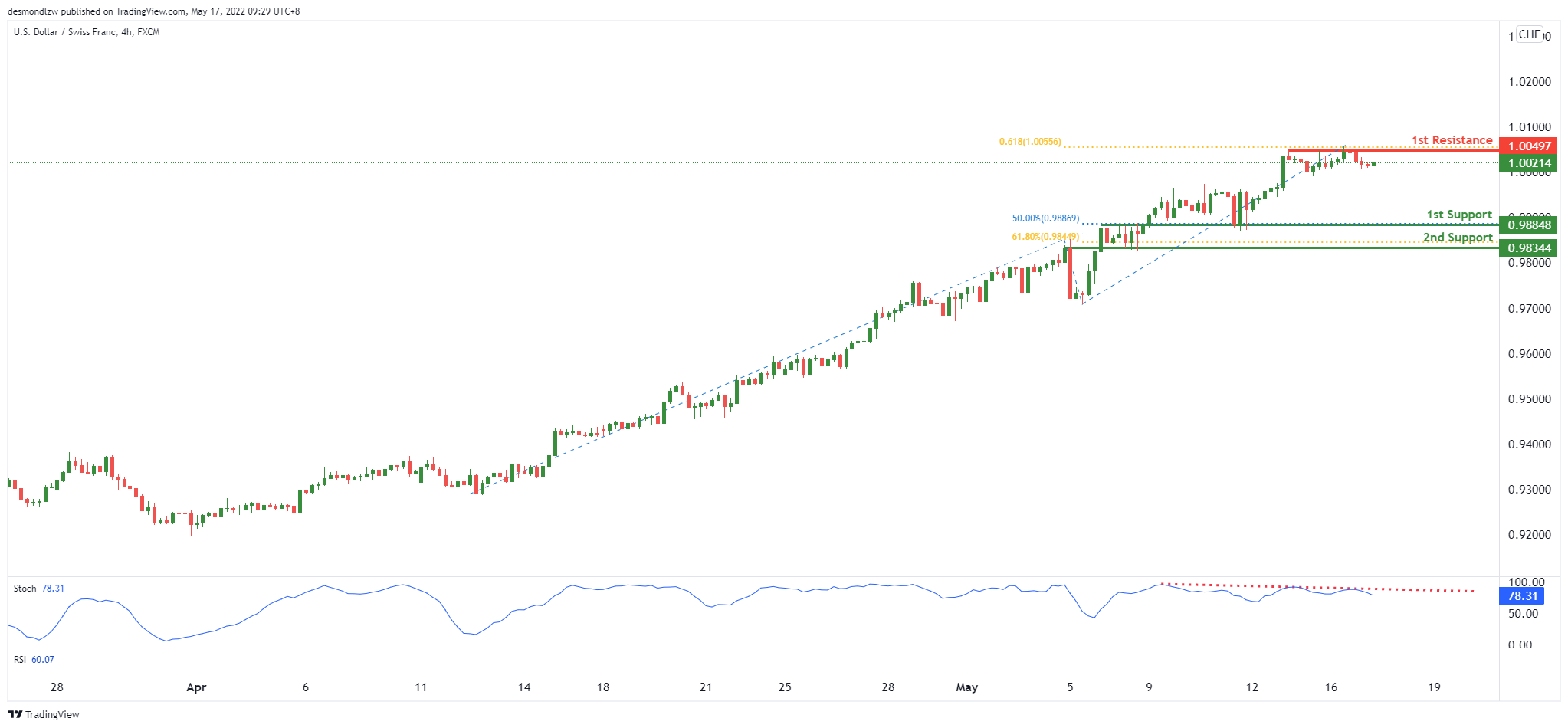
USD/CHF:
On the H4, with price expected to reverse off the stochastics indicator, we have a bearish bias that price will drop from our 1st resistance at 1.00497 where the 61.8% Fibonacci projection and swing high resistance is to our 1st support at 0.98848 in line with the horizontal overlap support and 50% fibonacci retracement. Alternatively, price may break 1st support structure and head for 2nd support where the horizontal pullback resistance is.
Areas of consideration
- 1st support level at 0.98848
- 1st resistance level at 1.00497
EUR/USD :
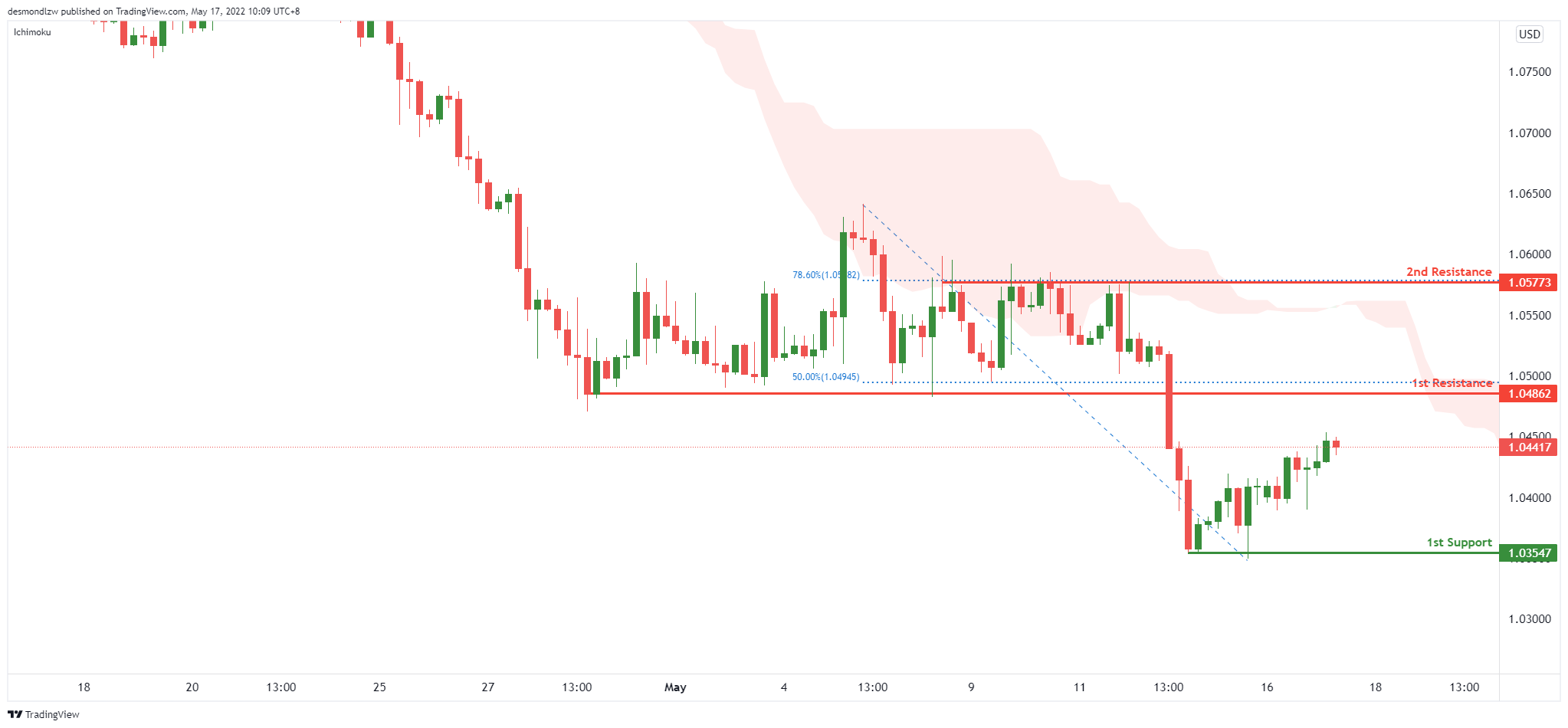
On the H4, with price moving below the ichimoku, we have a bearish bias that price will drop from our 1st resistance at 1.04862 where the horizontal pullback resistance and 50% Fibonacci retracement is to our 1st support at 1.03547 in line with the swing low support. Alternatively, price may break 1st resistance structure and head for 2nd resistance where the horizontal swing high resistance is.
Areas of consideration :
- H4 1st resistance at 1.04862
- H4 1st support at 1.03547
USD/JPY:
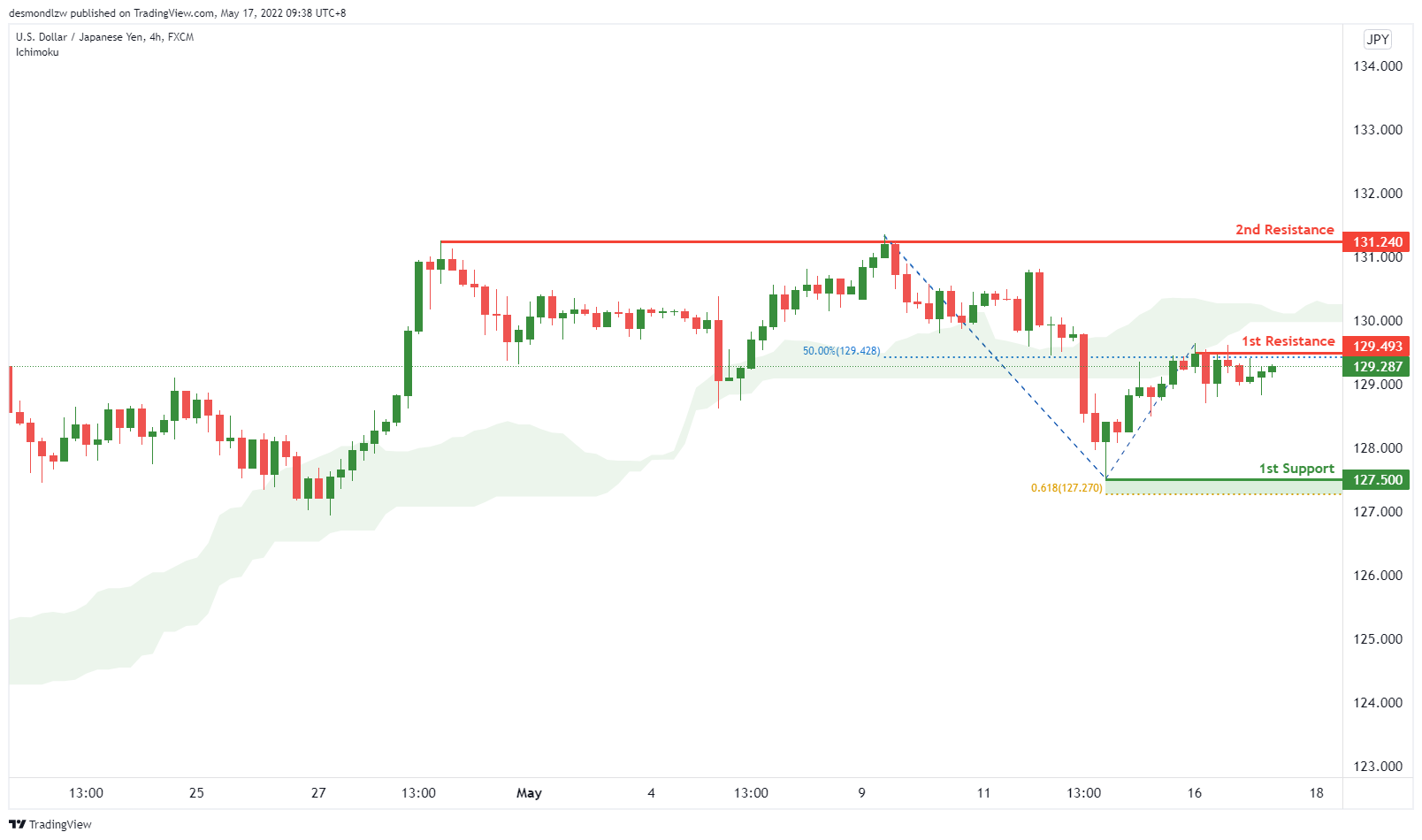
On the H4, with price moving below the ichimoku cloud, we have a bearish bias that price will drop from our 1st resistance at 129.493 where the 50% Fibonacci projection and swing high resistance is to our 1st support at 127.500 in line with the horizontal swing low support and 61.8% fibonacci projection. Alternatively, price may break 1st support structure and head for 2nd support where the horizontal swing high resistance is.
Areas of consideration:
- H4 time frame, 1st resistance at 129.493
- H4 time frame, 1st support at 127.500
AUD/USD:
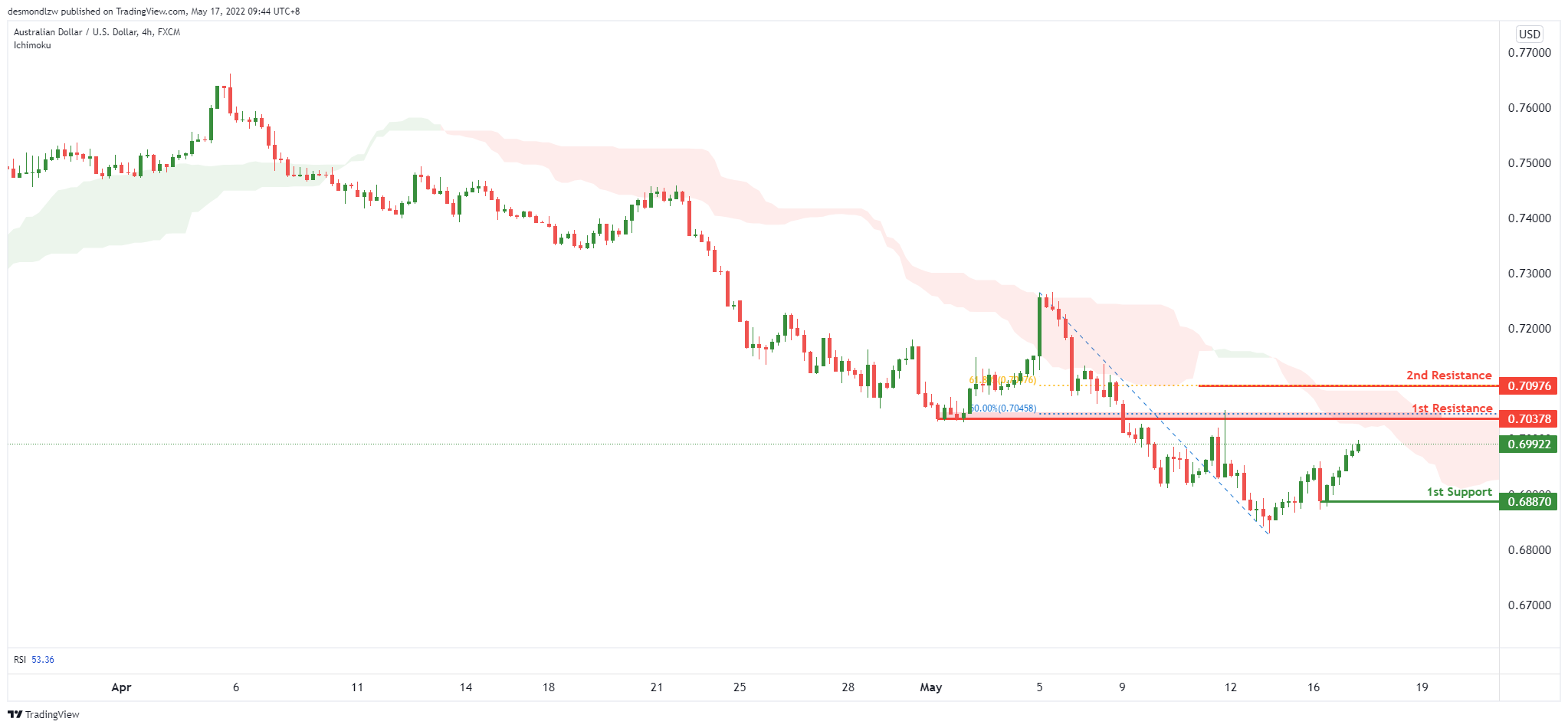
On the H4, with price moving below the ichimoku, we have a bearish bias that price will drop from our 1st resistance at 0.70378 where the pullback resistance and 50% Fibonacci retracement is to our 1st support at 0.68870 in line with the swing low support. Alternatively, price may break 1st resistance structure and head for 2nd resistance where the 61.8% Fibonacci retracement is.
Areas of consideration
- H4 1st resistance at 0.70378
- H4 1st support at 0.68870
NZD/USD:
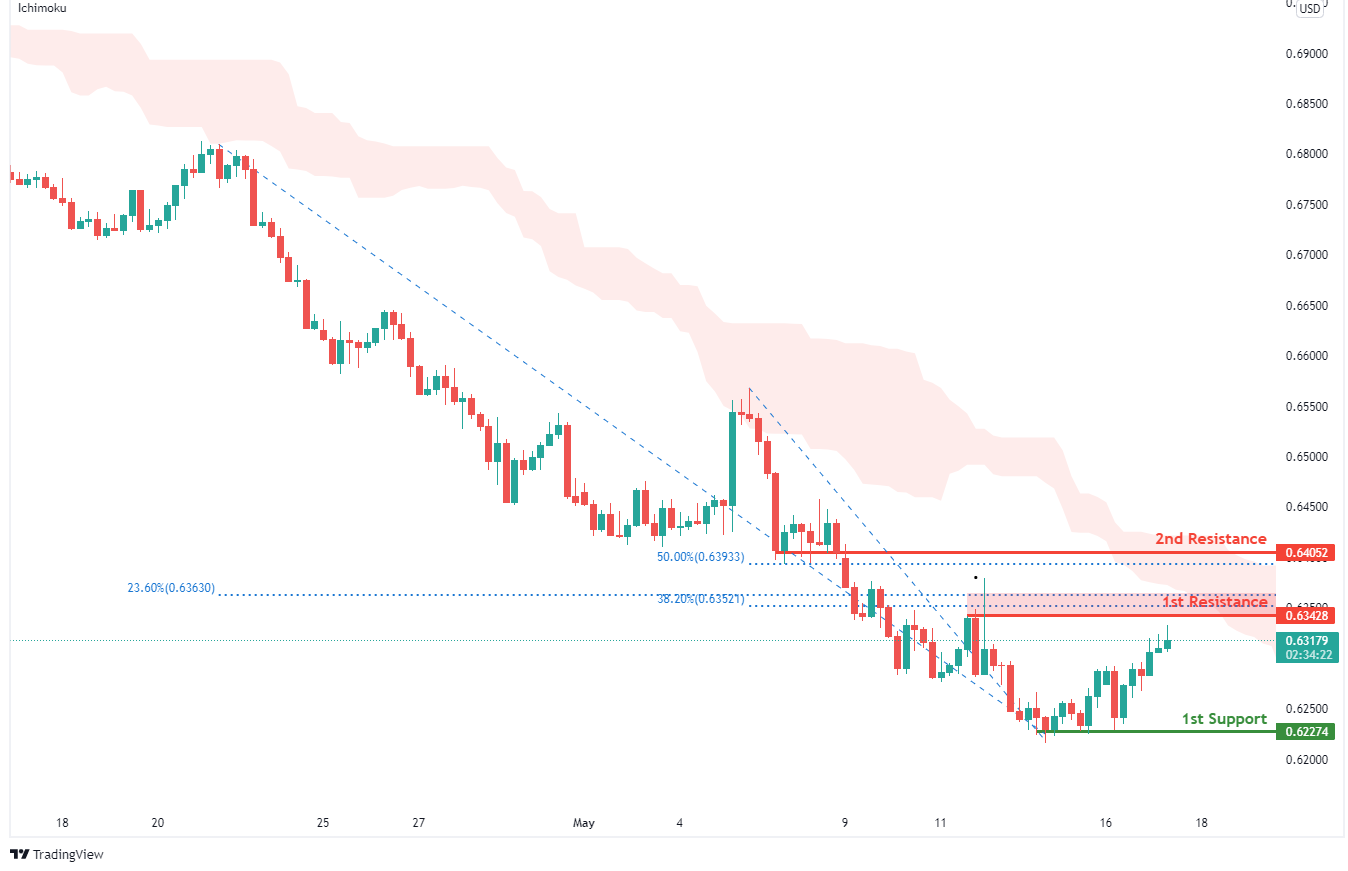
On the H4, with price moving below the ichimoku cloud, we have a bearish bias that price will drop from our 1st resistance at 0.63428 where the 23.6% Fibonacci retracement, 38.20% Fibonacci retracement and horizontal swing high resistance is to our 1st support at 0.62274 in line with the horizontal swing low support. Alternatively, price may break 1st resistance structure and head for 2nd resistance at 0.64052 in line with 50% Fibonacci retracement and horizontal pullback resistance.
Areas of consideration:
- H4 time frame, 1st support at 0.62274
- H4 time frame, 1st resistance at 0.63428
USD/CAD:
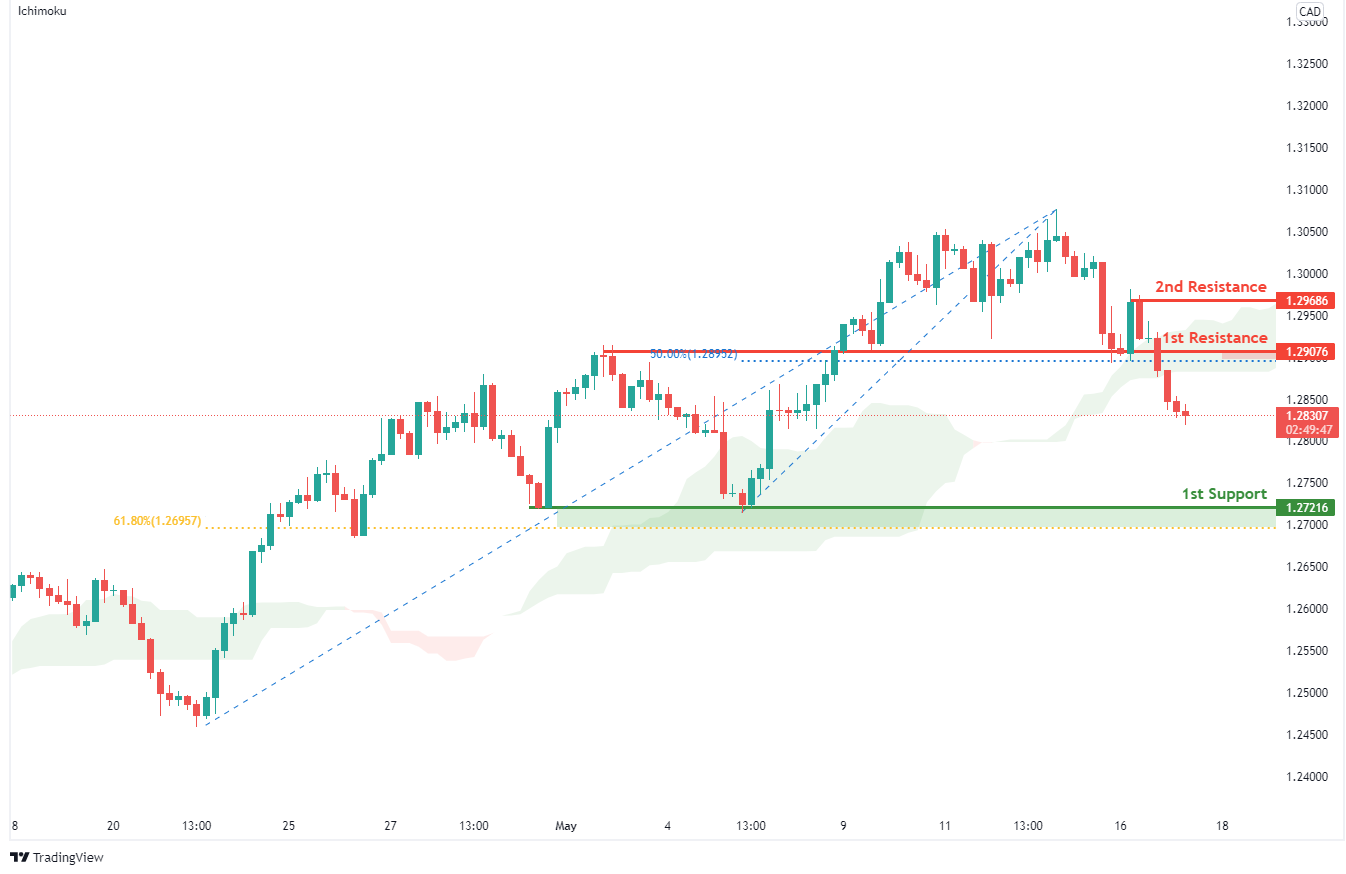
On the H4, with price moving below the ichimoku, we have a bearish bias that price will drop from our 1st resistance at 1.29076 where the horizontal pullback resistance and 50% Fibonacci retracement is to our 1st support at 1.27216 in line with the swing low support. Alternatively, price may break 1st resistance structure and head for 2nd resistance where the horizontal pullback resistance is.
Areas of consideration:
- H4 time frame, 1st resistance at 1.29076
- H4 time frame, 1st support at 1.27216
OIL:
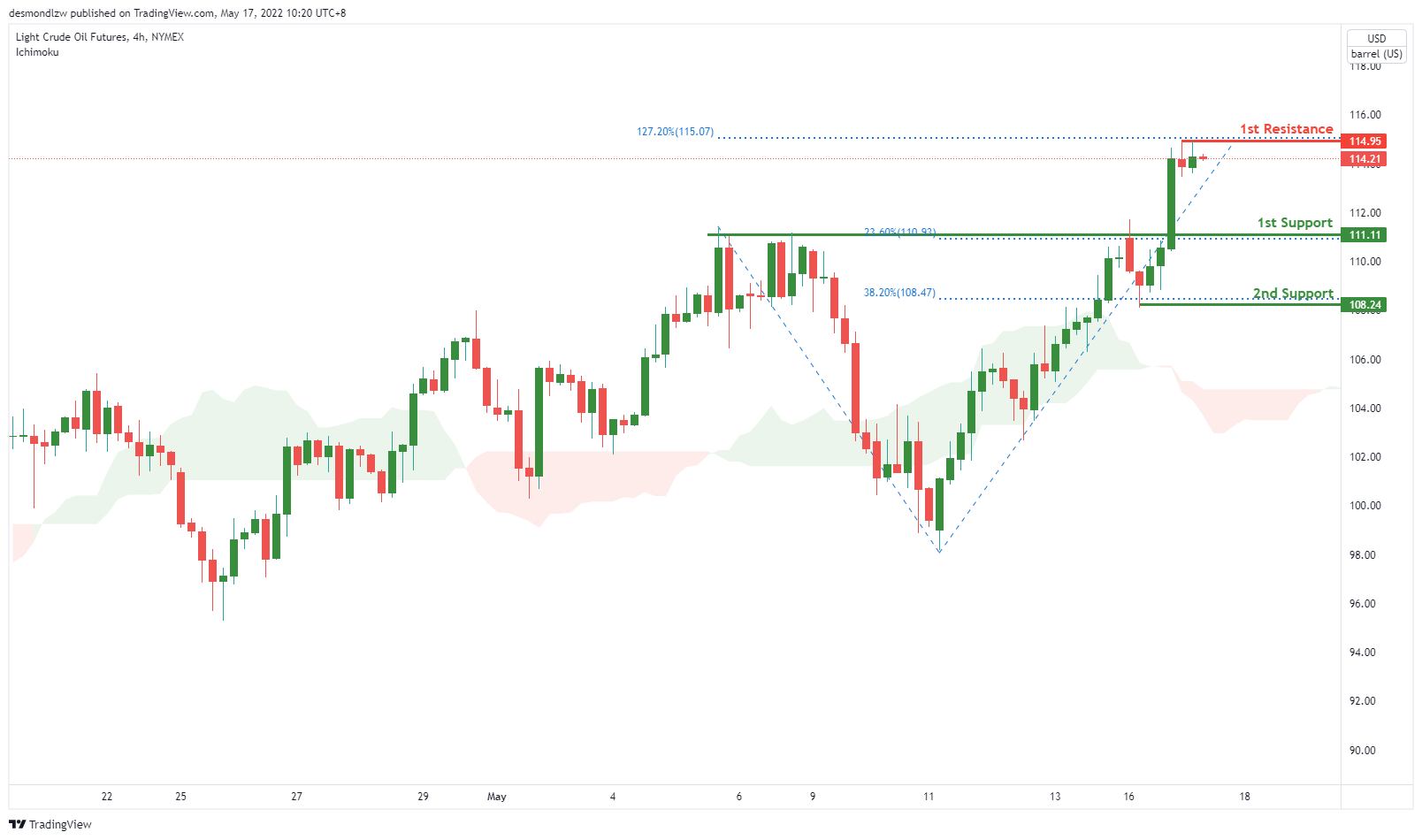
On the H4, with price expected to reverse off the stochastics indicator resistance, we have a bearish bias that price will drop from our 1st resistance at 114.39 where the 127.2% Fibonacci extension is to our 1st support at 111.11 in line with the 23.6% Fibonacci retracement. Alternatively, price may break 1st resistance structure and head for 2nd resistance where the 38.2% Fibonacci retracement.
Areas of consideration:
- H4 time frame, 1st resistance of 114.39
- H4 time frame, 1st support of 111.11
Dow Jones Industrial Average:
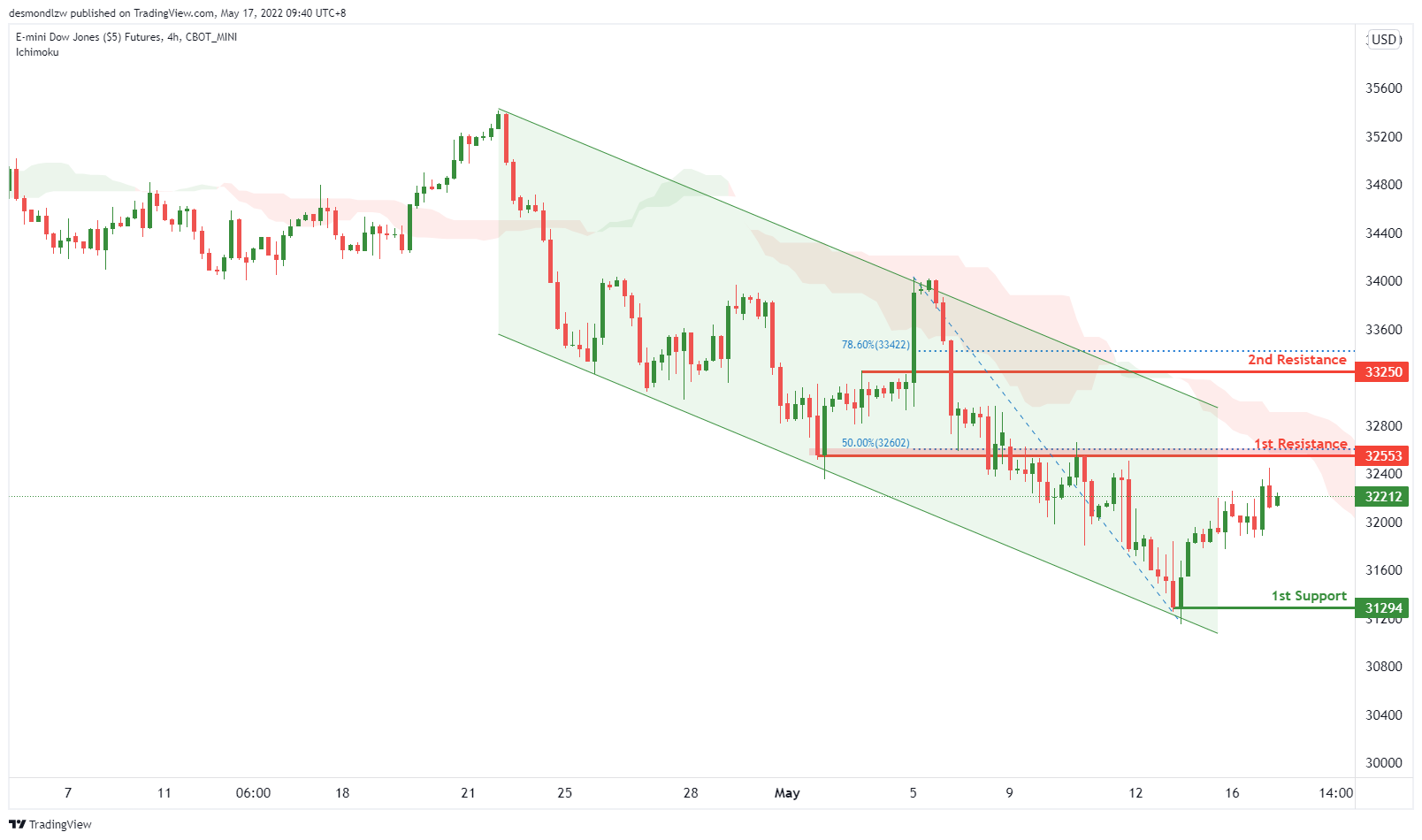
On the H4, with price moving below the ichimoku cloud, we have a bearish bias that price will drop from our 1st resistance at 114.39 where the 127.2% Fibonacci extension is to our 1st support at 111.11 in line with the 23.6% Fibonacci retracement. Alternatively, price may break 1st resistance structure and head for 2nd resistance where the 38.2% Fibonacci retracement.
Areas of consideration :
- H4 time frame, 1st resistance at 32553
- H4 time frame, 1st support at 31753
Elliott Wave View: EURJPY Rallying from Support Area
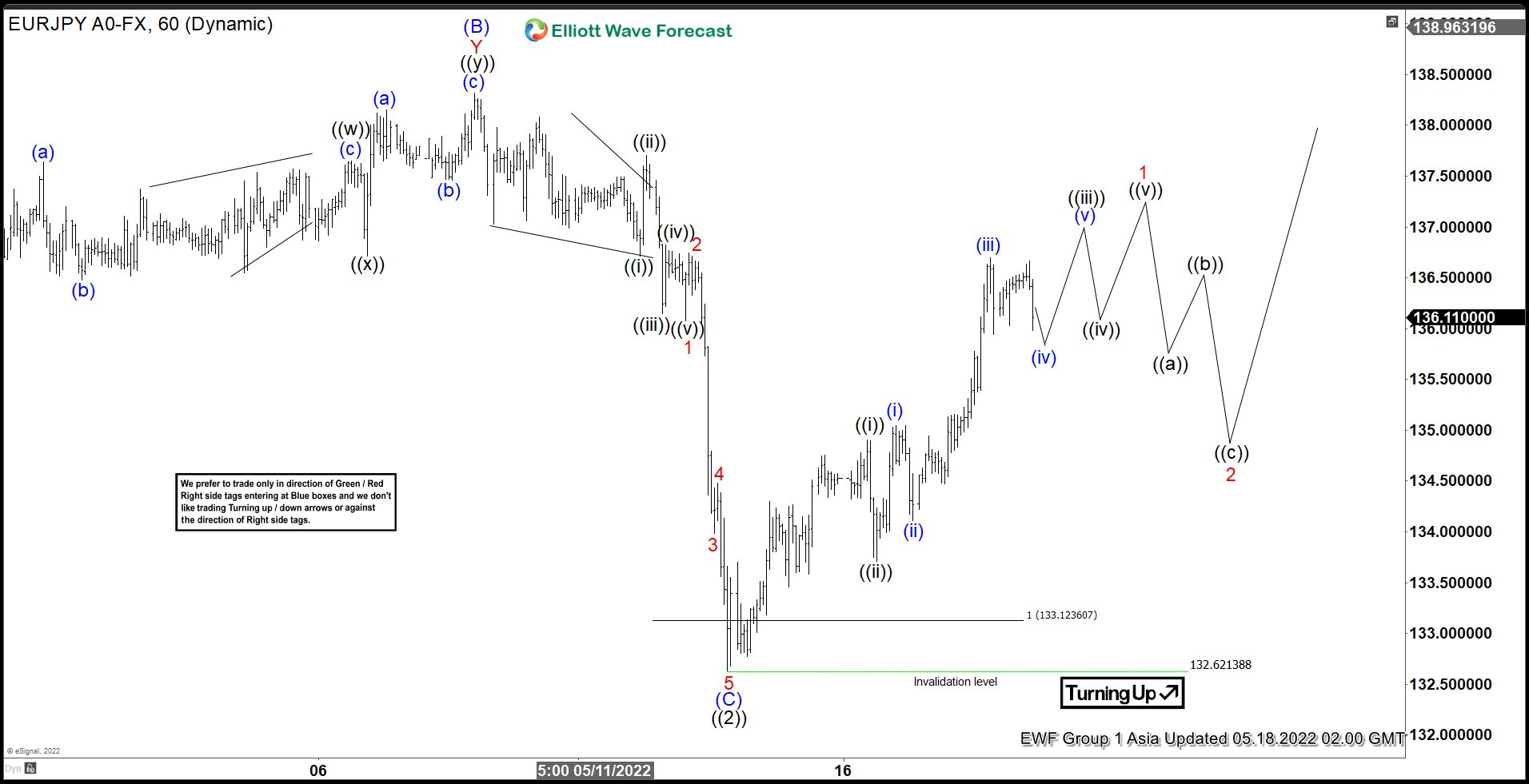
Short Term View in EURJPY suggests cycle from 04.21.2022 peak is completed as a 3 waves zig zag Elliott Wave Structure. Down from April 21 peak, wave (A) ended at 134.75 and rally in wave (B) ended at 138.32. Pair then resumes lower in wave (C) with internal subdivision as an impulse in lesser degree. Down from wave (B), wave 1 ended at 136.08 and pullback in wave 2 ended at 136.74. Pair then resumes lower in wave 3 towards 133.98, wave 4 ended at 134.48. Final wave 5 ended at 132.62 which completed wave (C) and wave ((2)).
Blue box started at 133.12. It was hit for the market and began a new cycle. This new cycle is unfolded as a motive wave structure. Up from wave ((2)), wave ((i)) ended at 134.90, wave ((ii)) ended at 133.70. Then wave (i) in lesser degree ended at 135.05, wave (ii) ended at 134.11 and continue with the rally. Wave (iii) ended at 136.69 and curretly we are bulding wave (iv). After complete wave (iv), pair should resume higher in wave (v) and wave ((iii)). Then we should see a new pullback as wave ((iv)) and higher again to complete wave ((v)) and wave 1 to finish the impulse. Near term, as far as pivot at 132.62 low stays intact, expect pullback to find support in 3, 7, or 11 swing for further upside.
EURJPY 60 Minutes Elliott Wave Chart
Natural Gas Wave Analysis
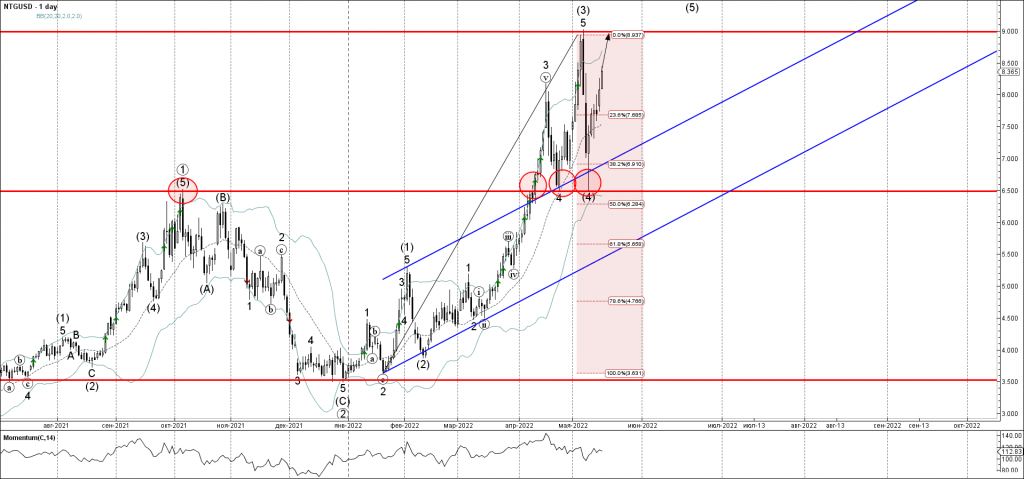
- Natural gas reversed from support level 6.500
- Likely to rise to 9.000
Natural gas recently reversed up from the strong support level 6.500, coinciding with the 20-day moving average and the 50% Fibonacci correction of the upward impulse wave (3) from February.
The support zone near the support level 6.500 was further strengthened by the upper trendline of the recently broken up channel from January.
Given the clear daily uptrend – Natural gas can be expected to rise in the active impulse wave (5) toward the next resistance level 9.000 (top of the previous wave (3)).
EURCAD Wave Analysis
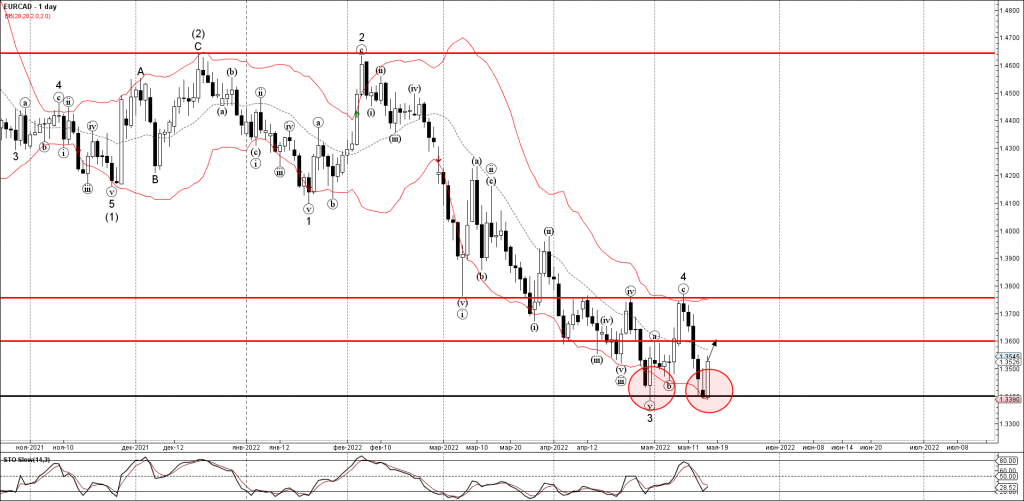
- EURCAD reversed from support level 1.3400
- Likely to rise to 1.3600
EURCAD today reversed up from the strong support level 1.3400 (which stopped the previous sharp downward impulse wave 3 at the end of last month).
The upward reversal from the support level 1.3400 will most likely form the daily candlesticks reversal pattern Morning Star.
Given the moderate euro bullishness seen today – EURCAD can be expected to rise further toward the next resistance level 1.3600.
British Pound Soars on Strong Jobs Data
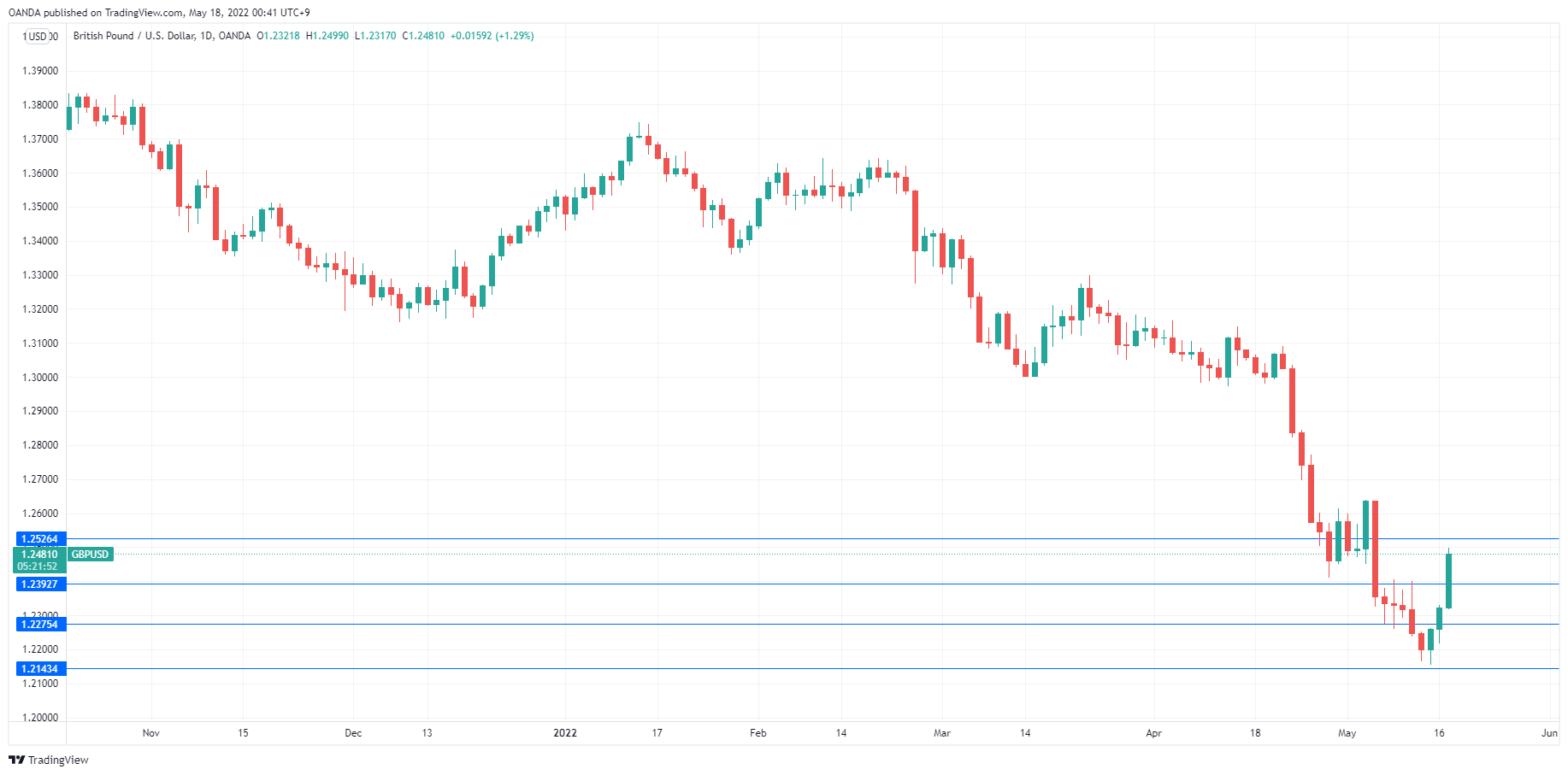
The British pound continues to rally on Tuesday. GBP/USD is trading at 1.2463 in the European session, up 1.15% on the day.
UK employment numbers sparkle
The tight UK labor market is getting even tighter, as reflected in the March employment report. The unemployment rate fell to 3.7% (3.8% prior), below the 3.8% forecast and its lowest level since 1974. Employment change jumped by 83 thousand, smashing the estimate of 5 thousand. Wage growth in Q1 was up 7%, but without bonuses, the gain was only 4.2%. This means that inflation is far outstripping wage growth and exacerbating the cost of living crisis for UK households.
The UK continues to grapple with a severe shortage of workers, as Covid resulted in some 500 thousand workers leaving their jobs, and many continental European workers left the UK after Brexit. For the first time on record, there are more job vacancies than unemployed persons in the UK.
This economic landscape leaves the Bank of England stuck between a rock and a hard place. The central bank must raise rates to contain soaring inflation, but this could tip the economy into a recession if the BoE is unable to guide it to a ‘soft landing’. Governor Bailey didn’t pull any punches on Monday in his testimony before lawmakers, saying that he was extremely concerned about inflation. We’ll get a look at UK inflation on Wednesday, with the markets bracing for a reading of 9.1% in April. I expect the inflation report to be a market-mover for the pound – a stronger than expected release will likely send the pound higher, while a weak release would put strong pressure on the currency.
Today’s employment report has raised expectations that the BoE will have to remain aggressive with its rate cycle, which has pushed UK yields and the British pound sharply higher. If the US/UK rate differential continues to narrow, the pound should be able to make up ground against the dollar.
GBP/USD Technical
- 1.2275 is providing support. Below, there is support at 1.2143
- GBP/USD has broken above resistance at 1.2393. Above, there is resistance at 1.2525