Sample Category Title
AUD/USD in Bearish Reversal
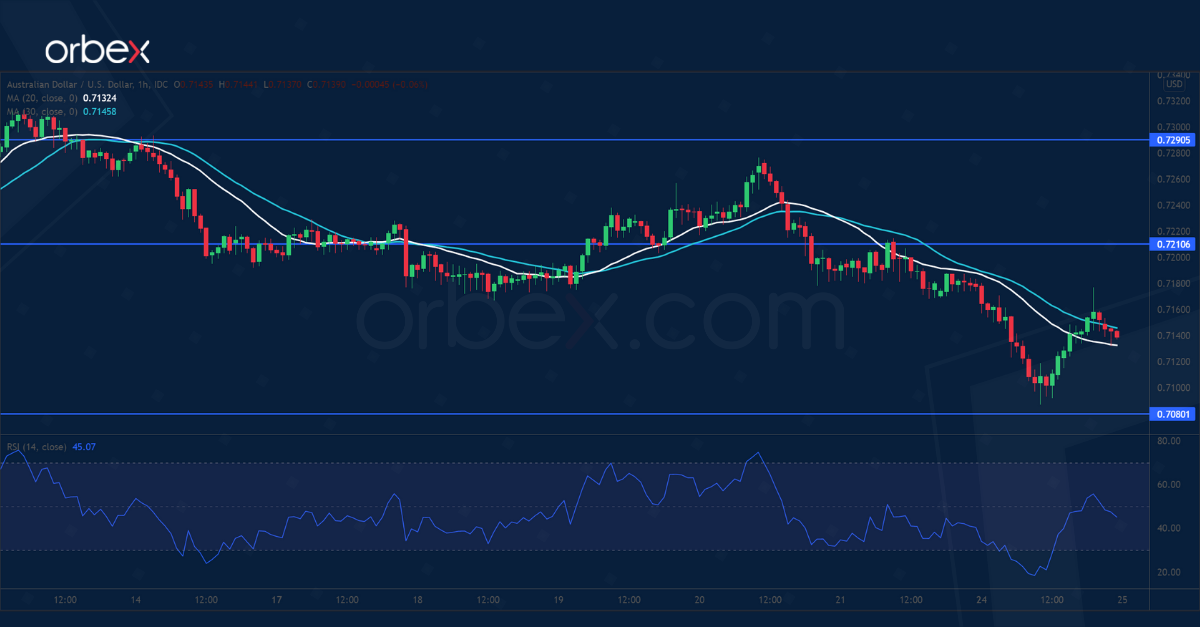
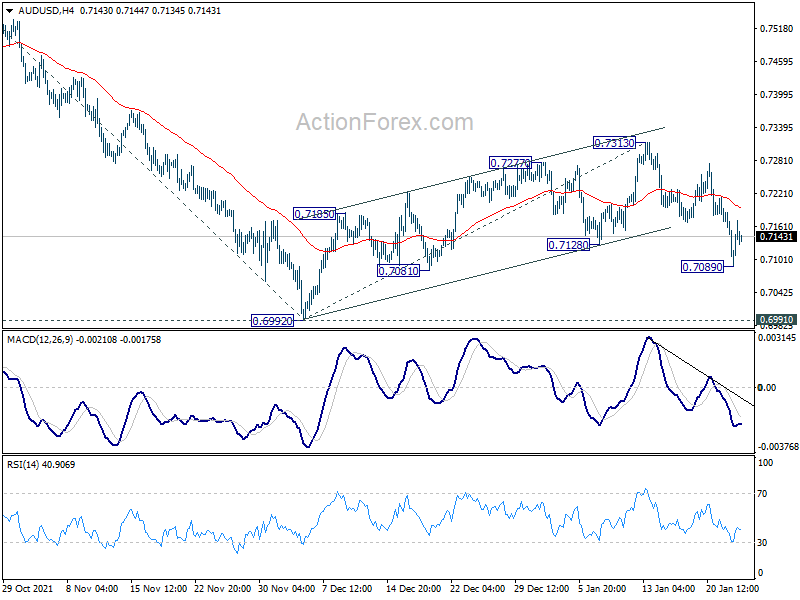
The Australian dollar recovered after the Q4 CPI beat expectations. However, the latest rally took a bearish turn after the price slipped below 0.7170.
The lack of commitment to hold onto recent gains suggests a weak risk appetite. A fall below the daily support at 0.7130 further weighs on the Aussie and prompts buyers to bail out.
The RSI’s oversold situation helped lift the pair temporarily. Nonetheless, the bears might be eager to sell into strength near 0.7210. 0.7080 would be the next stop as the trend turns south.
GBP/USD Remains Under Pressure
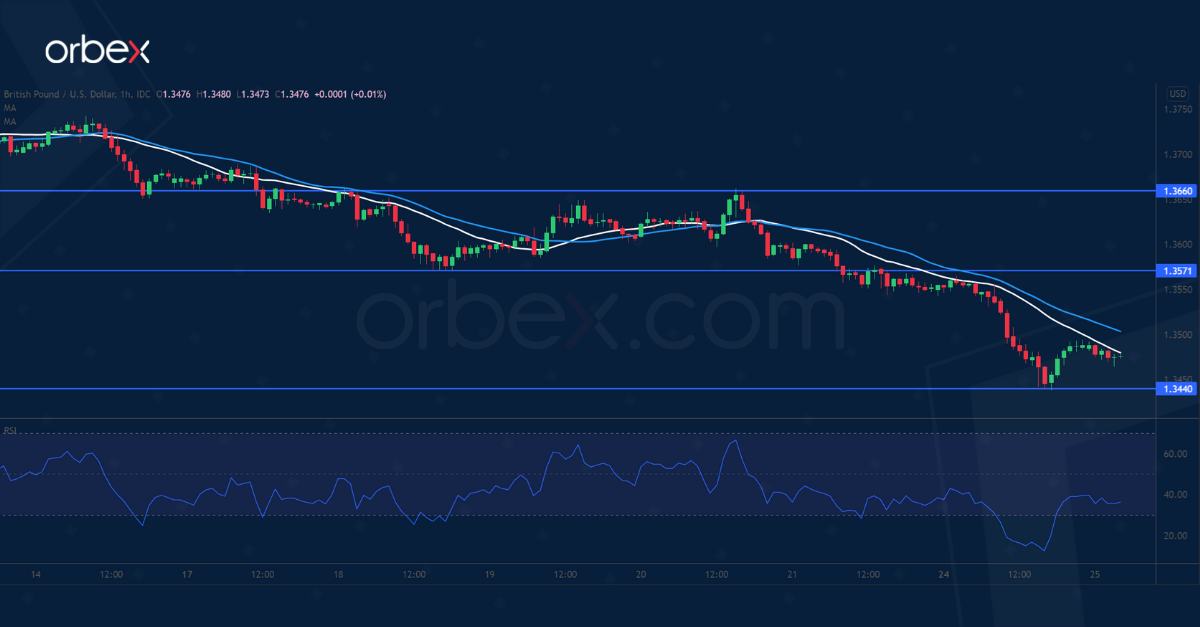
The sterling struggles as global markets remain risk-off. A limited rebound has fought to hold above 1.3570 and the sell-off accelerated after a bearish breakout.
The pair is testing a previous low at 1.3440 which sits along the 30-day moving average. There could be buying interest in this congestion area after the RSI plunged into the oversold band.
1.3570 is now a fresh resistance, then the bulls will need to lift 1.3660 before they could turn sentiment around. On the other hand, a deeper correction may send the price to 1.3400.
Escalated Military Threat of a Russian Invasion in Ukraine Added Another Dark Layer Over Soured Risk Sentiment
Markets
The escalated military threat of a Russian invasion in Ukraine added another dark layer over already soured risk sentiment. Main European equity indices lost around 4% with some of them now also officially in correction territory (>10% sell-off from top; eg AEX). The EuroStoxx50 tested key support at 4046/4025 (November low and incoming trend- or neckline from uptrend or multiple top formation). US stock markets joined the sell-off with losses of a similar magnitude. The S&P 500 tested for example the July (!) low at 4233. However, for the first time since early January some buyers showed up. A late rally even enabled a marginally positive close for key US benchmarks. The jury is still out on the strength of this move. Asian stock markets don’t copy the late Wall Street optimism and lose up to 2%. US equity futures are downwardly oriented again as well. Is the sell-off really over or was yesterday’s action more of a dead cat bounce? At least going into the FOMC meeting, we’d err on the side of caution. We expect the Fed to pre-announce a March rate, potentially end net asset purchases altogether and perhaps already give some more guidance on how it plans to conduct a balance sheet roll-off later this year. Such rapid normalization drift in combination with stubbornly high inflation and its consequences for future growth all suggest a difficult year ahead for risky assets.
Yesterday’s intraday rebound on US stock markets pulled other haven assets like core bonds off their highs. The US yield curve steepened with daily changes ranging between -3.1 bps (2-yr) and +4 bps (30-yr). European markets closed when the US hit bottom levels, explaining the “outperformance” of German Bunds on the daily scorecard. Yields dropped by 3 to 4 bps with the belly performing slightly better than the wings. The dollar for most of the day outperformed all other currencies, but closed off best levels as well. EUR/USD narrowly held withing the slow upward trading trend channel, closing at 1.1326. EUR/GBP moved above first resistance at 0.8381 to close the session at 0.8397. Today’s eco calendar contains US housing prices, US consumer confidence and German Ifo Business sentiment. The IMF launches its world economic outlook update with the US Treasury selling $55bn 5-yr Notes. We expect the eco calendar to maintain subordinated to global sentiment. We think it’s too early to call an end to the risk correction and prefer the traditional haven assets/correlations.
New Headlines
Q4 Australian headline inflation accelerated to 1.3% Q/Q and 3.5% Y/Y. The core trimmed mean measure, which is closely watched by the Reserve Bank of Australia, also rose more than expected, by 1.0% Q/Q and 2.6% Y/Y. Price rises were broad-based, including a substantial 4.4% rise in prices for new dwellings. In this respect, the Australian statistics bureau mentioned that “shortages of building supplies and labour combined with continued strong demand for new dwellings, contributed to price increases for newly built houses, townhouses and apartments”. Today’s data suggest that (core) inflation is moving higher in the 2-3% target range sooner than the RBA expected. The RBA meets on February 1. In its December statement, it indicated to consider the bond buying program at that meeting. Halting net purchases is highly likely. Markets currently discount a RBA rate hike at the June meeting. The Aussie dollar temporarily gained a few ticks this morning, but a fragile global risk sentiment capped any sustained move higher (AUD/USD 0.7140).
The Monetary Authority Singapore today unexpectedly tightened monetary policy. It was the first unscheduled tightening since 2015. The MAS uses the exchange rate as its most important monetary policy tool as the country’s open economy is highly sensitive to global inflationary developments. The MAS said that it would slightly raise the rate of appreciation of its policy band. The MAS already tightened policy in October. It also raised its 2022 forecast for core inflation from 2%-3% from 1%-2% in October. The next regular policy meeting is scheduled for April. The Singapore dollar strengthened to USD/SGD 1.3435 and is near the September/October levels (1.3380/1.3420 area).
Daily Technical Analysis
EUR/USD
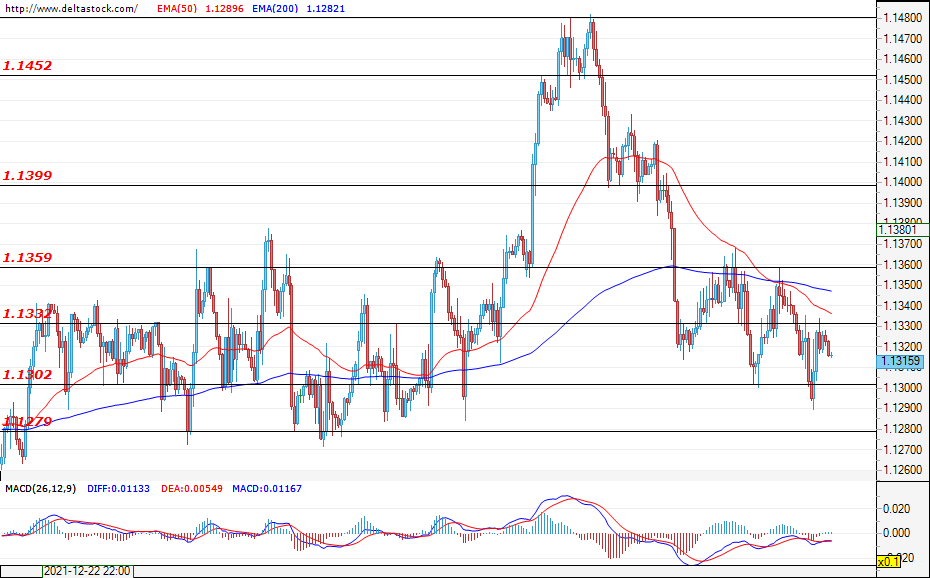
During the early hours of today’s trading session, the currency pair bounced back from the resistance at 1.1330, therefore the current expectations are for the pair to head towards a test of the support at 1.1300 and, if it is successfully breached, to also head towards the critical support at 1.1280. However, if the support at 1.1300 resists the pressure of the bears, then this may lead to a retracement towards the resistance at 1.1330, followed by the next one at 1.1360. Today, increased activity can be expected around the release of the consumer confidence data for the U.S. (15:00 GMT).
USD/JPY
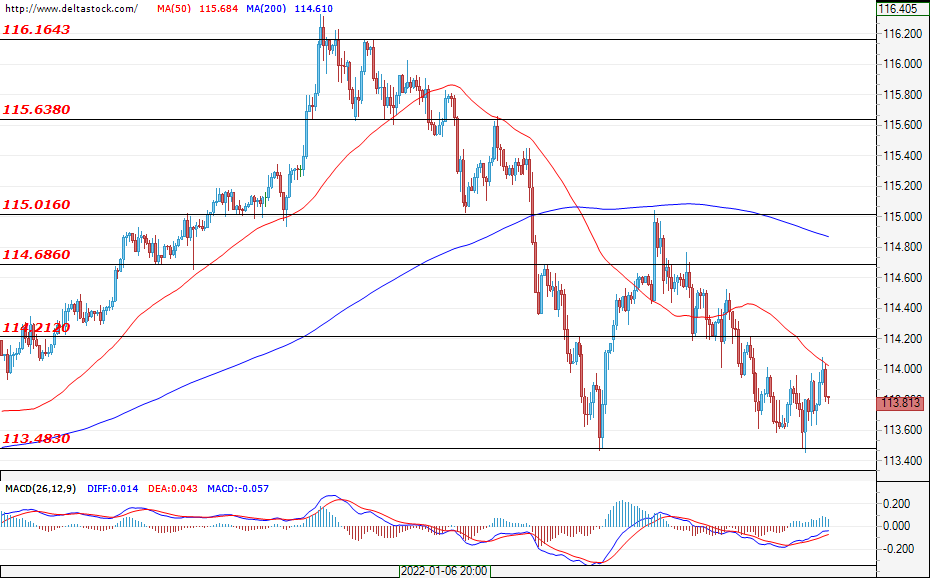
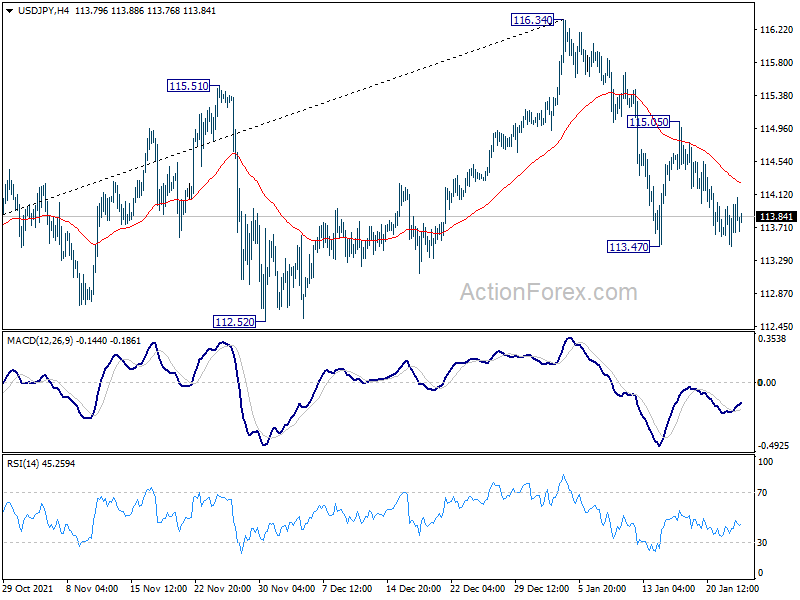
During yesterday’s trading session, the bears attacked the important support at 113.50, but the test was unsuccessful and, at the time of writing this analysis, the pair is consolidating in the range of 113.50 – 114.21. The forecasts for today’s trading session are for the pair to continue trading in the mentioned range, but only a successful breach of the support at 113.50 would give the bears a chance to re-enter the market and head the pair towards the support at 113.00. On the other hand, if the bulls manage to take control over the market and violate the resistance at 114.20, then the next target would be the resistance at 114.70.
GBP/USD
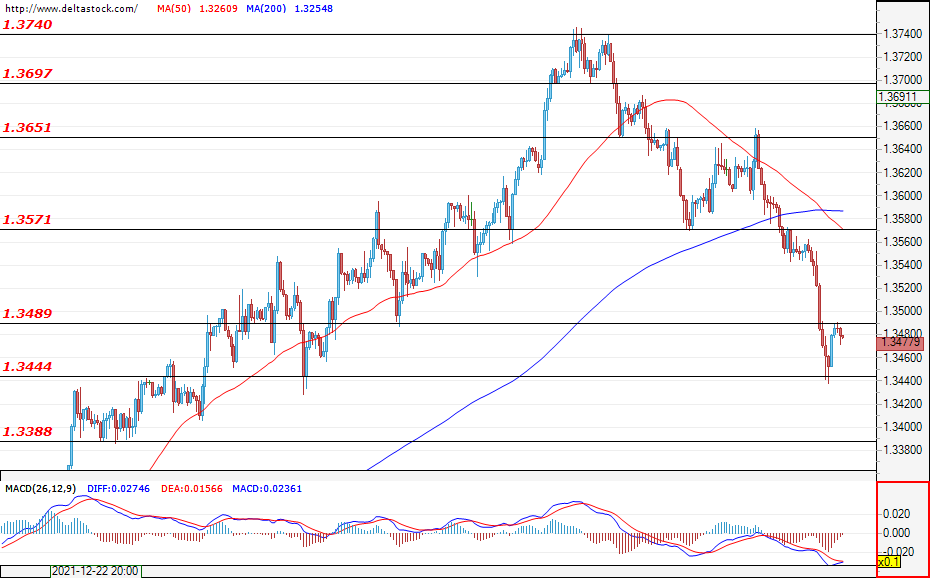
After the major sell-off, the bears lost momentum around the support at 1.3444. We have so far witnessed a short corrective move and a test of the resistance at 1.3490 and so the expectations are for the downward movement to be restored, but only a breach of the support at 1.3444 would strengthen the negative market sentiments for a depreciation of the sterling against the U.S. dollar towards the support at 1.3388. However, if the mentioned support remains unbreached, then the bulls would probably once again test the resistance at 1.3490.
EUGERMANY40
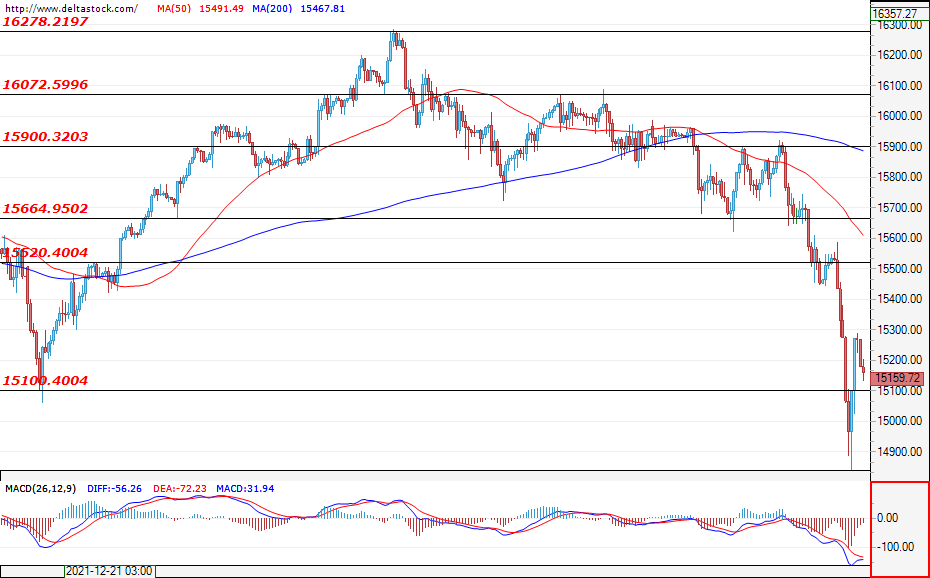
Yesterday, we witnessed a massive sell-off, but the bears started to take their profits around the level of support at 14840 and the index partially recovered its losses. The recovery may be considered as a short-lived correction and the bears would probably try to regain control and head the price towards a test of the psychological level of 15000. In the opposite direction, the first significant resistance lies at 15620.
USD30
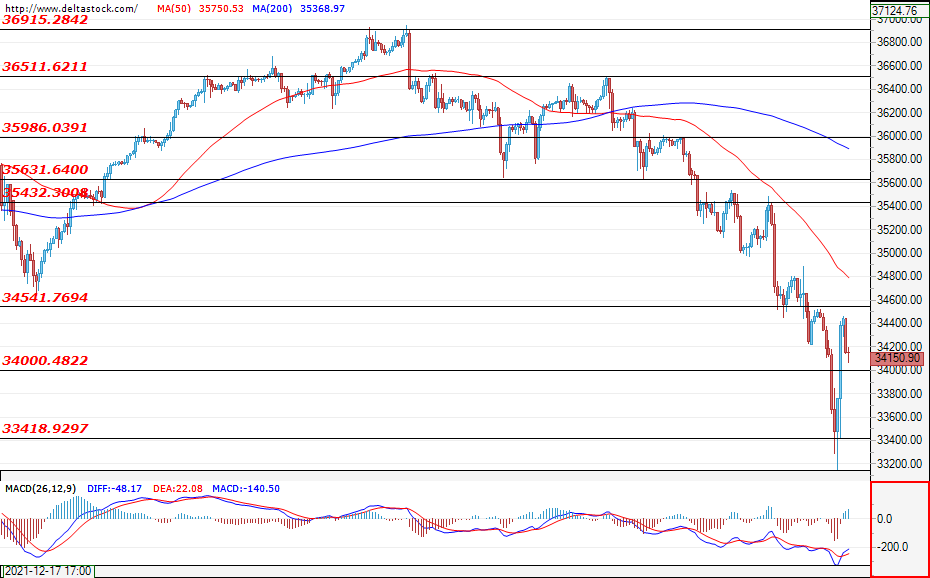
After yesterday’s panic sell-off, the drop was limited to the support at 33418 and the index managed to recover some of its losses. However, during the early hours of today`s trading, the bulls couldn’t overcome the resistance zone at 34541 and a new decline seems to be taking place. The expectations are for the bears to re-enter the market and, if they manage to overcome the support at 34000, then this would strengthen the negative expectations for a decline towards 33418. On the other hand, if the psychological level of 34000 is not breached, then we could expect the bulls to take control and attack the resistance at 34541.
Markets Tense into the Fed Meeting
Happy ending to yesterday’s bloodbath was highly unlikely but it happened. The S&P500 and Nasdaq closed Monday’s session in the positive after having dived more than 4% within the session.
Nasdaq extended losses below its 200-DMA, while the S&P500 briefly entered the correction territory, as the index lost more than 10% from the latest record high.
Yesterday’s rebound raised one important question: is it the end of the selloff wave?
It depends on two major factors:
- How aggressive the Federal Reserve (Fed) will fight back inflation and what it’s ready to risk in terms of market pricing.
- Who will survive to the tighter rate environment.
Obviously, there is a slim chance we see meme stocks, SPAC deals, or highly speculative names doing well in an environment of tighter Fed liquidity. There is, on the other hand, a better chance for companies like Apple and Microsoft to navigate through a high turbulence market.
So the Fed tightening will certainly support the reflation trade, but it will more importantly trigger a flight to quality.
Fed can’t sound too sanguine
The Fed starts its two-day policy meeting today. But after the January selloff, the Fed is not in a position to provoke the hawks.
Fed’s goal is to fight back the inflation crisis, and not to trigger a renewed financial crisis. And the Fed can’t afford to trigger a financial crisis when inflation is so high.
As such, the recent market turmoil will certainly soften the Fed’s tone, or at least prevent the Fed from sounding too hawkish. The Fed will still continue tapering the bond purchases, it will likely proceed with the first rate hike in March and follow up with three other rate hikes throughout the year. But the officials may sound be more gentle on the balance sheet reduction strategy, and more.
Beyond the Fed
And the market is challenging beyond the Fed tightening. Besides the growing tensions at the Ukrainian border, Biden’s Build Back Better package is stuck among the politicians who can’t agree what to do with it right now, the measures that have been taken to decrease the trade deficit with China didn’t work well, and there is news that the White House is increasingly under pressure to punish Chinese for their lack of commitment. But punishing Chinese by blocking or taxing the cheap Chinese goods from coming into the US is not very efficient in fighting back inflation at a time consumer prices hover around four-decade high levels.
In the FX, commodities
The US dollar is a generally a good place to go when you have a war threat, or a heavy selloff in markets. The US dollar index is gaining back the 50-DMA level.
Gold comes certainly back to the safe-havener’s scope, yet the investors should get over the rising US yields to push the yellow metal above its long-term downtrending triangle top, which lies about the $1860 mark.
And well, the Swiss franc is boosted by important safe-haven inflows- The EURCHF slid to the lowest levels since 2015. But I wouldn’t bet too much on a further downside as the stronger the franc, the bigger the chance of an SNB intervention which would slowdown the move, and even reverse it.
In a Volatile Mood
Market movers today
With a light data calendar today, markets will remain in wait-and-see mode ahead of tomorrow's FOMC meeting and monitor the Russia-Ukraine developments.
After German PMIs surprised on the upside yesterday, it will be interesting to see whether the German IFO index also signals a rebound in the growth momentum during January.
In the US, consumer confidence for January is due out, which could take a further hit from the Omicron impact.
In Sweden, inflation expectations will be in focus.
The 60 second overview
Global growth: Euro area business activity continued to slow at the start of 2022 according to PMIs, although with diverging trends across sectors and regions. Especially Germany's economy staged a rebound, as services activity remained surprisingly resilient in light of Omicron headwinds and manufacturing momentum picked up as supply bottlenecks continued to ease. US services activity also cooled noticeably in January, while high price pressures remain a concern in both regions.
Markets: risk sentiment took a turn for the worse on Monday and the VIX volatility gauge rose to the highest level since early December. Oil prices retreated to USD 86/bbl and German Bund yields slipped back below -0.1%, after touching positive territory last week. Both upcoming Fed tightening (FOMC tomorrow) and rising geopolitical tensions in the Russia-Ukraine dispute (US putting 8500 NATO troops on alert for deployment) contributed to the risk-off mood.
Equities: While a cocktail of valuation- macro and earnings scare corrected European markets by -5% lower (worst one day performance since March 2020), US markets staged a significant rebound. S&P 500 recovered a -4% correction in the opening hours, to close up 0.3%. Investors bought the dip in growth, but most sectors were higher in risk on-manner. Consumer discretionary and industrials led the market and defensives lagged. Small caps outperformed massively, with Russell 2000 up 2.3% vs Dow 0.3% and Nasdaq 0.6%. However, the rebound is not spilling over to Asia, with markets 1-2% lower and US futures back in red this morning (led by tech).
FI: Yesterday's European session was a traditional flight to safety with risk assets underperforming and safe haven assets performing. Until late in the US trading session, lower yields seemed to be the foregone conclusion of the day, but a sharp reversal, with 10Y US Treasuries up by 5bp, left the 10Y point virtually unchanged on the day.
FX: EUR/CHF moved lower yesterday and EUR/Scandies higher as risk aversion rose.
Credit: Credit markets - and the high-beta segment in particular - saw significant pressure yesterday. iTraxx Xover widened 12bp to 282bp and Main widened 2.7bp to 58bp. HY bonds closed 10bp while and IG held up better and finished unchanged for the day.
Nordic macro
The only item on today's Swedish agenda is Prospera's montly (small, only money market participants) inflation expectations survey. On all horizons (1y, 2y and 5y), expectations are back at 2%, but have yet to surge substantially above the 2%-anchor. We do not expect this to be the case this time around either, although it is possible that especially the shorter ones might continue to climb somewhat, whereas the 5y expectations are likely to remain at, or close to, 2% until there are any signs of more broad-based inflation pressures in Swedish data.
EUR/USD Daily Outlook
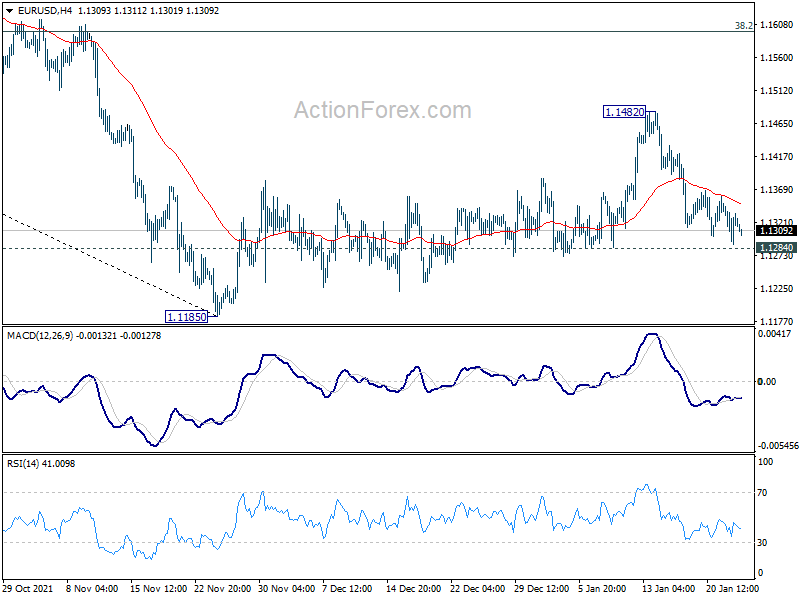
Daily Pivots: (S1) 1.1296; (P) 1.1321; (R1) 1.1350; More...
Outlook is EUR/USD is unchanged and intraday bias remains neutral first. Price action from 1.1185 are seen as corrective move. Break of 1.1284 will argue that larger down trend from 1.2348 is ready to resume. Intraday bias will be back on the downside for retesting 1.1185 low first. Also, in case of another rise, upside should be limited by 38.2% retracement of 1.2265 to 1.1185 at 1.1598 eventually.
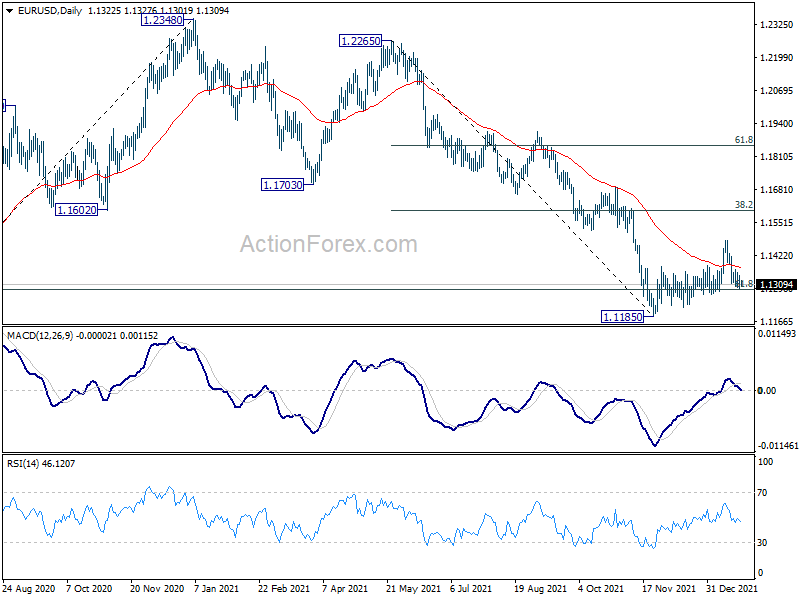
In the bigger picture, there are various ways of interpreting the fall from 1.2348 (2021 high). It could be a correction to rise from 1.0635 (2020 low), the fourth leg of a sideway pattern from 1.0339 (2017 low), or resuming long term down trend. In any case, outlook will now stay bearish as long as 1.1703 support turned resistance holds. Sustained break of 61.8% retracement of 1.0635 to 1.2348 at 1.1289 would pave the way back to 1.0635.
GBP/USD Daily Outlook
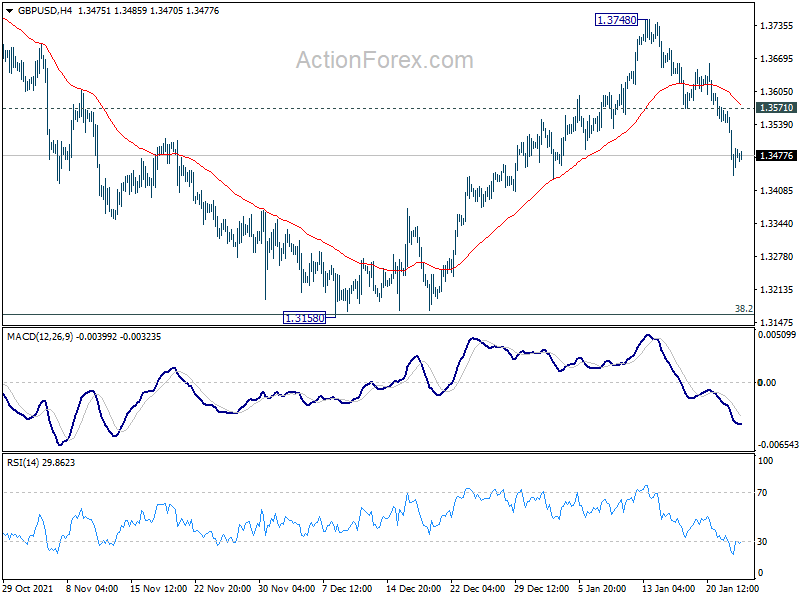
Daily Pivots: (S1) 1.3433; (P) 1.3500; (R1) 1.3558; More...
Intraday bias in GBP/USD remains on the downside at this point. Rebound from 1.3158 could have completed at 1.3748 already. More importantly, larger fall from 1.4282 is probably not over yet. Deeper fall would be seen back to retest 1.3158 low. On the upside, though, above 1.3571 minor resistance will turn bias back to the upside for retesting 1.3748.
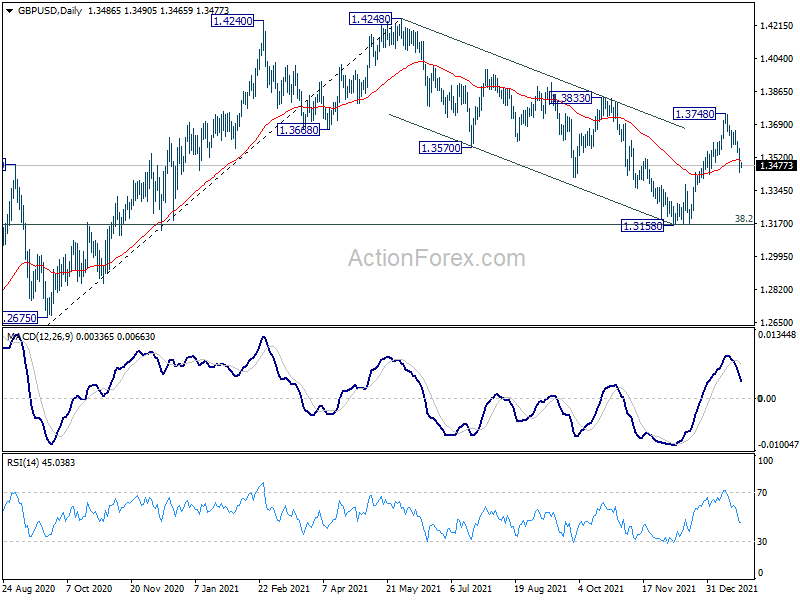
In the bigger picture, strong support was seen from 38.2% retracement of 1.1409 to 1.4248 at 1.3164. The development suggests that up trend from 1.1409 (2020 low) is still in progress. On resumption, next target will be 38.2% retracement of 2.1161 to 1.1409 at 1.5134. Nevertheless sustained break of 1.3164 will argue that whole rise from 1.1409 has completed and bring deeper fall to 61.8% retracement at 1.2493.
USD/JPY Daily Outlook
Daily Pivots: (S1) 113.63; (P) 113.82; (R1) 114.16; More...
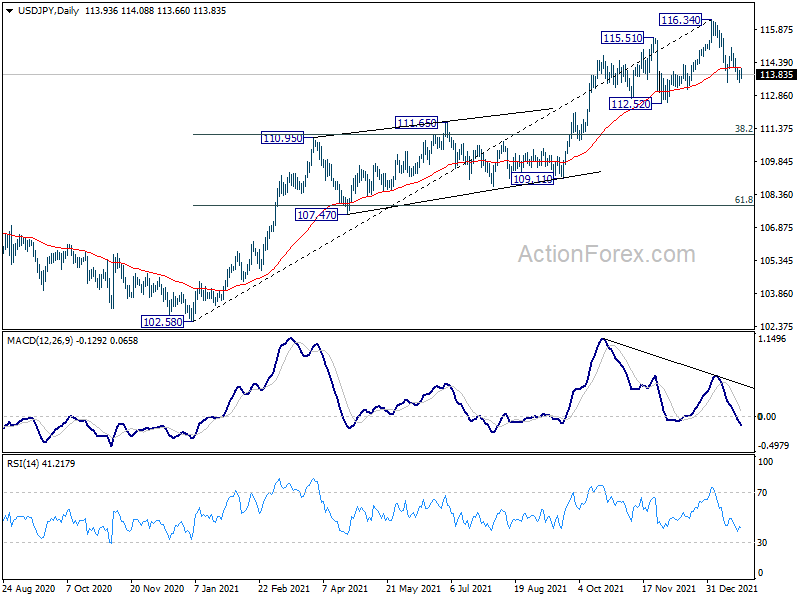
USD/JPY lost momentum ahead of 113.47 support and intraday bias is turned neutral first. As noted before, considering bearish divergence condition in in daily MACD, it's probably already in correction to whole up trend from 102.58. Break of 113.47 will target 112.52 support first, and then 38.2% retracement of 102.58 to 116.34 at 111.08. For now, risk will stay on the downside as long as 115.05 resistance holds, in case of recovery.
In the bigger picture, no change in the view that rise from 102.58 is the third leg of the up trend from 101.18 (2020 low). Such rally should target a test on 118.65 (2016 high). Sustained break there will pave the way to 120.85 (2015 high) and raise the chance of long term up trend resumption. This will remain the favored case as long as 55 week EMA (now at 110.91) holds.
AUD/USD Daily Report
Daily Pivots: (S1) 0.7095; (P) 0.7142; (R1) 0.7192; More...
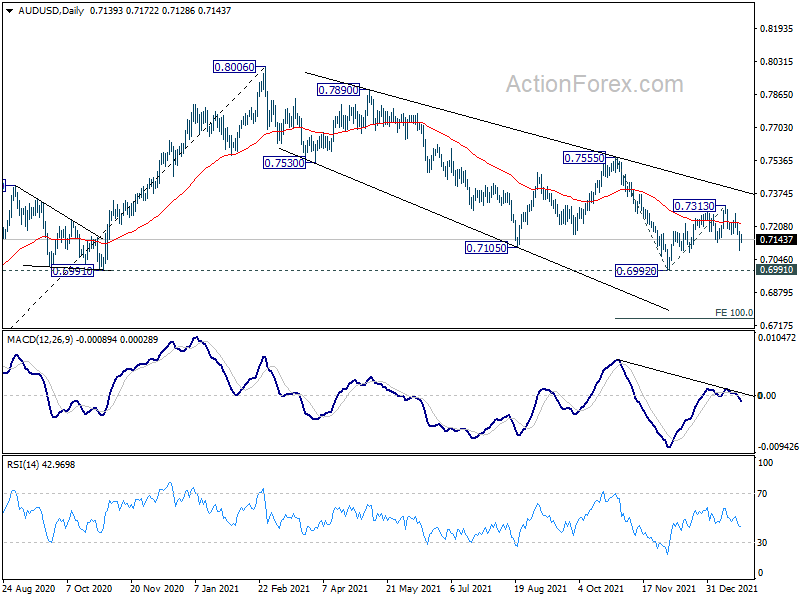
AUD/USD recovered quickly after hitting 0.7089 and intraday bias remains neutral first. Risk will stay on the downside as long as 0.7313 resistance holds. Corrective rebound from 0.6992 should have completed there. Below 0.7089 will target 0.6991/2 support zone. Further break there will resume larger down trend from 0.8006, and carries larger bearish implication. Next target will be 100% projection of 0.7555 to 0.6992 from 0.7313 at 0.6750.
In the bigger picture, strong rebound from 0.6991 key structural support will retain medium term bullishness. That is, whole up trend from 0.5506 is still in progress. Firm break of 0.7555 resistance will target 0.8006 high and above. However, sustained break of 0.6991 will argue that the whole up trend from 0.5506 might be finished at 0.8006, after rejection by 0.8135 long term resistance. Deeper decline would then be seen back to 61.8% retracement of 0.5506 to 0.8006 at 0.6461.