

Sample Category Title
Summary 7/29 – 8/2
Monday, Jul 29, 2019
[php_everywhere instance="1"]
Tuesday, Jul 30, 2019
[php_everywhere instance="2"]
Wednesday, Jul 31, 2019
[php_everywhere instance="3"]
Thursday, Aug 1, 2019
[php_everywhere instance="4"]
Friday, Aug 2 2019
[php_everywhere instance="5"]
The Weekly Bottom Line: Summertime and the Policy’s Easy
U.S. Highlights
- Markets had no summer vacation this week, with a new British PM, dovish message from the European Central Bank, and new U.S. GDP data to digest.
- Advanced economy central banks are all sounding dovish, with the Bank of England likely to be more cautious next week now that the risks of a disorderly Brexit have risen.
- Second quarter GDP data showed that U.S. domestic growth remained solid in Q2. But the Fed is likely more concerned with weakness in investment and exports as it prepares to cut rates next week.
Canadian Highlights
- May payrolls data was the main economic data highlight this week. It showed decent payrolls growth and a bounce-back in wages.
- Looking to next week, we expect a healthy May GDP growth report on the back of solid gains in manufacturing sales and housing activity. This would provide further confirmation of a second-quarter growth rebound.
U.S. - Summertime and the Policy's Easy
The global economy certainly didn't take a vacation this week. Between a new UK Prime Minister, an ECB prepared to step up the stimulus, and fresh data on U.S. growth, markets had a lot to digest. And let's not forget the Federal Reserve is likely to cut rates for the first time in over 10 years when it meets next week. So much for the dog days of summer.
Former London mayor Boris Johnson is now Britain's Prime Minister. Johnson faces an Oct 31st deadline to either leave the EU under the terms of the agreement negotiated by Theresa May, or face a disorderly exit without a deal. The EU had agreed that a UK election would trigger an automatic extension to this deadline, but so far the new PM says an election is off the table. How PM Johnson threads the needle on this one remains to be seen, but it is likely to be a wild ride similar to this past spring. Overall, the odds of a hard Brexit have ticked up in the last two months, and we expect the Bank of England to step back from a hiking bias at its decision next week.
The European Central Bank also hinted at easier monetary policy ahead. Further data this week pointed to a sagging European economy in the second half of the year. Consumer and business confidence have not rebounded from lows consistent with past recessions. Morever, the slump in manufacturing activity is broadening into other regions and industries. This is bad news, as it could trigger a broader pullback on spending, locking in a downward cycle.
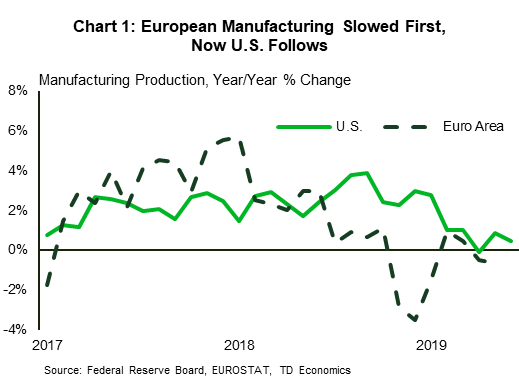
Our recent report discusses how this global chill has slowed U.S. manufacturing (Chart 1). This is a key reason why the Fed is likely to attempt to cushion the economy from further weakening by cutting rates a quarter point next week. There are real risks to the expansion, and the Fed needs to get in front of them. Research has shown that when policy rates are close to the zero lower bound, central banks need to act pre-emptively in the face of downside risks since they have less ammunition to combat them.
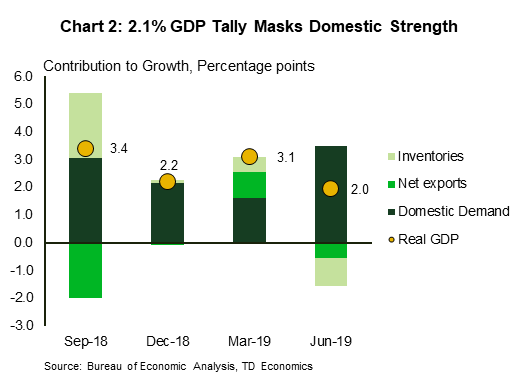
Today's GDP report (Chart 2) showed that second quarter growth was supported by strong consumer spending. But, the Fed is likely most concerned about the slowdown in investment and the weakness in exports. For now, the consumer is strong enough to keep economic growth sturdy. And now the U.S. economy looks to get a helping hand from Washington. Congress recently agreed to suspend the debt ceiling until after the next election, and raised the spending caps, removing a key fiscal risk this fall. In fact, spending has been raised slightly higher than we assumed in our forecast, presenting a slight upside risk to growth in 2020.
Monetary policy is set to get a little easier both in the U.S. and abroad, and now U.S. fiscal policy is looking a little easier too. These factors should support growth heading into 2020 just as it was starting to look like the edges of the expansion were fraying. This seems to have put markets in a relaxed mood, just in time for summer vacations.
Canada - Growth Still Set to Rebound in Q2
The dog days of summer are finally upon us as the blistering heat drained markets of their usual exuberance and kept the data stream somewhat dry. Oil prices started the week at $56/barrel and despite some wiggles, remained around that level at end of the week. The S&P 500 moved up by 1.3%, as news that U.S.-China trade talks are set to resume contributed to small gains.
The Canadian dollar lost some ground this week. The loonie depreciated by 1.3% against the USD as global growth concerns, news of a deal on the U.S. debt ceiling and the White House commitment to not intentionally weaken the dollar drove a rally in the greenback.
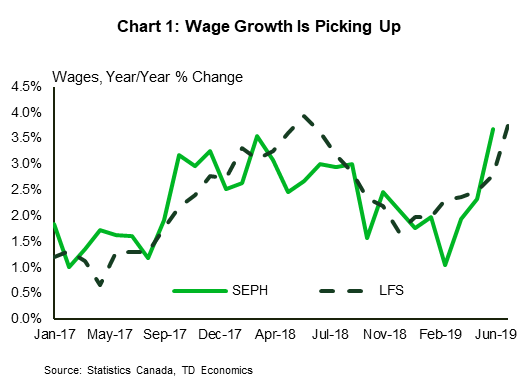
In terms of data releases, the Survey of Employment, Payrolls & Hours (SEPH) was the only top-tier release this week. The big take-away from these data was a solid bounce back up in wages, confirming the earlier signal sent by the Labour Force Survey. Indeed, both measures suggest wage growth has been picking up over recent months (Chart 1). Moreover, they are now sitting at levels well-above their long-term average.
This is a very welcome development after disappointing wage gains over most of 2018. Nevertheless, we will need to see sustained strength to know if these gains are here stay or if it will turn down again as it did last year. In the case of the former, we may be seeing the resuscitation of the Philips Curve. In other words, the tight labor market may finally be translating to stronger wage growth.
Despite the stronger wage data, the second-tier releases suggest somewhat weaker economic activity. Wholesale sales were down 1.8% in May after five straight months of increases. Six of the seven subsectors were down, with the motor vehicle industry leading the weakness. The CFIB Business Barometer also decreased, declining by nearly four percentage points in July. The largest drop in optimism was in Ontario, while it remained elevated in Atlantic Provinces. Even taking these data into account, Canadian GDP growth likely bounced back to life following a lackluster first quarter.
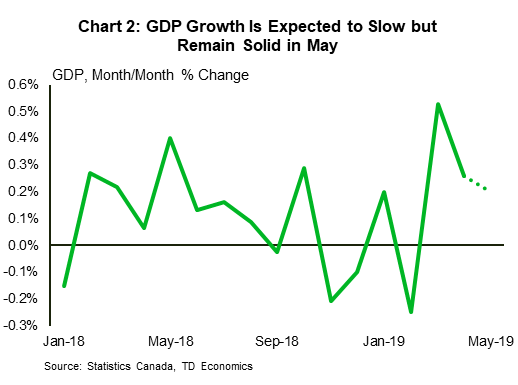
We will look to next week's May GDP data to support this view. We expect growth will slow to 0.2% month-on-month from a solid showing of 0.3% in April but remain healthy (Chart 2). Earlier data suggested manufacturing and housing will buttress growth in May. On the services side (other than retail and wholesale trade), we will likely see decent growth, consistent with this week's SEPH data.
On the whole, the data paints a picture of a relatively more vibrant Canadian economy. There is a strong chance that GDP growth for the second quarter comes in ahead of the Bank of Canada's 2.3% forecast from earlier this month. Barring any unforeseen negative shocks, this should be enough to keep the Bank on the sidelines for the remainder of the year.
U.S.: Upcoming Key Economic Releases
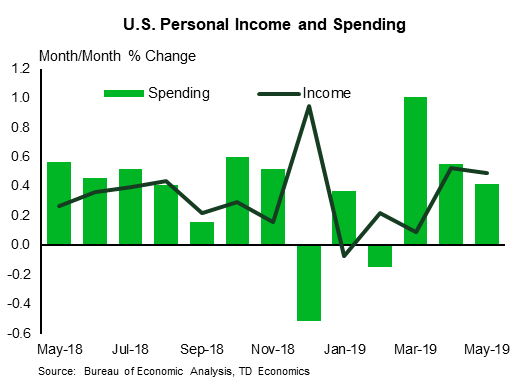
U.S. Personal Income & Spending - June
Release Date: July 30, 2019
Previous: spending: 0.4%; income: 0.5%
TD Forecast: spending: 0.4% m/m; income: 0.3%
Consensus: spending: 0.3% m/m; income: 0.4%
We anticipate personal spending to have maintained its strong pace at 0.4% m/m in June, closing the second quarter at a decent clip. We don't discard a softer print at 0.3% if the weakness on durable goods spending is larger than we currently anticipate. In the details, we expect a 0.5% m/m advance in services spending to be the main driver behind the June gain, with a rise in spending in nondurables (+0.3%) also helping on the headline. Moreover, we forecast income to rise 0.3% m/m, a tad slower than in the prior month.
U.S. ISM Manufacturing Index - July
Release Date: August 1, 2019
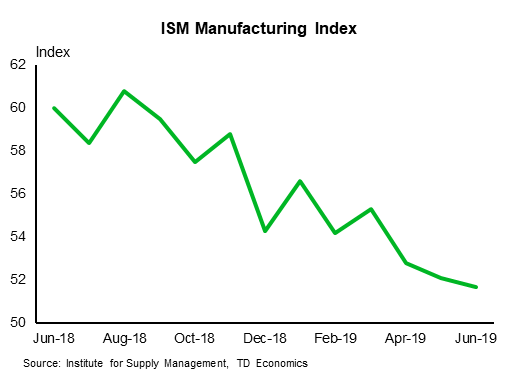
Previous: 51.7
TD Forecast: 51.7
Consensus: 52.0
We look for the ISM manufacturing index to stay unchanged at 51.7, as we expect some of the major trade-related concerns to have dissipated in the short-term on the back of the US-China trade truce. This should translate into a stabilization in business sentiment and on the outlook for the sector. Indeed, the message from the ISM-adjusted regional indices was mixed, with retreats in two out of the four published surveys we track. Other data was also mixed, as recent firm growth in core durable goods orders suggest some upside, while a weak Markit PMI survey increases the odds for a downside surprise in July.
U.S. Employment - July
Release Date: August 2
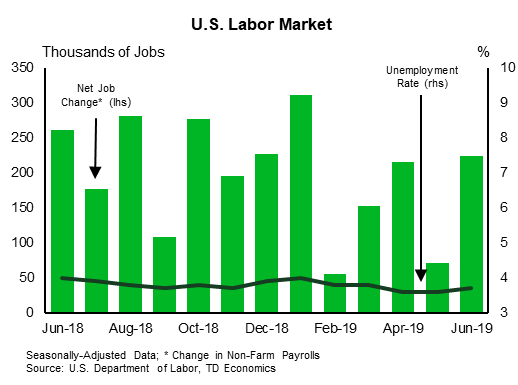
Previous: 224k, unemployment rate: 3.7%,
TD Forecast: 170k, unemployment rate: 3.7%
Consensus: 166k, unemployment rate: 3.7%
We expect payrolls to trend lower to 170k in July, following the strong 224k print in the previous month. In particular, we expect job creation in the manufacturing sector to mean-revert after the five-month high 17k increase in June. Together with somewhat slower hiring in construction, this should bring employment in the goods sector back to its recent average. Likewise, we forecast employment in the services sector to moderate somewhat from its firm June print. All in, the household survey should show the unemployment rate remained steady at 3.7%, while we expect wages to rise 0.2% m/m, leaving the annual print unchanged at 3.1% in July.
Canada: Upcoming Key Economic Releases
Canadian Real GDP - May
Release Date: July 31, 2019
Previous: 0.3%
TD Forecast: 0.2%
Consensus: N/A
Industry-level GDP growth is projected to slow to 0.2% m/m in May after a robust performance over the last two months. Goods-producing industries will provide the main source of strength on a rebound in manufacturing output and sustained strength in construction activity, while the energy sector should make a muted contribution after leading industry-level growth for March and April. On the other end of the spectrum, lower retail and wholesale volumes point to a material drag on services while a more modest pace ofexisting home sales suggests a bit less lift from real estate activity. Industry-level GDP growth of 0.2% should be sufficient to keep Q2 GDP tracking near 3%, above estimates from the July MPR (2.3%). However, this alone is not enough to outweigh elevated global uncertainty, leaving the BoC in wait-and-see mode.

Canadian International Trade - July
Release Date: August 2, 2019
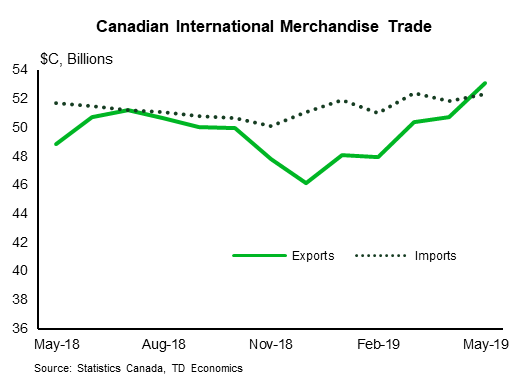
Previous: $0.76bn
TD Forecast: -$0.30bn
Consensus: N/A
TD looks for the International goods trade balance to deteriorate to a $0.30bn deficit in June on the heels of the first surplus since late 2016. The most significant driver behind the softer headline print is some giveback of the broad export gains observed in May, which included the largest increase in real non-energy exports since 2015. Motor vehicles and aerospace products should lead the pullback in a partial unwind of the (combined) 17.1% surge from May, while lower crude oil prices and a drop in preliminary US imports suggest softer nominal energy exports. Imports should see modest gains driven by strong domestic demand, although aircraft are susceptible to further declines in the absence of any Boeing deliveries to Canadian airlines.
Weekly Economic and Financial Commentary: Strong Consumption Won’t Stop Fed from Cutting
U.S. Review
Strong Consumption Won't Stop Fed from Cutting
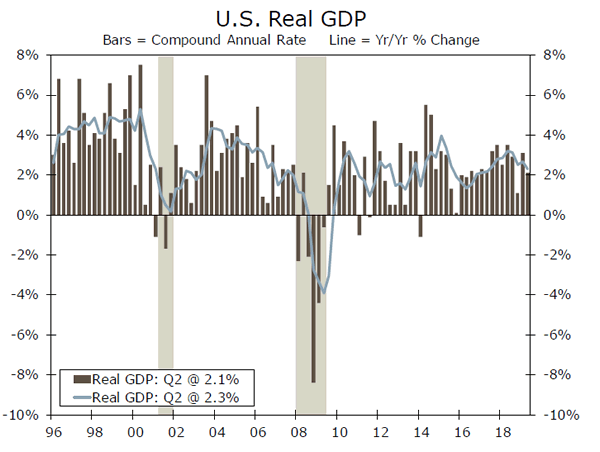
- Real GDP growth slowed to a 2.1% annualized pace in the second quarter, but exceeded expectations of a 1.8% rise.
- The 4.3% surge in personal consumption was the strongest gain since Q4-2017, but we do not expect this strength to dissuade the Fed from cutting rates 25 bps at its meeting next week.
- Net exports and inventories both weighed on headline growth, as trade and global growth uncertainties continue to swirl. These headwinds along with below-target inflation should compel the Fed to enact "insurance" rate cuts.
Strong Consumption Won't Stop Fed from Cutting
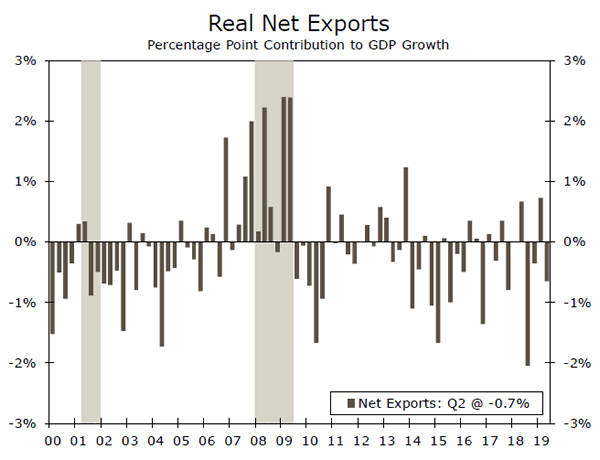
Real GDP growth slowed to a 2.1% annualized pace in the second quarter, but exceeded expectations of a 1.8% rise. While this is down from the 3.1% pace of growth in Q1, the 4.3% surge in personal consumption—the strongest since Q4-2017—paints a picture of a resilient American consumer sector. Consumer spending on durable goods soared at a five-year high rate of 13%, while nondurable goods and services spending rose 6.0% and 2.5%, respectively. Such strength from the largest sector of the economy has limited implications for our expectations of monetary policy. We do not expect this strength to dissuade the Fed from cutting rates 25 bps at its meeting next week. Inflation remains below-target and other GDP line items bear the mark of the ongoing trade war uncertainties. Real exports fell 5.2% as trade dragged 0.7 percentage points from the headline. Lower inventory accumulation dragged another 0.9 percentage points, as the effects of net exports and inventories flip-flopped from Q1. The uncertainty likely dragged down business fixed investment as well, which fell 0.6%, including a sharp 10.6% drop in structures investment. The monthly durable goods orders for June were slightly more encouraging, as non-defense capital goods orders rose 1.9%.
Government spending rose 5.0% and continues to be very strong in the rebound from the shutdown, while non-defense federal spending surged 15.9%. This week Congressional leaders and the White House announced a deal to increase discretionary budget caps and suspend the debt ceiling until July 31, 2021. The details of the plan are largely in-line with our existing forecast—the substantial fiscal boost from higher real government spending the past couple of years will gradually converge to zero. And while the threat of more budget drama surrounding the appropriations process will persist after Congress returns from its summer recess, the upshot for the economy and financial markets is that the next debt ceiling cliff has been pushed off until after the 2020 elections.
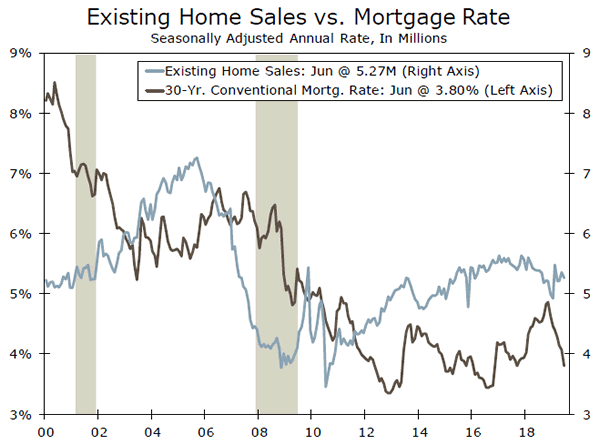
Residential construction spending fell in Q2 for the sixth consecutive quarter as the housing market continues to tread water. Existing home sales fell 1.7% in June, constrained by historically low inventories, particularly at the entry level where demand is strongest and supply shortages are most acute. This supply-demand dynamic should keep price appreciation in positive territory, although it should continue to moderate. Affordability remains the biggest impediment to a more robust housing recovery, particularly of the strength we might ex-ante expect with mortgage rates holding around 3.75%, the unemployment rate at 3.7% and income growth picking up. The domestic housing market has not escaped the trade war unscathed either—new data from the National Association of Realtors indicate that the dollar volume of foreign residential purchases fell a whopping 36% last year to $78 billion from $121 billion, with much of the pullback emanating from China. New home sales rose 7% last month, but hefty downward revisions left the level of sales well below the consensus.
U.S. Outlook
Personal Spending • Tuesday
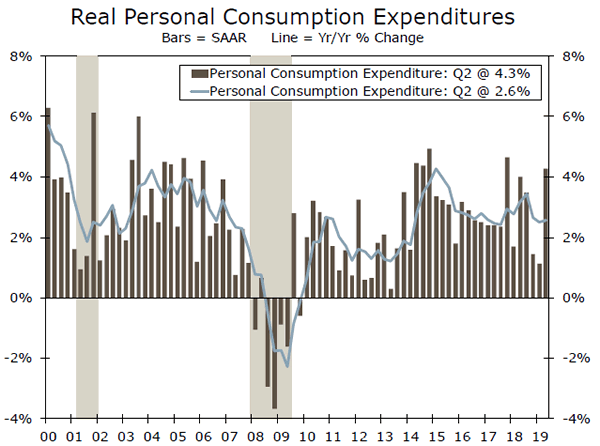
On Tuesday, we will receive June estimates for personal income and spending. Given this morning's release of second quarter GDP and the solid 4.3% annualized gain in personal consumption expenditures (PCE), spending looks to have fared pretty well in June. Given strong recent monthly data on retail spending, the solid rise in Q2 PCE came as little surprise. Indeed, the consumer looks to be in good shape after a weak start to the year. Notably, this morning's release showed a big upward revision in the personal saving rate in the first quarter, which may, at least in part, explain the weaker consumer spending in that period. Consumer confidence, however, has waned since May, dropping almost 10 points to 121.5. But, we expect confidence to rebound to 129 in July, which should support a 0.4% gain in personal spending in June. Should the Fed cut rates next week, as we expect it will, spending could also get a boost in coming months.
Previous: 0.4% Wells Fargo: 0.4% Consensus: 0.3%
ISM Manufacturing • Thursday
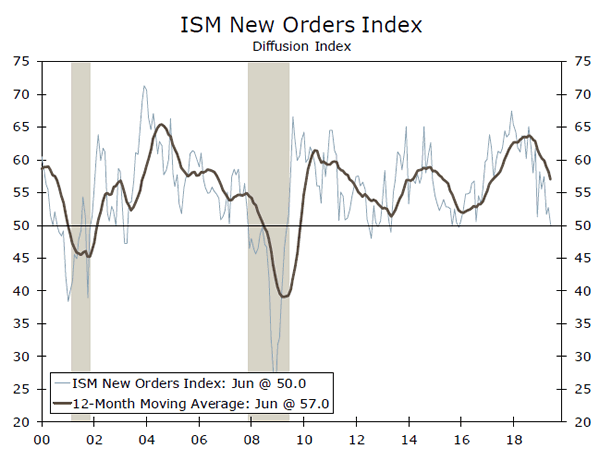
The manufacturing sector continued to struggle in June. The ISM manufacturing index has fallen 3.6 points since March and now stands at 51.7—its lowest level since October 2016. June production was strong, rising almost three points to 54.1. That said, new orders was down to 50.0, a three and-a half year low, and barely avoided a contractionary print. Joining low prints in backlogs and supplier deliveries, new orders is the latest line item to suggest modest growth. Indeed, Wednesday's preliminary Markit PMI tumbled another 0.6 points in July, reaching its lowest value since September 2009. U.S.-China trade tensions have stabilized for now, but uncertainty will likely continue to weigh on manufacturing activity in H2-2019. As a result, we forecast the ISM manufacturing index will rise slightly to 51.9 in July. A Fed rate cut next week may support manufacturing sentiment in the latter half of the year.
Previous: 51.7 Wells Fargo: 51.9 Consensus: 52.0
Nonfarm Payrolls • Friday
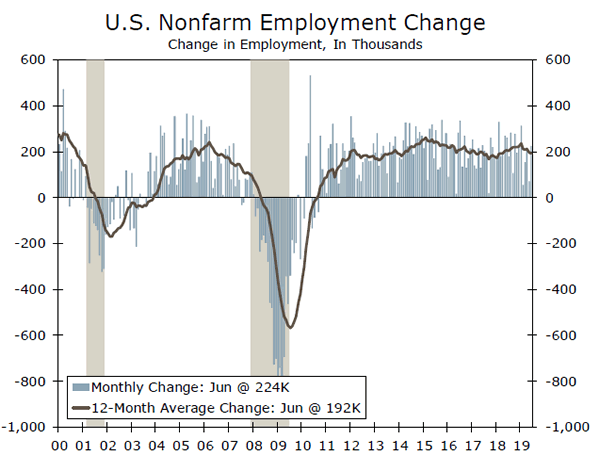
Last month, nonfarm payrolls increased 224,000, though May hiring was downgraded by 3,000. Transportation & warehousing employment growth has been trending lower as trade-related headwinds affect hiring at home. Meanwhile, domestic-oriented hiring rose; the education & health and professional & business services sectors added 61K and 51K, respectively. That said, retail trade saw its fifth straight month of payroll declines and has decreased by 56.4K since the beginning of the year. This month also saw an uptick in the unemployment rate to 3.7% due to more participants entering the labor force than getting hired. Initial jobless claims trended lower so far in July, averaging 5.6% lower than June. Even without a further escalation in the trade war, we expect a sub two-hundred trend for payrolls for the remainder of 2019 as uncertainty weighs on hiring. We expect employers added 170,000 net new jobs in July.
Previous: 224K Wells Fargo: 170K Consensus: 160K
Global Review
European Manufacturing in Freefall
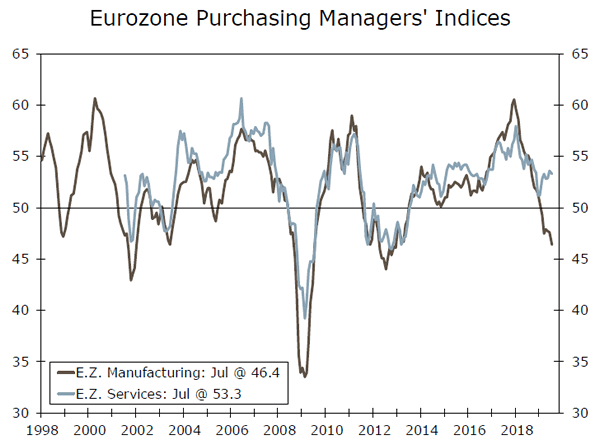
- The pain in the European manufacturing sector showed no sign of abating this week, as data released on Monday showed the Eurozone manufacturing PMI falling further in July to 46.4, the lowest reading since December 2012. We expect the ECB to cut rates and restart QE in September.
- GDP growth in South Korea rebounded in Q2, but fiscal stimulus played a big role in the bounce back. Trade woes have now opened on two fronts for this Asian bellwether economy.
- Russia's central bank cut rates 25 bps this morning, its second cut of such magnitude this year, against a backdrop of soft economic growth and inflation that is expected to decline in the coming months.
European Manufacturing in Freefall
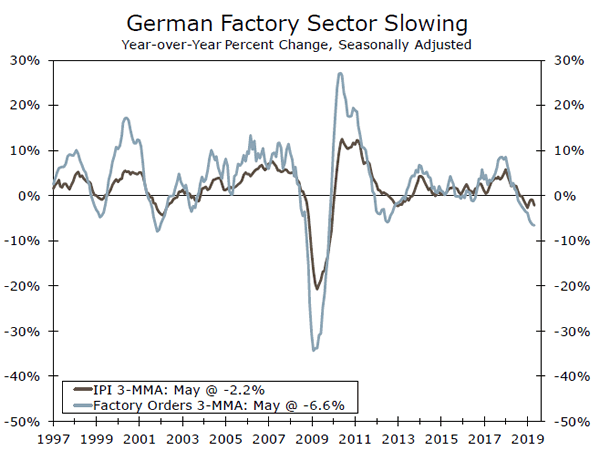
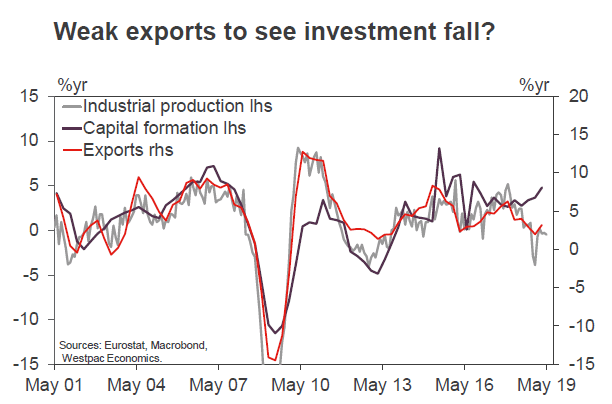
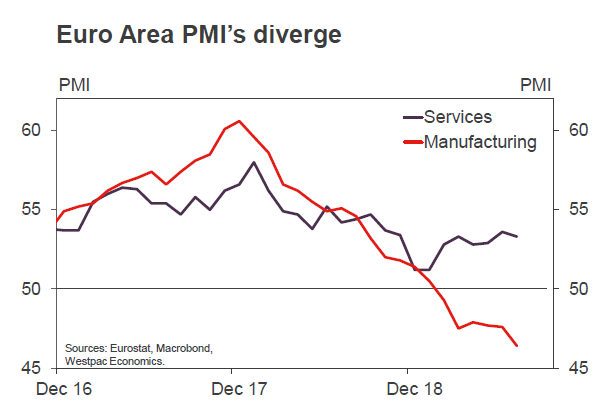
The pain in the European manufacturing sector showed no sign of abating this week, as data released on Monday showed the Eurozone manufacturing PMI for July falling further to 46.4, the lowest reading since December 2012 (see chart on front page). The 'hard' data corroborate these survey readings, as German factory orders are contracting at the fastest three-month average, yearover- year pace since the Great Recession (top chart).
Yet, unlike the Great Recession or the 2011 European sovereign debt crisis, the service sector has not deteriorated at anywhere near the same pace as the manufacturing sector. Back in December 2012 when the Eurozone manufacturing PMI was 46.1, the services PMI was 47.8. Today, the Eurozone services PMI is 53.3, which is actually up a couple points from the start of the year.
Facing this conundrum, the European Central Bank (ECB) met this week and signaled that more monetary policy stimulus is on the horizon. The commentary from ECB President Draghi during the post-meeting press conference was not especially encouraging. He noted that "we don't like what we see on the inflation front" and that the economic outlook is getting "worse and worse", though he did reaffirm that it views the risk of recession as relatively low. In our view, an ECB rate cut in September is all but certain now the only question is how large. Our updated forecast includes a 10 bps cut to interest rates at the September meeting, as well as a resumption of the ECB's QE program. Specifically, we think the ECB will buy €45B of sovereign bonds per month for 12 months starting in October. That will almost certainly require the ECB to raise its issuer limits for sovereigns to 50% from 33%. We are not expecting the ECB to buy corporate bonds or equities at this time.
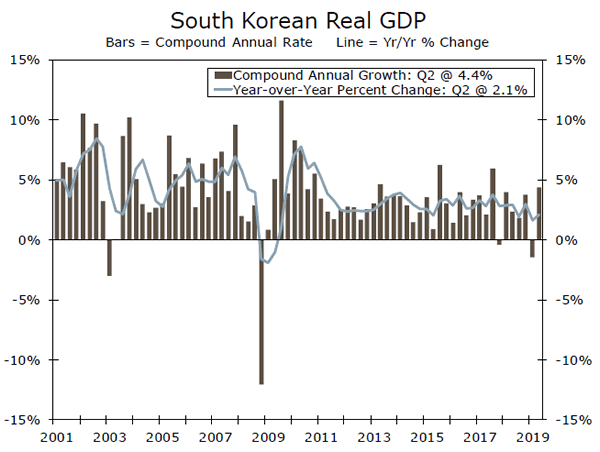
In the first quarter, an unexpected negative GDP growth print in South Korea fanned fears that China's economy was contracting faster than anticipated. Data released this week showed South Korea's economy bouncing back, with quarter-over-quarter annualized growth registering a solid 4.4% (middle chart). To some extent the strong print is deceiving, however, as surging government consumption helped fuel the pick-up. Gross fixed capital formation declined on a year-over-year basis for the fifth straight quarter. Going forward, South Korea may face challenges not only related to a slowdown in China and the U.S.- China trade uncertainty, but also as a result of the recent trade spat with Japan.
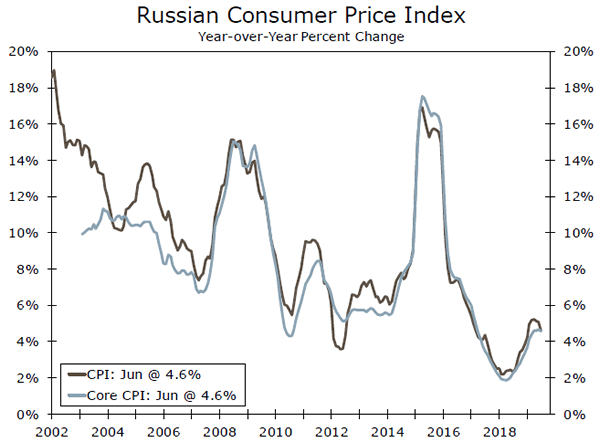
The Russian central bank announced this morning that it was cutting its main policy rate 25 bps, the second cut of that magnitude this year. A quick look at inflation data could leave one scratching his head, as prices in Russia have accelerated over the past year (bottom chart). Some of this pick-up, however, can be attributed to an increase in Russia's value-added tax that took effect on January 1, 2019. On the growth side of the equation, real GPD was up just 0.5% in Q1-2019. The ruble has appreciated about 9% this year against the dollar and if sustained could lead to further disinflationary pressure. Against that backdrop, the Bank of Russia has signaled a couple more rate cuts could still be in store.
Global Outlook
Bank of Japan Meeting • Tuesday
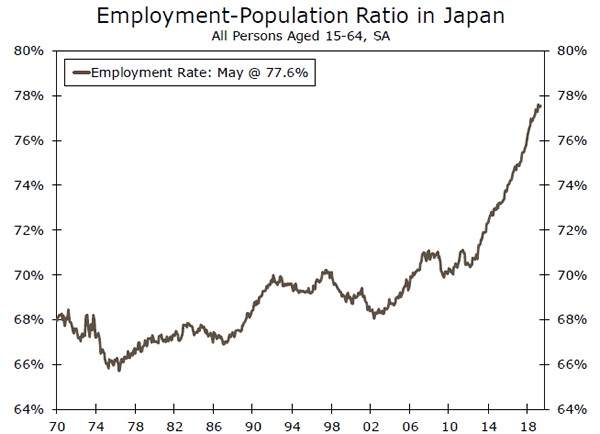
Unlike several other major central banks, the Bank of Japan (BoJ) has not signaled much in the way of imminent easing. To some extent, this reflects the more limited policy options available to it. Although inflation remains well shy of the central bank's 2% target, there have been a few encouraging developments in the Japanese economy. For example, the employment-population ratio in Japan has skyrocketed since the start of 2013.
Our forecast assumes the BoJ will not make any major changes to the current stance of policy for the foreseeable future. One risk to this outlook is a scheduled hike in the consumption tax this October, which could cause some economic disruptions. Should policy need to be eased further, the BoJ could push its policy rate deeper into negative territory, apply negative rates to a broad set of bank reserve balances or move its 10-year JGB yield target down from its current target of 0%.
Previous: -0.10% Wells Fargo: -0.10% Consensus: -0.10% (Policy Rate)
Eurozone GDP • Wednesday
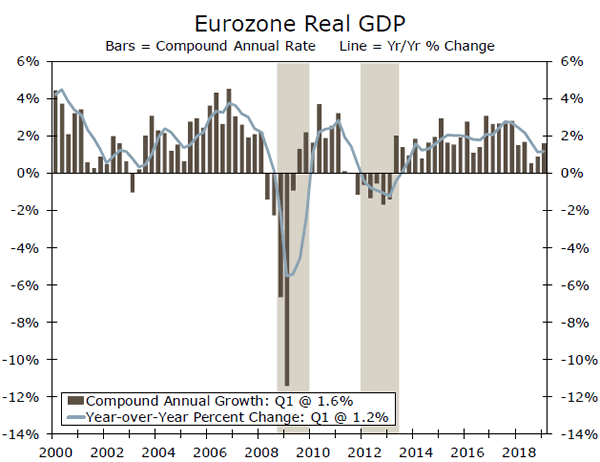
The advance release for Eurozone real GDP growth in the second quarter is due out next Wednesday, and the data are likely to show that the European economy continues to sputter. Real GDP in Europe has accelerated modestly over the past few quarters, but the year-over-year pace is still just 1.2%, and our expectation is for the quarterly growth rate to downshift back down to 0.2% in Q2. If this forecast proves correct, year-over-year growth would still be stuck around 1%.
If potential growth in the Eurozone is about 1.5%, current growth rates are not quite strong enough to further close the output gap in Europe. But because growth has leveled off around 1% rather than continued to decline in freefall, policymakers at the ECB had been inclined to adopt a wait-and-see approach to monetary policy. As more time is spent barely above stall speed, however, it appears policymakers are becoming more inclined to start easing policy.
Previous: 0.4% Wells Fargo: 0.2% Consensus: 0.2% (Quarter-over-Quarter, Not Annualized)
Bank of England Meeting • Thursday
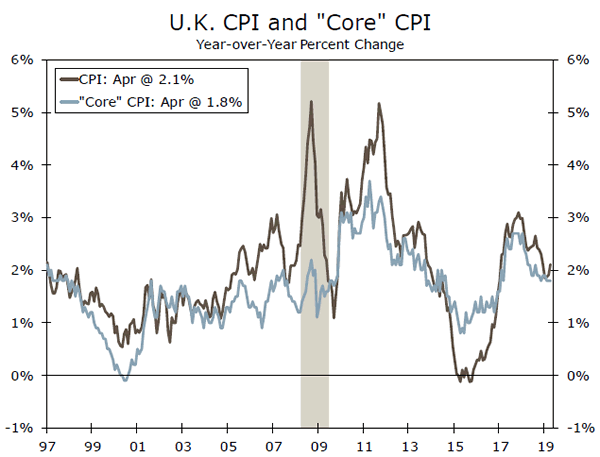
The Bank of England continued to show a bias towards eventual tightening at its June meeting. This tightening is contingent on an eventual smooth exit from the European Union, however, an effort that has at times looked increasingly like a quixotic journey. Inflation data have been stronger in the U.K. than in Europe, and according to the last statement "growth in unit wage costs has remained at targetconsistent levels."
The U.K. economy has looked a bit more wobbly of late, particularly the manufacturing sector, which may be increasingly feeling the pressure from the factory sector struggles in continental Europe. Another challenge for BoE policymakers may be the overwhelming dovish pivot of late by central bankers elsewhere around the world. For now, we expect the BoE to remain on hold and for the central bank to eventually begin tightening in 2020 once a Brexit resolution has been reached.
Previous: 0.75% Wells Fargo: 0.75% Consensus: 0.75%
Point of View
Interest Rate Watch
Why Is the Fed Likely to Cut Rates?
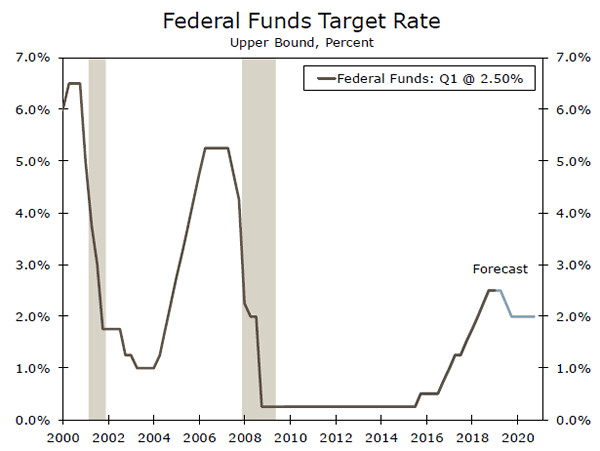
At its meeting next week, the FOMC is expected to do something it has not done in over a decade: cut the fed funds rate.
The timing of the rate cut might seem odd to anyone who has only followed recent data and not the commentary of FOMC officials. We are amidst the longest equity bull market on record, inflation is under control and unemployment is near a 50-year low. Sure GDP growth slowed to 2.1% in Q2, but the correction in inventories masked solid consumer spending. Core inflation is also back on track, rising at a 1.8% pace in Q2.
So why is the Fed easing right now? At the risk of oversimplification: because the global economy is showing signs of serious strain amid the ongoing trade war, and inflation has been too low for too long.
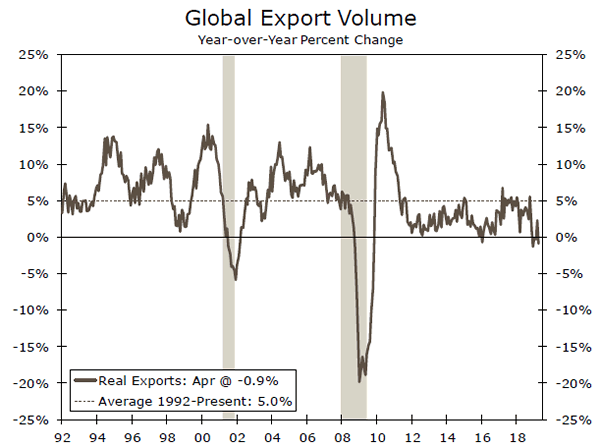
It may not be part of its mandate, but the Fed is paying attention to the cut-and-dry evidence that global trade is drying up (top chart). Trade tensions are at the heart of the pullback in global growth, and the FOMC fears the impact here at home, especially as it relates to confidence and investment.
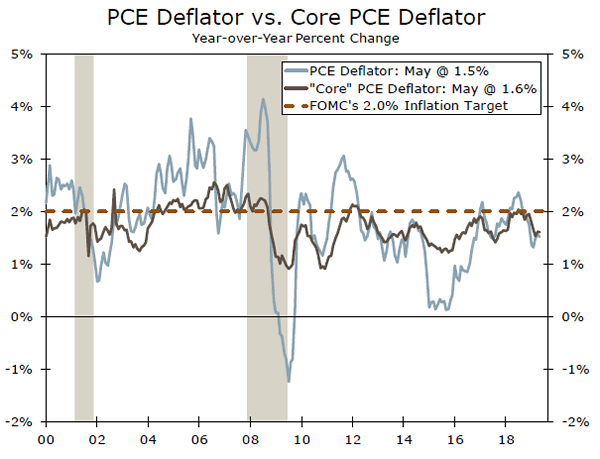
As for inflation, the task of eventually hitting the Fed's 2% target on a sustained basis is getting harder with every monthly shortfall. Fear is rising that the sub-2% trend shown in the middle chart is becoming entrenched as inflation expectations hover near record lows.
Suffice it to say, the FOMC is therefore in the unenviable position of loosening policy despite a soaring equity market and a labor market that is arguably overheating. The FOMC faces a daunting challenge of delivering on the expected accommodation without overshooting and engendering the next crisis, or falling short of forwardguidance and undoing the benefit of a cut.
We expect that the FOMC will cut rates 25 bps at next week's meeting and leave the door open for some additional easing before year end. But the current state of the economy, risks to the outlook, rhetoric of FOMC officials and market positioning hardly make this meeting straightforward. For more details on what is informing our call and other potential outcomes, see our Flashlight for the FOMC Blackout Period.
Credit Market Insights
Greek Bond Yields Setting New Lows
The yield on the 10-year Greek government bond hit a record low this week, after dipping below 2%. This low contrasts starkly with the near 35% yields seen in early 2012 and the 10% yields seen as recently as 2016. Over the past two years, yields on Greece's government debt have been moving steadily lower, as the country has slowly started to turn the corner in its economic recovery.
In 2017 and 2018, the country posted its first two years of consecutive GDP growth in more than a decade. The unemployment rate of 19.2% in the first quarter is down almost nine percentage points from its peak in 2013. This economic momentum has been reflected in the bond market, which the government has tapped for funding three times this year. In its most recent offering and its first under the newly elected government, the yield at issue was actually pushed down to 1.9% from 2.1%, as a result of excess demand.
Although the picture is improving, the Greek economy remains relatively weak. The level of GDP is still roughly 75% of what it was in 2007 and the improved unemployment rate is still more than 10 percentage points higher than the Eurozone aggregate. The country also remains the most indebted country in the Eurozone with a debt-to-GDP ratio of 181.1% in the fourth quarter of 2018. Thus, it may be more helpful to view Greece's record low yields as a reflection of lower yields across Europe, rather than an end to the country's economic saga.
Topic of the Week
The Race to Recess: A Budget Deal in Reach?
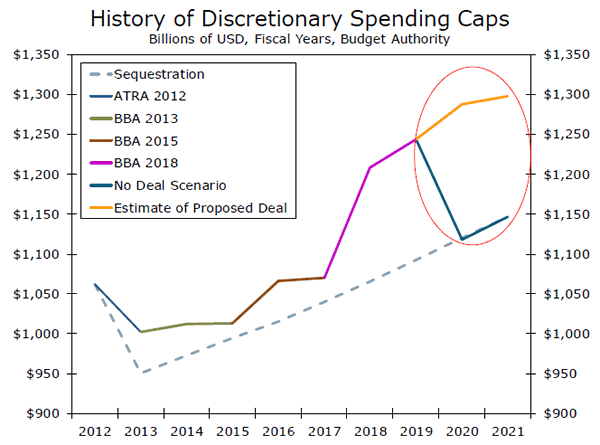
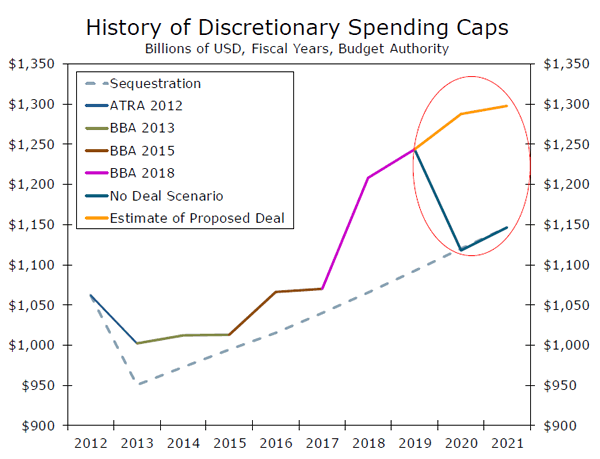
On Monday, Congressional leadership in both parties and the White House announced a budget deal that would suspend the debt ceiling through July 31, 2021 and increase the discretionary spending budget caps about $320 billion over FY-2020 and FY-2021. In our view, the key fact to understand about the $320 billion number, which is the one that has been most commonly cited in media reporting, is that it is an increase in spending relative to current law and not current spending.
As we have discussed in previous reports, absent a budget deal, discretionary budget authority subject to the sequestration level budget caps was set to decline about $125 billion in FY-2020 and $100 billion in FY 2021 relative to FY-2019 (top chart). Thus, the deal essentially amounts to just a modest increase in inflation-adjusted discretionary spending relative to current spending. The deal includes about $75 billion in budget offsets, but these savings are concentrated in the last couple years of the 10-year budget window.
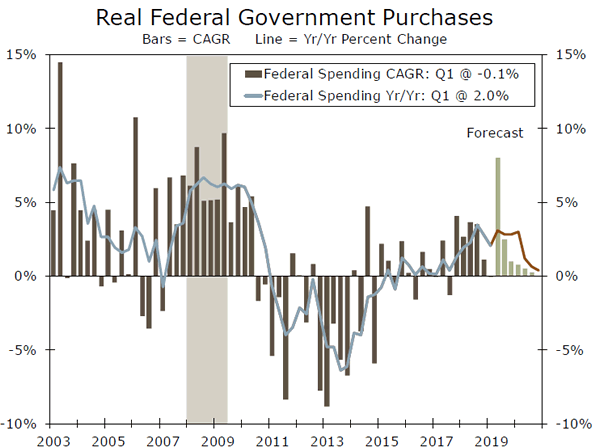
The budget agreement was roughly in-line with what we already had baked into our baseline forecast. Our forecast assumes that the previous FY-2018/FY-2019 boost to growth from more spending would gradually give way to inflation-adjusted federal consumption and investment converging towards zero over time (bottom chart). Put another way, our forecast assumes discretionary spending growth will continue over the next year or two, but at a slower pace than has been the case more recently.
The House of Representatives approved the law yesterday, and the Senate will likely vote next week before sending it to the president's desk for his signature. But, bear in mind that this is merely step one of a two-step process. Policymakers will next need to appropriate the money to the various government programs. Until this is complete, the threat of a partial federal government shutdown after September 30 will remain.
For further reading, see our special report "The Race to Recess: A Budget Deal in Reach?"
Forward Guidance: Fed Rate Cut to Overshadow Lacklustre Canadian Data
Next week is a busy one on both sides of the border, headlined by Canada’s monthly GDP report and a highly-anticipated rate announcement from the Fed. The former is unlikely to impress but shouldn’t change the narrative around a Q2 rebound, which in turn will leave the BoC content with its cautiously neutral stance for now. Contrast that with a Fed that is almost sure to lower rates next Wednesday—if anything, markets think a 50 basis point cut is more likely than no move.
Our view is that the Fed will cut rates by 25 basis points next week and leave the door open to another move, which we expect in September. We don’t think the Committee’s forward guidance—that it will act as appropriate to sustain the expansion—needs to change much to leave markets pricing significant odds of a follow-up cut in September. We expect July’s rate cut (and hints of further action) will be framed as providing a bit of insurance/accommodation to offset slowing global growth and trade headwinds. As we argued in last week’s preview, domestic data don’t make much a case for the Fed lowering rates at this stage. That said, slower business investment and disappointing inflation did feature in an otherwise solid Q2 GDP report. Powell could also trot out disappointing global data (e.g. the latest European PMIs) as justifying an abundance of caution. We’ll be watching out for any dissent against the Fed’s rate cut—recall that June’s dot plot showed roughly half the Committee didn’t expect to lower rates this year. Unless that whole contingent has come around to the idea of easing, some might be inclined to vote against the move.
Anticipation of the Fed’s rate decision could draw attention away from Canada’s monthly GDP report that morning. Our forecast is for no change in May GDP following average gains of 0.4% in the prior two months (the best back-to-back increases in more than a year). Both goods and services production are expected to have been flat in the month. On the former, manufacturing sales were strong in May but we are assuming offset from a pullback in oil production. The energy sector has provided a solid add to growth in the last two months, reflecting rising drilling activity and higher production caps. But Statistics Canada attributed some of April’s growth to non-conventional producers putting off usual seasonal maintenance, so we could see some retracement in May. Even with flat GDP in May, earlier gains leave us tracking a 2.2% annualized increase in Q2, roughly in line with the BoC’s forecast.
The latest trade figures round out the week, where we look for Canada to slip back into deficit position after a surprising surplus in May. Retracement of what looked like one-off increases in transportation exports should be responsible for the pullback. Even so, net trade is expected to provide a nice add to growth in the second quarter after Q1’s sizeable drag.
AUD/USD Outlook: Aussie Breaks Below Thick Daily Cloud on Increased Pressure after Solid US Data
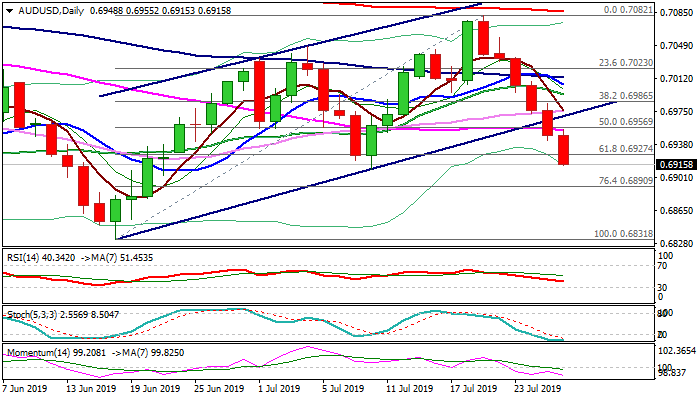
The AUDUSD pair extends steep fall into sixth straight day and accelerated to new over two-week low after better than expected US data.
Bears broke below important Fibo support at 0.6927 (61.8% of 0.6831/0.7082 ascend) and probed below the base of thick daily cloud (0.6923) after US GDP data showed better than expected results in Q2 (GDP 2.1% vs 1.8% f/c and 3.1% in Q1/Consumer Spending 4.3% vs upward-revised 1.1% in Q1) which was enough to further inflate US dollar.
Weak sentiment helps bears which generated negative signal on Thursday's close below bull-channel support line and pressure key support at 0.6910 (10 July trough), with Friday's close below daily cloud base to add to negative tone. Rising bearish momentum, negative setup of MA's on daily chart and signals of very strong bearish weekly close, support the action.
Caution on deeply oversold but still south-heading stochastic, which may slow bears in coming sessions and even spark some corrective action, with bears to remain in play while broken channel support line caps upticks.
Res: 0.6927; 0.6954; 0.6970; 0.6986
Sup: 0.6910; 0.6877; 0.6855; 0.6831
Cliff Notes: Monetary Policy, by Conventional and Unconventional Means
Key insights from the week that was.
A very quiet week for data saw the spotlight again fall on central banks, particularly the RBA and ECB.
This week, there were two speakers from the RBA: first Assistant Governor (Financial Markets) Christopher Kent; then Governor Phillip Lowe. The Assistant Governor’s speech was focused on the Committed Liquidity Facility, its role within the economy and recent changes the RBA has made. These remarks have no immediate significance for monetary policy and economic momentum. However, during Q&A, Assistant Governor Kent noted that the RBA was unlikely to adopt unconventional monetary policy measures, while making clear the RBA had considered a number of policies implemented elsewhere from the perspective of what would be most effective in Australia.
Arguably the RBA believe they are unlikely to deliver unconventional easing because they regard the outlook as “reasonable”, and also believe they still have scope to support the economy through conventional means. This was highlighted in the Governor’s subsequent speech. Governor Lowe was constructive on the outlook, noting that the “foundations of the Australian economy remain strong” and that the “two recent reductions in the cash rate will support demand… [as will] recent tax cuts, higher commodity prices, [and] some stabilisation in the housing market. Further, “if demand growth is not sufficient, the Board is prepared to provide additional support by easing monetary policy further”, while “other arms of public policy could also play a role”.
Westpac continues to see greater risk to the outlook, believing that activity growth and inflation will disappoint the RBA’s expectations. Recent data for the labour market and consumer sentiment have supported our economic view, so too the stickiness of the Australian dollar, which has failed to depreciate in response to the June/ July rate cuts.
As a result, as highlighted by Chief Economist Bill Evans, we believe the case for a third cash rate cut to 0.75% will now be made by October (following two more labour market prints and June quarter GDP), and more importantly that there will be a need for a fourth cut to 0.50% come February 2020. In recent days, markets have quickly gravitated towards our view, pricing roughly an extra 7bps in the IB curve, seeing a third cut in October fully priced and a 0.59% expected cash rate at February 2020 – indicating the likelihood of a fourth cut.
To ensure the effectiveness of the cut to 0.50%, we also see the possibility of the RBA adopting a package of other measures to aid pass-through. Chief Economist Bill Evans has outlined an example of this concept, using the experience of the Bank of England. However, we note that any unconventional easing undertaken by the RBA must suit Australian circumstances. It is important to note that we do not believe this possibility for unconventional easing is in conflict with the remarks of Assistant Governor Kent. This is because we see such a course of action only eventuating after a material economic disappointment, and only to guarantee the effectiveness of conventional monetary policy, i.e the rate cut to 0.5%, not to move market rates lower in their own right. It is also important to emphasise that the rate cut we envisage in February is not conditional on an associated package of other policies being adopted.
For their own reasons, Westpac New Zealand economics have also updated their policy view this week, now seeing a second rate cut from the RBNZ to 1.00%, most likely in November. In short, the New Zealand economy has disappointed of late, and there are concerns over business sentiment and its potential impact on investment and employment. This is in addition to global uncertainties and sector-specific weakness in forestry. Importantly, our New Zealand team continue to believe these cuts will prove effective and will see growth strengthen come 2020.
On the broader global backdrop, this week saw the IMF revise down their global growth view for 2019 and 2020 on weakness in emerging and developing markets. The scale of these revisions was immaterial, but they highlight that momentum continues to deteriorate and that risks remain skewed to the downside. The latest Markit PMI data for Europe and the US also confirmed a further loss of momentum in manufacturing. Euro Zone manufacturing momentum is the worst it has been in seven years, and for the US, nearly ten.
The July ECB meeting largely met expectations through indicating the deposit rate is very likely to be cut at their September 12 meeting and that other stimulus measures are on the table. While the July meeting does not involve updated projections, President Draghi noted the outlook is getting “worse and worse”. The Governing Council note data continues “to point to somewhat slower growth in the second and third quarters of this year. This mainly reflects the ongoing weakness in international trade in an environment of prolonged global uncertainties, which are particularly affecting the euro area manufacturing sector.”
The detail on other potential stimulus measures is not clear cut, but the Council are clearly making preparations in the context of responding to the medium term inflation outlook disappointing. We continue to believe that a cut will be delivered in September, but now expect a broader stimulus package will also soon be introduced. This is in response to the particularly bad run of data over recent weeks, in particular the ECB Bank Lending survey. The new package is likely to include a tiered deposit rate to mitigate the pressure on banks and see asset purchases of sovereign bonds restarted. Our expectation is for the ECB to introduce a €30bn per month program in December lasting for a year, at this stage.
Ahead next week, for Australia we receive the June quarter CPI report. And in the US, there is the all-important July FOMC meeting, which is expected to result in a 25bp rate cut.
Northern Exposure: ECB to Restart QE
The July ECB meeting largely met expectations through indicating that the deposit rate is very likely to be cut at their September 12 meeting and that other stimulus measures are on the table.
Starting with the economic outlook, as the July meeting does not involve updates to the macroeconomic projections, the section in the introductory statement was broadly similar to June but does suggest the near term growth outlook will be revised down. Here the Governing Council note data continues "to point to somewhat slower growth in the second and third quarters of this year. This mainly reflects the ongoing weakness in international trade in an environment of prolonged global uncertainties, which are particularly affecting the euro area manufacturing sector."
That is in contrast to the June projections which envisioned a rebound in the second half of the year. Such a downgrade was reinforced in the press conference where Draghi noted that while some signs of strength can be see in the labour market, and there is resilience in the services and construction sectors, the sticking point in his message is that the outlook is getting "worse and worse", particularly for manufacturing.
In that respect, forward guidance in the introductory statement was adjusted to the key policy rates expected to "remain at their present or lower levels at least through the first half of 2020, and in any case for as long as necessary". The introduction of "or lower levels" ultimately reaffirms markets being fully priced for the September meeting and suggests a 10bps deposit rate cut will be delivered. Secondly, they also added "the need for a highly accommodative stance of monetary policy for a prolonged period of time".
The detail on other potential stimulus measures is not clear cut but the Council are clearly making preparations. Importantly, discussion of other stimulus was preceded by concern over inflation: "if the medium-term inflation outlook continues to fall short of our aim, the Governing Council is determined to act, in line with its commitment to symmetry in the inflation aim". The affirmation on the symmetry of the inflation target is new, and suggests an even greater willingness to ease policy.
Accordingly, the Governing council outline "in this context, we have tasked the relevant Eurosystem Committees with examining options, including ways to reinforce our forward guidance on policy rates, mitigating measures, such as the design of a tiered system for reserve remuneration, and options for the size and composition of potential new net asset purchases."
Essentially, that can be taken as the Governing Council making preparations for the medium-term inflation outlook disappointing, and consequently what stimulus measures will be used to counteract that.
Preparations are in the early stages, and Draghi noted in the press conference that they wanted to give the Eurosystem Committees leeway to examine the various proposals. He did note that there were some differing opinions within the Governing Council on the exact nature of the proposals included in the introductory statement but there was of course an eventual agreement.
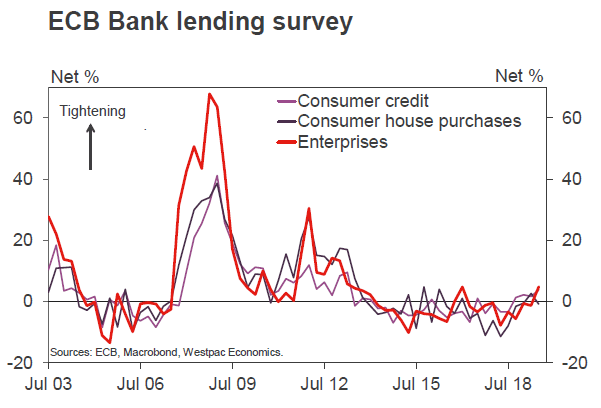
In terms of our own expectation, we continue to believe that a cut will be delivered in September but now expect a broader stimulus package will also be introduced. This is in response to the particularly bad run of data over recent weeks, in particular the ECB Bank Lending survey which showed a tightening in lending conditions in response to the worsening economic outlook.
We expect that the cut in September will be followed by a tiered deposit rate to mitigate the pressure on banks and that asset purchases of sovereign bonds will be restarted. Our expectation is for the ECB to introduce a €30bn per month program in December lasting for a year at this stage.
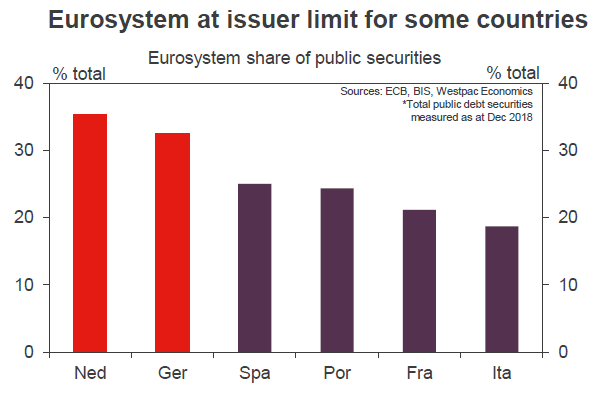
For that to occur, the ECB will need to increase their self-imposed issuer limits from the current 33% given German Bunds are already at that limit. For example, given €1.6tn of Bunds outstanding, a new issuer limit of 45% would allow room for the purchase of ~€200bn bunds, and with Bunds representing roughly 25% of purchases, that would create room for ~€800bn of total sovereign European bonds.
Week ahead – Fed, BoJ, and BoE Meet ahead of US Payrolls
Investors will be glued to their screens next week, with a plethora of central bank meetings and an avalanche of data releases set to provide ample excitement. The Fed is certain to slash rates, though probably only by a quarter-point, which may briefly lift the dollar given expectations for even more aggressive action. The BoJ and BoE are both likely to soften their tones, while in the euro area, growth and inflation data may decide how forcefully the ECB acts in September.
Fed decision & nonfarm payrolls to decide the dollar’s fortunes
The moment of truth for the dollar is here, as the upcoming events will likely determine the currency’s direction over the remaining summer. The Fed is certain to slash rates on Wednesday. The question is whether it will cut by a typical 25 basis points (bp) or by a more aggressive 50bp. Markets still assign a ~20% chance for the latter, which seems extreme.
Even the most dovish FOMC official, James Bullard – who voted for a cut in June and opposed the hikes last year – recently said a 50bp move would be excessive. The point is that if a dove like Bullard is against such an aggressive cut, there’s almost no scope of it happening. Therefore, since more easing is priced in than the Fed is likely to deliver, the knee-jerk reaction in the dollar may be higher.
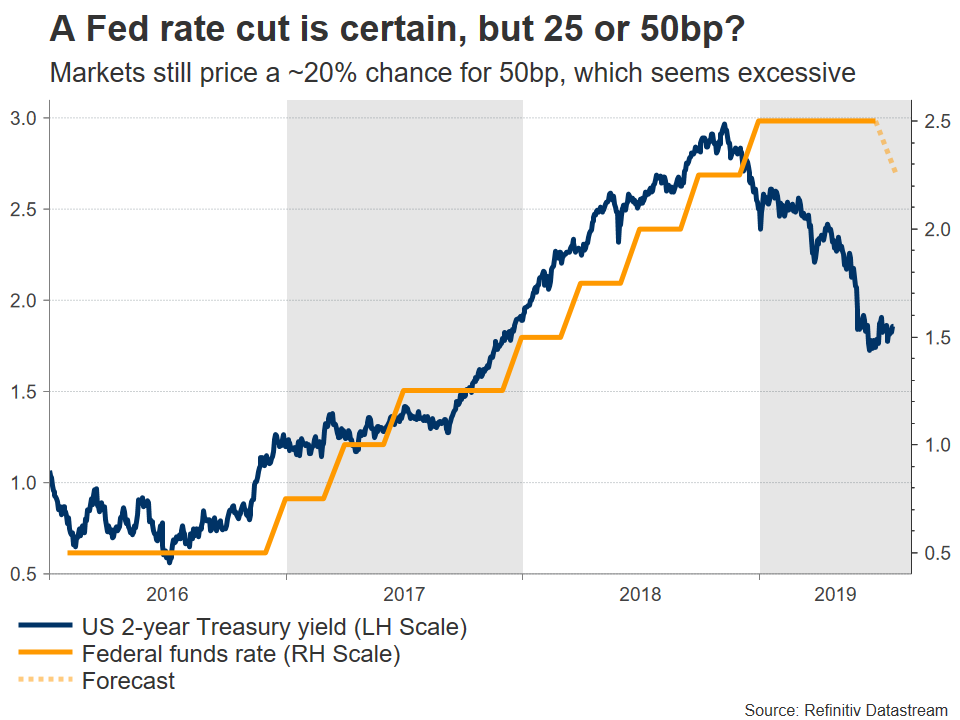
Whether that surge is sustained though, will depend on the signals policymakers send about the pace and depth of future cuts. In other words, if they indicate this is a ‘one-off’ move, and not the beginning of an easing cycle, the dollar could soar as market pricing points to several more cuts in the coming months. However, that’s unlikely. The Fed will probably keep the door wide open for more action, so any positive reaction in the dollar may be relatively short lived.
As for the data, the core PCE price index for June is due on Tuesday, ahead of the ISM manufacturing PMI for July on Thursday. Yet most of the focus will fall on Friday’s nonfarm payrolls, which are expected to clock in at 160k in July, lower than June’s 224k – but still a solid print. The unemployment rate is projected to drop back to 3.6%, while average hourly earnings are forecast to rise at the same pace as in June.
Bank of Japan unlikely to offer much
Before the Fed, the Bank of Japan (BoJ) will be the first to announce its decision on Tuesday. The Bank is expected to keep policy unchanged this month as officials are reportedly split on the need for further easing.
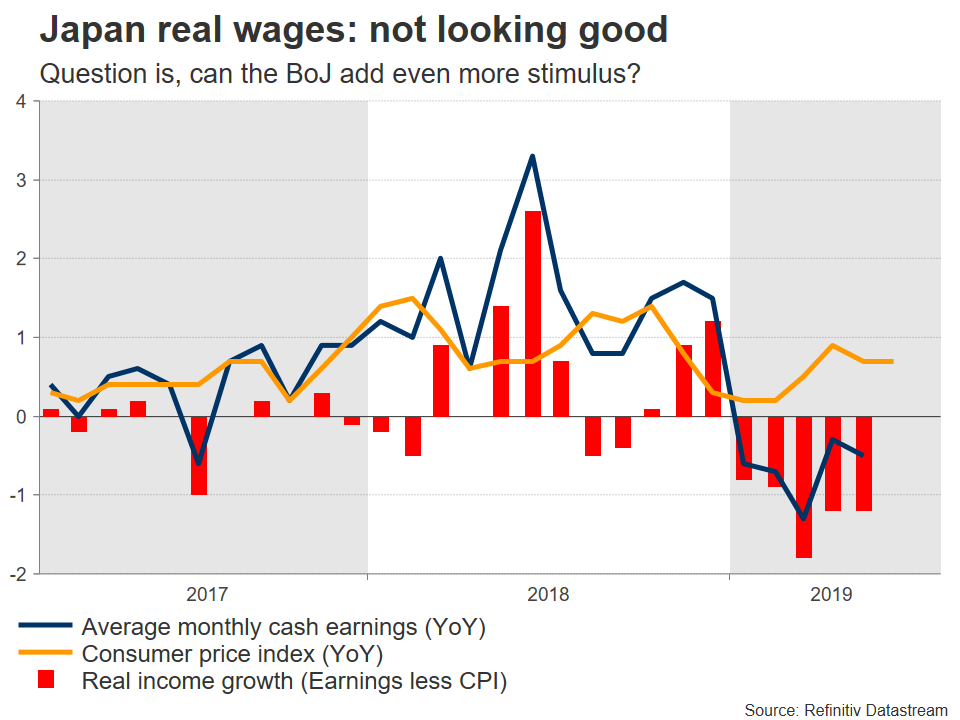
However, with the ECB having already signalled it will consider all options and the Fed expected to cut rates, the BoJ could feel impelled to at least update its forward guidance on interest rates to align it more closely with its global peers. Such a move would also alleviate some of the upside pressure on the yen, which policymakers are likely keeping a close eye on.
Bank of England: preparing to turn neutral
In the UK, Brexit news will continue to be the overarching driver of sterling, though investors could briefly turn their attention back to economics on Thursday, when the Bank of England (BoE) announces its policy decision. Until now, the BoE had maintained a soft tightening bias, indicating that rates would need to rise slightly over time.
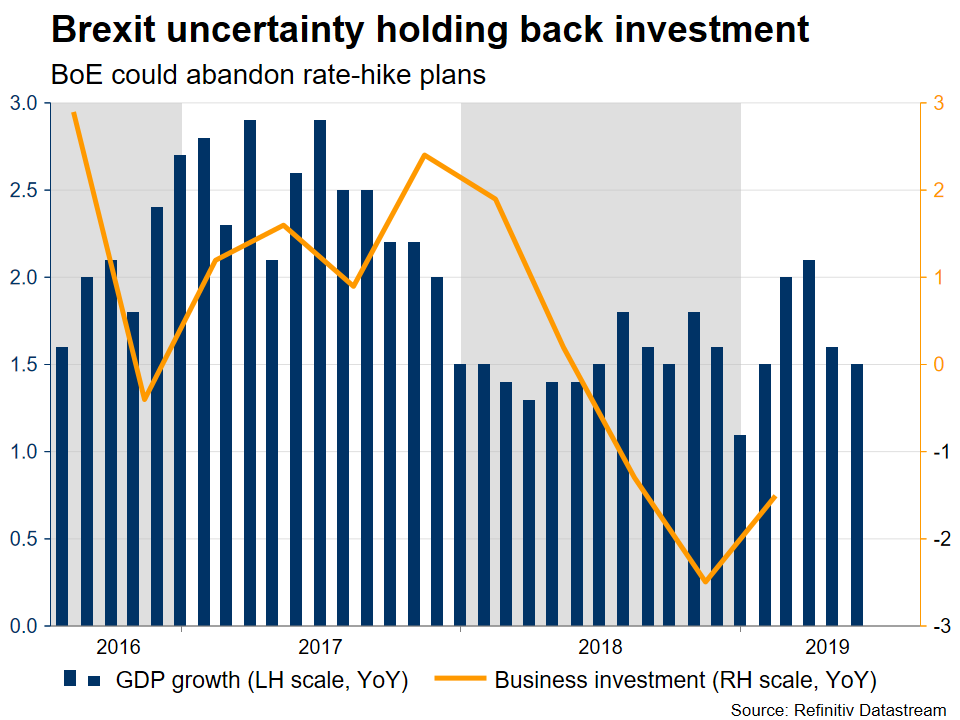
Yet, the case for rate hikes has become dubious lately. Brexit uncertainty has taken a heavy toll on the economy, with the forward-looking PMI surveys pointing to a mild contraction of GDP in Q2. Hence, this may be the moment when the BoE officially abandons its tightening bias, and turns neutral. While that may weigh on sterling, any downside is unlikely to be huge as this won’t be a surprise for markets, which currently price in a ~65% chance for a rate cut this year.
Eurozone GDP & inflation data due as markets eye ECB stimulus
ECB President Mario Draghi did not mince words at this week’s ECB meeting, making it clear that his central bank stands ready to add more stimulus to boost the struggling euro area. His remarks suggest the ECB will probably cut rates and perhaps even restart its QE program as soon as in September. As such, incoming data between now and the September meeting will likely shape expectations on the size and scope of this stimulus package.
On Wednesday, the first estimate of GDP for Q2 is expected to show that growth decelerated to 0.2% in quarterly terms, from 0.4% earlier. Likewise, the preliminary CPI rate for July is forecast to decline to 1.2% on a yearly basis, from 1.3% in June.
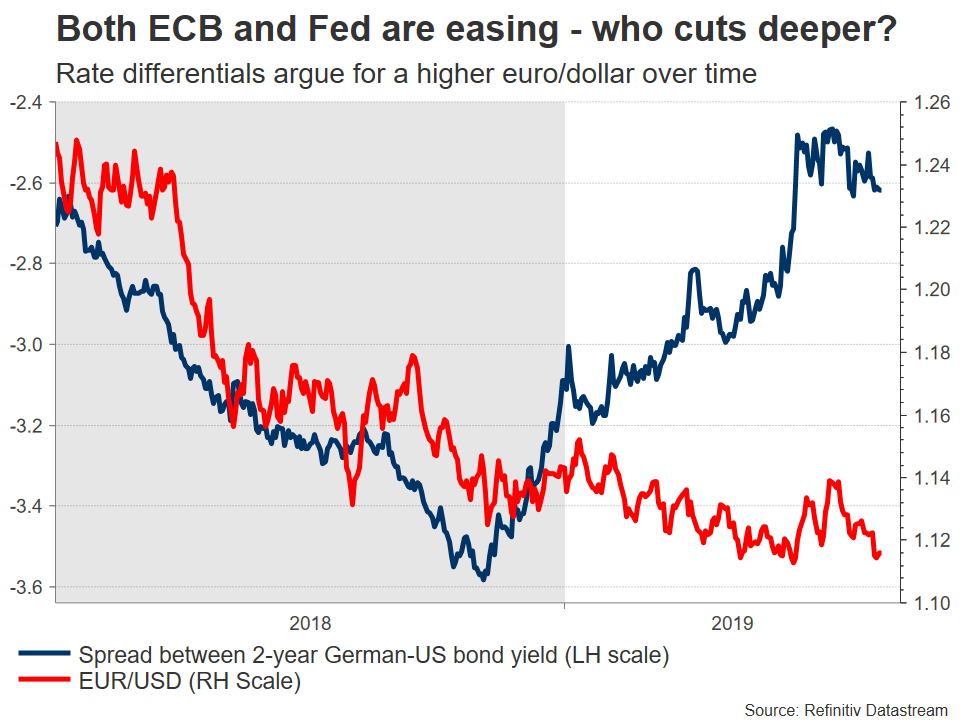
In the FX market, more QE by the ECB implies a weaker euro. However, that may only transpire against currencies like the yen and Swiss franc – not necessarily against the dollar, given that the Fed may deliver more powerful easing than the ECB overall. Put differently, while both the euro and the dollar seem set to weaken in general as their central banks ease, the dollar may weaken more than the euro given how much more ‘rate ammunition’ the Fed has, which argues for a higher euro/dollar over time.
China’s official PMIs on tap as trade talks resume
The world’s second-largest economy will see the release of its official PMIs for July on Wednesday, which are often crucial for global risk sentiment, influencing assets like stocks in particular. What may be even more important for risk appetite though, is what signals come out of the US-China trade talks, the next round of which will be held in Shanghai on Monday.
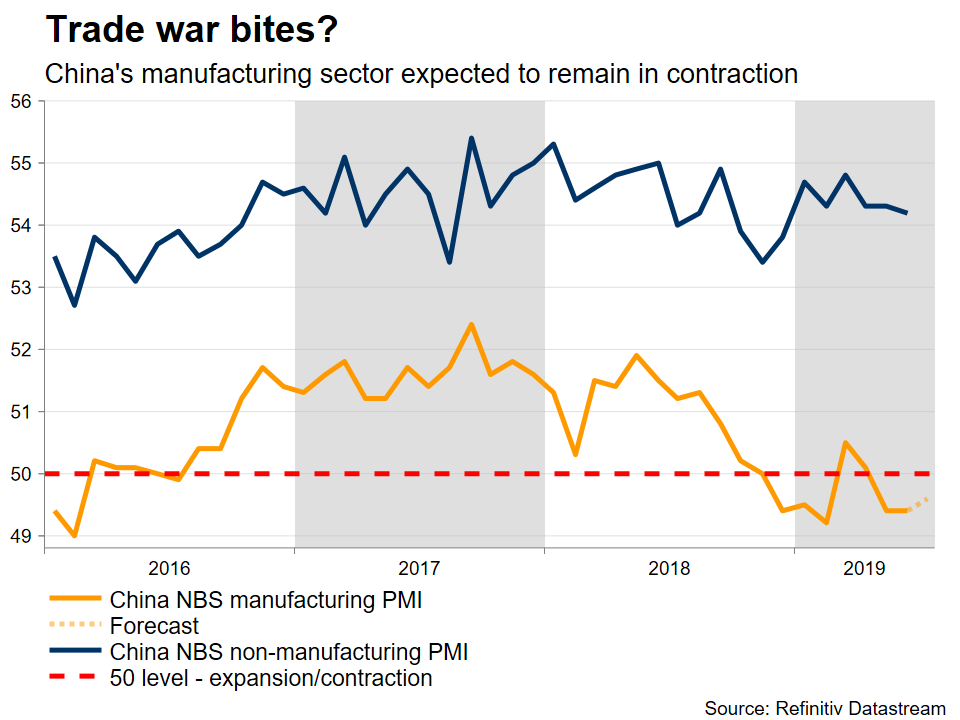
While the fact that the two sides are meeting face to face again is a positive sign, the likelihood of any major breakthrough appears low. The differences on key issues like intellectual property protection and an enforcement mechanism for any deal seem too big to bridge, and perhaps the best that investors can hope for are signs of progress on some of the ‘easier’ questions, like how to treat Huawei.
Australia’s inflation and retail sales prints crucial for RBA
Quarterly inflation figures on Wednesday and monthly retail sales stats on Friday will steal the show in Australia, with traders looking for clues on when the RBA will cut rates again – having done so at both of its last two meetings. Markets currently assign only a ~30% probability for another cut at the August 6 meeting, though that could change quickly depending on the quality of these data.
Beyond monetary policy, the other key variable for the aussie will be how the US-China trade talks unfold.
Elsewhere, Canada’s monthly GDP data for May could attract some attention on Wednesday.
US: GDP Growth Downshifted a Bit in Q2-2019
Net exports and inventories weighed on the overall rate of real GDP growth in Q2. Although the outturn was a bit stronger than expectations, the FOMC likely will still cut rates 25 bps on July 31.
Strong Consumption, but Weak Net Exports and Inventories
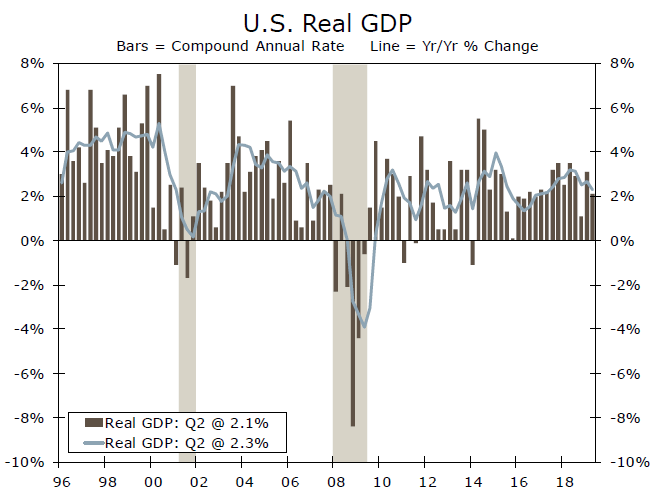
U.S. real GDP grew at an annualized rate of 2.1% in Q2-2019 (top chart), which was a bit stronger than the 1.8% growth rate that the consensus forecast had anticipated. The year-over-year growth rate slowed to 2.3% in the second quarter from the 2.7% clip that was registered in Q1.
Overall GDP growth in the second quarter was driven largely by real personal consumption expenditures (PCE), which shot up 4.3%. Recent monthly data on retail spending have been strong so the robust PCE growth rate in Q2 came as little surprise. Specifically, real spending on durable goods soared nearly 13%, the strongest sequential growth rate in five years, while expenditures on non-durable goods climbed 6.0%. Real consumer spending on services grew at a solid growth rate of 2.5%. In short, the PCE data show that the American consumer is alive and well.
Government spending, which grew 5.0% in Q2, was another notable area of strength. That said, the overall growth rate was flattered by the 15.9% jump in non-defense federal spending, which reflects a bounce-back from the government shutdown in December and January. Overall government spending should grow more slowly in coming quarters.
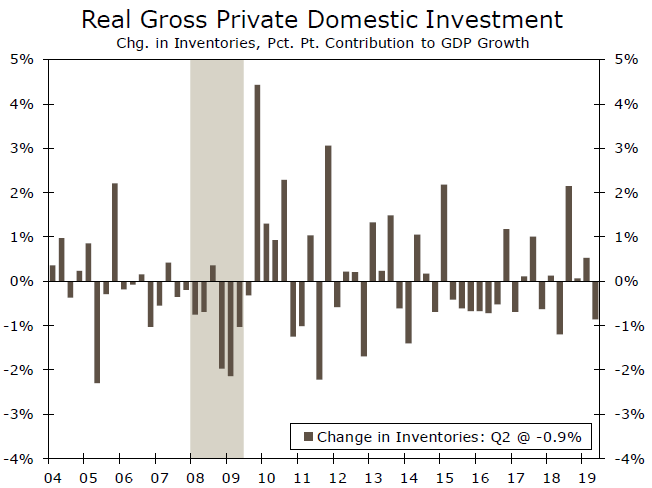
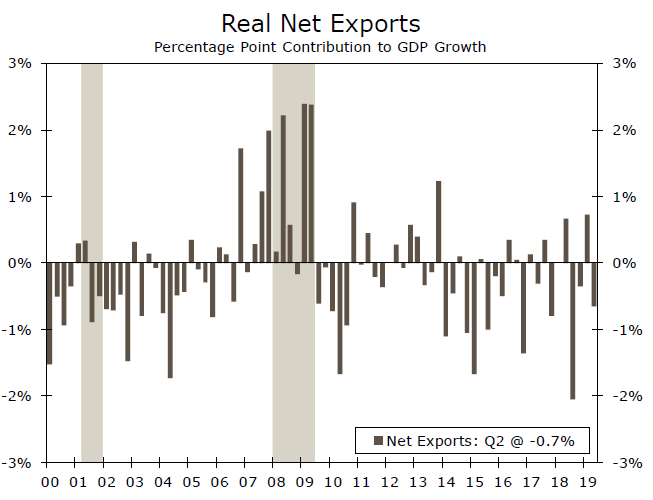
On the other hand, there were some notable areas of weakness. For starters, the GDP data show that the nation's housing market remains largely stuck in the doldrums as real residential construction spending edged down 1.5%, the sixth consecutive quarter in which this spending component has declined. Real exports fell 5.2%, which reflects slower growth in the rest of the world as well as trade war effects. Although real imports were essentially flat on the quarter, real net exports sliced 0.7 percentage points from the overall GDP growth rate (middle chart). As we previewed in a recent report, less inventory accumulation in the second quarter reduced overall GDP growth by another 0.9 percentage points (bottom chart).
No Implications for the July 31 FOMC Meeting
In our view, today's GDP print has very few implications for the FOMC meeting on July 31. Although the outturn was slightly stronger than expected, we still look for the FOMC to cut its target range for the fed funds rate 25 bps. Looking forward, we expect that real GDP will continue to grow between 2% and 2.5% in coming quarters. That said, inflation continues to run below the Fed's target of 2%, and the FOMC seems to be concerned about some of the uncertainties related to trade and other geopolitical factors that cloud the economic outlook. Many members of the FOMC seem to be taking the view that it should probably take out a few "insurance" rate cuts at this time, especially in an environment in which high inflation simply is not a problem.
Sunset Market Commentary
Markets
Global core bonds treaded water today. The German Bund hovered sideways within a very narrow range with markets digesting yesterday’s ECB decision. Yields were roughly flat on shorter maturities as monetary policy is considered more or less a given short term (rate cut in September). The 10-yr and 30-yr yield decline 2-3 bps. Peripheral spreads widen with Italy (+6 bps) and Greece (+7 bps) underperforming. US Treasuries showed little more volatility going into the release of US Q2 GDP. The downleg following a slightly better than expected figure (2.1% QoQa vs. 1.8%, on strong private consumption, see below) reversed almost instantly however. A mixed bag of US price data were no inspiration for trading either. Solid Q2 growth, if anything, doesn’t really suggest aggressive Fed easing is necessary. Money markets refuse to completely rule out such a scenario though. A 15% chance is still priced in. The US yield curve bull flattens with yields flat (2-yr) to 1.5 bps lower (10-yr).
EUR/USD traded in some kind of no-man’s-land this morning. Markets had digested yesterday’s mixed ECB message and there were no important EMU data before the publication of the US Q2 GDP growth this afternoon. EUR/USD initially hovered in the mid 1.11 area, but the dollar strengthened slightly as US traders join the fray. It wasn’t that the easy to draw firm conclusions from the report for Fed policy and thus for USD trading. Headline growth dropped from 3.1% (QoQa) in Q1 to 2.1% In Q2, slightly above consensus (1.8%). As expected, strong consumption was partially counterbalanced by a negative contribution of net exports and inventories. The market reaction to the report was very modest. It contained no trigger why the Fed should cut its policy rate by more than 25 bp next week. USD yields and the dollar initially gained marginally, but move lacks any momentum. EUR/USD is trading in the 1.1135 area. USD/JPY is changing hands in the 108.70 area. The dollar remains favoured going into next week’s Fed meeting, but the US currency didn’t break any important technical laves yet. The EUR/USD 1.11 support survives and the trade-weighted dollar (currently 97.93) stays below this year’s peak levels 98.35 area.
Sterling staged a cautious rebound earlier this week as the event risk of the nomination of a new UK PM was out off the way. However, in retrospect, the move was no more than a limited technical correction. There were no follow-through gains for the UK currency. Yesterday, the UK currency even met a first ‘Johnson-related’ headline risk as EU leaders rejected the new PM’s call for better Brexit deal, causing a modest decline of sterling. Today, there were few high profile political headlines in the UK and no important eco UK eco data. Sterling trading was order driven The UK currency traded with a tentative negative bias Cable is changing hands near 1.1425. EUR/GBP is trading a few ticks stronger, currently near 0.8960.
News Headlines
US gross domestic product slowed less than expected in the second quarter. Headline growth printed at 2.1% QoQa, down from 3.1% in the first quarter. A very strong consumption was counterbalanced by an (expected) negative contribution of net exports and inventories. Government spending also supported growth. Investment disappointed slightly. The core PCE deflator, an important gauge of inflation at the Fed, rebounded from 1.1% to 1.8%
The Russian central bank as expected cut rates from 7.5% to 7.25% today. The central bank signaled more cuts to come “at one of the next meetings” to return to the neutral rate (6-7%) in the first half of 2020. However, the bank warned that upside inflation risks remain, mainly fiscally inspired, even as inflation gradually returned to the bank’s 4% target (4.7% in June).