Sample Category Title
Japan- Korea Trade Tensions – Removal of Preferential Treatment to Korea Signals Trade Tension Should Escalate
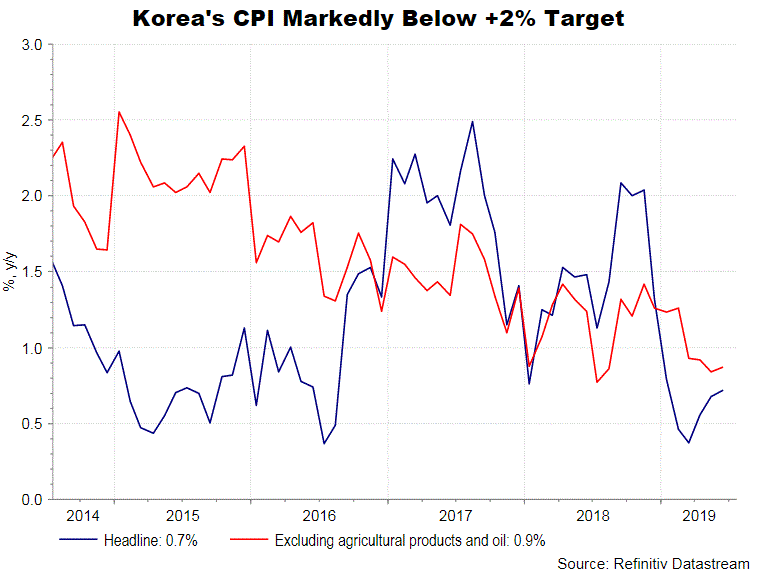
As trade tensions between Japan and Korea evolve, the latest development is that Japan is preparing to remove Korea from its “white list”. Countries in the list can enjoy preferential treatment on trade with minimum retractions. The move marks escalation after Japan imposed control measures for exports of three electronic materials (photoresist, fluorinated polyimide, and etching gas) from July 4. We expect the impact of both measures to be temporary. Negative impacts on further escalation of trade tensions are, nonetheless, difficult to predict. We expect Bank of Korea of cut interest rate again later this year and the risk to Korean won is skewed to the downside.
On July 1, Japan’s Ministry of Economy, Trade and Industry announced control measures for exports of three electronic materials (photoresist, fluorinated polyimide, and etching gas) to Korea, effective July 4. The restriction requires individual license review and approval for exports of these items to Korea. It could take as much as 90 days for the process from application for approval. These three chemicals take up less that 0.1% of Korea’s total exports. Yet, they are critical elements in semiconductor production. Semiconductor exports contribute to about 20% of the country’s exports. We expect the control measures would have limited impact on the semiconductor industry.
As mentioned about the control measures are not embargo. They require Japanese exporters of these materials to apply for license before making shipment to Korea. Such process usually takes 90 days. Usually, manufacturers should keep two to three months of inventory of these materials. It does not appear to cause much disruption. However, announcement of the control measures might cause front- loading of chip exports in the third quarter, before pulling back in the fourth quarter.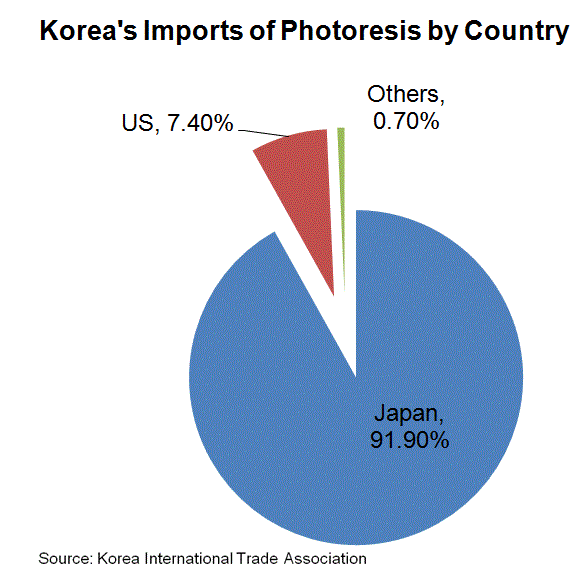
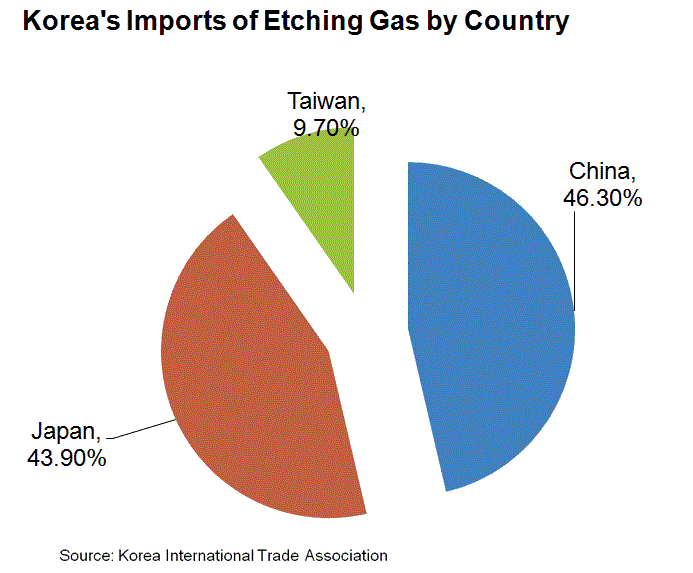
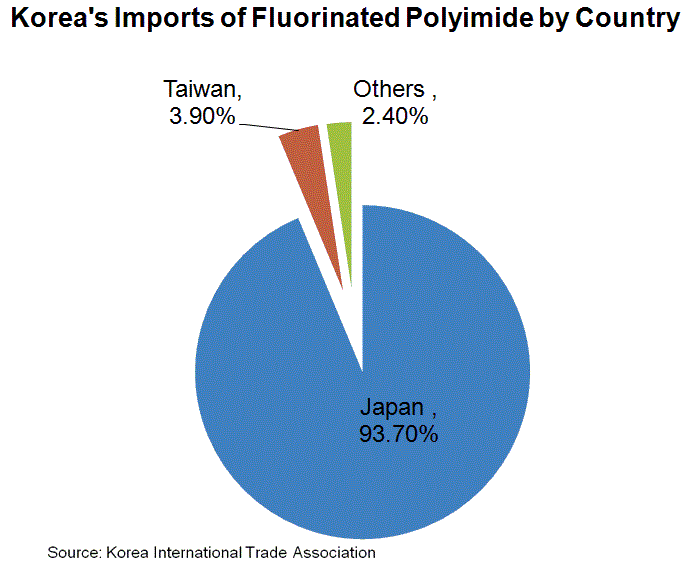
Today, a report from Japan’s Kyodo news agency suggested that the government could likely approve the removal of Korea from its white list as soon as August 2. The restriction would take effect 21 days after the official announcement. such action suggests that 97% of Korea’s imports from Japan could be affected - subject to a new export clearance and license application procedure that could take up to 90 days. Imports are predominantly machinery and electronics, with a large part of it related to semiconductor production.
Although we believe the impact in the short-term would be limited, the risks of further escalation have increased. Indeed, Bank of Korea (BOK) has warned of the issue at the meeting last week. As BOK Governor Lee Ju-yeol noted, “considering the trade volume between South Korea and Japan and the connectivity between industries and companies, if export restrictions are realized and expanded, we cannot say that its impact on exports and the economy is small”, although he added that it is too early to estimate the potential impact. As such, BOK cut the policy rate by -25 bps to 1.5%. It also sent a dovish message and cut the GDP growth forecast to 2.2% for this year, down from +2.5% previously projected. Given intensifying uncertainty to the trade outlook, and the fact that BOK did not rule out more easing later this year, we expect to see another -25 bps reduction in 4Q19.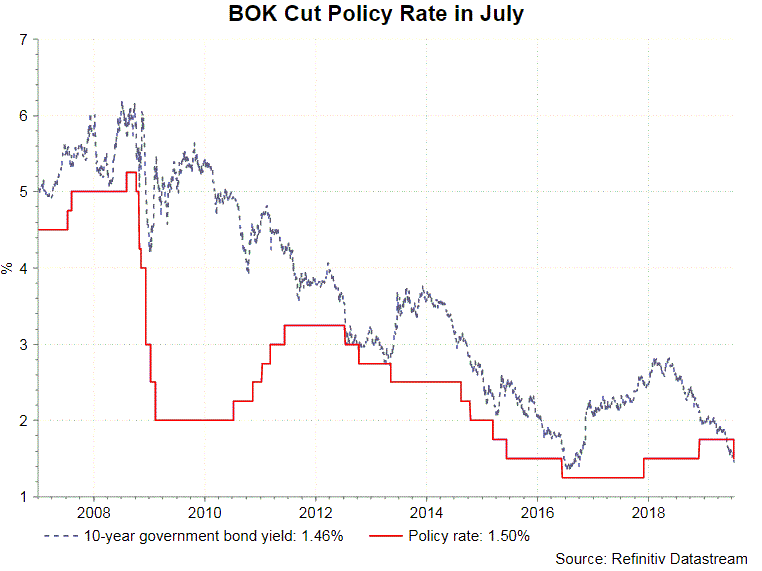
Bank Of Japan To Mull More Easing As Inflation Falls To 2-Year Low
The Bank of Japan will announce its latest policy decision on Tuesday. There is no set time for the announcement, but they are usually made slightly before 03:00 GMT. As the BoJ’s peers have begun cutting or are planning to cut rates, pressure is growing on the central bank to ramp up its already massive stimulus program. But with few tools left at their disposal, policymakers are likely to be hesitant before approving a new round of easing. Making matters worse for the BoJ is a stronger yen as its major rivals struggle under the weight of the slowing global economy.
Inflation far below BoJ’s 2% target
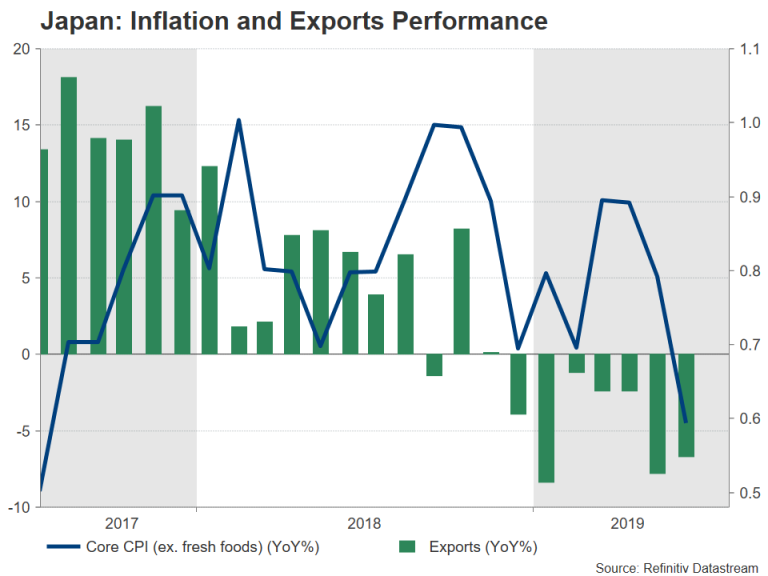
As inflation (as measured by the core consumer price index) falls to two-year lows, the BoJ is at risk of facing another delay to the timing of when it expects to hit its price goal. Core CPI moderated to 0.6% year-on-year in June, far below the 2% target, raising questions about the effectiveness of the BoJ’s unconventional policies.
However, with growth slowing in Japan’s main trading partners, thus, acting as a big drag on the country’s exports, and inflation in other parts of the world also remaining low, the prospect of either growth or inflation rebounding sustainably anytime soon is remote. This potentially leaves the BoJ with little option but to increase monetary stimulus in the coming months.
Policymakers likely to be undecided at July meeting
BoJ Governor, Haruhiko Kuroda, has repeatedly pledged to maintain “powerful monetary easing” until inflation has reached 2%. Speaking recently in Washington, Kuroda struck a caution tone, saying “We will carefully examine various risk factors, in addition to developments in economic activity and prices as well as financial conditions, and weigh the benefits and costs of the policy effects”. The comments suggest that while policymakers are very concerned about the negative global developments, the Bank is not yet convinced whether further easing is needed, at least not just yet.
With no immediate urgency to act and concerns about the side effects of a prolonged period of ultra-loose monetary policy, the BoJ is expected to stand pat this month and put off any decision until the planned sales tax hike has come into effect in October so it can assess the impact on household and business spending. The last time the government raised the sales tax in 2014, the economy slipped into a recession and there are worries the same could happen again this time round.
Stronger yen to keep BoJ on edge
But there’s still a chance the Bank could decide to provide more stimulus sooner depending on the scale of the policy easing by the Federal Reserve and European Central Bank, as well as their impact on the currency markets. The Fed is expected to cut rates by 0.25% next week, while the ECB has signalled that all options remain on the table.
Should the BoJ decide to sit out the current easing cycle by world central banks, the yen is likely to extend its steady uptrend that began in early May. That could possibly prompt the BoJ to tweak its forward guidance as early as next week so as to alleviate some of the upside pressure off the yen.
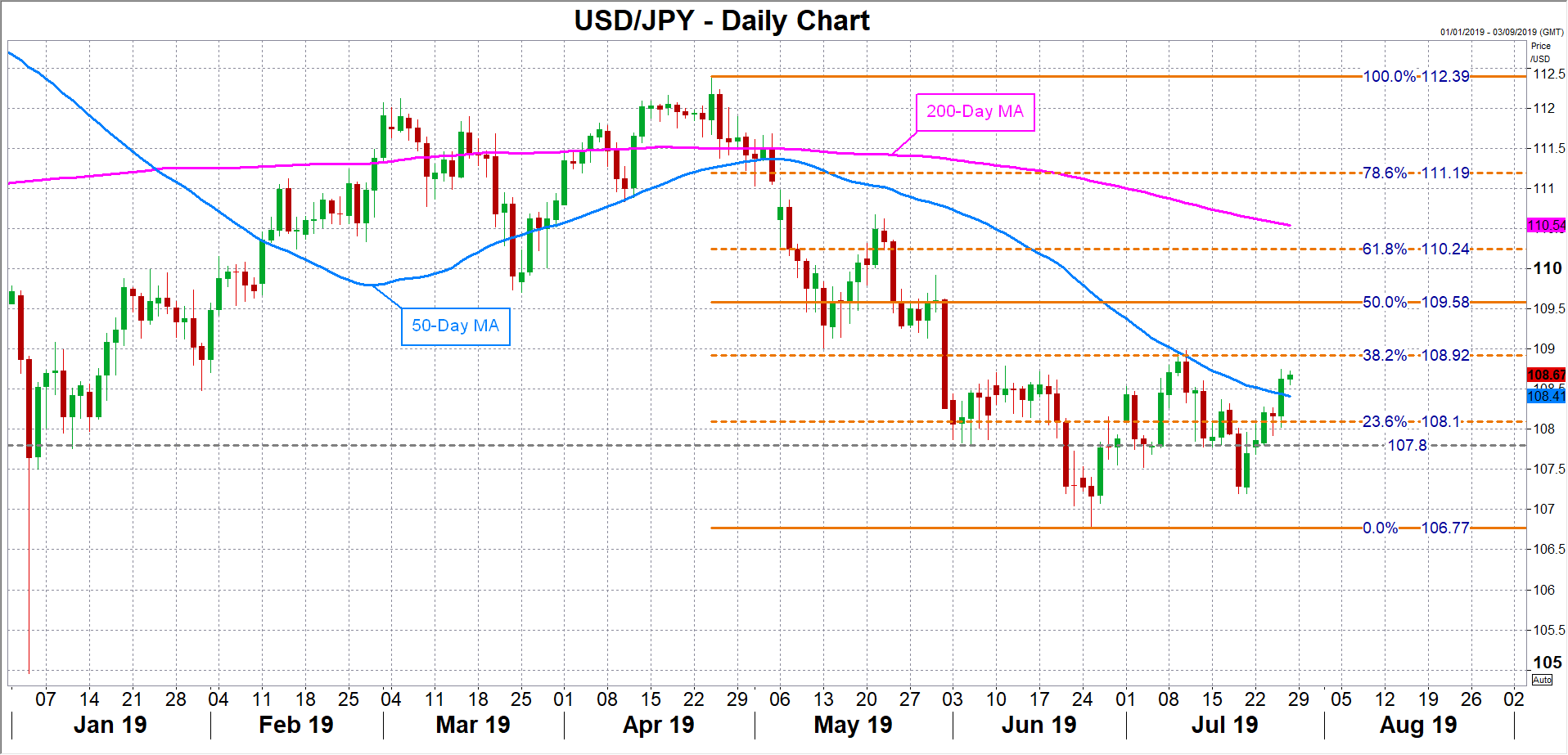
Dollar/yen could firm to around the 108.92 mark – the 38.2% Fibonacci retracement of the April-June downleg before eyeing the 50% Fibonacci at 109.58 if the BoJ surprises with strong hints of more stimulus. However, should Kuroda stick to familiar language, there’s likely to be limited reaction in the forex market and dollar/yen could seek support near the 23.6% Fibonacci at 108.10.
EURNZD Runs Towards 200-SMA At 1.6800
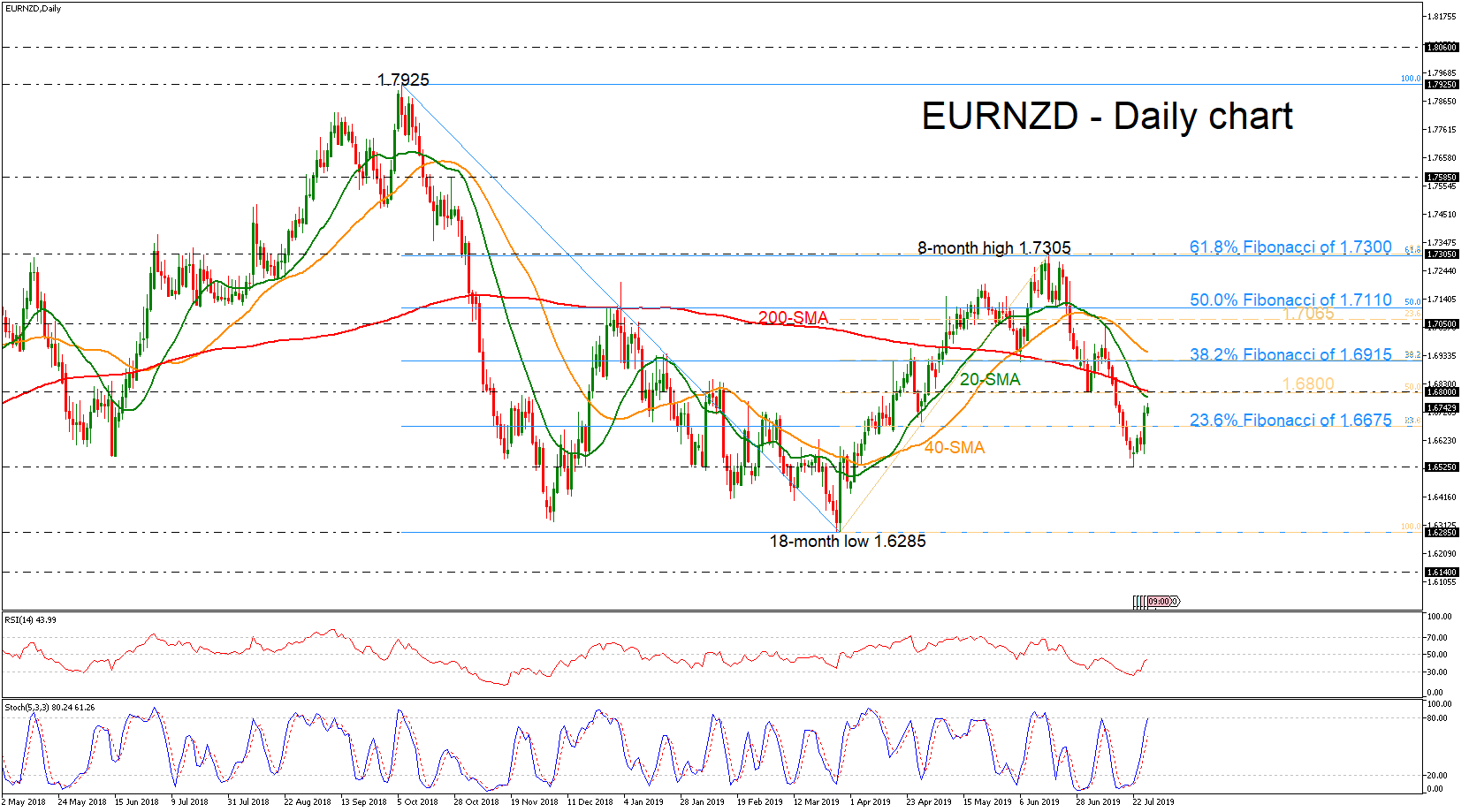
EURNZD is extending gains after the rebound on the 1.6525 support area, heading towards the 200-simple moving average (SMA), which overlaps with the 1.6800 psychological mark. The RSI is pointing marginally upwards, approaching the 50 level, while the stochastic is moving near the overbought area.
Should the price close comfortably above the 200-day SMA, immediate resistance would come from the 38.2% Fibonacci mark of the downleg from 1.7925 to 1.6285 near 1.6915. If there is a jump above this level, it could open the way for a retest of the 40-SMA currently at 1.6945 before hitting the 1.7050 – 1.7065 key zone, which encapsulates the 23.6% Fibonacci of the upleg from 1.6285 to 1.7305.
Alternatively, a bounce off the 1.6800 handle could take prices lower until the immediate support of the 23.6% Fibo of 1.6675. More declines could come from the 1.6525 low and the 18-month bottom of 1.6285.
Concluding, EURNZD is lacking direction in the long-term as it failed to post a significant rally above 1.7305 or below 1.6285.
GBPJPY Bulls Test 20-Day SMA, Trend Reversal Still Likely
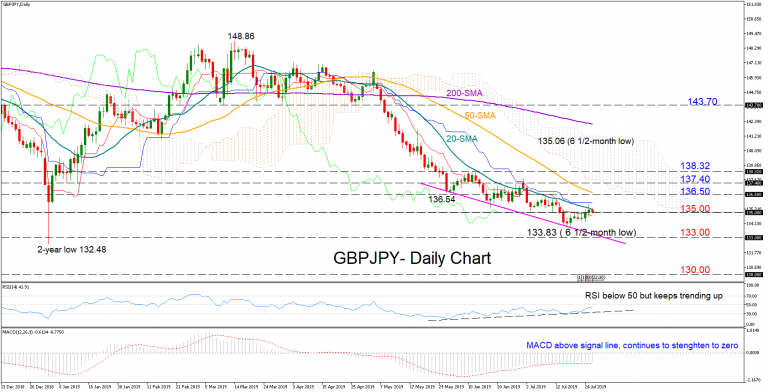
After three weeks of consecutive losses, GBPJPY is set to close in the green, though with minimal gains.
The 20-day simple moving average (SMA) remained a key resistance area, while the RSI and the MACD continue to keep the odds high for downside corrections in the short-term as long as they fluctuate in bearish area. Yet, both indicators have been correcting north and towards their neutral levels over the past two months at a time when the price was printing lower lows, suggesting that a trend reversal could be approaching.
Traders, however, would like to see an exciting bullish action above the June high of 138.32 before confirming the start of an uptrend. At an earlier stage, resistance could emerge around the 50-day SMA currently near 136.50 and then close to the 137.40 level.
Alternatively, a failure to break above the 20-day SMA could see a retest of the 6 ½-month low of 133.83 ahead of the descending line near 133.00. If there is a deeper move, the next support to watch could be the 130 number.
Turning to the medium-term picture, the sentiment is strongly bearish and only a rally above 143.70 would shift the outlook back to neutral.
All in all, GBBJPY is likely to hold bearish both in the short- and the medium-term timeframe.
Draghi Sends Euro On Roller-Coster
ECB holds policy ... for now
A quick recap of yesterday's roller-coaster ECB rate decision and press conference. After a bit of back and forth, Euro and European yields rallied as ECB announced to hold policy steady and press conference. The key take-away raised doubt over prospect of further easing in September. The debate of the ECB policy path is raging, we don’t believe that the probability of easing has diminished. Repeated reference to ECB governors that “do not like what they’re seeing in the inflation data" indicates that the central bank is ready to act. Draghi has a long history of injecting doubt into the markets to remove the directional risk. Yet the incoming data (fact, ECB is lost its inflation target), macro environment and cues from other central banks suggest that ECB will ease. Market are pricing in 20bp cut to deposit rate in September. There is also a high likelihood that tiered interest rates on reserves will be engaged. The threshold for asset purchases is high in our view and currently, don’t have a solution as part of the mix right now. We could see a recovery in EURUSD in the short term as a market position for Fed easing.
In regards to next week's FOMC, our view is for 25bp easing. 50bp is unnecessary (solid GDP read of 1.8% 2Q expected today) and would signal a level of panic at the Fed. The market will be watching today's GDP print as is the key data ahead of critical Fed decision next week. The Fed is likely to sell this first-rate cut in ten years as insurance against slowing economic weakness. Broad de-risking is the theme of the day with S&P 500 falling from all-time high yesterday. There is worries that major central banks will ease but not enough to justify elevated valuations in key areas. To keep the goods times rolling, central banks will have to keep the dovish narrative alive.
ECB Opens Door For Easing In September
- ECB changes its forwards guidance, shifting to an easing bias
- The ECB tasked Eurosystem committees to study options to ease policy further
- The bank expressed its desire for a symmetrical inflation approach
- The bar for further easing in September has become (very) low
- Markets developed a buy-the-rumour, sell-the-fact reaction
The ECB made an important further step to restart policy easing yesterday, most likely at the September policy meeting. Last month, the ECB indicated that it became ever more alert for potential headwinds that might further slow the economy and prevent the bank from reaching its inflation target. The bank went a step further yesterday. It changed its forward guidance to an easing bias as it explicitly said that rates might be lowered. The bank firmly reiterated that it is prepared to take further action if needed. It instructed the relevant Eurosystem committees to examine the options for further easing, another sign that the bank will be ready to ease policy further in September.
The market reaction was a bit complicated as part of the market already saw a good chance of the ECB to cut rates yesterday. European interest rates reached new all-time lows around the time of the announcement of the policy decisions/start of the press conference. EUR/USD tested the key 1.11 support. Even as the ECB showed a strong commitment to act, European interest rates and the euro rebounded as the ECB President gave few details on the composition of a new easing package that will be studied. A classic buy-the-rumour/sell the fact reaction.
ECB facts & decisions
At the July meeting, the ECB left its main policy rates unchanged at 0.00% for the repo rate and -0.40% for the deposit rate. In the run-up to the decision, markets discounted about a 50% chance that the ECB would already act in July as important timely indicators on the economy suggested that the situation was deteriorating at a fast pace, especially in the cyclical manufacturing sector. This July rate cut didn't happen, but the ECB took several important steps, giving markets a clear signal that a September rate cut is highly likely.
Firstly, the ECB formally changed its forward guidance to an explicit easing bias. The ECB now guides that its main policy rates will remain at their present or lower levels, at least through the first half of 2020. The ECB highlighted the need for a highly accommodative policy stance. If the medium-term inflation outlook continues to fall short of its aim (which is very likely to happen), the ECB is determined to act. The bar for further easing is now even lower than in June/at Sintra when the ECB indicated that it would act in the absence of improvement in reaching its inflation target.
The ECB also made an interesting change in the narrative on reaching its inflation target. The policy statement didn't say that inflation will have to return to the target of "below but close to 2%", but instead stressed the desire/commitment to symmetry in the inflation. This change of the language is no formal change in the inflation target (yet?). Even so, the ECB will be happy if inflation would temporarily surpass the 2% target. The ECB signals that 2% is no implicit upper limited and that no immediate tightening is needed in case of a temporary breach. In other words: interest rates can stay lower for longer. The idea of a symmetrical inflation target is in line with the analysis of Draghi at the Sintra ECB forum.
Aside from the change in forward guidance, the ECB didn't take any ‘hard' easing measures yesterday. However, it will be ready to do so at the September meeting. It instructed the relevant Eurosystem Committees to examine the options to ease policy further. The ECB specifically mentioned ways to reinforce forward guidance, mitigating measures such as a tiered system for reserve remuneration and options for the size and the composition of potential new assets purchases. If this exercise is done by the September policy meeting, the ECB will be able to make an assessment on a ‘broad' set of measures at its disposal to reach the inflation target as soon as possible.
In the press conference, Draghi elaborated in debt on the economic context. Global international uncertainty is hurting the manufacturing hard, but employment and wage growth continue to support domestic demand. The ECB still expects no EMU recession. Still, in this environment, inflationary pressures remain muted and inflation expectations have declined.
Regarding monetary policy, the ECB president didn't gave any concrete details on specific measures that might be taken once the ECB restarts easing. It is not that easy to specifically quantify market expectations on all these topics. However, it looks fair to assume that yesterday's ECB action was rather close to average market expectations. However, the lack of details probably made the ECB message less ‘aggressive' than at least part of the market participants had expected/hoped.
Market reaction
Both the EMU interest rate markets and the euro showed some kind of buy-the-rumour, sell the fact reaction.
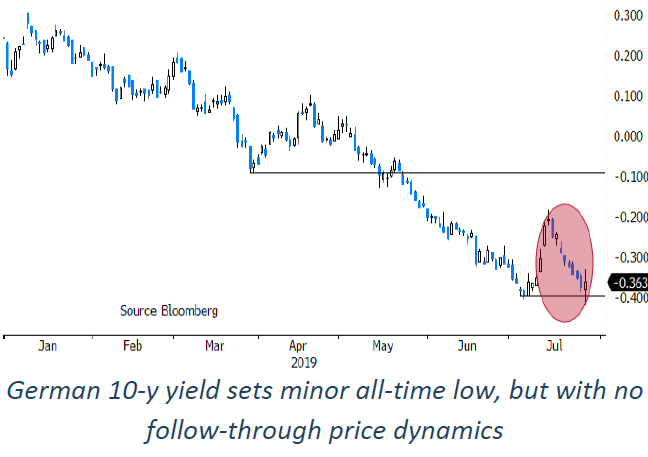
Markets had largely anticipated a soft ECB. German yields touched new all-time lows (10-yr, -0.42%) at the start of the ECB press conference. However, the decline of yields was (more than) reversed during the ECB press conference. The German yield curve rose 1.8 bp for the 2-y yield to 3.1 bp for the 30-y yield. At least part of the market was positioned for already a rate cut yesterday or at least for a more aggressive/concrete signals on further easing.
EUR/USD rebounded from levels close to the 1.11 level at the start of the press conference to the 1.1185 area, but closed the session little changed at 1.1145. Stretched expecations on further ECB easing also shaped the EUR/USD reaction. At the same time, FX investors were also reluctant to break this important EUR/USD level ahead of today's US Q2 GDP report and with next week's Fed meeting still on the horizon. 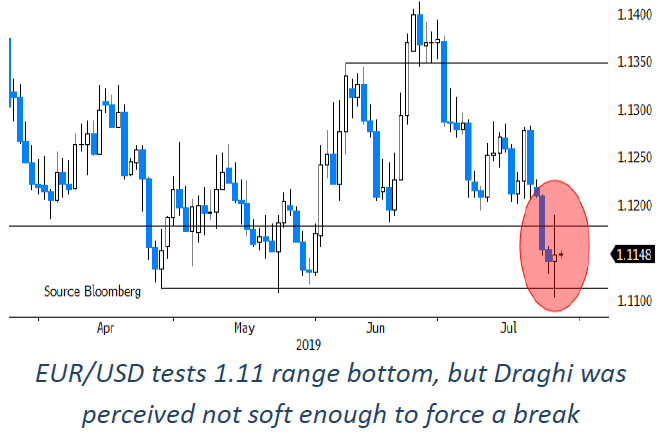
The reaction of risky assets (equities, non core bonds) was in line with FX and interest rates. Equities rallied after the publication of the policy statement but fell prey to profit taking after the press conference. In the same move, peripheral spreads initially narrowed further on hopes for substantial further easing but those gains were also reversed later as the ECB president didn't give any hints on the composition of a potential new asset purchase program.
ECB Remains On Hold But Acknowledges Weaknesses
The ECB remained on hold yesterday as was expected keeping rates at 0.00%. However, the ECB president kept it real with the press emphasizing the fact that the situation is getting worse and worse. He referred to the manufacturing sector which is a key sector for the European economy as weakening. Speaking on forecasts he said a rebound was seen in Q2 but now signs confirm weakness and that risks are leaning towards the downside. Regarding a rate cut, he said that they would not comment upon and that they would like to see the next round of projections prior to any decision. Mario Draghi also noted, recession was not the case but if weakness persists, fiscal policy could be needed. Regarding measures that could be taken to improve the economic data, president Draghi said they had assigned Eurosystem Committees to examine options but made reference specifically to compensate banks for even lower rates by offering a multi-tier deposit rate and the possibility of a new bond buying program. The euro initially weakened on the ECB statement but latter ascendant to a high for the day.
USD strengthens on positive economic data
Yesterday, the US Durable Goods figure was released in the European afternoon. The figure came out at +2.0% much higher than the +0.7%, that was forecasted. The news gave a boost for the greenback as it signals the US economy is expanding. In the previous days, this was also confirmed by the IMF which increased US growth expectations to 2.6% for 2019. Despite the USD moving higher, strong movement was also observed on XAUUSD prices which dropped significantly. Gold prices lost approximately 15 USD upon release of the news. Analysts also site the upcoming meeting in Beijing between US and Chinese officials as positive for the USD. Now, focus is placed on next week’s FOMC interest rate decision were the market could be seeking a rate cut
EURCHF 4 Hour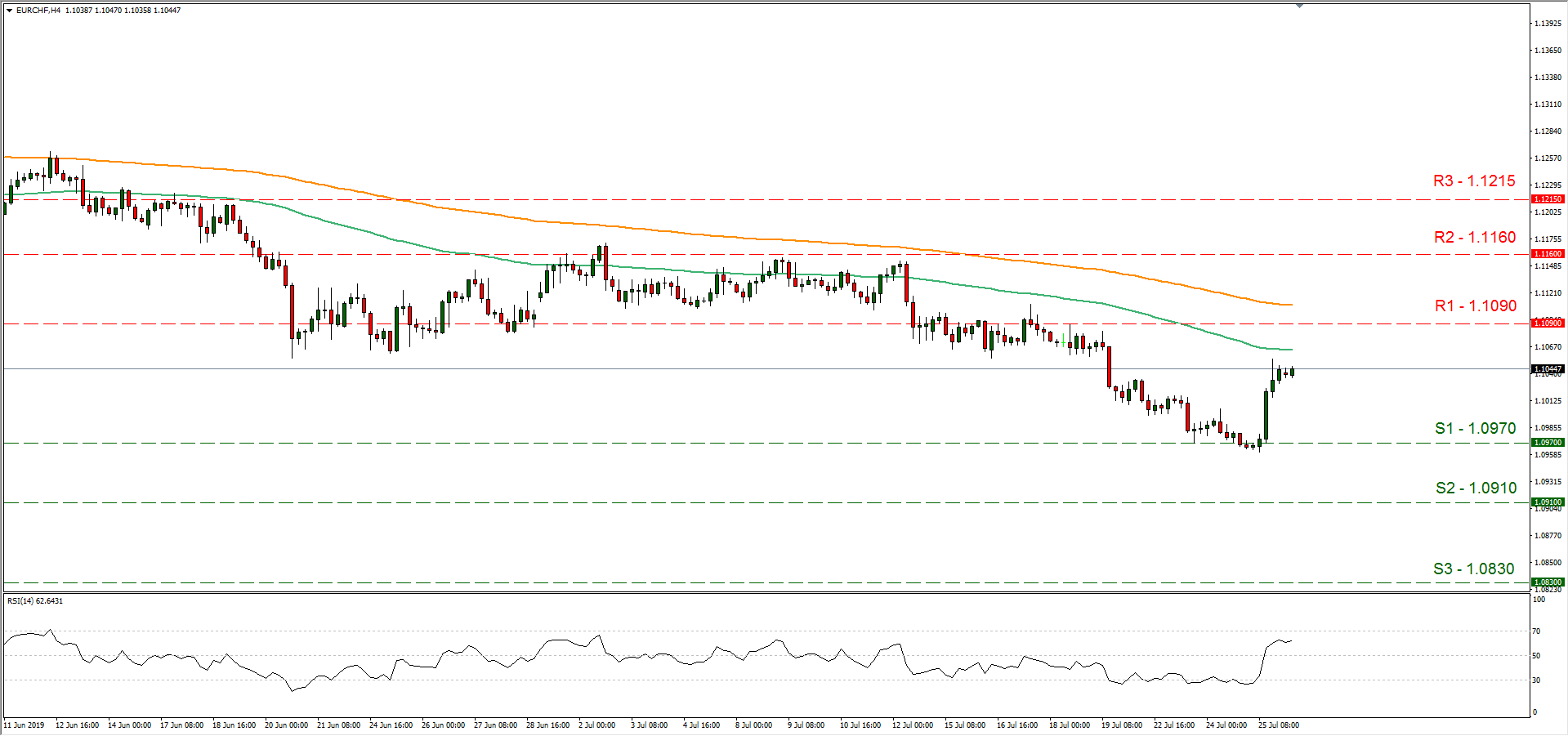
Support: 1.0970 (S1), 1.0910 (S2), 1.0830 (S3)
Resistance: 1.1090 (R1), 1.1160 (R2), 1.1215 (R3)
XAUUSD 4 hour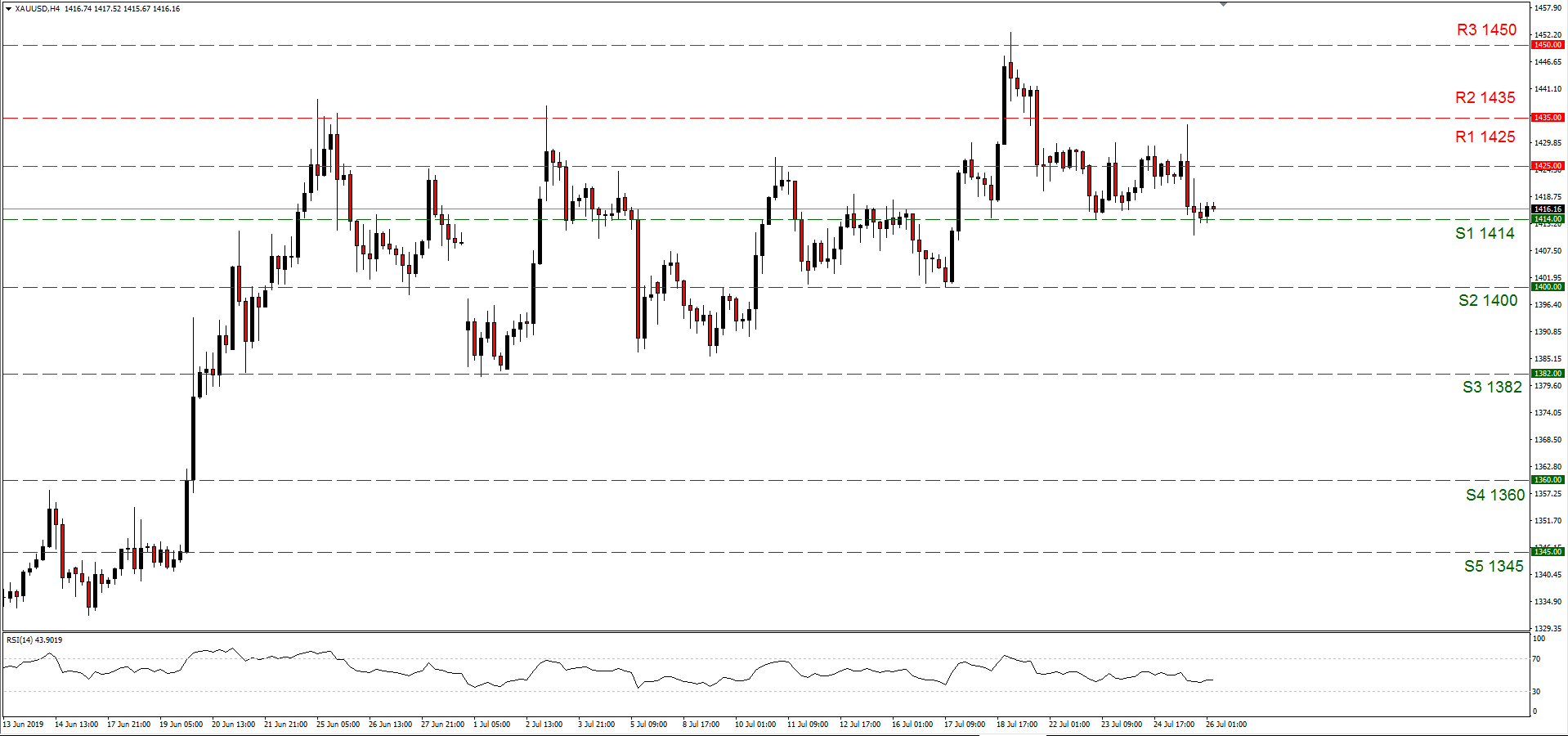
Support: 1414 (S1), 1400 (S2), 1382 (S3)
Resistance: 1425 (R1), 1435 (R2), 1450 (R3)
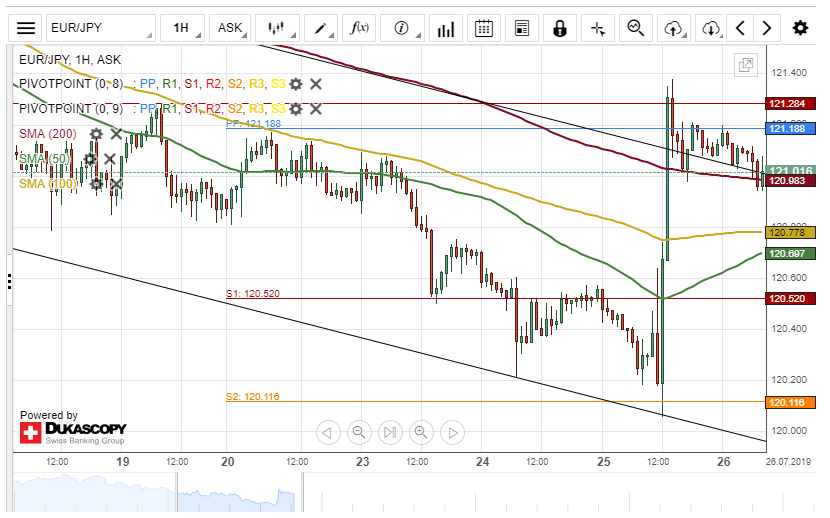
EUR/JPY Could Still Edge Higher
The EUR/JPY currency pair appreciated about 1.08% in value during yesterday's trading session. A breakout occurred through the upper boundary of a descending channel pattern.
The exchange rate was trading above a support level formed by the 200-hour simple moving average at 120.98 during the first half of Friday's trading session.
If this support level holds, a surge towards the weekly R1 at 121.59 could be expected within this session.
However, if the currency exchange rate breaks the support line, bearish traders could aim for a support cluster formed by the 50– and 100-hour SMAs near the 120.65 regions today.
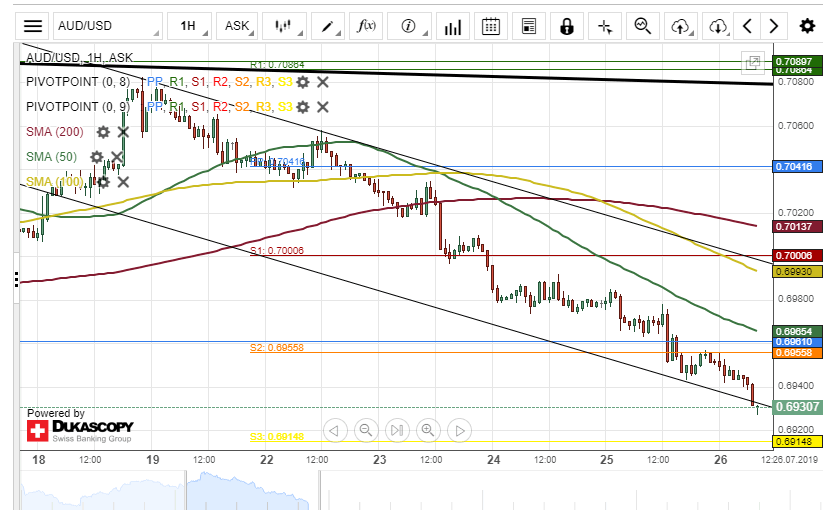
AUD/USD Tests Bottom Border Of Channel Pattern
The Australian Dollar has depreciated about 52 base points against the US Dollar since yesterday's trading session. The currency pair was guided by a junior descending channel pattern.
The exchange rate is gradually moving towards a support level formed by the weekly S3 at 0.6914.
If the AUD/USD pair passes the support level, bearish traders could aim for a swing low at 0.6905 today.
Although, if the weekly S3 holds, a potential upside reversal could occur during the following trading session.
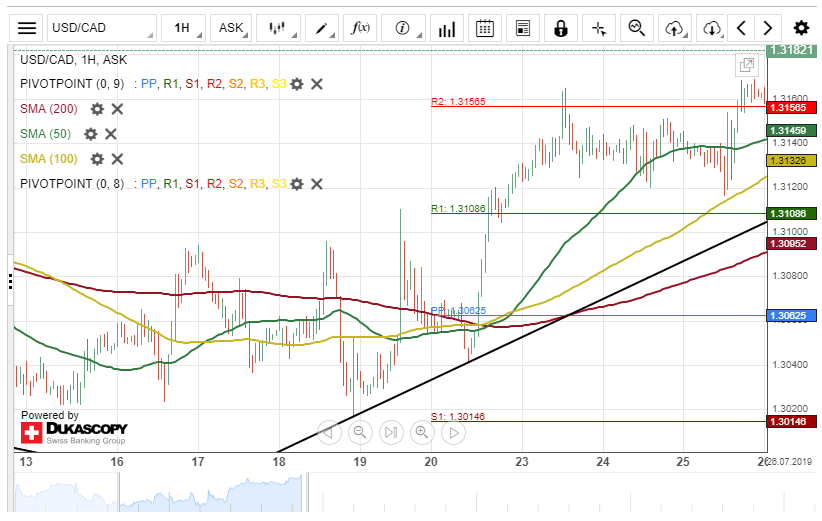
USD/CAD Moving Towards Weekly R3
During the past 24 hours of trading, the US Dollar has depreciated about 0.45% in value against the Canadian Dollar. The 100-hour simple moving average provided support for the pair at 1.3108 during yesterday's session.
The currency pair is currently moving towards a resistance level formed by the weekly R3 at 1.3202.
If the resistance level holds, the exchange rate will make a brief retracement towards the 50-hour SMA at 1.3145 today.
However, technical indicators suggest that bears are likely to dominate the currency exchange rate within this session.