Sample Category Title
CFTC Commitments of Traders – Net Length for Crude Oil Futures Gained Most in Three Months
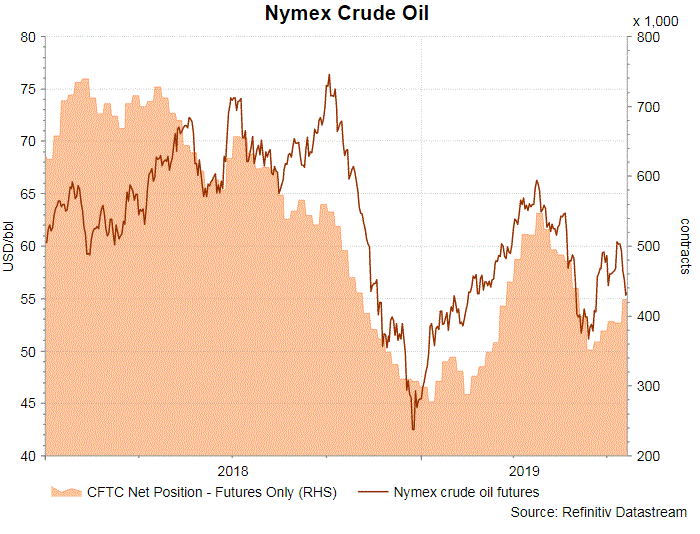
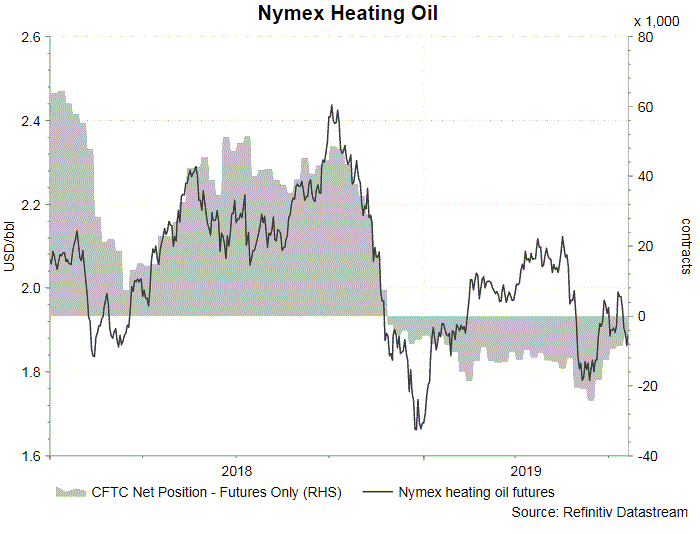
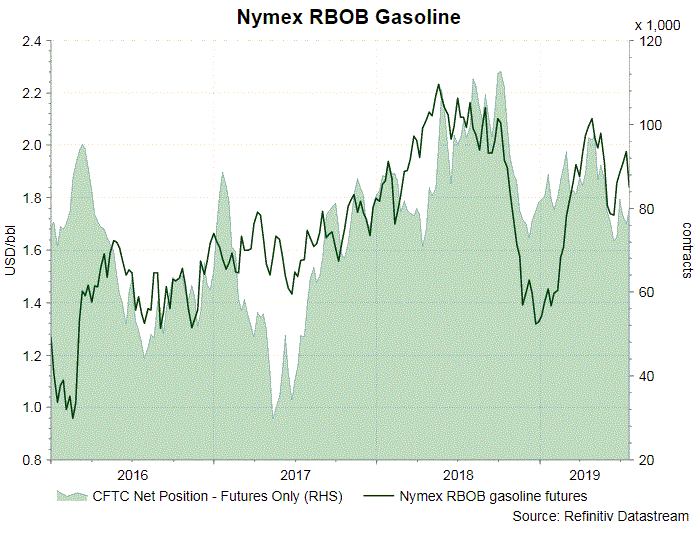
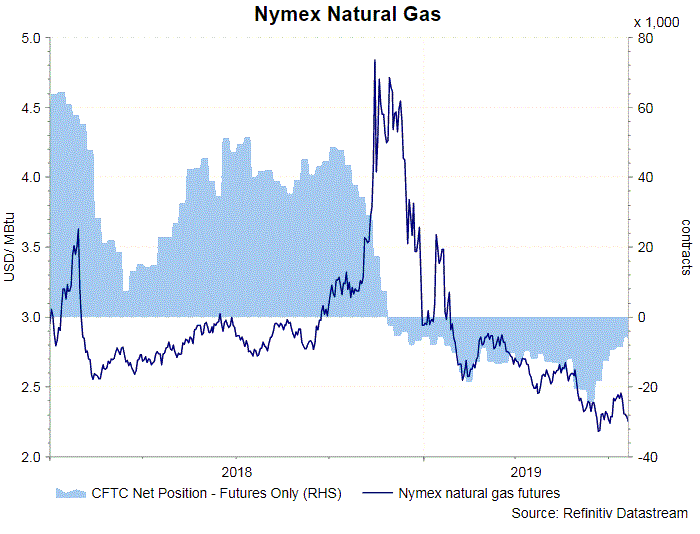
According to the CFTC Commitments of Traders report for the week ended July 17, NET LENGTH for crude oil futures jumped +33 613 contracts to 423 762 for the week. Speculative long positions surged +39 788 contracts and shorts were up +6 175 contracts. For refined oil products, NET LENGTH for gasoline gained +3 633 contracts to 79 975, while NET SHORT for heating oil dropped -2 589 contracts to 5 745 for the week. NET SHORT for natural gas futures dropped -1892 contracts to 155 615 contracts for the week.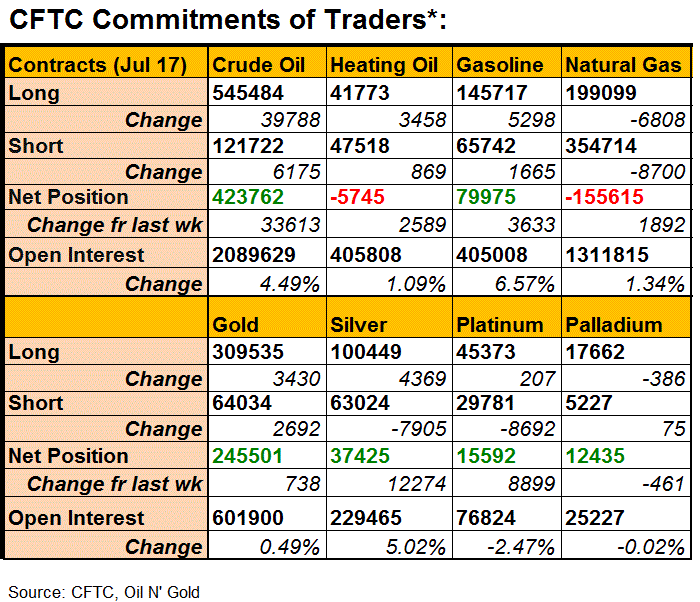
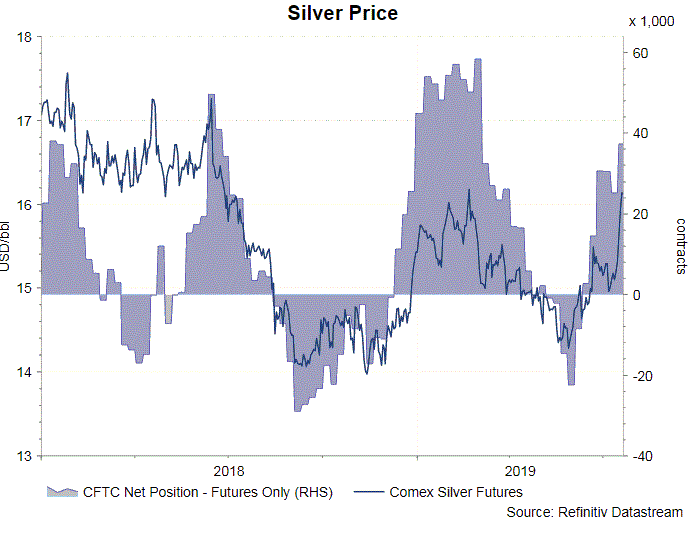
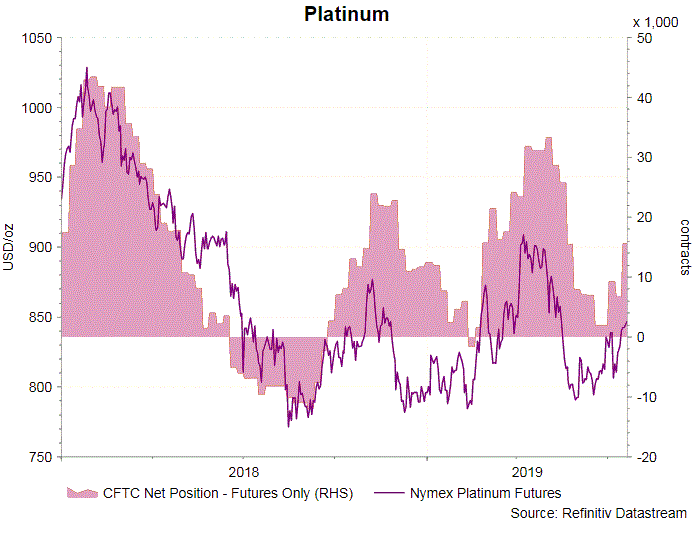
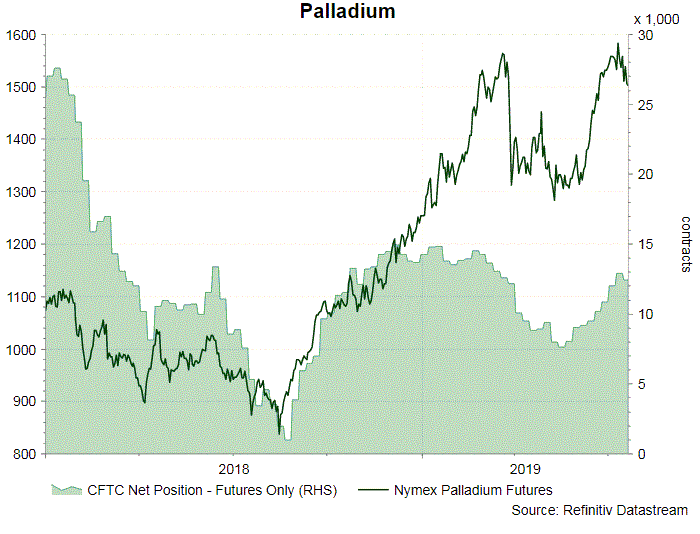
 NET LENGTH for gold futures added +738 contracts to 245 501. Speculative long positions rose +3 430 contracts, while shorts added +2 692. For silver futures, speculative long positions gained +4 369 contracts while shorts declined -7 905. NET LENGTH for silver futures soared +12 274 contracts to 37 425. For PGMs, NET LENGTH of Nymex platinum futures jumped +8 899 contracts to 15 592 while that for palladium slipped -461 contracts to 12 435.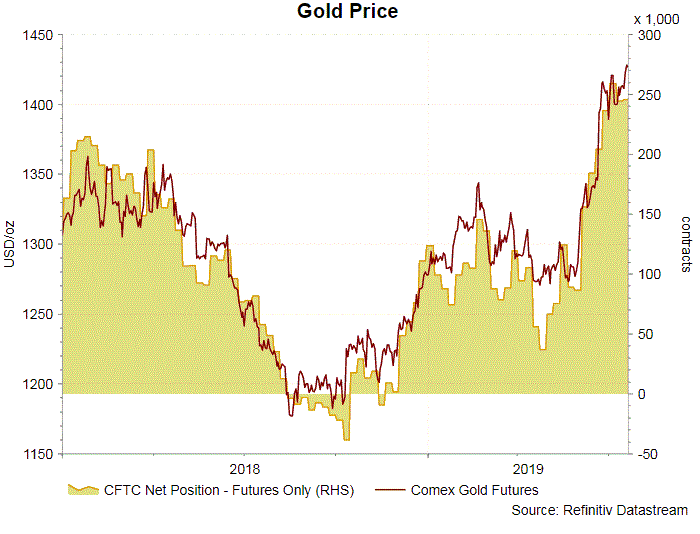
CFTC Commitments of Traders – Traders Trimmed Bets on USD as Fed Funds Rate Cut Approaches
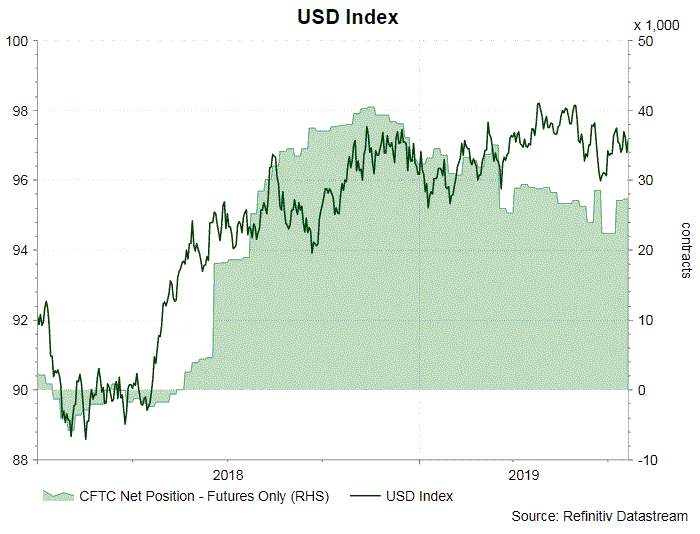
As suggested in the CFTC Commitments of Traders report in the week ended July 17, NET LENGTH in USD Index added +276 contracts to 27 332. Speculative long positions slid -27 contracts while short positions dropped -303 contracts during the week.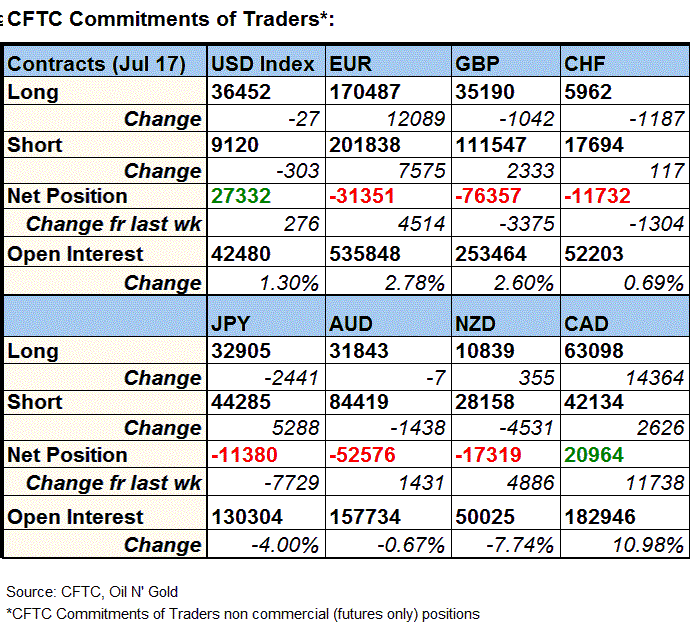
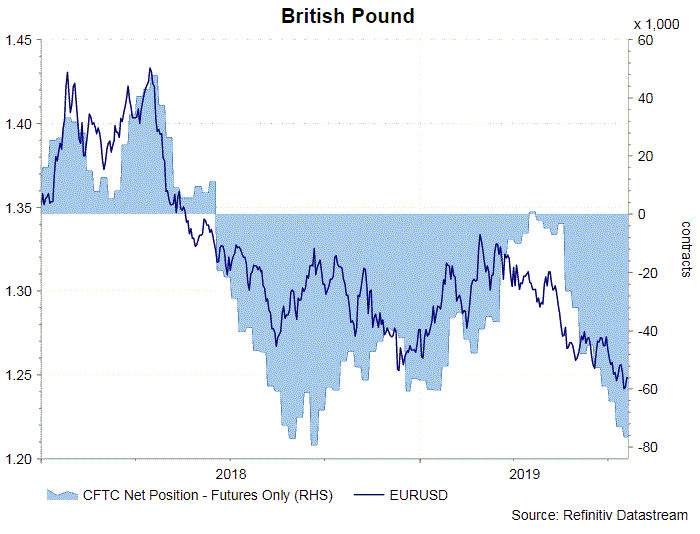
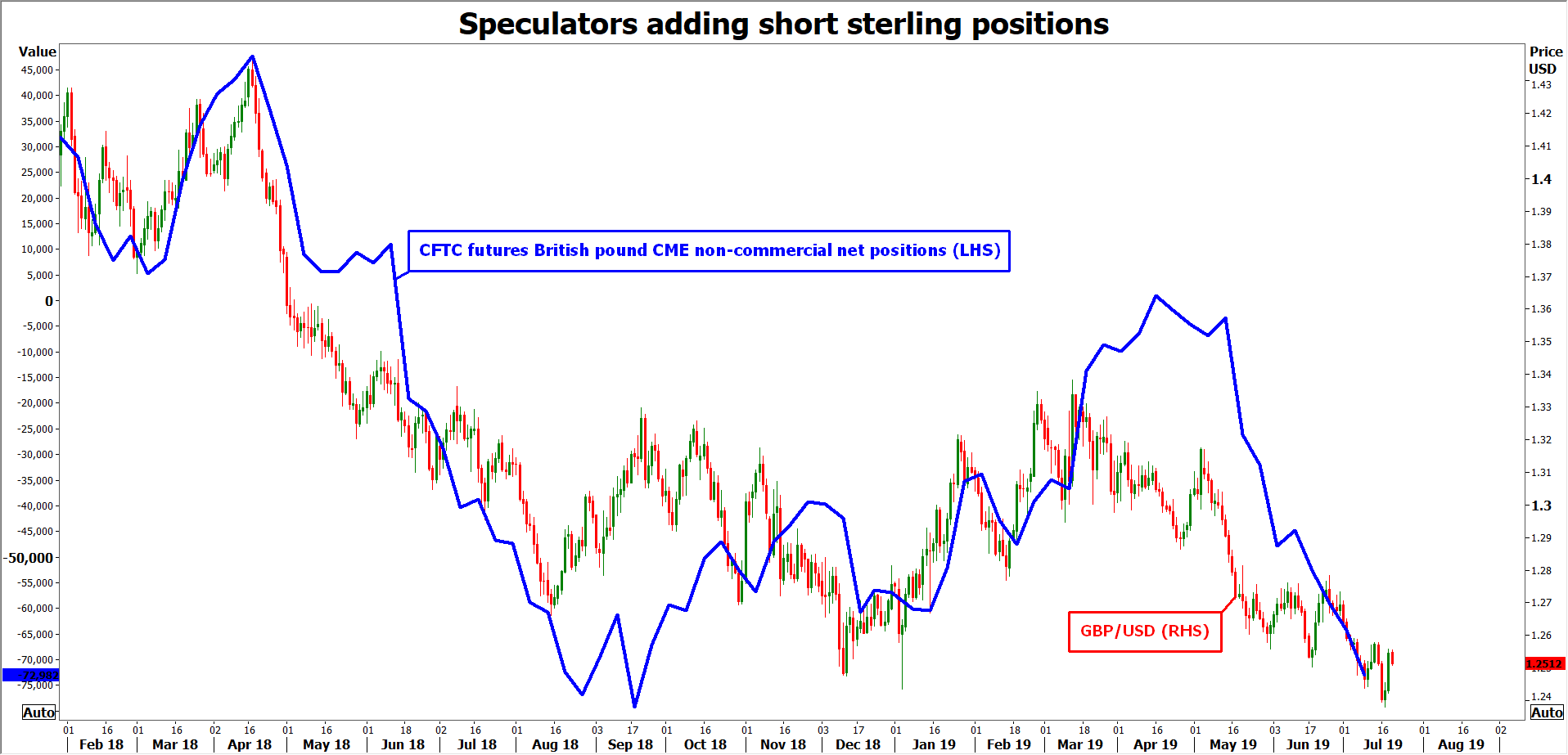
Concerning European currencies, NET SHORT for EUR futures dropped -4 514 contracts to 31 351. NET SHORT for GBP futures rose 3 375 contracts to 76 357. Speculative long positions slipped -1 042 contracts while speculative shorts gained +2 333 contracts for the week. GBP remains volatile as overwhelming support for Boris Johnson as the next Prime Minister has increased the likelihood of a no- deal Brexit, although this is no our base scenario.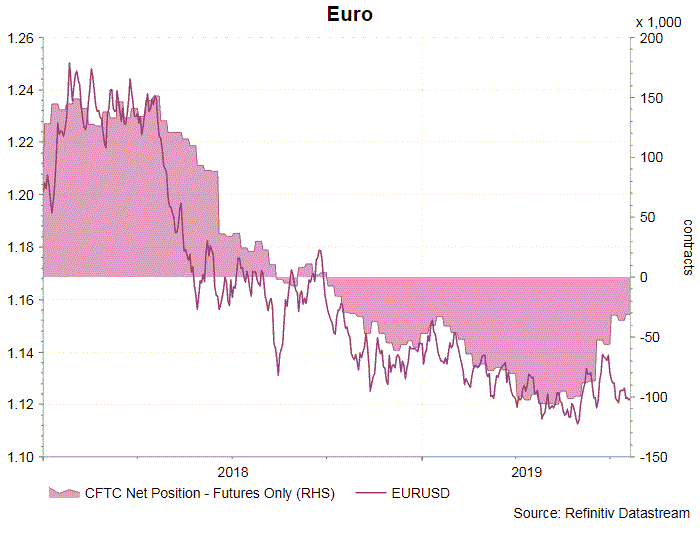
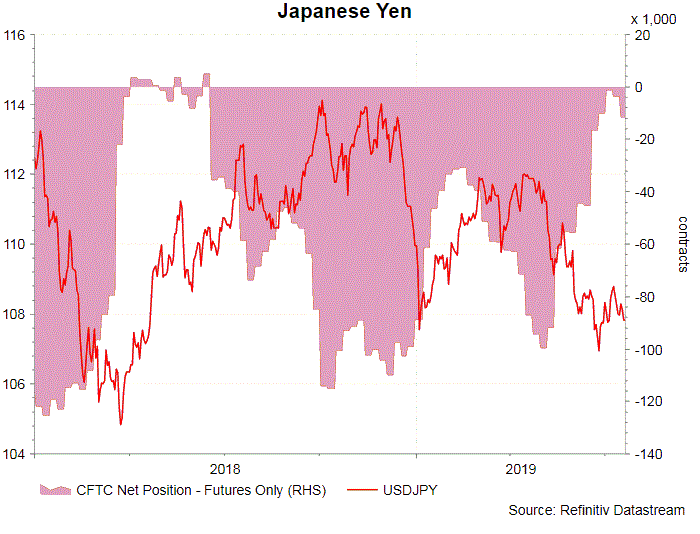
On safe-haven currencies, Net SHORT for CHF futures gained +1 304 contracts to 11 732. NET SHORT for JPY futures rose +7 729 contracts to 11 380 during the week. Speculative long positions fell -2 441 contracts while shorts gained +5 288 contracts.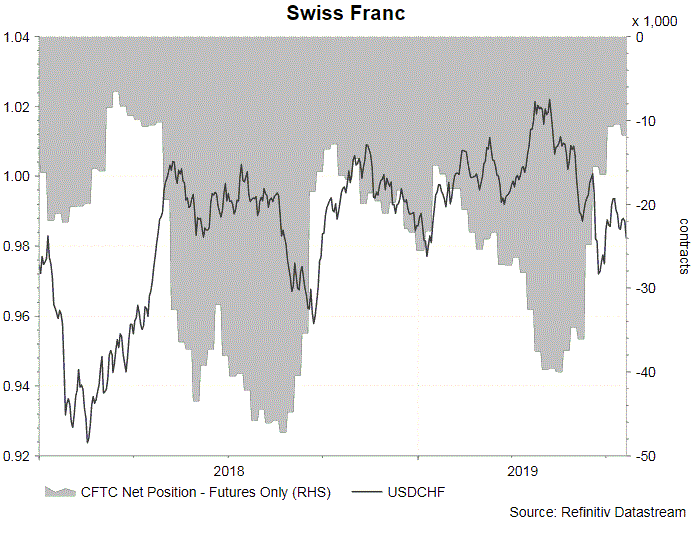
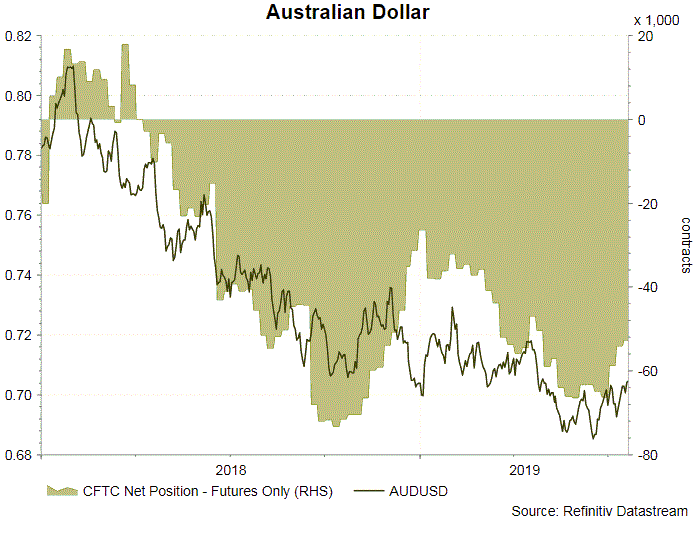
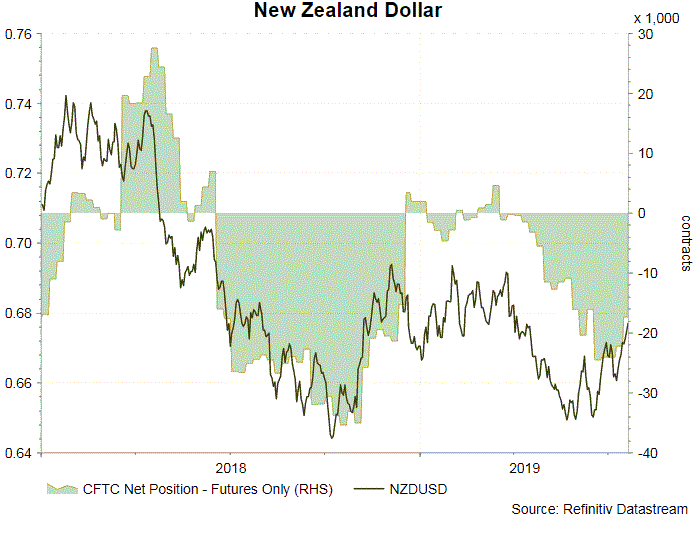
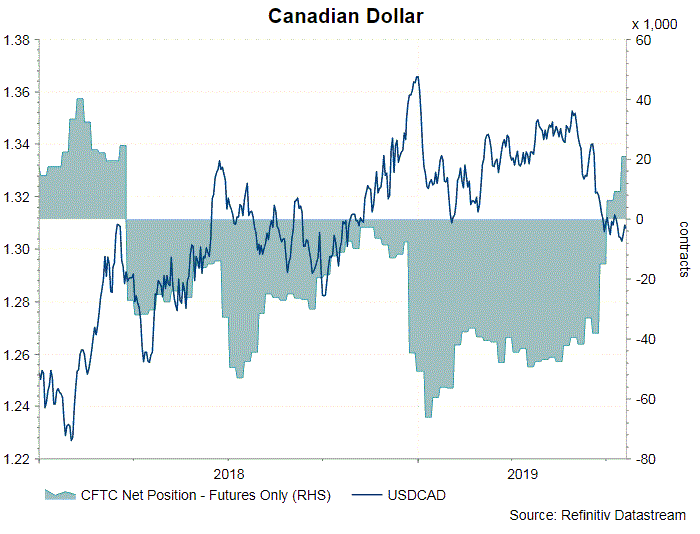
On commodity currencies, NET SHORT for AUD futures dropped -1 431 contracts to 52 576. Speculative long positions decreased -7 contracts while shorts dropped -1 438 contracts. Separately, NET SHORT for NZD fell -4 886 contracts to 17 319 contracts last week. NET LENGTH for CAD futures surged +11 738 contracts to 20 964. Recent bullish sentiment about the loonie has been driven by policy divergence.
What’s Next for Sterling as Britain Flirts with a No-Deal Brexit?
The British pound remains in the eye of the storm, as markets are waking up to the risk that a no-deal Brexit in October may be incoming Prime Minister Johnson’s preferred route. The coming week will be decisive, as the Cabinet ministers Johnson picks could reveal much about his strategy. As for sterling, the picture remains grim and a revisit of the $1.20 zone – or beyond – shouldn’t be ruled out, with signals for a General Election or a revised deal needed to turn the tide.
“Do or die”
The pain inflicted on the British currency lately has come almost entirely from Boris Johnson – who will likely become Prime Minister next week – striking a tougher tone on Brexit. Some hints from the Bank of England (BoE) that it may abandon its plans to raise interest rates probably contributed too, but most of the damage seems Brexit-related, with Boris vowing that Britain will leave the EU on October 31 with or without a deal, “come what may”.
To be sure, part of this may be political theatre intended to strengthen his negotiating hand with the EU, reminiscent of Theresa May’s famous catchphrase: “no-deal is better than a bad deal”. Alas, Johnson’s threat could be more credible. His Conservative Party has lost a lot of ground in opinion polls lately, with many voters defecting to the Brexit Party, so the next Tory leader has a strong incentive to deliver Brexit without delay or risk losing even more popular support.
No backstop, no deal
What makes the situation more problematic, is that both Johnson and Jeremy Hunt – the other remaining candidate – both declared that the Irish backstop is “dead” recently, and even rejected the concept of attaching a time limit on it, sending Cable to fresh 27-month lows.
The Irish backstop was mandatory for the EU to sign a deal, so if the next PM won’t even consider it, there may be little room for real negotiations before October. Taken at face value, this means the new UK leader needs to come up with a completely new plan that both Europe and the British Parliament can agree to in less than three months, something Theresa May was unable to do in three years.
Washington or Brussels?
For now, the first nation the new Prime Minister visits, as well as the people he surrounds himself with, will be crucial for sterling. Recent reports suggest Johnson could fly to Washington once he becomes PM to strengthen his relationship with Trump and ‘sketch out’ a US-UK trade deal, which his camp thinks will give him leverage with the EU. Yet, this could also backfire by showing that his top priority isn’t Europe, alienating the EU and thus making concessions less likely.
More importantly, the cabinet ministers he chooses could reveal how flexible he will be. If he fills the top government positions with die-hard Brexiteers, like Jacob Rees-Mogg, that would likely increase the perceived probability for a disorderly exit given their inflexible views and may thus bring sterling under renewed pressure.
Deal, no-deal, or elections
Taking a step back, a no-deal exit is still widely seen as the least likely outcome. Markets and the public alike think that if push came to shove, the British Parliament would move to block such a calamity. Unfortunately, lawmakers have limited tools with which to do so, and cannot use the same provisions they did earlier this year to stop a no-deal, as those have now expired.
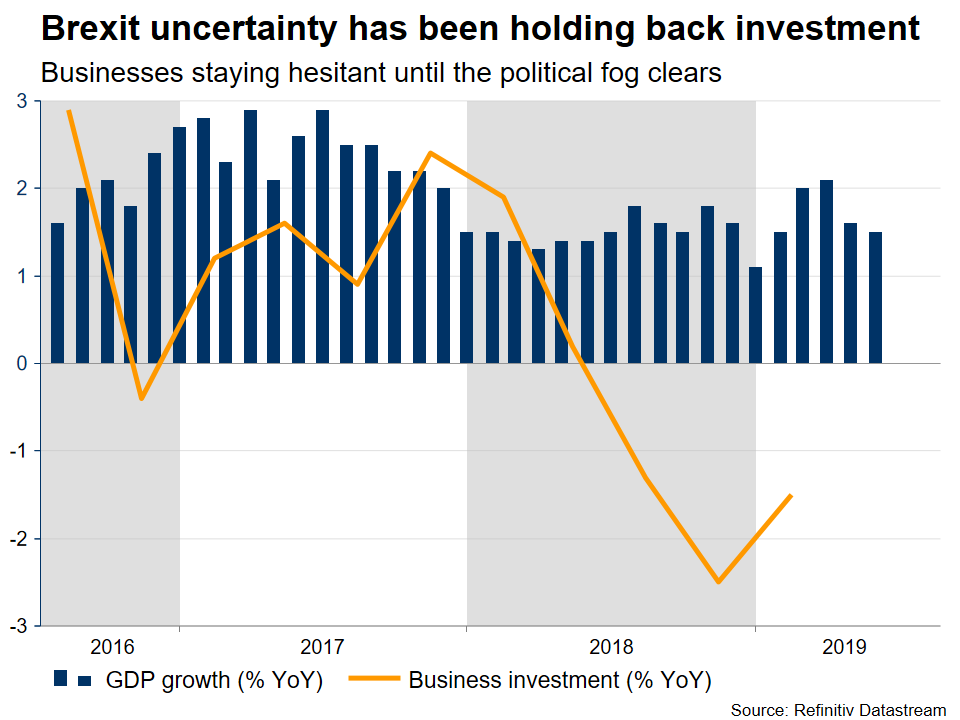
The point is that the most realistic way of averting a disorderly exit – if the new PM was set on delivering one – would be for Parliament to bring down the Government via a vote of no confidence. That is a tall task, as it would require some Conservative lawmakers to vote against their own party, though certainly possible.
Corbyn: A blessing in disguise?
In case of early elections, how would sterling react? The leader of the opposition, Jeremy Corbyn, recently threw his weight behind a second referendum – which is clearly the best-case outcome for the currency. His Labour party is also doing well in opinion polls, usually being neck-and-neck with the Tories. However, Corbyn is perceived as a threat for markets and British assets, given his support for raising taxes to fund welfare programs.
So the question is, would the promise of another public vote eclipse the ‘negatives’ of potentially higher taxes? In a nutshell, most probably.
For Parliament to collapse the government, a no-deal exit would need to be imminent. Hence, anything that averts it would likely boost the pound, particularly considering that both the BoE and the Office for Budget Responsibility expect a no-deal outcome to cause a recession. Avoiding a contraction and years of more uncertainty, on balance, outweighs the danger of higher taxes – which can be rolled back at any time.
How low can sterling go?
If disaster does strike though and the UK leaves without a deal, the burning question on everyone’s mind is how much lower the pound could fall. In this case, the BoE would also quickly slash rates and perhaps expand its QE program to support the economy, amplifying sterling’s losses.
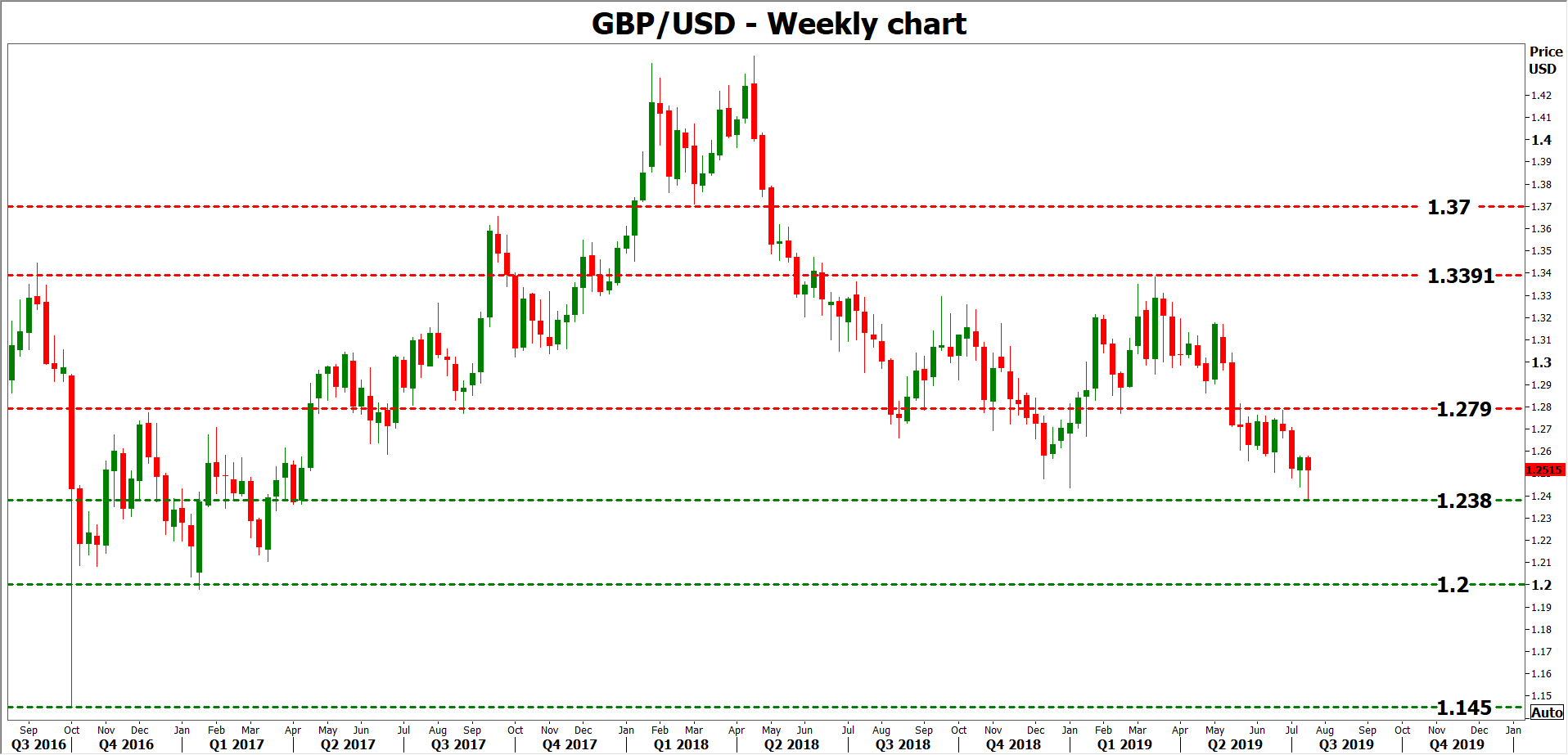
A simple look at the chart would suggest that the $1.20 area is unlikely to hold for long, and that the 2016 lows recorded after the referendum near $1.145 may offer stronger support. Beyond that, the $1.11 – $1.10 territory could put up a decent fight, as it did for a few months back in 1985, when a turbo-charged dollar was powering through other currencies.
In euro terms, parity – meaning euro/sterling trading at 1.00 – could be on the cards. Note though, that since the havoc of a disorderly Brexit would probably hurt the European economy too, the euro would likely take a serious hit itself in this scenario.
Therefore, a far better proxy for any sterling losses may be against the yen, which would also benefit from the broader risk aversion. In sterling/yen, a break below 124.00 may see the bears claw their way towards 117.00, the 2011 lows.
Can the tide turn?
In the big picture, the outlook for the pound still appears negative. The UK seems to be drifting towards a cliff edge Brexit in October and there’s not much on the horizon that might be able to stop that. For the tide to turn, investors would either need to see signs of real progress in the negotiations, which seems unlikely at this stage, or Parliament would have to trigger a General Election that fuel hopes for another referendum.
For the time being, pressure on sterling could continue to build, especially if Boris surrounds himself with hardline Brexiteers when he forms his Cabinet.
Forward Guidance: US GDP Won’t Explain Fed’s Dovishness
Next week features only a few, second-tier Canadian indicators—wholesale trade and Canada’s “other” labour market report. So attention will be on US data which is headlined by Friday’s Q2 GDP release. Normally, the first cut of US GDP would have important policy implications, especially in the week ahead of an FOMC meeting. But with markets now fully anticipating a 25 basis point cut on July 31 (and even pricing in some odds of a 50 basis point reduction) it’s hard to envision an upside surprise on GDP that would have the Fed hold rates steady. In fact, this report should highlight that a rate cut is less about the state of recent economic data and more about providing insurance against trade tensions and slowing global growth (better embodied in sentiment data and activity indicators abroad).
Consumer spending was the standout performer in Q2. This week’s data confirmed US core retail sales grew at an 8% annualized rate in the quarter, the best pace since 2005. This will contribute to household spending rebounding to a 3.8% pace, among the best gains in recent years and sufficient to dispel any concerns about the health of US consumers following a slow start to the year. Residential investment likely returned to the positive column after declining in seven of the last eight quarters (the worst stretch since the recession). Stronger resale and homebuilding activity were the supports there. Business investment should have posted a modest gain with capex shipments rising in the quarter but new orders generating concerns about Q3. All told, domestic demand is expected to post a 3.4% gain, the strongest in a year.
Headline GDP growth will be less impressive—we expect a 2.2% annualized increase as inventories swing from Q1 add to Q2 drag (i.e. some of the increase in Q2 spending came out of goods produced in earlier quarters and thus doesn’t count toward Q2 output). Net exports, which provided a nice add in the previous quarter, will have subtracted modestly from growth. The end result should be the opposite of Q1 when headline growth was strong but domestic spending soft. Again, this won’t be a report that explains why the Fed looks set to lower interest rates the following week, though it could lead those looking for a 50 basis point cut to reassess.
EURCHF Creeps Up to 23-month Low; Sellers Push Down Below the Border
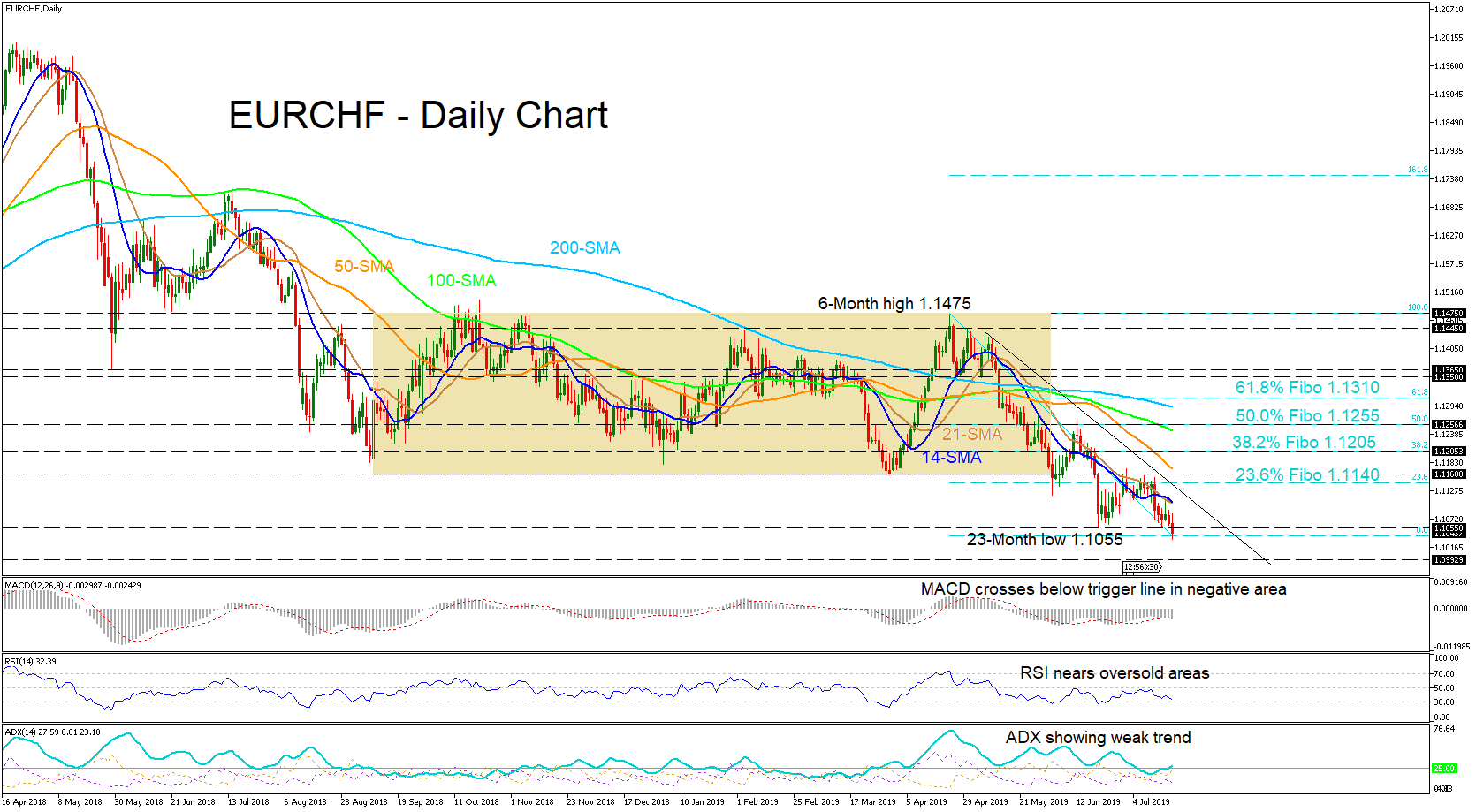
EURCHF continued southbound from a 6-month high of 1.1475 on April 23, breaking out of an 8-month period sideways move to push towards a 23-month low of 1.1055. Presently, sellers are fracturing the support trying to continue the bearish bias.
The 14-day simple moving average (SMA) is beginning a bearish cross of the 21-day SMA, whereas the long-term SMAs coincide with the down move. The MACD has crossed below the trigger line and the RSI approaches the 30 level, both in negative areas. The ADX is showing a weak trend now.
For a negative scenario, the sellers would need to continue the momentum to close below the 1.1055 level and propel the price to test the support of 1.0993. A successful fracture would thrust the pair further down to the 25-month low of 1.0831.
To the upside, a close higher after the false break of the 23-month low of 1.1055, with a move up past the short-term SMAs and then the downtrend line, would have the price test a break above the 23.6% Fibo of the down leg from 1.1475 to 1.1055, of 1.1140, and near the resistance of 1.1160. Further moves north would tackle the long-term SMAs and higher Fibonacci levels, but a break above 1.1475 would ultimately turn the outlook to bullish.
Summarizing, the bearish bias seems to be outweighing any present evaporated bullish outlook.
Week ahead – ECB Edges Closer To More Stimulus, US Reports Q2 GDP, UK To Get New PM
The European Central Bank is expected to steal the limelight from the Federal Reserve next week as it meets to discuss fresh stimulus measures for the Eurozone's troubled economy. But the Fed will still be on investors' minds as the preliminary report on US GDP growth in the second quarter could determine whether it opts for an aggressive rate cut later this month. Meanwhile, the pound's rollercoaster ride is expected to extend into next week as the result of the Conservative party leadership contest is announced.
ECB to signal policy easing
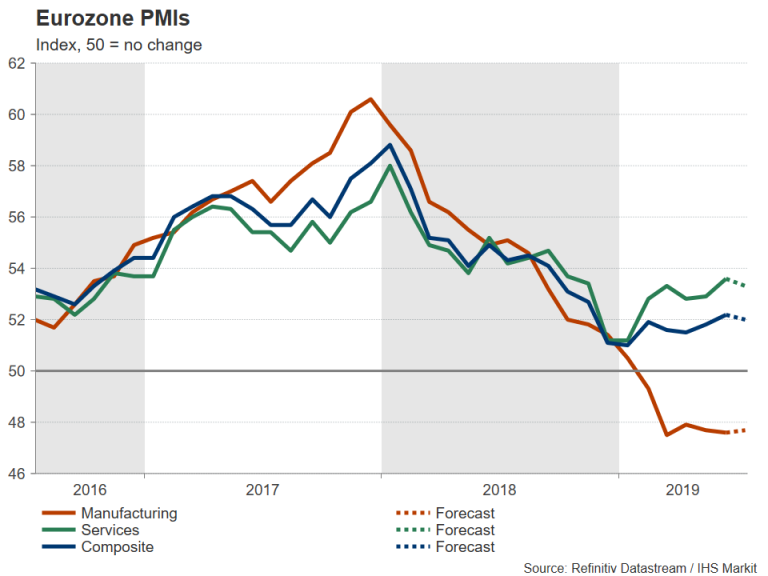
As markets anxiously await a possible surprise cut in interest rates by the European Central Bank on Thursday, the flash Eurozone PMIs for July will be grabbing the headlines on Wednesday amid mixed signals about the euro area economy. The Eurozone's composite PMI – seen as a strong indicator of GDP growth – has been inching higher in recent months on the back of an improving services sector. However, the manufacturing PMI has been stuck in negative territory, weighed by increased trade and Brexit uncertainty. There are concerns that the manufacturing weakness could soon spill over into the broader economy, so further marginal increases in the composite PMI are unlikely to be reassuring to policymakers. In July, the composite is forecast to slip 0.2 percentage points to 52.0.
Traders will also be watching business survey data from the bloc's largest economy. Germany's Ifo business climate index will be monitored on Thursday before attention turns to the ECB meeting.
The ECB is expected to keep monetary policy unchanged on Thursday but is widely anticipated to update its forward guidance to signal some form of easing at its next meeting in September. Futures markets are telling there's a near 50% probability that the ECB will trim rates by 10 basis points next week, while a reduction in September is fully priced in. Many analysts think the ECB will also restart its QE programme to fight persistently low inflation and a deteriorating economic outlook.
Should a rate cut come as early as next week, the euro is likely to skid lower and breach its recent support in the $1.1180-90 region.
Light calendar in Asia
Economic data will be scarce in Asia with only the manufacturing PMIs having the potential to be market moving. Preliminary manufacturing PMI prints for July are due from Australia and Japan on Wednesday. The Australian dollar is likely to remain on the front foot versus the US dollar if the PMI holds comfortably above the 50-neutral level. In Japan, another PMI reading below 50 would support bets of Bank of Japan easing in the near future. However, the bears will find it difficult to pull the yen lower if the US earnings season continues to heighten concerns about the growing negative impact of the Sino-US trade war on corporate profits, keeping risk aversion elevated.
Boris Johnson expected to become new UK prime minister
The UK will also have a quiet week on the data front but in the political sphere, things will be far from subdued. The CBI's survey on retail sales (Tuesday) and factory orders (Thursday) will be the only important releases and all eyes will instead be on the outcome of the Conservative leadership election. The results of the party vote are due to be announced on Tuesday and Boris Johnson is the strong favourite to replace Theresa May as prime minister. Johnson's opponent – Jeremy Hunt – is not seen to have gained enough ground to close the gap, but with not a lot differentiating their position on Brexit, a surprise win for Hunt is unlikely to provide a significant boost to the pound.
Given that many traders think the leadership race is already a foregone conclusion, market reaction may be limited, and the attention will be on who will make up the new Cabinet and what will Johnson's first move to the EU be as PM. Some hints of compromise on the part of the European Union this week as well as a fresh attempt by British MPs to prevent Parliament from being suspended helped sterling rebound from two-year lows against the dollar. Further short-term gains are possible if Johnson adopts a conciliatory tone as well.
US GDP in focus ahead of Fed decision
The advance GDP report for the second quarter will be the focal point for the dollar, which could prove critical for the US currency as investors are split on the likelihood of a 50-bps rate cut by the Fed at the next meeting. Ahead of the GDP figure, though, the housing market will fall under the spotlight amid signs of renewed weakness in the sector. Starting the week on Tuesday are the monthly home price index (May) and existing home sales (June), followed by new home sales (June) on Wednesday. Data released in the past week showed housing starts declined in June, while building permits fell to a two-year low. More poor numbers on housing would strengthen the argument for bold policy action in July.
Also due on Wednesday are the flash July PMIs by IHS Markit and durable goods orders. Durable goods orders are forecast to have increased by 0.5% month-on-month in June, recovering partially from the 1.3% drop of the prior month.
On Friday, the latest GDP estimate will be eyed as analysts and policymakers debate the need for a hefty 0.50% cut in interest rates when the Fed meets at the end of this month. The odds for such a move have risen to around 45% and have been see-sawing with the conflicting incoming data. The GDP report is not expected to be an exception and there could be more volatility for the dollar if there's big surprises in the numbers. The US economy is projected to have expanded by an annualized rate of 1.9% in the three months to June, a marked slowdown from the first quarter's 3.1% rate.
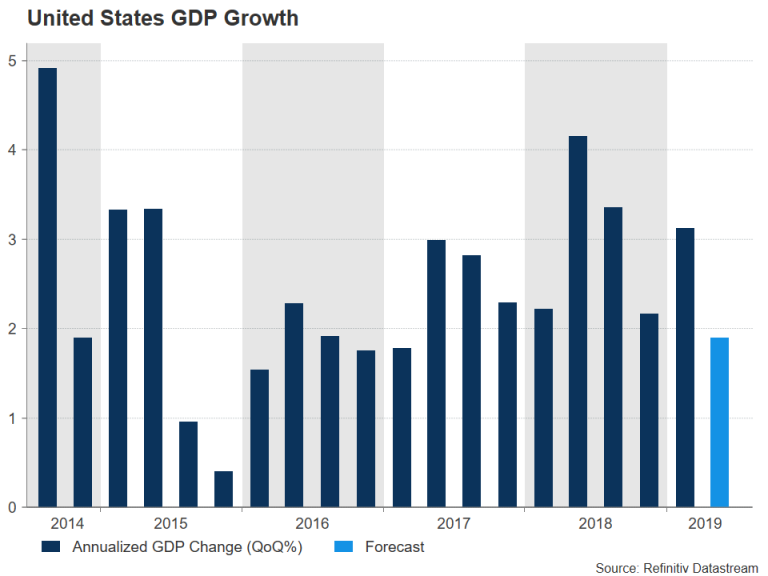
But following the stronger-than-expected retail sales figures earlier this week, a beat in Q2 growth forecasts is possible. If combined with an overly dovish ECB, the dollar could reverse some of this week's declines.
Sunset Market Commentary
Markets
Core bond investors took the day off today. Bunds and US Treasuries treaded water throughout this week’s final trading session apart from a corrective bear flattening move early in Asian dealings on the US Treasury markets. Investors tilted heavily yesterday on dovish NY Fed Williams comments, frontrunning on a 50 bps July rate cut. The NY Fed later sent out a clarifying statement that his quotes shouldn’t be interpreted in light of the July meeting. That statement triggered this morning’s correction. Voting St Louis Fed Bullard reiterated today that a 25 bps rate cut will do for now. US yields rise by 4.8 bps (2-yr) to 1.1 bp (30-yr) on a daily basis. Changes on the German yield curve range between -1.8 bps (5-yr) and +0.1 bp (30-yr). 10-yr yield spreads vs Germany are unchanged with Greece (+4 bps) and Italy (+8 bps) underperforming. Rumours hint that the Italian deputy PM and Lega leader might pull the plug on the government next week, triggering snap elections and banking on his (party’s) popularity (despite “Russiagate”). Italian law stipulates that 45-70 days are needed between elections being called and the actual vote.
Yesterday evening and overnight, it looked that some Fed-heavyweights including NY Fed Williams were laying the groundwork for aggressive Fed easing in the near future, at the same time paving the way for a soft dollar going into the July 30-31 Fed meeting. However, the Fed communication clearly lacks coordination as some of the yesterday’s dovish interpreted signals were almost immediately downplayed/amended. So, the case for any more pronounced USD decline proved premature, especially as next week’s ECB meeting contains some ‘dovish risks’ too. EUR/USD reversed yesterday’s intraday rebound and is again trading in the 1.1225 area. USD/JPY also rebounded as is currently changing hands in the 107.75 area.
Some tentative constructive headlines on Brexit and solid UK retail sales yesterday caused investors to find themselves being positioned too much sterling short after recent protracted slide the UK currency. Sterling rebounded both against the euro and the dollar, even as the first Brexit steps of the new UK PM remain highly unpredictable. Today, sterling gained slightly further ground against the euro, but struggled against an overall stronger dollar. UK monthly budget data showed a growing/higher than expected UK budget deficit, even at the time when the new PM still has to unveil his fiscal stimulus plans. However, for now, fiscal policy isn’t an issue for sterling trading yet. The outcome of the ballot for the new UK Conservative party leader/PM next week remains the next point of reference for sterling trading. EUR/GBP declined a few more ticks today, currently trading in the 0.8975 area. At the same time, cable is drifting back lower in the 1.25 big figure.
News Headlines
Germany’s Angela Merkel continues “to support the goal of a balanced budget”, she said during her summer news conference in Berlin. Germany is facing increasing pressure to loosen the fiscal reigns as it suffers from an economic slowdown with little signs of a trend reversal yet.
Belgium consumer confidence advanced marginally from levels seen at end 2016 (-7) to -6 on an improvement in the economic outlook and expected saving capacity. After falling dramatically end 2018, consumer confidence has been more or less stable since.
US president Trump expressed discontent with the Fed’s policy yet again, tweeting that the Fed’s policy led the US to pay higher interest rates “than countries that are no match for [them] economically” when they in fact should be lower. He urged the central bank to “correct” the situation.
Trump continues his pressure on Fed
Trump continued his pressure on Fed, ahead on July 30-31 FOMC meeting. In his tweet, he blamed that "Because of the faulty thought process we have going for us at the Federal Reserve, we pay much higher interest rates than countries that are no match for us economically."
Also, he praised New York Fed President John Williams' as 100% correct that "Fed raised far too fast and too early". Trump urged Fed to "stop with the crazy quantitative tightening". And "This is our chance to build unparalleled wealth and success for the U.S., GROWTH, which would greatly reduce % debt. Don't blow it!"
https://twitter.com/realDonaldTrump/status/1152197164883435521
https://twitter.com/realDonaldTrump/status/1152211072851619840
https://twitter.com/realDonaldTrump/status/1152212059263819777
Canada Retail Sales Soft Again in May
- Retail sales declined 0.1% in May.
- Excluding prices, sales were down 0.5%.
The details of the May report don’t look quite as soft as the headline. Most of the month-over-month decline was attributed to an unusually large 2.0% drop in food & beverage store sales that will probably reverse at some point. Sales increased in 7 of 11 subsectors – including another sizeable monthly rise in sales at furniture stores. That latter increase probably has something to do with stabilization in housing markets in recent months.
To be sure, overall retail purchases have still been on the soft side. Sale volumes were down 1% from a year ago and are tracking little if any increase in Q2 from Q1. But other developments have arguably been more favourable for the near-term household spending outlook. Labour markets remain solid. The unemployment rate is still sitting around multi-decade lows and wage growth has strengthened in Q2. And consumers do not seem to be as pre-occupied as businesses with lingering risks to global growth from US-China trade tensions. Consumer confidence ticked up to its highest level since January 2018 in July. Obligated household debt payments are still taking up a significantly larger share of household incomes than they were a year ago – but the dramatic pullback in interest rates in recent months means the debt service ratio might not rise much further if at all. Spending growth is still likely to be subdued in Canada compared to years past, but downside risks have arguably eased compared to a few months ago.
EUR/USD Mid-Day Outlook
Daily Pivots: (S1) 1.1228; (P) 1.1254; (R1) 1.1303; More...
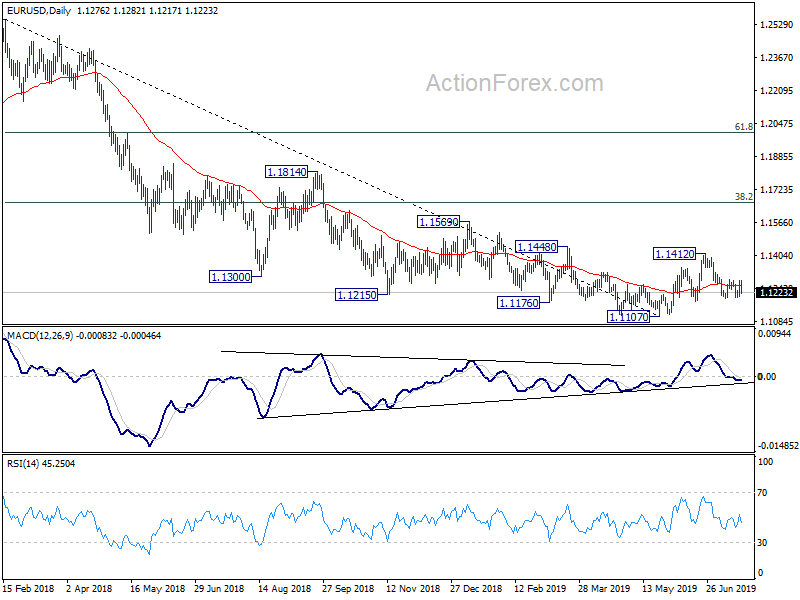
Intraday bias in EUR/USD remains neutral for the moment as range trading continues. On the downside, break of 1.1193 will resume the fall from 1.1412 to retest 1.1107 low. On the upside, above 1.1285 resistance will turn bias back to the upside for 1.1412 resistance.
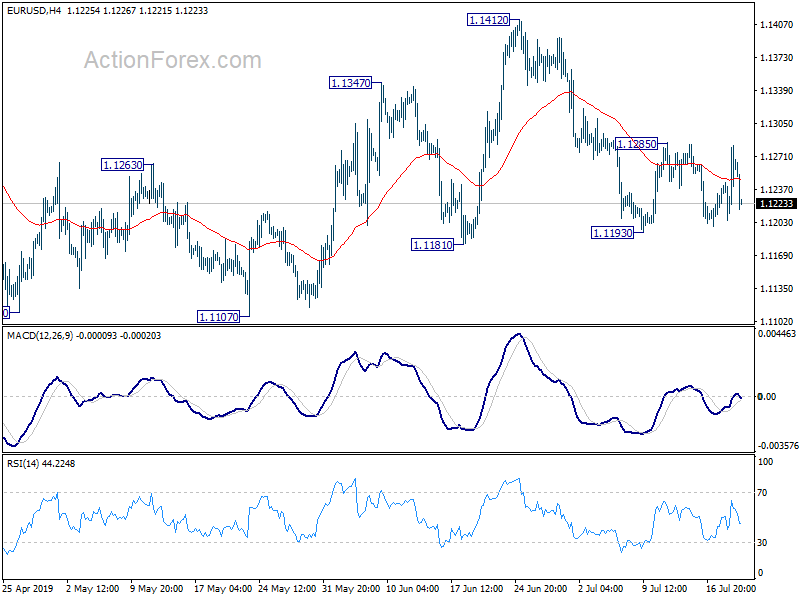
In the bigger picture, bullish convergence condition in daily and weekly MACD suggests that 1.1107 is a medium term bottom. However, rejection by 55 EMA retains medium term bearish. Outlook will be neutral for now. On the downside, break of 1.1107 will resume the down trend from 1.2555 (2018 high) to 78.6% retracement of 1.0339 to 1.2555 at 1.0813. Meanwhile, break of 1.1412 will resume the rebound to 38.2% retracement of 1.2555 to 1.1107 at 1.1660.