Sample Category Title
EUR/JPY Weekly Outlook
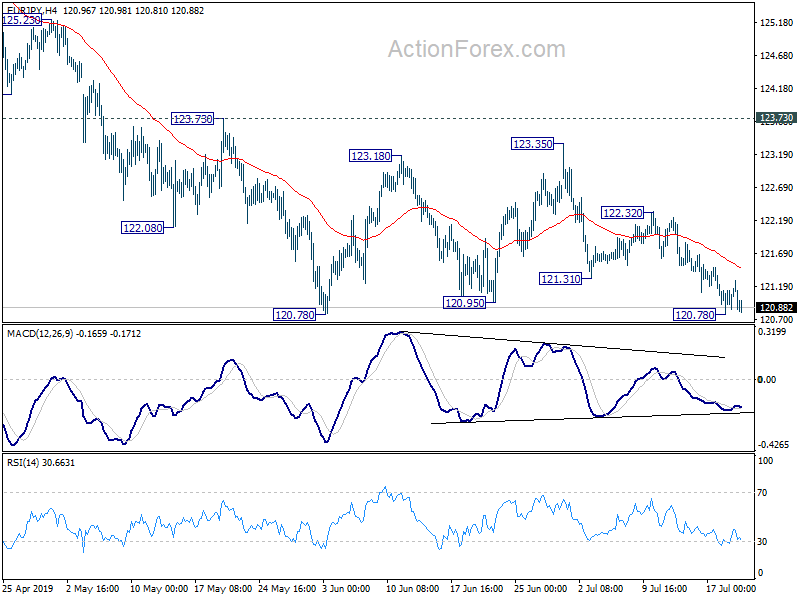
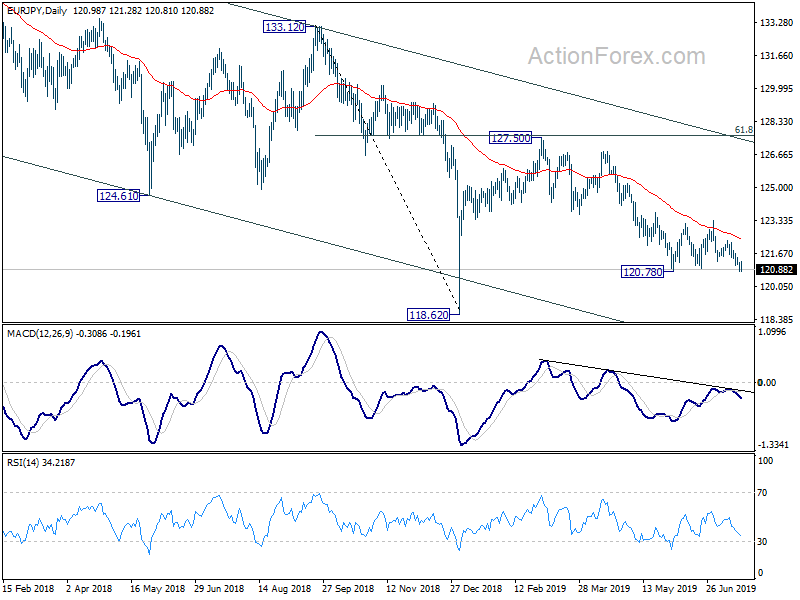
EUR/JPY dropped further to 120.78 last week but turned sideway after touching 120.78 support. Initial bias is neutral this week first. Larger decline from 127.50 should be ready to resume too. Firm break of 120.78 will confirm and target 118.62 low. On the upside, break of 122.32 resistance will extend the consolidation from 120.78 with another rise towards 123.35 resistance instead.
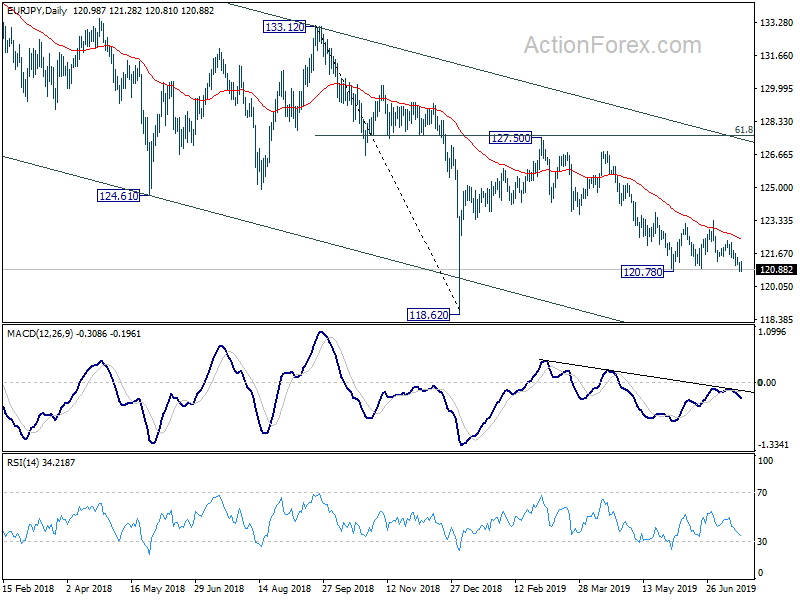
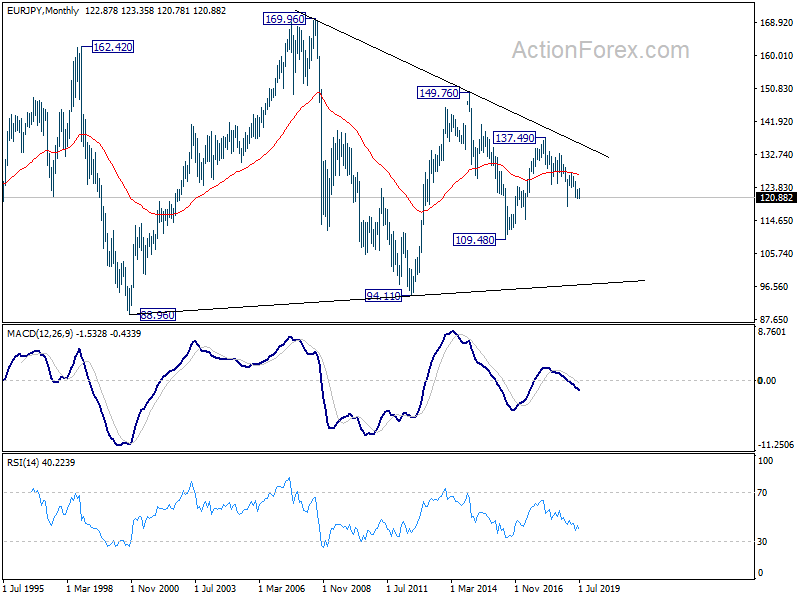
In the bigger picture, down trend from 137.49 is still in progress with the cross staying inside long term falling channel. Break of 118.62 will extend the fall to 109.48 (2016 low). On the upside, break of 127.50 resistance is needed to be the first sign of medium term reversal. Otherwise, outlook will remain bearish in case of strong rebound.
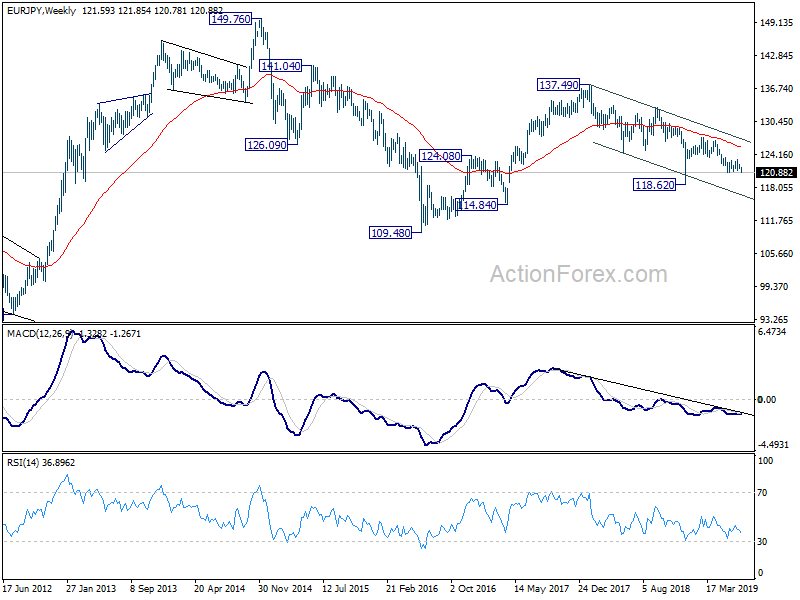
In the long term picture, EUR/JPY is staying in long term sideway pattern, established since 2000. Fall from 137.49 is seen as a falling leg inside the pattern. Break of 118.62 will extend this falling leg through 109.48 (2016 low). With EUR/JPY staying below 55 month EMA, this is now the preferred case.
EUR/GBP Weekly Outlook
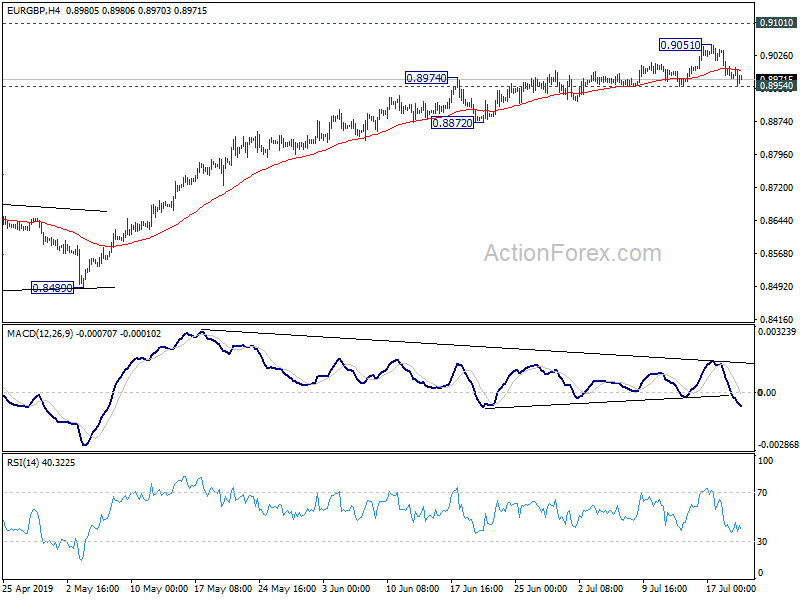
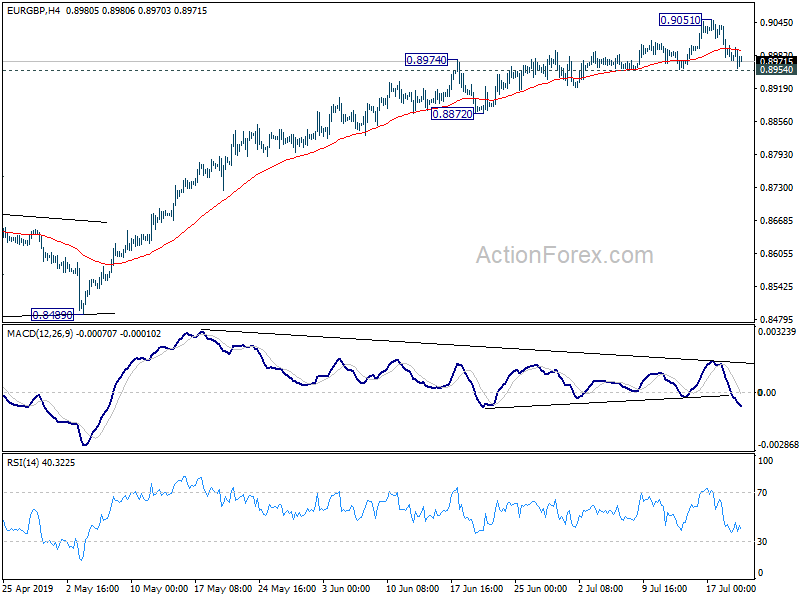
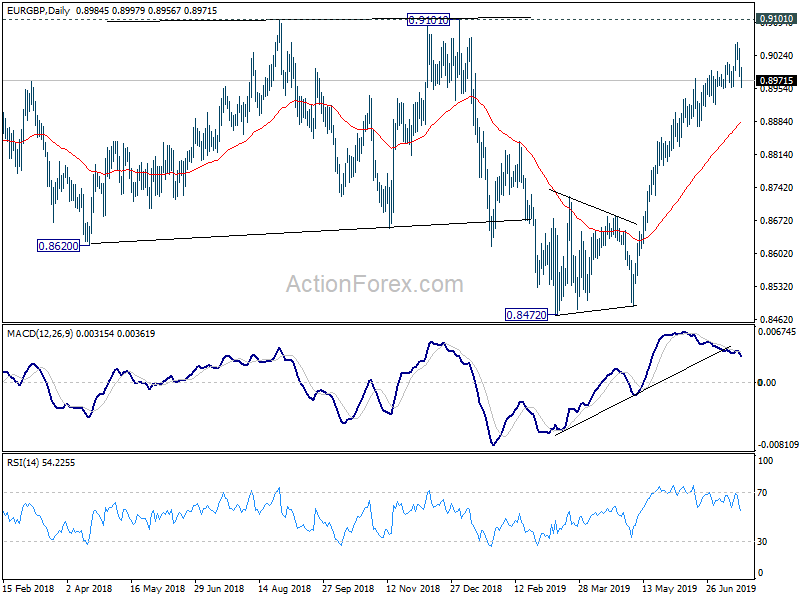
EUR/GBP edged higher to 0.9051 last week but retreated sharply since then. Initial bias remains neutral this week first. With 0.8954 minor support intact, further rise cannot be ruled out. But upside momentum is clearly diminishing as seen in 4 hour and daily MACD. Upside should be limited by 0.9101 key resistance to bring reversal. On the downside, break of 0.8954 support should confirm short term topping. In this case, deeper pull back could be seen to 55 day EMA (now at 0.8882) first.
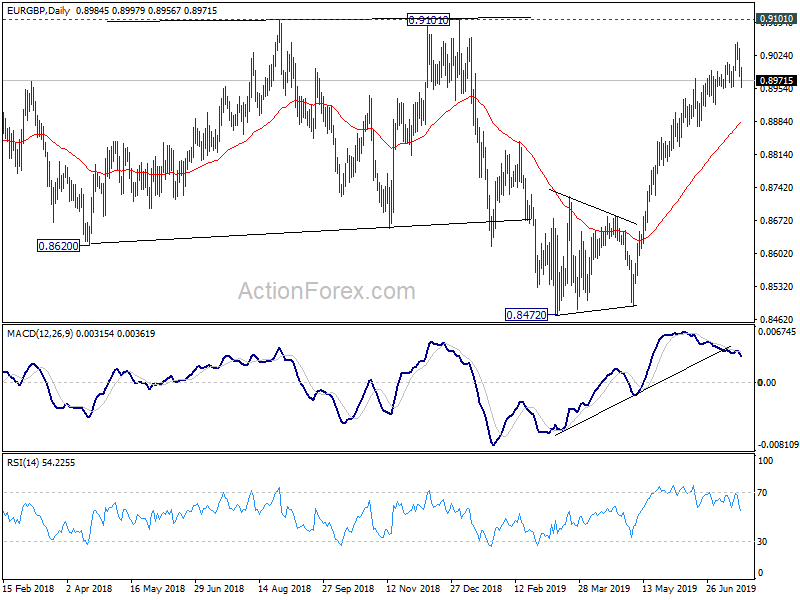
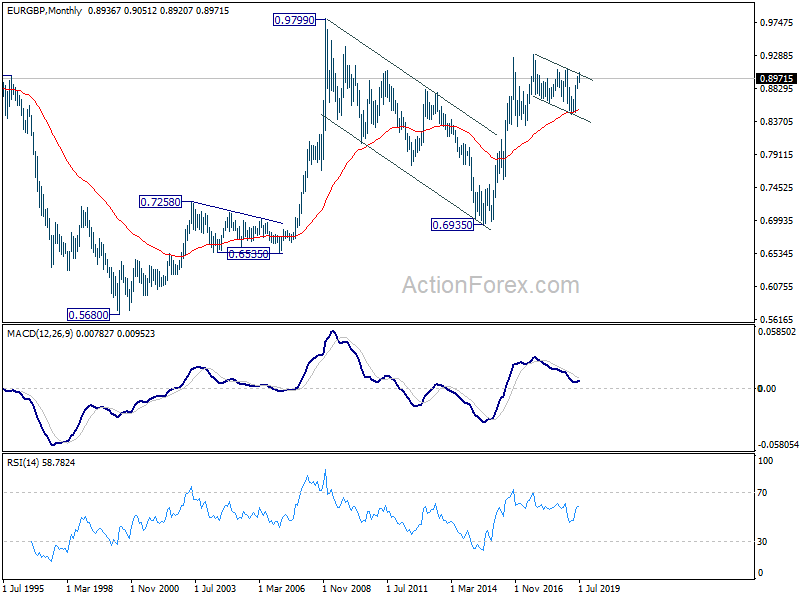
In the bigger picture, medium term decline from 0.9305 (2017 high) is seen as a corrective move. No change in this view. Current development argues that it might have completed with three waves down to 0.8472, just ahead of 38.2% retracement of 0.6935 (2015 low) to 0.9306 at 0.8400, after hitting 55 month EMA (now at 0.8545). Decisive break of 0.9101 resistance will confirm this bullish case. However, firm break of 55 week EMA (now at 0.8801) would possibly extend the correction another another fall to below 0.8472 before completion.
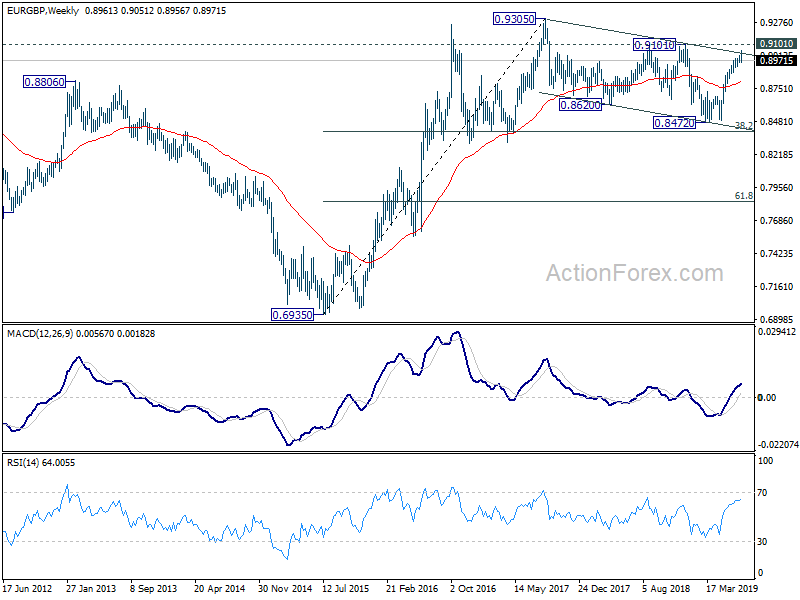
In the long term picture, we're holding on to the view that rise from 0.6935 (2015 low) is resuming the up trend from 0.5680 (2000 low). As long as 38.2% retracement of 0.6935 to 0.9306 at 0.8400 holds, further rise should be seen through 0.9305 to 0.9799 and above down the road.
EUR/AUD Weekly Outlook
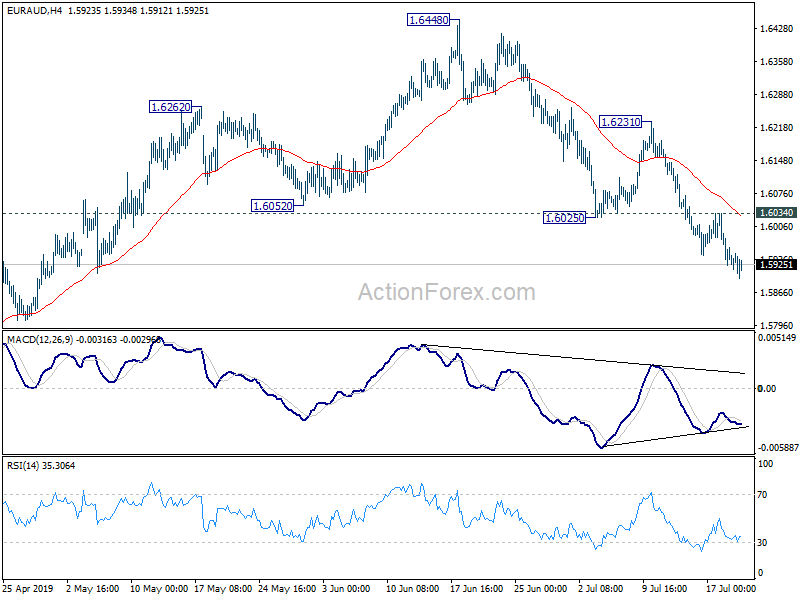
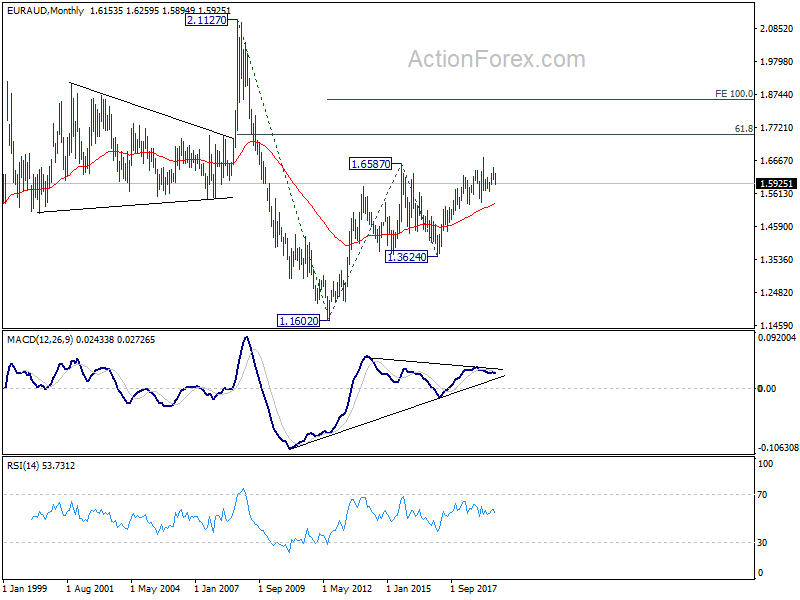
EUR/AUD's fall from 1.6448 continued last week and outlook is unchanged. Initial bias remains on the downside this week first. Decline from 1.6448 is seen as the third leg of the consolidation pattern from 1.6765 high. Next target will be 1.5683 support and below. On the upside, above 1.6034 minor resistance will turn intraday bias neutral and bring consolidations first.
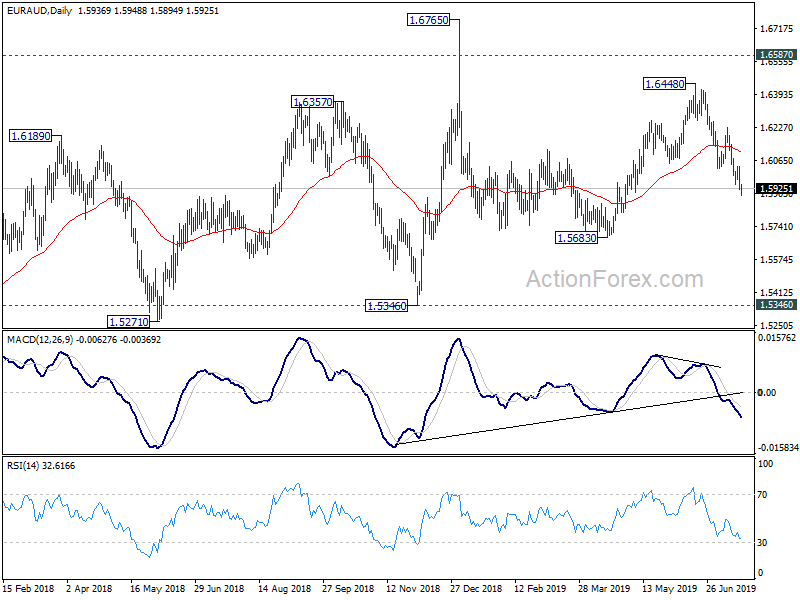
In the bigger picture, as long as 1.5346 support holds, outlook will still remain bullish. Up trend from 1.1602 (2012 low) is expected to resume sooner or later. Break of 1.6765 will target 61.8% retracement of 2.1127 (2008 high) to 1.1602 at 1.7488 next. However, firm break of 1.5346 key support will indicate trend reversal and turn outlook bearish.
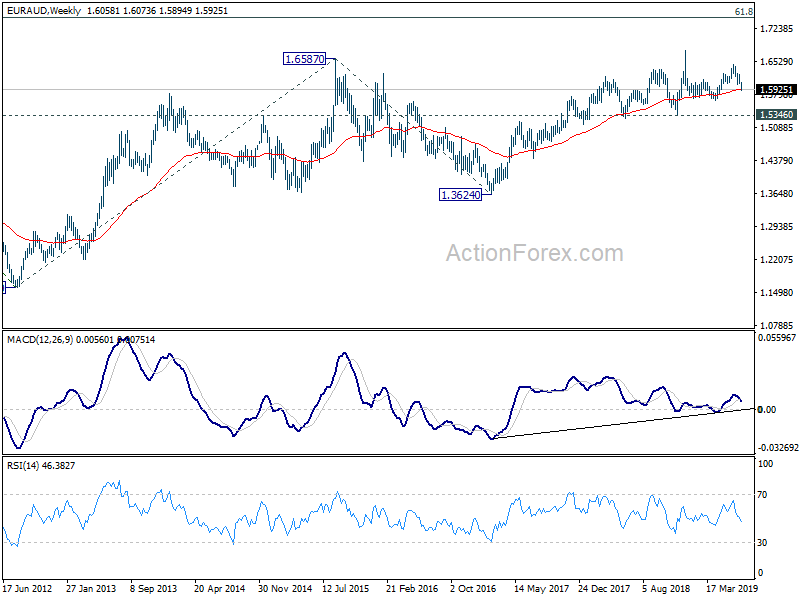
In the longer term picture, the rise from 1.1602 long term bottom (2012 low) is still in progress for 61.8% retracement of 2.1127 to 1.1602 at 1.7488. This will remain the favored case as long as 1.5346 remains intact.
EUR/CHF Weekly Outlook
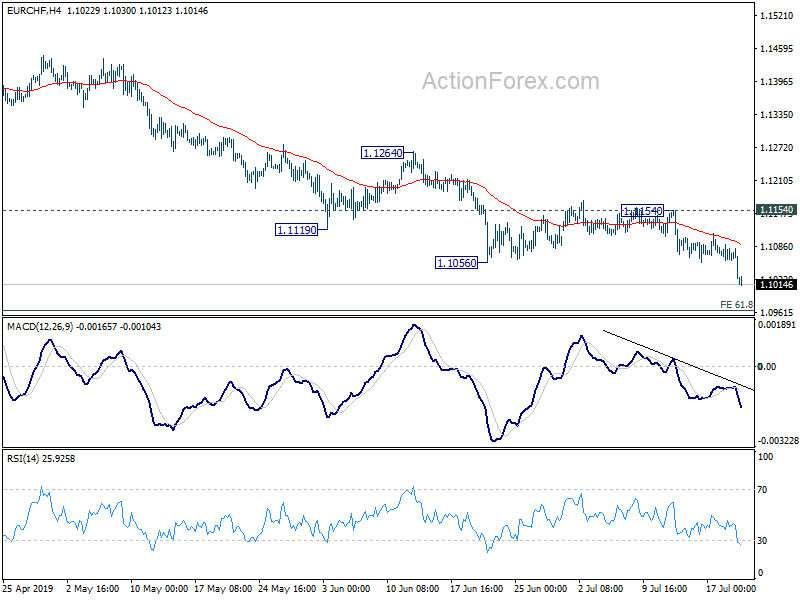
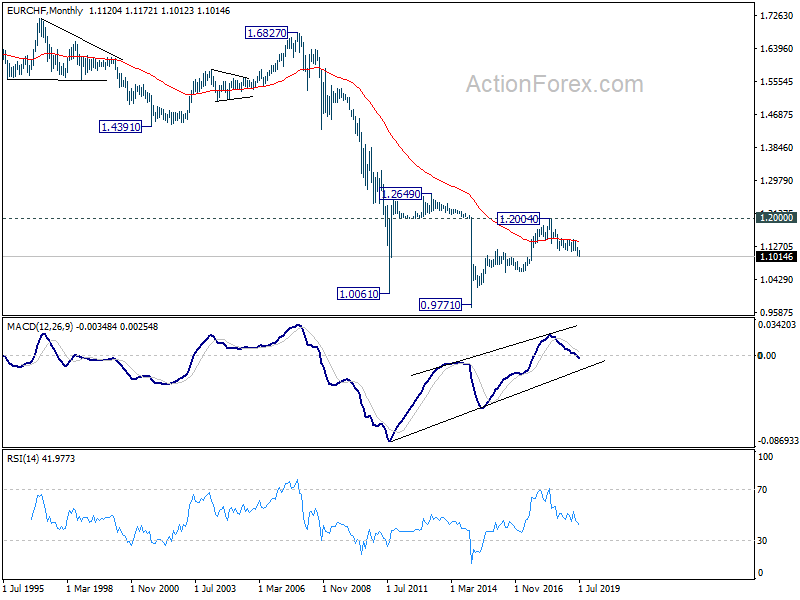
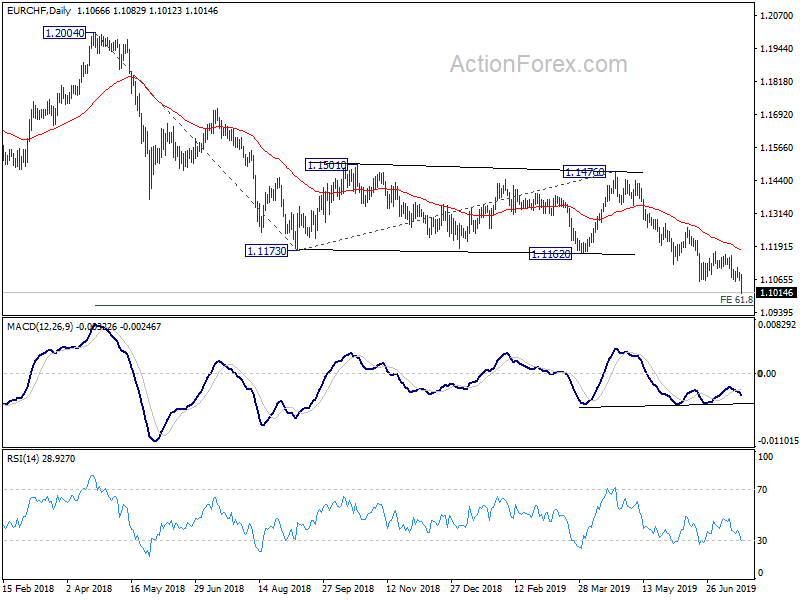
EUR/CHF's down trend resumed last week by braking 1.1056 to as low as 1.1012. Initial bias remains on the downside this week. next target is 61.8% projection of 1.2004 to 1.1173 from 1.1476 at 1.0962. On the upside, break of 1.1154 resistance is needed to signal short term bottoming. Otherwise outlook will remain bearish in case of recovery.
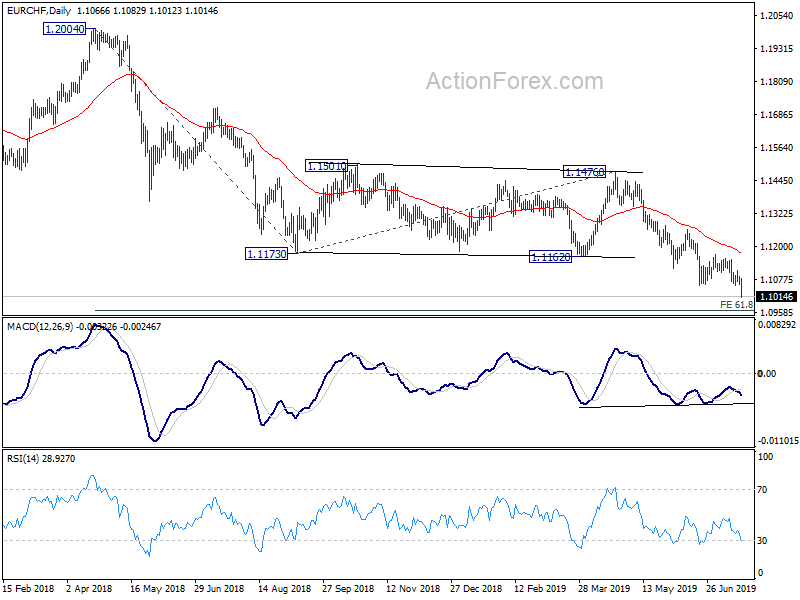
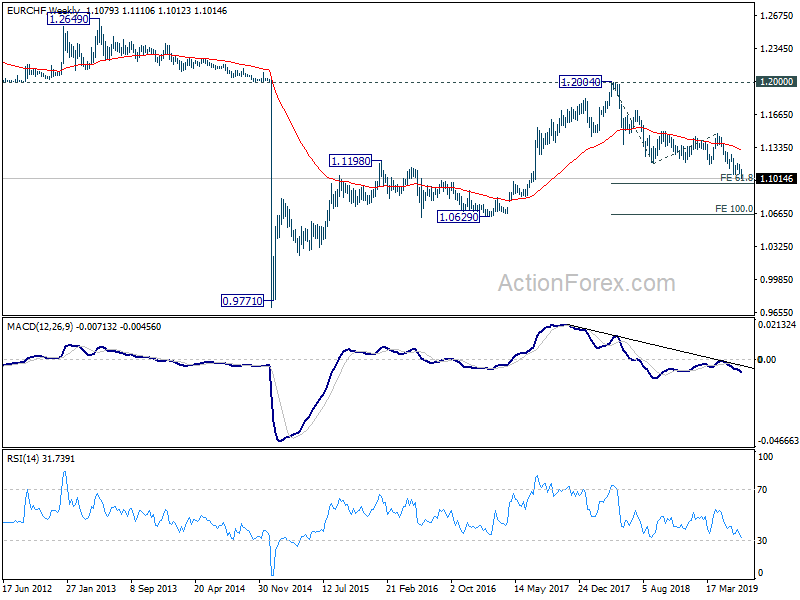
In the bigger picture, current development firstly suggests that down trend from 1.2004 is still in progress. More importantly, it's likely a long term down trend itself, rather than a correction. Outlook will remain bearish as long as 1.1476 resistance holds. EUR/CHF could target 1.0629 support and below.
Sterling Might Bottom While Euro Would Stay Pressured, Dollar Indecisive
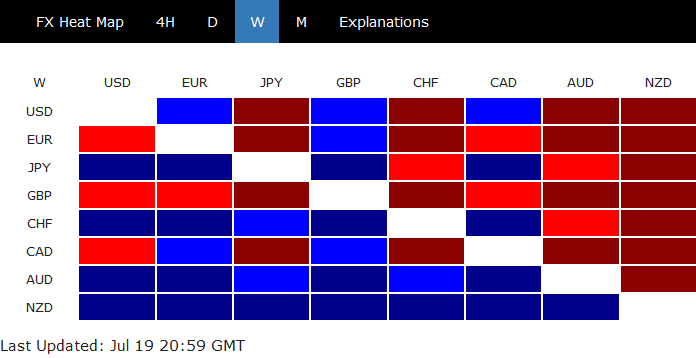
Sterling, Dollar and Euro were the major focuses last week as they took turn in suffering selloffs. The Pound was pressured by increasing worries over no-deal Brexit. While it ended the week as the weakest one, late recovery argues that the worst could be past for Sterling for the near term. Similarly, Dollar ignored solid economic data and declined on Fed cut expectations. But then, there was no follow through selling towards the end of the week. Late fall in Euro, on the other hand, suggested that more downside is in favor in the common currency for this week.
In other markets, US stocks seemed to have topped out in near term with DOW, S&P 500 and NASDAQ pulling back from historical highs. FTSE and CAC stayed in familiar range while DAX gyrated slightly lower. Nikkei ended slightly lower after a roller coaster ride. Gold broke out of range to high as high 1452.94 but pulled back into range at close. WTI crude oil's pull back from 60.93 was deeper than expected and looks heading back to 50 handle.
Pound pressured by no-deal Brexit worries, rebounded on strong data
Sterling was sold off initially on increasing worry over no-deal Brexit. According to a Reuters July 15-18 poll, the median forecasts of no-deal Brexit happening was 30%, up from 25% in June and 15% in May. That's also the highest number since October 2017. Boris Johnson would likely win the Conservative leadership race and become the next Prime Minister. The results of the ballot of 160k Conservative members would be announced this week, on July 23.
On the other hand, the Pound staged a notable rebound as boosted some some solid economic data. Economic data from the UK released last week weren't bad at all. Retail sales were surprisingly strong in June. CPI was steady at 2.0% yoy in June with core CPI picked up to 1.8% yoy. Unemployment rate head steady at 3.8% in May while wage growth accelerated notably.
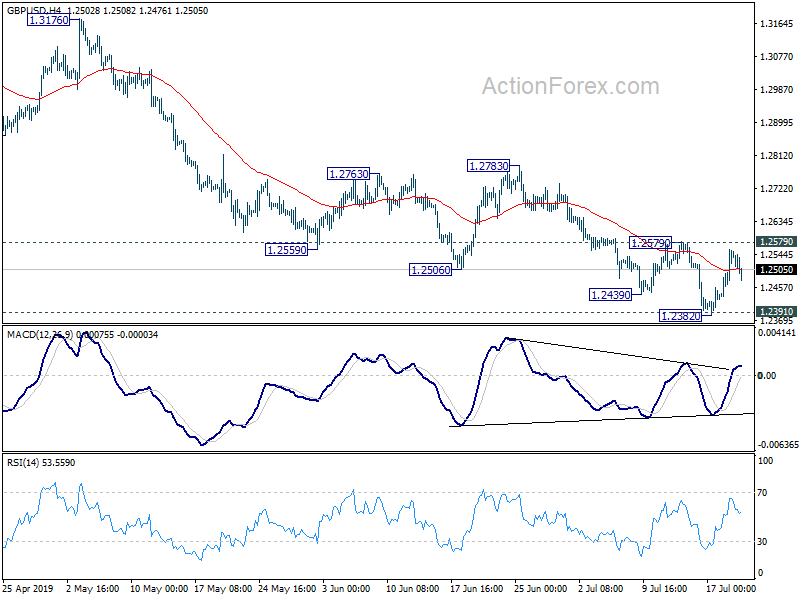
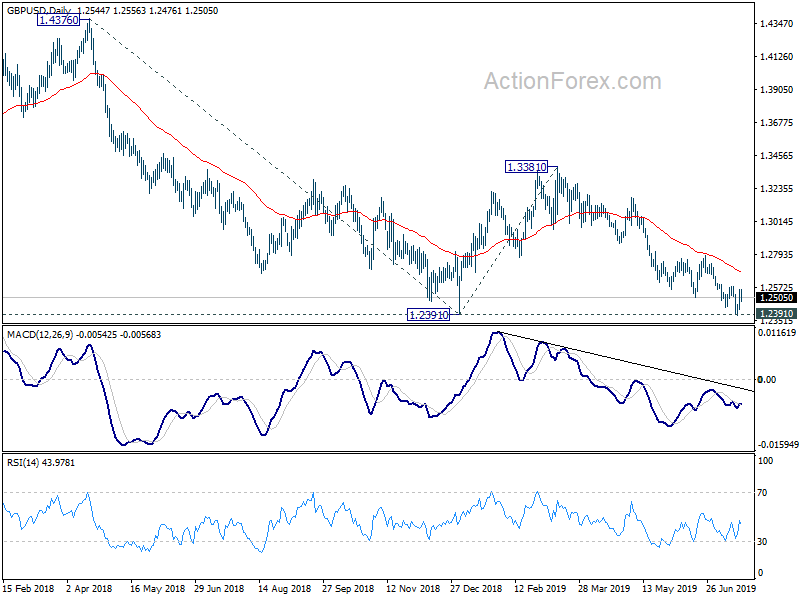
Technically, Sterling remains bearish against Dollar, Euro and Yen. But downside momentum has been clearly diminishing as seen in 4 hour MACDs. In particular, GBP/USD has just recovered off 1.2391 support (January low). EUR/GBP is also reasonably close to 0.9101 key resistance. Thus, there is prospect of a stronger rebound in the Pound for the near term.
ECB said to considering changing inflation target
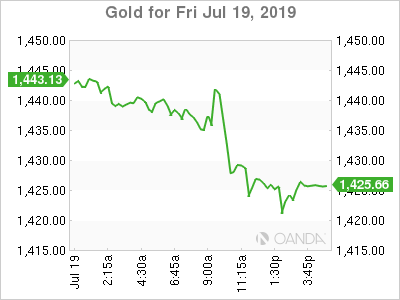
Expectation on ECB monetary easing was a major factor in Euro's weakness. More importantly, the common currency was sold off on news that ECB is considering changes to its inflation target. Currently, the inflation goal is set at "below, but close to, 2%". Effectively, 2% is more of a "ceiling" rather than a mid-point of a target range, like those of other major global central banks. It's rumored that the board is considering to change the target to a symmetrical one around the 2% level. That is, inflation would be allowed to overshoot 2%. With such change, interest rate would then be allowed to stay low for longer, to encourage higher inflation.
ECB will meet this week and probably stand pat week first. The central bank could save the policy actions for September, when new economic projections are scheduled to publish. The question of changing inflation goal will definitely be a focus in the post meeting conference.
Technically, Euro stays bearish in most crosses and there is little prospect of a sustainable rebound. EUR/CHF's down trend continued last week and it's on track to next medium term target of 61.8% projection of 1.2004 to 1.1173 from 1.1476 at 1.0962. EUR/JPY barely hold on to 120.78 support last week but recovery was very weak. Fall from 127.50 is expected to resume sooner rather than later through 120.78, to retest 118.62 low.
Fed policymakers' question changing from "why cut" to "why not"
US delivered solid June retail sale data, while regional Fed survey in Empire State and Philadelphia showed strong rebound. Yet, strong June non-farm payroll and rebound in core CPI, the data were not strong enough to alter Fed doves' mind. So far, only Boston Fed Eric Rosengren and Atlanta Fed Raphael Bostic were openly against a July cut. Cleveland Fed Loretta Mester seemed leaned towards a hold too. But St. Louis Fed James Bullard, Chicago Fed Charles Evans and Minneapolis Fed Neel Kashkari have been pushing for July cut.
The most market moving comments last week were from New York Fed John Williams and Vice Chair Richard Clarida. Williams said in a speech that policymakers shouldn't keep powder dry and they should "move more quickly to add monetary stimulus" to "vaccinate against further ills". Though, in a rare step, New York Fed came out to clarified that Williams's comment was "academic" and "not about potential policy actions at the upcoming FOMC meeting." Still, Clarida's comments couldn't be ignored as he said "you don't want to wait until data turns decisively if you can afford to."
Now, "risk management" seemed to be the key in upcoming FOMC rate decision than actual data. We'll still have Q2 GDP and PCE inflation before July 30-31 meeting. But such data are unlikely to give a drastic halt to the doves. The questions could be changed from "why cut" to "why not". Rosengren warned against "insurance" cut as itself poses risks by raising asset prices and adding to worries over financial stability. But it's unsure how many of his fellow policymakers share the same view.
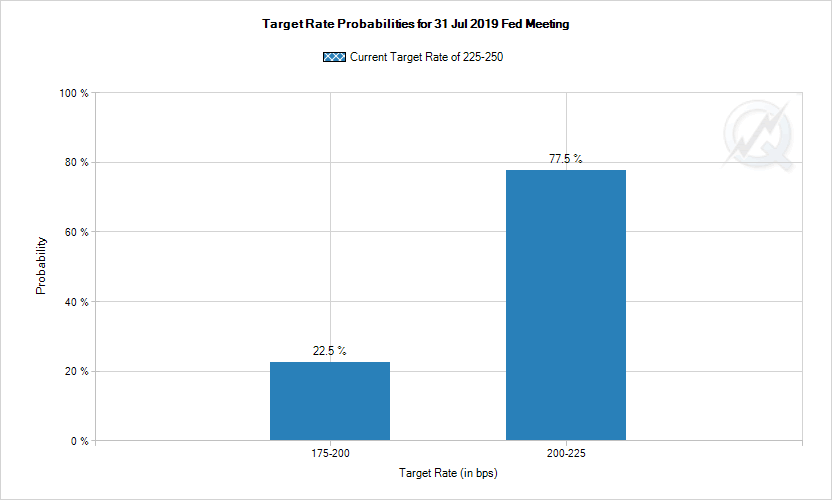
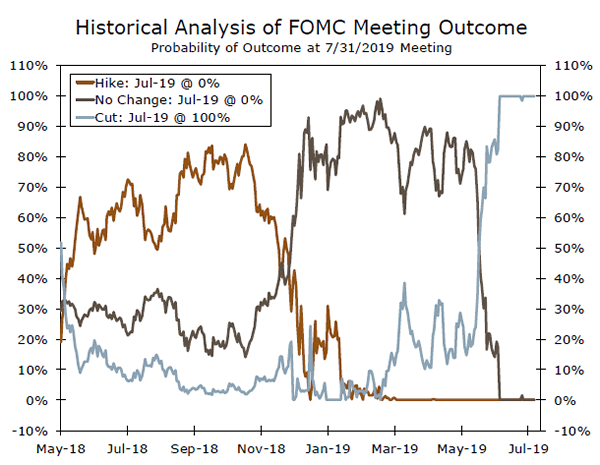
As of now, fed fund futures are pricing in 100% chance of a rate cut on July 31, with 22.5% chance of -50bps.
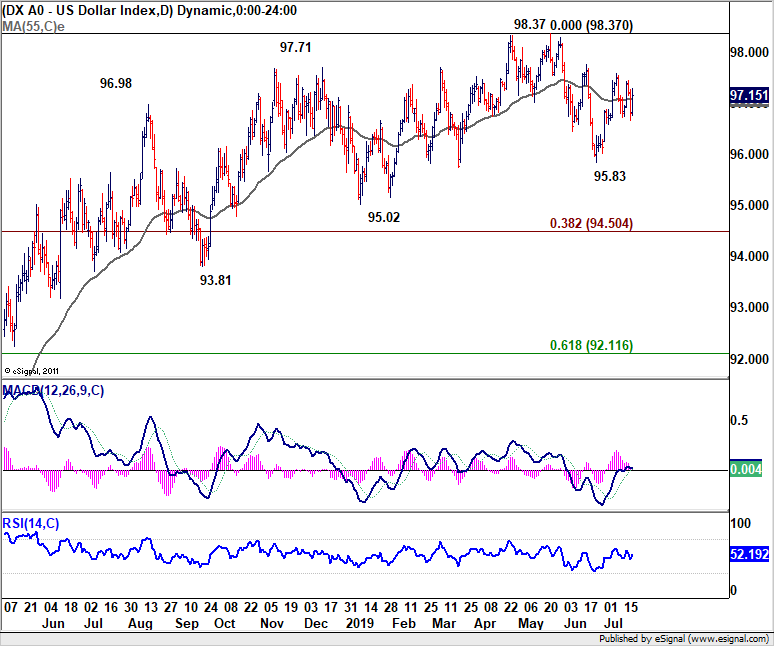
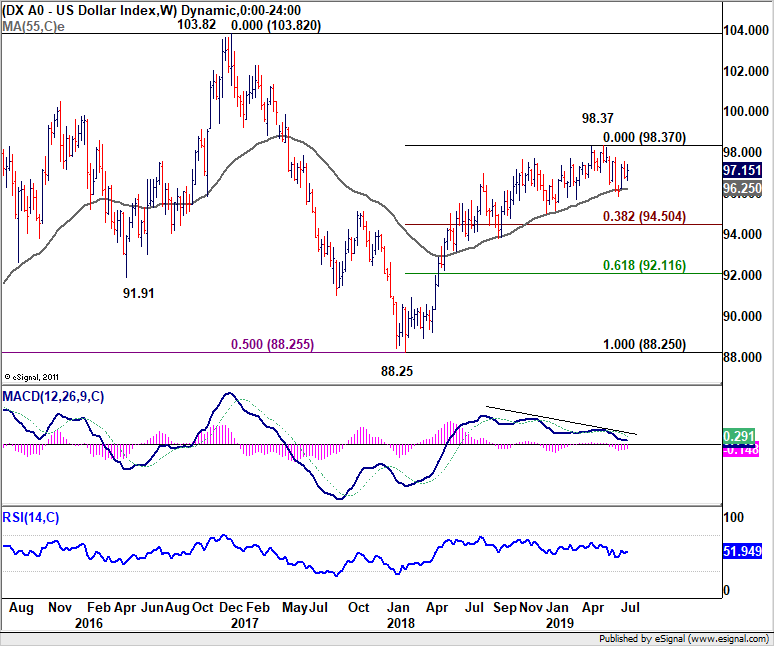
Dollar index gyrated around 55 day EMA last week and outlook is unchanged. Recent development suggests that corrective pattern from 98.37 is not finished yet. And more medium term range trading could be seen. It's rather hard to predict the path inside the pattern. But in case of another fall, 55 week EMA (now at 96.25) will be first line of defense. Sustained break there, though, will bring deeper fall to 38.2% retracement of 88.25 to 98.37 at 94.50.
EUR/GBP Weekly Outlook
EUR/GBP edged higher to 0.9051 last week but retreated sharply since then. Initial bias remains neutral this week first. With 0.8954 minor support intact, further rise cannot be ruled out. But upside momentum is clearly diminishing as seen in 4 hour and daily MACD. Upside should be limited by 0.9101 key resistance to bring reversal. On the downside, break of 0.8954 support should confirm short term topping. In this case, deeper pull back could be seen to 55 day EMA (now at 0.8882) first.
In the bigger picture, medium term decline from 0.9305 (2017 high) is seen as a corrective move. No change in this view. Current development argues that it might have completed with three waves down to 0.8472, just ahead of 38.2% retracement of 0.6935 (2015 low) to 0.9306 at 0.8400, after hitting 55 month EMA (now at 0.8545). Decisive break of 0.9101 resistance will confirm this bullish case. However, firm break of 55 week EMA (now at 0.8801) would possibly extend the correction another another fall to below 0.8472 before completion.
In the long term picture, we're holding on to the view that rise from 0.6935 (2015 low) is resuming the up trend from 0.5680 (2000 low). As long as 38.2% retracement of 0.6935 to 0.9306 at 0.8400 holds, further rise should be seen through 0.9305 to 0.9799 and above down the road.
Summary 7/22 – 7/26
Monday, Jul 22, 2019
[php_everywhere instance="1"]
Tuesday, Jul 23, 2019
[php_everywhere instance="2"]
Wednesday, Jul 24, 2019
[php_everywhere instance="3"]
Thursday, Jul 25, 2019
[php_everywhere instance="4"]
Friday, Jul 26 2019
[php_everywhere instance="5"]
Slow Growth, Low Inflation: What’s the ECB to Do?
Executive Summary
- ECB policy uncertainty has risen substantially as the central bank mulls easing policy and as markets contemplate how the appointment of Christine Lagarde to replace ECB President Draghi will affect policy.
- Lagarde's lack of experience in central banking makes it hard to ascertain her policy stance. We suspect she will lean heavily on ECB staff members and newly-appointed Chief Economist Philip Lane, at least early in her term. Overall, we do not think her appointment is a game changer for ECB monetary policy, and instead see continuity.
- In that regard, we still expect one 10 bps rate cut from the ECB at its September meeting, to be signaled at the upcoming July meeting. However, we acknowledge that in recent weeks, the risk of additional policy easing, including further or sooner rate cuts and QE, have risen.
The Changing of Lagarde
The underwhelming performance of the Eurozone economy has been characterized by sluggish GDP growth and stubbornly low inflation, which remains well short of the central bank's target goal of "close to, but below" 2%. It is against that backdrop that European Central Bank (ECB) President Draghi delivered dovish comments in mid-June, suggesting that additional stimulus measures would be required absent an improvement in the economic data. He also repeatedly suggested that the ECB is prepared to use all of its tools to stimulate Eurozone growth. Amid lingering uncertainty in the region and subdued growth, we expect the ECB to cut its deposit rate and main refinancing rate 10 bps to -0.50% and -0.10%, respectively, in September. However, we do not expect further rate cuts or renewed quantitative easing (QE) at this time, although we acknowledge that the risk of additional easing has increased in recent weeks.
One potential source of uncertainty around that outlook is a change in leadership atop the ECB, with former International Monetary Fund (IMF) head, Christine Lagarde, having been nominated to take over for Mario Draghi as ECB president in November. At this time Lagarde's stance on monetary policy is unclear, and we likely will not have a better understanding of her policy objectives until well into her tenure. However, our assumption is that Lagarde will not meaningfully change the course of ECB monetary policy, and will likely rely heavily on her fellow policymakers and the broader ECB staff early on in her term as ECB president.
In particular, one of the key figures she will likely rely on is newly appointed ECB Chief Economist Philip Lane. In a recent speech, Lane stated that without its non-standard measures such as quantitative easing (QE) and forward guidance, inflation and growth would be considerably lower, suggesting an overall supportive stance on a wide range of policy easing measures.1 With those comments in mind, we suspect Lane to be a key voice in support of an accommodative policy stance once Lagarde takes the helm. Still, the key challenge facing the ECB at present - stimulating the Eurozone economy with limited monetary policy capacity - will likely remain prevalent as Lagarde takes the reins.
What to Expect at the July Meeting
We currently expect the ECB to cut its deposit and refinancing rates 10 bps at the September meeting to -0.50% and -0.10%, respectively. When the central bank meets next week, we expect it will revise its forward guidance to signal that September rate cut. At its June meeting, the ECB said that interest rates would remain "at their present levels at least through the first half of 2020." We expect the central bank to change that language in its statement next week such that it signals rates will remain "at present levels or lower for an extended period of time." This would be consistent with past periods in which it has signaled near-term interest rate reductions.
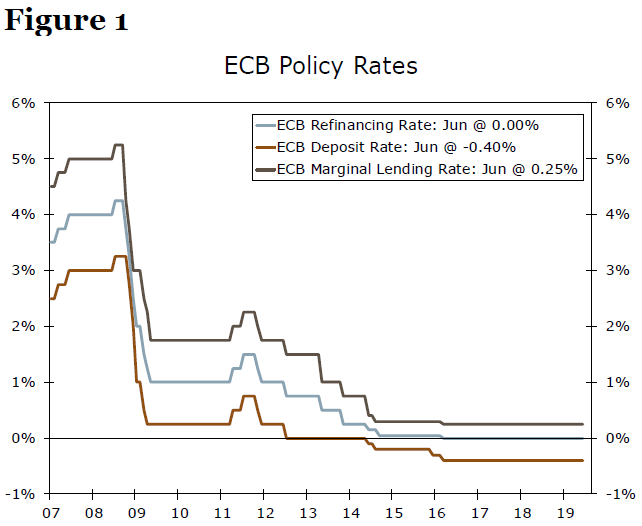
As highlighted by Philip Lane in his most recent speech, the deposit rate plays a primary role in anchoring short-term interest rates in the Eurozone, and thus we have a relatively high degree of conviction that the ECB will adjust the deposit rate in September (Figure 2).2 What about the main refinancing rate? Main refinancing operations were one of the ECB's primary tools for adjusting monetary policy prior to the global financial crisis, but given the increase in excess liquidity in the Eurozone, the ECB has used this facility less to adjust policy. However, the main refinancing rate is important in the sense that it is used as a benchmark for the interest rates offered on the ECB's targeted long-term refinancing operations (TLTROs).
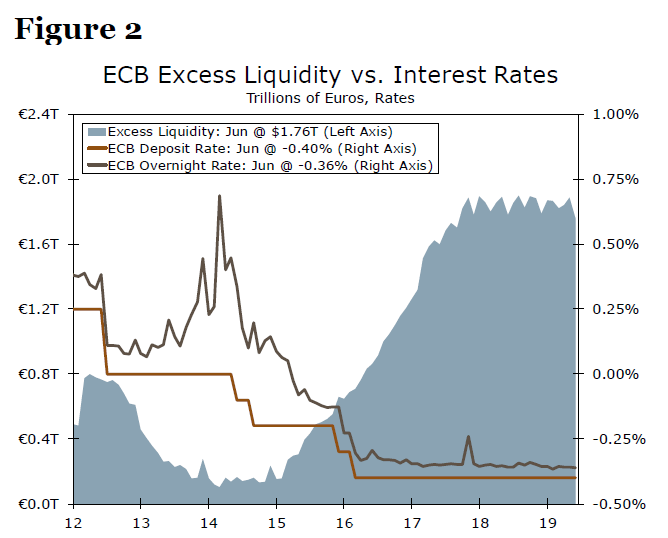
TLTROs are a form of cheap financing for commercial banks, and are another element of the ECB's overall toolkit of accommodative monetary policies. At its June meeting, the ECB revealed that these loans would be offered to commercial banks with a maturity of two years at an interest rate equal to the average main refinancing rate over the life of the operation, plus 10 basis points. For example, if the main refinancing rate were to be unchanged at its current level of 0.00% over the life of the operation, the commercial bank's effective borrowing cost on the loan would be 0.10% (0.00% + 10 bps). However, if as we expect, the main refinancing rate is cut 10 bps to -0.10% and remains there over the life of the operation, the commercial bank's effective borrowing cost would be 0.00% (-0.10% + 10 bps). In that sense, the ECB can offer additional accommodation by reducing the main refinancing rate as well as the deposit rate.3
The main risk around next week's meeting, in our view, is that the ECB cuts rates immediately rather than waiting until September. The central bank could view this as a way to more powerfully reinforce its commitment to the inflation mandate, as a September cut is widely expected and may not send as strong a message as an immediate cut. However, we also see risks that the ECB might restart its program of large scale asset purchases, or QE.
Is the ECB Preparing for Quantitative Easing?
With interest rates already negative, the ECB has limited traditional tools at its disposal to implement additional stimulus measures. However, QE is a means through which the ECB could provide additional monetary policy accommodation. The central bank ended its last QE program in December 2018, but Draghi and other policy makers have suggested that there is considerable room for another round of QE. If the ECB decides to move ahead with another round of QE it likely will not formally announce it next week but perhaps in September or later.
There are obstacles to more QE, however. The first of which is the ECB's issuer limits, designed to safeguard market functioning and prevent the ECB from becoming a dominant creditor of Eurozone governments. The issuer limits currently restrict the ECB from buying more than 33% of any country's eligible stock of sovereign debt. In countries with a low stock of outstanding government debt, such as Germany and the Netherlands, the ECB is already within just a few percentage points of this 33% limit based on our calculations. Thus, if the ECB were to relaunch QE and purchase sovereign debt, it will likely need to raise the current issuer limit, perhaps to 50%. The central bank has suggested it would be willing and able to raise its issuer limits for sovereigns, although we note previous efforts from the ECB to change the parameters of QE have been met with political resistance. The ECB has also reportedly discussed a legal work-around which may allow it to exceed the current issuer limits without having to raise them.4 Thus, there appears to be means through which the ECB can restart purchases of sovereign bonds, but some of these methods may be difficult or unwieldy to implement.
In addition to sovereign bonds, there is also the possibility that the ECB will purchase other instruments such as corporate bonds and asset-backed securities, as it did in its last QE program. We see the purchases of those assets as much more feasible than the purchase of Eurozone equities, which would be a first for the ECB (although the Bank of Japan and Swiss National Bank have bought domestic equities) and could be more politically challenging and harder to implement than purchases of sovereign or corporate debt. In all, it seems the ECB has scope to restart QE and purchase a range of assets, but we think the bar is high to do so given the existing constraints and the possible challenges associated with restarting the program.
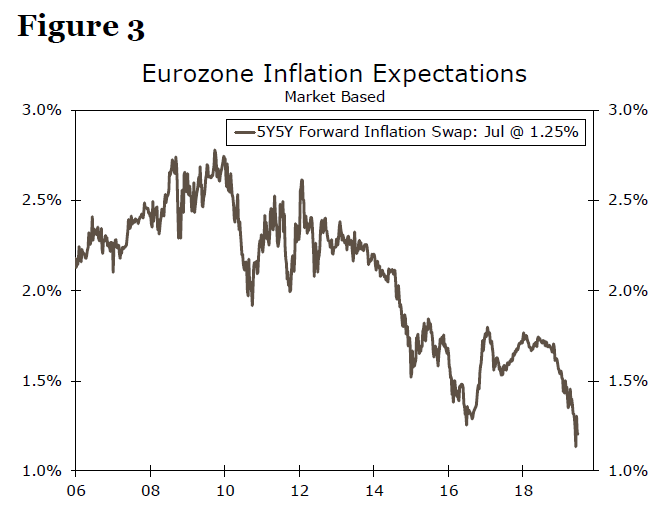
For now, we do not think current Eurozone economic conditions - namely the inflation outlook - justify renewed QE from the ECB. There has, understandably, been a great deal of focus on the weakness in market-based measures of inflation expectations, namely the 5Y5Y forward inflation swap that ECB officials have cited in the past (Figure 3).5 That measure has fallen sharply over the past few months and is trading just above all-time lows. However, other measures of inflation expectations, including those of households and professional forecasters, have been more stable. ECB officials have recently stressed the importance of looking at a wide range of measures of inflation expectations, suggesting the central bank is unlikely to put undue weight on the weakness in market-based inflation expectations, instead relying on a variety of measures.
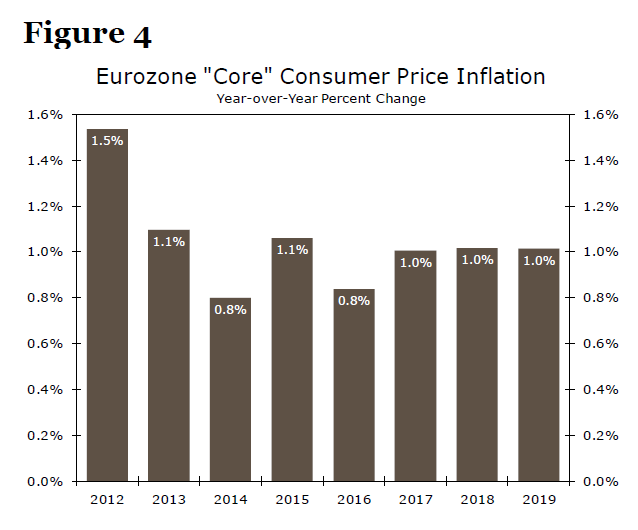
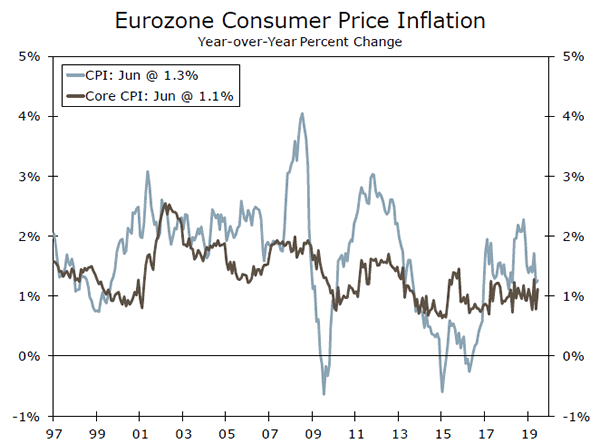
Finally, we note that actual inflation outcomes have been fairly resilient, albeit low. Core CPI inflation has been stuck right at 1% for the past two years or so, and, while this is below the ECB's target, it also has not yet shown signs of deteriorating or heading lower. In contrast, when the ECB first launched QE in 2015, core CPI inflation had been trending lower for years and averaged just 0.8% in 2014 (Figure 4). Thus, while we acknowledge the risk of renewed QE - as well as other further easing measures, including additional rate cuts - for now we do not think the economic outlook justifies such action.
Conclusion
With inflation well below the ECB's target and growth continuing to underwhelm, we expect the central bank to signal a rate cut at its upcoming meeting next week and ultimately deliver the cut in September. For now, we expect just one rate cut, but we acknowledge that in recent weeks, the risk of additional policy easing has heightened. Given that interest rates in the Eurozone are already well into negative territory, if the ECB decides that more easing is warranted, it may choose to revert to using non-traditional methods such as introducing renewed Quantitative Easing. An earlier surprise rate cut at next week's meeting is also possible, although we do not think economic conditions in the Eurozone currently justify such aggressive policy actions from the ECB.
1 Lane, Philip. "Monetary Policy and Below-Target Inflation." July 2, 2019.
2 See Footnote 1.
3 The interest rate on TLTRO loans can be as low as the deposit rate, plus 10 bps, over the life of the loan, depending on banks' lending activities - the more banks lend, the lower is the rate on the loans. Thus, lowering the deposit rate should also make the terms of TLTROs more accommodative.
4 Canepa, Francesco. "Loophole may clear ECB's way to buying more state debt-sources." June 26, 2019.
5 Coeuré, Benoît. "Inflation expectations and the conduct of monetary policy." July 11, 2019.
Weekly Economic and Financial Commentary: Is a 50 Bps Cut Really in the Cards?
U.S. Review
String of Strong Data Unlikely to Dissuade July Rate Cut
- The string of strong data over the past week and a half—higher than expected inflation, retail sales and manufacturing production—likely will not dissuade the Fed from cutting rates 25 bps at its July meeting.
- The market-implied certainty of a rate cut this month would seem to belie the observed health of the U.S. economy. Retail sales surged in June, rising 0.4% for the third consecutive month.
- Yet with uncertainty swirling and inflation persistently low, we still expect a 25 bps cut this month.
String of Strong Data Unlikely to Dissuade July Rate Cut
The string of strong data over the past week and a half—higher than expected inflation, retail sales and manufacturing production—likely will not dissuade the Fed from cutting rates 25 bps at its July meeting. It should, however, dampen hopes for a 50 bps cut. The latest data indicate a resilient domestic economy, but the overwhelming market-implied certainty of a cut, as well as the lack of pushback from Fed officials against those expectations, suggest to us that a cut is too baked in at this point.
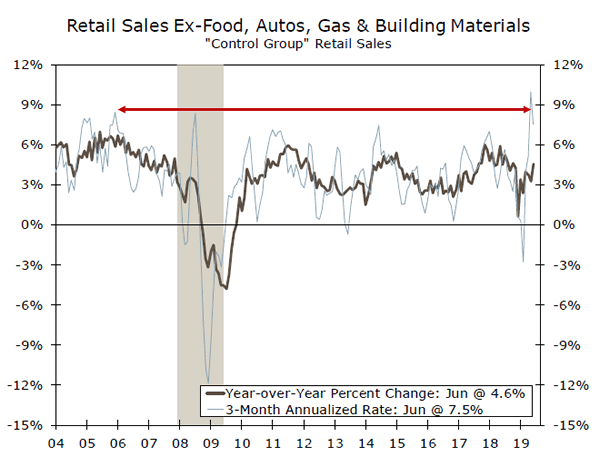
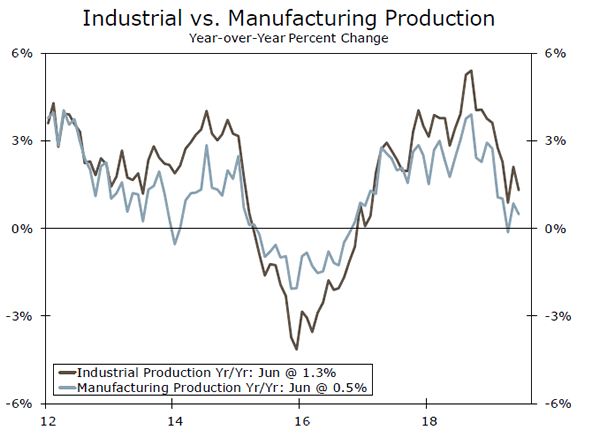
Such certainty of a rate cut this month would seem to belie the observed health of the U.S. economy. Retail sales surged in June, rising 0.4% for the third consecutive month. Over the same three months of the second quarter, control group retail sales rose an even stronger 0.5%, 0.6% and 0.7%, suggesting substantial upside to our current Q2 forecast of 3.4% annualized PCE growth. Such strength in consumer spending—which comprises roughly 70% of overall GDP—suggests that headline GDP is now tracking to come in north of 2%. The eye-raising drop in retail sales at the end of last year, which we maintained was largely a head fake stemming from the plunge in the stock market (see chart on first page), is now largely in the rearview mirror. Persistent labor market strength—June's 224K-job gain was also above consensus—and fresh equity market highs have supported the ongoing rebound in consumer confidence and consumer spending. Industrial production was more or less flat in June, but manufacturing output rose a solid 0.4%. The U.S. factory sector appears to have just avoided slipping into contraction territory and has likely already bottomed. The trade détente may be providing some reprieve, but the ongoing uncertainty—underlying our forecast is the assumption that the United States and China will continue in the current holding pattern without reaching a deal for the foreseeable future—along with slowing global growth and a stronger dollar will put a ceiling on the manufacturing rebound. Forward-looking factory sector surveys also point to some rebound. The Empire Manufacturing survey for July came in at 4.3, above the consensus of 2.0, while the Philly Fed survey blew past the 5.0 consensus with its 21.8 reading. While these surveys contain more information on where the economy is heading, rather than where it has been, they are also highly volatile as managers attempt to digest a constant stream of trade rumors.
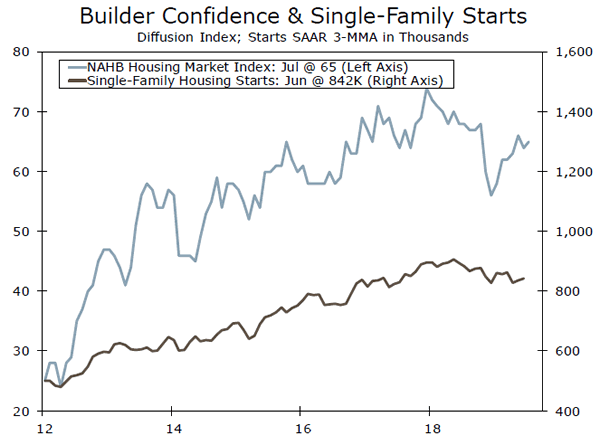
Residential construction has also likely bottomed, but the recovery has been anything but inspiring. A full percentage point drop in mortgage rates has failed to breathe much life into the housing market, which continues to grapple with affordability challenges. Housing starts fell 0.9% in June, largely due to a sharp decline in volatile multifamily starts. While single-family starts have now risen in three of the past four months, total starts year-to-date are running almost 4% below last year's pace. The 6.1% drop in building permits, which lead starts, also dragged down the Leading Economic Index, which fell 0.3%, the largest drop since January 2016.
We remain in the peculiar situation wherein positive economic news can elicit a negative market reaction, as it diminishes the magnitude of expected Fed easing. Robust consumer spending data should indeed dampen expectations of a 50 bps cut in July and perhaps lower expectations of the extent of cumulative easing over the next year. Yet with uncertainty swirling and inflation persistently low, we still expect a 25 bps cut this month.
U.S. Outlook
Existing Home Sales • Tuesday
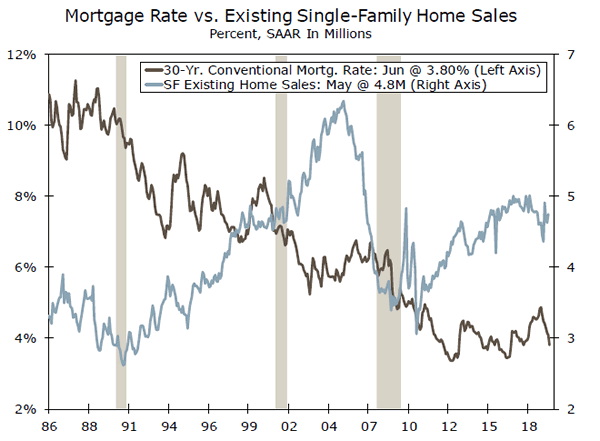
Driven by lower mortgage rates and ongoing labor market strength, existing home sales rebounded in May to a three-month high. Mortgage rates below 4% have created attractive buying conditions, yet the continuing mismatch between entry level demand and scarce entry level supply continues to play an outsized role in the lethargic pace of existing home sales during the first half of the year.
Consumers continue to feel reasonably optimistic about their employment and income prospects, which should provide support for home buying. Moreover, mortgage rates are expected to remain attractive, with the 30-year fixed mortgage rate likely to remain below 4% during the second half of the year. As more markets see more negotiating power switch from sellers to buyers, we look for existing home sales growth to improve in the coming months.
Previous: 5.34M Wells Fargo: 5.30M Consensus: 5.35M
Durable Goods Orders • Thursday
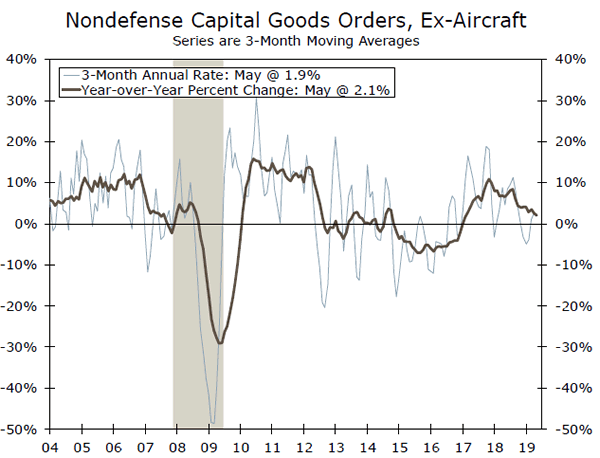
Given the Fed's mounting concerns, including slowing global growth and its impact on the manufacturing sector, Thursday's release of advance durable goods orders will be highly anticipated by the markets and policy watchers.
Total durable goods orders fell 1.3% month-over-month in May, as civilian aircraft orders plunged for the second straight month amid Boeing's struggles. 737 MAX model cancellations have led to roughly 30% declines in nondefense aircraft orders over the past two months. Excluding defense and aircraft, core capital goods orders held up better and suggest firms are not fully retrenching as they await clarity on trade policy. That said, the factory sector remains under pressure and incoming business sentiment measures continue to point to further weakness in Q3.
Previous: -1.3% Wells Fargo: 1.0% Consensus: 0.8% (Month-over-Month)
GDP • Friday
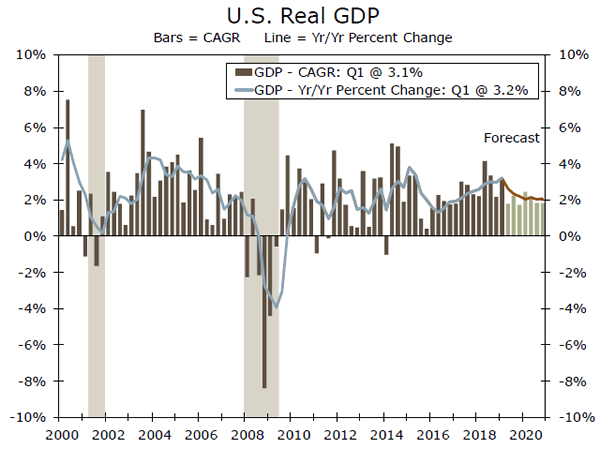
The first look at real GDP growth during the second quarter is released at week's end and will also be closely scrutinized ahead of the July 30-31 FOMC meeting. First quarter GDP growth surprised to the upside, running at a 3.1% annualized rate and in line with last year's strong pace. That said, outsized strength from inventories and trade masked marked softness in consumer spending.
For the second quarter, we look for these trends to reverse. Consumer spending is poised to bounce back. Ongoing labor market strength, combined with little detrimental impact associated from the U.S.-China trade war, have kept consumers' attitudes and spending habits on a healthy path. Business investment growth, however, has slowed noticeably–weighed down by softer business spending, slowing global demand and concerns over trade tensions. We look for the longest running U.S. economic expansion to continue in the period ahead, albeit at a decelerating pace.
Previous: 3.1% Wells Fargo: 1.8% Consensus: 1.8% (Quarter-over-Quarter, Annualized)
Global Review
China's Economy Continues Its Gradual Slowdown
- Chinese GDP growth softened further in Q2 to 6.2% year-over-year, the slowest pace in several decades. Still, that is only modestly lower relative to growth in prior quarters, and indeed we expect the slowdown to continue at an orderly and managed pace.
- U.K. economic data released this week painted a picture of an economy that is holding up well despite mounting concerns around a no-deal Brexit. Wage growth strengthened and inflation remains contained, supporting solid gains in retail sales.
China's Economy Continues Its Gradual Slowdown
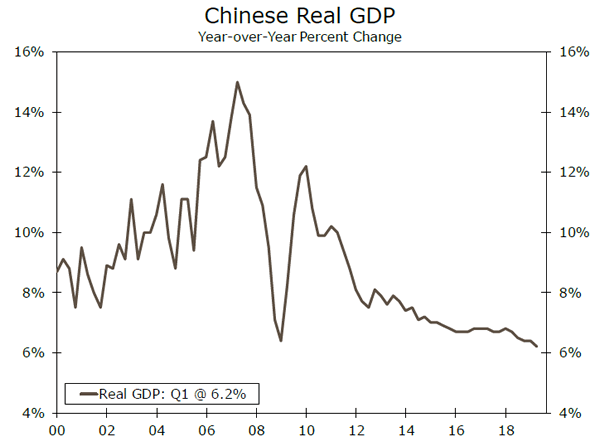
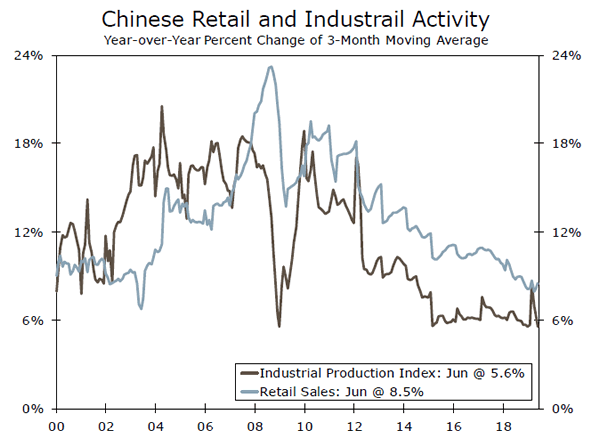
The week in global economic data started off with the release of a slew of growth and activity data for China. Those data showed that China's economy slowed further in Q2, as real GDP growth eased to 6.2% year-over-year, the weakest growth pace in decades. Monthly activity data for June were a bit more encouraging, as they showed stronger year-over-year growth in retail sales (+9.8%) and industrial output (+6.3%) during the final month of Q2. These mixed data reinforce the theme of an orderly and managed slowdown in Chinese GDP growth, supported by substantial policy easing from domestic monetary and fiscal authorities, most of which was delivered in 2018. We think the Chinese economy will continue to slow in the coming quarters, as we look for GDP growth of just 6.1% in full-year 2019 and 6.0% in 2020. Markets received a reminder of the downside risks to the outlook for growth in China, and the broader global economy, as U.S. President Trump again said he could impose more tariffs on China if he wants.
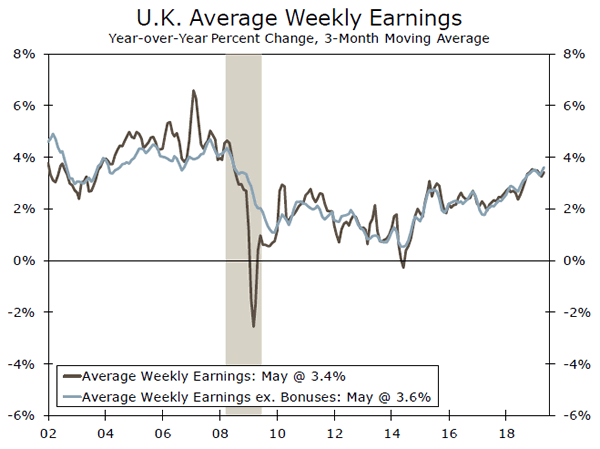
It was a busy week for the United Kingdom, with a mix of Brexit headlines and data points providing mixed signals for the U.K. economy and currency. On the Brexit front, reports early in the week suggested U.K.-E.U. discussions had taken an acrimonious turn, but more recent headlines signaled that E.U. chief negotiator Barnier may be willing to consider alternative arrangements for the contentious Irish border backstop. Meanwhile, U.K. data were generally quite strong, and consistent with an economy showing resilience in the face of persistent uncertainty. Indeed, retail sales rose 1% on a sequential basis in June, topping expectations for a small decline. Wage growth was firmer than expected in the three months through May, rising 3.4% year-over-year, which, coupled with generally contained core inflation (+1.8% year-overyear in June), is likely supporting the ongoing resilience in U.K. retail sales. The Bank of England has a relatively accommodative policy stance with its policy rate at 0.75%, and while current economic conditions might otherwise warrant a rate cut, Brexit uncertainty and the threat of a no-deal exit are probably too concerning for the central bank to raise rates for now.
Lastly, we had some news that the European Central Bank (ECB) was considering changes to its inflation goal, which is currently "below, but close to, 2%." In that sense, the current 2% inflation target is more of a ceiling for inflation rather than a midpoint of a target range as some other central banks employ. President Draghi and other policymakers are supposedly exploring changing the inflation target to be more symmetrical around the 2% level. Any change would likely take quite some time to implement, but if the ECB were to change its inflation goal to a symmetric target around 2%, it would likely be consistent with lower interest rates for longer periods of time to encourage higher inflation. From a currency perspective, lower nominal interest rates and higher actual and expected inflation would likely mean a weaker euro, all else equal. However, we note that other central banks, including the Federal Reserve, are exploring similar changes to their inflation targets, and thus all else may not be equal after all.
Global Outlook
South Korea GDP • Wednesday
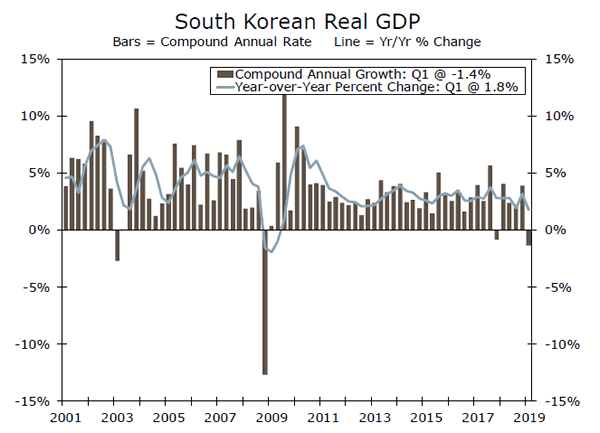
Korea's economy unexpectedly contracted in Q1, as real GDP fell 1.4% on a sequential annualized basis during the quarter. The decline was relatively broad-based, as output in the manufacturing, retail and construction sectors fell during the quarter. The economic picture has improved since then, as industrial output has recovered substantially and sentiment across the economy has moved higher in recent months.
Still, there are some downside risks to Korea's Q2 GDP release next week, including overall weakness in global trade, to which Korea's economy is particularly exposed. Korean exports have continued to decline in recent months, and fell 13.5% on a year-over-year basis in June. The surprise contraction in Singapore's Q2 GDP last week also bodes ill for Korea's trade-sensitive economy, and suggests the chances of a downside miss on Korean Q2 GDP are not small.
Previous: 1.7% Consensus: 1.9% (Year-over-Year)
ECB Policy Announcement • Thursday
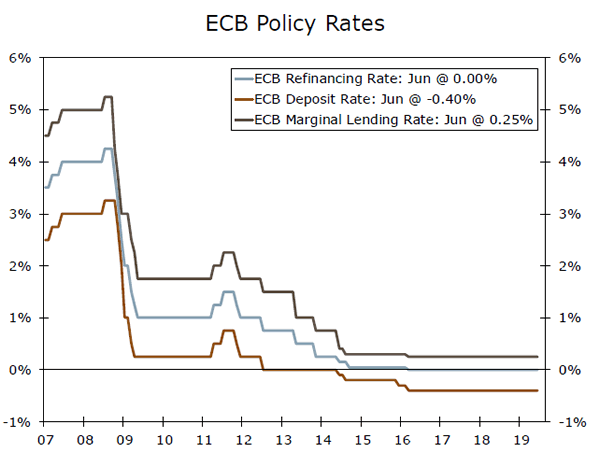
The European Central Bank (ECB) announces policy next week, and is widely expected to keep interest rates on hold. That is our expectation as well, although we look for the ECB to adjust its forward guidance to hint at a near-term rate cut (we expect it will cut its deposit and refinancing rates 10 bps to -0.50% and -0.10%, respectively, in September). At this time, we do not expect the central bank to restart its asset purchase program, although we acknowledge the risks have risen in recent weeks as the Eurozone economy continues to underwhelm.
Moreover, we see a moderate risk that the ECB will catch markets off guard next week and cut interest rates immediately, rather than waiting to see how the economy evolves between now and September. The ECB has made similarly surprising policy announcements in recent years, and a rate cut next week would carry strong messaging on the ECB's commitment to its mandate.
Previous: -0.40% Wells Fargo: -0.40% Consensus: -0.40%
Mexico Economic Activity • Friday
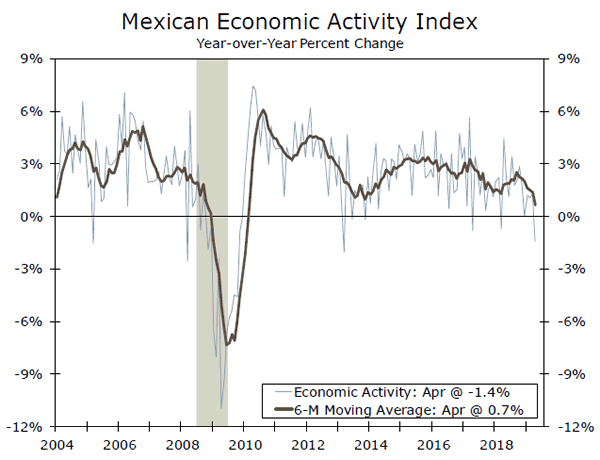
Mexico's economy has weakened on trend over the course of the year, as economic activity fell 1.4% year-over-year in April, the sharpest decline since 2013. The May figures will be released next week, and will be important in assessing whether the economy recovered as Q2 progressed. After a decline in Q1 GDP, the ongoing weakness in Mexican economic activity has some concerned that the country fell into technical recession (two consecutive declines in real GDP) in Q2.
The persistent softening in Mexico's economy likely partly reflects relatively high real interest rates—Mexico's central bank short-term policy interest rate is set at 8.25%, while inflation is currently just below 4%. Amid weak economic data, we expect the central bank to start to ease monetary policy in the relatively near term, and a weak print on economic activity could further support the case for rate cuts before long.
Previous: -1.4% (Year-over-Year)
Point of View
Interest Rate Watch
Is a 50 Bps Cut Really in the Cards?
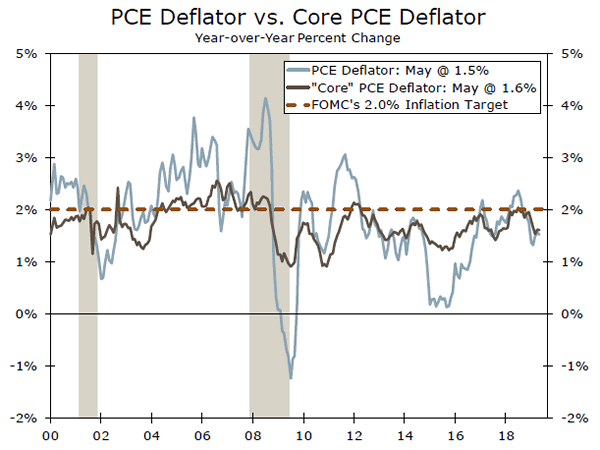
Approaching the FOMC's meeting on July 31, there are virtually universal expectations that the committee will cut rates (top chart). Our view is that the FOMC will reduce the fed funds rate 25 bps. This is not because the economy is in dire straits, or anything close to it. Rather, the FOMC is concerned about the contentious trade environment weighing on global growth and leading to a significant slowdown in the United States, as well as inflation continuing to fall short of its 2% target (middle chart).
While in prior periods the FOMC may have been more willing to see how data and events unfold, the historically low level of the fed funds rate has led officials to adopt more of a "risk management" approach. As a result, many on the committee have signaled the need to add accommodation sooner rather than later.
But how much accommodation and how soon? The market's estimates of a 50 bps cut surged late this week when FOMC Vice Chair Williams spoke about moving more quickly and adding more stimulus in a lowrate environment than one otherwise might. The market appears to have read too far into that, however, since the NY Fed made a rare effort to downplay his comments after, characterizing them as "academic."
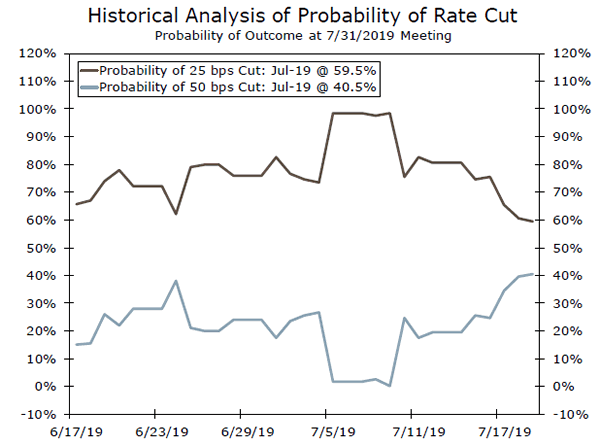
Nevertheless, markets are still pricing in about a 40% chance of a 50 bps cut (bottom chart). We believe the probability is notably lower than that, however. Yes, interest rates are lower than other periods when the Fed cut rates, which would be consistent with doing more sooner. But in past periods where the fed funds rate was slashed by so much, the economy was on the brink of recession or just emerging from one.
The 1995-96 period of "insurance" cuts has been viewed as a template for today. At that time, the FOMC cut in three 25 bps increments. The economy looked on shakier ground, with the ISM index in contraction territory and job growth having slowed from more than 300K jobs per month to only a little over 100K. We suspect that a 50 bps cut would suggest the economy is in a more fragile position than it is, and risk broader confidence in this expansion (not to mention the Fed's independence).
Credit Market Insights
India's Struggles with FPIs
Despite an improved credit rating, India has experienced a significant outflow of foreign investment from its sovereign bonds. Currently, foreign portfolio investors (FPI) hold 73.1% of the maximum allowed foreign ownership, while in 2017 and 2018 FPI holdings hovered near 100% of the cap. Withdrawals from sovereign Indian debt come in part from foreign investors transitioning into Indian equities. Although the Indian government prefers that most of its sovereign debt is domestically held, the Reserve Bank of India (RBI) recently upped its foreign investment limits in efforts to help raise around $10 billion USD this year through sovereign bond offerings. The funds raised are expected to alleviate some budgetary pressures stemming from new welfare initiatives.
In a recent budget speech, Finance Minister Nirmala Sitharaman announced plans to offer dollar-denominated sovereign bonds in an effort to make Indian government debt more attractive to foreign investors and diversify its borrowing. However, this borrowing plan could create foreign exchange risks. Since October 2018, the rupee has become increasingly weaker against the dollar after India's first quarter GDP growth fell to its lowest level since Q1- 2014 and newly reelected Prime Minister Narendra Modi has struggled to restore confidence. Thus, India faces the challenge of attracting sufficient foreign investment to fund its growth while also not exposing its internal finances to undue foreign exchange risk.
Topic of the Week
Is the End Near?
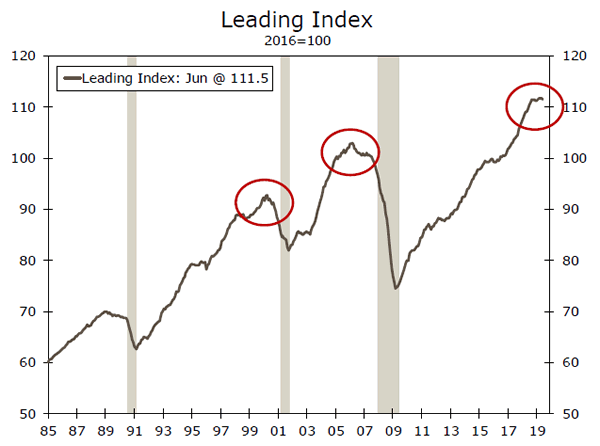
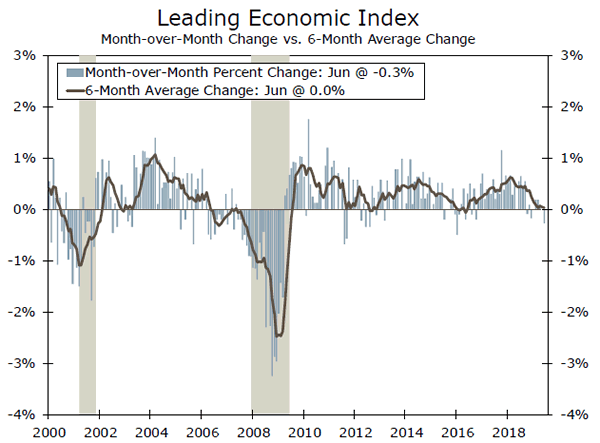
The leading economic index (LEI) is a key barometer for the direction of the economy and it is undeniably losing momentum. The LEI has been more or less flat since September and declined 0.3% in June, which marks the first decline this year and the largest monthly drop since the start of 2016. The six-month average change stands at 0.03%, which is also tied for the weakest pace since 2016. So what is the predictive power of this index, and should we take its recent stall as an omen for an impending downturn?
It is true that a downturn has not come without a declining LEI, but a declining LEI has not always resulted in a downturn. Take the 2015-2016 period for example. Oil prices cratered in 2014, dragging down business fixed investment and business confidence, and the LEI moderated as a result. Glancing at the top chart, there is no denying, however, that the index looks reminiscent of prior cycle peaks. But, as seen in the bottom chart, the LEI has traditionally registered consecutive monthly declines anywhere from five to eight months prior to a downturn. Moreover, the six-month average change has not yet turned negative. This average smooths out sharp movements in particular components of the LEI, such as the plunge in building permits, which comprised almost all of the 0.3% decline in the headline this month. To put the 6.1% drop in June permits in perspective, it was the largest monthly decline since March 2016, and enough to drag down the LEI 0.18 percentage points. ISM new orders and unemployment claims were also weak in June. More notably, as the yield curve spread turned negative in June (as measured on a monthly basis), it made a negative contribution to the LEI for the first time since 2007. But still, strength in the average workweek, stock prices and consumer expectations components were definitely encouraging signs that the economy is not falling off a cliff. We would need to see a sustained decline and broad-based weakness in the LEI before we would chalk its weakness up to a coming recession. Instead, we view the recent moderation as a signal that growth will remain lackluster in the second half of the year.
The Weekly Bottom Line: Resilient Consumer Unlikely To Change Fed’s Mind
U.S. Highlights
- Chinese economic growth slowed 6.2% y/y in the second quarter of this year, as rising trade tensions weighed on activity. Signs of wear are also showing in the U.S., where industrial output continued to grow at a slow pace in June.
- U.S. housing data remains soft. Starts eased in June, while permits dropped precipitously (-6.1% m/m), pointing to more weakness in the pipeline. That said, the services side of the economy continues to hold up well, with consumption providing a major helping hand. Retail sales rose by 0.4% in June, extending the winning streak to four straight months.
- The resilience of the American consumer suggests less urgency for the Fed to cut rates later this month. But, Fed speakers pushed back against that notion this week, emphasizing the need to get ahead of any potential weakness.
Canadian Highlights
- Data this week, while mixed, confirmed that the Q2 growth rebound is on track. Existing home sales held on to recent gains while manufacturing shipments surged. On the softer side, retail sales sank and inflation eased, but remains on target at 2.0%.
- With a rebound in Q2 largely a done deal, attention shifts to third quarter growth prospects. The Bank of Canada projects a cautious 1.5% rate in Q3, implying a notable slowdown would be required to spur policy re-think from the BoC.
U.S. - Resilient Consumer Unlikely To Change Fed's Mind
The first half of July, which was marked by a G20 meeting and major Fed communications, was a hard act to follow. But this week still offered plenty of kick, with political developments and a few primary data releases dominating headlines. Of note, tensions in the Persian Gulf remained high with the U.S. claiming that it shot down an Iranian drone in the Strait of Hormuz. The U.S.-China trade spat also continued to reverberate, with President Trump stating that trade talks still have "a long way to go" and calling for an inquiry into Google's work with China.
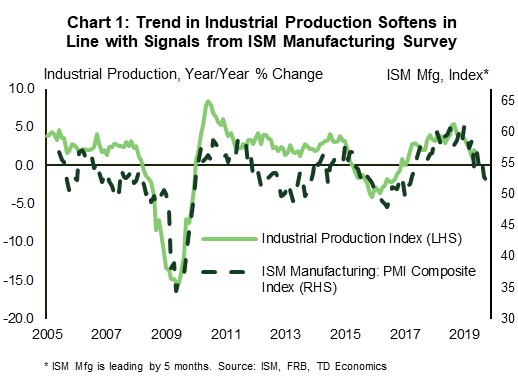
The trade blows are inflicting wounds on both sides. Figures out this week showed that Chinese economic growth slowed to 6.2% year-on-year - the slowest pace in 27 years, with output in secondary industries (construction and manufacturing) decelerating to 5.6% from 6.1% in the first quarter. In the U.S., industrial output continued to grow at a slow pace in June, in line with signals from the ISM manufacturing survey (Chart 1). The impact of the trade conflict is not confined to manufacturing. An annual NAR survey showed that Chinese home purchases in the U.S. fell by 56% in the 12-months ending in March.
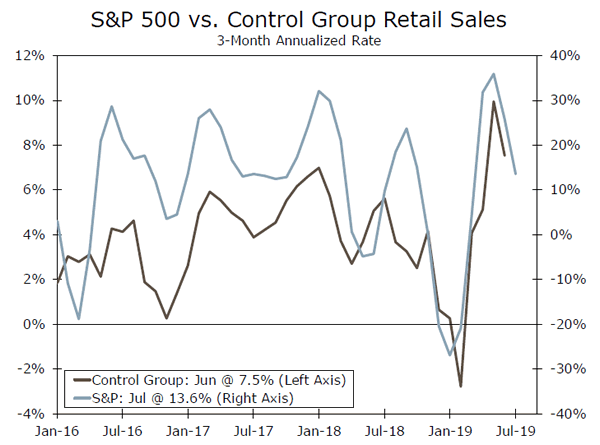
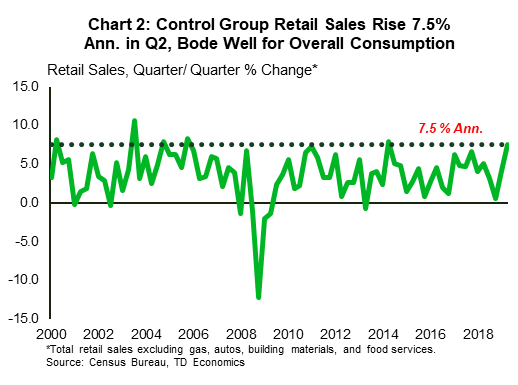
The good news is that despite all the challenges (trade-related or not), the larger services side of the U.S. economy continues to hold up well. The Fed's Beige Book corroborated this narrative in what appeared to be another steady-as-she-goes report for the mid-May to early-July period. Consumer spending is providing a major helping hand. Retail sales extended their winning streak to four straight months, with the tally up 0.4% in June. Sales in the 'control group', which excludes volatile categories and is used in calculating GDP, rose by an even more impressive 0.7%. With the month prior also receiving a slight upgrade, control group sales in the second quarter advanced 7.5% annualized - the strongest showing since mid-2014 (Chart 2). This bodes well for real consumer spending in the second quarter, which we expect to come in at around 4% annualized - a strong rebound from the sluggish start to the year.
Housing data, on the other hand, remains soft. Starts edged lower in June (-0.9%) and have generally moved sideways in recent months. Building permits, however, fell precipitously on the month (-6.1% m/m), suggesting some weakness is still in the pipeline. Despite a favorable demand backdrop and relatively low and falling interest rates, new construction is struggling to kick into higher gear. A lack of buildable lots, labor shortages and increased production costs remain key hurdles.
Looking past housing challenges, the resilience of the American consumer suggests less urgency for the Fed to cut rates later this month. However, several Fed speakers pushed back against that notion this week, emphasizing the need to get ahead of any potential weakness. Still, should the data continue to hold up, the case for limited stimulus (i.e. only 1-2 cuts) is likely to prevail.
Canada - Mixed Data Largely Confirms Q2 Growth Rebound
This week offered investors a deluge of top-tier data releases largely confirming that Canada's second quarter growth rebound is on track. Financial markets were mixed, with the TSX trading sideways and the Canadian dollar slipping late in the week on a soft retail trade print. Movements in oil prices made headlines, with WTI plunging by around $5, likely owing to a confluence of factors, including consternation about global growth prospects. Meanwhile, Canadian bond yields followed the lead of their global counterparts, heading lower also on concerns about the health of the world economy.
On the data front, existing home sales kicked off the week. Despite taking a breather in June, sales were up 5% in the second quarter, boding well for overall growth. Rising activity is certainly welcome, but we float the possibility that sales growth should have been even stronger than the 2% (year-to-date) increase seen so far. After all, mortgage rates have fallen by 75-80 bps by some measures and labour markets remain healthy. Moving forward, these same factors should keep activity on an upward trajectory.
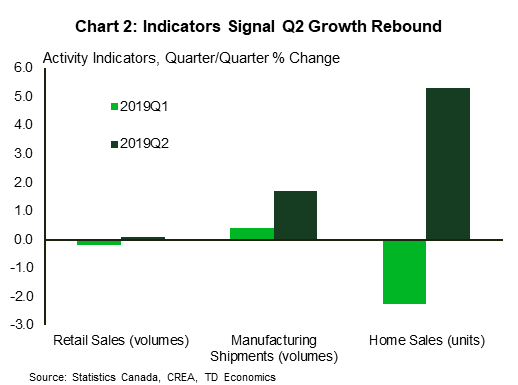
Other data released during the week was more mixed, with a healthy rise in manufacturing sales coming alongside a sharp drop in retail volumes and decelerating consumer price inflation. In May, manufacturing volumes were up a sturdy 1.7% (m/m), partly on a reversal of transitory factors in the auto sector, but also on gains in other industries. However, a rise in inventories to their highest on record took some shine off the headline, as the unwind of these bloated levels will restrain growth in coming quarters.
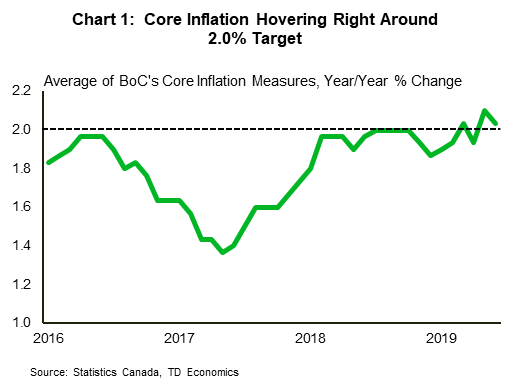
On the softer side, retail spending volumes sank 0.5% (m/m) in May, the sharpest decline in several months, and consistent with our call for more modest household spending in Q2. Headline consumer price inflation also eased up a notch, falling to 2% (y/y) from 2.4% in May. The average of the Bank of Canada's core inflation measures also came in at 2%, down a tenth of a point from May. Despite falling in June, inflation remains well behaved and provides little cause for concern for policymakers (Chart 1).
Bringing it all together, data this week mostly reinforced the (well-worn) notion that economic growth strengthened in Q2 (Chart 2). With this outcome all but guaranteed, attention shifts to third quarter growth prospects. The Bank of Canada expects third quarter growth to slow to a sub-trend 1.5% rate. This suggests that a material slowdown would have to manifest to surprise policymakers and cause some re-think on their current neutral stance. Our own forecast sees the economy chugging along at a trend-like pace in the third quarter and beyond, thus allowing policymakers the leeway to remain on hold for the foreseeable future. Of course, the global growth backdrop has softened, representing the most clear and present danger to this view.
U.S.: Upcoming Key Economic Releases
U.S. Real GDP - Q2
Release Date: July 26, 2019
Previous: 3.1%
TD Forecast: 2.0%
Consensus: 1.8%
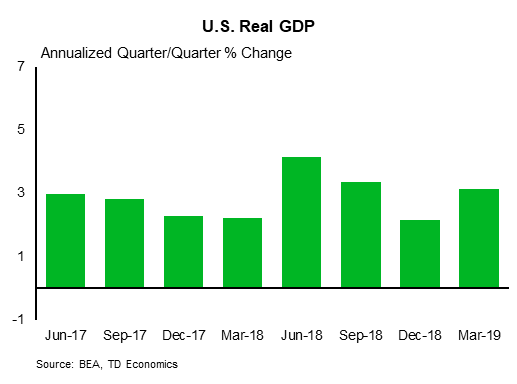
We expect GDP to advance a near-trend 2.0% q/q saar in Q2, down from a strong 3.1% print in Q1. Unlike the prior quarter, we expect consumer spending to be a key engine of growth, rebounding to about 4% after a wobbly start to the year. Business investment, however, continued to slow in the face of global growth concerns and heightened trade uncertainties. Inventories and net exports, key contributors to growth in Q1, were likely a drag on activity in Q2.
Dollar Mixed and Stocks Fall as Markets Brace for More Global Easing
US stocks slipped from record highs following a wrath of mixed earnings results and despite a strong signal from Federal Reserve officials that they are ready to cut interest rates at the end of the month. With over 15% of the companies in the S&P 500 already reporting second quarter results, investors are hardly celebrating earnings beats from roughly four-fifths of them. The S&P 500 finished the week 1% lower, despite rising easing expectation signals from both the Fed and ECB and positive trade banter from President Trump. The dollar has not tanked as Fed officials do not seem ready just yet to deliver bolder action. With a strong string of economic surprises with labor, inflation and retail sales, it seems the market will need another wave of US data deterioration before seeing policymakers signal a more dovish outlook.
Next week the focus will fall heavily on the global manufacturing PMI data, the ECB rate decision and the US advance reading of second quarter GDP. Tuesday, we should find out if Boris Johnson becomes the next UK PM. On Wednesday, Eurozone and Germany manufacturing data is expected to improve but remain in contraction territory, while both service readings are expected to soften but remain in expansion territory. On Thursday, the German IFO survey is expected to see small improvements with business climate and expectations. Thursday will also see a couple big rate decision from the ECB and Turkish central bank. The ECB should switch to easing mode and queuing up fresh moves in September, while the CBRT will cut rates. On Friday, the first reading of US Q2 GDP is expected to fall to 1.8%, the range of estimates is currently 1.4% to 2.5%. A stronger the expected drop in GDP will likely cement expectations for four rate cuts to occur over the next year. A 2.0% or better reading could see rate cut bets fall to two for the remainder of the year.
- ECB to queue up rate cuts and restart of bond buying program
- FOMC rate cut bets could surge if the US advance Q2 GDP declines sharper than expected
- Gold continued support from lack of trade progress and tensions in Persian Gulf
GBP
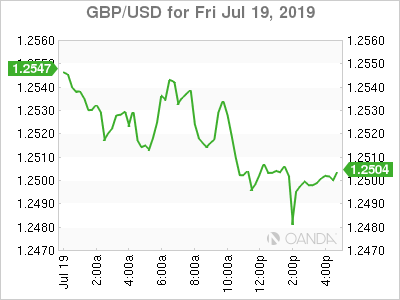
The UK will finally have a new prime minister on Tuesday after 180,000 members of Britain’s conservative party ballots are tallied. Boris Johnson, a huge front-runner is expected to take over on Wednesday and will face an uphill battle as Tory rebels will try to block Johnson’s no-deal Brexit threat.
This week, BOE Gov Carney noted that divergent outlooks are not unsurprising and that officials will explore how to best illustrate market sensitivities. The Treasury Committee also asked the BOE and Treasury to Brexit economic analysis that presented last November. Monetary policy decisions will likely remain on hold until we have further Brexit clarity.
ECB
The ECB observed a quiet period ahead of next week’s rate decision. Press reports circulated that that they could revamp their inflation target, a move that would embolden policymakers to easy policy for much longer. Changes to the inflation target are expected along plans to restart the government bond buying program by November.
Oil
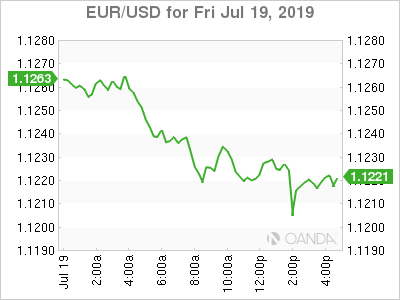
Crude prices will look to see if they can muster up a rebound as geopolitical risks remain high and as the Fed and other major central banks prepare to open the floodgates of easy money.
Tanker seizures and drones getting shot down will remain common themes that should keep the situation tense in the Persian Gulf and possibly lead to some crude shipping disruptions. Friday’s news that Iran’s Revolutionary Guard seized a British tanker helped squash some optimism that we could see Iran return to the negotiating table.
Oil prices will also pay see limited downward pressure on global manufacturing PMI misses as expectations grow for most of the major central banks poised to deliver stimulus. In 1995, when the Fed finally delivered a rate cut in hope of securing a soft landing, oil prices nearly doubled.
Gold
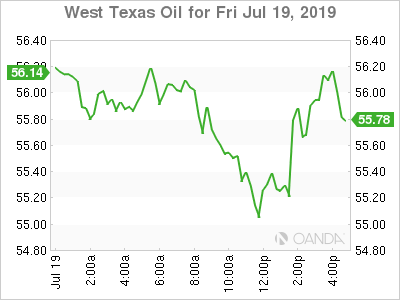
Gold prices came off six-year highs as investors await the next major development with the trade war or Persian Gulf tensions. Gold’s strong run over the past couple weeks stemmed from dovish banter from the Fed, ECB and PBOC. Institutional investor interest is also growing as low interest rate policy (negative for some) appears to be locked in for the foreseeable future and geopolitical risks remain high,
Bitcoin
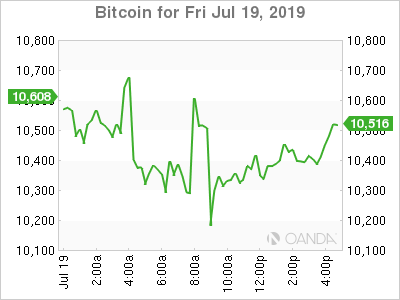
Bitcoin’s initial rally that stemmed from the interest of Facebook’s Libra currency galvanized regulatory interest that will create major hurdles for all cryptocurrencies. We will likely continue to see the focus remain on regulatory side as CFTC will continue to ramp up crackdown efforts for digital coins.
Bitcoin’s wild ride continues as investors seem unfazed by random 10% swings. If Bitcoin can continue to stabilize next week, we could see bullish momentum return as sellers will continue to unwind short positions.