Sample Category Title
AUD/USD Weekly Outlook
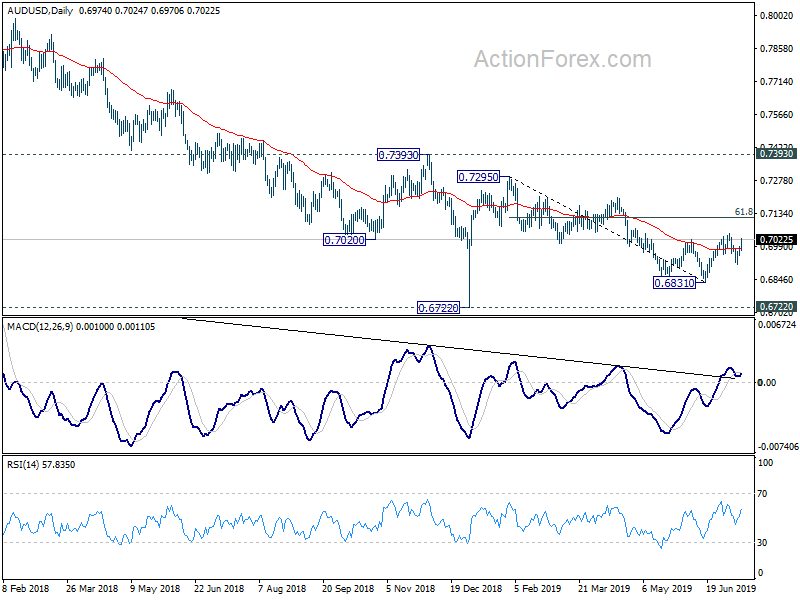
Despite dipping to 0.6910, AUD/USD recovered strongly from there. The development suggests that rise from 0.6831 is no completed yet. Initial bias is mildly on the upside for 0.7047 resistance first. Break will resume the rise from 0.6831 and target 61.8% retracement of 0.7295 to 0.6831 at 0.7118 first. Sustained break till target 0.7295 resistance next. On the downside, though, break of 0.6967 minor support will turn bias to the downside for 0.6910 support instead.
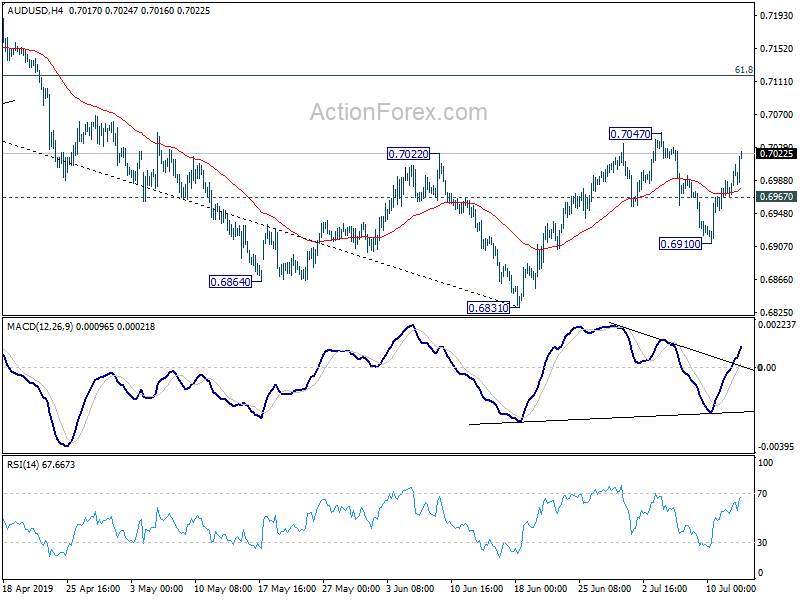
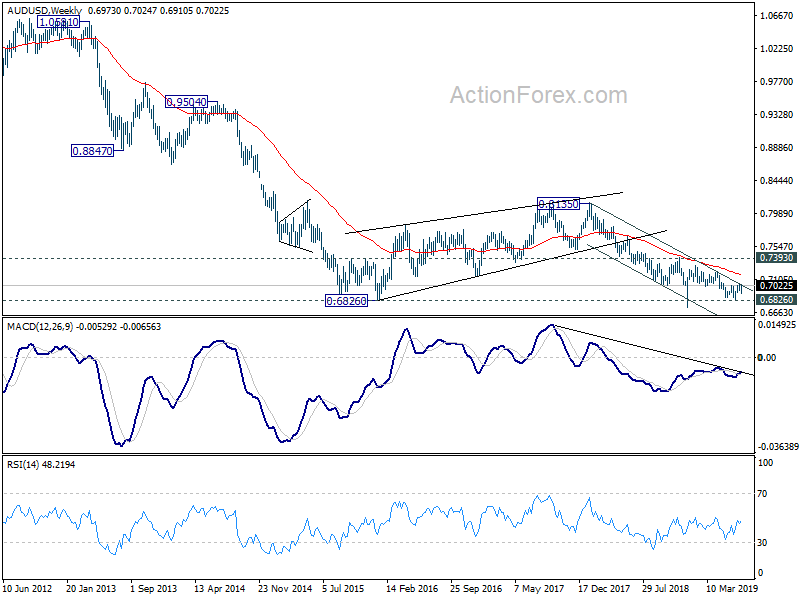
In the bigger picture, with 0.7393 key resistance intact, medium term outlook remains bearish. The decline from 0.8135 (2018 high) is seen as resuming long term down trend from 1.1079 (2011 high). Decisive break of 0.6826 (2016 low) will confirm this bearish view and resume the down trend to 0.6008 (2008 low). However, firm break of 0.7393 will argue that fall from 0.8135 has completed. And corrective pattern from 0.6826 has started the third leg, targeting 0.8135 again.
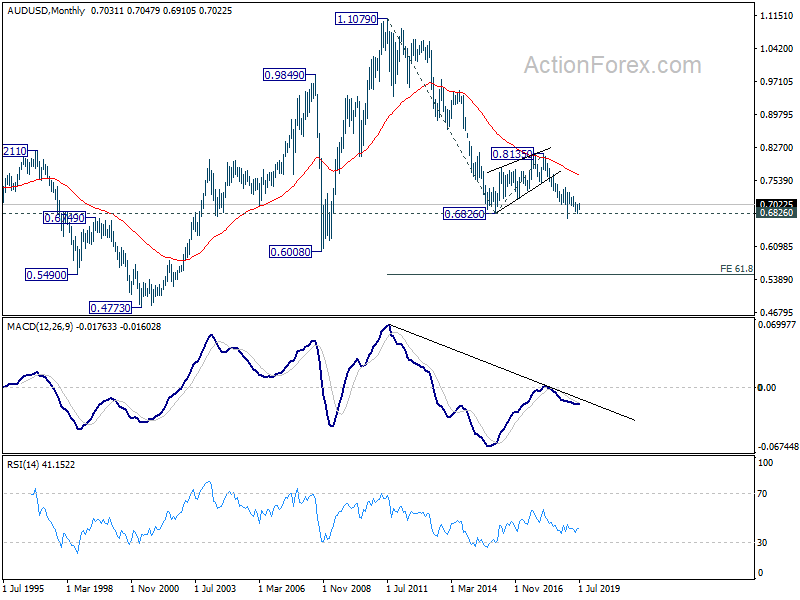
In the longer term picture, prior rejection by 55 month EMA maintained long term bearishness in AUD/USD. That is, down trend from 1.1079 (2011 high) is still in progress. Sustained break of 0.6826 will target 0.6008 low and then 61.8% projection of 1.1079 to 0.6826 from 0.8135 at 0.5507.
USD/CAD Weekly Outlook
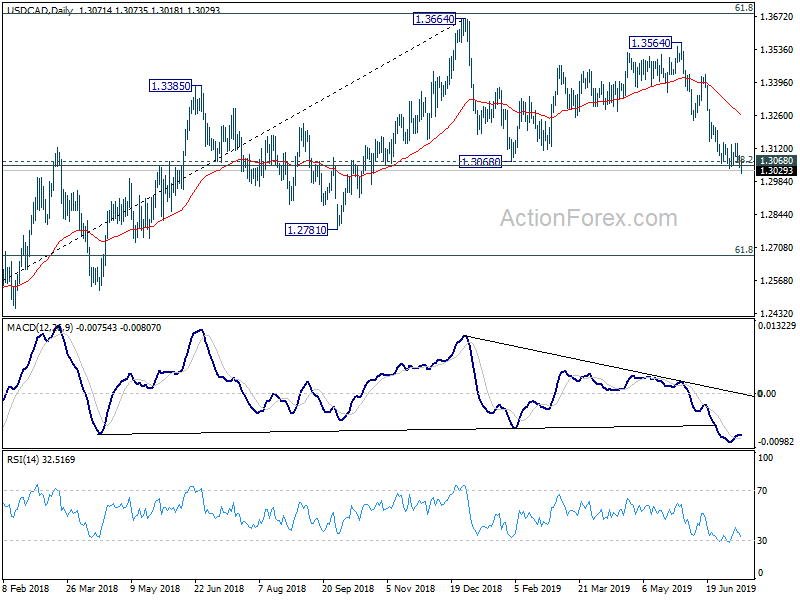
USD/CAD's fall from 1.3564 resumed by breaking 1.3037 temporary low last week. Initial bias remains on the downside this week. Sustained trading below 1.3052/68 cluster support should confirm medium term reversal. Deeper decline should then be seen to 1.2781 support next. On the upside, break of 1.3143 resistance is needed to indicate short term bottoming. Otherwise, near term outlook will remain bearish in case of recovery.
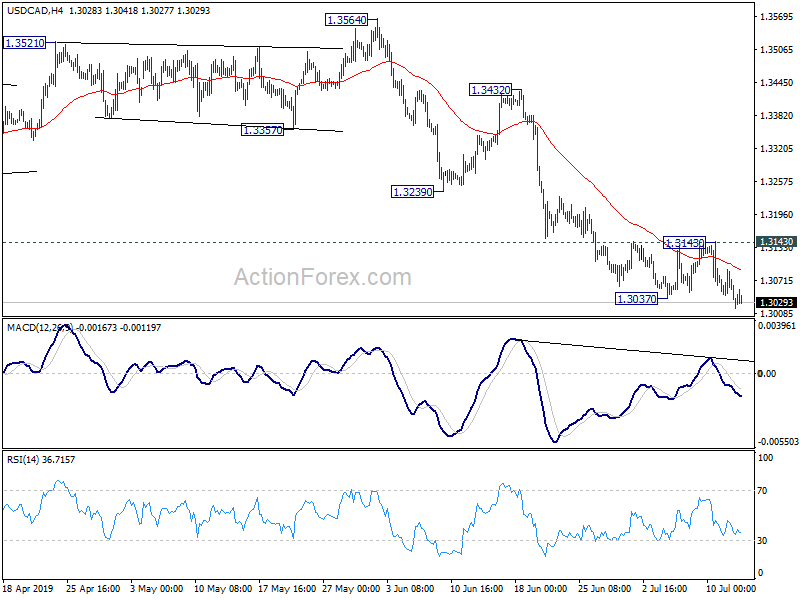
In the bigger picture, the case of bearish reversal continues to build up. Decisive break of 1.3068 cluster support (38.2% retracement of 1.2061 to 1.3664 at 1.3052) will confirm completion of up trend from 1.2061 (2017 low). Further fall should be seen to 61.8% retracement at 1.2673 next. On the upside, sustained break of 61.8% retracement of 1.4689 (2016 high) to 1.2061 at 1.3685, is needed to confirm resumption of up trend from 1.2061 (2017 low). Otherwise, risk will stay on the downside.
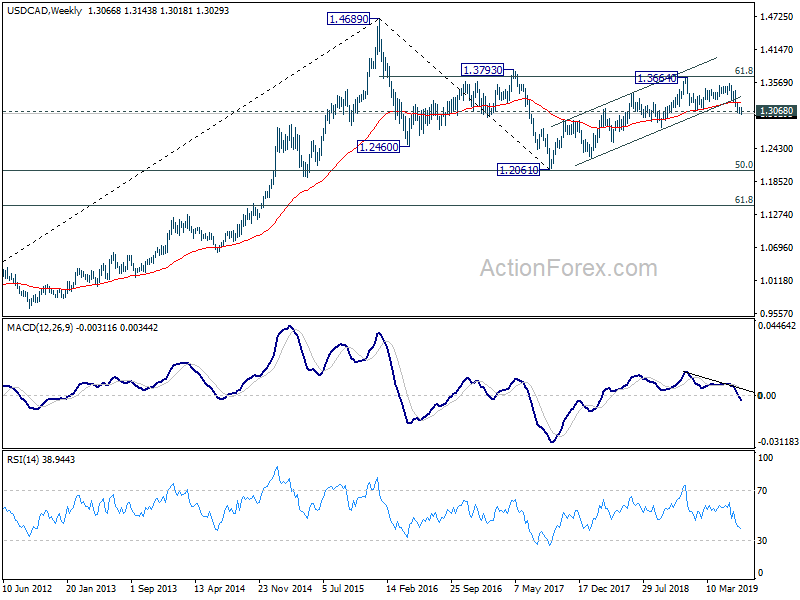
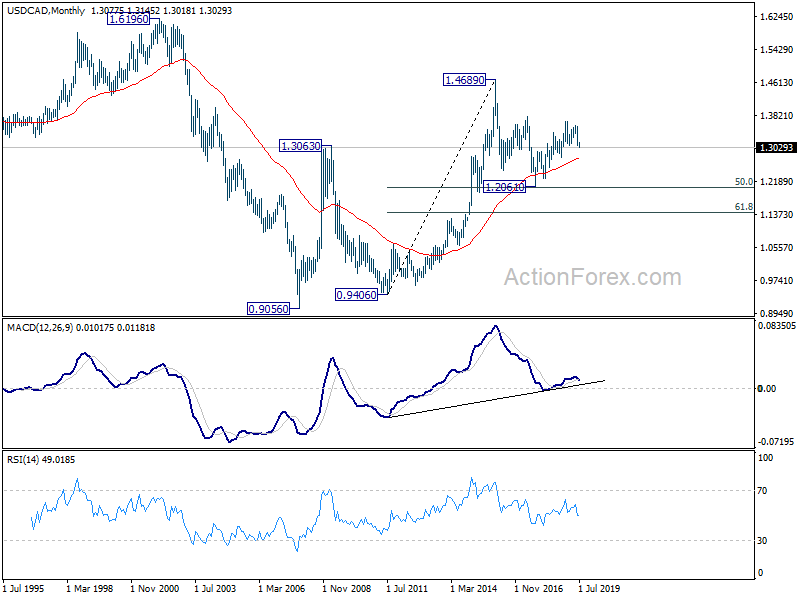
In the longer term picture, outlook remains unchanged that price actions from 1.4689 (2016 high) are forming a corrective pattern. Rejection by 1.3793 resistance would raise the chance of lengthier extension, with risk of dropping through 1.2061 low before completion.
GBP/JPY Weekly Outlook
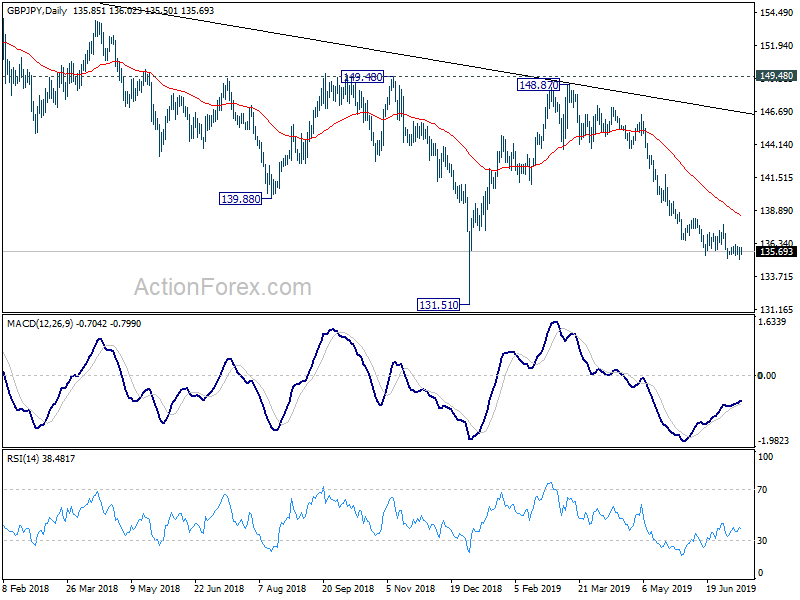
GBP/JPY edged lower to 135.08 but recovered quickly. Initial bias remains neutral this week for some consolidations first. Outlook will remain bearish as long as 137.78 resistance holds. Break of 135.08 will extend recent decline to 131.51 low next.
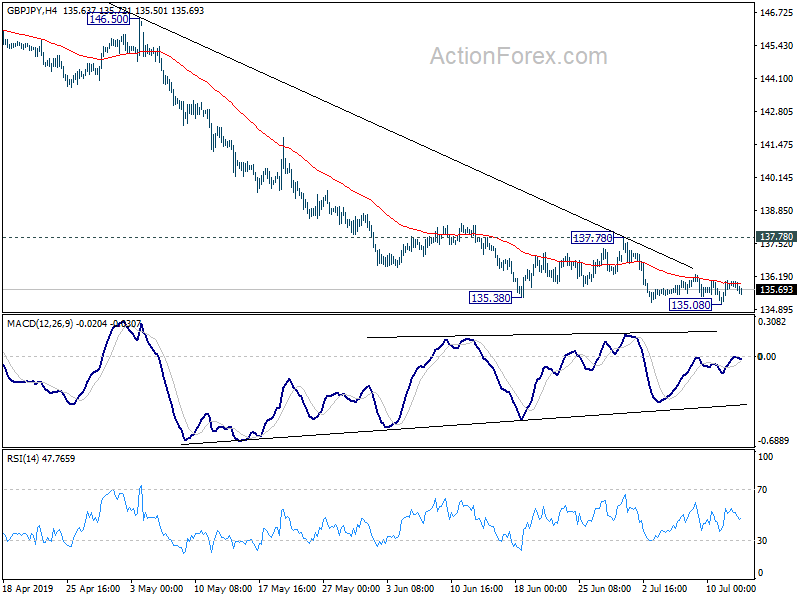
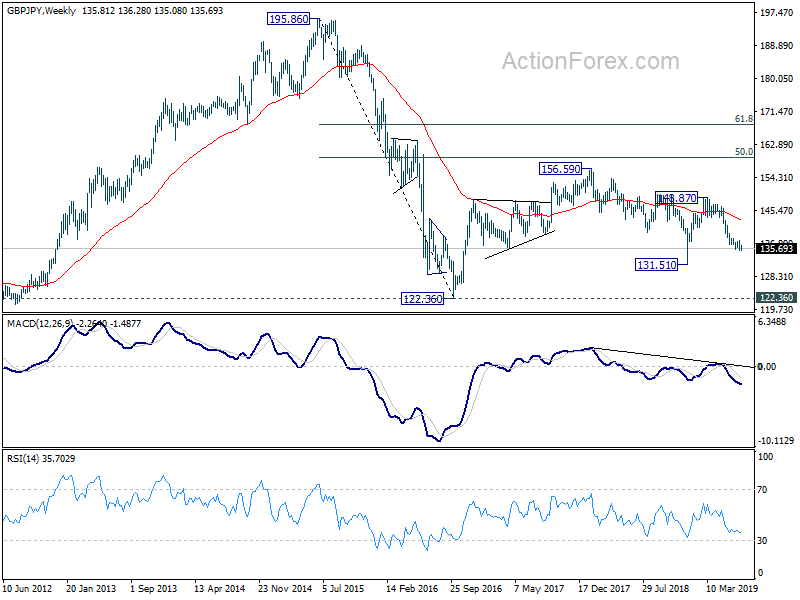
In the bigger picture, medium term fall from 156.59 (2018 high) is still in progress. Break of 131.51 will target 122.36 (2016 low). Structure of such decline is corrective looking so far, arguing that it's just the second leg of consolidation from 122.36. Thus, we'd expect strong support from 122.36 to contain downside to bring reversal.
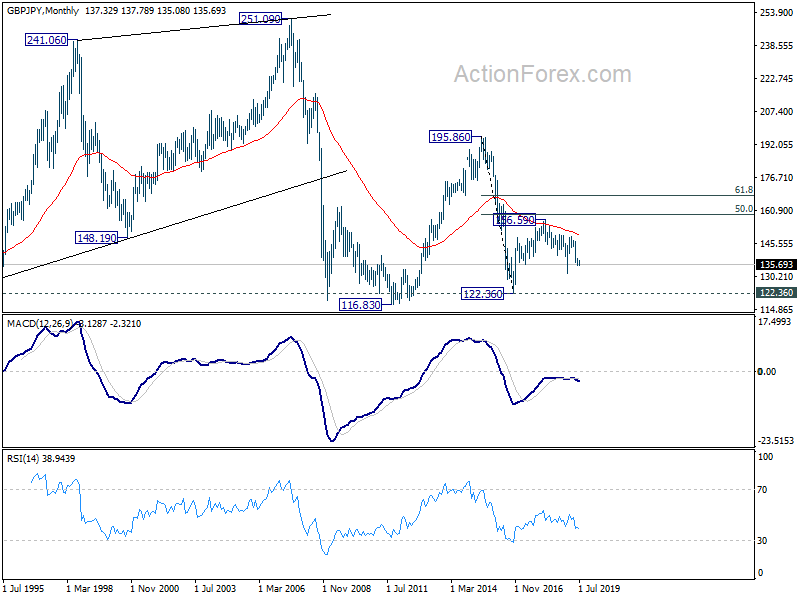
In the longer term picture, firstly, GBP/JPY's is kept well below 55 month EMA, keeping outlook bearish. But we're treating price actions from 122.36 as a corrective pattern. Hence, we'd expect range trading to continue longer. In case of an extension, strong resistance is likely to be seen at 50% retracement of 195.86 (2015 high) to 122.36 at 159.11 to limit upside. However, break of 122.26 will put 116.83 (2011 low) back into focus.
EUR/JPY Weekly Outlook
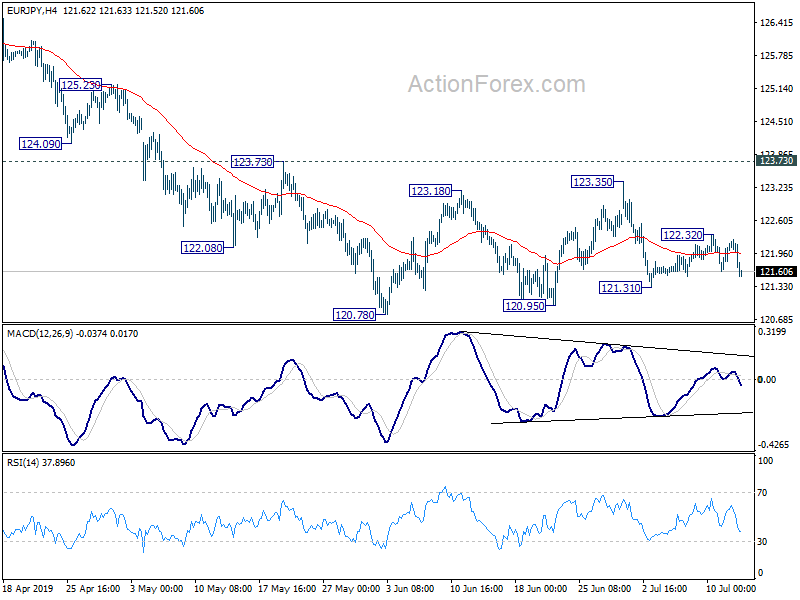
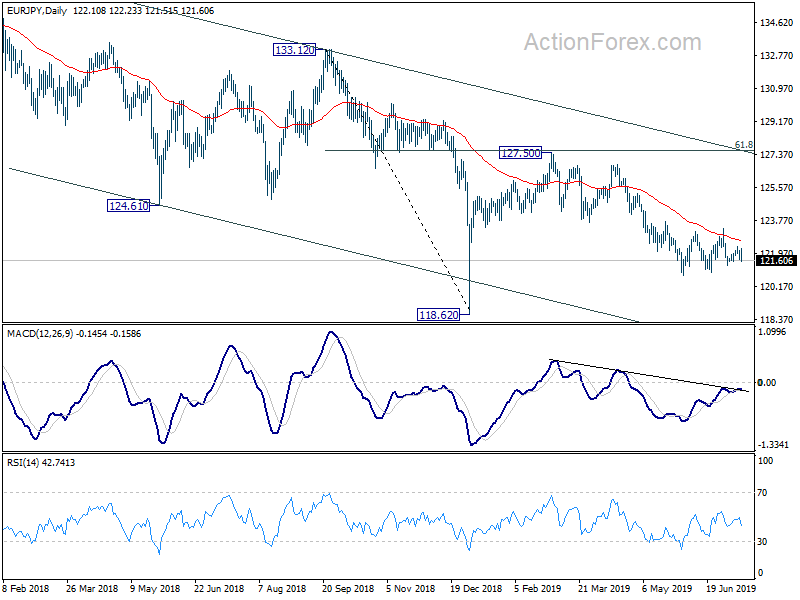
EUR/JPY stayed in range above 121.31 last week and outlook is unchanged. Initial bias remains neutral this week first. We're still favoring the case that consolidation from 120.78 has completed with three waves to 123.35. Below 121.31 will target retest of 120.78 first. Break will resume fall from 127.50 to 118.62 low. In case of another rise as consolidation from 120.78 extends, upside should be limited by 123.73 resistance to bring fall resumption eventually.
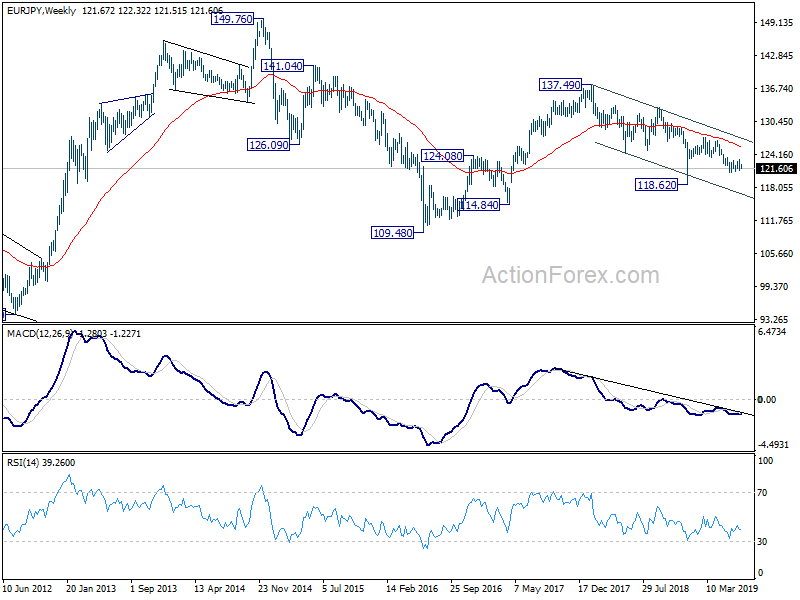
In the bigger picture, down trend from 137.49 is still in progress with the cross staying inside long term falling channel. Break of 118.62 will extend the fall to 109.48 (2016 low). On the upside, break of 127.50 resistance is needed to be the first sign of medium term reversal. Otherwise, outlook will remain bearish in case of strong rebound.
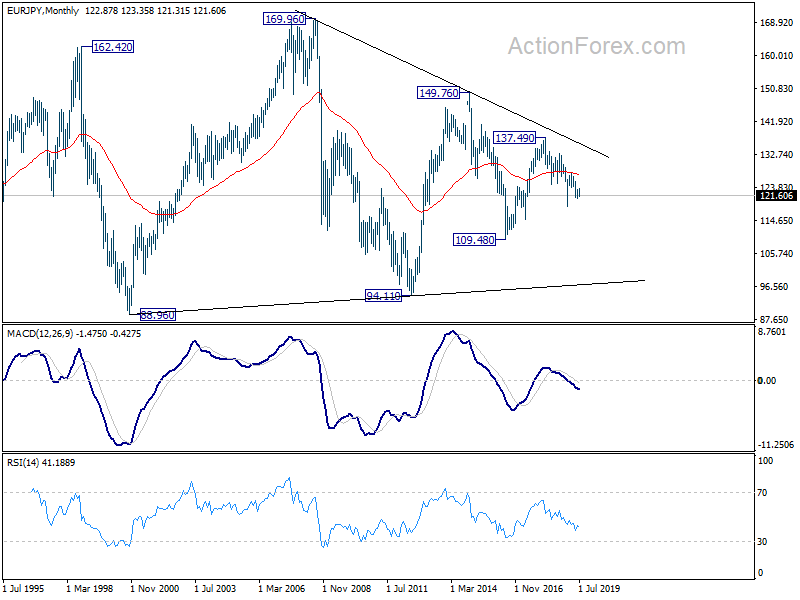
In the long term picture, EUR/JPY is staying in long term sideway pattern, established since 2000. Fall from 137.49 is seen as a falling leg inside the pattern. Break of 118.62 will extend this falling leg through 109.48 (2016 low). With EUR/JPY staying below 55 month EMA, this is now the preferred case.
EUR/GBP Weekly Outlook
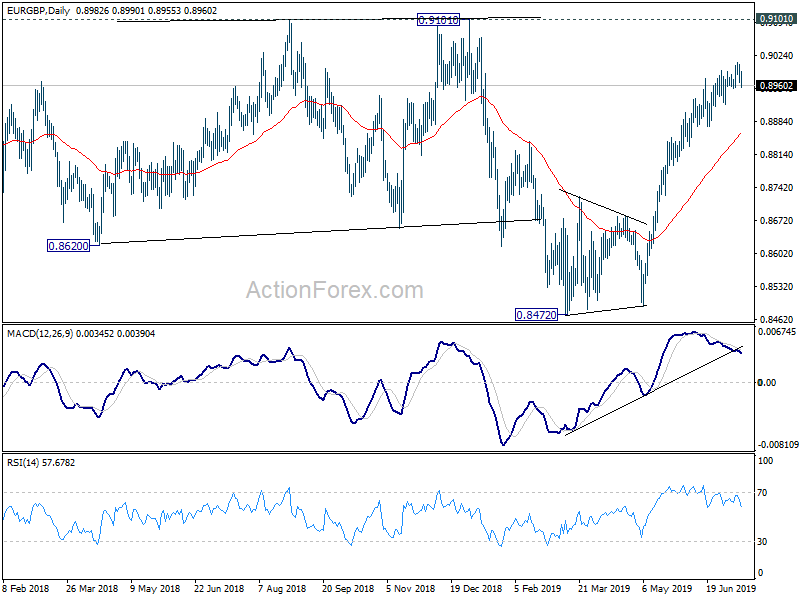
EUR/GBP edged higher to 0.9010 last week but continued to lost upside momentum. Another rise cannot be ruled out this week. But we'd look for topping signal as it approaches 0.9101 key resistance. On the downside, break of 0.8954 support will indicate short term topping. In this case, deeper pull back could be seen to 55 day EMA (now at 0.8858) first.
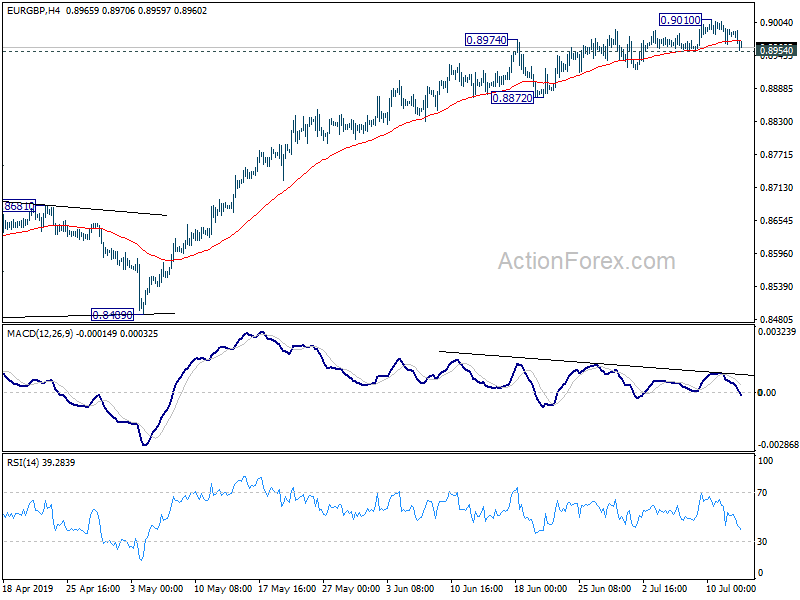
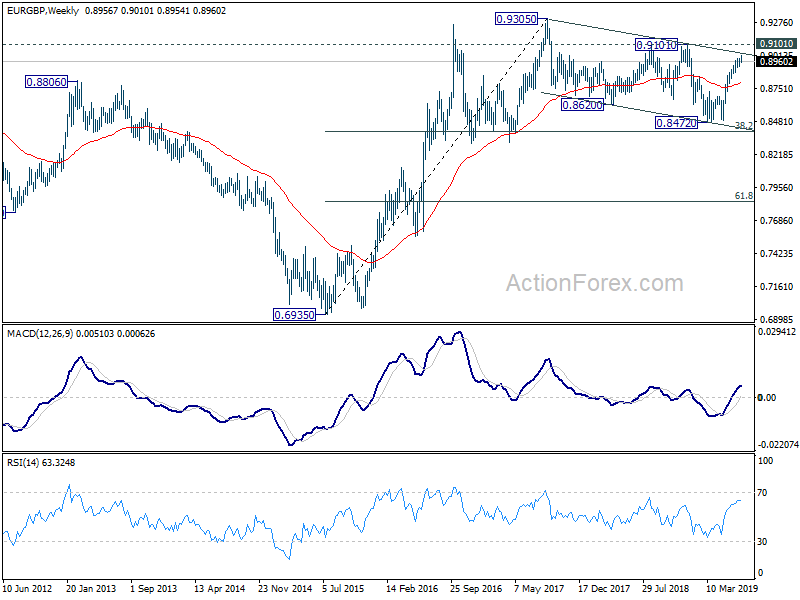
In the bigger picture, medium term decline from 0.9305 (2017 high) is seen as a corrective move. No change in this view. Current development argues that it might have completed with three waves down to 0.8472, just ahead of 38.2% retracement of 0.6935 (2015 low) to 0.9306 at 0.8400, after hitting 55 month EMA (now at 0.8545). Decisive break of 0.9101 resistance will confirm this bullish case. Nevertheless, as EUR/GBP is still staying inside long term falling channel, correction from 0.9305 could still extend to 0.8400 fibonacci level before completion, if upside is rejected by 0.9101.
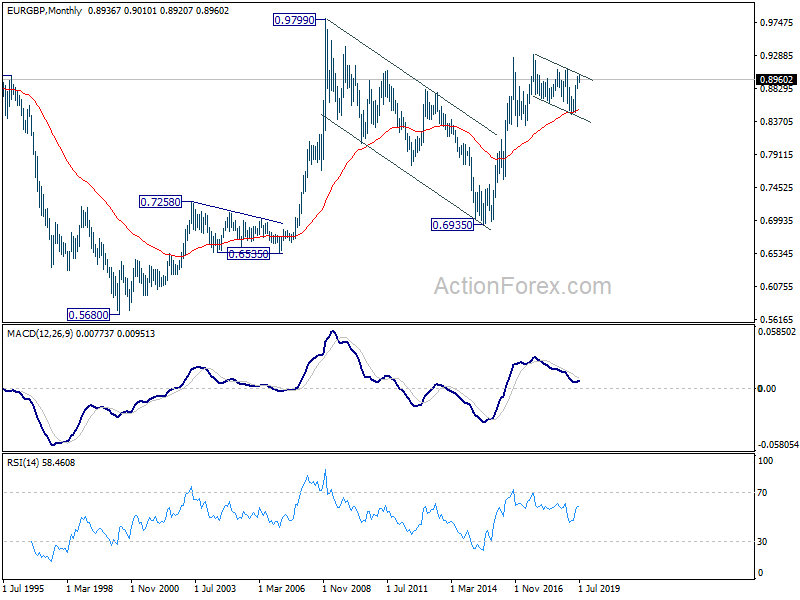
In the long term picture, we're holding on to the view that rise from 0.6935 (2015 low) is resuming the up trend from 0.5680 (2000 low). As long as 38.2% retracement of 0.6935 to 0.9306 at 0.8400 holds, further rise should be seen through 0.9305 to 0.9799 and above down the road.
EUR/AUD Weekly Outlook
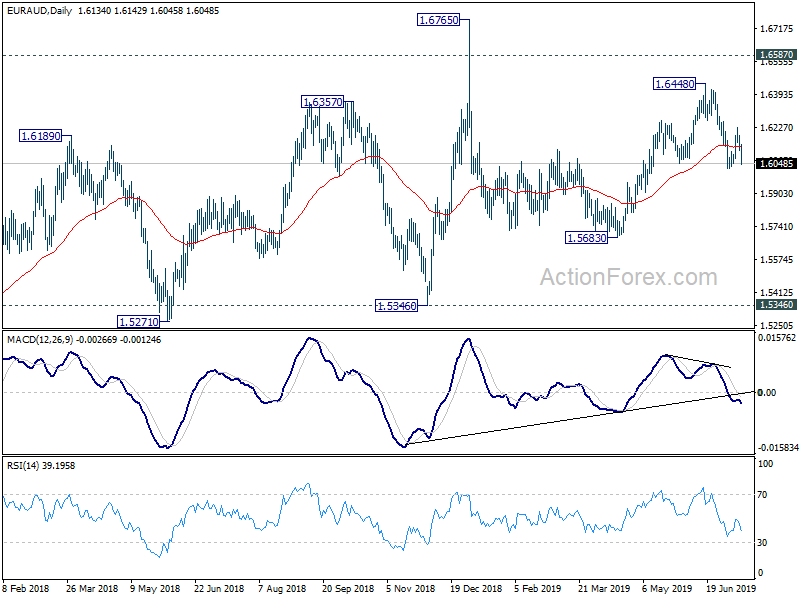
EUR/AUD recovered further to 1.6231 last week but reversed since then. With 1.6259 minor resistance intact, near term bearishness is retained. Initial bias remains neutral this week first. On the downside, break of 1.6025 will resume the fall from 1.6448. Such decline is seen as the third leg of the consolidation pattern from 1.6765 high. Next target will be 1.5683 support and below.
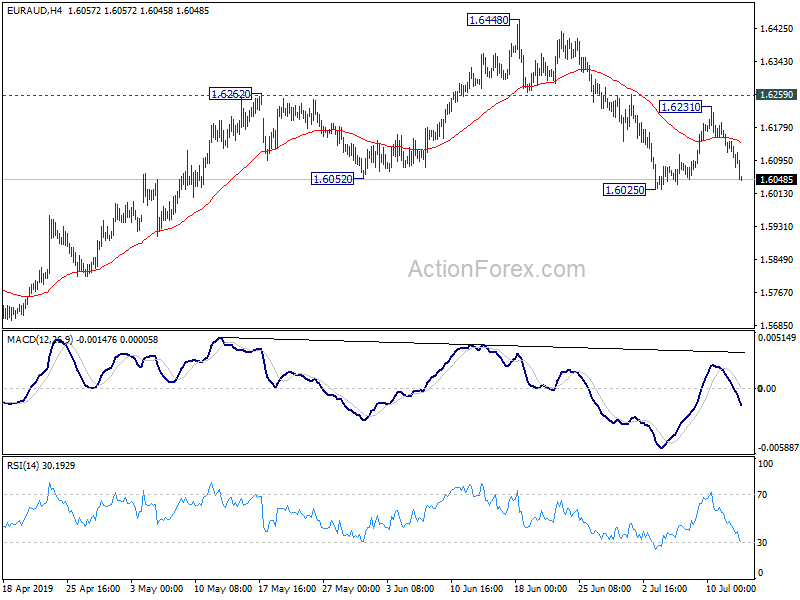
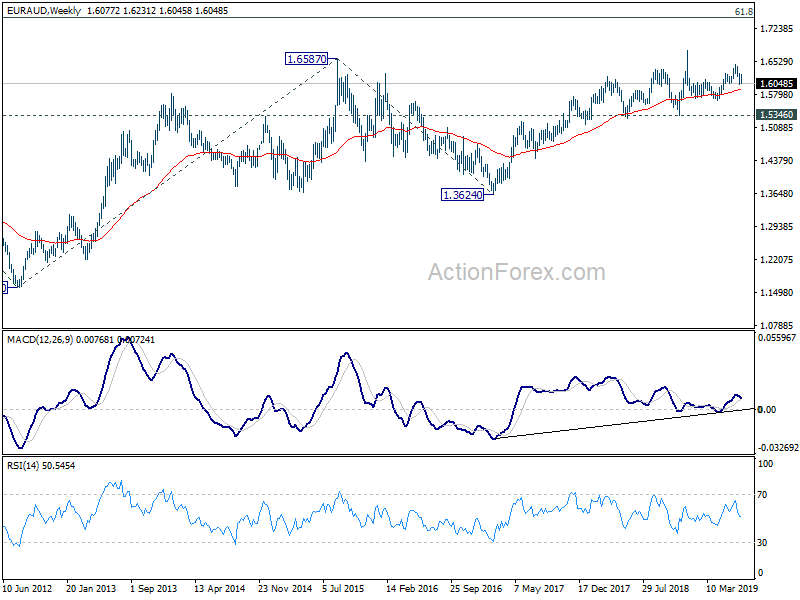
In the bigger picture, as long as 1.5346 support holds, outlook will still remain bullish. Up trend from 1.1602 (2012 low) is expected to resume sooner or later. Break of 1.6765 will target 61.8% retracement of 2.1127 (2008 high) to 1.1602 at 1.7488 next. However, firm break of 1.5346 key support will indicate trend reversal and turn outlook bearish.
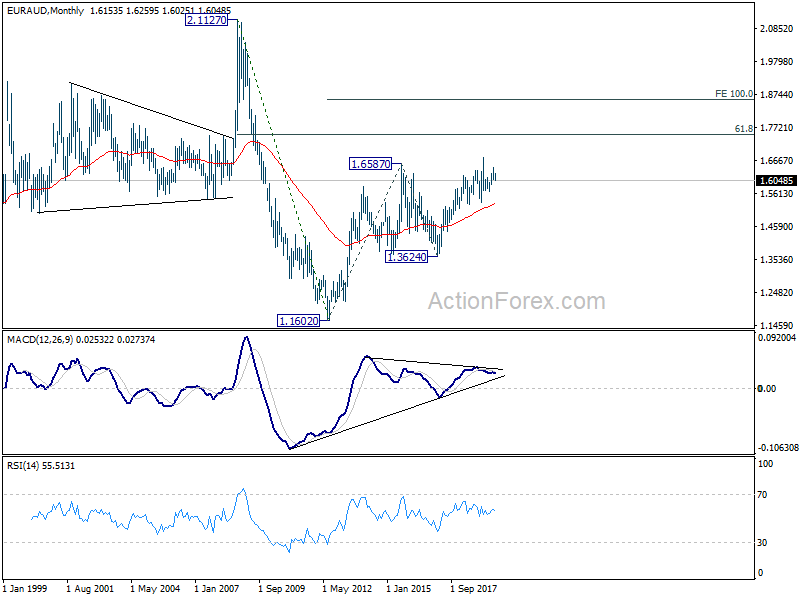
In the longer term picture, the rise from 1.1602 long term bottom (2012 low) is still in progress for 61.8% retracement of 2.1127 to 1.1602 at 1.7488. This will remain the favored case as long as 1.5346 remains intact.
EUR/CHF Weekly Outlook
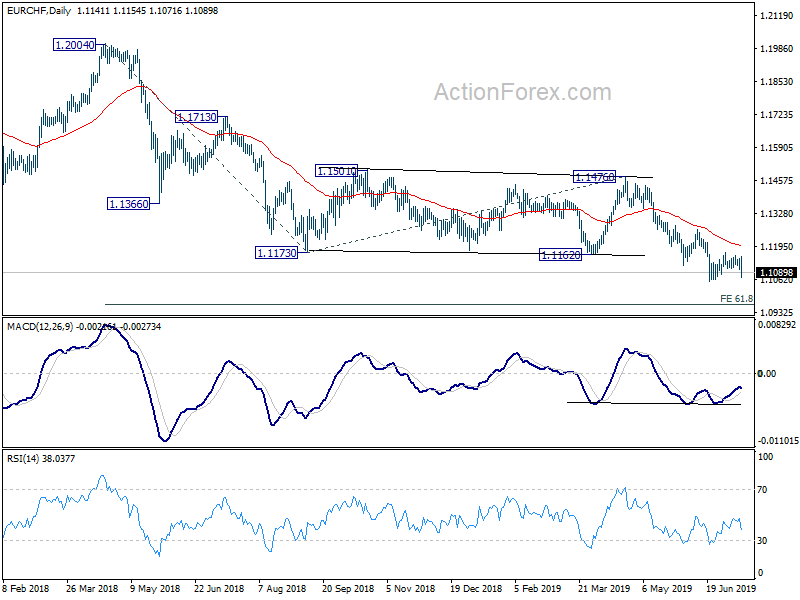
EUR/CHF dropped notably last week but remained above 1.1056 low. Initial bias remains neutral this week first. More sideway trading cannot be ruled out. But in case of another recovery, upside should be limited below 1.1264 resistance to bring fall resumption. On the downside, break of 1.1056 will extend the larger down trend for 61.8% projection of 1.2004 to 1.1173 from 1.1476 at 1.0962 next.
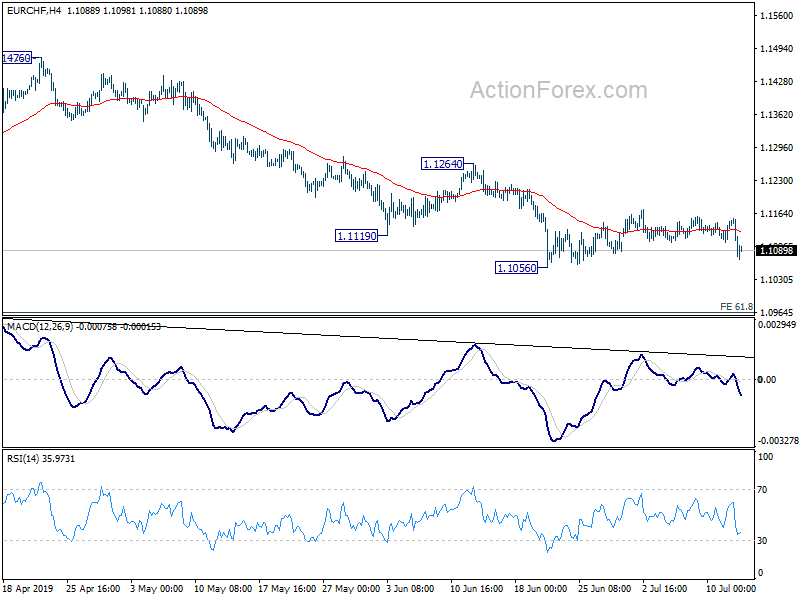
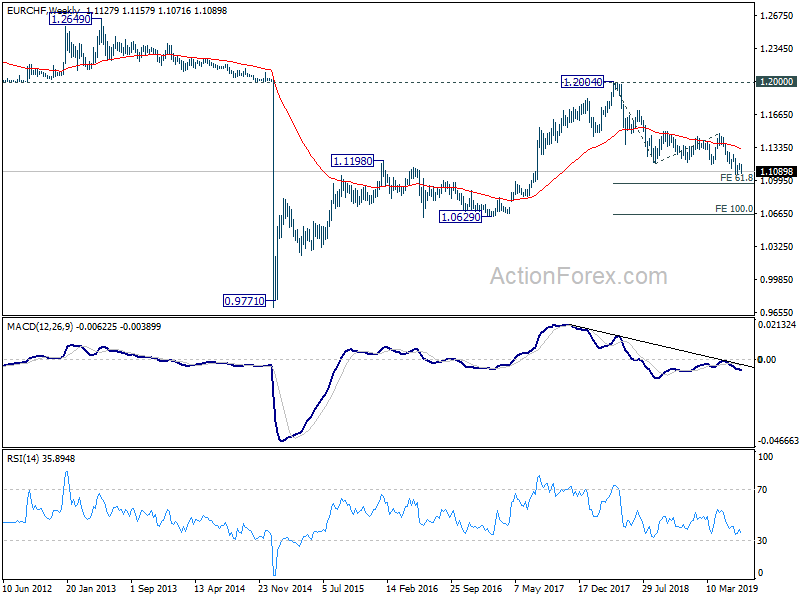
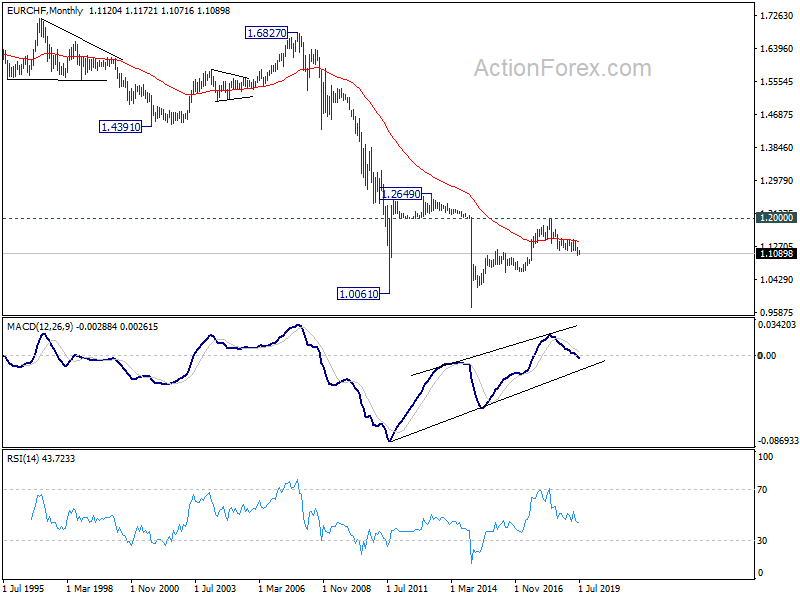
In the bigger picture, current development firstly suggests that down trend from 1.2004 is still in progress. More importantly, it's likely a long term down trend itself, rather than a correction. Outlook will remain bearish as long as 1.1476 resistance holds. EUR/CHF could target 1.0629 support and below.
Dollar Reversed, Stocks Made New Records on as Fed Cut Expectations Solidified
Dollar's fortune reversed again last week as expectations of Fed July rate cut re-intensified. Such expectations also pushed US equities to new record highs. However, global equities lagged behind, with major FTSE, CAC and Nikkei closed inside prior week's range. DAX even dropped sharply. Also, 10-year and 30-year US treasury yields rebounded, together with German 10-year bund yields, despite expectations of monetary easing from Fed and ECB.
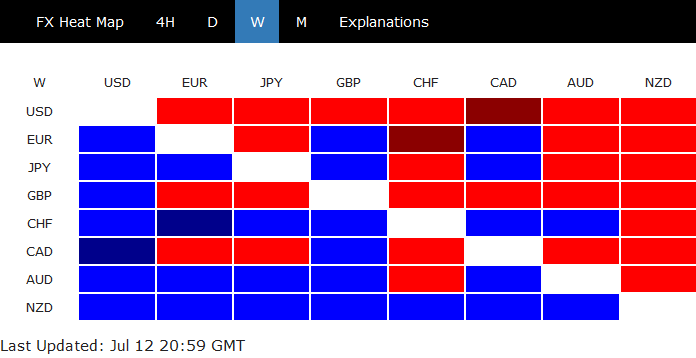
Staying in the currency markets, Sterling followed Dollar as the second weakest for the week, and then Canadian. New Zealand Dollar ended as the strongest one, followed by Swiss Franc and then Australian. Overall developments in the forex markets were rather mixed.
Though, technically, there are a couple of points to note. USD/CAD broke near term support at 1.3037 and resumed recent fall from 1.3564. The case for medium term bearish reversal in the pair is building up. AUD/USD's strong rebound argues that recent rise from 0.6831 is still in progress and break of 0.7047 resistance would likely be seen very soon. Selloff in USD/JPY and USD/CHF also suggest that recent correct rebounds from 106.78 and 0.9695 have completed. Both pairs could retest recent lows soon. EUR/AUD's fall from 1.6448 also looks set to resume as corrective recovery from 1.6025 has completed last week.
Markets continue to fully expect July Fed cut
Powell sounded rather non-committal to any move in interest rates this month. And he pointed to upcoming economic data, including retail sales and GDP. These data would be taken into considering at the July 31 FOMC meting. But most importantly, he did nothing to talk down market's full pricing of July rate cut. And that's seen by traders as a nod to the highly anticipated rate cut.
He also mentioned that since June FOMC meeting, "uncertainties around trade tensions and concerns about the strength of the global economy continue to weigh on the U.S. economic outlook" and "inflation pressures remain muted". It seems that to him, resumption of US-China trade negotiation and averting of tariffs on Mexico didn't ease those uncertainties and concerns.
In the minutes of June FOMC meeting, it's echoed that "uncertainties and risks regarding the global outlook appeared to be contributing to deterioration in risk sentiment in financial markets and a decline in business confidence that pointed to a weaker outlook for business investment". Also, "many" of the voting members judged that "additional monetary policy accommodation would be warranted in the near term" if such developments "prove to be sustained" and "continue to weigh on the economic outlook".
Combined together, the message is that the trigger for a cut could be continuation of uncertainties rather than actual deterioration in growth and inflation outlook. Such a bar for a move is rather low and based on this, the upcoming rate cut looks like a done deal. Nevertheless, we'd still argue that the picture could still change. US core CPI already reversed the trend in June and rose back to 2.1% yoy. There could also be some upside surprise in upcoming retail sales and GDP data. And again, according to June projections, only eight out of seventeen FOMC members penciled in rate cuts this year. Nine expected no change with one of the expected a hike. July FOMC rate decision is more live then people expect.
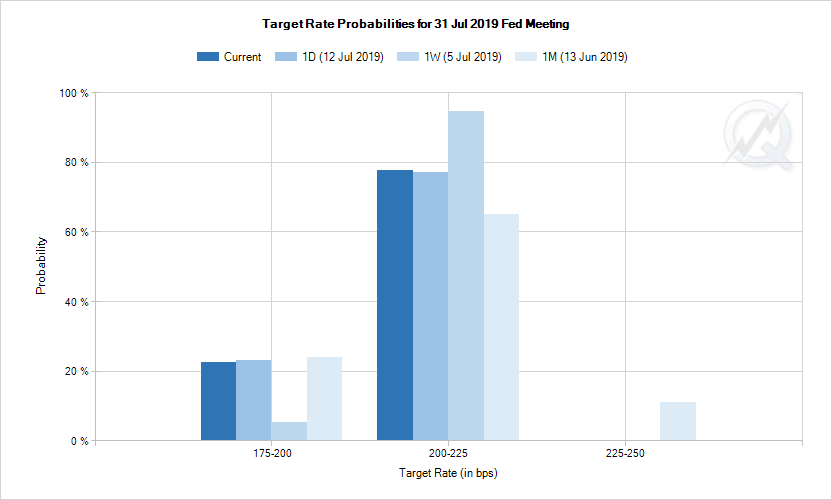
As of yesterday, fed fund futures are still pricing in 100% of a 25bps rate cut this month, with 22.5% change of 50bps cut.
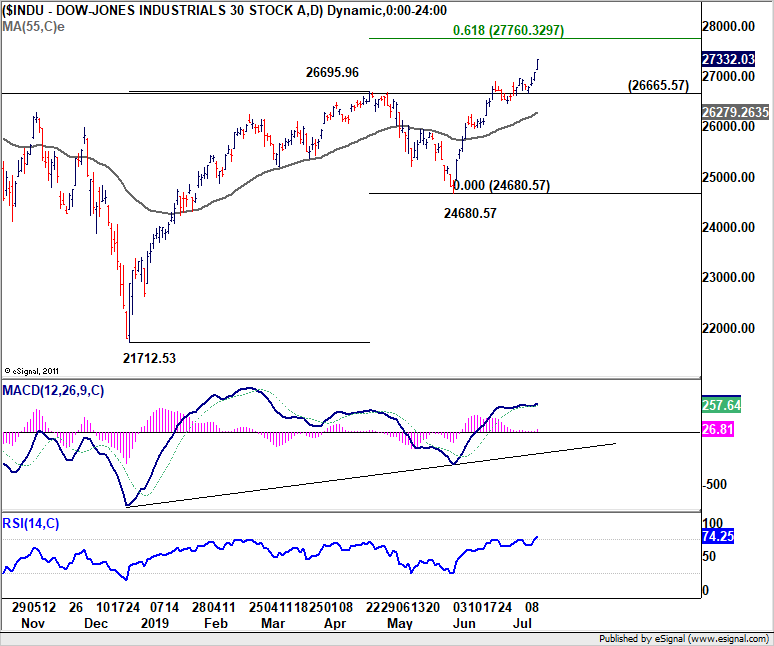
DOW made new record high, targeting 27760 next
DOW, S&P 500 and NASDAQ, closed at record highs last week on Fed cut expectations. Upside acceleration on Friday suggest DOW's rally is far from over. Near term outlook will stay bullish as long as 26665.57 support holds. Further rise should be seen to 61.8% projection of 21712.53 to 26695.96 from 24680.57 at 27760.32 next.
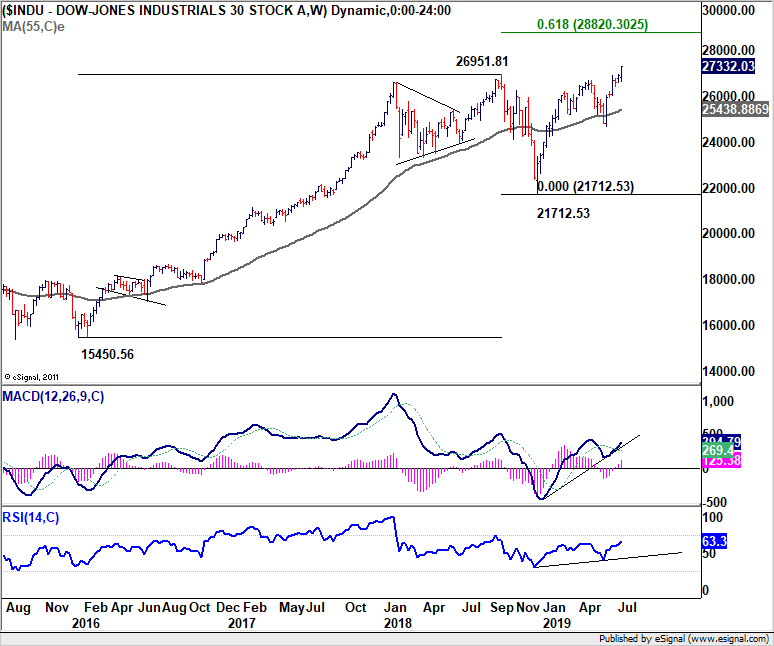
From a long term perspective, next key resistance is at 61.8% projection of 15450.56 to 26951.81 from 21712.53 at 28820.30.
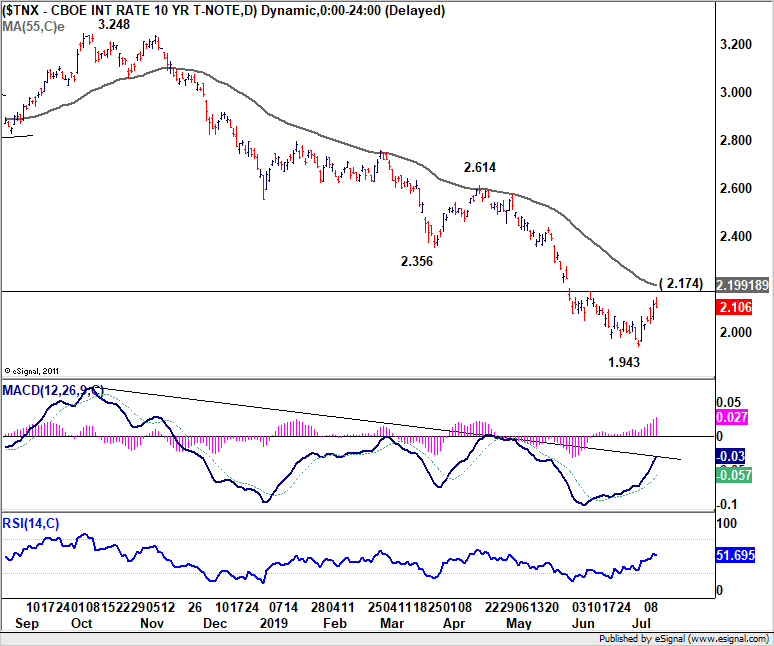
10-year yield recovered, but stays near term bearish
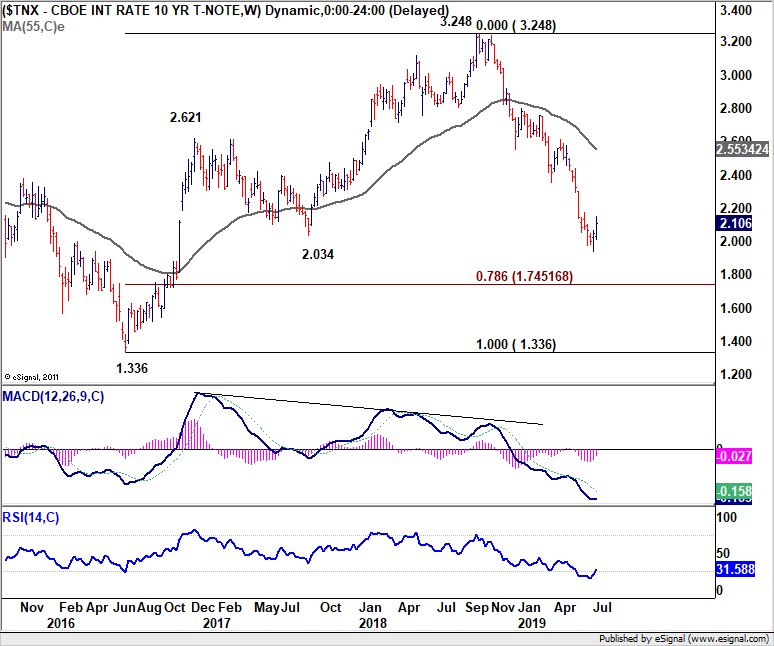
10-year yield recovered notably after making a short term bottom at 1.1943. But recovery is limited below 2.174 resistance, as well as falling 55 day EMA. Thus, outlook remains bearish and the down trend from 3.248 is expected to resume sooner or later, through 1.943 low. Nevertheless, break of2.174 will bring stronger rebound back to 2.356/614 resistance zone.
In the bigger picture, 2.034 key support was already breached. When down trend from 3.248 resumes, next target will be 78.6% retracement of 1.336 to 3.248 at 1.745. Such a move would drag down Dollar further, in particular USD/JPY.
Dollar index to extend medium term consolidation
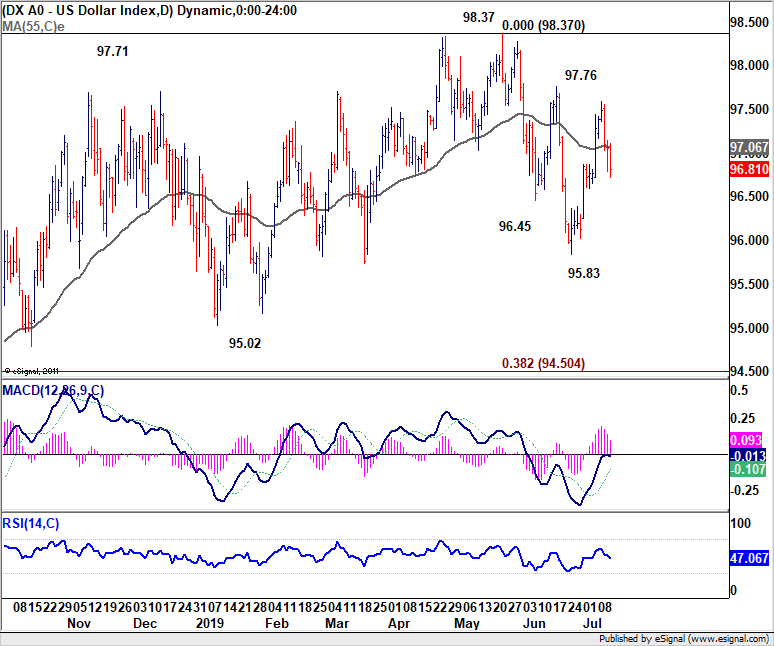
Dollar index's rebound from 95.83 was limited below 97.76 resistance and dropped sharply. The development now argues that corrective pattern from 98.37 is not finished yet. And more medium term range trading could be seen. It's rather hard to predict the path inside the pattern.
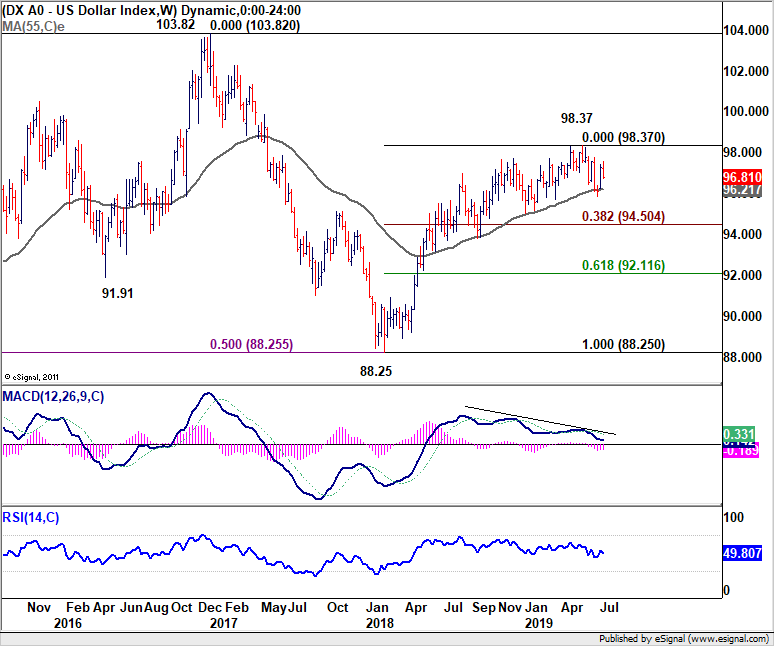
But in case of another fall, 55 week EMA (now at 96.21) will be first line of defense. Sustained break there, though, will bring deeper fall to 38.2% retracement of 88.25 to 98.37 at 94.50.
USD/CAD Weekly Outlook
USD/CAD's fall from 1.3564 resumed by breaking 1.3037 temporary low last week. Initial bias remains on the downside this week. Sustained trading below 1.3052/68 cluster support should confirm medium term reversal. Deeper decline should then be seen to 1.2781 support next. On the upside, break of 1.3143 resistance is needed to indicate short term bottoming. Otherwise, near term outlook will remain bearish in case of recovery.
In the bigger picture, the case of bearish reversal continues to build up. Decisive break of 1.3068 cluster support (38.2% retracement of 1.2061 to 1.3664 at 1.3052) will confirm completion of up trend from 1.2061 (2017 low). Further fall should be seen to 61.8% retracement at 1.2673 next. On the upside, sustained break of 61.8% retracement of 1.4689 (2016 high) to 1.2061 at 1.3685, is needed to confirm resumption of up trend from 1.2061 (2017 low). Otherwise, risk will stay on the downside.
In the longer term picture, outlook remains unchanged that price actions from 1.4689 (2016 high) are forming a corrective pattern. Rejection by 1.3793 resistance would raise the chance of lengthier extension, with risk of dropping through 1.2061 low before completion.
China’s Strong Trade Surplus Driven by Contraction in Imports. Strong Inflation Unlikely Restrains Further Easing
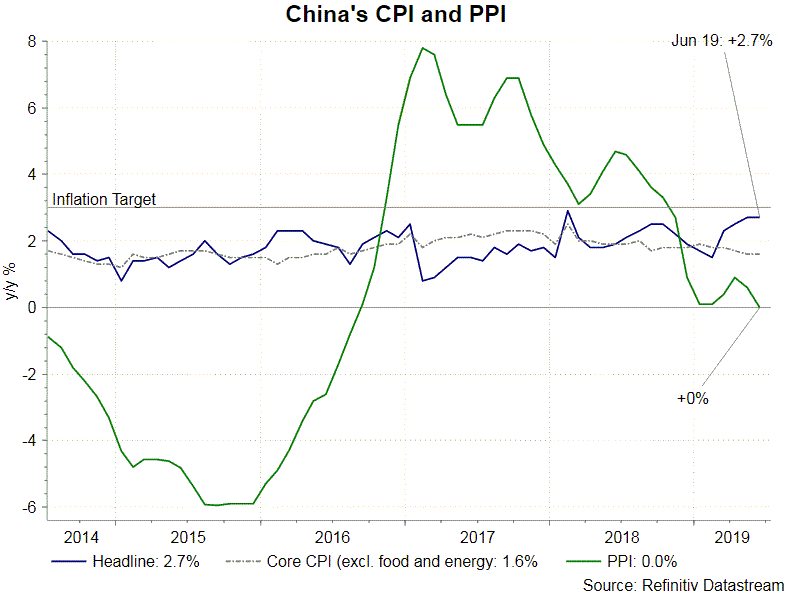
China headline CPI stayed unchanged at 2.7% y/y in June. Most of the increase was driven by food price. While African swine fever has caused pork price to soar, extreme weather affected harvest, sending fruit price higher. Food price jumped +7.7% in May from a year ago. Excluding food prices, CPI gained +1.7%.
Core inflation Excluding food and energy prices, CPI rose +1.6%. From a month ago, inflation contracted -0.1%. Upstream price level remained pressured. PPI slowed further to 0%, compared with +0.6% in May and consensus of +0.3%
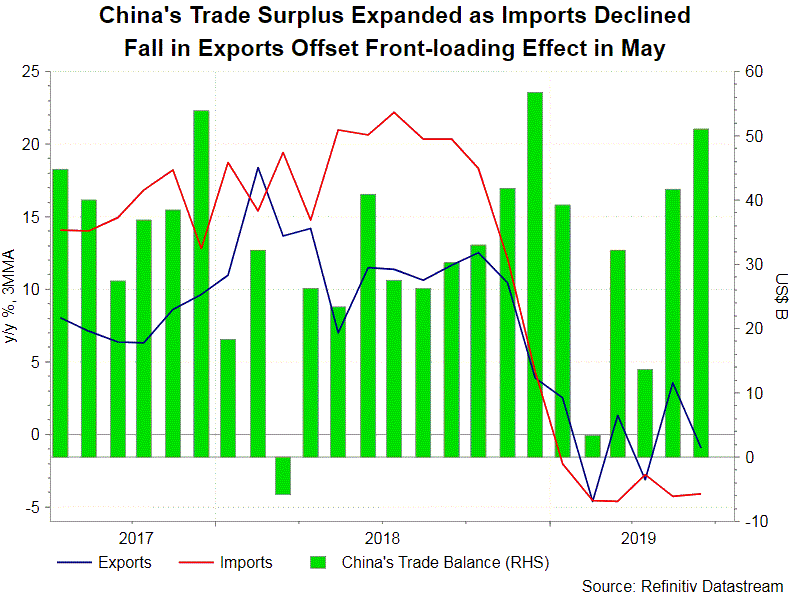
 Trade surplus widened to US$50.98B in June, beating consensus of US$44.65B and May’s $41.66B. The apparent strong headline reading was due to weak imports, reinforcing slowdown in Chinese growth. Exports contracted -1.3% y/y, after a +1.1% growth in May. This affirms our judgment that Mays’ growth was driven by front-loading.
Shipment to the US slumped -7.8%, deteriorating from -4.1% a month ago. Contraction was also seen in the EU with a decline of -3%, following a +6.1% growth a month ago. Exports to Japan eased to +2.4%. Lower demand from advanced economies evidenced genuine of global slowdown.
Concerning emerging markets, exports to Taiwan grew +5%, sharply lower May’s +12.8%, while exports growth to Korea accelerated to +3%, from +1.8% in May. China’s exports to ASEAN also jumped significantly to +12.9%, from +3.5% a month ago.
Import declined -7.3% y/y, following -8.5% in May. The market had anticipated a -4.5% contraction. Domestic demand in China has been weak. Weakness in commodity imports signals moderation in industrial production, likely hurt by US-China trade war.
Major Data Due Next Week
China would release GDP growth for the second quarter, together with industrial production (IP) growth, retail sales and fixed asset investment in June, next week. Economic developments over the past months signaled that growth decelerated in 2Q19 from the prior quarter.
Meanwhile, there could be downside surprise to market expectations of a pickup in IP growth. Manufacturing PMI, by Markit/ Caixin, dropped to 49.4 in June, from 50.2 a month ago. This is the second lowest level since June 2016. The report also shows that “output” and “new orders” sub-index fell for first time since January, while “exports” declined – predicting contraction in exports trade.
As the report concluded, “China’s economy came under further pressure in June” as “domestic demand shrank notably, foreign demand was still underpinned by front-loading exports, and business confidence fell sharply”.
Government’s Policy Outlook
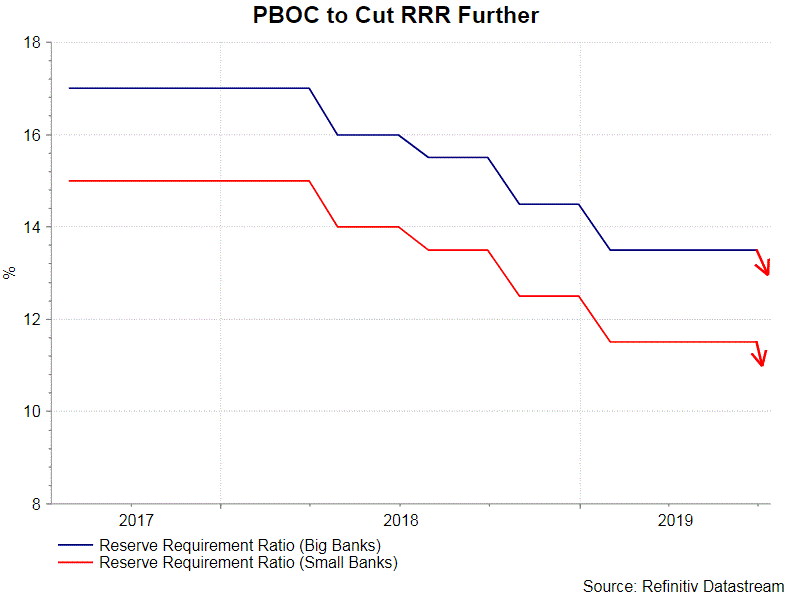
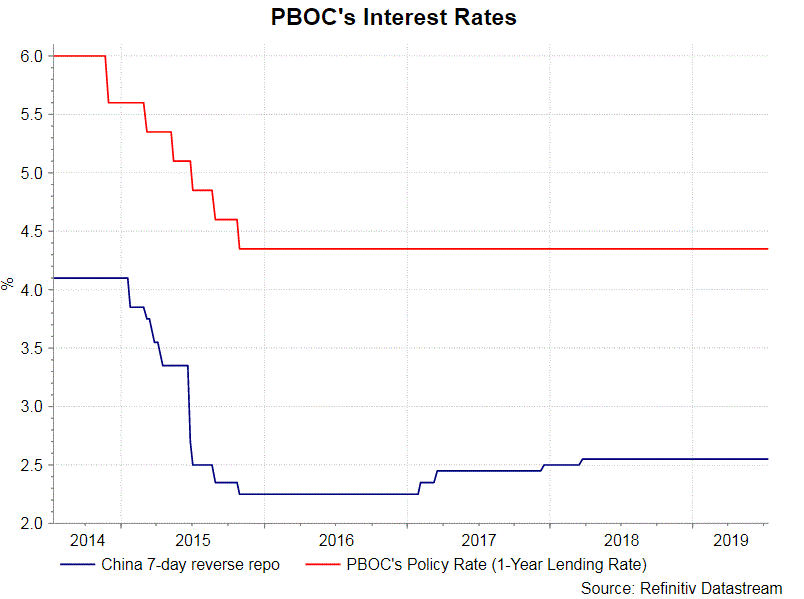
China should remain accommodative in both monetary and fiscal policies in order to stimulate growth. PBOC would adopt a accommodative monetary policy via further RRR cut and rate cut. We expect the latter is increasingly likely. The Fed is expected to cut policy rates, possibly twice, this year. This has reduced the risk that a rate cut in China would accelerate capital outflow. One factor deterring rate cut could be inflation, though. However, as headline CPI has remained below PBOC’s target of +3%, we believe PBOC prioritize growth stimulation over curbing inflation
On fiscal stimulus, Premier Li Keqiang last week announced measures to improving export tax rebate policies and lowering export insurance fees. This, together with other tax cuts announced last year, aims at boosting growth by leaving money at the hands of households and businesses.
CFTC Commitments of Traders – Traders Resumed Bets on Higher USD as Rate Cut Priced In
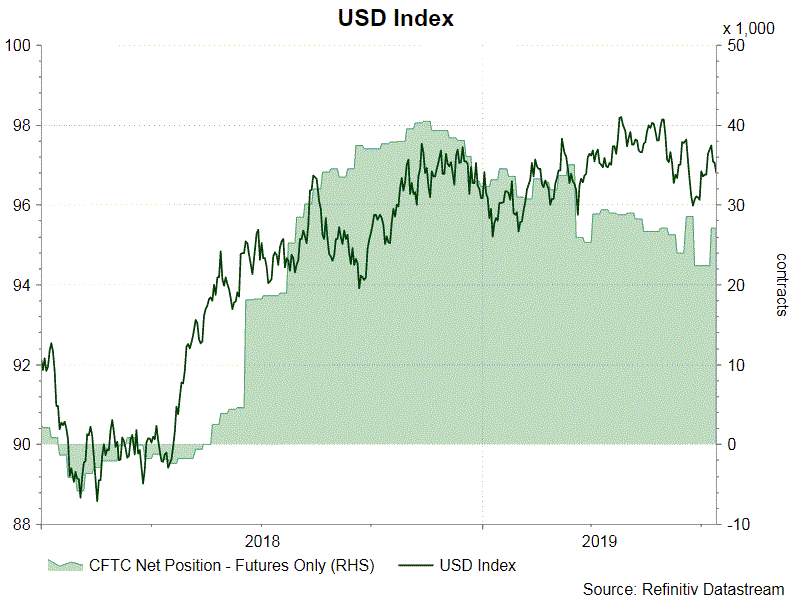
As suggested in the CFTC Commitments of Traders report in the week ended July 9, NET LENGTH in USD Index jumped +4 639 contracts to 27 056. Speculative long positions gained +2 982 contracts while short positions fell -1 657 contracts during the week. Traders raised long bets but trimmed shorts. Fed funds rate cuts this year appear to have fully priced in the greenback.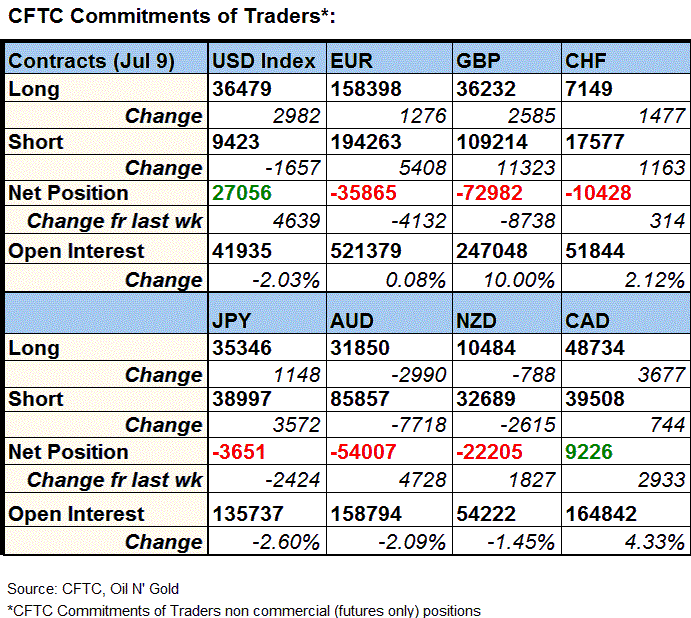
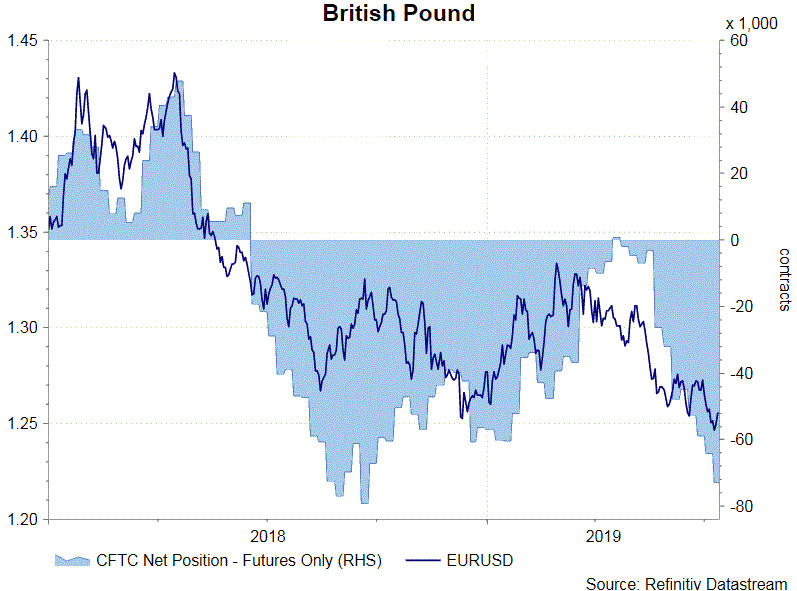
Concerning European currencies, NET SHORT for EUR futures gained +4 132 contracts to 35 865. NET SHORT for GBP futures soared +8 738 contracts to 72 982. Speculative long positions added +2 585 contracts while speculative shorts jumped +11 323 contracts for the week. GBP remains volatile as overwhelming support for Boris Johnson as the next Prime Minister has increased the likelihood of a no- deal Brexit, although this is no our base scenario.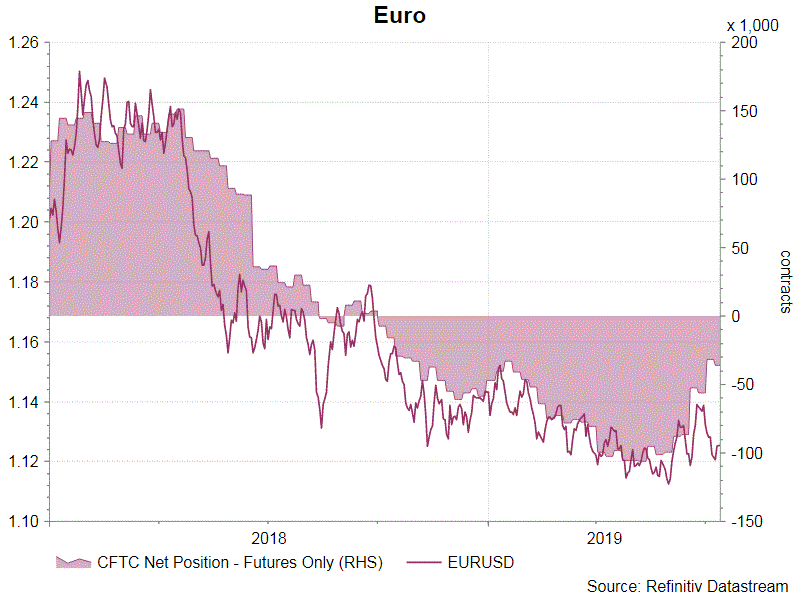
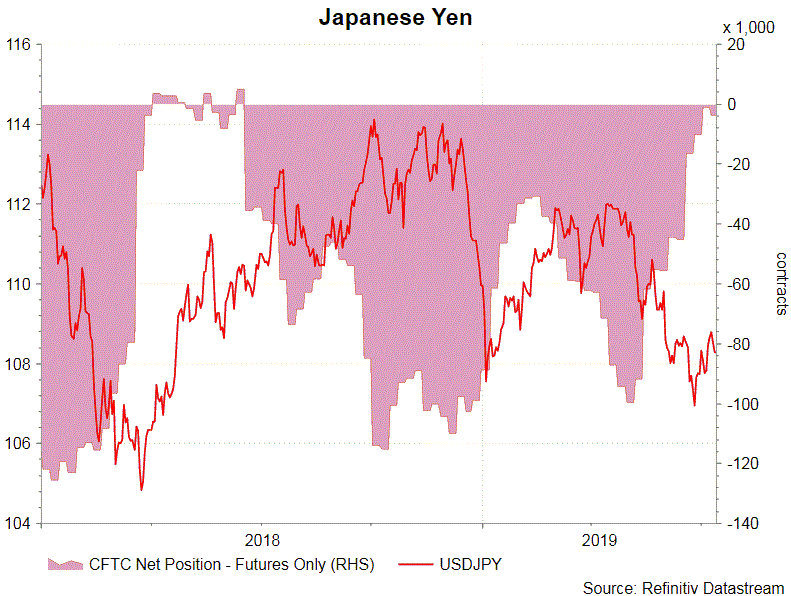
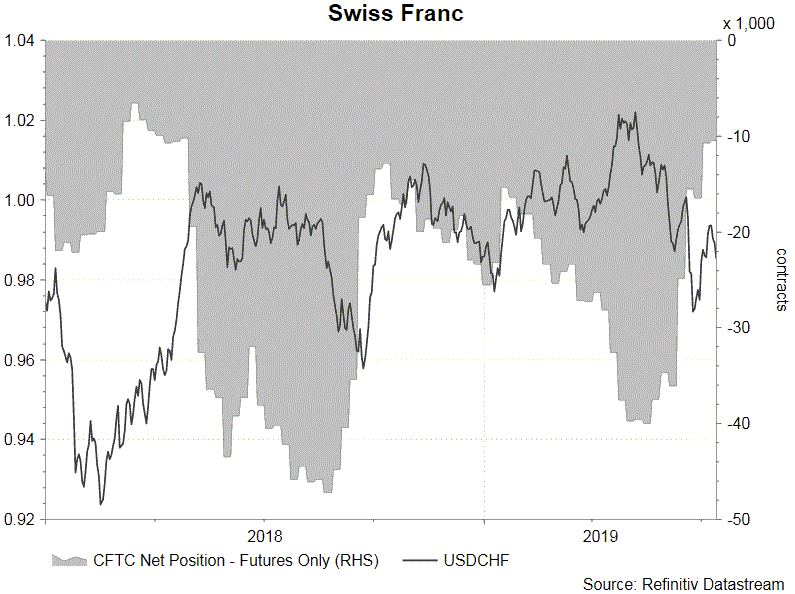
 On safe-haven currencies, Net SHORT for CHF futures dropped -314 contracts to 10 428. NET SHORT for JPY futures rose +2 424 contracts to 3 572 during the week. Speculative long positions added +1 148 contracts while shorts gained +3 572 contracts. Risk aversion should lend support to safe-haven currencies.
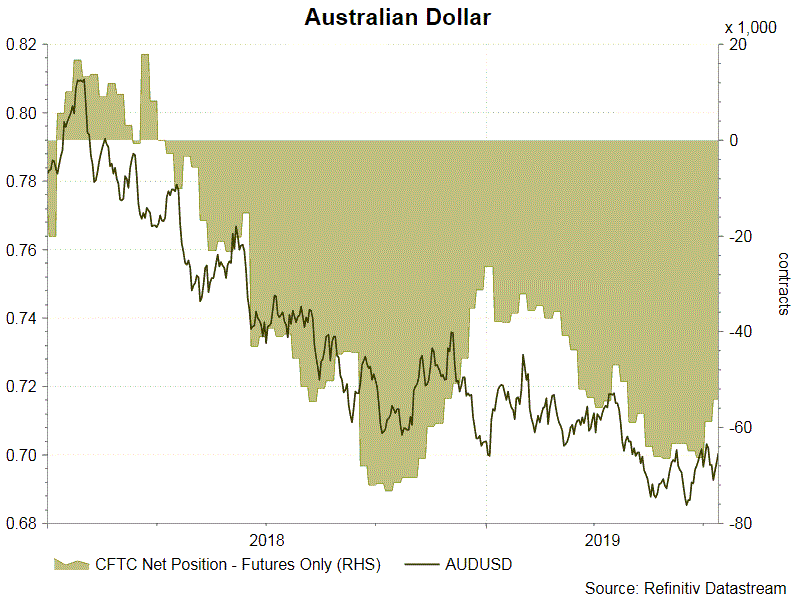
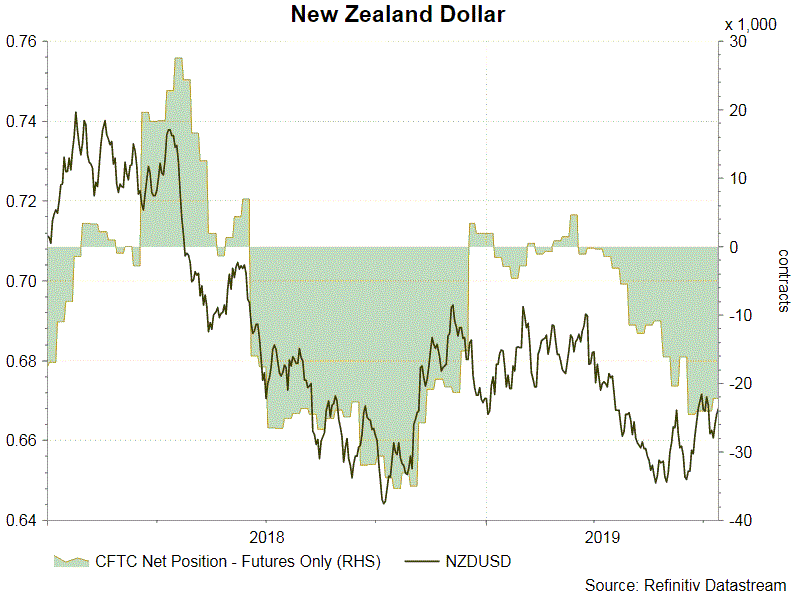
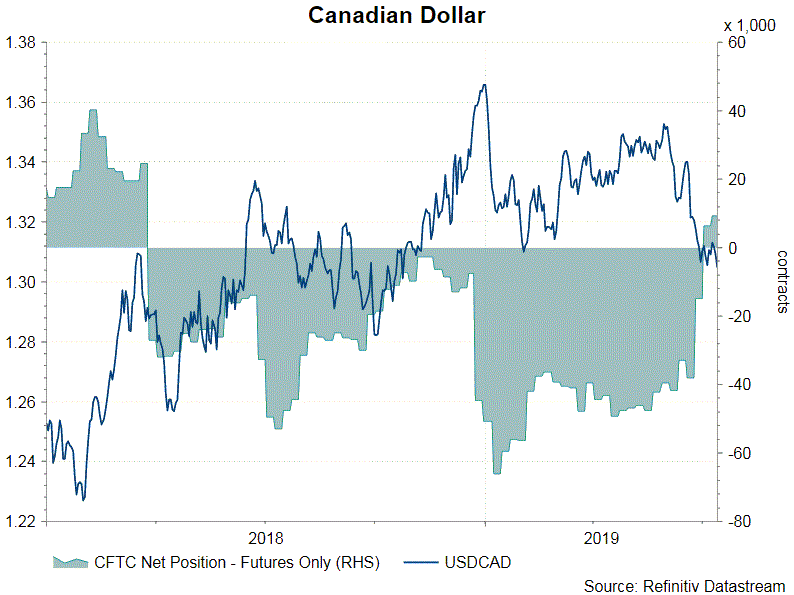
On commodity currencies, NET SHORT for AUD futures declined -4 728 contracts to 54 007. Speculative long positions decreased -2 990 contracts while shorts plunged -7 718 contracts. Separately, NET SHORT for NZD fell -1 827 contracts to 22 205 contracts last week. NET LENGTH for CAD futures rose +2 933 contracts to 9 226. Recent bullish sentiment about the loonie has been driven by policy divergence. While the Fed is widely expected to lower its policy rate this month and later this year (more below), BOC could likely stand on the sideline, thanks to resilient inflation and job market.