Sample Category Title
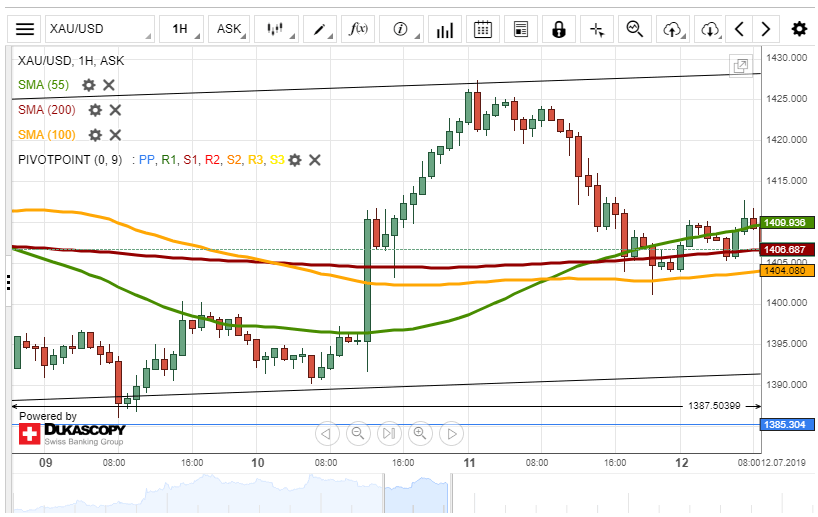
XAU/USD: Two Scenarios Likely
Yesterday, the XAU/USD exchange rate declined to the support level formed by the 55-, 100– and 200-hour SMAs, located circa 1405.00. During Friday's morning, the rate was testing the given support.
If the given moving averages hold, it is likely, that gold could remain to appreciate against the US Dollar. In this case, a possible upside target is the psychological level at 1,420.00.
Otherwise, it is expected, that the price for could continue to decline. Potential downside target is the lower boundary of the short-term ascending channel located circa 1,392.00.
AUD/USD Outlook: Aussie Extends Recovery But Key Barriers Are Still Intact
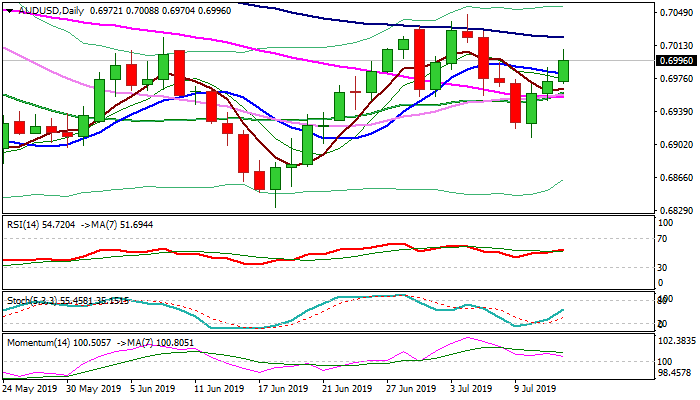
The Australian dollar holds in green for the third straight day and extends recovery from 0.6910 low through 10DMA (0.6980) and Fibo 61.8% of 0.7047/0.6910 (0.6995) on Friday.
Weaker US dollar (after rally on stronger than expected US CPI data stalled) helps Aussie dollar's fresh bulls.
Mixed data from China, released earlier today, also provided some support.
Fresh bulls cracked psychological 0.70 barrier, but faced strong headwinds that may delay extension towards key targets at 0.7021 (100DMA) and 0.7035 (daily cloud top / weekly cloud base).
Daily MA's (10/20/30/55) are in bullish setup, momentum and RSI head north and support advance, but momentum continues to weaken and may obstruct bulls.
Broken 10DMA now acts as solid support, guarding daily cloud base (0.6958) which needs to hold and keep bulls in play.
Res: 0.7000, 0.7021, 0.7035, 0.7047
Sup: 0.6980, 0.6958, 0.6940, 0.6910
USD In The Doldrums, Oil Prices Holding Up
USD in the doldrums as investors discount the rate outlook.
The US dollar fell for a third straight day on Friday. The effects of Fed Chair Powell testimony before the Congress on Wednesday continued to be felt. Amongst the G10 complex, the buck felt the most against commodity currencies such as the Aussie (-0.36%), the Kiwi (-0.35%) and the Loonie (-0.35%). The single currency also continued to recover as it consolidated around the 1.1260 mark but gains were more limited. This stem from the fact that the outlook is more uncertain for the euro as the ECB has much less leeway than in Fed.
The ECB didn’t even try to scale back its quantitative easing program such that interest rates are already flat or negative and the balance sheet is bloated. On the contrary, the Fed has some room for manoeuvre: funds rate around 2.25% and the balance sheet was reduced by more than USD 630bn over the last 20 months.
Against such a backdrop, we anticipate that the single currency would continue to appreciate against the buck. However, the effective appreciation will start at the end of the summer, once the loser US monetary conditions will start to kick in and market participants start pricing in further rate cut. We anticipate that the single currency would climb toward the 1.15 threshold, as we get closer to the end of the year.
Oil prices are holding up
Oil prices have been facing a roller coaster lately. The threats from US President Donald Trump to raise tariffs on China and threatening Mexico with similar sanctions along with the rise of US oil inventories and record production volumes incentivized commodity traders to disinvest massively in crude oil. Yet it seems that the situation is turning as investors are considering Middle East tensions and Gulf of Mexico storm in addition to the successive drawdowns of US oil inventories. However, the longer-term view remains blurry, as global oil demand is likely to decline further amid decreasing manufacturing activity and possible escalation of US – EU trade discord.
The decline in US EIA crude oil inventories for the week ended to 5 July at 9.5 billion bpd, the sharpest drop since March 2019 and fourth consecutive drop as well as geopolitical risks relating to Iran and a 1 million bpd output cut of oil companies operating in the Gulf of Mexico due to tropical storm Barry are boosting oil prices. Both Brent crude and WTI are now trading along May 2019 levels and expected to stabilize as investors are monitoring upcoming discussions between German Economy Minister Peter Altmaier and US Trade Representative Robert Lighthizer to avert a 25% tariff on EU auto imports. Topics targeted will mainly concern aircraft subsidies, car imports and Russian Nord Stream 2 gas pipeline that is supposed to double supply capacity to the EU. Despite optimistic views on coming discussions, it remains highly doubtful that solutions will emerge in the coming months.
Crude oil should therefore stabilize and stay highly sensitive to major headlines. Still, further upside potential is limited on current price and OPEC production reduction status quo levels. WTI is trading at 60.68, approaching 60.95 short-term.
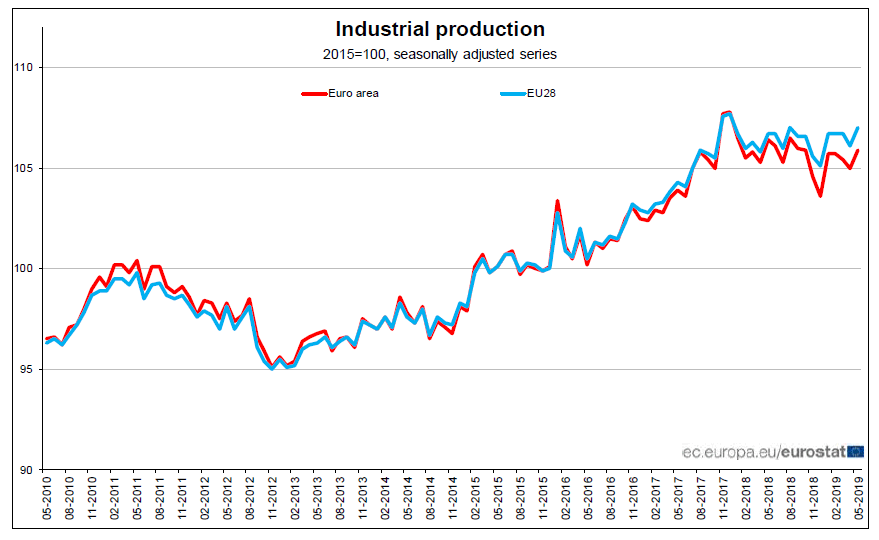
Eurozone industrial production rose 0.9% mom in May, above expectation
Eurozone industrial production rose 0.9% mom in May, well above expectation of 0.2% mom. Comparing by industrial grouping, production of non-durable consumer goods rose by 2.7%, durable consumer goods by 2.3%, capital goods by 1.3% and energy by 0.7%, while production of intermediate goods fell by 0.2%.
EU 28 industrial production rose 0.8% mom. Among member states for which data are available, the highest increases in industrial production were registered in Denmark (+4.4%), Ireland (+2.3%) and France (+2.1%). The largest decreases were observed in Finland (-2.9%), Romania (-1.9%) and Croatia (-1.7%).
European Open – Markets In Reflection Mode
Quiet end to the week
It may be a relatively quiet end to the week as traders digest the last two days of Powell’s testimony and US data and weigh up the prospects for interest rates this year.
Powell’s appearance Wednesday was extremely well received, with the Fed Chairman giving us as dovish a message as he was ever likely to. There was no attempt to discourage investors from fully pricing in a July cut so that looks as close to a certainty as you can expect to see.
Investors appear encouraged that it won’t be the last as well, with his gloomier assessment of the outlook appearing an indication of future cuts. The CPI numbers on Thursday added a layer of confusion, as weak price pressures are one of the primary factors supporting calls for cuts.
US Inflation (CPI and Core CPI)
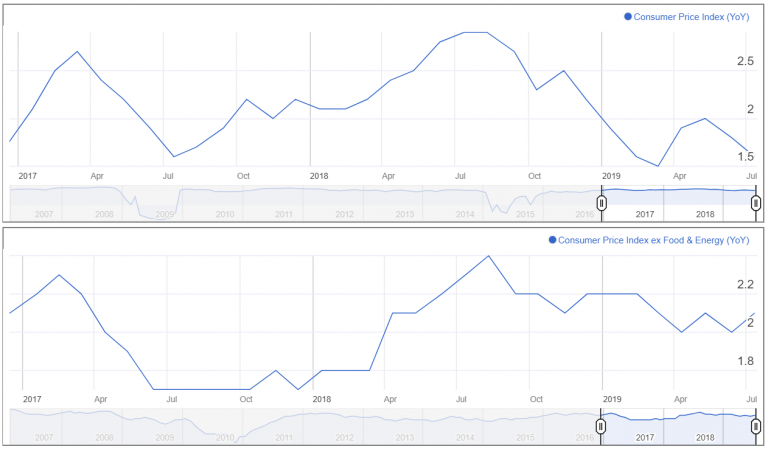
A core annual inflation reading of 2.1% may well leave people wondering whether inflation is as lacking as Powell indicated and the Fed’s preferred PCE measure suggests.
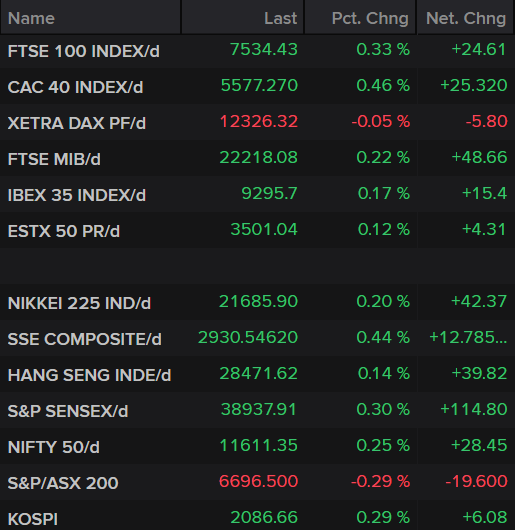
Stocks ended the day higher on Thursday and Europe is slightly in positive territory at the open but the data yesterday did take some of the wind out of the sails.
This may put more emphasis on the PPI data today but broadly speaking it’s looking a little thin. Thankfully, Monday marks the start of earnings season so we won’t have to wait long for something to get our teeth into.
GBP/JPY Daily Outlook
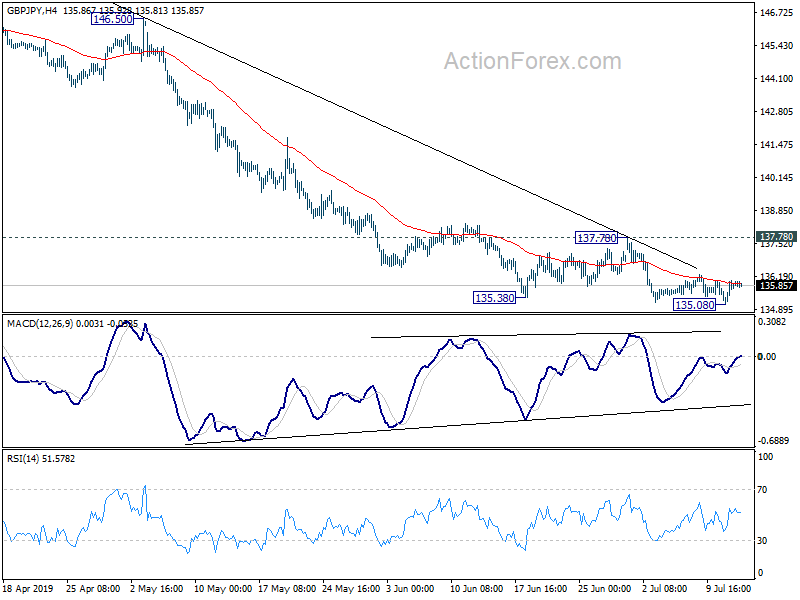
Daily Pivots: (S1) 135.31; (P) 135.68; (R1) 136.29; More...
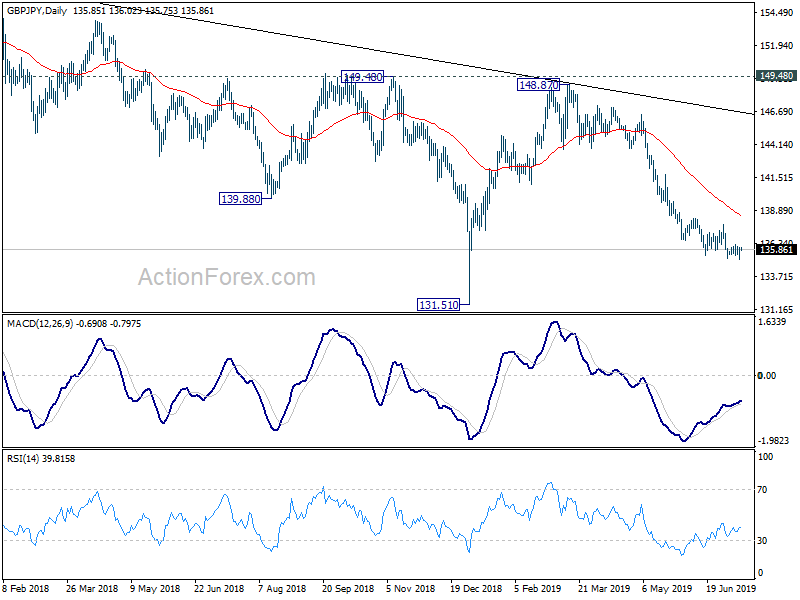
Despite dipping to 135.08, GBP/JPY quickly recovered. Intraday bias is turned neutral again. Outlook will remain bearish as long as 137.78 resistance holds. Break of 135.08 will extend recent decline to 131.51 low next.
In the bigger picture, current development suggests that GBP/JPY's medium term fall from 156.59 (2018 high) is still in progress. Break of 131.51 will target 122.36 (2016 low). Structure of such decline is corrective looking so far, arguing that it's just the second leg of consolidation from 122.36. Thus, we'd expect strong support from 122.36 to contain downside to bring reversal.
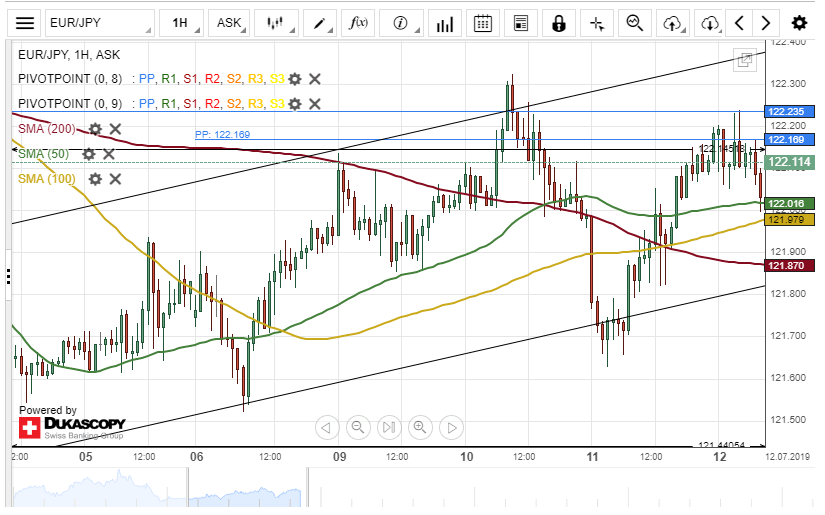
EUR/JPY Testing A Resistance Cluster At 122.20
The common European currency appreciated about 57 base points against the Japanese Yen on Thursday. The currency pair breached both the 50-, 100– and 200-hour SMAs during yesterday's trading session.
Currently, the exchange rate is testing a resistance cluster formed by the weekly and the monthly PPs at 122.23.
If the resistance cluster holds, bears would drag the currency exchange rate lower within this session.
However, if the EUR/JPY pair breaks the cluster as mentioned above, the Euro will continue to make gains during the following trading session.
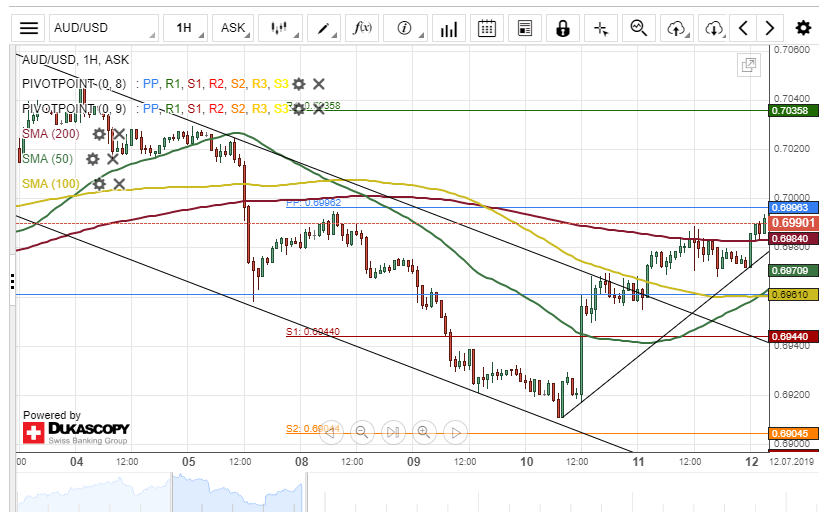
AUD/USD Might Aim At Weekly R1 At 0.7035
During the past 48 hours, the Australian Dollar has appreciated about 92 base points against the US Dollar. The 200-hour simple moving average was providing support for the pair at 0.6980 during the morning hours of Friday's trading session.
Most likely, the exchange rate will aim for a resistance level formed by the weekly R1 at 07035 within this session.
If the resistance line holds, a potential downside reversal could be expected before the end of today's session.
Meanwhile, technical indicators demonstrate that the currency exchange rate might make a brief retracement down today.
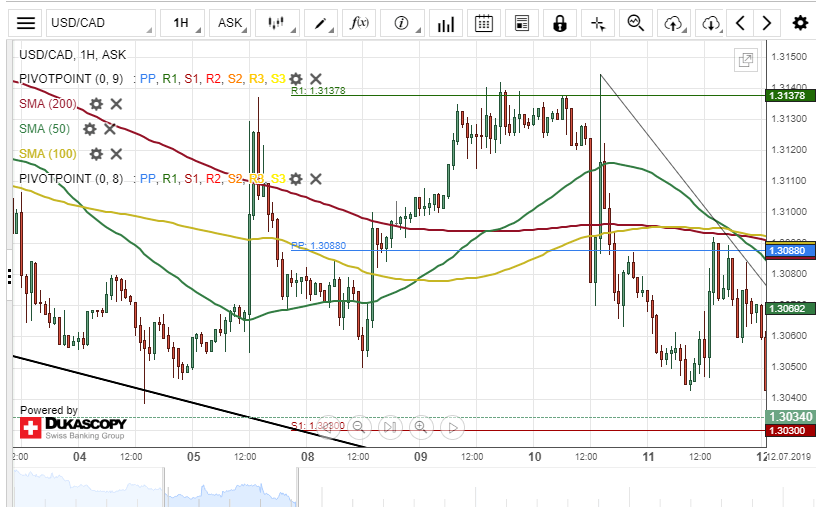
USD/CAD Sell Signals Today
The US Dollar appreciated about 50 base points against the Canadian Dollar during the first half of yesterday's trading session. However, after testing a resistance cluster at 1.3088, the exchange rate made a U-turn south. As a result, the pair lost about 0.51% in value.
By and large, most likely, the currency exchange rate might continue its southern movement within this session. The possible target for bearish traders will be near the weekly S2 at 1.2980.
Moreover, technical indicators suggest that the currency pair might end this week's trading sessions with a decline.
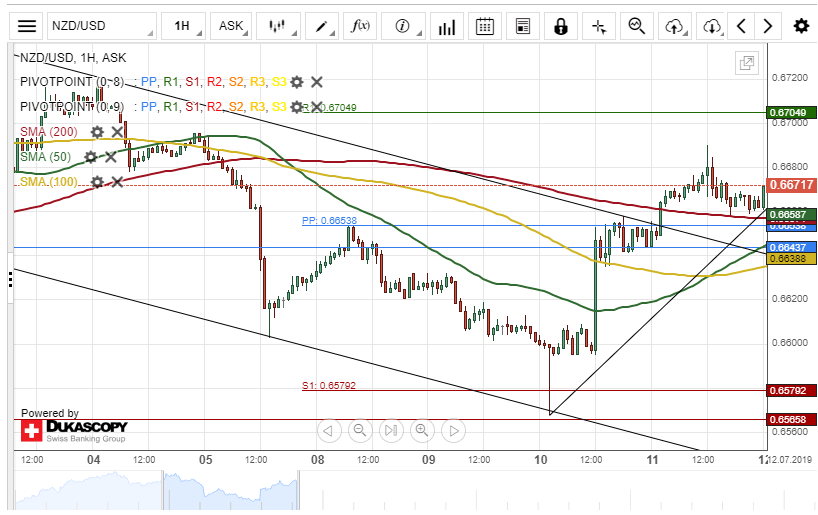
NZD/USD Moving Towards Targets
The New Zealand Dollar versus the US Dollar appreciated about 45 base points during yesterday's trading session. The currency pair is gradually moving towards a resistance level at 0.6704.
If the resistance level holds, a pullback towards a support cluster formed by the 50– and 200-hour SMAs and the combination of the weekly and the monthly PPs near 0.6653 could be expected during the following trading session.
However, if the currency exchange rate breaches the resistance line, bullish traders might aim for a swing high at 0.6727 in the nearest future.