Sample Category Title
EUR/JPY Daily Outlook
Daily Pivots: (S1) 121.76; (P) 121.98; (R1) 122.33; More....
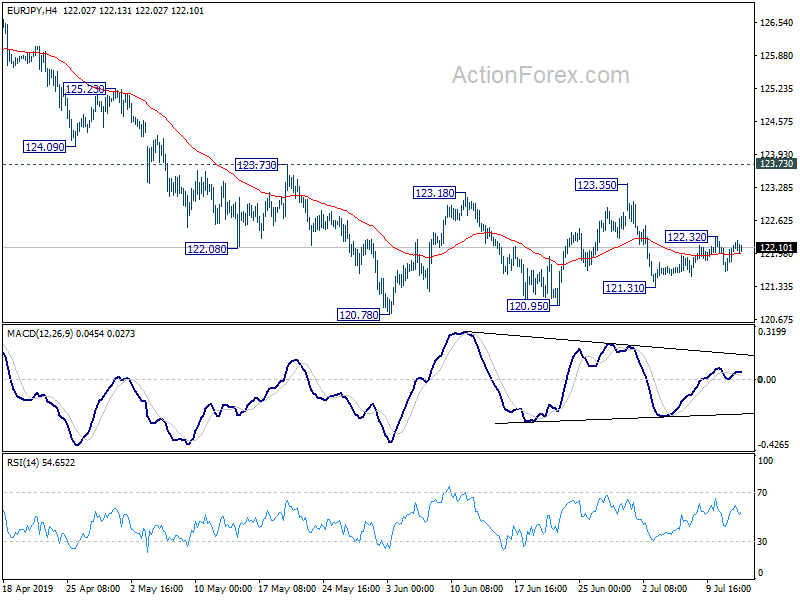
No change in EUR/JPY's outlook and intraday bias remains neutral first. We're still favoring the case that consolidation from 120.78 has completed with three waves to 123.35. Below 121.31 will target retest of 120.78 first. Break will resume fall from 127.50 to 118.62 low. In case of another rise as consolidation from 120.78 extends, upside should be limited by 123.73 resistance to bring fall resumption eventually.
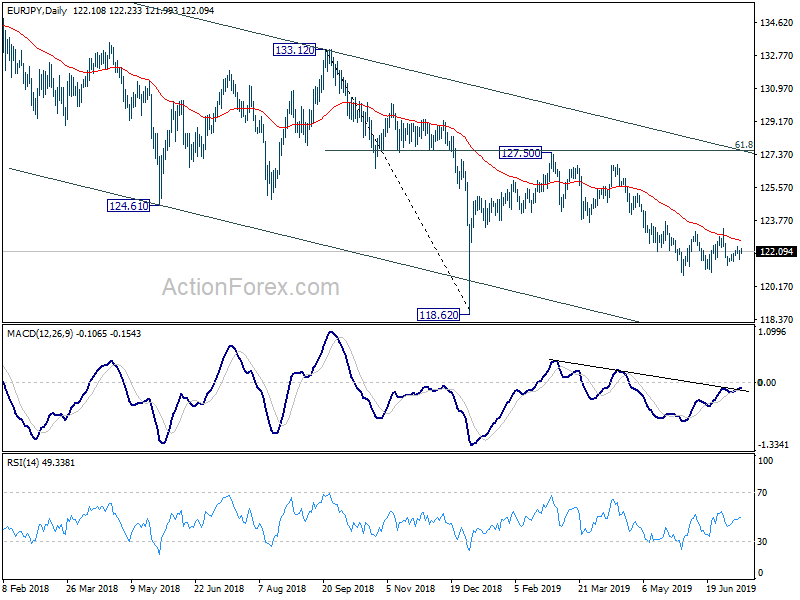
In the bigger picture, down trend from 137.49 is still in progress with the cross staying inside long term falling channel. Break of 118.62 will extend the fall to 109.48 (2016 low). On the upside, break of 127.50 resistance is needed to be the first sign of medium term reversal. Otherwise, outlook will remain bearish in case of strong rebound.
EUR/GBP Daily Outlook
Daily Pivots: (S1) 0.8966; (P) 0.8986; (R1) 0.9005; More...
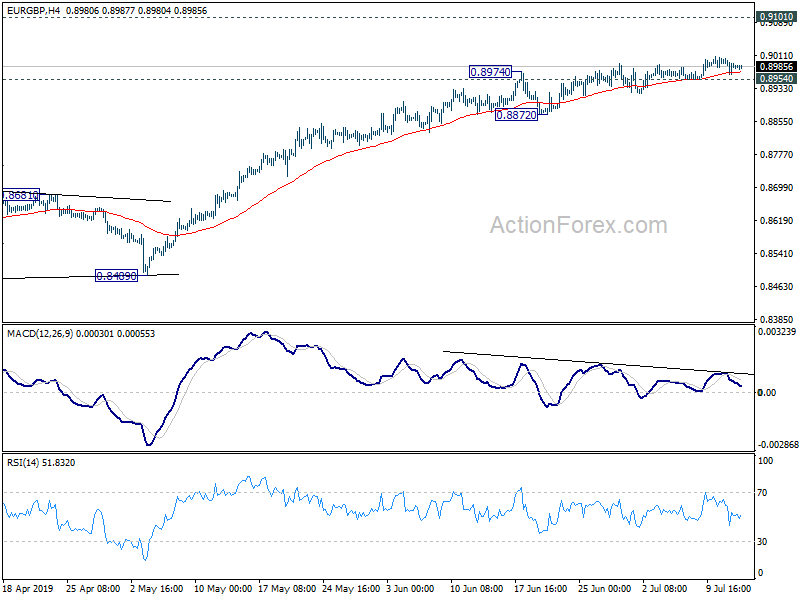
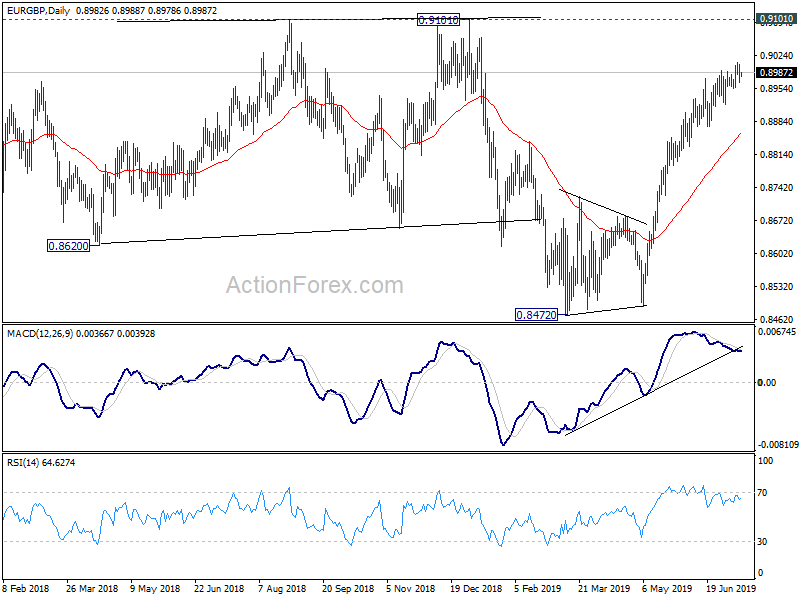
EUR/GBP is losing upside momentum as seen in 4 hour MACD. But with 0.8954 minor support intact, further rise is in favor to 0.9101 key resistance. We'd continue to be cautious on topping there to bring pull back. On the downside, break of 0.8954 support will indicate short term topping. In this case, deeper pull back could be seen to 55 day EMA (now at 0.8855) first.
In the bigger picture, medium term decline from 0.9305 (2017 high) is seen as a corrective move. No change in this view. Current development argues that it might have completed with three waves down to 0.8472, just ahead of 38.2% retracement of 0.6935 (2015 low) to 0.9306 at 0.8400, after hitting 55 month EMA (now at 0.8527). Decisive break of 0.9101 resistance will confirm this bullish case. Nevertheless, as EUR/GBP is still staying inside long term falling channel, correction from 0.9305 could still extend to 0.8400 fibonacci level before completion, if upside is rejected by 0.9101.
EUR/AUD Daily Outlook
Daily Pivots: (S1) 1.6104; (P) 1.6147; (R1) 1.6178; More...
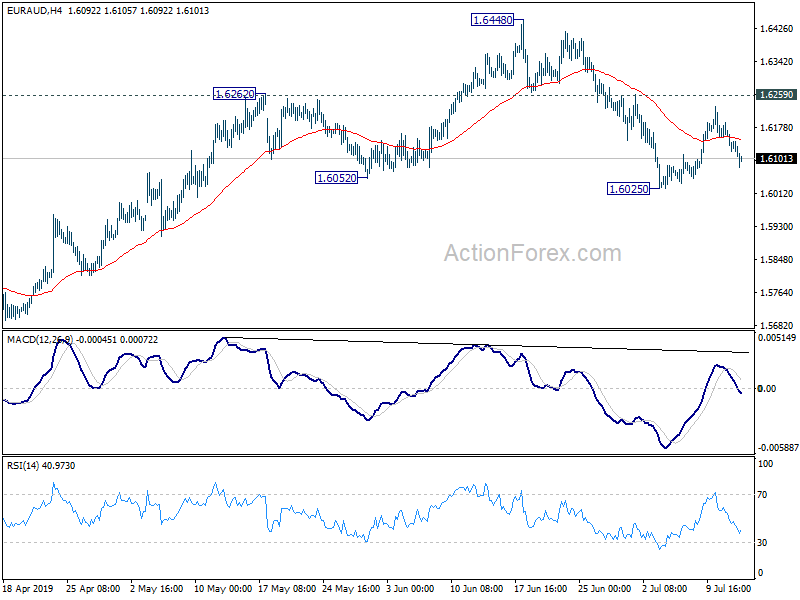
Intraday bias in EUR/AUD remains neutral at this point. With 1.6259 minor resistance intact, further decline is expected. On the downside, break of 1.6025 will resume the fall from 1.6448 to 1.5683 support and below. On the upside, break of 1.6259 will indicate that corrective pull back from 1.6448 has completed. And further rise should be seen back to retest 1.6448 high.
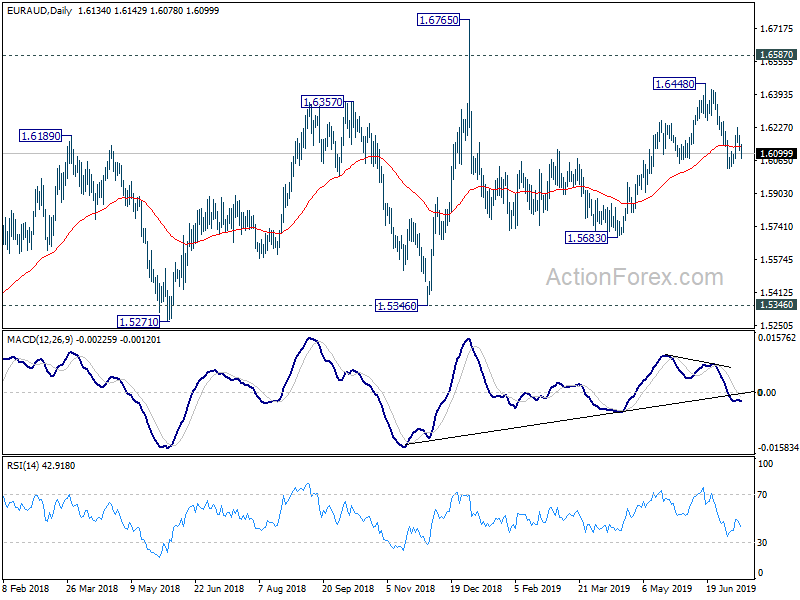
In the bigger picture, as long as 1.5346 support holds, outlook will still remain bullish. Up trend from 1.1602 (2012 low) is expected to resume sooner or later. Break of 1.6765 will target 61.8% retracement of 2.1127 (2008 high) to 1.1602 at 1.7488 next. However, firm break of 1.5346 key support will indicate trend reversal and turn outlook bearish.
USD Stands Its Ground As US Inflation Rates Are Released
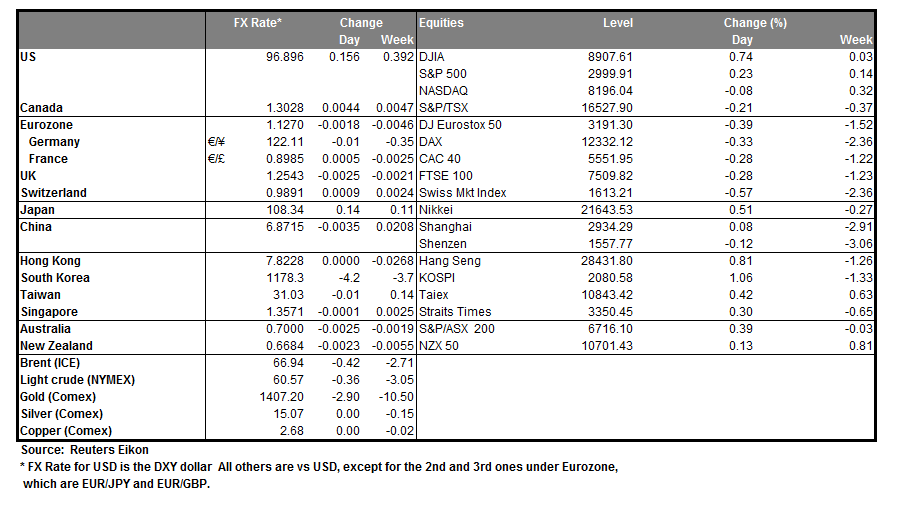
USD stopped its weakening against a number of other currencies, as the US inflation rates for June released yesterday, seem to stabilize. The headline CPI rate slowed down as expected, reaching +1.6% yoy, yet the core rate ticked up reaching +2.1% yoy, implying that some stabilization is in the works. The figures were even more convincing on a month on month level, at which the headline rate remained unchanged and the core rate ticked up. Analysts were quick to respond and mentioned that the stabilization could curb expectations for an aggressive rate cut by the Fed on the 31st of July meeting. Please bear in mind that one of the main worries mentioned in the Fed's meeting minutes, released on Wednesday was the slowdown of inflation. Should comments by Chicago Fed Evans today and NY Fed President Williams on Monday, sound less dovish, we could see the USD picking up strength. We also expect the USD to remain mainly Fed driven in the next few days. EUR/USD dropped yesterday yet corrected above the 1.1260 (S1) support line during today's Asian session. As the pair broke the upward trendline incepted since Wednesday, we could see the pair maintaining a sideways movement. Should the pair's long positions be favored by the market, we could see it aiming if not breaking the 1.1300 (R1) resistance line. Should the pair come under the selling interest of the market, we could see it breaking the 1.1260 (S1) support line once again and aim for the 1.1220 (S2) support barrier.
CAD firms on central banks differentials
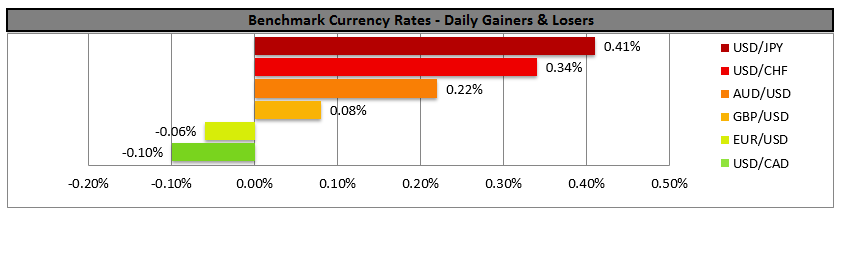
CAD seems to continue to firm against the USD in the past three days, despite the BoC maintaining a dovish tone in its last rate decision. The pair is nearing a nine-month low, as it seems to have broken the 1.3060 (R1) support line (now turned to resistance). Despite BoC maintaining lower interest rates (+1.75%) than the Fed (+2.5%), the prospects of the two banks differ substantially. BoC in its latest meeting had on the one hand highlighted the risks surrounding the Canadian economy, yet refused to clearly adopt an easing bias. On the flip side, the Fed seems to be adopting an even more dovish bias and analysts were quick to note that the relative monetary policies of BoC versus the Fed, look like diverging. Specifically the market seems to be pricing in a less than 35% chance for the BoC to cut rates until the end of the year, while for the Fed the chances are for two cuts for the same period. The contrast in the prospects of the two banks, is highlighted by the fact that they are two closely working economies. We could see the central bank differentials continuing to favour the Looney, especially should also oil prices favour the CAD. USD/CAD clearly broke the 1.3060 (R1) support line yesterday, now turned to resistance. As a downward trendline seems to be forming for the pair, we tend to maintain a bearish outlook for the pair. Should the bears maintain control over the pair's direction, we could see it aiming if not breaking the 1.2965 (S1) support line. Should the bulls take over, we could see it breaking the prementioned upward trendline, the 1.3060 (R1) support line and aim for the 1.3145 (S2) support hurdle.
Other economic highlights, today and early tomorrow
Today, during the European session, we get Eurozone's Industrial production growth rate for May. During the American session we get the US PPI rate for June, the Fed's Monetary Policy Report is due out and later on, the Baker Hughes oilrig count figure will be released. Please bear in mind, that Chicago Fed President Evans is scheduled to speak during the American session and we could see some volatility for the USD, should any substantial comments about the Fed's monetary policy be made. During Monday's Asian session, we get China's GDP growth rate for Q2 and China's Industrial production growth rate for June, which could affect the Aussie.
EUR/USD H4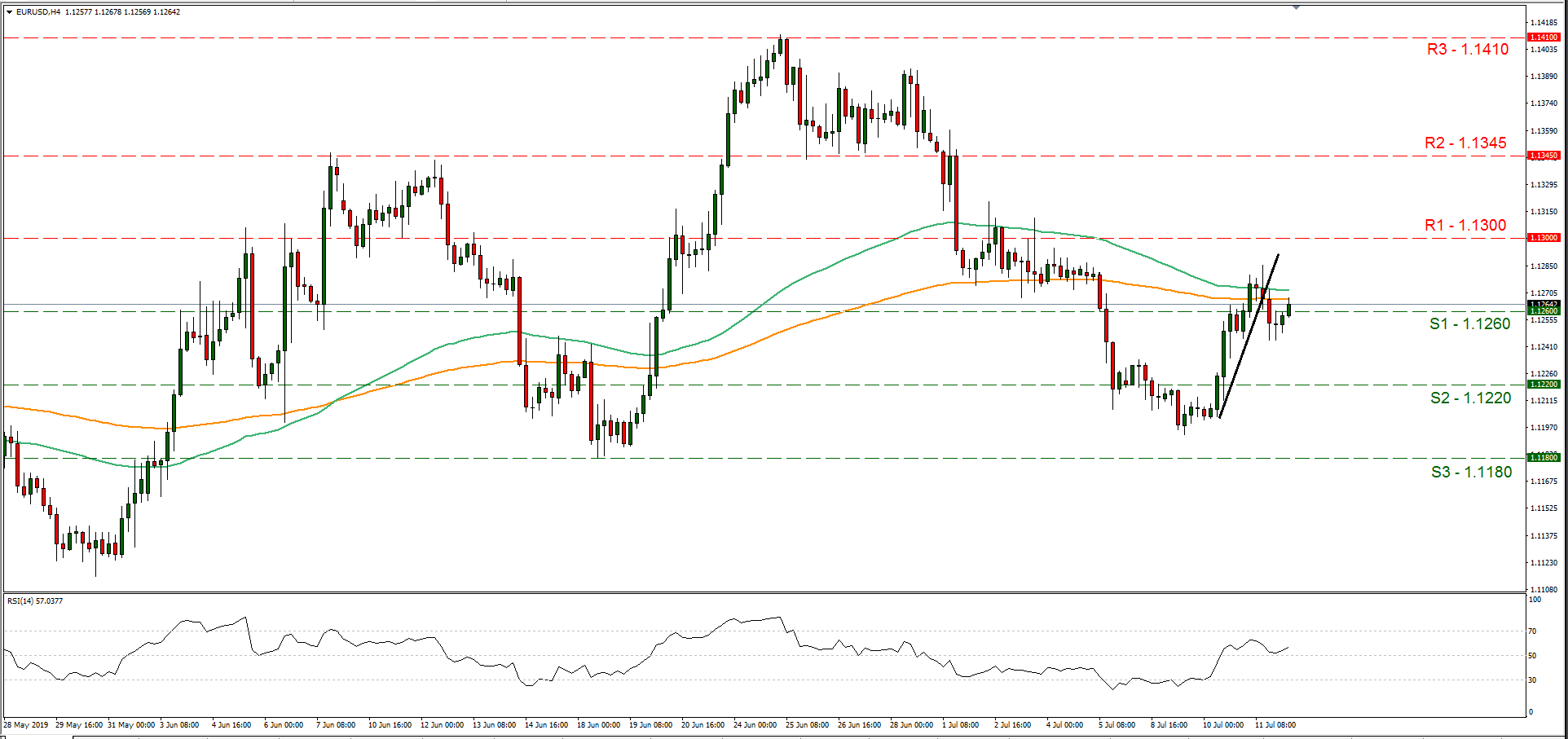
Support: 1.1260 (S1), 1.1220 (S2), 1.1180 (S3)
Resistance: 1.1300 (R1), 1.1345 (R2), 1.1410 (R3)
USD/CAD Daily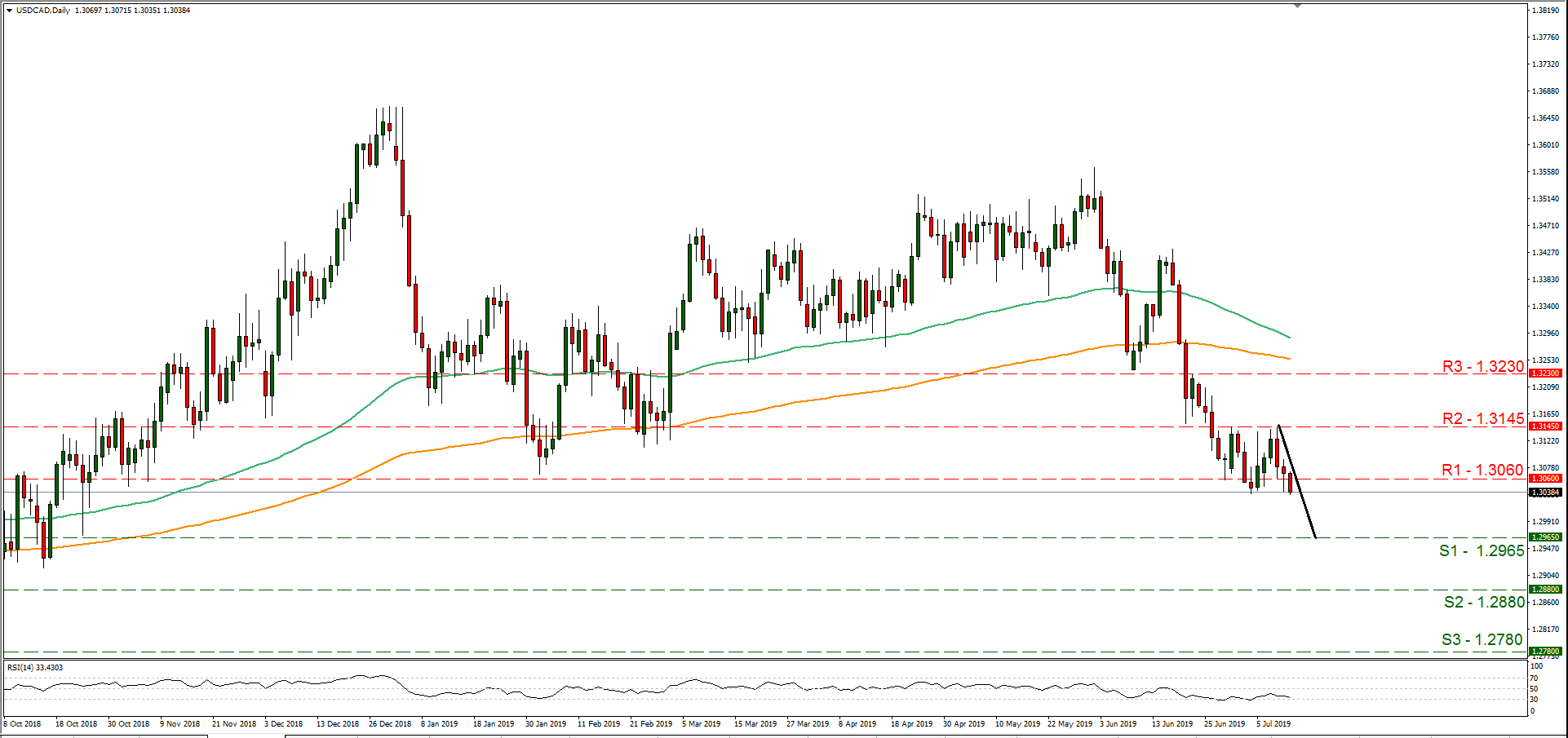
Support: 1.2965 (S1), 1.2880 (S2), 1.2780 (S3)
Resistance: 1.3060 (R1), 1.3145 (R2), 1.3230 (R3)
EUR/CHF Daily Outlook
Daily Pivots: (S1) 1.1118; (P) 1.1133; (R1) 1.1161; More...
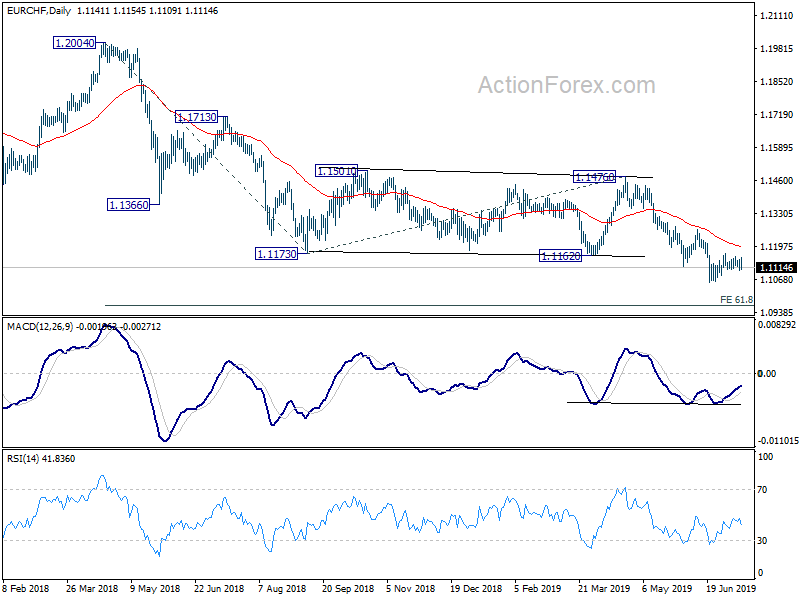
Intraday bias in EUR/CHF remains neutral for the moment as consolidation from 1.1056 is extending. In case of another recovery, upside should be limited below 1.1264 resistance to bring fall resumption. On the downside, break of 1.1056 will extend the larger down trend for 61.8% projection of 1.2004 to 1.1173 from 1.1476 at 1.0962 next.
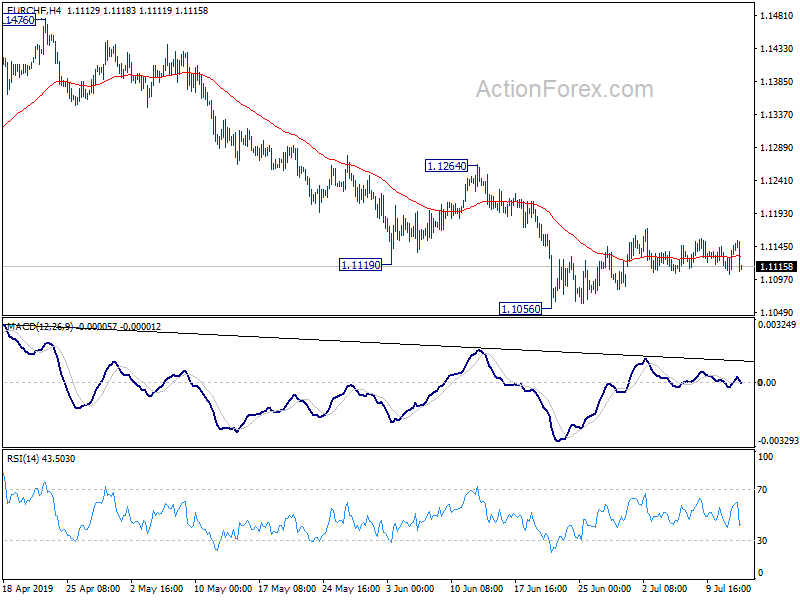
In the bigger picture, current development firstly suggests that down trend from 1.2004 is still in progress. More importantly, it's likely a long term down trend itself, rather than a correction. Outlook will remain bearish as long as 1.1476 resistance holds. EUR/CHF could target 1.0629 support and below.
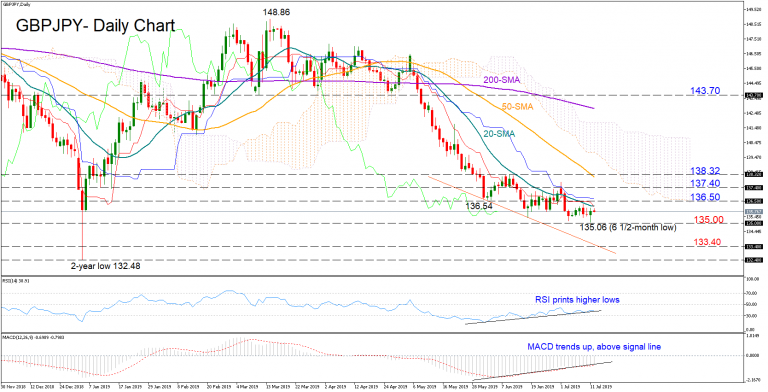
GBPJPY Bearish Action Slows, Trend Reversal Awaited
GBPJPY continues to show signs of a fading downtrend as the RSI and the MACD keep extending their two-month old upward pattern at a time when the price seems to be easing bearish momentum. The minimal difference between the recent lows is more evidence that the market may be preparing for a trend reversal.
Traders could wait for a clear breakout of the June high of 138.32 to confirm the end of the bearish movement. Before that, the bulls would need to overcome the 136.50 and 137.40 barriers.
Should the market finish a session comfortably under the 135.00 mark, the door could open for the short-term descending line drawn from the 136.54 trough currently around 133.40. A violation of this line, would turn the spotlight to the two-year low of 132.48 marked in early January.
Meanwhile in the medium-term timeframe, GBPJPY is in negative mood as long as it holds below 143.70.
In brief, the short-term bias seems to be shifting to the upside, though only a decisive close above 143.70 would switch the negative status to neutral in the medium-term picture.
Dollar See-Saws On Data, Euro Edges Up Despite ECB Stimulus Hint
- US dollar firms again on stronger-than-expected data, which tempers bets of 50-bps rate cut
- Euro edges higher even though ECB minutes signal more stimulus
- Oil climbs to 1½-month highs on rising Middle East tensions and Gulf of Mexico shutdown
Dollar fluctuates as markets undecided on 50-bps cut
Just as markets were reconsidering the likelihood of a large 50 basis points cut by the Federal Reserve this month, stronger-than-anticipated data out of the United States dampened those expectations. Core inflation, according to the consumer price index, rose by a larger-than-expected 0.3% month-on-month in June, the biggest increase since January 2018, pushing up the annual rate to 2.1%. An unexpected drop in the latest weekly jobless claims also called into question the urgency for a 50-bps rate cut.
Subsequently, the odds for a 50-bps reduction eased to 17.5% from around 25% yesterday, when they’d surged on the back of Fed Chairman Jerome Powell’s dovish tone in his semi-annual testimony before Congress on Wednesday and Thursday. The paring back of expectations of an aggressive rate cut lifted the dollar from yesterday’s near one-week lows against a basket of currencies, while against the yen, it recovered back above the key 108 level.
The dollar is likely to face further volatility in the lead up to the July policy meeting at the end of the month as investors try to gauge how aggressive the Fed will be and fed funds futures react to the incoming data. The next major release that is likely to be significant for rate cut bets is the US retail sales report on Tuesday.
Euro firmer even as ECB hints at more stimulus
The euro extended its gains on Friday as the dollar’s bounce back from the strong US data proved short-lived. Expectations that the European Central Bank could soon be joining the Fed in easing policy wasn’t enough to curtail the euro’s rebound, as the single currency climbed to around $1.1265 at the start of European trading.
The European Central Bank strongly indicated in its June meeting account published on Thursday that it “stands ready to ease the monetary policy stance further”, saying that possible measures could include “extending forward guidance further, restarting net asset purchases and decreasing policy rates”.
However, with investor expectations of ECB action in the coming months already running high following Mario Draghi’s comments at the ECB forum in Sintra in June, the market reaction to the minutes was muted, with even European shares not receiving much of a boost.
Oil and gold up on trade and Middle East tensions
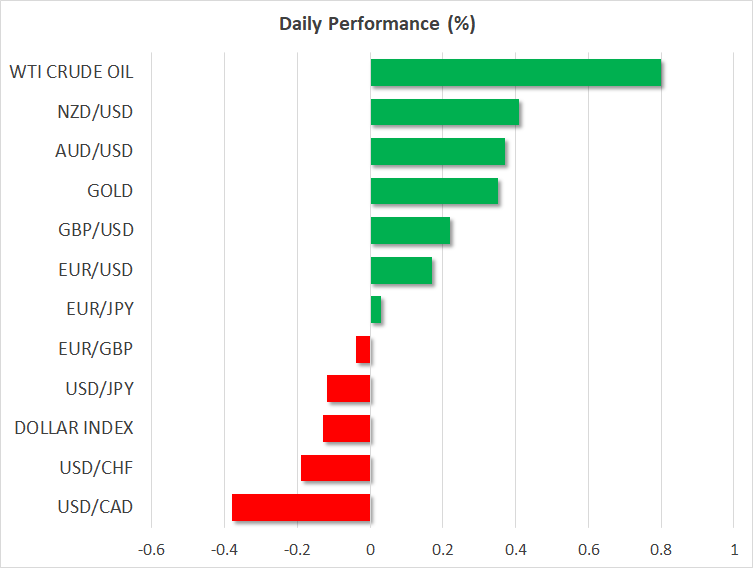
Oil prices were trading not far from yesterday’s 1½-month highs as declining crude oil inventories in the US and rising tensions between Iran and the West pointed to possible supply disruptions. Meanwhile, a tropical storm heading for the Gulf of Mexico has led to the evacuation of oil rigs in the region, adding further upside pressure on prices. WTI oil was last quoted at $60.65 a barrel with Brent crude trading just above $67 a barrel.
Gold also benefited from the increased tensions in the Middle East as the US is planning on sending military escorts to vessels in the Gulf after Iranian boats tried to intercept a British oil tanker on Wednesday. The precious metal was additionally boosted from a tweet by President Trump yesterday, who was once again stoking trade tensions with China, accusing the nation of “letting us down” for not buying US agricultural products as they had pledged. Gold was 0.5% firmer on Friday as Trump’s tweet reminded investors that the trade dispute is not likely to go away anytime soon.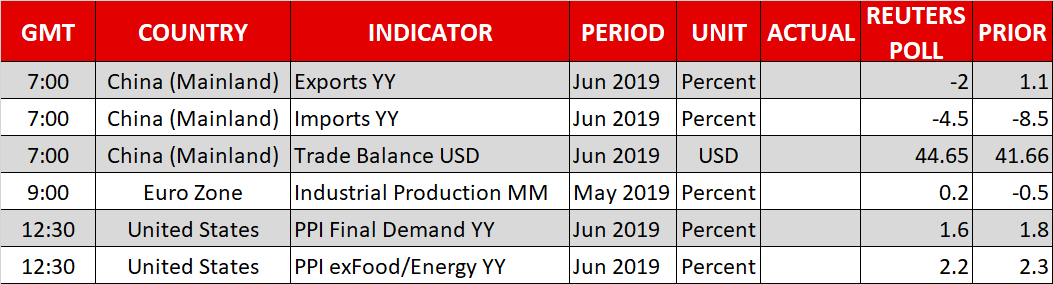
Dollar Index Outlook: Fresh Weakness Retests Key Support At 96.48
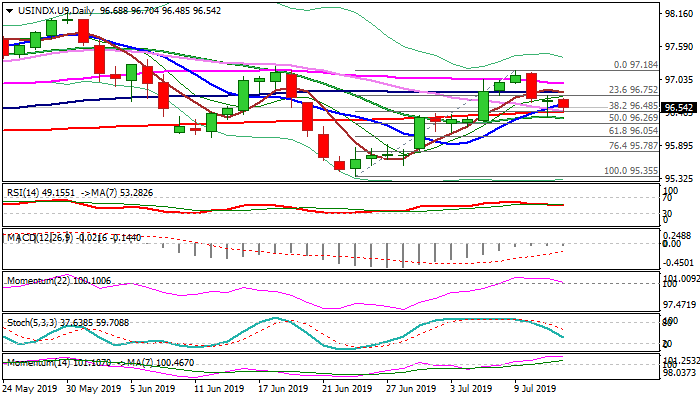
The dollar index stands at the back foot in early Friday and attacks again key support at 96.48 (200DMA / Fibo 38.2% of 95.35/97.18 upleg).
Thursday's advance after stronger than expected US inflation data lowered expectations for 0.5% rate cut (that was initially boosted by comments from Fed's chief Powell) was short-lived and fresh selling started in Asia.
Renewed weakness after Thursday's long-tailed Doji signals continuation of pullback from 97.18 high (9 July), but bears must break 96.48 pivot to spark fresh acceleration lower and expose targets at 96.26/05 (Fibo 50% and 61.8% respectively).
Technical studies are in mixed mode on daily chart and lack clearer direction signal, as momentum remains strong, but MA's are in mixed setup and RSI / Stochastic are negative.
Repeated failure to break lower could keep the price in extended consolidation, with initial bullish signal expected on lift above 100DMA (96.79).
Res: 96.59, 96.79, 96.96, 97.18
Sup: 96.48, 96.36, 96.26, 96.05
Risk Sentiment Still Sensitive To US-China Trade Tensions
Asian stocks are mostly in positive territory, encouraged by the Dow Jones Industrial Average posting a new record high above 27,000 while the S&P500 is just shy of the psychological 3,000 level. Markets appear set to end the week in risk-on mode, as the Japanese Yen remains above the 108 psychological mark against the US Dollar, Gold has moderated closer to the $1400 support level, while yields on the benchmark 10-year US Treasuries remain elevated above 2.10 percent at the time of writing.
US-China trade tensions continue to loom over global sentiment, with investors still awaiting developments from the revived negotiations between the world's two largest economies. In the interim, investors are once again reminded about how the protracted US-China conflict is dampening global growth. China's imminent announcement of its June external trade data could also dictate whether the risk-on tone is sustained for the rest of the trading day. Risk appetite will be hit by a steeper deterioration in the global growth outlook, although such downcast sentiment could be mitigated by the prospects of incoming stimulus from major central banks.
Fed still on course to cut rates, despite better-than-expected US inflation
At the time of writing, G10 currencies are advancing against the Greenback, while Asian currencies are mixed. The Dollar Index (DXY) is hovering around the 97 handle, even as the latest US inflation data appears to muddle the case for the widely-anticipated Fed rate cut this month. US inflation posted a broad-based rise in June while also exceeding market projections.
However, a month's data doesn't make for a trend, and the latest inflation follows Fed Chair Jerome Powell's dovish comments, highlighting the risk that muted inflationary pressures may be persistent. The recent positive surprises in the US jobs and inflation data aren't likely to dissuade the Fed from cutting US interest rates later this month. Subsequent economic indicators could however influence market
expectations over the scope of US monetary policy easing, and dictate whether multiple Fed rate cuts are warranted over the rest of 2019.
Oil's gains to be capped by OPEC's forecasts of global oversupply in 2020
Brent futures are closing in on the $67/bbl level, while New York crude remains above $60/bbl, even as OPEC expects a global oversupply next year. The surge in US shale production has been blunting OPEC+ producers' attempts to rebalance global markets, while the demand for Oil continues to waver in the face of heightened US-China trade tensions. The prospects of an oversupply also raise serious questions about whether OPEC+ members can afford to exit its current production cuts campaign in March and risk another slump in Oil prices.
OPEC's projections for excess supply in 2020, despite its extended production cuts, are likely to keep Oil prices pinned down, barring a sudden escalation in geopolitical tensions that meaningfully constrict global supplies.
EUR/USD Daily Outlook
Daily Pivots: (S1) 1.1238; (P) 1.1262; (R1) 1.1279; More...
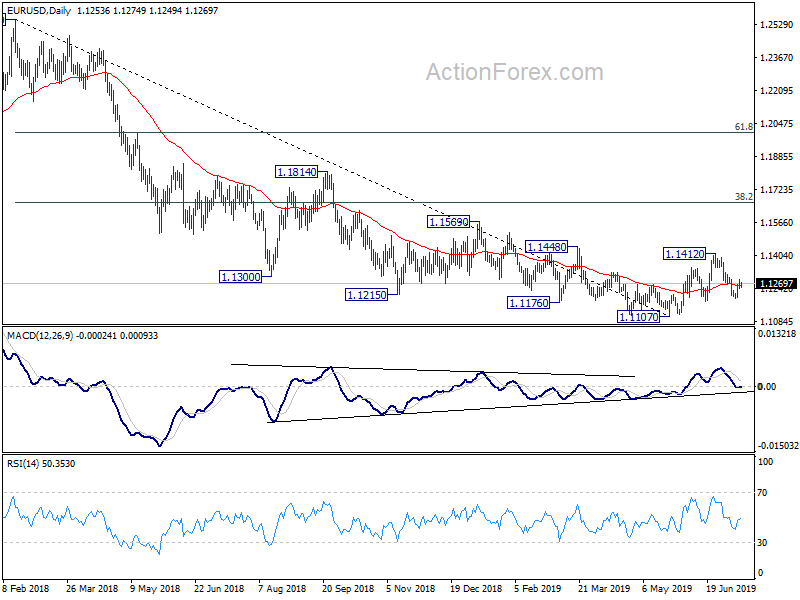
No change in EUR/USD's outlook as rebound from 1.1193 would extend to retest 1.1412 resistance. Break will resume the whole rebound from 1.1107. On the downside, break of 1.1193 will turn bias back to the downside to retest 1.1107 low instead.
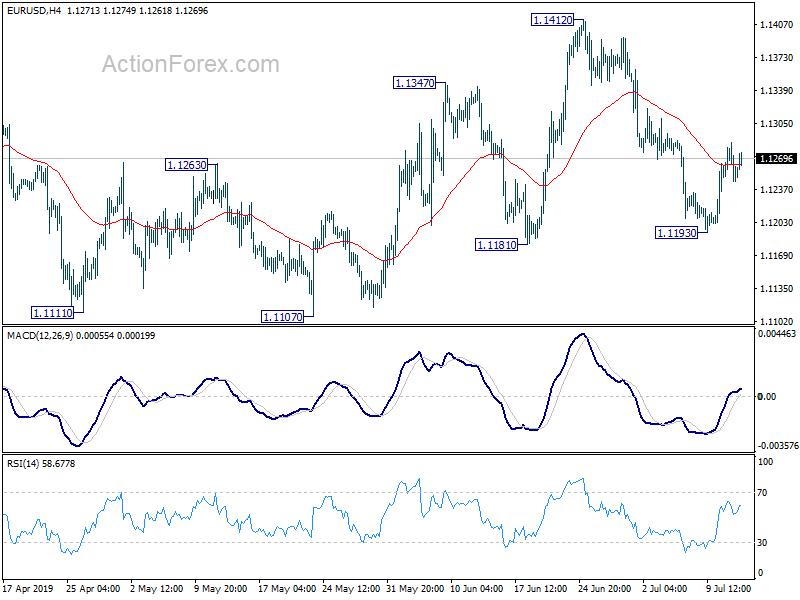
In the bigger picture, bullish convergence condition in daily and weekly MACD suggests that 1.1107 is a medium term bottom. However, rejection by 55 EMA retains medium term bearish. Outlook will be neutral for now. On the downside, break of 1.1107 will resume the down trend from 1.2555 (2018 high) to 78.6% retracement of 1.0339 to 1.2555 at 1.0813. Meanwhile, break of 1.1412 will resume the rebound to 38.2% retracement of 1.2555 to 1.1107 at 1.1660.