

Sample Category Title
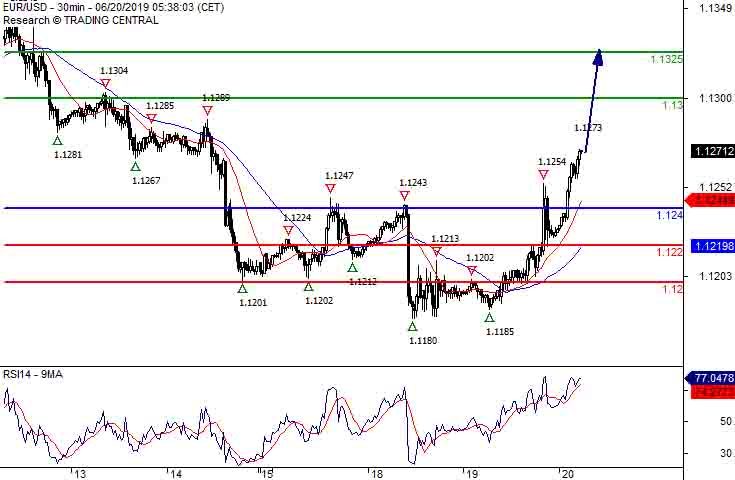
EUR/USD Watch 1.1325
Pivot (invalidation): 1.1240
Our preference Long positions above 1.1240 with targets at 1.1300 & 1.1325 in extension.
Alternative scenario Below 1.1240 look for further downside with 1.1220 & 1.1200 as targets.
Comment The RSI is bullish and calls for further advance.
USDCAD Slumps Below 200-Day SMA, Looks Bearish In Short-Term
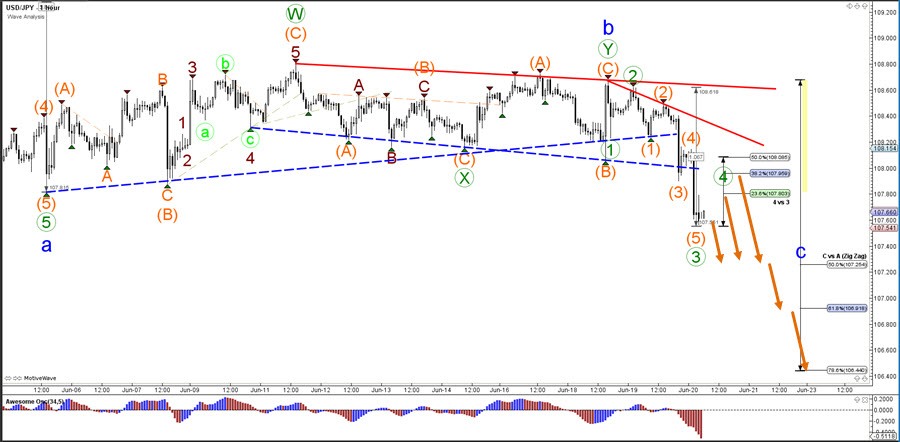
USDCAD gave up last week’s gains and slumped below the 200-day moving average (SMA) and towards a more than a three-month low of 1.3231 on Thursday. According to the RSI and the fast Stochastics, the market could turn even bearish in the near-term as both indicators are sloping downwards and are still above oversold territory.
The spotlight is currently turned to the 1.3200 support level. Should the price break that barrier, selling pressure could intensify until the 1.3111 trough and then down to the 1.3067 bottom.
A strong bounce above the 200-day SMA and higher than the 1.3300 round mark would likely detect resistance near 1.3365, where the 50% Fibonacci of the 1.3663-1.3067 downleg is also placed. A rally above the Ichimoku cloud and the 50-day SMA, which appeared somewhat restrictive recently, could prove more valuable to the market.
In the medium-term picture, USDCAD maintains a neutral profile as it continues to range within the 1.3200 – 1.3563 area. The lack of direction in the 50-day SMA is giving little hope for an outlook improvement.
Summarizing, the short-term risk is tilted to the downside, while in the medium-term the outlook remains neutral.
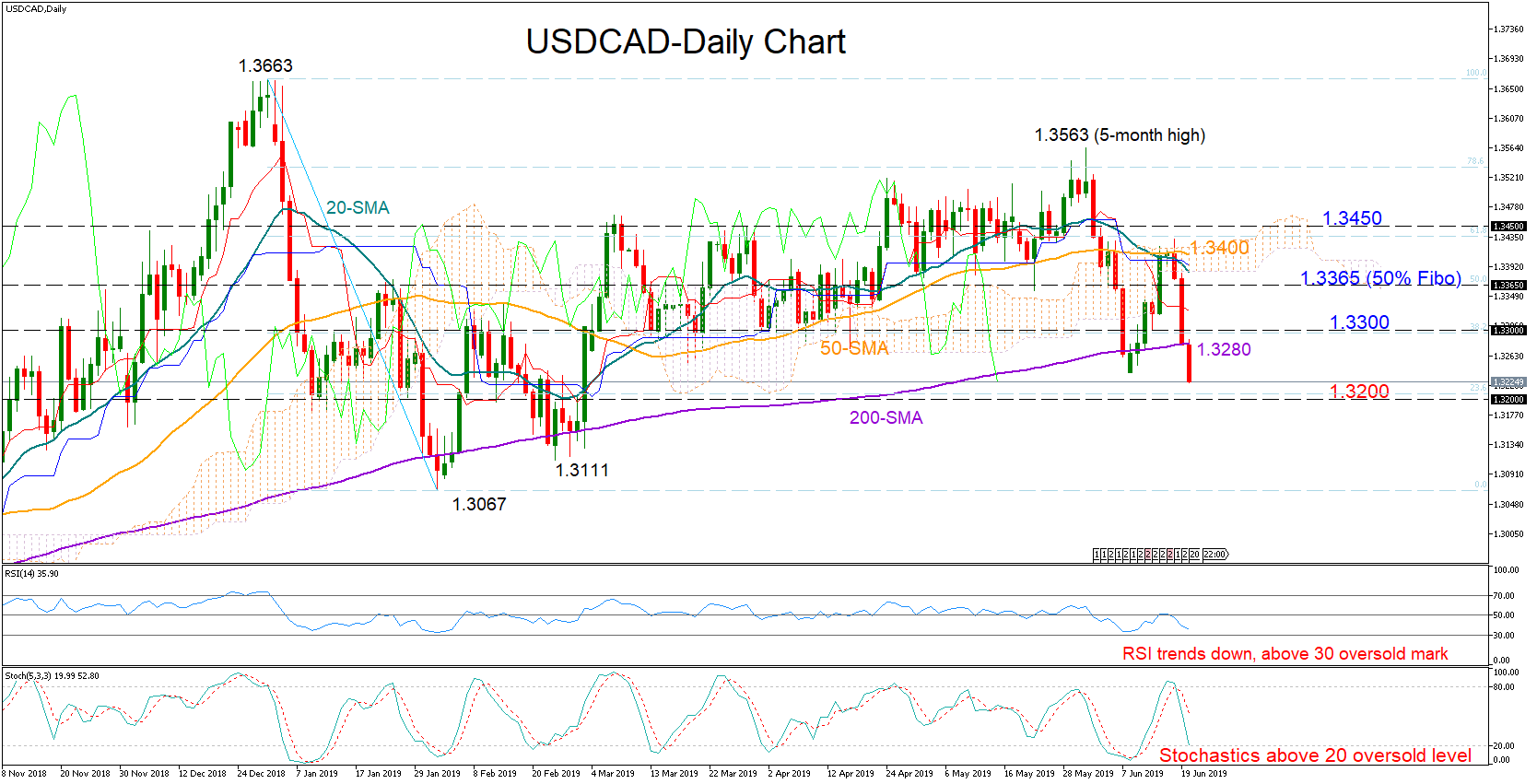
USD/JPY Breaks Classic Bear Flag Chart Pattern
The USD/JPY has managed to break below the support trend lines (dotted blue) of the the lengthy bear flag pattern. This probably confirms the end of the bullish wave B (blue) swing and could indicate the start of a bearish wave C (blue). With a strong breakout candle in place, price is now likely to fall and move towards the Fibonacci levels of wave C vs A. The main target seems to be 106.75 for the moment.
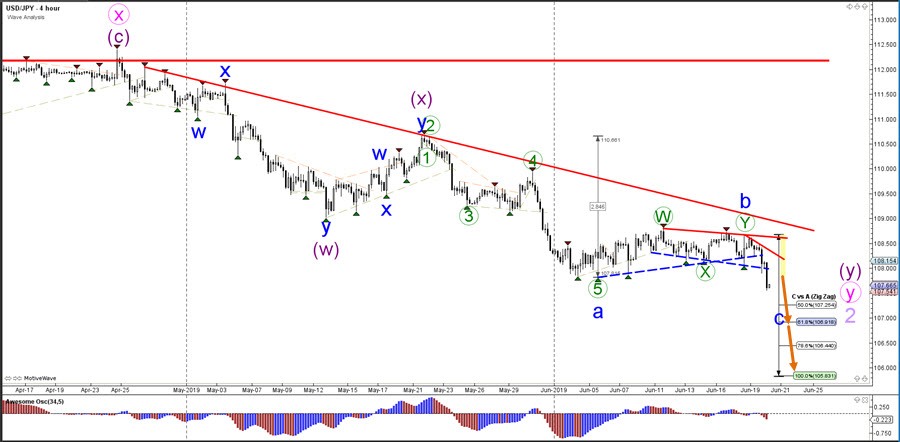
The USD/JPY bearish breakout seems to have made a strong impulse lower. For the moment price is expected to be either in a wave 3 (green) impulse or in a bullish pullback of wave 4 (green). If price is in a wave 4 then the Fibonacci levels of wave 4 vs 3 could act as resistance levels and bouncing spots for more downside.
Fed Ready To Pull The Trigger
- Fed will act to sustain the expansion
- Close, but unchanged, call in 2019; rate cut in 2020 according to dot plot
- An ounce of prevention is worth a pound of cure
- July rate cut 100% discounted
- US yield curve bull steepens, dollar softens and equities gain
It was only three months ago when the Fed changed its forward guidance on policy rates from "further gradual increases" to "patient" in light of global and financial developments. While still suggesting a slight tightening bias in the March dot plot, Fed chair Powell clearly stated that the next rate move could be in either direction. That newly installed Fed guidance didn't last long. The suddenly escalating trade developments and increased concerns about the global growth outlook already triggered a new change to the Fed's reaction function. The FOMC promises to closely monitor the implications of incoming information for the economic outlook and will act as appropriate to sustain the expansion, with a strong labour market and inflation near its symmetric 2% objective. The Fed used similar language in previous cutting cycles. Powell added that "the case for somewhat more accomadative policy has strengthened". In a first dissenting vote since being installed as Fed Chair in January 2018, St.-Louis Fed Bullard preferred not to wait, but act with a 25 bps rate cut from 2.25%-2.5% to 2%-2.25%.
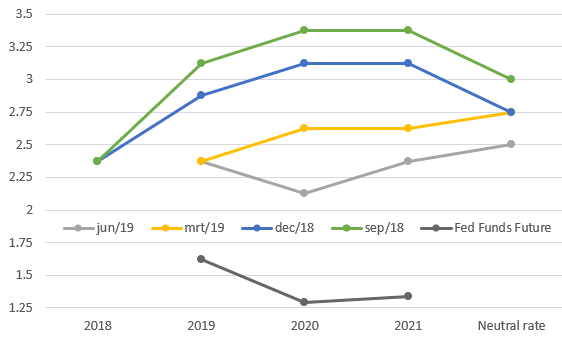
The new June dot plot shows that a large minority of Fed governors uses a further darkening eco outlook as its base scenario. Seven out of seventeen members expect the policy rate to be 1.75%-2% by the end of the year, implying two 25 bps rate cut or one 50 bps rate cut. The 2019 median expectation remained unchanged from March yesterday, but just by one vote. The average forecast for this year, did shift around 35 bps lower, from 2.49% to 2.17% adding evidence the Fed's changed bias. Fourteen out of seventeen June "dots" remain unchanged for 2020, but the median (2%-2.25%) does incorporate one 25 bps rate cut. In 2021, both median (2.25%-2.5%) and average June forecasts (2.32% from 2.16%) are back higher. The median levels for 2020 and 2021 are respectevily 50 bps and 25 bps lower than in March. The way most Fed governors predicted Fed Funds future levels suggests that they play with the idea of cutting rates ones or twice as an insurance to keep the economic expansion going. "An ounce of prevention is worth a pound of cure", Fed Chair Powell later added in the Q&A session. The scenario of a profound cutting cycle to counter a hard landing is not in play. The median estimate of the long term neutral Fed rate declined from 2.75% to 2.5%.
In its new Summary of Economic Projections, the Fed by and large kept its growth and inflation forecasts unchanged, of course against the background of a slightly lower Fed policy rate path. New median estimates suggest 2.1% growth this year (unchanged), followed by 2% in 2020 (vs 1.9%) and 1.8% (unchanged) in 2021. The unemployment rate should remain below 4% in the 2019- 2021 period, and even at slightly lower levels than forecast in March. More importantly, the median estimate for the natural rate of unemployment (NAIRU) declined a notch from 4.3% to 4.2%. The Fed thus thinks that the economy can employ more people without having to risk higher inflation. The Fed's policy statement showed some small modifications, incorporating the recent soft patch of eco data. The US labour market remains strong, with economic activity rising at a "moderate" instead of "solid" rate. Household spending appears to have picked up from earlier in the year, but business fixed investment has been soft.
Headline PCE inflation forecast dropped from 1.8%, 2% and 2% (2019-2021) in March to 1.5%, 1.9% and 2%. Core PCE forecasts changed to 1.8%, 1.9% and 2% from stable at 2% for the forecasting horizon. The Fed statement notes that market-based measures of inflation compensation have declined. The 5y5y forward US inflations swap for example fell below 2% for the first time since 2016. The lack of strong upward inflationary pressure allows the Fed to try to navigate a soft landing with moderating growth and contained inflation.
Bull steepening and softer dollar
Rate markets have been frontrunning on Fed rate cuts this year and feel comforted by the Fed's message. The US yield curve bull steepened yesterday with yields ending 12.8 bps (2-yr) to 1.3 bps (30-yr lower). The move is extended this morning in Asia with the US 10-yr yield dropping below 2% for the first time since November 2016. A sustained break below the 2.01%-2.06% support levels, suggests significantly more downside. A July rate cut is now fully discounted with markets currently just pondering whether it will be a 25 bps (72% probability) or 50 bps (28% probability) move. The Fed Funds future forward curve estimates 75 bps rate cuts this year and 25 bps in 2020 with the policy rate afterwards stabilizing at 1.25%-1.50% in 2021. The discrepancy between markets and the Fed thus remains large. We don't expect the gap to be closed from a market point of view, unless we withness a dramatic improvement in eco data which would be sufficient to fend off a near term rate cut.
The US dollar declined because of the loss of interest rate support. EUR/USD returned north of 1.12 and currently trades around 1.1260. EUR/USD 1.1348 is first resistance USD/JPY fell below 108 to trade at the softest level since the early January flash crash. The trade-weighted dollar dipped below 97. Fed Chair Powell blocked all questions related to a weaker dollar policy, as referred to by US President Trump recently. US stock markets profited marginally, gaining 0.15% to 0.4% and remaining within striking distance of all-time highs. The next high profile event from a market point of view is next week's G20-Summit including a high level meeting between US President Trump and Chinese President Xi Jinping. Lack of progress will amplify rate cut bets.
China media: Xi-Trump meeting just the start of new negotiation phase
The official China Daily newspaper tried to talk down expectations on the upcoming Xi-Trump meeting at G20. An editorial said both parties are "in the mood for serious dialogue". However, "the two parties' expectations are too divergent to allow" conclusion of an agreement. It added, "more likely than not, the one-on-one meeting will end up being the start of a new phase in the negotiations with the two leaders personally setting out their country's respective bottom lines."
Separately, Chinese Premier Li Keqiang reiterated the promises to open its market for foreign investors and businesses. He said today to a group of multinational executives that "China will maintain our long-standing commitment to reform and opening in order to continue to expand and open. We welcome more and more foreign investment to come to China". "We will also relax access to even more fields to create a market-oriented, law-based internationalized business environment."
RBA Lowe: Not unrealistic to expect more rate cut
In a speech on "The Labour Market and Spare Capacity" delivered today, RBA Governor Philip Lowe reaffirmed that the central bank is on track for further rate cuts again. He said that would be "unrealistic to expect that lowering interest rates by ¼ of a percentage point will materially shift the path we look to be on." And, "the most recent data – including the GDP and labour market data – do not suggest we are making any inroads into the economy's spare capacity."
Therefore, "it is not unrealistic to expect a further reduction in the cash rate as the Board seeks to wind back spare capacity in the economy and deliver inflation outcomes in line with the medium-term target." Though, he also emphasized that Australia should also look into other options to get closer to full employment, including fiscal policy and structural policies.
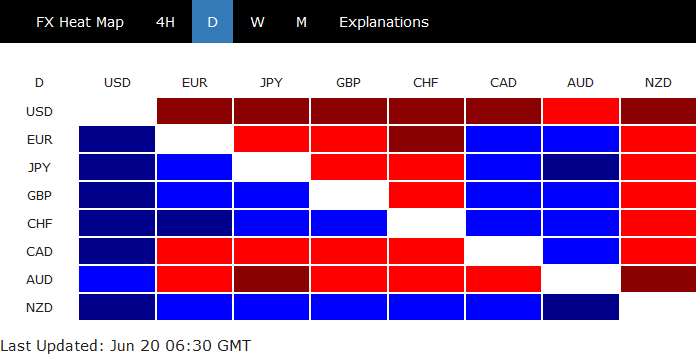
Australian Dollar is the second weakest for today so far, just next to Dollar.
New Zealand GDP grew 0.6% in Q1, weak details keeps RBNZ on dovish side
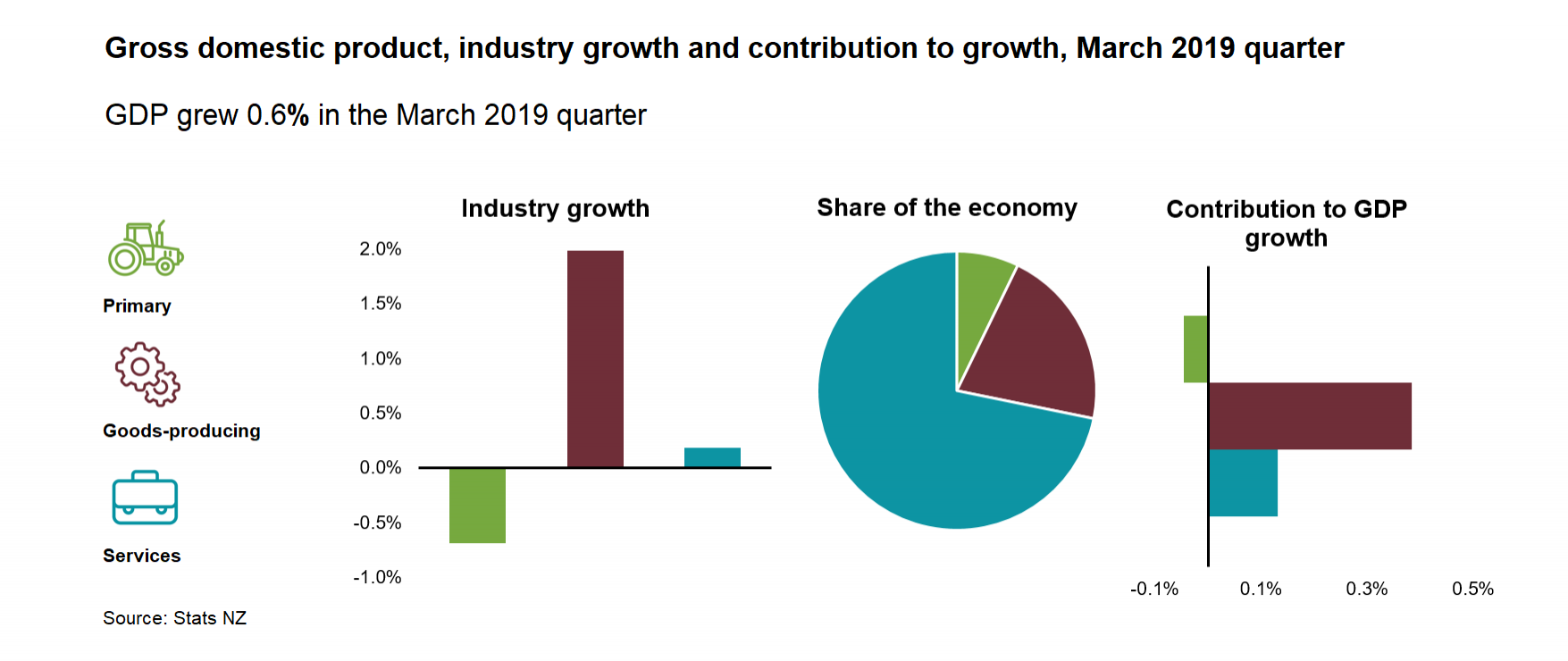
New Zealand GDP grew 0.6% qoq in Q1, unchanged from prior quarter, and matched expectations. Looking at the sectors, growth were driven by 2.0% expansion in goods producing industries. Services growth slowed to 0.2% while primary industries contracted -0.7%. On the components, household spending was up 0.5%, investment spending was up 2.4%, exports of goods and services was up 2.8%
While the headline number was a little stronger than expected, slowdown in services, which accounted for two thirds of GDP, remained a concern. Also, investment growth was mainly driven by residential and nonresidential buildings. Contractions were seen in all other components. RBNZ might be granted some more room to wait-and-see with today's data. But bias will remain towards easing beyond next week's meeting.
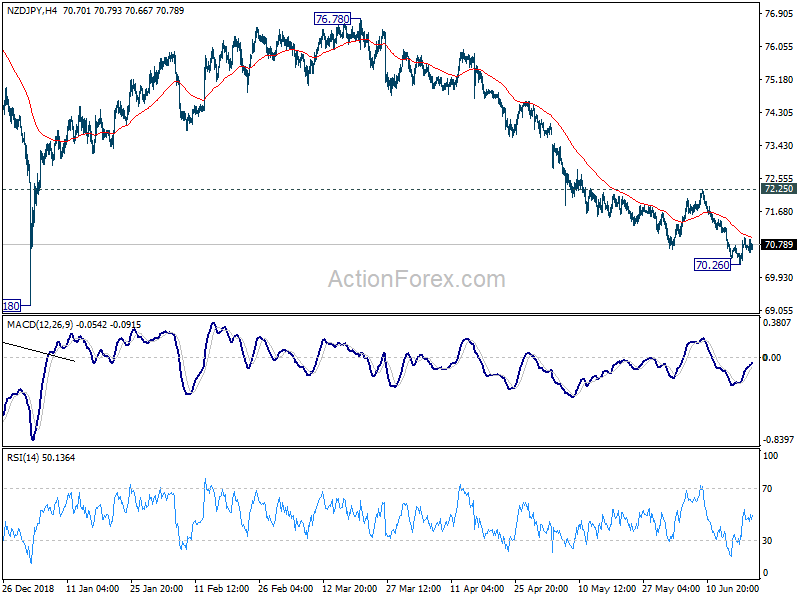
NZD/JPY is steady in Asian session today as consolidation from 70.26 temporary low extends. Near term outlook remain bearish as long as 72.25 resistance holds. Fall from 76.78 is expected to retest 69.18 support next.
BoJ warns of significant downside risks concerning overseas economies
BoJ left monetary policy unchanged today as widely expected. Under the yield curve control framework, short-term policy interest rate was kept at -0.1%. JGB purchase will continue continue to keep 10-year JGB yield at around zero percent, with some flexibility depending on developments. Monetary base is expected to increase at around JPY 80T per annum. Y. Harada and G. Kataoka dissented again in 7-2 vote.
In the accompanying statement, BoJ warned that "downside risks concerning overseas economies are likely to be significant". Risks include US macroeconomic policies, consequences of protectionist moves and their effects, emerging markets such as China, global adjustments in IT-related goods, Brexit and geopolitical risks.
Though, BoJ maintained that Japan's economy is "likely to continue on a moderate expanding trend". Domestic demand is expected to follow an uptrend. Exports are projected to show some weakness, but would stay on a "moderate increasing trend". CPI is likely to increase gradually toward 2 percent, mainly on the back of the output gap remaining positive and medium- to long-term inflation expectations rising.
BOJ Leaves Rates And Policy Unchanged
General Trend:
- USD weaker across the region as US Fed signaled a rate cut in the future but left policy unchanged for now, US 10-yr bond yields decline 2016 low and gold touches 5 year high
- Bank of Japan (BOJ) left rates and policy unchanged, noted must watch how downside risks in overseas economies impacts sentiment. Dissenter Kataoka called for additional easing.
- RBA Govt Lowe signals another rate cut and more than 0.25bps, does not think that little of a cut would have enough impact on growth path, analysts update forecasts see RBA cutting in July and Sept
- In Australia Rio Tinto cut its FY19 iron ore shipment guidance due to challenges at Brockman hub, shares declined as much as 5% in the day
- PBOC sets yuan at the strongest setting in the last month, continued to use 14-day reverse repos
- China President Xi arrives in North Korea for state visit
- China 6.18 shopping day saw record sales (shopping event to promote sales in second and third tier cities)
- Oracle reported strong Q4 results and expects FY20 results to improve y/y
- Looking ahead: Will have rate decisions from Norway, Philippines, Taiwan, Indonesia and UK today
Headlines/Economic Data
Australia/New Zealand
- ASX 200 opened flat
- (AU) RBA Gov Lowe in Adelaide: "Not unrealistic" to expect further reduction in cash rate; "Unrealistic" to think one 25 bps rate cut can alter growth path
- RIO.AU Cuts FY19 Iron ore shipments 320-330Mt (prior (333-343Mt); currently experiencing mining challenges for great Brockman hub; to update unit costs in Q2 (overnight)
- AIR.NZ CEO Christopher Luxon resigns, effective September 25th
- (NZ) NEW ZEALAND Q1 GDP Q/Q: 0.6% V 0.6%E; Y/Y: 2.5% V 2.3%E
- CTX.AU Guides H1 (A$) RCOP Net 120-140M; EBIT 240-270M [-22%]
- (AU) Australia May RBA Govt FX Transactions (A$):-1.53B v -0.99B prior
Japan
- Nikkei 225 opened +0.4%
- (JP) BOJ LEAVES INTEREST RATE ON EXCESS RESERVES (IOER) UNCHANGED AT -0.10%; AS EXPECTED
- 9984.JP Revised FY17/18 tax return because ¥400B of the ¥2.0T loss booked in FY17 related to Arm Holdings deal should not have been booked that year - Nikkei
- (FR) France govt official: Pres Macron and PM Abe will talk about Nissan at their meeting in Japan
- 7201.JP Reportedly resolved corporate governance issues with Renault; Renault CEO Bolloré to get audit committee seat on Nissan board – press
- 3938.JP Close to getting approval from Japan regulators for a crypto exchange, BitMax; will allow Line's 80M users access to Bitcoin
Korea
- Kospi opened -0.1%
- (KR) Bank of Korea Gov Lee: Markets see heightened chance of US rate cut later this year; reiterates that BoK does not mechanically follow US Fed decisions
- (KR) US Envoy to North Korea Biegun: US has every expectation that Pres Xi will send constructive messages on North Korea denuclearization during Pyongyang trip
- (CN) South Korea and China held vice ministerial economic cooperation talks and early stage free trade agreement talks – Yonhap
- (KR) South Korea May PPI Y/Y: 0.4% v 0.6% prior
China/Hong Kong
- Hang Seng opened +0.4%; Shanghai Composite opened flat
- (CN) China President Xi and US President Trump expected to meet over dinner June 29th in Japan – Nikkei
- (CN) China PBoC Open Market Operation (OMO): Injects CNY30B in 14-day reverse repos v CNY40B prior; Net CNY30B injected v CNY25B injected prior
- (CN) China PBoC sets yuan reference rate: 6.8805 v 6.8893 prior (strongest fix in a month)
- (US) Trade Rep Lighthizer: Will speak with China Vice Premier Liu He before the end of the week and will meet with him during G20 ahead of Trump's meeting with Xi - congressional hearing comments
- (HK) Hong Kong Monetary Authority (HKMA): HK$ FX is smooth, expect Fed policy uncertainty it increase
- (CN) China Regulator said to have suspended certain developers bond offerings
- (CN) China MoF Sells CNY5.0B in 2-year and 5-year bonds in Hong Kong
Other
- OPEC Delegate: OPEC+ agrees to move meeting date to July 1-2nd period (in-line with recent speculation), moved from June 25-26
North America
- (US) FOMC LEAVES TARGET RANGE UNCHANGED BETWEEN 2.25-2.50%; AS EXPECTED; DROPS 'PATIENT' LANGUAGE ON FUTURE POLICY ADJUSTMENTS, SAYS 'WILL ACT AS APPROPRIATE' TO SUSTAIN EXPANSION
- (US) Fed Chair Powell: Many FOMC participants see stronger case for rate cuts; changes made to today's statement were "significant" - post rate decision press conference
- (US) US Pres Trump will not remove Fed Chair Powell for now but does think he has authority to replace him - US Financial Press
- ORCL Reports Q4 $1.16 v $1.07e, Rev $11.1B v $11.0Be; Guides Q1 $0.80-0.82 (including $0.01 FX headwind) v $0.81e, Rev (cc) +1-3% v +1.4%e - earnings call
- (MX) Mexico Senate ratifies the USMCA North American trade agreement (as expected)
- (US) DOE CRUDE: -3.1M V -1.5ME; GASOLINE: -1.7M V +0.5ME; DISTILLATE: -0.6M V +0.5ME
Europe
- (UK) UK Conservative Party announces results of 3rd leadership ballots; Rory Stewart eliminated from contest
- (IT) Italy PM Conte response to possible EU deficit procedure said to contain €2.0B in spending cuts - financial press
Levels as of 01:20ET
- Hang Seng +0.8%; Shanghai Composite +2.1%; Kospi +0.2%; Nikkei225 +0.4%; ASX 200 +0.3%
- Equity Futures: S&P500 +0.4%; Nasdaq100 +0.7%, Dax +0.3%; FTSE100 -0.5%
- EUR 1.1226-1.1273; JPY 107.56-108.15 ; AUD 0.6877-0.6907; NZD 0.6535-0.6582
- Commodity Futures: Gold +2.6% at $1,383/oz; Crude Oil +1.4% at $54.75/brl; Copper +0.5% at $2.71/lb
Norges Bank To Hike Today After Dovish Fed And Dovish ECB
Market movers today
The key event today will be the Norges Bank meeting, where both consensus and ourselves are looking for a 25bp rate hike.
The Bank of England also meets, but in our view, the bank is firmly on hold. It is one of the small meetings without an updated inflation report or a press conference so we don't expect much change in the bank's message. The UK also releases May retail sales.
A two-day EU summit starts today, where the main focus will be on potential clarity on the front-runners for the EU Commission presidency, ECB presidency other EU top positions. We will also monitor if the EC will formally open an EDP against Italy. On the data front, we expect Euro area consumer confidence for June to stay unchanged.
The US Philly Fed survey and initial jobless claims will add to indications of how much the US economy is slowing. The PMI and Empire indices have pointed to weakness.
Selected market news
Risk sentiment was benign yesterday as the market digested the dovish ECB message from Tuesday and was waiting for the end of the Fed meeting in the evening. The risk rally continued after the Fed meeting. Overall, the Fed was as dovish as it could be without cutting rates at its meeting. In line with our view, there were several important dovish changes to the statement. Most importantly, the Fed removed the wording that it was "patient " and now said it "will act as appropriate to sustain the expansion " while also saying that uncertainties have increased. Also dovish was that the FOMC was divided on whether to signal cuts outright this year or not (8 signalling cuts, 8 on hold and 1 hike). We stick to our view that the Fed will cut rates in July by 25bp and deliver a total of 75bp of rate cuts in H2 19 (Jul, Sep, Dec). The trade war is an important risk to our outlook in both directions. For more details, see our FOMC review: Fed as dovish it could be without cutting rates already .
The ECB comments on Tuesday satisfied markets so far, as the blockbuster measure (ECB credibility measures) 5y5y is 12bp higher than prior to the speech; however, a Reuters story suggested that the message from Draghi is not consensus in the GC.
Oil traded in a relatively tight range of around 62USD/bbl, with some volatility. The Brent price dropped on the back of news that OPEC+ finally agreed to meet (1-2 July), as the countries must decide on the new output level. Brent spiked above USD62/bbl on a drop in US crude stocks.
As expected, the BoJ kept its QQE with yield curve control and its forward guidance unchanged at a meeting ending overnight with a 7-2 vote. The BoJ kept its assessment of the economy but it is more concerned about downside risks from overseas economies.
The NIER June confidence survey showed business confidence dropping in all sectors, consumer confidence bounced back slightly. The overall indicator is at its lowest since 2013. Price expectations are down to stable, most notably lower expectations in durable goods.