Sample Category Title
USD/CAD Canadian Dollar Lower As Dollar Shakes Off Fed Rate Cut Pressure
The Canadian dollar slipped 0.12 percent on Tuesday after the market tried to scale back probabilities of multiple rate cuts in 2019 by the U.S. Federal Reserve. Trade war concerns also rose as the precedent of a quick win in the trade war with Mexico could see the US use the tool more this year. The USMCA ratification process is due to start and is not exempt from revisions based on political agendas.
Uncertainty about what the outcome of the US-China trade dispute will be ahead of a potential meeting in Japan at the end of the month are giving the greenback a boost as its appeal as a safe haven rises.
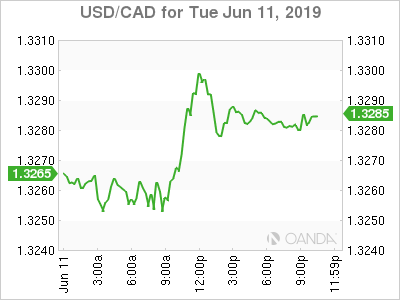
The US dollar is mixed against major pairs. The EUR and the GBP are higher against the greenback after President Trump tweeted earlier this morning about the unfair strength of the US dollar. Rising probabilities of an interest rate cut by the Fed are keeping the dollar under pressure but given the appeal of the currency as a safe haven during the US-China trade war it continues to appreciate despite the wishes of the Trump administration. 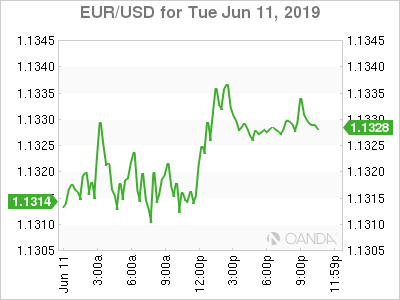
The market is pricing in multiple rate cuts before the end of the year, but before that happens the case for a weaker US economy has to present itself before the Fed. Inflation data to be released on Wednesday could validate the downward trend started with the disappointing jobs report last week. Core inflation is expected to gain 0.2 percent and the headline indicator only 0.1 percent. Wage growth was also a miss on Friday with a 0.2 percent gain when the forecast called for 0.3 percent.
The Fed will wait for a confirmation of US slowdown before it acts, the US central bank is not known for being pro-active and will not fix the economy, until there is proof that is broken. A rate cut in the summer will materialize if there is proof of a slowdown but could also get readopt a patient stance if there is a trade agreement between the US and China. The flip side is that failing to discuss trade or a rise in aggressive rhetoric from either side could increase the trade headwinds against the US economy and force Chair Powell to cut sooner rather than later.
Crude Flat as Strong Dollar Offsets OPEC+ Extension Rumours
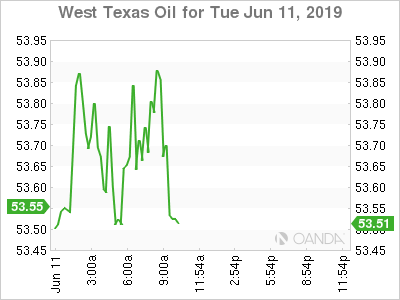
Oil is flat on Tuesday as the US dollar rebound continues for its second day putting pressure on energy prices. The dollar is higher after the deal with Mexico on immigration avoided tariffs and closed off a trade front so that now the US can focus on the US-China trade dispute.
The negotiations between the two super-powers don’t have a set date, and with the G20 in Japan fast approaching the chance there is a positive announcement is uncertain. The impact on oil prices from further downgrades in global growth could lead to further losses.
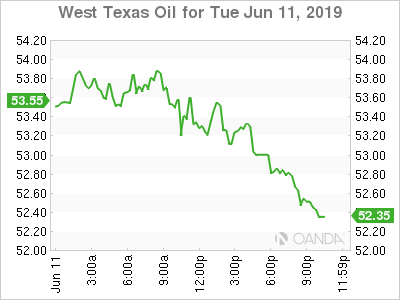
Russia is playing hard to get and remains not committal about extending the OPEC+ deal to cut oil production. The deal has been the major stabilizing force for crude prices, but rising US production and a prolonged trade war are close to offsetting the balance. Russia could be improving their position to seek leverage out of Saudi Arabia before agreeing to rejoin the major producers.
Yellow Metal Recovers as Trade Tensions Rise Safe Haven Appeal
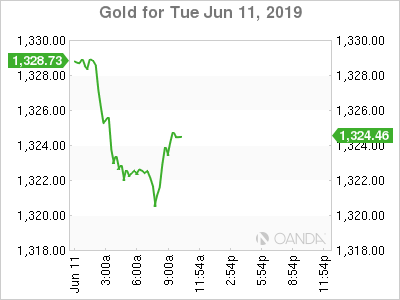
Gold rose 0.1 percent on Tuesday after falling more than 1 percent at the start of the week as the short-lived US-Mexico tariff dispute once again put emphasis on the US-China trade war. The US dollar rebounded despite mixed economic indicators putting investors on alert of possible rate cuts from the Fed.
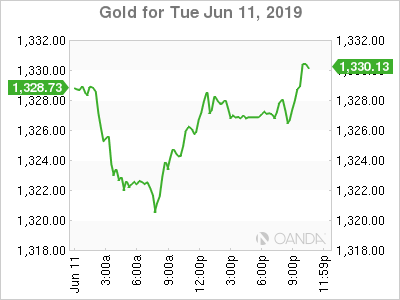
Equities were the main beneficiaries on Monday but as equities failed to gain momentum, the yellow metal was once again seen as a destination in times of uncertainty. Gold remains bid as the main dispute between US and China remains unresolved. If there is no sit down between leaders at the G20 the yellow metal will rise as investors will be on the lookout for a safe haven.
The U.S. Federal Reserve is expected to announce at least one interest rate cut in 2019, putting less pressure on the metal as recession fears increase. Physical demand for gold continues at a healthy pace and the asset’s appeal as a safe haven will depend on negotiations between the US and China at the G20.
Markets End Six Day Win Streak Await US Inflation for clues on Fed’s Move
Equities in the US ended lower after the massive rebound on Monday. June has seen the stock rally narrative reborn and with the US-China in the background this month, and the Mexican import dispute being so short-lived it all fed into the expectations of higher levels if trade headwinds remain subdued. As the potential G20 meeting between Trump and Xi gets closer the anxiety in the market will be reflected in equity prices and is up to the Trump administration to manage those expectations better than in the past.
A trade deal in June is a long shot, seeing how far apart the two sides are, but signs of progress would spark optimism that a deal is once again within sight which could prompt equities to jump into a higher gear.
Pound Rises on Solid Jobs and Inflation Data
The British pound became the biggest major pair winner against the US dollar on Tuesday. The pound appreciated 0.30 percent after the release of the UK’s jobs report. The jobs data showed a 3.3 yearly rise in wages and the lowest unemployment rate since 1974. The shadow of Brexit was felt even in the light of positive data as the number of jobs added was the weakest since August with employers holding back on hiring as the divorce between the United Kingdom and the European Union could be entering its endgame.
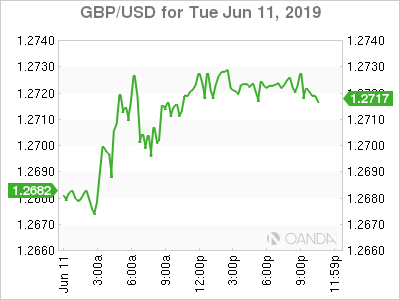
The rise in wages in particular is seen as the right inflationary data feeding into the expectations that the Bank of England (BoE) could lift the interest rate to avoid the economy overheating despite Brexit headwinds. Comments no Monday from Michael Saunders delinked any future action from the central bank to the Brexit outcome. The divergence between the BoE who could potentially raise rates in 2019, compared to the Fed and the ECB that have a rate cut as their next possible monetary policy move has put a bid on the GBP.
Eco Data 6/12/19
[php_everywhere instance="1"]
US update: DOW turns red after initial gain, Yen trying to fight back
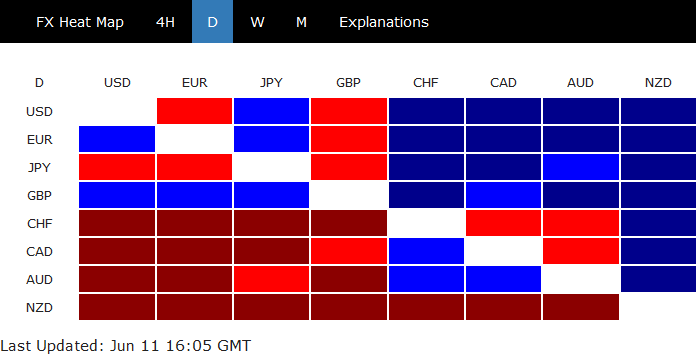
After being pressured for most of the day, Yen is trying to make a come back as rally in US stocks lost steam. But for now, Sterling remains the strongest for today as lifted by stronger than expected wage data. Resilient Euro is following and then Dollar.
But for the greenback, tomorrow's CPI will likely be the more important event. On the other hand, New Zealand dollar is the weakest one for now, followed by Swiss Franc and then Canadian.
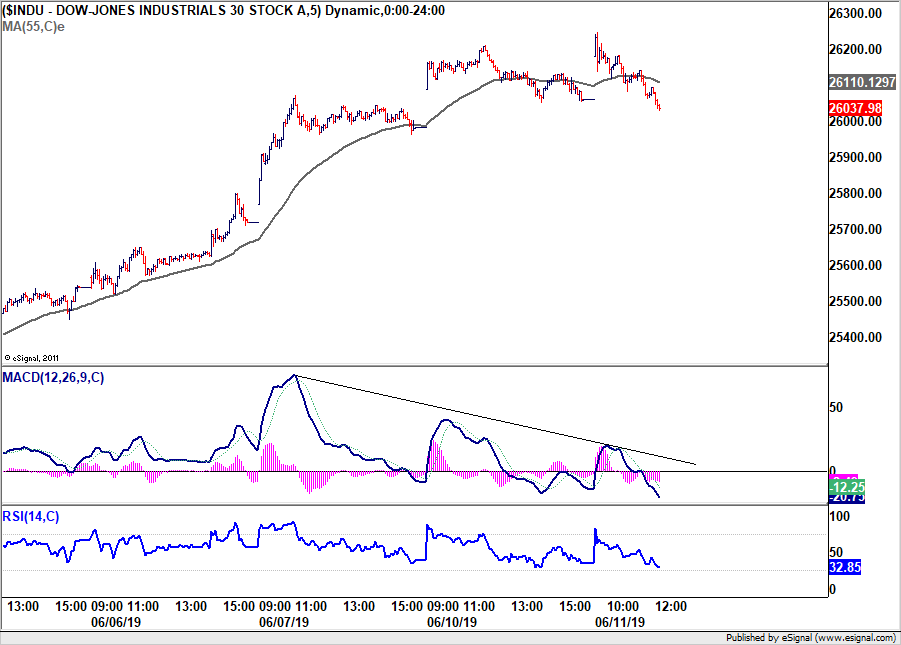
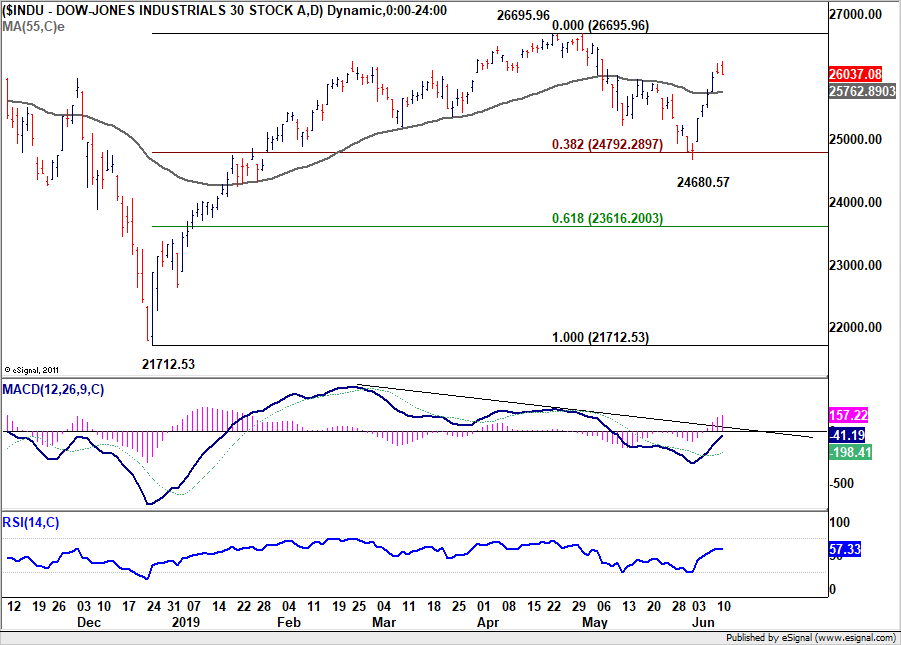
DOW opened higher earlier today and hit as high as 26248.67. But just like yesterday, it's failing to sustain momentum and turns red for now. Yesterday's low was also breached. The strong rally from last week's low of 24680.57 looks stretched and we'd expect a correction soon, possibly back to 55 day EMA (now at 25762).
Gold Bulls Face First Test
We’re seeing some more profit taking in gold on Tuesday, with the rebound in the dollar and stronger risk appetite likely contributing to the declines.
Gold failed to break above $1,350 on this occasion, or hold above the February high, but that doesn’t necessarily mean the rally has run its course. Price has now fallen back towards $1,320 which could be an interesting test, having previously been a notable area of resistance. A rotation off here could see last week’s highs coming under pressure again.
Gold Daily Chart
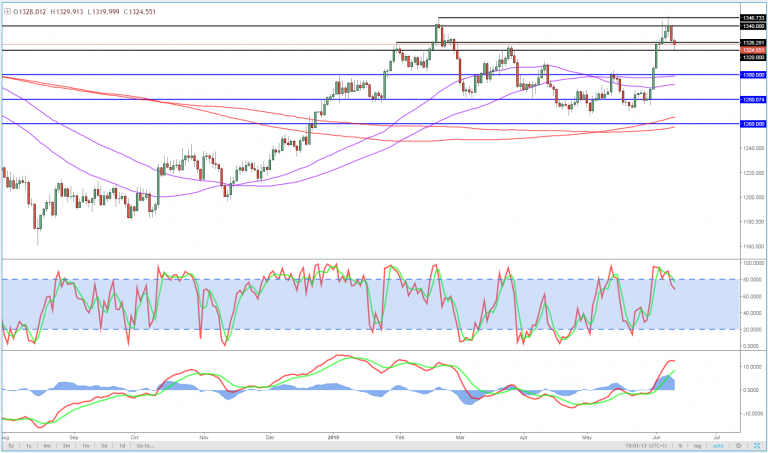
A break below here wouldn’t be particularly concerning though, as the rally that preceded it was very strong. We’ve only seen the rally correct by around a third now – a level that will be of interest to traders – but a deeper correction is hardly a red flag. The $1,300-1,310 area could be much more interesting, at which point we’ll get a much better idea of just how bullish this market is.
Gold 4-Hour Chart
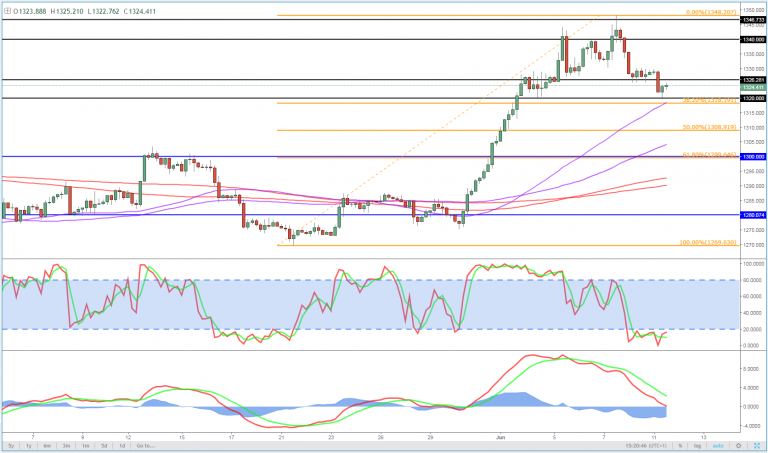
As you can see on the chart above, the momentum indicators don’t show any divergences forming at this point, which may support the view that a deeper correction is on the cards.
Australian Employment Report Next to Move Aussie
The decision of the latest meeting in June of the Reserve Bank of Australia (RBA) was a rate cut after three years to a new record low of 1.25% and the market is anticipating two more 25-bps cuts before the end of the year. The Australian dollar, which had been resilient to the downward shift in the interest rate trajectory, is losing ground this week as the US dollar rebounds. The aussie now awaits the employment report for May due on Thursday at 0130 GMT for possible gains.
The RBA move was the first cut rate in borrowing cost since August 2016 and is intended to support employment growth and to achieve progress towards the inflation target range. The Board mentioned that they will continue to monitor developments in the labour market.
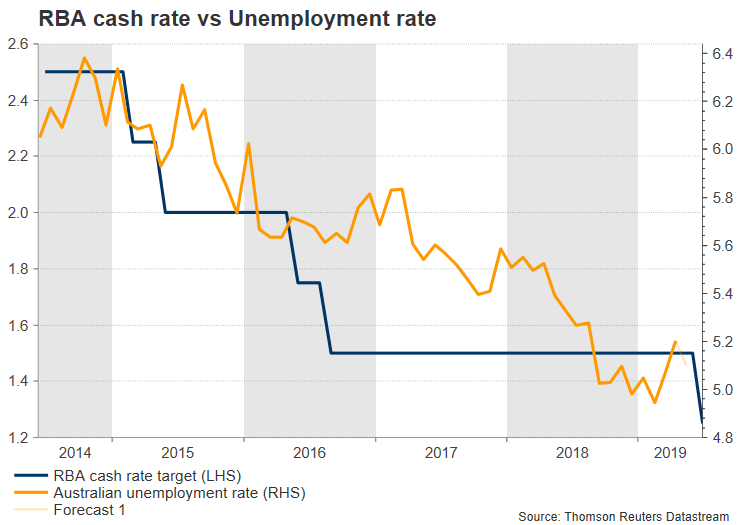
After a 28.4k increase on April, the economy is expected to have created 17.5k new job positions in May. While, at a first glance, this could be considered as progress, the addition is still among the lowest levels reported over the past two years. The participation rate is not anticipated to excite either as the measure is seen steady at 65.8%. But the unemployment rate, which advanced to 5.2% in the preceding month is projected to return to 5.1%.
Given the country’s high exposure to global risks such as the US-Sino trade war, gains for risk assets were limited. On Monday, President Donald Trump mentioned once again his caution about additional tariffs that could be hit on Chinese imports if there is no development on discussions with President Xi on June 28-29, at the G20 summit in Japan. Such a meeting could attract traders’ attention until there is more clarity for the G20 summit.
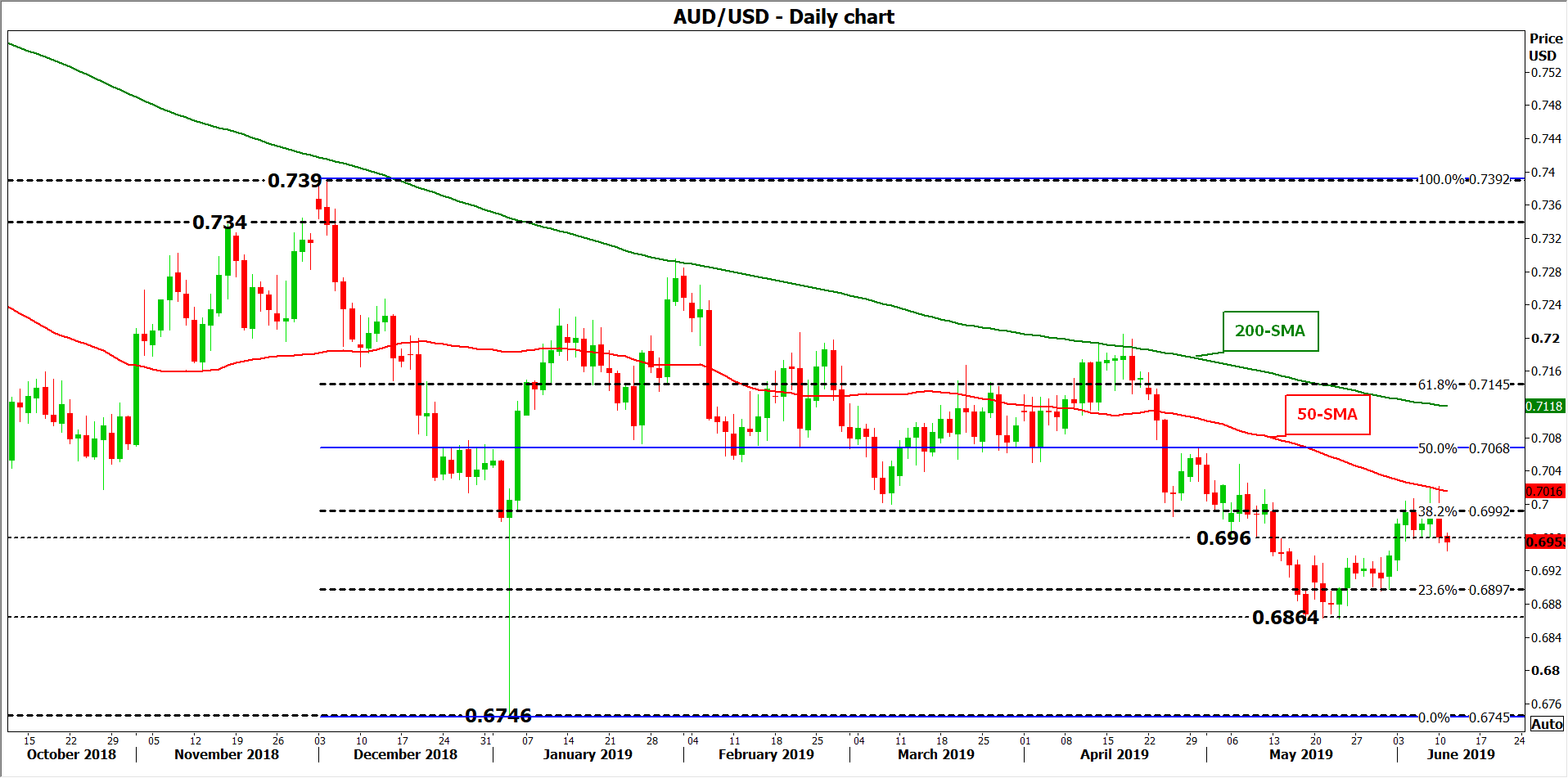
Aussie waits for employment report for more gains
Turning to market reaction, AUDUSD may likely crawl back lower and towards the 23.6% Fibonacci retracement level of the downward wave from 0.7390 to 0.6746 near 0.6900 if the employment figures disappoint. Breaking lower, the three-and-a-half month low of 0.6864 may be the next target.
In the event of better than expected readings, investors would get more convinced that the next move in interest rates may be up, with the price advancing towards the 50-period simple moving average (SMA) in the daily chart (currently at 0.7015). Above that, the 50.0% Fibonacci mark of 0.7068 could halt upside corrections as well.
More Chinese Data to Direct on Growth this Week
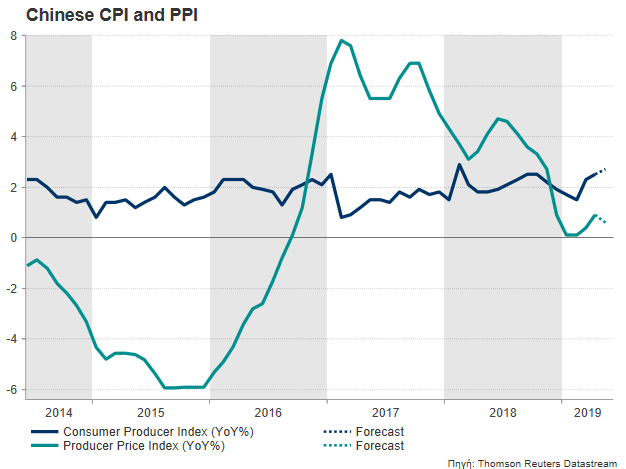
With the G20 meeting looming large at the end of June and the trade war dust still far from settled, the Chinese calendar will attract extra attention than usual this week. On Wednesday at 0230 GMT, consumer and producer price indices will report on inflation, while on Friday at 0800 GMT, retail sales, industrial production and fixed investment will deliver further evidence on how the second quarter is shaping up. The data, though, may not be good enough to ease growth woes.
Although inflation is not a big issue in China, consumer prices seem to be rising at a sensitive time, when authorities are searching for tools to stabilize demand amid concerns the trade war could turn more costly in the coming months. The deadly African swine fever may have likely disrupted pork supply for another month, pushing the consumer price index (CPI) to 2.7% y/y in May from 2.5% in April despite the pullback in oil prices. On the other hand, prices of goods sold by manufacturers have likely eased thanks to the slowdown in metals and energy, sending the producer price index (PPI) down to 0.6% y/y from 0.9% previously.
Retail sales on Friday could prove that consumer spending kept rising at a steeper rate of 8.1% y/y compared to 7.2% in the previous month, but this will still be among the slowest rates of increase since 2003 and a signal for additional monetary or/and fiscal stimulus should external risks heighten. Adding to the worries, were also this week’s import figures, which tumbled the most since July 2016, underscoring weakness in the domestic economy.
On the supply side, the news may do little to keep the bad vibes away. Analysts believe the industrial output expanded slightly faster at 5.5% y/y versus 5.4% in April, while expansion in the year-to-date private sector investment, an important engine of growth, steadied at 6.1% and not far above the historic low of 5.3% reached in September.
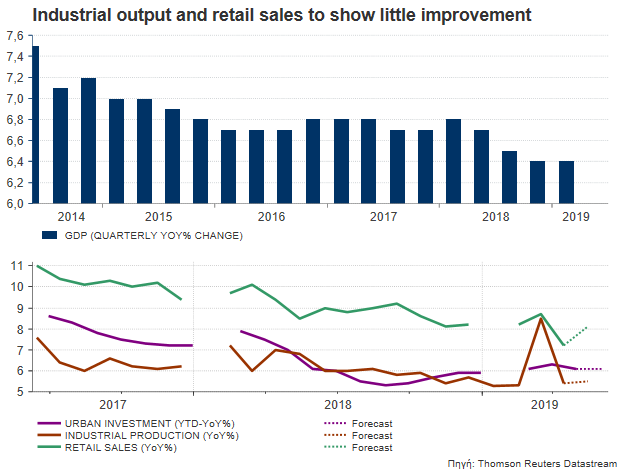
With manufacturers front-loading shipments to avoid any potential turbulence from higher US import tariffs and the discount in the offshore yuan supporting foreign demand for Chinese goods, the surprise rise in exports in May was somewhat justified. Nevertheless, it seems that the upside in export data may not hold for long if the tit-for-tat tariff game stretches further, as it forces production out of China as the US Treasury Secretary Steven Mnuchin claimed.
Such a scenario is currently looking possible in the near term, since Beijing in contrast to Washington, showed little communication so far of how to get trade talks back on track. Moreover, with two weeks left for the G20 gathering in Osaka, the Chinese government has yet to confirm a meeting between Xi Jinping and Trump despite Trump’s threats of imposing levies on $300 billion additional Chinese products if Xi refuses to show up. Even if a potential meeting could promise little or no progress at all, the choice of not attending may have an immediate negative consequence for Beijing.
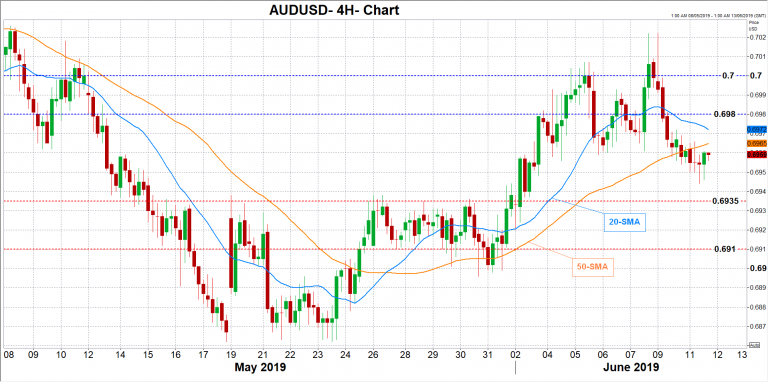
Turning back to data and the market reaction, disappointing readings – especially on the industrial front – would further dampen hopes for a growth turnaround in the second quarter. Besides the yuan, the Australian dollar could also feel some pain in the wake of lower-than-expected figures as China is a major buyer of Australian products. Particularly, AUDUSD could retreat until the 0.6935 former resistance area, while a bigger negative surprise may also open the door for the 0.6910 mark.
On the flip side, a better-than-expected outcome could drive the pair back above the 20-period simple moving average in the 4-hour chart (0.6974) and within the 0.6980-0.7000 region.
US: Small Business Confidence Climbed Higher in May
- The NFIB's small business optimism index improved for the fourth consecutive month in May, rising by 1.5 points to 105. The increase exceeded consensus expectation, which called for a weaker 102 showing.
- Movements among the survey's subcomponents were generally positive, with six improving, one declining, and three remaining unchanged. Capital spending plans increased (+3 points to 30%) as well as actual capital outlays, which was up 6 points to 64% – the highest reading since February 2018. Firms expecting higher sales (+3 points to 23%) and an improvement in economic conditions (+3 points to 16%) also improved on the month. Overall, small business owners’ expectations for sales, business conditions, and expansion all rose.
- Labor market indicators were also broadly positive. The percent of firms with unfilled job openings remained unchanged from last month at 38%, while plans to increase employment edged marginally higher (+1 point to 21%). The number of firms planning to raise compensation increased notably by 4 points to 24%, as firms continue to struggle with finding qualified applicants for job postings (+5 points to 54%).
- Expectations of easing credit conditions was the only subcomponent to decline (down 1 point to -5%).
Key Implications
- Small business optimism has perked up of late and continues to climb, recovering from the shutdown induced doldrums in the first quarter. Overall, firms are signalling confidence in the strength of the economy by increasing current capital expenditure as well as planning further outlays in the future. The employment outlook has also been fairly positive with firms seeking to hire and expressing a willingness to raise compensation in order to do so.
- The general upbeat tone of the report notwithstanding, current trade conflicts between the U.S. and major trading partners remain the fly in the ointment and could have significant implications for small businesses if not quickly resolved. What's more, the possibility of further escalation could weigh heavily on small business optimism in the months ahead, if such actions dent market outlook, depress sales activity, and ultimately diminish firms profitability.
Brent – Stumbles after Brief Rebound
Traders concerned about G20 meeting?
The oil price rebound may have already run into a little snag, with Brent running into some resistance around $64.50 on Monday.
The rebound in recent sessions had been attributed to the US/Mexico deal on the border to avoid tariffs, improved overall sentiment and suggestions from Saudi Arabia that an extension was effectively guaranteed.
The latest stumble may prove to just be some early profit taking but there is a feeling that there’s more to it. There still appears to be little idea of how much Russian involvement there’ll be in an extension and with the date of the OPEC+ meeting now looking like early July, perhaps producers are looking to make a decision with one eye on the outcome of the Trump/Xi meeting.
Brent Daily Chart
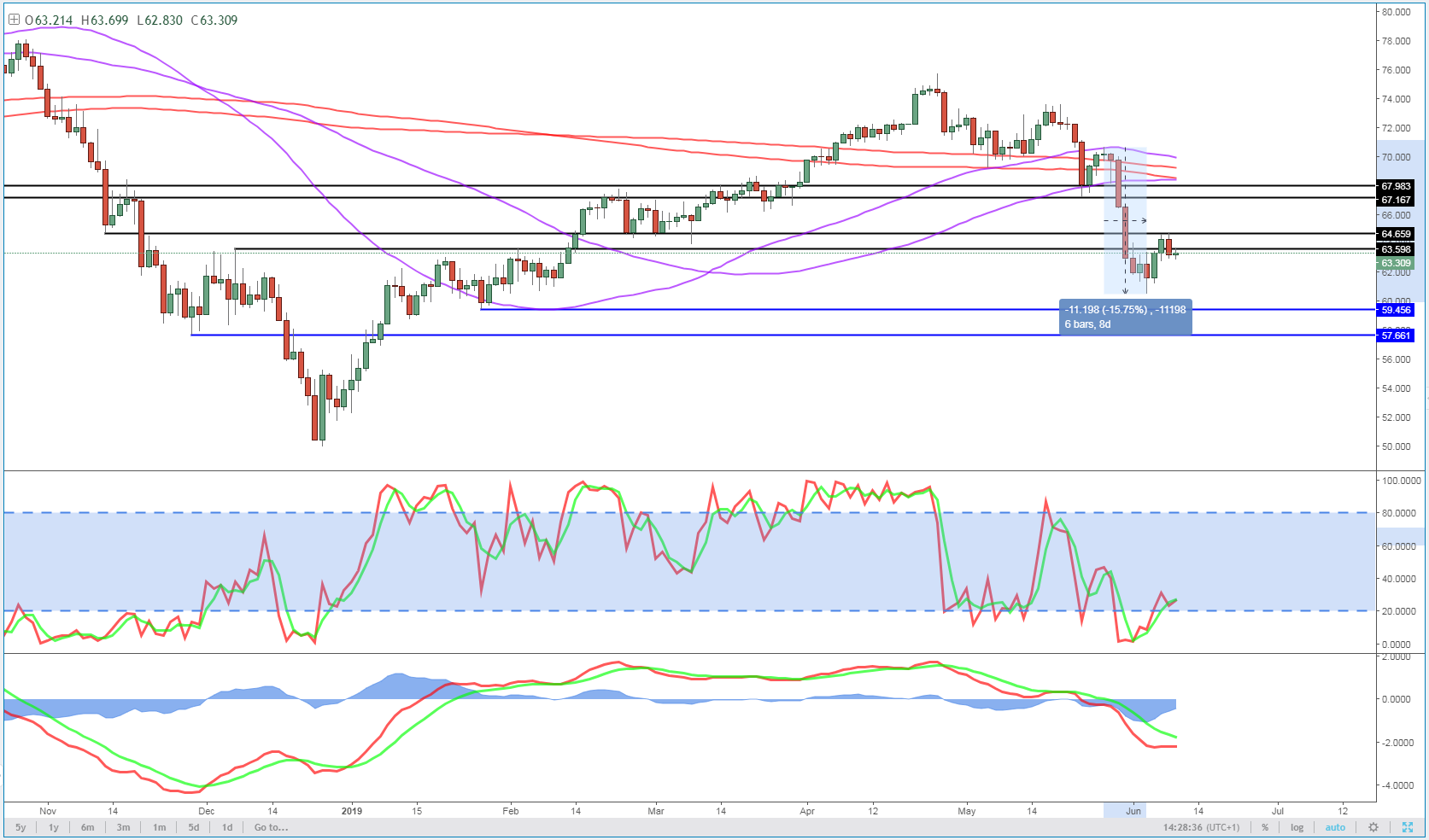
The charts potentially support this uncertain and cagey approach, with price having fallen more than 15% in just a week between late May and early June. The recovery seen since has hardly been significant before running into resistance around $64.50, which may suggest traders are nervous about two events later this month/early next – the G20 at which Trump and Xi will discuss the breakdown in trade talks and the OPEC+ meeting.
That’s not to say we won’t climb higher here and a break above this week’s high could bring $67-68 into focus, with it being prior support and resistance. But without firm suggestions that a US/China deal or a significant cut extension is secured, I struggle to see oil traders getting too excited.
Brent 4-Hour Chart
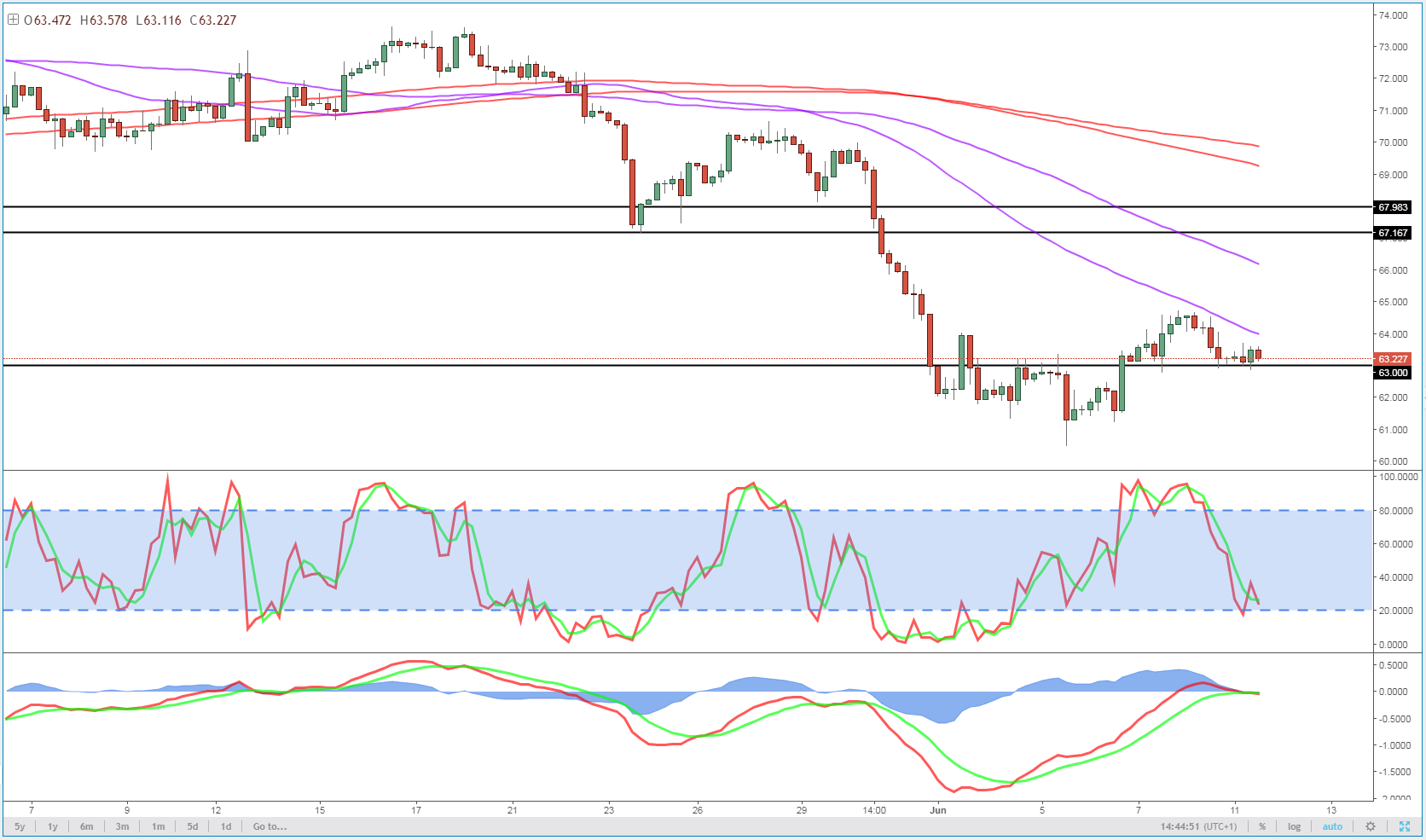
Should we head lower then the area around $60 will be interesting, with it having run into support around here on numerous occasions since late December. Brent has struggled to hold below $63 so far though so perhaps if this can hold, it will be the trigger for another test of the lows.
GBP/USD – Buoyed by UK Jobs Data
UK labour market data remains very healthy
Sterling has been given a boost in early European trade from the latest jobs data, which showed unemployment remaining at a 44-year low and earnings growth staying above 3%.
At a time when the economy is slow, global risks are building and Brexit is unresolved, this data is quite remarkable and very encouraging. Of course, its resilient to Brexit uncertainty and everything else may not last in the event of a broad slowdown or no-deal, but that’s no reason to be discouraged.
It also leaves the Bank of England in a very curious position, not that you’d guess so from a market pricing perspective, with a rate hike entirely priced out for the next year and no move at all the most likely outcome.
Policy makers may well be happy to sit back and wait until October to pass before deciding what to do next but in the unlikely event that we exit with a deal, they may be left seriously considering whether a hike is appropriate, especially given the current level of interest rates. Of course, there’s a lot of if’s here and plenty can change over the next four and a half months.
Clearly traders aren’t feeling too optimistic which is why we find sterling trading not far from its lowest levels this year. Of course this largely relates to the more pessimistic outlook on Brexit, with a number of the more favoured Conservative candidates – including the frontrunner – preferring a harder exit and seemingly perfectly comfortable with no deal.
It will be interesting to see how we trade around 1.28, with a break above potentially being a bullish signal in the near-term. That said, the Conservative leadership race may continue to be a drag on the pound so gains higher may rely more on dollar weakness that sterling surges.
Green Across the Board as Trade Optimism Brews and Trump attacks Fed
Global equities are higher across the board on trade optimism and after Beijing announced that local governments will have looser spending rules. Investors are shrugging off President Trump’s latest threat of immediate tariffs of 25% or much higher on a further $300 billion of Chinese goods if Xi does not attend the G20 at the end of the month. Trump appears to be shooting from the hip and it seems like more posturing ahead of the G20. Treasuries continue to stabilize this month as the 10-year yield hovers around the 2.157% level. Core European bonds also firming up as yield on the 10-year German bund steadies around -0.224%.
Asian equities especially benefited from Beijing’s news local governments can loosen spending rules. The lifting of restrictions on spending of proceed from bond sales and help for banks to deliver loans. The infrastructure boost helped take the Shanghai Composite Index 2.6% higher today, but still remains over 10% lower from the April highs.
Trade war escalation remains the primary deterrent for global equities and despite increased efforts from the PBOC and possible cuts coming from the Fed, higher stock prices will require to see a de-escalation in tariffs to come out of the sideline conversations held at the G20.
Via twitter, President Trump reiterated his stance that the Fed should cut rates and was critical on the quantitative tightening. Trump highlighted the euro and other currencies are devalued against the dollar. Economists for the most part are now agreeing with Trump that the Fed should cut rates after the policy mistakes that surrounded the last hike delivered at the end of the year.
- US PPI – Prices rise at slowest pace since last year
- Hong Kong – Extradition law could destroy business
- Sentix – German recession very likely
- Oil – Climbs as EIA forecasted to see 960K barrel decline
- Gold – Softer on positive trade developments
PPI
The US producer price readings came in mostly in line with expectations highlighting that inflation remains muted and supporting the markets pricing in of Fed rate cut bets. Inflation is going nowhere and rate cuts should be delivered as long as we don’t see any surprise upticks with inflation.
Hong Kong
Hong Kong could lose a lot of business if the government implements a plan that would allow extraditions to mainland China. Protestors are deeply worried that Hong Kong will be folded into Mainland China. The Legislative Council will debate the proposed changes, but many are fearful this could spell the erosion of civil liberties. China is encroaching on Hong Kong’s rule of law and if that gets eroded, we will see rigid authoritarianism prevail for President Xi.
EUR
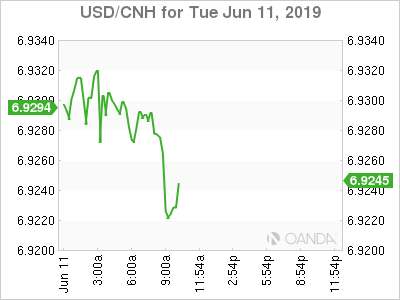
The eurozone gauge for investor confidence fell 8 points to -3.3 points in May. The German component saw their index fall back into negative territory for the first time since March 2010, keeping recession concerns on high alert. The report offered little optimism unless we see an end to the cold trade war between the US and China.
Oil
Crude prices are rallying mainly on the overall risk-on tone and expectations US crude inventories are expected to drop following last week’s surprising multi-million barrel build. The trade war is also influencing the recent slump with oil prices as global growth concerns remain the main driver with crude.
OPEC and allies are also struggling on agreeing on a date when to meet. The proposed dates in early July are being met by resistance from the Iranians. One energy correspondent noted that OPEC is considering keeping their meeting in June and switching the non-OPEC meeting to July.
Gold
Gold prices continue to pullback as risk appetite reigns supreme. The yellow metal however should still see support as no major updates on the trade front are expected until the G20 summit at the end of the month.