Sample Category Title
GBP/USD Outlook: UK Earnings / Jobs Data In Focus For Fresh Signals
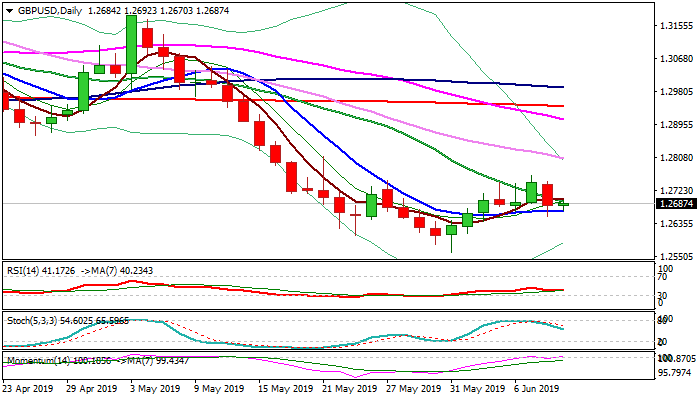
Cable is in directionless mode in early Tuesday’s trading, holding within tight range between converging 20/10SMA’s (1.2692/1.2671 respectively) and awaiting fresh signals from UK jobs/earnings data today.
Monday’s close in red and marginally below Fibo support at 1.2685 (38.2% of 1.2559/1.2762) after recovery attempts stalled on Friday, generated initial signal of reversal, which requires sustained break below 10SMA for confirmation.
Daily studies are mixed, as bullish momentum rises, stochastic heads south, while RSI is neutral.
Overall sentiment is negative due to Brexit concerns, with tensions rising over the election of new UK Prime Minister between ten candidates.
UK earnings / jobs data could hurt pound if May figures disappoint, as forecasts are already below previous month’s levels.
Expectations show significant fall in new employment, though jobless claims are seen slightly better, with unemployment rate expected to stay unchanged at 3.8%.
Focus turns on UK earnings as key indicator (May 3.0% f/c vs 3.2% prev) as release below 3% may hurt pound.
Bearish scenario on firm break below 10SMA would expose pivotal Fibo support at 1.2638 (61.8% of 1.2559/1.2762) and risk retest of key support at 1.2559 (31 May low).
Conversely, rally above 20SMA would require confirmation on break above recovery high at 1.2762 to expose pivotal Fibo barrier at 1.2796 (38.2% of 1.31791.2559) violation of which would signal stronger correction.
Res: 1.2692, 1.2745, 1.2762, 1.2796
Sup: 1.2668, 1.2636, 1.2605, 1.2580
EUR/GBP Is Bullish Above The 0.8900 But Watch For W L3 Camarilla Pivot
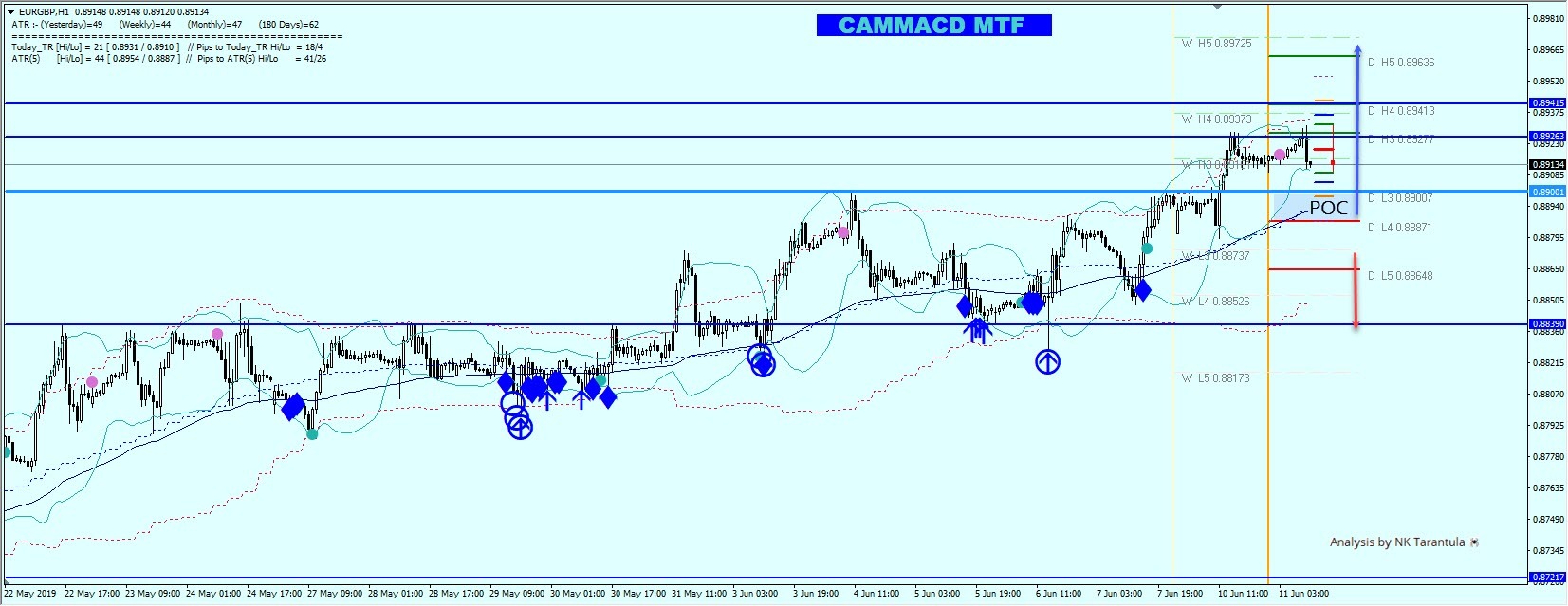
The EUR/GBP is still bullish while the price is above the order block 0.8900. However, if the bulls want to dominate, the price should not drop below W L3
0.8885-8900 is the POC zone. If the price makes its way above the zone we might expect a continuation towards 0.8970 with 0.8940 as the interim target. The retracement has already started so we will see if the price will get to the POC and bounce. However, a drop below the W L3 camarilla pivot – 0.8870 will likely wake up bears and the target is 0.8839 before the W L5 is hit – 0.8817.
Euro And Pound Are In A Possible Bullish Turn
The Chinese government announced softening financial conditions intended to spur government spending and revive economic growth. Moreover, market participants continue to price in the Fed monetary policy easing later this year. At the end of last year, as well as in 2015, developed markets monetary easing and stimulus in the emerging markets was the major events returning the demand for risky assets. That turn markets to growth and fuelling commodity prices. At the same time, the experience of the financial crisis of 2007/2008 does not allow us to forget that such a policy does not solve problems, but only creates bubbles elsewhere in the financial system, forming the so-called steroid growth of markets.
Stocks
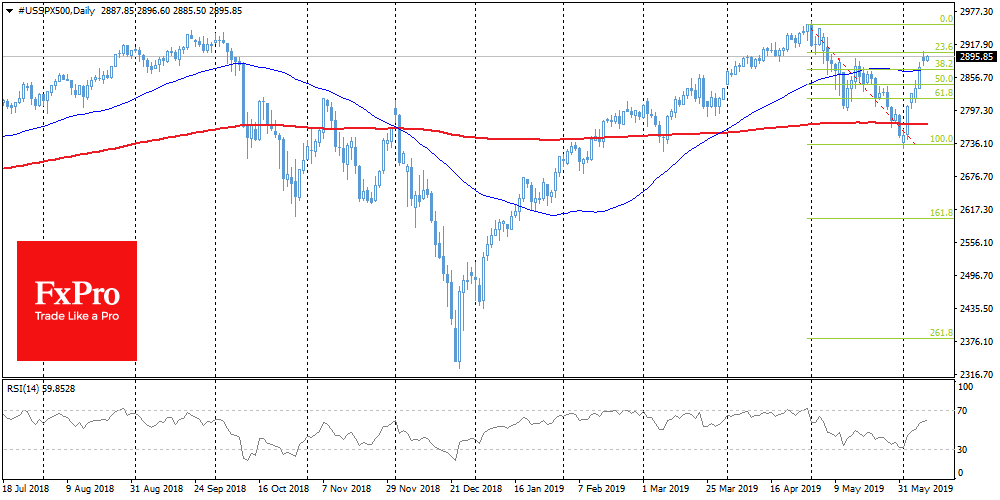
Chinese indices are growing significantly this morning, reflecting a softening of financial conditions, which can spur government spending and support economic growth. In addition, there is a demand for stocks in the U.S. markets in anticipation of the Fed's rate cut next week. The SPX index rose to 2900, increased by 5.9% this month and offsetting more than 70% of May's decline. Such a sharp switch from fear to optimism looks unsustainable, but at the moment it is difficult to find obstacles to growth. Maybe just inflation spike in CPI, PPI releases over the next two days can dramatically reduce the chances of softening.
EURUSD
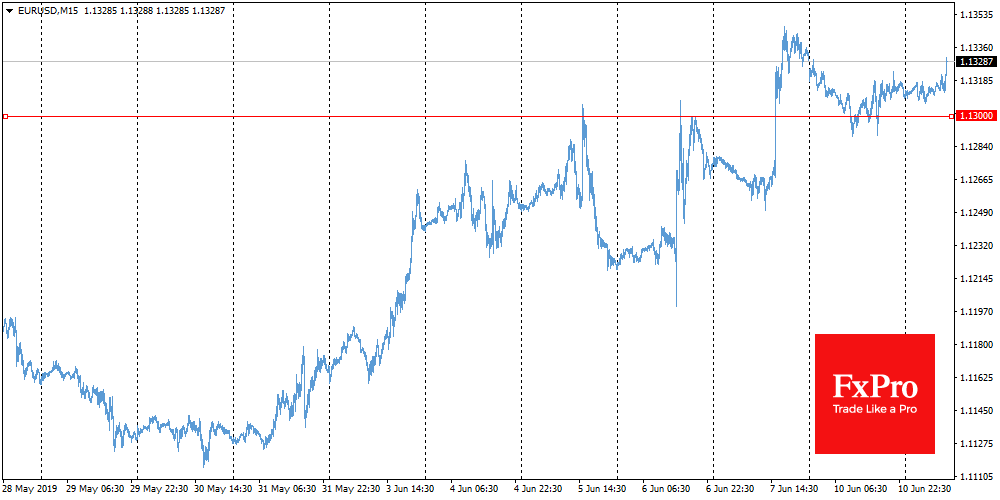
During Monday, the single currency received support in a drop below 1.13000. At the time of writing, the pair continues to attract cautious consumer demand, raising it to 1.1320. An interesting fact is that the dollar is rising slightly against the other most popular currencies. The euro is supported by the limited ECB's policy easing possibilities.
Gold
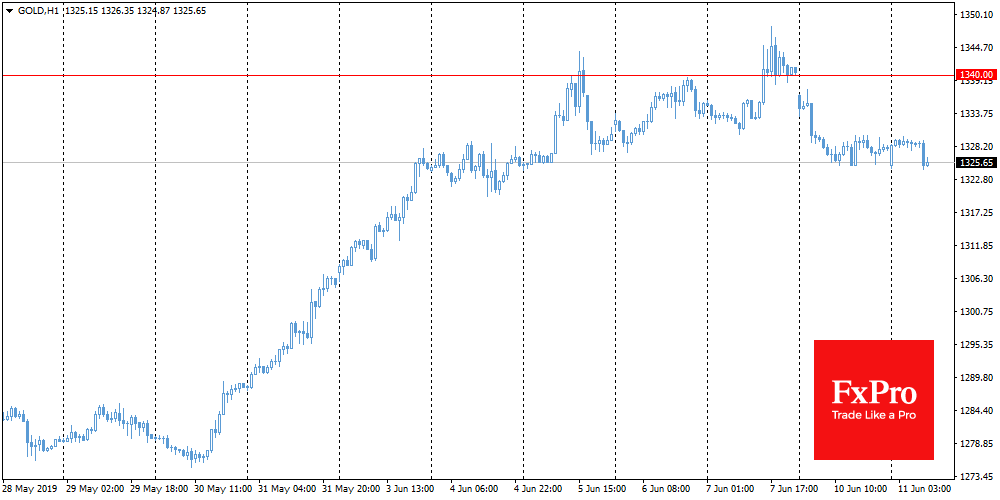
Gold declined to Monday's lows around $1325. The recovery in demand for stocks is playing against gold at the moment. Fundamentally, gold sentiment may U-turn with a new wave of fears in financial markets, as well as with increasing inflationary pressure. In the first case, investors choose gold as a safe-haven. In the second, they protect capital from inflation, which is caused by the excessive softness of central banks.
GBPUSD
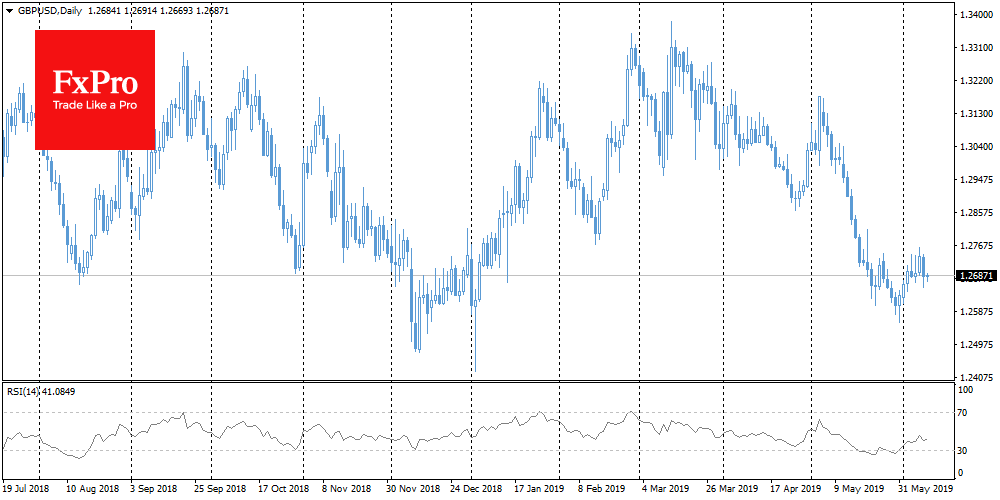
On Monday, the British pound was again under pressure due to the uncertainty around Brexit. One of the candidates for the post of British Prime Minister Harper said that he wants a new deal to leave the EU, which washed away 0.6% from GBPUSD, the pair dropped at some point to 1.2650. In the morning GBPUSD is trading near 1.2680. It is worth noting that the pound fluctuated below 1.2550 (0.8% below current levels) only during periods of extreme fears around disorderly Brexit. Without the frightening news from this front, current levels are regarded as an opportunity to buy an extremely oversold pound.
ECB Rehn: Should developments require ECB would use forward guidance, cut rates or reven relaunch QE
ECB Governing Council member Olli Rehn said "in case of a further weakening of economic activity and a materialization of adverse contingencies, the Governing Council is determined to act and stands ready to adjust all of its instruments, as appropriate".
To be more specific, "the Governing Council may, should economic developments so require, strengthen its forward guidance and its linkage to the achievement of the price stability objective, lower the monetary policy rates and introduce possible mitigating measures, and/or relaunch net purchases under the securities purchase program.
GBPCHF Bears Keep Pushing In Oversold Area
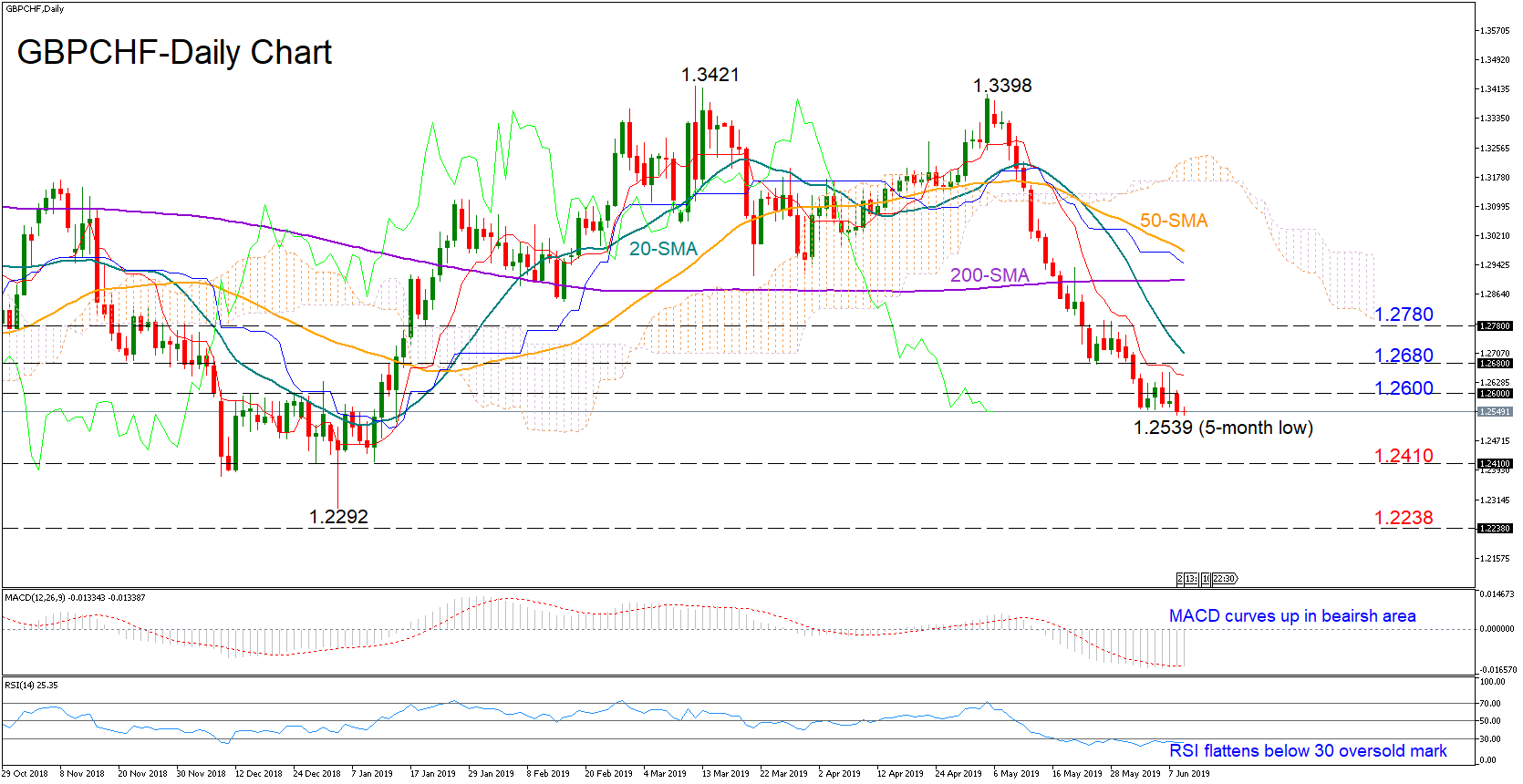
GBPCHF bears are keeping control of the pair for the sixth consecutive week, driving it down by more than 6.0% since the peak at 1.3398 and near an almost five-month low of 1.2539.
Specifically, the price is far below its simple moving averages (SMA) at the moment, suggesting that the downward pattern may not be easy to reverse in the short-term. The momentum indicators are also painting an overall cloudy picture for the short-term as the red Tenkan-sen continues to point down below the blue kijun-sen. The MACD is showing a soft upside tendency and the RSI has been fluctuating in the oversold area for almost a month, increasing the chances for an upward correction although as long as it remains in the bearish zone, the risk remains negative.
The sell-off could get new legs under the 1.2410 key support level, with the spotlight turning next to the 1.2300-1.2238 area, a familiar zone for the bears.
Should the price return above 1.26, immediate resistance could appear around 1.2680 and near the 20-day SMA (1.2700). Further up, the bullish action may strengthen until it potentially meets the 1.2780 barrier.
Meanwhile in the medium-term context, the situation is also bearish, with the negatively sloped 50-day SMA decreasing hopes for an outlook reversal.
In brief, GBPCHF is still facing bearish pressures both in the short and the medium-term picture.
Sentix: Eurozone on threshold of recession, Trump shoots himself in the knee
Eurozone Sentix Investor Confidence dropped to -3.3 in June, down from 5.3 and missed expectation of 2.5. Current Situation Index dropped from 11.0 to 6.0. Expectations index dropped from -0.3 to -12.3.
Sentix noted that "renewed escalation in the US-China trade dispute is also having a considerable impact on the Euro zone economy". Also, it warned "the Euroland economy is once again on the threshold of recession". Sentix also complained that "more than ever, the economic forecast becomes a short-winded Twitter analysis."
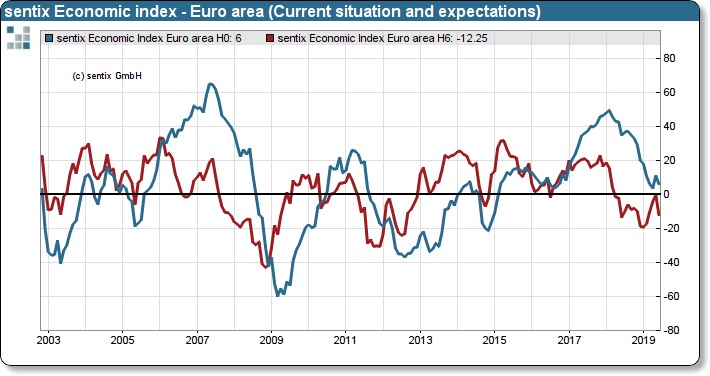
The Overall Investor Confidence Index for Germany tumbled from 7.9 to -0.7, lowest since March 2010. Current situation Index dropped from 18.3 to 13.5. Expectations Index dropped from -2.0 to -14.0. Germany's key industry, the automotive industry, is still "in a crisis of its own making". And the "current government coalition's inability to act does not contribute to stabilization."
For US, Overall Investor Confidence Index dropped from 17.7 to 6.5, lowest since February 2016. Current Situation Index dropped from 43.3 to 31.8, lowest since October 2016. Expectations Index dropped from -5.3 to -16.0. Sentix warned that Trump could "underestimate how much he is currently threatening to shoot himself in the knee with his trade rhetoric". The US economy is "currently experiencing a real emergency stop."
The Analytical Overview Of The Main Currency Pairs
The EUR/USD currency pair
Technical indicators of the currency pair:
Prev Open: 1.13219
Open: 1.13113
% chg. over the last day: -0.02
Day's range: 1.13074 – 1.13186
52 wk range: 1.1111 – 1.2009
EUR/USD stabilized after a long rally since the beginning of the month. Right now the quotes are consolidating. The local support and resistance are 1.12900 and 1.13250. USD remains under pressure due to the growth of expectations for the Federal Reserveto decrease the rates on the next meeting. The investors keep watching the trade conflict between the US and China. Yesterday Donald Trump claimed that is willing to introduce additional fees on wares worth more than 300 billion USD if the trade will won't be signed on the G20 summit in Japan. You should open positions from the key levels.
At 15:30 (GMT+3:00) the US will publish the Manufacturer Price Index.
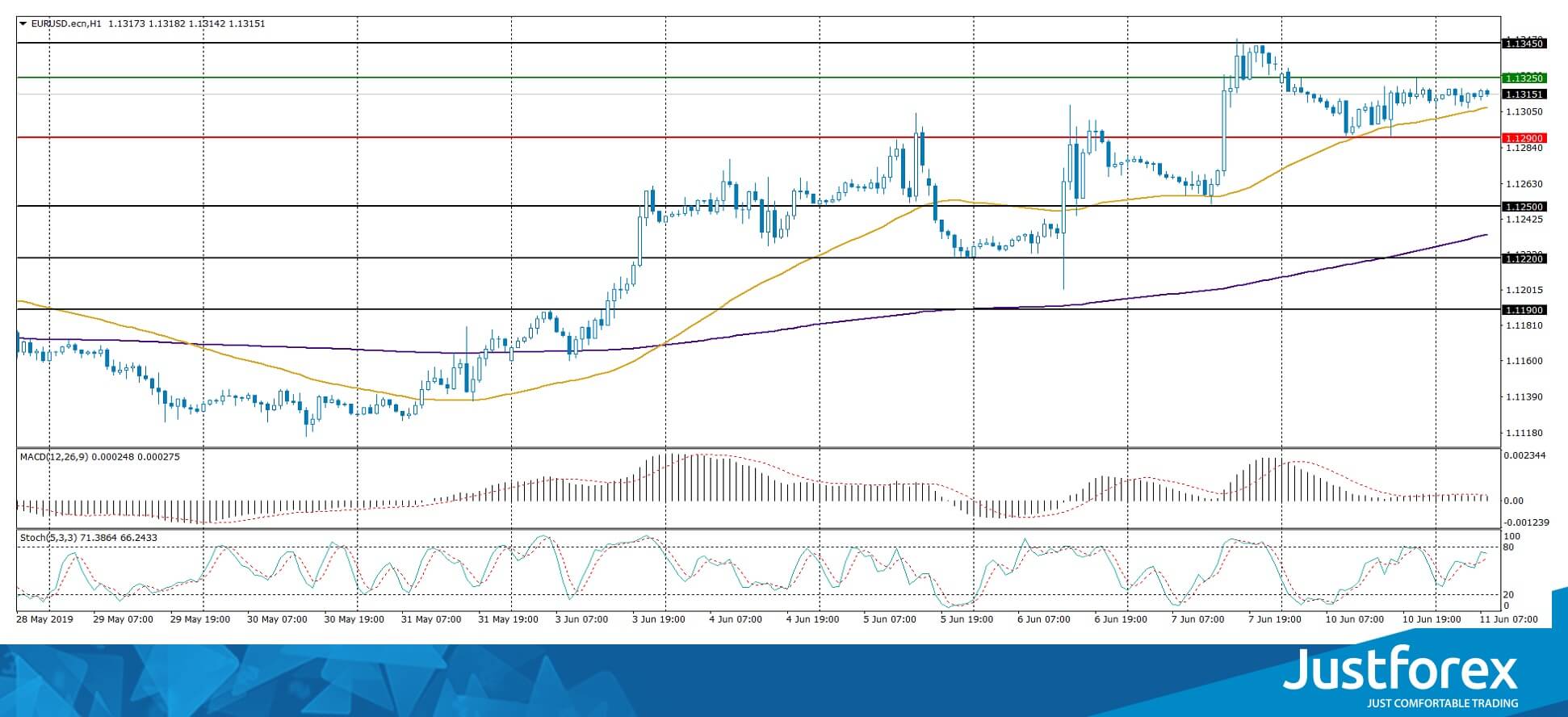
The indicators do not provide precise signlas, the price is consolidating next to 50 MA which acts as a strong dynamic support.
The MACD histogram is close to 0.
The Stochastic Oscillator is in the neutral zone, the %K line is crossing the %D line. There are no signals at the moment.
Trading recommendations
Support levels: 1.12900, 1.12500, 1.12200
Resistance levels: 1.13250, 1.13450, 1.14000
If the price fixes above 1.13250, expect further growth toward 1.13600-1.13800.
Alternatively, the quotes can descend towards 1.12600-1.12400.
The GBP/USD currency pair
Technical indicators of the currency pair:
Prev Open: 1.27264
Open: 1.26838
% chg. over the last day: -0.25
Day's range: 1.26770 – 1.26926
52 wk range: 1.2438 – 1.3631
GBP/USD is in the bearish mood. The trading instrument updated the local minimums. The demand for GBP is weakened after the release of the weak GDP reports in the Manufacturing Industry in the UK. The quotes are consolidating, the key range is 1.26550-1.27700. GBP can descend further. Open positions from the key levels and track relevant info regarding Brexit.
At 11:30 (GMT+3:00) the UK will publish a labour market report.
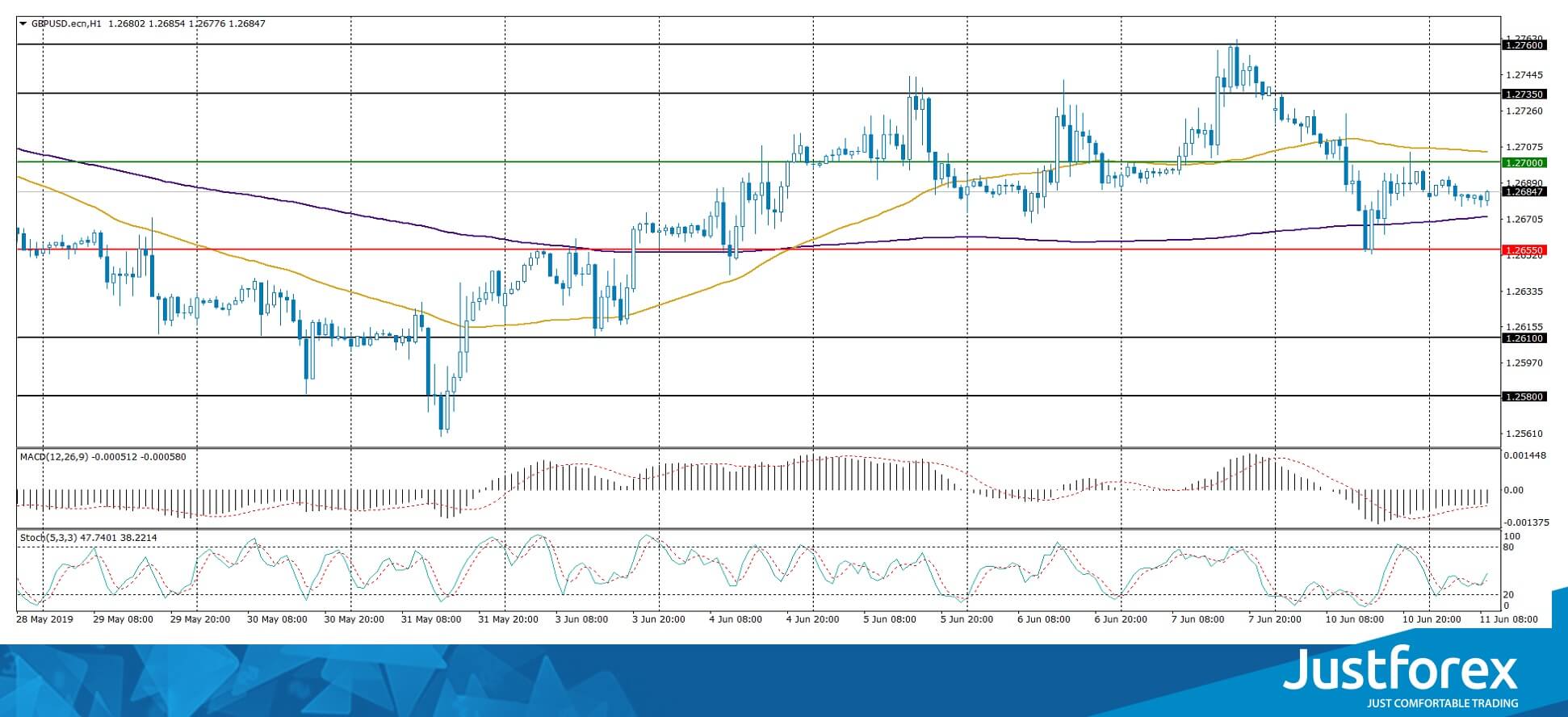
The indicators do not provide precise signals, the price fixed between 50 MA and 200 MA.
The MACD histogram is in the negative zone but above the signal line whcih gives a weak signal to sell GBP/USD.
The Stochastic Oscillator is in the neutral zone, the %K line is crossing the %D line. There are no signals at the moment.
Trading recommendations
Support levels: 1.26550, 1.26100, 1.25800
Resistance levels: 1.27000, 1.27350, 1.27600
If the price fixes below 1.26550, expect further descend towards 1.26200-1.26000.
Alternatively, the quotes can grow towards 1.27350-1.27600.
The USD/CAD currency pair
Technical indicators of the currency pair:
Prev Open: 1.32395
Open: 1.32684
% chg. over the last day: +0.22
Day's range: 1.32590 – 1.32722
52 wk range: 1.2727 – 1.3664
USD/CAD stabilized after a long descend and is consolidating around 1.32400-1.32900. The quotes can descend further. Keep an eye on the oil quotes dynamics and open positions from the key levels.
The Economic News Feed for 11.06.2019 is calm.
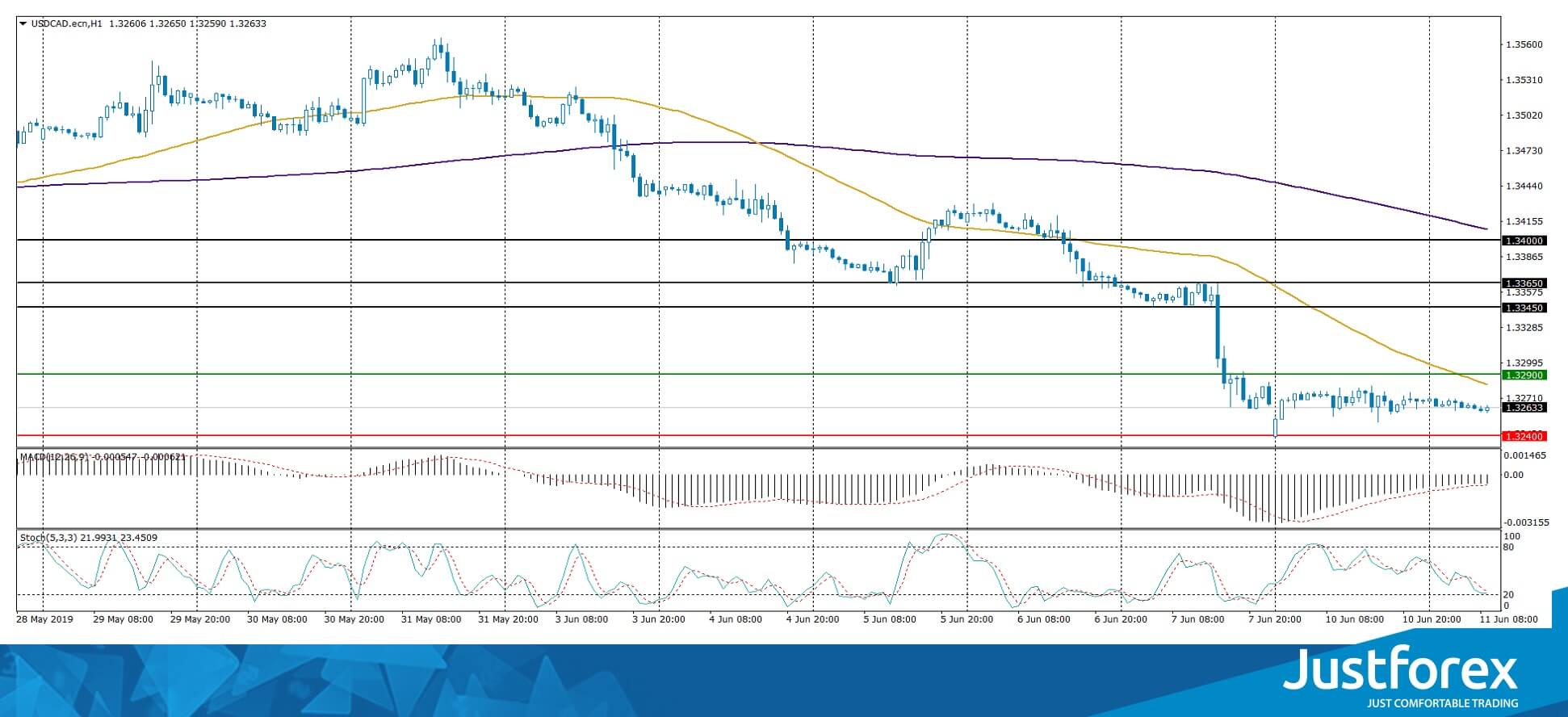
The price fixed below 50 MA and 200 MA which points to the power of th sellers.
The MACD histogram is in the negative zone but above the signal line which gives a weak signal to sell USD/CAD.
The Stochastic Oscillator is in the neutral zone, the %K line is below the %D line which points to the bearish mood.
Trading recommendations
Support levels: 1.32400, 1.32000
Resistance levels: 1.32900, 1.33450, 1.33650
If the price fixes below 1.32400, expect further descend towards 1.32000.
Alternatively, the quotes can correct towards 1.33300-1.33500.
The USD/JPY currency pair
Technical indicators of the currency pair:
Prev Open: 108.465
Open: 108.427
% chg. over the last day: -0.08
Day's range: 108.349 – 108.642
52 wk range: 104.97 – 114.56
USD/JPY remains ambiguous. The trading instrument is moving in a flat, the key support and resistance levels are 108.350 and 108.700. The demand on the safe assets remains relatively high due to a high-stress situation in the world economy. Keep an eye on the US Treasury bonds' yield and open positions from the key levels.
The Economic News Feed for 11.06.2019 is calm.
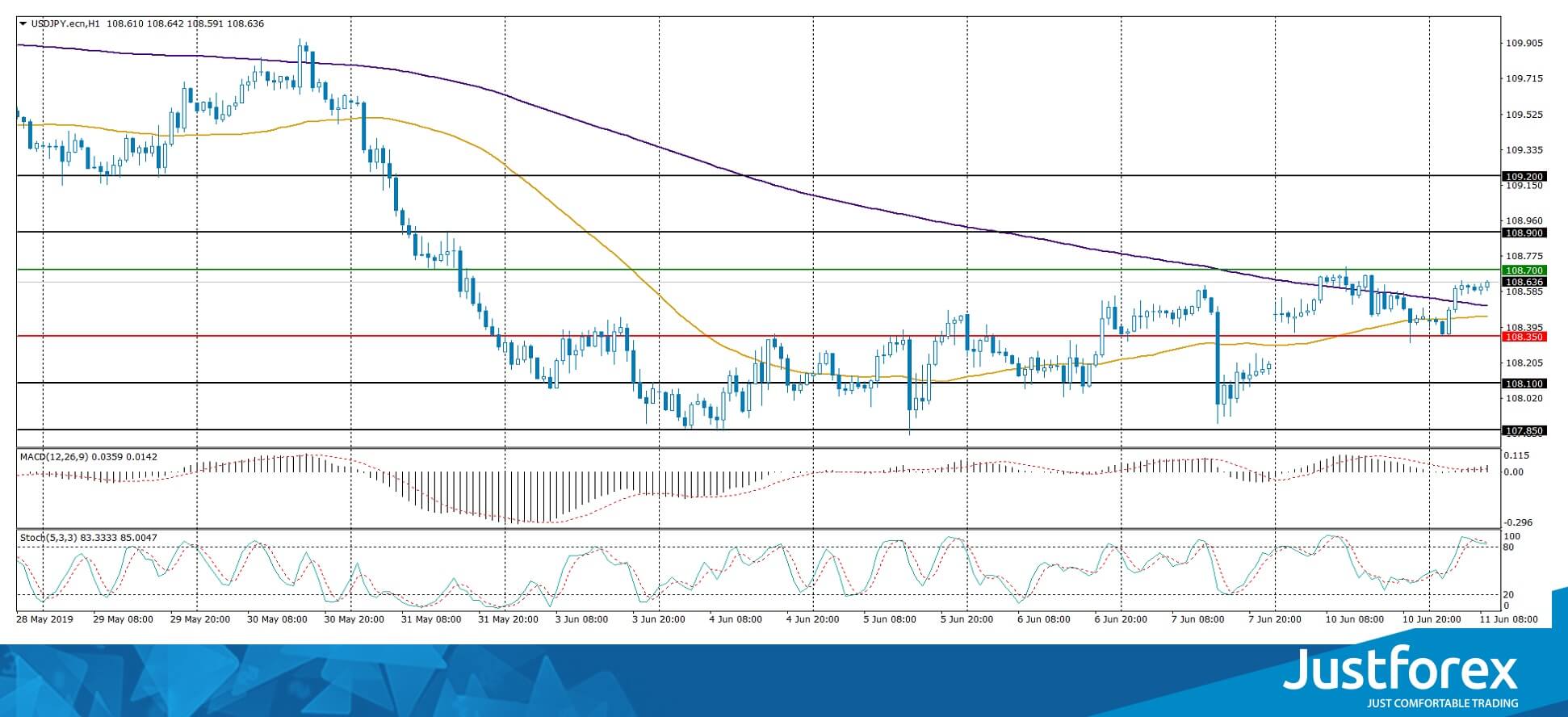
The indicators do not provide precise signals, 50 MA is crossing 200 MA.
The MACD histogram is in the positive zone which points to the bullish mood.
The Stochastic Oscillator is in the overbought zone, the %K line is crossing the %D line. There are no signals at the moment.
Trading recommendations
Support levels: 108.350, 108.100, 107.850
Resistance levels: 108.700, 108.900, 109.200
If the price fixes above 108.700, expect the quotes to grow towards 109.000-109.300.
Alternatively, the quotes can fall twoards 108.100-107.850.
Relief Rally On Mexico Deal Continues, Stocks And Dollar Advance
- Markets extend relief rally following US-Mexico deal that averted tariffs on Mexican imports
- Dollar and stocks edge higher, but gains capped amid doubts about Trump-Xi meeting at G20
- Pound slips on GDP contraction; unable to find much support from hawkish BoE comments
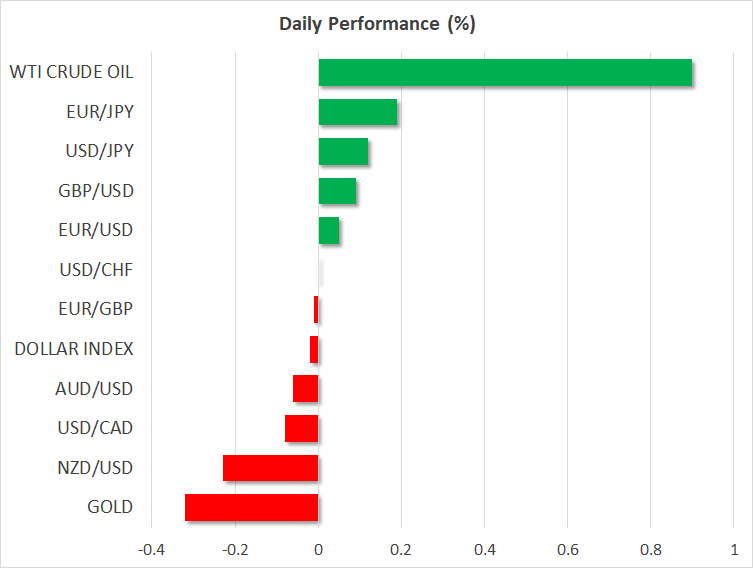
Risk appetite recovers further after US-Mexico truce
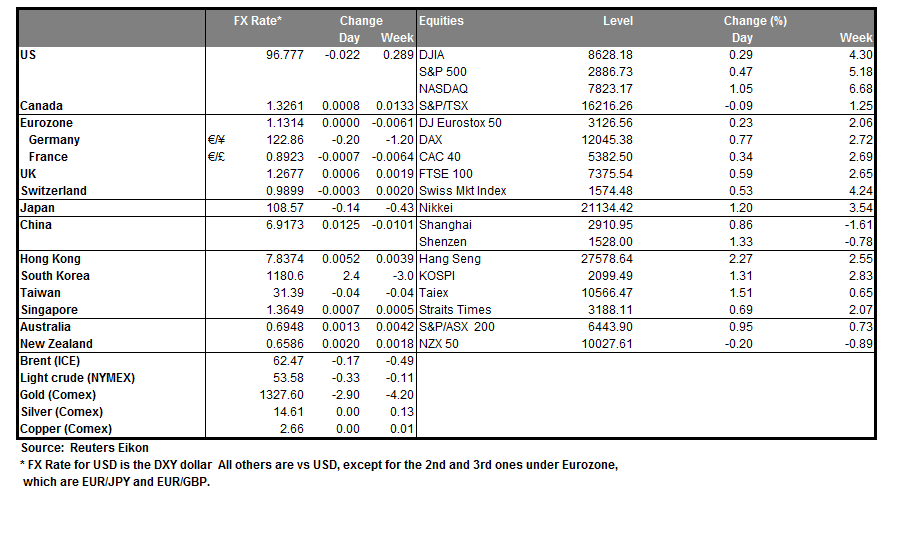
The US dollar continued to edge higher on Tuesday, lifted by recovering Treasury yields as demand for safe-haven government bonds ebbed after President Trump struck a deal with Mexico over illegal migrants and suspended punitive tariffs. The greenback was slightly higher at 108.58 yen as the Japanese currency was broadly weaker on the back of the improving risk sentiment.
Stocks also extended gains, with the S&P500 closing higher for a fifth consecutive session, while major indices in China surged between 2.5-3.0% after the Chinese government announced measures for local authorities that would boost funding for infrastructure projects.
Doubts about Trump-Xi G20 meeting
However, with the trade dispute with China still unresolved, gains for risk assets were limited. President Trump yesterday repeated his warning that additional tariffs could be slapped on Chinese imports if no progress is made between himself and his Chinese counterpart, President Xi, at the G20 summit in Japan on June 28-29.
China has yet to confirm a meeting between the two presidents even though Trump told reporters yesterday that they “are scheduled to talk and to meet”. This raises questions about whether such a meeting will go ahead and will likely keep investors nervous until there is more clarity on what the agenda is for the G20 summit.
If the meeting is called off, it would confirm fears that the US-China trade war is set to be a very protracted one and would raise even more pressure on the Federal Reserve to cut rates.
US inflation data in focus
Soaring expectations that the Fed will be forced to cut rates as early as the July policy meeting have eroded the dollar’s safe-haven appeal. But there could be some boost for the greenback if the US data due this week contradict the picture from last week’s NFP report of a slowing economy.
Producer prices for May will be released later today, followed by the consumer price index tomorrow and retail sales on Friday.
With no Fed officials on the calendar this week due to the blackout period ahead of next week’s FOMC meeting, there’s likely to be some caution to the data as investors await the Fed’s updated dot plot chart on their predicted rate path.
Pound tumbles on GDP drop, euro steadier
The pound fell sharply on Monday after UK GDP contracted much more than expected in April, led by a slump in car production, which has been hit hard by the Brexit turmoil. The data increased the prospect that the economy could shrink in the second quarter and further diminished the odds that the Bank of England would raise interest rates over the next 12 months. In fact, futures markets are now pricing a small cut in UK rates during this period.
Nonetheless, the Bank of England is maintaining its tightening bias. Board Member Michael Saunders was the second BoE policymaker in as many days to hint that some tightening in policy might be required over the coming year.
His comments weren’t of much comfort to the pound, however, which slipped below the $1.27 level to a near one-week low and was struggling to reclaim the handle today.
The euro fared slightly better, bouncing back sharply from yesterday’s lows to recover to around $1.1320 today. The single currency came under pressure on Monday on reports the ECB is more open to cutting rates than it previously indicated. But there was some support for the euro from news that Italy’s government is preparing an action plan that would help it escape EU disciplinary action.
JPY Weakens As Mexican Tariffs Are Called Off
JPY weakened against the USD somewhat as safe haven outflows affected the currency, due to the US calling off the tariffs on Mexico. However, the US president tweeted yesterday that there was another, “secret”, component in the deal with Mexico, that will be announced in the near future and should Mexico not adhere to it, tariffs will be back on. Mexican officials were quick to contradict the US President’s tweets and analysts speculate that there may be some relevance with Trump’s wall. In general JPY retreated somewhat, yet market sentiment remains fragile, especially concerning the US-Sino trade relationships. The US president yesterday also threatened that should Chinese President Xi not attend the G20 meeting late June, more tariffs on Chinese imports will go into effect immediately. We expect the weakening of the JPY to be temporary as safe haven inflows may affect the JPY once again. USD/JPY rose yesterday and during today’s Asian session maintaining a sideways movement above the 108.50 (S1) resistance line (now turned to support). Should there be a renewed risk off sentiment in the market, we could see the pair dropping once again below the 108.50 (S1) support line. For the time being, the par seems to maintain a sideways movement. Should the pair come under the selling interest of the market, we could see it breaking the 108.50 (S1) and aim for the 107.50 (S2) support line. Should the pair find fresh buying orders along its path, we could see it aiming the 109.15 (R1) resistance line.
GBP weakened by weak growth, as Tory leadership contest begins
GBP weakened yesterday against a number of its counterparts as the UK GDP growth rate hit the lowest levels in four months. Also worrying is the fact that the UK manufacturing output growth rate also hit the lowest reading in over 10 years. With the financials showing a rather bleak picture for the UK economy, investors are expected to keep a close eye on the UK employment data today. On the UK political scene, the race for the replacement of Theresa May has officially began yesterday as ten candidates eye the position. Among them are Boris Johnson, Michael Gove and Jeremy Hunt, which seem to gather the most interest. The rhetoric surrounded the Brexit issue and albeit it seems to harden, little specifics came out. It should be noted, that Boris Johnson raised the prospect of a tax cut for individuals as well as corporations, in an effort to gain appeal among Tory voters. Should the recent weak financial data and the tough Brexit language continue, we could see the GBP weakening further. Cable dropped yesterday, testing the 1.2665 (S1) support line, as the pound came under pressure. For the time being the pair seems to maintain a tight sideways motion, yet should there be further negative headlines or new weak financial releases coming out, we could see the pair dropping even further. If the bears dictate the pair’s direction, we could see the pair breaking the 1.2665 (S1) support lien and aim for the 1.2560 (S2) support barrier. Should the bulls take over, we could see the pair aiming if not breaking the 1.2775 (R1) resistance line.
Other economic highlights, today and early tomorrow
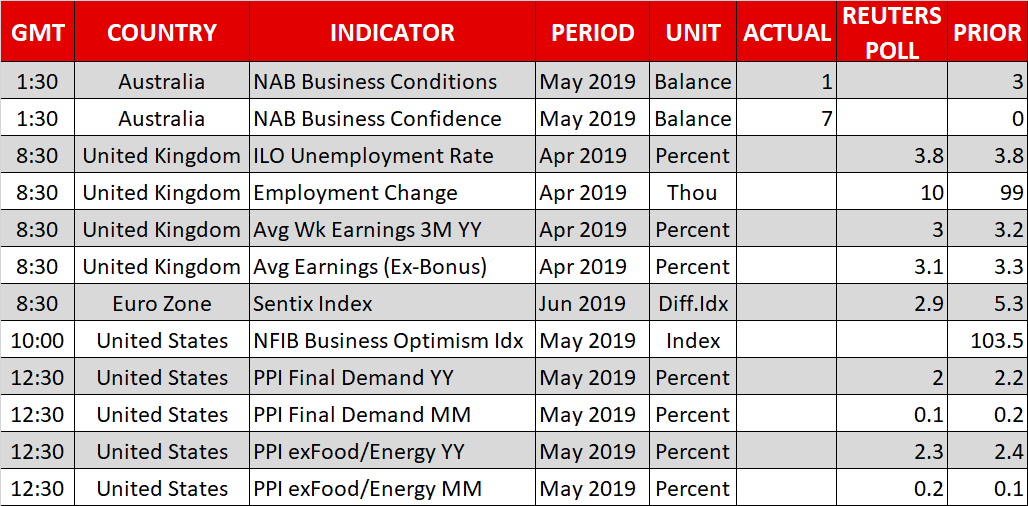
Today during the European session, we get UK’s employment data for April and Eurozone’s Sentix Index for June. In the American session, we get the headline and core US PPI growth rates for May. In tomorrow’s Asian session Japan’s corporate goods prices growth rate and core machinery orders growth rate are to be released, both for May. Also in tomorrow’s Asian session, we get from China, the CPI and PPI rates for May. As for speakers, please note that BoE’s Vlieghe, ECB’s Rehn and RBA’s Kent, are scheduled to speak.
GBP/USD H4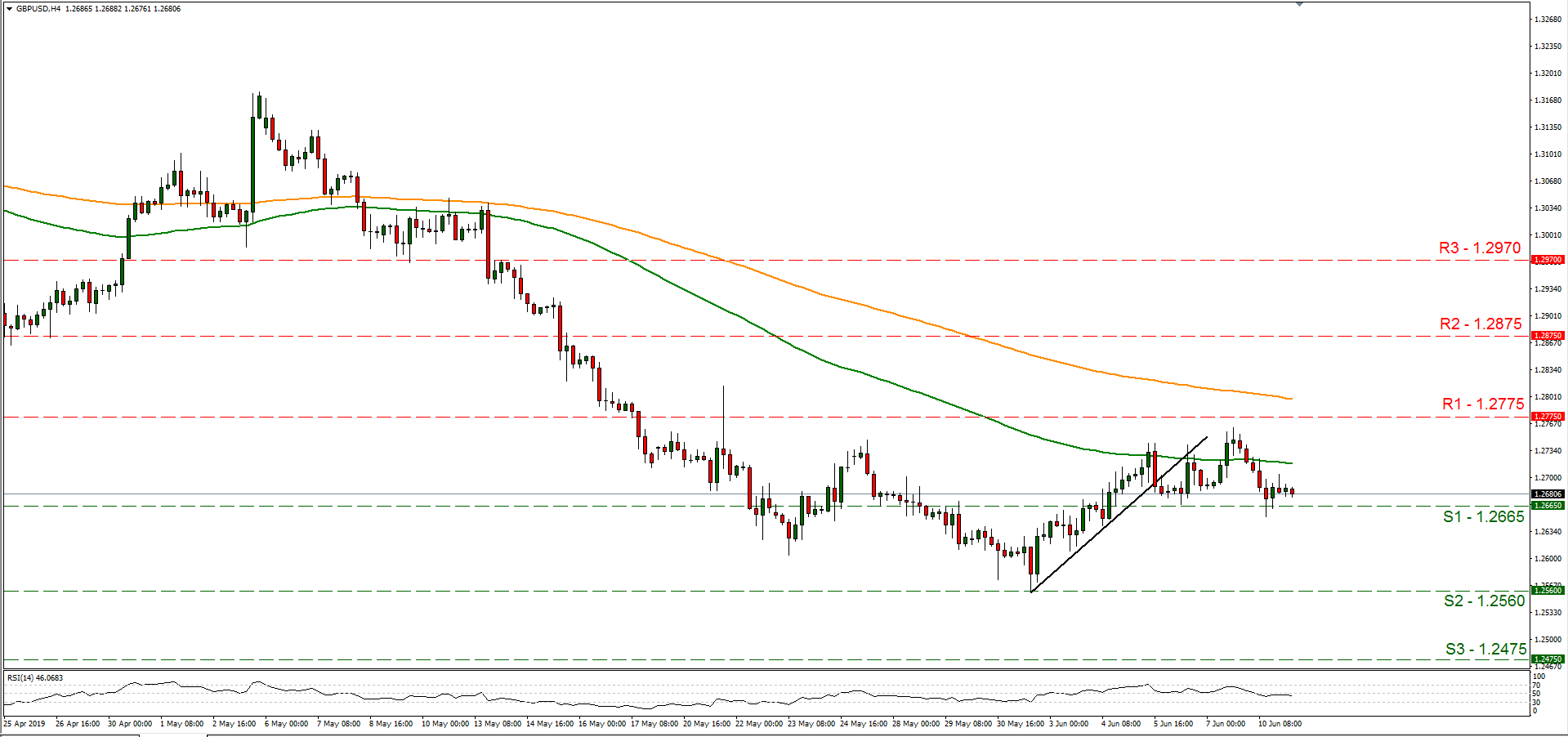
Support: 1.2665 (S1), 1.2560 (S2), 1.2475 (S3)
Resistance: 1.2775 (R1), 1.2875 (R2), 1.2970 (R3)
USD/JPY H4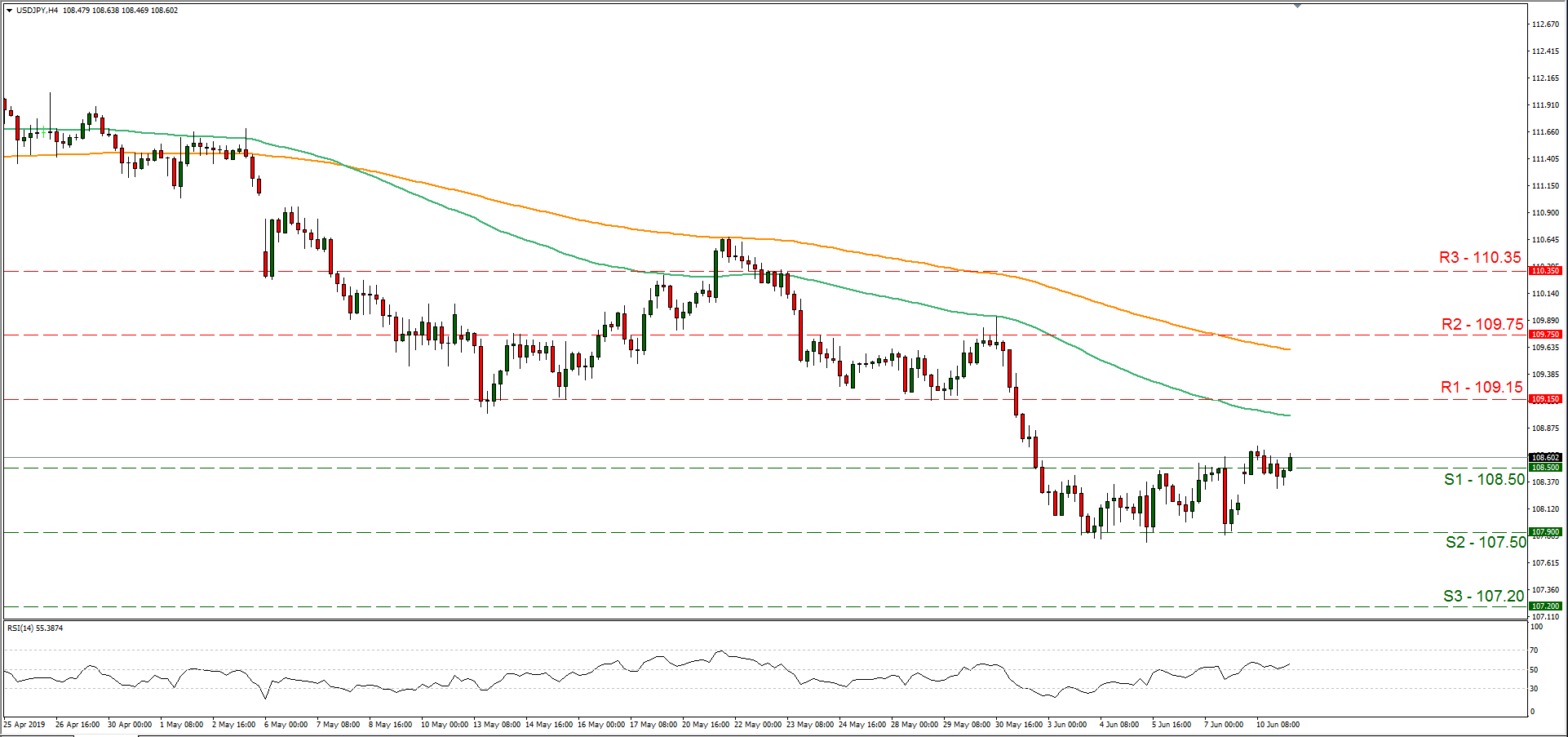
Support: 108.50 (S1), 107.50 (S2), 107.20 (S3)
Resistance: 109.15 (R1), 109.75 (R2), 110.35 (R3)
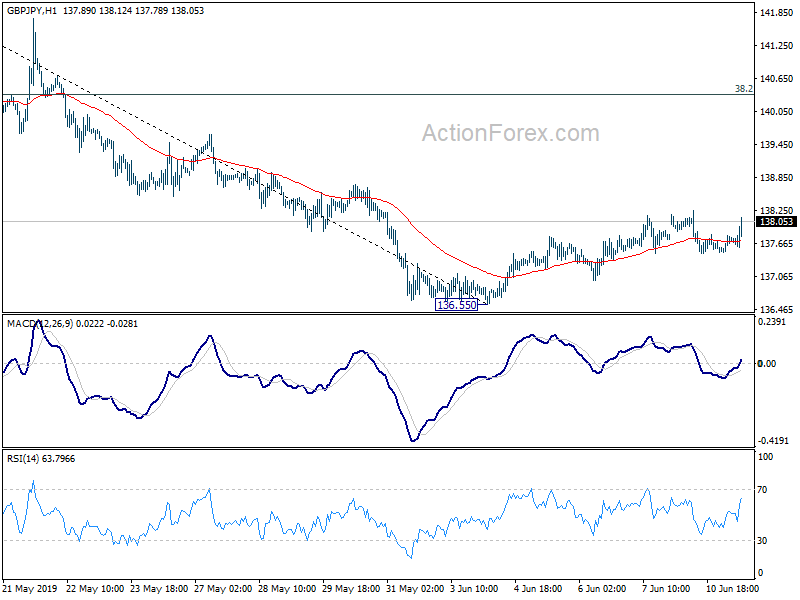
UK unemployment rate stayed at 44-year low, wage growth accelerates, GBP/JPY to extend corrective recovery
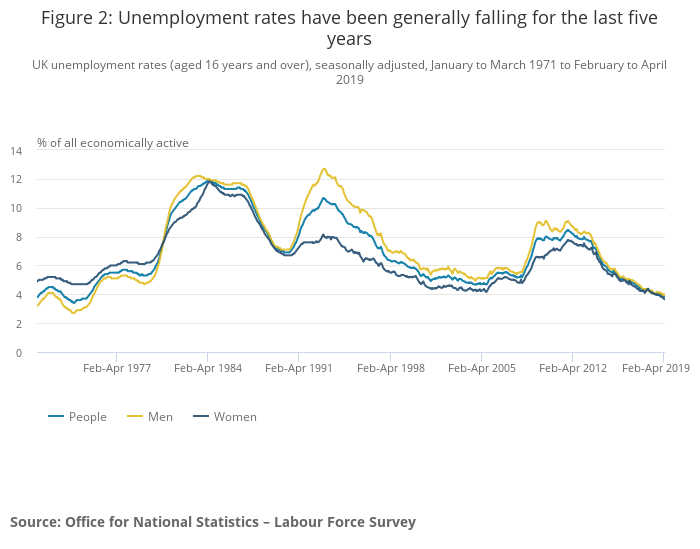
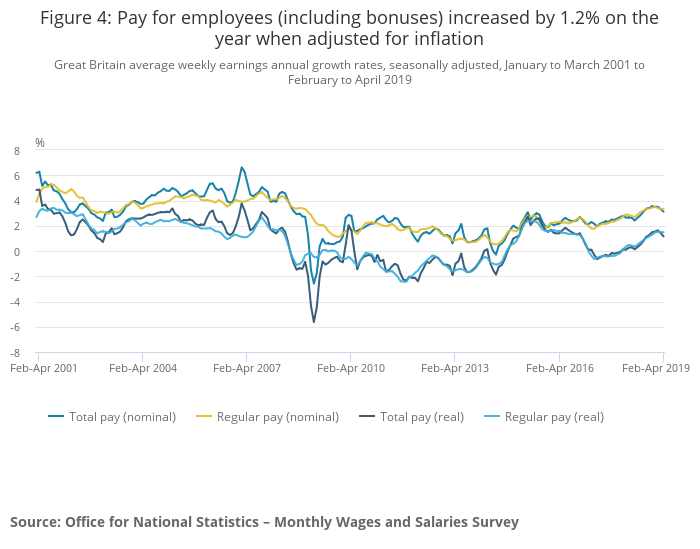
UK unemployment rate remained unchanged at 3.8% in the three months to April. It's the lowest reading since December 1974. Average weekly earnings, including bonus, rose 3.1% yoy, slowed from 3.3% yoy but beat expectation of 3.0% yoy. Average weekly earnings, excluding bonus, rose 3.4% yoy, accelerated from 3.3% yoy and beat expectation of 3.1% yoy.
GBP/JPY appears to be lifted mildly by the data. And the corrective from 136.55 will likely extend for a while before resuming larger decline.