

Sample Category Title
Canada: Homebuilding Eases in May
- Canadian housing starts declined 13% (m/m) to 202.3k (annualized) units in May. This follows a slightly downwardly revised 233.4k print in April (prior: 235.5k). On a six month moving average basis, starts came in at 202.0k units, slightly lower than in April, though still marking a healthy pace.
- The drop was due entirely to the multi-family segment. After the prior month's strong gain, multi-family starts fell 18% to 146.0k units in May. Meanwhile, single-detached starts advanced 1.4% m/m to 56.4k units.
- Provincially, May's drop was narrowly concentrated, with starts lower in four of ten provinces. The largest decline occurred in Ontario, where urban starts plunged by 34.2k units to 49.7k. Urban starts were also slightly lower in Quebec (-2.0k to a still-strong 46.6k) and Nova Scotia (-0.3k to 3.1k) while also dropping in Alberta (-3.3k to 20.9k units). In contrast, urban starts were higher in Manitoba (+2.3k to 8.0k units) and Saskatchewan (+1.1k to 2.3k units). Urban starts also increased in B.C. (+4.1k to 53.4k units) and were 0.9k units higher in the Atlantic Provinces outside of Nova Scotia.
Key Implications
- After April's spry gain, some slippage in homebuilding was to be anticipated in May. However, housing construction has been firm so far in the second quarter, averaging 217.9k units. Alongside indications of a healthy rise in home sales, this strength sets us up for positive growth in second quarter residential investment - its first in over a year.
- Moving forward, we anticipate some slowing in the pace of homebuilding, as past declines in housing demand feed into construction. There is some downside risk in B.C's market, which has been supporting the national numbers so far in 2019.
- All told, homebuilding should remain relatively healthy at around 200k units going forward, lifted by robust population growth, solid labour markets, and the recent slide in borrowing costs.
GBP/USD Mid-Day Outlook
Daily Pivots: (S1) 1.2697; (P) 1.2730; (R1) 1.2772; More....
GBP/USD's breach of 1.2668 minor support suggests that corrective recovery from 1.2559 has completed at 1.2763 already. Intraday bias is turned back to the downside for retesting 1.2559 low first. Break will extend the decline from 1.3381 for 1.2391 low first. On the upside, in case of another rise, upside should be limited by by 1.2865 support turned resistance to bring fall resumption eventually.
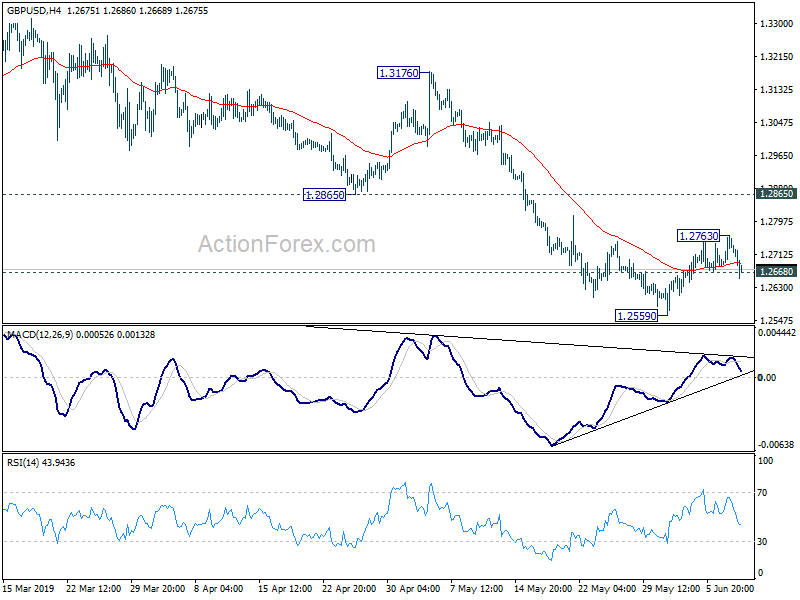
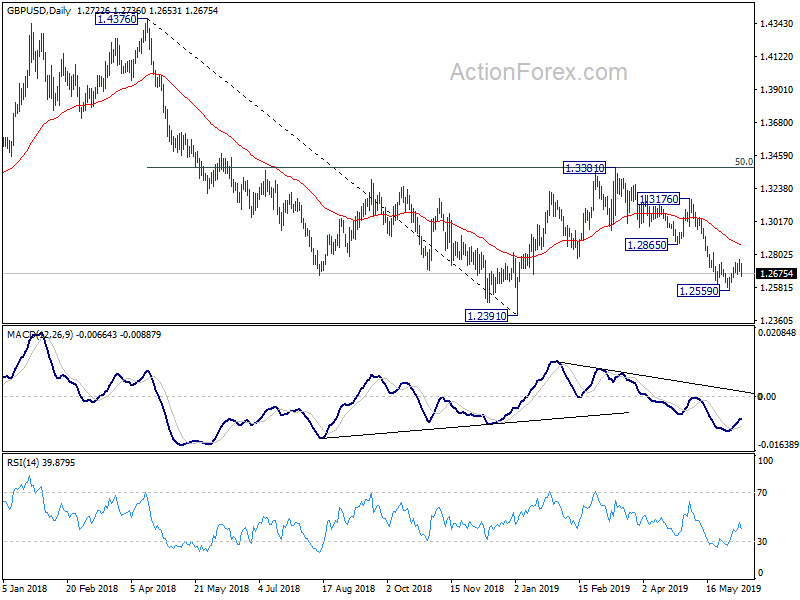
In the bigger picture, medium term decline from 1.4376 (2018 high) is possibly ready to resume. Decisive break of 1.2391 would target a test on 1.1946 long term bottom (2016 low). For now, we don't expect a firm break there yet. Hence focus will be on bottoming signal as it approaches 1.1946. In any case, medium term outlook will stay bearish as long as 1.3381 resistance holds, in case of strong rebound.
Sterling Tumbles on GDP Contraction and Weak Manufacturing Outlook
Sterling trades broadly lower today after data showed unexpected GDP contraction in April. More importantly, the deterioration in manufacturing after Brexit stockpiling appeared to be much worse than expected. Other survey data indicated little recovery momentum in Q2 so far, which could be heading for a contraction. Meanwhile, Australian and New Zealand Dollar are among the weakest ones as China May imports contracted by most contracted by most since July 2016.
Dollar is generally firm as lifted by US-Mexico deal on migration. Trump revealed today that a part of the agreement will need a "vote by Mexico's legislative body". He then threatens Mexican lawmakers that "we do not anticipate a problem with the vote but, if for any reason the approval is not forthcoming, tariffs will be reinstated." But in any case, tariffs threats are averted for now. Canadian and Euro are among the strongest too.
Technically, GBP/USD's breach of 1.2668 minor support suggests that recovery from 1.2559 has completed earlier than expected at 1.2763. Intraday bias is back on the downside for retesting 1.2559 low. EUR/GBP's break of 0.8902 temporary top indicates resumption of recent rise towards 0.9101 key resistance. AUD/USD breached 0.6962 minor support too and more downside is in favor. Though, we'd prefer deeper decline to confirm. USD/CHF and USD/JPY are staying in consolidation. EUR/USD is resilient, remains well above 1.1251 minor support. Thus, there is no clear sign of topping in EUR/USD yet.
In other markets, DOW is currently up 170pts or 0.66%. FTSE is up 0.48%. DAX is up 0.77%. CAC is up 0.18%. German 10-year yield is up 0.042 at -0.212. Earlier in Asia, Nikkei rose 1.20%. Hong Kong HSI rose 2.27%. China Shanghai SSE rose 0.86%. Singapore Strait Times rose 0.69%. Japan 10-year JGB yield dropped -0.005 to -0.121.
UK GDP contracted -0.4% in April, widespread weakness across manufacturing
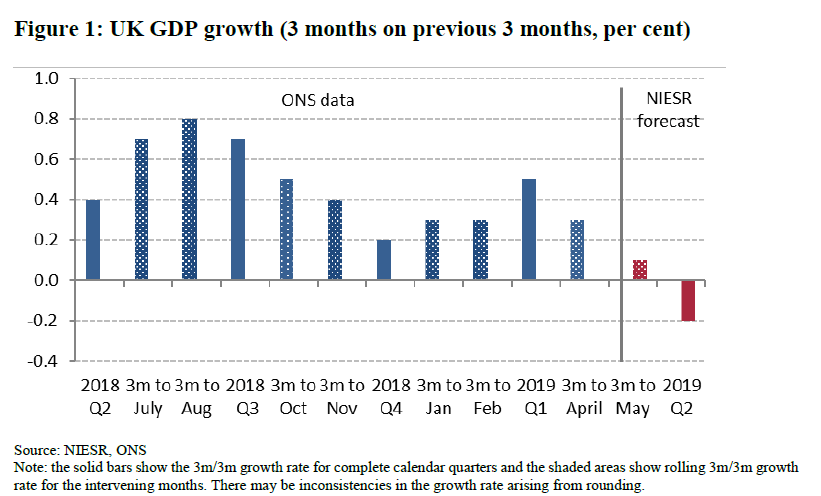
UK GDP contracted -0.4% mom in April, much worse than expectation of -0.1% mom. Index of production dropped -2.7%, manufacturing dropped -3.9% and construction dropped -0.4%. Index of services and agriculture were flat mom. In the three months to April, GDP grew 0.3%, slowed from 0.5% in the period from January to March..
Head of GDP Rob Kent-Smith said: "GDP growth showed some weakening across the latest 3 months, with the economy shrinking in the month of April mainly due to a dramatic fall in car production, with uncertainty ahead of the UK's original EU departure date leading to planned shutdowns. There was also widespread weakness across manufacturing in April, as the boost from the early completion of orders ahead of the UK's original EU departure date has faded."
In April, UK industrial production dropped -2.7% mom, -1.0% yoy, much worse than expectation of -1.0% mom, 0.9% yoy. Manufacturing production dropped -3.9% mom, -0.% yoy, also way below expectation of -1.4% mom, 2.0% yoy. The contraction in manufacturing sector was the worst since June 2002 and the impact of Golden jubilee shutdowns. Also from UK, visible trade deficit narrowed to GBP -12.1B in April versus expectation of GBP -13.1B.
NIESR: UK GDP to contract -0.2% in Q2 on production and construction
NIESR said the UK economy is course to contract by -0.2% in Q2, "mainly driven by the production and construction sectors". That would be a "marked slowdown" from Q1 when growth was boosted by pre-Brexit "stockbuilding". It added that recent surveys suggests "there has not been a material recovery in output in May".
Garry Young, Head of Macroeconomic Modelling and Forecasting, said "The latest GDP data were weaker than expected, partly reflecting shifts in production around the original Brexit departure date, including a 24 per cent fall in car manufacturing. The underlying picture is also quite weak, with Brexit-related uncertainty at home and trade tensions abroad dragging on investment spending and economic growth".
EU Moscovic: G20 in Osaka maybe an important moment for US-China trade resolution
European Economic and Financial Affairs Commissioner Pierre Moscovic said the "road map" is set for G20 to go with "intensified" global trade tension. The two things include " reforming the World Trade Organization" and "finding bilateral solutions". Moscovic said G20 members "expect the United States and China to find a way to get to an agreement. Maybe the Osaka summit will be an important moment for that."
Over the weekend, G20 Finance Ministers the Central bank Governors said in the post-meeting communique that "trade and geopolitical tensions have intensified." The group pledged to "continue to address these risks, and stand ready to take further action." However, the originally proposed language of "recognize the pressing need to resolve trade tensions" was dropped.
Italy PM Conte: EU's EDP would compromise our economic sovereignty
Italian Prime Minister Giuseppe Conte warned of the long lasting impact of EU's "Excessive Deficit Procedures" in a Corriere della Sera interview. He said if the EDP is opened, it's "not just a question of a fine". Italy will be " subjected to checks and checks for years… compromising our sovereignty in the economic field". And, the result could "put the savings of Italians at risk."
China's trade surplus widened on sharp contraction in imports
China's import unexpectedly contracted by -8.5% yoy in May. That's the large contraction since July 2016, indicating underlying weakness in the economy. Exports did unexpectedly rose 1.1% yoy. But that was likely because of front-loading ahead of new US tariffs. Trade surplus, thus, widened to USD 41.7B. Meanwhile, trade with US continued to deteriorate. From January to May, imports dropped US dropped -29.6% yoy while, exports dropped -8.4% yoy, leaving a surplus at USD 110.5B.
In May, in USD term: Exports rose 1.1% yoy to USD 213.9B. Imports dropped -8.5% yoy to USD 172.2B. Total trade dropped -3.4% yoy to USD 386.0B. Trade surplus came in at USD 41.7B, above expectation of USD 23.2B.
From January to May: Exports rose 0.4% yoy to USD 985.3B. Imports dropped -3.7% yoy to USD 827.9B. Total trade dropped -1.6% yoy to USD 1786.2B. Trade surplus was at USD 130.5B.
With EU, YTD: Exports rose 8.0% yoy to USD 167.2B. Imports rose 2.4% yoy to USD 112.9B Total trade rose 5.7% yoy to USD 280.1B. Trade surplus was at USD 54.3B.
With US, YTD: Exports dropped -8.4% yoy to USD 160.1B. Imports dropped -29.6% yoy to USD 49.6B. Total trade dropped -14.5% yoy to USD 209.7B. Trade surplus was at USD 110.5B.
With AU, YTD: Exports rose 3.1% yoy to USD 18.3B. Imports rose 7.7% yoy to USD 46.7B. Total trade rose 6.4% yoy to USD 64.9B. Trade deficit was at USD -28.4B.
From Japan, Q1 GDP growth was finalized at 0.6% qoq, revised up from 0.5% qoq. GDP deflator, however, was revised down to 0.1% yoy, from 0.2% yoy. Bank lending including trusts rose 2.6% yoy in May, excluding trusts rose 2.8% yoy. Current account surplus widened to JPY 1.60T in April.
GBP/USD Mid-Day Outlook
Daily Pivots: (S1) 1.2697; (P) 1.2730; (R1) 1.2772; More....
GBP/USD's breach of 1.2668 minor support suggests that corrective recovery from 1.2559 has completed at 1.2763 already. Intraday bias is turned back to the downside for retesting 1.2559 low first. Break will extend the decline from 1.3381 for 1.2391 low first. On the upside, in case of another rise, upside should be limited by by 1.2865 support turned resistance to bring fall resumption eventually.
In the bigger picture, medium term decline from 1.4376 (2018 high) is possibly ready to resume. Decisive break of 1.2391 would target a test on 1.1946 long term bottom (2016 low). For now, we don't expect a firm break there yet. Hence focus will be on bottoming signal as it approaches 1.1946. In any case, medium term outlook will stay bearish as long as 1.3381 resistance holds, in case of strong rebound.
Economic Indicators Update
| GMT | Ccy | Events | Actual | Forecast | Previous | Revised |
|---|---|---|---|---|---|---|
| 23:50 | JPY | Current Account Total (JPY) Apr P | 1.60T | 1.44T | 1.27T | |
| 23:50 | JPY | GDP Q/Q Q1 F | 0.60% | 0.60% | 0.50% | |
| 23:50 | JPY | GDP Deflator Y/Y Q1 F | 0.10% | 0.20% | 0.20% | |
| 23:50 | JPY | Bank Lending incl Trusts Y/Y May | 2.60% | 2.40% | 2.40% | |
| 23:50 | JPY | Bank Lending Ex-Trusts Y/Y May | 2.80% | 2.50% | ||
| 02:00 | CNY | Trade Balance (USD) May | 41.7B | 23.2B | 13.8B | |
| 02:00 | CNY | Imports (USD) Y/Y May | -8.50% | -3.30% | 4.00% | |
| 02:00 | CNY | Exports (USD) Y/Y May | 1.10% | -3.80% | -2.70% | |
| 02:00 | CNY | Trade Balance (CNY) May | 279B | 136B | 94B | |
| 02:00 | CNY | Imports Y/Y (CNY) May | -2.50% | 5.80% | 10.30% | |
| 02:00 | CNY | Exports Y/Y (CNY) May | 7.70% | 4.70% | 3.10% | |
| 05:00 | JPY | Eco Watchers Survey Current May | 44.1 | 45.5 | 45.3 | |
| 08:30 | GBP | GDP M/M Apr | -0.40% | -0.10% | -0.10% | |
| 08:30 | GBP | Index of Services 3M/3M Apr | 0.20% | 0.20% | 0.30% | |
| 08:30 | GBP | Industrial Production M/M Apr | -2.70% | -1.00% | 0.70% | |
| 08:30 | GBP | Industrial Production Y/Y Apr | -1.00% | 0.90% | 1.30% | |
| 08:30 | GBP | Manufacturing Production M/M Apr | -3.90% | -1.40% | 0.90% | |
| 08:30 | GBP | Manufacturing Production Y/Y Apr | -0.80% | 2.00% | 2.60% | |
| 08:30 | GBP | Construction Output M/M Apr | -0.40% | 0.50% | -1.90% | |
| 08:30 | GBP | Visible Trade Balance (GBP) Apr | -12.1B | -13.1B | -13.7B | -15.4B |
| 12:15 | CAD | Housing Starts May | 202K | 220K | 235K | 233K |
| 12:30 | CAD | Building Permits M/M Apr | 14.70% | 1.80% | 2.10% | 2.80% |
US 100 Index Recovers Notable Losses in Short Term
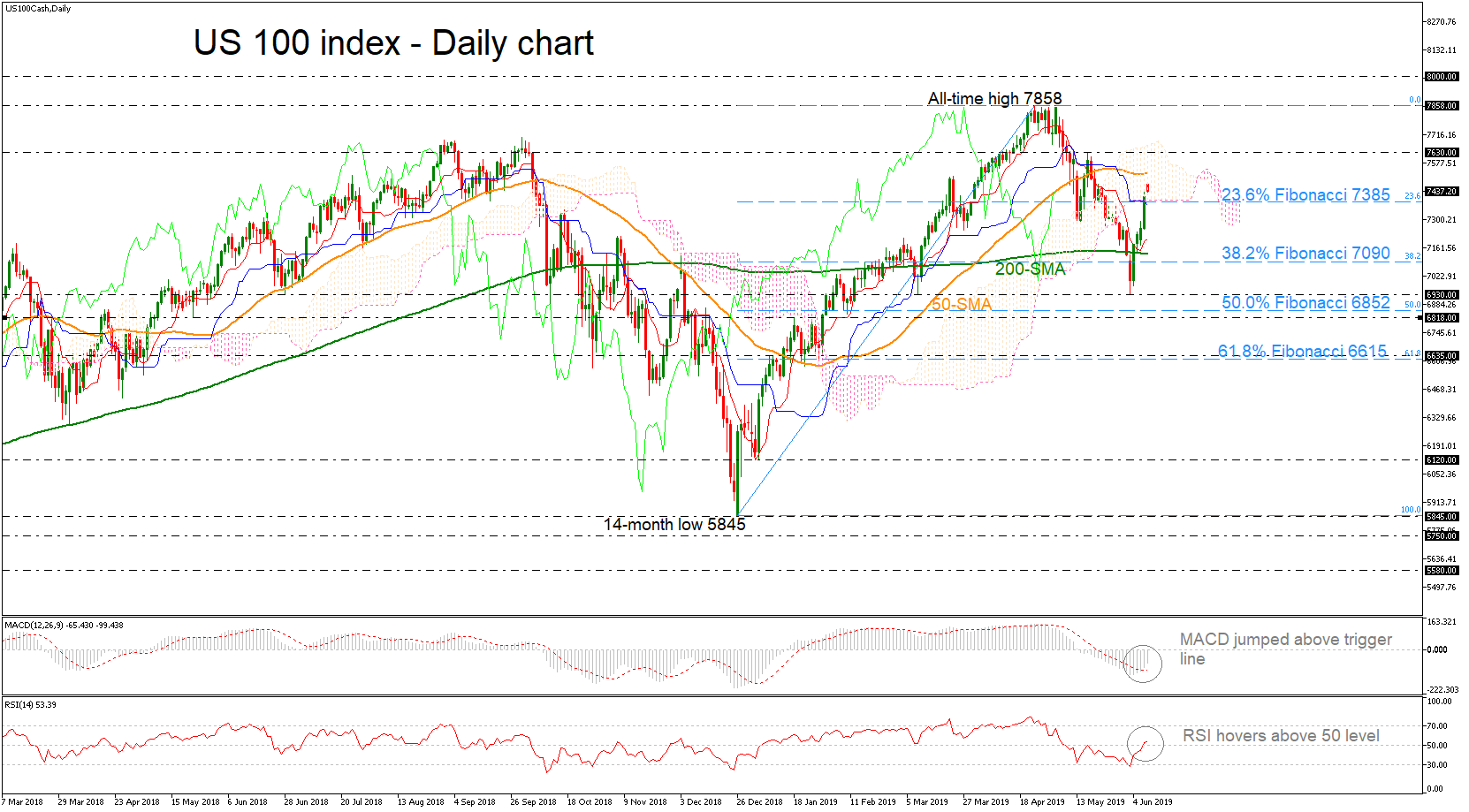
The US 100 index advanced considerably in the previous week, penetrating the Ichimoku cloud following the rebound on the 6930 support level. However, the bulls have so far been unable to push the price above the 50-day simple moving average (SMA), but the technical indicators are moving north. The MACD surpassed the trigger line in the negative area while the RSI climbed above the 50 level.
In case of further advances, a first line of resistance may be found near the 7630 barrier and the upper surface of the Ichimoku cloud. A decisive break above that area would turn the picture to a more neutral one and open the door for a test of the all-time high of 7858. Even higher, the outlook could turn to strongly bullish recording a new peak.
On the flipside, a pullback in the market may encounter support near the 23.6% Fibonacci of the upward wave of 5845 to 7858 near 7385, with a downside break paving the way for the 200-SMA currently at 7130.
Currently, the index is trying to pare previous losses and could change the recent bias to bullish if there is a daily close above the all-time high (7858).
Stocks Rally on Positive Trade Developments
US stocks are poised to open higher after positive steps were taken in both the US -Mexican immigration disputes and after the US and Chinese held candid and constructive talks for the first time since negotiations fell apart a month ago. On Friday night, Mexico reaffirmed their commitments to reduce migration into the US by increasing enforcement on its borders and expanding a program to allow asylum-seekers to remain in Mexico while their legal cases proceed. Mexico legislative body now has to pass the deal forward otherwise President Trump will reimpose the tariffs. Expectations are for the deal to pass and get done quickly.
On Sunday, the Group of 20 major economies finance ministers agreed on join communique that pledged to use all the policies they can to protect global growth from disruptions due to trade and other tensions. Treasury Secretary Mnuchin and China central bank chief Yi Gang signaled a possible turning point after having progressive conversations that seems to signal channels are open again for communication. The next key meeting is expected at the G20 summit in Japan at the end of the month between Xi and Trump.
Treasuries fell as the 10-year yield rose 6.1 basis points to 2.141%, while the dollar had broad gains as gold sold off. The Mexican peso is also having its best gain in almost a year. European indexes had limited gains suggesting the region’s stocks will have a tougher time rebounding back to the April highs.
-
Defense Megamerger – UTX to acquire Raytheon in all-stock deal
-
GBP – BOE to remain on hold as GDP disappoints
-
Oil – Russia remains undecided on extending OPEC + production cut deal
-
Gold – Softer on positive trade developments
UTX/RTN
United Technologies (UTX) reached a deal to merge with defense contractor Raytheon which could support further M&A in the sector. The deal would create an aerospace-and-defense company that is valued over $100 billion with annual revenue of approximately $74 billion, creating a behemoth that would only trail Boeing in sales. The new company will be called Raytheon Technologies Corp. Shares of both companies are poised to open around 4% higher.
The merger will see UTX’s Pratt &Whitney F-35 fighter jet engines combined with Raytheon’s Patriot missile defense systems. The new entity will have a diverse portfolio that will be nicely positioned to thrive even under weakness in defense spending.
In other M&A news, Salesforce is set to buy Tableau for $15.3 billion in an all stock deal. The deal supports Salesforce push in growing their analytics offering.
GBP
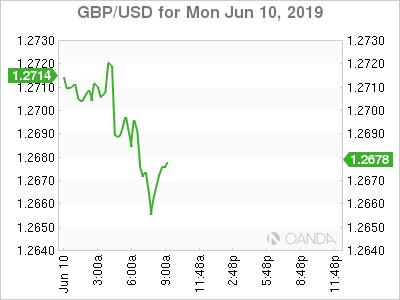
The British pound extended declines after a wrath of UK data showed broad weakness throughout the entire economy. The headline GDP reading for the month of April was a contraction of 0.4%, much worse the -0.1% dropped eyed. Growth is not expected to deliver any surprises in the second quarter and that should make the Bank of England (BOE) job easy for the next year. Rates are unlikely going nowhere anytime soon.
Production data was also abysmal with the manufacturing posting a 3.9% fall, while the industrial sector slumped 2.7%. Brexit is obviously hurting the data and the planned shutdown of plants could be alleviated once UK leaders are able to deliver a Brexit deal.
Cable is now comfortably below the 1.2700 handle and if we see the 1.2550 breached, price may not find support until the 1.2400 area.
Oil
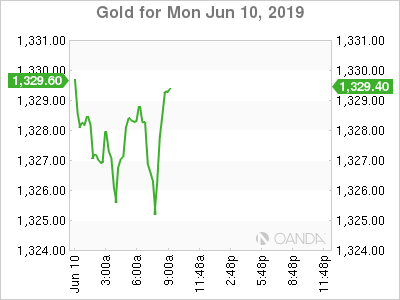
Russian and Saudi energy ministers held an intergovernmental commission meeting in Moscow as Russia begins to seek a better deal for Russian companies. Oil remained slightly bid after Saudi oil minister Al-Falih said there’s almost unanimous agreement in OPEC to extend production cuts and that Russia could agree before the current deal expires at the end of the month. Al-Falih and his Russian counterpart Novak could meet again at the G20 that occurs at the end of the month. If we see crude prices fall back into bear market territory, we could see the Russians capitulate in extending cuts. OPEC and allies still need to agree upon when to meet, with many pushing for the beginning of July.
Today’s rally in crude stemmed more from the broader risk-on rally that came from positive trade developments. With US rig counts falling four out of the last five weeks, we could see US production ease slightly, providing an opportunity for oil to stabilize once markets properly price in weakness in global demand.
Gold
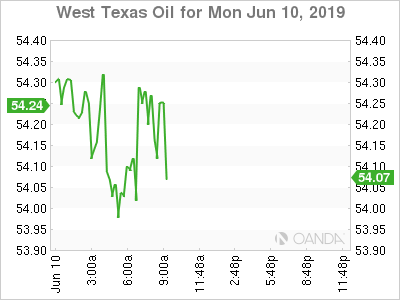
Gold prices are sharply lower as a plethora off positive market news on trade and M&A eliminated short-term demand for safe-havens. If today finishes out to be a steady grind higher for US equities, we could see gold fall further towards the $1,320 an ounce level. Technical traders are also waiting for a clean break of the $1,350 region, so we could see prices struggle until we a resumption in dollar weakness.
WTI Crude – Rebound on OPEC+ Extension Hints
Oil traders encouraged by Saudi output cut confidence
Oil prices have been given a lift in recent days, with various factors feeding into the gains.
Whether that’s the improved overall risk appetite in the markets, US/Mexico developments or an acknowledgement from the Saudi oil minister that an extension to the output cut is almost guaranteed, the news is bullish for oil prices. It also comes at a time when oil prices needed some good news, having fallen more than 15% over the course of a couple of weeks.
WTI Daily Chart
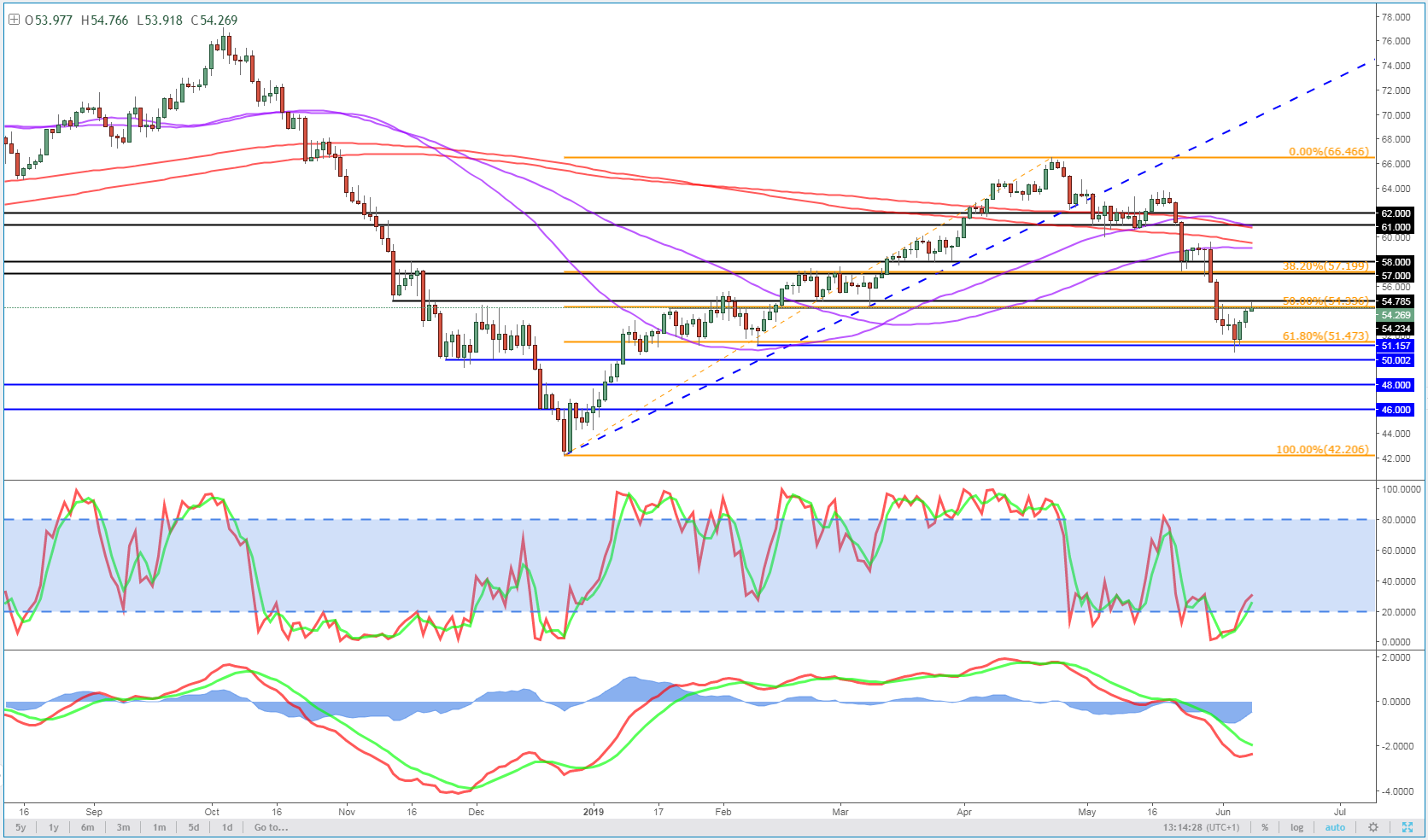
WTI was trading around $50 at the lows which was being talked about as being a fundamentally significant level. From a technical standpoint, this certainly makes a lot of sense. Big numbers are often associated with being significant and $50 certainly ticks that box.
Add to this that it coincides with previous levels of support and resistance – likely because of the previous point – as well as the 61.8% retracement of the move from the 2018 lows to this years highs and it’s hardly surprising that it’s seeing some support here. The real question is whether it can be sustained.
The price drop likely contributed strongly to Khalid al-Falih’s confidence in a deal, with reports previously indicating that Russia was less enthused about the idea. Of course, price is a major factor in this and the rapid decline may have quickly changed that.
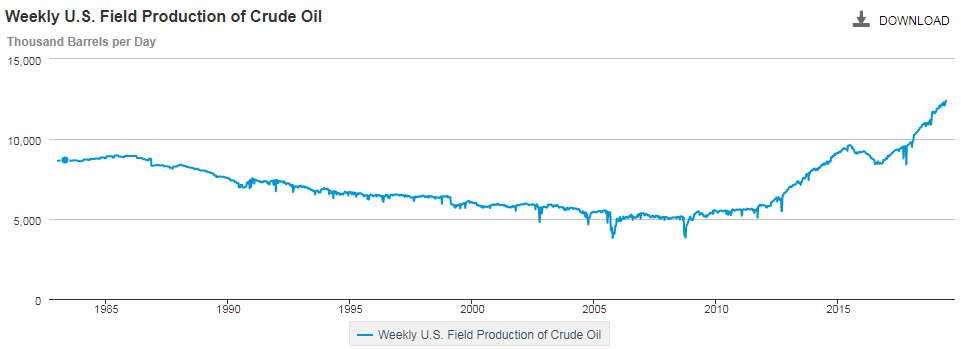
This also comes at a time when the US is setting new records on output, which will be frustrating members of the cartel and its new allies but at the same time reinforces the need for the cuts as price would otherwise be substantially lower.
NIESR: UK GDP to contract -0.2% in Q2 on production and construction
NIESR said the UK economy is course to contract by -0.2% in Q2, "mainly driven by the production and construction sectors". That would be a "marked slowdown" from Q1 when growth was boosted by pre-Brexit "stockbuilding". It added that recent surveys suggests "there has not been a material recovery in output in May".
Garry Young, Head of Macroeconomic Modelling and Forecasting, said "The latest GDP data were weaker than expected, partly reflecting shifts in production around the original Brexit departure date, including a 24 per cent fall in car manufacturing. The underlying picture is also quite weak, with Brexit-related uncertainty at home and trade tensions abroad dragging on investment spending and economic growth".
Into US session: Sterling weak on GDP contraction, US strongest
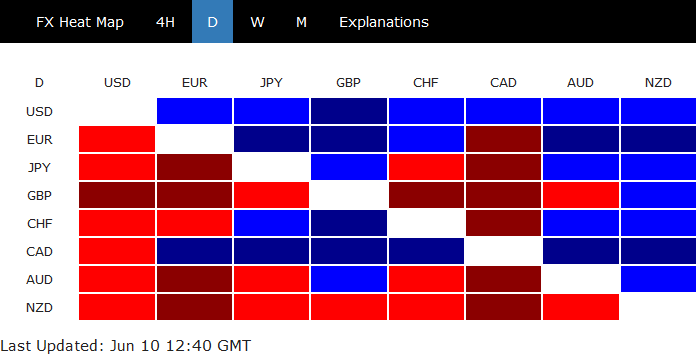
Entering into US session, Dollar is trading as the strongest one for today, as lifted by US-Mexico deal on migration. Trump revealed today that a part of the agreement will need a "vote by Mexico's legislative body". He then threatens Mexican lawmakers that "we do not anticipate a problem with the vote but, if for any reason the approval is not forthcoming, tariffs will be reinstated." But in any case, tariffs threats are averted for now.
Saying in the currency markets, Canadian Dollar is the second strongest one. There is, for now, little case for BoC to cut interest rate and the next move is still more likely a hike. The question is just timing. Euro is the third strongest. On the other hand, New Zealand and Australian Dollar are among the weakest after China May imports contracted by most since July 2016. Sterling is the second weakest as UK GDP contracted -0.4% mom, in April, with steep deterioration in manufacturing.
In other markets, currently
- DOW future is up 131 pts,
- Hold is down -1%
- WTI oil is up 0.37%.
In Europe:
- FTSE is up 0.52%.
- DAX is up 0.77%.
- CAC is up 0.27%.
- German 10-yer yield is up 0.034 at -0.220.
Earlier in Asia:
- Nikkei rose 1.20%.
- Hong Kong HSI rose 2.27%.
- China Shanghai SSE rose 0.86%.
- Singapore Strait Times rose 0.69%.
- Japan 10-year JGB yield dropped -0.005 to -0.121.
EU Moscovic: G20 in Osaka maybe an important moment for US-China trade resolution
European Economic and Financial Affairs Commissioner Pierre Moscovic said the "road map" is set for G20 to go with "intensified" global trade tension. The two things include " reforming the World Trade Organization" and "finding bilateral solutions". Moscovic said G20 members "expect the United States and China to find a way to get to an agreement. Maybe the Osaka summit will be an important moment for that."
Over the weekend, G20 Finance Ministers the Central bank Governors said in the post-meeting communique that "trade and geopolitical tensions have intensified." The group pledged to "continue to address these risks, and stand ready to take further action." However, the originally proposed language of "recognize the pressing need to resolve trade tensions" was dropped.
Aussie Starts Week with Losses, Business Confidence Next
AUD/USD has posted considerable losses in the Monday session. In North American trade, AUD/USD is trading at 0.6963, up 0.54% on the day. On the release front, there are no major U.S. events. The sole event is JOLTS Job Openings, which is expected to tick up to 7.50 million. Australia releases NAB Business Confidence, which has posted a flat zero for two straight months. On Tuesday, the U.S. releases Producer Price Index reports, while Australia posts Westpac Consumer Sentiment.
It was a rough week for the U.S. dollar, and the Aussie took full advantage, with gains of close to 1.0%. The U.S. economy continues to perform well, but nonfarm payrolls posted its second dismal reading in four months. In May, the economy created only 75 thousand jobs, down from 263 thousand a month earlier. Wage growth was unchanged at 0.2%, shy of the estimate of 0.3%. Despite these soft job numbers, the U.S. labor market is in strong shape, and the greenback could quickly bounce back.
The Federal Reserve also weighed on the greenback, with Fed chair Jerome Powell hinting that the Fed could lower rates later this year. The Fed has sounded neutral about its next rate move, but last week’s comments from Powell and FOMC member James Bullard were clear hints that the Fed is leaning to a rate cut. The CME Group has set the odds of a quarter-point cut in July at 67%, as the likelihood a rate cut later this year is growing.