

Sample Category Title
CFTC Commitments of Traders – Bets of USD Diminished Amidst Uncertainty about Fed’s Policy Outlook
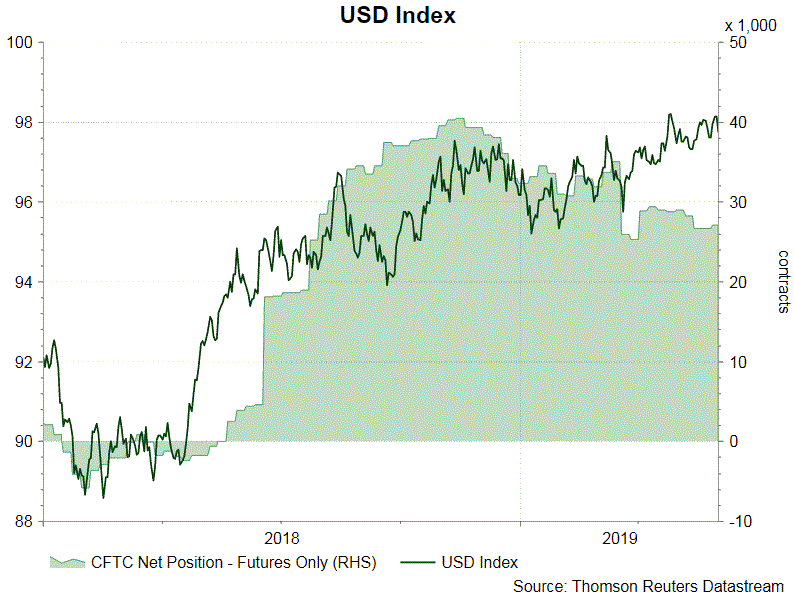
The CFTC Commitments of Traders report in the week ended May 28 shows that NET LENGTH in USD Index climbed higher, by +386 contracts, to 27 098. Both speculative long and short positions increased during the week. Traders continued to trim their bets on USD. Recent focus has returned to Fed's monetary policy outlook. Driven by intensifiation of trade war and rising global economic uncertainty, the market has started to price in more than one rate cut this year. All other major currencies stayed in NET SHORT positions. 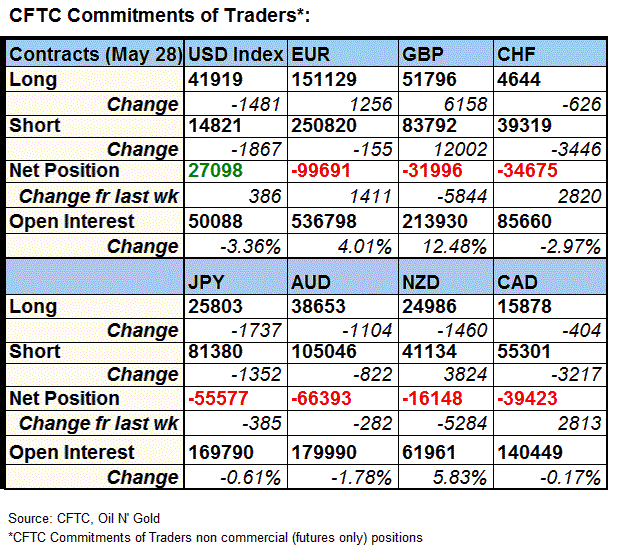
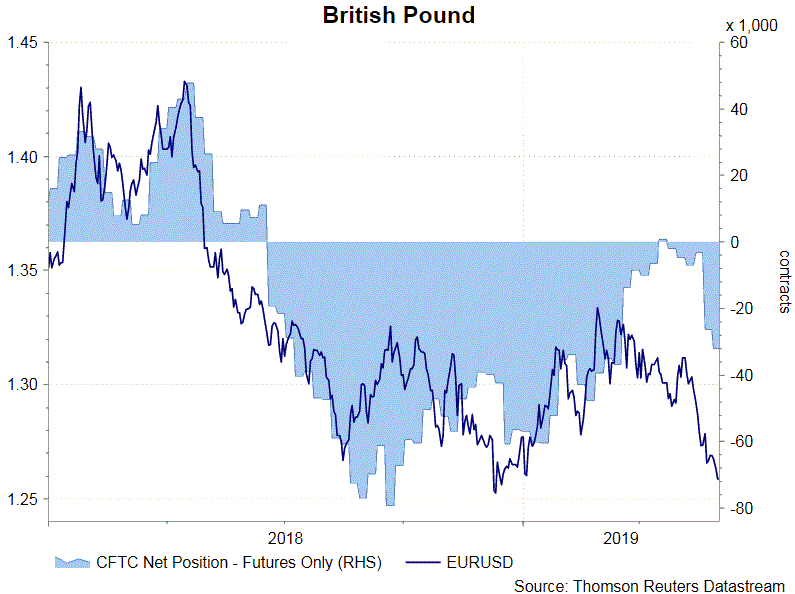
Concerning European currencies, NET SHORT for both EUR and GBP futures continued to increase but the size was trimmed. The market took a breath after the past eventful week. NET SHORT for euro futures increased +1 411 contracts to 99 691. NET SHORT for GBP futures rose +5 844 contracts to 31 996. Speculative long positions gained +6 158 contracts while speculative shorts gained sharply, by +12 002 contracts, for the week. 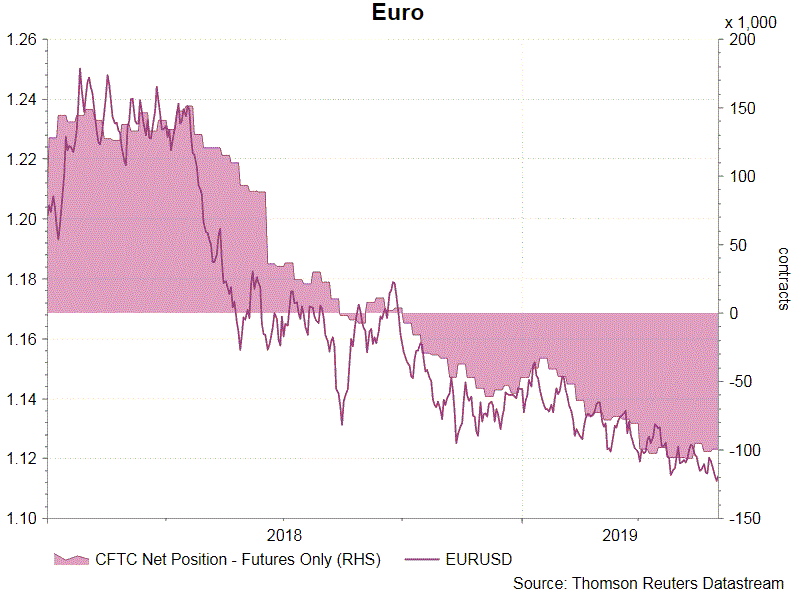
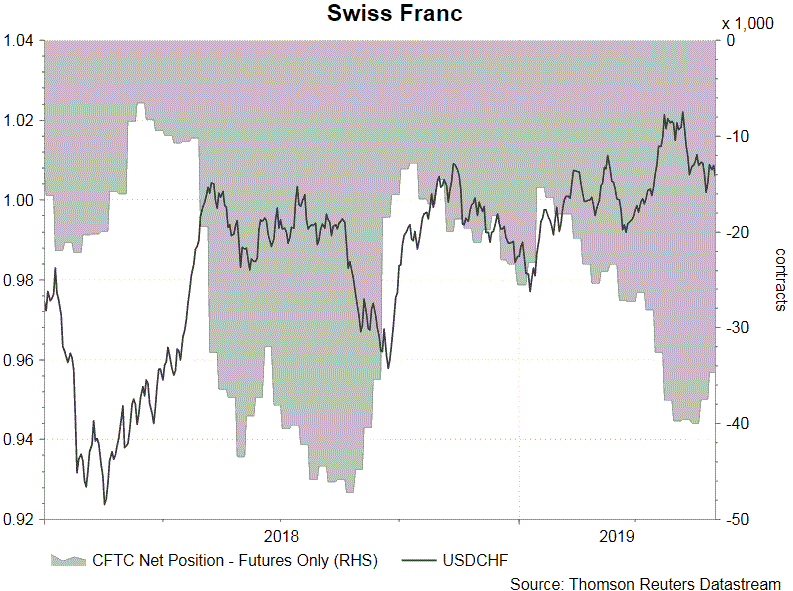
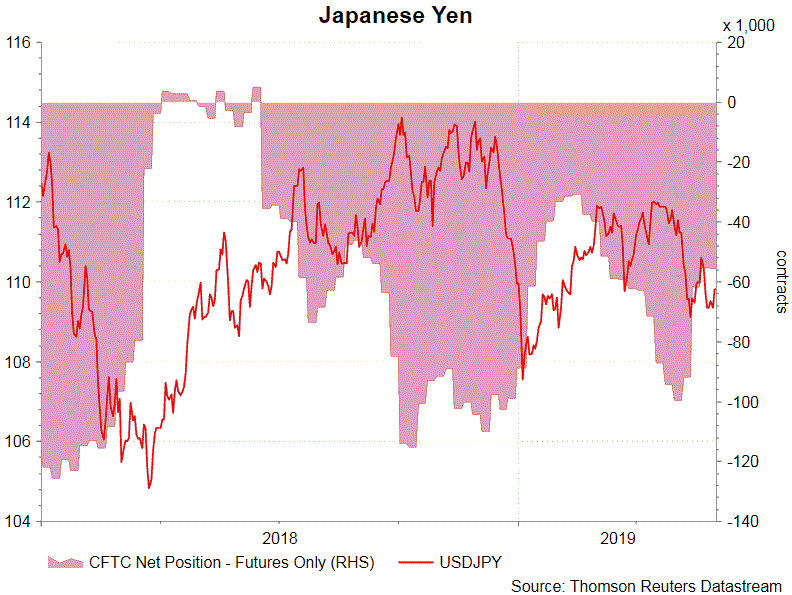
On safe-haven currencies, Net SHORT for CHF futures fell -2 820 contracts to 34 675. NET SHORT for JPY futures added +374 contracts to 55 577 during the week. Speculative long positions dropped -1 737 contracts while shorts slipped -1 352 contracts.
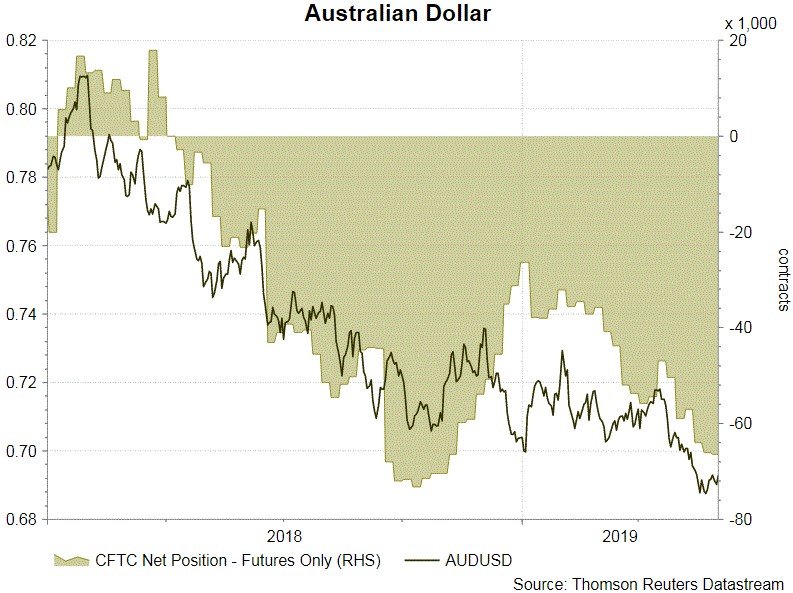
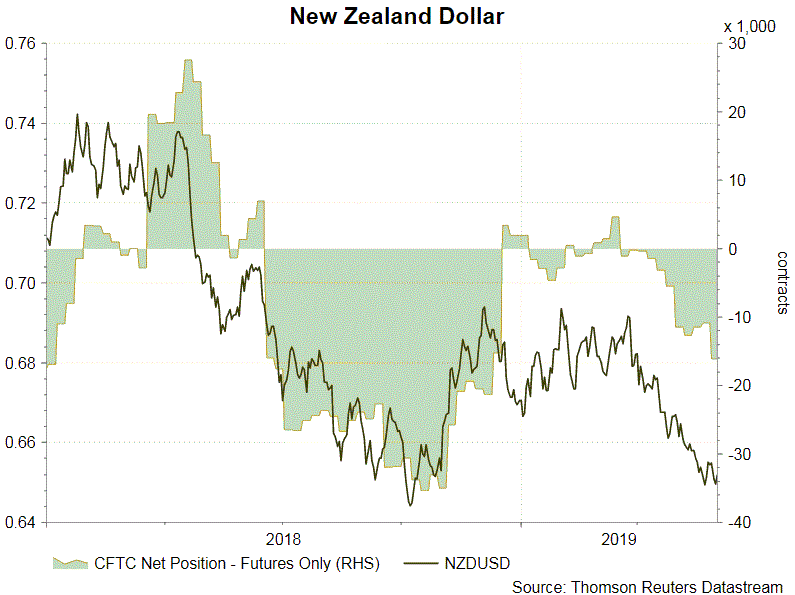
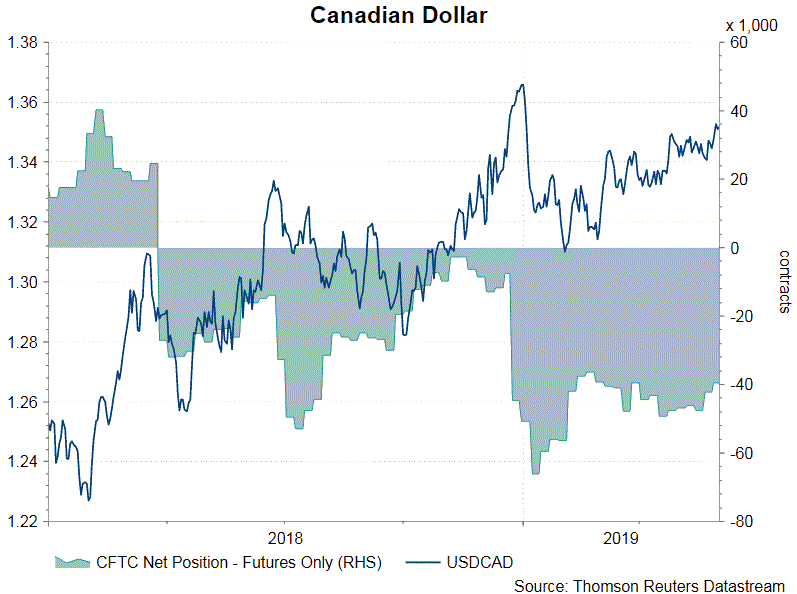
On commodity currencies . NET SHORT for AUD futures gained +282 contracts to 66 393. Speculative long positions slipped -1 104 contracts while shorts dropped -822 contracts. Separately, NET SHORT for NZD rose +5 284 contracts to 16 148 contracts last week. NET SHORT for CAD futures fell -2 813 contracts to 38 423.
CFTC Commitments of Traders – Weaker Oil Prices Anticipated as Traders Accumulated Short Positions
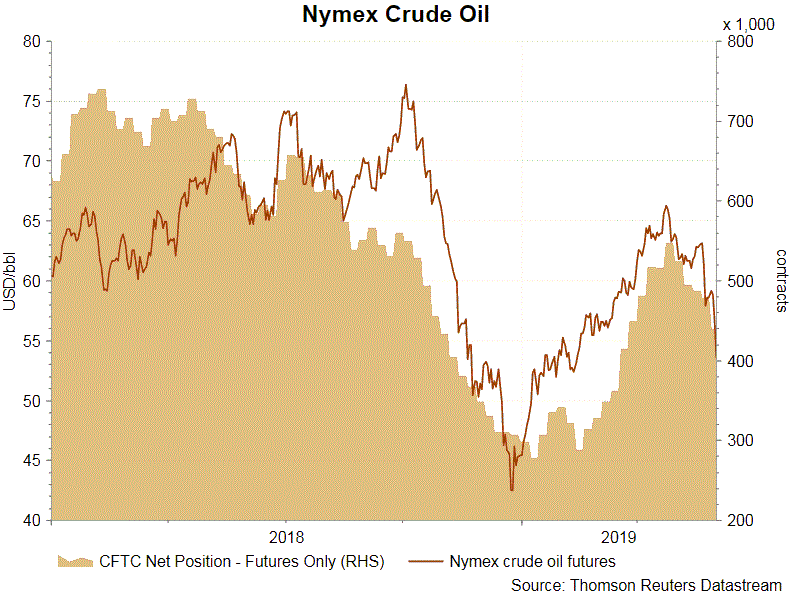
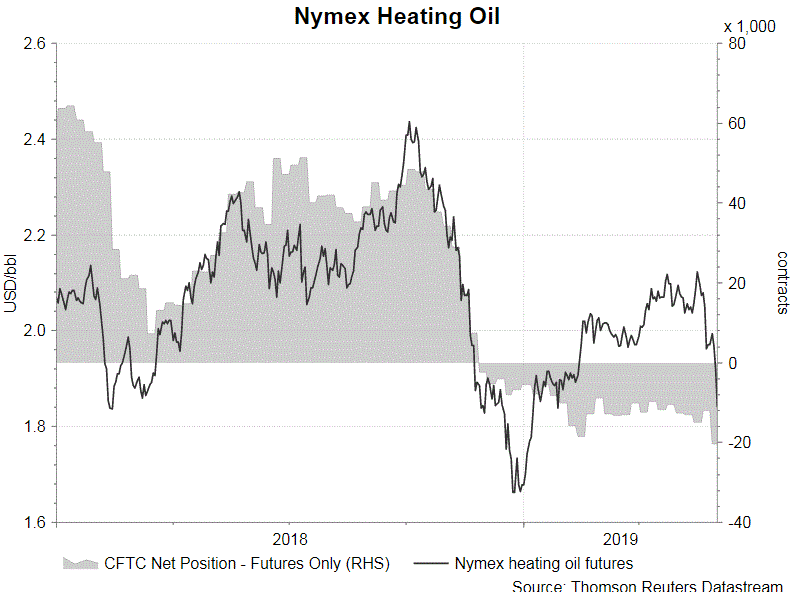
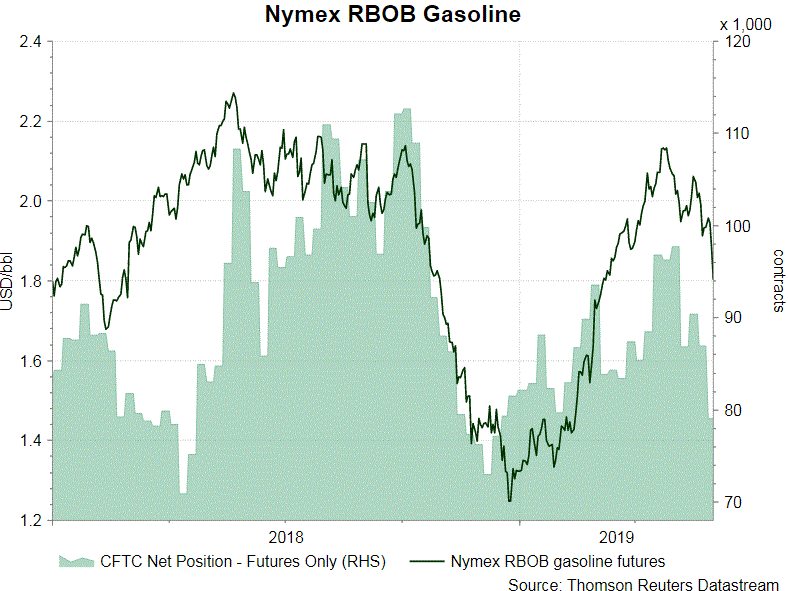
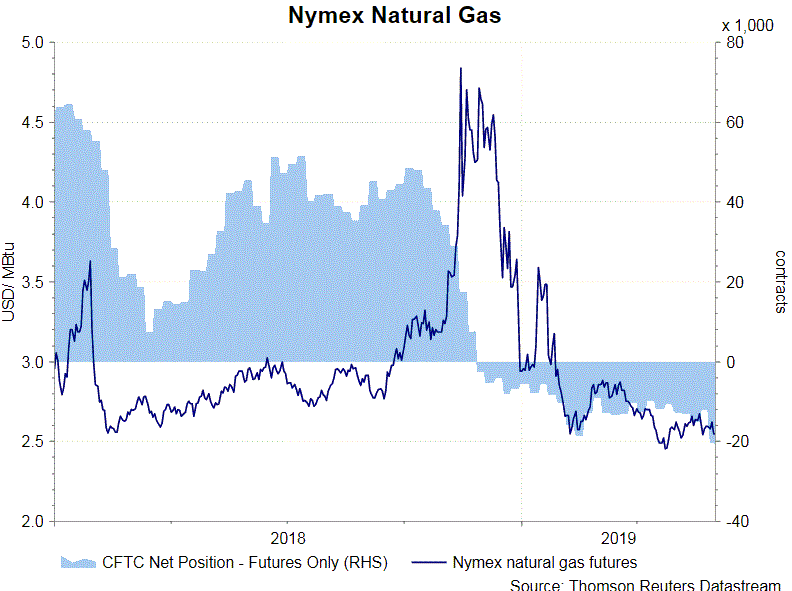
According to the CFTC Commitments of Traders report for the week ended May 28, Bearish sentiment was broadly-based in the energy market. NET LENGTH for crude oil futures slumped -39 460 contracts to 438 938 for the week. Speculative long positions plunged -21 546 contracts while shorts rose -17 914. Retreat of bulls and progression of bears suggests a gloomy outlook for crude oil prices. For refined oil products, NET LENGTH for gasoline declined -7 905 contracts to 79 064, while NET SHORT for heating oil gained +8 304 contracts to 20 387 for the week. NET SHORT for natural gas futures soared +24 973 contracts to 85 951 contracts for the week.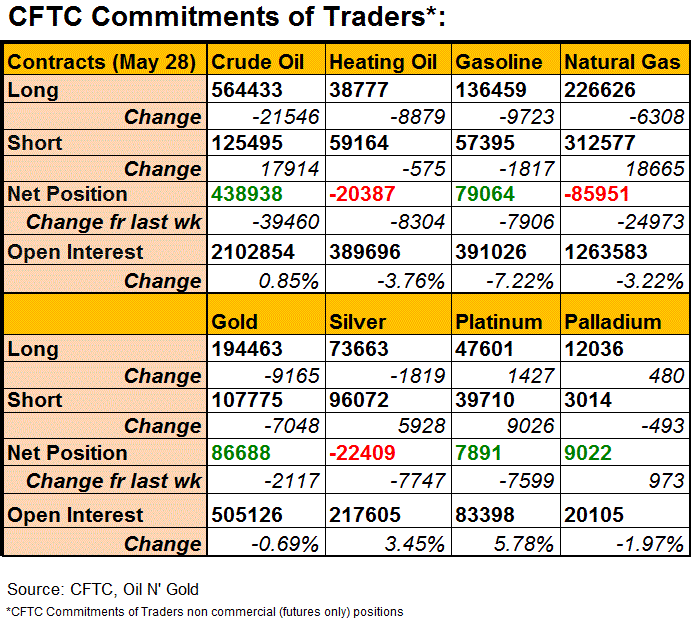
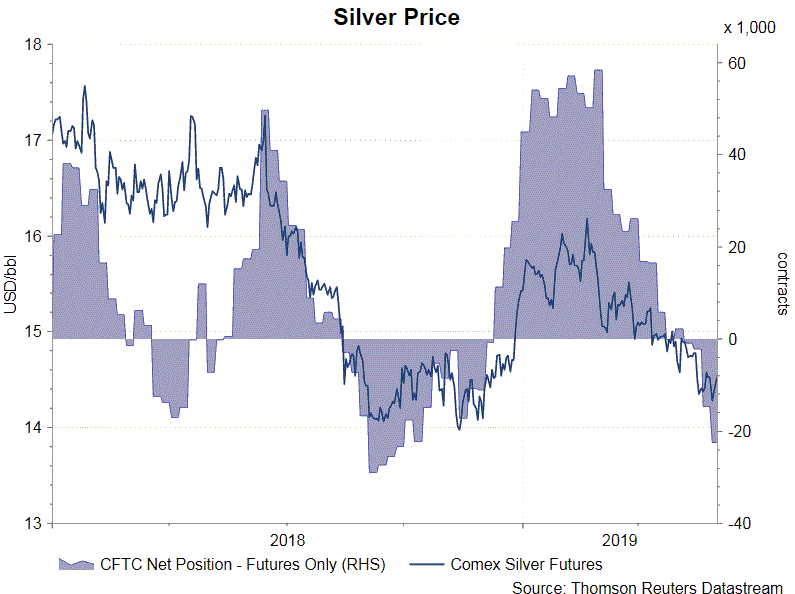
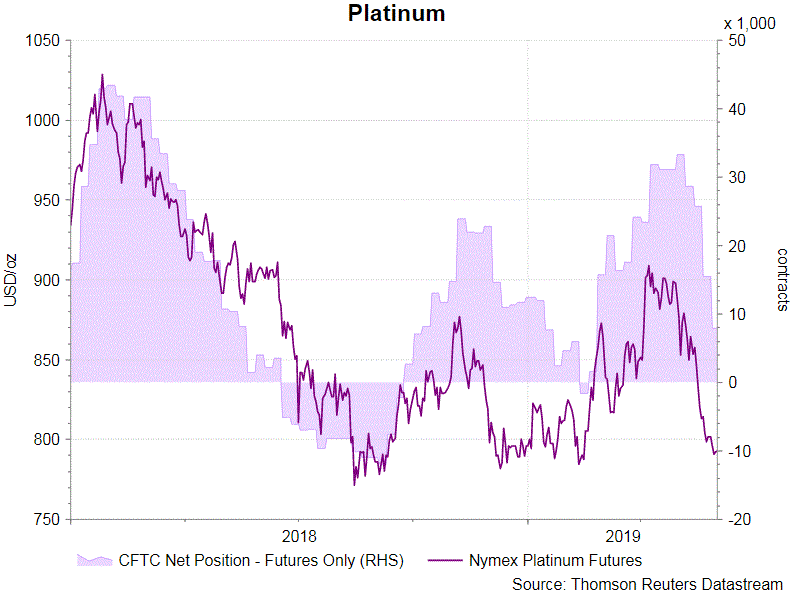
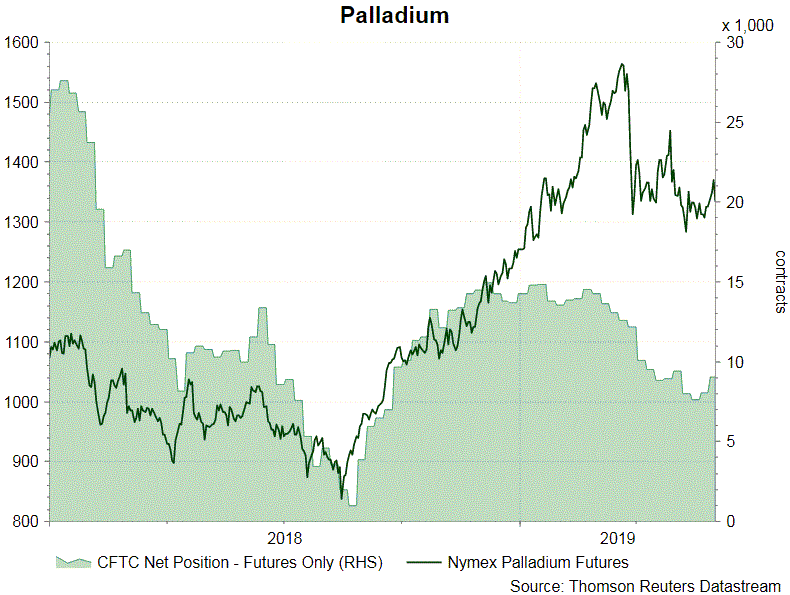
Traders continued to trim their long bets on gold. NET LENGTH for gold futures dropped -2 117 contracts to 86 688 last week. Speculative long positions declined -9 165 contracts, while shorts fell -7 048. For silver futures, speculative long positions dropped -1 819 contracts while shorts added +5 928. These resulted in an increase in NET SHORT to 22 409 contracts. For PGMs, NET LENGTH of Nymex platinum futures declined -7 599 contracts to 7 891 while that for palladium increased +973 contracts to 9 022.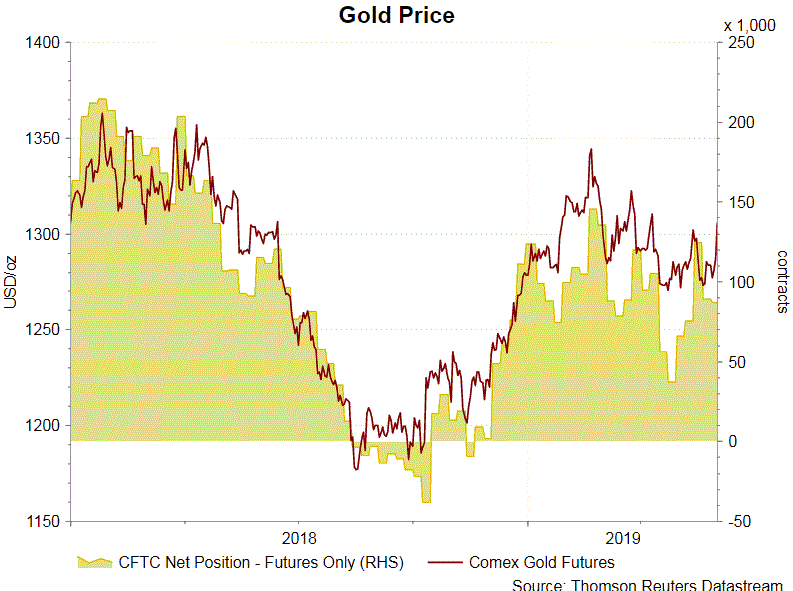
EUR/USD Recovery Facing Important Resistance
Key Highlights
- The Euro found support near 1.1115 and recently recovered against the US Dollar.
- EUR/USD is facing a strong resistance near 1.1190 and a bearish trend line on the 4-hours chart.
- The US Personal Income increased 0.5% in April 2019, more than the 0.3% forecast.
- The Euro Zone Manufacturing PMI in May 2019 is likely to remain at 47.7.
EURUSD Technical Analysis
This past week, there was a fresh decline in EUR/USD from the 1.1215 swing high. The Euro traded below the 1.1150 support and tested the 1.1115 level against the US Dollar before it started an upside correction.
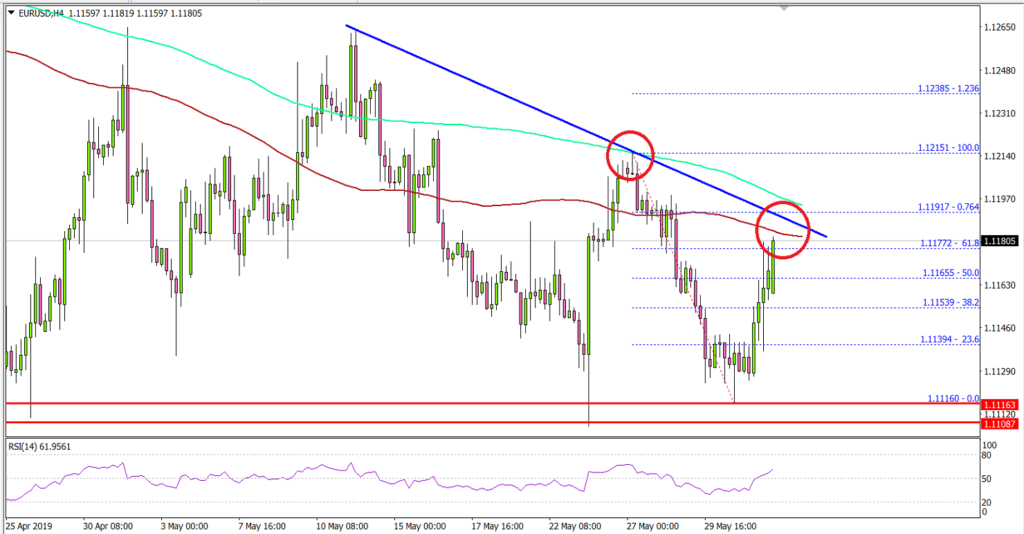
Looking at the 4-hours chart, the pair started a decent recovery from the 1.1116 swing low. It traded above the 1.1140 and 1.1150 levels.
There was a break above the 50% Fib retracement level of the downward move from the 1.1215 high to 1.1116 swing low. However, there are many hurdles for the bulls waiting near the 1.1180 and 1.1190 levels.
There is also a bearish trend line formed on the same chart with current resistance near 1.1190. Besides, the 100 simple moving average (red, 4-hours) is also near the trend line.
The next key resistance is near the 1.1200 level and the 200 simple moving average (green, 4-hours). Therefore, a successful close above the 1.1200 level is must for further gains.
If the pair fails to move above 1.1190 or 1.1200, it could start a fresh decline in the coming sessions. An initial support is near 1.1140, below which EUR/USD might revisit 1.1116.
Economic Releases to Watch Today
- Germany's Manufacturing PMI for May 2019 – Forecast 44.3, versus 44.3 previous.
- Euro Zone Manufacturing PMI May 2019 – Forecast 47.7, versus 47.7 previous.
- UK Manufacturing PMI for May 2019 – Forecast 52.4, versus 53.1 previous.
- US Manufacturing PMI for May 2019 – Forecast 50.6, versus 50.6 previous.
- US ISM Manufacturing Index for May 2019 – Forecast 53.3, versus 52.8 previous.
Daily Markets Broadcast
Wall Street weakens on tariff war escalation
US indices are weaker in early trading this morning after a weekend escalation in the tariff spat. China laid the blame for the breakdown of talks on US President Trump, adding that it is willing to recommence negotiations, but will not be beaten into concessions. Trump potentially opened another trade war front with India by removing its developing nation status. Safe haven flows have accelerated, pushing 10-year US yields to a 2-year low.
US30USD Daily Chart
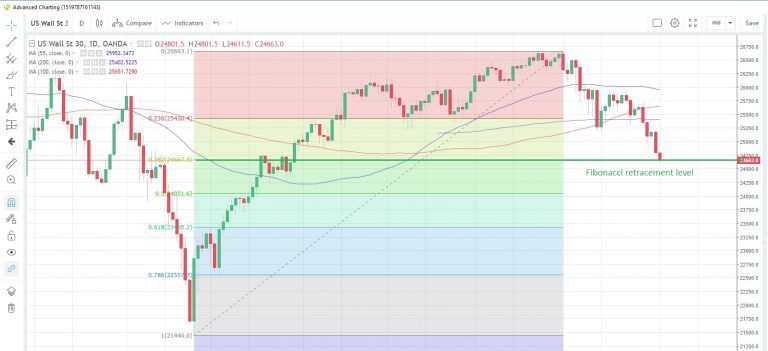
The US30 index fell the most in 2-1/2 weeks on Friday, confirming the biggest monthly decline in five months
The index is testing the 38.2% Fibonacci retracement of the December to May rally at 24,668
The US ISM manufacturing PMI is expected to improve to 53.3 in May from 52.8 in June, the latest survey of economists shows.
DE30EUR Daily Chart
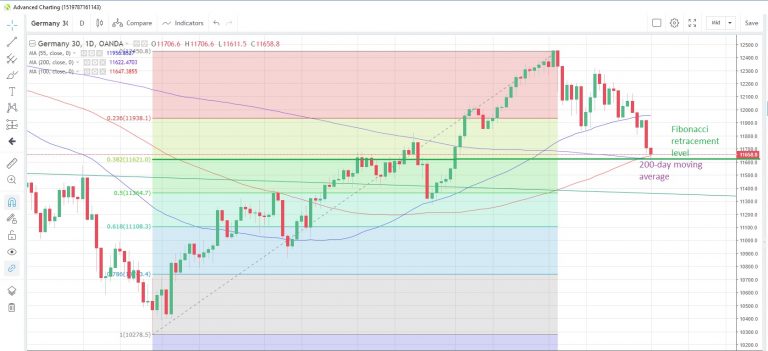
The Germany30 fell the most since May 13 of Friday and has extended losses in early trading today, touching the lowest since April 1
The index is testing the 200-day moving average at 11,622, which has supported prices on a closing basis since April 1. The 38.2% Fibonacci retracement of the 2019 rally is at 11,621
The May final Markit PMI readings for both Germany and the Euro-zone are not expected to be revised from the initial readings of 44.3 and 47.7, respectively.
XAU/USD Daily Chart
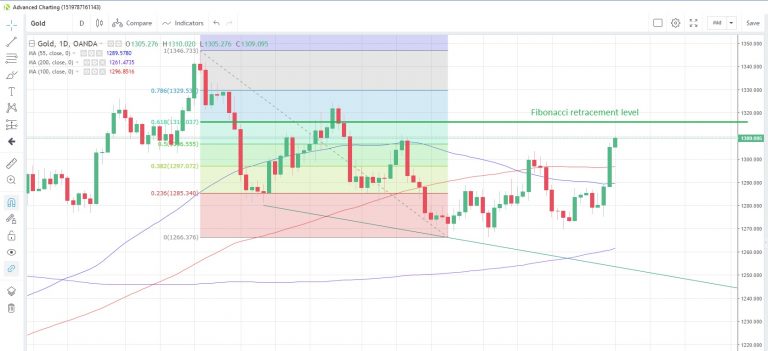
Gold prices jumped the most in four months on Friday as tariff/growth concerns increased. Additional gains this morning have taken the yellow metal to the highest since April 10 versus the US dollar
Prices moved above the 50% retracement of the February-April drop at 1,306.56 this morning. The 61.8% Fibonacci retracement is at 1,316.04
A deterioration in China’s manufacturing PMI in May, worsening trade relations and a damping of global growth expectations have improved safe haven flows. Gold has once again started to benefit along with US Treasuries, with 10-year US yields hitting a 2-year low.
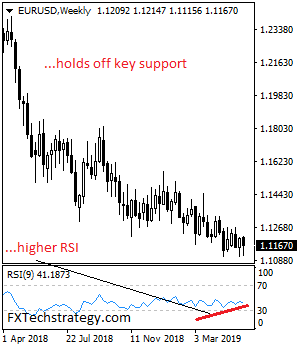
EURUSD Holds Off The 1.1106 Key Support Zone
EURUSD holds off the 1.1106 key support zone as it looks to recover further higher. Support comes in at the 1.1150 where a violation will turn risk to the 1.1050 level. A break below here will target the 1.1000 level. Further down, support sits at the 1.0950. Conversely, on the upside, resistance resides at 1.1150 level with a break through there opening the door for further upside towards the 1.1200 level. Further up, resistance comes in at the 1.1250 level where a violation will expose the 1.1300 level. All in all, EURUSD continues to threaten further upside pressure on correction.
Eco Data 6/3/19
[php_everywhere instance="1"]
China reiterated known pre-conditions for resuming trade talks with US
China's highly anticipated white paper on trade relationship with US was quite anti-climatic. In short, China blamed the US for starting trade conflicts. And, it criticized the US for going back on what's agreed three times. And it hold US totally responsible for the collapse of trade negotiation.
China also reiterated pre-conditions on resuming trade negotiations. First, both sides have to respect "each other's social system, economic system, development path and rights". Secondly the negotiations has to be based on integrity. Thirdly, China will not step back on its principles, including sovereignty.
The implications are quite clear that China will not do anything to change its own development path along socialist market economy (or some would call that state capitalism). That is, China will not retreat from subsidizing State-Owned Enterprises. Secondly, the implementation of the agreement should be under full control of the sovereign entity. That is, for example, China will decide what new laws to pass to curb IP theft, or it will fulfil the commitment with administrative measures. China will object to US instructions on what are to be done exactly.
The overall paper, and the press conference are basically old wine in old bottles.
Mexico doesn’t want war of tariffs and of taxes with US
Mexico's Economy Minister Graciela Marquez is going to meet US Commerce Secretary Wilbur Ross in Washington on Monday to discuss Trump's tariff threats. Foreign Minister Marcelo Ebrard will also be in Washington on Wednesday for the issue.
Mexican President Andres Manuel Lopez Obrador expected "good results" from the meetings. And he said on Saturday that "the main thing is to inform about what we're already doing on the migration issue, and if it's necessary to reinforce these measures without violating human rights, we could be prepared to reach that deal."
Lopez Obrador also insisted that Mexico would not pursue trade war with the US. And, "we're doing all we can to reach a deal through dialogue... we're not going to get into a trade war, a war of tariffs and of taxes."
EU Moscovici wants dialogue with Italy on budget, Tria doesn’t want clash
European Commissioner for Economic and Financial Affairs Pierre Moscovici said on Sunday that he'd still prefer dialogue with to sanctions on Italy regarding it's budget. And, "for the past five years I have not punished anyone." However, he emphasized "If they do not respect the rules at all, it will be necessary for the European Commission and the European states to take their responsibilities". The Commission will make proposals this week on resolving the dispute with Italy over its budget deficit.
Italy's Economy Minister Giovanni Tria blamed the economic downturn for rising debt. However, he also emphasized "Italy does not want to clash with the European Commission, and I hope the opposite is also true, that is to say that no one in Brussels intends to engage in a fight with us." He reiterated the pledge to keep budget deficit below government forecast of 2.4% of GDP. And he added "our position is reasonable and I think we will eventually reach a compromise with the Commission."
Forex Forecast and Cryptocurrencies Forecast
First, a review of last week’s events:
EUR/USD. President Trump decided to shake up the markets once again. Putting Chinese problems aside for the time being, he turned his eyes towards Mexico. As he failed to build a wall on the border with it, in order to stop the flow of illegal immigrants, we will punish Mexico with the dollar, the US president decided, and increased the duties on Mexican-made goods. Onwards and upwards: in July the rates will be raised up to 10%, in August - up to 15%, in September - up to 20%, and in October - up to 25%.
It is not excluded that such a demonstration of power pursued a double goal: in addition to the punishment of Mexico City, he also wants to scare Beijing: see what we do with the recalcitrant!
Of course, China is not Mexico, everything is much more complicated here, but, be that as it may, the dollar continued to grow. The results of the elections to the European Parliament also played in its favor. As a result, the pair recorded a local low at the level of 1.1115 on Thursday, May 30, and ended May near the monthly Pivot Point, at 1.1167. Thus, the euro weakened against the dollar by about 350 points in the first five months.
It is appropriate to recall that a year ago at the same time, the European currency lost 2.5 times more, about 900 points, in just a month and a half. So, both traders and brokers have every reason to complain about lower volatility.
GBP/USD. After the resignation statement of Prime Minister Theresa May and success of the Brexit supporters in the elections to the European Parliament the pound continues to be under pressure. Recall that 65% of experts, supported by 90% of oscillators and trend indicators, voted for the pair to fall further. This was exactly what happened. The pair not only went down, but also updated the lows of spring 2019, reaching the bottom on the horizon 1.2557, then a rebound followed, and the final chord sounded at 1.2630;
USD/JPY. The growth of tension entails the growth of anti-risk sentiment. The blow, struck by Trump in Mexico, caused a collapse of almost all market assets, first of all, the oil price. And investors have once again turned their eyes to a safe haven called the Japanese Yen, where one can wait out the next economic storm.
As a result, unlike the euro and the pound, which fell against the dollar, the yen, on the contrary, strengthened, reaching 108.30 on Friday, May 31, where it met summer, fully confirming the forecast given by 75% of analysts, 85% of oscillators and 100% trend indicators;
Cryptocurrencies. For the third week in a row, Bitcoin stubbornly stepped up to the cherished $10,000, moving according to the “step forward, half step back” scheme. So, having fought off the horizon of $7,880, the BTC/USD pair went up sharply late in the evening of Sunday, May 26, reaching $8,955 on Monday. Then a correction of 5.5% followed, and one more spurt upwards, as a result of which it was seen at the height of $9,100. However, it failed to gain a foothold above $9,000, the bulls began to fix their profits, and Bitcoin said goodbye to the spring at $8.510, having risen in price by more than 120% for these three months.
As for the pairs ETH/USD, LTC/USD and XRP/USD, both Ethereum and Litecoin as well as Ripple, after growth following the reference cryptocurrency, returned to the mid-May values by the end of the working week.
As for the forecast for the coming week, summarizing the opinions of a number of analysts, as well as forecasts made on the basis of a variety of methods of technical and graphical analysis, we can say the following:
EUR/USD. In addition to US President Trump, the main engines of this pair are the US Federal Reserve and the ECB. Recall that the current head of the European Central Bank, Mario Draghi, leaves office on October 31. The main contender for his chair now is Jens Weidmann, who, being a supporter of a strong euro, actively supports the increase in interest rates. Representatives of the Fed, by contrast, hint at a possible reduction in the dollar rate due to a possible slowdown in the US GDP. Such a situation should presumably play in favor of the euro. However, according to Bloomberg, the ECB will begin to raise the rate no earlier than April 2020, and during this time a lot can change. Moreover, the political and economic problems of the Eurozone can be observed already now.
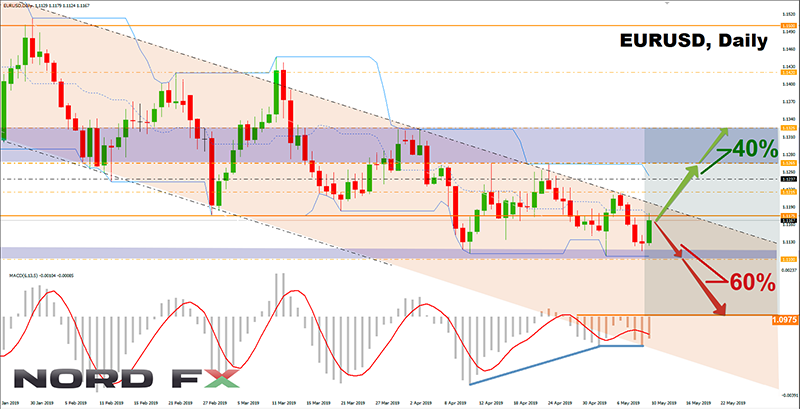
Based on the above, 60% of experts, supported by graphical analysis on D1, vote for the pair to fall to support 1.0975. The next target is 100 points lower.
Most indicators also look to the south: 50% of them are colored red, 25% are green and 25% are neutral gray.
Supporters of bulls are currently in the minority. In their opinion, the pair will not be able to break through support in the 1.1100 zone and it can reach the height of 1.1265-1.1325 on the rebound.
Now, the events of the coming week, which are worth paying attention to. On Monday, June 3, we are waiting for the publication of business activity indices in the Eurozone, the United States and China, and on Tuesday, for the data on inflation and unemployment in the Eurozone. Thursday, June 6, will also be filled with news from Europe. These are data on GDP, the ECB decision on interest rates, and, most importantly, the ECB press conference on monetary policy. And, finally, as usual, we will see the publication of statistics on the US labor market on the first Friday of the month. Experts expect that the NFP may fall by about 30% (from 263K to 190K), which will weaken the dollar for a while;
GBP/USD. The main contender for the post of British Prime Minister today is the former Mayor of London and Foreign Minister Boris Johnson. And this is bad for the pound, since Johnson is a supporter of the "tough" Brexit and exit from the EU without a deal. Such an outcome scares the market, and today 65% of experts, supported by 90% of oscillators and 100% of trend indicators on D1, expect the British currency to weaken further and the fall of the pair first to support 1.2555 and then to the 2018 lows, 1.2475 and 1.2405.
The remaining 35% of analysts believe that the pair’s behavior over the past two weeks is a precursor to a strong correction, as a result of which it can return to the height of 1.2745, or even reach the resistance of 1.2825.
A compromise is offered by graphical analysis on D1. According to its readings, the pair can first rise to the level of 1.2825, and then, turning around, find the bottom in the zone of 1.2405-1.2475;
USD/JPY. Despite the fact that 100% of the trend indicators and 85% of the oscillators on H4 and D1 are colored red, the situation is not that simple: 15% of oscillators are already giving signals that the pair is being oversold. Support levels are 107.75 and 107.00, resistance levels are 109.15, 109.65, 110.35 and 110.65.
As for the experts, the votes were divided as follows: 50% side with the bears, 25% side with the bulls, and 25% are at a loss in the middle. Whose position will be the most correct will depend on the stock markets with which the pair has a strong correlation, and, as usual, on Trump's tweets, dedicated primarily to the course of the US-China trade war. At the same time, when transitioning to the medium-term forecast, the situation changes radically: here it is already 75% who give the palm to the dollar;
Cryptocurrencies. “Six years ago, in 2013, an unusual message from Luka Magnotta from the Future was published, which predicted the price of Bitcoin, which turned out to be surprisingly accurate. “On average, every year the cost of Bitcoin increased about 10 times,” Magnotta wrote. “It grew from $0.1 in 2010 to $1 in 2011, to $10 in 2012, to $100 in 2013.Then there will be a slowdown, and the price will increase 10 times every two years: Bitcoin will grow to $1,000 in 2015, to $10,000 in 2017, to $100,000 in 2019 and to $1,000,000 in 2021”.
There are still seven months until the end of 2019. Or is it just seven months? In any case, this cryptocurrency must demonstrate a fantastic growth in order to achieve the goal set by Magnotta.
As for the shorter-term forecast, a well-known analyst Peter Brandt has expressed an opinion that, driven by the FOMO (fear of missing out) syndrome of numerous traders, the price of Bitcoin will soon overcome the mark of $10,000. At the same time, Brandt stresses that a rather deep correction is not far off: the bulls will certainly want to take profits, and this sale will stop buyers trying to "jump into the leaving train."
Unlike Brandt, most analysts (70%) have set a more modest goal for the BTC/USD pair, to consolidate above $9,000. The remaining 30% believe that the pair will take a breather and will move in the side channel $7,500-8,500.
In conclusion of this forecast, it should be noted that the time of its writing is Friday, 24:00 GMT. And it is possible that it is the upcoming weekend, as it happened more than once, that the bulls will once again move Bitcoin quotes up.