

Sample Category Title
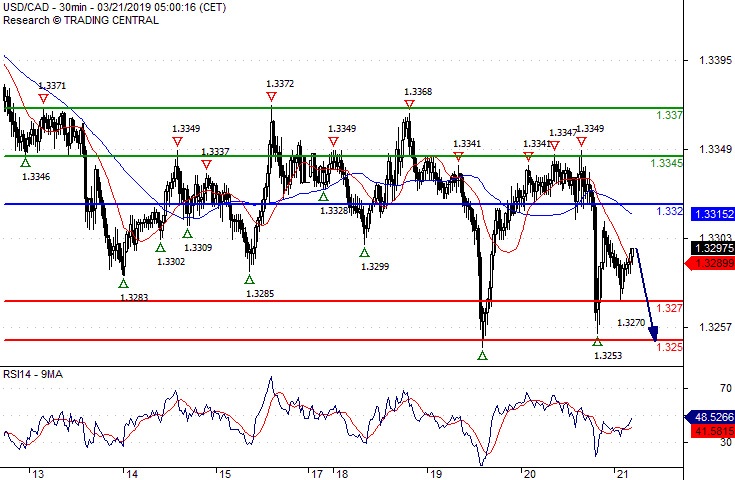
USD/CAD Choppy
Pivot (invalidation): 1.3320
Our preference Short positions below 1.3320 with targets at 1.3270 & 1.3250 in extension.
Alternative scenario Above 1.3320 look for further upside with 1.3345 & 1.3370 as targets.
Comment As Long as 1.3320 is resistance, look for choppy price action with a bearish bias.
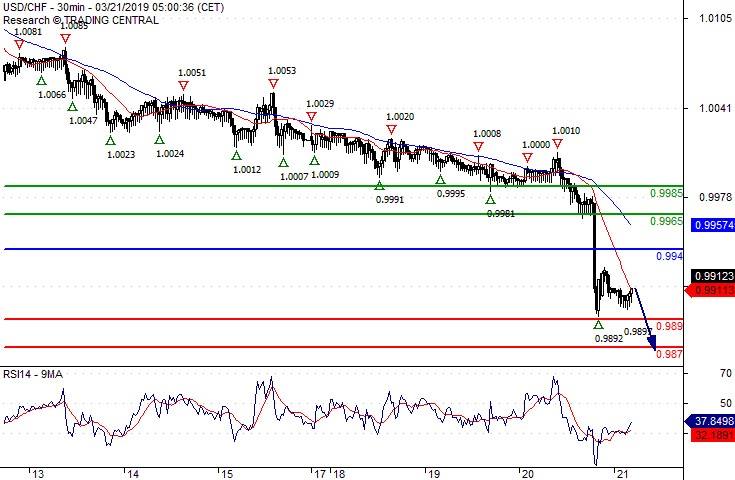
USD/CHF 0.9870 Expected
Pivot (invalidation): 0.9940
Our preference Short positions below 0.9940 with targets at 0.9890 & 0.9870 in extension.
Alternative scenario Above 0.9940 look for further upside with 0.9965 & 0.9985 as targets.
Comment A break below 0.9890 would trigger a drop towards 0.9870
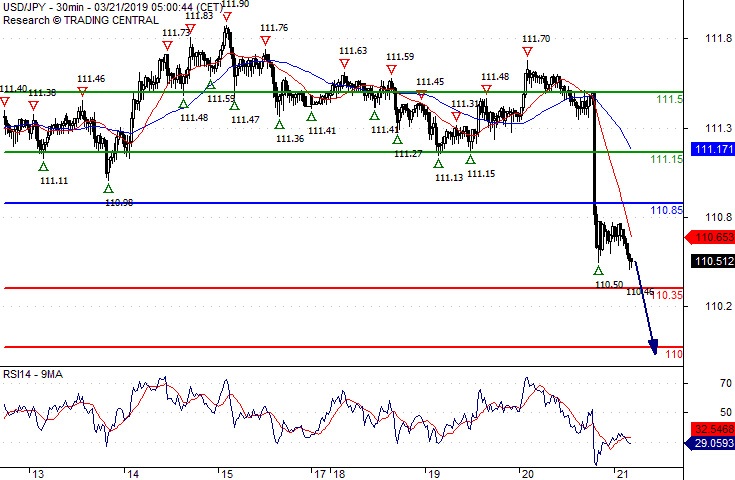
USD/JPY Watch 110.00
Pivot (invalidation): 110.85
Our preference Short positions below 110.85 with targets at 110.35 & 110.00 in extension.
Alternative scenario Above 110.85 look for further upside with 111.15 & 111.50 as targets.
Comment The RSI has broken down its 30 level.
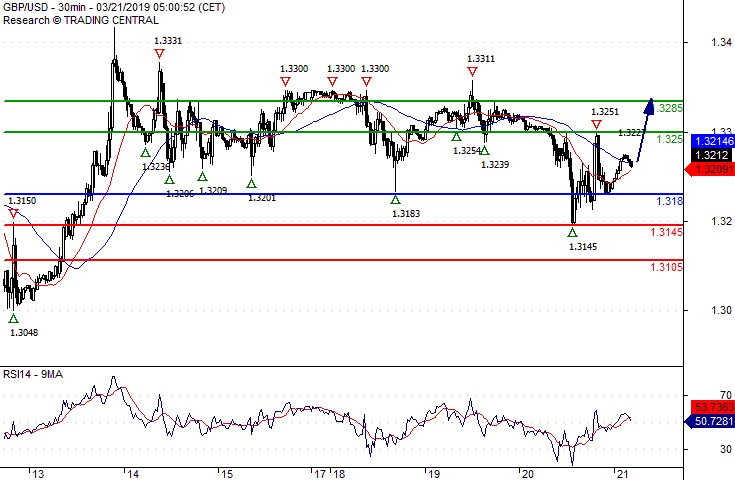
GBP/USD Turning Up
Pivot (invalidation): 1.3180
Our preference Long positions above 1.3180 with targets at 1.3250 & 1.3285 in extension.
Alternative scenario Below 1.3180 look for further downside with 1.3145 & 1.3105 as targets.
Comment The RSI has just landed on its neutrality area at 50% and is turning up.
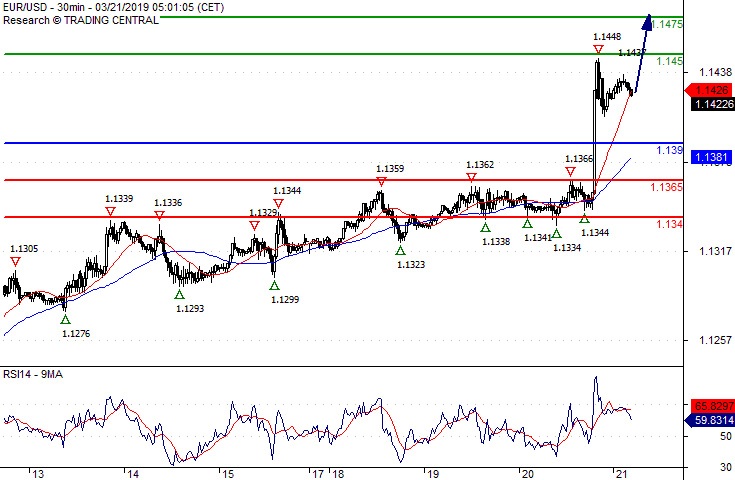
EUR/USD Target 1.1475
Pivot (invalidation): 1.1390
Our preference Long positions above 1.1390 with targets at 1.1450 & 1.1475 in extension.
Alternative scenario Below 1.1390 look for further downside with 1.1365 & 1.1340 as targets.
Comment Technically the RSI is above its neutrality area at 50.
USDJPY Tumbles Below Rising Channel, Creates 1-Month Low
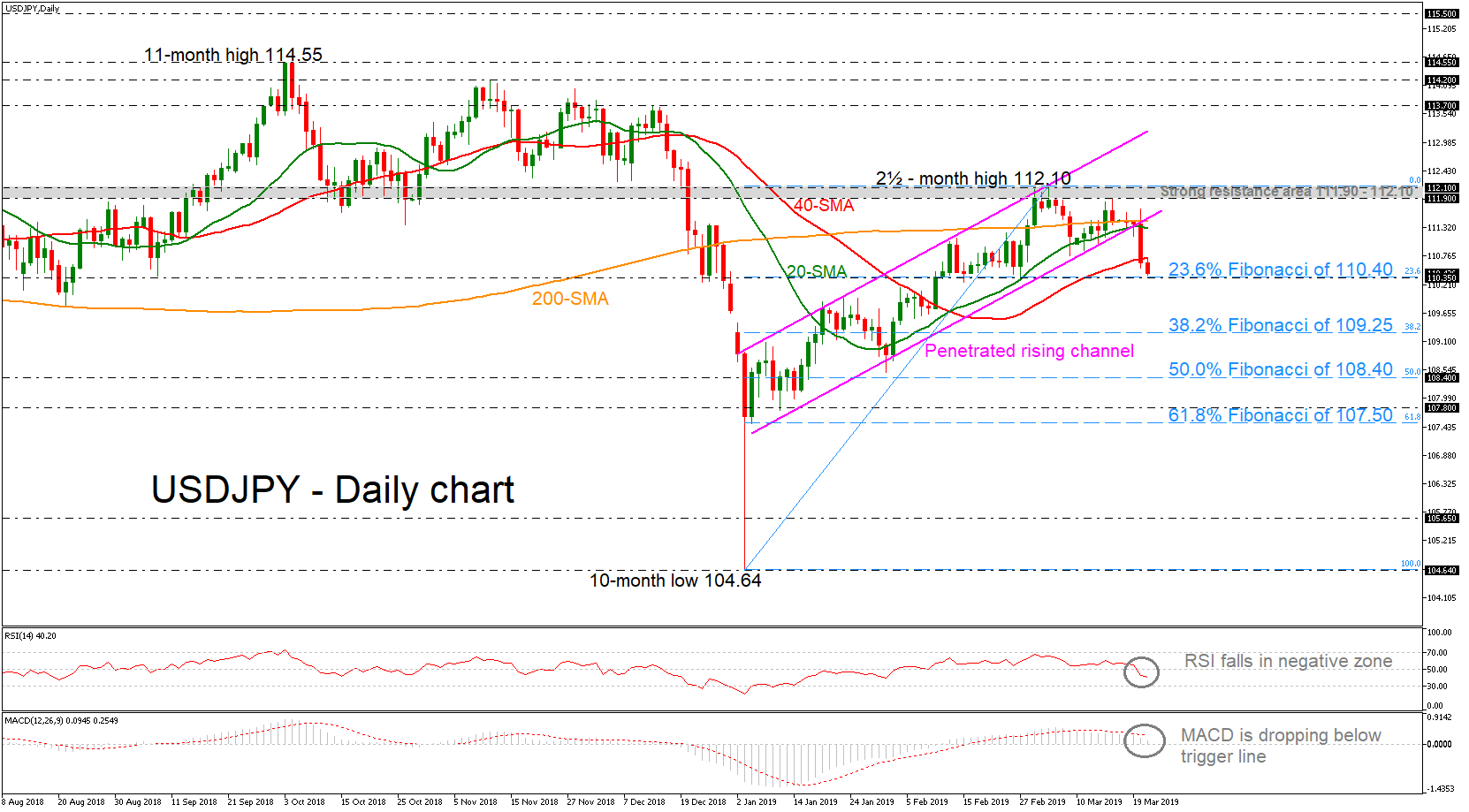
USDJPY is looking strongly bearish in the short-term after plunging below its daily simple moving averages (SMAs) on Wednesday. The price found significant obstacle near the 200-SMA, dropping beneath the ascending channel to challenge the 23.6% Fibonacci retracement level of the upleg from 104.64 to 112.10, around 110.40.
Prices hit a one-month low of 110.40 and the technical indicators are all pointing to further negative momentum in the near term. The RSI indicator has slipped below the 50 level with aggressive mode and is currently approaching the 30 oversold level, while the MACD oscillator is losing momentum below its trigger line.
Additional losses could find support around the 38.2% Fibonacci of 109.25, confirming the recent neutral bias in the daily timeframe. If there is a successful break beneath this area, the next stop could be at the 108.40 barrier, which overlaps with the 50.0% Fibonacci.
If, however, the strong downside momentum was about to stall, with the pair reversing higher, resistance could initially come from the 200-day SMA and the 20-day SMA around 111.40. Rising above this level could take prices towards the 111.90 – 112.10 resistance zone which previously acted as a critical hurdle for the bulls. A failure to hold below this area would switch the focus back to the upside and towards 113.70, taken from the high on December 13.
To conclude, the short-term bias currently looks neutral-to-negative, while in the medium-term the neutral outlook is still intact.
Downbeat Fed To Encourage Further Investments Into Emerging Markets
The recovery that emerging markets have managed to build throughout the first quarter of 2019 is set to extend further after the downbeat tone that was presented by the Federal Reserve after its latest monetary policy meeting. Interest rate expectations in the United States will be significantly downgraded after the comments made by Jerome Powell, in which the Fed Chair strongly indicated that interest rates will remain on hold for some time and that it ultimately appears that the Federal Reserve will extend its narrative around the need for “patience” over the coming months.
Pushed-back US interest rate expectations will be enough to fuel some unwinding of Dollar positions from a Greenback that remains at historically high levels, and the immediate reaction will be that this benefits the likes of the Euro and Japanese Yen. Weakness in the Dollar will also prove supportive to Gold, but where I see the real opportunities for investors are in emerging markets. This includes both emerging market stocks and emerging market currencies. Returning capital into emerging markets will also be a headline that catches further steam moving forward.
Returning investor capital and inflows into emerging markets is a trend that will increase in popularity throughout the developing world and across different continents. This will stretch across the likes of China, South Africa and Saudi Arabia. We should also not discount the momentum that emerging market currencies should be able to build, when we consider that many of the currencies belonging to the developing world remain significantly weaker than where they were valued in the time before the Fed started monetary tightening four years ago.
I am looking at the prospects of a stronger Indonesian Rupiah, Chinese Yuan and Malaysian Ringgit as a result of the dovish Fed message. The Singapore Dollar will also be encouraged by a softer Greenback, while the South Korean Won will be watched after it has lagged behind its Asian counterparts so far in 2019. When it comes to the African continent, I would look for a momentum shift in the South African Rand as a result of reversed interest rate optimism in the United States.
What will be concerning investors behind their trading desks is that it can’t be denied that there is a coordinated downbeat view that is being presented by central banks and senior officials across the globe this year. The Fed has certainly now joined this party by issuing its own need for “patience” and that global headwinds remain a threat that needs to be closely watched.
Fed Completes Dovish U-Turn
- Muted inflationary pressures and economic headwinds cause patience
- Fed signals no more rate hikes in 2019
- Final rate hike in 2020; topping the cycle at 2.5%-2.75%?
- Balance sheet normalization ends at the end of September
- Lower US yields, softer dollar and confused stock markets
The Fed completed the U-turn it started at the turn of the year. The US central bank shelved all rate hike bets for the remainder of the year and pursues an end to its balance sheet run-off by September. Moreover, the new Fed projections pencil in only one more rate hike this cycle (2020). Patience is global central bank’s key word. Fed chair Powell seemed discouraged by the fact that the central bank didn’t achieve its 2% mandate “in a more symmetrical way”. One of the main drivers behind the Fed’s rigid pace of rate hikes last year was an expected inflation overshoot which didn’t materialize. Fed governors now want firm evidence of higher inflation before taking more action. Fed chair Powell opened the debate by stating that the US economy is in a “good place” and that he wants to keep it that way. Dark (international) clouds are piling up above the economy. Therefore, there’s no rush to act in “one direction or the other”. “It may be some time before the outlook for jobs and inflation calls clearly for a change in policy”.
In its new Summary of Economic Projections, the Fed downgraded growth and inflation forecasts. New median estimates suggest 2.1% growth this year (vs 2.3% in December), followed by 1.9% in 2020 (vs 2%) and 1.8% (unchanged) in 2021. The unemployment rate should remain below 4% in the 2019-2021 period, but at slightly higher levels that forecast in December. More importantly, the median estimate for the natural rate of unemployment (NAIRU) declined a notch from 4.4% to 4.3%. The Fed thus thinks that the economy can employ more people without having to risk higher inflation. The Fed’s policy statement showed several references to these somewhat more pessimistic forecasts. The US labour market remains strong, but little changed February payrolls get a special, and unusual, reference. Job gains are now labelled “solid” instead of “strong”. Both household spending and business fixed investment are categorized as showing slower growth. Back in December, the Fed said that only investment growth “had moderated”. Overall, growth of economic activity has slowed from its solid rate in the fourth quarter.
Headline PCE inflation forecast dropped from 1.9%, 2.1% and 2.1% (2019-2021) in December to 1.8%, 2% and 2%. Core PCE forecasts remain stable at 2% for the forecasting horizon, in line with the FOMC’s 2% inflation target. The Fed statement notes the energy prices induced decline of overall inflation and that market-based measures of inflation compensation have remained low in recent months.
No more rate hikes & end to BS run-off
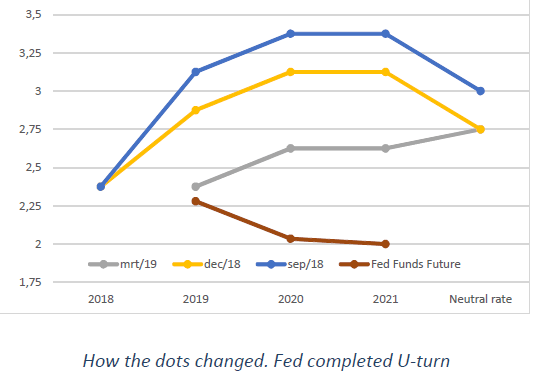
The updated Fed dot plot mirrors the Fed’s wide-shared willingness to stay side-lined, at least for now. The median policy rate forecast for this year declined from 2.875% in December (2 hikes) to 2.375% in March (no hikes). Importantly, 11 out of 17 governors back this unchanged policy view, compared to only 2 out of 17 in December. The range of forecasts is also rather small with 4 governors taking into stride 1 rate hike and 2 hawkish members calling for 2 rate hikes. The 2020 median federal funds rate estimate dropped from 3.125% to 2.625%. That should be the final rate hike this cycle with also the 2021 median at 2.625%. Interestingly, 7 governors pencil in unchanged rates throughout 2020 and 5 members even throughout 2021. Again, the range of estimates is centred with 14 out of 17 Fed-members forecasting a policy rate below 3% in the 2020-2021 period. The median estimate for the neutral rate is unchanged at 2.75%, but two governors switched ranks (2.5% instead of 2.75%) compared to December. 6 out of 16 (St Louis Fed Bullard refuses to participate on this one) expect the neutral rate to be below the current median.
Apart from the dovish shift in the new dot plot, the Fed altered its balance sheet normalization principles and plans. The Fed intends to slow the pace of the decline of its balance sheet over coming quarters. The Fed currently lets $30bn in Treasuries and $20bn in MBS mature on a monthly basis without replacing them. The cap on monthly redemptions of US Treasuries will drop from the current level of $30bn to $15bn beginning in May 2019, before ending them altogether at the end of September. Beginning in October 2019, principal payments received from agency debt and agency MBS will be reinvested in Treasury securities subject to a maximum amount of $20 billion per month; any principal payments in excess of that maximum will continue to be reinvested in agency MBS. The share of US Treasuries in the Fed’s portfolio will thus start increasing from Q4 2019 onwards. The Fed’s balance sheet shrunk from over $4.5tn at the start of the run-off in Q4 2016 to below $4tn currently. By the end of September, we estimate it to be around $3.75tn. That’s way above original estimates of a decline towards levels in the area of $2.5tn
Market reaction
Markets were positioned for a soft message from the US central bank, but didn’t expect them to go that far. US yields lost 5.1 bps (30-yr) to 9.8 bps (5-yr) with the belly of the curve outperforming the wings. The US 10-yr yield fell to 2.53%, approaching key support around 2.49%. Short term rate markets continue to factor in an unchanged Fed policy rate this year, followed by a rate cut in 2020. The dollar was forced in the defensive, losing 0.66% on a tradeweighted basis. EUR/USD returned above the 1.14 mark. Given the weak fortunes of the single currency, we hold our view that a break above the 1.1571/1.1621 sideways upper trading band will be a tough nut to crack. US stock markets initially thrived on the news, but couldn’t maintain gains. Some investors see the Fed’s message as a strong hint that the end of the economic/monetary cycle is near
AUD/USD Daily Outlook
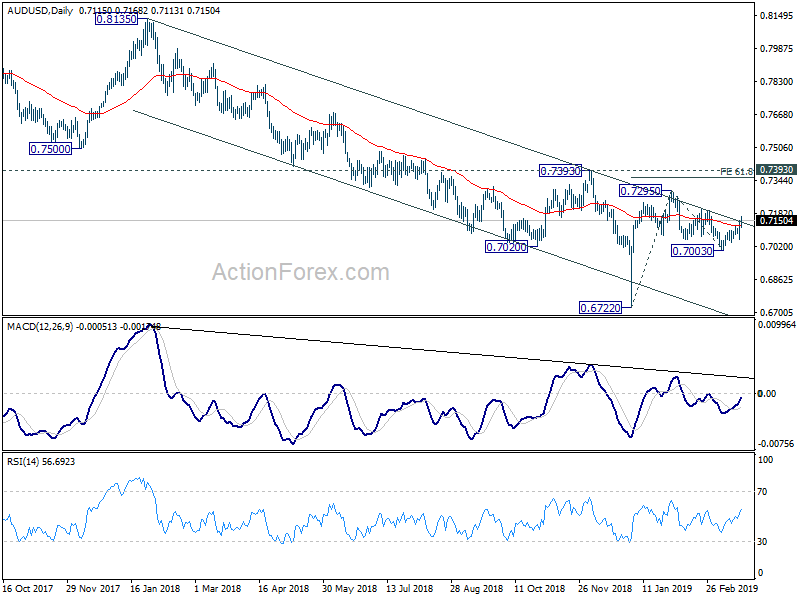
Daily Pivots: (S1) 0.7067; (P) 0.7108; (R1) 0.7160; More...
AUD/USD's rally from 0.7003 accelerated to as high as 0.7168 so far. Decisive break of 0.7121 suggests that corrective decline from 0.7295 has completed with three waves down to 0.7003 already. More importantly, rise from 0.6722 might be in progress. Intraday bias is back on the upside for 0.7206 resistance first. Break will target 0.7295 high next. On the downside, break of 0.7056 is needed to indicate completion of the rise from 0.7003. Otherwise, near term outlook will remain mildly bullish in case of retreat.
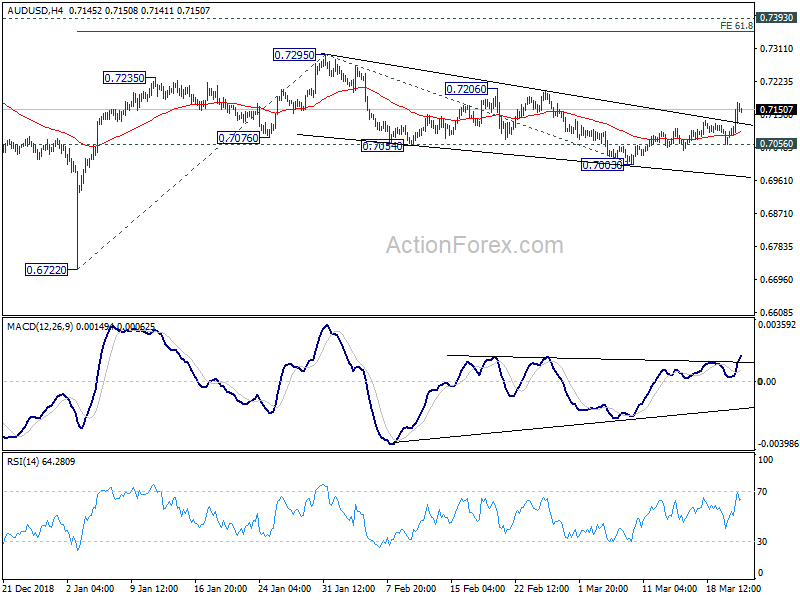
In the bigger picture, as long as 0.7393 resistance holds, we'd treat fall from 0.8135 as resuming long term down trend from 1.1079 (2011 high). Decisive break of 0.6826 (2016 low) will confirm this bearish view and resume the down trend to 0.6008 (2008 low). However, firm break of 0.7393 will argue that fall from 0.8135 has completed. And corrective pattern from 0.6826 has started the third leg, targeting 0.8135 again.
Norges Bank To Hike Today Amid Fed Hike Cycle Is A First
Market movers today
In our core markets, all focus is on Norges Bank (NB), which we expect to raise the policy rate by 25bp to 1.00%, as the economy is in very good shape. We expect NB to signal another rate hike this year, with more to come next year, which is more aggressive than current market pricing. See next page for full preview and market implications.
Today, the EU leaders meet to discuss, among other things, whether to grant the UK an extension of Article 50. A final verdict is not expected today. The EU summit starts at 14:00 CET and the Brexit discussion at 15:30. A press conference will be held afterwards.
The Bank of England meets today and Carney & Co seem to be in no hurry to raise rates in the current environment. Our case for a rate hike in November 2019 is under pressure given the other dovish central banks.
The Swiss National Bank (SNB) is widely expected to keep its policy rate unchanged at -0.75% at today's quarterly meeting.
Overnight to Friday, we get Japanese inflation numbers.
Selected market news
Unsurprisingly, the Fed maintained the target range at 2.25-2.50%. However, the biggest change to the statement is that the Fed thinks the US domestic economy has slowed . The 'dot plot' was lowered significantly and the median dots are signalling no rate hikes this year and just one rate hike next year. Five (out of 17) FOMC members think the Fed is on hold until at least year-end 2021.
Based on the dovish Fed, we also have to admit we have misread the Fed. With the new signals, it seems like the bar is high for the Fed to move again on rate hikes. In previous hiking cycles, we have not experienced the Fed pausing for a long time and then resuming hiking and hence we no longer expect the Fed to hike in this hiking cycle.
On Brexit, in a letter to Donald Tusk, PM Theresa May outlined she wants a short extension until 30 June 2019. That said, we see the options being either a very short one to mid-May or a long one lasting into 2020. Our base case remains the latter. The risk scenario is that the EU27 leaders reject an extension, as they are more hawkish on Brexit than Tusk, Juncker and Barnier. Today's EU summit is only expected to discuss the principles of an extension and a final decision can be taken next week right before deadline, as it would allow May to try to get her deal through the House of Commons a third time. Donald Tusk and other leading EU politicians said the EU is ready to grant a short extension IF the UK passes the Withdrawal Agreement (WA). The EU has repeated said there will be no more negotiations on the WA. The EU commission has recommended to grant either a short extension to mid-May before the European elections or a long one lasting until at least end-2019.
On the trade war, in another bow to trade war dynamics, Trump said he intends to keep tariffs in place for 'a substantial period of time' until China adheres to the ceasefire.