Sample Category Title
BOC Remains Dovishly On Hold And The Cad Weakens
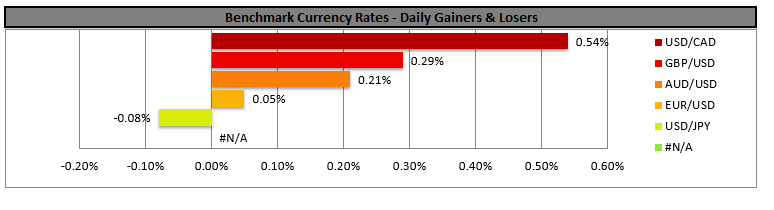
BoC remained on hold at +1.75% yesterday as was widely expected and CAD weakened as a dovish tone seemed to prevail in the accompanying statement. The bank has removed its explicit hawkish bias which was present in the past statement for a more subtle tone. Also it mentioned that global slowdown is more pronounced and widespread with trade tensions and uncertainty weighing heavily on confidence and economic activity. According to the statement the bank will continue to closely watch the household market, the oil market and global trade policy. We expect the bank’s statement to continue to weigh on the Loonie’s direction and we would like to highlight BoC Patterson’s speech today and on Friday Canada’s employment data for February. USD/CAD rose by 65 pips upon release of BoC’s interest rate decision and broke the 1.3425 (S1) resistance line (now turned to support). We maintain our bullish bias for the pair’s direction, though it should be noted that the RSI indicator has surpassed the level of 70, continuing to imply a possibly overcrowded long position for the pair. Should the pair find fresh buying orders along its path, we could see it aiming if not breaking the 1.3510 (R1) resistance level. Should the pair come under the selling interest of the market, we could see it breaking the 1.3425 (S1) support line and aim for the 1.3360 (S2) support barrier.
ECB Interest rate decision
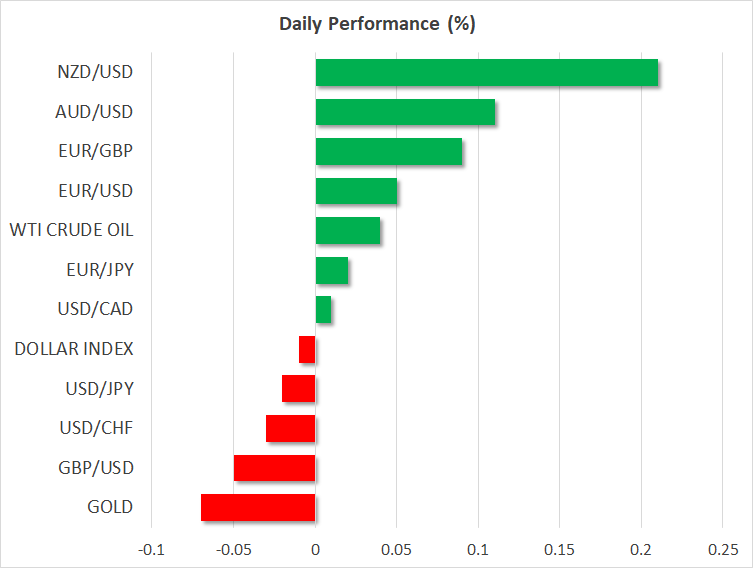
ECB is to announce its interest rate decision today (12:45, GMT) and is widely expected to remain on hold at 0.0%. Currently EUR OIS imply a probability of 92.7% for such a scenario, hence the market’s attention could turn to the accompanying statement. The bank could be adopting a more dovish tone as the GDP rate (+1.2% yoy) is rather low and the inflation rate (+1.5% yoy) remains below the bank’s target (+2.00% yoy). The big question for today’s meeting is whether the bank will signal a delay of any possible rate hikes for after 2019 and whether it will relaunch long term bank loans soon, to fight an economic slowdown in the area. Also new macroeconomic projections are due out and we could see the bank lowering its forecasts, especially about growth. Should the bank imply a possible easing of the monetary policy (ie. by delaying any future rate hikes), we could see the EUR weakening. Please be advised that we expect volatility for EUR pairs to extent during ECB President’s Mario Draghi press conference (13:30, GMT). EUR/USD continued to trade in a sideways movement yesterday, testing the 1.1300 (S1) support line. We could see the pair having some bearish tendencies today as financial releases and ECB’s interest rate decision could weaken the common currency. Should the bears dictate the pair’s direction, we could see the pair breaking the 1.1300 (S1) support line and aim for the 1.1260 (S2) support level. Should on the other hand the bulls take over, we could see the pair aiming for the 1.1345 (R1) resistance line.
Today’s other economic highlights
In today’s European session we get UK’s Halifax House Price Index for February and Eurozone’s final reading of the GDP growth rate for Q4. In the American session we get Canada’s building permits growth rate. As for speakers please note that BoE’s Tenreyro, Fed’s Brainard and BoC’s Patterson will be speaking. Also please note that Germany’s finance minister will be speaking for Brexit preparations today and could stir some interest for GBP traders.
USD/CAD
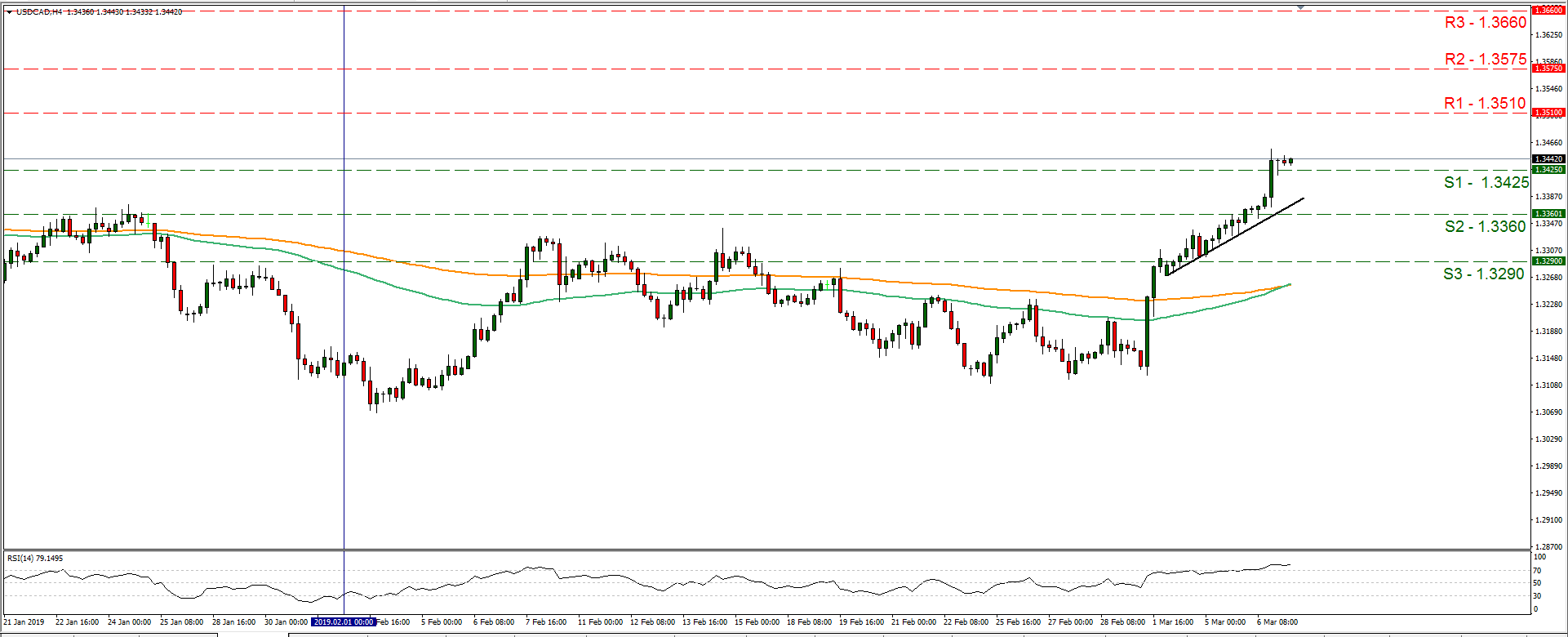
Support: 1.3425 (S1), 1.3360 (S2), 1.3290 (S3)
Resistance: 1.3510 (R1), 1.3575 (R2), 1.3660 (R3)
EUR/USD H4
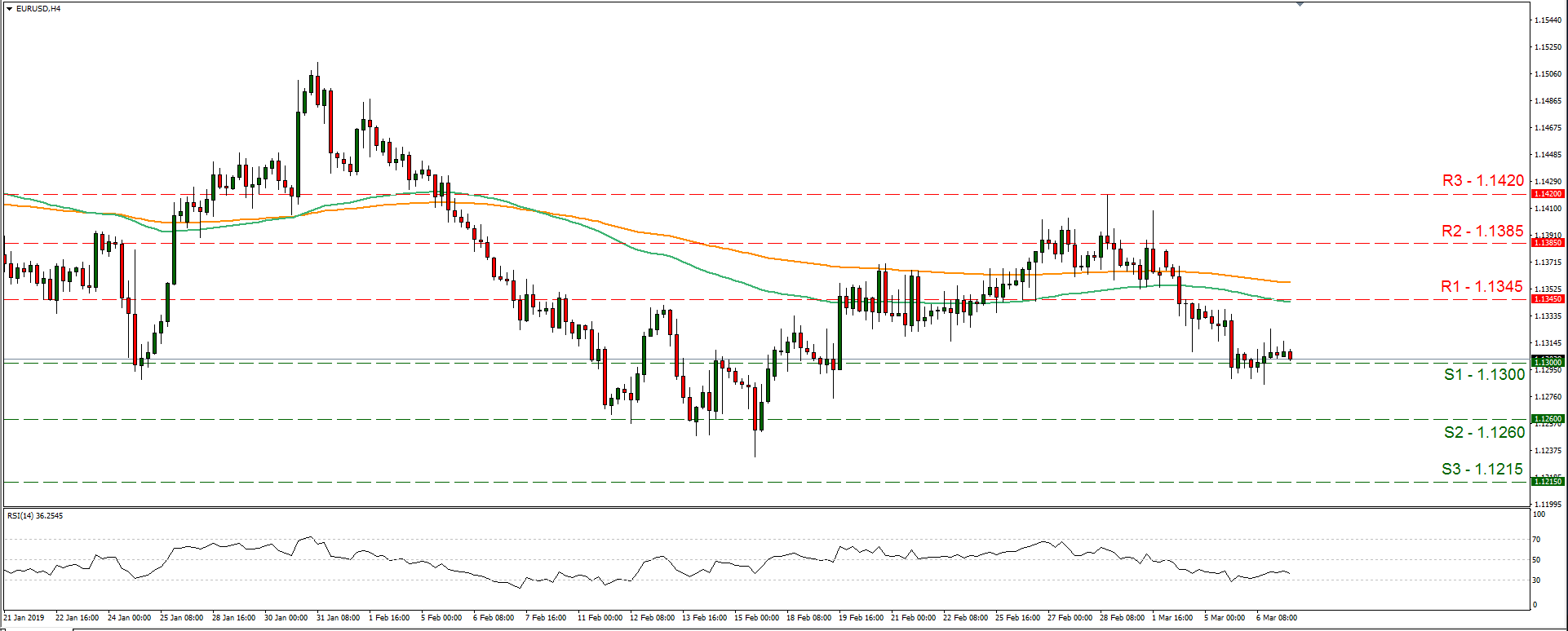
Support: 1.1300 (S1), 1.1260 (S2), 1.1215 (S3)
Resistance: 1.1345 (R1), 1.1385 (R2), 1.1420 (R3)
BoC Throws In The Towel, Spotlight Turns To ECB
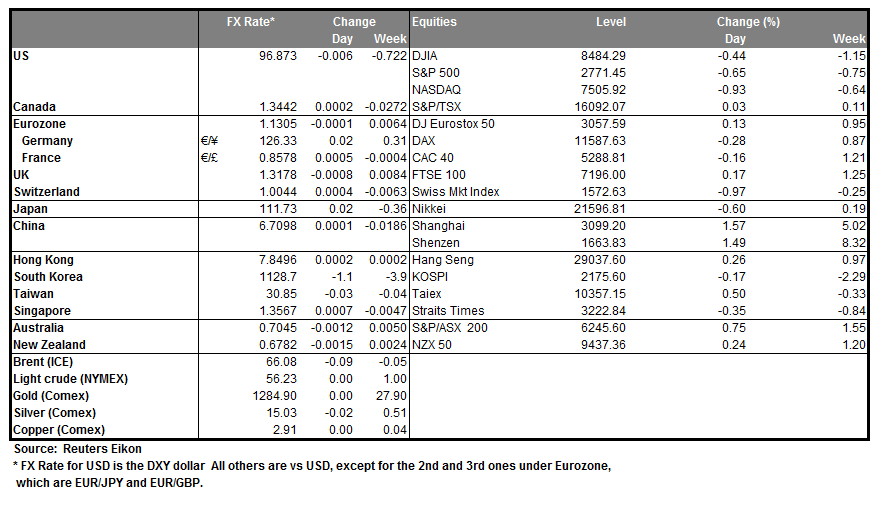
- ECB meeting the main event today, focus will be on signals for loans to banks
- Loonie sinks to two-month lows as BoC abandons rate hike plans
- Elsewhere, stocks retreat without a clear catalyst – perhaps on profit taking
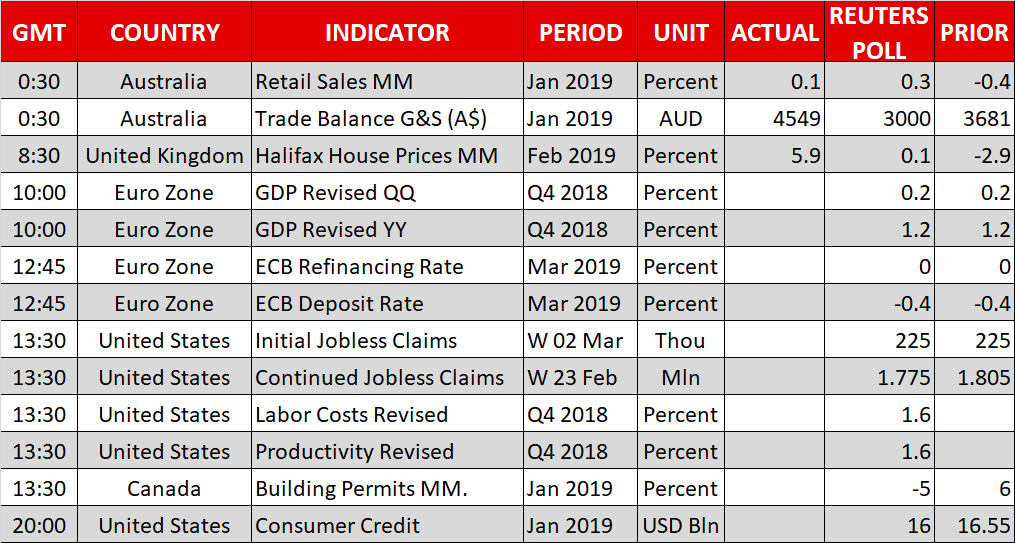
Will the ECB join the chorus of dovish central banks today?
All eyes will be on the highly-anticipated ECB policy decision today, and in particular on the updated economic forecasts and Draghi’s press conference at 13:30 GMT. The euro area economy continues to struggle, with the weakness in growth being more severe and longer-lasting than the ECB had originally anticipated. This argues for economic forecasts to be revised down significantly today, and if so, for the ECB to signal some measures to cushion the economy from an even worse slowdown.
It’s unlikely the Bank will adjust its rate guidance – and push back the timing of the first rate increase for instance – as the situation isn’t dire enough yet. A more practical route would be to hint at a new round of long-term loans for commercial banks, the so-called TLTROs. Indeed, media reports teased as much yesterday, indicating the ECB will cut its forecasts enough to justify another liquidity operation. While a clear signal for TLTROs may trigger a negative knee-jerk reaction in the euro, any weakness is unlikely to be massive as this is probably the market’s base-case scenario by now. Considering also that EU-US bond yield spreads have narrowed in Eurozone’s favor lately, euro/dollar sellers could have a difficult time breaking below the 1.1250 – 1.1213 support territory; they may require some bigger catalyst to do so.
BoC throws in the towel, puts rate-hike plans on ice
The Canadian dollar came under renewed selling pressure yesterday, sinking to a two-month low versus its US counterpart after the Bank of Canada (BoC) adopted a much more dovish tone, putting its rate-hike plans on ice. Policymakers indicated that the recent softness in both the domestic and global economy has been more pronounced than they had expected, which warrants a looser policy stance.
The key change, which also seemingly caught traders by surprise given the strong dovish reaction, was that the Bank formally abandoned its hiking bias, taking a page out of the Fed’s book and hinting it will hit the pause button on rate increases until – and if – the case for a hike becomes clear. Markets for their part doubt that is happening, as Canadian OIS pricing now indicates a small probability (~12%) for a rate cut this year. Going forward, the loonie will likely take its cue mainly by oil prices, given the resurgent correlation between the two lately. In the more immediate term, tomorrow’s employment data out of Canada will also be crucial.
Equities retreat, dollar pauses for breath
In the broader market, risk appetite remained fragile, with US stock markets recording losses for a third session and their Asian counterparts following suit today, albeit without any clear trigger. Perhaps the absence of fresh positive catalysts is causing investors to lock in profits and trim their exposure, especially following the spectacular central bank-induced rally since the beginning of the year.
Elsewhere, the dollar index was little changed but closed marginally in the red, snapping its recent winning streak. The British pound, meanwhile, held up relatively well, surrendering very little ground even in the face of headlines quoting EU chief negotiator Barnier that the talks have been ‘difficult’ and that no solution to the Irish border issue has been found yet.
EUR/USD Outlook: Tight Ranges Ahead Of ECB
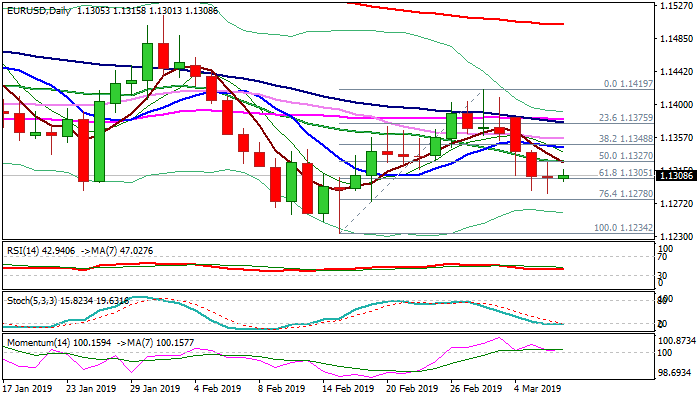
The Euro holds in directionless mode for the second day, awaiting release of ECB's policy review, due later today.
The single currency turned neutral on Wednesday and daily action ended in long-legged Doji, signaling indecision and looking for more signals from the ECB.
The pair repeatedly failed to close below 1.1305 pivot (Fibo 61.8% of 1.1234/1.1419) which could be seen as initial signal of stall of steep fall in past two days.
Daily studies are overall bearish but oversold stochastic and momentum still holding in positive territory add to basing signals.
Traders will focus on tone of ECB President Mario Draghi at the press conference which many expect to be dovish. The central bank is expected to slash forecast and likely to signal fresh stimulus in the form of cheap loans to the banks, in attempts absorb negative impact from global economic slowdown, trade war fears and Brexit.
The ECB has signaled gradual rate hikes in the second half of 2019 after ending its stimulus program in December, but situation is changing and major central banks, led by US Federal Reserve start to reverse course and sideline planned rate hikes, due to current situation. Risk of eventual clear break below 1.1305 pivot remains high and could be further boosted on dovish stance from the ECB.
That would expose Fibo support at 1.1278 (Fibo 76.4%) and risk extension towards key supports at 1.1234 (15 Feb) and 1.1215 (12 Nov).
Falling 20SMA (1.1326) which capped Wednesday's action, marks initial barrier, break of which would sideline immediate downside risk.
Res: 1.1326, 1.1344, 1.1356, 1.1377
Sup: 1.1301, 1.1285, 1.1278, 1.1234
Treat Trading Like a Business
In the early 1990s, I did about 10 workshops with Jack Schwager’s New Market Wizards interviewee Tom Basso. In each of those workshops, Tom said, “I’m a businessman first and a trader second.” One of the major mistakes that most traders make is that they do not have that same business attitude. You need to treat trading like a business. Most people don’t, and when they don’t, some disaster arises and causes havoc.
- What if you were a hedge fund clearing through a firm that collapses, such as PFG Best, IMF Global, or Refco?
- What if a personal disaster occurs that distracts you and you have open positions without stops to protect you?
- What if tax law changes totally change the assumption behind what you are doing?
- What if some big firm starts doing what you are doing and makes it difficult for you to execute trades?
These are just a few of the many things that could happen. I’ve seen them all happen in my 30-year history as a trading coach. One trader even had a squirrel in his attic that periodically chewed on various wires. Nothing was totally out, but he kept getting intermittent failures on his phone, cable, and Internet as a result of wires that were not 100 percent.
So what happens when these things occur? How do you treat trading like a business? Do you have a plan to deal with any of these events or the thousands of other things that could happen? This is just one part of the business plan that I call a worst-case contingency plan.
Developing Your Edge
First, you need a working document to guide you through your trading.
I once determined that my Super Traders needed to go through 138 steps to be successful. I then distilled those 138 steps down to 17 steps and 52 questions, which I presented in a workshop called The 17 Steps. When people finished that workshop, they were amazed. They had only about 20 minutes to work on each of the questions, and some of them might take months to finish. However, the common denominator for all attendees was: “Wow, now finally I understand what I need to do to be successful in this field. I now have a blueprint for success.” As a result, we subsequently renamed that workshop The Blueprint for Trading Success Workshop. Here are ideas you need to consider in order to be successful as a trader that we cover in that workshop. These are 15 topics that should be dealt with in the working document that you need to develop as a trading guide.
1. Initial assessment:
- Write down your beliefs about yourself and your beliefs about the market.
- Determine your strengths, resources, and skills.
- Determine your challenges and how you’ll overcome them.
2. Setting your objectives:
First, determine your financial freedom number and develop a plan to take that number to zero. When you’ve done that, doing more work is optional because you can devote your life to doing what you love. For more about the financial freedom number, see my book Safe Strategies for Financial Freedom.
3. Based on your own assessment of who you are, determine your trading objectives. What are your goals as a trader? What can you tolerate in terms of drawdowns in order to get there?
4. Big picture and market type assessment. What do you believe about the big picture? How will you measure and monitor what is going on? How will you know if something changes?
5. Determine and list your personal edges. You need to make a list of your edges in the market. For example, you don’t have to be in the market unless there is a good opportunity. If you understand why people lose and take steps to correct those errors for you, then that’s a huge edge.
6. Key systems for any business. There are many more systems, other than trading systems, needed to run a trading business. You need to look at the other systems and determine the following:
- How will you market to and deal with clients?
- How will you monitor your cash flow?
- How will you keep track of your back office? Your trades? Your mistakes? Your R-multiples?
- What’s your plan for doing ongoing trading system research?
- How will you maintain your own psychological management?
7. Worst-case contingency planning. You will need a plan for dealing with what can go wrong and how to handle it to minimize the impact of future disasters. This is what we discussed previously.
8. How will you select your trading markets? Being a good trader in a great market is better than being a superb trader in an average market. Thus, what will you do to select your trading markets?
- Based on your personal assessment.
- Based on your big picture assessment.
9. Strategy preparation:
- Read about trading strategies related to your market.
- Logically work out what can work in that market type.
- List realistic goals for your performance.
- List your beliefs about that market.
- Determine the time frame for trading that best fits you for that market type.
- Repeat this step for each of the various market types—up, down, and sideways, under quiet and volatile conditions.
10. Strategy development. You will need to develop at least three systems that have an entry, determine your initial risk, and determine your profit taking exits. How will you do this? What ideas do you currently have?
11. How will you determine if your systems are any good and under what market types will they work?
12. What are your criteria for feeling comfortable trading a system? Does it have to fit your beliefs? What other criteria must it meet?
13. What position sizing strategies will you use to meet your objectives? How much time will you devote to position sizing strategy development?
14. Do a complete self-assessment. Do you have the qualities that it takes to be successful as a trader/investor?
15. What ongoing regular self-work will you be doing to make sure that you stay on top of your game as a trader? How much time will you spend on self-work? What will you do if you get off track psychologically? And how will you know this?
16. What ongoing self-work will you do physically to make sure that you stay in peak condition? Here the areas of diet and exercise are particularly important.
This article was excerpted from Dr. Van Tharp’s Kindle book “Eight Edges You Must Have: Your Written Trading Plan” available on Amazon.
Note from Blueprint Instructor RJ Hixson:
At Blueprint workshops, we study for an hour or more each area which Van describes above — and other areas as well. The learning, however, actually starts before the workshop with a lengthy questionnaire that helps you think about various aspects of your trading. As the list above may indicate, you have probably not given much thought to certain areas before. At the conclusion of the workshop, you walk away with a custom-made plan outlining your trading business — and then you’ll have to follow up with a bit of work to flesh out that plan over the coming weeks or months. Creating a business does take work but it doesn’t have to remain a mystery when someone else can shine a light on the path other successful traders have taken before you.
As a side note, I love teaching the Blueprint workshop. Before attending Blueprint myself some years ago, I had attended a bunch of Van’s workshops and felt that I had a lot of important parts for my trading. Finally, I discovered at this workshop how to integrate all of the pieces into a cohesive plan. If you are committed to become more “professional” in your trading — or if you are just exploring what that would take, learn how at one of the next Blueprint workshops.
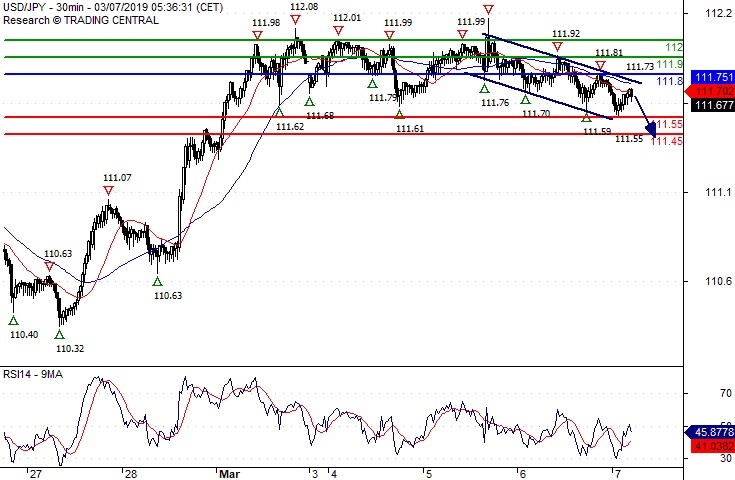
USD/JPY Key Resistance At 111.80
Pivot (invalidation): 111.80
Our preference Short positions below 111.80 with targets at 111.55 & 111.45 in extension.
Alternative scenario Above 111.80 look for further upside with 111.90 & 112.00 as targets.
Comment Even though a continuation of the technical rebound cannot be ruled out, its extent should be limited.
The Why Wall Street Doesn’t Know About Position Sizing
In the last two tips I've talked about the importance of position sizing. You've learned that:
- The most important questions you can ask yourself (other than questions about your personal psychology) is what are my objectives and how can I use the "how much" variable to meet my objectives.
- That position sizing accounts for most of the variability of performance between individuals
- That many professionals call the "how much" variable asset allocation.
This week I'm going to be a little controversial because I'm going to put forth some rather bold statements.
First, it is possible with small amounts of money and a reasonable trading system to make outstanding rates of return (50-100% or more) through position sizing.
Second, if you have too much money, then you probably cannot achieve these sorts of goals because your activity moves markets.
Third, professionals either don't know this, or don't want to know this, because they have other rules to justify their performance.
Today there are still more mutual funds trading the market than there are stocks on the major exchanges. And the portfolio mangers who trade those mutual funds stress relative performance rather than absolute returns. Thus, they compare themselves to some index such as the S&P 500 and believe they have done well by outperforming that index.
Most mutual funds have to be at least 90% invested so that concepts like stops and position sizing don't mean much to them. Instead, their idea is to buy the major index that they are trying to outperform and by doing manipulations on their assets, try to outperform the market. Most of them cannot do it because of the fees they charge their clients.
However, most mutual funds want you to believe that what's important to success is picking the right stock. You are slammed with that concept on a regular basis by the financial media.
Asset allocation is also thought to be important. I've already shown you that asset allocation, when defined as how much (i.e. position sizing) accounted for 90% of the variability of performance on 82 pension fund managers over a 10 year period. But asset allocation doesn't sound like how much, does it? Instead, it sounds like "how do you select the best asset classes?" And that's what most professionals talk about.
I just looked at a significant book on the topic of asset allocation. The back of the book contained a quote from Jim Cramer (of CNBC fame) saying that this book was a very readable discussion of the most important topic of investment success. But was it? I don't think so because:
- The book did not define asset allocation
- The book had no mention of "how much" or "position sizing"
- Instead the book was a discussion of the potential risk and reward of various asset classes and the variable that might influence those classes in the future.
And I submit to you, based upon my findings that it is through position sizing that you meet your objectives and that position sizing accounts for 90% (or more) of performance variability, selecting the right assets has nothing to do with good performance. And Wall Street doesn't understand this.
In fact, here is a challenge. Give me the names of 10 of the so-called geniuses of Wall Street. My guess is that less than half of them understand the real importance of position sizing. Their success is due to other factors, and they are at risk of losing a lot of money in the future. But that's another story.
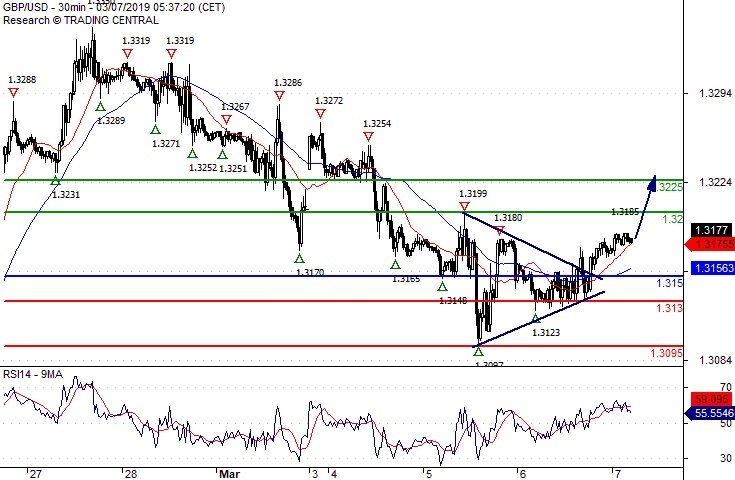
GBP/USD Watch 1.3225
Pivot (invalidation): 1.3150
Our preference Long positions above 1.3150 with targets at 1.3200 & 1.3225 in extension.
Alternative scenario Below 1.3150 look for further downside with 1.3130 & 1.3095 as targets.
Comment The RSI is bullish and calls for further upside.
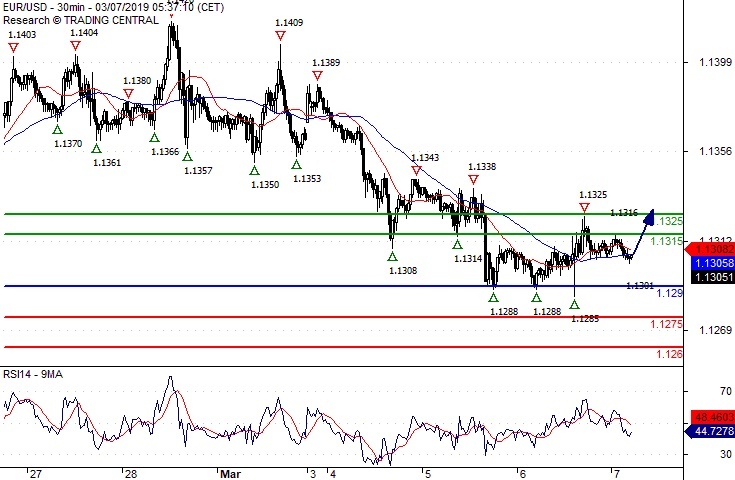
EUR/USD The Bias Remains Bullish
Pivot (invalidation): 1.1290
Our preference Long positions above 1.1290 with targets at 1.1315 & 1.1325 in extension.
Alternative scenario Below 1.1290 look for further downside with 1.1275 & 1.1260 as targets.
Comment Even though a continuation of the consolidation cannot be ruled out, its extent should be limited.
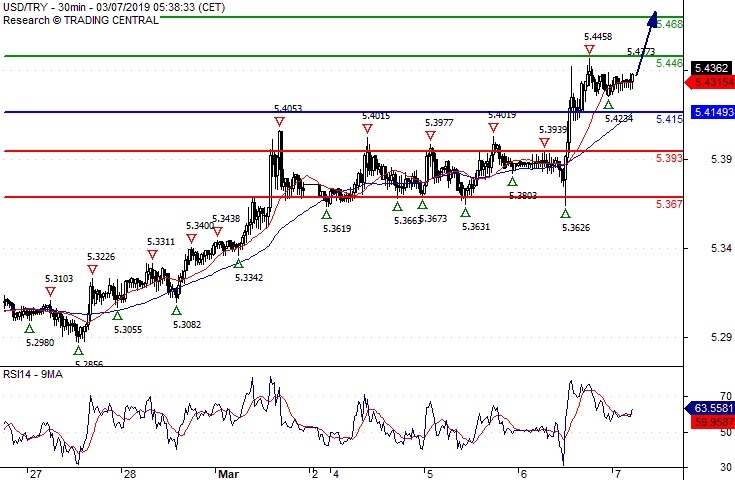
USD/TRY Further Upside
Pivot (invalidation): 5.4150
Our preference Long positions above 5.4150 with targets at 5.4460 & 5.4680 in extension.
Alternative scenario Below 5.4150 look for further downside with 5.3930 & 5.3670 as targets.
Comment The RSI is bullish and calls for further upside.
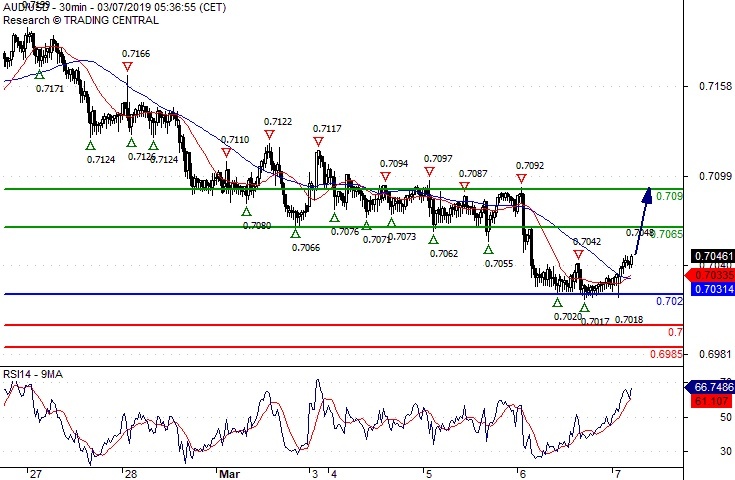
AUD/USD Turning Up
Pivot (invalidation): 0.7020
Our preference Long positions above 0.7020 with targets at 0.7065 & 0.7090 in extension.
Alternative scenario Below 0.7020 look for further downside with 0.7000 & 0.6985 as targets.
Comment The RSI calls for a new upleg.