Sample Category Title
The Weekly Bottom Line: Central Banks Have Cause For a Pause
U.S. Highlights
- Global central banks have followed the cue set by the Fed, as they too take a break from tighter monetary policy to assess mounting risks to global growth.
- Activity in the U.S. services sector cooled a bit in January as government-funding uncertainty and trade tensions weighed on business sentiment. Nonetheless, non-manufacturing activity remained well in expansion territory.
- Senior U.S. trade officials are off to Beijing next week to work on a trade deal, even as a meeting between the two countries' presidents seems unlikely before the March 2nd deadline. All eyes will be on Washington to avert yet another government shutdown as the temporary funding gap expires on February 15th.
Canadian Highlights
- We received mixed signals this week, with household credit growth moderating on the back of an outright decline in consumer credit, while the labour market kicked off 2019 with a bang.
- The signal being sent by the credit data deserves attention, but is not overly concerning at present. A period of household adjustment may moderate economic growth, but it also means stronger balance sheets – a welcome development.
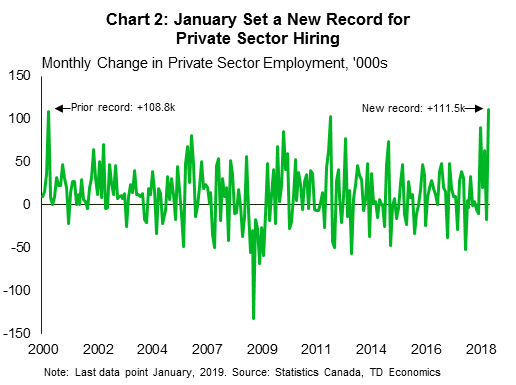
- The strong labour market, including a new record for monthly private sector hiring is encouraging, indicating that the household adjustment is taking place against a solid economic backdrop.
U.S. - Central Banks Have Cause For a Pause
In a week where economic data was sparse (partly due to delayed releases as a result of the government shutdown), global developments filled in the gap. On the heels of the Fed's decision last week, the Bank of England (BoE) and the Reserve Bank of Australia (RBA) both left policy rates unchanged this week.
The BoE cited the likelihood of slower growth due to elevated financial uncertainty on the possibility of a no-deal Brexit, while the RBA highlighted trade-related downside risks to global growth. Elsewhere, the European Commission also significantly reduced its GDP outlook for the euro zone in 2019 and 2020 as it expects growth in the bloc's largest economies to be held in check by global trade tensions.
The decidedly dovish shift in U.S. and global central banks' statements reflects the turn south in economic and inflation momentum in the latter half of 2018, as well as the accumulation of event risks over the next several months. Among these, trade tensions between the U.S. and China looms largest.
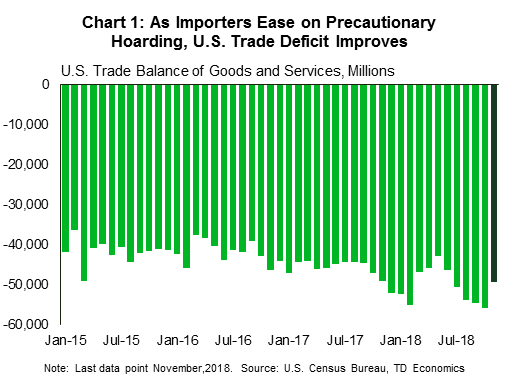
On that front, prospects for a trade deal were dealt a blow this week with the announcement that President Trump is unlikely to meet with Chinese President Xi before the March 2nd deadline for additional U.S. tariffs. Continued uncertainty about the tariff hike has led to volatility in the international trade data. Imports fell fairly substantially in November, perhaps reversing some earlier inventory hoarding, as hopes for a trade deal increased (Chart 1). They could rebound again in the months ahead as prospects dim.
As long as the economic tea leaves remain cloudy, expect data-dependent central bank officials to remain cautious, taking the time to evaluate the cumulative impact of tighter financial conditions and slowing trade. Stateside, this will have to be balanced against economic data that so far has continued to show resilience. As expected, initial jobless claims fell by 19k back towards post-recession lows during the week ended Feb 2nd as the effects of the longest U.S. government shutdown faded. In conjunction with the jobs report released last week, the data points to continued labor market strength.
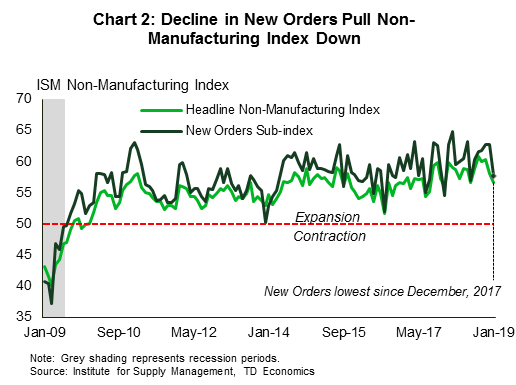
Still, there are signs that the shutdown has had a negative impact on activity. The pace of expansion in the services sector decelerated in January. The ISM non-manufacturing index fell to 56.7 in January from 58.0 in December, reflecting concerns about the government shutdown, which negatively impacted new orders (Chart 2).
In his State of the Union address President Trump pleaded for unity, but continued to press a hardline on border security and immigration. All eyes will be watching the February 15 deadline for a longer-term funding package to avert yet another government shutdown that could take an additional toll on U.S. economic growth.
Canada - Don't Fret Deleveraging (Yet)
Canadian markets had a mixed week. The TSX looked likely to end the week up a tick at the time of writing, despite some volatility through Thursday's trading session. The modest gain came despite softer oil prices, with both U.S. and Canadian benchmarks trading a few dollars lower.
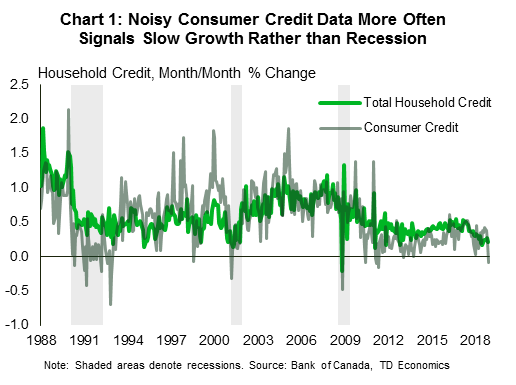
On the data front, it was a quiet week with only two major indicators for economy watchers to digest. First up was the household credit data for December 2018. Unsurprisingly, total credit continues to decelerate in the wake of past interest rate increases. However, what drew the most attention was an outright decline in consumer credit – the first in five years (Chart 1). Credit is the lifeblood of any modern economy, so such a move bears closer scrutiny particularly as some have begun throwing out the term 'recession'.
Breaking out the 'r-word' is a bit premature. For one thing, shrinking consumer credit is a necessary condition for recession, but not sufficient. Its 'hit rate' as a predictor of a downturn is, charitably, about 33% - meaning that this signal is wrong twice as often as it is correct. What the data is saying, however, is that we are experiencing decelerating growth, particularly for consumer spending. This should come as no surprise. Canadians are digesting rising interest costs at the end of a multi-decade borrowing cycle – a moderation of credit is only a natural result.
To be sure, the balance between repairing household finances and maintaining spending growth is a tricky one – too sharp a deceleration of credit (or an outright contraction/deleveraging) can have a marked, negative impact on the economy, just as too much credit growth drives financial risks higher. The interplay of incomes and credit measures will be closely watched by the Bank of Canada in setting the path of borrowing costs going forward. The result so far looks to be what we expect (and we all should hope for): a more modest pace of economic growth, but one that comes with healthier consumer finances and a broadening of growth sources. So, while the credit data is throwing up a caution flag, we aren't hitting the panic button just yet.
Reinforcing the 'caution, not panic' narrative is a still solid labour market. January saw an impressive 66.8k net jobs added as monthly private sector hiring set a new record (Chart 2). While not all details were as great (total hours worked were actually down a bit, and Alberta experienced another challenging month), the solid, if modest hiring trend of 2018 appears to be continuing (see our report on the trends that drove last year's performance).
So, the takeaway from this week's data seems to be that yes, the Canadian economy is likely entering a period of more modest growth, but this should not cause too much concern. The process of repairing household balance sheets should be welcomed, provided the pace remains within reason. We have no reason to doubt that it will, particularly given that Canadian labour markets remain solid by almost any measure. It is a long road ahead, but so far so good.
U.S.: Upcoming Key Economic Releases
U.S. Consumer Price Index - January
Release Date: February 13, 2019
Previous: -0.1% m/m; core 0.2% m/m,
TD Forecast: 0.1% m/m; core 0.2% m/m
Consensus: 0.1% m/m; core 0.2% m/m
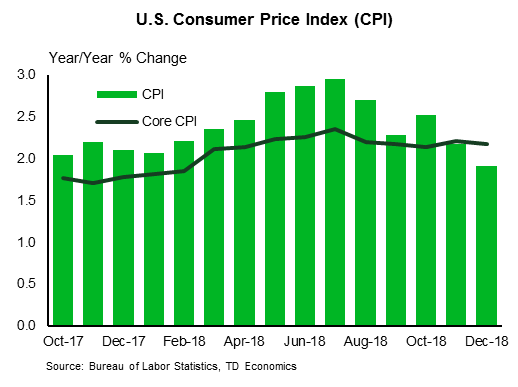
We expect headline CPI to retreat to 1.5% thanks to lower gasoline prices. Outside of fuels, however, we see strength across food and core services. The latter should underpin a 0.2% m/m print on core CPI, translating to a 2.1% y/y increase vs 2.2% previously. All eyes are on OER and rents, which we expect to rebound by 0.3%. The main risks to this report are medical care services and hotels (10% of the core index), both of which could correct. Strength in the former especially looks unsustainable, while the latter is volatile. Looking ahead, we look for headline CPI is likely to remain in a narrow 1.4-1.6% range with a break toward 2% unlikely until Q4.
U.S. Retail Sales - December
Release Date: February 14, 2019
Previous: 0.2%, ex auto: 0.2%, control group: 0.9%
TD Forecast: 0.1%, ex auto: 0.1%, control group: 0.2%
Consensus: 0.1%, ex auto: 0.0%, control group: 0.4%
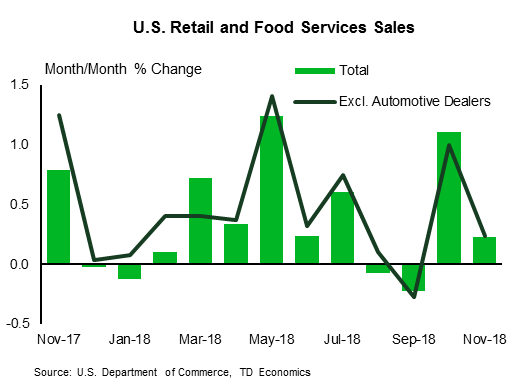
We forecast retail sales to rise 0.1% m/m in December, down from 0.2% in November and a more robust 1.1% increase in October. The shutdown-affected release should continue to reflect a negative impact from lower gasoline prices and a more measured expansion in core sales. We pencil in the latter at 0.2% m/m, down from a year-high 0.9% jump in November. That said, we see risks to the upside given the resiliency of the US consumer on the back of a strong labor market and steady wage growth.
Canada: Upcoming Key Economic Releases
Canadian Manufacturing Sales - December
Release Date: February 14, 2019
Previous: -1.4%
TD Forecast: 0.6%
Consensus: N/A
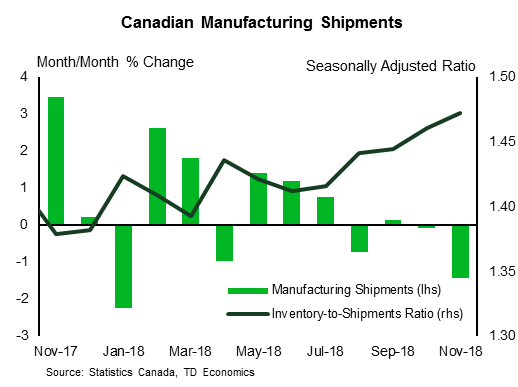
Manufacturing sales are forecast to rebound by 0.6% in December after a 1.4% drop last month. This release will be subject to greater uncertainty as a result of disruptions to international trade data, although looking at broader set of indicators points to a partial recovery. Lower gasoline prices will continue to weigh on refinery output, although a return to normal operations after maintenance shutdowns should support stronger volumes. Outside of energy a broad increase in factory prices, a spike in hours-worked and strong manufacturing conditions south of the border provide further evidence in support of a pickup. Real manufacturing sales should come in above the headline print owing to lower industrial prices, driven by petroleum products, providing a source of strength for industry-level GDP.
Dollar’s Next Move Depends on Trump’s Trade Progress and Border Wall Funding Concession
The relief rally in equities appears to have run out of steam as risk aversion gained momentum on concerns trade talks are not progressing fast enough and global growth fails to show signs of stabilization, despite accommodative stances globally. The US dollar and Japanese yen could continue to see gains if the political risks yield no progress and the economic backdrop continues to diminish.
Next week the focus will remain on trade talks, Brexit, corporate earnings and if we will see another government shutdown. If US negotiators do not deliver a more optimistic tone on the trade front early in the week, we could see risk aversion accelerate. The Republicans and Democrats do not want to see another shutdown and talks appear to have been constructive this week. Even if both parties agree on a deal, uncertainty lies with the President, since it is unknown if he would accept funding of just north of $2 billion for his border wall funding, well shy of his heavily demanded $5.7 billion.
- US negotiators head to Beijing to resume trade talks & another government shutdown looms
- Brexit deadline nears; concessions unlikely ahead of Parliament vote on amendments
- US inflation to continue to soften could raise rate cut expectations
USD
King dollar is back, as the Treasury yield curve steadily declined in a week that was filled with fading optimism we will see clear signals that trade talks are nearing a framework deal and on global growth slowdown concerns. The dollar was stronger against all of its major trading partners with the exception of the Japanese yen as risk aversion remained the dominant theme. High-beta currencies remain vulnerable, despite last month’s clear dovish pivot by the Fed, as accommodative stances were signaled by RBA and BOE this week, joining the likes of the ECB, RNBZ and PBOC.
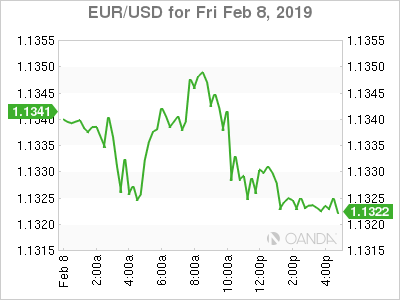
Stocks
US stocks seem to lack direction, despite accommodative stances signaled across the board by all the major economies, as uncertainty remains high on both global growth concerns and the trade front. Key deadlines on trade are nearing; On February 17th a report is due from Commerce Department on potential tariffs on European autos and the March 1st deadline for China to deliver enough concessions to the US to avoid an increase in tariffs from 10% to 25%. Stocks pared losses on Friday after some positive corporate earnings, but will unlikely see the remaining companies due to report deliver another major move higher. Until the markets see clarity and substantial progress on political risks on Brexit, the trade war between China and the US, the brewing one with the US and Europe, and the government shutdown, it will be difficult for stocks to make a run towards last year’s highs.
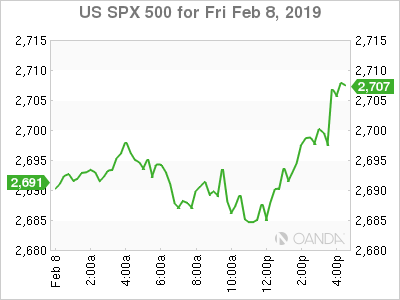
Brexit
With seven weeks left until the UK’s exit from the EU, the base case for Brexit remains that it will be extended. Thursday’s talks with the EU did not deliver any concessions but signalled they will remain open and likely come to a head later in the month. Next week, PM May will need to deliver a revised deal in the House of Commons on February 13th and Parliament will vote on amendments the next day. Brussels is starting to worry they are going to get blamed if we see a no-deal Brexit, but is unlikely to compromise on the backstop or offer up any significant concessions to PM May.
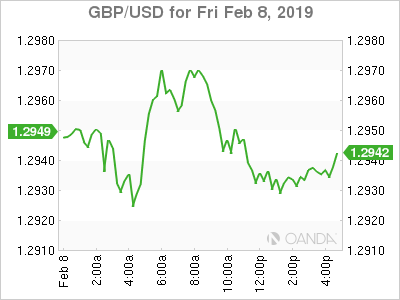
Oil
West Texas Intermediate crude’s biggest weekly loss since December came as oil drillers ramped up drilling for the second time this year and US is speaking directly to Venezuela’s military insisting they abandon support for Maduro. Working American oil rigs rose 0.8% to 854 rigs this week, a sign that producers are becoming more optimistic as oil prices remain well off the December lows. Increased US production and a positive resolution in Venezuela, alongside with the ending of sanctions could however spur significant downward pressure for oil prices.
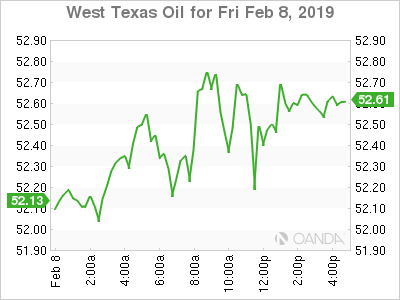
Bitcoin
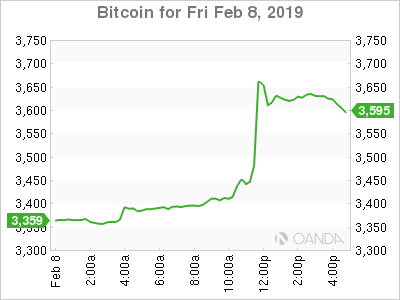
Securities and Exchange Commissioner Robert Jackson may have thrown Bitcoin a lifeline that may have squeezed out shorts and prevented a collapse below the heavily watched $3,000 level. The commissioner expressed optimism that he eventually could see a Bitcoin exchange-traded fund gain approval from the SEC. While the hurdles for a crypto exchange-traded fund are immense, today’s headlines just squeezed out shorts and may not reflect the optimism of any significant progress forward. The security risks are too great and despite the fall in volatility, we could see this rally find key resistance from the $4,000 level.
Monday, February 11
- USD Trade talks resume in Beijing
- CNY China FX Reserves
- 4:30am GBP UK GDP, Manufacturing, and Industrial Production data
- 11:00am MXN Industrial Production
Tuesday, January 12
- Corporate Earnings: Under Armour
- OPEC Monthly Report
- 6:00am USD NFIB Small Business Optimism
- 7:00am INR India CPI and Industrial Production
- 6:30pm Australia Westpac Consumer Confidence
Wednesday, February 13
- GBP Deadline for revised deal in House of Commons
- Corporate Earnings: Cisco, MGM, and Baidu
- 4:30am GBP CPI, PPI, RPI and House price data
- 05:00 EUR Euro Zone Industrial Production
- 8:30am USD Consumer Price Index (CPI)
- 6:50pm JPY Q4 Preliminary GDP
Thursday, February 14
- USD Continued trade talks with China
- GBP UK Parliament votes on amendments
- Corporate Earnings: Coca-Cola
- 2:00am EUR Germany Q4 Preliminary GDP
- 5:00am EUR Euro Zone Q4 Preliminary GDP
- 8:30am USD Retail Sales, Jobless Claims and PPI
- 8:30pm CNY China CPI and PPI data
Friday, February 15
- Corporate Earnings: Pepsico, Nvidia, and Deere & Co
- 4:30am GBP Retail Sales m/m
- 8:30am USD Empire Manufacturing and Import Price Index
- 10:00am USD University of Michigan Sentiment
- 4:00pm Net Long-term TIC Flows
Elliott Wave Analysis: GBP/USD Unfolding A Minimum, Three-Wave Bullish Reversal
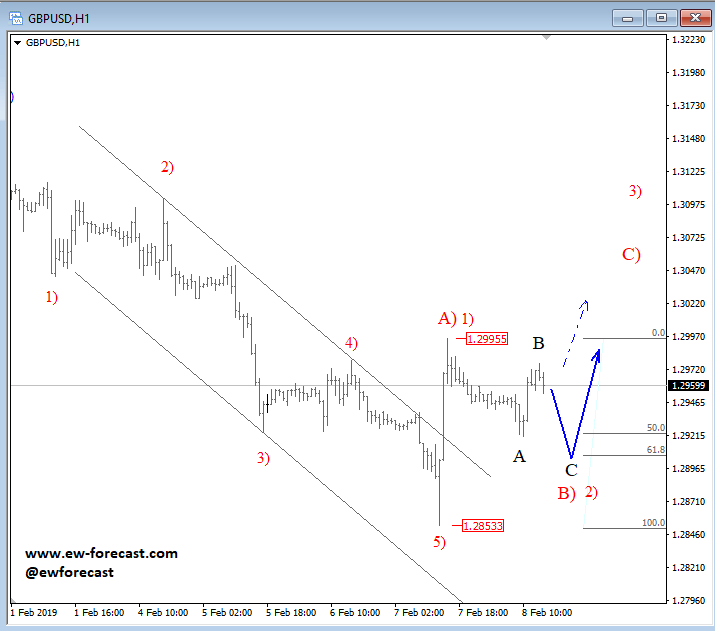
GBPUSD made a nice break higher, through the upper Elliott wave channel line, which is the first evidence of a completed decline and that a minimum three-wave recovery in is progress. We labelled wave A)/1) as completed, that is now being followed by wave B)/2) which can look for temporary support around the Fibonacci ratio of 50.0 or 61.8. In case of an already completed wave B)/2) more gains may already be here, targeting above the 1.300 area.
GBPUSD, 1h
Australia & New Zealand Weekly: RBA Shifts to a More Balanced View
Week beginning 11 February 2019
- RBA shifts to a more balanced view.
- RBA: Head of Economics and Assistant Governor Financial Markets speak.
- Australia: Westpac-MI Consumer Sentiment, housing finance, NAB business survey.
- NZ: RBNZ meeting, RBNZ Governor Orr testimony, card spending, house prices.
- China: trade balance, CPI, new loans, foreign direct investment.
- UK: GDP, CPI, retail sales.
- Europe: GDP 2nd estimate, trade balance.
- US: CPI, retail sales.
- Key economic & financial forecasts.
Information contained in this report current as at 8 February 2019.
RBA Shifts to a More Balanced View
The RBA has started the year with a significant shift, lowering its growth outlook and acknowledging greater uncertainties and downside risks. While the Board still expects the economy to track towards its employment and inflation targets, and does not see a strong case for a near term change in the cash rate, there has been a clear change in emphasis. In particular, the Governor has moved from the view, expressed throughout 2018, that "the next move in the cash rate was more likely to be an increase than a decrease" to one in which the probabilities of the next move being up or down are "more evenly balanced".
This move to a balanced rate outlook is significant because it clearly establishes that the Bank is prepared to contemplate rate cuts - a position that has really only emerged since the housing markets have reversed. It is also consistent with changes announced by other central banks notably the US Federal Reserve. We see these changes as a welcome shift, bringing the RBA's thinking more into line with our own.
As expected, the Reserve Bank Board again left the cash rate unchanged at 1.5% at its February meeting. Also as expected, the Bank has lowered its forecasts for growth – outlined in the Governor's decision statement and detailed more fully in his speech a day later. The RBA's growth forecast for 2019 has been revised down from 3¼% to 3%, and its forecast for 2020 revised from 3% to 2.75%, the slowdown year to year reflecting a tapering in resource export volumes. It is significant that growth on average is still expected to be around the 'trend' rate of 2¾%.
The RBA has also revised its inflation outlook with the forecast for underlying inflation for 2019 reduced from 2¼% to 2%, while the 2020 forecast remains at 2¼%. The Bank is maintaining the view that inflation will gradually move into the 2-3% band, although it is expected to take somewhat longer than previously expected.
There are good reasons why the Bank lowered its growth forecasts.
Firstly, while it still assesses the outlook for global growth as "reasonable", it recognises that "downside risks have increased" (notably, when asked to rank the risks to the economic outlook, the Governor still nominates 'global' issues as a bigger concern).
Secondly, it has made some significant changes around the household sector and housing.
For some time, Westpac has argued that the fall in house prices in Sydney and Melbourne would be associated with a negative wealth effect weighing on consumer spending. In the RBA's previous writings, it tended to dismiss this prospect. Although it is still downplayed, the Governor's latest speech gives more weight to the issue, noting that rising housing prices provided an offset to slow income growth for some households and this effect is now shifting but that an expected pick-up in household disposable income was seen as providing a counterweight to the wealth effects of lower housing prices. Specifically, consumption growth is expected to lift over the forecast period to 2.75%, broadly in line with disposable income growth, implying a stabilisation in the savings rate. This 'housing-consumer nexus' is seen as a key area of uncertainty. It remains the key point of difference between Westpac's 2.6%yr growth forecast for this year and next and the RBA's at or above trend view.
Westpac has also argued that residential housing construction would be a drag on growth in both 2019 and 2020. The RBA did not support that view, referring to a strong pipeline and only a gradual decline. Recent falls in dwelling approvals, across both high rise and non high rise segments, are now pointing more clearly to a significant drag on growth from the housing construction downturn. Accordingly the RBA has downgraded its view, the Governor indicating dwelling investment is forecast to decline by about 10% over the next two and a half years.
The RBA continues to see rising business investment and higher levels of public infrastructure spending as the key growth drivers. It also remains positive about the labour market, reaffirming its forecasts for the unemployment rate to fall further to 4¾% by the end of 2020 and an associated lift in wages growth.
The Reserve Bank's revised view has narrowed the gap with our own but Westpac remains more downbeat. Even so, our weaker forecasts have not been weak enough to warrant forecasting a rate cut. Accordingly, even if the RBA moves further towards Westpac's current view it seems likely that rates will remain on hold.
The threshold for policy is whether spillovers knock the labour market off course. Our current forecasts do not incorporate that prospect but we acknowledge downside risks.
The week that was
It has been a week that the global economy arguably would like to forget, not because of financial market price action but rather owing to the policy and political tensions that have come to light.
Beginning in Australia, RBA Governor Lowe caught the market by surprise this week, shifting the Bank's policy stance from a tightening bias to a balanced view. Backing this change, the RBA's growth forecasts were revised down to 3.0% in 2019 and 2.75% in 2020, though the unemployment rate forecast was left unchanged at 4.75% for end-2020. On their own, these forecast changes would not be enough to warrant a neutral stance, but "the accumulation of downside risks" is clearly affecting the RBA's view – as has been seen elsewhere around the globe.
Governor Lowe was clear in his speech that global risks, particularly China's slowdown, remain their biggest concern. However, also increasingly front of mind are risks around the consumer, particularly the potential for a negative wealth effect for consumption and the scale of residential investment's drag on growth. Having been optimistic on both fronts in 2018, now the RBA has revised down their forecast for consumption, and also sees a 10% decline in residential investment over the coming 2 ½ years.
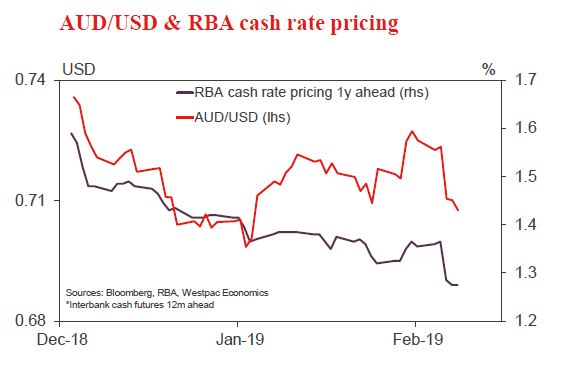
The market has extrapolated the change in RBA tone and consequently fully priced in a cut by early-2020. However, as highlighted by our Chief Economist Bill Evans, the RBA's forecasts have not yet come to our own more pessimistic view (growth of 2.6% in 2019 and 2020); and even if they did, outcomes such as these would not be weak enough to justify a rate cut.
Highlighting that downside risks to the above views may be growing however, this week's data flow reported another sharp fall in dwelling approvals, to see them down 26% between September and December, as well as disappointing retail sales in the month of December and for the quarter overall. Notably, retail sales were particularly weak in NSW, where the largest house price declines have been seen, annual growth there slowing from 2.9%yr in mid-2018 to just 0.6%yr at December. Combined, these two releases point to downside risk for Q4 GDP and to soft momentum for the Australian economy as 2019 begins. Business and consumer sentiment measures will be closely watched for a response in coming months, so too the labour market detail.
Offshore, the data flow has been light, but headlines have kept the market busy. For Europe, the European Commission lowered its 2019 growth view from 1.9% to 1.3% (effectively trend growth and broadly in line with our 1.4% forecast), in part because they now see Italy growing by just 0.2% in 2019 after a recession in the second half of 2018. This pessimistic assessment has renewed concerns over the dispute between the Commission and Italy over their budget and debt position, with the Commission attributing Italy's weakness to "uncertainty related to the government's policy stance and rising financing costs". Accordingly, government yields have moved sharply higher again. Further underscoring the divide between Europe and Italy, France has decided to recall their ambassador from Rome due to repeated "provocations" from Italy's leaders.
News on Brexit this week was also grey, with UK Prime Minister Theresa May heading home from Brussels having failed to win further concessions from European officials. With the end- March deadline for a deal drawing ever closer, and the UK economy looking as though it is deteriorating by the month, uncertainty reins for the UK. On that matter, the Bank of England has cut its 2019 and 2020 growth view materially, and lowered the probability of tightening policy to 2020. We have long anticipated no move from the Bank in 2019 and 2020 as Brexit negotiations and the economy disappoint. This remains the case.
Finally, US/China trade tensions are again causing the market angst, with President Trump commenting that a meeting between he and President Xi is "unlikely" before the March 1 deadline (for a lift in the 10% tariff on $200bn of Chinese imports to the US to 25%). This followed White House Economic Advisor Larry Kudlow's downbeat assessment of progress towards a deal, with "pretty sizable distance" remaining between the US and China. The risk of further disruption from US/ China trade tensions is material, and is likely to remain so through 2019.
Chart of the week: AUD and RBA pricing
The last few month's have seen a dramatic shift in market sentiment towards the global and Australian economy. Market pricing has switched from pricing the likelihood of RBA hikes in early December, to now have a cut fully priced-in by early 2020. The crescendo picked up another notch this week with Governor Lowe's speech marking a move to a neutral policy stance which saw the AUD immediately drop from 0.72 to 0.71 USD.
As per Chief Economist Bill Evans essay on the second page, Westpac retains its long-held view that the RBA cash rate will be on hold in 2019 and 2020.
Of course, market volatility has not been exclusive to Australia. To get a full overview of Westpac Economics' outlook on interest rates, currencies and commodities, please see our February Market Outlook.
New Zealand: week ahead & data wrap
There and back again
A strong labour market has been a distinctive feature of the New Zealand economic landscape of late. However, as we suspected, the case was overstated in the September quarter. This week's suite of labour market indicators were a little weaker than expected with the softness in hours worked pointing to a weak Q4 GDP outturn. Next week we expect the RBNZ to return to a more neutral policy stance when they release their February Monetary Policy Statement.
The sharp drop in New Zealand's unemployment rate in the September quarter from 4.5% to 3.9% always looked ripe for a reversal. And indeed this is what we saw this week. Most of the surprise fall in September reversed out in the December quarter as the unemployment rate rose to 4.3% (from an upwardly revised 4%). While this doesn't change the "big picture" view that the labour market gradually tightened over the last year, at the margin most recent developments have been weaker than we were anticipating as the pace of improvement in the labour market has slowed.
There was a pickup in wage inflation, but it was only gradual. The Labour Cost Index (LCI) rose by 0.5% in the March quarter for the quarter, with annual growth up slightly to 1.9%. That's an improvement from the 1.6% pace that prevailed a few years ago, though some of that is due to government-directed pay increases such as the nurses' pay settlement and the bigger minimum wage hike this year. The more volatile QES measure of average hourly earnings saw a more robust 1% rise, with annual growth ticking up slightly to 3.7%.
We expect wage inflation to feature more strongly over the coming years. Higher actual inflation, further hikes in the minimum wage and a more supportive political backdrop which shifts the dial a little further in the favour of employees rather than employers, should all help support a pickup in wage growth from here. However, this week's data only took a small step in that direction.
Notably, employment growth across the suite of labour market measures was soft in the quarter. In the Household Labour Force Survey employment grew 0.1% in the quarter, and 2.3% in the year. That's only slightly ahead of the 2.0% growth in the working age population. Cross checking with the QES, which surveys employers rather than households, confirms the softness. Filled jobs were up 0.3% in the December quarter and hours worked up just 0.1%.
Importantly, the weakness in hours worked measure increases the risk of a soft December quarter GDP result. The survey is a direct measure of activity in key service sectors. Our preliminary forecast for Q4 GDP growth was 0.8% but the QES outturn, combined with other recent activity indicators for Q4, implies this was too optimistic. The indictors we have on board to date suggest Q4 GDP growth was just 0.3%, in line with the rise in the previous quarter.
It is now abundantly clear that the economy lost momentum in late 2018. We suspect the key reasons were slowing net migration, the cooling housing market, a rapid rise in petrol prices and low business confidence resulting in slower business investment growth. We don't expect this slower momentum to continue into the New Year. Fiscal policy is still set to provide a key support for growth in 2019 as the Government directly boosts incomes of households via its Families Package. The broader government spend-up on infrastructure and hiring is also set to continue, and petrol prices are predicted to be less of a drain on household budgets in 2019 than they were in 2018.
In addition, firm commodity prices and excellent growing conditions for some of New Zealand's key commodity producers should support rural incomes this year. Dairy prices jumped almost 7% in this week's GlobalDairyTrade auction. And while firm demand from China appeared to support the run-up in prices over January, hot and dry weather in New Zealand in recent weeks were the catalyst for the most recent price gains. If they're sustained, our freshly minted $6.30 milk price forecast for the current season may well prove too conservative. Turning to next week's RBNZ Monetary Policy Statement, we expect the RBNZ will leave the OCR firmly on hold, and shift to a more neutral policy outlook with language such as "the next move could be up or down". We expect their OCR forecast will be flat for even longer, with the date of the first rate hike likely to be pushed back to mid-2021 (previously mid-2020).
Three key developments will be dominating the RBNZ's deliberations. Firstly, the loss in momentum in the second half of 2018 has been greater than the RBNZ had been expecting. Secondly, the NZ dollar has been higher than they were projecting back in November as the Federal Reserve has cooled on the idea of lifting official interest rates. This strongerthan- expected NZ dollar dampens the outlook for tradables inflation. And finally, new net migration estimates from Stats NZ means the population is smaller and growing more slowly than previously thought. This may see the RBNZ lower its construction forecasts which in turn would dampen the outlook for GDP growth and inflation
Data Previews
Aus Dec housing finance (no.)
- Feb 12, Last: –0.9%, WBC f/c: –3.0%
- Mkt f/c: -2.0%, Range: -7.0% to -0.3%
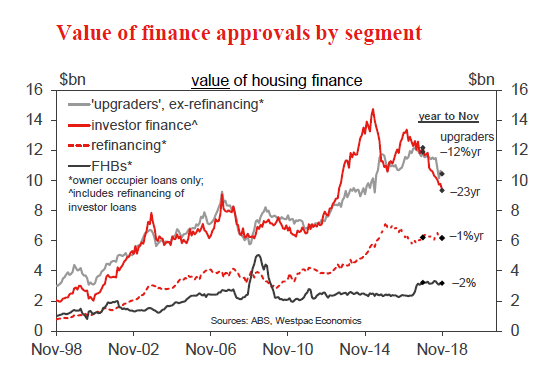
Housing finance approvals softened in November with weakness concentrated in investor loans and the value, as opposed to the number of owner occupier loans. The headline number of owner occupier loans held up a little better than expected, recording a 0.9% decline. However, the total value of housing finance approvals including investors but excluding owner occupier refi, was down –2.9%mth and –16%yr.
The December update is expected to show a further weakening with industry data covering the major banks pointing to a sharp decline in the final month of the year. Owner occupier approvals are expected to show a 3% drop, adding to the bleak picture around housing in late 2018.
Aus Feb Westpac-MI Consumer Sentiment
- Feb 13 Last: 99.6
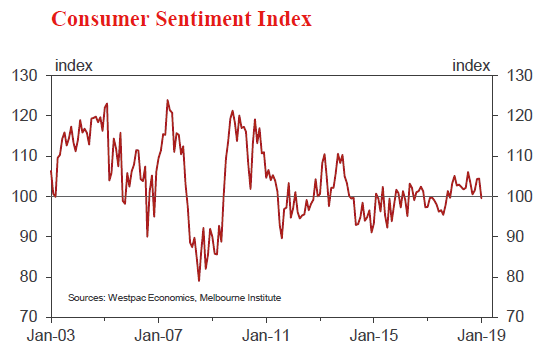
The Westpac Melbourne Institute Index fell 4.7% to 99.6 in Jan, dipping into pessimistic territory for the first time since late 2017. The 'cautiously optimistic' consumer mood that prevailed through last year evaporated at the start of 2019 with the usual holiday boost failing to materialise (note the headline index is adjusted for this regular boost, worth about 3-4pts). Confidence is coming under pressure from a continued slide in house prices; disappointing updates on Australia's economic growth; ongoing concerns around global trade wars; and political uncertainty.
The Feb survey is in the field from Feb 4-9 and will be an important update given the Jan reading is clouded somewhat by holiday-related effects, and that the consumer remains the key focus of uncertainty and downside risks to the domestic outlook. The survey will capture reactions to the RBA's shift to a less optimistic view on growth and 'more balanced' position on rates. Financial market influences look mixed this month with the AUD lower but ASX up 5.5% since Jan.
NZ Jan REINZ house sales and prices
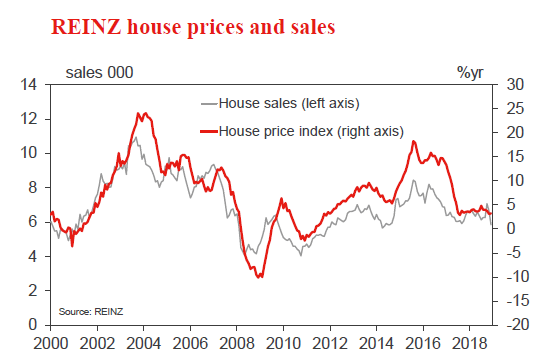
- Feb 11 to 15 (tbc), sales last: -11.8%, prices last: 3.3%yr
The impact of the foreign buyer ban was evident in December's housing market update. Sales fell sharply, with the drop concentrated in Auckland. There was also softness in Wellington and Christchurch. That pattern matches where foreign buyers have been most active.
Heading into 2019, we've seen signs that the housing market has caught a second wind. Sales for Auckland have picked up again. There's also been an easing in lending restrictions, while mortgage rates have been pushing down from their already low levels.
Regional differences in price growth are likely to persist, with many areas outside of Auckland and Canterbury likely to see continued strong house price growth. Foreign buyers play almost no role in many regional centres, and the combination of lower mortgage rates and lending restrictions will give demand a further shot in the arm.
NZ Jan retail card spending
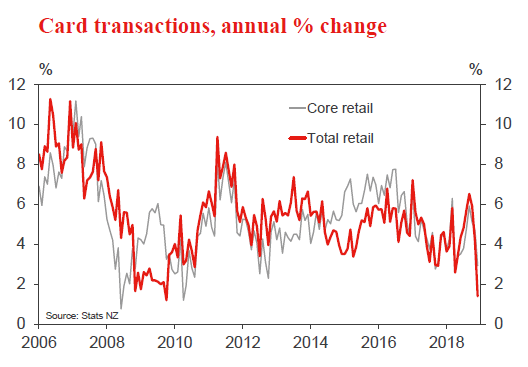
- Feb 12, Last: -2.3%, WBC : +1.4%
Retail spending fell by 2.3% in December – a much weaker result than had been expected. In part, that drop was due to falls in fuel prices. However, spending in core (ex-fuel) categories was also soft. That included a very sharp drop in spending on durable items, which posted their largest monthly decline since the financial crisis.
While there are questions about the strength of spending appetites, some of the recent weakness in durables could be related to measurement issues.
The recent volatility in durables means that there is greaterthan- usual uncertainty around this month's outturn. We're forecasting a 1.4% increase in retail spending in January. Underlying that is an assumed bounce in durables spending and moderate increases in other areas.
NZ RBNZ policy decision
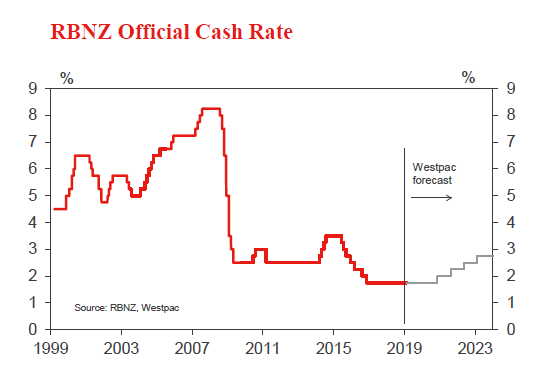
- Feb 13, Last: 1.75%, Mkt: 1.75%, WBC: 1.75%
The RBNZ's last statement was that the OCR would remain on hold through 2019 and into 2020, with gradual hikes forecast beyond that.
Recent data shows the New Zealand economy lost momentum in late-2018, and the exchange rate is higher than the RBNZ expected.
We expect the RBNZ to react by adopting a more dovish stance. The OCR forecast will likely feature later hikes, or even no hikes at all. The statement will reintroduce strictly neutral language along the lines of the next move being either up or down.
US Jan CPI
- Feb 13, last –0.1%, WBC 0.1%
Through late-2018, annual growth in the US CPI slowed abruptly, from 2.9%yr in July to 1.9%yr come December. This was the result of the sharp decline in energy prices, with core inflation (ex food and energy) instead unchanged over the period at 2.2%yr. Being above the 2.0%yr mediumterm target of the FOMC, and with the labour market unquestionably tight, inflation pressures could be seen as a clear and present risk.
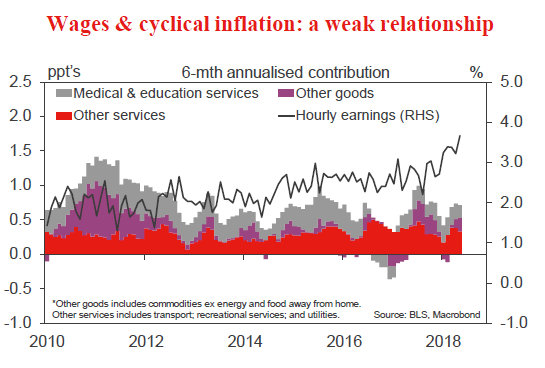
To our mind however, this would be a mistake. In six-month annualised terms, core inflation has already decelerated to a 2.0% pace over the December quarter. And, looking ahead, the trends in its key components point to inflation remaining around the current level. Most interesting in this detail is the absence of a link between wages and inflation for cyclical goods.
UK GDP Growth to Decelerate in Q4
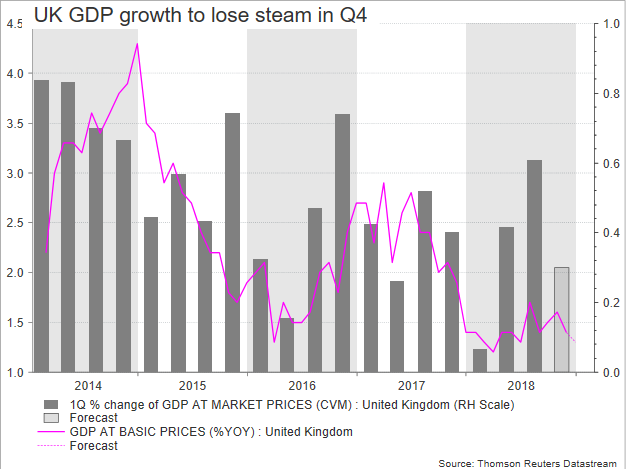
The Bank of England joined its dovish counterparts on Thursday after leaving interest rates steady as expected amid mounting fears that Brexit coinciding with a global economic slowdown could further sink British markets. Of more importance, policymakers surprisingly decided to cut growth forecasts to 1.2% for 2019 which is the lowest since financial crisis, turning the spotlight to Monday’s preliminary GDP figures for the fourth quarter, with markets predicting a weaker start for the year.
At 0930 GMT, the Office for National Statistics is projected to say that GDP growth in the fourth quarter eased to 0.3% q/q after jumping to a more-than-a-year high of 0.6% in Q3, marking a yearly expansion of 1.4% compared to 1.5% before. The data will follow discouraging PMI surveys for the manufacturing, construction and services sectors, all of which showed that risk aversion among companies has risen in January as the UK could crash out of the EU without arranging its future relations with the bloc and hence safeguarding their supply chains. Consumers are also in a wait-and-see mode despite the rise in wages and the four-decade low unemployment rate as they probably anticipate more bad times ahead as well, with core retail sales contracting sharply in December.
The slowing business activities and the cautious households indicate that things could get worse before getting better. With eight weeks left before the Brexit date on March 29, there is not much time for Theresa May to renegotiate the sticking point of the Irish border point and markets have already started to seriously believe in a hard Brexit, which will introduce new EU tariffs on UK exports, disrupting trade flows and hence economic growth not only in the UK but also in the EU. The BoE chief Mark Carney acknowledged on Thursday that GDP growth could decelerate even under a soft Brexit as the outlook for the global economy is not rosy either, while chances for a recession in the homeland have risen to 25% when considering a no-deal, no transitional period withdrawal from the union. Moreover, while plans for further rate hikes are off the table now and plans for a rate cut are not seen on the horizon either as inflation is still above the BoE’s 2.0% target, Carney will likely monitor political developments to determine the path of monetary policy.
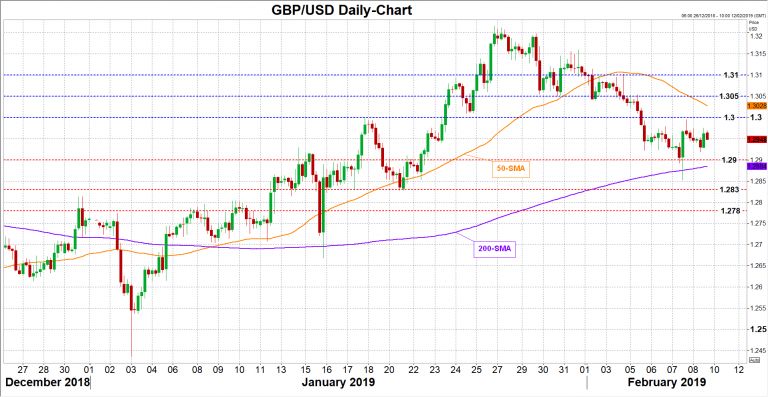
Turning to FX markets, GBPUSD managed to quickly recover on Thursday despite the BoE’s unexpected growth downgrade as investors wait for more Brexit clarity. A worse-than-expected GDP growth figure on Monday though, could see the sell-off resume on speculation that consequences of the Brexit uncertainty may appear more violent than analysts think. In this case GBPUSD could drop straight down to 1.29. Another leg lower, may find support around 1.2830, while deeper, support could run to 1.2780.
Alternatively, an upside surprise in the data could bring some buying interest into the market, though not for long as the numbers could do little to ease worries over a disorganized exit from the EU. GBPUSD may retest the 1.30 key level, where any successful break would shift attention up to the 1.3050-1.3100 area.
Note that industrial production and trade balance for December will be published separately at the same time. Factory output is anticipated to increase by 0.2% m/m after November’s 0.4% decline, while trade deficit is expected to turn slightly down to 12 billion pounds
Week Ahead – Japanese & UK Q4 GDP in Focus; Kiwi Readies for Dovish Noises from RBNZ
Japan and the United Kingdom will be next to publish economic growth numbers for the final quarter of 2018, while the Eurozone will release its second GDP estimate for the period. Inflation data out of the US and the UK will also be watched. The Reserve Bank of New Zealand will be among the last of the major central banks to hold its first monetary policy meeting of 2019. The Bank is unlikely to buck the trend and will probably follow its peers in shifting to a more dovish stance.
Growth in Japan to rebound in Q4
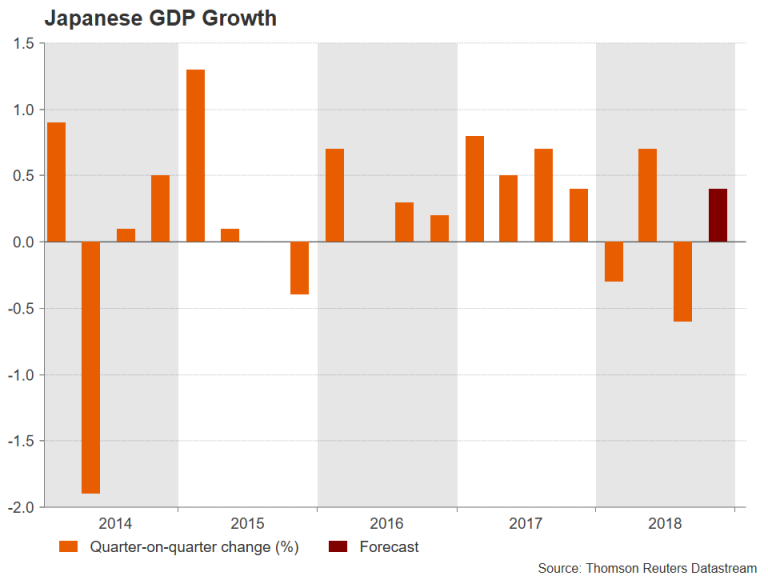
Japan’s economy is expected to have returned to growth in the final three months of 2018. Data on Thursday is anticipated to show GDP expanded by 0.4% quarter-on-quarter after contracting by 0.6% in the third quarter. While a stronger-than-forecast figure could give the yen a little bit of a bump up, it’s unlikely to allay concerns that more negative quarters could be on the way in 2019 as trade tensions and slowing growth globally weigh on Japanese exporters.
Prior to the GDP report, corporate goods prices – a measure of wholesale prices in Japan – will be looked at on Wednesday.
RBNZ meets; could signal increased rate hike chances
In some ways, the Reserve Bank of New Zealand was ahead of the game when it opened the door to the possibility of a rate cut back in August 2018, while other central banks held on to overoptimistic growth forecasts. Since the start of the year, all major central banks have either turned more dovish or taken a more cautious tone. The RBNZ could go one step further at its meeting on Wednesday and provide a more explicit signal of looser policy even as it holds the cash rate steady for now.
The New Zealand dollar has already faced a sell-off this past week from surprisingly weak employment numbers for the fourth quarter. The RBNZ could spark sharper losses in the kiwi if it bolsters its dovish language and lowers its economic projections in its latest Monetary Policy Statement, due to be published the same day.
Further drop expected in Chinese exports
China will likely post another worrying set of trade figures on Thursday as trade tensions with the US continue to dampen demand for Chinese goods. Exports fell by 4.4% year-on-year in December – the fastest decrease in two years. The annual rate of decline is expected to have eased to 3.3% in January, which could perhaps provide some relief if confirmed.
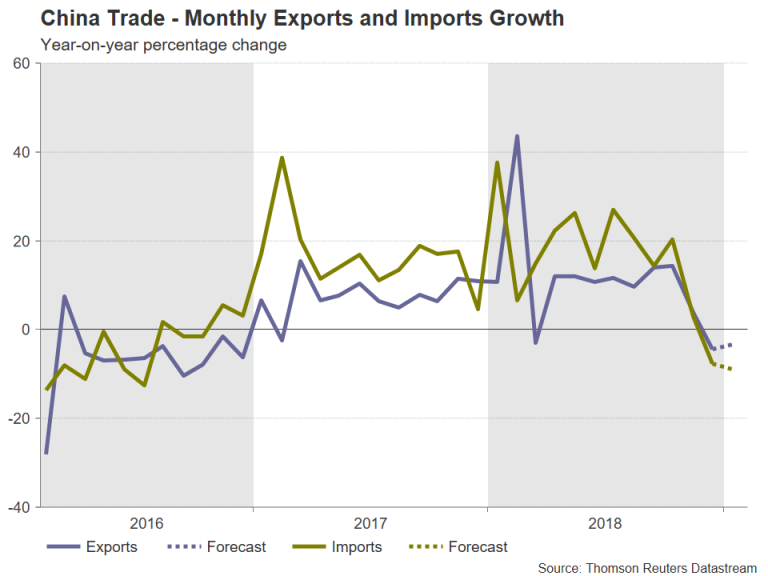
However, a bigger focus will probably be the next round of trade discussions between US and Chinese officials next week. As the March 1 deadline approaches, investors will be looking for more concrete evidence of substantial progress. Otherwise, any sign that US tariffs on Chinese imports will go up again after the deadline if a deal isn’t reached by then could upset the fragile recovery in risk appetite that’s been in progress since the start of the year.
In other data from China, the January numbers for the producer and consumer price indices will be published on Friday.
The Australian dollar, which plunged by more than 2% versus the US dollar this week following the RBA’s shock dovish tilt, could come under further pressure if Chinese exports fall by more than expected and/or the Sino-US trade talks end without any significant agreement being reached.
Domestic data could also move the aussie as the NAB business confidence gauge for January is released on Tuesday along with December housing finance figures.
US inflation eyed
It’s going to be relatively quiet in the US as some key data such as Q4 GDP have yet to be rescheduled following the disruption from the government shutdown. The spotlight will therefore fall on inflation indicators. The CPI report is out on Wednesday with the headline rate forecast to have moderated from 1.9% to 1.5% y/y in January. Producer prices, also for January, will follow on Thursday, with import and export prices coming up on Friday.
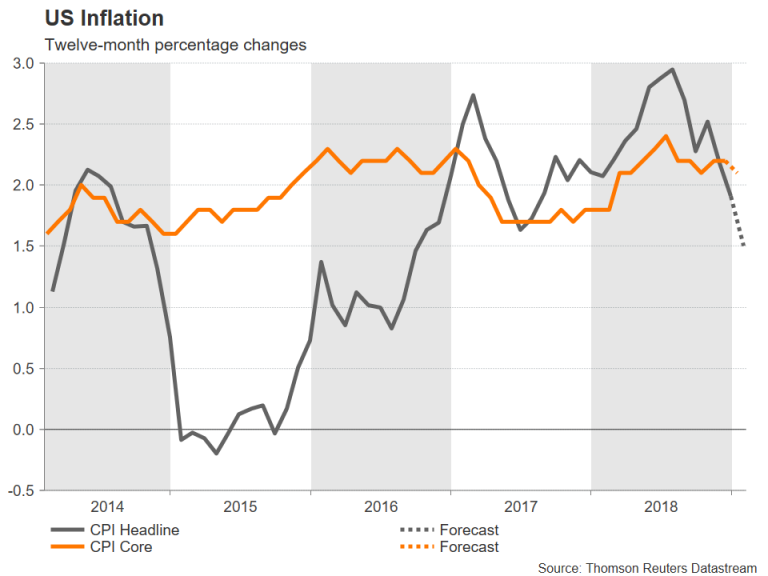
The other major releases will consist of the Empire State manufacturing index for February, industrial output numbers for January and the University of Michigan’s preliminary consumer sentiment index for February, all of which are due on Friday.
A strong set of data could lift the dollar index above the 2-week top scaled this week. However, political developments will likely be bigger drivers for the dollar in the next seven days as US-China trade talks resume and Republicans and Democrats try to hammer out a deal on government funding. US lawmakers have until February 15 to agree on a new funding bill if they are to avert another shutdown. If there are signs that the US is headed for a prolonged period of government shutdown, this could weigh on the greenback as it would begin to have a more notable impact on GDP growth.
Eurozone growth worries to persist; Riksbank to hold rates
The past week saw another run of poor growth indicators out of the world’s second largest economic area and that trend will probably continue over the next few days. Eurozone industrial output numbers are due on Wednesday and are forecast to have declined by 0.3% month-on-month in December. On Thursday, Eurostat will publish its second estimate of Q4 GDP growth, while Germany will post its flash estimate. Eurozone growth is expected to be left unrevised at 0.2% but the German economy is predicted to have eked out growth of 0.1% after shrinking by 0.2% in the third quarter. Euro area employment figures for the fourth quarter might attract some attention too on Thursday.
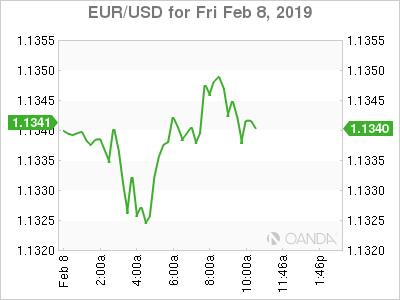
If there’s any more negative surprises in next week’s releases, the euro is at risk of further down moves, with the $1.13 handle already looking shaky. However, with most of the bad news priced in by now and a shock print from Germany being very unlikely given that full year estimates released earlier more or less confirmed a 0.1% number for Q4, the bears may struggle to push the euro much lower in the near term.
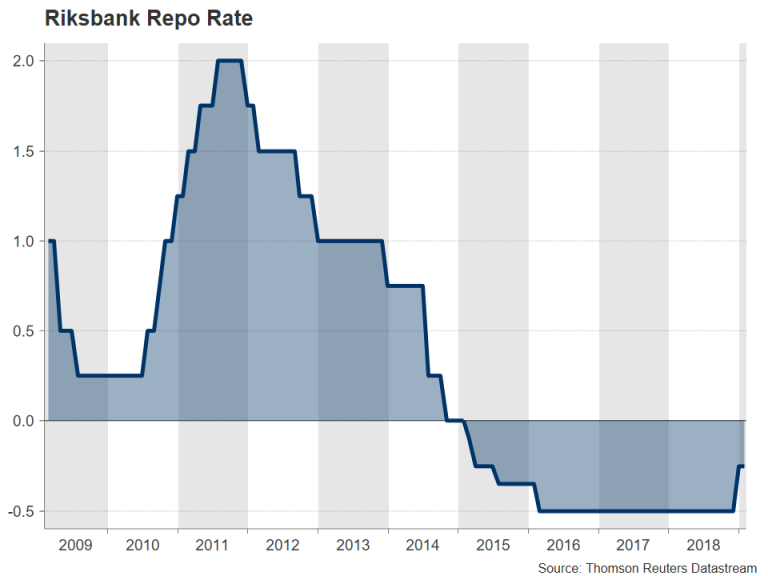
Also on the European horizon next week is the policy meeting by the Riksbank. Sweden’s central bank surprised some when it raised interest rates from -0.50% to -0.25% at its last meeting in December. However, it was a dovish hike as the bank simultaneously cut its economic forecasts and lowered its projected rate hike path. No change is anticipated therefore at Wednesday’s meeting and the Swedish krona could face some downside pressure if the Riksbank turns even more cautious about the outlook.
UK GDP growth to slow in Q4; inflation to hit target
The latest PMIs pointed to UK growth stagnating at the start of the year, but in the last three months of 2018, the British economy probably managed a modest expansion of 0.2% q/q. The GDP report on Monday will be accompanied by a slew of other data, including industrial production and trade. Industrial and manufacturing output are both forecast to have returned to positive growth, rising by 0.2% m/m each in December.
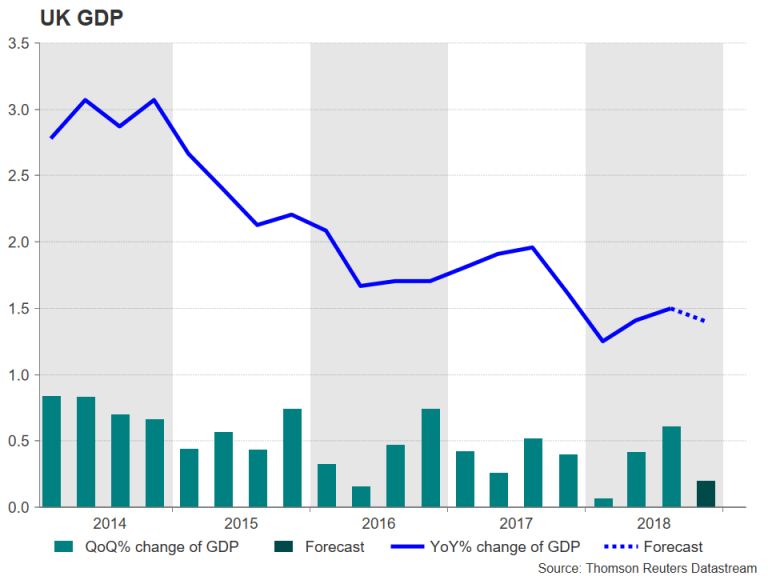
On Wednesday, all eyes will turn to January inflation figures. The headline rate of CPI is expected to have eased from 2.1% to 2.0% y/y in January, bang on the Bank of England’s target. The core rate is forecast to hold steady at 1.9% y/y. Lastly, retail sales numbers will be watched on Friday with only a tepid recovery being anticipated following December’s 0.9% m/m drop.
The pound could be in line for some small gains if the data surprises mostly to the upside, especially after the BoE signalled this week that rate hikes would still be on the cards if there is a smooth Brexit, despite the weaker global backdrop. However, traders are unlikely to place any large bets in sterling until there’s more clarity on whether Theresa May will be able to win significant concessions from the European Union on the Irish backstop issue.
It’s hard to see such a breakthrough happening in the next week or two, but in the event that the EU do offer Prime Minister May some compromise over the coming days, a vote on an amended Brexit deal could potentially be held on February 14.
Weekly Focus – Signs of a German Sector Recovery
Market Movers ahead
- US-China trade talks will continue next week when Treasury Secretary Steven Mnuchin and US Trade Representative Robert Lighthizer travel to Beijing early next week. While Trump has hinted that a deal before 1 March is unlikely, we are not surprised and stick to our view that we will get a deal eventually.
- Q4 GDP data for Japan, Germany and the UK is due out. We think Germany avoided slipping into a technical recession and in the UK, the growth picture has become weaker due to Brexit uncertainties and slower global growth.
- In the euro area, look out for new car registrations in January, as the car sector has been one of the weak spots in the euro area economy. A rebound in car production/sales is one of the ingredients for a rebound in euro area growth.
- In the UK, the MPs will have an indicative vote on how to proceed with Brexit on Thursday.
- We may be heading for a new government shutdown from Friday if President Trump and Congress do not agree on a budget.
Weekly wrap-up
- With less than two months to go, the UK remains divided over Brexit.
- The European Commission has slashed its 2019 growth forecast for Europe. On a more positive note, signs of a German car sector recovery are getting more abundant.
- The Bank of England remained on hold but still signalled a tightening bias despite Brexit uncertainties.
- This week, equity markets remained supported by signs of a resilient US economy, a softer Fed message and a decent earnings season.
Canadian January Employment Bounces Back
Highlights:
- Employment jumped 66.8k which was up strongly from the 7.8k recorded in December and market expectations of a 5k increase.
- The solid increase in employment did not prevent an unexpectedly large 0.2 percentage point jump in the unemployment rate to 5.8% as it was outpaced by an even larger 104k surge in the labour force.
- Wage growth for permanent employees did rise to 1.8% in January from 1.5% in December though this is still indicative of flat real wages despite the low unemployment rate.
Our Take:
Canadian employment growth bounced back in January rising a stronger-than-expected 66.8k following gains of 7.8k and 78.4k in December and November, respectively. The quarterly pattern of employment growth had appeared to be slowing over the first half of 2018 though the pace of hiring started to pick up over the second half of that year with today’s report indicating this trend continuing going into the start of 2019. The report did indicate an unexpectedly large jump in the unemployment rate to 5.8% from 5.6% in December despite the surge in hiring as it was more than outpaced by the labour force surging 104k.
Labour markets still look solid. However, from the Bank of Canada’s perspective, a more telling factor in today’s report that argues against any rush to hike rates are indications that wage gains remain moderate. The annual increase in average hourly earnings did rise to 1.8% in January from 1.5% in December though it is still indicative of flat real wage growth. Our forecast continues to assume further tightening, albeit at a gradual pace, with the overnight rate rising 50 basis points over the course of 2019. However, such is contingent on further indications of continued strength in the economy along with confirmation of greater wage pressures building in the system.
Relief Rally Overextended as Skepticism Grows on Trade and Growth
US stocks are poised for their worst week since December on trade worries and global growth concerns. Yesterday’s news that the President Trump is highly unlikely to meet President Xi before the March 1st deadline intensified trade worries. While expectations remain that we will not see Trump raise the tariffs from the current 10% level, concerns are growing that there will be a lot more hurdles before we can see a framework of a deal agreed upon. Overnight, CNBC reported President Trump is expected to ban Chinese telecommunication equipment from US networks, in a move that will keep pressure on China to make concessions in the trade front, this was speculated over a month ago.
Dollar
Treasury moves are still leading the way for both equities and the US dollar. Treasuries advanced as risk aversion remained the dominant theme for the end of the week, with the greenback gaining on safe-haven flows. The Japanese yen also benefited with the flight to safety move and is trading strong against the high-beta currencies. The week ahead will remain focused on trade talks, Brexit, corporate earnings, and US inflation data.
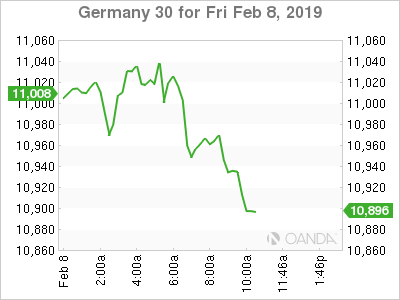
Wirecard sinks DAX
European bourses traded modestly lower as lower as DAX lead the move lower after Wirecard shares fell to the lowest level since April after Singapore police probed their offices. Wirecard shares initially traded higher after they announced they will sue the Financial Times for “unethical reporting” on three articles that alleged fraud and misconduct on Wirecard’s accounting practices.
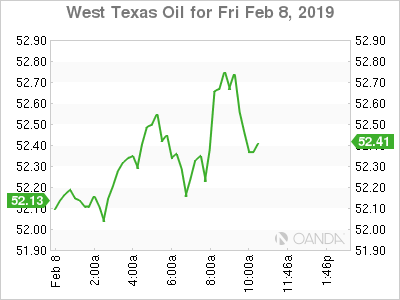
Oil
Crude prices are losing their bullish momentum as Europe appears more fragile than anticipated and trade doubts could signal a longer delay before we see a framework agreement reached between U.S. and China. The biggest weekly loss in oil prices since December see further momentum if we continue to risk-off flows support the greenback. Oil remains vulnerable here as the OPEC + production cuts may have done all they can do to stabilize the markets and oversupply concerns will return in the warmer months.
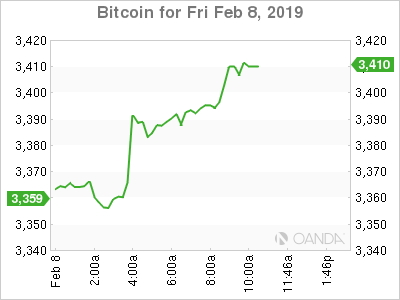
Bitcoin
Bitcoin’s dead-cat bounce of 1% could be short-lived as the volatility drop could signal next major selloff is just around the corner. The key range for Bitcoin now appears to be $2,000 to $4,000, with cryptocurrencies appearing to be vulnerable to the downside.
XAU/USD Outlook: Gold Recovers as Dollar Bulls Take Breather; 10SMA Would Be a Trigger
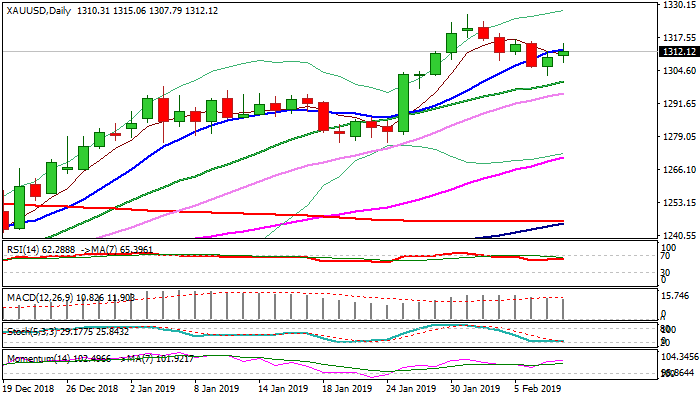
Spot gold holds positive tone for the second day as week-long dollar's rally is losing traction and may take a breather on overbought conditions.
Recovery extension hit high at $1315, retracing 50% of $1326/$1302 pullback and signaling formation of higher low at $1302 (07 Feb low).
Fresh strength looks for confirmation on daily close above cracked 10SMA ($1312), to ease downside risk and shift focus higher.
Break above 10SMA would bring daily MA's to full bullish setup and add to positive signals from strengthening bullish momentum and north-heading stochastic, which reversed higher after rejection at oversold zone border.
Res: 1315; 1317; 1320; 1326
Sup: 1307; 1302; 1300; 1295