Sample Category Title
EUR/GBP Weekly Outlook
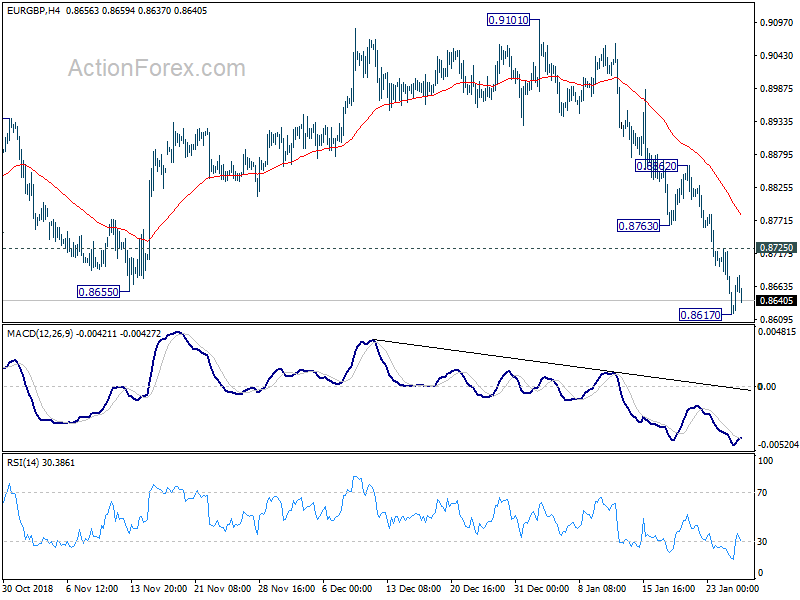
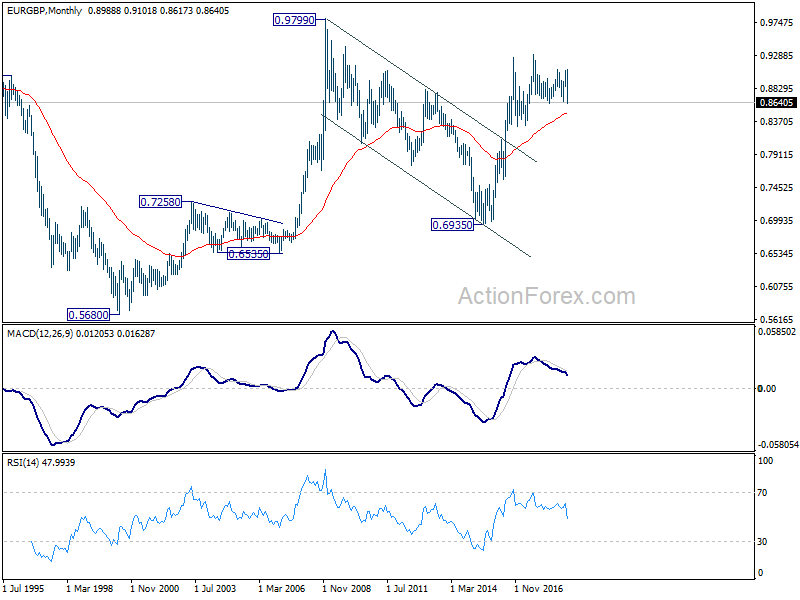
EUR/GBP dropped to as low as 0.8617 last week and breached 0.8620 key support level. But a temporary low was formed and initial bias is turned neutral this week first. At this point, we'd continue to expect strong support from 0.8620 to contain downside to bring rebound. On the upside, above 0.8725 minor resistance will turn bias to the upside for 0.8763/8862 resistance zone first. However, sustained break of 0.8620 will resume larger decline from 0.9305 and target 100% projection of 0.9305 to 0.8620 from 0.9101 at 0.8416.
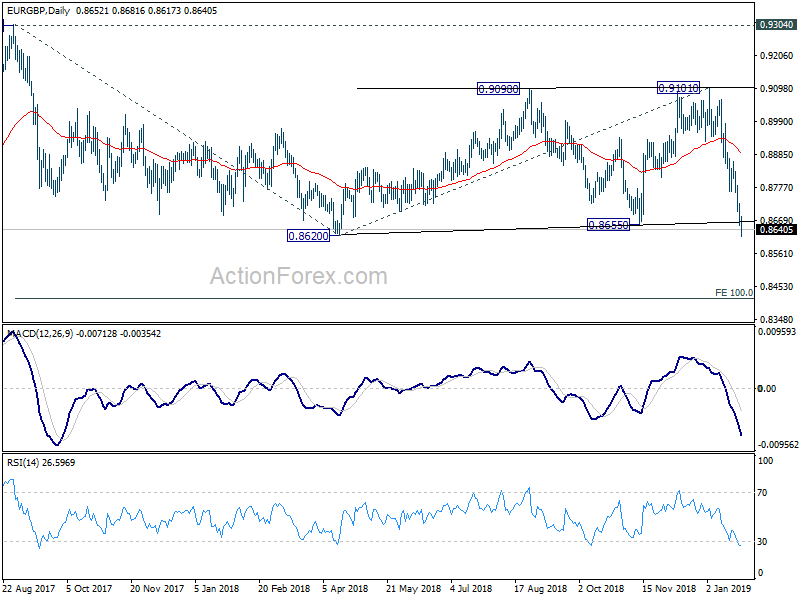
In the bigger picture, EUR/GBP is seen as staying in long term range pattern started at 0.9304 (2016 high). The medium term range is set between 0.8620 and 0.9101. Downside breakout of 0.8620 will pave the way back to 0.8312 support . Break of 0.9101 will bring retest of 0.9304/5 resistance.
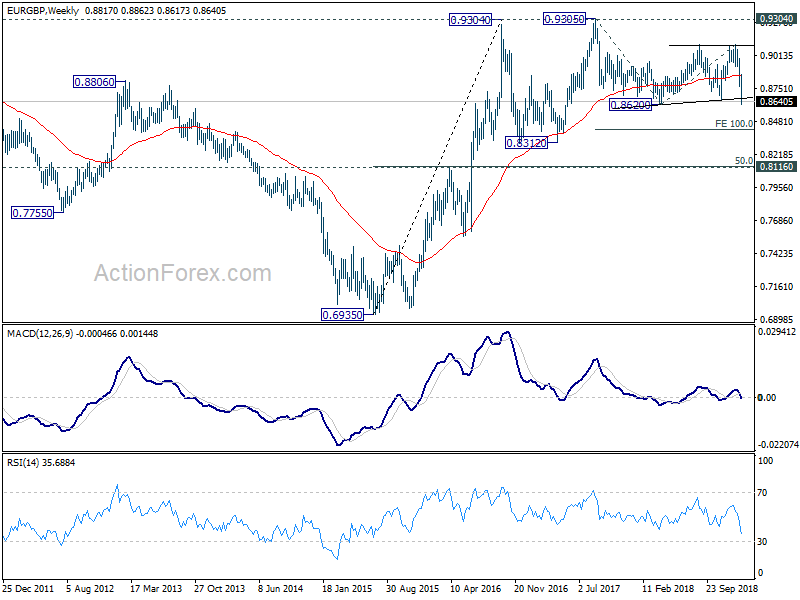
In the long term picture, we're holding on to the view that rise from 0.6935 (2015 low) is resuming the up trend from 0.5680 (2000 low). As long as 0.8116 cluster support (50% retracement of 0.6935 to 0.9304 at 0.8120) holds, further rise should be seen through 0.9305 to 0.9799 and above down the road.
EUR/AUD Weekly Outlook
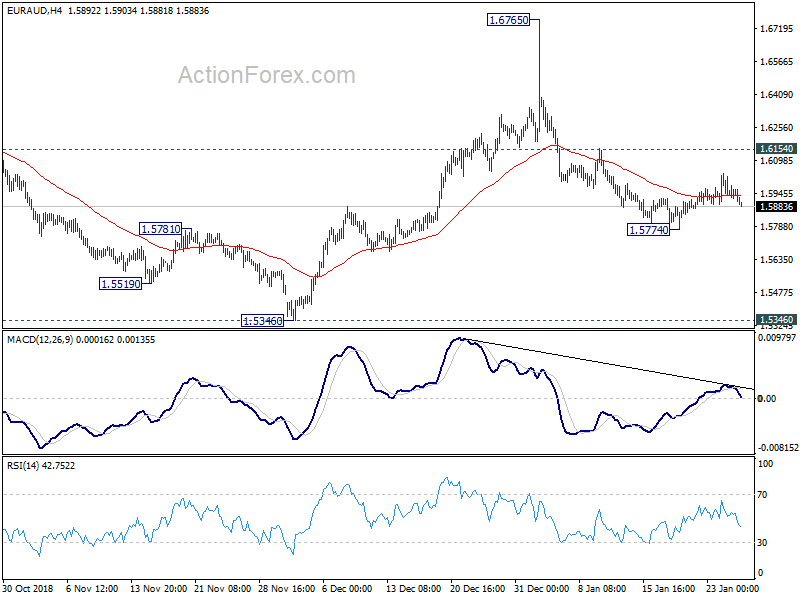
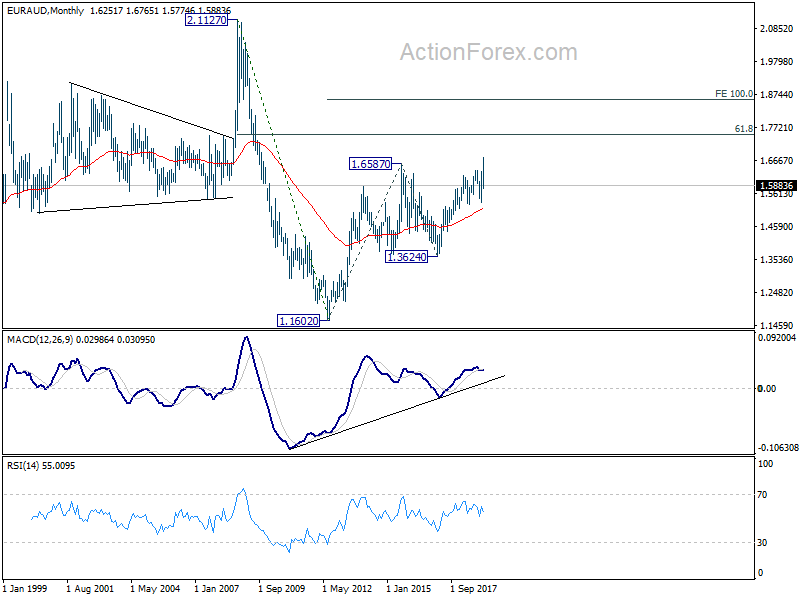
EUR/AUD stayed in consolidation above 1.5774 last week and outlook is unchanged. Initial bias remains neutral this week first. With 1.6154 resistance intact, deeper fall is expected. On the downside, break of 1.5774 will resume the decline from 1.6765 and target 1.5346 key support next. On the upside, break of 1.6154 will argue that the pull back has completed. Intraday bias will then be turned back to the upside for retesting 1.6765.
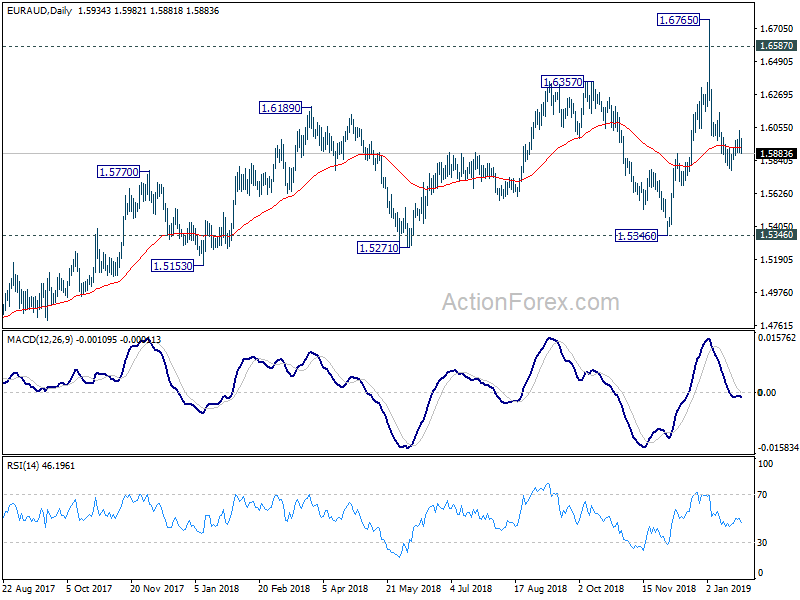
In the bigger picture, the failure to sustain above 1.6587 key resistance (2015 high) argues that up trend from 1.1602 (2012 low) is not ready to resume yet. But still, as long as 1.5346 support holds, outlook will remain bullish. Break of 1.6765 will target 61.8% retracement of 2.1127 (2008 high) to 1.1602 at 1.7488 next. However, firm break of 1.5346 key support will indicate trend reversal, with bearish divergence condition in weekly MACD, and turn outlook bearish.
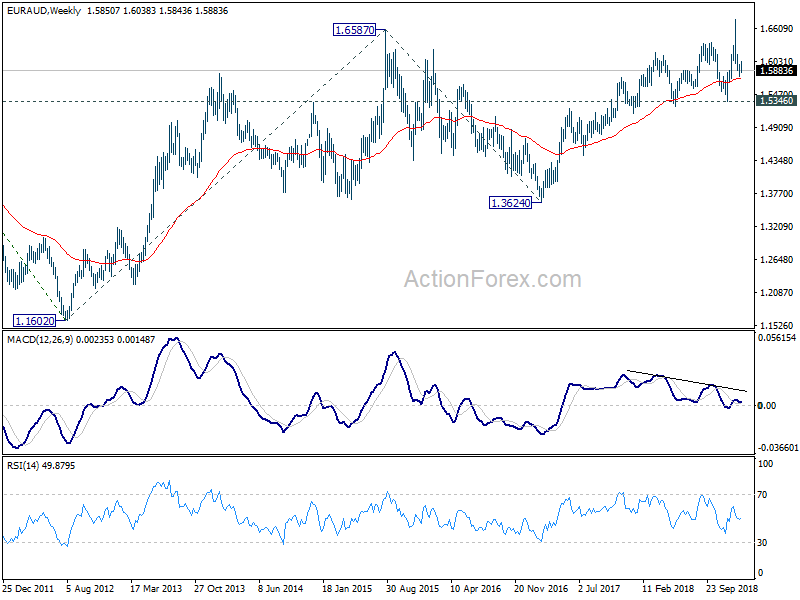
In the longer term picture, the rise from 1.1602 long term bottom (2012 low) is still in progress for 61.8% retracement of 2.1127 to 1.1602 at 1.7488. Firm break there will pave the way to 100% projection of 1.1602 to 1.6587 from 1.3624 at 1.8069. This will remain the favored case as long as 1.5346 remains intact.
EUR/CHF Weekly Outlook
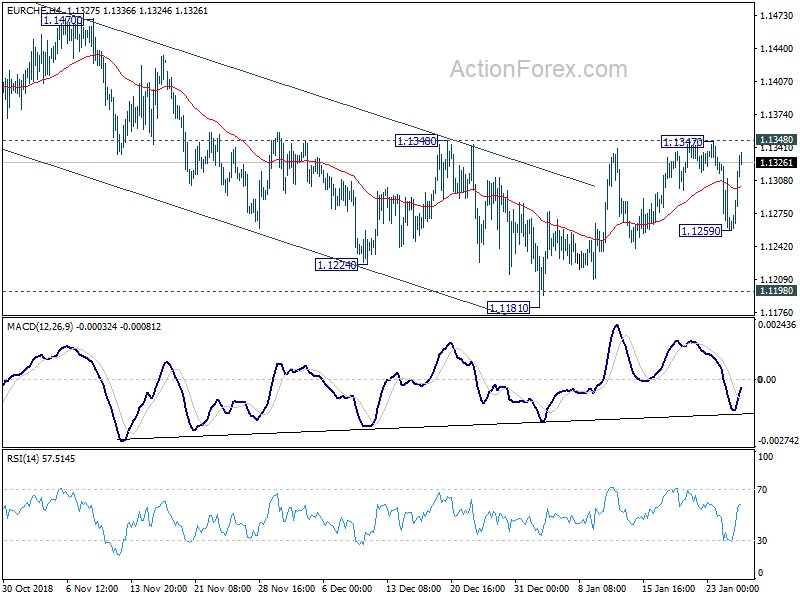
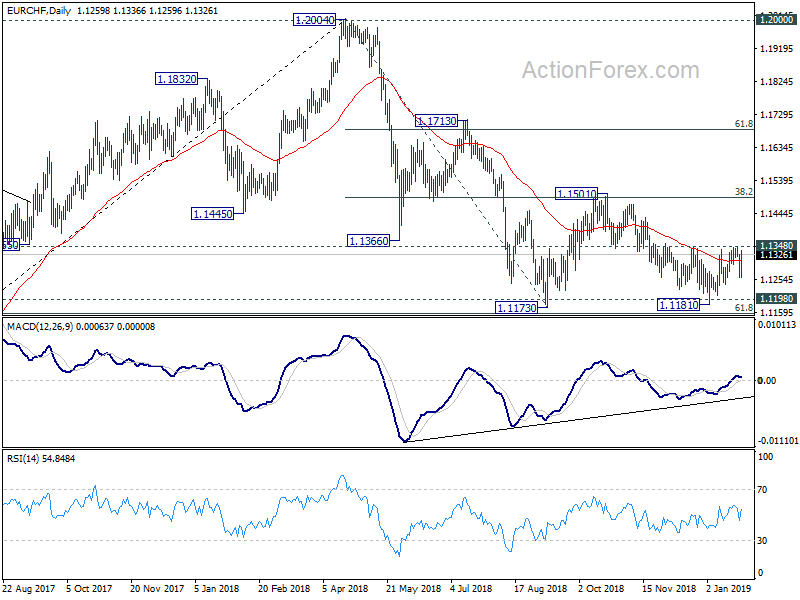
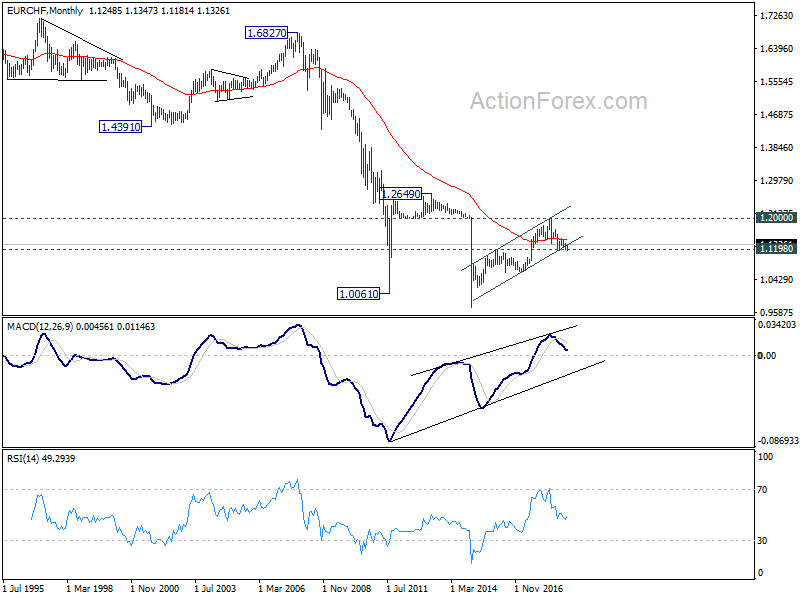
EUR/CHF was rejected by 1.1348 resistance last week and dropped sharply to 1.1259. But it then recovered strongly. Initial bias is neutral this week and outlook is unchanged. We continue to favor the case that choppy decline from 1.1501 has completed at 1.1181 already. On the upside, decisive break of 1.1348 will confirm this bullish case and turn bias to the upside for retesting 1.1501 next. On the downside, in case of another fall, we'd expect strong support from 1.1154/98 support zone to contain downside to bring rebound.
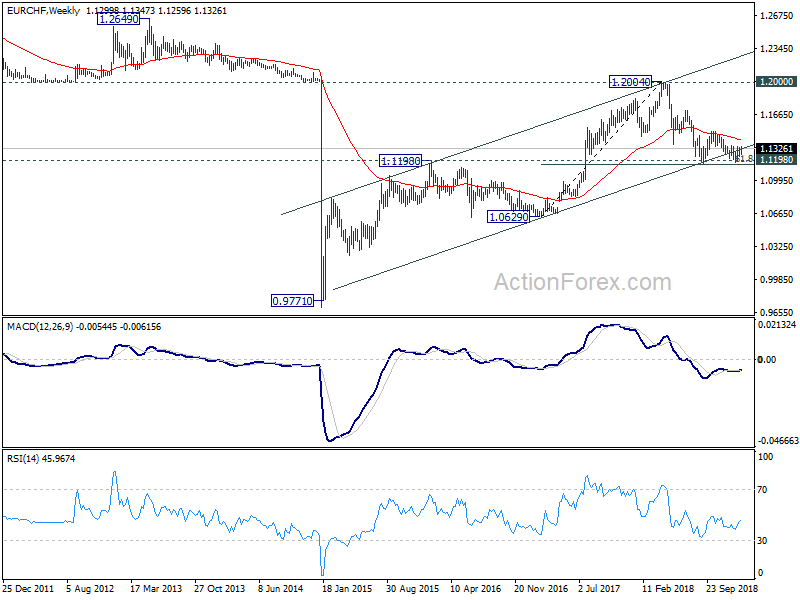
In the bigger picture, price actions from 1.2004 medium term top is seen as a correction only. Downside should be contained by support zone of 1.1198 (2016 high) and 61.8% retracement of 1.0629 to 1.2004 at 1.1154 to complete it and bring rebound. A break of 1.2 key resistance is still expected in the medium term long term. However, sustained break of the mentioned support zone will mark reversal of the long term trend. In that case, 1.0629 key support will be back into focus.
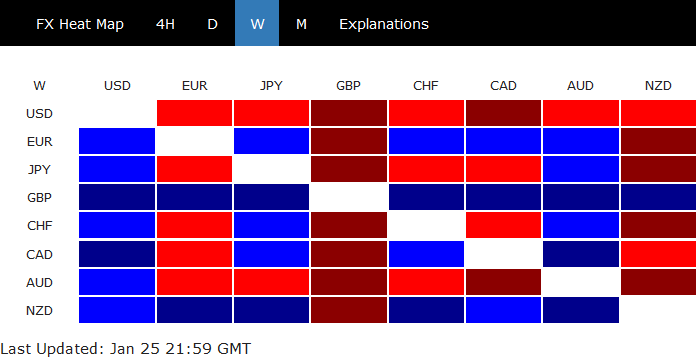
FOMC, Government Reopen, US-China Trade Talks & NFP ahead for Dollar
Dollar ended last week as the weakest one after deep selloff before weekly close. A whole lot of events are scheduled ahead to keep the greenback busy. Those include FOMC rate decision, US-China trade talk, non-farm payrolls. Also, the partial government shutdown has finally ended temporarily and we'll have more economic data for gauging the economy of the US. Australian Dollar ended as the second weakest but it has already pared back much losses after Friday's rebound. Yen followed as the third weakest.
Sterling ended as the strongest one and maintained strengthen towards the end. It's boosted by receding chance of no-deal Brexit. The debate and vote on amendments in the Commons on Tuesday will likely provide a more concrete path forward regarding Brexit. New Zealand Dollar was the second strongest after solid CPI lowered chance of an RBNZ cut. Euro was surprisingly resilient and survived a batch of weak data as well as dovish ECB. The common currency will face tests from GDP and CPI this week.
FOMC, trade war, NFP and reopened government to keep Dollar busy
Dollar performed not too badly for most part of the week, until it suffered heavy selloff on Friday. The WSJ reported Fed is considering to stop shrinking it's massive balance sheet earlier. That is, the eventual size of the portfolio of treasury securities could be larger than originally expected. This is seen as move in response to the adverse stock market condition back in December. Some policy makers might want to take the balance sheet reduction off autopilot. This is definitely a topic Fed Chair Jerome Powell would be scrutinized in the post FOMC meeting press conference on Wednesday.
Besides FOMC meeting, there are full of events in the US this week. Trump finally gave up the demand for the border wall temporarily on Friday. He agreed to a deal, without funding for the wall, that ended the 35-day historic government shutdown. The deal was then quickly passed by Senate and House without opposition. Now, the Congress will have up till February 15 to debate on border security. A whole lot of economic data, which missed schedule release day, will likely come up gradually this week. And, more than that, January non-farm payrolls and ISM manufacturing will be featured.
The highly anticipated meeting between US Trade Representative Robert Lighthizer and Chinese Vice Premier Liu He will take place on January 30-31 in Washington. Ahead of that, there will be vice ministerial meetings on Monday and Tuesday. Comments from the US side has been rather conflicting. On the one hand, Commerce Secretary Wilbur Ross said the two countries are "miles and miles" away on a trade deal. But White House economic adviser Larry Kudlow said Trump is optimistic. But one thing for sure, there is so far no news regarding how Chines is going to handle the biggest concerns of the US, including intellectual property threat, forced technology transfer, and opening up market access. Let's see if there will be any real progress in the negations.
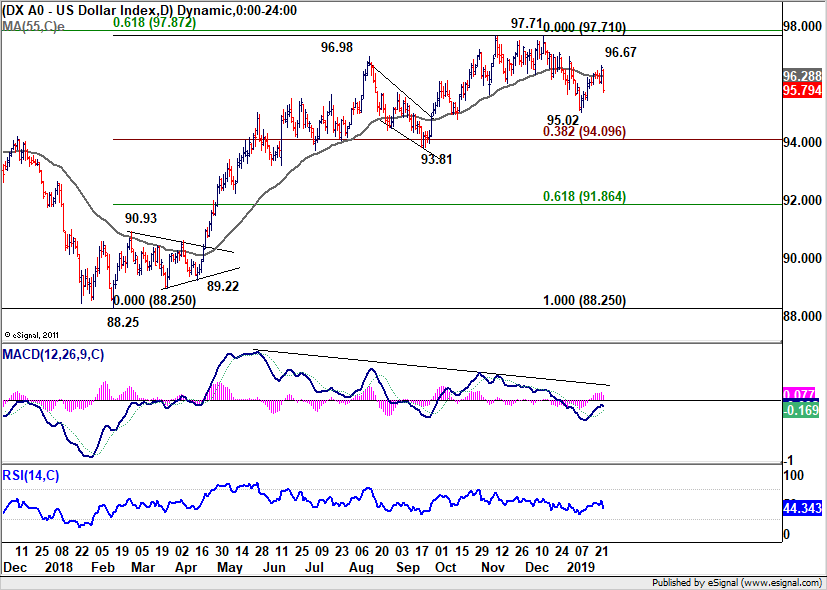
Dollar index to extend correction from 97.71 through 95.02
Dollar index's sharp decline on Friday is rather near term bearish. It suggests failure to sustain above 55 day EMA. And, the rebound from 95.02 has completed at 96.67 already. Corrective decline from 97.71 might now be ready to resume for 95.02 and below. But after all, downside should be contained by 93.81/94.09 support zone (38.2% retracement of 88.25 to 97.71 at 94.09) to bring rebound. Meanwhile, even in case of recovery, risk will now stay on the downside as long as 96.67 holds.
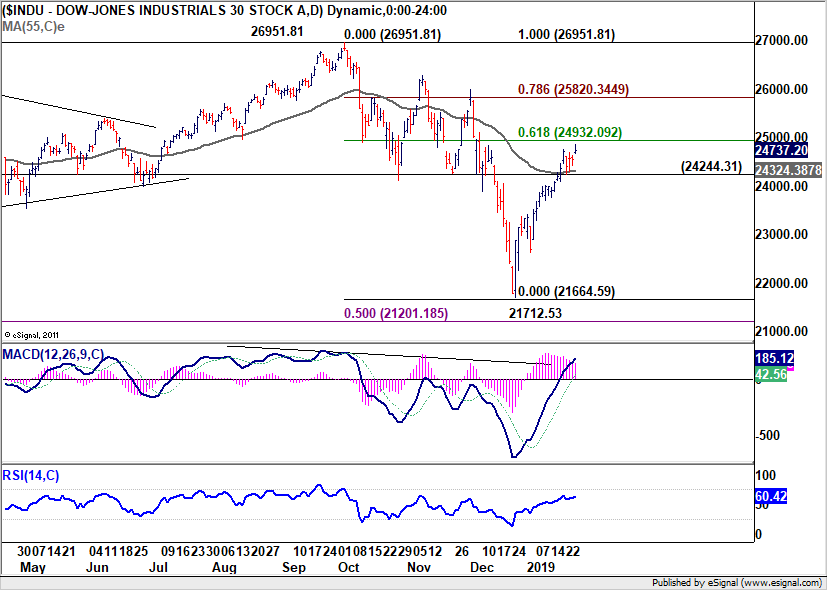
DOW's not that strong close was rather disappointing
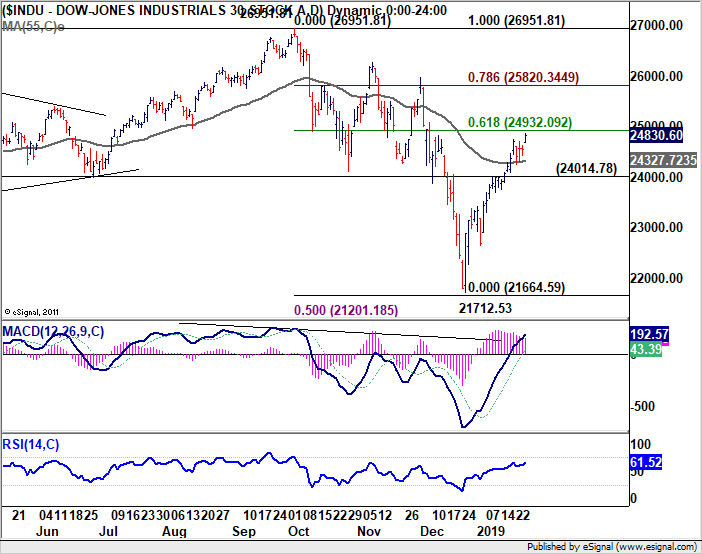
While DOW jumped to as high as 24860.15 but closed way off this high at 24737.20. The close is indeed rather disappointing considering the Fed balance sheet rumor as well as news on ending government shut down. For now, further rise is still in favor as long as 24244.31 support holds. However, it looks like even in case of rally, DOW will start to feel heave in 24932.09/25820.34 resistance zone (61.8% and 78.6% retracement of 26951.81 to 21664.59).
Euro and DAX survived dovish ECB and weak economic data
Euro survived some very weak economic data, as well as dovish ECB last week. It ended higher against all major currencies except Sterling and New Zealand Dollar. Adding to that, German DAX and French CAC ended the week higher, extending recent rebound. It seems that investors are seeing the worst in Eurozone is behind.
ECB President Mario Draghi noted in the post meeting press conference that "the risks surrounding the Euro area growth outlook have moved to the downside". This is the first time since April 2017 that the central bank admitted that risks are to the downside. Over the past 21 months, ECB had been describing risks as "broadly balanced", while suggesting the balance is "moving to the downside". The uncertainties ECB has identified are "geopolitical factors and the threat of protectionism, vulnerabilities in emerging markets and financial market volatility".
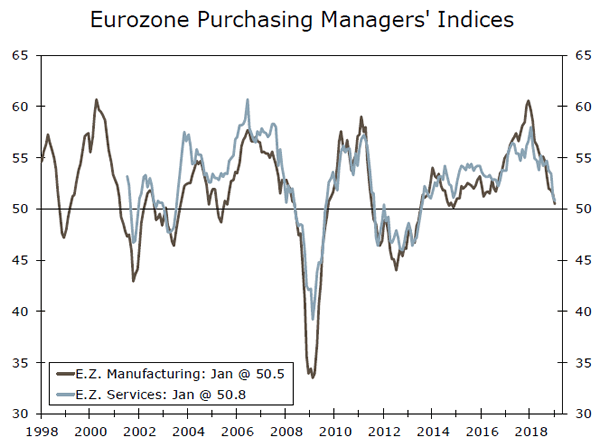
Meanwhile, Eurozone PMI composite dropped to 50.7, a 66-month low. Both manufacturing and services were close to stagnation at 50.5 and 50.8. They were at 50-month and 65-month low respectively. German ZEW economic sentiment improved to -15 but stayed well below long term average of 22.4. ZEW Current Situation dropped sharply to 27.5, down from 45.3. German Ifo business climate dropped to 99.1, lowest since February 2016.
Looking ahead, Q4 GDP in Eurozone will be released and is expected to slow to 0.2% qoq. Eurozone CPI will also be featured and is expected to slow -0.2% to 1.4% yoy in January. We'll see if Euro could maintain its resilience.
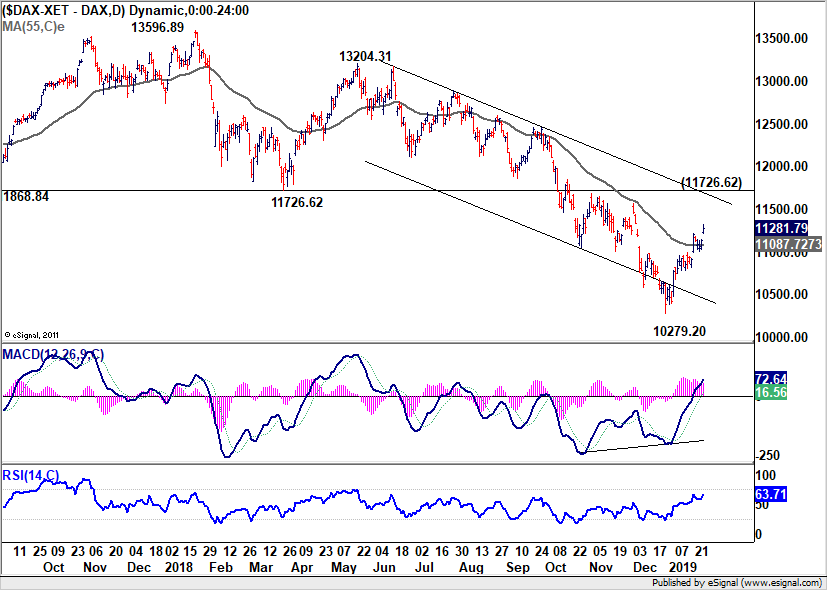
Along side the strength of Euro, German DAX was also strong last week. In particular, Rebound from 10279.20 resumed on Friday by gapping higher. 55 day EMA is considered firmly taken out, which is bullish. Adding to that, there was bullish convergence condition in daily MACD. It's still early to confirm reversal of the down trend from 13596.89. But for now, there is prospect of further near term rebound to 11726.62 support turned resistance, which is also close to medium term channel resistance.
Sterling strong as campaign for no-deal Brexit gathers momentum
Sterling ended as overwhelmingly the strongest as the campaign to rule out no-deal Brexit gathered momentum. The House of Commons will hold another day of Brexit debate on Tuesday, January 29. Given that Prime Minister Theresa May's Plan B is so very much like the original Plan A, it's not really the focal points of the debate. Instead, attentions and debates will be on the next steps as put forward as amendments to the Brexit deal.
One of the most high profile amendments was put forward by Labour MP Yvette Copper, which has cross party support. In short, if May couldn't get a deal approved by the parliament by February 26, the parliament will be give a vote on postponement of Article 50 by nine months, to avoid a no-deal Brexit. The chance of getting this amendment through jumped after Labour finance chief said the party will highly likely support it. Also,
Other amendments including putting an expiry date to the Irish backstop, holding a second referendum, ruling out no-deal Brexit with other means. We'll have a much better idea on what's next after Tuesday. And, if a no-deal Brexit is pretty much ruled out, Sterling could be give another boost.
Position trading
Our buy USD/CHF at 0.9920 order was not filled last week as it rose to 0.9990 and then dropped to 0.9922 before closing at 0.9931. The entry was just missed.
Dollar will likely be under some mild pressure this week, at least initially, as also reflected in Dollar index outlook mentioned above. But Swiss Franc is unlikely to benefit much from it. Firstly, rebound in European stocks, as seen with DAX above, is set to extend. Secondly, strength, or at least resilience in emerging market currencies, for example in USD/ZAR and USD/TRY, will limit Franc rally too.
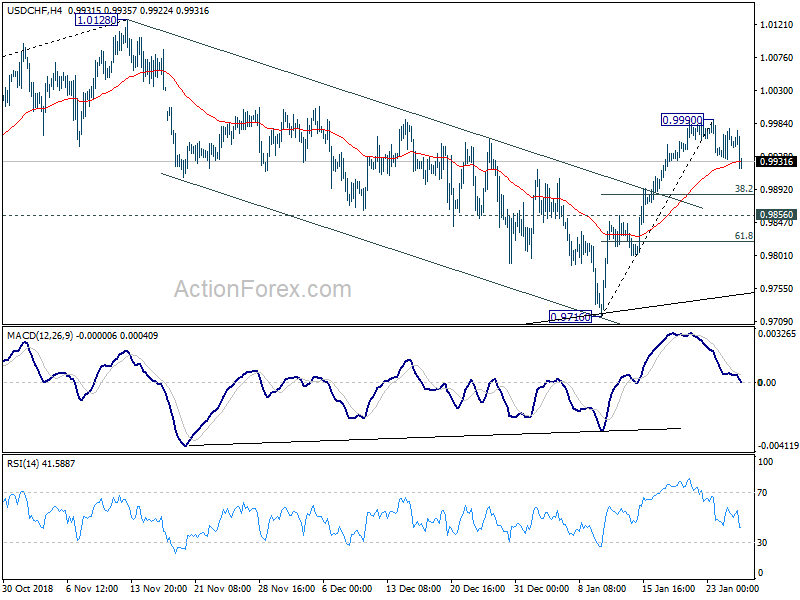
And, technically, we maintain the view that corrective fall from 1.0128 has completed at 0.9716 after drawing support from medium term trend line, on bullish convergence condition in 4 hour MACD. Hence rise from 0.9716 should resume after completing the retreat from 0.9990. And such rise is likely resuming whole up trend from 0.9186.
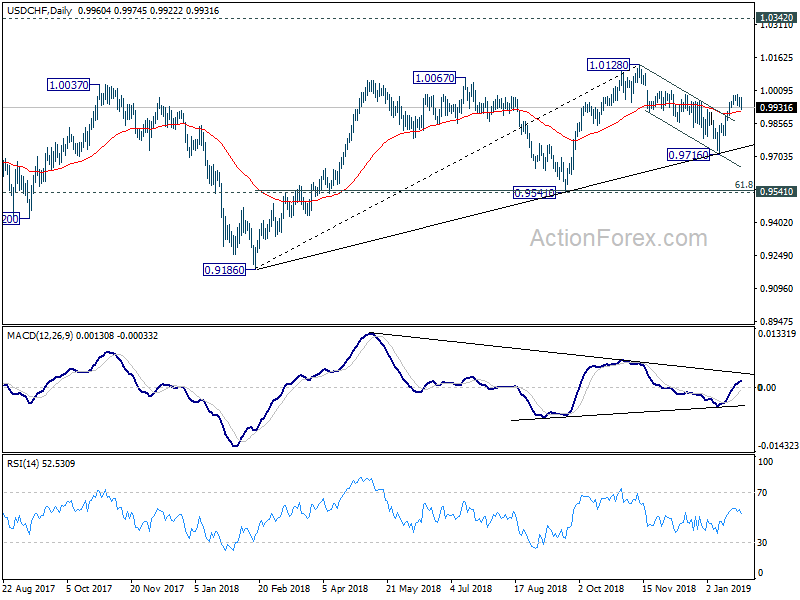
Hence, we'll continue to try to buy USD/CHF, but at a lower entry. We'll buy USD/CHF at 0.9880, around 38.2% retracement of 0.9716 to 0.9990 at 0.9885. Stop will be placed at 0.9810, below 61.8% retracement at 0.9821. Target is placed at 1.0300, as we expect the upside to extend to take on 1.0342 resistance (2017 high).
GBP/JPY Weekly Outlook
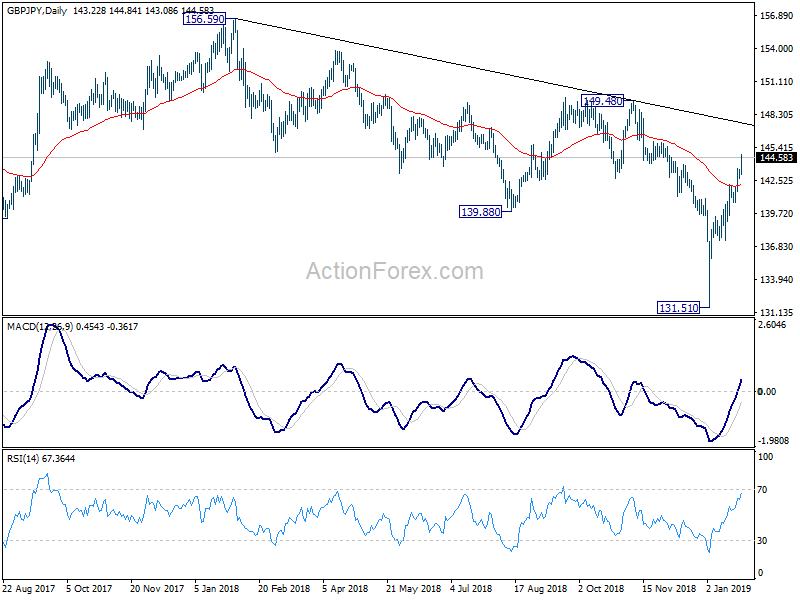
GBP/JPY's rebound from 131.51 extended to as high as 144.84 last week and there is no sign of topping yet. Initial bias remains on the upside this week for trendline resistance at around 147.35. We'd expect strong resistance from there to limit upside at first attempt. On the downside, below 143.39 minor support will turn intraday bias neutral first and bring consolidations. But further rise will remain in favor as long as 139.43 resistance turned support holds.
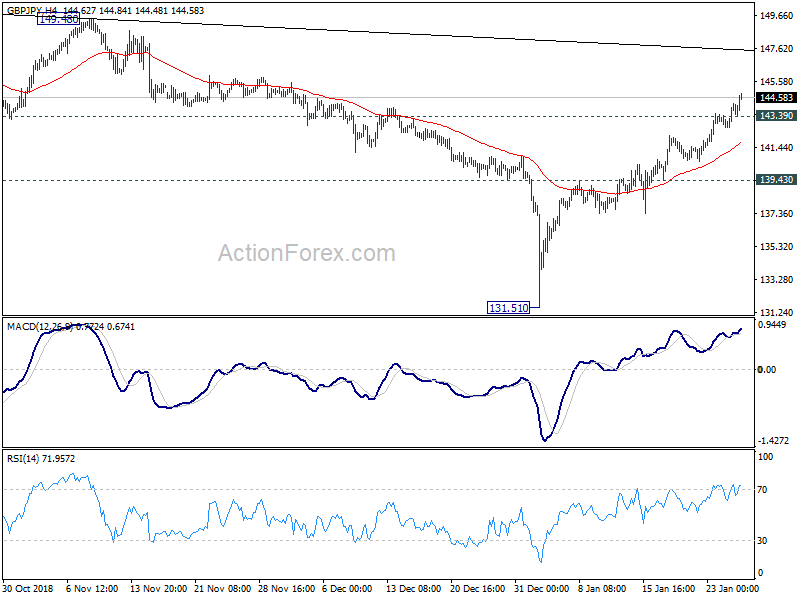
In the bigger picture, the strong rebound from 131.51 suggests that medium term fall from 156.59 (2018 high) has completed already. The corrective structure of such decline is turn argues that it's the second leg of the corrective pattern from 122.36 (2016 low). And this pattern is starting the third leg. On the upside, decisive break of 149.38 will pave the way to 156.59 resistance and above.
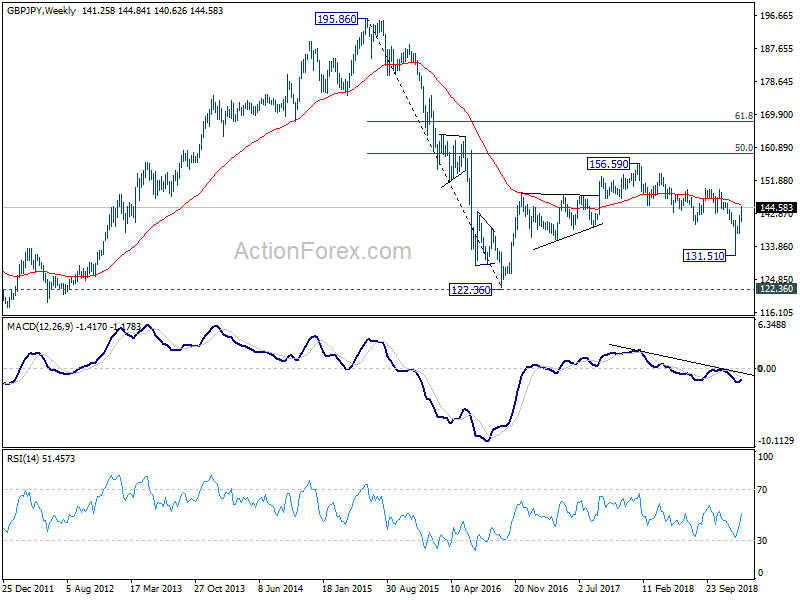
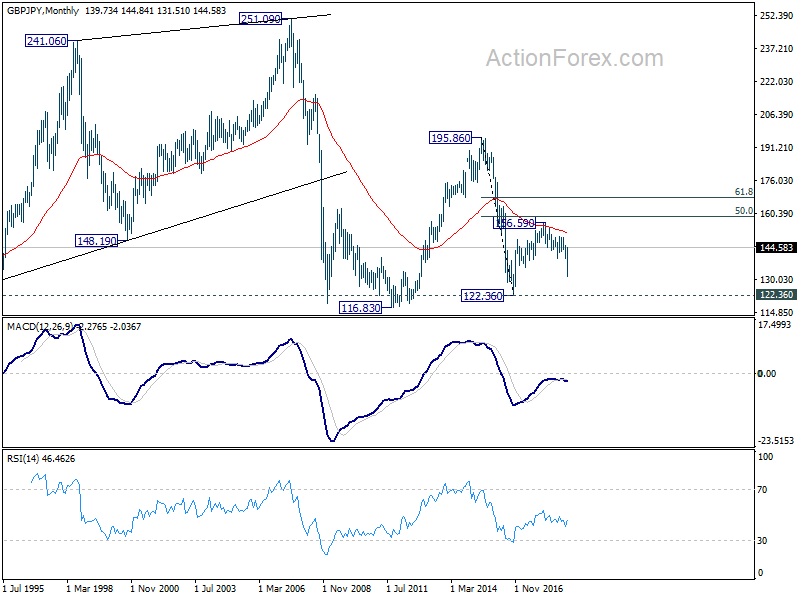
In the longer term picture, the rise from 122.36 (2016 low) to 156.59 (2018 high) doesn't display a clear impulsive structure. Thus, we're treating price actions from 122.36 as a corrective pattern. In case of an extension, strong resistance is likely to be seen at 50% retracement of 195.86 (2015 high) to 122.36 at 159.11 to limit upside. On the downside, break of 131.51 support will bring 122.26 low back into focus.
Summary 1/28 – 2/1
Monday, Jan 28, 2019
[php_everywhere instance="1"]
Tuesday, Jan 29, 2019
[php_everywhere instance="2"]
Wednesday, Jan 30, 2019
[php_everywhere instance="3"]
Thursday, Jan 31, 2019
[php_everywhere instance="4"]
Friday, Feb 1, 2019
[php_everywhere instance="5"]
China Weekly Letter: Trade Talks Enter Crucial Stage
- Trade talks enter crucial stage - our base case is still deal by end-Q2
- GDP growth slows - but construction and infrastructure provide support
- Xi Jinping warns of rising risks at seminar for top officials
Liu He heading big delegation for decisive trade talks in the US
After a long period of mostly positive comments on the trade talks, this week we saw more mixed signals . Commerce Secretary Wilbur Ross said to CNBC on 24 January that the US and China were 'M iles and miles' away from a trade deal and struck a less positive tone than other US trade officials recently. However, Trump on Wednesday said 'I like where we are right now' and 'we'll see what happens but we are doing very well in our negotiations with China' , see Reuters 23 January. On Thursday night Treasury Secretary Stephen Mnuchin, who is seen as one of the softer US voices, stated that the US and China were making 'a lot of progress', see CNBC 24 January.
China this week confirmed that its top negotiator Liu He will head a large delegation to Washington for top-level trade talks on Wednesday and Thursday next week. Bloomberg , 25 January, also reported that a delegation of deputy ministers will come on Monday to prepare for the talks with US counterparts.
Comment. After initial talks centred on the 'easy' parts related to which US goods China can buy, we are now entering the stage when the difficult structural issues are on the agenda and that is why the top people are coming to the table. These thorny issues concern China's industrial policy (Made in China 2025), protection of intellectual property rights (IPR), forced technology transfer and non-tariff barriers. China has already taken steps on some of these issues. For example, it put forward a draft law in December that significantly increases the fines for infringement of IPR (see Strait Times , 25 December). However, there will also be a limit to the scale of the changes that China will make to their strategy of state-led development.
A separate issue in the talks is enforcement where the US wants specific sanctions written into a deal if China does not fulfil it, Bloomberg 7 January. In our view, China is likely to want to limit this as it sees it as 'humiliating'. The history of a range of humiliating unequal treaties following the Opium Wars in the 19 th century is part of Chinese memory.
Our base case remains that China will offer enough for Trump to take a deal, even though China will not meet all demands within the structural issues. Trump will likely fight another war in the tech area instead, where we expect significant restrictions on US exports of technology to China and on Chinese investments in the US. We put a probability of 75% for a trade deal by the end of Q2. We see the 2020 Presidential election as a key motivation for this, as Trump probably wants a strong economy, strong markets and a deal with China before he goes on the campaign trail to convince US voters to re-elect him.
Weakest growth since 1990 – but that's how it should be
Chinese Q4 GDP growth fell as expected to 6.4% y/y taking the annual growth rate for 2018 to 6.6% down from 6.8% in 2017. That is the lowest growth rate since 1990. Releases this week for industrial production and retail sales for December showed small upside surprises. It followed very weak readings in November, though.
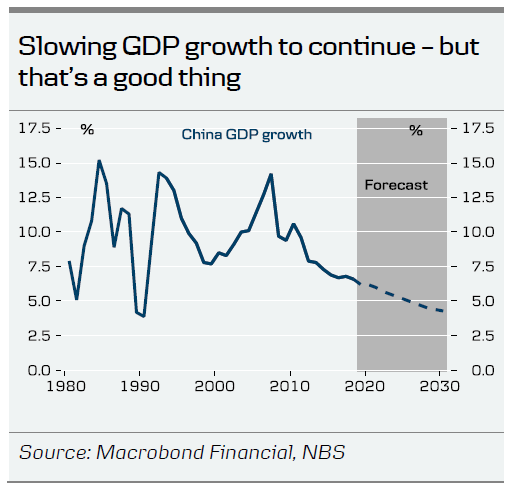
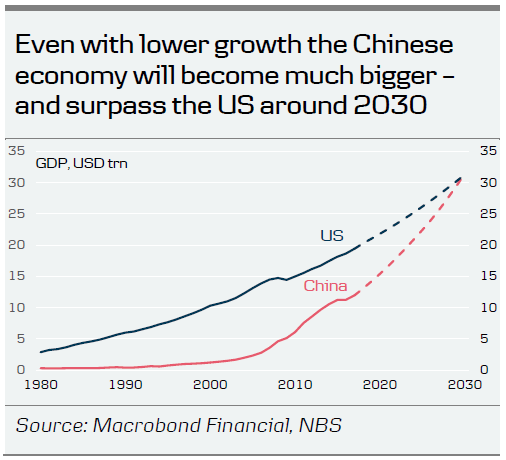
Comment. Many news headlines focused on the fact that growth for 2018 was the weakest since 1990. However, that headline can hopefully be made for many years ahead as China's structural growth rate is now declining. This is perfectly normal at this stage of the catching up and was the case in South Korea, Taiwan and Japan during their catch-up phases. It is also a sign that China is putting more focus on quality over quantity. We expect growth over the next decade to decline gradually and average 5% from 2020-30 (see top chart on page 1). However, it will still lead to a rise in GDP to around USD32trn in 2030 from the level in 2018 of USD13trn. 2030 is also the year in which we expect Chinese GDP (in market prices) to surpass US GDP.
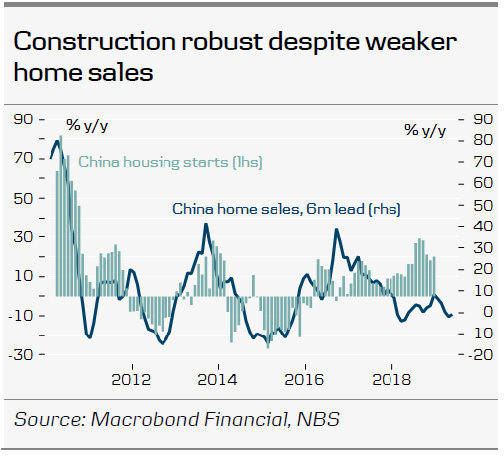
When looking at the current cyclical picture, though, there is no doubt that China is now facing a downturn, which we believe will continue into Q1 as the trade war bites further. However, we expect activity to grind higher from Q2 driven by stimulus, robust construction (see top chart) and a trade deal between US and China. If we are right, we should also see a gradual improvement in the global business cycle from Q2 as China is the epicentre of the current global slowdown. That in turn should drive stronger equity markets globally – not least in China and Emerging Markets.
Xi Jinping warns over rising risks
On Monday, Xi Jinping hosted a study session at the Party School of the Communist Party that focused on rising risks to China. According to Xinhua Xi 'told senior officials to strengthen their ability in preventing and defusing major risks to ensure sustained and healthy economic development and social stability'. In his speech Xi 'analyzed and raised specific requirements on the prevention and defusion of major risks in areas including politics, ideology, economy, science and technology, society, the external environment and Party building'. The study session was attended by China's top leaders across the country and lasted a full four days, see also SCMP 24 January.
Comment. The seminar highlights that China sees risks on many fronts currently – not least the economy, international relations, security, but also ideology. The seminar highlighted that 'prority should be given to strengthening the ideological and political education among the young, building up their full confidence in the path, theory and system'. There is a rising concern among Chinese leaders, that the US will increasingly work to undermine the Chinese model. This has been advocated by American China researcher at the Hudson Institute Michael Pillsbury, who has been called the leading authority on China by Trump. In Pillsbury's book 'The Hundred-Year Marathon' from 2015, he writes that the US should be 'reviving the support for democratic and civil society groups within China'.
Other news of the week
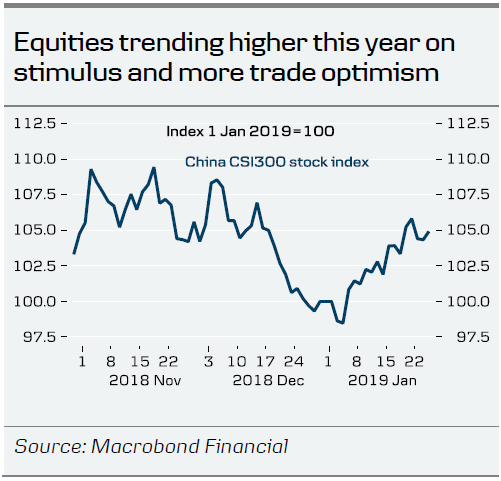
Chinese stock markets were treading water somewhat this week but are still on an upward trend so far this year (see chart).
China is now among the most innovative countries in the world according to Bloomberg Index, see Bloomberg 22 January.
The US confirms it is still seeking the extradition of Huawei CFO, SCMP 22 January.
Weekly Economic and Financial Commentary: Economic Growth Cooling Off in Europe, China
Weekly Economic and Financial Commentary
U.S. Review
Home Sales End 2018 on a Low Note
- Data for durable goods orders and new home sales during the month of December were postponed as a result of the continued partial government shutdown.
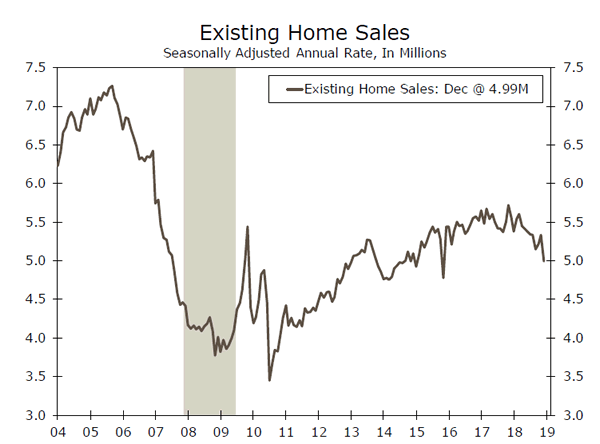
- Existing home sales fell 6.4% to a 4.99 million-unit pace, the slowest since November 2015.
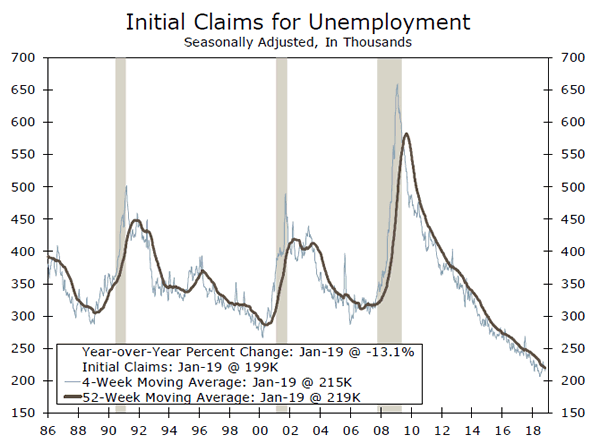
- Initial unemployment claims for the week ending January 19 fell to 199,000, the lowest level since 1969.
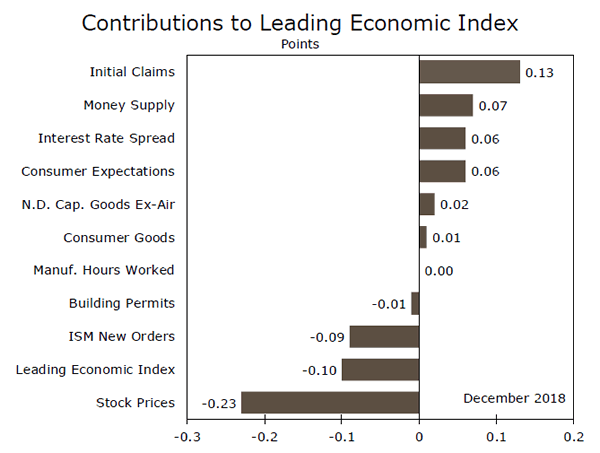
- A 0.1% decline registered in the December leading economic index (LEI) was mostly the result of a drag from financial market volatility.
Home Sales End 2018 on a Low Note
The partial federal government shutdown continued this week. The doors of many agencies that receive federal funding have now been closed for 35 days, the longest period in the nation's history. As a consequence, reports for durable goods orders and new home sales during December were postponed.
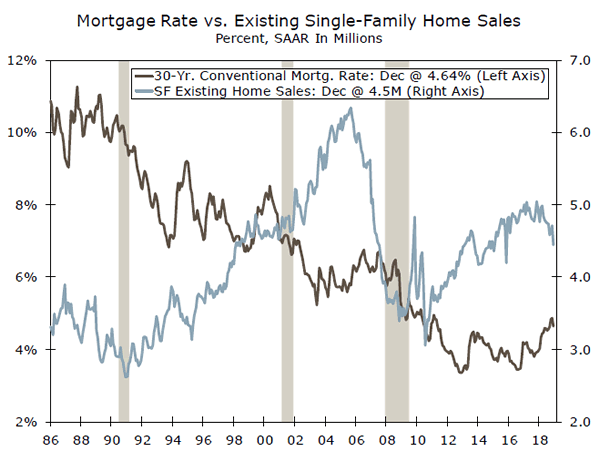
While the Census Bureau was unable to provide data on new home sales, the National Association of Realtors (NAR) revealed that existing home sales faltered during December. Resales of singlefamily homes and co-ops/condos fell 6.4% to a 4.99 million-unit pace, the slowest since November 2015. The magnitude of the drop exceeded expectations, but a slowdown in sales was largely anticipated. Pending home sales, which measure contract signings and lead closings by four to eight weeks, weakened considerably in the second half of the year alongside noticeably higher mortgage rates.
December's decline caps a year in which the housing market lost a great deal of momentum. Sales trended lower for much of the year, averaging a 5.34 million-unit pace in 2018, 3.6% lower than the average 5.53 million-unit pace posted in 2017.
That being said, December's report offered a few bright spots that point to housing market conditions improving in 2019. Inventories of homes on the market grew 6.2% year over year during December, the fifth consecutive increase. Extremely low inventory levels have been a driving force behind the rapid home price appreciation and an impediment to overall sales. As inventory levels improve, home prices should continue to ease. The NAR reported that the median existing single-family home price moderated 2.9% year-over-year, the slowest rise since 2012.
More modest home price appreciation amid higher mortgage rates should help support a gradual improvement in home sales moving forward. While we expect mortgage rates to trend upward over the course of the year, rates on 30-year conventional loans fell in December, which led to a noticeable increase in mortgage applications in early January, further evidence that home buying activity is set to improve.
A solid labor market should also be supportive of housing and so far there has been little evidence of any weakening on the horizon. Initial unemployment claims for the week ending January 19 fell to 199,000, the lowest level since 1969. While initial claims had ticked slightly higher toward the end of 2018, claims have fallen in each week so far in January. Initial claims for federal civilian workers, which are reported separately and lag by one week, increased to 25,419, which was to be expected given the roughly 800,000 furloughed federal workers.
Meanwhile, the LEI continues to point to generally favorable economic conditions. The 0.1% decline registered in December was mostly the result of financial market volatility, which dragged down the overall index. A note of caution about reading too much into this report: due to the lack of new data arising from the shutdown, manufacturers' new orders and building permits also had to be estimated by the Conference Board.
U.S. Outlook
FOMC Meeting • Wednesday
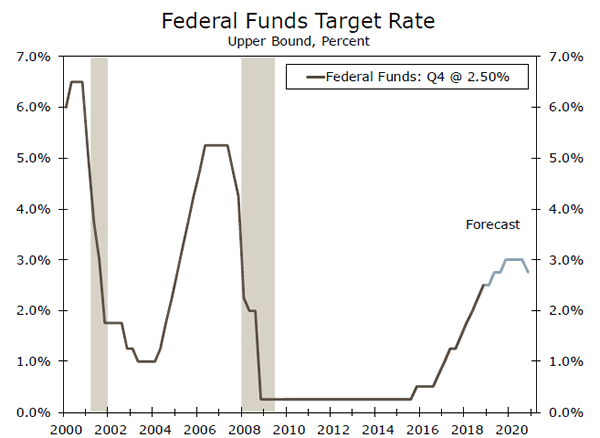
It is widely expected that the FOMC will leave its policy rate and balance sheet program unchanged at its January meeting. We expect the statement and Chair's press conference—now held after every meeting—to reflect a more cautious and uncertain outlook, however.
The committee is likely to acknowledge signs of slowing growth based on "available data"—a nod to the fact that the partial government shutdown, an added source of uncertainty, has delayed the release of some key data (including the first look at Q4 GDP, originally due Wednesday as well). Given the more conservative outlook, the statement may also remove the notion that "further gradual increases" in the fed funds rate may be necessary. Overall, we believe the FOMC will remain constructive on the U.S. outlook, but the more dovish tone would be supportive of our expectations for the FOMC to pause further rate hikes until late in the second quarter.
Previous: 2.25-2.50% Wells Fargo: 2.25-2.50% Consensus: 2.25-2.50%
Employment • Friday
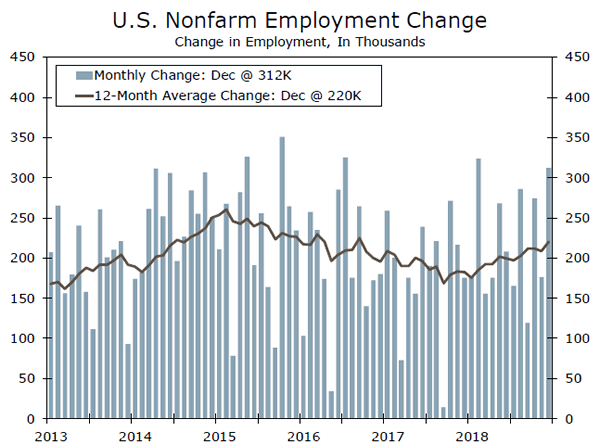
The exceptionally strong pace of hiring in December is unlikely to have persisted, and we expect hiring to slow below its recent trend. Government workers affected by the shutdown will still be counted as employed since back pay has already been approved, while the impact on contractors will probably be minimal since the survey was early in the shutdown. Yet other data, including job openings, hiring plans and PMI employment indexes, suggest more moderate hiring recently. Furloughed workers will be counted as unemployed, but after December's jump and the release of annual adjustments to the household survey, we expect the jobless rate to tick down to 3.8%
Another strong print for payrolls and average hourly earnings would keep the FOMC on course to eventually raise rates twice more this year. A significant downside miss, however, would add support to the view that the FOMC needs to hold off on further rate increases longer than the committee currently anticipates.
Previous: 312,000 Wells Fargo: 155,000 Consensus: 160,000
ISM Manufacturing • Friday
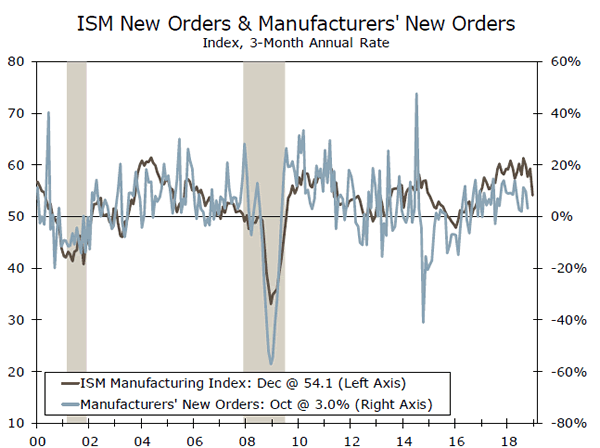
The ISM index tumbled 5.2 points in December, but the drop left the index well within expansion territory at 54.1. The two-year low puts the ISM more in line with hard data on the factory sector, which had been pointing to softer factory sector performance for some months now.
With global growth slowing and continued uncertainty surrounding trade, the manufacturing environment has deteriorated over the past year, but we expect the ISM index will be little changed in January. The Markit and regional PMIs released thus far for January were, on balance, little changed from their December readings.
The ISM will take on increased importance given "hard" data on factory orders is not being published due to the shutdown. Another significant miss to the downside would suggest that the global environment is weighing more heavily on growth and support a more cautious policy stance by the FOMC.
Previous: 54.1 Wells Fargo: 54.0 Consensus: 54.3
Global Review
Economic Growth Cooling Off in Europe, China
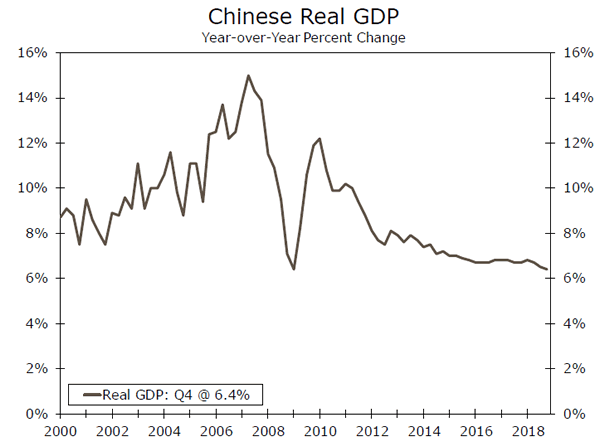
- The Chinese economy grew 6.4% in Q4-2018 and 6.6% for the year, the slowest pace since 1990 as the country continues to battle structural and trade-related economic challenges.
- The European Central Bank (ECB) left monetary policy unchanged at its meeting this week, but acknowledged that the downside risks to growth are growing.
- The Bank of Japan (BoJ) also left monetary policy unchanged, while upgrading its growth forecasts and downgrading its inflation forecasts. Once again, reaching and sustaining the 2% inflation target seems a ways off.
Economic Growth Cooling Off in Europe, China
Chinese GDP for Q4-2018 kicked off the international data this week. The print was largely in line with consensus; real GDP growth was 6.4% year over year, down from 6.5% in Q3 (see chart on front page). For the year, the Chinese economy grew 6.6%, the slowest pace since 1990.
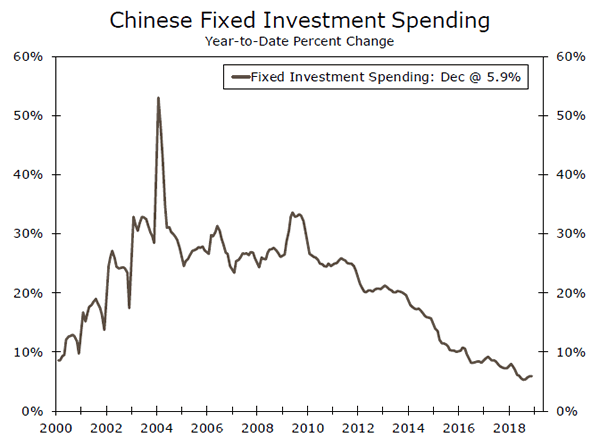
Chinese economic growth was slowing well before the trade dispute with the United States that accelerated in 2018. Workingage population growth has slowed significantly, investment spending growth has been on a secular decline for years (top chart), and the rapid pace of technological adaption has abated, as is customary for emerging markets at this point in their development. The escalation of trade tensions and the enactment of several rounds of tariffs has likely contributed to a sharper slowdown. Chinese policymakers have done their best to combat this slowdown via monetary and fiscal stimulus, but without a clean resolution to the trade situation, a more marked slowdown is likely in store in 2019. At present, our forecast for real GDP growth in China in 2019 is 6.2%.
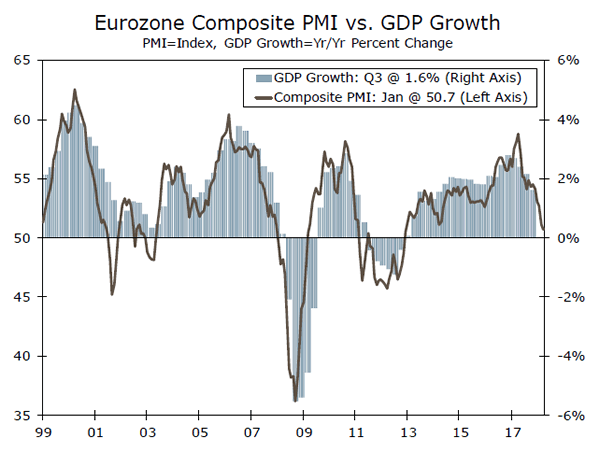
In Europe, the European Central Bank (ECB) left monetary policy unchanged against a backdrop of economic growth that has weakened considerably over the past few quarters. Real GDP growth in Q4-2018 appears to have been just as weak as it was in Q3 (see the Global Outlook section and the Topic of the Week), and the first couple data points for Q1 have not been much better. The flash Purchasing Manager Indices for January was weaker and are now teetering on the edge between expansion and contraction (middle chart). Amid these signs, the ECB acknowledged that the economic risks in the Eurozone are tilted to the downside. Forward guidance from the ECB had already signaled that rates would be on hold through at least the summer, so for now the central bank seems content to monitor the data for additional signs of sustained weakness.
The Bank of Japan (BoJ) also met this past week and made no major changes to its still extraordinarily easy monetary policy regime. The central bank's median growth projection actually ticked up modestly for fiscal 2019 and fiscal 2020, but its inflation forecasts came down for those two years, a phenomenon that has become all too familiar for BoJ policymakers. Once again, reaching and sustaining the 2% inflation target seems a ways off. Developments in overseas economies and the effects of the consumption tax hike scheduled to take place in October 2019 were two of the primary risks to economic activity identified by the BoJ.
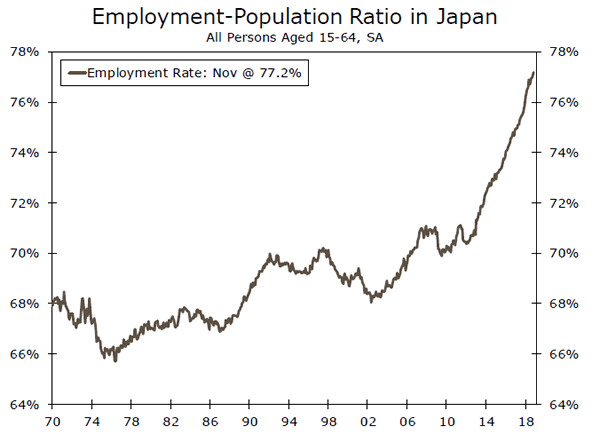
One encouraging development in the Japanese economy has been the robust pickup in the employment-population ratio. Since the start of 2013, the employment-population ratio for all persons aged 15-64 has risen more than 6 percentage points (bottom chart). This has been especially true for females; the female employment rate for the same age cohort has risen more than 8 percentage points over the same period. For a country that has very well-documented demographic challenges, a larger segment of the population working is a welcome development, at least as it relates to things like fiscal sustainability and faster aggregate economic growth.
Global Outlook
Chinese PMIs • Wednesday/Saturday
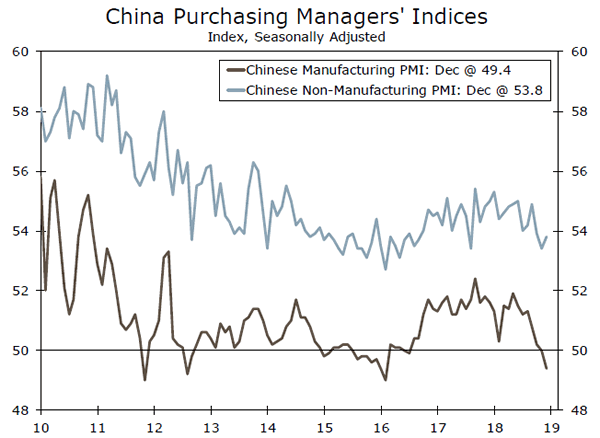
Both the "official" and Caixin Purchasing Manager Indices for China are released next week and will offer an initial look at economic activity in China to start the year. As was discussed in the international review, economic growth continued to slow in China in Q4, and the "official" manufacturing PMI was 49.4 in December, its first close below 50 since July 2016. In that report, the new orders component also slid below 50, and new export orders continued to fall, declining to 46.6. The privately-produced Caixin Manufacturing PMI did not fare much better, also falling below 50 to 49.7, the lowest reading since May 2017.
Some stabilization in the PMIs would be encouraging, though the approaching Chinese New Year could cause some near-term noise in the data. A continued decline, however, would signal the downside risks are rising for China ahead of the key March 1 trade deadline with the United States.
Previous: 49.4 Consensus: 49.3 (Manufacturing)
Mexico GDP • Wednesday
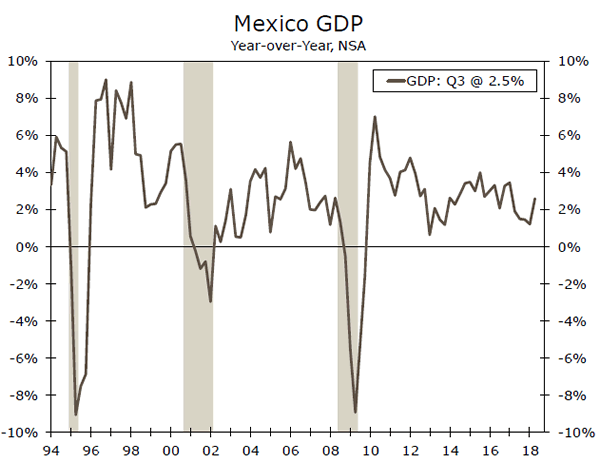
Real GDP growth surprised to the upside in Mexico in Q3, rising 2.5% year-0ver-year, roughly the same pace as the previous two quarters. The fourth quarter in Mexico was a volatile one, with a depreciating peso, a decelerating economy according to the central bank's projections and two rate hikes from monetary policymakers.
Lower oil prices will likely do little to help spur the investment needed to revitalize Mexican oil production, and the stagnation in U.S. vehicle sales represents another challenge to the Mexican economy. The trade uncertainty from NAFTA renegotiation has receded somewhat now that the USMCA has been signed, but the congresses of the countries must still approve the deal. With the U.S. government currently experiencing a historically long shutdown, the prospects for passage have probably not improved of late. We look for real GDP growth of 2.3% in Mexico in 2019 as fiscal stimulus provides a boost, before growth cools to 1.9% in 2020.
Previous: 2.5% Consensus: 2.0% (Year-over-Year)
Eurozone GDP • Thursday
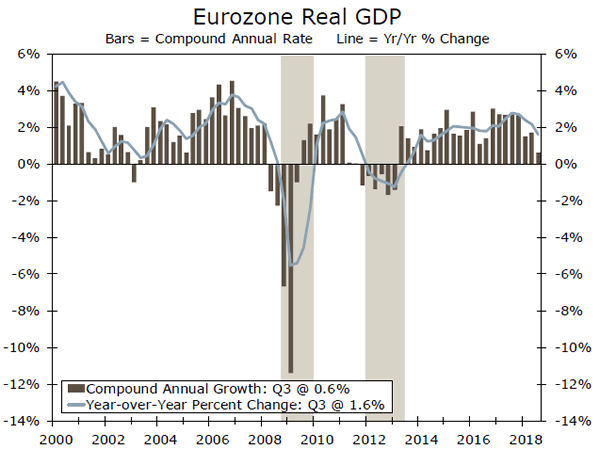
Real GDP growth in the Eurozone clearly slowed in Q3-2018, but some of the slowdown was likely due to temporary factors, such as a one-off decline in auto purchases related to some regulatory changes. Since then, however, the data have continued to show signs of weakness. As mentioned in the Global Review, the PMIs have continued to soften, and industrial production in November posted the sharpest year-over-year decline since 2012. With economic growth in Q4 likely slowing further from the 1.6% year-over-year pace registered in Q3, any further deterioration as Q1-2019 data start to become available would be an ominous sign.
The first Eurozone CPI print of 2019 is also released next Friday. Though GDP growth has weakened, core inflation has held steady, hovering within +/- 0.1 percentage point of 1.0% every month since May. With growth weakening, any sign that core inflation is slowing would be yet another hurdle to the first rate hike from the ECB.
Previous: 0.2% Consensus: 0.2% (Quarter-over-Quarter, Not Annualized)
Point of View
Interest Rate Watch
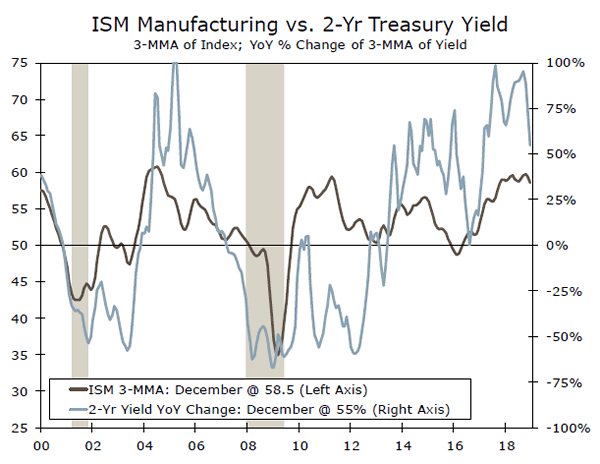
Look to the ISM for Clues on the Fed
The financial markets are still priced as if the Fed has completed raising interest rates for this cycle and currently expect the next Fed move to be a cut in short-term rates early next year. Official pronouncements by Fed officials and the most recent dot plot of expectations for the federal funds rate for the next few years remain consistent with two more hikes this year before the Fed shifts directions amid slower growth and the upcoming presidential election in 2020. That remains our forecast as well, with hikes penciled in for June and December.
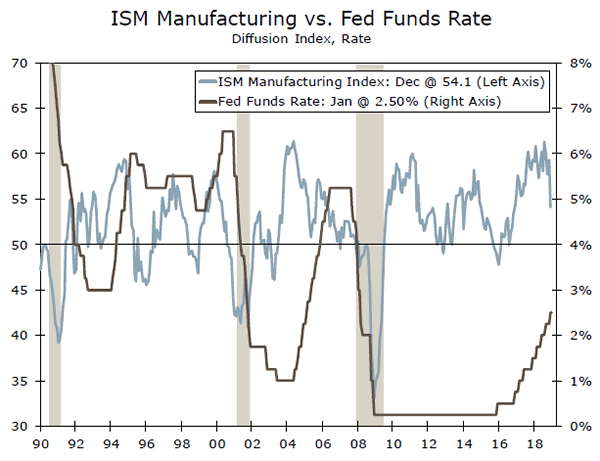
Next week's FOMC meeting will probably not provide a definitive answer as to whether or not the Fed is finished hiking rates this cycle. It will likely reinforce the notion that it has become more patient and data dependent in setting policy than simply striving to return interest rates to a 'neutral' level. With data more scarce amid the government shutdown, the Fed will scrutinize what data is still being reported for important clues on what is being missed. Momentum has clearly slowed in recent weeks and many forecasters have scaled back their expectations for first quarter real GDP growth. The loss of momentum is most evident in the factory sector and was clearly picked up by the ISM manufacturing survey, which plummeted 5.2 points in December to 54.1, marking its largest one-month drop since May 2011. Most regional manufacturing indices also weakened that month. Data for January will be reported on Friday and will likely show a modest drop. Data from regional Fed surveys were mixed this past month.
The Fed has a long history of closely scrutinizing the ISM manufacturing survey. While the factory sector accounts for a fairly small proportion of GDP, it still provides the bulk of the cyclical impulse to the broader economy. The Fed has rarely raised the federal funds rate when the ISM index is declining sharply and has typically halted tightening cycles once the index fell below the key 50 break-even level. Another big drop in the ISM would likely cause the Fed to take a longer pause and if the index falls definitively below 50, it will likely remain on hold until the factory sector rebounds in a meaningful and sustainable way.
Credit Market Insights
A Watchful Eye on Consumer Credit
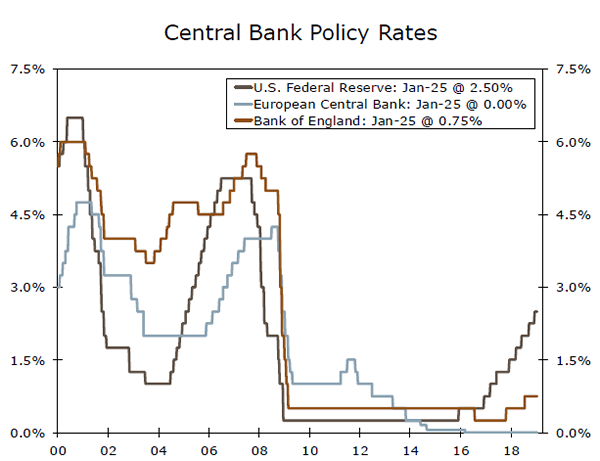
Since the FOMC's last policy meeting in December, market implied probabilities of a rate hike this year have tumbled. This happened alongside a sharp sell-off in the stock market in December, and heighted fears that a recession was on the horizon. Even with a more recent dovish tone from the FOMC, worries of a downturn have not completely subsided, as the partial government shutdown has stretched into its fifth week and continues to cloud analysts' visibility of economic developments.
After hiking rates 100 bps in 2018, it is widely expected that the FOMC will leave its policy rate unchanged at its meeting next week (see the U.S. Outlook section for more detail). Since the FOMC began raising rates in late 2015, the cost of carrying consumer debt has steadily increased. Interest rates on credit cards are now at their highest rate since 2000. With only minimal increases in income growth over this cycle, could the increased cost of debt become a concern among households?
Total household debt as a percent of GDP remains relatively low, while the household financial obligations ratio remains near lows not seen since the 1980s. This should allow households to withstand increased borrowing costs. Elevated saving rates should also add cushion to consumer finances. But, with our assumption that the FOMC will eventually resume its gradual pace of tightening with two more rate hikes this year, the cost of debt will likely continue to rise, and could pressure consumers.
Topic of the Week
Is the Eurozone Economy Close to Recession?
The recent slowdown in Eurozone economic growth has sparked fears that the bloc may be approaching, or already in, a recession. Forecasting recessions is a notoriously difficult task, and even defining what marks a recession is not always straightforward. In a recent special report, we identify a couple simple rules of thumb that may allow readers to monitor the economic data for signs of an imminent recession in the Eurozone. While some recent indicator readings are worrying, we do not believe the data at present suggest a Eurozone recession is either imminent or inevitable.
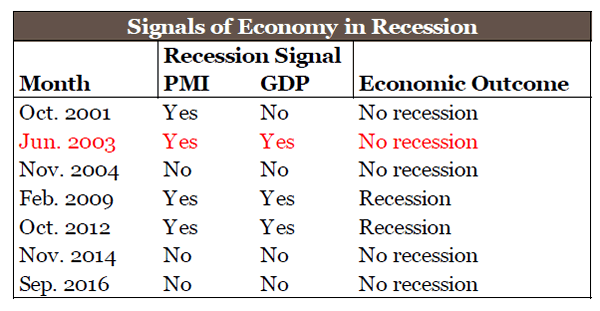
In our view, GDP growth would need to range between 0.1% to 0.2% (or slower) per quarter for three or more quarters AND the composite PMI would have to remain at or below the 51.0 level for several months before we would become seriously concerned that the Eurozone is either imminently approaching, or in, economic recession. The historical results of using this approach are illustrated in the table to the right.
What then are the implications for the current episode? Like ECB President Draghi, we do not (yet) believe these important economic indicators are signaling an approaching Eurozone recession. GDP growth has averaged 0.33% per quarter over the past three quarters, a pace that has been consistent with the Eurozone avoiding recession in the past (Q3-2004 to Q1-2005 and Q2-2001 to Q1-2002). The January PMI, however, dipped just below 51 to 50.7, though this was admittedly the preliminary "flash" estimate.
Pulling it all together, it is clear to us that the Eurozone economy has slowed materially over the past year. The data do not yet indicate to us that a recession is inevitable or imminent, but both the level readings and the directional trends suggest heightened monitoring of the data is warranted. If Q4-2018 real GDP growth is especially weak next week, a Q1-2019 rebound will become even more important to stave off a recession and keep the ECB on track to tighten rather than ease as its next move.
The Weekly Bottom Line: Markets Up Despite Lack of Good News on the Economy
The Weekly Bottom Line
U.S. Highlights
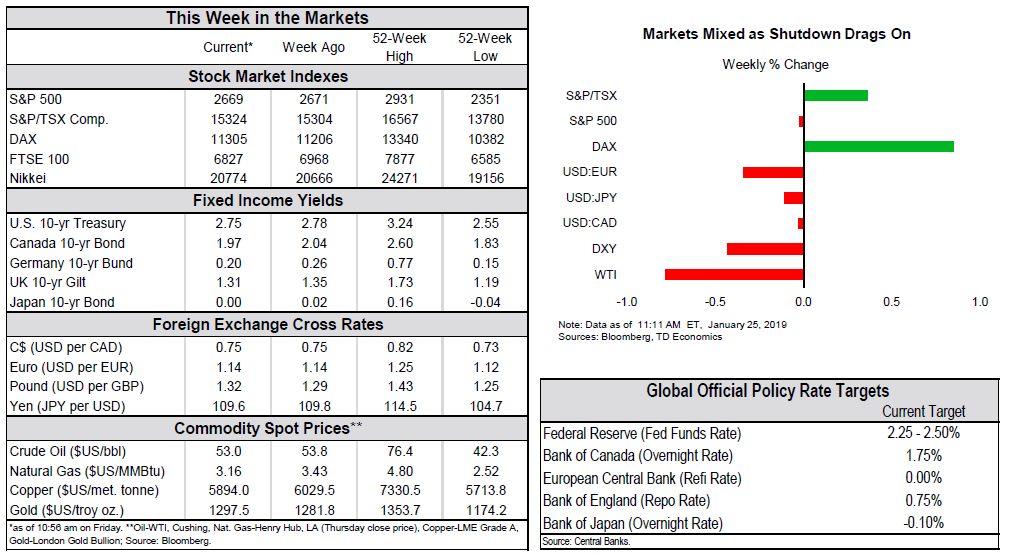
- Global equity markets are up on the week, despite some negative economic news, and continued dysfunction in Washington. The ECB characterized the economic risks as to the downside, and will be more cautious removing stimulus.
- Amidst the U.S. partial government shutdown there was little data to unpack. Home sales showed a sour end to 2018 for real estate. Negotiations in Congress continue, but there is no clear end to the impasse at time of writing.
- Next week we get some key events - an FOMC rate decision with a press conference, and a payrolls report. Furloughed federal workers are expected to lift the unemployment rate, but should not affect the payrolls tally.
Canadian Highlights
- The TSX and Canadian dollar traded sideways this week, hanging onto recent gains. Still, the WCS heavy oil price pushed higher and is up markedly compared to its November trough – a good news story for the beleaguered oil sector.
- Economic data released this week reinforced the slowing growth narrative, with wholesale activity, manufacturing sales and retail spending falling in November. The disappointing reports also caused us to shave our Q4 growth forecast. This softer economic backdrop should keep the Bank of Canada on hold at least until July.
U.S. - Markets Up Despite Lack of Good News on the Economy
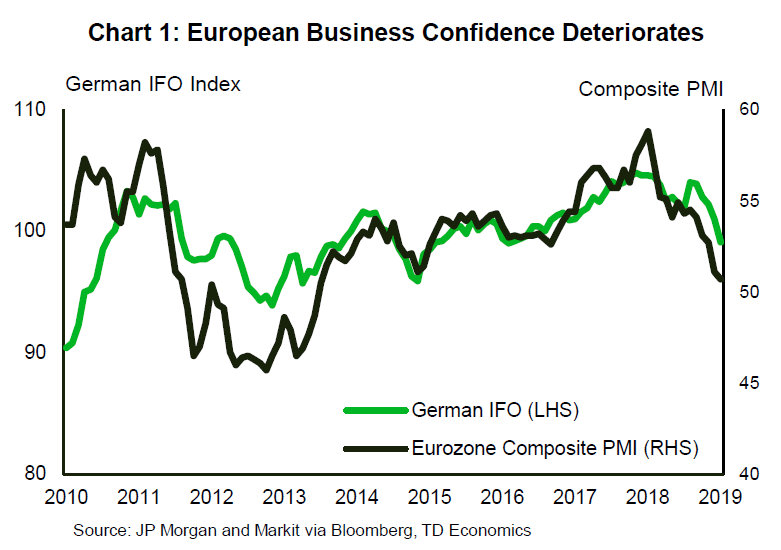
Global equity markets are up on the week, despite some negative economic news, and continued dysfunction in Washington. Most notably, Mario Draghi said that the risks to growth have moved to the downside, and the ECB will be even more cautious withdrawing stimulus. This more cautious view was supported by recent data, which showed worsening sentiment in the manufacturing sector, and in its leading economy (Chart 1).
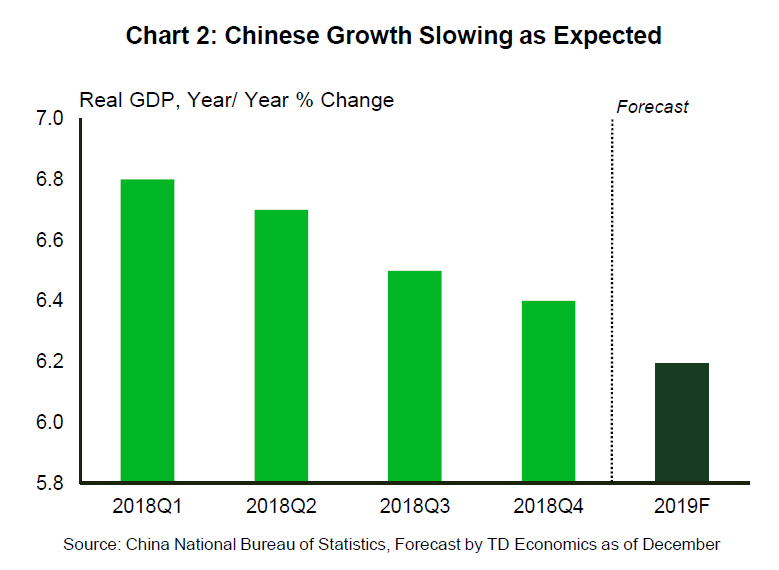
We also got confirmation that China's economy slowed dramatically in the second half of 2018 (Chart2). The rebalancing of China's economy towards domestic consumption is underway, but the downward pressure from weaker construction and infrastructure investment on headline growth is being exacerbated by unanticipated declines in consumer and business sentiment resulting from trade tensions with the U.S.. So far the data remains consistent with our December forecast that calls for Chinese economic growth to slow further to 6.2% in 2019.
With the U.S. partial government shutdown affecting some government statistical agencies, there was little economic data this week. We did see that the resale housing market ended 2018 on a weak note, but we don't know what the housing starts or permit picture looked like.
Looking ahead to next week, the closely watched advance release of Q4 real GDP growth is likely to be delayed. The incomplete picture of the U.S. economy is coming at an inconvenient time. Economists are trying to determine if the weakness in financial markets in the fourth quarter, which has already contributed to dampened consumer and business sentiment in survey data, is also showing up in real measures of spending and activity.
The Federal Reserve will still meet next week amidst the shutdown. We will get to hear from Chair Powell at a post-meeting press conference, as the Fed moves to holding a press conference at every meeting. The Fed is widely expected to keep rates steady, consistent with recent speeches, which emphasized the ability to be patient to see how the economy fares in the wake of slower global growth and the deterioration in sentiment.
Fortunately, we are not in a total data vacuum. Next week, the BLS will release employment data, where we will see if the blistering hiring activity in December carried over into January. As legislation has been passed guaranteeing furloughed federal workers back pay to cover the shutdown, these workers will not dampen the payrolls tally. However, they are still likely to boost the unemployment rate. The reference week for the Household survey was January 6-12th, and furloughed federal employees (0.2% of the labor force) would be classified as unemployed. Assuming federal workers are appropriately sampled in the survey, this could result in a 0.2 percentage point boost to the January unemployment rate. Meanwhile, the economic hit from the shutdown continues to mount. Growth in the first quarter is looking soft at 1.4% (annualized), assuming a 0.2%-pt direct hit from the shutdown if it lasts to the end of January.
Canada - Data Confirms Slowing Growth Narrative
The TSX and Canadian dollar traded sideways this week, hanging on to recent gains. Still, the trend remains a friend, with both asset classes significantly off the lows seen late last month. Meanwhile, the price of WCS oil pushed higher during the week and is up over 200% compared to its November trough – a good news story for the beleaguered oil sector. On the data front, the news was less encouraging as economy watchers were delivered a trio of disappointing reports. Wholesale activity, manufacturing sales, and retail spending all declined in November, consistent with the softer economic backdrop expected by the Bank of Canada and prompting a modest downward revision to our fourth quarter growth forecast.
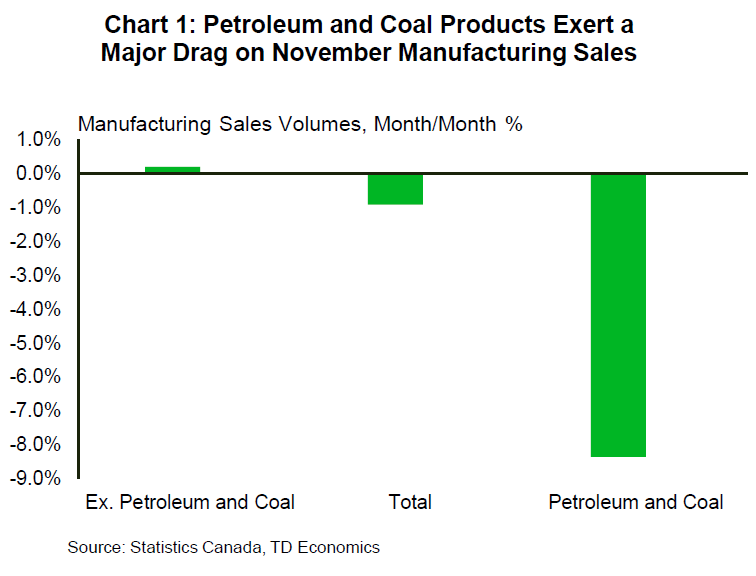
Manufacturing activity came in shy of expectations, with volumes dropping 0.9%. The petroleum and coal sector was the chief culprit (Chart 1), with maintenance and turnaround work contributing to an outsized decline in sales. The immediate outlook for this sector is no brighter, with Alberta's oil production curtailment plan commencing on January 1st.
Stripping out the petroleum and coal sector, the picture was a little bit brighter, with manufacturing sales edging 0.2% higher. Peering ahead, manufacturing should find support from still-solid U.S. demand and a low-flying loonie, giving aid to the much needed rotation from consumer spending to investment and export-led growth. However, the aforementioned oil production cuts will exert a significant near-term drag on manufacturing output and overall GDP growth.
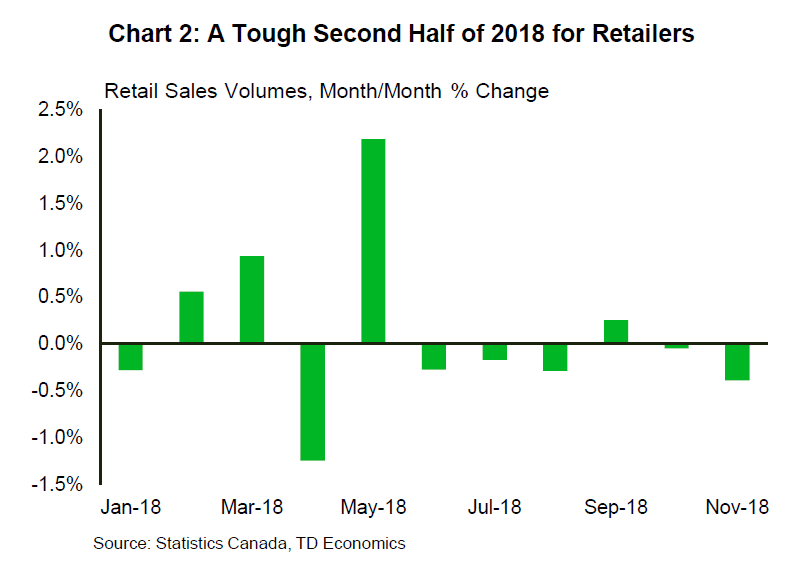
November was another weak month for retail spending (Chart 2). With households feeling the pinch of rising interest rates, retail volumes dropped 0.4% during the month, weighed down by falling motor vehicle and parts sales. Sales in this rate-sensitive sector are now tracking a modest year-to-date drop through November, a marked change from the 6% gain averaged the prior three years. The impact of rising borrowing costs is also being felt at retailers tied to housing markets. Volumes at building material and garden equipment supplies stores dropped for the fifth straight month in November. Sales of these items are now down 3.9% compared to a year ago, the worst performance since 2013. Not to be outdone, sales at furniture and home furnishing stores were also significantly lower year-on-year in November. Going forward, household spending will likely remain muted through 2019, as debt burdened households contend with rising borrowing costs.
Putting it all together, the dataflow suggests that overall economic activity likely pulled back in November, and for fourth quarter as a whole will come in softer than previously anticipated. We now expect growth closer to the 1% mark, not far off the Bank of Canada's estimate of 1.3%. This softer economic backdrop combined with well contained inflation should keep a patient Bank of Canada in wait-and-see mode for some time yet.
U.S.: Upcoming Key Economic Releases
U.S. Employment - January
Release Date: February 1, 2019
Previous: 312k, unemployment rate: 3.9%
TD Forecast: 150k, unemployment rate: 4.0%
Consensus: 160k, unemployment rate: 3.9%
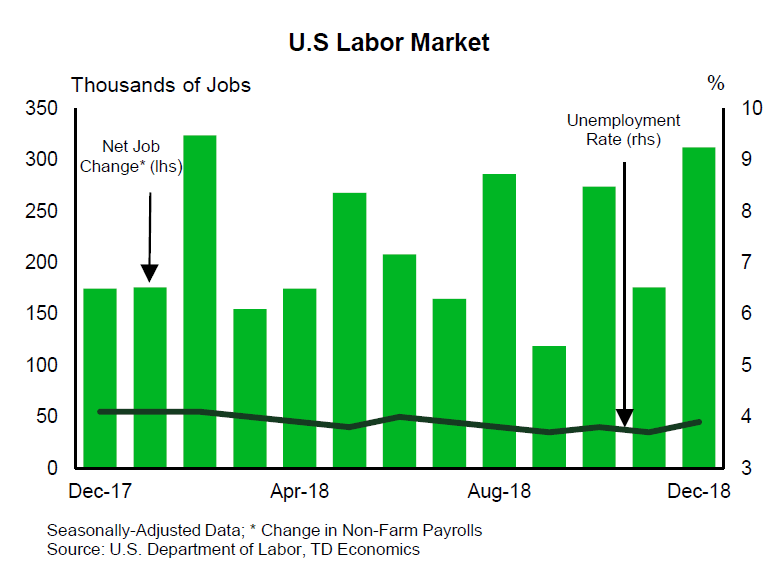
TD expects payrolls to mean-revert to 150k in January following the eye-popping jump to 312k in December. In effect, we expect some of last month's unexpected gains in employment to be given back in January. In particular, we see scope for softness in the manufacturing sector after three consecutive months of solid payroll gains and as supported by the regional Fed surveys, which point to some weakness in the sector. In addition, employment in the retail sector may also revert back following a strong hiring streak during the holiday season (November-December). Weaker employment signal may also be exhibited in the household survey as a consequence of furloughed federal employees due to the ongoing government shutdown. Indeed, we anticipate the unemployment rate to reflect this by a tick up to 4.0% in January, and we see further risks to the upside. Lastly, we expect wages to keep their momentum and rise 0.3% m/m, maintaining the annual print unchanged at 3.2% in January.
U.S. ISM Manufacturing – January*
Release Date: February 1, 2019
Previous: 54.1
TD Forecast: 53.3
Consensus: 54.3
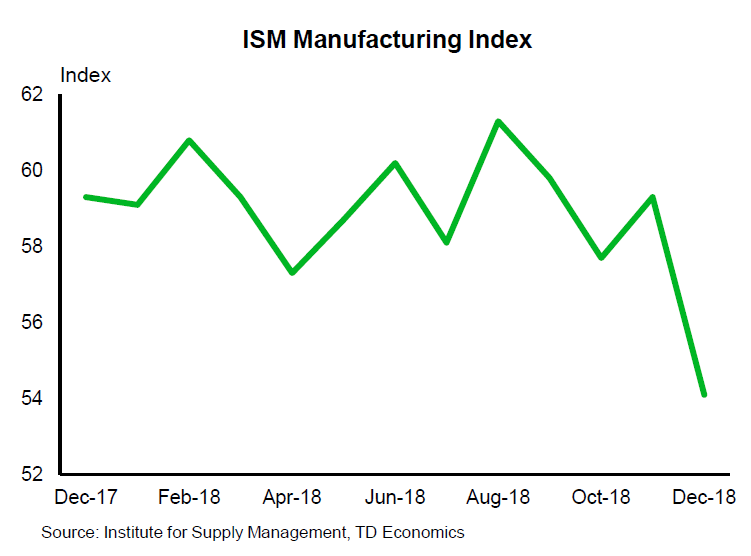
ISM-adjusted regional surveys suggest the manufacturing ISM likely fell further in January following the sharp 5.2 decline in December. In particular, both the adjusted Empire and the Philly Fed manufacturing surveys pointed to further softness at the start of the year. Although our forecast currently stands below consensus expectations, we note that at that level the ISM index would remain in expansionary territory that still suggests above-trend GDP growth. Based on the surveys, we expect the inventory and employment components to lead the decline, while new orders has the potential to stabilize following its large decline in December.
Canada: Upcoming Key Economic Releases
Canadian Real GDP - November
Release Date: January 31, 2019
Previous: 0.3%
TD Forecast: -0.1%
Consensus: N/A
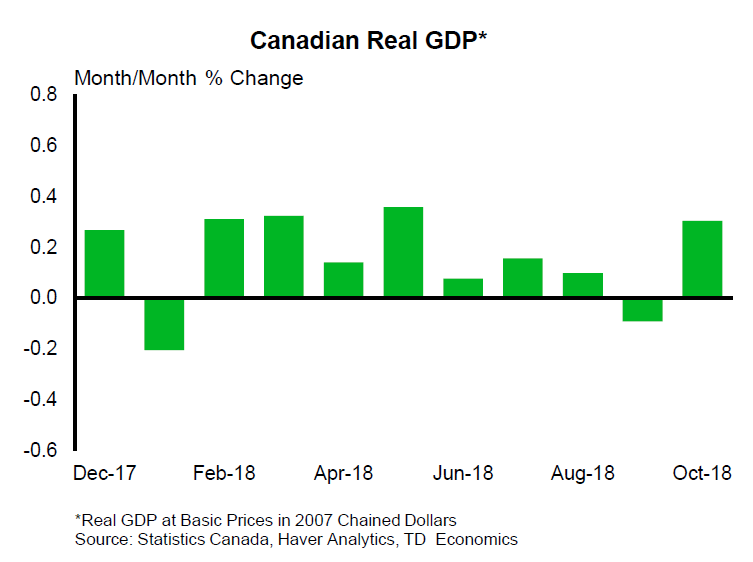
The Canadian economy is projected to take a step backward in November with a 0.1% decline in industry-level GDP. Early signs are pointing towards a broad slowdown in activity as headwinds emerge across both goods and services. Energy will be an acute source of pain, reflecting voluntary shut-ins across the oil sands as producers grappled with blowout spreads on Canadian crude oil. Weaker construction and manufacturing activity will weigh further on output from the goods-producing sector while services will contend with a pullback in real retail and wholesale sales alongside ongoing softness in existing home sales. Given uncertainty around the impact of crude oil shutdowns we view risks as tilted to the downside, although the 0.3% increase from October will help blunt the impact on Q4 growth. The BoC has already set a relatively low bar at 1.3%, but a 0.1% decline would likely imply a growth tracking closer to the 1% mark.
Dollar Falls Ahead of Busy Week in Markets
The US dollar is weaker across the board on Friday after President Trump reached a deal to reopen the Federal government. Washington will continue to operate amidst political uncertainty at the discussed agreement is only until February 15 when a new shutdown could occur if Democrats and the GOP don’t reach a deal on the border wall.
The U.S. Federal Reserve will publish its Federal Open Market Committee (FOMC) statement on Wednesday, January 30 at 2pm EST, with Chair Jerome Powell hosting a press conference at 2:30pm EST. The Fed signalled on Friday that it could slow down the balance sheet reduction program put in place to keep tightening monetary policy also putting pressure on the USD.
- US Federal Reserve to keep rate unchanged
- Fed Chief Powell could confirm a pause in tightening
- US to have added 170,000 jobs in January
Dollar Softens as Fed Ready to Hit Rate Hike Pause
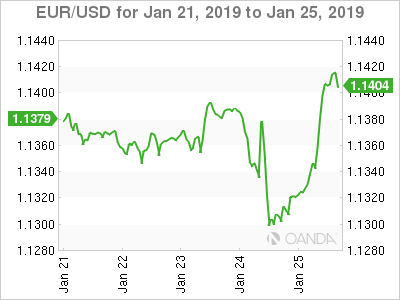
EUR/USD rose 0.46 percent in the last five trading days. The single pair is trading at 1.1414 ahead of a busy week of US economic indicators releases. The euro was higher on Friday as investors sold the dollar searching for higher yields. Political uncertainty in Washington is keeping investors from flocking to the US dollar ahead of the weekend.
The US rose last year as geopolitical factors and the support of the central bank’s efforts to normalize interest rates. The Fed had tightened monetary policy by raising rates, but also by unwinding the massive balance sheet it had accumulated as part of its quantitive easing program. Friday’s report in the WSJ about a possible end or long-term pause to the balance sheet reduction was a positive for stocks, but a negative to the US dollar.
US-China trade concerns remain, but they are moving to the background as the uncertainty on the US shutdown lessened with a short term agreement and the Fed is to take center stage with dovish expectations from the market. The US U.S. non farm payrolls (NFP) report is expected to keep showing that American employment is solid.
Pound Surges on Lower No-Deal Odds
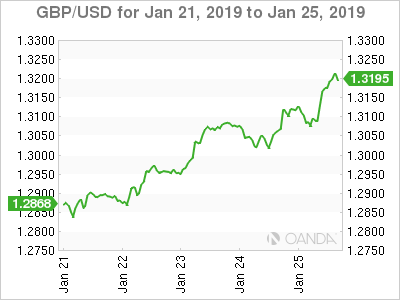
The British pound surged in the last five trading days. GBP/USD rose 2.55 percent as the no-deal Brexit option is dropping in probability. The market could be too optimistic as Prime Minister Theresa May still has to present a proposal that satisfies UK PMs as well as remain close to what was agreed with the EU. The fact that no-deal is the least favoured option could be used as leverage to get some compromise on the UK side.
Gold Gains as Fed Signals Less Tightening
Gold rose 1.41 percent on Friday. The yellow metal gained ahead of what is expected to be a dovish Fed statement and the weakness of the US dollar. The US central bank is heavily anticipated to pump the brakes on its interest rate hike policy, and even stop its balance sheet reduction program.
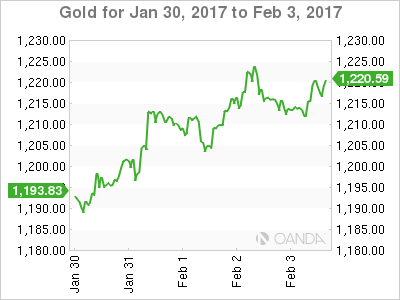
The yellow metal will continue to be an option for investors if volatility rises during the week on any development from Brexit, Venezuela and the US-China trade war. US economic indicators schedule this week could also keep gold from rising next week. US employment and manufacturing data remain solid and could boost the greenback.
Crude Gains on Friday on Soft Dollar Venezuela Anxiety
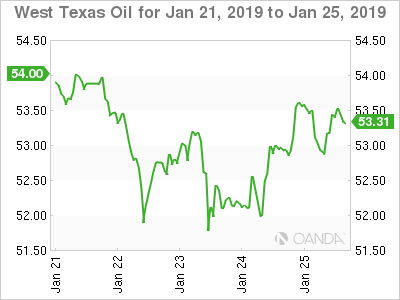
Energy prices rose on Friday, but could not offset the losses of the week. West Texas Intermediate lost 0.7 percent and Brent 1.8 percent as lower demand impacted by falling global growth forecasts. Rising supplies continue to put downward pressure on crude prices despite the efforts of the Organization of the Petroleum Exporting Countries (OPEC) and other major producers to limit production.
Rising US output and the possible European bypass of US sanctions on Iranian crude offset any disruptions caused by the political situation in Venezuela.
Monday, January 28
- 9:00am EUR ECB President Draghi Speaks
Tuesday, January 29
- 10:00am USD CB Consumer Confidence
- 7:30pm AUD CPI q/q
Wednesday, January 30
- 2:00pm USD FOMC Statement
- 2:00pm USD Federal Funds Rate
- 2:30pm USD FOMC Press Conference
Thursday, January 31
- 8:30am CAD GDP m/m
Friday, Feb 1
- 8:30am USD Average Hourly Earnings m/m
- 8:30am USD Non-Farm Employment Change
- 8:30am USD Unemployment Rate
- 10:00am USD ISM Manufacturing PMI
Dollar dumped as Fed mulls early end to balance sheet reduction
Dollar suffers broad based selloff and stocks surge after WSJ reported that Fed is considering to stop shrinking it's massive balance sheet earlier. That is, the eventual size of the portfolio of treasury securities could be larger than originally expected. Further discussion on when to stop the roll-off would take place in next week's FOMC meeting.
This is seen as move in response to the adverse stock market condition back in December. Some policy makers might want to take the balance sheet reduction off autopilot.
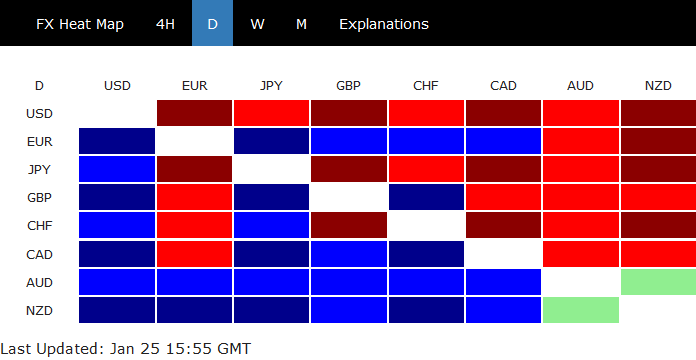
At the time of writing, DOW is up more than 1.1% and is heading towards 25000 handle.
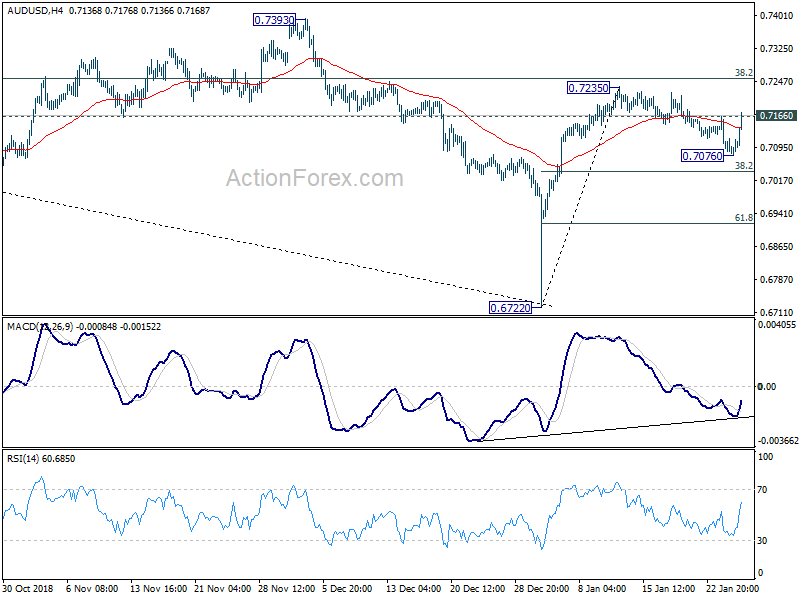
AUD/USD's break of 0.7166 suggests that fall from 0.7235 is merely a corrective pull back and has completed. Rise from 0.6722 might be resuming.