Sample Category Title
Summary 12/10 – 12/14
Monday, Dec 10, 2018
[php_everywhere instance="1"]
Tuesday, Dec 11, 2018
[php_everywhere instance="2"]
Wednesday, Dec 12 2018
[php_everywhere instance="3"]
Thursday, Dec 13, 2018
[php_everywhere instance="4"]
Friday, Dec 14, 2018
[php_everywhere instance="5"]
Weekly Economic and Financial Commentary: Perfect Example of He Said, Xi Said
U.S. Review
Despite Market Jitters, Fed to Raise Rates in December
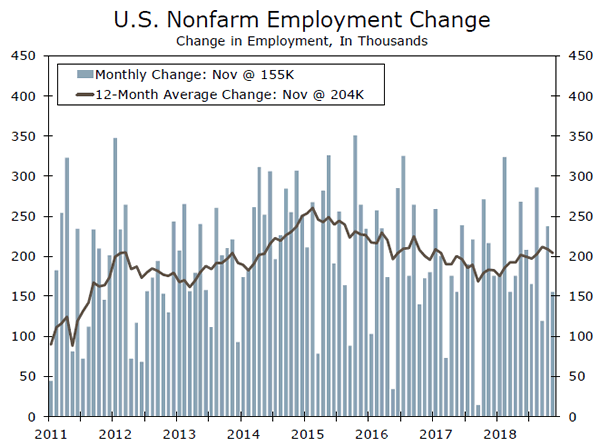
- An ephemeral trade truce, the inversion of the front-end of the yield curve and a softer than expected jobs report fueled fears of the economy slowing. But, with economic data this week suggesting a relatively healthy economy, we still expect the Fed to raise rates at its meeting on December 19.
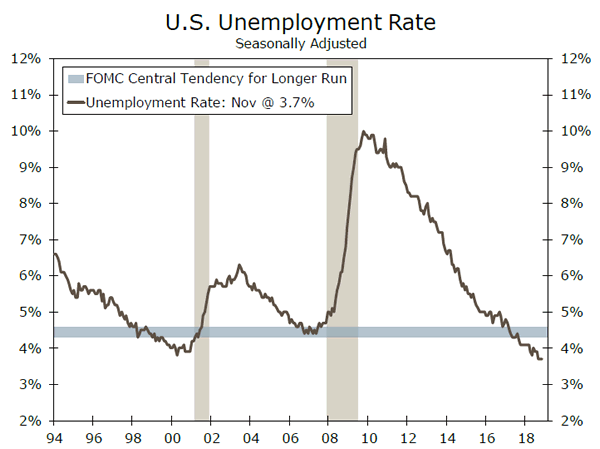
- The ISM manufacturing and non-manufacturing surveys point to robust activity. Nonfarm payrolls rose just 155,000 in November, and the unemployment rate held steady at 3.7%. But, while this report points to some softening in the labor market, we note that other measures suggest the overall jobs picture remains relatively strong.
Despite Market Jitters, Fed to Raise Rates in December
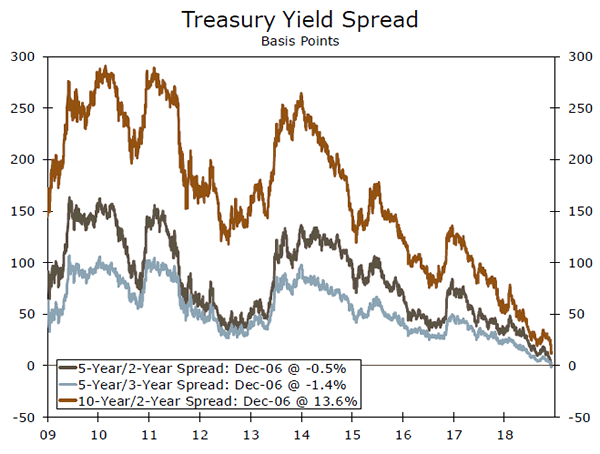
The front-end of the yield curve inverted this week, with two- and three-year Treasury yields rising above the five-year yield. Given that many analysts view an inversion as an omen for an economic downturn, this week's inversion brought heightened sensitivity among markets to the increased probability of a recession on the horizon. We note, however, that while the yield curve has inverted prior to each recession since 1970, it has done so at varying degrees of lead time–from 8-23 months. Also, the spread between the twoand 10-year Treasury yields, a more widely recognized spread, has flattened recently, but has not yet inverted.
Given that we are in the tenth year of the current expansion, which is the second longest on record, the late-cycle dynamic that this inversion suggests is not wholly surprising. Coincident measures of growth remain healthy but have come off the boil recently, while some forward-looking measures of growth have weakened. We look for a moderation in economic growth over the next two years, but are not forecasting a recession. Even as the Fed has moved away from a pre-determined policy path and become more data dependent, we do not expect this inversion to deter it from raising rates at its December meeting.
Economic data this week suggest a relatively healthy economy. One area of uncertainty continues to be trade turmoil between the United States and China. A meeting between President Trump and President Xi at the G-20 summit resulted in a 90-day ceasefire to allow for negotiations. While you can find our full analysis of the agreement in our International Review section on Page 4, here we highlight this temporary truce has not added certainty to the domestic outlook. Markets turned bearish this week as the potential for further escalation remains, while producers continue to feel the sting of tariffs in the form of higher input costs.
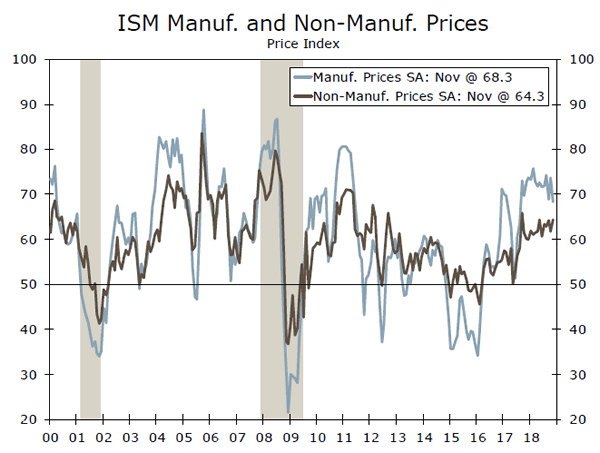
Fresh data from the Institute for Supply Management (ISM) this week pointed to robust activity in both the manufacturing and nonmanufacturing sectors in November. The manufacturing prices paid component fell sharply, while the non-manufacturing measure continued to trend higher. The anecdotal evidence from respondents of both surveys nonetheless suggests that tariffs are having a wide-ranging impact across industries, such as higher input costs weighing on producers. The manufacturing and nonmanufacturing surveys reported generally strong orders and rising backlogs. Both employment components remain at lofty levels, which was partially evident in this morning's nonfarm payrolls release for November, with manufacturing adding 27,000 jobs.
But, nonfarm payrolls missed expectations in November, adding just 155,000 jobs over the month and with revisions to the prior two months also subtracting 12,000 jobs, today's report points to some softening in the labor market. Other data suggest that the overall job picture remains relatively strong. Both ISM employment components remain high, consumers' views of the availability of jobs continues to improve and small business hiring plans remain while job openings remain at record highs. We still anticipate the Fed will raise rates at its December meeting.
U.S. Outlook
Consumer Price Inflation • Wednesday
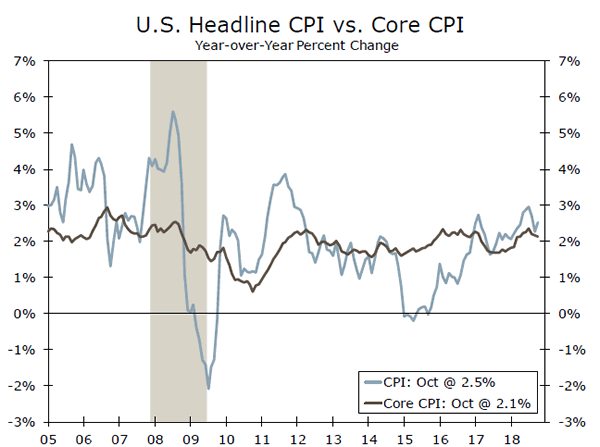
CPI inflation picked up in October on the back of higher energy costs, but the boost is expected to be unwound in November. Gasoline prices according to AAA fell 11% over the month and likely offset price hikes in other categories, keeping headline inflation flat. Excluding food and energy, inflation is expected to rise 0.2%, nudging the year-ago rate back up to 2.2%. The dollar's strength is helping to keep a lid on goods inflation despite recent tariffs, while services inflation has moderated a touch recently amid softer shelter and medical care pricing.
We expect the pullback in headline inflation to have no bearing on the Fed's rate decision for December. A softer-than-expected print for core inflation would also be unlikely to deter the Fed from going ahead with its widely-telegraphed hike in December. A miss on the core, however, could make officials comfortable with a more gradual path of policy tightening in 2019.
Previous: 0.3% Wells Fargo: 0.0% Consensus: 0.0% (Month-over-Month)
Retail Sales • Friday
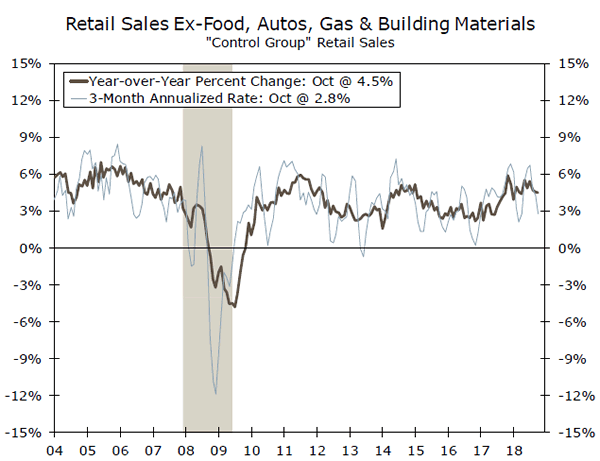
After jumping 0.8% in October, retail sales are likely to have increased a more modest 0.2% in November. Total sales are expected to have been held down by fewer auto sales and lower revenues at gas stations as prices at the pump plummeted. However, control group sales, which exclude autos, gas, building materials and food services, are expected to be strong following what looks to have been an impressive start to the holiday shopping season.
The retail sales report's proclivity for revisions and general choppiness make it unlikely to sway the Fed's December policy decision. Yet a downside miss in control group sales could cause markets to second-guess generally robust expectations for holiday sales. In contrast, an upside surprise is likely to illustrate to markets that consumer spending remains solid and is likely to provide sizeable support to growth in the coming months.
Previous: 0.8% Wells Fargo: 0.2% Consensus: 0.2% (Month-over-Month)
Industrial Production • Friday
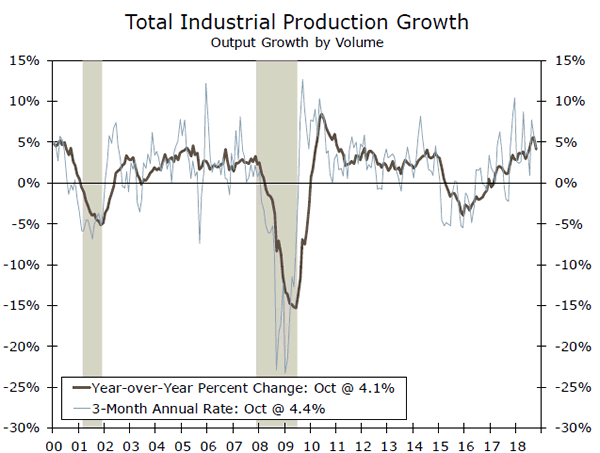
The pace of industrial production (IP) has picked up over the course of the year and is running around the fastest pace since 2011. Solid growth in durables has propelled output in the manufacturing industry up 2.7% over the past year. The real standout, however, has been the mining sector, where output is up 13% since last October. The lift from mining likely faded in November, as plummeting oil prices scaled back drilling, exploration and oil support services. Total IP, however, should still increase 0.3%. Recent PMI readings indicate manufacturing activity continues to expand at a decent pace, while a colder-than-usual November raised utilities output.
Ex-utilities, a strong print would signal the industrial sector remains on firm ground despite recent concerns about slowing domestic and global growth. A miss on the downside, on the other hand, would further stoke fears about a slowdown and whether the FOMC's plans to raise rates three times next year is potentially too aggressive.
Previous: 0.1% Wells Fargo: 0.3% Consensus: 0.3% (Month-over-Month)
Global Review
Perfect Example of He Said, Xi Said
- The much anticipated meeting between U.S. President Trump and Chinese President Xi at last week's G20 led to a 90-day ceasefire in tariff hikes, although optimism for a longer-term trade deal is fading as confusion exists over what was agreed upon between the two countries.
- China's economy continues to show signs of slowing, while trade tensions are creating additional headwinds. Heading into 2019, we expect the deceleration to endure, while pending November retail sales and industrial production data may provide further insight into the pace of the slowdown.
Perfect Example of He Said, Xi Said
Last week's group of twenty (G20) meeting resulted in a temporary ceasefire between the U.S. and China, along with preliminary confidence for a future trade deal between the two countries. However, as this week has progressed, that optimism has started to fade as details around what was actually agreed upon between U.S. President Trump and Chinese President Xi have become less clear. There have been many claims made by the U.S. administration, which initially led to a relief rally across global markets, however, some of the key components of the deal have yet to be fully substantiated by Chinese authorities, which has led to a sharp reversal in investor sentiment.
While all of the specifics of Trump and Xi's meeting are unknown at this time, there are some concrete takeaways we can point to. The first being a 90-day ceasefire, where no additional tariffs will be implemented and negotiations aimed at securing a longer-term trade deal are set to continue. If a trade deal is not completed during the 90 days, the U.S. intends to move forward with a planned increase to existing tariffs on $200B of Chinese goods to 25% from 10%. While originally questioned for its veracity, an agreement for China to resume purchasing U.S. products, specifically soybeans and liquefied natural gas, in an effort to balance trade between the two countries, has been confirmed.
Despite the agreement on some issues, markets are still skeptical as to whether the Trump-Xi meeting was as successful as initially perceived. Conflicting statements from the U.S. administration and Chinese authorities did little to ease markets' concerns and even suggest there may still be some major differences between both parties. For example, President Trump's claim that China will reduce and eventually remove tariffs on U.S. cars is an assertion that has yet to be substantiated, or even mentioned, from China in follow-up statements. Intellectual property protection continues to be a point of contention as well, with the U.S. administration suggesting both sides have agreed to work toward curing China's appropriation of American intellectual property, a claim also not confirmed by China.
Looking ahead, the prospect for a trade deal within the 90-day time frame, in our view, is unlikely. The pace of negotiations would have to pick up quite considerably, and with evidence suggesting differences still remain, the likelihood for a deal in the short-term remains low. Adding to this view is the recent arrest of a Chinese executive, with direct ties to the Chinese government, by U.S. law enforcement. Chinese government officials have already expressed outrage over the arrest, and with an impending extradition to the U.S., this development has the potential to escalate tensions between the two countries even further.
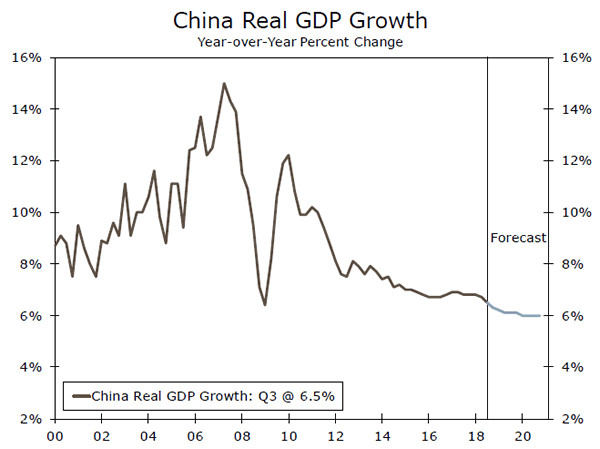
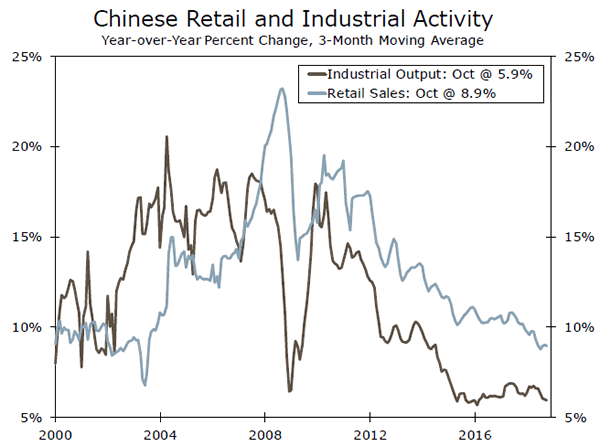
China's economy continues to show signs of slowing down, with the trade dispute creating additional headwinds. Heading into 2019, we expect the deceleration of China's economy to endure, while pending November retail sales and industrial production data may provide further insight into the pace of the slowdown. Any indications of escalating trade tensions would likely result in a further review of our GDP forecasts for 2019 and beyond.
Global Outlook
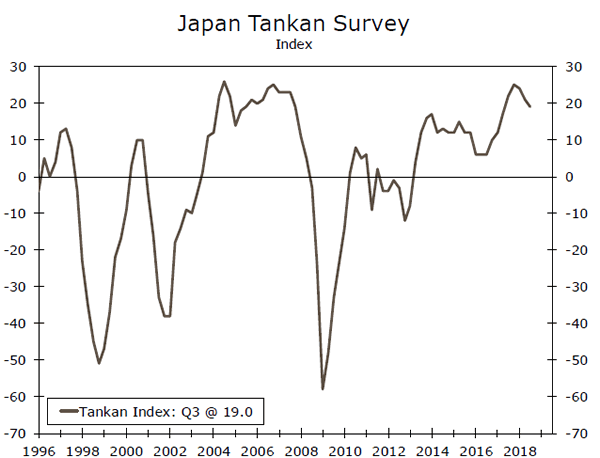
Japan's Tankan Survey • Wednesday
The Japanese Tankan Survey is a closely watched economic release, offering forward insight into Japan's economic performance. Q4-2018 numbers will be released on Wednesday of next week, and with a contraction in Japan's economy during Q3, market participants will be looking for any signals into Japan's future economic output. Any indications for a rebound in GDP growth would be a welcome sign after the economy also contracted in Q1 and has dealt with decelerating growth as a result of multiple natural disasters in the country throughout the year.
In Q3, the large manufacturers' index fell for the third time this year, with Q4 consensus forecasts calling for further decline. The expected small fall suggests economic stability, rather than economic strength. Capital spending plans in Japan are also forecast to slow as well, with consensus forecasts calling for a decline to 13% from 13.4% in Q3.
Previous: 19 Consensus: 18 (Large Manufacturers' Index)
Central Bank of Turkey • Thursday
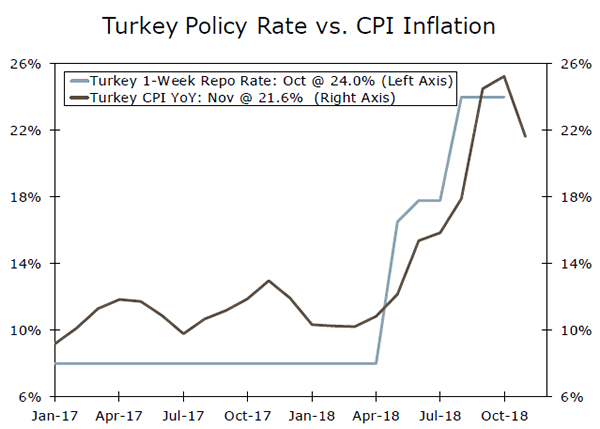
The Turkish central bank recently released its Monetary and Exchange Rate Policy for 2019 report, where it highlighted a willingness to make revisions to monetary policy. The report states that Turkey's central bank will adjust its approach to monetary policy should exchange rate volatility have long-lasting effects on inflation and price stability. This could be potentially significant for restoring economic stability in Turkey, as an unorthodox monetary policy framework contributed to a significant depreciation in the lira earlier this year. Despite this report, central bank independence remains a concern, and any heightened indications of government control over policy rates could result in renewed stress on the economy and currency. A lower than expected November inflation print, along with a stable lira, will test the central bank's independence and willingness to maintain high policy rates at next week's meeting.
Previous: 24.00% Consensus: 24.00%
European Central Bank • Thursday
At October's meeting, the European Central Bank (ECB) continued to provide forward guidance that it will end its bond purchase program in December and keep policy rates on hold at least through the summer of 2019. While we do not expect any changes to the ECB's plans for removing accommodative monetary policy at next week's meeting, we will be looking for any comments that the outlook for the broader European economy is changing as economic data continue to modestly underperform expectations. Despite softer data in Europe, our forecasts still call for two policy rate hikes from the ECB in 2019 and further monetary tightening into 2020 as well.
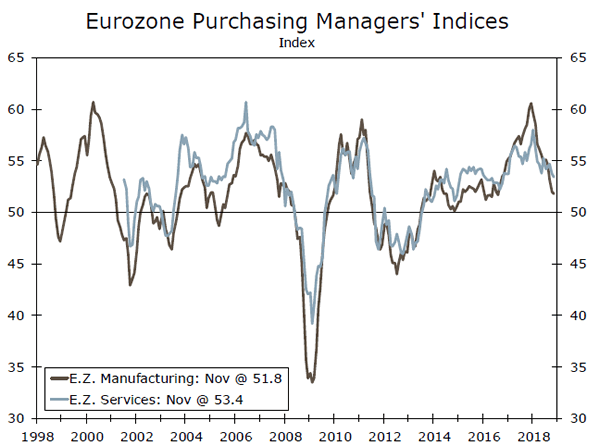
Also out next week are manufacturing and service sector purchasing managers' indices (PMIs) for the broader Eurozone. PMIs have slowed significantly throughout the year, with expectations for December indicating a possible stabilization of economic activity, albeit at subdued levels.
Previous: -0.40% Wells Fargo: -0.40% Consensus: -0.40% (Deposit Rate)
Point of View
Interest Rate Watch
How Much More Will the Fed Hike?
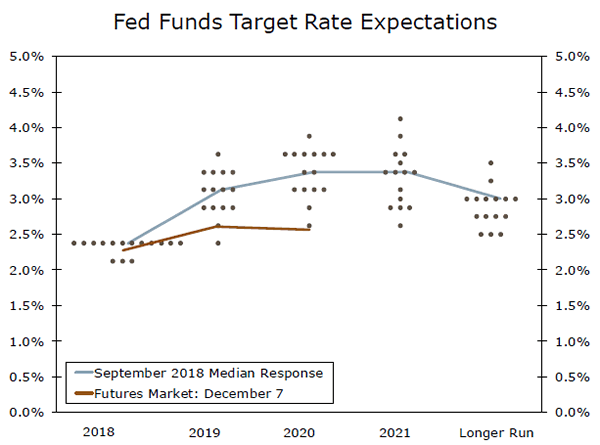
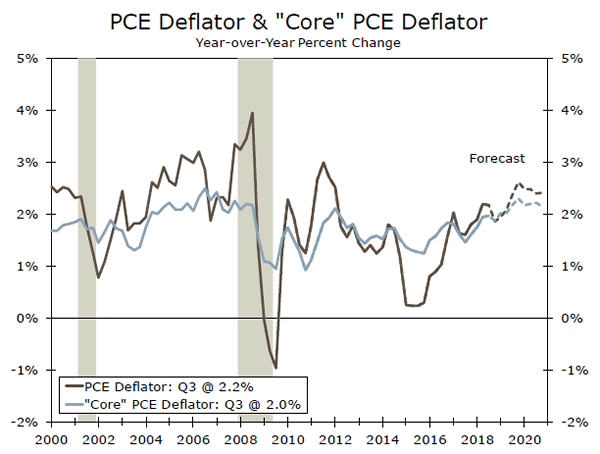
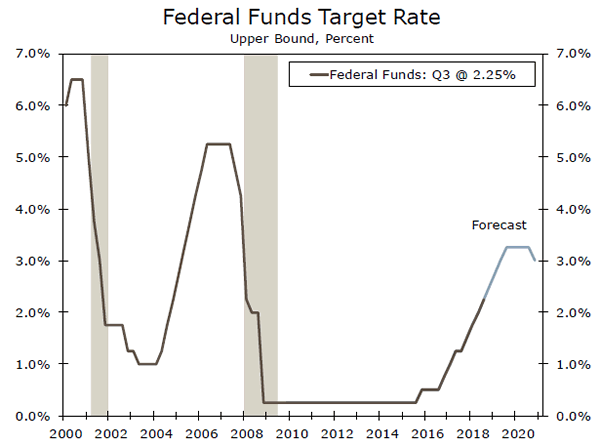
The Federal Open Market Committee (FOMC) holds its last policy meeting of the year on December 19. A few weeks ago, there was near unanimity among investors that the FOMC would raise rates by another 25 bps. The last few weeks has seen some mildly disappointing data and increased market volatility. Although the probability of a rate hike on December 19 is clearly not 100%, it still seems likely that the FOMC will indeed raise its target range for the fed funds rate by 25 bps at that meeting.
The bigger question is what does the FOMC do in 2019? The Fed's approach to policymaking has been essentially mechanical over the past year or so. That is, most FOMC members agreed that policy was accommodative, which was no longer appropriate in an economy that was operating near full employment. The only question was how fast the process of removing policy accommodation should be.
The fed funds rate is now at a level at which reasonable people can disagree about how accommodative policy is. In a speech last week, Fed Chairman Powell said that the fed funds rate is "just below the broad range of estimates of the level that would be neutral for the economy." (In October, Powell had said that the Fed was "a long way" from neutral.) Minneapolis Fed President Kashkari (a non-voting member of the FOMC in 2018 and 2019) thinks that the Fed should stop raising rates now.
The FOMC appears to be switching into a "data dependent" mode. That is, some FOMC members may argue for a sustained pause if incoming data show that the economy is slowing more than the Fed has been forecasting and/or if the core rate of inflation appears to be topping out. There certainly will be lively debates around the FOMC table in coming meetings. The FOMC has been indicating in its policy statement that "further gradual increases in the target range for the federal funds rate" seems to be appropriate. We expect that the FOMC will drop its reference to "gradual increases" in its next policy statement. We will be evaluating our current call of three 25 bps rate hikes in 2019 ahead of our updated forecast next week.
Credit Market Insights
Housing Slowdown Continues
A swath of data released from the Federal Reserve this week showed that consumers generally fared solidly in the third quarter. The Fed's Beige Book reported that overall economic activity "expanded at a modest or moderate pace" over the survey period, while in separate data released by the Fed this week in the Financial Accounts of the United States, we learned that overall household net worth continued its ascent to a fresh record high of $109 trillion in Q3.
However, one notable soft spot continues to be the housing market. In the Beige Book, some districts noted that mortgage loan demand declined over the mid-October to late November period. At the same time, household financial accounts data show growth in real estate assets may be moderating, at roughly 6% in Q3, which is a continued deceleration from the more than 10% pace of growth registered in 2013.
Indeed, as we discuss in our December Housing Chartbook released this week, recent housing data have been underwhelming. New home sales dropped nearly 9% in October, while new home construction has also lost momentum. We find that the recent slowdown is likely due to a confluence of factors, ranging from affordability concerns as interest rates move higher, along with secular changes such as demographic shifts and rising development costs in suburban areas. The recent slowdown is likely to persist for some time, in our view, even as the broader economy generally remains on solid footing.
Topic of the Week
Looking Back at the Bush Economy
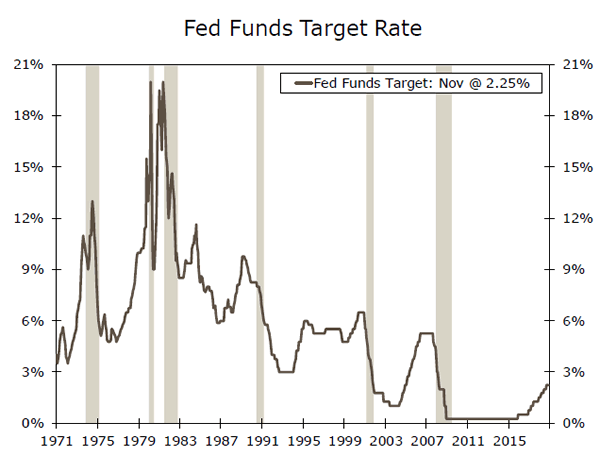
The passing of former President George H.W. Bush has sparked quite a bit of reflection on his presidency and the state of the country in the late 1980s and early 1990s. George Bush became president at a momentous time in U.S. history. Bush took office just as the U.S. economy entered the eighth year of what became the longest peacetime economic recovery in the post-World War II era. Growth in 1988 had proved surprisingly strong in light of the 1987 stock market crash, which had wiped away much of that year's gains. After initially cutting interest rates after the market collapse, the Federal Reserve embarked on an aggressive round of interest rate hikes that extended into the first year of the Bush presidency, hiking the federal funds rate from 6.50% to 9.75% in a little less than a year.
The reemergence of the savings & loan crisis caused the Fed to back track in 1989. The Berlin Wall came down later that year, toppling on November 9. Throughout the tumult of these events, the Fed appeared to have guided the economy in for a soft landing with real GDP growth moderating to a 3.0% pace in the first half of 1990 and inflation subsiding to just a 4.0% pace, down from 4.7% a year earlier. Unfortunately, Iraq invaded Kuwait in early August of that year, sending oil prices soaring and sending the U.S. economy into what was a fairly short recession that ended in March of the following year.
President Bush did a masterful job of building a coalition to free Kuwait, as well as marshal the authorization to use force through a contentious Congress and execute a war strategy that produced a stunningly quick victory with far fewer casualties than widely feared.
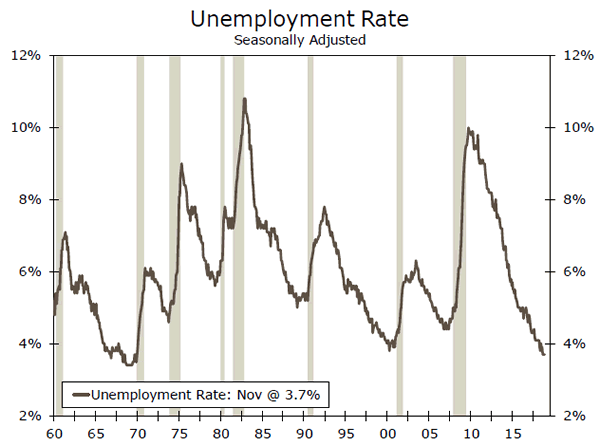
With the war over the recession quickly ended. The recovery took much longer to materialize, however. Unlike previous recoveries, the unemployment rate continued to trend higher some 15 months after the recession ended and topped out at nearly 8% just five months before his electoral defeat to Bill Clinton in 1992. This slower recovery of the labor market has become the norm for economic recoveries in the Post-Cold War era.
The Weekly Bottom Line: See You in Spring, Rate Hikes
U.S. Highlights
- Data released this week remains consistent with the view that U.S. economy continues to expand at an above-trend pace.
- Although disappointing in terms of the headline, job gains were also consistent with an economy running near capacity. Furthermore, wage growth held at a healthy pace in November.
- An agreement between the U.S. and China to delay an escalation of tariffs until April failed to convince financial markets that trade tensions are easing.
Canadian Highlights
- Oil prices got a lift this week. The Albertan government introduced mandatory production cuts in response to thesupply glut and pricing malaise facing
- Western Canadian oil producers. Global oil prices also got a boost on Friday after OPEC announced production cuts.
As expected, the Bank of Canada kept its overnight rate unchanged, but signaled patience and flexibility with respect to future rate hikes. - Employment numbers delivered some much-needed good news. The economy added a record 94k new jobs in November, nearly all full-time, pushing the unemployment rate to an all-time low of 5.6%.
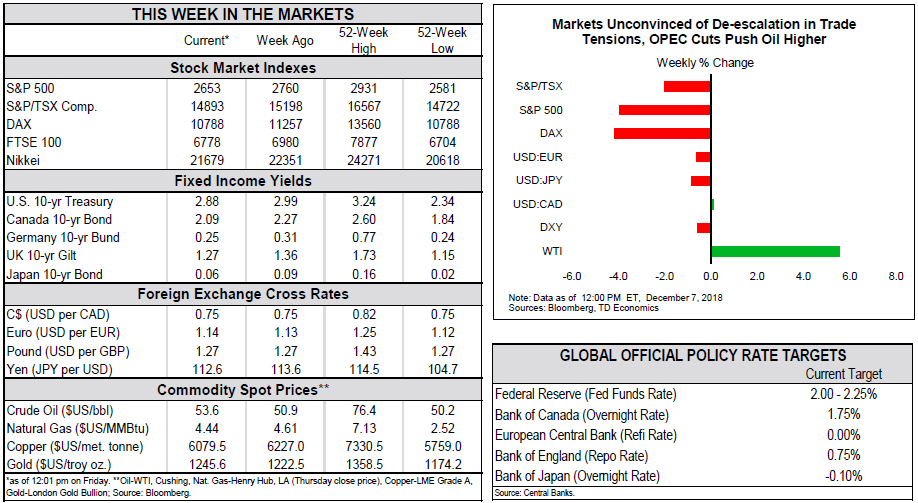
U.S. - Markets Gyrate on U.S.-China Trade Headlines
As an event-filled week in markets concludes, indicator data this week provided an updated reading on the health of the U.S. economy. From the data released for the fourth quarter, the diagnosis is that the economic expansion continues in the U.S., with momentum slowing due to weakness in the external sector.
Manufacturing and non-manufacturing activity picked up a bit in November, but is still off the highs recorded earlier this year. Firms continue to report capacity constraints, including labor and component shortages. Import tariffs remain a key concern. Similar worries were echoed in the Fed's latest beige book report. Respondents to the Fed's survey for the month of November indicated that labor shortages were being felt across a broad range of industries, and that tight labor markets were preventing them from getting the workers that they needed. In addition, rising costs, although offset in part by the falling price of oil, were impacting margins and leading firms to raise prices to offset them.
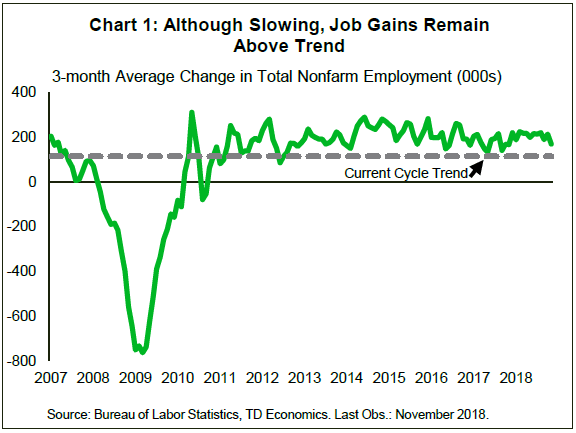
Confirming these survey anecdotes of tight labor markets, this morning's highly anticipated employment report saw 155k jobs added in November, below consensus estimates that expected an addition of 200k jobs. A steady labor force participation rate helped keep the unemployment rate at its cycle low of 3.7%. Wage growth remained healthy at 3.1% (year-on-year), the same as in October. Although the headline disappointed, the broad slowdown in job gains is in fact consistent with an economy running near capacity. We estimate that long-run trend job growth is about 100k a month, plus or minus 20k or so (Chart 1). Therefore, job gains above this level are consistent with an expanding economy and the absorption of any remaining labor market slack.
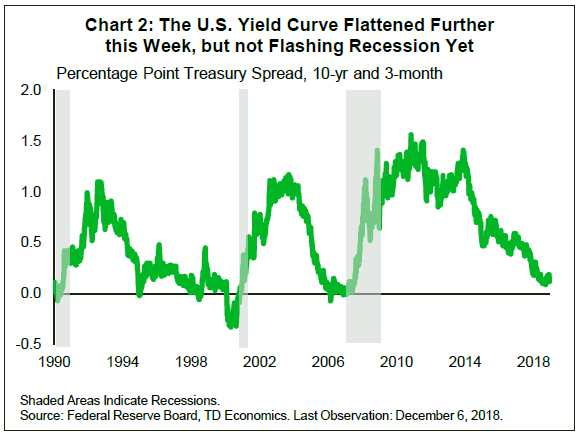
Strong fundamentals, however, are providing little comfort to financial markets. News headlines about slowing foreign demand growth, ongoing trade tensions, and Brexit have driven equity market volatility up, and prices down in the past couple of months. Fear lit a bid for bonds this week, with the U.S. 10-yr yield falling below 2.9% - its lowest level since early September. Although a flattening yield curve typically forebodes an increased chance of recession in the quarters ahead, there is little in the way of corroborating evidence (Chart 2). Instead, the recent move is likely a reflection of near-term concerns about temporary weakness in inflation and trade risks, rather than a deterioration in economic fundamentals.
Undoubtedly, an easing of trade tensions would be a welcome development. The G20 summit proved somewhat constructive as it produced a 90-day break from an escalation in import tariffs between the U.S. and China. But, news of the arrest of Huawei's CFO later in the week revealed how fraught the relationship is currently between the U.S. and China. Tariffs appear to be just the first step in planned engagement with China on a set of deeper issues that need to be addressed.
Canada - See You in Spring, Rate Hikes
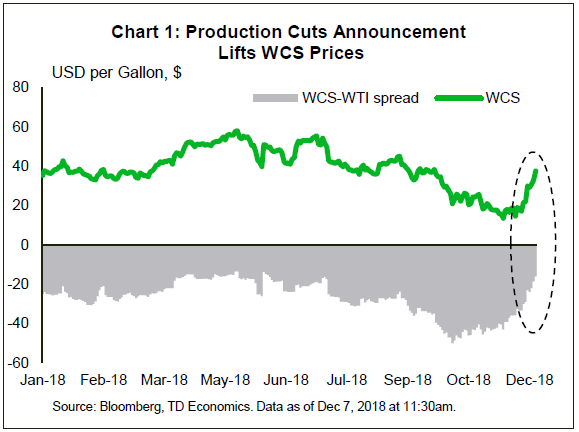
It was data galore on the Canadian economic calendar this week. The week started off with major developments in the Canadian oil sector with the Albertan government announcing mandatory production cuts in response to the pricing malaise facing Western Canadian oil producers. Output will be curtailed by roughly 325k barrels per day (bpd) during Q1 of 2019, and 95k bpd thereafter until the end of the year. The measure is meant to address large supply-demand imbalances in the market which left regional oil inventories nearly double historic norms. The announcement gave a much-needed shot in the arm to WCS prices, which are up 70% on the week to $37.5/barrel at time of writing, while WTI prices rose by just 5.7%. Nonetheless, lower production numbers will lead to a downgrade in economic growth both for Alberta and nationally.
Recent events in the oil sector have not gone unnoticed by the Bank of Canada. As widely anticipated, the Bank kept its overnight rate unchanged, but the statement released alongside the decision had a dovish tilt to it. The Bank noted that the slide in oil prices and cutbacks to production have made the outlook on Canada's energy sector "materially weaker".
In addition to commodity shocks, economic momentum has waned since the Bank's last MPR in October. In a speech on Thursday, Governor Poloz noted that recent data has been on "the disappointing side". Additionally, historic GDP revisions from Statistics Canada may suggest more economic slack than thought, also removing some of the urgency in getting the policy rate to a neutral level. Reinforcing the dovish tone (and borrowing a page from the Federal Reserve's book), the Wednesday statement also said that the rates need to rise to a "neutral range" rather than "a neutral stance" the Bank had previously communicated. This small language tweak gives the Bank of Canada more flexibility around the end point for the tightening cycle.
To be fair, the news is not all dour. Recent tax changes, the renegotiated NAFTA agreement and capacity constraints bode well for non-energy business investment. Household credit growth and housing market are also stabilizing – an encouraging sign from a financial stability perspective.
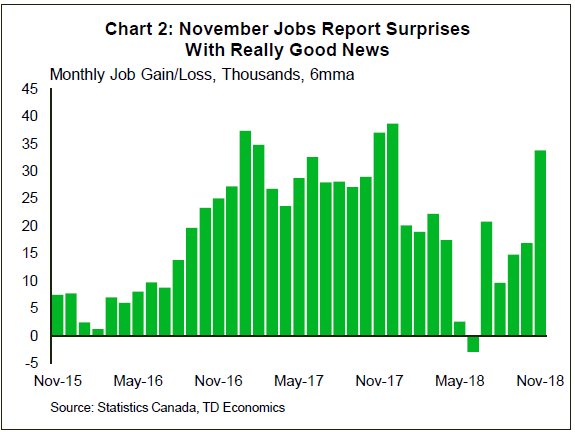
Last but not least, we saw a record-low unemployment rate and the strongest monthly job gains (+94k, nearly all full-time) on record in the November employment report. This brought the 6-month average job gains to 34k per month – well above the 15k that we would expect in an economy running at full employment. Weak and decelerating wage growth (1.5% y/y) was the one fly in the ointment in this otherwise bright report, further reinforcing that there's little risk to hold off hikes from the Bank of Canada's inflation control perspective. Taking it all in, we expect the data-dependent Bank of Canada to pause with rate hikes until Spring to observe how the economy works through recent shocks and determine just how far away the light at the end of the tunnel really is.
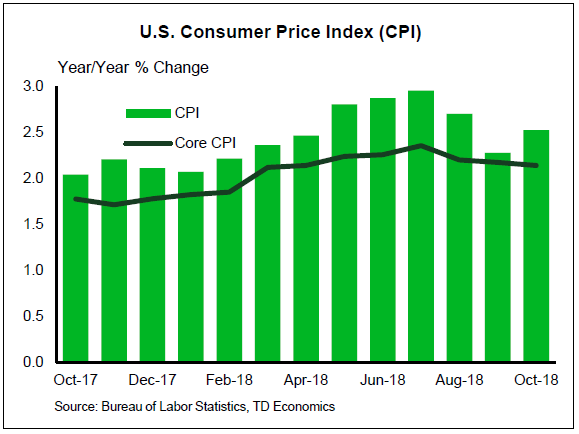
U.S.: Upcoming Key Economic Releases
U.S. Consumer Price Index - November
Release Date: December 12, 2018
Previous: 0.3 m/m; core: 0.2% m/m
TD Forecast: 0.0% m/m; core: 0.2% m/m
Consensus: 0.0% m/m; core: 0.2% m/m
We expect headline CPI to slip to 2.2%, largely on the oil price rout which left gasoline prices down nearly 8% m/m. Beyond the energy weakness, food prices have scope to jump. We also expect a solid 0.2% print on core CPI on a pickup in core services, leaving the y/y rate higher at 2.2%. Strength in the core measure following prior weakness reinforces an upbeat report.
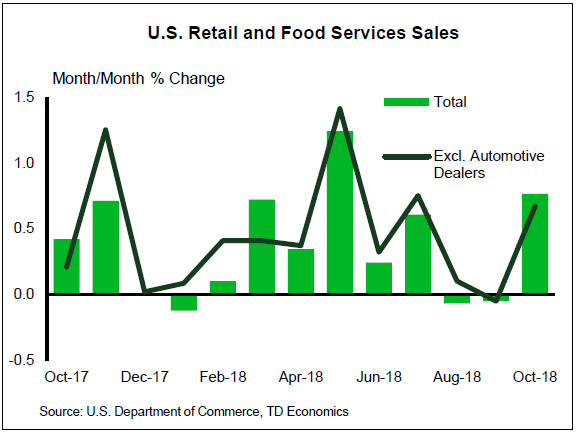
U.S. Retail Sales - November
Release Date: December 14, 2018
Previous: 0.8%, ex-auto: 0.7%, control group: 0.3%
TD Forecast: 0.0%, ex-auto: -0.1%, control group: 0.3%
Consensus: 0.2%, ex-auto: 0.2%, control group: 0.4%
Holiday-driven retail sales should have registered a flat monthly print in November, down from a strong 0.8% increase in October, as lower gasoline prices likely curtailed sales growth. Although solid Black Friday consumer spending represents a risk to the upside, we expect sales in the control group to have recorded a similar expansion as in the previous two months.
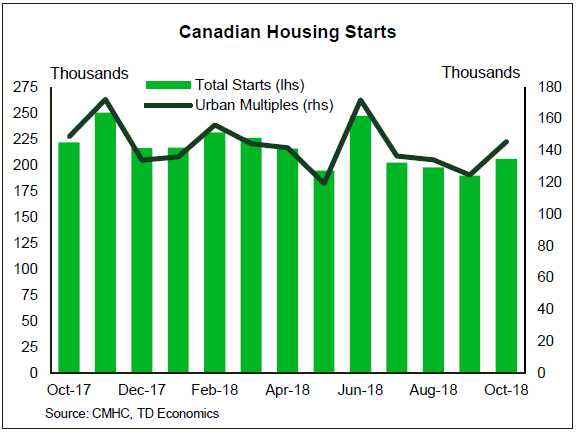
Canada: Upcoming Key Economic Releases
Canadian Housing Starts - November
Release Date: December 10, 2018
Previous: 205k
TD Forecast: 195k
Consensus: N/A
Housing starts are forecasted to slow to an annualized 195k in November on a moderation in multi-unit construction. Condos remain the driving force behind residential investment in Canada but we expect some giveback after a 17% increase in October. Multi-unit starts are notoriously volatile and gains of that magnitude have been followed by a 10% pullback on average going back to 2009. Single family starts are already sitting at multiyear lows and could see modest gains but any rebound should be relatively muted given continued weakness in building permit issuance.
OPEC+ Agrees on Big Output Cut
OPEC+ agrees to cut production by 1.2mb/d, effectively bringing its production back to its level at the beginning of the year.
The deal is set to last six months and to be reviewed in April.
The outcome was about as positive as it could be from the point of view of oil prices. Brent rallied above USD63/bbl on the news.
Note at the time of writing the final communique has not been published so all details are not yet confirmed.
OPEC+, the group consisting of the Organisation of Petroleum Exporting Countries (OPEC) and a group of oil producing countries outside OPEC (so-called non-OPEC), including Russia, today agreed to cut production by 1.2mb/d with effect from January. The decision follows two days of back-and-forth negotiations.
The output cut will be based on the level of production in October according to secondary sources in the latest OPEC oil market report. OPEC is set to contribute 800kb/d, while Iran, Libya and Venezuela are exempted from the deal, and non-OPEC will contribute the remaining 400kb/d. The deal is set to last six months and is up for review in April.
The choice of October as the benchmark for output cuts will in fact make output cuts larger as, Saudi Arabia, for example, raised production further in November. The April review, further allows for revising the deal, for example, in a situation where temporary waivers on Iran sanctions are rolled off next year and Iran production falls further.
Oil market fundamentals are turning more positive for the oil price. The OPEC+ output cut deal will bring OPEC+ production back to its level at the beginning of the year. The US government is done selling off strategic reserves for now. Furthermore, there is risk of further output loss in Iran and Venezuela in the coming months as sanctions continue to bite.
At the time of writing, the price of Brent crude has rallied above USD63/bbl - USD6/bbl up from the bottom last week. We look for it to recover further above USD70/bbl in the short term and still forecast Brent to average USD85/bbl in 2019.
OPEC+ Agrees to Overall Production Cuts to Counter Slower Demand Growth Next Year
The 175th OPEC Conference and the 5th ministerial meeting between OPEC and non-OPEC countries ended earlier today with participants agreeing to reduce overall production by 1.2 million barrels per day (mb/d), effective as of January 2019 and lasting for six months. This action was necessary in their view to reduce potential imbalance in the oil market next year as global demand growth slows. The announced production cuts are just a touch below earlier rumors of a cut of up to 1.4 mb/d.
Cuts have been agreed to be apportioned as follows: 0.8 mb/d (or 2.5%) reduction in OPEC countries, and the remaining 0.4 mb/d (or 2.0%) in voluntary reductions in non-OPEC participating countries. However, it's still unclear how these production cuts for OPEC member nations will be allocated. Iran is dissenting to any further cuts in output given that the re-imposition of U.S. sanctions this fall that have already resulted in its official output falling by about 1 mb/d.
Today's decision is likely to more than reverse the estimated 600-800 kb/d increase in production that had been in effect since July, when the concern at the time was that inventories were at risk of drifting below levels consistent with the stability in oil prices.
The Meeting emphasized that last year's Declaration of Cooperation is to remain the cornerstone of ongoing cooperation and open to all producers.
Key Implications
Markets responded positively to the news despite the agreement being broadly in line with expectations. Both Brent and WTI prices jumped more than 4% after news of the agreement broke.
The oil market is largely seen as having moved into balance this year, but weakening global demand growth in the second half of the year, expected to persist into 2019, is pushing up inventories once again. As such, the agreed upon production cut should help support prices through the first half of 2019 as global growth stages a modest recovery.
Stable and firming oil prices should provide much needed support to the North American oil industry. The woes of Canadian oil producers are now widely known, and this agreement, together with Albertan production cuts announced earlier in the week, should alleviate some pressure on industry margins. The agreement should also provide a boost to the U.S. shale oil industry. Recent oil price weakness has likely weighed on decisions to further expand production, which reached 11.5 mb/d in October - surpassing Russia as the top global oil producer.
Soft Jobs Data Depreciated Dollar Looking Towards Inflation Data
The US dollar is mixed on Friday after a disappointing US jobs report. The NFP showed a 155,000 jobs gain in November, well below the 200,000 forecast. Weather issues played a part but overall the report will have a small impact on the December Fed meeting. What investors are focusing on is the effect it will have on future rate hikes in 2019. Fed member comments and softer data continue to make a case for less rate hikes next year. Inflationary pressures remain subdued and next week’s CPI and retail sales could further cement a narrative of a pause in the tightening of monetary policy by the Fed.
- US Core CPI could underperform on Wednesday
- ECB expected to keep rates and policy unchanged
- Fed December rate hike still on the table despite US Jobs miss
Euro Rises as US Jobs Misses Target
The EUR/USD gained 0.31 percent on Friday. The single currency is trading at 1.1411 after a lower than expected US U.S. non farm payrolls (NFP) report in November. The number of jobs fell short of the forecast, and while wages rose by 0.2 percent the greenback fell against the euro. US employers are facing obstacles to keep hiring as wages are only just begging to catch up, but as global trade concerns rise growth forecasts come into play.
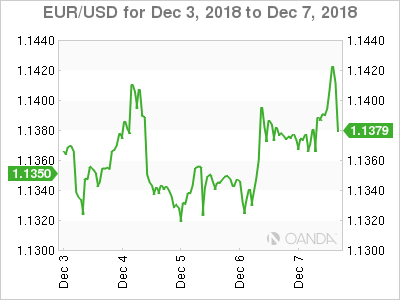
Growth concerns in the eurozone are rising as on one hand the Brexit divorce continues to create uncertainty and on the other economic indicators show a lack of momentum. The European Central Bank (ECB) will host its final monetary policy meeting of 2018 on Thursday, December 13 at 7:45 am EST. The ECB is expected to announce the details of its asset purchase program and a possible timeline of the first interest rate lift.
Loonie Rises After Massive Job Gain in November
The USD/CAD fell 0.61 percent on Friday. The currency pair is trading at 1.3300 after Statscan announced the Canadian economy had added 94,100 jobs in November. The massive gain pushed the unemployment rate to an all time low of 5.6 percent. Oil prices surged on the back of the Organization of the Petroleum Exporting Countries (OPEC) agreement to cut production giving further support to the loonie.
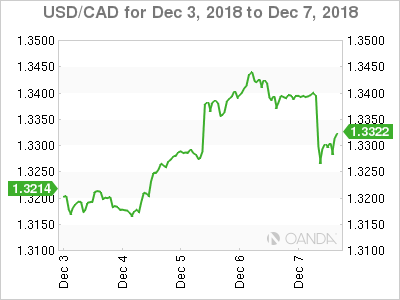
The Bank of Canada (BoC) held rates at 1.75 percent this week and remains in focus as the strong job gains have once again put a January rate hike firmly on the table.
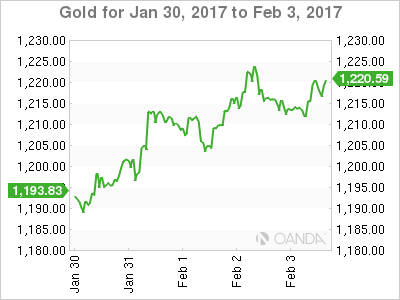
Gold Higher on US Dollar Softness
Gold rose 0.96 percent on Friday. The yellow metal is trading at $1,248 as Fed rhetoric is cooling down rate hike expectations for next year and the employment report miss highlights a lack of urgency in the central bank to keep tightening monetary policy.
Fed doves were out in full force and were validated by the lower than expected jobs number and wage growth forecasts.
Oil Surges After Production Cut Announcement
Oil rose 3 percent to finish the week. The OPEC and other major producers will cut their production levels by 1.2 milliondaily barrels. OPEC will cut 800,000 barrels and other producers 400,000. The meetings were a tense affair and various members resisted joining the agreement. Saudi Arabia rallied the membership, but faced old obstacles as a showdown with Iran threatened to derail the agreement similar to the situation during the Doha meeting.
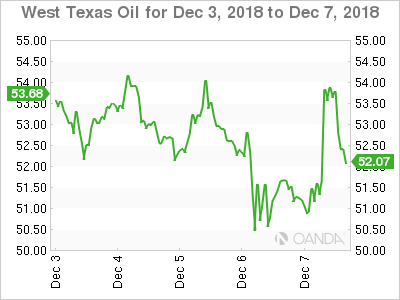
Challenges remain as producers outside of the group that agreed to the cut, are not bound by the agreement. The US in particular has turned from importer to exporter of crude. The desire of the OPEC to drive shale operations out of business cause the free fall of crude, and could now put shale back on the map if prices remain bid.
Market events to watch this week:
Monday, December 10
- 4:30am GBP GDP m/m
- 4:30am GBP Manufacturing Production m/m
Tuesday, December 11
- 4:30am GBP Average Earnings Index 3m/y
- 8:30am USD PPI m/m
- Tentative GBP Parliament Brexit Vote
Wednesday, December 12
- Tentative USD Fed Chair Powell Testifies
- 8:30am USD CPI m/m
- 8:30am USD Core CPI m/m
Thursday, December 13
- 3:30am CHF Libor Rate
- 3:30am CHF SNB Monetary Policy Assessment
- 4:00am CHF SNB Press Conference
- 7:45am EUR Main Refinancing Rate
- 8:30am EUR ECB Press Conference
Friday, December 14
- 8:30am USD Core Retail Sales m/m
- 8:30am USD Retail Sales m/m
*All times EDT
Treasuries Poised for 5th Straight Weekly Gain as Fed Hike Expectations Dwindle on Weaker US Data
US Treasury prices have rallied over the past month on slower growth concerns globally and domestically. Today’s move in Treasuries stemmed from softer US data that suggested US economic growth is slowing.
Two weeks ago, Fed Vice Chair Richard Clarida noted that gradual rate hikes are appropriate as monetary policy gets closer to its optimal longer-run setting. He noted the median of expected inflation 5-to-10 years in the future from the University of Michigan Surveys of Consumers is within–but I believe at the lower end of–the range consistent with price stability. Today’s preliminary December reading of the University of Michigan’s sentiment survey showed both the 1-year and the 5-to10- year inflation expectations declined. The 1-year inflation outlook dropped from 2.8% to 2.4% and the longer term fell from 2.6% to 2.4%.
All eyes on Wednesday’s US inflation report
Next week, the November inflation numbers are expected to come in lower than a month ago. The forecast is for the monthly reading to fall from 0.3% to 0.0% and the annual reading to weaken from 2.5% to 2.2%. Softer inflation data could slow down the tightening cycle by the Fed.
Fed rate hike expectations
Current expectations are for 70.7% probability the Fed will raise interest rates by 25 basis points. The Fed is widely expected to adjust their dot plots at the Dec 19th meeting. The September meeting showed the Fed was expecting three more rate hikes in 2019, while many analysts are much lower, with some targeting just one hike in the new year.
10-Year Treasury Chart
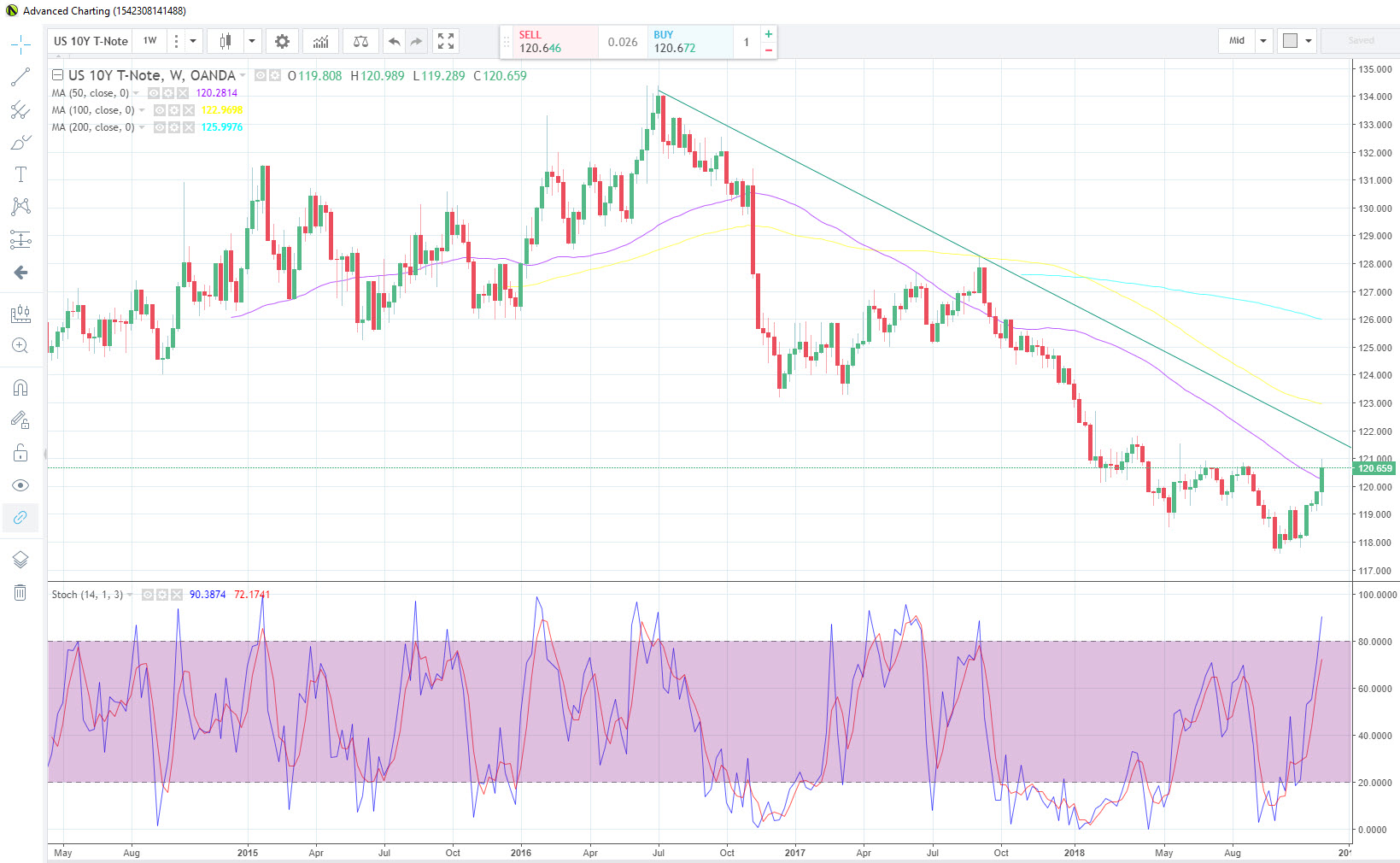
Price action on the 10-year Treasury note daily chart shows that the recent rally is finding tentative resistance from the 121.000 level. The recent rally we have seen in bond prices accelerated once the yield on the 10-year Treasury fell below 3%, prices and yields move inversely. If price is able to take out the 121.150 level, we could further upside target the 123.500 level. To the downside, 117.500 remains critical longer-term support.
Pound Could Shrug off Key Data as Brexit Vote Tops Agenda
Next week should be a busy one for the British pound as a crucial vote in Parliament will likely open a new era for the Brexit story and May’s future as a leader. Key data releases such as GDP growth and employment readings are scheduled for delivery as well, but investors will probably be too obsessed with the Brexit story to react to the numbers.
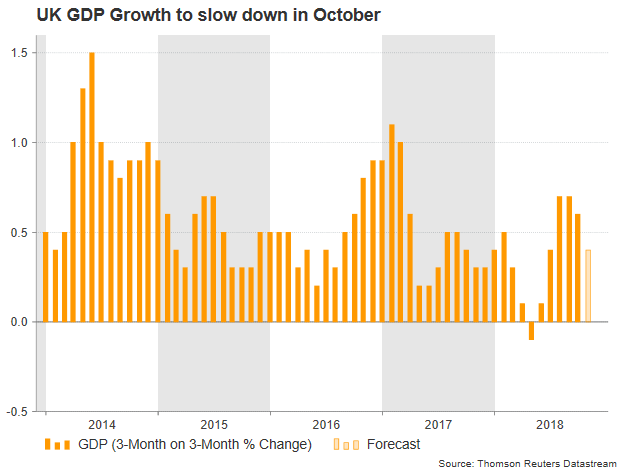
While Theresa May is pushing hard to persuade lawmakers that the deal agreed with the EU is the best possible outcome reached after 20 months of negotiations, the economic picture is not as favourable as the UK wishes to have before leaving the bloc in March. Monday’s GDP growth data for the month of October are likely to confirm that; analysts predict an expansion of 0.4% in the August-October period compared to the previous three-month average of 0.6%.
Recent Markit PMI figures could be an early indication that the British economy has slowed down further. Particularly the services sector, which accounts for 80% of the economy, had another weak turn, with the Services PMI dropping to seven-month lows in October before falling more steeply in November to just above the 50 neutral mark, the level that separates expansion from contraction. Meanwhile, the manufacturing industry is also facing strong headwinds as businesses seem to be highly hesitant to invest in new projects given the uncertainty around Brexit, driving the relevant PMI to the lowest since August 2016 in October. On Monday, the office for National Statistics is projected to say that the manufacturing output grew by 0.1% m/m in October, slightly less than September’s 0.2% but enough to add evidence that the supply side is not in good shape to support the economy.
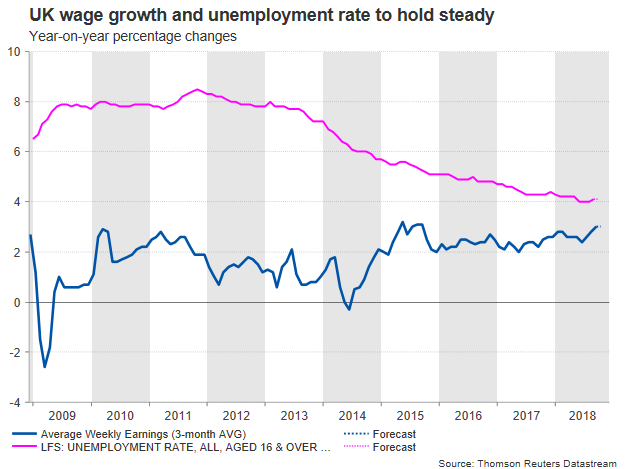
On the demand front, discouraging retail sales stats show that consumers are spending cautiously despite enjoying the highest wage growth since financial crisis. While analysts estimate that the employment report for the month of October will be no different from the previous release, with average earnings excluding bonuses forecast to grow at a steady pace of 3.2% y/y and the unemployment rate projected flat at 4.1% – the lowest in more than four decades – pessimism among households is spreading. The signals are that consumers will not be able to provide a helpful hand to boost growth. Subsequently, if household spending remains downbeat, inflation might keep losing steam in coming months, apparently forcing the Bank of England to delay any rate hikes.
But since the UK’s future performance both in economic and political terms depends on how the Brexit will occur, the pound is not expected to react much on next week’s data this time. A rejection of the withdrawal bill in the Parliament on Tuesday followed by headlines that lawmakers are set for a no-confidence vote against May could heavily weigh in FX and stock markets. On the other hand, in the less popular scenario where the plan gets an approval, investors could increase buying positioning. Note that the EU has already warned that there is no other option in offer than the one agreed with British PM, with the European Council President, Donald Tusk, saying during the G20 summit that a refusal could either cancel Brexit or bring a departure with no deal.
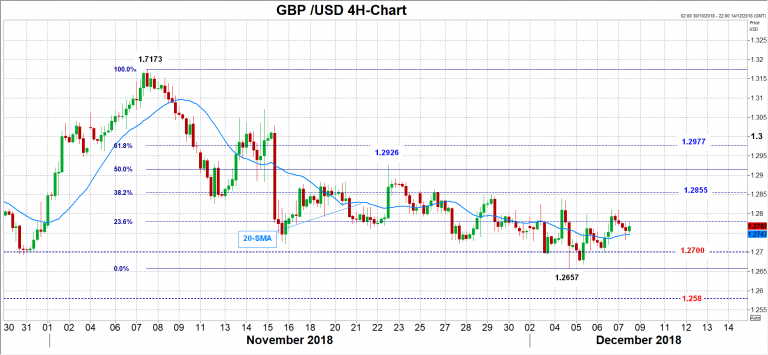
Technically, traders could see pound/dollar returning immediately to 1.2700 next week if Brexit news disappoint. Below that, the pair could continue losing until it reaches the 1.2657 bottom, where any decisive break lower could find a barrier somewhere between 1.2580 and 1.2350.
Alternatively, a positive Brexit vote could drive the pair above the 1.2800 mark and towards 1.2855, the 38.2% Fibonacci of the downleg from 1.3173 to 1.2657. Steeper increases may also challenge the 1.2926 peak on November 22, which is slightly above the 50% Fibonacci.
Aussie Eyes China’s Trade and Inflation Data
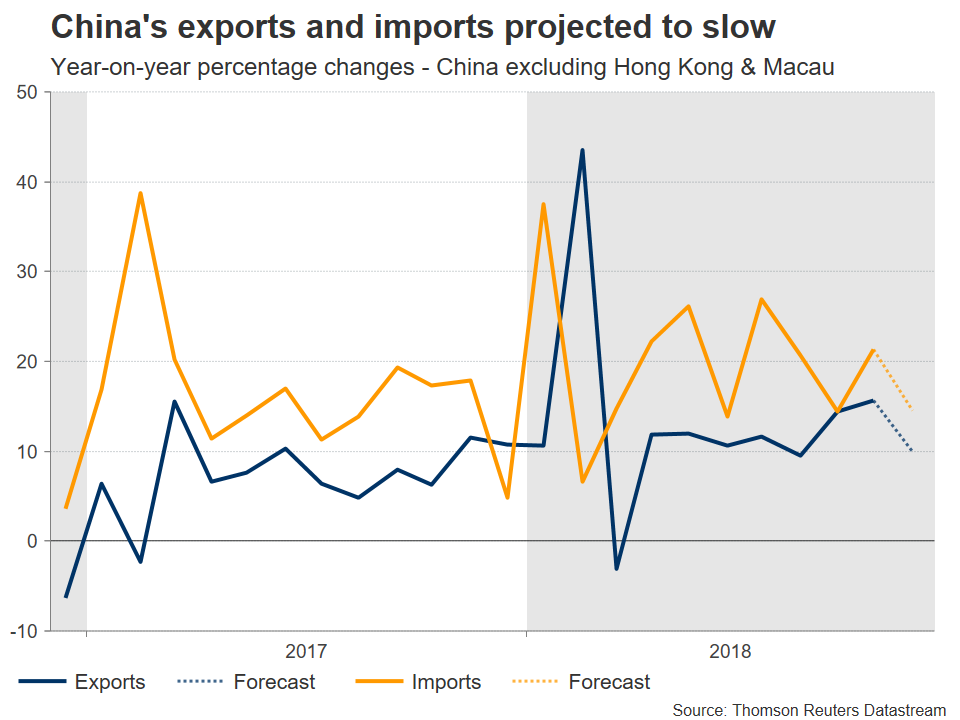
Over the weekend, China will release its trade and inflation data for November. Forecasts point to a slowdown in both exports and imports, as well as in inflationary pressures. Such figures could amplify speculation that trade-related uncertainty is starting to weigh on the world’s second largest economy and potentially hurt the yuan, as well as the aussie, which is considered a liquid proxy for “China plays”.
China’s exports are anticipated to have grown by 10.0% on a yearly basis in November, slower relative to the 15.6% recorded in October, whereas imports are expected to have risen by 14.5%, compared to the previous 21.4%. Accordingly, the dollar-denominated trade surplus is seen practically unchanged at $34.0 billion. Note that the trade balance has come back under the spotlight lately, considering that President Trump looks closely at the bilateral deficit between the two nations, and oftentimes quotes it as a metric of China “winning” on trade.
In terms of price pressures, the PPI rate is forecast to have dipped to 2.7% in yearly terms during November, from 3.3% previously. Similarly, the CPI rate gauging consumer prices is predicted to have ticked down to 2.4%, from the prior 2.5%.
Although the “trade war” has been put on hold after the agreement between Presidents Trump and Xi to refrain from imposing more tariffs for 90 days, such figures would still suggest that the negative effects of this dispute may be starting to show up. Note that Chinese authorities have already announced plans – both on the monetary and fiscal fronts – to cushion the economy from the tariffs and the associated uncertainty. That said, such a set of data (or worse yet an even more disappointing one), could fuel speculation for a further easing of policy, potentially hurting the yuan as well as the aussie.
Considering the close trading relationship between the Chinese and Australian economies, the aussie is typically viewed as a liquid proxy for China-related plays. Given its sensitivity to developments in the Chinese economy, it tends to be favored by speculators as shorting the yuan itself for example runs the risk of being caught on the wrong side of daily policy intervention by Chinese authorities.
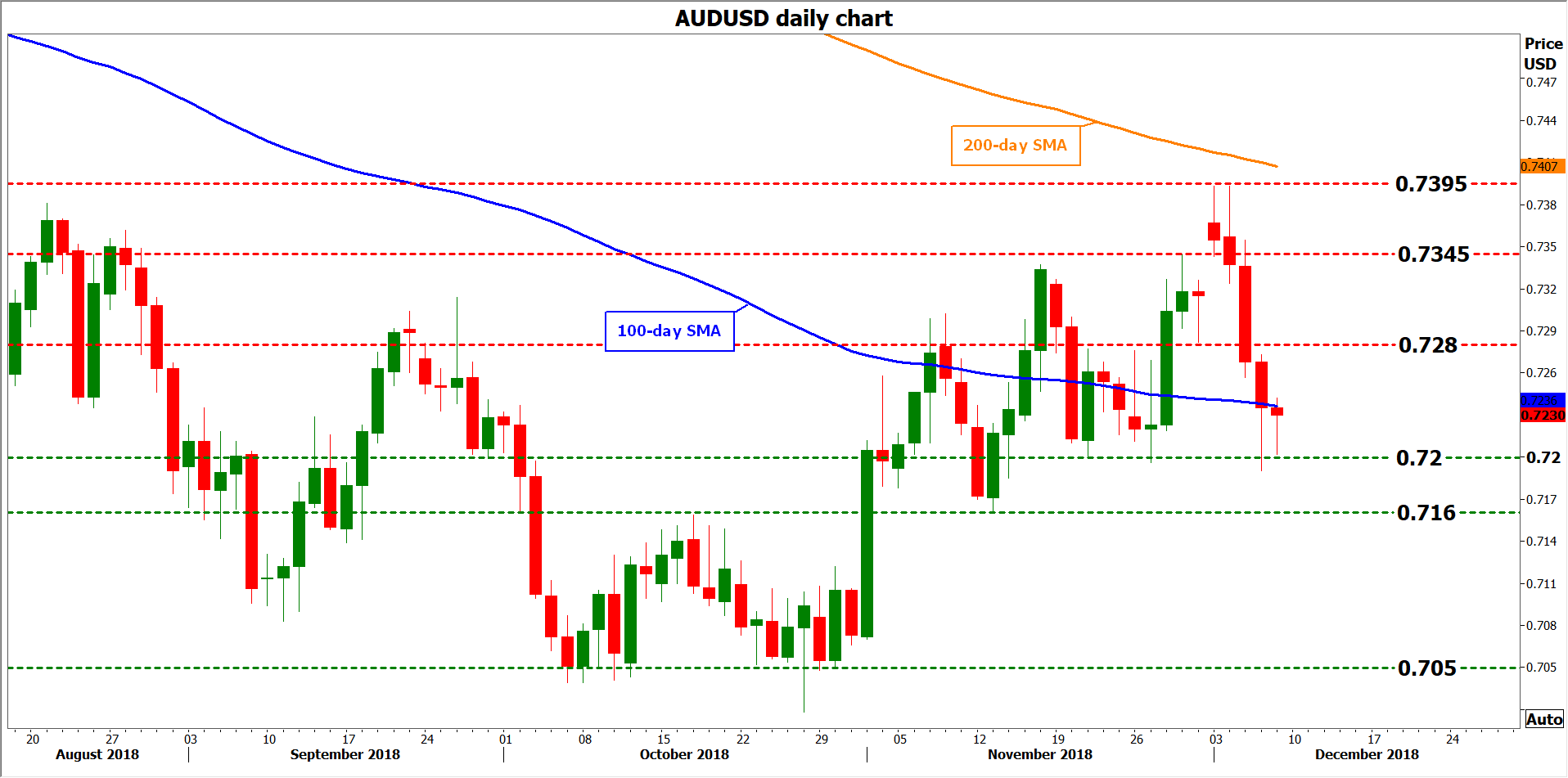
Looking at aussie/dollar technically, immediate support to declines may be found near the November 21 low of 0.7200. Even lower, the November 13 trough of 0.7160 would attract attention.
On the flipside, a stronger-than-anticipated set of data may help aussie/dollar recover. Resistance to advances could come near the inside swing low on November 30 at 0.7280, before the November 29 peak of 0.7345 comes into view.
In the big picture, the recent “trade truce” is a welcome sign, as it suggests there’s willingness on both sides for a deal. That said, all that was agreed was to continue talking, which although encouraging, may not ultimately mean much. What’s most important, is seeing whether China compromises on the burning issues: forced technology transfer and intellectual property protection. Until – and if – there are such signs, an eventual re-escalation of the dispute still seems like the most likely outcome.
China Weekly Letter – Will the Tech War Threaten a Trade Deal?
- US-China ceasefire off to a rocky start - but we still look for a deal in 2019
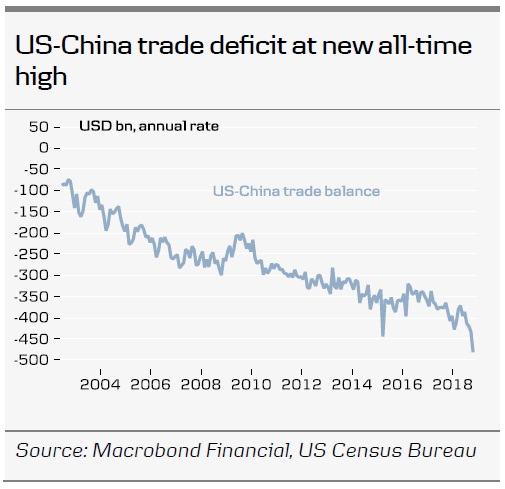
- The US-China trade deficit at a new high in October as China cuts imports
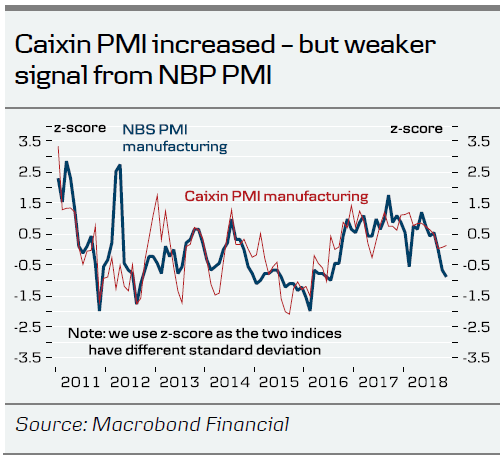
- China PMI surprised to the upside but we see more downside in coming months
A rollercoaster week as ceasefire trade talks kick off
I use most of the space for trade this week as so many things have happened - and it is by far the most important thing for China right now. The first week of the ceasefire got off to a rocky start to say the least. On Tuesday, in a storm of trade tweets, Trump spooked markets with one tweet in particular about being a 'Tariff Man'. However, on a more positive note, he also highlighted how farmers would benefit and that Chinese car tariff rates would come down. Moreover, he tweeted he believed a deal would be reached.
The news that really shook markets was the arrest of Huawei's CFO Sabrina Meng, who is also the daughter of Huawei's founder, Ren Zhengfei, and vice-chairman of the company. She was arrested in Canada for extradition to the US on claims of violating sanctions on Iran, see the SCMP. She will appear at a bail hearing on Friday morning in Canada. For more on the importance of the company Huawei, see CNN and Reuters.
The reaction in the Chinese state media was strong and among other things called the attack on Huawei a part of the US' strategy to contain China. A China Daily editorial used the headline 'Containing Huawei's expansion detrimental to US-China ties'. For a good overview of state media responses, see The Guardian. However, according to the SCMP China's foreign ministry spokesman denied a link between the arrest of Sabrina Meng and the trade negotiations. Trump's National Security Adviser, and ultra-hawk on China, John Bolton, on the other hand stated that Huawei would be a major topic in the talks, see transcript of interview with NPR. On Thursday, Japan announced that Huawei telecom equipment would be banned from state-backed projects, see Reuters.
That China would not link the case to the trade talks was apparently confirmed on Thursday, when the Ministry of Commerce said China would immediately start implementing agreements on agricultural products, energy and cars. The ministry spokesman also called the talks with the US 'smooth' and that China is 'fully confident' it will reach an agreement with the US within 90 days, see Caixin. In a tweet Thursday night, Trump followed up by quoting this message and said 'I agree!'. A Bloomberg story today says there is an internal debate in China on potential retaliation. The report says there is a division between those working on the economy, who want to separate the two things and those who deal with national security (normally more hawkish), who want to push back.
On Tuesday, China followed up on the ceasefire agreement with the announcement of strengthened punishments for theft of Intellectual Property Rights (IPR), see Bloomberg. China set out a total of 38 different punishments to be applied to IP violations, starting this month.
Comment: While the Huawei case was clearly a blow, I believe Xi and Trump will aim to separate the Trade War from the Tech War. On Trump's side, I think it is noteworthy that he chose to tweet about the positive statement from China rather than bashing Huawei for the potential violation of Iran sanctions. It suggests to me that he is really quite eager to reach a deal with China.
On the Chinese side, the challenge is that the Huawei case puts domestic pressure on Xi not to be too soft on the US. But I think he will go for reaching a trade deal as the Trade War hurts the Chinese economy - and that he will fight the Tech War with other tools. We cannot rule out that Chinese consumers would start to take part in the Tech War and support Huawei in the Chinese market at the expense of Apple (the world's largest company by market cap).
My main case for Trump making a deal continues to be that he is keen on supplying gifts to key voters in swing states such as Iowa (agriculture) and Michigan (autos) as he eyes the 2020 Presidential election. Typically, the election campaign starts one and half years before the election, which would be late Q2 next year. A restarting of the trade war after 90 days would jeopardise the strong economy and risk sending US stocks into a bear market. It would weaken Trump's hand significantly and failure to reach a deal would also hurt some of the key voters he wants to benefit from a deal. While we continue to expect a bumpy road, we still expect an agreement in 2019. The deadline of 90 days may be extended, though. Trump revealed in a tweet earlier this week that an extension could be a possibility.
US-China trade deficit at new high in October
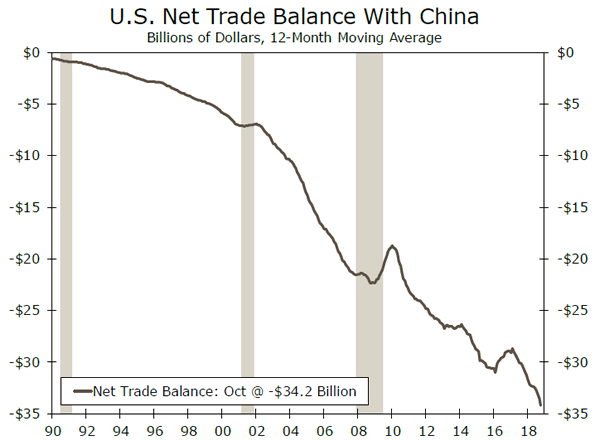
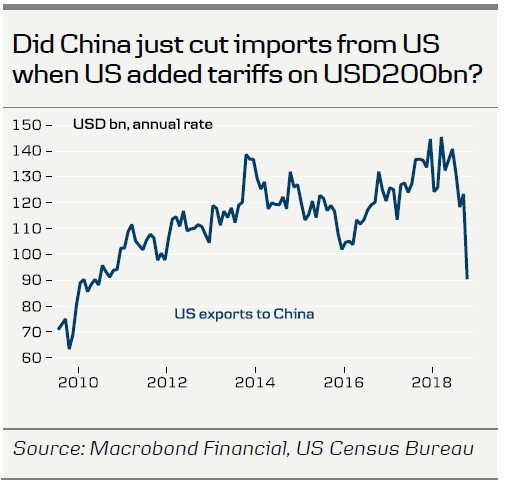
US trade data on Thursday showed a significant drop in Chinese imports from the US in October (see chart on front page). It took the US-China trade deficit to a new all-time high of just below USD500bn measured on an annualised basis.
Comment: Trump is clearly not going to like this. But the drop in Chinese imports reflects a sharp decline in purchases of US agriculture and illustrates that while China cannot put tariffs on as many goods as the US can, it can divert purchases of some goods, such as soy beans, to other countries and hurt the US economy this way.
PMI data stronger but look out for more weakness short term
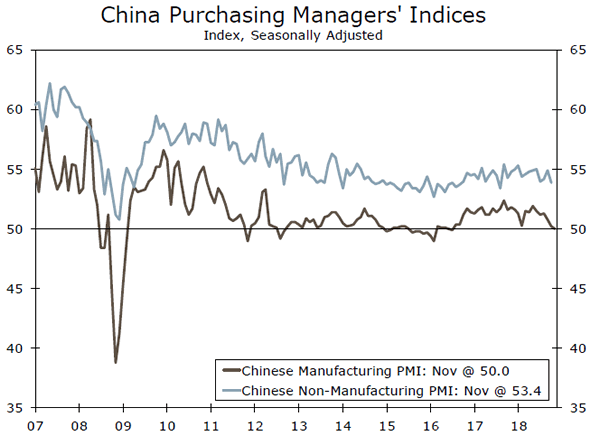
PMI manufacturing from Caixin surprised to the upside, as it rose to 50.2 in November from 50.1 in October. The services PMI rose to 53.8 from 50.8.
Comment: While it looks good on the surface, I still expect more downside in the short term. The NBS PMI is weaker and other indicators point to more slowing, too, see China Leading Indicators – It gets worse before it gets better, 21 November 2018. After a weak Q1, I look for a recovery driven by policy stimulus and a trade deal with the US.
Other China news:
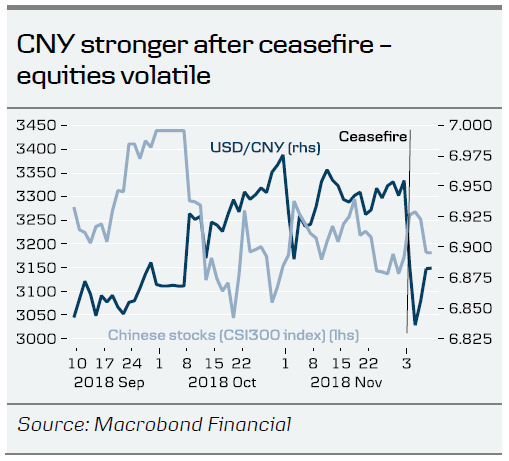
The CNY had its biggest two-day gain against the US this week. It was likely a combination of short sellers of CNY being flushed out after the ceasefire and possible intervention by China to strengthen the CNY. US Treasury Secretary Stephen Mnuchin said Monday that the US had a "strong commitment" from China to deal with CNY devaluation. The strengthening of the CNY clearly puts downside risk on our 12-month forecast for USD/CNY of 7.20 (currently 6.88). We plan to revisit the forecast next week.
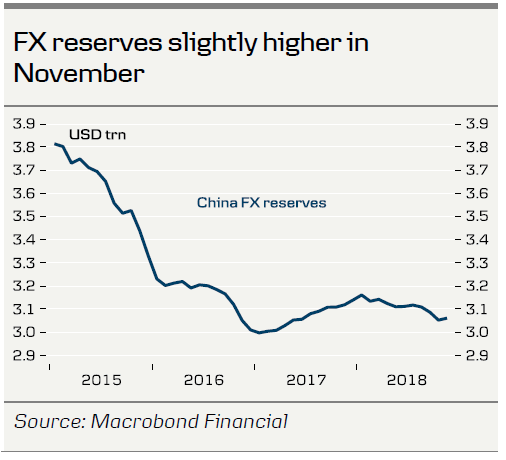
Chinese FX Reserves rose slightly in November from USD3.05trn to USD3.06trn. This suggests China did not intervene in the currency market in November.