Sample Category Title
EURUSD Intraday Analysis
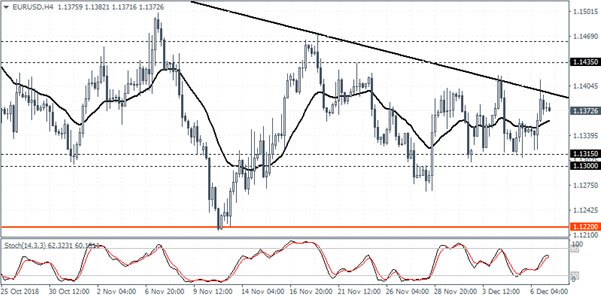
EURUSD (1.1372): The EURUSD currency pair has been bouncing off the support level at 1.3150 - 1.3100 region. Price action is seen respecting the falling trend line, but overall, the common currency is expected to maintain the sideways range. The resistance level at 1.1435 remains a key level of interest which could be tested in the near term. There is a risk that the EURUSD could break below the support level. This could potentially pave the way for further declines as the common currency could be seen targeting 1.1220.
Investors Eye U.S And Canada Payrolls
The U.S. Dollar was trading mixed on Thursday. Economic data on the day showed that U.S. private sector firms added 179k jobs during November. This was below estimates of a 200k expectation. Previous month's data was revised down to 225k from 227k previously. The ADP report comes ahead of today's payrolls data.
Elsewhere, German factory orders increased by 0.3% on the month beating estimates of a 0.4% decline. Previous month's data was revised down to 0.1%.
OPEC, which met in Vienna decided to cut oil production. However, the cut in production was less than the market expectations as it pushed oil prices lower on the day.
The ISM's non-manufacturing PMI report showed that activity rose to 60.7 on the index. This beat a conservative forecast and non-manufacturing activity increased from 60.3 previously.
U.S. factory orders, however, showed a decline, falling 2.1% which was more than the forecasts of a 1.9% decline.
Data from Japan earlier today showed that average cash earnings increased 1.5% on the month. The European session stats with the industrial production figures from Germany and France. German industrial production is expected to rise 0.3% on the month while French industrial production is expected to increase by 0.8%, partly reversing a 1.8% decline from the previous month.
Inflation expectations from the UK will be coming out later in the day while the final revised GDP for the third quarter is due from the Eurozone. No changes are expected as the GDP is forecast to remain steady at 0.2%.
The NY trading session starts with the labor market data from Canada, and the U.S. Canada's unemployment rate is expected to hold steady at 5.8%.
The U.S. unemployment rate is expected to hold steady at 3.7% as the economy is forecast to add 200k jobs in November. Wages are forecast to rise by 0.3% on the month, slightly accelerating from the 0.2% increase previously.
CADJPY Penetrates Ascending Trend Line, Hovers Above 5-Month Trough
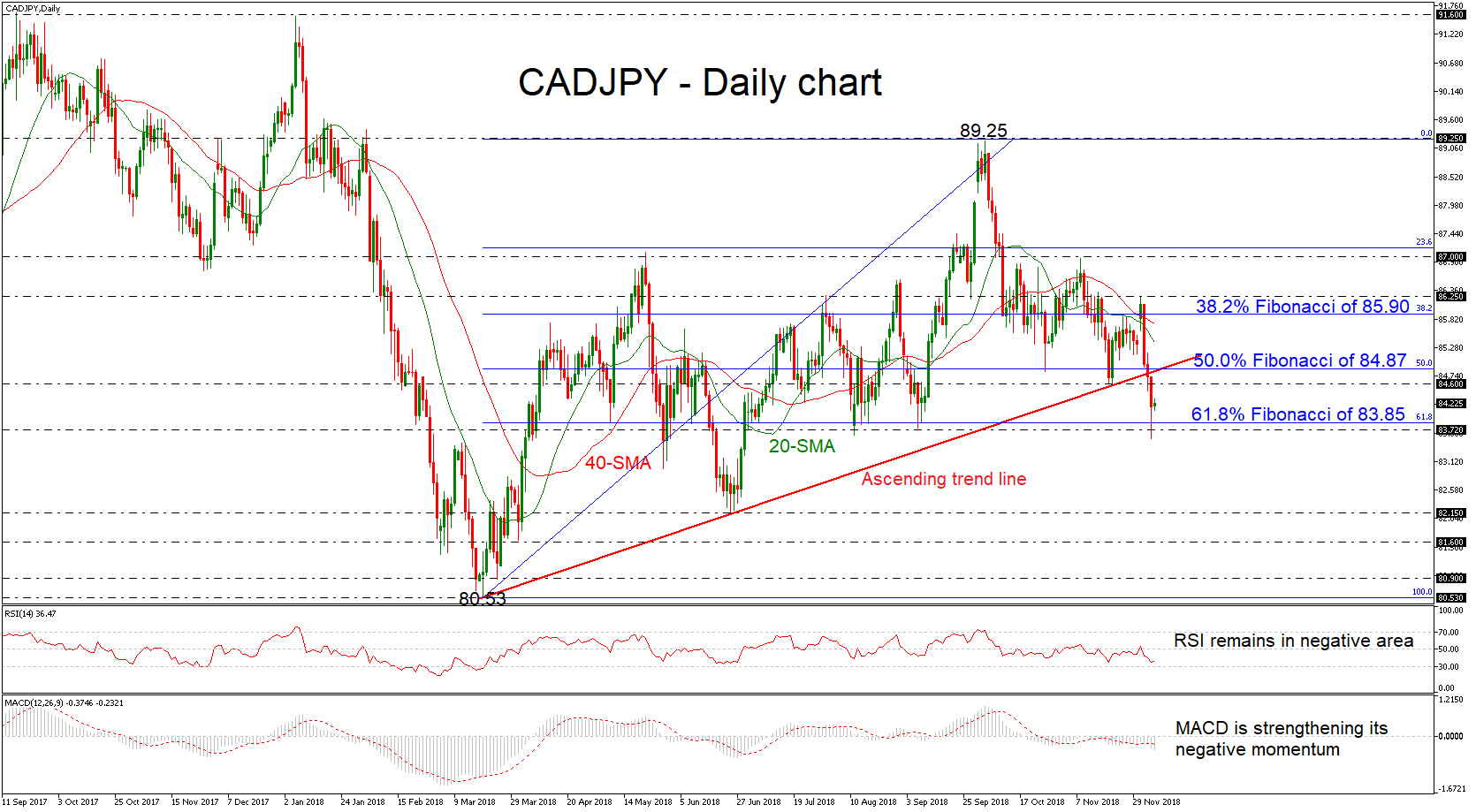
CADJPY completed a five-month low of 83.55 on Thursday and had a significant bearish rally in the preceding three days. The strong bearish sentiment has pushed the price to penetrate the long-term ascending trend line to the downside, shifting the positive outlook to a more negative one.
Despite the latest pullback on price today, the technical indicators remain in the bearish territory. The MACD oscillator is strengthening its momentum below the trigger line, while the RSI indicator is flattening.
Should the pair manage to strengthen its negative momentum, the next support could come around the 61.8% Fibonacci retracement level of the upleg from 80.53 to 89.25, around the 83.72 barrier. This hurdle acted as strong support level in the previous three months, however, if the price tumbles below it, this would open the way for a downside rally towards the 82.15 level.
If prices are unable to hold below the diagonal line, the risk would shift back to the upside with the 84.60 resistance and the 50.0% Fibonacci mark of 84.87 coming into focus. A jump above the 50.0% Fibonacci would signal a resumption of the longer-term uptrend and send prices until the 38.2% Fibonacci of 85.90.
In the bigger view, the outlook has switched to neutral since prices hold below all the moving average lines and the rising trend line, which has been holding since March 19. A significant close below 83.72 would confirm the bearish bias.
Currencies: Dollar Little Affected By Sharp Swings In Equities And Interest Rates
Rates: Will calm return to (interest rate) markets?
European equity markets had their worst performing day since the Brexit referendum in June 2016. Risk-aversion supported core bonds, pushing yields below some key support levels. Calm returned on US markets however and continued in Asia this morning. Can sentiment improve in Europe as well? US payrolls catch the eye on the eco calendar today.
Currencies: dollar little affected by sharp swings in equities and interest rates
The dollar lost temporary ground yesterday as markets further question the US growth outlook and the possible consequences for the Fed policy. However, in the end, EUR/USD held perfectly with the established range. Today, the US payrolls, global risk sentiment and the OPEC meeting are the potential drivers for USD trading. We expect current EUR/USD consolidation to continue.
The Sunrise Headlines
- US stock markets opened deeply in red yesterday but recovered gradually intraday. Losses were eventually limited to -0.3%. Nasdaq ended in green. Asia is trading with gains this morning, with Chinese indices lagging behind.
- Following a similar statement from China, Trump tweeted his confidence in reaching a trade deal within the truce period. The tweet came after Canada's arrest of a top Huawei executive sparked trade fears just days after the truce.
- During an Opec meeting on Thursday, members agreed to slow oil production to halt the recent price slide but failed to agree on about how to share the cuts. Opec+ meets today but the Saudi energy minister isn't confident to reach a deal.
- As of tomorrow, Merkel is no longer the leading lady of the CDU party as the party gathers to elect a new n° 1 today. The leading candidates are the centred Kramp-Karrenbauer – Merkel's protégé – and the more right-leaning Merz.
- BoJ's Kuroda defended his ETF-buying before parliament. The programme is facing criticism of distorting the stock market. However, with inflation well below the 2% target, it's premature to consider ending the purchases, he said.
- PM May is said mulling a delay of next week's Brexit vote. That would buy her time to ask for more concessions from Brussels. However, the latter said it is waiting to see what happens in the vote before deciding about any concessions.
- Today's economic calendar provides markets with US payrolls data and the Michigan consumer confidence. We also keep an eye at Canada's job report. Fed's Brainard is scheduled to speak
Currencies: Dollar Little Affected By Sharp Swings In Equities And Interest Rates
USD hardly reacts to swings on other markets
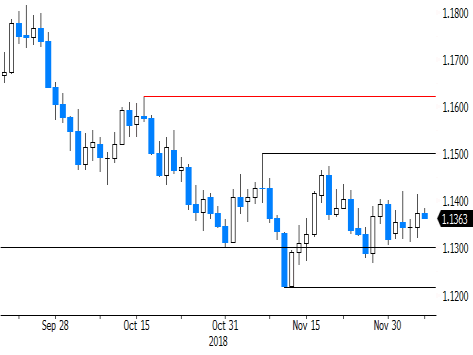
The global risk-off repositioning continued with vigour yesterday as investors feared a flaring up of US China trade-tensions. Initially, the risk-off trade had only moderate impact on EUR/USD or USD/JPY. At the start of the US session, US yields and the dollar faced another forceful (temporary) setback. US 2-year yields spiked lower and the dollar suffered. The move was probably the result of both of modest ADP job growth and cautious comments from Fed's Kaplan. However, part off the risk-sell-off was reversed later. At the same time, US yields and the dollar also showed signs of intraday bottoming. EUR/USD closed at 1.1374 (from .1344). USD/JPY also closed off the intraday low at 112.68 (from 113.19 on Wednesday). Overnight, Fed's Powell in a speech maintained a positive assessment on the economy and on the US labour market. The direct impact on US yields and the dollar was modest. Most Asian equity markets try a cautious rebound after recent sell-off, but it is much too early to draw firm conclusions. The dollar is gaining marginal ground against the euro and the yen. The eco calendar contains the US payrolls today and, of lesser importance, the Michigan consumer confidence. US November payrolls growth is expected to 'ease' to 198k (from a strong 250k). Wage growth is expected at 0.3% M/M and 3.1% Y/Y. Maybe risks are for a slightly softer payrolls report. Question is whether a mildly soft figure should cause a further decline in US yields and/or the dollar. The jury is out, but if the decline in US yields and the USD slows, it might be an indication that enough growth uncertainty is discounted after recent repositioning. This might be marginally USD supportive. That said, the repositioning in the first place occurred in the equity and interest rate markets. For now, we don't see a trigger for EUR/USD to start a new directional trend. More technical driven trading in the 1.12/1.15 range might be on the cards. The political debate preparing next week's Brexit vote in Parliament continued yesterday. All kinds of proposals/options are aired, including a delay of the vote. However, for now, visibility on the outcome of the process remains very low. In this context we expected more erratic directionless EUR/GBP trading going into the weekend. For now, we see no trigger for a sustained sterling comeback
EUR/USD hold tight sideways range despite sharp swings in global equities and interest rates
GBP/JPY Daily Outlook
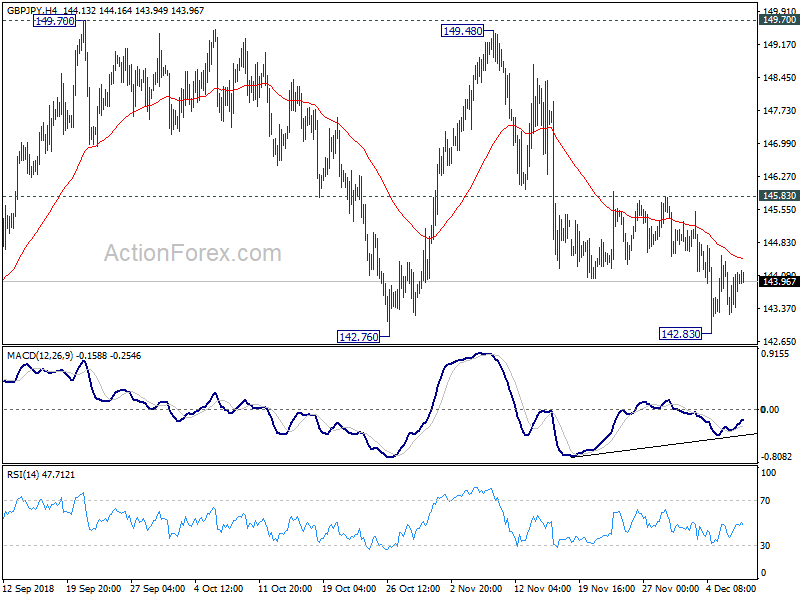
Daily Pivots: (S1) 143.45; (P) 143.84; (R1) 144.43; More...
Intraday bias in GBP/JPY is turned neutral with a temporary low formed at 142.83, already of 142.76 support. Some consolidation could be seen. But near term outlook remains cautiously bearish as long as 145.83 resistance holds. On the downside, firm break of 142.76 will pave the way to 139.29/47 key support zone.
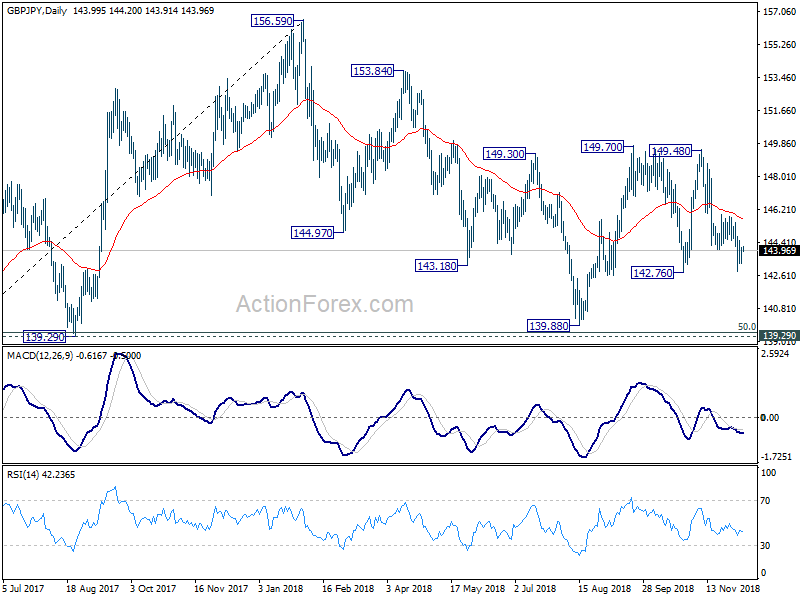
In the bigger picture, as long as 139.29 cluster support (50% retracement of 122.36 to 156.59 at 139.47) holds, up trend from 122.36 (2016 low) would still extend beyond 156.69 high. However, decisive break of 139.29/47 will suggest that such up trend is completed and turn outlook bearish. In that case, next target is 61.8% retracement at 135.43.
Forex Technical Analysis: EUR/USD, USD/JPY, GBP/USD
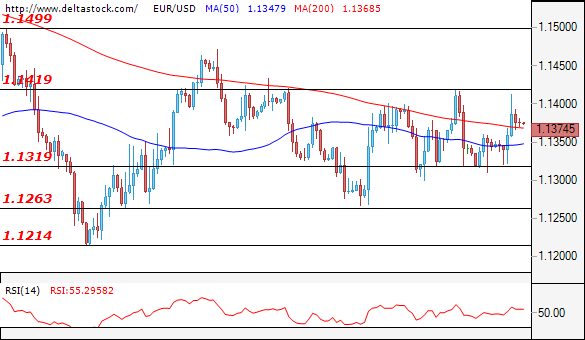
EUR/USD
Current level - 1.1374
We are observing a market range as yesterdays failed test at 1.1420 does not change the negative expectations. There is a possibility for a test and may be breakthrough of 1.1319. Breaking the next key zone around 1.1214 we can expect a fall to 1.1035.
| Resistance | Support | ||
| intraday | intraweek | intraday | intraweek |
| 1.1360 | 1.1500 | 1.1320 | 1.1200 |
| 1.1420 | 1.1620 | 1.1260 | 1.0850 |
USD/JPY
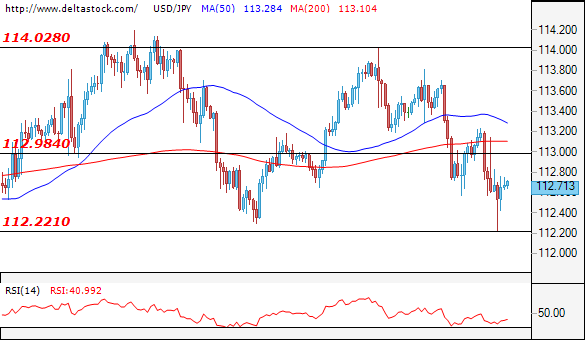
Current level - 112.71
The quick recovery after the fall to 112.22 doesn't change my negative expectations. The lack of new highs on the big time frames suggests a change in the market mood. Here 112.20 is a key level as it also is on a trend line. We can expect a possible correction to 112.98 and a second test of 112.20, if it gets broken the next target is 111.30.
| Resistance | Support | ||
| intraday | intraweek | intraday | intraweek |
| 114.00 | 114.50 | 113.10 | 112.30 |
| 114.20 | 116.20 | 112.60 | 111.60 |
GBP/USD
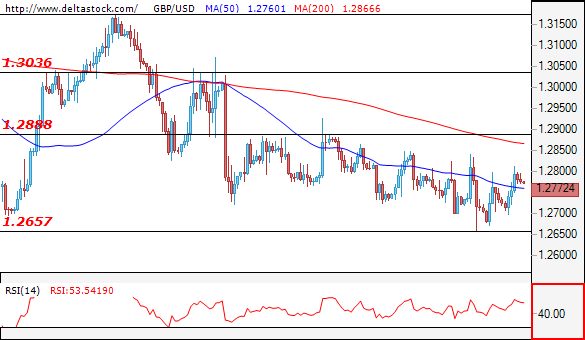
Current level - 1.2772
It seems that the pair can't find it's way after several tests of the 1.2820 zone. I expect a fall from the current levels as the target is the historically strong 1.2660. If the level gets broken the dall could extend to 1.2340.
| Resistance | Support | ||
| intraday | intraweek | intraday | intraweek |
| 1.2860 | 1.3250 | 1.2720 | 1.2660 |
| 1.2920 | 1.3440 | 1.2660 | 1.2340 |
EUR/JPY Daily Outlook
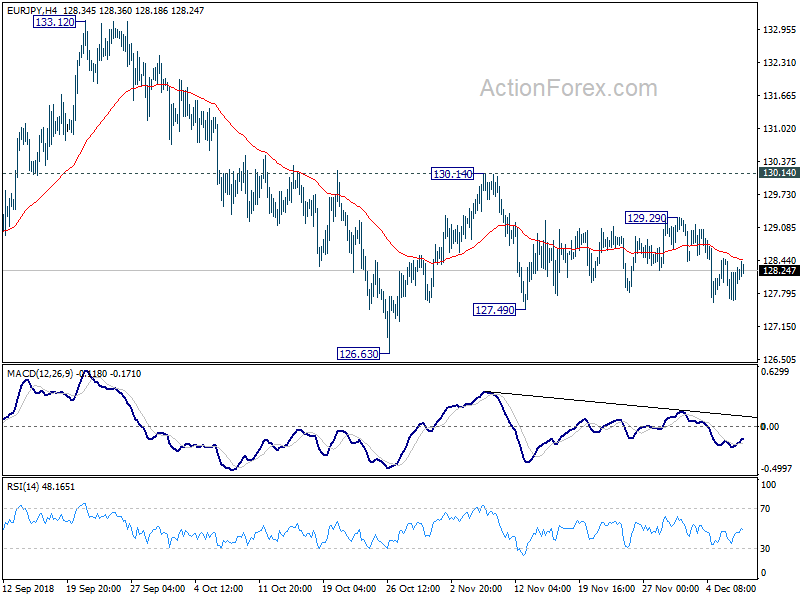
Daily Pivots: (S1) 127.75; (P) 128.11; (R1) 128.55; More....
EUR/JPY recover ahead of 127.49 minor support and intraday bias is turned neutral. Break of 127.49 will target 126.63 support first. Break there will then resume the whole decline from 133.12 to 124.08/89 support zone. And, even in case of recovery, outlook will stay bearish as long as 130.14 resistance holds.
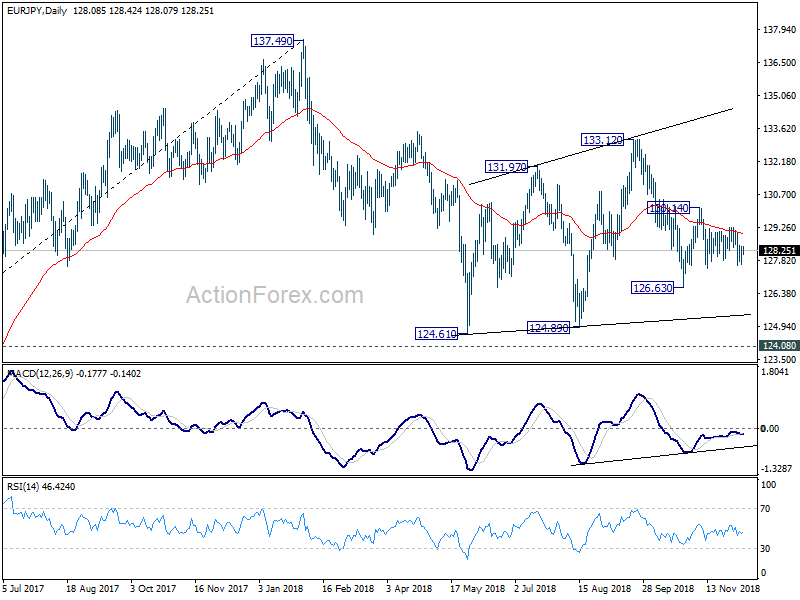
In the bigger picture, as long as 124.08 key resistance turn supported holds, larger up trend from 109.03 (2016 low) is still in progress. Firm break of 137.49 structural resistance will target 141.04/149.76 resistance zone next. However, decisive break of 124.08 will argue that such rise from 109.03 has completed and turn outlook bearish. In that case, deeper fall would be seen to 61.8% retracement of 109.03 to 137.49 at 119.90.
EUR/USD Bullish Spike Breaks Bearish Channel But Not Range
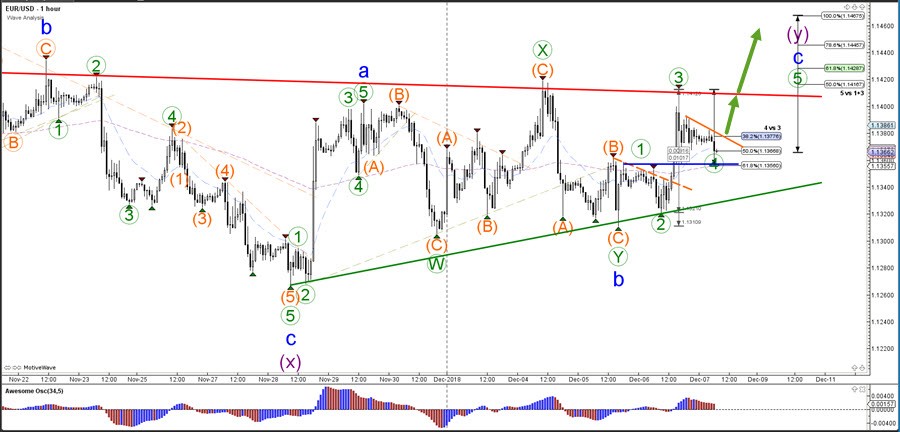
The EUR/USD could have completed the wave B (blue) and might be ready for a bullish wave C (blue) if price manages to break above resistance (red) with strong bullish candles. The overall picture remains corrective and choppy but at the moment a larger bullish correction towards Fibonacci retracement levels within waves Y (purple/pink) of wave B (light purple) seems the most probable.
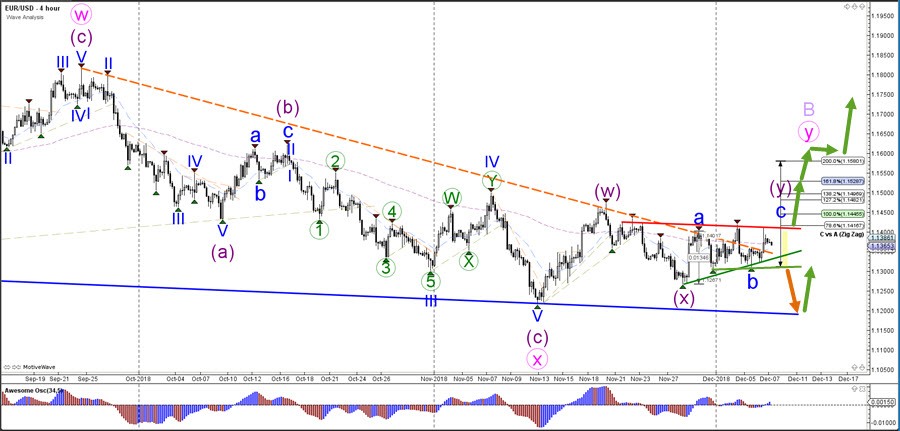
The EUR/USD has either made a bullish ABC or could be building a 123 wavepattern. A bullish breakout favours the 123 pattern whereas a bearish break makes the ABC variation more likely.
ECB Preview: A New Chapter Of Dovish Tightening
- The new reinvestment strategy could be the most interesting part of next week's ECB meeting, when a formal announcement about the end of the net asset purchases is set to be made.
- Although the stakes are high at the meeting, we expect Draghi to try to be as ‘dull' as possible in order not to move the markets.
- Growth assessment as well as new forecasts (including 2021) will be closely monitored. We will pay close attention to the wage growth assessment.
- Given the current dovish market pricing we have a hard time seeing how the ECB can deliver a message that would lead to a dovish market reaction.
In conclusion:
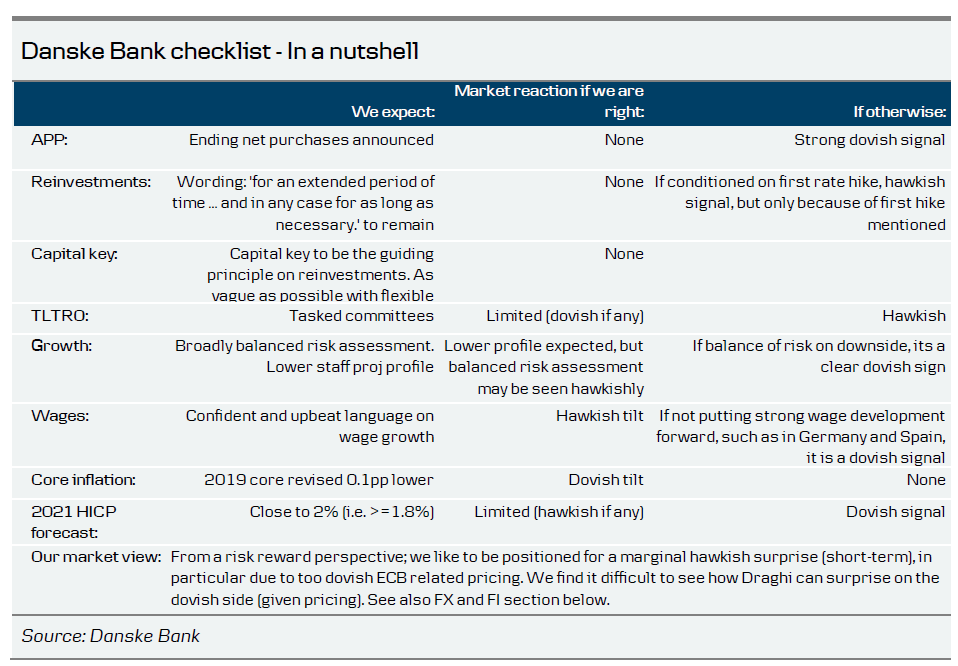
We expect Draghi to repeat his ‘glass half full' message, thereby acknowledging that economic developments are broadly on track. Therefore, despite a (on paper) hawkish policy move of ending the net asset purchases, we expect a dovish tightening as a confirmation and reassurance of an accommodative monetary policy stance going forward. We expect no new guidance on a first rate hike.
We also expect Draghi to voice concerns about the growth outlook but to still keep the broadly balanced risk assessment, which in our view is needed to end the asset purchase programme (APP). We expect a cautiously optimistic tone from Draghi on the (core) inflation, but a relative upbeat and confident wording on the wage growth developments.
Ending QE is given – look for the reinvestment strategy
The ECB Governing Council (GC) meeting on Thursday next week has been the most anticipated meeting since the June decision when the ECB implicitly already announced an end to QE. Therefore, fully aligned with market consensus, we expect a formal end to the QE programme next week. However, given ECB’s ‘patience and prudence’ view on monetary policy, we expect a ‘dovish tightening’ to fit with ECB’s narrative in the recent period. Therefore, we also expect ECB to confirm and reiterate its accommodative
monetary policy stance.
Consequently, the future of the QE programme (the reinvestment strategy) will take centre stage. We expect ECB to outline its future strategy albeit it being relatively vague, as we doubt that we will get much new colour on duration, and to repeat its intention to reinvest ‘for an extended period of time (…) and in any case for as long as necessary.’ The important job for Draghi, however, is to convince markets that no balance sheet reduction will take place before the first hike. A stronger version could be date dependent, such as ‘through summer 2020’ but we doubt it will commit to this already, as we have to get used to the new style of Aesopian forward guidance (as introduced by board member Benoit Coeuré
in September).
We do not expect ECB to announce an ‘operation twist’ to its holdings (favouring longerdated bonds to shorter-dated ones), which was mentioned by some media outlets
Capital key
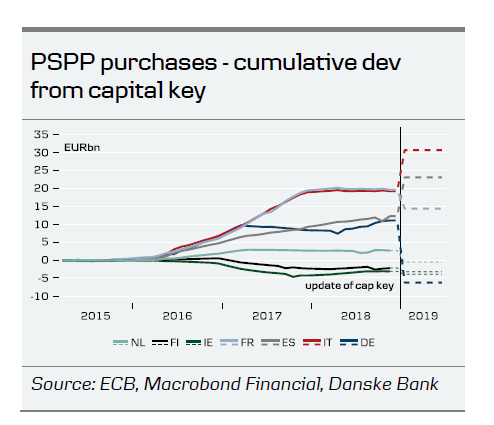
This week ECB announced its new capital key structure as of 1 January 2019. While this is normally not something that catches the markets’ attention, it has received attention from market participants given that the capital key has been used to guide the PSPP. The update contained the revision of the German capital key by +0.82pp and Italy was revised down
by 0.53pp.
The verdict is still out whether ECB will adopt the new capital key or stick to the old capital key for the reinvestments. Last week, a Reuters story reported that two possibilities were considered: (1) taking a snapshot of the cumulative capital key deviations by the end of this year and ‘reset’ the deviation or (2) applying the new capital key to the existing stock and gradually fading the deviation over multiple years. We expect the latter, but importantly a flexible implementation is warranted as, in essence, the ECB wants to avoid a significant
market impact.
TLTRO – it will come, but ‘hold your horses’
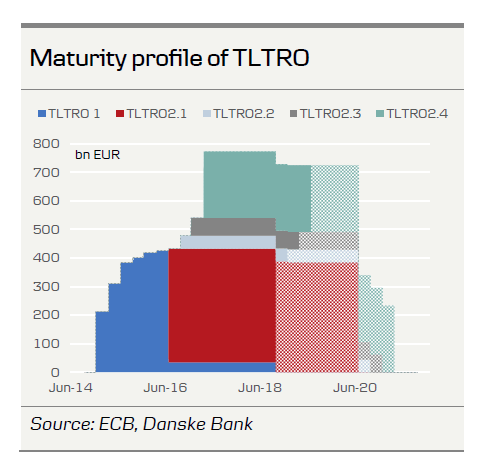
As we discussed in ECB Research - TLTRO3: Italy to be main beneficiary, 9 November 2018, we expect the ECB to offer a new Targeted Longer Term Refinancing Operation. While the discussion has started in the market, ECB has not discussed it much. Previously, chief economist Praet said that the ECB is aware of the liquidity situation given the new
regulation as of summer next year.
The modalities for such a new round are highly uncertain, but we argue in the piece mentioned above that the extension of the maturity date is more important than any potential additional take up. We also find it premature to announce a new round at the December meeting next week but we expect the ECB to acknowledge a risk of tightening liquidity conditions next year and consequently to have asked ‘tasked committees’ to study this. TLTRO is a natural tool in response to that. We expect a formal announcement in Q1,
most likely March, and implementation in Q2, most likely June.
Since the last meeting
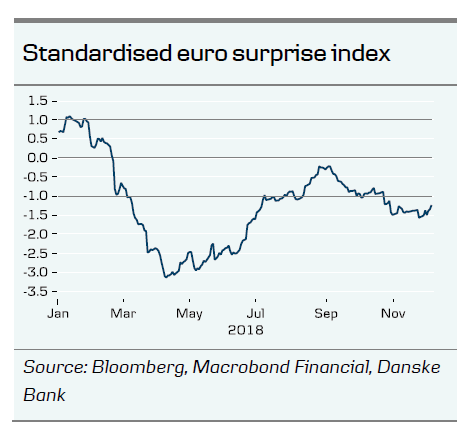
Since the latest GC meeting on 25 October, we have received a number of data, mainly on the downside. However, during the past few days, we have seen some stabilisation of the surprise index after moderate positive surprises.
Activity / confidence
After PMI misses early in the month, final PMI and euro area economic confidence data were less bad than expected, which is encouraging. Industrial confidence and business climate have edged up slightly as well, which could be seen as a first sign of a bottoming out of macro data in the coming months. The PMI service sector growth remained more resilient, with sales reportedly buoyed by strong labour markets in some countries, linked in turn to higher consumer spending.
The GDP figures for Q3 were disappointing across the board and early indications for Q4 GDP could suggest that the German car-related backlog will not disappear already in this quarter (see also Euro Area Macro Monitor, 5 December 2018).
Inflation
November HICP inflation fell back below 2% for the first time since May this year, as the boost from higher energy prices increasingly starts to wane. A slowdown in headline inflation was widely expected, but core inflation declining back to 1.0% (-0.1pp) in November was a clear disappointment, as higher wages yet have to show up in durably
higher services prices.
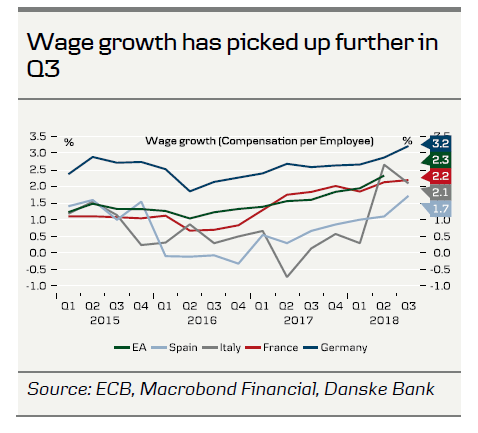
Early releases of country level data show an upside risk to the Q3 wage growth data for the euro area as a whole from 2.3% in Q2, to be released later today. For example, Germany
rose 3.2%, while Spain rose 1.7% in Q3.
Euro area negotiated wages released this month indicated a small easing to 2.15% in Q3 from 2.20% in Q2, but remains significantly above the growth rates observed in 2016 and
2017.
Higher wages to feed core inflation optimism
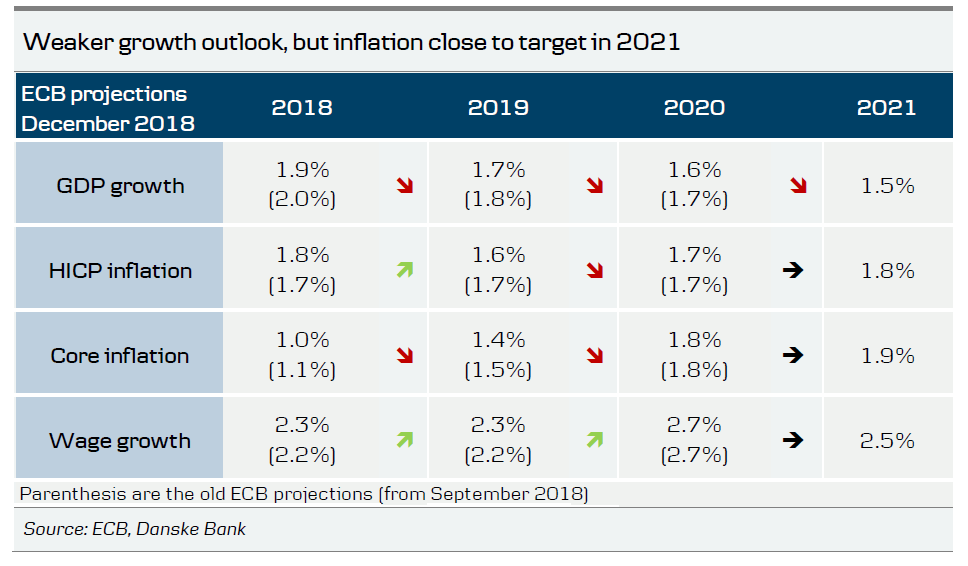
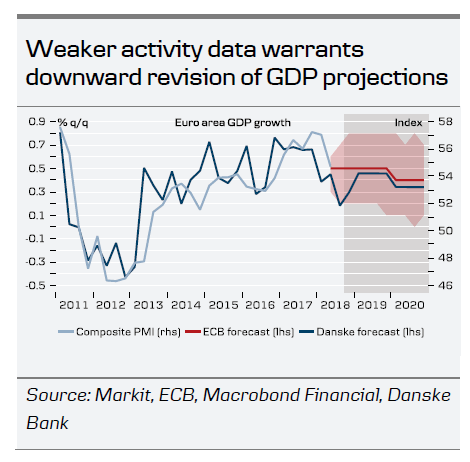
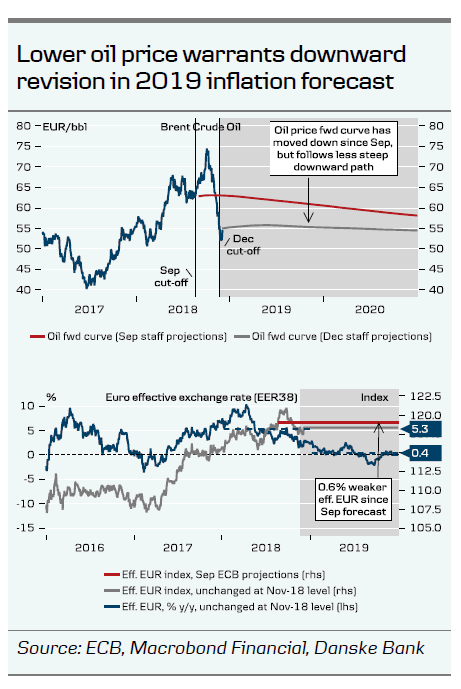
The December meeting will also be an interesting one in another respect: the new staff projections will include the 2021 forecasts for the first time. A downward revision in the 2018 core inflation and growth forecasts is a done deal, given that momentum on both fronts has disappointed since September. The boost from the higher oil price to headline inflation is waning and core inflation will likely end the year where it started at 1.0%. Q3 growth was less than half the rate the ECB expected back in September and so far forwardlooking indicators do not point to a rebound in Q4 activity.
With lower oil price assumptions feeding into the projections, we also see scope for a downward revision in the 2019 core inflation forecast. However, we expect Draghi to downplay recent core inflation misses and point instead to upside surprises on the wage front (Germany 3.2% y/y and Spain 1.7% y/y in Q3). Accelerating wage growth will keep the ECB’s inflation confidence alive and we therefore expect the ECB to release a 2021 core inflation forecast close to the 2% target, although it seems on the high side at the
current juncture.
Clouds are increasingly gathering on the euro area growth horizon and consequently we expect the ECB to revise down its GDP forecasts to 1.7% in 2019 and 1.6% in 2020 but importantly to maintain the ‘balanced’ growth risk assessment (a pre-requisite to end the QE programme). Markets will also keep a close eye on the 2021 forecasts. From tradition, we expect the ECB to forecast HICP inflation ‘close but below 2%’ at the end of the forecast horizon, as we argue that if that was not the case, the ECB should change its current monetary policy stance. Further, we expect the ECB to project growth returning to
potential.
FX: getting closer to the EUR rebound – but not there just yet
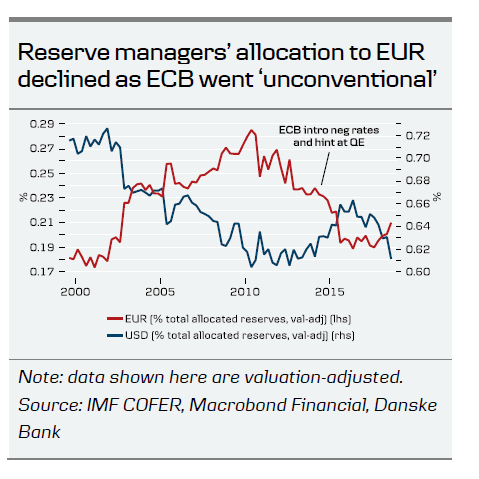
While we maintain that the ECB is priced too softly, the fact that we expect no new rate guidance at this meeting implies that FX markets should take their cue from the ECB’s stance on the cyclical position of the euro zone. Despite recent loss of growth momentum, if Draghi strikes an upbeat tone due to recent constructive wage developments, it could make room for some EUR support. We do stress, however, that any EUR/USD rally is likely to prove temporary as USD support remains in place in our view from a now rather dovishly priced Fed. We reiterate our long-held view that as we get closer to the first ECB hike, capital flows will become less EUR-negative as reserve managers are lured back to the euro zone. Indeed, both euro-zone portfolio investment flows and reserve-allocation data (see chart) suggest interest in EUR assets declined as QE and negative rates were introduced. This could reverse swiftly as the ECB ‘normalises’. We are long USD carry at present but positioned for a EUR/USD rebound beyond Q1 in our FX Top Trades 2019 - our guide on how to position for the coming year, 4 December 2018.
Bunds are expensive
The ECB December meeting has previously been bearish for rates. In 2016, 10Y German government bond yields rose some 20bp at the start of December. In 2017, 10Y German government yields rose some 50bp. Today we are back below the bottom in December 2017 and the ECB is about to end QE. Furthermore, market pricing is currently very dovish as there is very little priced into the curve. Currently, only 7bp is priced in by December 2019 and consequently, in our top trades published earlier this week, we recommend to pay Mar-20 and receive Sep-19 Euribors, see Danske Bank 2019 Fixed Income Top Trades, 4 December 2018
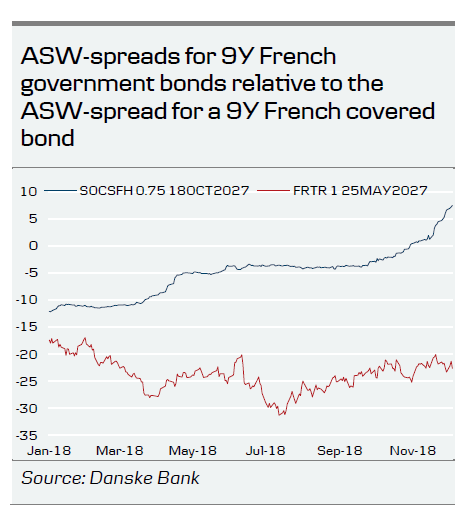
When we look at the European government bond markets, there has been very limited impact from the tapering seen during 2018, where the ECB has gone from EUR60bn to EUR30bn and down EUR15bn in the PSPP programme. The ASW-spread for the core markets has tightened in the long end of the curve, where we would have expected underperformance of core and semi-core EU government bonds. However, in the covered bond and credit markets we have seen an underperformance versus swaps as shown in the chart below, where we look at an example of a 9Y French government bond and a 9Y
French covered bonds relative to swaps.
Given that net supply is set to rise in 2019 as we do not have the QE, we expect to see some underperformance in core and semi-core EU government bonds and with market pricing being very dovish, we expect to see the same pattern on the outright level for yields as in 2016 and 2017. However, we do not expect that the sell-off will be as violent as in late 2017 and early 2018, when rates moved some 50bp. We expect that Bunds will be back up to 0.5% by the end of January
EUR/GBP Daily Outlook
Daily Pivots: (S1) 0.8881; (P) 0.8905; (R1) 0.8924; More...
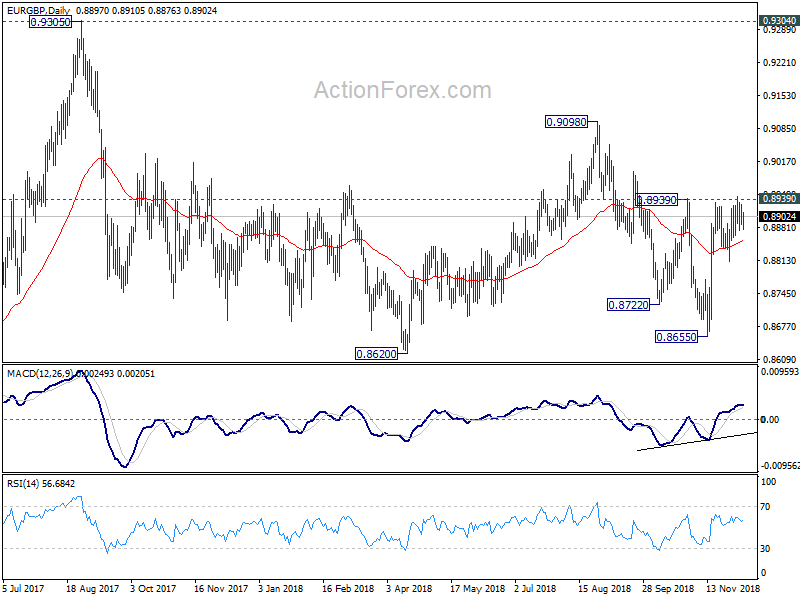
Intraday bias in EUR/GBP remains neutral with focus on 0.8939 resistance. On the upside, firm break of 0.8939 resistance will confirm completion of the fall from 0.9098 and turn outlook bullish for this resistance. On the downside, below 0.8810 will turn bias to the downside for 0.8655 low instead.
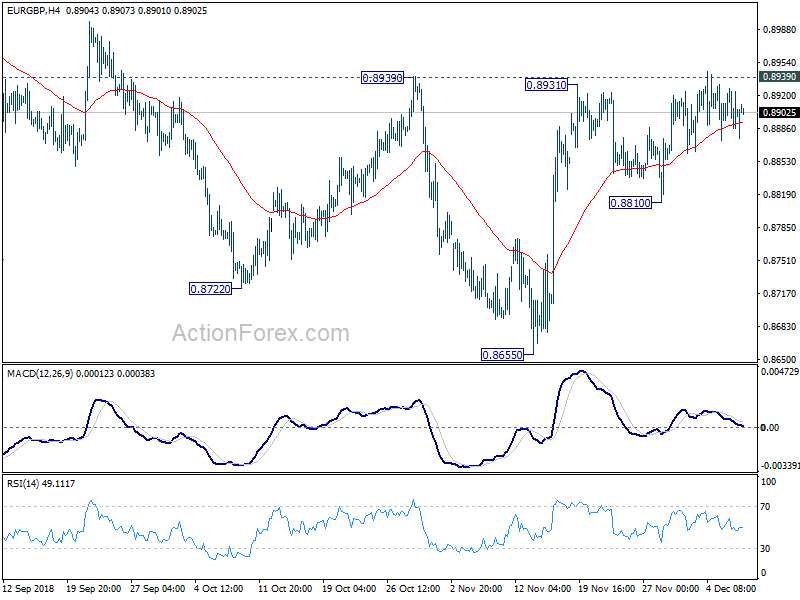
In the bigger picture, EUR/GBP is seen as staying in long term range pattern started at 0.9304 (2016 high). Sustained break of 0.8939 resistance will confirm that it's in a medium term rising leg for 0.9098 and above. And for now, in case of another fall, downside will likely be contained by 0.8620/55 support zone to bring rebound.