

Sample Category Title
GBPUSD Traders Await UK Retail Sales Data
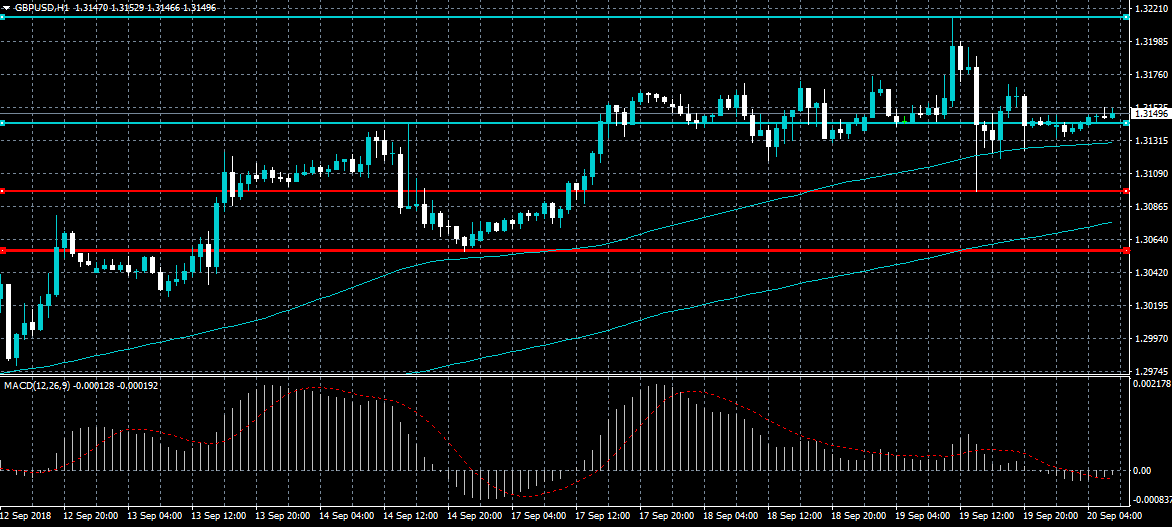
The British pound is trying to recover bullish momentum against the US dollar after price suddenly dipped below the 1.3100 level over negative Brexit headlines on Wednesday. Expectations for UK retail sales are tilted to the downside as UK consumer spending starts to normalize after the World Cup and hot summer. Buyers need to break to reclaim the 1.3205 level while sellers need hold price below the 1.3100 support level.
The GBPUSD pair is only intraday bullish while trading above the 1.3140 level, key resistance is found at the 1.3212 and 1.3255 levels.
If the GBPUSD pair moves below the 1.3100 level, key support is found at the 1.3060 and 1.3000 levels.
SNB left monetary policy unchanged as widely expected. Full statement
SNB left monetary policy unchanged as widely expected. Full statement below.
Monetary policy assessment of 20 September 2018
Swiss National Bank leaves expansionary monetary policy unchanged
The Swiss National Bank (SNB) is maintaining its expansionary monetary policy, thereby stabilising price developments and supporting economic activity. Interest on sight deposits at the SNB remains at –0.75% and the target range for the three-month Libor is unchanged at between –1.25% and –0.25%. The SNB will remain active in the foreign exchange market as necessary, while taking the overall currency situation into consideration.
Since the monetary policy assessment of June 2018, the Swiss franc has appreciated noticeably, against the major currencies as well as against emerging market currencies. The Swiss franc is highly valued, and the situation on the foreign exchange market is still fragile. The negative interest rate and the SNB's willingness to intervene in the foreign exchange market as necessary remain essential in order to keep the attractiveness of Swiss franc investments low and thus ease pressure on the currency.
The new conditional inflation forecast suggests that inflation up to the beginning of 2019 will be higher than predicted in June due to a slight rise in domestic inflation. From the second quarter of 2019, the new conditional forecast lies below the June forecast as a result of the appreciation in the Swiss franc. For 2018, the SNB continues to anticipate inflation of 0.9%, while the inflation forecast of 0.8% for 2019 is 0.1 percentage points lower than projected at the last assessment. For 2020, the SNB expects to see inflation of 1.2%, compared with the 1.6% forecast in the last quarter. The conditional inflation forecast is based on the assumption that the three-month Libor remains at –0.75% over the entire forecast horizon.
Overall, global economic growth was solid in the second quarter. In the advanced economies, utilisation of production capacity continued to improve and employment figures once again rose. In the emerging economies, too, economic momentum remained generally robust. International goods trade nonetheless slowed somewhat.
Economic signals for the coming months remain favourable. Supported by ongoing expansionary monetary policy in the advanced economies and improved labour markets, the global economy is likely to continue to grow. However, following strong growth in the previous quarters, the pace is expected to slow slightly. To date, the crises of confidence in Turkey and Argentina have not materially impacted the global economic outlook.
The risks to this positive baseline scenario are more to the downside. Chief among them are political uncertainties in some countries as well as potential international tensions and protectionist tendencies.
Switzerland's economy has continued to recover. The revised GDP figures for recent years reveal stronger growth momentum than was originally reported. In the second quarter 2018, GDP once again grew faster than estimated potential output, at an annualised rate of 2.9%. The positive development in the first half of the year was, however, partly due to special factors. Overall, utilisation of total production capacity has improved further, and unemployment has also continued to decline over recent months.
Leading indicators suggest that the economic outlook remains favourable. Some loss of momentum is expected, however, due to a slight slowdown in global growth and the dampening effect of recent Swiss franc appreciation. The SNB now anticipates GDP growth of between 2.5% and 3% for the current year and a further slight fall in unemployment. The stronger growth forecast is attributable to the upward revision for the previous quarters.
Imbalances on the mortgage and real estate markets persist. Both mortgage lending and prices for single-family homes and privately owned apartments continued to rise at a moderate rate over recent quarters. Although prices in the residential investment property segment have stabilised, there is the risk of a correction due to strong price increases in recent years and growing vacancy rates. The SNB will continue to monitor developments on the mortgage and real estate markets closely, and will regularly reassess the need for an adjustment of the countercyclical capital buffer.
Blow To Cryptocurrencies After Another $60M Hack
After falling to the lowest level since August, the price of Bitcoin rose during the Asian session to reach $6440. This price action was after a new report of a cryptocurrency exchange hack in Japan. According to CoinDesk, Zaif, a Japanese crypto exchange was hacked and digital assets worth more than $60 million were stolen.
The recent hack was a major blow to the cryptocurrencies industry. Originally, cryptocurrencies were created to make online payments safer, faster, and anonymous. The current hack means that the trust among crypto holders will go down. This was the second major hacking of a Japanese cryptocurrency exchange this year. In January, hackers stole more than $520 million of NEM tokens. By April this year, cryptocurrencies worth almost $700 million were stolen.
The current price action also happened as the Consensus event in Singapore continued. Consensus is an event by Coinbase that gathers influential people in the cryptocurrencies industry. Early this year, cryptocurrencies declined after the Consensus event failed to deliver key news.
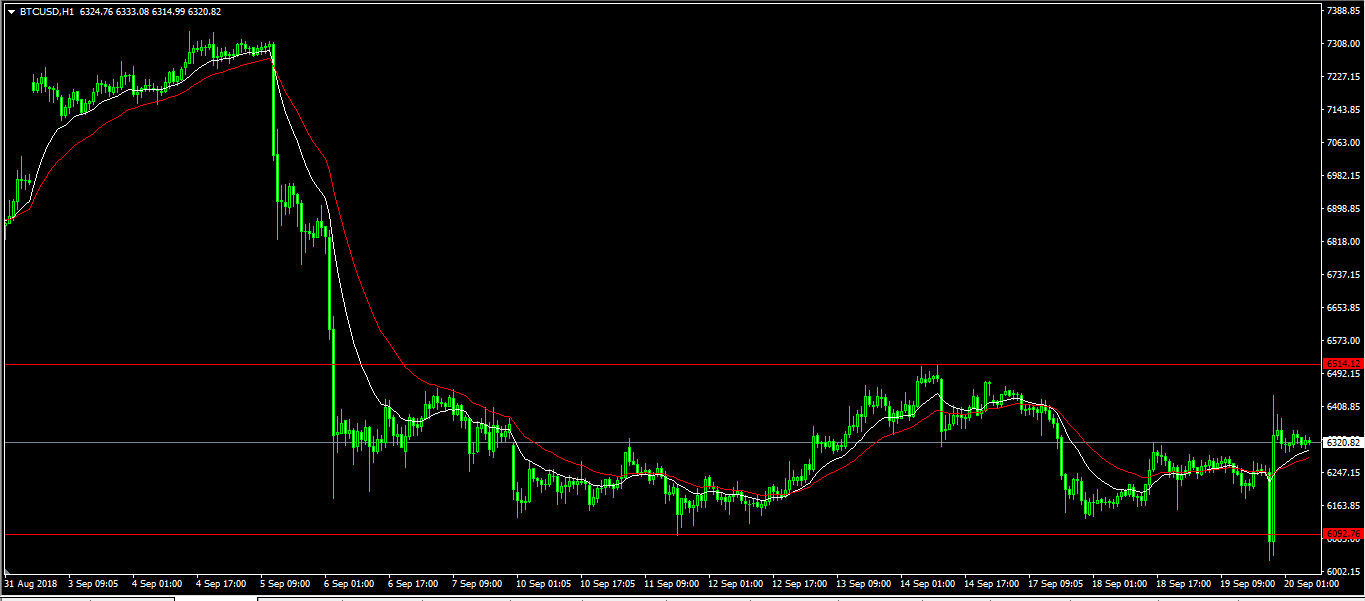
The BTC/USD pair is now trading at 6320. This is within the narrow range of 6090 and 6514 that the pair has been trading in since last week when it dropped sharply from above 7200. With the pair trading within this range, it means that an upward or downward breakout could happen. Most likely, the pair will move lower as it lacks catalysts to push it higher.
KIWI Jumps After Solid Q2 GDP Numbers
The New Zealand dollar rose sharply against the greenback after the country released better-than-expected GDP numbers. In the second quarter, the economy expanded at an annualized rate of 2.8%, which was better than the expected 2.5%. It was also better than the average GDP growth of 2.7%. The previous reading was 2.5%. On a quarter-on-quarter basis, GDP expanded by 1.0%, which was better than the expected 0.8%. The officials from the bureau of statistics said that the growth was broad based with service industry growing. 15 out of 16 sectors recorded growth with the agricultural sector recorded the fastest growth rate since 2014.
Sterling remained higher against the euro and the US dollar after positive inflation numbers from the UK. Yesterday, data from the Office of National Statistics (ONS) showed that the price of consumer goods rose by 2.7%, which was better than the expected 2.4% gain. On a month-on-month basis, CPI rose by 0.7%, which was better than the expected 0.5%. Key contributors to the inflation were energy prices and food products, which are considered volatile. Today, the UK will release the retail sales which will be closely watched. Traders expect retail sales to grow at an annual rate of 2.3%, which will be lower than the expected 3.5%. Core retail sales are expected to rise by 2.5%.
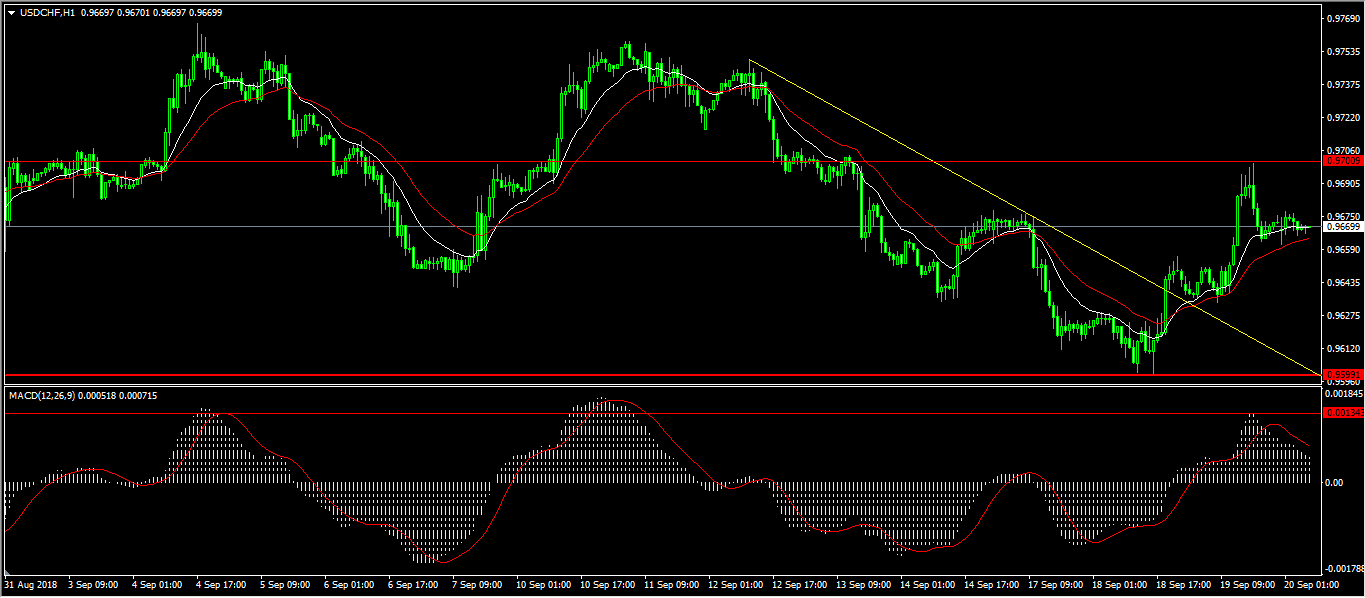
The Swiss Franc yesterday eased ahead of today’s interest rate decision by the SNB. The USD/CHF is now trading at 0.9668, which is higher than the four-month low of 0.9600, which was reached earlier this week. The SNB is expected to leave rates unchanged. However, its decision will weigh heavily on the franc. The bank said previously that the franc is overvalued against the USD. If opinions change, the franc is likely to move up significantly.
USD/CHF
The USD/CHF pair reached a bottom of 0.9599 yesterday. It then started a rally that saw it reach a high of 0.9699. As the pair moved up, so did the MACD, which crossed past the zero-line and reached the highest level since Monday last week before starting to ease. The current price is also above the important support level shown below. After the SNB, the pair is likely to test the 0.9700 or the 0.9600 levels.
NZD/USD
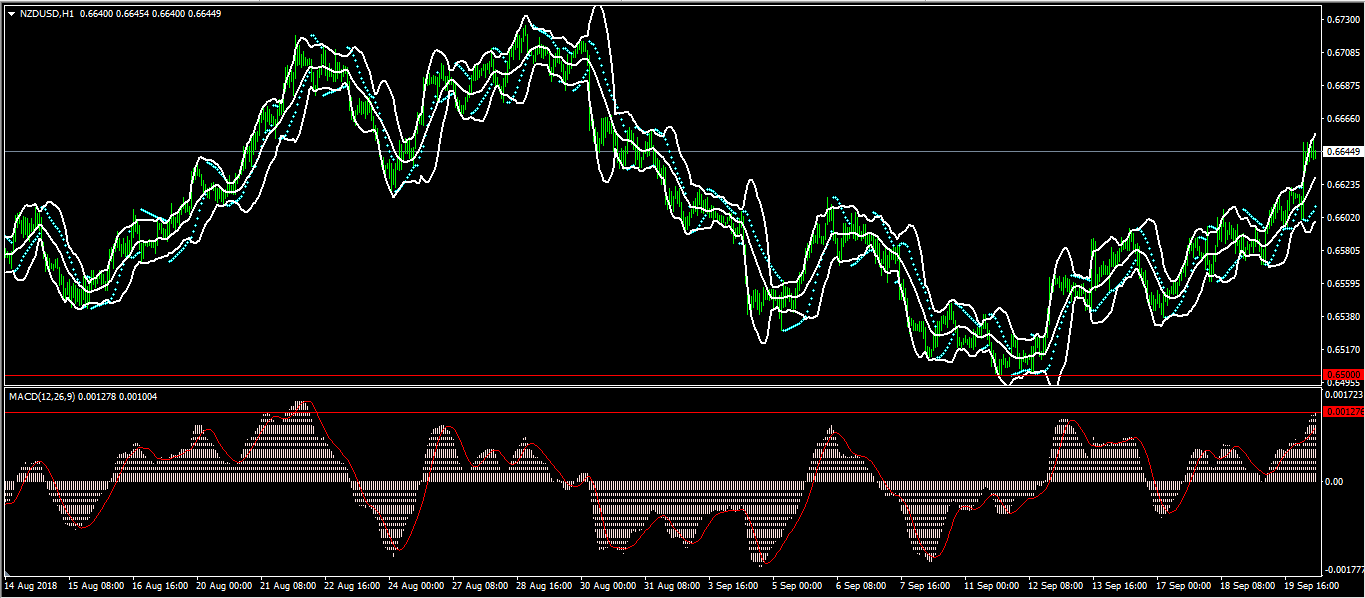
The NZD/USD pair jumped sharply after the latest GDP numbers. It reached an intraday high of 0.6650, which is the highest level since August 31 as traders hoped that the RBNZ will move to hike rates. The MACD reached the highest level since August 22 as the price traded along the upper band of the Bollinger Bands. If the current upward trend continues, the pair is likely to continue moving up to test the 0.6700 level.
EUR/USD
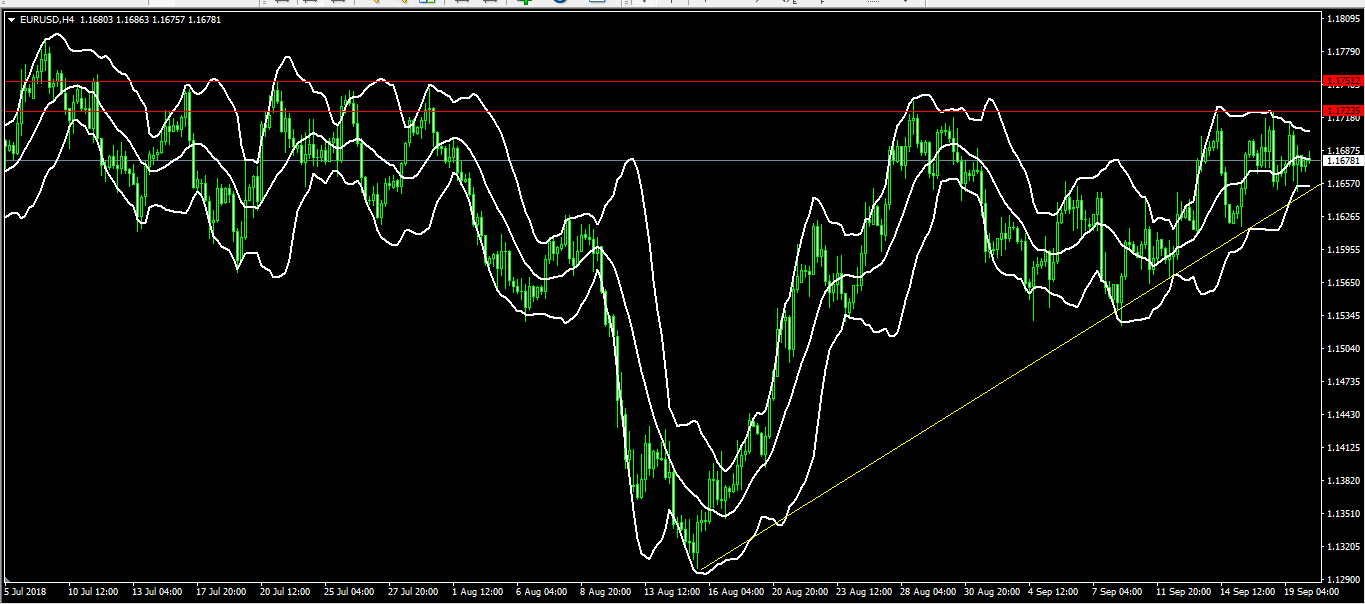
The EUR/USD pair was little moved in the Asian session. It is trading at 1.1678, which is the middle band of the Bollinger Bands. The pair has remained within this range for the past two days. As shown below, the diagonal trend line and the horizontal resistance level are nearing an apex. This means that the pair is likely to see a major breakout as traders wait for the Fed’s decision in the coming week.
Currencies: Dollar Going Nowhere As Trade Tensions Are Easing, For Now
Rates: German 10-yr yield tests 0.5% resistance
The German 10-yr yield tested 0.5% resistance yesterday, but a break didn't occur (yet). Some second tier eco data are scheduled for release, but we expect more technically-inspired and sentiment-driven trading. Cycle tops in US yields seem ready for a test going into next week's FOMC meeting.
Currencies: Dollar going nowhere as trade tensions are easing, for now.
Yesterday, major USD cross rates mostly held tight ranges. Sentiment on risk wasn't too bad. The dollar didn't attract any additional safe haven flows. High US interest rates also didn't help the dollar. More consolidation might be on the cards ahead of the Fed meeting. Sterling traders keep a close eye at the EU summit in Salzburg.
The Sunrise Headlines
- US equity markets continued the positive risk sentiment yesterday with all major indices in green except for NASDAQ (-0.08%). Asian markets opened mixed today with Japan outperforming and China currently printing losses.
- At the EU-27 summit in Salzburg yesterday, UK PM May addressed fellow EU leaders to drop “unacceptable” Brexit demands. EC President Juncker stated that a Brexit-deal is still far away. The summit continues today.
- US Secretary of State, Mike Pompeo, has invited North Korea's foreign minister to resume talks after Pyongyang stated it was willing to close key missile facilities. The aim is to reach full denuclearization by 2021.
- Argentina's economy shrank 4.0% in the second quarter this year, the most in four years. The year-on-year GDP falls to -4.2%, compared to -3.6% in Q1. Neighbours Brazil kept their benchmark rate steady at 6.5%, as expected.
- PM of Japan, Shinzo Abe, won a ruling party leadership vote for the third straight time. Abe now starts a 3rd term as head of the ruling Liberal Democratic party, setting him on track to become Japan's longest-serving premier.
- China's PM Li Keqiang said his country will continue to open up markets, especially in the financial sector. Moreover, it will cut the average tariff rates on imports from the majority of its trading partners.
- Today's eco calendar contains the Philadelphia Fed Business Outlook and Jobless Claims in the US. Consumer Confidence is released for the EMU. ECB's chief economist Praet speaks today, as does Bundesbank President Weidman
Currencies: Dollar Going Nowhere As Trade Tensions Are Easing, For Now
USD going nowhere as trade tensions are 'easing'
On Wednesday, the dollar continued an inconclusive trading pattern. Markets reacted muted to the 'escalation' in the US-China trade conflict with no meaningful safe haven bid for the dollar. US housing data were mixed and aren't the focus for USD trading. US/German interest rate differentials held near a multi-year peak, but the spread hardly moved. EUR/USD came again close to the 1.1720 area but a test of the 1.1733 resistance still didn't occur. Sentiment on Italy turned more neutral and was no support for EUR/USD anymore. EUR/USD closed the session little changed at 1.1673. USD/JPY ended the day at 112.28, from 112.36.
Overnight, Asian equities are trading mixed to slightly lower. Trade is moving to the background as a driver for trading. Pressure on most EM currencies is easing (slightly). For now, there are few high profile data or events to provide clear guidance. The Kiwi dollar extended this week's rebound supported by stronger than expected Q2 growth (1.0% Q/Q and 2.8% Y/Y). NZD/USD is trading in the mid 0.66 area.
Today, the calendar is moderately interesting with the EC consumer confidence in EMU. In the US the jobless claims, Philly Fed business outlook and existing home sales will be published. The data probably won't change the positive view on the US economy but are no market movers. So, global risk sentiment and interest rate developments will continue to guide USD trading. Sentiment is neutral/cautious. Will the dollar get any additional support as (US) interest rates are keeping an upward bias going into next week's Fed decision? Markets are embracing the scenario of two additional Fed hikes this year. Short-term, we keep a neutral bias on EUR/USD until it becomes clear which narrative will prevail as driver for FX trading. 1.1733/50/91 resistance is the first topside reference. EUR/USD 1.1525/30 is a first intermediate support. Yesterday, EUR/GBP remained locked in a tight range close to, mostly slightly below 0.89. US CPI was higher than expected, but with no lasting support for sterling. Brexit headlines remained diffuse. Today, August retail sales are expected to decline slightly after strong July sales. Markets will keep a close eye on the comments coming from the EU Summit in Salzburg. For now, there are still few indications that the EU/UK will be able to unlock the Brexit stalemate. A surprise is always possible, but for now we don't anticipate high profile sterling positive news.
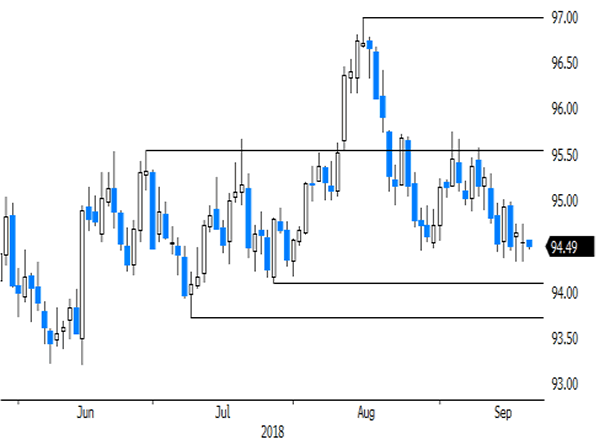
USD making little progress despite solid interest rate support
Investors Ignored The Latest Round Of Tariffs, For How Long?
Equity markets do not seem to be concerned overthe latest phase of the U.S.-China trade war. Investors have been pricing negative news for months which has led several emerging markets into bear territory. The 10% tariffs imposed by the U.S. on $200 billion worth of Chinese goods seemed to be a relief rather than a catastrophe given that markets were bracing for a 25% figure. Similarly, the Chinese response was a softer hit than anticipated after announcing that the nation won't engage in currency devaluation.
There's no doubt that China's economy will take a bigger hit if tensions escalated further. After all, China had a trade surplus of $375 billion with the U.S. in 2017. If China's exports decline significantly, the economy's growthmay slow down to 6% by 2019. However, there are no signs that Chinese officials are willing to wave the white flag anytime soon, especially with the U.S. mid-term elections being less than two months away.
When looking at the performance of global stock markets this week, investors still seem to believe that a deal between the largest two economies will be struck instead of a further escalation of trade tensions. However, with President Trump in office I have doubts that an agreement will be reached.
Although China cannot go toe-to-toe with the U.S. in a retaliatory tit-for-tat tariff war, they still have options to support their economy and hit back at the U.S. with non-tariffs weapons. China may simply put its deleveraging efforts on hold and begin a new round of fiscal and monetary stimulus to offset the damage created by trade. A reduction in corporate tax rates on manufacturing and other industries along with keeping interest rates low and a further cut in Reserve Requirement Ratio to support credit growth will keep the economy well supported for the foreseeable future.
A gradual depreciation in the Renminbi is another tool to offset tariff impacts. The CNY has dropped more than 5.2% against the dollar so far this year, so it requires less than 5% depreciation to offset the current 10% tariffs imposed by the U.S.Despite Premier Li Keqiang vow not to pursue a policy of currency devaluation, officials can blame market conditions on the fall of the currency.
Beijing still seems to be playing defensive so far, but if China decides to move on the offensive a new strategy will be followed. This may include boycotting U.S. products, increasing taxes on earnings of U.S. companies in China, refusing to grant approvals for M&A involving U.S. businesses, and reducing its U.S. debt holdings. Any signs of China following this path will be damaging for investors' confidence and that's what could lead to a steep selloff in global equities.
GBP/USD Price Volatility Stays In Bullish Trend Channel
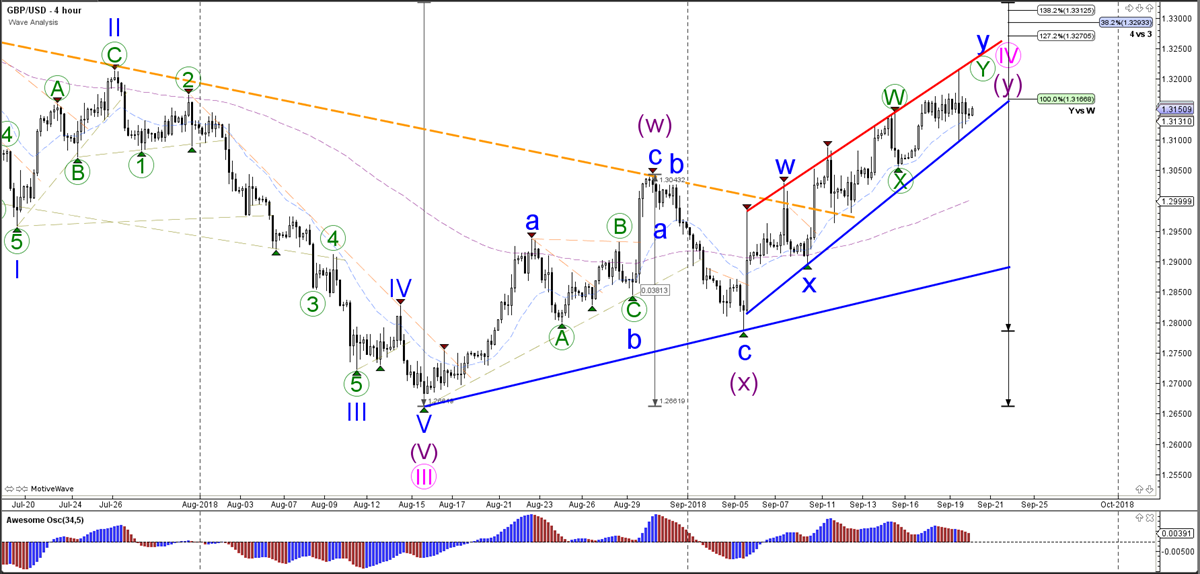
The GBP/USD tested and bounced at both the support (blue) and resistance (red) trend lines of the bullish trend channel. The price did not break below the channel; which is making a bullish continuation towards the Fibonacci levels, and this is the most likely scenario at the moment. A break below the channel could indicate the completion of the wave Ys at the recent high.
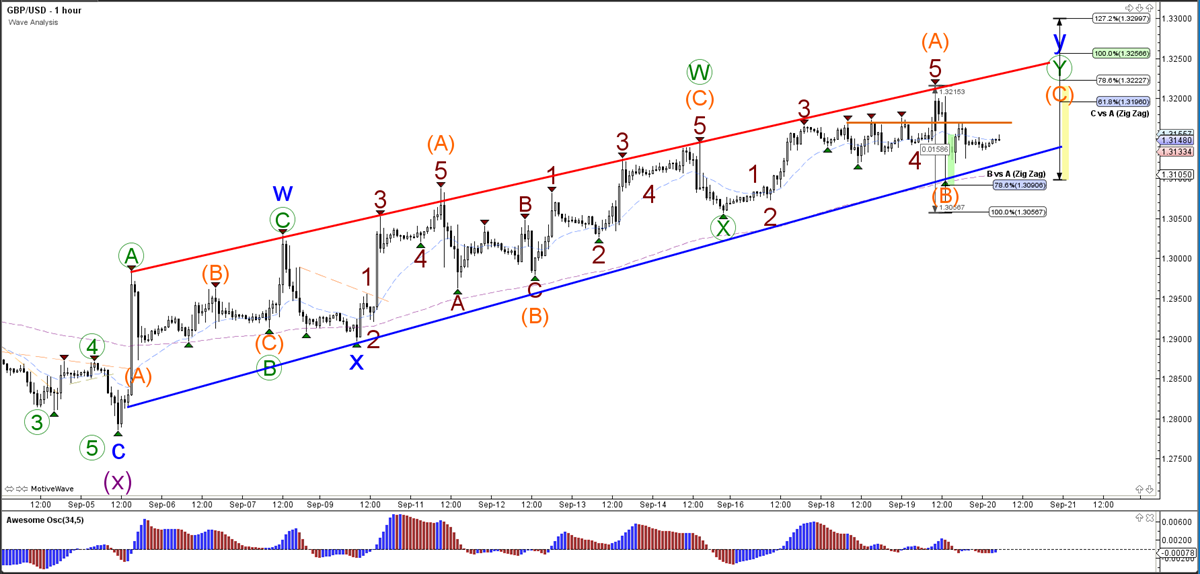
The GBP/USD seems to have finished 5 waves (dark red) within wave A (orange) and could be building a pullback within a wave B (orange). This wave B pattern could become invalidated if the price breaks below the bottom of wave B. A break above the resistance (orange) trend line could confirm a bullish breakout.
EUR/USD Bullish Momentum Needs Break Above 1.1730 Resistance
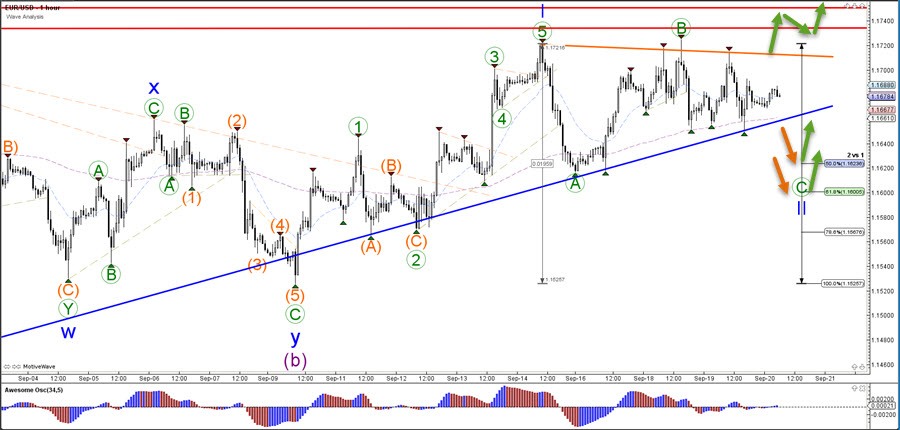
The EUR/USD is building a triangle correction before the major resistance zone at 1.1730. A bullish breakout could confirm a wave C (purple) pattern.
The EUR/USD bearish breakout below the support trend line (blue) could start a pullback towards the Fibonacci retracement levels of wave 2 vs 1 where a bullish bounce could take place. A bullish breakout could see price move higher towards Fibonacci targets at 1.18 and 1.20 areas.
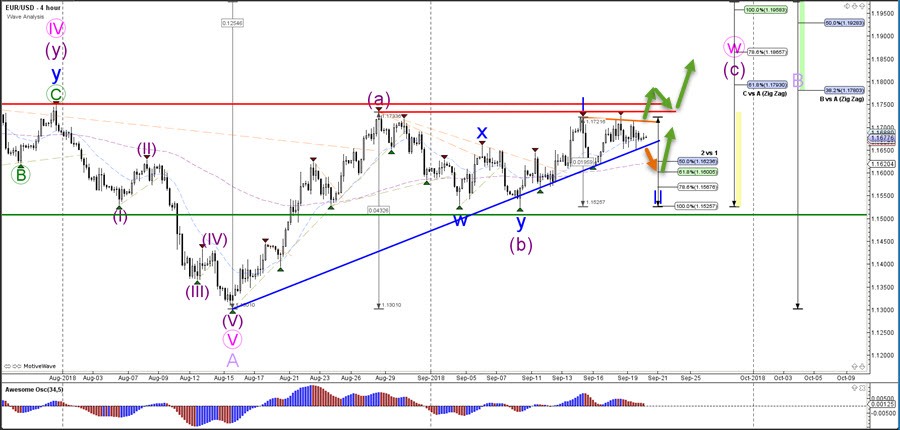
The EUR/USD corrective zone could be part of an ABC (green) correction. Price will need to break above the resistance (red) zone before a larger bullish breakout can take place and impulsive price action can be expected.
Elliott Wave View: Netflix Dips Expected To Remain Supported
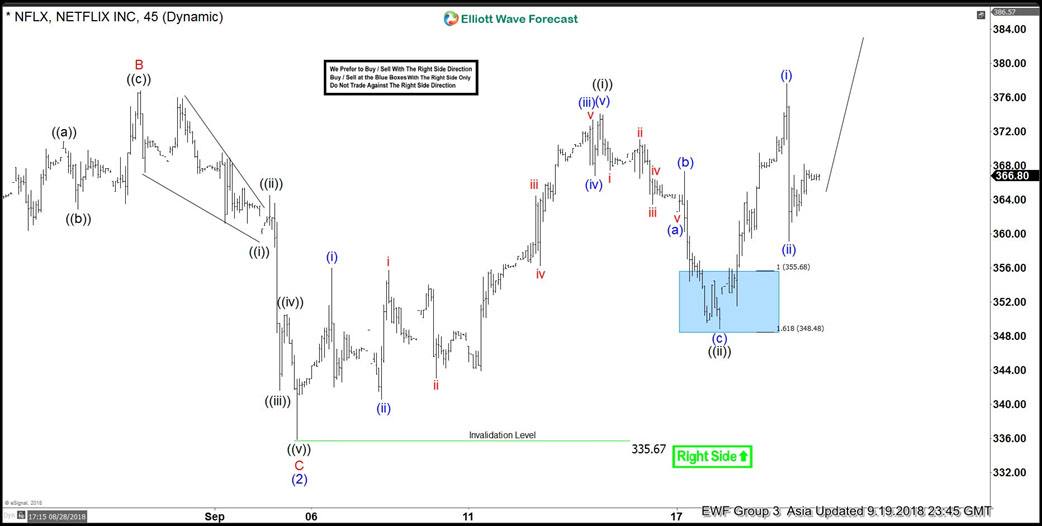
Netflix ticker symbol: $NFLX short-term Elliott wave analysis suggests that the pullback to $335.67 low ended intermediate wave (2) pullback. The internals of that pullback unfolded as a Flat correction. Where Minor wave B bounce ended in 3 swings at $374.09 high. Down from there, Minor wave C unfolded in 5 waves impulse structure. And the initial decline to $360.01 low ended Minute wave ((i)). Up from there, Minute wave ((ii)) ended at $364.50, Minute wave ((iii)) ended at 341.60. A bounce to $350.54 high ended Minute wave ((iv)). Then finally a move lower to $335.67 low ended Minute wave ((v)) and completed Minor wave C of (2).
Up from there, the stock is showing higher high sequence favoring more upside within intermediate wave (3). Where the initial rally to $374.09 high ended Minute wave ((i)). The internals of that rally higher unfolded as 5 waves structure with lesser degree cycles showing sub-division of 5 waves structure in its leg higher i.eMinutte wave (i), (iii) & (v). Down from $374.09 high, the stock did a 3 wave pullback as zigzag correction & completed the Minute wave ((ii)) at $350 low. After reaching the blue box at $355.68-$348.48 100%-161.8% Fibonacci extension area of Minutte wave (a)-(b).
Above from there, the stock has made a new high above $374.09 high suggesting that next leg higher can have started. Near-term, while dips remain above Minute wave ((ii)) low ($350) and more importantly above $335.67 low the stock is expected to resume the upside. Alternatively, if it breaks below Minute wave ((ii)) low ($350) then it can be doing a Flat correction from $374.08 high still within Minute wave ((ii)) before resuming higher again provided the pivot at $335.67 low stays intact. We don’t like selling it and prefer more upside against $335.67 low.
Netflix 1 Hour Elliott Wave Chart
Norges Bank Set To Hike Rates Today
Market movers today
Today's highlight is without comparison Norges Bank, where we expect a first rate hike in seven years.
The two-day informal EU summit meeting continues, which following media reports yesterday, suggests a very difficult discussion. PM Theresa May is said to have rejected EU Chief Negotiator Michel Barnier's offer.
Tonight after European close, the ECB's chief economist is due to speak on 'Challenges to monetary policy normalisation'.
Selected market news
The US 10Y yield rose further yesterday to as much as 3.09% and the 2Y-10Y yield curve has steepened to its widest level in over a month. Higher inflation expectations in the US have been a contributing factor to the recent rise in long-term US yields, which also help to explain why the USD has not followed yields higher.
Italy's Prime Minister Giuseppe Conte pledged yesterday to keep the Italian budget deficit below 2% of GDP in order to produce a 'credible' budget and ensure investor confidence in Italy's public finances. He thereby dismissed a call from the Five Star Movement for a budget deficit as large as 2.5% of GDP.
US crude oil inventories declined another 2mb last week. The news pushed oil prices higher, but mainly impacted the price on WTI crude, which rose above USD71/bbl, while the price on Brent crude is holding steady at close to USD80/bbl.
US President Trump plans to nominate Nellie Liang to one of the vacant seats on the Federal Reserve Board of Governors. She is currently a senior fellow at Brookings Institutions, but has previously led the Federal Reserve's Board division in charge of financial stability policy and research. The Federal Reserve Board under Chair Jerome Powell is beginning to take shape, as Richard Clarida was confirmed as Vice Chairman at the end of August.
The US and Canada continued talks on a new NAFTA deal yesterday and hinted that some progress is being made. Talks are set to continue today.