Sample Category Title
BoE kept bank rate unchanged at 0.75%, full statement
BoE kept bank rate unchanged at 0.75% as widely expected. Asset purchase target was also unchanged at GBP 435B. Both were made by unanimous decision. Sterling shows little reaction to the announcement
BoE noted that economic projections as presented in the August Inflation Report "appear to be broadly on track". Downside risk to global economy increased "to some degree". Growth has softened and financial conditions tightened in emerging markets, "in some cases markedly". Further protectionist measures by the US and China could a larger negative impact than expected.
Also economic outlook could be influenced by Brexit process and responses from households, business and markets. BOE noted that there were indications of "greater uncertainty" regarding Brexit.
BoE also maintained tightening bias as said "an ongoing tightening of monetary policy over the forecast period would be appropriate to return inflation sustainably to the 2% target at a conventional horizon." But it also reiterated that the projections were conditioned on the expectation of a smooth Brexit.
Full Statement below:
Bank Rate maintained at 0.75%
Our Monetary Policy Committee has voted unanimously to maintain Bank Rate at 0.75%. The committee also voted unanimously to maintain the stock of corporate bond purchases and UK government bond purchases.
The Bank of England's Monetary Policy Committee (MPC) sets monetary policy to meet the 2% inflation target, and in a way that helps to sustain growth and employment. At its meeting ending on 12 September 2018, the MPC voted unanimously to maintain Bank Rate at 0.75%.
The Committee voted unanimously to maintain the stock of sterling non-financial investment-grade corporate bond purchases, financed by the issuance of central bank reserves, at £10 billion. The Committee also voted unanimously to maintain the stock of UK government bond purchases, financed by the issuance of central bank reserves, at £435 billion.
In the MPC's most recent economic projections, set out in the August Inflation Report, GDP was expected to grow by around 1¾% per year on average over the forecast period, conditioned on the gently rising path of Bank Rate implied by market yields at that time. Although modest by historical standards, the projected pace of GDP growth was slightly faster than the diminished rate of supply growth, which averaged around 1½% per year. With a very limited degree of slack remaining, a small margin of excess demand was therefore projected to emerge by late 2019 and build thereafter, feeding through into higher growth in domestic costs than has been seen over recent years. The contribution of external cost pressures, which has accounted for above-target inflation since the beginning of 2017, was projected to ease over the forecast period. Taking these influences together, and conditioned on the gently rising path of Bank Rate, CPI inflation remained slightly above 2% through most of the forecast period, reaching the target in the third year.
Recent news in UK macroeconomic data has been limited and the MPC's August projections appear to be broadly on track. UK GDP grew by 0.4% in 2018 Q2 and by 0.6% in the three months to July. The UK labour market has continued to tighten, with the unemployment rate falling to 4.0% and the number of vacancies rising further. Regular pay growth has risen further to around 3% on a year earlier. CPI inflation was 2.5% in July.
The global economy still appears to be growing at above-trend rates, although recent developments are likely to have increased downside risks around global growth to some degree. In emerging market economies, indicators of growth have continued to soften and financial conditions have tightened further, in some cases markedly. Recent announcements of further protectionist measures by the United States and China, if implemented, could have a somewhat more negative impact on global growth than was anticipated at the time of the August Report.
The MPC continues to recognise that the economic outlook could be influenced significantly by the response of households, businesses and financial markets to developments related to the process of EU withdrawal. Since the Committee's previous meeting, there have been indications, most prominently in financial markets, of greater uncertainty about future developments in the withdrawal process.
The Committee judges that, were the economy to continue to develop broadly in line with the August Inflation Report projections, an ongoing tightening of monetary policy over the forecast period would be appropriate to return inflation sustainably to the 2% target at a conventional horizon. As before, these projections were conditioned on the expectation of a smooth adjustment to the average of a range of possible outcomes for the United Kingdom's eventual trading relationship with the European Union. At this meeting, the Committee judged that the current stance of monetary policy remained appropriate. Any future increases in Bank Rate are likely to be at a gradual pace and to a limited extent.
AUDJPY Touches One-Week High, Continues To Look Bearish In The Medium-Term
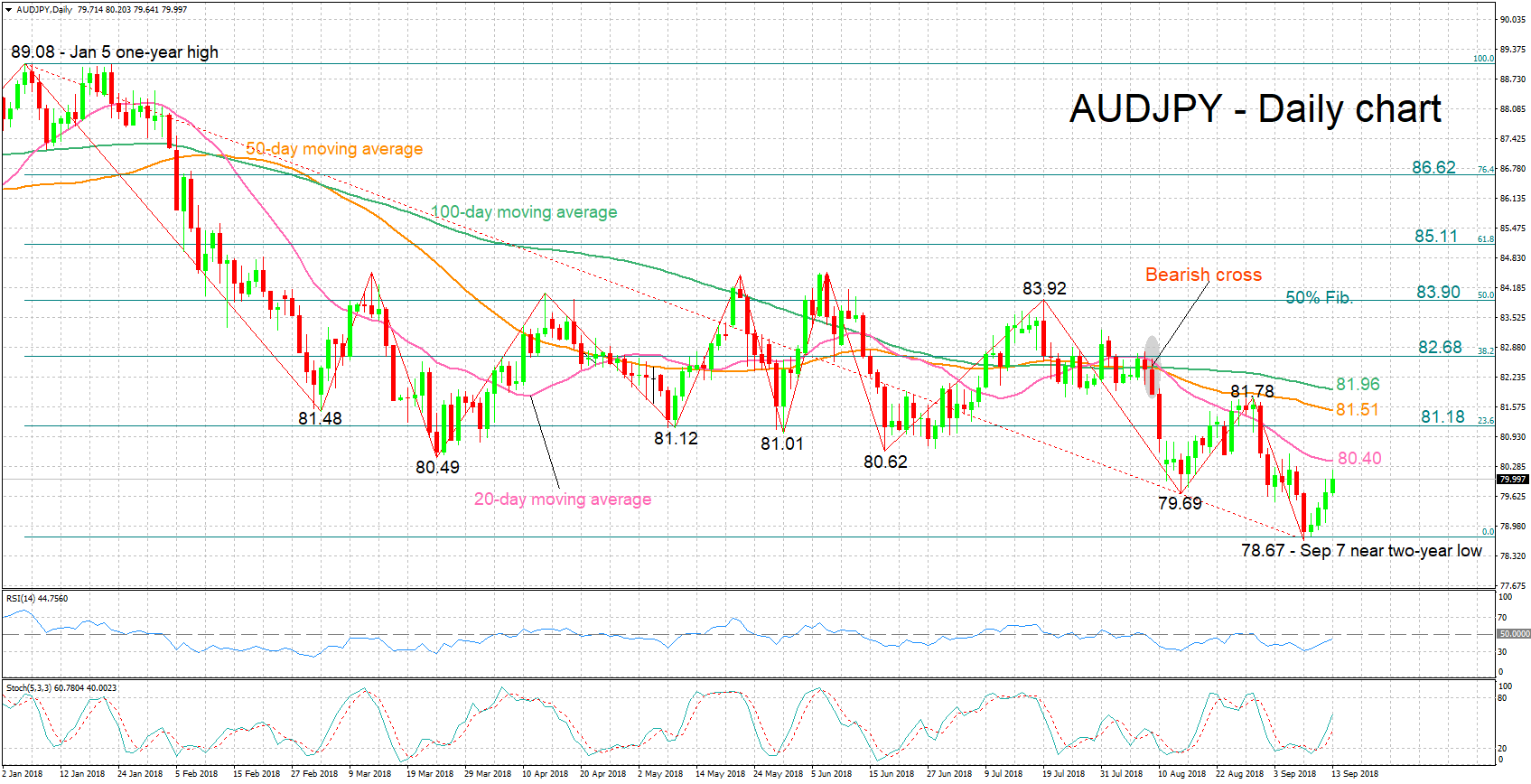
AUDJPY is rising for the fourth straight day, further distancing itself from last week’s near two-year nadir of 78.67. Earlier on Thursday, it hit a one-week high of 80.20.
The RSI has turned higher after coming close to oversold levels, signaling a shift in momentum to the upside. The stochastics are also projecting a bullish picture in the very short-term: the %K line has moved above the slow %D one and both lines are moving sharply higher.
Should the pair extend its gains, immediate resistance may occur around the current level of the 20-day moving average line at 80.40. Further above, a barrier could come around the 23.6% Fibonacci retracement level of the January 5 to September 7 downleg at 81.18. The 50- and 100-day MA lines lie not far above at 81.51 and 81.96 respectively.
On the downside, support to losses may take place around the near two-year low of 78.67 from September 7, with the 78 round figure possibly acting as additional support in the event of steeper losses.
Despite the recent move up, the medium-term picture continues to look predominantly bearish. The pair has been recording lower highs and lower lows over the last few months. In addition, price action is taking place below the 50- and 100-day MA lines, confirming the negative signal given by the bearish cross recorded during August, when the 50-day MA moved below the 100-day one.
Overall, the short-term bias has experienced a notable shift to the upside, while the medium-term outlook continues to look negative at the moment.
Erdogan Hurts TRY Ahead Of CBRT Decision
Thursday September 13: Five things the markets are talking about
U.S. equity futures and euro regional bourses trade steady after the overnight Asian session put an end to its longest losing streak since 2002 on fresh hopes that the worlds’ two largest economies will again sit down and talk trade.
The EUR (€1.1617) and the pound (£1.3040) are little changed ahead of their respective central banks key policy decisions in a few hours.
In anticipation of the European Central Bank’s (ECB) rate announcement (07:45 am EDT) – no rate change is expected – however, investors will be searching for clues about the ECB’s ‘reinvestment policy.’ The bank is expected to downgrade its 2018 eurozone GDP. The reason is likely to be a slowdown in global trade amid trade war uncertainty, rather than a eurozone-specific factor. Eurozone inflation projections are expected to remain unchanged.
Sterling bulls are looking for the pound and short-term interest rates to gain from this morning’s Bank of England (BoE) rate call (07:00 am EDT). Touted support will come from the recent flurry of stronger U.K GDP growth and wage data.
Brexit comments are not expected to have an effect on the pound , as Governor Carney is likely to reiterate that he “assumes a smooth and orderly exit from the E.U.” Also, Carney will want to avoid becoming politicized at such a vital occasion in U.K politics.
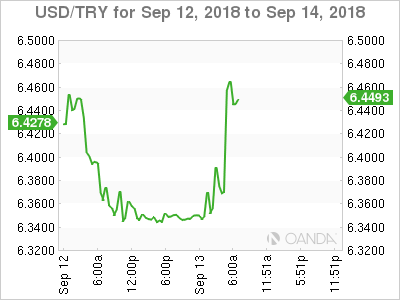
For volatility, the market will be looking closely at this morning’s Central Bank of the Republic of Turkey (CBRT) rate announcement. The CBRT needs to raise rates to slow inflation and reverse some of the recent sharp falls in TRY ($6.5345), but faces political pressure from President Erdogan not to. He would cut high interest rates, as he believes high inflation is a result of CBRT’s wrong steps. TRY is expected to weaken further without a sufficient rate increase. The market is pricing anything from zero to +725 bps hike.
Elsewhere, crude oil prices have retreated a tad, mostly on the outlook for tighter supply. Also, the potential impact on commodities from Hurricane Florence has eased along with lower wind speeds.
On tap: Both China and the U.S will release its I.P numbers and retail sales data Friday.
1. Stocks see the light
Global stocks have pared some of this month’s loss overnight; climbing on the news that the U.S had invited China to a new round of trade talks.
In Japan, the Nikkei rallied to two-week highs overnight as news of a proposed fresh round of trade talks between China and the U.S lifted risk appetite. The Nikkei share average soared +1.0%, while the broader Topix surged +1.1%.
Down-under, Aussie stocks were the outlier, falling Thursday as banks and insurers were sold on the back of damaging testimony at a public inquiry, though gains in miners on a recovery in commodity prices capped the losses. The S&P/ASX 200 index fell -0.8%. In S. Korea, the Kospi stock index rallied +0.18% following Sino-U.S trade talk news.
In Hong Kong, Chinese banks helped push the Hang Seng index +2.5% higher, while in China, the Shanghai Composite Index was up +1.2%, although that index still remained down almost -19% on the year after the release of subdued credit growth and new loans figures out of China.
In Europe, regional bourses trade mixed as investors focus on upcoming macro events with rate decisions by ECB and BoE on tap.
U.S stocks are set to open in the ‘black’ (+0.1%).
Indices: Stoxx50 +0.4% at 3,341, FTSE -0.2% at 7,299, DAX +0.5% at 12,090, CAC-40 +0.4% at 5,351; IBEX-35 +0.3% at 9,322, FTSE MIB -0.2% at 20,930, SMI +0.2% at 8,974, S&P 500 Futures +0.1%
2. Oil slips as economic concerns counter tighter supply, gold steady
Oil prices are under pressure, falling from their four-month highs as investors focused on the risk that EM crises and trade disputes could dent demand.
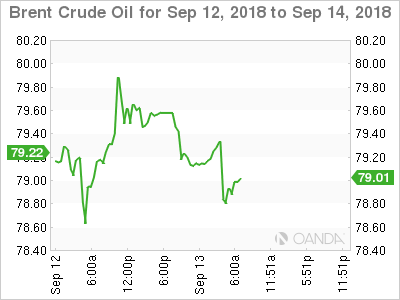
Benchmark Brent crude oil is down -70c a barrel at +$79.04, while U.S light crude (WTI) fell -$1.15 to a low of +$69.22 a barrel.
The IEA indicated this morning that although the oil market was tightening at the moment and world oil demand would soon reach +100M bpd, global economic risks were mounting.
Note: Brent rallied above +$80 per barrel yesterday for the first time since May, supported by expectations that U.S sanctions against Iran’s oil exports, which will start in November, will tighten global markets. U.S light crude pushed over +$70 on Wednesday due to falling U.S crude inventories and production levels.
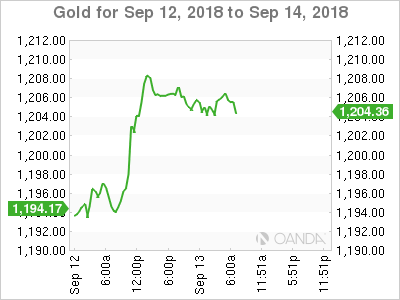
Ahead of the U.S open, gold prices trade steady, atop of their one-week high, amid hopes for a new round of Sino-U.S trade talks. However, a firmer U.S dollar is expected to keep gains in check. Spot gold is at +$1,205.78 an ounce, after hitting its highest since Aug. 31 at +$1,208.48.
Note: The ‘yellow’ metal gained +0.7% in yesterday’s session, its biggest single-day rise since Aug. 24.
3. Yields steady ahead of ECB and BoE
Both the ECB and BoE are not expected to make any major policy changes this morning.
The demand for safe-haven government debt has also been weak this month by declining fears about the political situation in Italy, where a new populist government is working on its first budget proposal. They expect to adhere to the E.U rules and regulations.
This week’s selling of high-grade sovereign bonds has been led by Europe, with the 10-year German Bund yield backing up to +0.431% from Wednesday’s +0.404%. In the U.K, the 10-year Gilt yield increased to +1.498% from +1.470%.
Stateside, U.S government bond prices are also lower as the market braces for the possibility of tighter monetary policy – a further two rate hikes are been priced in by Fed by the end of 2018. U.S 10’s are trading just shy of the psychological +3% level at +2.97%.
4. A sufficient CBRT hike could weaken the dollar vs. EM FX
If the CBRT were to aggressively hike interest rates this morning, this would likely dampen investors’ appetite for the U.S dollar against EM currency pairs. It may also help the EUR (€1.1616), given that European banks are lenders to Turkish businesses.
However, most EUR moves will be driven by the CB rhetoric. The ECB’s Draghi will likely sound “dovish” by lowering growth forecasts for 2018, which should prevent the ‘single’ currency from gaining on any other factors.
It too would not be a surprise if the CBRT were to disappoint, especially after President Erdogan reiterated this morning his view that interest rates should be cut. USD/TRY is last up +3% at $6.5433. EUR/USD is down -0.1% at €1.1619.
Note: If the Fed continues to raise interest rates, the currencies of Turkey, South Africa, Malaysia, India and Indonesia would be hardest hit. The less vulnerable currencies would be those of South Korea, China, Thailand and Russia.
5. Aussie employment
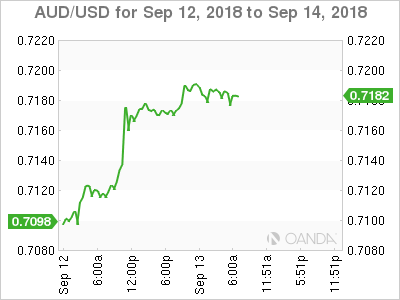
Overnight, Australia added a stellar +44K jobs in August, the second-highest monthly add in the last nine-months. Even more impressive was the fact that nearly all of the jobs, +33.7K, were in the full-time category and despite a higher participation rate, 65.7% from 65.5%; the unemployment rate remained steady at 5.3%.
This strong report will be much welcomed by the Reserve Bank of Australia (RBA) – more workers mean more tax revenue, and possibly a long-awaited uptick in wage growth as household budgets are strained.
It does not signal an imminent interest-rate increases, but ‘hawkish’ rhetoric could enter the fray
EUR/USD – Euro Subdued Ahead Of ECB Rate Meeting
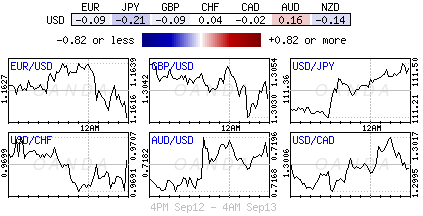
EUR/USD has edged lower in the Thursday session. Currently, the pair is trading at 1.1620, down 0.05% on the day. On the release front, German Final CPI dipped to 0.1%, matching the forecast. The ECB releases its main refinancing rate, which is expected to remain at 0.00%. The U.S releases key consumer inflation reports. CPI is expected to edge up to 0.3%, while Core CPI is forecast to remain pegged at 0.2%. As well, unemployment claims are expected to rise to 213 thousand. On Friday, the U.S release retail sales and UoM Consumer Sentiment.
The ECB has pegged interest rates at 0.00% since March 2016, and no change is expected at Thursday’s policy meeting. The markets will be focusing on the rate announcement and Mario Draghi’s press conference. The Bank is expected to lower its growth forecast due to weaker global growth and could spell out downside risks to growth. Inflation is expected to remain steady at 1.8% in 2018 in 2019, which means that the ECB is on track to wind up its asset-purchase program in December. Any change in monetary policy will not occur before next year, and an interest rate hike in unlikely before the second half of 2019.
German ZEW economic surveys are well respected and often have an impact on the movement of the euro. Earlier in the week, ZEW Economic Sentiment improved in September, but remains mired in negative territory. The indicator came in at -10.6, posting a decline for a sixth straight month. The survey press release noted that during the survey period, Turkey and Argentina saw their currencies plunge, and German industrial production was soft. On Thursday, German Final CPI dipped to 0.1%, down from 0.3% a month earlier.
Chinese Data Likely To Confirm Steady But Moderating Growth As Trade Tensions Persist
As China awaits President Trump’s next move in the ongoing trade war, economic indicators due on Friday at 02:00 GMT will provide the latest look at the strength of industrial output, retail sales and fixed-asset investment in the world’s second largest economy. While export growth has so far remained resilient in the face of higher import tariffs by the US, there are signs the escalating trade dispute is weighing on Chinese business confidence. This is reflected in the yuan and the Australian dollar as both currencies have suffered heavy losses over the past six months.
Trade figures released last week showed export growth, while easing slightly from the prior month, maintained descent momentum in August, at 9.8% year-on-year. More importantly, China’s trade surplus with the United States hit a fresh monthly record of $31.1 billion. Although front-loading of orders before the next round of $200 billion worth of tariffs come into force may have contributed to the strong showing in August, there is little evidence that President Trump’s tariffs are having a significant impact on Chinese exports.
However, the simmering trade tensions have dented business and investor sentiment considerably, with China’s main stock indices losing about 20% of their value in the year-to-date and touching 31-month lows this week. The Chinese yuan has also succumbed to selling pressure and is down more than 5% against the US dollar this year. An even better indicator than the yuan to China’s woes is the Australian dollar, which is considered to be a liquid proxy for the fixed yuan due to Australia’s large commodity exports to China. The aussie has fallen by almost 9% against the US dollar so far this year as investors adjust to a period of prolonged uncertainty from trade frictions.
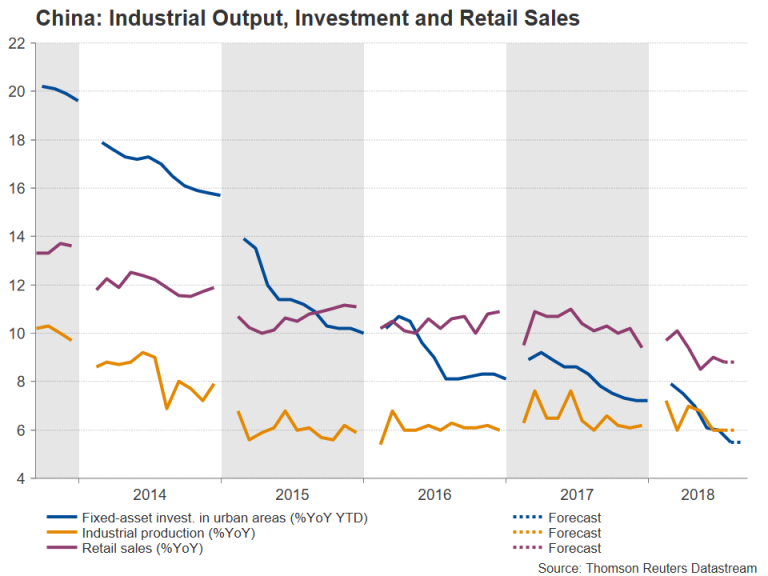
With market sentiment in a fragile state on the possibility of an imminent announcement of fresh tariffs by the US, the aussie could see some volatility to Friday’s releases if there’s any signs of weakness in the data. Analysts aren’t predicting a major change though, as all three indicators are expected to hold at the prior month’s levels. Industrial output is forecast to have risen at an annual rate of 6% in August for the third straight month, while growth in fixed-asset investment is expected to stay at the record low rate of 5.5% year-on-year between January-August. Retail sales, which until recently had maintained double digit growth, are forecast to have increased by 8.8% y/y in August.
Having touched a 2½-year low of $0.7083 this week, the aussie could seek initial support around $0.7150 should it slip on worse-than-expected figures. Failure to hold above this support would risk a test of the 2½-year low $0.7083, which if breached, would clear the way for the $0.70 handle.
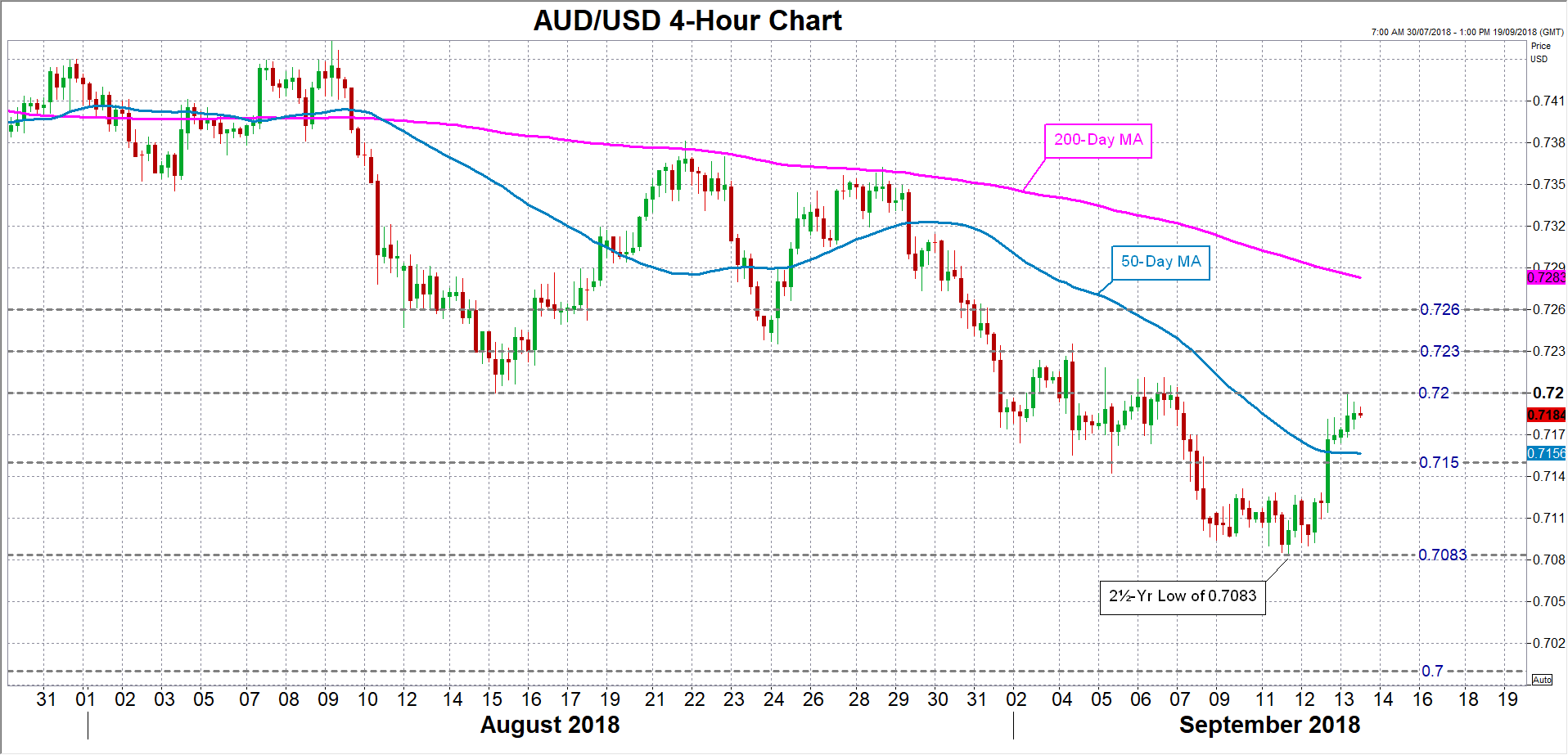
Alternatively, a better-than-expected set of numbers could provide the markets a temporary respite from trade concerns and relieve some pressure on Chinese assets and the Australian currency. The aussie could break above immediate resistance at the $0.72 level from a data beat, though a big positive surprise is unlikely. However, sharper gains are possible should there be any evidence in the data that the recent stimulus measures undertaken by Chinese authorities are beginning to cushion the economy from Trump’s tariff threats. The aussie could rally towards the $0.7230 and $0.7260 resistance levels in such a scenario.
GBPUSD Key Levels To Watch Ahead Of BoE Meeting
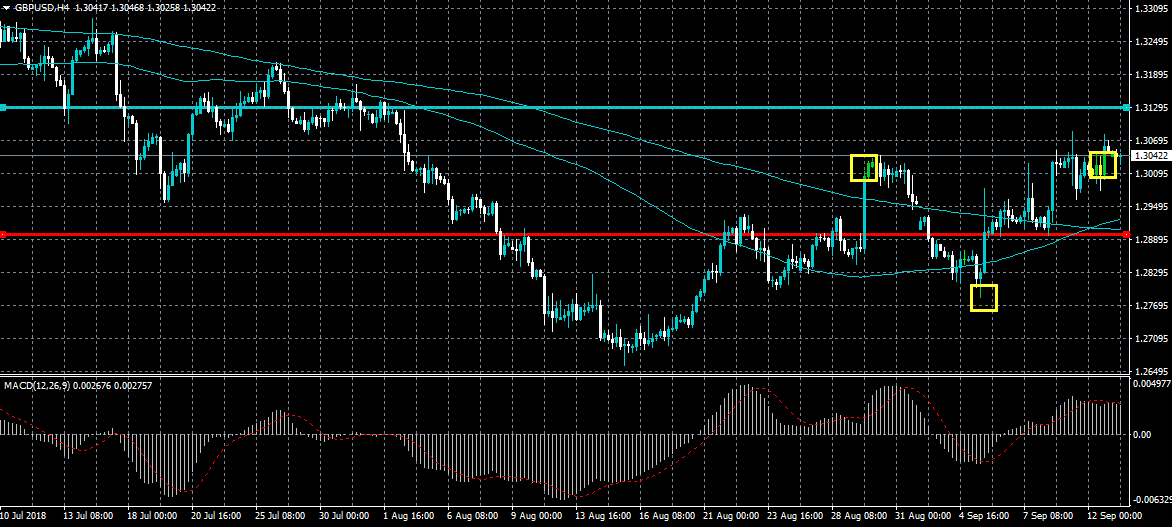
The British pound remains well supported above the psychological 1.3000 level ahead of today’s key Bank of England interest rate decision. The bullish inverted head and shoulders pattern remains valid and is showing an upside projection close to two-hundred and fifty pips. The 1.2900 level is the key support level sellers need to break, while the 1.3100 level is the key resistance area buyers need to break.
The GBPUSD pair is bullish while trading above the 1.3040 level, key resistance is found at the 1.3100 and 1.3130 levels.
If the GBPUSD pair moves below the 1.2900 level, sellers may target the 1.2853 and 1.2802 levels
EURUSD Bulls Need To Negate Bearish Pattern
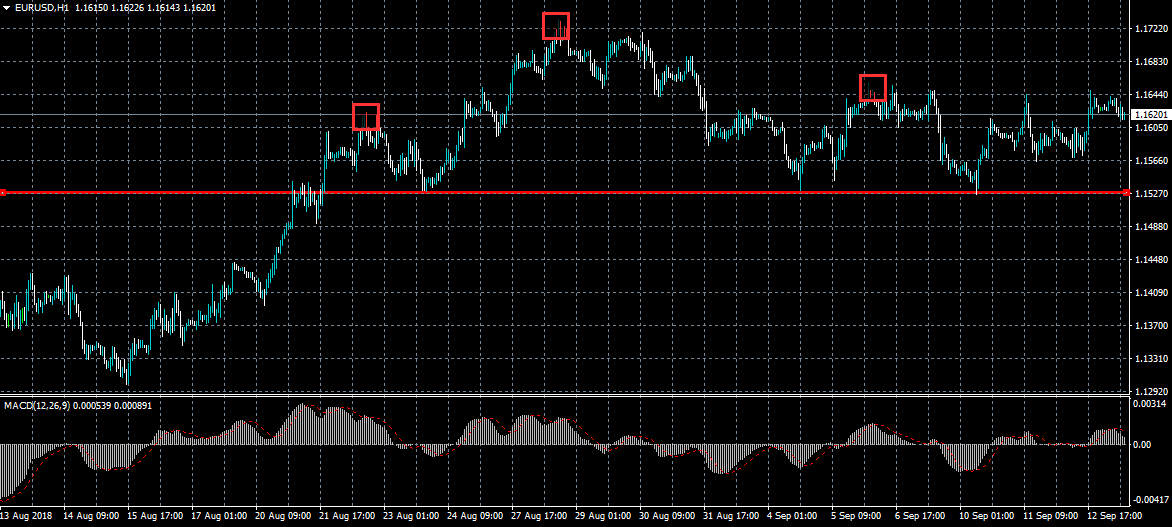
The euro continues to trade above the 1.1600 level against the US dollar as today's European Central Bank policy meeting draws nearer. The EURUSD pair is still trading within a bearish head and shoulders pattern, buyers will have to move price above the 1.1700 level to negate the pattern. Sellers will be targeting a strong move lower towards the 1.1528 level, while buyers will attempt to stabilize price above the 1.1650 level.
The EURUSD pair is intraday bullish while trading above the 1.1650 level, key resistance is located at the 1.1700 and 1.1730 levels.
If the EURUSD pair moves below the 1.1600 level, key support is found at the 1.1528 and 1.1480 levels.
Oil Tumbles, TRY Ahead Of A Busy Day
Turkey on the spot
Today will see action by the Central Bank of Turkey, expected to increase the one-week repo rate by 3.25% to 21%. Any smaller increase would trigger another sell-off in the Turkish lira, which could bring USD/TRY back above 7.0. After falling 1.35% yesterday, USD/TRY edged higher to 6.38 this morning, up 0.52%. Signals from the option market suggest that investors are not unnerved. The 1-month 25 delta risk-reversal measure is stable at 8.7% - compared to 1.6% in mid-August – while the 1-month ATM implied volatility stands at 34% - compared to 61% a month earlier.
The Bank of England and the European Central Bank will also make announcements today, but not critical ones. The BoE and the ECB will hold rates steady at 0.75% and 0.0%, respectively. We may see changes of tone regarding economic outlook, but both central banks will avoid hawkishness.
Oil prices in turmoil
Crude oil is in full hesitation. Multiple events colliding, putting traders in a difficult situation. In June US inventories fell to a 2-year low and supply risks from both Venezuela and Iran boosted prices. But the trend is reversing. An OPEC report confirms further decline in demand for 2019, down 20’000 barrels per day. Then the Paris-based International Energy Agency said the exact opposite, predicting higher demand in 2019, suggesting that oil inventory should continue to shorten.
Background has not fundamentally changed. US sanctions against Iran are planned for 1 November, while there seems to be an improvement in US-China relations: US Treasury Secretary Steven Mnuchin confirmed invitation of senior Chinese officials to Washington. Worries of US supply strengthen as Hurricane Florence could disrupt inventories on the US East Coast. Meanwhile, Tropical Storm Gordon interrupted about 9% of the Gulf of Mexico oil production for at least two days. Recent data confirm a continued decline in inventories, down 5.3 million barrels.
Turkish Lira Declines Sharply As President Erdogan Says Rates Should Be Cut Ahead Of Turkish Central Bank Decision
Notes/Observations
- Markets trade most higher helped by positive sentiment resulting from trade talks between US and China
- Turkish Lira trades sharply lower on inflation comments from president Erdogan
- Traders await rate decision from BoE, Turkey and the ECB
Asia:
- US reportedly planning new round of trade talks with China led by Treasury Sec Mnuchin to get economic negotiations back on track
- NZD declines as milk company Fonterra reports first ever annual loss; Next week’s GDP data in focus
- Australian Jobs data handily beats estimates, Underutilization fell to 13.4% lowest in over 5 years.
Europe:
- Italy's Economy Minister has reportedly denied earlier reports that Italian FinMin Tria threatens to quit over the budget, calling the reports baseless
- 5 Star Minister of South Lezzi says Government would be in trouble if it does not include universal income.
- Turkish Lira trades sharply lower on Erdogan comments stating that interest rates should be cut, noting that high interest rate is the reason for inflation, and was the result of wrong policy
Americas:
- Canada Foreign Min: Will not be at the Thursday talks related to NAFTA, officials to work on NAFTA in Washington on Thursday; talks are not at a 'stalemate'
Energy:
- IEA report: Global oil supply hit a record high in August despite Iran, Venezuela fallout
Economic Data:
- (DE) GERMANY AUG FINAL CPI M/M: 0.1% V 0.1%E; Y/Y: 2.0% V 2.0%E
- (FI) Finland July Final Retail Sales Volume Y/Y: 1.5% v 0.9% prelim
- (FR) FRANCE AUG FINAL CPI M/M: 0.5% V 0.5%E; Y/Y: 2.3% V 2.3%E
- (ES) Spain July House transactions Y/Y: 16.2% v 1.8% prior
- (CN) China Aug Foreign Direct Investment
- (FDI) Y/Y: 1.9% v 14.9% prior (yuan terms)
- (CH) Swiss Aug Producer & Import Prices M/M: 0.0% v 0.0%e; Y/Y: 3.4% v 3.4%e
- (SE) Sweden Q2 Final GDP Q/Q: 0.8% v 0.9%e; Y/Y: 2.5% v 3.3%e
Fixed Income Issuance:
- (IT) ITALY DEBT AGENCY (TESORO) SELLS TOTAL €7.75B V €6.25-7.75B INDICATED RANGE IN 2021, 2025 AND 2048 BTP BONDS
SPEAKERS/FIXED INCOME/FX/COMMODITIES/ERRATUM
Equities
- Indices [Stoxx50 +0.4% at 3,341, FTSE -0.2% at 7,299, DAX +0.5% at 12,090, CAC-40 +0.4% at 5,351; IBEX-35 +0.3% at 9,322, FTSE MIB -0.2% at 20,930, SMI +0.2% at 8,974, S&P 500 Futures +0.1%]
- Market Focal Points/Key Themes: European indices open mixed, with most slightly lower, but reversed course to trade marginally higher as the session wore on; Focus on upcoming macro events with rate decisions by ECB and BOE on tap; materials and financial sectors among better performers; utilities underperform n the downside; upcoming events expected in the US session include Kroger and Fred's
Equities
- Consumer discretionary: Debenhams DEB.UK -6.4% (Sports Direct won't make offer), Delivery Hero DHER.DE -5.1% (results), GVC Holdings GVC.UK -0.9% (results), Korian KORI.NL +2.9% (results), Takeaway.com TKWY.NL -4.7% (accelerated bookbuild), WM Morrison MRK.UK -1.1% (results)
- Consumer stable: Greeenyard Foods GREEN.BE +16.2% (resumes production in Hungary)
- Energy: Rubis RUI.FR -7.0% (results)
- Financials: Natixis KN.FR +4.7% (disposal)
- Industrials: Grupo Ezentis RDT.DE +3.6% (results), Michelin ML.FR +3.2% (affirms outlook)
- Technology: Adyen ADYEN.NL -9.7% (holder placement)
Speakers
- (CN) China Commerce Ministry: Reiterates China and US do not want to see trade war escalate further; have been constantly communicating on trade
- (IT) Italy 5 Star Min for South Lezzi: Government would be in trouble if budget does not include universal income
- (IT) Italy Dep PM Di Maio says it has no rift with Tria, they are working together
- No ultimatum or threat to Tria, Government wants to give full support
- (TR) Turkey President Erdogan: My sensitivity on interest rates remains, Central Bank independent and takes its out decisions
- (TR) Turkey President Erdogan: we should cut high interest rate, Inflation is a result of wrong policy-maker steps, Central Banks has never accurately guessed inflation
Currencies
- Markets are little changed ahead of three rate decisions later today. GBPUSD trades little changed maintaining above $1.30 following strength yesterday ahead of the BoE rate decision and minutes. Turkish Lira loses further ground ahead of the Turkish rate decision with the USD/TRY up over 1.5% as President Erdogan said that high rates should be cut as the pair approaches 6.50.
Fixed Income
- Bund Futures trades at 159.68 up 5 ticks with the focus on the ECB projections, the 10-year bund yield trades steady above 0.40%. Resistance moves to 161.82 then 163. A downside break of 159.85 sees 158.69 initially.
- Gilt futures trades at 121.81 up 1 ticks following the move in Treasuries. Continued support at 122.50, with a continued move higher targeting 123.93 then 124.00.
- Thursday 's liquidity report showed Wednesday's excess liquidity rose from €1.901T to €1.909T. Use of the marginal lending facility rose from €41M to €47M.
- Corporate issuance saw 7 issuers raise $6.6B in the primary market
Looking Ahead
- 05:30 (ZA) South Africa July Total Mining Production M/M: 0.4%e v 5.0% prior; Y/Y: 3.0%e v 2.8% prior; Gold Production Y/Y: No est v -19.2% prior; Platinum Production Y/Y: No est v 28.2% prior
- 06:00 (IE) Ireland Q2 GDP Q/Q: +1.0%e v -0.6% prior; Y/Y: No est v 9.1% prior
- 06:00 (IE) Ireland Q2 Current Account: No est v €9.6B prior
- 06:00 (IE) Ireland Aug CPI M/M: No est v 0.4% prior; Y/Y: No est v 0.8% prior
- 06:00 (IE) Ireland Aug CPI EU Harmonized M/M: No est v 0.4% prior; Y/Y: No est v 1.0% prior
- 06:00 (IL) Israel Aug Consumer Confidence: No est v 130 prior
- 07:00 (UK) Bank of England (BOE) Interest Rate Decision: Expected to leave Interest Rates unchanged at 0.75% and maintain asset purchases at £435B
- 07:00 (TR) Turkey Central Bank (CBRT) Interest Rate Decision: Expected to raise One-week Repo Rate by 325bps to 21.00%
- 07:45 (EU) European Central Bank (ECB) Interest Rate Decision: Expected to leave Main Refinancing Rate unchanged at 0.00%
- 08:00 (PL) Poland July Current Account: -€0.7Be v -€0.2B prior; Trade Balance: -€0.4Be v -€0.4B prior
- 08:00 (BR) Brazil July Retail Sales M/M: +0.2%e v -0.3% prior; Y/Y: 1.0%e v 1.5% prior
- 08:00 (BR) Brazil July Broad Retail Sales M/M: 0.2% v 2.5% prior; Y/Y: 4.0%e v 3.7% prior
- 08:05 (UK) Baltic Dry Bulk Index
- 08:30 (US) Aug CPI M/M: 0.3%e v 0.2% prior; Y/Y: 2.8%e v 2.9% prior
- 08:30 (US) Aug CPI Ex Food and Energy M/M: 0.2%e v 0.2% prior; Y/Y: 2.4%e v 2.4% prior
- 08:30 (US) Aug CPI Index NSA: 252.343e v 252.006 prior, CPI Core Index SA: 258.414e v 257.930 prior
- 08:30 (US) Initial Jobless Claims: 210Ke v 203K prior; Continuing Claims: 1.71Me v1.707M prior
- 08:30 (US) Aug Real Avg Weekly Earnings Y/Y: No est v 0.1% prior; Real Avg Hourly Earning Y/Y: No est v -0.1% prior (revised from -0.2%)
- 08:30 (CA) Canada July New Housing Price Index M/M: 0.1%e v 0.1% prior; Y/Y: 0.5%e v 0.8% prior
- 08:30 (US) Weekly USDA Net Export Sales
- 09:00 (RU) Russia Gold and Forex Reserve w/e Sept 7th : No est v $460.0B prior
- 10:30 (US) Weekly EIA Natural Gas Inventories
- 14:00 (US) Aug Monthly Budget Statement: -$183.0Be v -$76.9B prior
- 15:00 (AR) Argentina Aug National CPI M/M: 3.8%e v 3.1% prior; Y/Y: No est v 31.2% prior
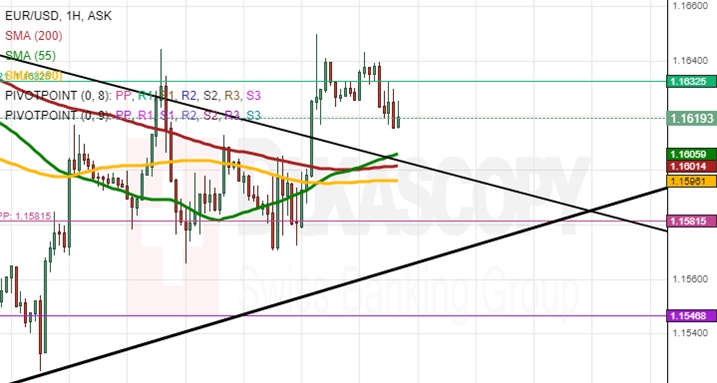
EUR/USD Analysis: Retraces Back To 1.1610
The European Single Currency jumped against the US Dollar due to fundamentals on Wednesday. The rate ignored most technical levels, passing through the weekly R1 at the 1.1632 level, which could not stop the rate from the surge.
In regards to the near future, most likely, the rate should go downwards due to psychological level at the 1.1640 towards the SMAs cluster at the 1.1600 mark.
On the other hand, the currency exchange rate might take the support of the weekly R1 at the 1.1632 mark to surge even higher towards the weekly R2 at the 1.1710 mark.