Sample Category Title
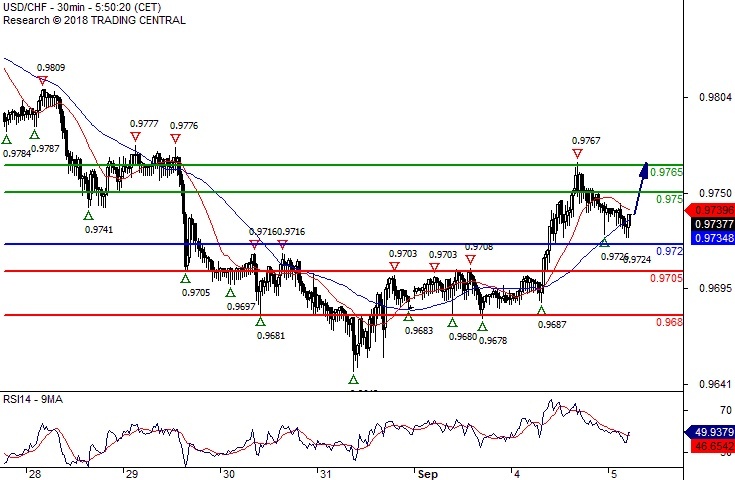
USD/CHF Limited Upside
Pivot (invalidation): 0.9720
Our preference Long positions above 0.9720 with targets at 0.9750 & 0.9765 in extension.
Alternative scenario Below 0.9720 look for further downside with 0.9705 & 0.9680 as targets.
Comment Even though a continuation of the consolidation cannot be ruled out, its extent should be limited.
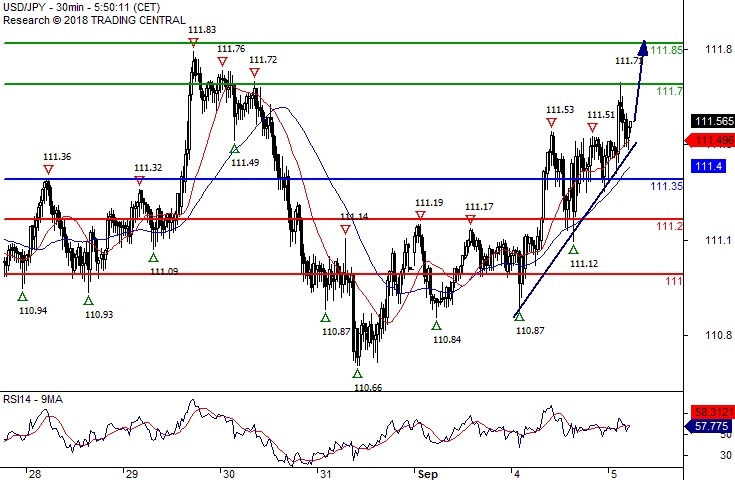
USD/JPY Supported By A Rising Trend Line
Pivot (invalidation): 111.35
Our preference Long positions above 111.35 with targets at 111.70 & 111.85 in extension.
Alternative scenario Below 111.35 look for further downside with 111.20 & 111.00 as targets.
Comment The RSI lacks downward momentum.
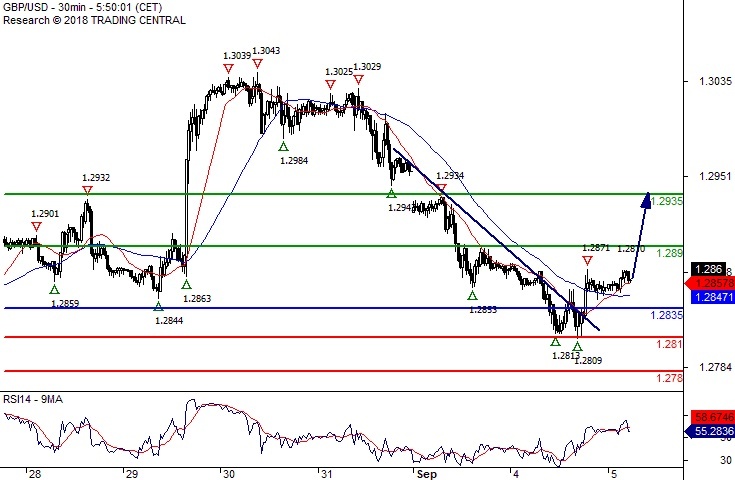
GBP/USD The Upside Prevails
Pivot (invalidation): 1.2835
Our preference Long positions above 1.2835 with targets at 1.2890 & 1.2935 in extension.
Alternative scenario Below 1.2835 look for further downside with 1.2810 & 1.2780 as targets.
Comment The RSI is bullish and calls for further upside.
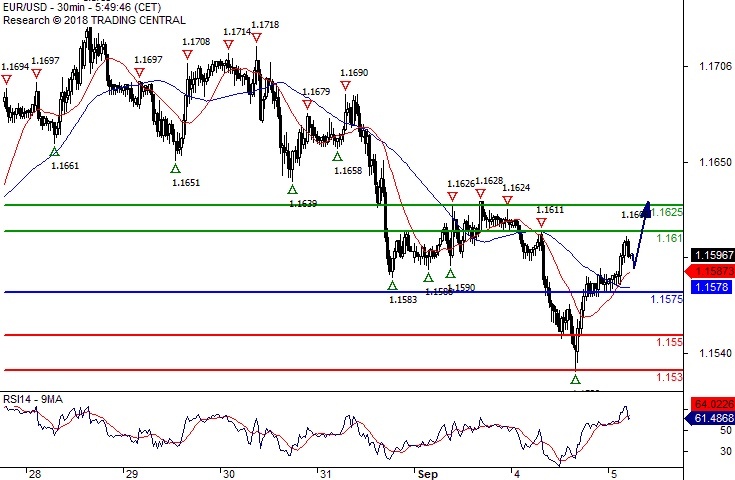
EUR/USD The Bias Remains Bullish
Pivot (invalidation): 1.1575
Our preference Long positions above 1.1575 with targets at 1.1610 & 1.1625 in extension.
Alternative scenario Below 1.1575 look for further downside with 1.1550 & 1.1530 as targets.
Comment A support base at 1.1575 has formed and has allowed for a temporary stabilisation.
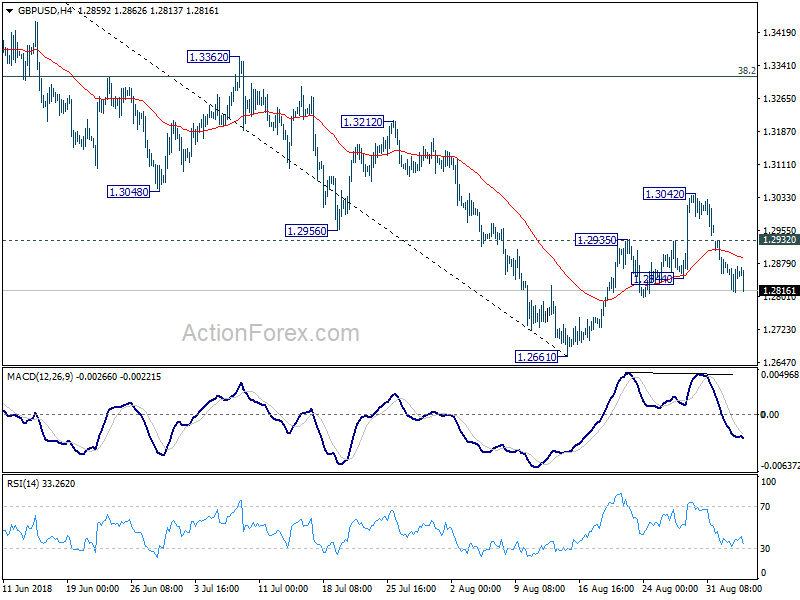
GBP/USD Daily Outlook
Daily Pivots: (S1) 1.2814; (P) 1.2851; (R1) 1.2890; More...
Intraday bias in GBP/USD remains on the downside at this point. The corrective rebound from 1.2661 should have completed at 1.3042. Deeper fall would be seen to retest 1.2661 first. Decisive break there will resume larger down trend from 1.4376. On the upside, above 1.2932 minor resistance will extend the correction from 1.2661 with another rise, possibly through 1.3042 resistance. But in that case, upside should be limited by 1.3316 fibonacci level to finish the rebound and bring near term reversal.
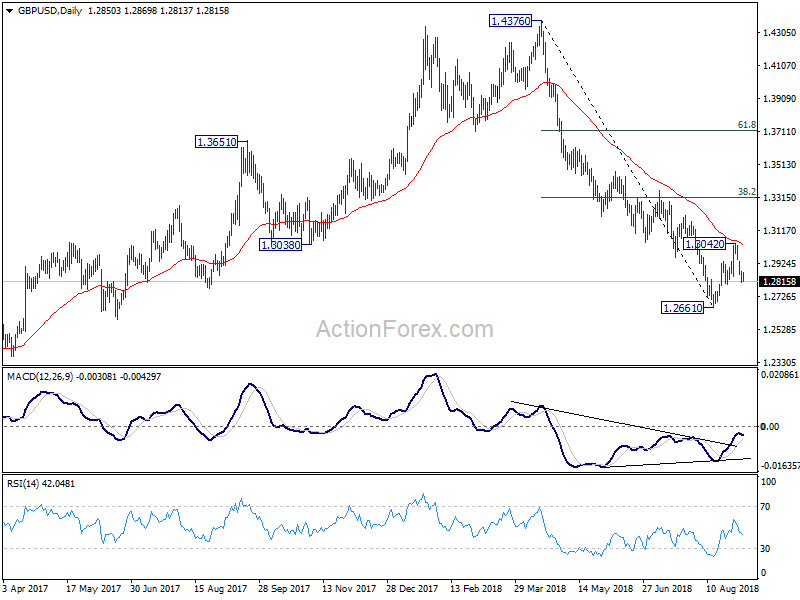
In the bigger picture, whole medium term rebound from 1.1946 (2016 low) should have completed at 1.4376 already, after rejection from 55 month EMA (now at 1.4099). The structure and momentum of the fall from 1.4376 argues that it's resuming long term down trend. And this will be the preferred case as long as 38.2% retracement of 1.4376 to 1.2661 at 1.3316 holds. However, firm break of 1.3316 would bring stronger rebound to 61.8% retracement at 1.3721. And, the eventual depth of the fall from 1.4376, and the chance of hitting 1.1946 low, will depend on the strength of the interim corrective rebound from 1.2661.
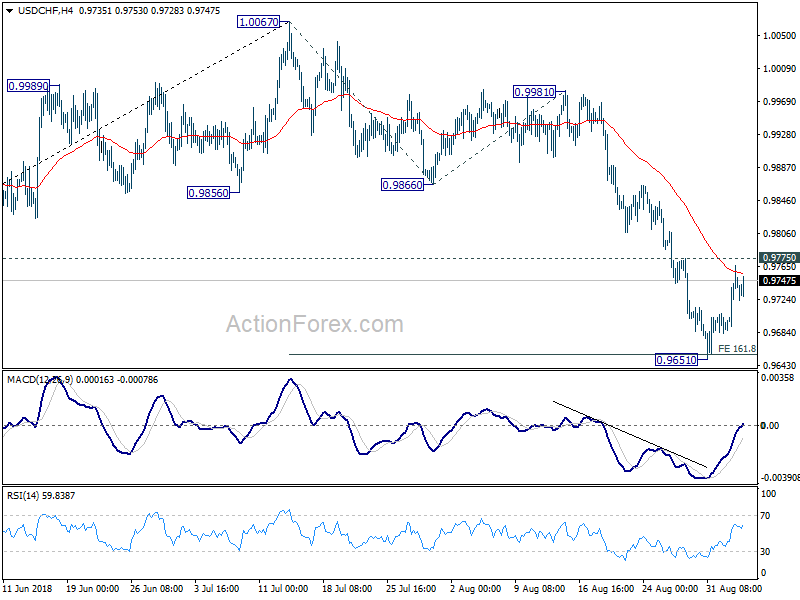
USD/CHF Daily Outlook
Daily Pivots: (S1) 0.9696; (P) 0.9732; (R1) 0.9778; More.....
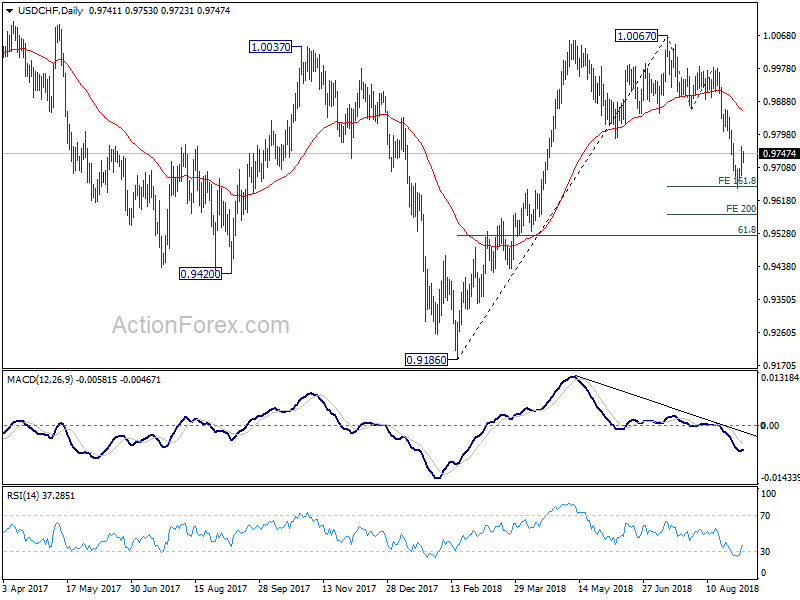
At this point, USD/CHF is limited below 0.9775 minor resistance. Intraday bias stays neutral first. With 0.9775 intact, another decline is mildly in favor. On the downside, break of 0.9651 will target 200% projection of 1.0067 to 0.9866 from 0.9981 at 0.8579 next. However, Firm break of 0.9775 will be an early sign of near term reversal. That is, fall from 1.0067 could have completed. In this case, further rally would be seen back to 0.9866 support turned resistance for confirmation.
In the bigger picture, current development suggests that rise from 0.9186 low has completed at 1.0067, after failing to sustain above 1.0037 resistance. Fall from 1.0067 could extend to 61.8% retracement of 0.9816 to 1.0067 at 0.9523 and below. But for now, we don't expect a break of 0.9186 low. On the upside, firm break of 0.9866 support turned resistance will suggests that fall from 1.0067 has completed and rise from 0.9186 is resuming.
Greenback Reclaims Ground, Bank Of Canada Rate Decision Due
Here are the latest developments in global markets:
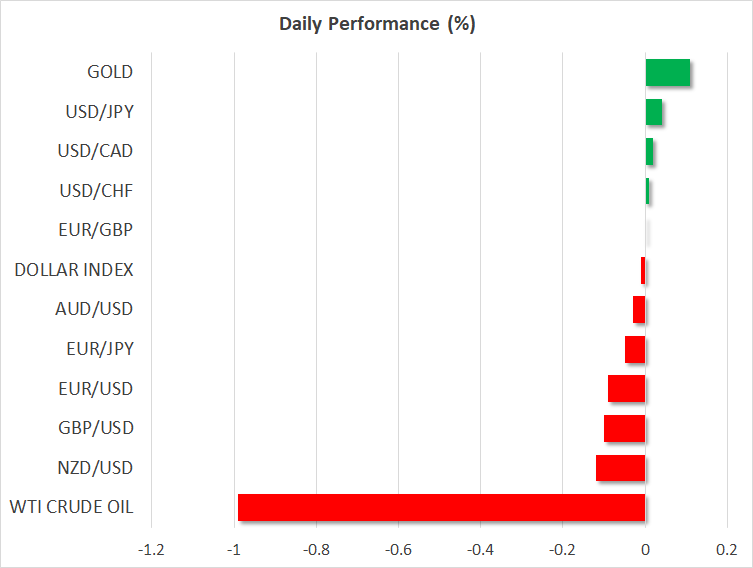
FOREX: The US dollar is little changed against a basket of six major currencies on Wednesday, holding onto the gains it recorded in the previous session. Staying in North America, the Canadian dollar was a major underperformer yesterday, touching a two-month low against the greenback ahead of the Bank of Canada's policy decision later today. EM currencies also came under broad selling pressure, weighed on by news that South Africa had entered a technical recession, with the rand losing roughly 3.0% against the dollar on Tuesday.
STOCKS: US markets edged lower on Tuesday on their first session back from a holiday, as weakness in industry leaders like Facebook (-2.60%) and Nike (-3.16%) added to concerns over an imminent escalation in the Sino-American trade standoff. Fresh worries around emerging markets may have played a role too. The tech-heavy Nasdaq Composite (-0.26%) led the decline, with the S&P 500 (-0.17%) and the Dow Jones (-0.05%) posting more moderate losses. Sentiment seems to have remained sour, as futures tracking the Dow, S&P, and Nasdaq 100 are pointing to a notably lower open today. Asia was a sea of red on Wednesday as well. In Japan, the Nikkei 225 and the Topix declined by 0.51% and 0.77% respectively, while in Hong Kong, the Hang Seng plunged by a whopping 2.33%. In Europe, all the major indices were set to open lower today, futures suggest.
COMMODITIES: Oil prices came crushing down on Tuesday, and are also in the red today, after the anticipated supply disruptions in the Gulf of Mexico did not materialize. WTI is down by nearly 1.0% on Wednesday while Brent is lower by 0.73%, as US oil platforms did not sustain damage from tropical storm Gordon, suggesting that any production outages will likely be limited. In precious metals, gold is up by 0.1% today, hovering close to the $1192/ounce mark. The dollar-denominated yellow metal posted considerable losses yesterday as the US currency climbed.
Major movers: Dollar reclaims ground amid EM jitters; loonie crumbles ahead of BoC
Dollar bulls were once again an unstoppable force yesterday, with the greenback advancing across the board as a renewed selloff in emerging markets (EM), jitters around trade tensions, and stellar US data enhanced the allure of the US currency. The crisis in EM deepened after data unexpectedly showed South Africa slipped into a technical recession, triggering another rotation out of EM assets and into dollar-denominated ones. A surprisingly strong US ISM manufacturing PMI for August – which touched its highest level in 14 years – aided the positive sentiment, with the looming imposition of fresh US tariffs on China as early as tomorrow likely fueling haven demand for the dollar as well.
Meanwhile in Canada, the loonie drastically underperformed, touching fresh two-month lows against the dollar ahead of the BoC's rate decision later today (see below). Interestingly enough, implied rate-hike odds for the BoC's upcoming meetings remained largely stable in recent days, which suggests the loonie's weakness is owed primarily to concerns around trade and specifically, the risk of failing to reach a NAFTA deal. In this respect, the US-Canada negotiations resume today.
On the Brexit front, EU chief negotiator Michel Barnier reportedly shot down PM Theresa May's Chequers plan, labelling it as “not acceptable”. Instead, the EU has proposed a Canada-style free trade agreement, though the details of such a plan are not clear yet. All in all, it appears PM May's hard-fought plan over which two ministers resigned is now dead in the water, amplifying the likelihood the talks may remain stuck in limbo for longer. Indeed, market-implied odds suggest the next BoE rate increase will only come in November 2019 – a pricing so pessimistic relative to the healthy state of the UK economy it probably incorporates expectations Brexit issues will keep policymakers away from touching the hike button.
Overnight, aussie/dollar briefly spiked higher following stronger-than-expected Australian GDP data for Q2. However, the pair quickly gave back its gains to trade even lower as the greenback advanced, remaining stuck near one-and-a-half year lows.
Day ahead: Bank of Canada decides; UK services PMI, eurozone retail sales and US trade data also on the agenda
A Bank of Canada rate decision, US trade data, the UK services PMI and eurozone retail sales are on the agenda on Wednesday. In the meantime, trade tensions and emerging market angst persist.
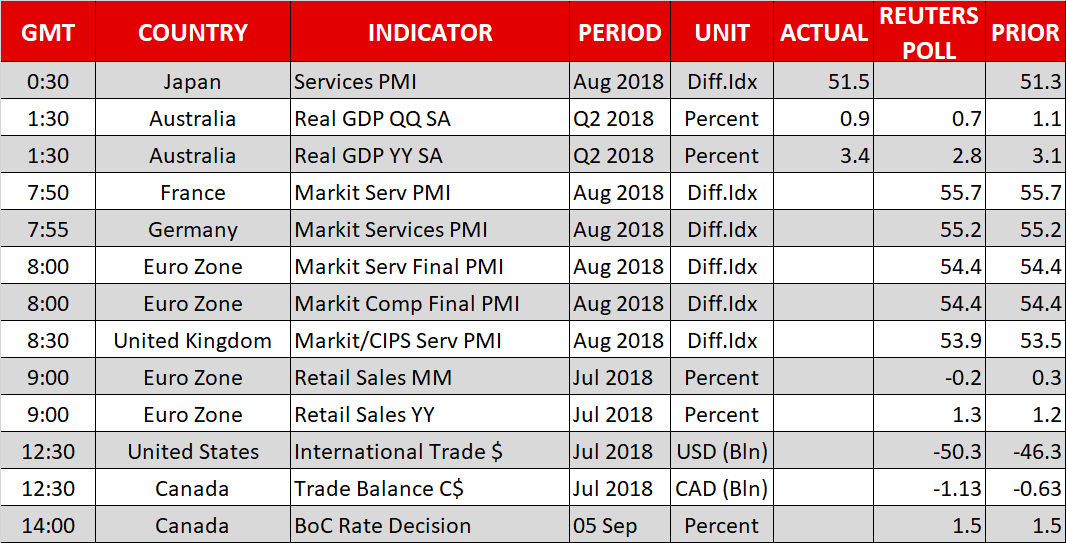
The PMI reading for the all-important for the UK economy services sector will be made public at 0830 GMT. The measure, which comes after disappointing PMI prints on manufacturing and construction earlier in the week that weighed on sterling, is anticipated to rise to 53.9 in August from 53.5 in July.
Earlier in the day, at 0800 GMT, the eurozone will also be on the receiving end of PMI data for the services sector, as well as the composite PMI that blends manufacturing and services. These, though, would pertain to the final prints and are unlikely to cause significant positioning in euro pairs, given that the preliminary readings tend to be reliable; both the services and composite PMIs are projected to stand at 54.4, unchanged from their flash estimates. Germany and France, the eurozone's two largest economies, will see their respective PMI figures hitting the markets at 0755 GMT and 0750 GMT correspondingly.
Also out of the eurozone, retail sales for July are due at 0900 GMT. Month-on-month, sales are expected to contract by 0.2% after rising by 0.3% in June. This would put the year-on-year pace of growth at 1.3%, above June's 1.2%.
The Bank of Canada's rate decision is due at 1400 GMT. The central bank is anticipated to hold rates steady and pave the way for a rate increase during next month's meeting; Canadian OIS see a 76% chance for a 25bps rise in rates during the October gathering. A shock-hike today will be met with a surging loonie, while on the other side of the spectrum, a dovish-hold of rates at current levels (i.e. no signaling for a hike next month) will likely lead to a tumble in the Canadian currency. No press conference by Governor Stephen Poloz will follow after the completion of the meeting.
Trade developments – whether Canada will come to an agreement with the US on a new North American trade deal – are also of importance for the loonie's direction. Meanwhile, Canadian trade data for July are due at 1230 GMT, the same time the US will see the release of its own trade numbers for July. The US trade deficit is projected to widen to $50.3 billion, from $46.3bn in June.
Remaining on trade, the Sino-US spat still lingers one day before the public comment period on additional tariffs on $200 billion of Chinese imports ends; President Trump signaled last week that his administration will proceed with new tariffs as soon as this period ends.
In EM, the Argentine peso, South African rand and the Turkish lira are some of the currencies that are coming under pressure. The situation will be monitored for potential spillover effects as well.
In terms of policymakers' appearances: ECB member Peter Praet will be making a speech at 0830 GMT. Meanwhile, remarks by FOMC members James Bullard (non-voting FOMC member in 2018 – 1320 GMT), John Williams (permanent voter – 1430 GMT) and Neel Kashkari (non-voter – 2000 GMT) are on the agenda as well.
In equities, executives from Facebook and Twitter, as well as Google's top lawyer will be testifying before Congress on Wednesday on Russia meddling in the 2016 US presidential election.
In energy markets, weekly API data on US crude stocks are due at 2030 GMT.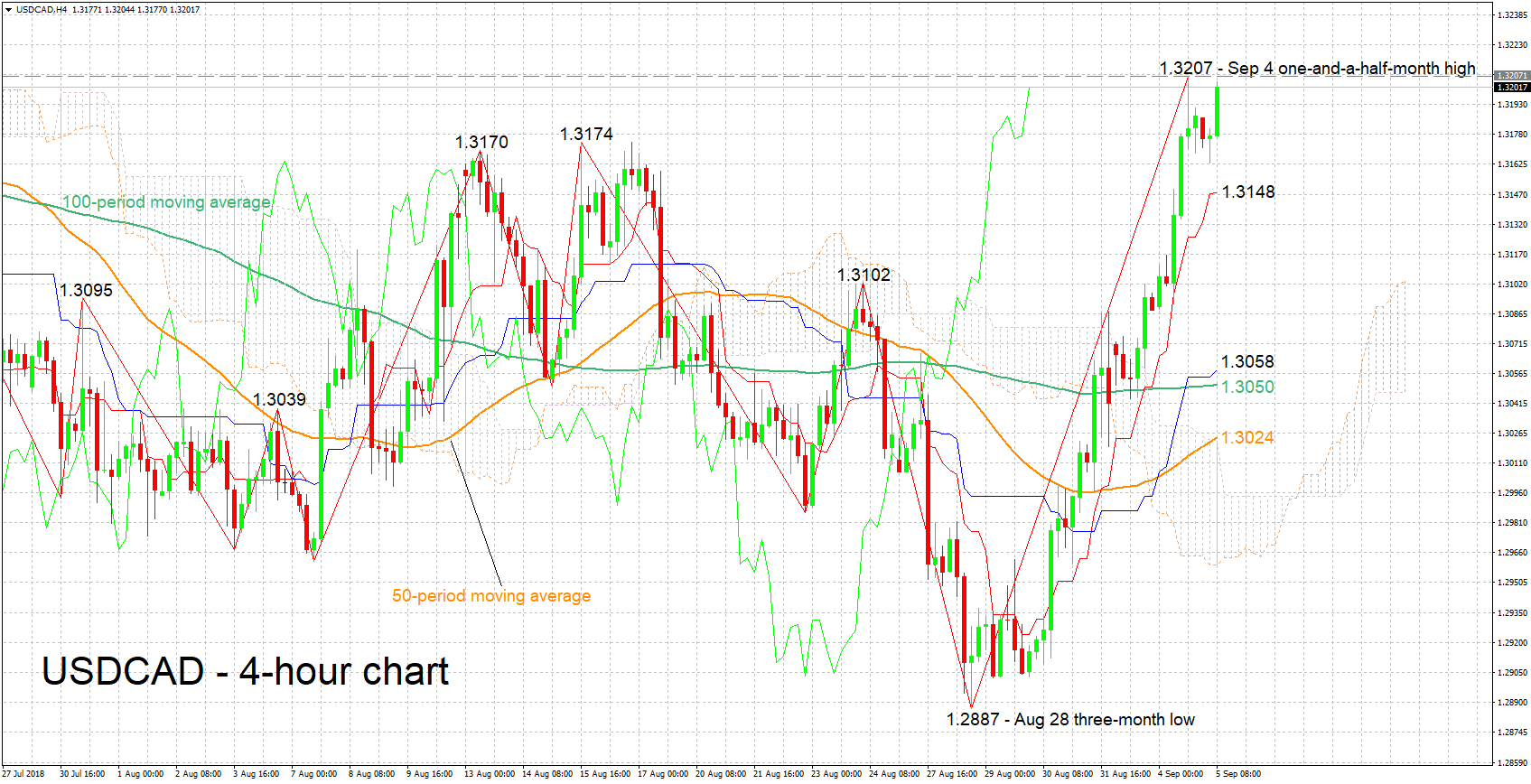
Technical Analysis: USDCAD looking bullish in the short-term
USDCAD is currently eyeing Tuesday's one-and-a-half-month high of 1.3207. The Tenkan- and Kijun-sen lines are positively aligned in support of a bullish short-term picture.
A hawkish Bank of Canada relative to market expectations later today will likely boost the loonie, pushing USDCAD lower. Support to declines may come around the current level of the Tenkan-sen at 1.3148; the zone around this also includes a couple of peaks from the recent past. Further below, support could occur around the 1.31 round figure which also encapsulates a few tops from previous weeks, while further down the area around the Kijun-sen at 1.3058 would be eyed.
On the upside and given a relatively dovish Canadian central bank, immediate resistance seems to be taking place around yesterday's high of 1.3207. Steeper gains would increasingly bring into scope the 1.33 handle.
Trade developments can also move the pair.
USD/JPY Daily Outlook
Daily Pivots: (S1) 111.08; (P) 111.30; (R1) 111.71; More...
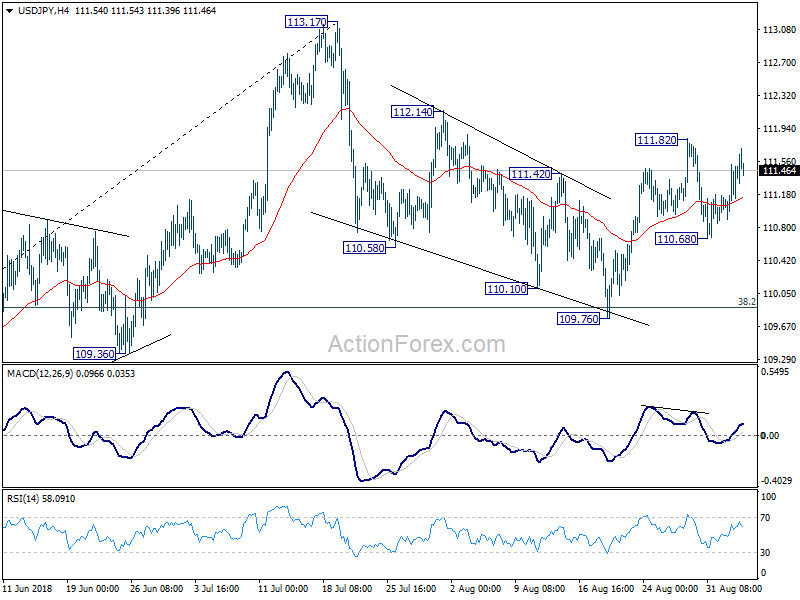
At this point, USD/JPY is still bounded in range of 110.68/111.82 and intraday bias remains neutral first. On the upside, break of 111.82 will reaffirm the case that correction from 113.17 has completed at 109.76. And in that case, further rise should be seen back to retest 113.17 high. On the downside, below 110.68 will bring another fall. But still, downside should be contained by 38.2% retracement of 104.62 to 113.17 at 109.90 to bring rebound.
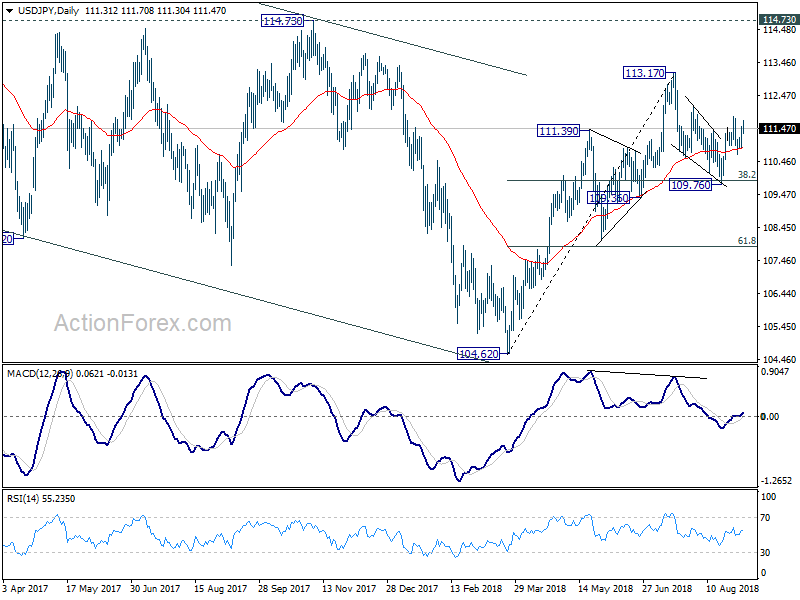
In the bigger picture, corrective fall from 118.65 (2016 high) should have completed with three waves down to 104.62. Decisive break of 114.73 resistance will likely resume whole rally from 98.97 (2016 low) to 100% projection of 98.97 to 118.65 from 104.62 at 124.30, which is reasonably close to 125.85 (2015 high). This will stay as the preferred case as long as 109.36 support holds. However, decisive break of 109.36 will mix up the outlook again. And deeper fall should be seen back to 61.8% retracement of 104.62 to 113.17 at 107.88 and below.
XAUUSD Intraday Analysis
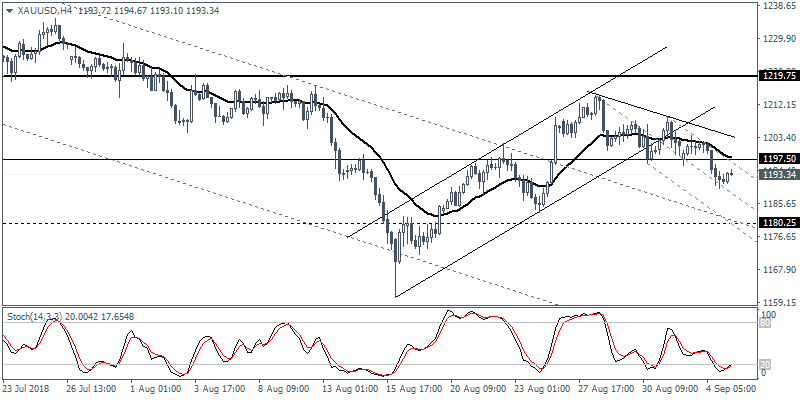
XAUUSD (1193.34): Gold prices closed bearish on Tuesday with the downside breakout likely coinciding with a steep bearish flag pattern. The next main downside target is seen at the support level of 1180.25. On the 4-hour chart, we expect to see a slight retracement back to 1197.50. Establishing resistance here could confirm the downside toward 1180.25. Alternately, if gold prices breakout above 1197.50 further gains can be expected as the bearish flag pattern would be invalidated.
GBPUSD Intraday Analysis
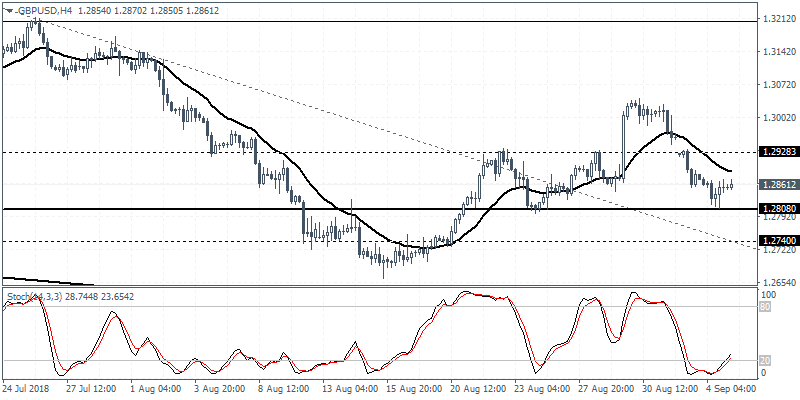
GBPUSD (1.2861): The British pound extended the declines down to 1.2808 level of support on Tuesday. The declines came on a weaker construction PMI report. In the near term, we expect to see a retest of the support level. We expect this support to hold and a rebound off the support could trigger a potential head and shoulders pattern. The upside target is seen from Friday's close of 1.2959. The formation of the head and shoulders pattern brings the expectation of a downside decline. GBPUSD could likely fall to 1.2671 on a successful head and shoulders formation.