Sample Category Title
GBP/USD Mid-Day Outlook
Daily Pivots: (S1) 1.2716; (P) 1.2777; (R1) 1.2831; More...
For now, with 1.2817 minor resistance intraday, intraday bias in GBP/USD on the downside. Current decline should extend to 161.8% projection of 1.3362 to 1.2956 from 1.3212 at 1.2555 next. On the upside, above 1.2817 minor resistance will turn intraday bias neutral and bring consolidations. But recovery should be limited by 1.2956 support turned resistance to bring fall resumption.
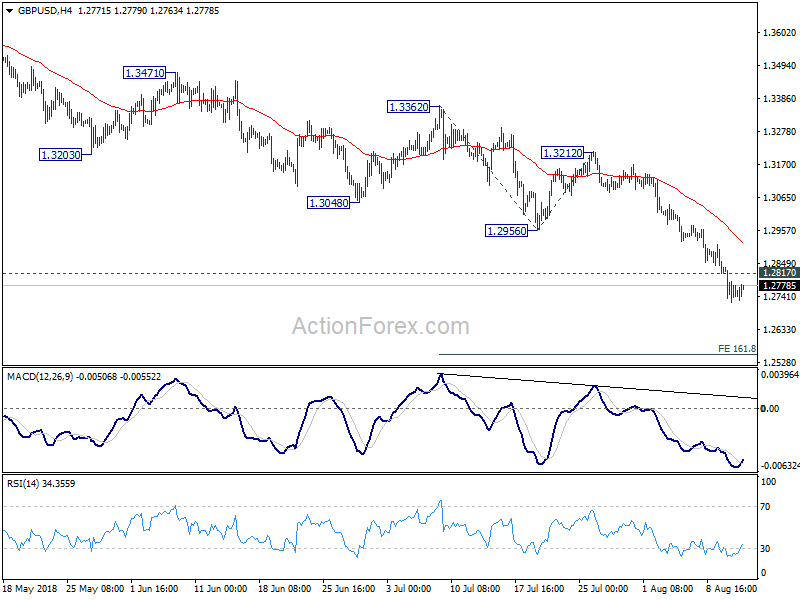
In the bigger picture, whole medium term rebound from 1.1946 (2016 low) should have completed at 1.4376 already, after rejection from 55 month EMA (now at 1.4141). Current downside acceleration argues that it's possibly resuming long term down trend. In any case, outlook will stay bearish as long as 1.3212 resistance holds. Retest of 1.1946 should be seen next.
USD/CHF Mid-Day Outlook
Daily Pivots: (S1) 0.9925; (P) 0.9950; (R1) 0.9979; More....
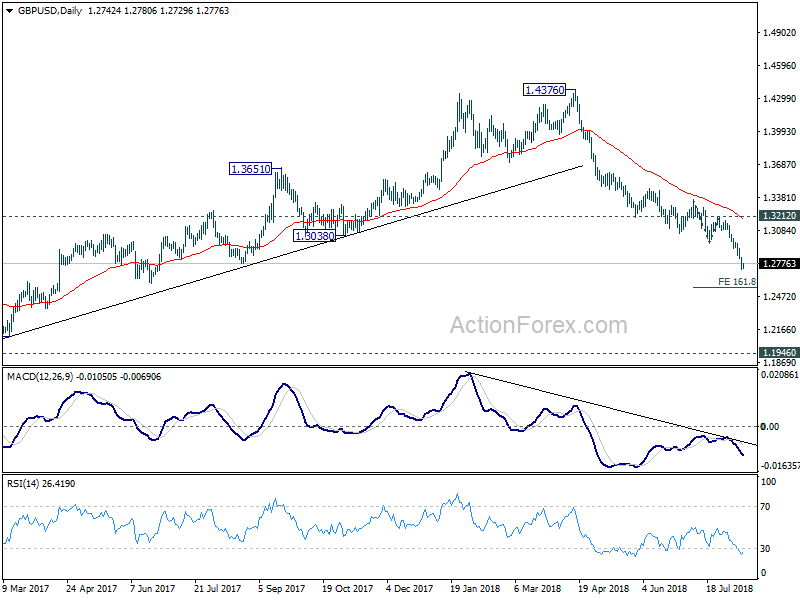
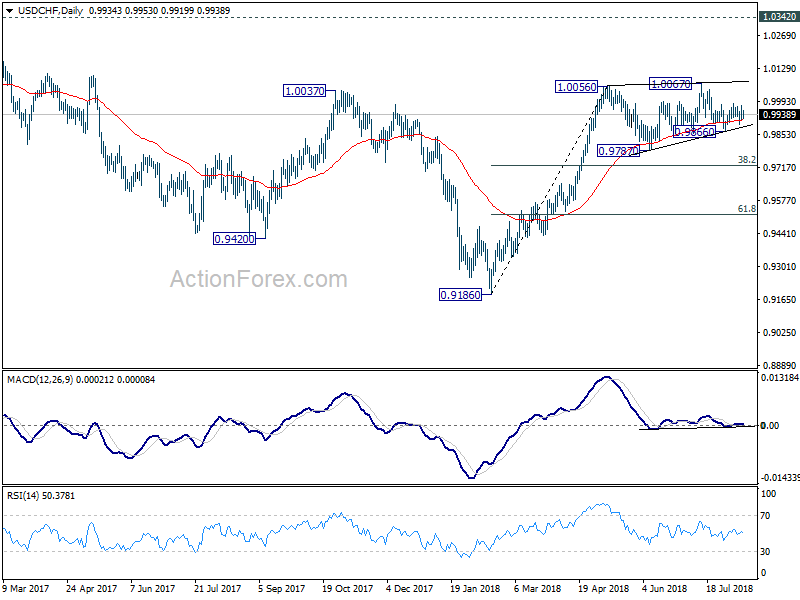
US/CHF continues to gyrate in range of 0.9894/9984 and intraday bias remains neutral. On the upside, above 0.9984 will resume the rebound from 0.9866 to retest 1.0067 high. Decisive break there will resume whole rally from 0.9186. On the downside, below 0.9894 might extend the consolidation pattern from 1.0056 with another falling leg. But downside should be contained by 38.2% retracement of 0.9186 to 1.0056 at 0.9724 to bring rebound.
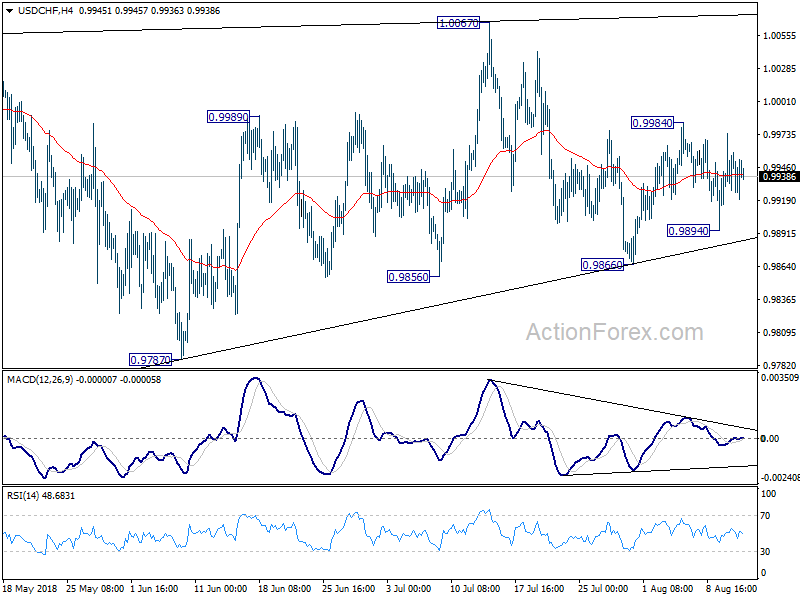
In the bigger picture, current development suggests that the consolidation pattern from 1.0056 is extending with another leg. As long as 38.2% retracement of 0.9186 to 1.0056 at 0.9724 holds, we'd expect rise from 0.9186 to resume at a later stage to retest 1.0342 key resistance (2016 high). However, sustained break of 0.9724 fibonacci level will bring deeper fall, as another declining leg in the long term range pattern.
EUR/USD Mid-Day Outlook
Daily Pivots: (S1) 1.1352; (P) 1.1445 (R1) 1.1502; More.....
With 1.1431 minor resistance intact, intraday bias in EUR/USD stays on the downside for 61.8% projection of 1.2413 to 1.1509 from 1.1745 at 1.1186. Note that it's a cluster level with 61.8% retracement of 1.0339 to 1.2555 at 1.1186. Hence, we'll tentatively look for short term bottoming around 1.1186. On the upside, above 1.1431 minor resistance will turn bias neutral and bring consolidations first, before staging another decline.
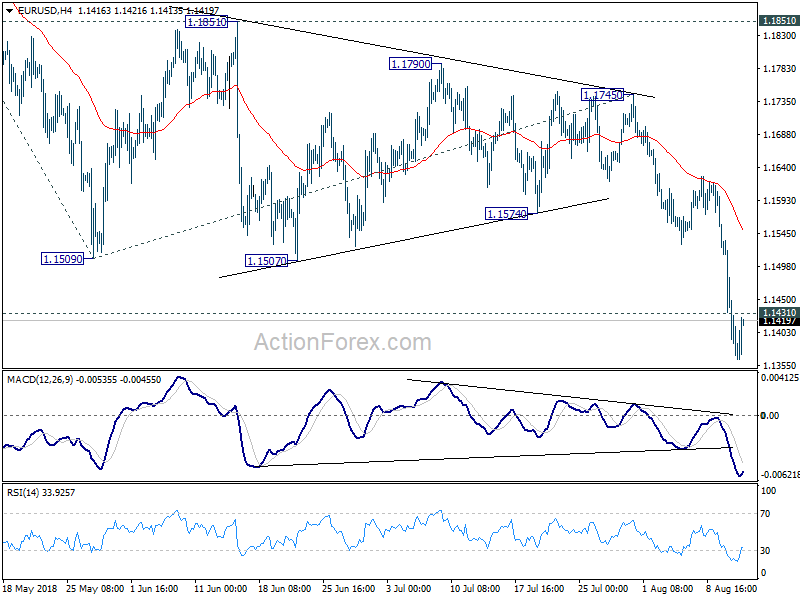
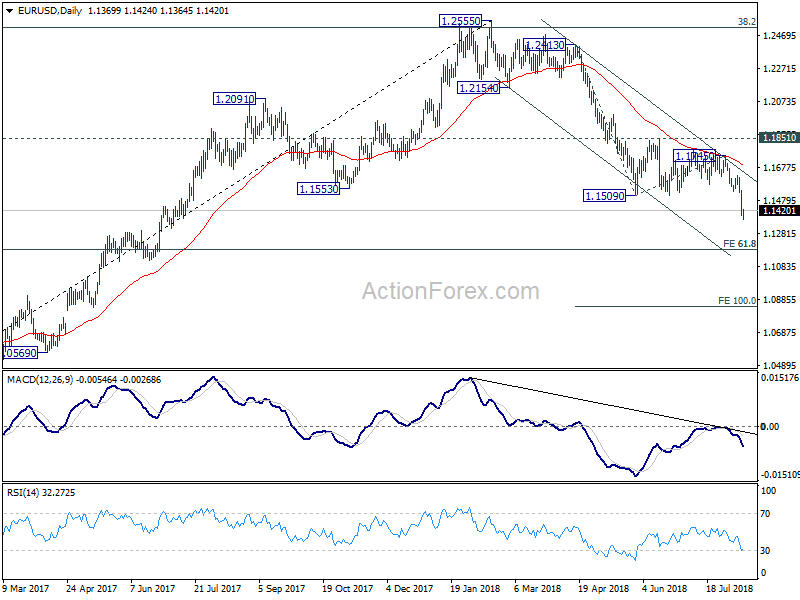
In the bigger picture, the down trend from 1.2555 medium term is in progress for 61.8% retracement of 1.0339 to 1.2555 at 1.1186. Note again that EUR/USD was rejected by 38.2% retracement of 1.6039 (2008 high) to 1.0339 (2017 low) at 1.2516. That carries some long term bearish implications. Sustained break of 1.1186 could pave the way back to retest 1.0339 low. For now, outlook will remain bearish as long as 1.1851 resistance holds, even in case of strong rebound.
Reactions to Rumor of Releasing American Pastor Shows Markets Ready for a Bounce
With a near empty economic calendar, the focus is entirely on development in Turkey. Turkish central bank's announcements did calm the markets. While USD/TRY breached 7.2 earlier, it dipped to as low as 6.4136 after CBRT's announcement. At the time of writing, it's back at 6.9 with an eye on 7.0 handle. There is no sign of reversal yet but at least for now, the pair is in consolidation. Still, Yen remains the strongest one for today, followed by Swiss Franc. Australian Dollar remains the weakest, but it's now followed by Canadian Dollar, as Euro recovers.
The easier sentiment is also clearly seen in European stocks. CAC dipped to as low as 5385.19 earlier today but it's now at 5418.48, up 0.07%. DAX also pared back much losses, hitting as low as 12323.20 but it's now at 12374, down -0.4%. Comparatively, Asian markets performed much worse. Nikkei was also hit by the strength in Yen and closed down -1.98%. Hong Kong HSI closed down -1.52%, Singapore Strait Times closed down -1.20%. However, China's Shanghai SSE showed some resilience and closed down just -0.34% at 2785.87.
On point to note is that just entering into US session, there was a rumor that American pastor Andrew Brunson will be released from house arrest by August 15. That's a totally ungrounded news passing through social media. Yet. yen pares back much of its earlier gain even the US Embassy in Ankara, Turkey, quickly comes out and denies that it released any related statement. While the rumor is denied, the reactions in the markets argue that traders are ready to take any positive news to close out their positions. The worst of Turkish crisis might be temporarily over.
CBRT announced measures on Lira and FX liquidity management
The Turkish central bank CBRT announced measures on Lira and FX liquidity management today. In short, CBRT pledged to provide "all the liquidity the banks need". Discount rates for collateral against Lira transactions will be revised. Collateral FX deposit limits is raised from EUR 7.2B to EUR 20B. Banks are allowed to borrow FX despite in one-month maturity, in addition to one-week maturity. CBRT will release intermediary function as at the FX deposit markets. CBRT will also continue to buy foreign banknotes within their pre-determined limits at the Foreign Exchange and Banknotes Markets. Full statement here.
Separately, CBRT also announced to lower Lira reserve requirement ratios by 250bps for all maturities. RRR for non-core FX liabilities were lowered by 400bps, from 14-24% to 10-20%. Maximum average maintenance facility for FX liabilities has been raised to 8 percent. And, in addition to US dollars, euro can be used for the maintenance against Turkish lira reserves under the reserve options mechanism.
Gold finally breaks 1200 as down trend resumes
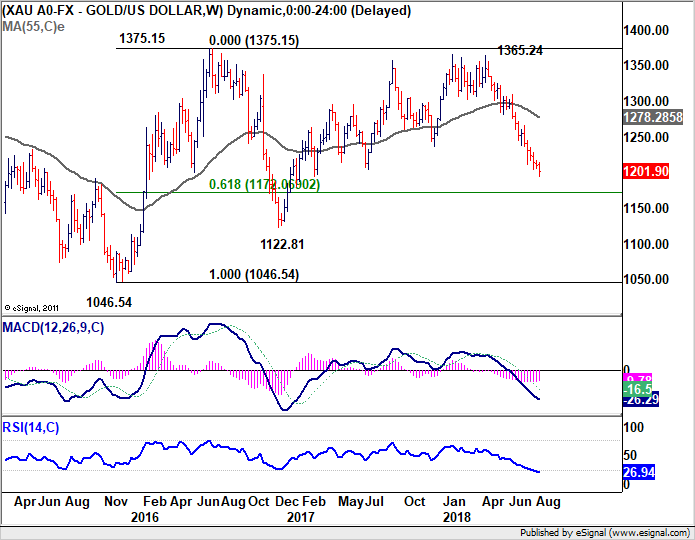
On development to note today is that Gold finally resumes recent down trend and breaches 1200 handle to as low as 1194.95. As the down trend from 1365.24 has resumed. Near term outlook will now stay bearish as long as 1217.31 resistance holds. Next target is 1172.07 fibonacci level. On the upside, though, break of 1217.31 will indicate short term bottoming. And rebound could be seen back to 55 day EMA (now at 1247.14 before staging another decline.
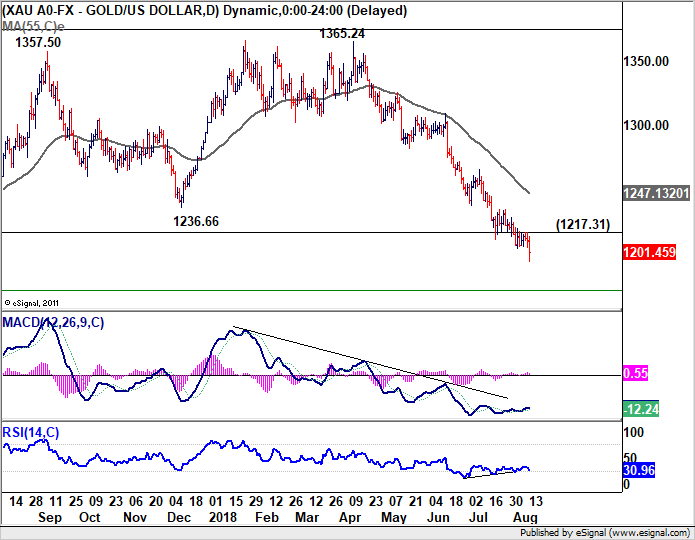
Currently decline from 1365.24 is viewed as part of the long term sideway pattern from 1046.54 (2015 low). Sustained break of 61.8% retracement of 1045.65 to 1375.15 will pave the way to 1046.54/1122/81 support zone. At this point, we're not expecting a break there to resume long term down trend yet. Hence, we'll look for bottoming signal below 1122.81.
EUR/USD Mid-Day Outlook
Daily Pivots: (S1) 1.1352; (P) 1.1445 (R1) 1.1502; More.....
With 1.1431 minor resistance intact, intraday bias in EUR/USD stays on the downside for 61.8% projection of 1.2413 to 1.1509 from 1.1745 at 1.1186. Note that it's a cluster level with 61.8% retracement of 1.0339 to 1.2555 at 1.1186. Hence, we'll tentatively look for short term bottoming around 1.1186. On the upside, above 1.1431 minor resistance will turn bias neutral and bring consolidations first, before staging another decline.
In the bigger picture, the down trend from 1.2555 medium term is in progress for 61.8% retracement of 1.0339 to 1.2555 at 1.1186. Note again that EUR/USD was rejected by 38.2% retracement of 1.6039 (2008 high) to 1.0339 (2017 low) at 1.2516. That carries some long term bearish implications. Sustained break of 1.1186 could pave the way back to retest 1.0339 low. For now, outlook will remain bearish as long as 1.1851 resistance holds, even in case of strong rebound.
Economic Indicators Update
| GMT | Ccy | Events | Actual | Forecast | Previous | Revised |
|---|---|---|---|---|---|---|
| 02:00 | CNY | M2 Money Supply Y/Y Jul | 8.20% | 8.20% | 8.00% | |
| 02:00 | CNY | New Loans (CNY) Jul | 1450B | 1210B | 1840B |
US embassy denies statement of release of pastor Brunson
Lira has a quick dip in early US session while Yen crosses recover in general. The trigger is a social media report that American pastor Andrew Brunson, will be released from house arrest by August 15.
The U.S. Embassy in Ankara, Turkey, quickly comes out and denies that it released related statement.
While the rumor is denied, the reactions in the markets argue that traders are ready to take any positive news to close out their positions. The worst of Turkish crisis might be temporarily over.
Euro Holds at 13-month Lows Despite Turkish Central Bank Measures; Chinese Industrial Production in focus
Here are the latest developments in global markets:
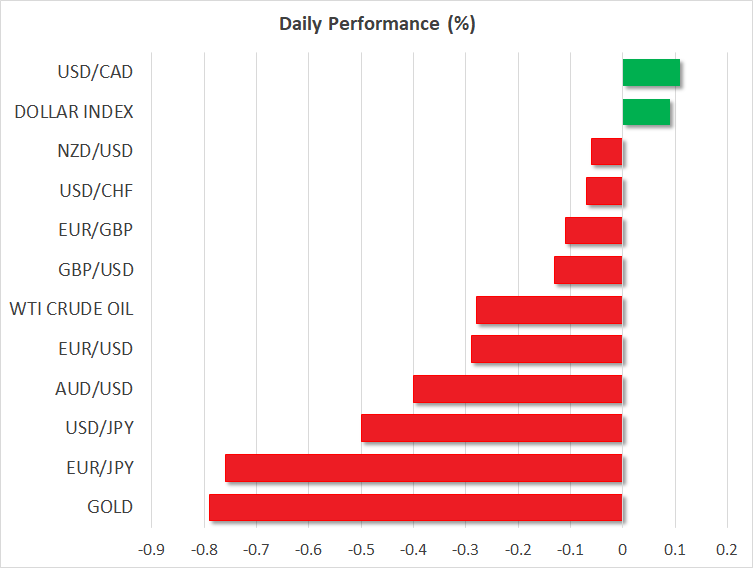
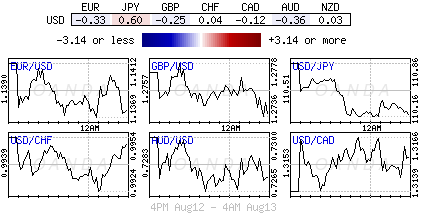
FOREX: The US dollar index was little changed on Monday (+0.07%), while dollar/yen headed lower by 0.50%, completing a six-week low at 110.10 as political tensions between the US and Turkey enhanced interest for safer assets. Euro/dollar remained negative, last seen at 1.1385 (-0.23%) after it opened with a gap down today following Friday’s strong sell-off. The pair posted a 13-month trough as a slide in the Turkish lira sparked fears that Turkish borrowers could fail to submit loan payments to European banks, generating the risk of contagion. After hitting a record low of 7.21 against the dollar earlier today, Turkey’s lira found some support after the Turkish central bank announced a list of modest measures to protect the economy from the lira’s free-fall. Meanwhile, pound/dollar declined by 0.17% as a stronger dollar and concerns over a no-deal Brexit continue to weigh on the currency. The South African rand was also weak against the greenback (-2.59%) as the lira crisis unsettled other emerging market currencies. In antipodean currencies, aussie/dollar slipped by 0.41% to a more than 18-month low of 0.7247, while kiwi/dollar posted a new two-and-a-half-year low of 0.6549, losing -0.03% in the day. Dollar/loonie held near its opening level at 1.3144.
STOCKS: European equities were a sea of red on Monday, with the pan-European STOXX 600 falling by 0.51% at 1040 GMT, led by losses in financial and healthcare sectors. The blue-chip Euro STOXX 50 was down by 0.57%, near one-month lows. In Germany, the DAX retreated by 0.60.%, while the French CAC 40 fell by 0.35%. In Italy, the FTSE MIB 100 was down by 1.0%, while the British FTSE 100 was weaker by 0.56%. The Spanish IBEX 35 traded lower by 1.11%. Turning to the US, futures tracking the Dow Jones, S&P 500, and Nasdaq 100 were all in negative territory, pointing to a lower open today continuing the downward correction from last week.
COMMODITIES: Oil prices moved lower today with West Texas Intermediate (WTI) falling by 0.52% after OPEC predicted lower demand in the next year. In a monthly report, OPEC noted that the world will need 32.05 million bpd of crude from its 15 members in 2019, 130,000 bpd lower than it estimated in last month’s report. Brent crude declined by 0.22% below the $73 level. In precious metals, gold prices tumbled by 0.94%, reaching a fresh almost 17-month low of $1,198.86.
Day ahead: Politics and trade worries to drive markets; Chinese industrial production next in focus
The Turkish central bank announced its measures on the foreign exchange market on Monday, saying that banks will receive the liquidity needed to keep their operations moving, refraining from any rate hikes. Instead, it introduced higher collateral FX deposit limits for lenders’ lira transactions and altered reserve requirements ratios. But the Turkish lira received little support, with dollar/lira retreating slightly to 6.86 after touching a new all-time high of 7.21 earlier today. In other emergency currencies, the South African rand, the Indian rupee, the Russian ruble and the Mexican peso which felt the pain from the lira’s meltdown early today did not gain much either on the news, remaining in the red against the greenback. The euro held in negative territory as well, consolidating slightly below 1.1400. Investors are waiting to see how the US-Turkish dispute will evolve in the following sessions, as a report by the Financial Times last week stated that the ECB is concerned the lira’s tumble could expose European banks to defaults on loans taken by Turkish borrowers. A potential deterioration in Turkey’s economic and political conditions could affect the ECB’s monetary thinking, to the extent that it spills over into the euro area as well. Indeed, investors have pushed back the anticipated timing of the first 10bps ECB rate increase to December 2019, according to EONIA swaps.
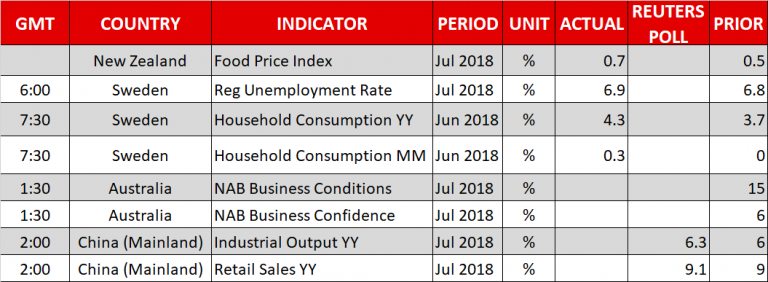
The trade story is expected to continue to trouble investors this week as neither the US nor China show signs of backing down in their inflamed dispute, with the world’s two biggest economies exchanging another round of tariff warnings last week. Industrial production readings out of China early on Tuesday at 0200 GMT are expected to show that factory output has grown by 6.3% y/y in July, faster than in June when it marked an expansion of 6.0%. Separately, July’s retail sales are anticipated to increase by 9.1% compared to 9.0% in June. The data could signal that despite US tariffs on Chinese steel and aluminum imports taking effect early in June, industrial activity and consumption in China continued to grow at healthy levels. Having said that, any weakness cannot be excluded in the future as trade threats could weigh on business investment plans.
Meanwhile in Australia, the Commercial National Bank is scheduled to update its business surveys for the month of July on Tuesday at 0130 GMT and any significant upside surprise could help the aussie to gain some ground. Chinese data following the Australian business indicators (mentioned above) could also shake the aussie, as China is Australia’s biggest export partner.
Into US session, markets calmer but risk aversion still dominates
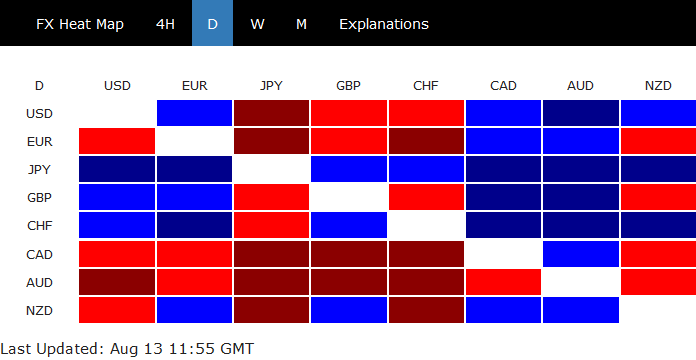
Entering into US session, Yen remains the strongest one followed by Swiss Franc. Risk aversion is the main theme for today on Turkish Lira crisis. Australian Dollar is trading as the weakest one while Euro follows as the second.
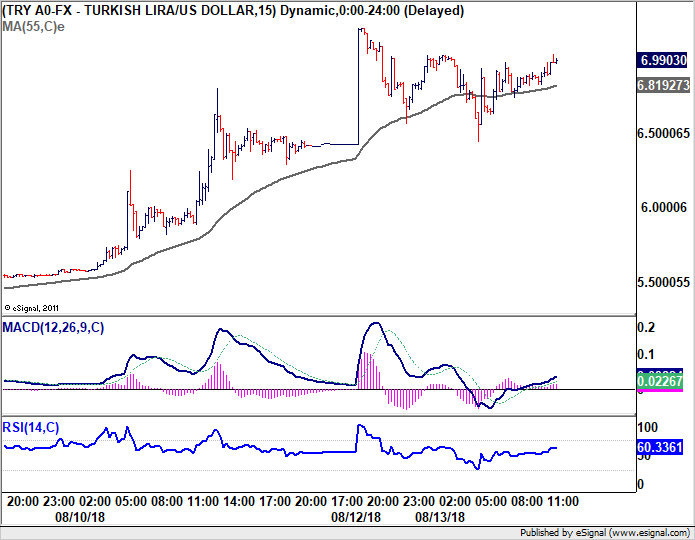
Measures by the Turkish central bank CBRT appeared to have stabilized sentiments a bit. USD/TRY dropped to as low as 6.4136. But apparently, there is no trend reversal yet. Lira is quickly back under pressure with USD/TRY now trading above 7.000 handle again.
In other markets, European stocks appear to be rather calm. At the time of writing, DAX is just down -0.68%, CAC down -0.21% and FTSE down -0.58%. Selloff in Asia was much more serious. Nikkei was also hit by the strength in Yen and closed down -1.98%. Hong Kong HSI closed down -1.52%, Singapore Strait Times closed down -1.20%.
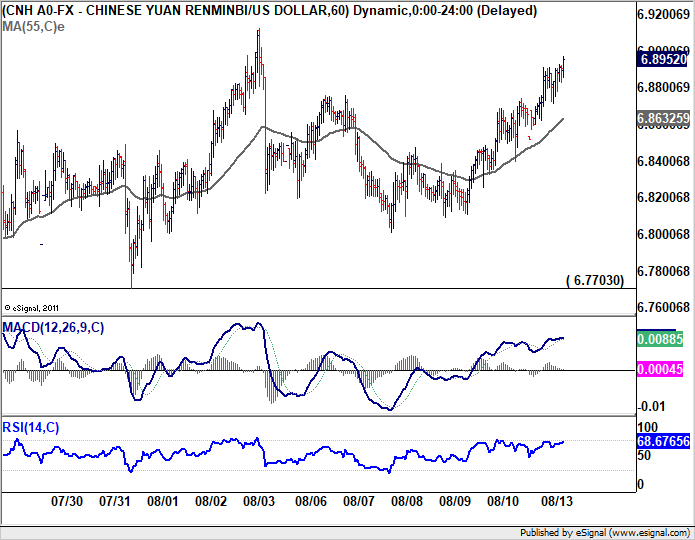
However, China's Shanghai SSE showed some resilience and closed down just -0.34% at 2785.87. It pared back much losses after dipping to as low as 2742.55. However, as USD/CHN (offshore Yuan) is heading back towards 6.9. We could see more pressure on Chinese and Asian stocks, thus Australian Dollar too, should Yuan's free fall resumes.
Turkish Lira Crisis Enters Further Freefall, Global Markets Suffer Again from Turkey Headwinds
Global markets and news headlines across the world are once again being completely dictated by the ongoing events in Turkey. The Turkish Lira has entered another round of currency freefall, with the ongoing volatility dragging down a wide host of currencies across the world. The currency weakness spread to hit the South African Rand, Russian Ruble and Mexican Peso while the Indian Rupee dropped to a new all-time low as a result of the “risk off” atmosphere across global markets.
The damage across the global markets has been far and wide following the Lira's freefall, but it is the emerging market currencies and higher-yielding assets that are up there as contenders to suffer the most from crippling investor attraction towards taking on risk. Some emerging market currencies are still not used to the type of market volatility that developed currencies can face, with some speculation already brewing that emerging market central banks might step in to prevent further respective currency weakness. I fear that because the markets are being driven by “animal spirits” stemming from external headwinds, there is very little these central banks can do and it would risk concerning investors even further if they start pushing the “panic” button.
Simply put, for as long as investor sentiment remains driven by intense fears that Turkey is in the midst of a currency crisis that the trend will remain “risk off”. This means that global stocks will struggle to find buyers, while emerging market stock markets and its respective currencies will suffer from diminished investor attraction towards risk.
Both the Japanese Yen and US Dollar are likely to remain supported due to their safe-haven status.
The Euro fell to a fresh 2018 low against the US Dollar in the early hours of weekly trade, following another astonishing collapse in the Turkish Lira when Asian markets opened this morning. Concerns remain that Europe is more exposed to a Turkish crisis than investors have priced into the market. Europe is just one of the markets that is at threat to a contagion knock-on effect from a Turkish Lira crisis.
A Market Bloodbath As Turkey Fever Spreads
Just when you though it was safe to invest in an asset that made sense, be it forex, bonds or stocks, fear and contagion has suddenly appeared, and in under 48-hours has severely bullied emerging markets into near submission.
In six-weeks, the Turkish lira has fallen nearly +45% against the dollar, when President Erdogan won an election strengthening his absolute power. Today alone, TRY has fallen -11% to hit a record low of $7.2412 outright, as concerns grow about strained relations between Turkey and the U.S as well as about the worsening state of the Turkish economy.
Reports that the European Central Bank (ECB) is becoming increasingly concerned about the exposure of some banks in the region has sent the EUR to a new one-year low of €1.1367.
News that investors are losing confidence that Turkey will act in the interests of the economy has many flocking to own USD’s, a natural reaction. However, a stronger dollar will eventually hurt the U.S economy, from an export perspective in particular. Nor does it help President Trump’s agenda of growth through trade and stimulus through a weaker greenback.
Central Bank of the Republic of Turkey (CBRT) overnight said it had lowered reserve requirement ratios for banks to free up liquidity and assured markets that it would take all necessary measures to maintain financial stability. Turkish Finance Minister Berat Albayrak also said the banking watchdog had also limited swap transactions in the currency.
On tap: There are no central bank meetings this week. Q2 growth data for the Eurozone and Germany will be released (Aug 16). Stateside, the pace of new data in the U.S. picks up with industrial production (Aug 15) and housing starts (Aug 16). The U.K posts key data including employment (Aug 14), consumer and producer price indexes (Aug 15) and retail sales (Aug 16) and Brexit talks between the E.U and the U.K. resume in Brussels (Aug 16).
1. World stocks hit one-month low as Turkish rout spreads
Contagion worries continue to impact investor risk sentiment, especially in emerging markets.
In Japan, the Nikkei tumbled -2% to a five-week low overnight as a sell-off in emerging market currencies frightened investors, with the safe-haven yen’s (¥110.20) appreciation also hurting sentiment. The broader Topix dropped -2.1%.
Down-under, Aussie shares ended lower overnight, weighed down by materials and banks after the crisis in Turkey hit Asian assets, while global trade turmoil pushed commodity prices lower. The S&P/ASX 200 index fell -0.4%. In S. Korea, the Kospi ended down -1.5%, in line with other Asian countries.
In Hong Kong, the Hang Seng index ended -1.5% down, while the China Enterprises Index closed -1.6% lower. In China, stocks too ended lower overnight, but managed to recoup most of their earlier losses aided by gains in shares of tech firms. The blue-chip CSI300 index fell -0.4%, while the Shanghai Composite Index ended down -0.3%.
In Europe, regional bourses opened lower and continue the trend as the session progresses.
U.S equities are set to open in the ‘red’ (-0.3%).
Indices: Stoxx50 -0.4% at 3,410, FTSE -0.5% at 7,633, DAX -0.5% at 12,366, CAC-40 -0.2% at 5,403; IBEX-35 -0.9% at 9,517, FTSE MIB -0.5% at 20,983, SMI -0.5% at 8,982, S&P 500 Futures -0.3%
2. Oil dips on EM woes, gold lower
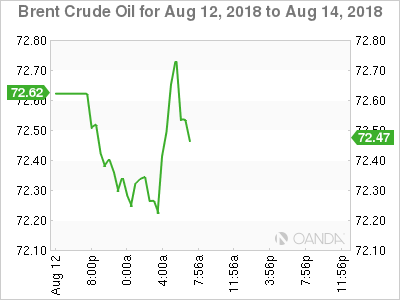
Oil prices have slipped overnight as trade tensions and troubled emerging markets have knocked the market outlook for fuel demand, despite U.S sanctions against Iran pointing towards tighter supply conditions.
Brent crude oil is down -10c at +$72.74 a barrel, while U.S light crude is -15c lower at +$67.48 a barrel.
Contagion fears in emerging markets is compounding worries that a deepening trade war between the U.S, China and the E.U will hurt business activity in the world’s biggest economies.
Also putting pressure on oil prices were U.S energy companies last week increasing their number of active oilrigs by the most since May, adding +10 rigs to bring the total count to 869, according to the Baker Hughes. That was the highest level of drilling activity in three-years.
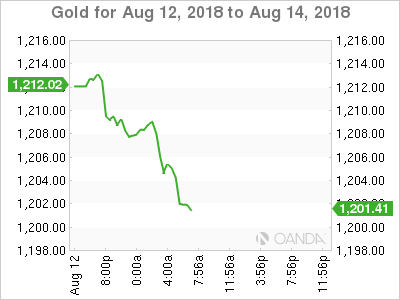
Ahead of the U.S open, gold prices have extended their declines into a third-session overnight, as the U.S dollar climbed to a 13-month high against G20 currency pairs. Spot gold had dropped -0.2% to +$1,208.50 an ounce. U.S gold futures are down -0.3% at +$1,215.7 an ounce.
3. Turkish yields jump despite CBRT measures
Turkish government bond yields again have backed up aggressively overnight despite the CBRT announcement of a set of measures to support the TRY. Yields on the Turkish 10-year government bond hit a new record high +8.914% this morning. They fell briefly to +8.427% after the central bank announcement.
Elsewhere in Europe, Italian bonds and stocks have also been hit by the turmoil in Turkey. Italian banks in particular have a lot of exposure in Turkey. Consequently, investors continued to push Italy’s borrowing costs higher, with yields across the curve +3 to +11bps higher.
Elsewhere, the yield on 10-year U.S Treasuries has declined -2 bps to +2.86%, the lowest in more than three-weeks. In Germany, the 10-year Bund yield has decreased less than -1 bps to +0.31%, the lowest in five-weeks, while in the 10-year Gilt yield has dipped -1 bps to +1.242%, the lowest in more than three-weeks.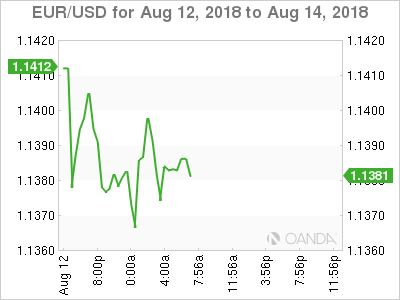
4. Dollar in demand on contagion fears
FX markets continue to find flows into safe haven currencies on risk aversion trading around the Turkish crisis.
TRY ($6.8794) has pared some of its losses outright after the CBRT said it had lowered the reserve requirement ratios for banks as well as pledged to “provide whatever liquidity banks needed and to take all necessary measures to maintain financial stability.” The currency is still down more than -6% on the day and within touching distance of a record low around $7.24 hit it early Asian trade. The lira has weakened nearly -45% since the start of the year.
Other EM currency pairs have not fared any better, South Africa’s rand ($14.4607) has skidded to levels not seen since mid-2016, while Russia’s rouble ($67.7) slumped to a near 2-1/2 year trough. The Indian rupee ($69.71) has plummeted to an all-time low, while the Indonesian rupiah ($14610) hit a near three-year low prompting the central bank to intervene. China’s yuan (¥6.8791) has weakened -0.5% – its steepest daily decline in nearly four weeks.
EUR/USD (€1.1384) remains below the key technical level of €1.15. The Italian budget issue continues to simmer in the background – Italy Deputy PM Di Maio believes that Italy is not at risk of financial market attack.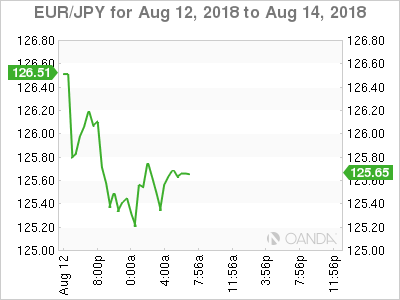
5. China July new loans up +¥623.7B y/y to +¥1.45T
Faced with sluggish domestic demand and potential pressure from a trade war with the U.S, Chinese policymakers have recently boosted policy support and softened their stance on deleveraging.
According to China’s banking and insurance regulator (CBIR) China extended +¥1.45T (+$210.84B) in new yuan loans in July – a form of pumping liquidity into a slowing economy.
However, the PBoC continues to faces difficulty in channelling credit to small firms – which are vital for economic growth and job creation – State banks remain reluctant to lend to these small firms, which are considered riskier than state-controlled ones.
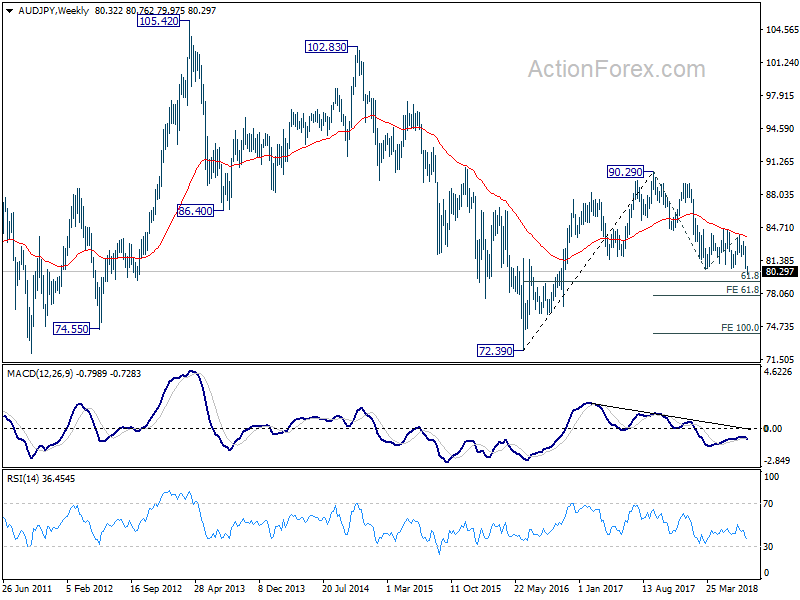
AUD/JPY breaks 80.48 key support, resuming medium term down trend for 79.22 next.
AUD/JPY's strong break of 80.48 key support today its worth a mention. This marks resumption of down trend form 90.29 (2017 high). AUD/JPY should now head to 61.8% retracement of 72.39 to 90.29 at 79.22 next.
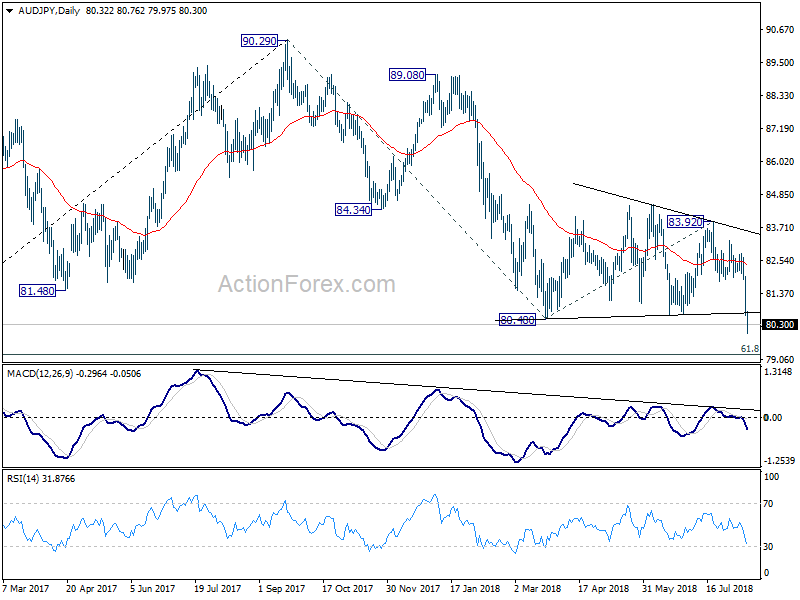
In the bigger picture, rejection from 55 week EMA affirmed the bearish case that corrective rise from 72.39 (2016 low) has completed at 90.29. Fall from 90.29 should at least be at the same degree as the rise from 72.39 to 90.29. That is, fall from sustained break of 79.22 should pave the way to retest 72.39 low.
In between, AUD/JPY will face an import fibonacci level of 100% projection of 90.29 to 80.48 from 83.92 at 74.11. Firm break there will suggests that fall from 90.29 is likely an impulsive move. And that will increase the chance of resuming the down trend from 105.42 (2013 high) through 72.39.