

Sample Category Title
EUR/USD Daily Outlook
Daily Pivots: (S1) 1.1549; (P) 1.1580 (R1) 1.1599; More.....
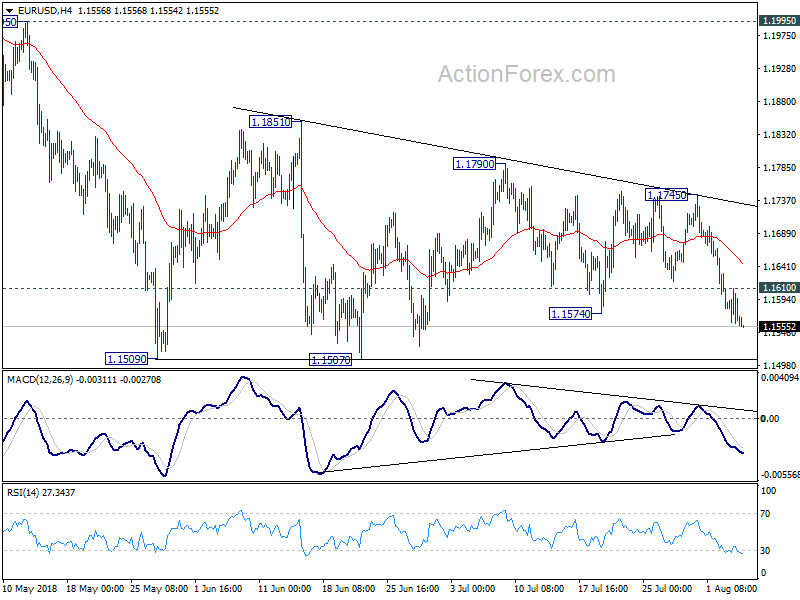
Intraday bias in EUR/USD remains cautiously on the downside for the moment. Prior break of 1.1574 minor support is tentatively treated as sign of downside breakout and down trend resumption. Deeper fall would be seen to retest 1.1507 support. Break there will resume larger down trend from 1.2555 through retracement of 1.0339 to 1.2555 at 1.1447. On the upside, however, above 1.1610 minor resistance will delay the bearish case and extend the consolidation from 1.1509 with another rebound instead.
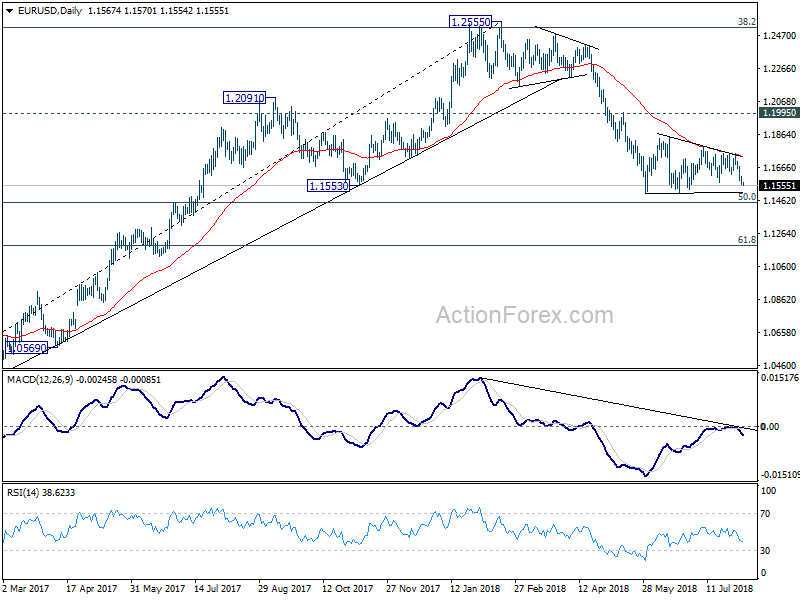
In the bigger picture, EUR/USD was rejected by 38.2% retracement of 1.6039 (2008 high) to 1.0339 (2017 low) at 1.2516. And, a medium term top was formed at 1.2555 already. Decline from there should extend further to 61.8% retracement of 1.0339 to 1.2555 at 1.1186 and below. For now, even in case of rebound, we won't consider the fall from 1.2555 as finished as long as 1.1995 resistance holds.
Dollar Gains Broadly, as the Impact of Chinese Yuan Intervention Fades Quickly
Dollar gains broadly in a rather quiet start to the week. Asian stocks are given a lift by China's move to stabilize the Yuan. But the impact quickly fades. At the time of writing, Nikkei is nearly flat after initial rally to 22635. Hong Kong HSI is up 0.7% while China SSE is down -0.77%. USD/CNH (offshore Yuan) is hovering around 6.84, comparing to last week's high at 6.9126. The lack of follow through buying in Yuan helps clear a near term obstacle for more Dollar rally. Meanwhile, risk aversion could keep the Yen firm.
Technically, EUR/USD's break of 1.1574 minor support last week is tentatively taken as a sign of range break out. Deeper fall is likely for 1.1507 key near term support next. GBP/USD is still way off 1.2956 support despite last week's selloff. Nonetheless, we'd expect GBP/USD to have a take on this level soon. USD/CAD is at a point where it should be ready for a rebound, close to 1.2967 fibonacci projection level. We'll see if USD/CAD could gather some buying from here.
Impact of PBoC FX RRR hike quickly fades, Yuan struggles to extend rebound
The People's Bank of China's starts today to raise foreign exchange risk reserve ratio from 0% to 20%. It's a move to stabilize the Yuan and curb capital outflow and was announced Friday after close. The move gives some support to Chinese and Hong Kong stock today but the impact seems to fade quickly. The Shanghai Composite index, SSE, edged higher to 2760.47 but it's back down -0.77% at 2719.38 at the time of writing. It's still more likely than not to revisit 2700 handle and possibly 2016 low at 2638.30.
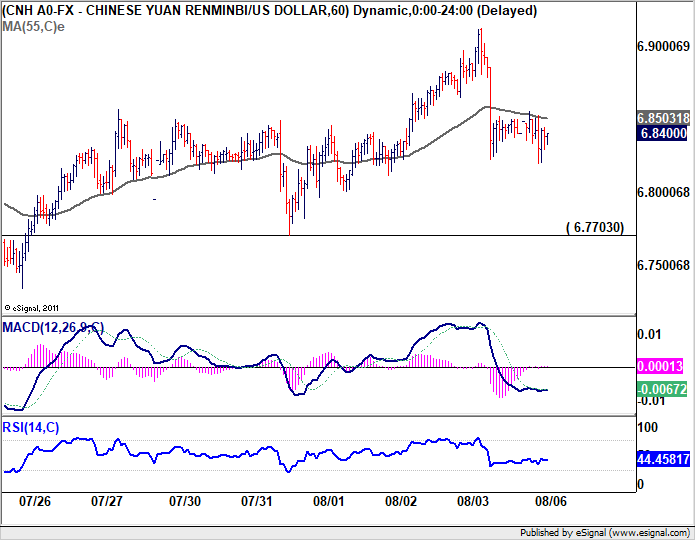
USD/CNH (offshore Yuan) also stabilized at around 6.84 at the time of writing. There is no follow through selling after the spike move on Friday, following PBoC's announcement. For now, 55 H EMA (0.6850) is capping the upside and more decline is mildly in favor back to 6.7703 support. But a break above the EMA could prompt another selloff in the Yuan back to 6.9.
UK TM Fox: 60-40 chance of no-deal Brexit due to EU intransigence
UK Trade Minister Liam Fox said in an interview with the Sunday Times that he saw "not much more than 60-40" chance of a no-deal Brexit. And he put the blame on EU as the "intransigence of the (European) commission is pushing us towards no deal." He also warned that if EU chooses "theological obsessions of the unelected" over "economic wellbeing of the people", then it's a "bureaucrats' Brexit, not a people's Brexit". He went further and said it's up to EU to choose "ideological purity" or "real economies:"
Domestically, Fox also criticized that "there are people trying to undermine, to block and to thwart Brexit and having fought so long and hard to get to this point, I don't want anything done to jeopardise our exit from the EU." He added "the most important thing is that we actually leave the EU in March of next year. And my job is making sure that Britain is match fit for whatever Brexit outcome we have."
ECB Lautenschläger very much in favor of policy normalization
ECB Executive Board member Sabine Lautenschläger said in an interview that she is "very much in favor of normalizing monetary policy". That is, "gradually increase interest rates again". However, she emphasized that's on a precondition that Eurozone is "on a sustainable path towards price stability". Also, she noted that "after pursuing such an expansionary monetary policy, it would be wrong to now move abruptly in the other direction". And that "wouldn't help either the economy or price stability." The interview was done with Welt am Sonntag on July 30, published on August 5.
New Zealand Treasury: Any RBNZ tightening remains some time away
New Zealand Treasury released July's Monthly Economic Indicators report today. The report noted mixed growth messages from strong wage growth but weakened retail spending. Risks are rising due to housing market, business confidence, and international trade tensions Meanwhile, inflation remained subdued but pressures appear to be gradually increasing.
The report also noted that inflation "remained subdued" and "any monetary policy tightening remains some time away". It pointed out market pricing "currently implies no OCR increase for at least 12 months". And, the Treasury expected " outlook for inflation to remain stable for the rest of the year as the drivers in either direction remain largely in balance."
Also, it noted that "possibly the most significant risk to the world growth outlook is escalating trade protectionism". The report said that "the direct effects of tariff measures announced by the US and China to date are expected to be minor". However, "the Australian and New Zealand economies are likely to be significantly impacted should there be a more generalized downturn in commodity prices".
Also released down under, Australia TD securities inflation rose 0.1% mom in July.
RBA and RBNZ to highlight the week
Two central banks will highlight the week ahead. Both RBA and RBNZ are expected to stand pat. And, both will likely maintain the interest rates will stay at present level for a while. RBA is having a tightening bias and we don't expect to change. But a shift in RBA bias could prompt rather serious selloff in Australian Dollar. In addition to that, BoJ summary of opinions is worth a read too. We'd like to know more on policymakers' minds regarding the widening of 10 year JGB target band from 0% to between -0.1% and 0.1%. Also, we're keen to know more regarding the discussion on forward guidance too. ECB monthly bulletin will be released but it's usually quite academic which triggers little market reactions.
On the data front, Japan and UK GDP are two of the most important pieces. UK will also release production data. US CPI and PPI as well as Canada employment will also be closely watched. Also, China will release trade balance, CPI and PPI will be featured.
Here are some highlights of the week:
- Monday: German factory orders; Eurozone Sentix investor confidence
- Tuesday: UK BRC retail sales monitor; Japan household spending, average cash earnings, leading indicators; RBA rate decision; German industrial production, trade balance; Swiss Foreign currency reserves; Canada Ivey PMI
- Wednesday: BoJ summary of opinions, bank lending, current account; Australia home loans; New Zealand inflation expectations; China trade balance; Canada building permits
- Thursday: RBNZ rate decision; UK RICS house price balance; Japan machine orders, M2; China CPI and PPI; Swiss unemployment rate; ECB bulletin; Canada housing starts; US PPI, jobless claims
- Friday: New Zealand manufacturing index; Japan GDP, PPI, tertiary industry index; RBA monetary policy statement; UK GDP, productions; construction output, trade balance; Canada employment, US CPI
EUR/USD Daily Outlook
Daily Pivots: (S1) 1.1549; (P) 1.1580 (R1) 1.1599; More.....
Intraday bias in EUR/USD remains cautiously on the downside for the moment. Prior break of 1.1574 minor support is tentatively treated as sign of downside breakout and down trend resumption. Deeper fall would be seen to retest 1.1507 support. Break there will resume larger down trend from 1.2555 through retracement of 1.0339 to 1.2555 at 1.1447. On the upside, however, above 1.1610 minor resistance will delay the bearish case and extend the consolidation from 1.1509 with another rebound instead.
In the bigger picture, EUR/USD was rejected by 38.2% retracement of 1.6039 (2008 high) to 1.0339 (2017 low) at 1.2516. And, a medium term top was formed at 1.2555 already. Decline from there should extend further to 61.8% retracement of 1.0339 to 1.2555 at 1.1186 and below. For now, even in case of rebound, we won't consider the fall from 1.2555 as finished as long as 1.1995 resistance holds.
Economic Indicators Update
| GMT | Ccy | Events | Actual | Forecast | Previous | Revised |
|---|---|---|---|---|---|---|
| 01:00 | AUD | TD Securities Inflation M/M Jul | 0.10% | 0.00% | ||
| 06:00 | EUR | German Factory Orders M/M Jun | -0.30% | 2.60% | ||
| 08:30 | EUR | Eurozone Sentix Investor Confidence Aug | 12.8 | 12.1 |
Traders Trimmed USD Positions ahead of FOMC and Job Data Last Week
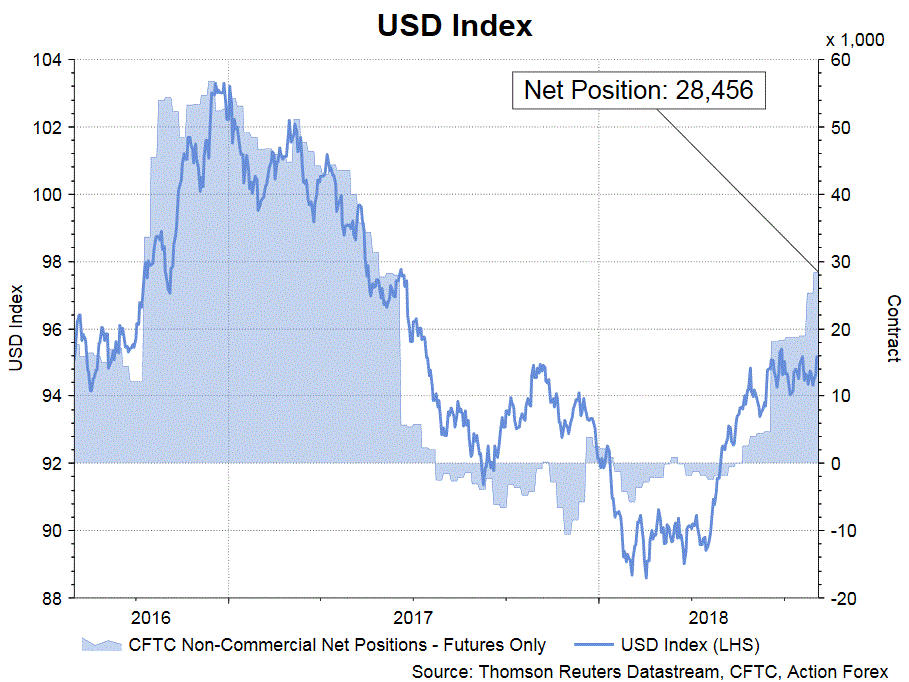
As suggested in the CFTC Commitments of Traders report in the week ended July 31, traders trimmed bets on USD index (DXY) futures. Speculative long positions slid -372 contracts while shorts declined -3 557 contracts, resulting in an increase in NET LENGTH to 28 456 contracts for the week. The reporting week was ahead of the August FOMC meeting, which turned out to contain little surprise, and the release of the July employment report, which showed fewer than expected payroll increase but a drop in the unemployment rate from the prior month. Both events should have reinforced the Fed's path to raise the policy rate by two more times in 2H18.
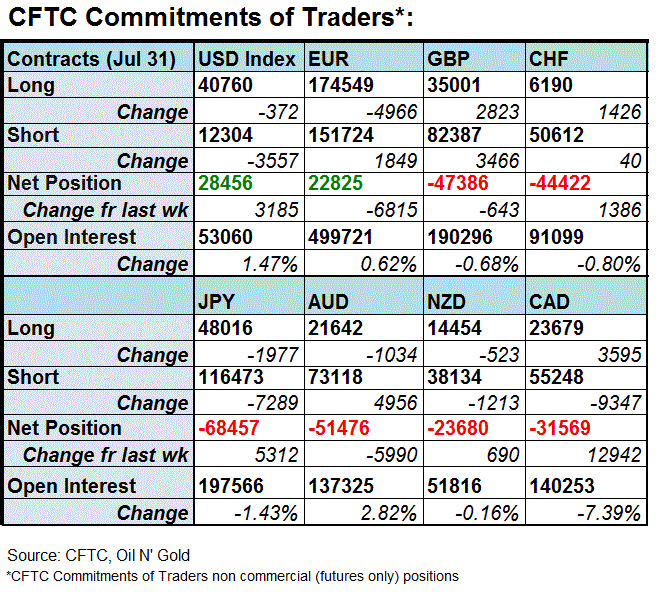
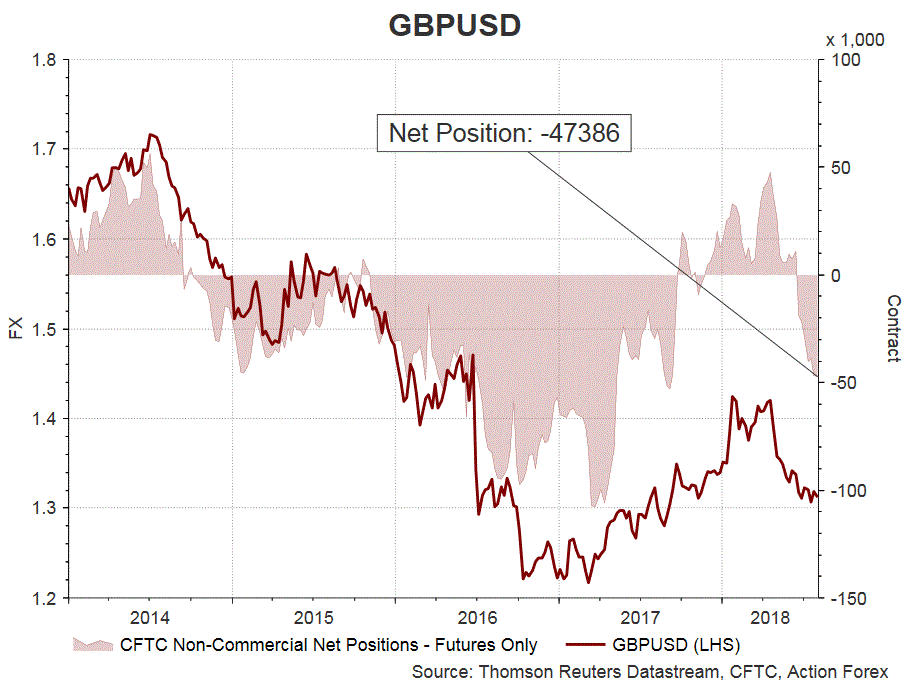
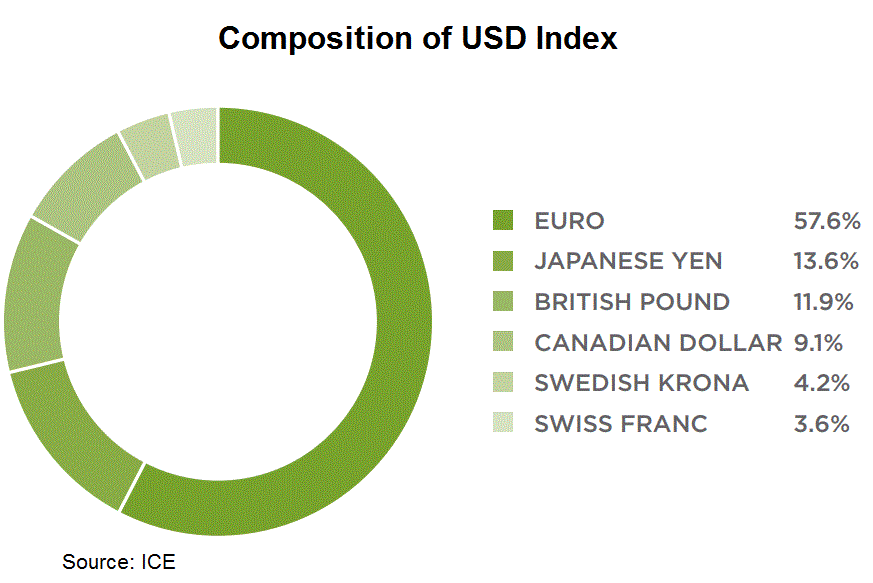 For European currencies, NET LENGTH for EUR futures dropped -6 815 contracts to 22 825 for the week. Bulls reduced their bets, by -4 966 contracts, to 174 549, while bears increased bets, by +1 849 contracts, to 151 724, for the week. GBP futures deepened into NET SHORT position, adding +643 contracts to 47 386. The increase in speculative long positions was overshadowed by even higher increase in shorts. The rate hike in August had been priced in. However, the market remained concerned over the Brent outlook. Outlook for British pound remains bearish despite the unanimous rate hike decision last week.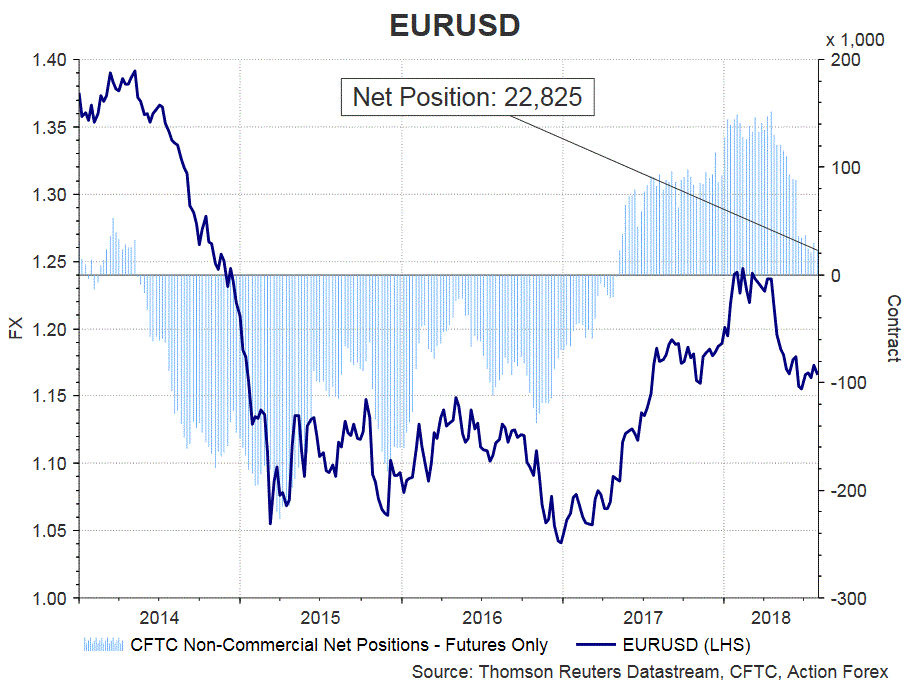
 On safe-haven currencies. Net SHORT for CHF futures dropped -1 386 contracts to 44 422, while that for JPY futures declined -5 312 contracts to 68 457 during the week.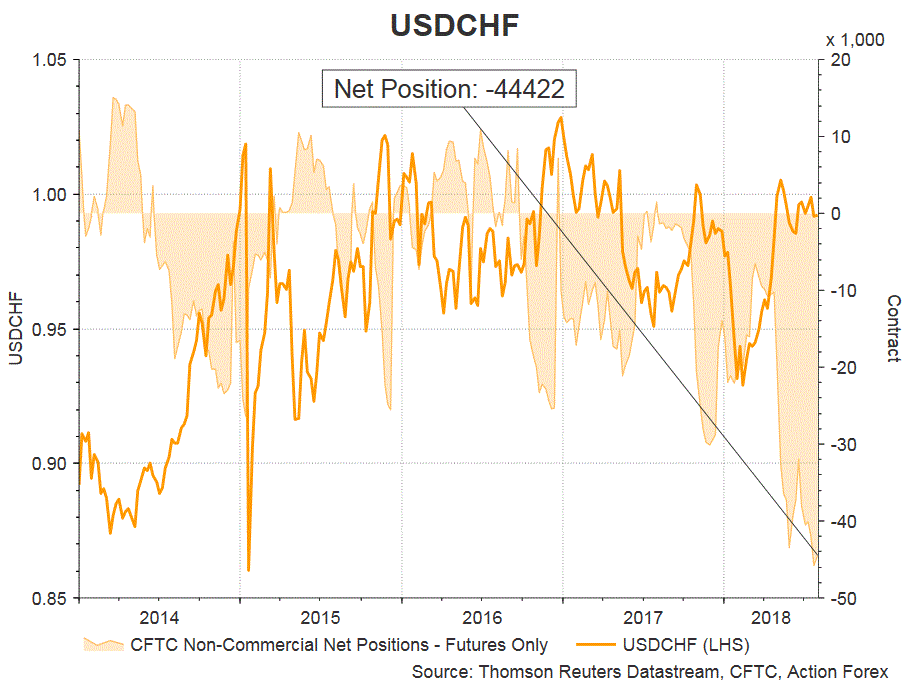
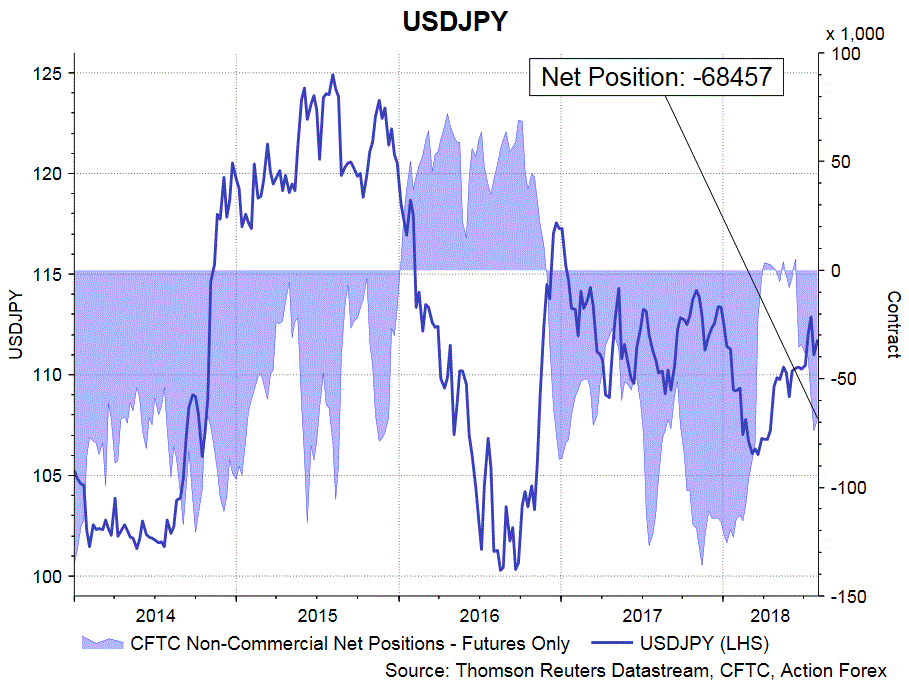
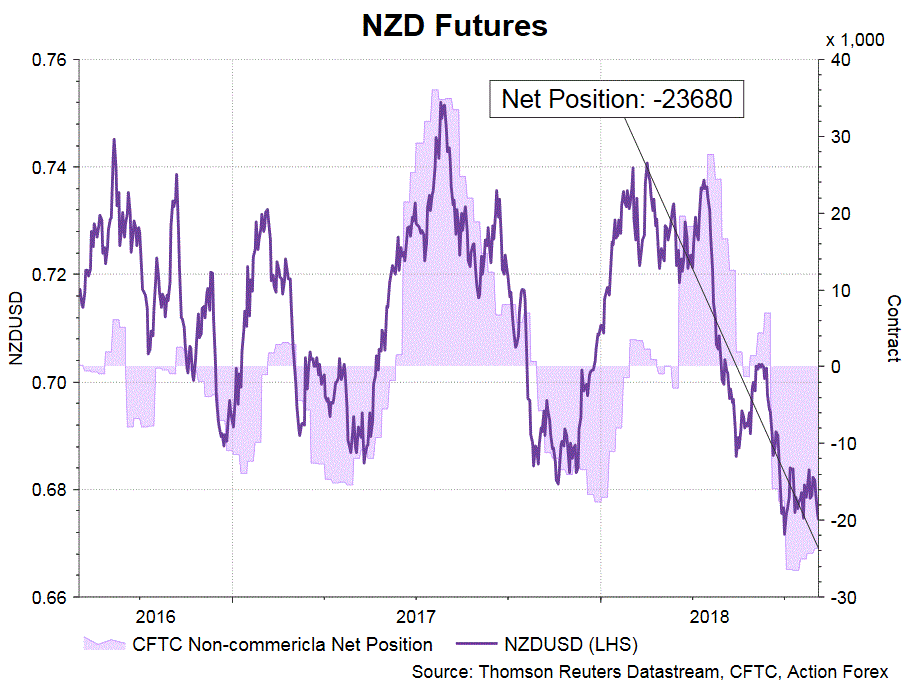
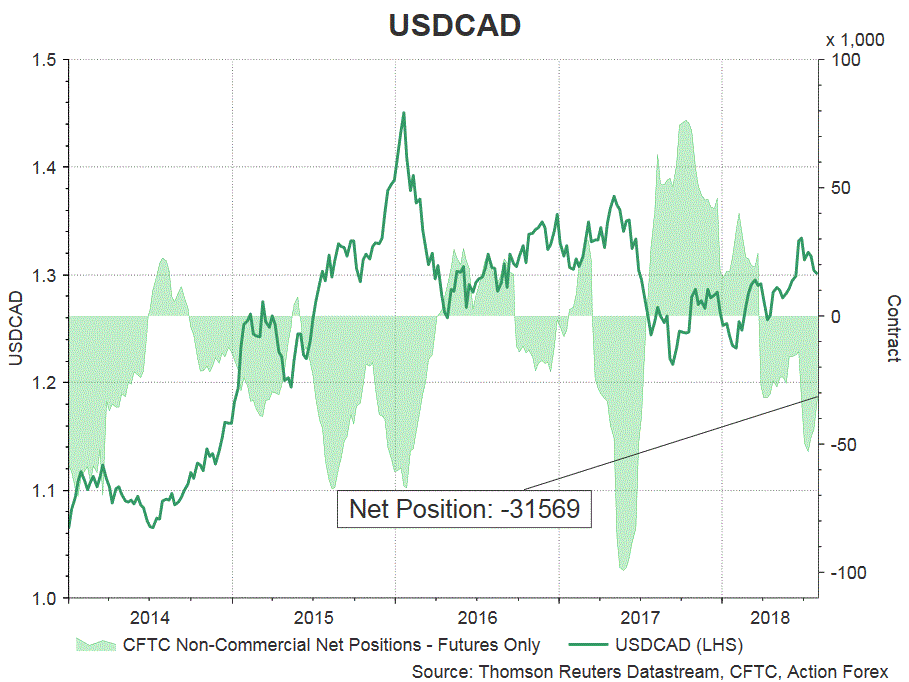
All commodity currencies stayed in NET SHORT positions. NET SHORT for AUD futures rose +5 990 contracts to 51 476, while that for NZD futures slipped -690 contracts to 23 680. NET SHORT for CAD futures declined -12 942 contracts to 31 569.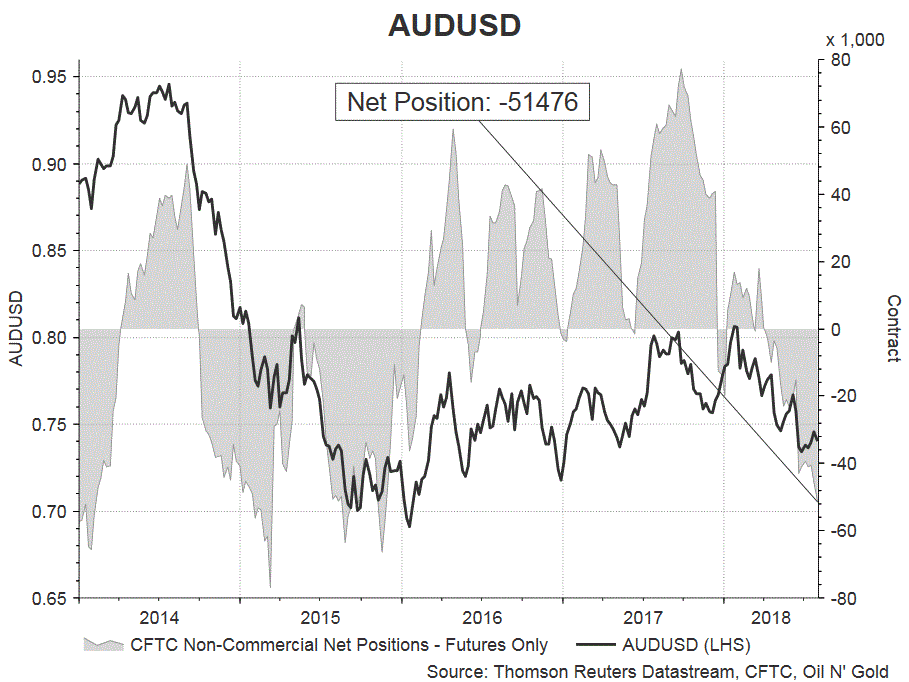
Bulls Continued to Outweigh Bears Despite Mixed Outlook in Oil Price
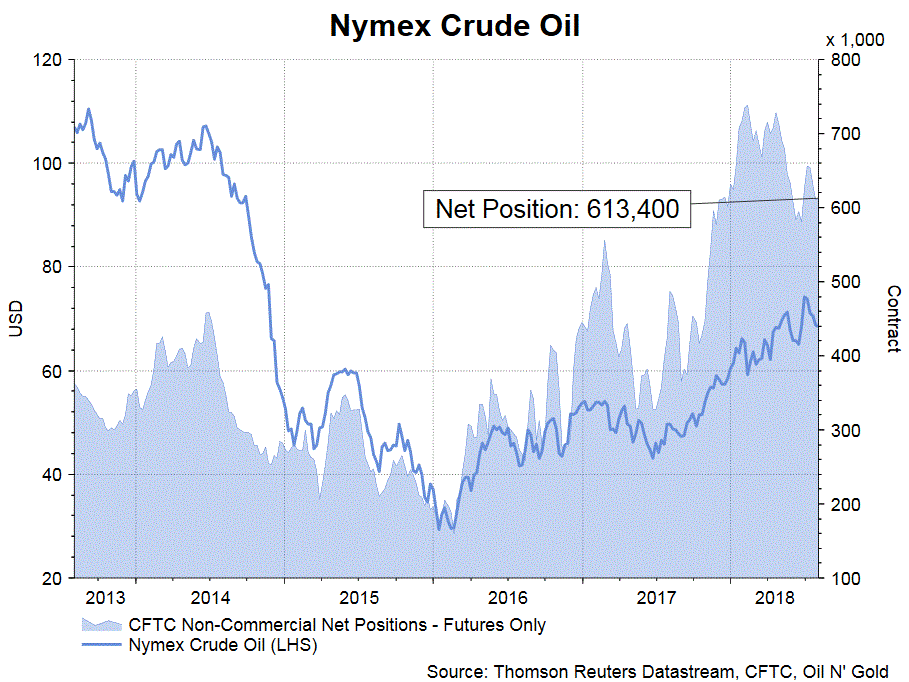
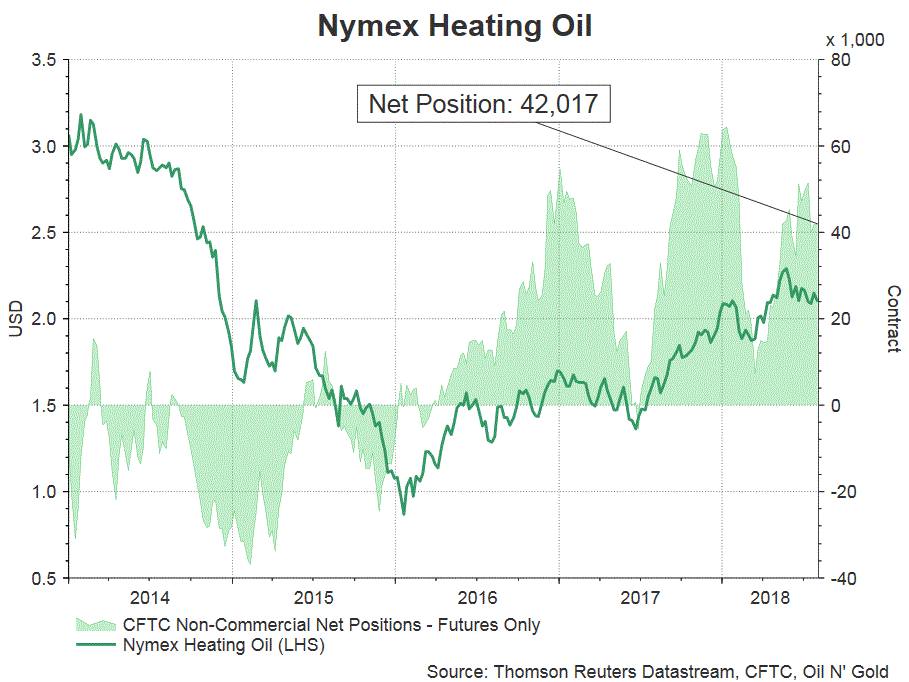
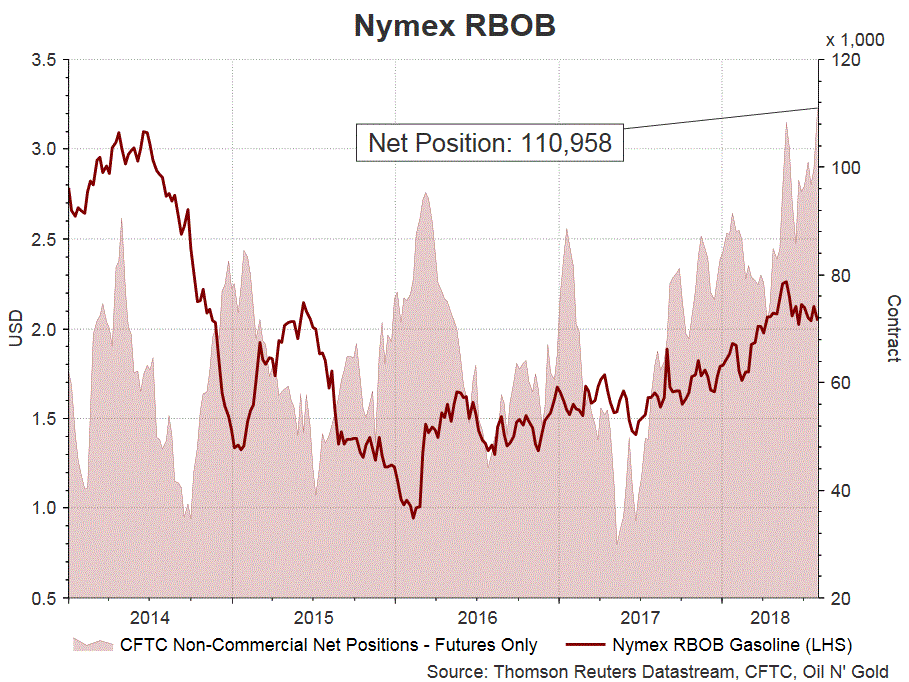
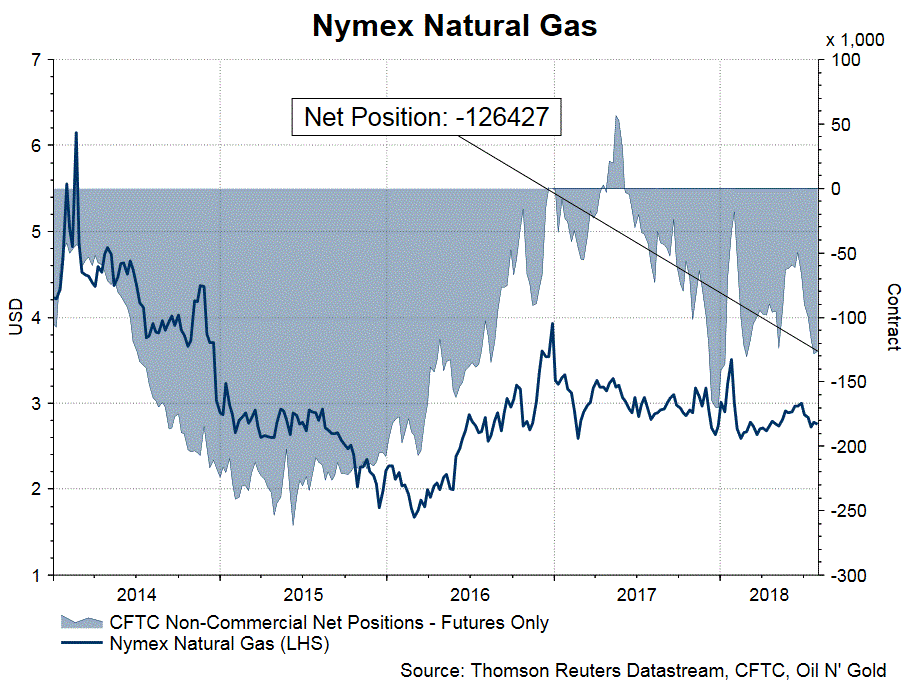
According to the CFTC Commitments of Traders report for the week ended July 31, traders were generally bullish towards the energy complex. Net LENGTH for crude oil futures rose +2 929 contracts to 613 400. Net LENGTH for heating oil futures added +305 contracts to 42 017 while that for gasoline gained +11 316 contracts to 110 958. Net SHORT for natural gas decreased -1 684 contracts to 126 427 for the week. Both crude oil benchmarks rose during the week. The front-month for WTI crude oil contract added +0.35% while the Brent contract gained +1.1%. However, if we look at the bigger picture, the WTI contract has fallen for 5 consecutive weeks and has been hovering below US$70/bbl recently. The Brent contract is more directionless with price fluctuating about US$75/bbl over the past weeks.
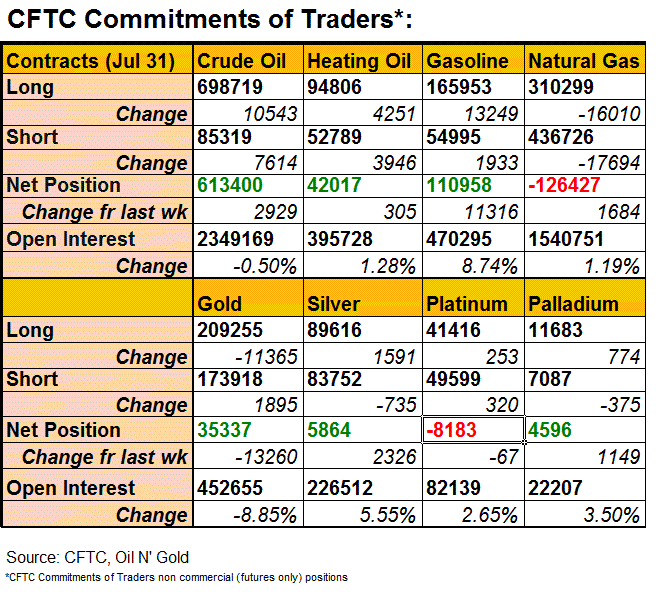
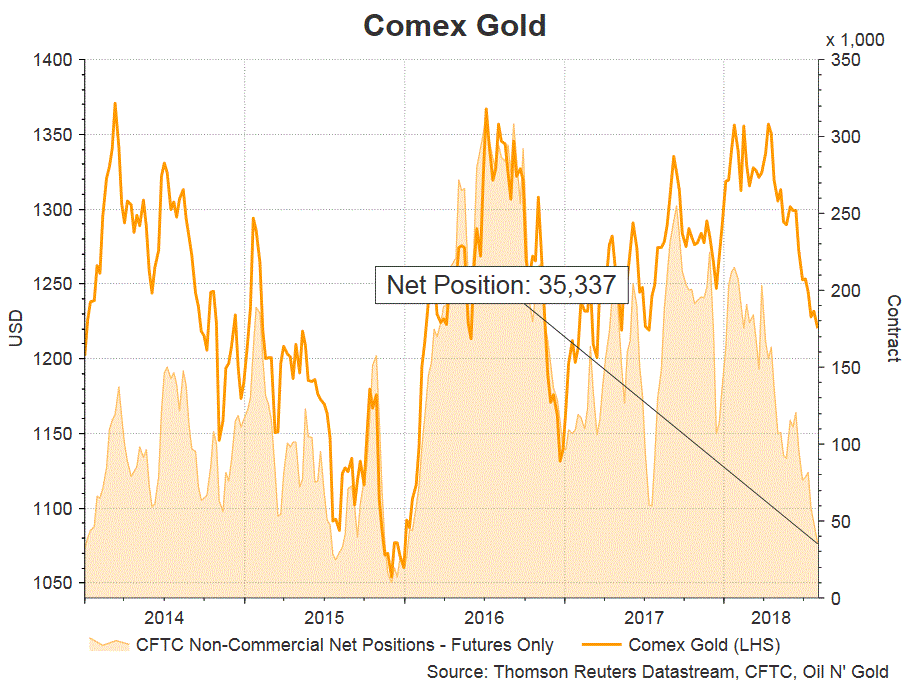
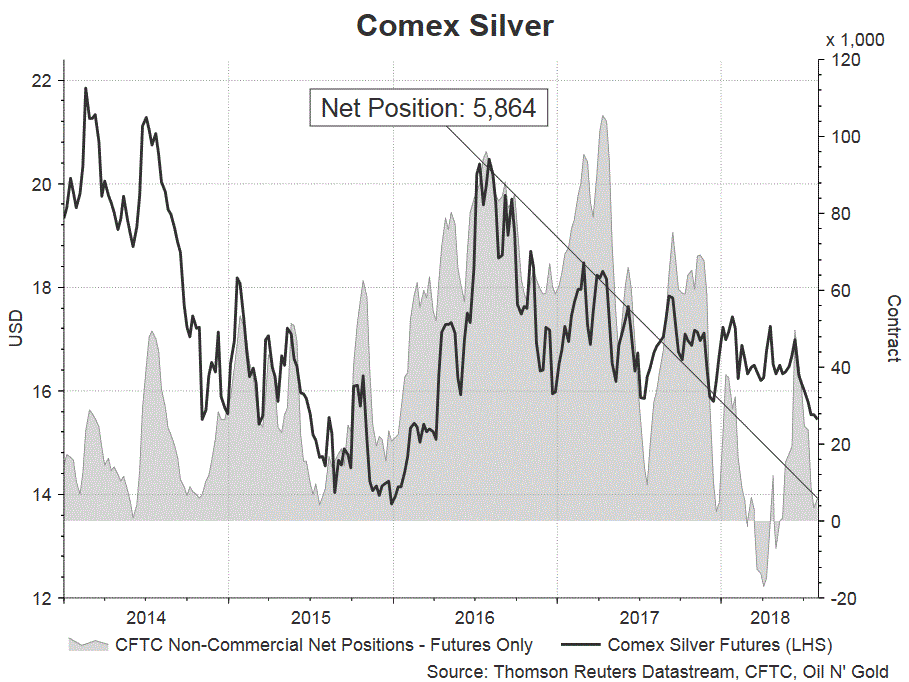
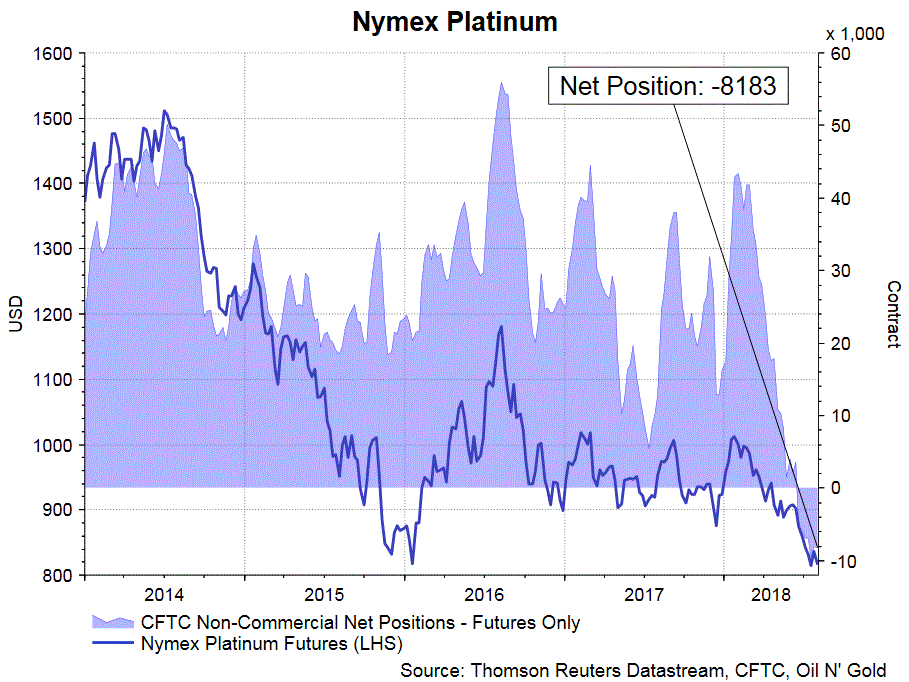
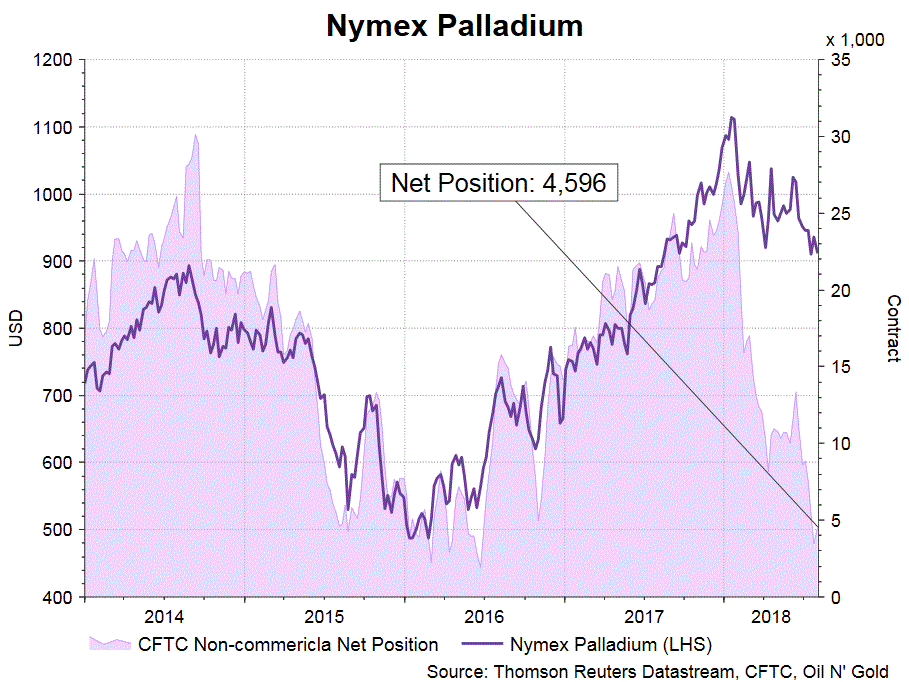
Traders were mixed over the precious metal complex. NET LENGTH for gold gold futures declined -13 260 contracts to 35 337 last week. Meanwhile, NET LENGTH for silver futures gained +2 326 contracts to 5 864. For PGMs, NET SHORT of platinum added +67 contracts to 8 183 while NET LENGTH for palladium was up +1 149 contracts to 4 596 during the week. The benchmark Comex gold contract slipped -0.02% while the corresponding silver contract gained +0.24% during the week. Risk for gold continues to be tilted towards the downside as US Treasury yields continue to climb higher.
Impact of PBoC FX RRR hike quickly fades, Yuan struggles to extend rebound
The People's Bank of China's starts today to raise foreign exchange risk reserve ratio from 0% to 20%. It's a move to stabilize the Yuan and curb capital outflow and was announced Friday after close. The move gives some support to Chinese and Hong Kong stock today but the impact seems to fade quickly. The Shanghai Composite index, SSE, edged higher to 2760.47 but it's back down -0.77% at 2719.38 at the time of writing. It's still more likely than not to revisit 2700 handle and possibly 2016 low at 2638.30.
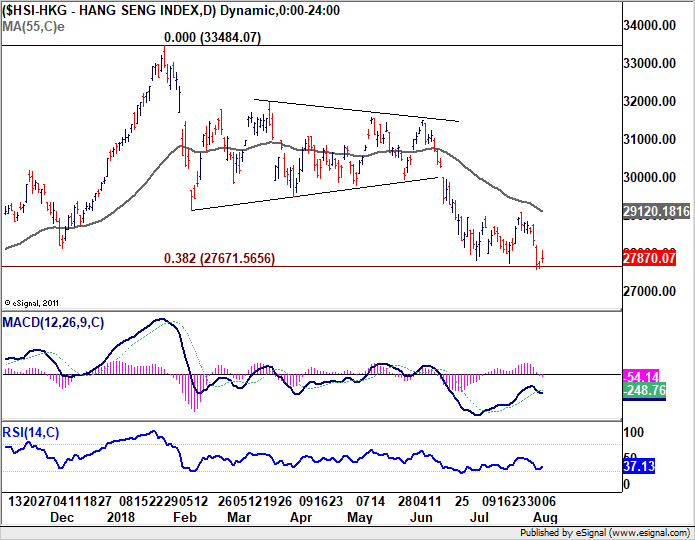
Hong Kong HSI hits as high as 28074.53 earlier today but quickly pares back some gain. it's now up only 0.70% at 27870.07. The index is pressing a key fibonacci level at 27671.56. 38.2% retracement of 18268.09 (2016 low) to 33484.07 (2018 high). Whether this support could hold will very much depends on whether SSE could defend 2700. For now, it's not optimistic.
USD/CNH (offshore Yuan) also stabilized at around 6.84 at the time of writing. There is no follow through selling after the spike move on Friday, following PBoC's announcement. For now, 55 H EMA is capping the upside and more decline is mildly in favor back to 6.7703 support. But a break above the EMA could prompt another selloff in the Yuan back to 6.9. That would give the Chinese government a lot of headache.
New Zealand Treasury: Any RBNZ tightening remains some time away
New Zealand Treasury released July's Monthly Economic Indicators report today. The key points are
- Mixed messages for growth as labour income continued to grow strongly but retail card spending weakened
- Risks to our growth forecasts are rising as the housing market cools, business confidence weakens, and international trade tensions rise
- Inflation remained subdued, but pressures appear to be gradually increasing
- Strong growth in the US, offset by a weaker outlook for the rest of the world
The report also noted that inflation "remained subdued" and "any monetary policy tightening remains some time away". It pointed out market pricing "currently implies no OCR increase for at least 12 months". And, the Treasury expected " outlook for inflation to remain stable for the rest of the year as the drivers in either direction remain largely in balance."
Also, it noted that "possibly the most significant risk to the world growth outlook is escalating trade protectionism". The report said that "the direct effects of tariff measures announced by the US and China to date are expected to be minor". However, "the Australian and New Zealand economies are likely to be significantly impacted should there be a more generalised downturn in commodity prices".
Market Morning Briefing: Pound Broke Below Horizontal Support
STOCKS
Dow (25462.58, +0.54%) has again moved up to re-test immediate resistance near 25500 and if that holds, Dow could trade sideways below 25500 for sometime or see a short dip. Only on a confirmed break above 25500, we may expect bullishness in Dow in the longer run.
Dax (12615.76, +0.55%) has to move up above 12700 and sustain in order to continue the rise towards 13000 in the medium term. On the weekly, Dax is likely to trade within 12400-13000 in the next 2-3 weeks.
Nikkei (22626.56, +0.45%) has been trading in a very narrow range within 22400-22800, unable to decide which direction to take. Unless the index falls below 22400-22300 levels, there could be chances that the index eventually breaks above the 22800 level in the medium term. Price action near 22800 is crucial to watch.
Shanghai (2736.04, -0.16%) is trading above 2700 just now. While there is some scope of testing lower levels of 2650, the index could rise back towards 2800 in the medium term.
Nifty (11360.80, +1.03%) is headed towards 11400-11500 resistance levels which could push the index back towards 11300. For now Nifty looks bullish for the next 1-2 sessions.
COMMODITIES
Brent (73.55) and Nymex WTI (68.78) are almost stable. WTI is trading in the narrow 69.0-67.5 region and could possible rise above 69 while the medium term support holds. Brent too is likely to move above 74 in the coming sessions.
Gold (1224.20) has come up slightly but has scope of re-testing 1200 in the coming sessions. Also note that there is support on the 3-day candles near 1210; which if holds could keep the price above 1210 this week.
Copper (2.7510) has moved up from 2.7240 seen on Friday. 2.80-2.65 is the region of trade for the week.
FOREX
Euro (1.1561): Having broken below 1.16 last week, a gradual downtrend towards the previous low of 1.1508 in the next 2-3 sessions is on the cards. A break of 1.1508 opens up lower support on 3 day line chart near 1.145.
Dollar Index (95.245): Dollar Index looks bullish towards resistance on 3 day and weekly candles near 95.6-95.8 in this week. A breach of this resistance would open up higher resistance on daily line chart near 96 – which could correspond with Euro testing support near 1.145.
Dollar Yen (111.33): Dollar Yen has immediate support on daily candles near 111 and lower support near 110.5. While above 110.5, it can move up towards resistance near 113 on weekly candles. Currently, the preference is for 113 to be tested.
Euro Yen (128.73): Euro Yen has broken support on 3 day candles and could move down lower towards 128.0-127.5 in this week before testing support near 127 in the next week. Note that 127.0-127.2 is an important long term horizontal support level on weekly line chart, whose break would be very bearish.
Pound (1.2995): Pound broke below horizontal support on weekly candles near 1.3050 last week in spite of the rate hike by the Bank of England. As mentioned on Friday, a downmove towards 1.290-1.288 (support on daily candles) now looks possible in the next 2-3 sessions in this week.
Dollar Rupee (68.61): Dollar Rupee could test support near 68.30-20 early this week, followed by a rise back towards 68.60-80. Another dip from 68.60-80 after that might confirm the beginning of a gradual downtrend in the weeks ahead.
INTEREST RATES
Last week, the US Fed did not hike rates but re-asserted that the US economy is growing strongly – this has made a September rate hike almost certain and a December rate hike highly likely.
We have been writing that the big question that arises now is – will the Fed continue with as many rate hikes in 2019 as well? In the coming weeks, more clarity and certainty on this issue would start emerging, which might thereby be the primary determinant for whether the US 10 year yield breaks above 3.125% in 2018 or not.
US 10 year yield (2.96%), 30 Year (3.09%), 5 Year (2.83%), 2 Year (2.65%):
Last week, the Bank of Japan also maintained status quo in its policy but also indicated that its policy framework will be more flexible in future for the long term yield. This led to the Japanese 10 year yield breaching the crucial 0.11% level for the first time in 2.5 years.
After having tested a high near 0.129%, the Japanese 10 year yield (0.11%) could now move lower towards 0.9% in this week before again rising from there.
The German 10 year bond yield (0.41%) is currently respecting resistance on short term and medium term chart near 0.4% . While below this resistance, it could again move lower towards 0.3% this week.
EUR/USD Back In Bearish Zone Below 1.1640
Key Highlights
- The Euro moved down sharply and broke the 1.1650 support against the US Dollar.
- There was a break below a key bullish trend line with support at 1.1645 on the 4-hours chart of EUR/USD.
- The US nonfarm payrolls in July 2018 came in at 157K, less than the forecast of 190K.
- Today, the German Factory Orders will be released for June 2018, which is forecasted to decline 0.2% (MoM).
EURUSD Technical Analysis
The Euro failed to break the 1.1745 resistance once again and declined against the US Dollar. The EUR/USD pair fell sharply and broke the 1.1650, 1.1640 and 1.1620 support levels.
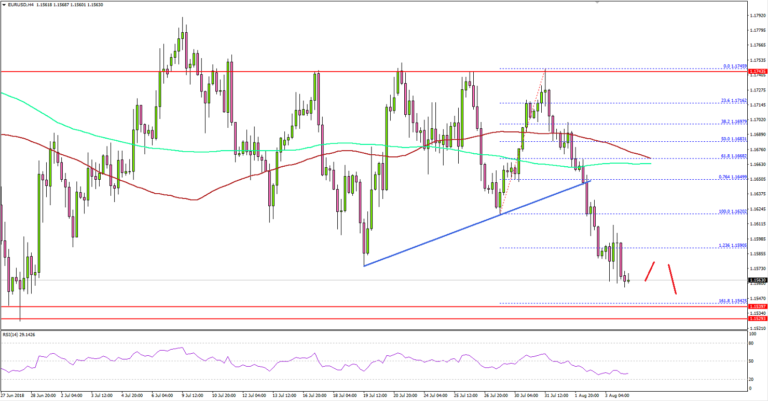
Looking at the 4-hours chart, the pair was rejected from the 1.1745 resistance area. It declined below 1.1640 and settled below the 100 simple moving average (red, 4-hours).
There was also a break below a key bullish trend line with support at 1.1645, which opened the doors for more losses. The pair also cleared the last swing low of 1.1600 and broke the 1.236 Fib extension level of the last wave from the 1.1620 low to 1.1745 high.
Therefore, there are high chances of more slides towards the next key support at 1.1540 in the near term. Moreover, the 1.618 Fib extension level of the last wave from the 1.1620 low to 1.1745 high may well be tested.
On the upside, the broken supports at 1.1600, 1.1620 and 1.1640 are likely to act as resistances if the pair corrects higher.
Recently in the US, the nonfarm payrolls report for July 2018 was released by the US Department of Labor. The market was looking for a rise of 190K jobs in July 2018.
However, the actual result was disappointing as total nonfarm payroll employment rose by 157K in July. On the other hand, the unemployment rate declined from 4% to 3.9%, and the last NFP reading was revised up from 213K to 248K.
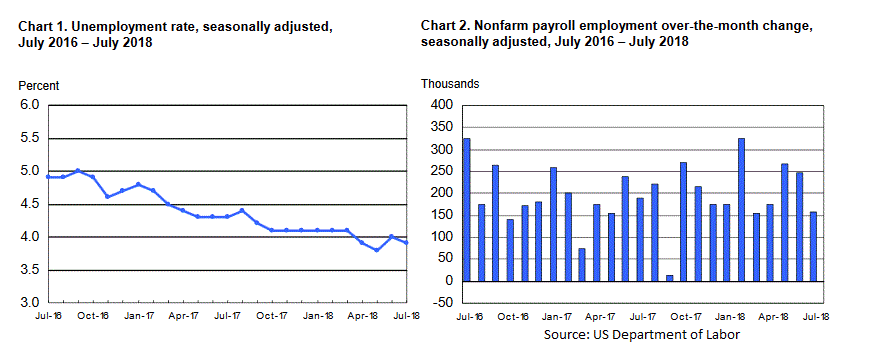
The report added that:
In July, the unemployment rate edged down by 0.1 percentage point to 3.9 percent, following an increase in June. The number of unemployed persons declined by 284,000 to 6.3 million in July. Both measures were down over the year, by 0.4 percentage point and 676,000, respectively.
Overall, the US Dollar gained after the release and pairs like EUR/USD and GBP/USD came under pressure before closing the last week.
Economic Releases to Watch Today
- German Factory Orders for June 2018 (MoM) – Forecast -0.2%, versus +2.6% previous.
- Euro Zone Sentix Investor Confidence for August 2018 – Forecast 11.6, versus 12.1 previous.
ECB Lautenschläger very much in favor of policy normalization
ECB Executive Board member Sabine Lautenschläger said in an interview that she is "very much in favor of normalizing monetary policy". That is, "gradually increase interest rates again". However, she emphasized that's on a precondition that Eurozone is "on a sustainable path towards price stability".
Also, she noted that "after pursuing such an expansionary monetary policy, it would be wrong to now move abruptly in the other direction". And that "wouldn't help either the economy or price stability."
The interview was done with Welt am Sonntag on July 30, published on August 5. It could be found in ECB's website here.
UK TM Fox: 60-40 chance of no-deal Brexit due to EU intransigence
UK Trade Minister Liam Fox said in an interview with the Sunday Times that he saw "not much more than 60-40" chance of a no-deal Brexit. And he put the blame on EU as the "intransigence of the (European) commission is pushing us towards no deal." He also warned that if EU chooses "theological obsessions of the unelected" over "economic wellbeing of the people", then it's a "bureaucrats' Brexit, not a people's Brexit". He went further and said it's up to EU to choose "ideological purity" or "real economies:"
Domestically, Fox also criticized that "there are people trying to undermine, to block and to thwart Brexit and having fought so long and hard to get to this point, I don't want anything done to jeopardise our exit from the EU." He added "the most important thing is that we actually leave the EU in March of next year. And my job is making sure that Britain is match fit for whatever Brexit outcome we have."