Sample Category Title
Weekly Economic and Financial Commentary: Q1 May See PCE Slow but Consumers Still Alright
U.S. Review
Consumer Spending Takes a Break but Still in the Game
- The economic data calendar largely focused on the consumer this week. The Conference Board's consumer confidence index cooled slightly from February's cycle high. The University of Michigan's measure of consumer sentiment is at a cycle high on upbeat consumers on the lower end of the income spectrum.
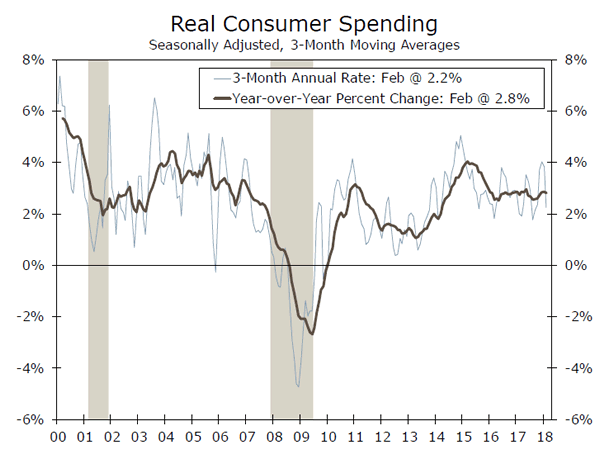
- Consumers' incomes rose solidly in February, but spending has cooled from the breakneck pace in Q4. Although the consumer took a breather and saved more of their income in February, solid fundamentals and continued high sentiment readings suggest a spending rebound in coming months.
Q1 May See PCE Slow but Consumers Still Alright
In a short week for the markets, we learned more about how the consumer fared in recent months. The final look at GDP for Q4 2017 showed U.S. economic growth was 2.9 percent, stronger than the 2.5 percent last reported. Upward revisions to personal consumption showed it rose 4 percent during the quarter, from 3.8 percent previously. The consumer contributed 2.8 points to economic growth at the end of last year on strong gains in goods consumption. However, incoming data from the first few months of 2018 suggest personal consumption expenditure (PCE) growth slowed in Q1. This is not entirely surprising as personal income growth has been slower than what would support such strong spending gains, which the consumer largely accomplished by lowering the saving rate. That consumers chose to borrow against future income growth, or reduce savings, reflects their confidence in the underlying economy. Another reason we believe PCE to be less of a boost in Q1 is because that has largely been the case each year of the current cycle, which likely reflects residual seasonality in the estimates. The recent weather may also depress spending growth, particularly in the northeast.
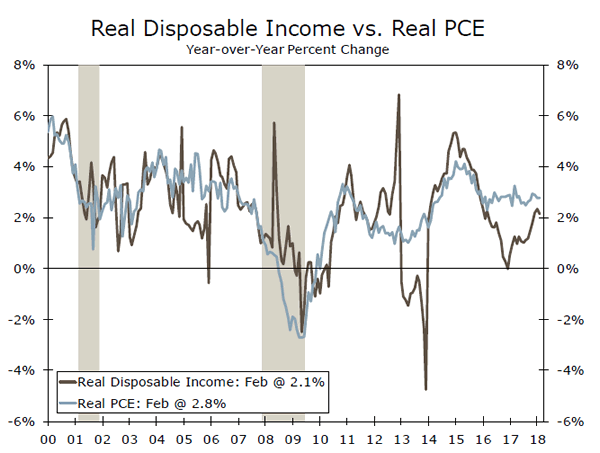
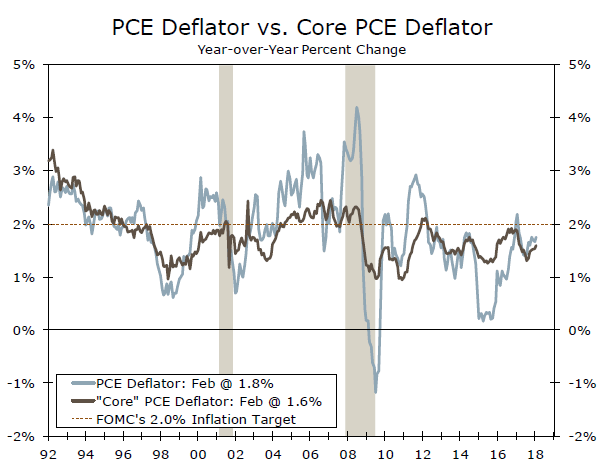
Personal income growth was solid through February, increasing 0.4 percent for the third straight month. Wage and salary growth has certainly improved recently, as job growth has been strong and the unemployment rate is low, inducing employers to offer more to hire or retain employees. Disposable personal income rose 0.4 percent in February after a large 1 percent gain in January as the effects of tax reform dissipated. Inflation moderated on a month-to-month basis, rising 0.2 percent in February after January's 0.4 percent rise. Inflation moved higher on a year-overyear basis, however, with the headline PCE deflator rising to 1.8 percent, with core PCE at 1.6 percent. That uptick aligns with expectations that the Fed will see conditions that warrant three more rate hikes this year.
Consumers saved more in February, as spending rose 0.2 percent during the month, which was essentially flat when accounting for inflation. That is an improvement from January, when spending fell 0.2 percentage points after inflation. We expect a rebound in coming months largely because income growth and consumer sentiment remain supportive.
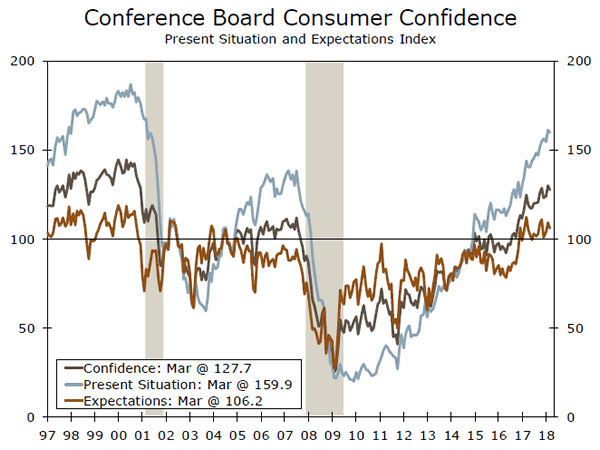
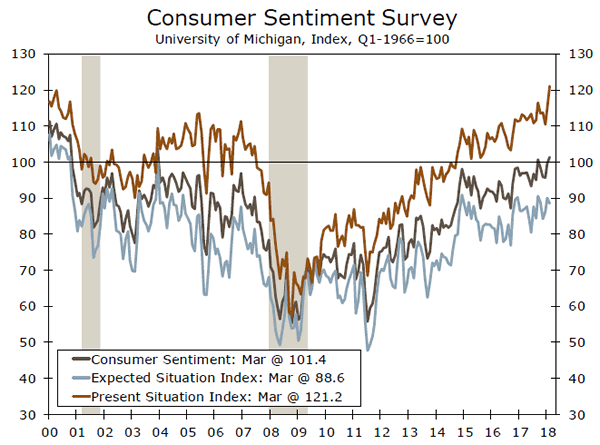
Both surveys of consumer sentiment were positive in March. The Conference Board's consumer confidence index cooled from February's cycle high but remains elevated. Consumers' present situation and expectations moved marginally lower in March due to a slightly less favorable view on business conditions, but they remain upbeat about the strength of the labor market. Consumers' assessment of business activity may have been negatively affected by uncertainty surrounding trade policy and the return of stock market volatility. That narrative was also evident in the University of Michigan's consumer sentiment survey, although it still rose further in March to a new cycle high. Income gains from the labor market and tax cuts pushed consumers' assessment of the present situation to an all-time high. Notably, households in the bottom third of the income distribution drove the increase. Attitudes were lower in March among the top third of households, which cited caution over future economic policy changes, notably on trade.
U.S. Outlook
ISM Manufacturing • Monday
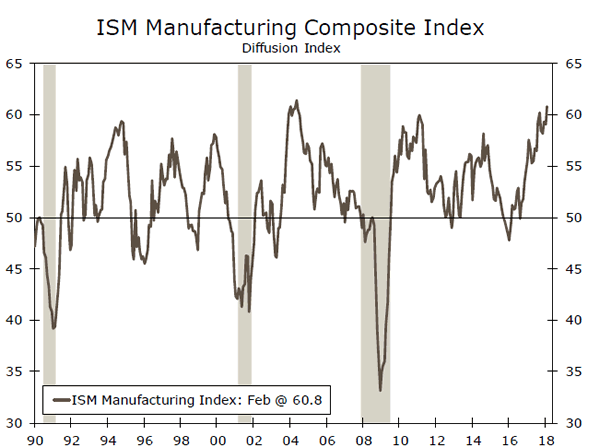
The ISM index recorded another strong month in February signaling broadening business confidence. The headline print of 60.8 was the highest reading the index has shown in more than a decade. Driving the increase was a surge in the employment component of the index, which jumped to 59.7. The prices paid index also increased, which may portend some upward pressure on inflation from the sector later this year. However, with most other components of the index moving into expansion territory, it was yet another positive report reflecting a strengthening manufacturing sector.
While the overwhelming optimism in recent surveys has been remarkable, the sentiment has not been entirely matched with strengthening orders and production data. Recently, core capital goods orders data have been mixed, while production has flat-lined. We will continue to monitor divergence in hard and soft data coming from the manufacturing sector.
Previous: 60.8 Wells Fargo: 60.1 Consensus: 60.0
Trade Balance • Thursday
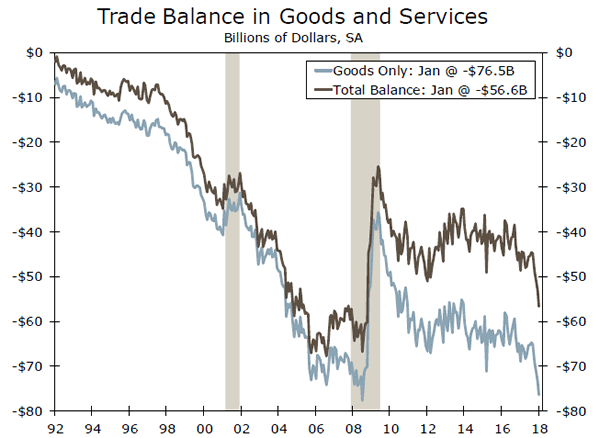
The U.S. trade deficit widened to $56.6 billion in January, driven primarily by a fall in exports of goods and services. The weak export numbers were mostly attributable to a drop in volatile aircraft exports. Petroleum products also played a starring role in January, as oil-related exports fell 9 percent despite rising oil prices. The value of petroleum imports surged on the month, which largely cancelled out declines in other non-oil imports. The value of overall imports was essentially flat compared to December.
We expect U.S. export growth to be supported in the short term by solid economic growth across the globe and the lagged effects of past dollar depreciation. Strong domestic demand should also boost nonpetroleum imports over the coming months. Although we anticipate some rebound in February, net exports should be a drag on first quarter GDP growth, but not be quite as severe as the final quarter of 2017.
Previous: -$56.6B Wells Fargo: -$56.4B Consensus: -$56.5B
 Employment • Friday
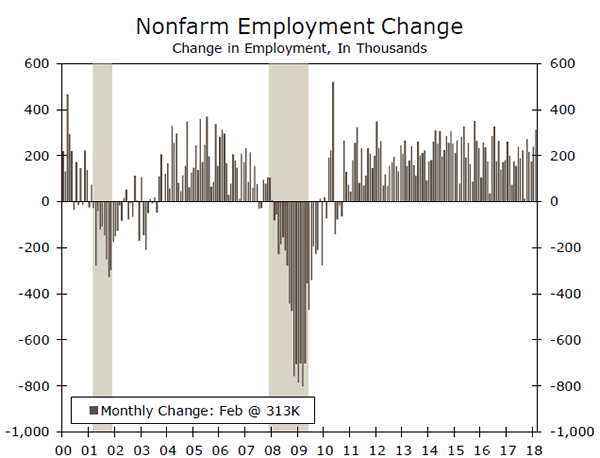
Last month's above-consensus employment report showed a solid 313,000 addition to payrolls in February. Job gains were widespread, with the information sector being the lone industry to report losses on a three-month moving-average basis. In addition, aggregate hours worked improved 3.1 percent since December, consistent with continued growth in personal income. There was no change to the unemployment rate at 4.1 percent. The labor force participation rate also ticked up to 63 percent; however, the overall trend in labor force growth has slowed compared to recent years.
Rising prime-age workers participation has shown some upward movements lately, yet remains more than a point and a half below its pre-recession level. Unless participation rates continue to rise as solidly as this month, we expect the unemployment rate to decline and payroll growth to moderate over the course of the year as qualified workers become increasingly hard to find.
Previous: 313,000 Wells Fargo: 175,000 Consensus: 189,000
Global Review
Can Latin American Economies Divorce from Politics?
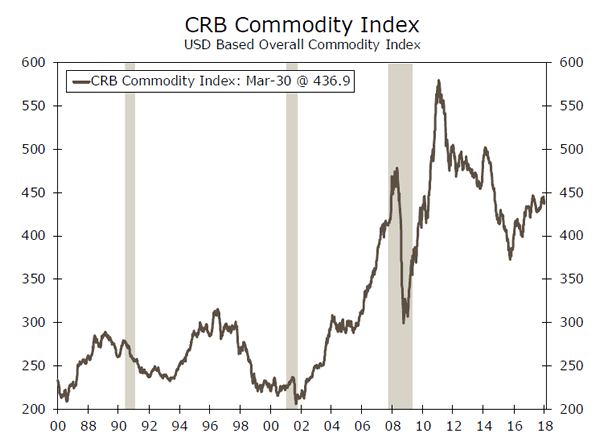
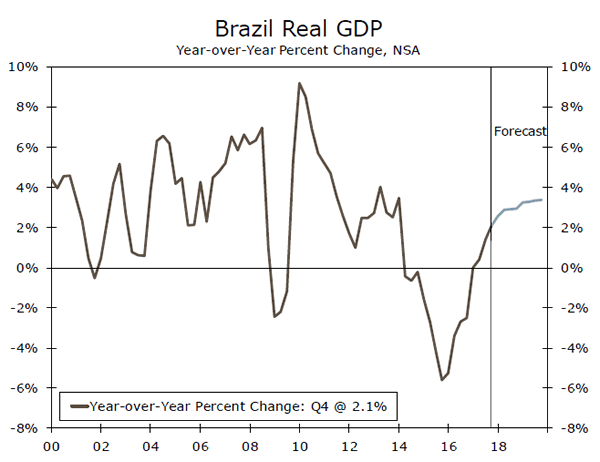
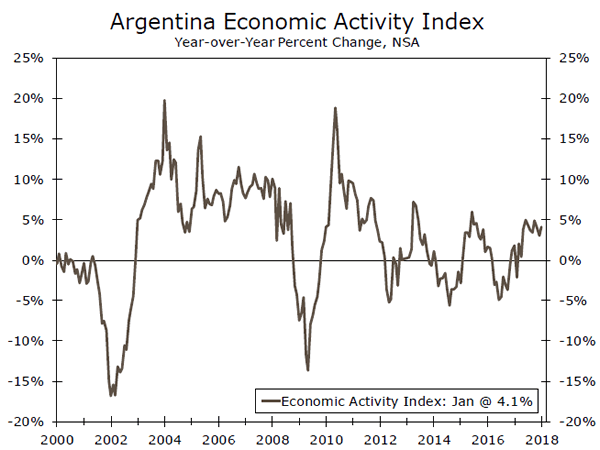
- During our recent trip to South America, visiting Brazil, Argentina, and Peru, we got the impression that something may be changing in Latin America. After the first decade and a half of this century when the region enjoyed an economic boom fueled by strong commodity prices and an almost insatiable demand for these goods by the Chinese economy, more orthodox economic policies seem to be taking hold in the region.
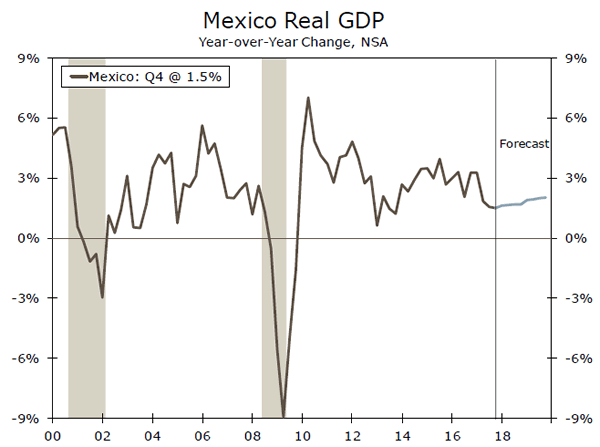
- In Mexico, March 30th marks the start of a presidential campaign, a campaign that promises to shake up markets and add more uncertainty to an economy that has already been negatively affected by the prospects of changes to NAFTA.
Can Latin American Economies Divorce from Politics?
During our recent trip to South America, visiting Brazil, Argentina, and Peru, we got the impression that something may be changing in Latin America. After the first decade and a half of this century when the region enjoyed an economic boom fueled by strong commodity prices and an almost insatiable demand for these goods by the Chinese economy, more orthodox economic policies seem to be taking hold in the region. Furthermore, these good economic times hid one of the region's eternal problems: rampant corruption. However, after the Odebretch corruption case hit Brazil, and spread all over the region, it seems that not even Latin American politicians remain immune to the new reckoning that is sweeping throughout the region.
Last year, Brazil impeached and ousted Dilma Rousseff while ex- President Lula da Silva is close to starting his 12 year-plus prison sentence, which "may" prevent him from running for president in the upcoming presidential elections. Meanwhile, in Peru, one of the fastest growing economies in Latin America for the past decade or so, the Odebretch scandal has also pushed President Pedro Pablo Kuczynski to resign or face certain impeachment. Ex- President Ollanta Humala and his wife are serving jail sentences for taking bribes from Odebretch, and ex-President Alejandro Toledo is awaiting extradition from the United States and is also facing charges of taking bribes from Odebretch.
Of course, some would say that nothing has changed in Latin America as corruption remains rampant. However, we tend to have a different view: the fact that the justice system in these countries is working and putting ex-presidents in jail is a major departure from the past, which may bring the "fear of punishment" for being corrupt to the forefront, and reduce the propensity to engage in corrupt behavior while in power, which is a big difference from what used to happen in the past. In Argentina, although many of the accused have been let free in the past several weeks, the legal system seems more prone to take over these cases and may also signal a change in levels of impunity that were common in the past.
Meanwhile, the economic reform process, which was abandoned due to the "good economic times" is once again being pursued in an attempt to regain competitiveness in the global economy. Although different countries in the region are in different stages of this process, it is a welcome sign for a region that has been behind in economic growth over the past several years.
Mexican Presidential Campaign Starts to Make Noise
In Mexico, March 30th marks the start of a presidential campaign, a campaign that promises to shake up markets and add more uncertainty to an economy that has already been negatively affected by the prospects of changes to NAFTA. We have not seen this much uncertainty since the break-up of the PRI political monopoly in 2000 when Vicente Fox won the presidency representing the PAN. However, the biggest difference back then was that markets loved what they were seeing. Today, the front runner is Andrés Manuel López Obrador (AMLO) and markets are not loving what they are hearing from him.
Global Outlook
Russia GDP • Tuesday
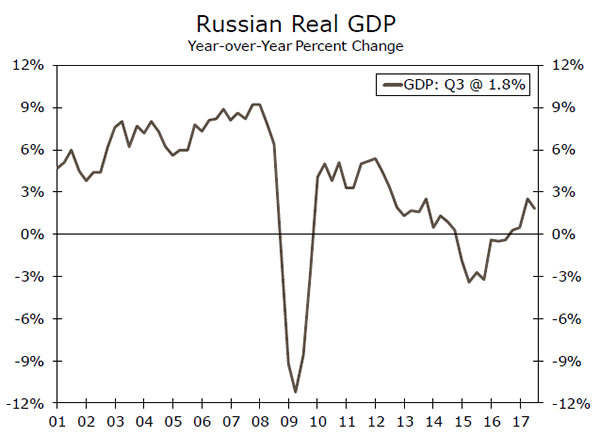
GDP grew 1.8 percent in Russia in Q3, and the Russian economy is still recovering from negative growth seen in 2015 and 2016 in the wake of the Ukrainian crisis and collapse in oil prices. The outlook continues to remain mixed in recent months. On the one hand, Russian consumers are faring fairly well — the unemployment rate has come down to 5 percent at present and real disposable income grew 4.4 percent in February, likely supporting solid growth in consumer spending. However, growth in industrial production slowed to 1.5 percent year-over-year in February after dropping into negative territory the last two months of 2017, likely weighing on Q4 output. Inflation has also slowed significantly over the past year, at 2.2 percent on a year-earlier basis in February and leading the Central Bank of Russia to cut rates 75 bps since December. Lower inflation and mixed monthly data lead us to see Q4 growth of 2.0 percent in Q4 as the economy continues to recover.
Previous: 1.8% Wells Fargo: 2.0% Consensus: 1.4% (Year-over-Year)
Reserve Bank of Australia • Tuesday
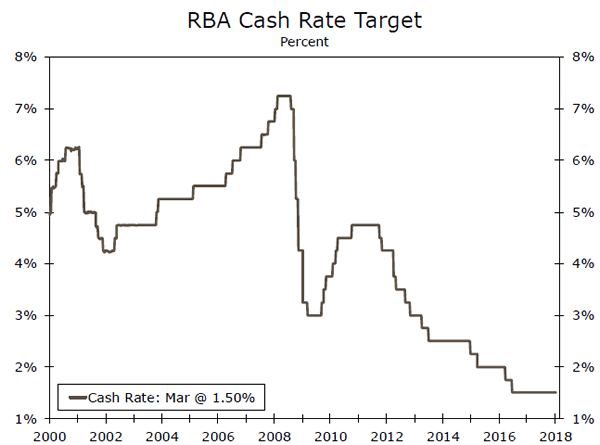
The Reserve Bank of Australia (RBA) left its key lending rate unchanged at its most recent meeting on March 5, and most analysts expect central bank policymakers to remain on hold at Tuesday's meeting. While economic growth in Australia softened slightly in Q4 to 2.4 percent year over year, domestic demand remained strong amid an improving labor market. However, inflation remains low, and the RBA looks for inflation to only gradually pick up over the next year. Wage growth has also remained lackluster, and was likely a contributing factor to the RBA leaving rates unchanged at its most recent meeting. The RBA's latest monetary policy statement cited higher overall growth forecasts for 2018, as the global economy generally continues its synchronous upswing started in 2017. The RBA will likely begin to slowly raise rates as soon as the end of this year as long as inflation continues to increase, which should also likely be supportive of stronger wage growth.
Previous: 1.50% Consensus: 1.50%
Reserve Bank of India Meeting • Thursday
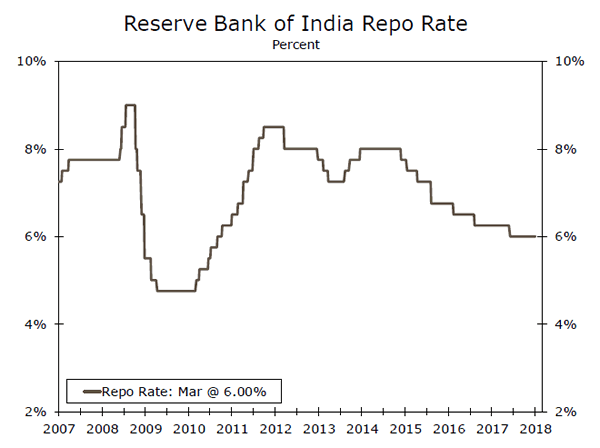
While the Reserve Bank of India (RBI) left rates unchanged at its most recent policy meeting on February 7, central bank policymakers have cut the repo rate 200 bps since 2015. Inflation fell below 2 percent in the middle of 2017 as demonetization, rupee appreciation and falling food prices weighed on overall price pressures. However, the Indian economy has since turned around, and GDP grew 7.2 percent in Q4 year over year, surpassing consensus estimates. Fixed-investment spending, government expenditures and industrial output all performed strongly in Q4 and are solid indicators that earlier disruptions caused by demonetization and the roll out of the Goods and Services Tax in mid-2017 have since receded. Inflation also increased to 4.4 percent year-over-year in February, now within the RBI's 4 percent target. However, the RBI will likely need to see a sustained pickup in inflation and growth before raising rates, and most analysts look for the RBI to remain on hold at next week's meeting.
Previous: 6.00% Consensus: 6.00%
Point of View
Interest Rate Watch
A Year on From the Cell Plan Shock, Inflation May Be About to Break Out
Inflation has started the year strong. The same could have been said about inflation's early-year performance last year that brought the Fed's preferred measure of core inflation within a whisker of 2.0 percent (top chart). It was nearly a year ago, however, that progress ground to a halt.
On a morning where markets were closed in observance of Good Friday, the March CPI report printed an unexpected drop in core inflation. The decline was followed by a string of below-trend prints and drew a fresh round of skepticism over the Fed's ability to reach its inflation target.
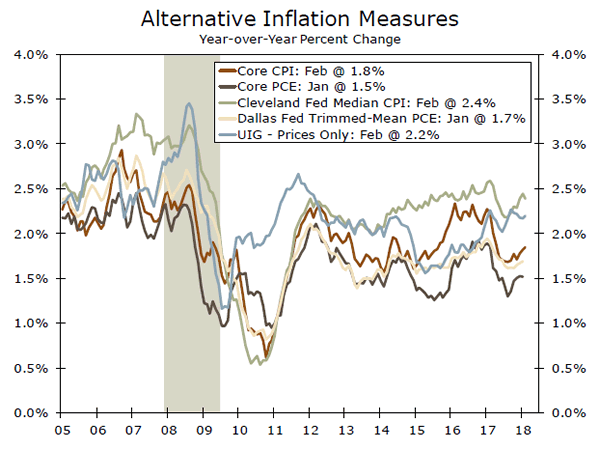
Could it happen again? "Idiosyncrasies" can always pop up, but there are a number of signs that the trend in inflation is moving up. One such sign is the rise in alternative measures of core inflation, which have recovered more convincingly in the wake of last Spring's slowdown (middle chart). The Trimmed Mean PCE, Median CPI, and Underlying Inflation Gauge (UIG) "prices only" series are all closer to reaching the rates that prevailed last February than the traditional core indices.
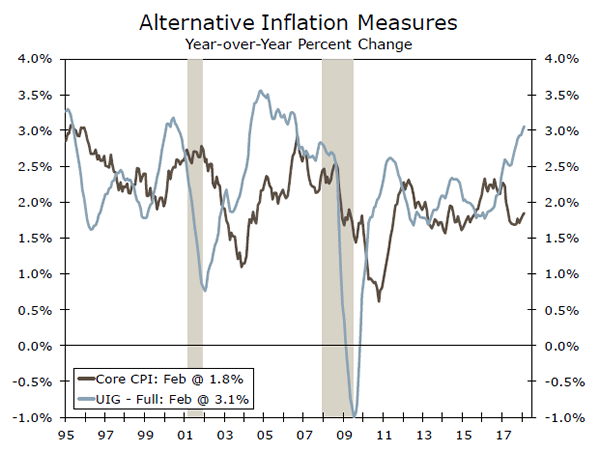
More telling may be the New York Fed's "full" UIG (bottom chart). Rather than simply reorganizing the same price series that make up traditional inflation measures, the UIG incorporates macro and financial variables in an attempt to signal broader price pressures. The UIG "full" series, which leads core CPI by about 16 months, is at its highest rate since summer 2006.
Is the Fed Ready?
With last March's decline in core inflation making for an easy base comparison, the 12-month readings in traditional core measures are expected to jump. The swift move back toward the Fed's comfort zone may take markets by some surprise, but the FOMC has already been anticipating such a rebound. Powell noted in his press conference that weak readings would soon be dropping out of the calculations and that inflation appears to be moving toward the Fed's goal. However, if pressures are building as quickly as the UIG full data set implies, two more rate hikes this year may not be enough.
Credit Market Insights
Mortgage Rates in Lockstep with Fed
This week, the conventional 30-year fixed mortgage rate reached its highest level since January 2014, at 4.69 percent, according to the Mortgage Bankers Association (MBA). Mortgage rates have spiked in recent weeks in the midst of the Federal Reserve hiking interest rates at their March meeting, as well as indicating resolve in its path to normalize interest rates. Despite this upward trend in mortgage rates, mortgage applications continue to slowly increase.
Applications for mortgages for home purchase rose 3.1 percent in the week of the Fed's rate hike. Over the year, application for purchase have increased 8.2 percent, despite home prices and mortgage rates having significantly increased in that timeframe. Refinance applications are down 10.4 percent from the same period last year. Mortgage rates, according to MBA, have risen 0.74 percentage points since last year. It is likely that homeowners foresaw 2018 bringing increased Fed hikes and mortgage rate increases, and locked in last year's low rates for refinancing.
Affordability is an issue plaguing the housing market, particularly at lower ends of the pricing scale. As the Fed is poised to continue hiking rates—we expect three more hikes this year—mortgage rates figure to continue rising. At current levels, mortgage rates are unlikely to suppress homebuying demand. However, as home prices continue appreciating, rising mortgage rates could squeeze even more buyers out of the market.
Topic of the Week
Collateral Damage from U.S. Tariffs?
President Trump made headlines this month by announcing tariffs on steel and aluminum imports as well as additional tariffs that are specific to China. Although these measures are probably intended to win trade concessions from foreign economies, it is useful to think about potential consequences if foreign countries should retaliate against the United States.
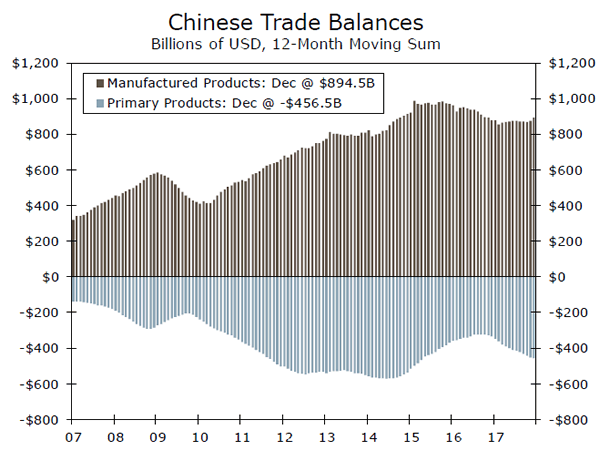
In this column last week, we analyzed which industries in the United States would be most vulnerable to potential retaliation. We turn our attention this week to analyzing which countries would be most vulnerable to "collateral damage" in an all-out trade war between the United States and China, should one break out. China generally imports raw materials and unfinished products, assembles the inputs and exports finished goods (top chart). Countries that export raw materials and intermediate inputs to China could be indirectly affected if Chinese exports to the United States weakened significantly due to an all-out Sino-American trade war.
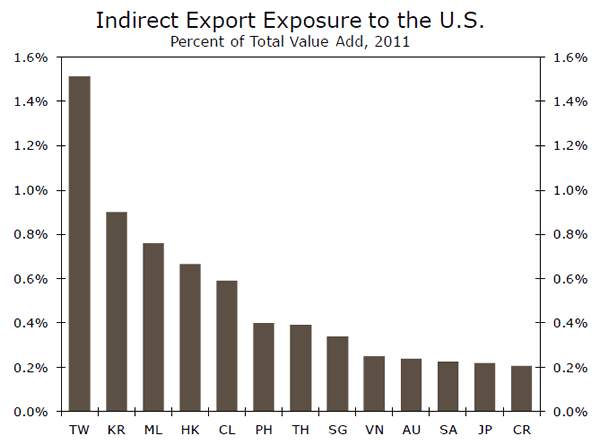
Our analysis shows that Taiwan would be the economy with the most to lose from a trade war between mainland China and the United States (bottom chart). Products that are exported from Taiwan to the mainland, assembled into final products and subsequently reexported to the United States account for 1.5 percent of total value added in Taiwan. With the exception of Chile, South Africa and Costa Rica, all the countries with the most indirect export exposure to the United States (via exports to China) are in Asia. That said, none of the countries in the bottom chart, with the possible exception of Taiwan, have so much indirect export exposure to the United States that they would be at serious risk of recession from a Sino-American trade war.
US Dollar Rises Ahead of Jobs Data
The US dollar gained against major pairs thanks to strong economic indicators and the end of month and quarter flows. The greenback had a positive week ahead of the easter holiday. The first week of April will kick off with a plethora of US economic data, the most important of all the U.S. non farm payrolls (NFP). Central banks will get back into action with the Reserve Bank of Australia (RBA), although no changes to monetary policy are expected in the next meeting.
- Reserve Bank of Australia (RBA) anticipated to keep rate unchanged
- US job reports to add jobs but focus is on wage growth
- European inflation to guide ECB on QE and rates
US 4Q GDP and Quarter End Flows Boost USD
The EUR/USD lost 0.24 percent in the last five trading days. The single currency is trading at 1.2323 at the end of a short trading week due to the Easter holiday. The USD got a boost from better than expected GDP data on Wednesday. The final estimate came in at 2.9 percent for the fourth quarter of 2017 improving on the two previous releases. The greenback also got a boost from quarter end flows which increase the demand of the currency for portfolio rebalancing across asset classes.
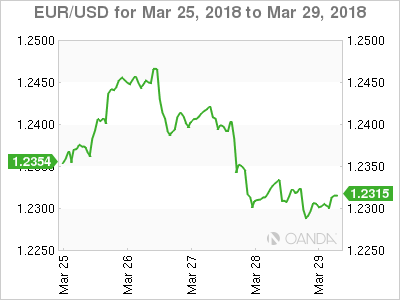 The USD is still having a bad start to 2018. The EUR is up 2.69 percent versus the dollar year to date. Low inflation has been the fly in the euro’s ointment. Economic growth is stronger, but lack of inflationary pressures make talks of interest rate hikes by the European Central Bank (ECB) premature. The flash consumer price index (CPI) release on Wednesday, April 4 at 5:00 am EDT. The market expects a 1.4 percent gain in the CPI and 1.1 percent on the core CPI readings.
US employment data will drop this week with the ADP private payrolls on Wednesday, April 3 at 8:15 am EDT forecasted at 206,000, and the biggest indicator in the market the U.S. non farm payrolls (NFP) to be published on Friday, April 6 at 8:30 am EDT. After the massive 300,000 jobs gain a lower gain of 190,000 is expected, but the eyes of the market will be focused on the average hourly earnings data point with an expected 0.3 percent gain.
Mexican Peso Soars as NAFTA and Politics Find Stability
The Mexican peso has been one of the best performers against the USD in 2018. Dollar highs against the MXN in the last two quarters came about in December of 2017 when NAFTA anxiety was at its strongest. Inflexible US demands on auto and other big topics have prevented the NAFTA renegotiation from moving forward. Canada and Mexico did not buckle under pressure and given the deep relationships with US states, many of them under Republican governors, the market is not pricing in a sudden end of the trade agreement.
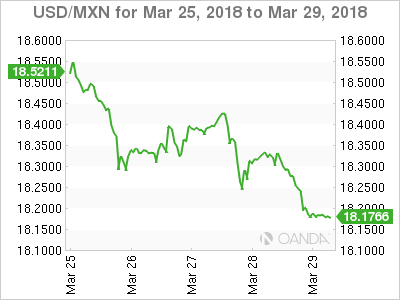 The USD/MXN is trading at 18.1766 on Friday. The currency pair started trading at 18.5211 and the USD has only depreciated as the week has gone by. The sudden urgency by the Trump administration to wrap up the renegotiation by May 1st is seen as a good sign as this time they seem to be willing to come to the table to sign an agreement. Originally the three nations wanted the talks to have wrapped up by the end of last year to avoid running close to political events. Mexican presidential elections in July, where the left is leading the polls, US midterms in the fall and provincial elections in Ontario and Quebec could end up eroding support for NAFTA.
Loonie Looking Ahead to Trade and Employment Data
The USD/CAD was flat in the last five trading days. The currency pair is trading at 1.2889. The better than expected US Final GDP for the fourth quarter turned the tables in favour of the US dollar, alongside month end flows. The NAFTA optimism has done little to boost the loonie in comparison to the peso. The slowdown in the economy is a concern despite rising oil prices. The Bank of Canada (BoC) is expected to hike at least two times this year to keep up with the U.S. Federal Reserve, but it would be limited if the economy does not find traction.
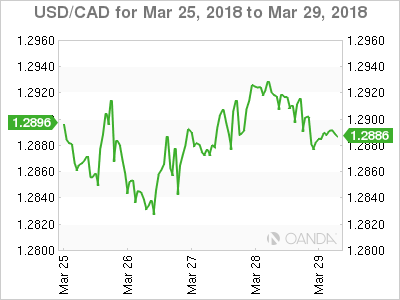 Canadian jobs data will be released at the same time as the US NFP report on Friday, April 6 at 8:30 am EDT. The economy is forecasted to add another 20,000 jobs after last month’s 15,000 gain. Later at 10:00 am EDT the Ivey purchasing managers index (PMI) will be published. US jobs will take most of the spotlight, but given the perceived softness of the Canadian economy a strong employment indicator would be a positive for the loonie.
Market events to watch this week:
Monday, April 2
- 10:00am USD ISM Manufacturing PMI
Tuesday, April 3
- 12:30am AUD Cash Rate
- 12:30am AUD RBA Rate Statement
- 4:30am GBP Manufacturing PMI
- 9:30pm AUD Retail Sales m/m
Wednesday, April 4
- 4:30am GBP Construction PMI
- 8:15am USD ADP Non-Farm Employment Change
- 10:00am USD ISM Non-Manufacturing PMI
- 10:30am USD Crude Oil Inventories
- 9:30pm AUD Trade Balance
Thursday, April 5
- 4:30am GBP Services PMI
- 8:30am CAD Trade Balance
Friday, April 6
- 8:30am CAD Employment Change
- 8:30am CAD Unemployment Rate
- 8:30am USD Average Hourly Earnings m/m
- 8:30am USD Non-Farm Employment Change
- 8:30am USD Unemployment Rate
*All times EST
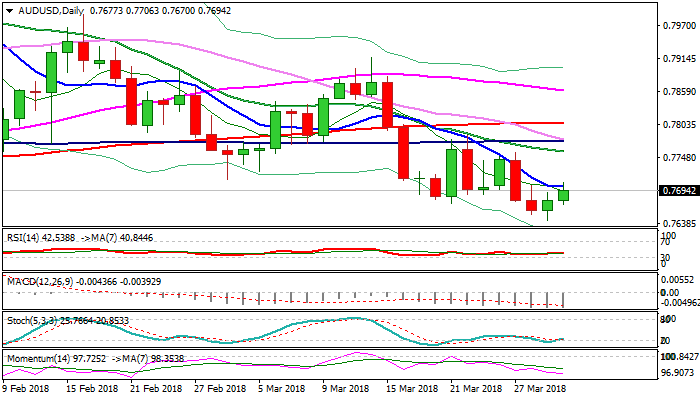
AUDUSD – Recovery Needs Firm Break above 10SMA to Delay Renewed Attack at Weekly Cloud Base Pivot
The pair extends recovery from Thursday's fresh multi-month low at 0.7642, where weekly cloud base provided footstep for broader downtrend.
Recovery extension cracked initial barrier at 0.7701 (10SMA), break of which would generate bullish signal for further upside.
Reversal of slow stochastic from oversold territory on daily chart supports scenario, however, overall bearish structure suggests limited upside (extended upticks to be capped under falling 20SMA at 0.7758) before bears resume.
The pair is on track for weekly close in long-legged Doji which signal strong indecision and could keep the pair in extended consolidation while holding within thick weekly cloud.
Res: 0.7679; 0.7702; 0.7714; 0.7757
Sup: 0.7641; 0.7600; 0.7586; 0.7556
Capital Markets in April, 2018
For the best part of 24-months, equity markets have rallied steadily, matching the longest winning streak ever without a correction. That period ended abruptly in February when global stock indices tumbled into a correction brought on by worries about higher interest rates and exacerbated by complacency and a new threat of ‘trade wars.’
The prospect of a trade war extended the volatility into March and may watch over market sentiment for months to come, potentially sending ripples through the delicate negotiations over NAFTA and BREXIT.
Further, the threat of a wider trade war or even any confrontation with N. Korea could derail G10 central banks from returning to a normalized interest rate policy.
Investors can expect these ongoing geopolitical challenges to dictate market direction for the foreseeable future.
Central Banks Monetary Policy decisions for April 2018:
- 3-Apr AUD Australia Reserve Bank of Australia
- 11-Apr THB Thailand Bank of Thailand
- 11-Apr PLN Poland National Bank of Poland
- 12-Apr MXN Mexico Banco de Mexico
- 18-Apr CAD Canada Bank of Canada
- 24-Apr HUF Hungary Central Bank of Hungary
- 26-Apr SEK Sweden Sveriges Riksbank
- 26-Apr EUR Euro area European Central Bank
Interest rate differentials will continue to dominate forex moves in H1.
The Fed and other G10 central banks have waited patiently to begin to get out of their extraordinarily accommodative stance and finally normalize monetary policy. After a decade of near- or sub-zero rates, central banks are entering the era of ‘quantitative tightening.’
The Fed has started to shrink its balance sheet and has been raising rates for more than a year, while the ECB and BoE are starting to plan their own exit strategies. The great unwind of government bond holdings by central banks are expected to distort sovereign yield curves as central banks reduce their holdings of debt holdings back towards a pre-crisis sovereign holdings.
The Feds new Chairman, Jerome Powell, is leading the charge and removing accommodation in such a way as to lift inflation back to the Fed’s desired +2% target level without extinguishing growth prospects or letting the U.S economy overheat.
In his first appearance before Congress, February 27, Fed Chair Powell unnerved markets with his ‘hawkish’ demeanor – “he has no concerns about the flattening U.S yield curve and sees little chance of a recession in the next two-years.” Further, he stated that the data and fiscal stimulus enacted since December made him more confident that inflation is moving to target and that the Fed now must “strike a balance between avoiding an overheated economy and bringing PCE price inflation to +2% on a sustained basis.”
This has firmed up market expectations for three Fed rate hikes this year (as reflected in Fed funds futures). However, better growth, higher wages, and firming oil prices could collaborate to spark faster inflation in 2018, presenting a challenge for Fed policy. After last months +25 bps hike, fed funds is already pricing two-more hikes – June and December. However, if inflation makes a sudden resurgence it could spook the Fed into raising rates faster to blunt it.
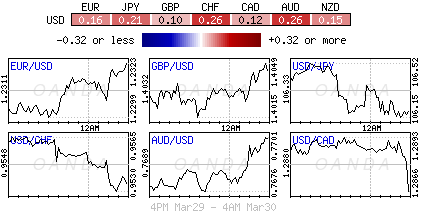
The persistent weakness in the U.S dollar confirms that this rate path is ‘baked in’ at this point and any monetary policy surprises would probably come from the other global central banks.
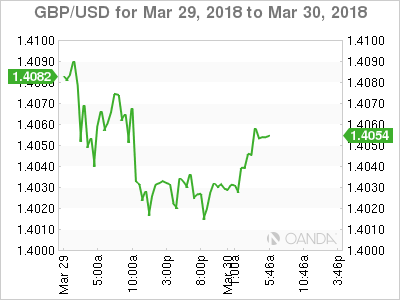
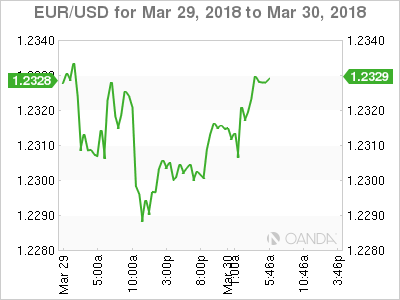 For now, other central banks are holding their policy steady, with only minor tweaks to lessen accommodation. The ECB is debating whether it should clarify when rates will rise (likely not till 2019), the BoE could hike a second time in May, and the BoJ remains committed to “ultra-loose” policy even though economic conditions have improved.
In the euro zone, the ECB remains satisfied with the effects of its policy on improving growth and investment. As for normalization, the governing council is unanimous in its view of policy sequencing, saying that interest rates will not be hiked before the bond-buying (QE) program is completed.
The BoE’s chief economist Haldane noted that the central bank is in “no rush” to raise rates, and that rates won’t remotely go back to levels seen in the past, but any inflationary threat to the cost of living will be met with more rate hikes. With that said markets are now betting that the next +25 bps hike by the BoE will arrive in May. That reckoning has sent the pound sterling (£1.4050) to test its strongest level against the dollar since the June 2016 Brexit vote.
Having secured a second five-year term, BoJ’s Governor Kuroda emphatically stated that the BoJ will continue, “powerful monetary easing” to achieve its price goal. Though headline CPI hit its highest level in nearly three years at +1.4% in January, it remains well short of the target. Still Kuroda does have an eye toward the future, saying that easing will not continue once CPI reaches +2% in “stable manner,” and that normalization, once it begins, will be very gradual.
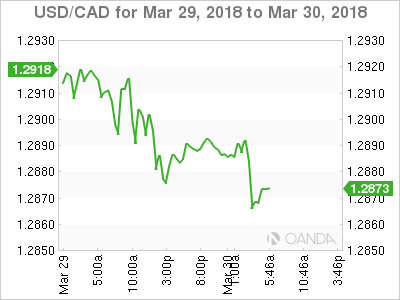 The BoC is expected to be one of the most active central banks throughout 2018. The Canadian economy is doing relatively well, and CPI inflation continues to move gradually higher. Aiding growth has been the rise in commodity prices, especially crude oil prices. However, NAFTA discussions are currently proceeding very slowly.
In Scandinavia, Nordic central banks (Norges and Riksbank) are expected now to be in a position to bring forward their own tightening approach.
Geopolitical Risk Remains in the Background
Brexit Talks:
A Eurogroup meeting on March 12 has been the key moment for the Brexit negotiations. At this meeting the Europeans set the guidelines for their transition-period discussions with the UK, aiming for a fully crafted withdrawal agreement by October or November.
Nevertheless, both sides continue to talk tough: the European’s chief negotiator has said that a transition is NOT a given if disagreements persist, while the UK Brexit Minister’s refrain continues to be that “no deal is better than a bad deal.” Substantial differences do remain on trade issues such as the arbitration mechanism, and the hard/soft Irish border issue is still not fully resolved.
The length of the Brexit transition period was agreed and set at 21-months, end of 2020, which coincides with the end of a multi-year budget round, simplifying financial matters. Expect the Irish border solution to remain the stumbling block in negotiations.
 Trade War: tit-for-tat
Since entering office over a year ago, President Trump has railed against “unfair” trade deals, but there was little action beyond lip service. In February, however, the Commerce Department issued its long awaited analysis on industrial metals trade, and the President pounced. Without much apparent consultation with advisors or Congressional leaders, Trump announced tariffs on steel and aluminum that were even higher than the Commerce Department’s minimum recommendations (at +25% and +10% vs. the proposed +24% and +7.7%).
Trump’s decision to impose tariffs on industrial metal imports was a boon for the U.S steel and aluminum industry, but it has already sent a warning to the broader markets on worries about higher basic materials costs and the threat of a trade war.
Many economists who equate tariffs with taxes have panned the plan. Shortly after President leaked his decision on tariffs, senior officials from the E.U, Canada and other trading partners have condemned the plan and assured there will be consequences if the U.S follows through. The E.U indicated that it would impose duties on popular U.S brands such as Levi’s and Harley Davidson as well as on bourbon.
Last week, Trump imposed +$60B of tariffs on China U.S exports. The immediate fallout was felt with the worst global stocks rout since early February – cooler heads seem to be prevailing and giving way to a more optimistic mood this week as the limits of the Trump administration’s willingness to embrace protectionism came into view.
The pessimist is worried that the “too and fro” on new tariffs could be the last nail in the coffin for NAFTA. Negotiations remain tense amid reports that the U.S is making onerous demands that Canada and Mexico seem unwilling to concede to.
But it may be hard to deter Trump as he pursues his vision of revitalizing the U.S steel industry. His initial reaction to the criticism was to tweet “trade wars are good, and easy to win.” Trump may be gambling that corporations will absorb higher costs from their tax cut profits and that trading partners will fear losing access to the world’s biggest market.
Unfortunately it appears that the rest of the world may be ready to call his bluff, and Trump has responded to this by threatening to raise duties on automobiles shipped from Europe.
A worst-case scenario would be a trade war escalating to the point where the Trump administration withdraws from the WTO – unraveling would lead to major disruptions in global trade that could set off a new recession.
 Other geopolitics concerns:
President Trump seems bent on finding adversaries to measure himself against. Conflicts with China, N. Korea, Iran and Venezuela all have the potential to disrupt orderly global markets.
So far, China has taken a typically understated tone in response to the U.S tariff threat – the new metals tariffs will not put a dent in the U.S trade deficit with China, which directly supplies less than +3% of U.S steel imports. Maybe violations of intellectual property would have more of an impact? One option in retaliation for China could be to slow down of their purchases of U.S treasuries.
The U.S needs China to stick handle N. Korea. Tangling with China on trade would be counterproductive with the nuclear threat from N. Korea. For now, the S. Korean government is taking the lead, exploring talks with Pyongyang. Annual joint military exercises between the U.S and S. Korea that were postponed as a good faith gesture for the Olympics will resume any day.
The other remaining member of the once so-called “axis of evil” is Iran. In mid-January Trump signed another 90-day waiver on Iran sanctions, but stated that it would be the last time he will extend the waiver. To keep the U.S as a participant in the nuclear accord the White House is demanding that the deal be reopened to make the terms tougher and permanent with no sunset clause.
Having set a countdown clock, President Trump says he will withdraw from the Iran nuclear deal immediately if he believes a revised agreement is not within reach. U.S officials say they are working with European partners on new provisions for the nuclear deal, but there are no signs that any real progress is being made or that any allies want to revisit the nuclear agreement at this time.
Finally, Venezuela, its expected to become a political flashpoint as long-simmering tensions could come to a head around the April 22 presidential election. The political opposition has already said it will not participate in what it considers a “sham” election after President Maduro reorganized the government to ensure he would hold on to power.
The violent protests seen last year may yet flair up again around the election, which could lead to disruptions in Venezuela’s two million barrels-per-day supply of crude oil.
Unnamed U.S officials say the White House is mulling sanctions aimed at pressuring Maduro. This could involve restricting insurance on oil shipments or even a complete U.S embargo on Venezuelan oil – a measure that would cause at least a short-term oil market shock.
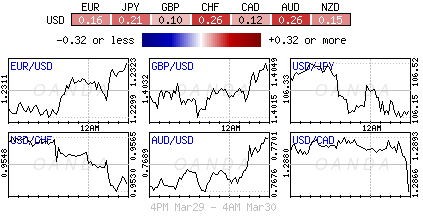
USDJPY – Recovery Action Show Initial Signs of Stall
The pair remains in red on Friday and extends pullback from Tuesday’s rally peak at 107.01 below 30SMA (106.33), which contained weakness on Thursday.
Fresh bears pressure pivotal support at 106.10 (20SMA / Fibo 38.2% of 104.63/107.01 recovery), break of which would generate fresh bearish signal and extension through next pivot at 105.89 (10SMA), to confirm reversal and lower top at 107.01.
Bullish sentiment that was gained on Tuesday’s strong bullish acceleration is fading, with return and close below 20/10SMA’s to turn near-term bias to bearish mode.
Conversely, Weekly close above 30SMA would keep the upside in focus for fresh extension ov recovery rally from 104.63.
Res: 106.33; 106.64; 107.01; 107.29
Sup: 106.10; 105.89; 105.53; 105.32
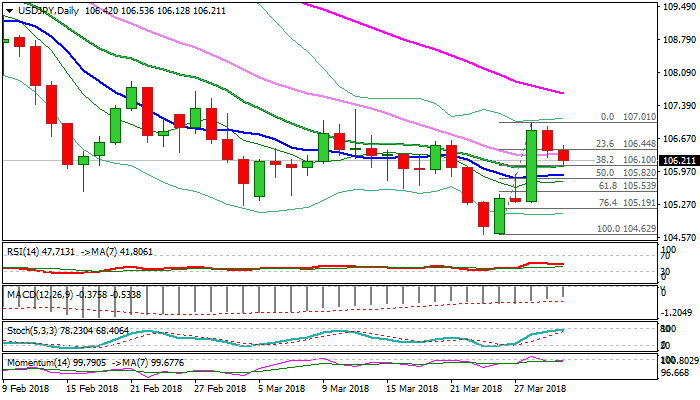
GBPUSD – Daily Cloud Continues to Underpin for Stronger Recovery
Cable bounces after repeated attack at top of thick daily cloud (1.4012) was rejected. Cloud continues to underpin, with support reinforced by rising 20SMA (1.3995), which could result in stronger recovery of three-day fall from 1.4244.
Return to bull-channel (lower boundary lies at 1.4053, which also marks the base of thick 4-hr cloud) would generate bullish signal for recovery extension towards pivotal 1.41 resistance zone (10SMA / Fibo 38.2% of 1.4244/1.4012 bear-leg / top of 4-hr cloud), break of which would spark stronger recovery.
Daily studies are in bullish setup and supportive while the price holds above daily cloud.
Holiday-thinned conditions suggest quiet trading today.
Res: 1.4066; 1.4100; 1.4114; 1.4155
Sup: 1.4012; 1.3995; 1.3964; 1.3915
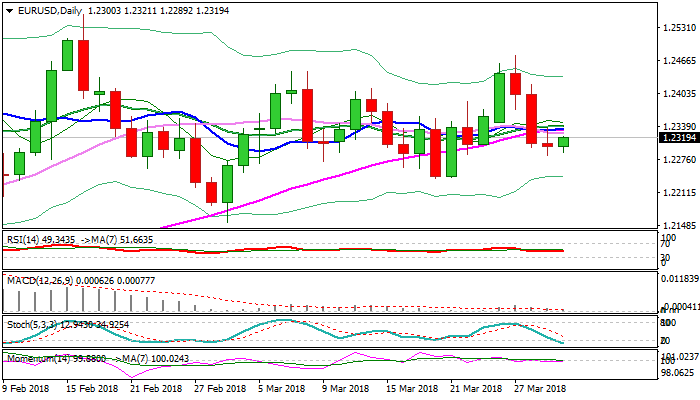
EURUSD – Attempts to form Doji Reversal Pattern but Plethora of MA’s Limits Recovery Attempts for Now
The Euro is slightly higher in early Friday’s trading after yesterday’ s Doji signaled that sharp fall of past two days might be running out of steam.
Brief recovery attempts (the pair was up around 30 pips from Asian low at 1.2290) so far hold below a cluster of converged MA’s (between 1.2325 and 1.2340), break of which would generate bullish signal for stronger retracement of 1.2476/1.2283 bear-leg.
Bullish scenario above MA barriers would open targets at 1.2357 and 1.2402 (Fibo 38.2% and 61.8% of 1.2476/1.2283 respectively), ahead of key barrier at 1.2377 (daily cloud top).
Little bullish signals were seen so far as daily RSI and 14-d momentum hold in sideways mode in neutrality zone.
Quiet trading could be expected today due to thin holiday conditions.
Res: 1.2325; 1.2340; 1.2357; 1.2402
Sup: 1.2290; 1.2260; 1.2241; 1.2200
EURUSD Medium Term Bearish Below 1.2275
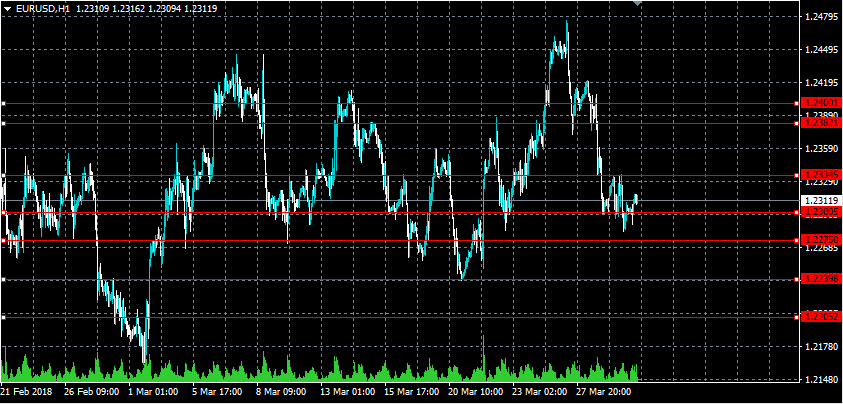
The euro has continued to slide lower against the greenback, with price-action so far finding weekly technical support from just above the key 1.2275 support level. The EURUSD pair is facing a sentiment shift and further heavy trading losses below the 1.2275 support level, as the U.S dollar index starts to firm above the key 90.00 level. With European and U.S trading desks closed for the long Easter weekend, volatility and trading volumes may be subdued on the EURUSD pair.
The EURUSD pair will start to turn bearish on a medium-term timeframe once clearly below the 1.2275 level, key intraday technical support is then found at the 1.2239 and 1.2205 levels.
Should price-action on the EURUSD pair move back above the 1.2334 level, a correction back towards the 1.2382 and 1.2400 levels may occur.
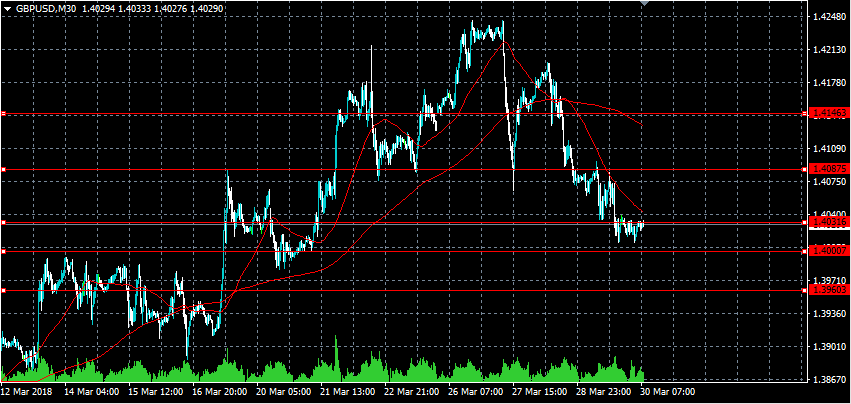
Further GBPUSD Losses Expected Below 1.4000
The British pound has moved back towards the 1.4000 support area against the U.S dollar, with the pair unwinding close to two-hundred and fifty points from Tuesday’s weekly trading-high. The decline in the GBPUSD pair has largely been driven by U.S dollar demand, with sterling sellers now looking to target the 1.3960 support area once below the 1.4000 handle. Moving into the European session, trading volumes may be subdued as the United Kingdom observes the Good Friday holiday.
The GBPUSD pair is further bearish once clearly below the 1.4000 level, key support is then found at the 1.3960 and 1.3910 levels.
Key intraday resistance for the GBPUSD pair is currently located at the 1.4031, 1.4087 and 1.4146 levels.