

Sample Category Title
Kiwi Records Losses As RBNZ Appears Cautious All Eyes On The Bank Of England
Here are the latest developments in global markets:
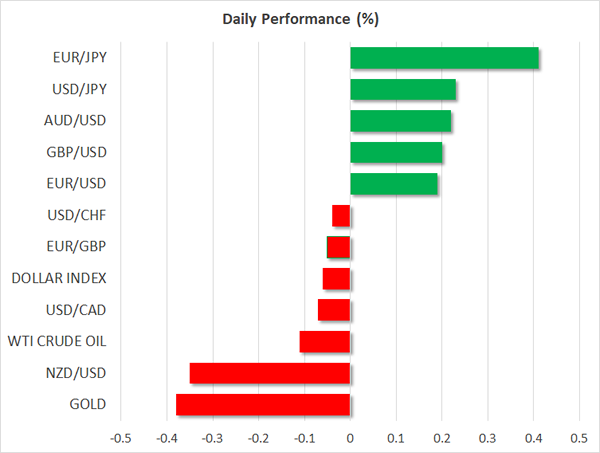
FOREX: The dollar index was marginally lower on Thursday, after previously posting notable gains on Wednesday, as yields on longer-dated US Treasuries moved higher. Meanwhile, sterling was a little higher ahead of the Bank of England's “Super Thursday” policy meeting. The kiwi dollar slipped, as the RBNZ disappointed those looking for an upbeat assessment.
STOCKS: US equity indices experienced another volatile session on Wednesday, and finished lower overall. The Nasdaq Composite fell by 0.9%, the S&P 500 closed 0.5% lower, while the Dow Jones declined by 0.1%. The shaky performance of these indices indicates that investors still appear skeptical of reentering long-equity positions, following the recent turmoil. Futures tracking the Dow, S&P, and Nasdaq 100 are all in positive territory, albeit marginally. In Asia, most markets were in the green. Japan's Nikkei 225 and Topix finished higher by 1.1% and 0.9% respectively, while Hong Kong's Hang Seng was up by 0.4%. In Europe though, futures tracking all of the major stock indices were in the red.
COMMODITIES: Oil prices were lower on Thursday, with WTI and Brent crude being down 0.1% and 0.3% respectively, both extending the notable losses they posted yesterday. The sharp plunge in prices came after the weekly EIA inventory data. Even though crude stockpiles rose by less than expected, the energy market finally took notice of the soaring US production, which surged to a record high of 10.25 million bpd. Should tomorrow's Baker Hughes oil rig count reveal a further increase in active US rigs, prices could remain under pressure, on speculation that US output may increase further. In precious metals, gold was lower by almost 0.4%, last trading near the $1,312 mark.
Major movers: RBNZ appears cautious; German leaders strike a deal; US deficit set to expand further
The Reserve Bank of New Zealand (RBNZ) kept its policy unchanged yesterday, while the tone of the accompanying statement was somewhat more cautious than previously. The Bank noted that the nation's growth profile is now weaker in the near-term, but stronger in the medium-term, while it also acknowledged the softness in the latest set of inflation data.
As for the kiwi, officials said that it has firmed recently, mostly due to the weak US currency. Importantly, they now assume that the trade-weighted exchange rate will ease over time. Moreover, in the press conference following the decision, assistant Governor McDermott indicated that if the trade-weighted index moves up, then investors should expect more aggressive language on the NZD. The two key takeaways from this meeting were that any rate hike in New Zealand is still a long way off, and that any further strengthening of the NZD would probably see the Bank threaten FX intervention, as it did multiple times in the past. Kiwi/dollar fell on the decision and continued lower in the following hours.
German political leaders finally managed to strike a coalition deal yesterday, after several months of negotiations. The deal must now be approved by the members of the SPD. Even though Germany will now most likely have a stable and pro-EU government, the euro remained on the back foot yesterday, before rebounding somewhat today. The weakness is being attributed to disappointment that SPD leader Martin Schulz will not be taking over the finance ministry, given his anti-austerity views.
In the US, Congressional leaders struck a two-year budget deal that will raise federal spending by $300 billion. If approved by Congress, this plan would add further to the rising US deficit, that has been a major concern for investors lately as the nation's long-term debt sustainability appears to be in jeopardy. Bond markets took notice of this, with the yields on longer-term US Treasuries rising notably. Interestingly enough, the dollar managed to rise alongside yields, reviving a relationship that had largely broken down in recent months.
In terms of economic data, Chinese exports and imports beat expectations, with the latter surging by an impressive 36.9%, almost four times the amount analysts projected. This resulted in a mush narrower trade surplus (exports minus imports) than expected and led to a considerable decline in the yuan relative to the US currency. Dollar/yuan was up by more than 0.4%. On Wednesday, the pair touched 6.2548, its lowest since August 2015. It should be mentioned that the release was likely distorted by seasonal effects owed to the Lunar New Year festivities.
Day ahead: BoE meeting the day's highlight; US jobless claims due
The European Central Bank's Economic Bulletin will be released at 0900 GMT. The report contains statistical data that policymakers use when deciding on interest rates, while it also offers an analysis on current and future economic conditions from the central bank's perspective.
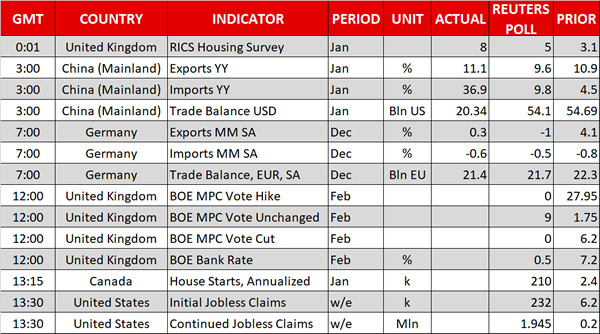
Without a doubt the highlight of the day will be the Bank of England meeting on monetary policy. The Bank's decision on rates will be made public at 1200 GMT. No change in rates is expected, with attention falling to the central bank's quarterly inflation report which will include updated forecasts on economic growth and inflation; this will also be released at 1200 GMT. The vote count could also attract attention. While forecasts point to a unanimous 9-0 vote to hold rates unchanged, investors may look at whether notorious policy hawks such as Ian McCafferty and Michael Saunders will choose to dissent and vote for a hike instead, potentially increasing expectations that such an action may occur in the near future. Shortly after (at 1230 GMT), Governor Mark Carney will be holding a press conference. His comments have the capacity to spur volatility in sterling pairs, with market participants placing bets on the timing of the next interest rate hike by the BoE.
An appreciating British currency in 2018 is supportive of inflation moving lower towards the BoE's target for annual inflation of 2% and allowing the central bank to proceed more aggressively with its policy normalization plans. This is an issue that Carney might comment on during today's press conference.
Canadian housing starts for the month of January are scheduled for release at 1315 GMT.
US weekly data on initial and continued jobless claims are due at 1330 GMT. First-time unemployment benefit claimants are anticipated to increase by 2k relative to the week ending January 27 when they stood at 230k. A number below 300k is linked to a healthy jobs market. Should claimants stand below this level as expected, it would mark the 153rd such week, this being the longest streak since 1970.
Beyond the BoE press conference, other policymakers' appearances include: ECB chief economist Peter Praet and Dallas Fed President Robert Kaplan – a non-voting FOMC member in 2018 – will be speaking at a conference in Frankfurt at 0950 GMT. ECB executive board member Yves Mersch will be giving a lecture touching, among others, on central banks and digital currencies, at 1000 GMT. Other FOMC policymakers talking today are Philadelphia Fed President Patrick Harker (1300 GMT) and Minneapolis Fed President Neel Kashkari (1400 GMT) – neither holds voting rights within the FOMC during the current year. Lastly, Bank of Canada Senior Deputy Governor Carolyn Wilkins will be giving a speech at 1800 GMT.
In equities, the earnings season continues with Twitter and Philip Morris getting in line to release quarterly results.
Technical Analysis: GBPUSD in wait-and-see mode ahead of BoE
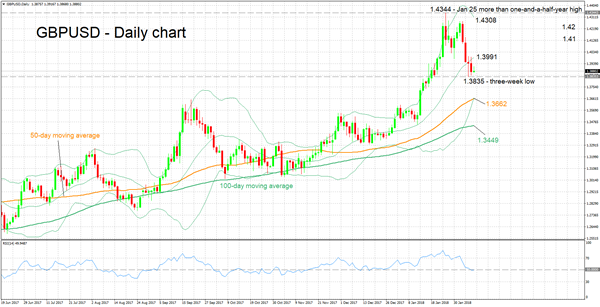
GBPUSD has lost ground after posting a more than one-and-a-half-year high of 1.4344 on January 25. The RSI has been falling in previous days, pointing to negative short-term momentum. However, at the moment it is hovering around the 50 neutral level. This could be an indication that markets are in a wait-and-see mode ahead of the Bank of England meeting and subsequent press conference by the Bank's Governor.
Any signs that the BoE will tighten policy sooner than earlier thought, are anticipated to lead the pair higher. In this case, resistance could come around the middle Bollinger line – a 20-day moving average line – at 1.3991. The area around this level also encapsulates the 1.40 handle, a level of potential psychological importance. An upside break would turn the attention to 1.41, this being another level that may be of psychological significance.
On the other hand, a dovish message by the BoE is expected to lead to weakness in the pair. Immediate support might come around Tuesday's three-week low of 1.3835. Price action is currently taking place not far above this level, with a violation bringing into view the 50-day MA and lower Bollinger band, both at 1.3662.
USDJPY Maintains Weak Bias, Broader Trend Still Neutral
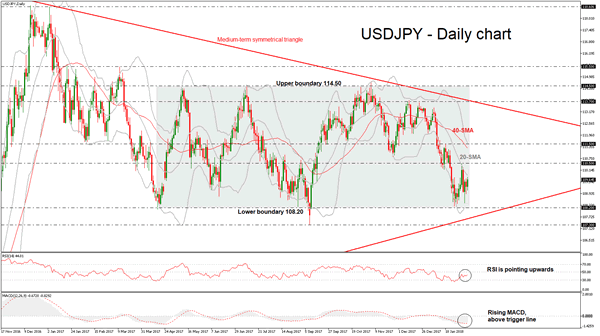
USDJPY has been trading within a sideways channel in the daily timeframe since April 2017 with upper boundary the 114.50 significant and multi-tested resistance level, and with lower boundary the 108.20 support level, which has been penetrated once in September.
Currently, prices are developing below the 110.50 barrier and the 20-day simple moving average. The pair tested several times the 20-SMA, which is acting as a strong resistance level. However, the short-term technical indicators are slightly bullish and point for more upside movement in the market. The RSI indicator is pointing up in the negative zone, while the MACD oscillator is rising and jumped above its trigger line, creating a bullish crossover.
Upsides moves are likely to find resistance at 110.50. Rising above this area could help shift the focus to the upside towards the next immediate critical level at 111.50, which coincides with the upper Bollinger Band at the time of writing.
On the flip side, if dollar/yen reverse lower, the next level to have in mind is the 108.20 (lower boundary of trading range), which overlaps with the lower Bollinger Band. A drop below this area could take the pair below the sideways channel, challenging the 107.30 support level, taken from the low on September 8.
It is worth mentioning that USDJPY has been developing within a symmetrical triangle in the medium-term timeframe since May 2015. The symmetrical triangle is a continuation pattern, indicating further gains in case of a penetration to the upside on a weekly basis.
NZDUSD Posts Steep Losses, Finds Support At 38.2% Fibonacci Level
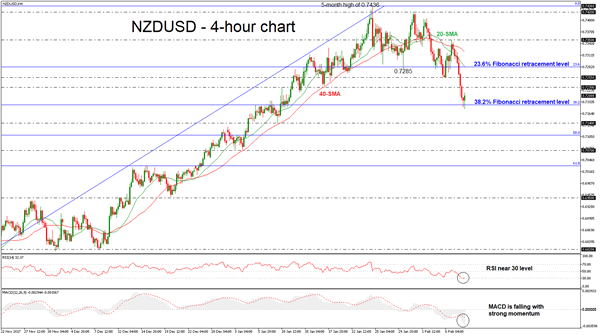
NZDUSD has been tumbling over Wednesday's and today's Asian sessions, while it recorded a fresh one-month low of 0.7175. The aggressive sell-off pushed the price below several key levels such as the 23.6% Fibonacci retracement level at 0.7280 from 0.6780 to 0.7436, 0.7255 and 0.7230.
In the 4-hour chart, short-term indicators are signaling a bearish movement. The Relative Strength Index (RSI) is holding near the 30 level, while the MACD oscillator is weakening in the oversold territory. Also, the latter oscillator recorded a bearish crossover with its trigger line in the previous sessions, indicating further losses.
If prices extend the downward pressure, immediate support could come at 0.7140. Below that, the price could hit the 50.0% Fibonacci retracement level at 0.7436. As a side note, the price needs to go through the 38.2% Fibonacci mark slightly above the one-month low.
In the event of an upside reversal, the next level to watch is the 0.7230 resistance obstacle as well as the 0.7255 level and the 23.6% Fibonacci at 0.7280.
Technical Outlook: GBPUSD – BoE In Focus, Hawkish Stance Could Inflate Pound For Retest Of 1.40 While Softer Tone...
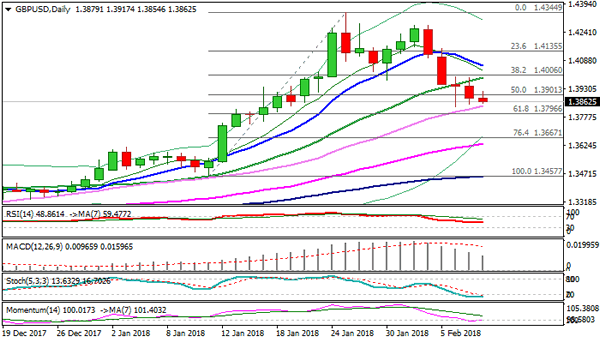
Cable was slightly higher during Asian trading on Thursday, but gains were so far unable to clearly break above 1.3900 barrier (broken 50% of 1.3457/1.4344/daily Kijun-sen).
Wednesday close in red and below 1.39 handle was negative signal, however, dips remain for now limited by pivotal support at 1.3841 (Fibo 38.2% of 1.3026/1.4344, Oct-Jan rally, reinforced by rising 30SMA).
Another strong support lies just below, at 1.3796 (Fibo 61.8% of 1.3457/1.4344 rally) and sustained break below 1.3841/1.3796 pivots will generate strong bearish signal.
Bearishly aligned daily studies weigh, but oversold slow stochastic signals that bears may hesitate ahead of renewed attempts lower.
Falling thick hourly cloud (spanned between 1.3936/93) marks strong barrier above initial 1.3900 hurdle and continues to weigh on near-term action.
BoE's interest rate decision and release of inflation report are key events for sterling today. The central bank is expected to keep interest rates unchanged at 0.50% on today's meeting, but hawkish tone could be expected. Traders expect the BoE to signal another interest rate increase in coming months and will look for voting results from the previous meeting, which could generate positive signal if any of nine MPC members voted for rate hike.
Positive signals would increase likelihood of rate hike in BoE's next policy meeting in May.
Hawkish stance from BoE could inflate the pound for retest of important 1.40 barrier (psychological resistance / broken Fibo 38.2% of 1.3457/1.4344) and could generate stronger bullish signal on firm break higher.
Conversely, softer tone from the central bank would increase pressure on pound for extension of pullback from 1.4344 (25 Jan peak/the highest level since Brexit vote).
Res: 1.3900, 1.3936, 1.4000, 1.4056
Sup: 1.3841, 1.3796, 1.3741, 1.3724
Forex Technical Analysis: EUR/USD, USD/JPY, GBP/USD
EUR/USD
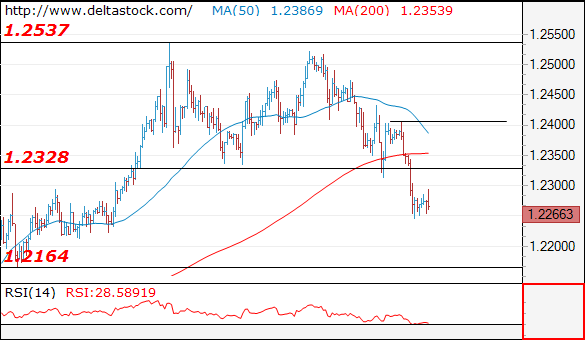
Current level - 1.2266
The outlook is bearish below 1.2330, for a slide towards 1.2160 area. Crucial on the upside is 1.2405 high.
| Resistance | Support | ||
| intraday | intraweek | intraday | intraweek |
| 1.2330 | 1.2540 | 1.2220 | 1.2160 |
| 1.2405 | 1.2870 | 1.2160 | 1.2090 |
USD/JPY
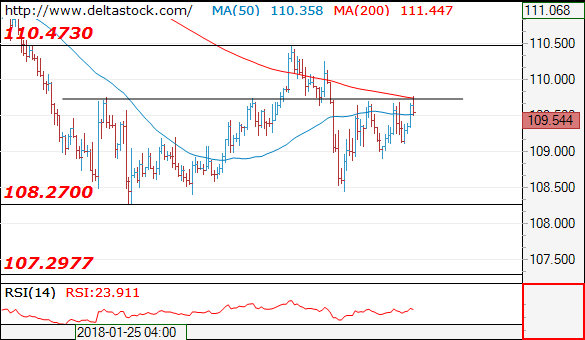
Current level - 109.54
Expect a violation of 109.70 resistance to initiate a rise towards 110.50. Crucial on the downside is 109.10.
| Resistance | Support | ||
| intraday | intraweek | intraday | intraweek |
| 109.70 | 111.90 | 109.10 | 108.30 |
| 111.50 | 113.40 | 108.30 | 107.30 |
GBP/USD
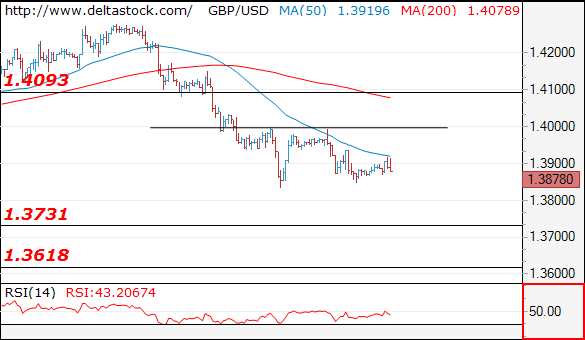
Current level - 1.3878
The bias is bearish for a break through 1.3835 low, towards 1.3730, en route to 1.3620 area. Crucial on the upside is 1.4000.
| Resistance | Support | ||
| intraday | intraweek | intraday | intraweek |
| 1.4000 | 1.4090 | 1.3800 | 1.3730 |
| 1.4090 | 1.4174 | 1.3730 | 1.3620 |
NZDUSD Intraday Analysis
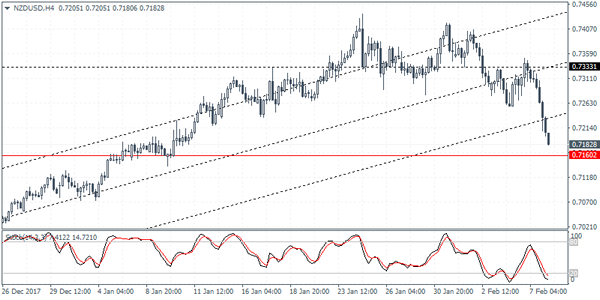
NZDUSD (0.7182): The New Zealand dollar was seen weakening since the RBNZ's decision. Price action briefly tested the breached support level at 0.7333 where resistance has been established. The reversal off this level has seen price declining with the first support level at 0.7160 within reach. Expect to see NZDUSD potentially rebounding at this level but the gains could be limited within the resistance level of 0.7333 and the current support. We expect the longer term trend to point to the downside with NZDUSD likely to see further declines that could test the lower support at 0.6950.
GBPUSD Intraday Analysis
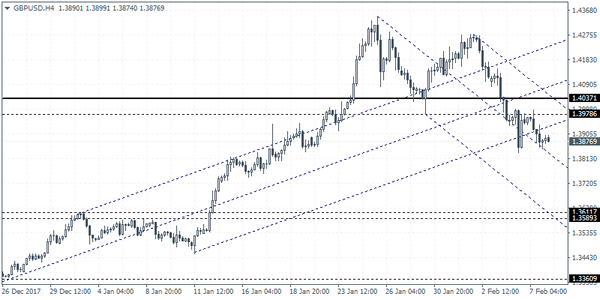
GBPUSD (1.3876): The British pound has been extending declines over the past few daily sessions. Price action closed with an inside bar yesterday but further downside is expected. Following the breakdown below the support level at 1.4037, we expect to see a retracement to this level in the short term. If price action can establish resistance at this level, we could expect to see further declines pushing the GBPUSD down to the support at 1.3617 which is pending retest. To the upside, in the event that GBPUSD breaks past 1.4037, the downside bias is invalidated.
EURUSD Intraday Analysis
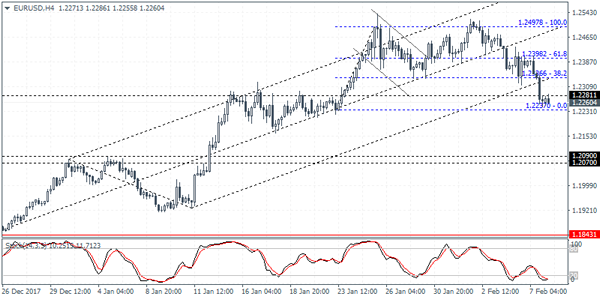
EURUSD (1.2260): The euro currency extended declines against the USD yesterday as price was seen falling to a fresh monthly low. The declines come following the doji pattern that was formed. With price closing below the doji's low, we expect to see further continuation in declines. Support is seen at 1.2091 on the daily chart which could be the first level of support. On the 4-hour chart the declines have invalidated the bullish flag pattern. Any near term retracements could be seen stalling near 1.2336 or up to 1.2398 level. A retest of this level could suggest further declines with the eventual target seen at 1.2090.
EU Gives Upbeat Forecasts, RBNZ Keeps Rates Unchanged
The European Commission released its quarterly forecasts yesterday and gave an upbeat assessment to the growth in the Eurozone. Inflation and unemployment were however more subdued in comparison. The forecasts show that inflation in the Eurozone will stay below the ECB's 2% target rate in 2019 at only 1.6%.
In the overnight trading session, the RBNZ voted to keep the overnight cash rate unchanged at 1.75%. The decision comes after a weak fourth quarter inflation data and a somewhat mixed unemployment numbers for the quarter.
Looking ahead, focus shifts to Threadneedle Street as the Bank of England will conclude its monetary policy with the statement and press conference. The BoE is expected to keep rates unchanged at today's event. Economists are divided on whether the BoE will leave forward guidance unchanged or whether it will bring forward the rate hike expectations. The BoE is currently expected to leave rates unchanged at least until August this year.
Elsewhere, the weekly unemployment claims from the U.S. will be coming out later in the evening.
Currencies: Dollar Gains Traction On Higher Yields And Expansive Fiscal Policy
Sunrise Market Commentary
- Rates: Core bond sell-off resumes
The short squeeze in core bonds earlier this week seems to have done its job. Underlying negative core bond sentiment takes the upper hand again. The US Congress' 2-yr spending deal will significantly raise US deficits and is structurally negative for Treasuries. Speeches by Fed/ECB governors and the US 30-yr Bond auction could also impact trading. - Currencies: Dollar gains traction on higher yields and expansive fiscal policy
The dollar rebound accelerated as a poor US bond action and prospects for a big US budget deficit propelled US yields. The downside of the dollar looks better protected. EUR/USD dropped below intermediate support. The BoE's policy decision and inflation report might keep the door open for a next rate hike later this year. This might be slightly supportive for sterling.
The Sunrise Headlines
- The comeback of US stock markets stalled with indices ending mixed between flat (Dow) and -0.9% (Nasdaq) lower. Most Asian indices are in positive territory this morning with China underperforming.
- Congressional leaders said they had reached an agreement on a 2-yr budget deal, charting a path out of the turmoil over spending and immigration that had shuttered the government last month and left its long-term funding in jeopardy.
- China's export growth (11.1% Y/Y) bested expectations in January as the value of imports (36.9% Y/Y) vastly exceeded forecasts thanks in part to the timing of the Lunar New Year and a recovery in oil prices from a year earlier.
- The Reserve Bank of New Zealand kept its official cash rate at 1.75%, and also said it expects inflation to reach the mid-point of its target two years later than forecast. Governor McDermott said the kiwi will weaken as the Fed hikes.
- Oil prices dropped to their lowest point in 2018 after US government data showed US crude stockpiles rose faster than expected last week and monthly data for domestic production surpassed all-time highs.
- Sources said that China has resumed an outbound investment scheme after a 2y hiatus, granting licenses to about a dozen global money managers, signalling that Beijing is less worried about capital outflows amid a surge in the renminbi.
- Today's eco calendar contains the BoE's policy meeting and US weekly jobless claims. The ECB publishes its economic bulleting and several ECB & Fed governors speak. Ireland and the US tap the bond market
Currencies: Dollar Gains Traction On Higher Yields And Expansive Fiscal Policy
EUR/USD drops below intermediate support
EUR/USD finally broke 1.2323/35 support yesterday. Later in US dealings, different factors supported the US dollar. The US 10-yr yield ticked higher after a poor 10-yr action. US Senate leaders announced a 2-yr budget deal (still to be approved) that would raise government spending by $300 bn, raising the budget deficit. The prospect of an expansionary fiscal policy and higher rates inspired further USD gains and hurt equities. EUR/USD finished the day at 1.2264. USD/JPY held north of 109 despite renewed nervousness on equity markets.
Asian equities are trading mixed with Korea and Japan outperforming, supported by the stronger dollar. China is mixed as trade data show a very sharp rise of imports. The Yuan eases after touching the highest level in more than two year yesterday. Higher US yields are keeping USD/JPY well supported (109.60 area). EUR/USD hovers near yesterday's closing levels. The kiwi dollar (NZD/USD 0.72) weakened as the RBNZ indicated that inflation will only reach the 2.0% target in 2020.
There are few important data today. Many ECB members attend a conference in Frankfurt. We keep a close eye at the US 30-yr Bond auction. The prospect of a rising deficit supports the rise in US yields. The dollar could regain traction on higher US yields and on the prospect of an expansive US fiscal policy. Risk sentiment remains a wildcard. Yesterday's price action suggests that the downside of the dollar is becoming better protected. ECB speakers will probably reiterate that ECB normalization will develop in a very gradual way and that FX volatility is a risk. Technical picture: the dollar decline slowed of late and EUR/USD finally dropped below 1.2323/35 support. A break below 1.2165 would call off the ST downside alert (for USD). A correction of EUR/JPY reinforced the EUR/USD decline yesterday, but this factor might ease if risk aversion cools.
The BoE decides on policy and publishes its inflation report today. The BoE might be slightly more positive on growth and keep its assessment on inflation (rise in sterling to counterbalance higher oil price?). The BoE assessment might keep the door open for a next rate hike later this year (August?). Today's BoE communication might be slightly supportive for sterling. Of late, a break of the EUR/GBP 0.8928 resistance failed. A neutral (not too soft) BoE assessment might push EUR/GBP back lower in the established range. EUR/GBP 0.8690 remains solid support. A break probably won't be easy as long Brexit uncertainty persists.
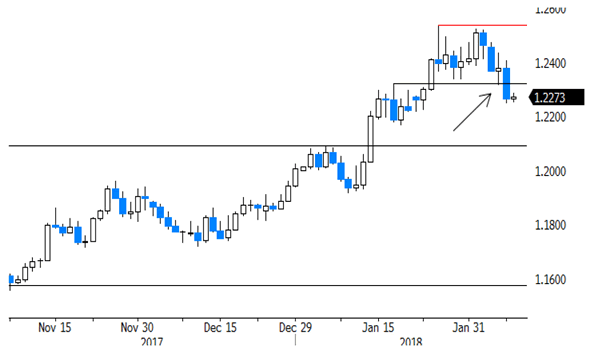
EUR/USD: finally drops below1.2323/35 support as dollar rebounds