Sample Category Title
EURJPY Near-Term Bias Shifts To The Upside, Bullish Short-Term Signals
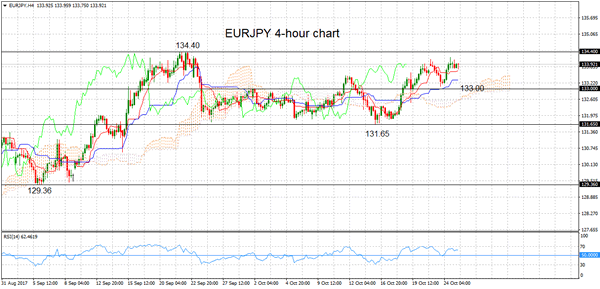
EURJPY holds a neutral intraday bias as prices consolidate in the upper 133 handle after a rebound from 131.65 (October 16 low). More upside is possible since a bullish signal was given by the crossover of the Tenkan-sen line above the Kijun-sen line on the 4-hour chart last week and prices are currently trading above these lines.
In the bigger picture, EURJPY was consolidating after peaking at 134.40 on September 22. The Ichimoku cloud on the 4-hour chart was moving sideways since early October but is starting to point up, shifting near-term risk to the upside.
Immediate resistance lies at 134.40 (September 22 high). A sustained break above this would confirm a resumption of the recent uptrend that started from 129.36. EURJPY seems to be well supported above 133.64, which is the Tenkan-sen line. If this support level holds, it will increase the odds for another leg higher in the coming days.
A dip below 133.64 would find further support at 133.32 (Kijun-sen) ahead of the key 133.00 level. Breaking this support would shift the focus to the downside with scope to reach the lower end of the range at 131.65, and then from here confirming a reversal of the recent uptrend from 129.36.
Overall, the 4-hour chart shows signs of bullish momentum in the near term as the market continues to progress towards the top of the range and above the Ichimoku cloud.
Technical Outlook: USDJPY – Tuesday’s Bullish Engulfing Signals Further Upside
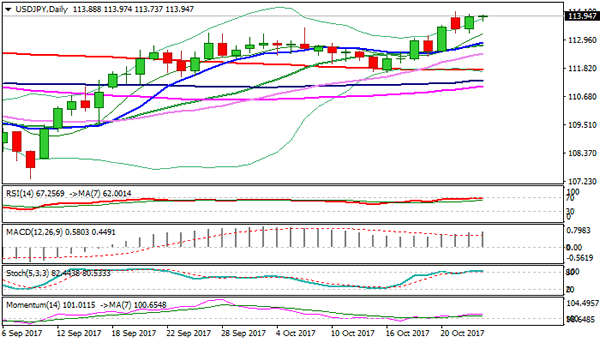
The pair holds firm tone on Wednesday and consolidating under fresh over three-month high 114.09, posted on Monday.
Tuesday's strong rally reversed losses of the previous day and generated bullish signal on formation of bullish engulfing pattern.
Yen's weakness is boosted by strong rise of Nikkei index which moves in uninterrupted steep ascend.
Bullish techs are supportive for further advance and test of key barriers at 114.33 (Fibo 61.8% of 118.66/107.31 descend) and 114.36/49 (11 May / 11 July former tops), break of which would generate strong bullish signals.
Caution on overbought slow stochastic on daily chart and RSI showing hesitation ahead of overbought zone boundary, which may keep the pair in extended consolidation before bulls resume.
Higher base on Mon/Tue at 113.24 should ideally contain dips and keep intact next strong support and pivotal point at 112.87 (rising 10SMA / sideways-moving Tenkan-sen).
Res: 114.09, 114.33, 114.50, 115.00
Sup: 113.73, 113.48,113.24, 112.87
Technical Outlook: AUDUSD Breaks Key Support After Weaker Than Expected Q3 CPI Numbers
The Aussie dollar was sharply lower in Asia after softer than expected inflation numbers in Q3.
Consumer Price Index rose 1.8% y/y, missing forecast at 2.0% and Q2 release at 1.9%, while headline CPI rose 0.6% in Q3 from 0.2% in Q2, missing forecast at 0.8%
Inflation in Australia continues to undershoot RBA’s target of 2%-3% band, suggesting that the RBA may stay on hold further.
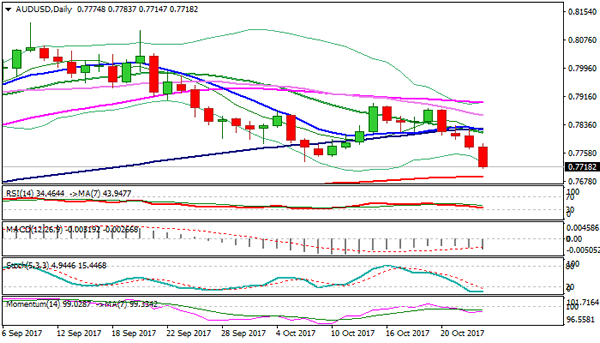
The AUDUSD pair was down 0.7% in Asia, staying firmly in red for the fourth straight day.
Fresh weakness broke below pivotal supports at 0.7732/26 (06 Oct former low / 50% retracement of 0.7328/0.8124 upleg) which could trigger significant downside in coming days.
Close below 0.7732 is needed to confirm break and open way towards 200SMA (currently at 0.7692) and double-Fibonacci support at 0.7630 (Fibo 61.8% of 0.7328/0.8124 / Fibo 38.2% of 0.6825/0.8124) in extension.
Anticipate consolidative/ corrective action in the near term as slow stochastic is deeply oversold on daily chart and RSI is approaching oversold territory.
Overall picture remains bearish and sees corrective upticks as selling opportunities.
Broken 0.7732 pivot now acts as immediate resistance, followed by session high at 0.7783 and falling Tenkan-sen (0.7805) which is expected to cap corrective action, before bears resume.
Res: 0.7732, 0.7783, 0.7805, 0.7822
Sup: 0.7692, 0.7675, 0.7630, 0.7600
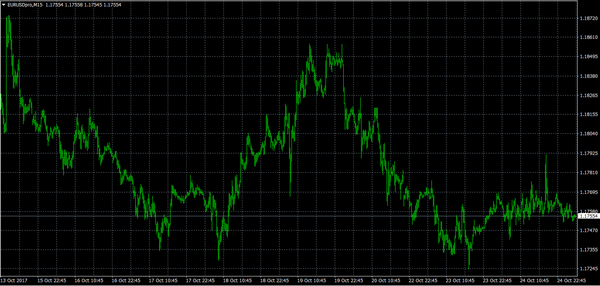
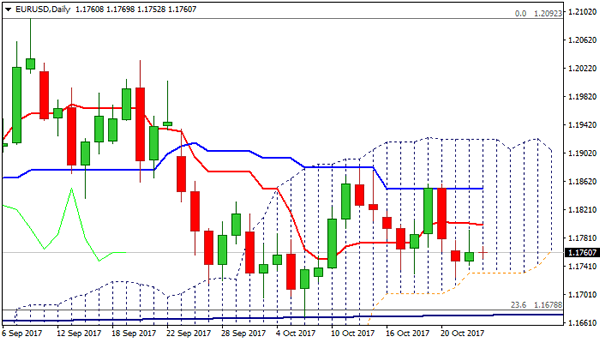
Technical Outlook: EURUSD Holds In Narrow Range, ECB In Focus
The Euro traded within narrow range in Asia, staying in directionless mode for the third straight day, as focus turns on tomorrow's ECB meeting.
Tuesday's action closed in green but strong upside rejection which left daily candle with long upper shadow, offset immediate positive signal.
The pair remains above daily cloud base which marks first pivotal support (currently at 1.1731), awaiting fresh signals from the ECB.
Sustained break below daily cloud and other key supports at 1.1672/69 (H&S neckline/06 Oct low/100SMA) would spark significant bearish acceleration and signal deeper correction of 1.0340/1.2092 Jan/Sep ascend).
Near-term action is capped by 20SMA (1.1778), with daily Tenkan-sen (1.1800) reinforcing resistance. Lift above 1.1800 is needed to ease immediate bearish pressure, while break of last week's double top at 1.1858 would neutralize and generate bullish signal. German Ifo data are in immediate focus today (forecasted unchanged at 115.2 in Oct) and may underpin near-term action on better than expected reading.
Res: 1.1778, 1.1800, 1.1839, 1.1858
Sup: 1.1752, 1.1731, 1.1700, 1.1669
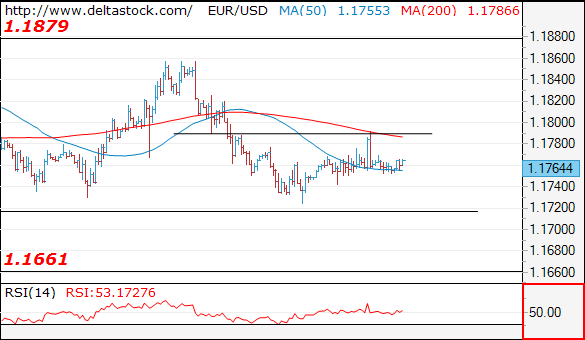
Forex Technical Analysis: EUR/USD, USD/JPY, GBP/USD
EUR/USD
Current level - 1.1764
The recent test of 1.1790 failed and the intraday bias is neutral. Key support lies at 1.1720 and a break through that area will challenge 1.1660 lows.
| Resistance | Support | ||
| intraday | intraweek | intraday | intraweek |
|
1.1790 |
1.1940 |
1.1715 |
1.1660 |
|
1.1880 |
1.2030 |
1.1660 |
1.1480 |
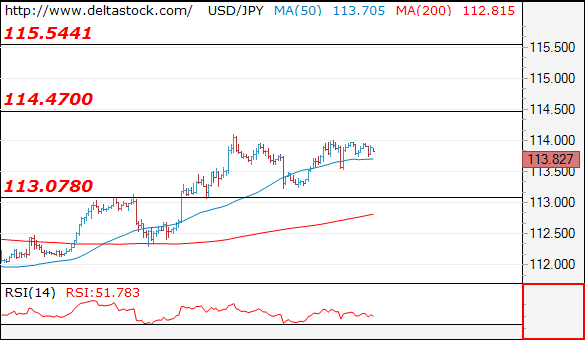
USD/JPY
Current level - 113.82
The outlook here is bullish, for a violation of 114.10 high, towards 114.50, en route to 115.50.
| Resistance | Support | ||
| intraday | intraweek | intraday | intraweek |
|
114.50 |
114.50 |
113.10 |
111.00 |
|
115.50 |
115.50 |
112.30 |
107.30 |
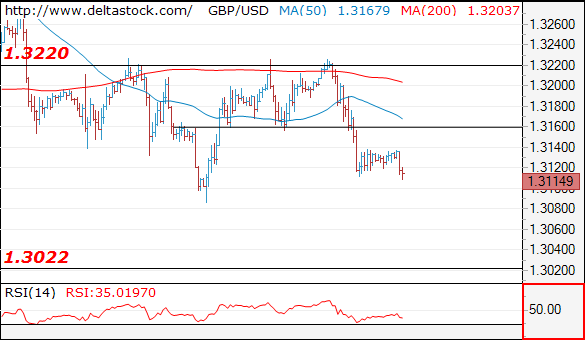
GBP/USD
Current level - 1.3114
The break through 1.3160 support signals a negative bias, for a slide through 1.3080, towards 1.3020 low. Key resistance lies at 1.3160.
| Resistance | Support | ||
| intraday | intraweek | intraday | intraweek |
|
1.3160 |
1.3340 |
1.3080 |
1.2910 |
|
1.3220 |
1.3650 |
1.3020 |
1.2760 |
AUDUSD Under Pressure, Bearish Short-Term Outlook While Market Trades Below 0.80
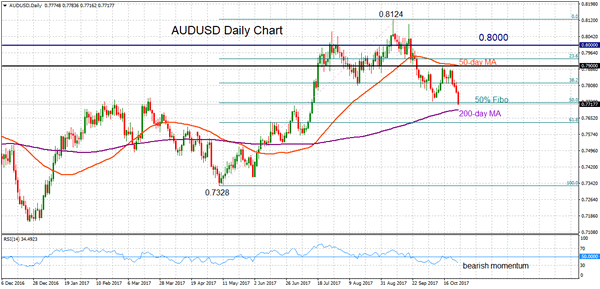
AUDUSD is under pressure and fell for a fourth consecutive day today. The pair has approached a critical area and could close below the 50% Fibonacci retracement level of the uptrend from 0.7328 to 0.8124.
The bias is now clearly to the downside and a daily close below 0.7724 (50% Fibonacci) could trigger a deeper decline towards the 200-day moving average at 0.7691 and then to the 61.8% Fibonacci at 0.7632. Additional support is expected at an area of congestion at 0.7515 (which acted as both support and resistance in the past) before reaching the 0.7328 low touched on May 9.
The market would have to rise back above the 0.7900 level (50-day MA) to weaken immediate downside pressure but only a move above the psychological level at 0.8000 would indicate that the short-term bearish phase has ended. Clearing this key level would see a re-test of the 0.81241 peak and from here prices would likely resume the uptrend that started from the May low of 0.7328.
AUDUSD is expected to remain bearish in the short-term since the RSI indicator is showing downside momentum. Looking at the bigger picture, the upward trajectory from May stalled in September, setting up the market for a potential reversal of that bull run.
Aussie Follows In The Footsteps Of Its Kiwi Neighbor As It Plunges After Soft Inflation Numbers
The Australian dollar was the biggest mover of today’s Asian session as it plunged to 3-month lows versus the greenback after the announcement of third quarter inflation. Other major pairs were mostly holding around the previous session’s levels, with the US dollar preserving its gains.
Third quarter headline inflation for the country came in at 0.6% quarter-on-quarter, lower than the 0.8% expected by economists. Both the trimmed mean and the weighted mean measures, which are more closely followed by the Reserve Bank for its interest-rate setting, also missed expectations by coming in at 1.8% and 1.9% respectively. The fact that inflation is just below the RBA’s target range of 2-3% for yet another quarter, makes it less likely that an interest rate hike is going to happen in the near-term. The country’s benchmark rate is currently at a record-low 1.5%, but besides inflation there are worries that loose monetary policy could be causing the real estate market to overheat in the country’s key cities.
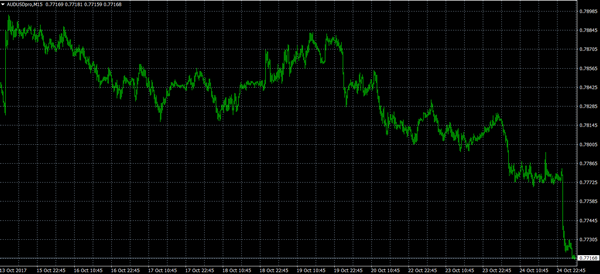
The Australian dollar fell to as low as 0.7715 against the US dollar, having fallen below the 0.78 mark on Monday. This was the lowest level for the aussie since July 13.
The New Zealand dollar, which was the big loser of the previous sessions due to the country’s new coalition government, managed to find some support around 0.69 against the greenback. The kiwi’s decline has slowed down but it will be interesting to see if it will manage to hold the 0.69 level for now.
In the United States, the US dollar has received a boost from reports that Professor John Taylor’s chances of becoming the next Fed chair have risen as he was endorsed by the majority of Republican lawmakers that met with President Trump during a luncheon on Monday. Powell and Yellen are still being considered, but Taylor is seen as the more hawkish option. This was just as well for the dollar as infighting in the Republican Party seemed to dim the chances that tax reform will be passed successfully in the next few weeks. Therefore relatively negative news about tax reform were balanced by some positive reports concerning the next Fed chair, which left the US dollar index near 2-month highs at 93.83. Euro/dollar was pinned around the 1.1750-65 level for most of the session, awaiting the crucial ECB meeting tomorrow. The rise of the US 10-year yield above 2.40% also supported the dollar against the yen as it remained near 3-month highs at 113.85 after failing to overcome the 114 level. Positive news either on tax reform or on a hawkish Fed chair nominee could push the pair to break this level.
Looking ahead, it will be a busy day with the German Ifo business confidence survey for October and the UK’s preliminary third quarter GDP being the highlights of the early European session. Durable goods orders and new home sales out of the US could move the dollar and bonds, while Canadian dollar traders will be intensely focused on the outcome of the Bank of Canada policy decision (no change in rates is expected but there could be a hawkish tone). US crude oil inventories a little later could move oil.
GBPUSD Strongly Bearish Below 1.3157
The British pound has fallen sharply against the U.S dollar, hitting 1.3113, due to a stronger U.S dollar index and unfavorable Brexit headlines comes from Brussels on Tuesday. The GBPUSD pair currently trades around the 1.3134 technical level, ahead of today's release of third fiscal quarter Gross Domestic Product figures from the United Kingdom economy.
The GBPUSD pair remains strongly bearish while trading below the 1.3157 level, further intraday declines should be expected towards the 1.3113 and 1.3087 levels. Extended intraday support is located at 1.3040.
Should price-action move above the 1.3157 level, buyers will likely target the 1.3180 and 1.3201 levels. Extended resistance is found at 1.3228 and 1.3268.

EURO Still Bearish Below 1.1770
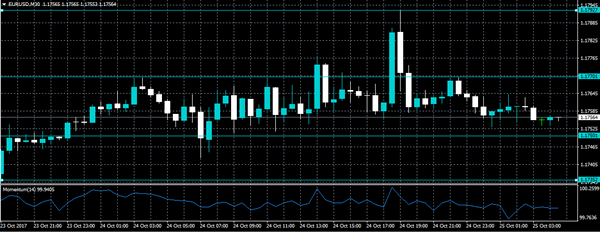
The euro continues to trade towards the lower end of its weekly range against the U.S dollar, as euro sellers continue to thwart intraday upside advances from the single currency. The EURUSD pair currently trades around the 1.1755 level, ahead of the release of the October German IFO survey during Wednesday's European trading session.
The EURUSD pair still remains bearish while trading below the 1.1770 technical level. Further declines towards the 1.1750, 1.1735 and 1.1713 levels can be expected, while price-action continues to struggle to regain the 1.1770 level.
Should intraday EURUSD buyers push price-action back above the key 1.1770 technical level, further intraday advancement towards the 1.1792 and 1.1802 levels remains likely.
BOC Headlines Active Wednesay Session
Economic data and monetary policy are on the agenda for Wednesday, with the Bank of Canada (BOC) scheduled to deliver a highly anticipated rate decision in Ottawa.
The BOC will make its policy intentions known at 14:00 GMT. Canada’s central bank wowed investors by raising interest rates in back-to-back meetings – something completely unheard of in the era of quantitative easing and negative interest rates. Although the BOC is expected to raise rates again this year, policymakers will probably stand pat on Wednesday following the recent batch of inflation and retail sales data.
In terms of economic data, action begins six hours earlier in Germany with the IFO business climate indicator. The monthly release provides a snapshot of business sentiment for Europe’s largest economy.
At the same time, Italy will report on industrial production for the month of August while Switzerland will see the latest ZEW Survey for October.
At 08:30 GMT, the United Kingdom will release its latest batch of Q3 GDP data. The post-Brexit economy is finally beginning to slow, although surging inflation will likely compel the Bank of England (BOE) to raise interest rates soon.
Four hours later, the US Department of Commerce will report on durable goods orders for the month of September. The report is expected to show a monthly gain of 1%, following a brisk 2% rally the previous month.
About 90 minutes later, Commerce will report on new home sales for the month of September.
Earlier in the day, the Australian Bureau of Statistics (ABS) said consumer inflation rose 0.6% in the third quarter, but weakened to 1.8% annually. The Reserve Bank of Australia’s Trimmed Mean CPI, which is essentially a measure of core inflation, was unchanged at 1.8% year-over-year. Analysts had expected core inflation to jump to 2% in the July-September period.
AUD/USD
The Australian dollar took a beating after the CPI report, falling to the lowest level in over three months. The AUD/USD exchange rate is down 0.8% at 0.7717. the pair has been on a gradual downward path for the better part of a month after failing to extend gains north of the psychological 0.8000 level. The AUD/USD is likely to face immediate support at 0.7700. The outlook remains firmly to the downside as the US dollar reasserts control.
USD/CAD
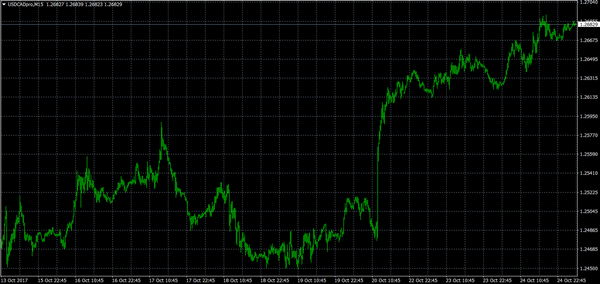
A recent string of disappointing data releases has left the Canadian dollar reeling. The USD/CAD is fast approaching 1.2700, a level it has not seen since August. The market is bullish, as the greenback continues to claw back heavy losses incurred through the summer.
EUR/USD
The euro held steady on Tuesday even as the dollar rose against other major currencies. The EUR/USD exchange rate remains stuck in a range between 1.1700 and 1.1800. This will likely continue, unless US data surprise to the upside on Wednesday.