

Sample Category Title
16 – RSI – Trading Divergence
In the previous forex education section, we introduced the Relative Strength Index (RSI) and buying and selling when the indicator crosses back from oversold and overbought. In this section we will move past the basics and introduce a more advanced concept: Divergence.
Divergence occurs when a forex currency pair makes a new high or low and the indicator (in this case RSI) does not confirm:
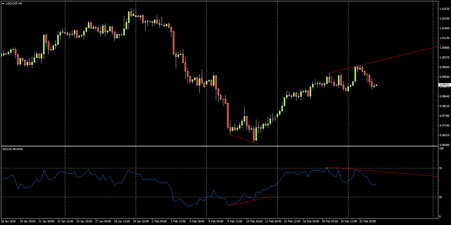
This is a 4 hour chart of USD/CHF which shows both bullish and bearish RSI divergence. Bullish divergence occurs when price move to new lows, while RSI carves a higher low.
Conversely, bearish divergence occurs when price moves to new highs, but RSI stops short of the previous peak. We've highlighted bullish (buy) signals in green and bearish (sell) signals in red:
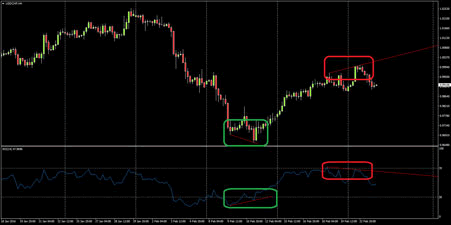
The buy signal (green), yields over 200 pips before a basic overbought cross tells the forex trader to exit. Note that there is a slight pause between this exit signal and the bearish divergence signal. This move is yet to play out, but the forex pair has already declined 90 pips. Let's take a closer look:
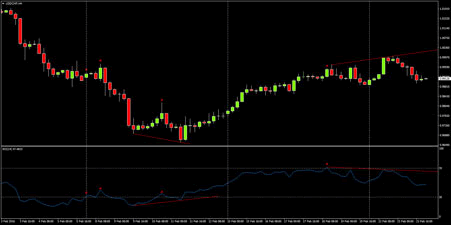
Note that before the bullish divergence signal, RSI issues 3 basic buy signals as it crosses back above 30 (red crosses). The first two are pretty shocking; USD/CHF declines over 250 pips before eventually turning higher. The third signal is comparably better - the pair only declines around 115 pips before the bullish reversal. Conversely, the bullish divergence signal coincides perfectly with the actual bottom.
There is only one basic sell signal before the bearish divergence - USD/CHF appreciates another 50 pips before the top - this is not as bad as the false buy signals, but there's always room for improvement. This time, the divergence signal does not coincide with the top perfectly - but the difference is negligible - approximately 5 pips.
A forex trader taking basic RSI signals on their MT4 platform would have had at least 1 losing trade with this example (possibly 3 depending on their stop loss). On the other hand, a divergence forex trader would have netted two winners and not lost a single trade.
The take away: A forex trader who waits for divergence, will likely avoid some losing trades and enter the market at a better price than your basic RSI trader. This allows for tighter stops and easier targets and should yield an improved win rate. RSI often precedes moves in price. Meaning that RSI will often begin to trend up/down before price does - this can give the divergence forex trader a profitable head start over your average price action forex trader.
15 – RSI – Basics
In the last section we looked at Moving Average crosses and using Moving Averages to determine the trend. In this section we will move on to a new type of indicator - the Oscillator. Unlike the MA, Oscillators tend to appear below your MT4 chart in a separate window. We're going to take a look at one of the most common oscillators, the Relative Strength Index or RSI:
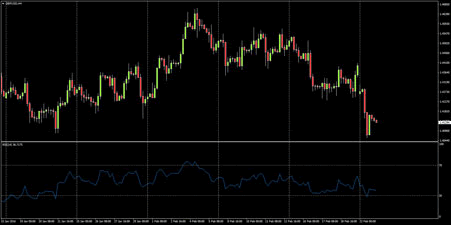
RSI looks at an instrument's ability to close higher/lower over a given period. When RSI is above 70, a forex currency pair is considered 'overbought' and when it's below 30, it's considered 'oversold'. It's important to note that just because a security is overbought/oversold, does not mean it's going to reverse - Indicators can read overbought/oversold for extended periods of time. A sell signal does not occur until RSI crosses back from overbought/oversold into the 70-30 range:
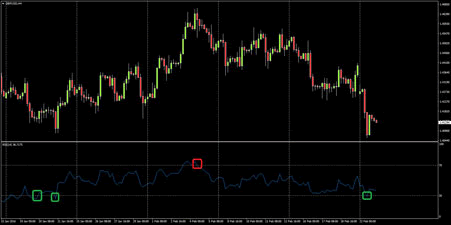
Let's look at the first buy signal - when RSI crosses back above 30 on the 20th of Jan. Note that the forex pair actually sets a new low (and issues a second signal) before moving higher. The first signal occurs at 1.4182, the new low is over 100 pips lower at 1.4079 - chances are most traders would have been stopped out on this signal.
The second buy signal is better, but there is still significant whip saw before the trader eventually nets 380 pips. This sell signal tells the trader to exit their long and go short - the forex trader then proceeds to make another 422 pips before the next buy/exit signal!
So let's have a look, our hypothetical RSI trader's first trade was a loss of 100 pips, before making 380 and 422 pips on his second and third trades. That's 2 wins out of 3 trades, with a net profit of 702 pips!
But what now? RSI is telling the forex trader to buy even though the currency pair has just broken below the late February lows. The trader could well lose 110 pips on this signal. That would bring their win rate down to a more realistic 50% and net profit to 590 Pips.
What if our trader had ignored buy signals? GBP/USD is in a major down trend after all. Well, we would have had 1 trade, 1 win and net profit of 422 pips. Over such a small sample size it is hard to compare the two, but long term testing shows better performance when trading RSI with the trend.
14 – Moving Averages – Crossovers
In the last section we introduced Moving Averages or Mas. We used a single MA in isolation and let it guide us into possible buying and selling opportunities. We used the 100SMA (100 Period Simple Moving Average) on a 4 hour GBP/USD chart - this is a relatively 'slow' MA. In this section, we will take our look at MA's a little further and look at Moving Average Crosses using both a 'fast' and 'slow' MA:
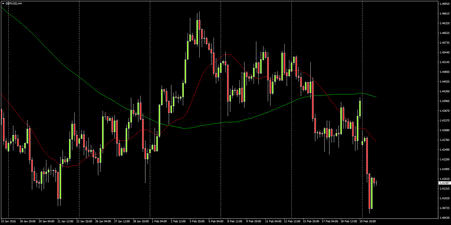
We have kept the 'slow' 100SMA from the previous section (green line) and added in a 'fast' MA: the 20SMA (red line). In the previous section, we looked at price's relation to the 100SMA and used that to determine our buying/selling bias. Here we will go a little further and look at the relationship between the fast and slow MAs. Note that when the fast MA (red) crosses above the slow MA (green) on the 2nd of February, GBP/USD appreciates over 300 pips.
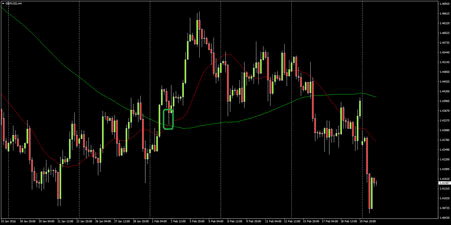
However, when the fast MA crosses back below the slow on the 17th of February, GBP/USD eventually declines around 240 pips (this move is probably still active):
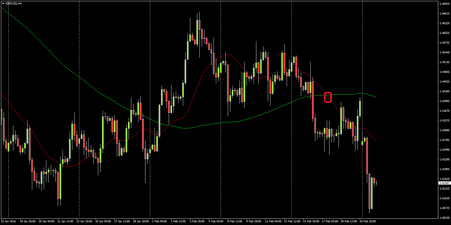
"But it went up first!" you say?
True, but note after the Fast MA crossed below the slow MA, price never again breached the slow MA ie a trader with his stop above the 100SMA survived the noise and caught the move lower.
Note that this approach is a lot more systematic than the subjective selling highs/buying lows strategy in the previous section. Trading systematically takes the guess work out of forex trading and tends to be less taxing mentally than pure discretionary trading.
Wondering where to exit the trade? A lot of forex traders simply take a multiple of their stop loss for their profit target, but this might not be for you.
In the next section we will discuss another type of indicator; the Oscillator. Oscillators can be very handy when determining whether or not an instrument is oversold/overbought and hence, when to exit.
13 – Moving Averages – Basics
Moving Averages are by far the most widely used and easy to understand forex indicator. They display right on top of your chart and mechanics are very easy to understand - a moving average or MA - is quite simply the average price over a given period.
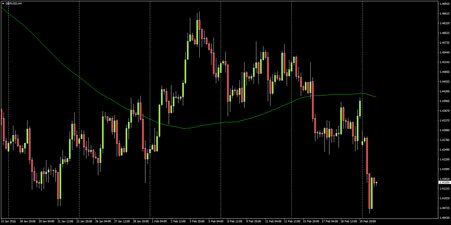
This is one of the more common Moving Averages - SMA100 - the Simple Moving Average of the close price for the last 100 bars. We have placed the SMA100 over the GBP/USD forex pair on a 4 hour chart.
The simplest form of MA analysis is checking where price is in relation to the MA - is price above the 100SMA? Look to buy. Is price below? Look to sell.
That is, when GBP/USD is above the 100SMA, we will look to buy lows, when it below the 100SMA, we will look to sell highs:
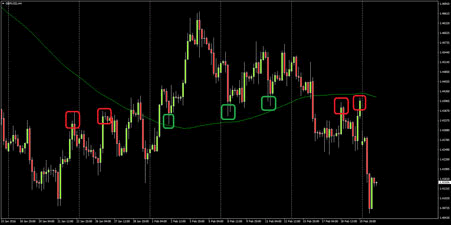
As you can see, this is quite a reliable strategy at first glance - all the marked highs below the SMA lead to substantial declines and all the marked lows above the SMA lead to substantial bounces. Realistically though, this image was created with the benefit of hindsight - a live forex trader may well have bought the final touch of the 100 SMA:
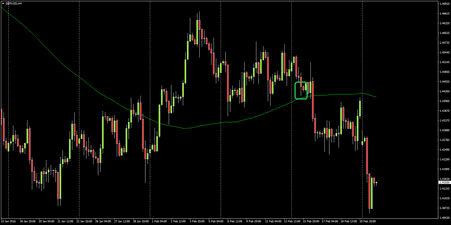
Even so, GBP/USD did appreciate 75 pips before eventually breaking lower - Our hypothetical trader could have taken profit, moved his stop loss to break-even or, lost a small amount when pair breached the SMA. Let's say the trader lost on this one, but 7 wins out of 8 trades is still extremely impressive!
You will rarely see a moving average in isolation like this, most traders will use a combination of a 'fast' and 'slow' moving average. We go into more detail on moving average trading in the next section.
12 – Technical Indicators Overview
We have previously discussed Price Action or Naked trading - not for you? In this chapter we are going to discuss the alternative, trading while wearing your pants… Just kidding! Of course we're talking about using indicators.
Indicators analyse price action for you and give clear entry and exit signals. We will cover some of the more popular indicators and discuss how you can apply them to your trading.
Just be aware that no indicator is perfect. Many traders will filter "bad" signals by only taking signals in the direction of the trend ie only taking sell signals in a down trend and vice versa. More on this later – first we will discuss the most popular and widely used indicator: The Moving Average.
11 – Fibonacci
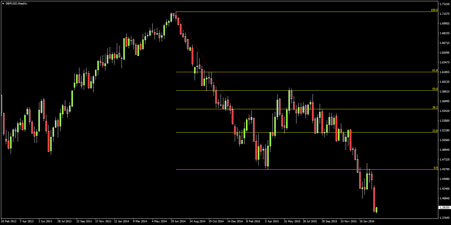
Fibonacci retracements are a quick and easy way of predicting support and resistance levels in Forex. The Fibonacci tool works on the principle that markets tend to 'retrace' a portion of a move prior to continuing the dominant trend. Traders use the Fibonacci tool on MT4 to connect the lows and highs of a recent trend, swing or range and the tool displays likely support and resistance levels derived from the Fibonacci Sequence (Golden Ratio). Fibonacci levels appear again and again in Forex - this tool is surprisingly reliable when it comes to predicting support and resistance:
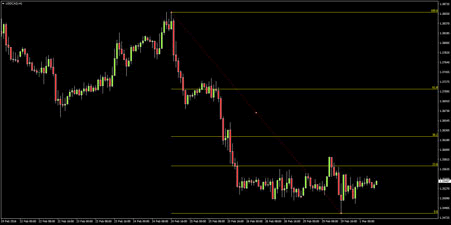
This is the recent down move in USDCAD. If we use the Fibonacci tool to connect the previous peak to the range low, we are shown three potential resistance levels. The standard Fibonacci retracement levels are 23.6, 38.2 & 61.8, but many traders also use the 78.6 and 50 levels. 50 is not actually derived from the Fibonacci sequence, but the importance of the level cannot be denied - 50% retracements are very common place:
Let's take another look at USDCAD:
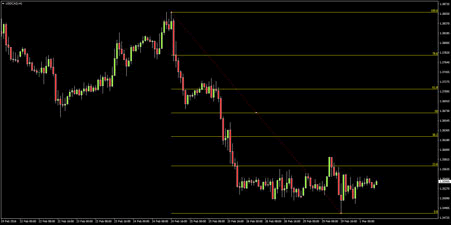
Despite a false break above in late February, pair is essentially capped by the 23.6 Fib. Above the 23.6 we have the 38.2, a break above the 23.6 would likely encounter resistance here. These levels are very common; a trend can retrace these percentages and still be considered healthy. Next we have the 50% mark, note this level is important as it coincides with former support. Above 50% and traders are beginning to question the recent move - is this a retracement or a reversal? Having said that; 61.8 retracements, prior to continuation are also fairly common. The 78.6 is considered the be all and end all - if a pair retraces more than 78.6% of the prior move, chances are it's heading straight back to the origin (100%). It may have completely reversed direction or is range bound.
A trader with a bearish bias on USDCAD would wait for a break above the 23.6 and look for a reaction at one of the higher fib levels, before entering short. On the other hand, a trader with a bullish bias might trade a break above the 23.6 with a stop below the recent lows, or wait for a break above one of the higher fibs.
The previous examples were all assessing down moves; let's take a look at an up move:
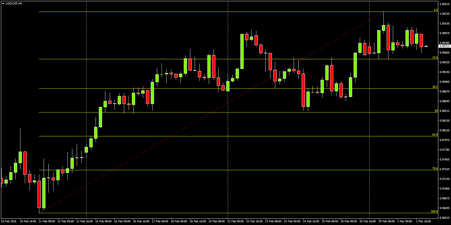
The process is the same, but instead of dragging the Fibonacci tool from the high to the low; we drag it from the low to the high. A trader looks at this chart and see's USDCHF is trending up and decides they want to buy. They know not to buy into resistance, so they use the Fibonacci tool to identify probable support levels. They notice that price seems to be respecting the 50% level and decide they will attempt to enter long there. They have two options:
- Watch and wait for a correction to, reaction at the 50% level
- Place a Buy Limit order just above the 50% level
The first option is probably 'safer', as the trader is not blindly buying into a potential support level. On the other hand, the second option means the trader does not have to sit and watch the market. Either way, our trader has four options for placing their stop, depending on their risk tolerance:
- A tight stop just below the 50% level
- A more reasonable stop below the 61.8
- A considerably looser stop below the 78.6
- A stop below 100 - if price moves below here the trader's bullish bias is unquestionably invalidated as pair has set a new low
The first option is likely a little too risky, most traders would probably opt for the balanced choice under the 61.8. With the latter two, the trader risks holding on to a losing position for longer than necessary and is sacrificing reward.
Fibonacci Retracements are a great way of identifying potential support and resistance levels. When analysing a down move, the trader uses the tool from the high to the low. When looking at a rally, the trader drags from the low to the high. The standard 23.6, 38.2 and 61.8 Fib levels are great, but many Fibonacci traders add in the 78.6 and 50 levels too. Trade breaks of key Fibs or reactions, depending on your strategy and bias.
10 – Support and Resistance
In Forex trading, support and resistance refers to levels where price is likely to pause, bounce or even reverse. Support is a lower price point or zone where the currency pair is considered 'cheap', spurning buying interest. Resistance is an upper price point or zone where the pair is considered 'expensive' and is likely to encounter sellers:
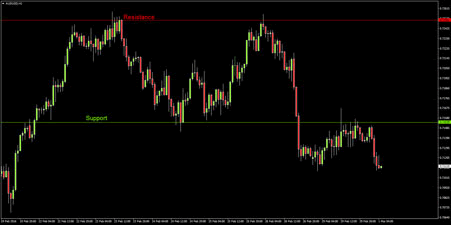
In the above example, the Australian Dollar is finding buyers around 7150, but encountering strong selling interest above 7250 - note pair spikes above 7250 resistance five times, but is unable to close above there. It is also worth noting that when there's an hourly close below 7150 support, pair is then unable to close back above the level - former support is now acting as resistance:
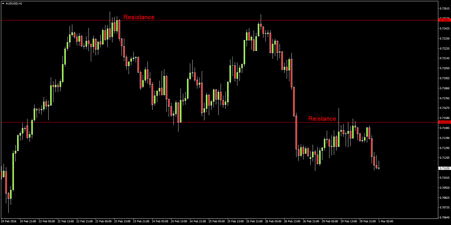
This is a fairly common occurrence in Forex trading - levels that previously encouraged buying interest will nearly always encourage selling interest after they break down (and vice versa).
You've heard the old saying "Buy Low, Sell High"? Forex traders look to sell into resistance and buy into support, this leads to higher probability setups, allows the trader to set tight stops and leaves plenty of room for rewarding trades.
Now we've had a look a horizontal support and resistance, let's take a quick look at trend resistance and support:
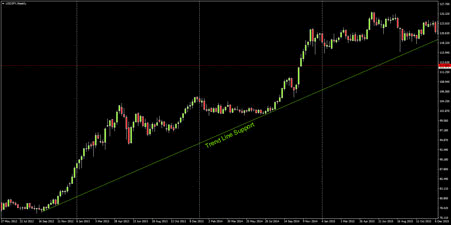
This is the trend line that supported USDJPY from September 2012 - January 2016. Note pair finds buying interest whenever price nears trend support.
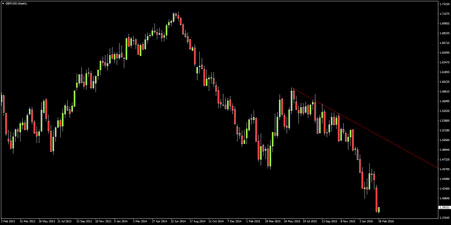
Here we have the recent down trend in GBPUSD, note pair is unable to close the week above trend line resistance and eventually turns lower.
Remember: If you want high probability, rewarding setups - Buy low, sell high - buy into support, sell into resistance.
09 – Chart Patterns – Continuation
Ascending Triangle - Bullish Continuation Pattern:
The Ascending Triangle is one of the most reliable bullish continuation or accumulation patterns. It is characterized by a series of higher lows failing at a flat top - this means it is a 'terminal' pattern - eventually price will have to stop carving higher lows, or more often than not, the top will have to break.
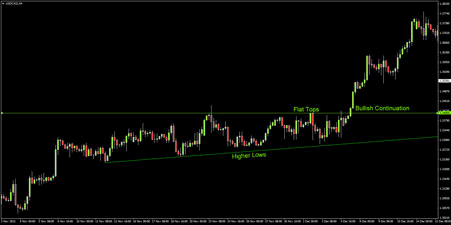
Just like the reversal patterns discussed in the previous section, the buy signal occurs when the top breaks and the pattern is confirmed.
Descending Triangle - Bearish Continuation Pattern:
The Descending Triangle on the other hand, is a very reliable bearish continuation pattern. The pattern is characterized by a series of lower highs meeting a flat bottom.
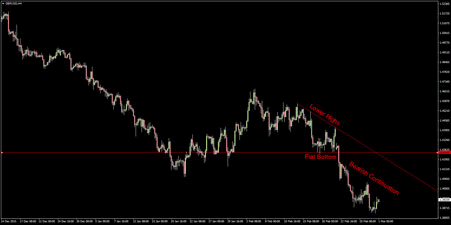
Traders will enter short when the flat bottom is taken out. As we discussed in the Trend Trading section, price can decline quite quickly in a bear market - these patterns often yield impressive moves lower.
Bull Flag - Bullish Continuation Pattern:
Bull Flags or Pennants are an extremely reliable bullish continuation pattern. They are deceptive to the novice trader as price is temporarily trending down, but at a relatively shallow pace. Bull flags are characterized by a series of parallel lower highs and lower lows within a dominant uptrend:
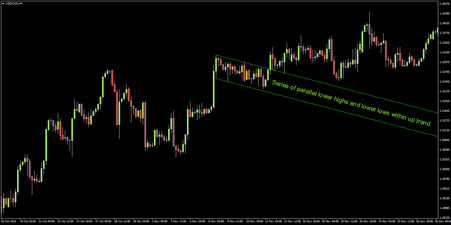
A buy signal is triggered when the upper parallel is breached.
Bear Flag - Bearish Continuation Pattern:
The last continuation pattern we will look at is the Bear Flag. The opposite of the Bull Flag, characterized by a series of parallel higher lows and higher highs within a dominant down trend:
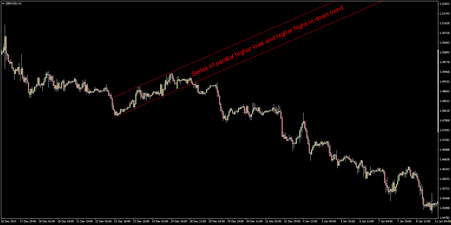
Traders will look to enter short once the lower parallel breaks. Just like the Descending Triangle, these patterns can lead to some fierce bearish continuation - in this case, GBPUSD declines over 800 pips in less than a month.
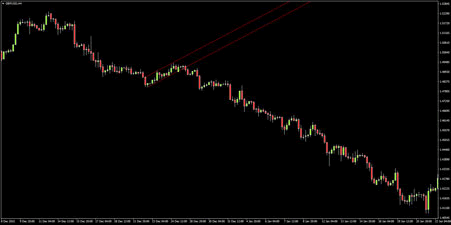
The Take Away: Chart patterns are often high probability, high reward trades that offer the trade clear entry and stop loss levels. Patterns are confirmed when the relevant line breaks - not before - wait for the breakout.
08 – Candle Patterns – Reversal
In this section we will cover chart patterns, these are patterns that are comprised of many candles and take considerably more time to form. Once again, there are multitudes of chart patterns to draw up on your MT4 platform, so we will try to only cover the more common and reliable patterns.
Head and Shoulders - Bearish Reversal Pattern
This is by far one of the most common and easy to recognise chart patterns, it is also the most reliable. Forex traders love these patterns for both their reliability and the fact they offer clear entry and stop loss levels:
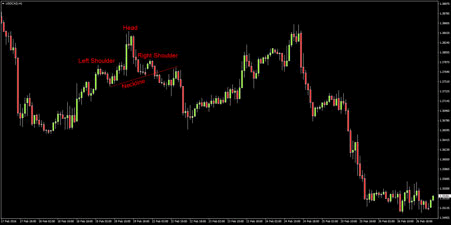
These patterns have four components:
- Left Shoulder - small rounded top. Pattern is not yet visible
- Head - Pair breaks above the left shoulder before retracing 100%, or the majority of the ascent - potential pattern visible to the keen eyed chart trader
- Right Shoulder - pair forms a lower high to the right of the head, usually similar magnitude to left shoulder, but variance is not uncommon. Head and Shoulders top is now clearly visible.
- Neckline - Though the chart pattern is now clearly visible, it is not a confirmed top until there is a break below the neckline. The Neckline connects the lows of the left and right shoulders. This is often a straight line, though in the above example it is ascending - patterns with ascending necklines are even more reliable than the standard, flat neckline Head and houlders.
Once price breaches the neckline, the trader enters short. Stop can be placed above the right shoulder, or above the head (depending on your risk tolerance). Note that price often comes back to test the underside of the neckline - this can be very handy if you've missed the original break and reinforces bearish bias. In this example, once price breaches the neckline, there is a ecline of over 100 pips.
Deformed Head & Shoulders - the above example was very clean, though some times, these patterns can exhibit 'deformities' such as dual or multiple right shoulders, descending neck lines or shoulders that exceed the top. Cleaner patters tend to be more reliable, though the key to a successful trade is always waiting til the pattern is confirmed ie the Neckline breaks. Here are some examples of the above deformities:
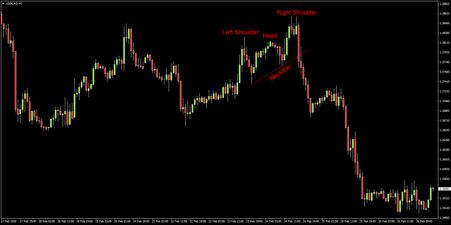
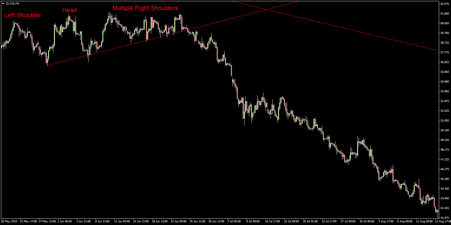
Head and Shoulders patterns are extremely reliable and offer the trader clear entry and exit points, but always remember - the setup is not confirmed until the neckline is breached.
Inverse Head and Shoulders - Bullish Reversal Pattern
As the name suggests, these patterns are identical to a standard Head and Shoulders, but appear upside down (on their heads) and signify a potential bottom. Not quite as reliable as the standard H&S, but still a very reliable pattern. These patterns are often more difficult to spot than their bearish counterparts, but recognition becomes easier as you gain charting experience.
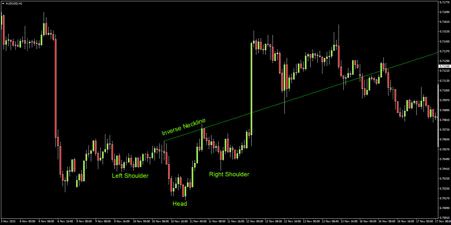
Once again, the key here is waiting til the neckline is breached.
Double Top - Bearish Reversal Pattern
The Double Top or 'M', is another reliable chart pattern favoured by many traders. Like the H&S, it offers the trader clear entry and stop loss levels. With the Double Top, the entry trigger is known as the Confirmation Line:
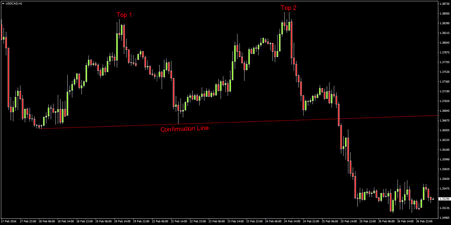
The Double Top is characterized by two tops of similar magnitudes, originating from roughly the same point. The Confirmation Line connects the two origin points and tends to be flat or ascending at a slight gradient. Just like the H&S, the trader does not enter short until the Confirmation Line is breached and the top is confirmed. Note the two tops often take the shape of H&S or smaller double top patterns (this M features the two H&S examples from earlier).
Double Bottom - Bullish Reversal Pattern
The Double Bottom or 'W' is the inverse of the Double Top - it's shape is reminiscent of the letter 'W' and the pattern signals a potential bottom.
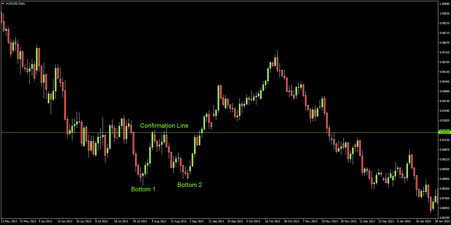
As with the other reversal patterns we've covered, the trader waits until the Confirmation Line is breached before entering a Buy position.
07 – Candle Patterns
What is a Candle?
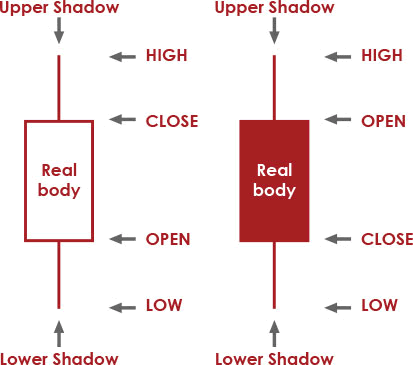
Candle Patterns
In this section we're going to take a look at trading off forex candles on your MT4 charts. There are many different forex candle patterns - we'll have a look at some of the more common and reliable ones here. Candle patterns often indicate a turning point or reversal in the forex market, so we'll break this section up into 'Bearish Reversal Candles' and 'Bullish Reversal Candles'.
Bearish Reversal Candles
Shooting Star:
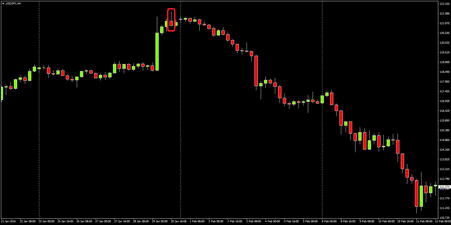
The Shooting Star is a single candle bearish reversal pattern that occurs at the end of an uptrend. Price initially moves higher, before eventually closing near the open, leaving a long wick with a short body. Wick should be at least 1.5x the length of the body. Note in the above example, this forex candle leads to a decline of nearly 1000 pips in less than two weeks.
Bearish Engulfing:
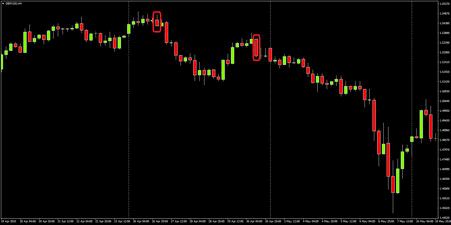
The Bearish Engulfing is one of the more common bearish reversal and continuation patterns. The candle will close lower, with a body that completely engulfs the body of the relatively smaller previous candle. Note this candle continues to occur frequently throughout the down trend, signalling continuation (we have only circled two which occur at peaks).
Hanging Man:
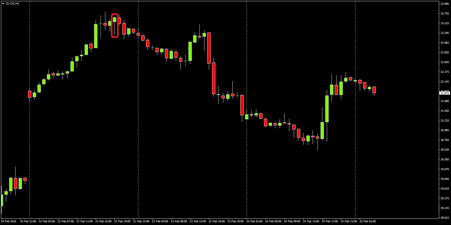
The Hanging Man is another relatively common bearish reversal candle that occurs at peaks. Price will move signifcantly lower at the start of the perioid but will come back to finish near the open, leaving a long wick and small body (simmilar to the Shooting Star, but the wick is below the candle not above). If this forex candle occurs in the lows of a down trend it is a bullish candle known as a hammer.
Bullish Reversal Candles
Bullish Hammer:
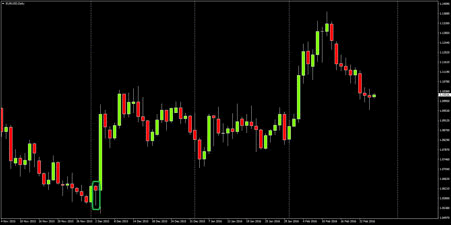
The Bullish Hammer is a common reversal pattern that looks identical to the Hanging Man candle but occurs in the bottoms of down trends. Price will move signifcantly lower at the start of the perioid but will come back to finish near the open, leaving a long wick and small body. Note in this example, the following candle actually breaches the Hammer's low - forex traders should always set their stop a reasonable distance from any reversal candle.
Bullish Engulfing:
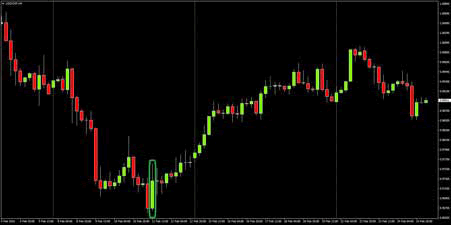
The Bullish Engulfing is identical to the Bearish Engulfing but it is an up candle occuring at the end of a down trend. The body of the new candle will completely engulf the previous candles body signalling a major shift in sentiment.
These are just a few of the more common forex candle patterns with high success rates. Remember some candles appear identical so you have to then determine whether the candle is appearing at a peak in an advance (Hanging Man) or at a trough in a decline (Bullish Hammer)?
Don't forget to set your stops a safe distance from the relevant candle's high/low - though many reversals are immediate, there is some times noise which you should adjust for.