Sample Category Title
Yen Jumps as North Korea Fires Ballistic Missiles
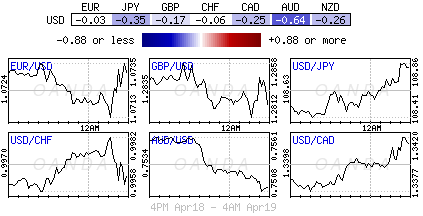
The Japanese Yen jumps broadly in Asian session today on risk aversion as North Korea fired four ballistic missiles into nearby waters. Some analysts pointed out that the missile tests reminded the markets of the unpredictability of Kim Jong Un leadership. Japan prime minister Shinzo Abe warned that the missile launches "clearly show that this is a new level of threat" from North Korea". Nikkei responded by trading down around -0.5% at the time of writing and stays in red for the whole session. Yen surges against all most currencies today. In particular, USD/JPY's rejection from 114.94 near term resistance since last Friday maintains it's neutral outlook for the moment. Released in Asia, Australia TD securities inflation dropped -0.3% mom in February. Australia retail sales rose 0.4% mom in January, in line with consensus.
China to target 6.5% growth this year
In China, Chinese Premier Li Keqiang suggested at the National People's Congress that the government's GDP growth target for this year is "around 6.5%, or higher if possible", down from 2016's 6.5-7.0%. Inflation target stays at around 3% and a fiscal deficit at around 3% of GDP. The growth target of money supply M2 has been lowered, by -1 percentage point, to 12%. As suggested in the Work Report, the RMB exchange rate will "be further liberalized, and the currency's stable position in the global monetary system will be maintained". A number of Chinese macroeconomic data would be released including trade balance and inflation.
NFP to highlight the week, with RBA and ECB featured
The economic calendar is rather light today with only Eurozone retail sales PMI, Sentix investor confidence and US factory orders featured. RBA and ECB will meet this week. And both central banks are expected to stand pat. Main focus will be on US non-farm payroll report this week. Fed chair Janet Yellen's speech last Friday proved hawkish, indicating that the FOMC would "evaluate whether employment and inflation are continuing to evolve in line with our expectations, in which case a further adjustment of the federal funds rate would likely be appropriate". CME's 30-day Fed funds futures priced in almost 80% chance of a rate hike next week. We do not expect the February employment (due Friday) and inflation (due next week) would derail the scenario. But a strong set of NFP report will solidify the case for a March hike and push Dollar further higher.
- Tuesday: RBA rate decision; German factory orders; Eurozone GDP; Swiss foreign currency reserves; US trade balance, Canada trade balance, Ivey PMI
- Wednesday: China trade balance; German industrial production; Swiss CPI; UK budget release; Canada housing starts, labor productivity, building permits; US non-farm productivity
- Thursday: China CPI and PPI; Swiss unemployment rate; ECB rate decision; Canada new housing price index; US import price index, jobless claims
- Friday: Japan BSI large manufacturing; Australia home loan; Germany trade balance; UK productions, trade balance; Canada employment; US non-farm payroll
USD/JPY Daily Outlook
Daily Pivots: (S1) 113.61; (P) 114.18; (R1) 114.56; More...
USD/JPY dips mildly today on broad based rebound in Yen. The rejection from 114.94 resistance argues that the correction from 118.65 is possibly not completed yet. But still, in case of another fall, we'd still expect strong support from 38.2% retracement of 98.97 to 118.65 at 111.13 to contain downside and bring rebound. On the upside, decisive break of 114.94 will indicate that it's completed with a double bottom pattern (111.58, 111.68). In such case, intraday bias will be turned to the upside for retesting 118.65.
In the bigger picture, price actions from 125.85 high are seen as a corrective pattern. The impulsive structure of the rise from 98.97 suggests that the correction is completed and larger up trend is resuming. Decisive break of 125.85 will confirm and target 61.8% projection of 75.56 to 125.85 from 98.97 at 130.04 and then 135.20 long term resistance. Rejection from 125.85 and below will extend the consolidation with another falling leg before up trend resumption.


Economic Indicators Update
| GMT | Ccy | Events | Actual | Forecast | Previous | Revised |
|---|---|---|---|---|---|---|
| 0:00 | AUD | TD Securities Inflation M/M Feb | -0.30% | 0.60% | ||
| 0:30 | AUD | Retail Sales M/M Jan | 0.40% | 0.40% | -0.10% | |
| 9:10 | EUR | Eurozone Retail PMI Feb | 50.1 | |||
| 9:30 | EUR | Eurozone Sentix Investor Confidence Mar | 18.5 | 17.4 | ||
| 15:00 | USD | Factory Orders Jan | 1.00% | 1.30% |
USD/CAD: Loonie trading a tad higher in the morning session
For the 24 hours to 23:00 GMT, the USD marginally rose against the CAD and closed at 1.3399 on Friday.
In the Asian session, at GMT0400, the pair is trading at 1.3396, with the USD trading slightly lower against the CAD from Friday’s close.
The pair is expected to find support at 1.3366, and a fall through could take it to the next support level of 1.3336. The pair is expected to find its first resistance at 1.3431, and a rise through could take it to the next resistance level of 1.3466.
With no economic releases in Canada today, trading trends in the CAD are expected to be determined by global macroeconomic news.
The currency pair is showing convergence with its 20 Hr and 50 Hr moving averages.

US: Yellen Supports Hike In March – We Now Expect A Total Of Three Hikes This Year
Yellen: hints at rate hike unless the jobs report is very weak
In Friday's speech, Fed Chair Janet Yellen confirmed that the Fed is set to hike rates at the upcoming meeting ending on 15 March, unless the jobs report for February due on Friday is extremely weak. We probably need to see jobs growth below 100,000, a higher unemployment rate and no improvement in the weak earnings data in January before the FOMC members change their minds. As we expect the jobs report for February to be good, we expect the Fed to deliver and change our Fed call to a March hike (previously June). Markets have priced in an 85% probability of a Fed hike at the upcoming meeting.
It is still a bit surprising to us that the Fed has turned so hawkish so quickly. There were not many signs in neither the last FOMC statement, the minutes from the latest meeting nor Yellen's hearing in Congress that the Fed was going to hike already in March. It seems as if the Fed considers the meeting as a window of opportunity due to strong economic data, a tight labour market, easy financial conditions and record-high stocks.
Due to the high probability of a Fed hike later this month, the interesting question is how many hikes to expect for the rest of the year. Yellen said in her speech that the hiking pace would be faster than in 2015 and 2016, as the Fed is close to having met both its criteria, in her view. If the Fed continues at the current hiking pace, it would imply four hikes this year, which, however, we think is a bit too much. Although the FOMC members have signalled a March hike, they have also repeated that they think three hikes are appropriate. We expect the Fed to maintain the ‘dot' signal for this year unchanged at three hikes in the updated projections. It is worth keeping in mind that the Fed is data dependent and will not hike unless data support the case – remember the Fed signalled four hikes during 2016 back in December 2015 but only delivered one.
Still, we raise our forecast and now think the Fed is set to hike three times this year in March, July and December (previously we expected two hikes with risk skewed towards a third hike), as the Fed seems less worried about inflation and has increased its weight on labour market and growth data. We stick to our view that the Fed is only set to hike once in H1 17 but now twice in H2 17 when we get more information about Trumponomics. By hiking at one of the small meetings in July, the Fed shows that it means that every meeting is ‘live'. Markets price in 2.5 hikes this year.
We still expect three-four hikes next year. Markets are pricing in a total of 4.7 hikes before year-end 2018, so there is still room for higher US rates, in our view. We expect the Fed to begin the reduction of its balance sheet in Q1 18.
We want to highlight that it is not without risks to tighten monetary policy at this time. Core inflation is still somewhat below 2% and has not been at or above 2% since April 2012. Both market and survey-based inflation expectations remain low in a historical perspective. Monetary tightening in the US has been a key negative factor for commodity prices in recent years and thus something to watch out for. Commodity prices in general could take a hit if the Fed speeds up the path of normalisation of rates, which could result in a repetition of what happened in 2015 and the first half of 2016.
AUD Set To Stabilise After Last Week’s Rout
Key Points:
- The pair should now range after its massive slip last week.
- 100 day EMA currently capping downside risks.
- RBA Cash Rate announcement should be the news to watch.
The AUDUSD had a rather torrid week and the resulting rout back to the 0.7576 mark now leaves the pair's future somewhat up in the air. Consequently, it may be worth taking stock of what happened and what is coming down the line in order to form a bias for the week to come.
Starting with how we got to where we are, the Aussie Dollar was beset by some immense selling pressure last week which came as some surprise given that fears of a recession had largely abated following a quarterly GDP result of 1.1%. Specifically, Thursday's plunge sent the pair reeling by more than 100 pips during the session. Interestingly, the only really fundamental explanation for the move came from an Australian Trade Balance of 1.30B and a US Unemployment Claims result of 223K. Ultimately, buying pressure did return on Friday as the 100 day EMA provided dynamic support, seeing the pair close up at 0.7593.
As for what lies ahead on the fundamental side of things, the week is fairly data-rich which should generate some strong price movements for the AUD. However, much of the volatility will be centred around Tuesday's session as the RBA will be making a decision on the Cash Rate. Currently, expectations are that the central bank will leave rates steady at 1.50% but it's worth watching out for any surprises. On the US front, the ADP and official NFP numbers are due out which could likewise cause some decent movements in the week ahead.
As for the technicals, the AUD will be dealing with some competing forces which should keep it somewhat neutral this week. On the one hand, the 12 and 20 day EMA's are now bearish alongside the Parabolic SAR readings. On the other hand, the 100 day moving average will continue to limit downsides as it is acting as a source of dynamic support. Moreover, RSI is staunchly neutral which leaves the pair free to range without consequence whilst also not predisposing the AUD to move in one direction or the other.
Ultimately, it looks as though we could have a ranging phase on our hands this week which could offer some good range-bound trading opportunities. Moreover, economic news should be more prone to moving the AUD within the sideways channel, rather than seeing a bullish or bearish trend form. However, pay close attention to these fundamentals as the pair approaches the key zones of support and resistance around the 0.7542 and 0.7634 levels as they could spark an unexpected breakout that could catch the market off guard.
Will Cable Continue To Decline In The Week Ahead?
Key Points:
- Cable likely to be impacted by NFP result.
- Market struggling for data points ahead of FOMC meeting.
- Watch for volatility around the US NFP and UK NIESR GDP results.
The Cable had a relatively torrid week as the pair reacted to the ongoing hawkish rhetoric from various US Federal Reserve members. This saw a sharp Dollar rally early in the week, and largely overshadowed solid gains in the UK Nationwide HPI and Manufacturing PMI figures,before a late session Dollar pullback gave the pair a much needed respite. Subsequently, it remains to be seen if the Cable will continue to decline in the coming week. It therefore makes sense to review last week's machinations with a view to seeing what could be potentially looming on the horizon.
Last week was highly negative for the Cable as the pair declined sharply following a range of hawkish rhetoric from US FOMC members. It would appear that the central bank is attempting to strongly prepare the market for a March rate hike with most members now suggesting tightening is on the cards. This largely rendered the stronger UK data moot despite the UK Nationwide HIP and Service PMI growing at 0.6%, and 53.3, respectively. However, the Cable managed to find a bottom around the 1.22 handle following a Dollar selloff late in the week which saw the pair close around the 1.2289 mark.
Looking ahead, the coming week will be a volatile one for the embattled Cable given that the UK NIESR GDP Estimate and US NFP figures are due out. The GDP estimates are likely to fall around the 0.6% mark, for the quarter, which isn't an altogether bad result considering the ongoing uncertainty around a Brexit. However, the market's major focus is likely to fall on the NFP numbers given the looming rate hike meeting. The estimates put the result around the 190k mark but it will need to be robust indeed with speculators looking for a solid result to stump up the argument for near term rate hikes from the Fed. Ultimately, regardless of the results, the Cable faces a critical choice on trend direction and is likely to swing strongly in the week ahead.
From a technical perspective, out initial bias for the week ahead remains neutral given that the pair will need to hold above 1.2213 to signal the end of the recent breakdown. However, there is some encouraging signals from the RSI Oscillator given that it is relatively close to oversold levels and appears to have flattened. Ultimately, the bias remains cautiously neutral but with the caveat to watch for a challenge of 1.2382 as a break of this level would signal a sharp rally to come. Support is currently in place for the pair at 1.2213, 1.2120, and 1.1987. Resistance exists on the upside at 1.2382, 1.2512, and 1.2567.
Ultimately, the Cable is likely to demonstrate some sideways action over the next few days but the NFP and NIESR GDP releases are likely to kick the pair's volatility up a notch. Subsequently, watch for plenty of swings in the latter part of the week and a potential test of the key 1.2380 resistance level.
European Open Briefing
Global Markets:
- Asian stock markets: Nikkei down 0.50 %, Shanghai Composite gained 0.40 %, Hang Seng and ASX both rose 0.30 %
- Commodities: Gold at $1234 (+0.60 %), Silver at $17.90 (+0.85 %), WTI Oil at $53.10 (-0.45 %), Brent Oil at $55.70 (-0.40 %)
- Rates: US 10-year yield at 2.47, UK 10-year yield at 1.18, German 10-year yield at 0.36
News & Data:
- Australia Retail Sales (MoM) (Jan) 0.40% (est 0.40%, prev -0.10%)
- Australia Melbourne Institute Inflation Gauge (Feb) MoM: -0.30% (prev 0.60%)
- Australia Melbourne Institute Inflation Gauge (Feb) YoY: 2.10% (prev 2.10%)
- Stocks drop as markets wary of Fed, geopolitical tensions – RTRS
- Oil prices fall on doubts over Russian output curbs – RTRS
- Dollar on back foot, slips from rate rise-inspired peak – RTRS
CFTC Positioning Data:
- EUR short 51K vs 58K short last week. Shorts trimmed by 7K
- GBP short 71K vs 66K short last week. Shorts increased by 5K
- JPY short 50K vs 50K short last week. No change
- CHF short 12K vs 9K short last week. Shorts increased by 3K
- CAD long 30K vs 25K long. Longs increased by 5K
- AUD long 52K vs 33K long. Longs increased by 19K
- NZD long 3K vs long 3K last week. No change
Markets Update:
Risk appetite decreased somewhat after news that North Korea has fired four ballistic missiles, of which three landed in Japanese waters. S&P 500 futures declined, while the Yen was in demand.
USD/JPY started the day around 114.15, and declined to 113.70 during the session. Support is now seen at 113.50, followed by 112.80. Resistance lies at 114.70 and 115.50.
EUR/USD opened slightly lower in Asia, but quickly filled the gap and rose to a high of 1.0620. Later in the session, it fell back to 1.0600. Key resistance is seen at 1.0670, while support lies at 1.0540/50.
GBP/USD consolidated in a 1.2280-1.23 range in Asia. The Pound came under pressure on Friday following weak services PMI data.
Upcoming Events:
- 09:10 GMT – Euro Zone Retail PMI
- 15:00 GMT – US Factory Orders
- 20:00 GMT – FOMC Member Kashkari speaks
- 22:30 GMT – Australia AIG Construction Index
The Week Ahead:
Tuesday, March 7th
- 03:30 GMT – RBA Interest Rate Decision
- 07:00 GMT – German Factory Orders
- 08:30 GMT – UK Halifax House Price Index
- 10:00 GMT – Euro Zone GDP
- 13:30 GMT – US Trade Balance
- 13:30 GMT – Canadian Trade Balance
- 15:00 GMT – Canadian Ivey PMI
- 23:50 GMT – Japanese GDP
- 23:50 GMT – Japanese Current Account
Wednesday, March 8th
- 07:00 GMT – German Industrial Production
- 07:45 GMT – French Trade Balance
- 08:15 GMT – Swiss CPI
- 13:15 GMT – US ADP Nonfarm Employment Change
- 15:30 GMT – US Crude Oil Inventories
Thursday, March 9th
- 06:45 GMT – Swiss Unemployment Rate
- 12:45 GMT – ECB Interest Rate Decision
- 13:30 GMT – ECB Press Conference
- 13:30 GMT – US Initial Jobless Claims
Friday, March 10th
- 00:30 GMT – Australian Home Loans
- 07:00 GMT – German Trade Balance
- 09:30 GMT – UK Industrial Production
- 09:30 GMT – UK Manufacturing Production
- 09:30 GMT – UK Trade Balance
- 13:30 GMT – US Unemployment Rate
- 13:30 GMT – US NFP
- 13:30 GMT – US Average Hourly Earnings
- 13:30 GMT – Canadian Unemployment Rate
- 13:30 GMT – Canadian Employment Change
- 15:00 GMT – UK NIESR GDP Estimate
- 20:30 GMT – US CFTC Positioning Data
Weekly Technical Outlook And Review
A note on lower timeframe confirming price action...
Waiting for lower timeframe confirmation is our main tool to confirm strength within higher timeframe zones, and has really been the key to our trading success. It takes a little time to understand the subtle nuances, however, as each trade is never the same, but once you master the rhythm so to speak, you will be saved from countless unnecessary losing trades. The following is a list of what we look for:
- A break/retest of supply or demand dependent on which way you're trading.
- A trendline break/retest.
- Buying/selling tails ... essentially we look for a cluster of very obvious spikes off of lower timeframe support and resistance levels within the higher timeframe zone.
- Candlestick patterns. We tend to only stick with pin bars and engulfing bars as these have proven to be the most effective.
EUR/USD:
Weekly gain/loss: + 62 pips
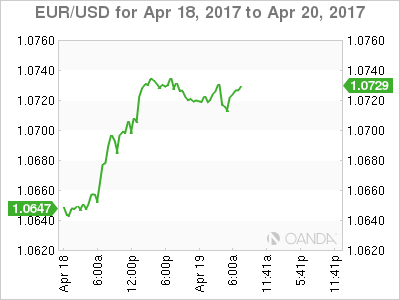
Weekly closing price: 1.0621
Following a three-week slide, renewed buying interest came into the market last week from the top edge of a major weekly support area at 1.0333-1.0502 that's bolstered by the 2017 yearly opening level at 1.0515. In the event that the bulls continue to push forward this week, the next upside objective in view can be seen at 1.0819/1.0873 (weekly resistance/the 2016 yearly opening base).
Since the 22nd February, the daily candles have been sandwiched between a daily support hurdle coming in at 1.0520 and a daily supply area drawn from 1.0676-1.0608. If this daily supply is violated this week the next level on the horizon is a nearby daily resistance seen at 1.0710. On the other hand, a downside move through the daily support could set that stage for a continuation move south down to a daily support level pegged at 1.0360.
A quick recap of Friday's action on the H4 chart shows that the pair ended the day on a positive tone, closing above the H4 trendline resistance extended from the high 1.0714. In spite of Janet Yellen's recent comments regarding a potential rate hike in March, dollar bulls were clearly not impressed!
Our suggestions: On account of the above notes, we see the following:
While the H4 candles did indeed close above a H4 trendline resistance, the bulls have to contend with not only the H4 resistance zone marked with a green circle around the 1.0630ish range, but also the daily supply mentioned above at 1.0676-1.0608!
On the other side of the coin, the break above the H4 trendline resistance could be viewed as a mark of strength given where weekly price has just bounced from.
Both of the above points are valid, in our opinion. However, trading this market based on either, as you can see, would place you in direct conflict with opposite structure. Therefore, although it may not feel like the right move, sometimes trading flat is the more logical position to take.
Data points to consider: FOMC member Kashkari speaks at 8pm GMT.
Levels to watch/live orders:
- Buys: Flat (stop loss: N/A).
- Sells: Flat (stop loss: N/A).
GBP/USD:
Weekly gain/loss: – 161 pips
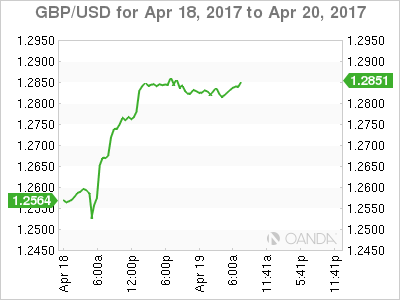
Weekly closing price: 1.2293
Over the last week we saw the GBP fall sharply, which led to price taking out the 2017 yearly opening base at 1.2329. Nevertheless, what is particularly notable from the weekly chart is the fact that the pair came within 15 pips of striking the weekly Quasimodo support level at 1.22.
Zooming in and looking at the daily picture, the pair printed a relatively nice-looking daily buying tail going into the week's closing point, consequently breaking a five-day bearish phase. Of particular interest here is that the daily buying tail formed around the lower limits of a daily demand area seen at 1.2252-1.2342.
In previous writings, our desk highlighted the 1.22/1.2250 H4 area as a potential buy zone in this market. 1.2250 fuses with a H4 AB=CD (see black arrows) formation that completes around the 1.2229 neighborhood (taken from the high 1.2706). In addition to this, our zone was further bolstered by the 1.22 handle (yellow zone), which, as you can see, represents the weekly Quasimodo support line discussed above. Well done to any of our readers who managed to jump aboard Friday's move from here, as price recently touched gloves with the underside of the 1.23 handle!
In our humble opinion, this may be a good place to reduce risk to breakeven and take some profits off the table, as beyond 1.23 we see a minefield of potentially troublesome zones. Of course, this is not to say that price will not rally higher today/this week, it just pays to be on the side of caution in this business!
Our suggestions: Unless price trades back into our above mentioned H4 buy zone, we see very little else to hang our hat on at the moment.
Data points to consider: MPC member Hogg speaks at 11.30am. FOMC member Kashkari speaks at 8pm GMT.
Levels to watch/live orders:
- Buys: 1.22/1.2250 ([wait for a reasonably sized H4 bull candle to form within the zone before looking to pull trigger here] stop loss: ideally beyond the trigger candle).
- Sells: Flat (stop loss: N/A).
AUD/USD:
- Weekly gain/loss: – 73 pips
- Weekly closing price: 0.7593
After two weeks of sluggish action seen around the weekly trendline resistance stretched from the high 0.8163, price eventually sold off last week and brought the unit to a low of 0.7543. As a result of this, our crosshairs will be fixed on the weekly support area at 0.7524-0.7450 this week.
Daily demand at 0.7511-0.7543 (positioned around the top edge of the above noted weekly support area) on the other hand remained firm on Friday, and by the looks of things will likely force price to cross swords with the nearby daily resistance at 0.7609 sometime today.
During the course of Friday's sessions, Fed Chair Janet Yellen alluded to the possibility of a rate hike in March. Despite this strong signal for bullish dollar upside, the currency tumbled lower and sent the Aussie higher! As of the week's close, the couple is seen lurking within touching distance of the 0.76 hurdle, which, as we're sure you can already see, is located just below the aforementioned daily resistance base (yellow zone).
Our suggestions: Through the simple lens of a technical trader, the 0.76 region is likely going to hold this unit lower today. Therefore, we believe that between 0.7609/0.76 is a prime location to hunt for lower-timeframe shorting opportunities (see the top of this report for ideas on entry signals). The first take-profit line, at least for our team, will likely be February's opening level at 0.7577, followed closely by the H4 mid-way support at 0.7550.
Data points to consider: Australian retail sales at 12.30am. FOMC member Kashkari speaks at 8pm GMT.
Levels to watch/live orders:
- Buys: Flat (stop loss: N/A).
- Sells: 0.7609/0.76 region ([wait for a lower-timeframe signal to form before looking to pull the trigger] stop loss: dependent on where one confirms the zone).
USD/JPY:
Weekly gain/loss: + 188 pips
Weekly closing price: 114.02
Twenty five or so pips ahead of the weekly support area at 111.44-110.10, a strong-looking weekly bullish engulfing candle took shape last week. On the assumption that the bulls remain in the driving seat here, the next area of value can be seen at 116.97/116.08 (the 2017 yearly opening level at 116.97 and weekly resistance at 116.08).
Since mid-January, the daily candles have been consolidating between a daily resistance area carved from 115.62-114.60 and a daily demand base seen at 111.35-112.37. Perhaps the most compelling factor here is that the daily bears recently connected with the top edge of this range. This, of course, poses a small problem as weekly action suggests further upside could be on the cards.
A brief look at recent dealings on the H4 chart shows that price immediately jumped to a high of 114.74 following the release of Yellen's comments. However, as you can see, the rally was a short-lived one with price spending the remainder of the US segment tumbling lower.
Our suggestions: While H4 price did pierce through the 114 handle quite aggressively on Friday, it managed to hold firm into the closing bell. With that being said though, buying from here knowing that daily price is trading from a resistance area is not really something that our team would be comfortable with. On a similar note, a break below 114 boasts little wiggle room to the downside as a H4 demand area is seen lurking at 113.47-113.70. And, of course, not to mention the fact that you'd be selling against potential weekly buyers!
As far as we can see, technical elements are too mixed for the time being leaving us with little choice but to remain flat for now.
Data points to consider: FOMC member Kashkari speaks at 8pm GMT.
Levels to watch/live orders:
- Buys: Flat (stop loss: N/A).
- Sells: Flat (stop loss: N/A).
USD/CAD:
Weekly gain/loss: + 279 pips
Weekly closing price: 1.3375
The US dollar made considerable ground against its Canadian counterpart last week, lifting weekly action up to the 2017 yearly opening level at 1.3434 which intersects beautifully with a weekly trendline resistance taken from the high1.4689.
In conjunction with the weekly timeframe, daily price caught an offer from the underside of a daily supply area logged in at 1.3461-1.3426 on Friday and chalked up a nice-looking daily selling wick. However, it may be worth noting that although both the weekly and daily charts present a rather bearish tone at the moment, there is a daily support area at 1.3387-1.3317 also now in play!
In Friday's report, we mentioned to keep an eyeball on the H4 zone at 1.3434/1.3419 for shorting opportunities. This green area comprises of November, December and January's opening levels! As can be seen from the H4 chart, this zone did in fact hold prices lower so well done to any of our readers who managed to net some green pips here!
Moving forward, we have the following H4 support structures ahead:
The H4 broken Quasimodo line at 1.3353.
March opening level at 1.3312.
The 1.33 handle.
These three zones, coupled with the current daily support area, may pose problems for sellers this week.
Our suggestions: At current price, we would ideally need H4 price to close below the 1.33 region before our team would be comfortable looking for shorts again. Still, should the pair pullback today and retest the green H4 sell zone mentioned above, we would consider entering short from here on the basis that we're able to pin down a lower- timeframe sell setup (see the top of this report for ideas on how to find such a signal).
Data points to consider: FOMC member Kashkari speaks at 8pm GMT.
Levels to watch/live orders:
- Buys: Flat (stop loss: N/A).
- Sells: 1.3434/1.3419 ([wait for a lower-timeframe signal to form before looking to pull the trigger] stop loss: dependent on where one confirms the zone).
USD/CHF:
Weekly gain/loss: + 5 pips
Weekly closing price: 1.0075
USD/CHF prices, as you can see, are little changed, with the pair seen penciling in a weekly indecision candle last week. Of particular significance here, however, is the fact that the tail of the above noted weekly indecision candle struck the 2016 yearly opening level at 1.0029. Providing that this base holds ground this week, there's a chance that we may see weekly action shake hands with the 2017 yearly opening line coming in at 1.0175.
Looking down to the daily chart, we can see that price remains loitering mid-range between a daily supply at 1.0248-1.0168 (houses the 2017 yearly opening level mentioned above) and a daily demand base drawn from 0.9929-0.9975.
Reviewing Friday's movement on the H4 chart shows that despite Janet Yellen's recent comments regarding a potential rate hike in March, the pair generated little follow-through buying! Instead, the pair turned red and headed southbound, ending the week in bearish territory beyond the 1.01 handle.
Our suggestions: Based on the above notes, our desk has the following logged:
For longs, the H4 Quasimodo support at 1.0024 looks in good shape. This level boasts: a H4 channel support line taken from the low 0.9929 and the 2016 yearly opening level marked above at 1.0029. However, there is one cautionary point to consider here! Notice that parity sits just below this barrier. This number is a closely watched level and could potentially drag the unit below our Quasimodo base. Therefore, waiting for a lower-timeframe confirming setup to form before pulling the trigger would, in our opinion, be the safer route to take.
For shorts, our team still has their beady little eye on the 1.02/1.0170 (yellow zone) neighborhood. The area comprises of the following converging structures: both December and January's opening levels at 1.0170/1.0175, a H4 trendline resistance pegged from the high 1.0118, a H4 Quasimodo resistance at 1.0197, a 1.02 psychological handle and let's not forget that all of this is seen housed within the daily supply zone coming in at 1.0248-1.0168. In light of this confluence, our team will, dependent on the time of day, look to sell from the 1.0175 neighborhood, with stops placed a few pips above 1.02.
Data points to consider: FOMC member Kashkari speaks at 8pm GMT.
Levels to watch/live orders:
- Buys: 1.0024/1.0029 region ([wait for a lower-timeframe signal to form before looking to pull the trigger] stop loss: dependent on where one confirms the zone).
- Sells: 1.0175 region ([an area one could possibly trade at market] stop loss: 1.0205).
DOW 30:
Weekly gain/loss: + 187 points
Weekly closing price: 20990
The US equity market continued to climb north last week, registering its fourth consecutive weekly gain! With equities now trading at record highs, where do we go from here? Well, given that there is absolutely no weekly resistance levels in sight, the best we can do for the time being is continue looking to ‘buy the dips'. The closest higher-timeframe area can be seen at 20714-20821: a daily demand zone.
Stepping across to the H4 candles, we can see that Friday's action was fairly lackluster despite the Fed Chair Janet Yellen voicing intentions to hike rates in March. As is evident from the chart, the index closed the week below the 21000 mark, which could call for a continuation move south down to the H4 demand base drawn from 20837-20869.
Our suggestions: In light of the above points, we still have absolutely no intention of looking to short this unit.
We would rather look to buy from the above noted H4 demand, or even the H4 demand seen below it at 20769-20801, which happens to be positioned within the walls of the aforementioned daily demand zone! The interesting thing here is that in between these two H4 barriers (the yellow zone) is March's opening level at 20824 and a possible H4 AB=CD completion point at 20813 (see black arrows). To that end, should we see price strike the yellow zone today/this week, our team would, assuming that a reasonably sized H4 bull candle took shape, look to buy from here with stops either placed below the trigger candle or below the H4 demand at 20769-20801.
Data points to consider: FOMC member Kashkari speaks at 8pm GMT.
Levels to watch/live orders:
- Buys: 20801/20837 region ([wait for a reasonably sized H4 bull candle to form before looking to pull trigger here] stop loss: ideally beyond the trigger candle).
- Sells: Flat (stop loss: N/A).
GOLD:
Weekly gain/loss: – $21.6
Weekly closing price: 1234.3
After four weeks of continuous buying the gold market took a turn for the worse last week, chalking up a beautiful-looking bearish engulfing candle! Further losses could be seen this week given that this bearish candle formation also formed around a weekly resistance barrier drawn from 1241.2. The next weekly support target on tap comes in at 1180.1: a long-term support and resistance level that stretches right back to mid-2013!
While the weekly bears look set to chase lower prices this week, the daily chart shows that Friday's movement penciled in a daily buying tail out of a daily support area at 1232.9-1224.5. With this in mind, not only have we got two conflicting candlestick signals here, we also have two opposing structures!
Leaving the H4 Quasimodo support level at 1221.7 unchallenged, comments from the Fed Chair Janet Yellen sparked a round of buying on Friday and brought the yellow metal up to the underside of a H4 resistance zone at 1235.7-1238.1. Of course, a selloff from this area is a possibility today, given where price is positioned on the weekly timeframe at the moment. However, selling from here would involve trading against potential daily buyers! Along the same vein, a break above the current H4 resistance area may set the stage for a continuation move north to the March opening base at 1245.9. Nevertheless, in order to take advantage of this move you would need to be willing to trade against possible weekly sellers!
Our suggestions: In the absence of clearer price action, we have decided to remain flat during today's trading.
Levels to watch/live orders:
- Buys: Flat (stop loss: N/A).
- Sells: Flat (stop loss: N/A).
Market Morning Briefing
STOCKS
Dow (21005.71, +0.01%) could possibly test 20750 or a little lower before again bouncing back towards 21500 in the medium term. Immediate resistance near 21200-21500 levels may hold for a couple of sessions. Overall medium term trend is up.
Dax (12027.36, -0.27%) came off from resistance on the daily candle chart near 12090 and while that holds, we may expect a dip towards 11900 in the next few sessions. Overall view is bullish just now. Only on a break below 11900, can we shift our focus on lower levels of 11800-11700. For now we keep open chances of testing 12100-12170 while above 11900.
Nikkei (19373.60, -0.49%) came back to levels below 19400 after staying at higher levels for only 2-sessions. Was this a false break on the upside? In that case there could be a fall towards 19200-19000 levels in the medium term. Else a bounce back to levels above 19400, may take it higher in line with our expectation.
Shanghai (3229.22, +0.34%) is testing the 21-day MA as an immediate support and if that holds, we could see a bounce back towards 3275 and higher in the medium term. View is bullish for the coming sessions.
Nifty (8897.55, -0.02%) has faced rejection from levels near 9000 but is stuck in the 8850-9000 region for the last few sessions. While crucial resistance near 9000 holds, we may expect a fall towards 8800 or lower in the near term. Else, there could be some consolidation within the 8800-9000 region for some more time.
COMMODITIES
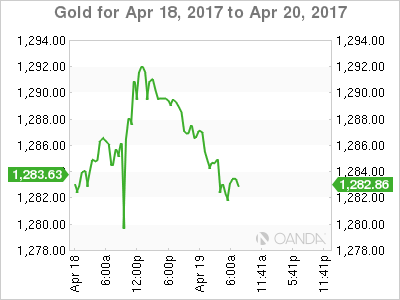
Gold (1234) is trading within its sideways range of 1212-1275. Unless it will manage to close above 1247-50, it will be difficult for gold to move higher.Gold/WTI ratio is at 23.02 with a resistance at 23.50,may came down towards 21 or even lower.
Silver (17.83) is holding its upward trend line support of 17.62.A close above 18 could open up the resistance of 18.60. A close below 17.45 could be trend reversal.
Copper (2.68) is hovering around its pivot of 2.768 of its recent trading range of 2.60-83. It is holding its upward trend line support at 2.65-68 since October 16.
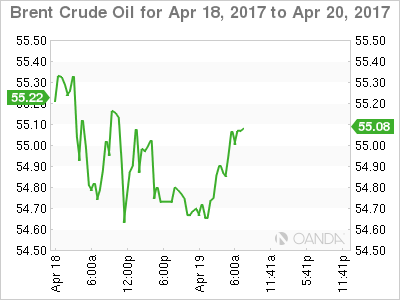
Brent (55.59) and WTI (53.12) both are trading within their sideways ranges of 54-58 and 52-55 with no directional bias. Weekly Brent-WTI spread is at 2.13, took support at 2 and may bounce back towards 2.5-3.
FOREX
With a rate hike in March well accepted and discounted in the prices, the markets will look forward to RBA meet tomorrow and ECB meet on Thursday, 6th March'17. While Geopolitical tensions may drive Yen this week, the Indian markets will wait for the all important State Elections result on Saturday, 11th March'17.
Contrary to expectations, Dollar Index (101.44) retreated sharply but the trend remains up till it stays above the medium term support near 101.00-100.70. It may trade sideways in the range of 100.70-102.25 this week.
The main driver for Euro (1.0607) in the recent times has been the French election and a collapse of the centre-right candidate Francois Fillon's campaign has shot it up to the 3-week high and our resistance 1.0620 levels but a failure to rise above 1.0620-30 immediately may keep it range bound in 1.0500-1.0630 till the ECB meet on 9th Mar'17.
Dollar-Yen (113.78) has been unnerved by North Korean missile launch this morning and with the uptrend a bit weakened now, horizontal trade in the range of 113-115 looks more likely instead of the previously expected rise.
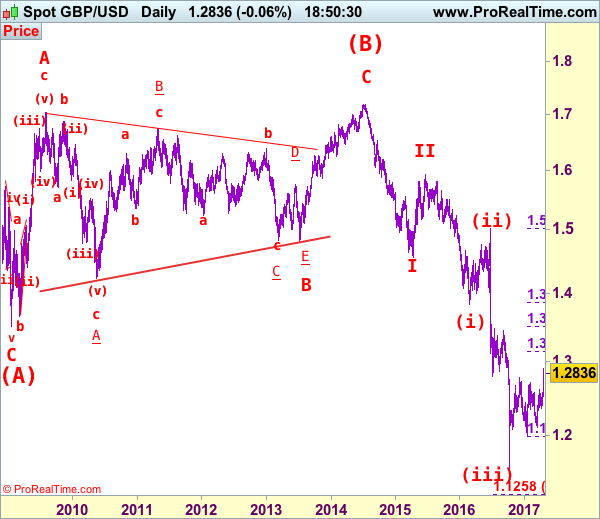
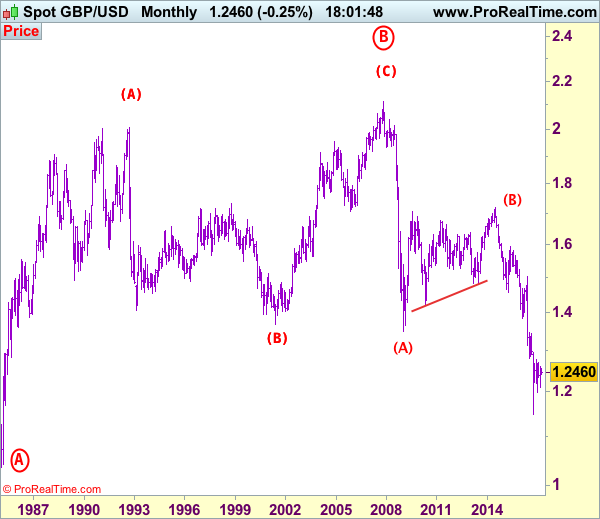
Fresh concerns about a second referendum on Scottish independence keep Pound (1.2285) weak. As discussed previously, further consolidation may be seen near the interim support 1.2200 before it declines further towards 1.2100-2085 levels.
Aussie (0.7573) is waiting for the RBA meet tomorrow but barring any surprise tomorrow, the central bank is widely expected to keep the rates unchanged. The currency may test the near term support zone 0.7520-00 before declining further to lower levels of 0.7450.
Dollar-Rupee (66.81) remained stable in the very narrow range of 66.80-90 on Friday but may test the long term support near 66.50 from where it may bounce back to 67.00-20 this week.
INTEREST RATES
Probability of a rate hike in March has increased and Yellen has also given an indication of this in her Friday's speech. The US yields may rise in the near term.
The US yields have risen. The 5Yr (2.00%), 10Yr (2.47%) and the 30Yr (3.07%) are almost stable just now but have come up to test resistance levels which may hold in for the next couple of sessions. The 30Yr (3.07%) may face immediate resistance near 3.10% which could produce some rejection in the near term.
The German-US 2Yr (-2.12%) had bounced back from levels near -2.20% but could see some pause to see another dip in the near term. A rise towards -2.05% is possible on the upside followed by another sharp rejection which could take it lower towards -2.20% again. We need to keep an eye on this closely.
The US-UK 10Yr (-1.29%) has paused near current levels and in case a small bounce is seen, we could expect some recovery in the Pound after the sharp fall seen last week.
The UK yields have risen, the 5YR rising the most from 0.3150% to 0.5740% in just 2-sessions. The 10YR (1.18%) and the 20Yr (1.72%) are also trading higher and could move up in the near term.
Foreign Exchange Market Commentary
EUR/USD
The EUR/USD pair closed the week a 1.0620, with the American dollar down on Friday, despite Fed's Yellen pretty much confirmed a March hike. The head of the US Central Bank spoke about the US economic outlook at the Executives Club of Chicago, and said that policymakers are ready to act at their next monetary policy meeting, if employment and inflation stay in line with officers expectations. She also added that two more rate hikes this year are likely, as the bank is now working to prevent the US from overheating. The US also released encouraging macroeconomic figures last Friday, as the ISM non-manufacturing PMI rose to 57.6, the highest since April 2015, from 56.5 in January. The Markit services PMI on the other hand, was revised slightly lower to 53.8 from a flash reading of 53.9 and 55.6 in January.
The American currency retreated on profit taking ahead of the weekend, as Yellen pretty much confirmed what Fed's members have been anticipating all through the week, particularly ahead of the release of the US Nonfarm Payrolls report this Friday. Also, the common currency found some support on news that French far-right leader Marine Le Pen was summoned by a judge Friday over allegations of misusing European Union funds.
The EUR/USD pair recovery was enough to trim previous week's losses, but not enough to confirm further gains ahead, or even to confirm a bottom, as the price has been unable to extend beyond the 1.0630 region for a third consecutive week. The daily chart shows that the recovery stalled below a sharply bearish 20 SMA, whilst the Momentum indicator has turned flat around its 100 level, failing to enter positive territory, whilst the RSI hovers around 43. In the 4 hours chart, technical readings support a short-term bullish continuation, as the price broke higher pass its 20 and 100 SMAs that anyway maintain their bearish slopes, whilst technical indicators hold well above their mid-lines, barely paring their advances ahead of the weekly close. The recovery can extend up to the critical 1.0700/20 price zone, although strong selling interest is expected to surge around this last, if reached.
Support levels: 1.0590 1.0565 1.0520
Resistance levels: 1.0635 1.0660 1.0710

USD/JPY
The USD/JPY pair closed the week with strong gains around 114.00, but pulled back on Friday from 114.74 as the dollar eased against all of its major rivals. The USD/JPY pair has been trading in a well-limited range ever since early February, with the upside capped by 114.55, the 23.6% retracement of the November/December bullish run. On Friday, Bank of Japan Deputy Governor Hiroshi Nakaso said that the current policy framework offers the flexibility and sustainability to achieve the BOJ's "strong commitment" to raising inflation to a goal. Dollar's strength ever since Donald Trump won the US elections has taken some steam off the Central Bank as the JPY weakened, although the uptick in inflation has been quite shallow so far. From a technical point of view, the daily chart shows that the price has recovered above a bullish 100 DMA, now the immediate support at 113.50, but also that technical indicators lack upward strength, and hover within neutral territory. In the 4 hours chart, technical indicator have pulled down sharply from overbought levels, with the Momentum poised to enter negative territory, whilst the 100 and 200 SMAs converge at 113.25, providing a not so strong support due to the lack of directional strength. February's high stands at 114.95, and the pair needs to settle above it to be able to shrug off its negative tone.
Support levels: 113.50 113.25 112.90
Resistance levels: 114.55 114.95 115.30

GBP/USD
The USD/JPY pair closed the week with strong gains around 114.00, but pulled back on Friday from 114.74 as the dollar eased against all of its major rivals. The USD/JPY pair has been trading in a well-limited range ever since early February, with the upside capped by 114.55, the 23.6% retracement of the November/December bullish run. On Friday, Bank of Japan Deputy Governor Hiroshi Nakaso said that the current policy framework offers the flexibility and sustainability to achieve the BOJ's "strong commitment" to raising inflation to a goal. Dollar's strength ever since Donald Trump won the US elections has taken some steam off the Central Bank as the JPY weakened, although the uptick in inflation has been quite shallow so far. From a technical point of view, the daily chart shows that the price has recovered above a bullish 100 DMA, now the immediate support at 113.50, but also that technical indicators lack upward strength, and hover within neutral territory. In the 4 hours chart, technical indicator have pulled down sharply from overbought levels, with the Momentum poised to enter negative territory, whilst the 100 and 200 SMAs converge at 113.25, providing a not so strong support due to the lack of directional strength. February's high stands at 114.95, and the pair needs to settle above it to be able to shrug off its negative tone.
Support levels: 113.50 113.25 112.90
Resistance levels: 114.55 114.95 115.30

GOLD
Gold bounced on Friday from a fresh 2-week low of 1,222.80, but closed the week with strong losses, with spot at $1,234.15 a troy ounce, bearing anyway pretty well with dollar's strength and the possibility of a March rate hike in the US. The bright metal has been under pressure ever since topping at 1,263.79 at the beginning of the week, undermined by Fed's officers rhetoric, supporting a rate hike as soon as this March, reiterated on Friday by head's Yellen. The bright metal settled above the 50% retracement of the post-US election slump, at 1,230.00, although in the daily chart the price is below a now horizontal 20 DMA, after failing to surpass the 200 DMA, whilst technical indicators present a downward slope, but so far hold above their mid-lines, indicating an increasing bearish potential. In the 4 hours chart, the 20 SMA has turned sharply bearish above the current level and is about to cross below the 100 SMA, while technical indicators have managed to recover from oversold readings, but turned flat within bearish territory.
Support levels: 1,230.00 1,222.80 1,210.90
Resistance levels: 1,238.60 1,245.50 1,255.20

WTI CRUDE
West Texas Intermediate crude oil futures closed the week with modest losses at $53.20 a barrel, recovering on Friday from a fresh 3-week low of 52.53, as the dollar eased against all of its major rivals. Oil was also supported by news coming from the OPEC as early reports of February compliance suggest the organization was close to the 100% in the month. On the downside, the oilfield company Baker Hughes reported that the number of active drilling rigs rose for a seventh consecutive week, up by 7 to a total of 609. From a technical point of view, the daily chart shows that the commodity closed below a horizontal 20 DMA but above a modestly bullish 100 DMA, this last around 51.50, while the Momentum indicator remains flat around its 100 level, and the RSI heads modestly higher around 46, all of which limits chances of a steeper recovery. In the 4 hours chart, the price is well below all of its moving averages, with the 20 SMA having already crossed below the 100 SMA and now converging with the 200 SMA at 53.40, and technical indicators heading nowhere within negative territory, in line with the longer term perspective.
Support levels: 52.50 51.90 51.40
Resistance levels: 53.70 54.20 54.80

DJIA
US equities closed modestly higher on Friday, with the Dow Jones Industrial Average up 2 points, to 21,005.71. The Nasdaq Composite added 9 points and closed at 5,870.75, while the S&P ended at 2,383.12, 0.05% higher. Financial-related equities soared on Yellen's comments about a possible rate hike this March, if employment and inflation continue within FED's expectations. Within the Dow, Caterpillar was the best performer, up 0.81%, followed by Merck & Co that added 0.76%. Nike led decliners, shedding 1.90%, followed by Wal-Mart that closed 1.03% lower. The DJIA daily chart shows that it held far above a bullish 20 DMA, while the Momentum indicator heads sharply lower within positive territory, and the RSI consolidates at 77, correcting part of the extreme overbought readings reached in the week. In the 4 hours chart, the index hovers around a bullish 20 SMA, while the RSI indicator consolidates around 54, but the Momentum indicator heads sharply lower within negative territory, anticipating a downward corrective move on a break below 20,934, Friday's low and the immediate support.
Support levels: 20,934 20,882 20,827
Resistance levels: 21,064 21,114 21,164

FTSE 100
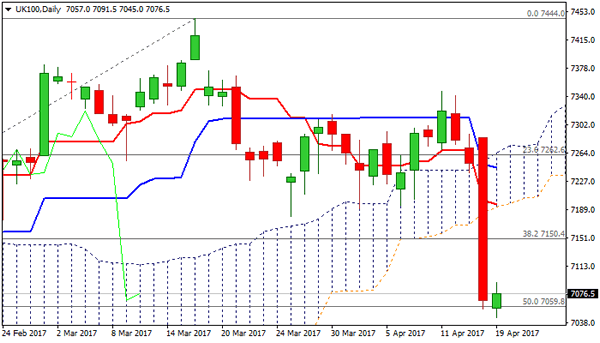
The FTSE 100 closed at 7,374.26 on Friday, down daily basis by 8 points or 0.11%, but firmly higher weekly basis and at record highs. Investors were cautious ahead of speeches from US key policymakers, including FED's head Janet Yellen. A weaker Pound provided support to local equities, although plummeting WWP dragged the benchmark lower. The world's largest advertising company closed down 7.95%, topping losers' list after reporting a sharp decline in its revenue growth. Fresnillo was also among the worst performers, down 2.89%. Old Mutual led advancers adding 1.81%, followed by Standard Live that closed 1.75% higher. Ahead of the weekly opening, the index retains the positive tone, although with no upward strength, as it holds above a bullish 20 DMA, but technical indicators turned modestly lower, the Momentum around its mid-line and the RSI at 66. In the 4 hours chart, the index remains well above a strongly bullish 20 SMA, whilst technical indicators retreated from overbought readings, supporting a downward corrective move on a break below Friday's low at 7,352.
Support levels: 7,352 7,320 7,287
Resistance levels: 7,397 7,420 7,450

DAX
European equities closed in the red on Friday with the German DAX down 32 points to 12,027.36. In the region, banks were among the best performers, while commodity-related equities led declines. Despite Friday's poor performance, the DAX ended above 12,000 its highest weekly settlement since April 2015. Commerzbank topped winners' list, up 4.14%, followed by RWE AG that added 1.36%. Deutsche Bank was the worst performer, down 5.45%. The bank supervisory board is meeting on Sunday to discuss a $8.5B capital raise, after announcing on Friday that its planning an equity offering and the sale of part of its asset management unit after failing to find a buyer for its Postbank consumer business. Technically, the daily chart shows that the benchmark remains firmly above all of its moving averages, while the Momentum indicator holds above its 100 level, lacking certain directional strength and the RSI indicator retreats partially from overbought readings. In the 4 hours chart, the 20 SMA maintains a sharp bullish slope well below the current level, while technical indicators are pulling back from overbought territory, favoring a short term downward correction, particularly on a break below 11,989.
Support levels: 11,989 11,938 11,867
Resistance levels: 12,053 12,100 12,148

GOLD -Retains Upside Pressure Despite Pullback
GOLD - The commodity closed lower the past week though with caution. On the downside, support comes in at the 1,240.00 level where a break will turn attention to the 1,230.00 level. Further down, a cut through here will open the door for a move lower towards the 1,220.00 level. Below here if seen could trigger further downside pressure targeting the 1,210.00 level. Conversely, resistance resides at the 1,260.00 level where a break will aim at the 1,270.00 level. A turn above there will expose the 1,280.00 level. Further out, resistance stands at the 1,290.00 level. All in all, GOLD looks to strengthen further.