Sample Category Title
US initial jobless claims rises to 225k, vs exp 220k
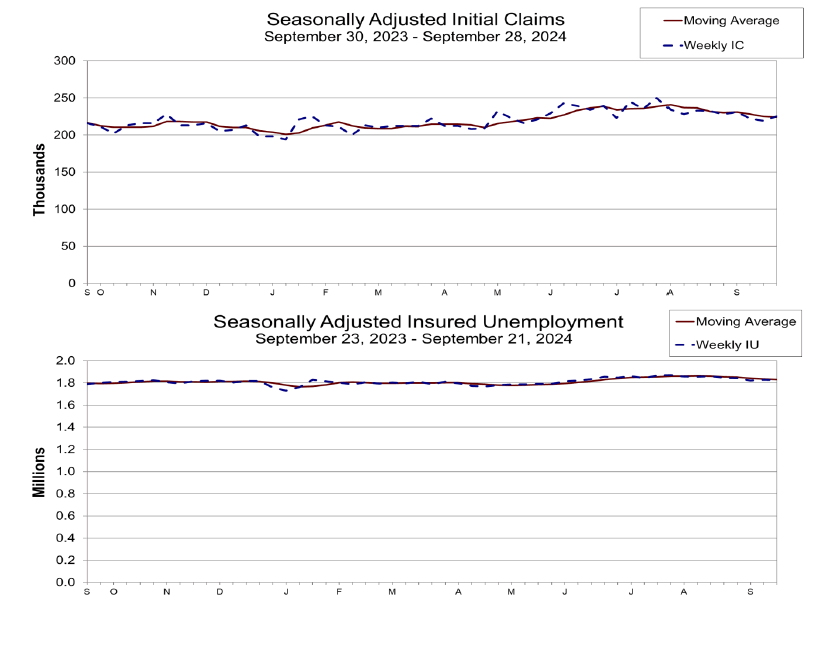
US initial jobless claims rose 6k to 225k in the week ending September 28, above expectation of 220k. Four-week moving average of initial claims fell -750 to 224k.
Continuing claims fell -1k to 1826k in the week ending September 21. Four-week moving average of continuing claims fell -5k to 1829k.
Crypto Market Still Falling, But Bitcoin Already Stabilised
Market picture
The crypto market lost another 1.44% of its capitalisation in 24 hours to $2.13 trillion. The pressure is due to the ongoing wave of dollar gains and declines in risk assets due to the medium-term impact of the Middle East conflict and short-term profit-taking ahead of the US jobs report. The Sentiment Index returned to fear territory, falling to 37, a two-week low.
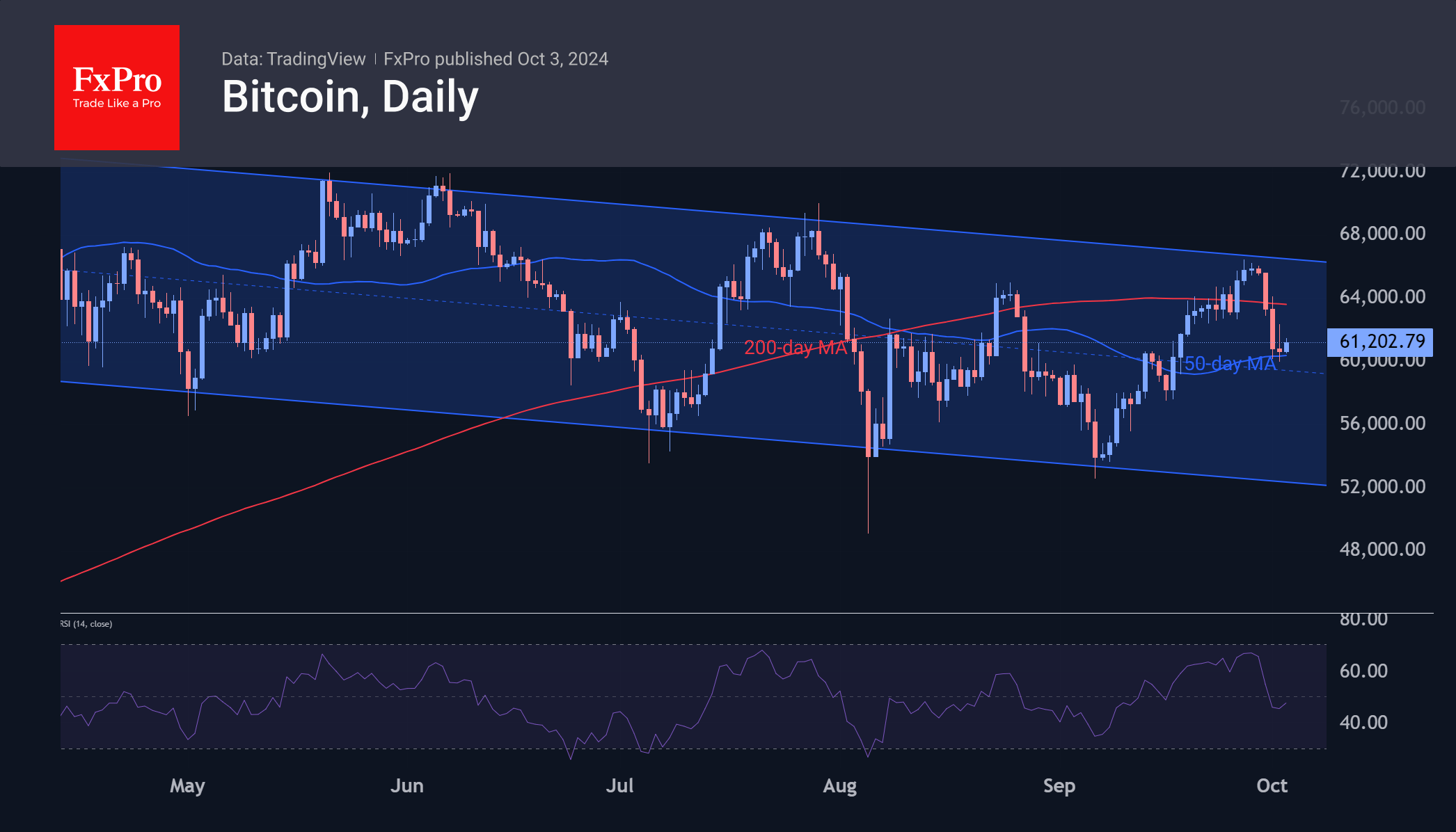
Bitcoin found support on the decline towards the 50-day moving average and the $60,000 area. Over the next two days, swings within the $60-63.6K area could be misleading market noise as the market awaits new information.
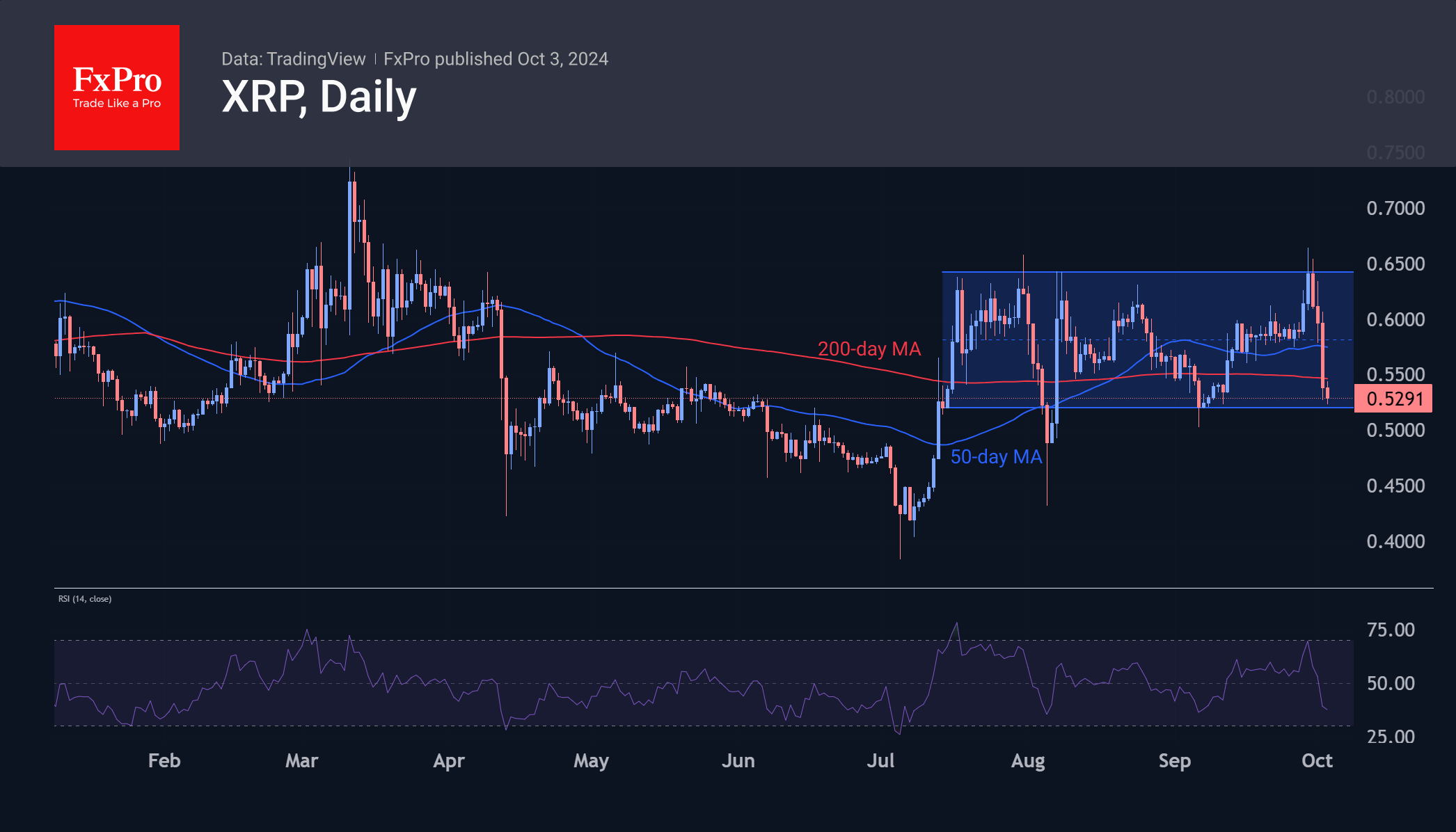
XRP, which has lost around 20% in four days, is failing to find support. Despite the news of the ETF application, the coin fell from the upper boundary of the sideways range to the lower boundary. On Wednesday, it broke the 50—and 200-day moving averages in one fell swoop, pulling back below $0.53. A breakout of the range with a confirmation below $0.50 could trigger a drop to $0.40.
News Background
According to CryptoQuant, the growth of stablecoin capitalisation in August-September may prolong the upward trend of cryptocurrencies. In two months, the figure rose by $8.73 billion to $172.75 billion, with the USDT balance on CEX reaching a record $22.5 billion.
A BTC rally is inevitable if its post-halving pattern remains relevant, reports Canaccord. According to historical patterns, bull rallies have occurred 6-12 months after the halving, with ATH forming another 2-6 months later.
According to The Block, bitcoin miners’ revenues fell to $815.7 million in September, the lowest since the beginning of the year. JPMorgan calculates that miners’ gross profit per mined block was down 6% from August.
Bitwise, a digital asset manager, filed to launch a spot exchange-traded fund based on XRP. The news did not lead to a significant reaction in XRP. The Ethereum example shows that launching an ETF does not guarantee exceptional growth.
Dogecoin was conceived as a joke, but 11 years later, the token has become popular with merchants to pay for purchases, according to Bloomberg. The average fee on the network is <$0.01, around 79 times cheaper than the bitcoin blockchain. Transactions are processed in less than a minute.
GBP/USD Outlook: Cable Falls to Three Week Low on Dovish Steer in Rate Outlook
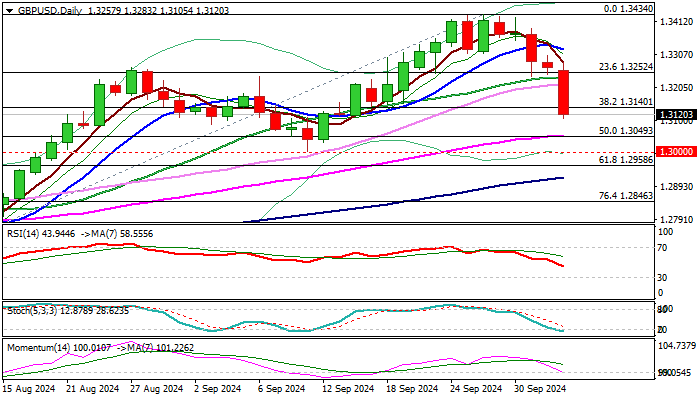
Cable remains firmly in red and accelerated lower on Thursday morning, falling over 1% for the session.
Sterling came under increased pressure from dovish comments from BoE Governor Bailey, who said the central bank could be more aggressive on rate cuts, adding to expectations for 25 basis points cut at the November 7 policy meeting.
Weaker than expected UK September Services PMI (52.4 vs 52.8 f/c and 53.7 Aug) contributed to pound’s bearish stance.
Fresh extension of bear-leg from 1.3434 (2024 high, posted on Sep 26) hit the lowest in three weeks, after break through pivotal Fibo support at 1.3140 (38.2% of1.2664/1.3434 rally) generated fresh bearish signal.
Weakening technical structure on daily chart (falling 14-d momentum cracks the centreline / 10/20 DMA’s above the price are converging and look to form a bear-cross) supports the notion.
Close below broken 1.3140 pivot to confirm signal and open way for attack at next targets at 1.3049/32 (50% retracement / 55DMA / daily cloud top) and 1.3000 (psychological / Sep 11 higher low / Fibo 38.2% of larger1.2299/1.3434 uptrend), with break of the latter to confirm reversal signal.
Res: 1.3140; 1.3200; 1.3217; 1.3252.
Sup: 1.3100; 1.3032; 1.3000; 1.2958.
NZD/USD Dips as Market Anticipates RBNZ Rate Cut
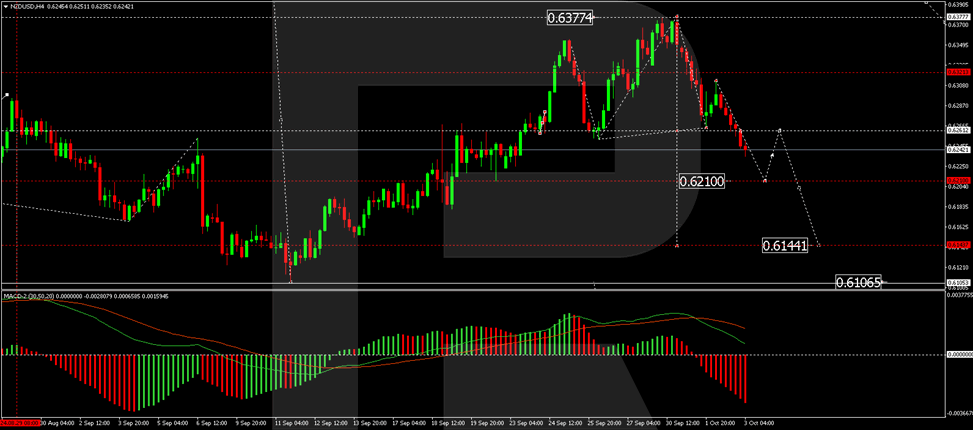
The NZD/USD pair continues its downward trend, dropping to 0.6240 in its third consecutive session of declines. This ongoing sell-off in the New Zealand dollar is driven by market expectations of an upcoming interest rate cut by the Reserve Bank of New Zealand (RBNZ). New Zealand's borrowing costs are currently at 5.25% per annum, with widespread anticipation of a 50-basis point reduction at the next RBNZ meeting.
The RBNZ is known for its proactive and flexible monetary policy, which swiftly adjusts to inflationary pressures and external economic indicators. This expected rate cut responds to such factors and aligns with the bank's strategy to manage economic growth and inflation.
Moreover, the NZD has been under additional pressure from a strengthening US dollar, bolstered by unexpectedly robust US employment statistics for September, reported by ADP. Although the ADP report does not directly correlate with the Nonfarm Payrolls (NFP) due shortly, it still shapes market expectations and sentiment.
Global risk appetite has also waned significantly due to escalating geopolitical tensions in the Middle East, further dampening the prospects for growth-sensitive currencies like the NZD.
NZD/USD technical analysis
The NZD/USD pair followed a bearish pattern, confirming a downward wave to 0.6265 and a corrective rise to 0.6313. The market is now forming a new decline towards 0.6210. Once this target is reached, a corrective move to retest 0.6265 from below may occur, potentially leading to further declines towards 0.6144. This bearish outlook is supported by the MACD indicator, which, despite being above zero, shows a strong downward trajectory.
> 
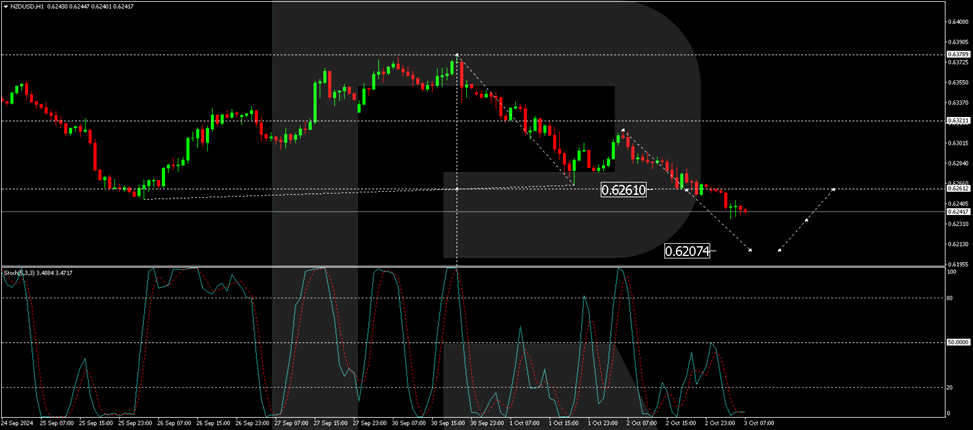
On the hourly chart, the pair is developing the third wave of its decline towards 0.6210. Following this, a corrective fourth wave up to 0.6260 is anticipated. This forecast aligns with the Stochastic oscillator readings, which indicate the signal line is below 50 and heading towards 20, suggesting a continuation of the downward momentum after a brief correction.
Eurozone PPI rises 0.6% mom in August, energy prices drive monthly increase
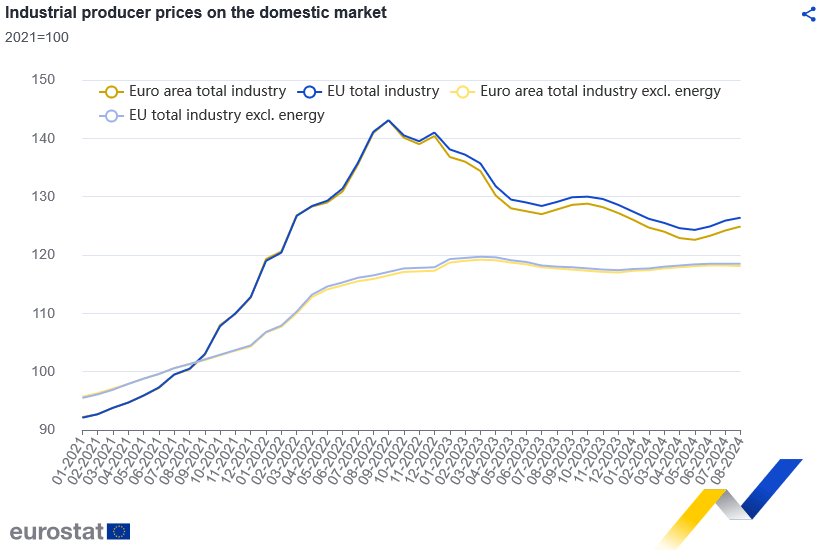
Eurozone PPI rose by 0.6% mom in August, exceeding expectations of 0.3% mom. On a year-over-year basis, however, PPI fell by -2.3% yoy, slightly better than the anticipated -2.4% yoy decline.
Breaking down the monthly data, Eurozone's industrial producer prices showed varying trends across sectors. While intermediate goods saw a slight decline of -0.1% mom, energy prices surged by 1.9% mom, driving the overall increase in PPI. Capital goods prices edged up by 0.1% mom, while prices for both durable and non-durable consumer goods remained stable.
EU's PPI rose by 0.4% mom but was down -2.1% yoy. Among individual countries, Estonia led with a 2.2% monthly increase in industrial producer prices, followed by Greece at 1.7% and Spain at 1.5%. On the downside, Ireland recorded the largest decrease, with prices falling by -3.8%, followed by Lithuania (-1.7%) and Romania (-1.6%).
UK PMI services finalized at 52.4, optimism remains amid cooling inflation
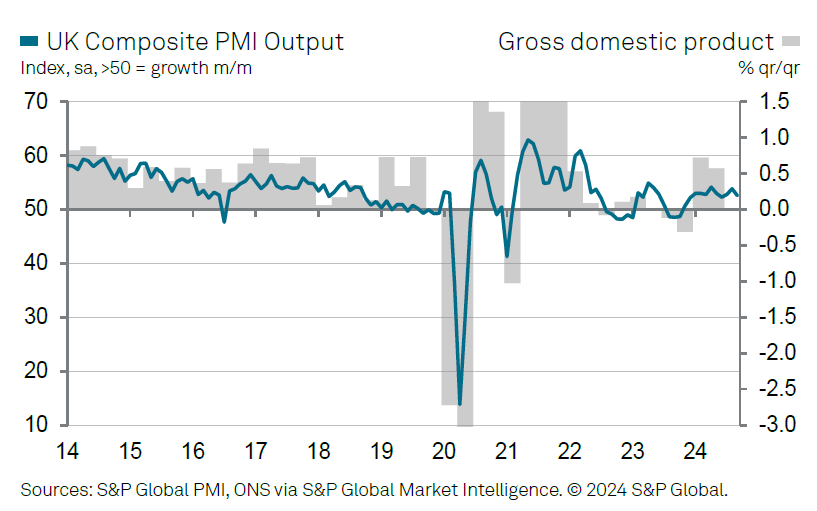
UK PMI Services was finalized at 52.4 in September, down from August's 53.7, while PMI Composite declined to 52.6 from 53.8. Despite the slight slowdown, the UK economy remains in positive territory, supported by improving order books and easing inflationary pressures.
Tim Moore, Economics Director at S&P Global Market Intelligence, highlighted that the decline in prices charged within the service sector—an important indicator of domestic inflation—reached its lowest level since February 2021. This cooling inflation is a promising sign for the broader economy, particularly as businesses prepare for the Autumn Budget on October 30th.
Although some service sector firms reported delays in decision-making due to uncertainty surrounding the upcoming budget, a majority (56%) of respondents expect a rise in business activity over the next year, with only 11% forecasting a downturn.
Business optimism saw a modest improvement compared to August, driven by lower borrowing costs, easing inflation, and more clarity on monetary policy expectations.
Eurozone PMI composite finalized at 49.6, all big three economies in contraction
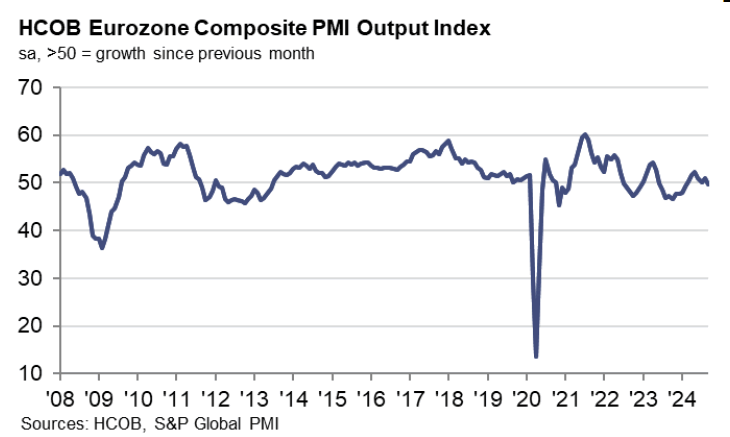
Eurozone PMI Services was finalized at 51.4 in September, down from August’s 52.9. PMI Composite fell to 49.6 from 51.0, both hitting 7-month lows. This marks the first month since December 2023 that all of the big-three Eurozone economies showed signs of contraction.
Spain led with a Composite PMI of 56.3, a 4-month high. However, Italy recorded a 9-month low at 49.7, France fell to 48.6, a 6-month low, and Germany’s Composite PMI dropped to 47.5, a 7-month low.
Cyrus de la Rubia, Chief Economist at Hamburg Commercial Bank, pointed out that service sector growth has slowed across the Eurozone, especially in Germany, Italy, and France, where activity "almost hit a wall".
He added that the decline in new business is a worrying sign, indicating that the service sector will "continue to deteriorate," dragging overall economic growth. With the industry also in contraction, Q3 growth in the Eurozone is expected to be minimal.
On the positive side, service sector operating costs saw their slowest rise since early 2021, and inflation in selling prices is easing. This economic softness strengthens the case for ECB to cut interest rates in October, a possibility ECB President Christine Lagarde has recently hinted at.
NZDUSD Retreats Below Short-Term Uptrend Line
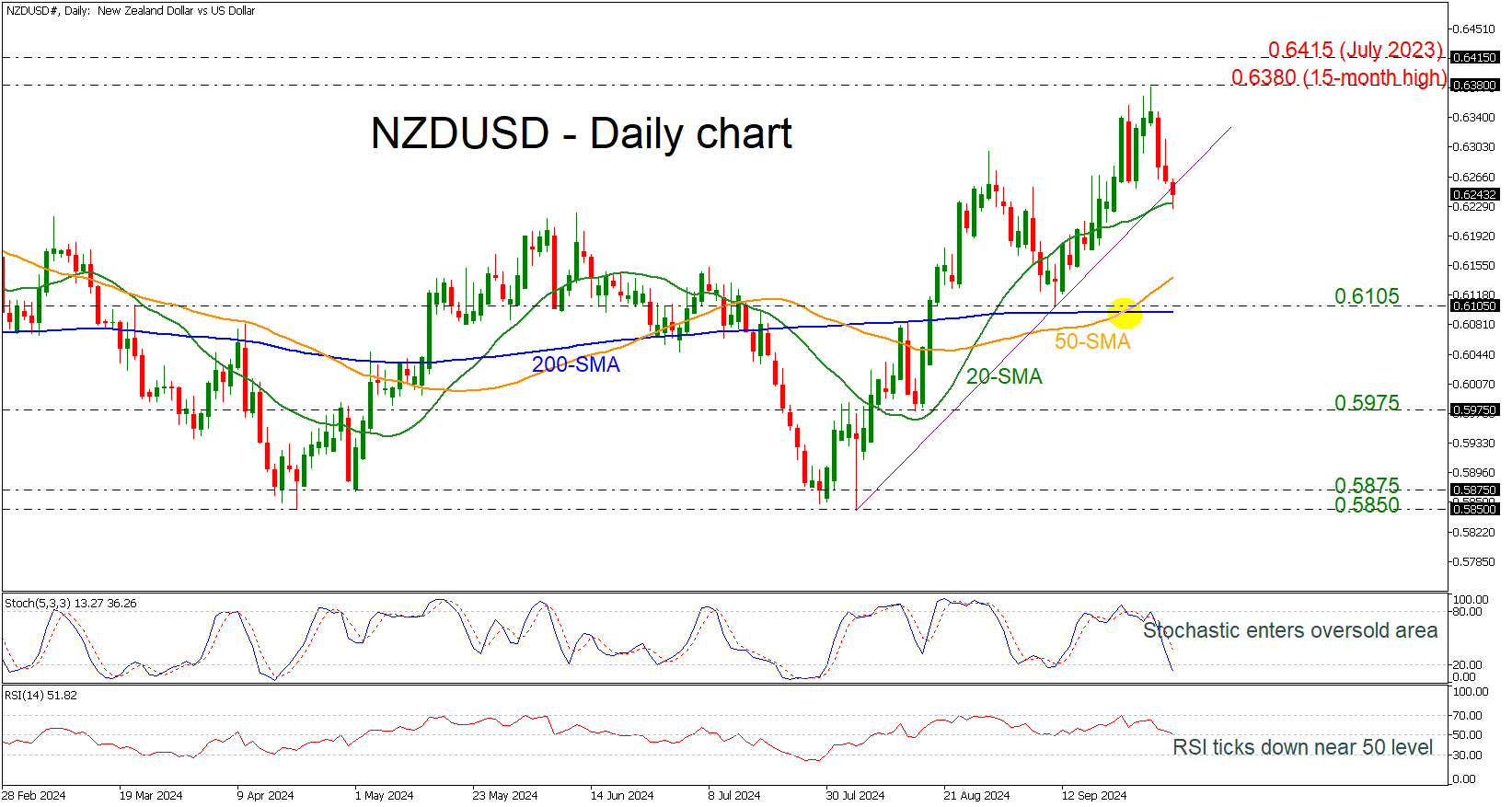
- NZDUSD pulls back from its 15-month top
- Stochastic tumbles to oversold region
- RSI falls near 50 level
NZDUSD lost more than 2% following the pullback from the 15-month high of 0.6380, flirting with the short-term ascending trend line and the 20-day simple moving average (SMA).
In the previous days, the 50- and 200-day SMAs posted a bullish crossover, but the market is currently retreating, taking the technical oscillators lower. The stochastic dived towards the oversold region, while the RSI is trying to cross beneath the 50 level.
The 20-day SMA at 0.6230 could provide immediate support, ahead of the 50-day SMA at 0.6140. Below that, the 0.6105 bar may halt bearish action, which holds near the flat 200-day SMA.
On the flip side, if the market rises above the uptrend line, the next resistance could be the 15-month peak of 0.6380 and the July 2023 peak at 0.6415.
All in all, NZDUSD has been in a bearish correction over the last couple of days, but as long as it remains above the 200-day SMA, the broader outlook remains positive.
September CPI Preview: Sticky-Looking Core to Be Temporary
Summary
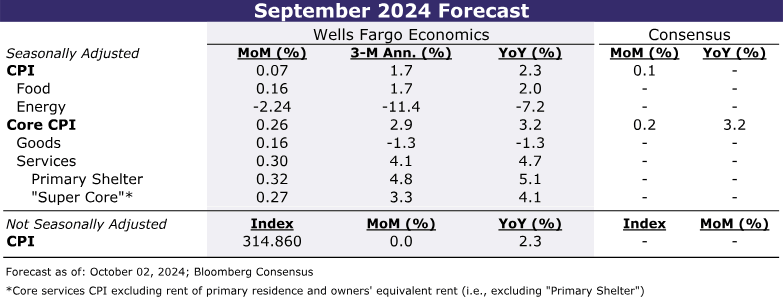
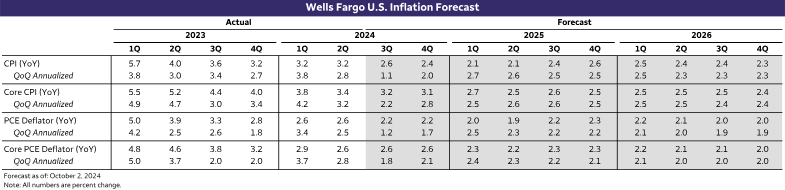
The overall progress in reining in decades-high inflation should be on display with the September CPI report. We look for the headline to advance 0.1%, which would bring the year-over-year rate down to 2.3% and point to headline PCE rising 2.0%—directly on the FOMC's target in what will be the last read on inflation before the Committee's November 7 meeting.
Reducing core inflation remains more of a grind. We estimate the CPI excluding food and energy will post another "low" 0.3% increase (0.26% unrounded) in September, which would lead the year-over-year rate to slip back to 3.2%. Although we expect a similarly-sized gain as in August, the drivers are likely to be different. Core goods prices look poised to take a temporary breather from the deflationary trend we believe is still underway, while core services inflation should moderate amid smaller gains in shelter and travel prices.
Looking ahead, the strike among East and Gulf Coast dockworkers presents a near-term upside risk to goods inflation. For now, however, we expect minimal effects on consumer goods prices due to the improved picture for retail inventories and softer demand environment compared to a few years ago. Services inflation should recede further in the months ahead as the cooler rental market feeds through to official measures of shelter inflation and the jobs market softens. We look for the monthly pace of core CPI to downshift to around 0.20% through the remaining months of the year and, of more focus for the FOMC, for the 12-month change in core PCE inflation to ease to around 2.25% by this time next year.
Headline CPI: Now That's More Like It
September's CPI report should indicate that inflation slowly continues to recede. The ongoing moderation in price growth should be most evident in a tame headline gain. We look for the Consumer Price Index to advance just 0.1%. If realized, that would drive the year-over-year rate down to 2.3% and point to headline PCE rising 2.0%—directly on the FOMC's target in what will be the last read on inflation before the Committee's November 7 meeting.
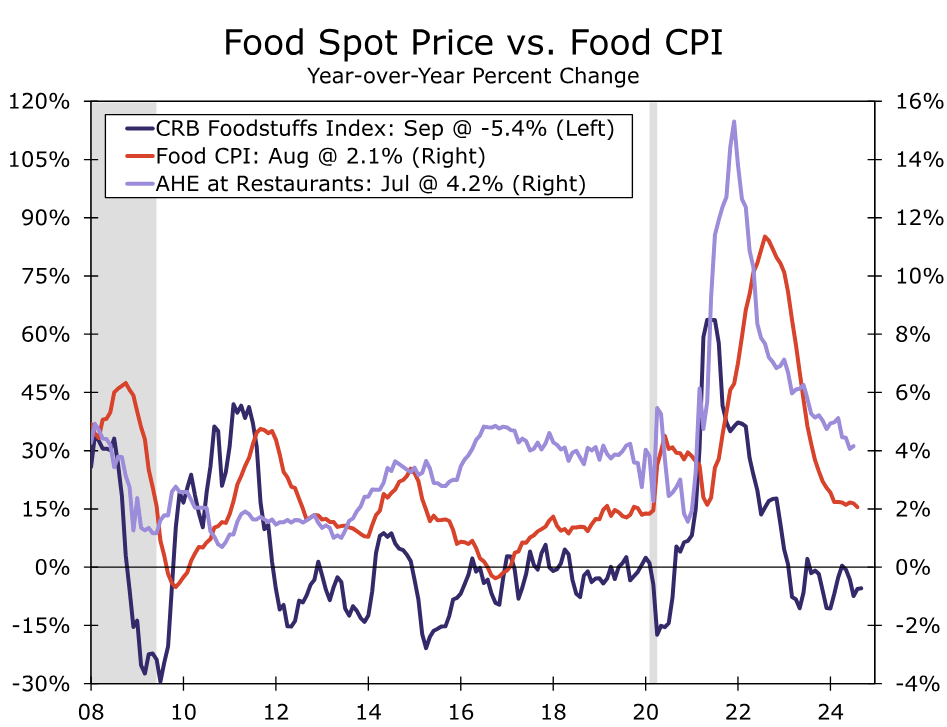
The pullback in gasoline prices over the past year has been one key factor in driving the headline lower. We estimate energy goods prices fell a little more than 4% in September and 15% since this time last year. Food inflation has also quieted down amid tamer commodity prices, more price-sensitive shoppers and slower wage growth at restaurants and grocery stores (Figure 1). We look for prices for food at home and away from home to have advanced 0.1% and 0.3%, respectively, in September, which would result in the year-over-year pace of the overall food index slipping to 2.0% from 3.7% last September and more than 11% at its recent peak.
Core CPI: Goods and Services Reverse Roles in September
Reducing core inflation, however, remains more of a grind. We expect another monthly increase in the core index that teeters on the edge of a 0.2% or 0.3% gain. While our unrounded estimate of 0.26% is little different from August's 0.28% increase, underneath the surface, we look for a different set of drivers (Figure 2). Specifically, we look for core goods prices to swing from a 0.2% monthly decline to a 0.2% monthly increase amid a pickup in used auto prices (+1.5%) and less favorable seasonal factors. These factors should be temporary, however, leading us to expect a resumption of goods deflation in the final months of this year.
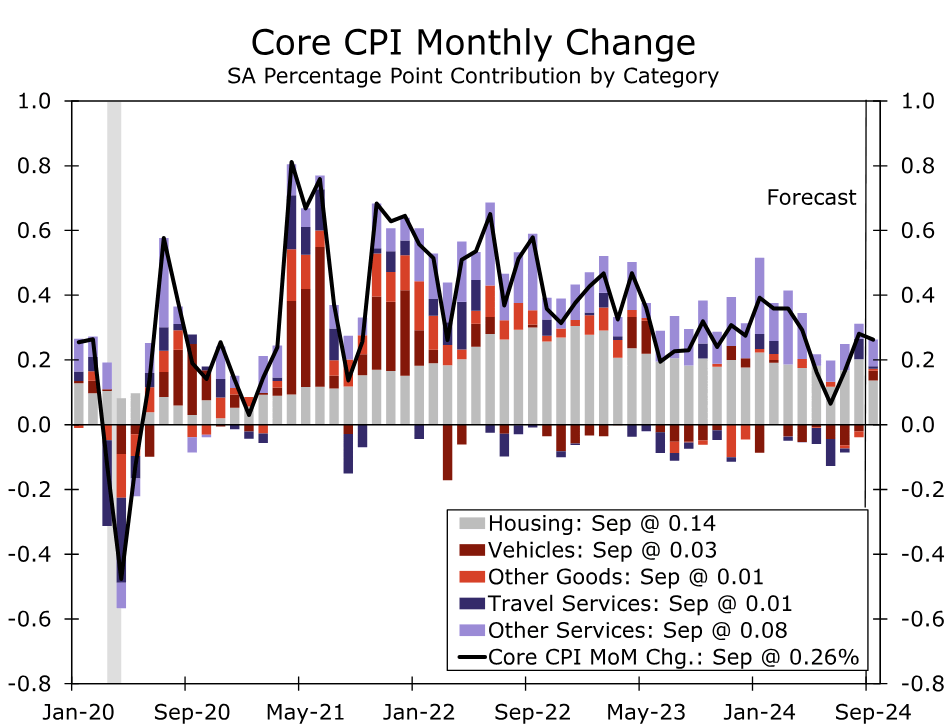
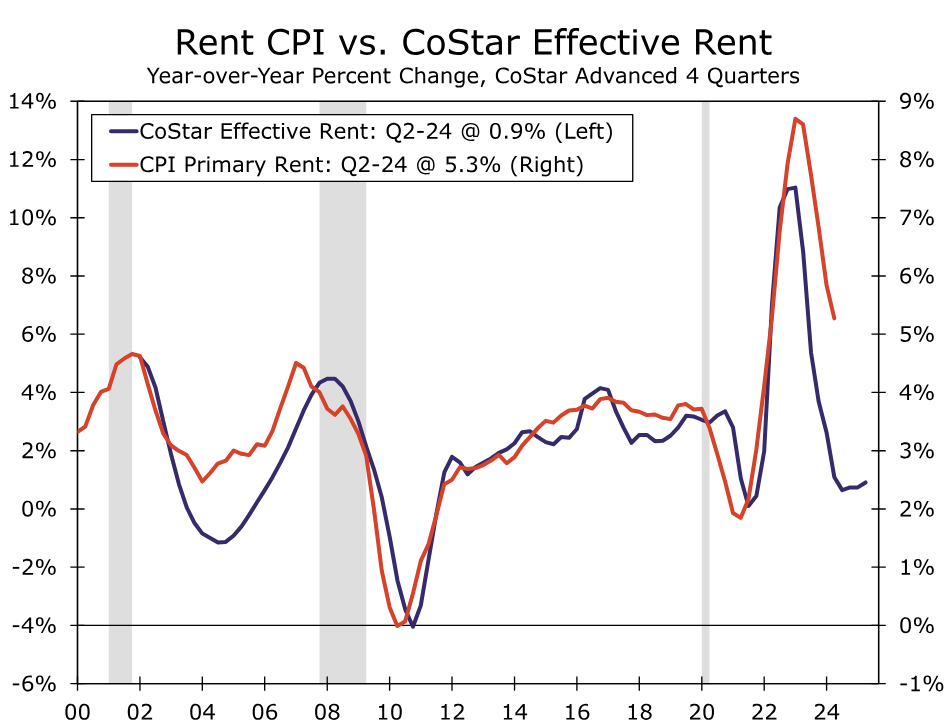
Core services, on the other hand, should quiet down a little in September; we estimate a 0.3% gain after a 0.4% increase in August. At the risk of seeming like Charlie Brown trying to kick Lucy's football, we still see signs that primary shelter inflation will slow further, and that the nearly 6% annualized monthly rate recorded in August is not reflective of the underlying trend. The apartment vacancy rate according to CoStar through Q2 has remained at its highest level since 2009, with apartment rent growth running below its pre-COVID pace according to a litany of measures (e.g., CoStar, Zillow and the BLS's New Tenant Rent Index, Figure 3). While low affordability in the purchase market is keeping single-family rent growth more or less in line with its 2018-2019 clip, the CPI for owners' equivalent rent, at 5.4% year-over-year, remains roughly two percentage points higher than its pre-pandemic pace. After increasing 0.5% in August, we estimate primary shelter rose 0.3% in September. Core services ex-housing is also likely to come in a little lighter in September, helped by a more modest gain in airfares and further easing in motor vehicle insurance inflation.
Upward Pressure on Prices Continues to Generally Ease
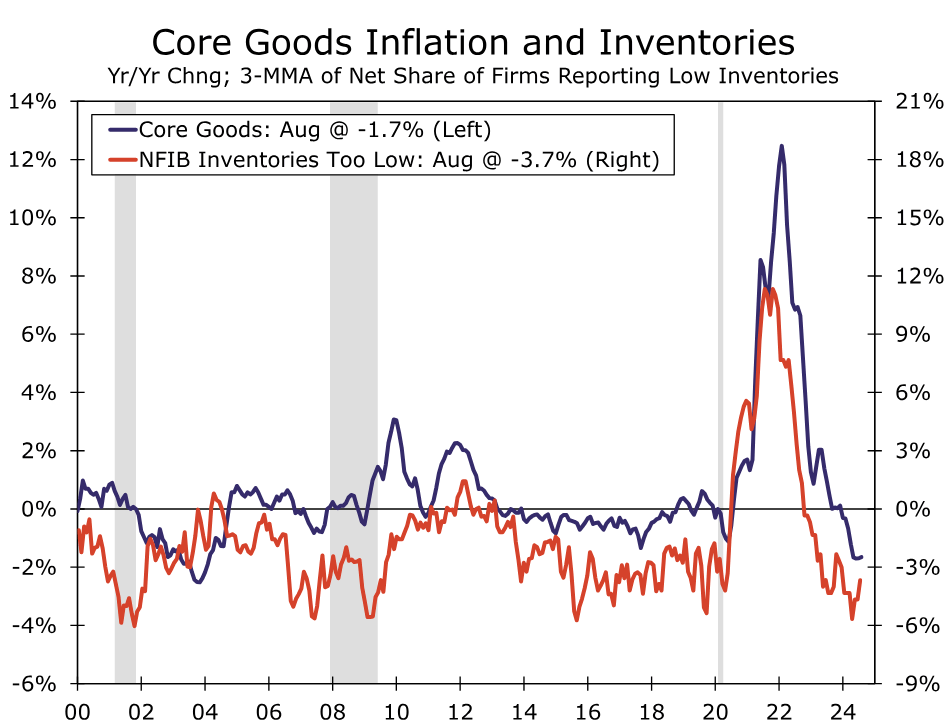
Despite the recent pace of core CPI having picked up since mid summer—we estimate a three-month annualized rate of 2.9% in September compared to 1.6% in July—the intact downward trend should be evident by the year-over-year rate edging back down to 3.2%. Moreover, as we look ahead, inflation pressures continue to generally dissipate. Admittedly, the East and Gulf Coast dockworkers strike presents a near-term challenge to furthering goods deflation. For now, we expect minimal effects on consumer goods prices due to the better inventory picture and softer demand environment compared to a few years ago, although a prolonged dispute would change our view (Figure 4). Services categories remain the laggard in terms of inflation settling back down, but we continue to expect a further moderation over the coming quarters. Not only does softer shelter inflation still seem to be just a matter of time, but service providers, such as insurers and airlines, should benefit from more stable/lower prices for goods inputs (e.g., vehicles and oil prices). Meantime, fewer quits as the job market cools and the pickup in productivity growth are reducing inflationary pressure from the jobs market—dynamics that will help limit goods and services inflation alike.
We look for the 12-month change in headline CPI to remain around 2.0-2.5% over the next year, which should translate into the PCE deflator hovering right around the Fed's 2% target (Figure 5). Excluding food and energy, price growth should continue to recede, as further services disinflation more than offsets less-dramatic goods deflation. We look for the year-over-year pace of core CPI inflation to slow to around 2.5% by the third quarter of next year, with the gap between the core CPI and core PCE narrowing near its historic 0.3 percentage point average.
Is China Circumventing U.S. Tariffs?
Summary
We have written extensively about the deterioration in the trade relationship between the U.S. and China, and how tensions between the two nations have rewired global trade patterns. Following the implementation of Trump-era tariffs, the U.S.-China trade relationship reached an inflection point, and as of the end of 2023, China's trade surplus with the United States was essentially half of what it was relative to before the trade war. However, a deeper dive into global trade flows suggests the overall U.S.-China trade relationship may not necessarily be weakening as much as data suggest. Evidence exists that China may be circumventing U.S. tariffs via proxy nations, and still benefiting from U.S. demand and the United States as a final export destination. In this report, we highlight how the composition of U.S. import partners has changed over time. We also reveal how China's export destinations have also changed, and the same countries the U.S. is importing more from, China is exporting more to.
Coincidence? Probably not.
China Is Paying Tariffs, But Also Working Around Them
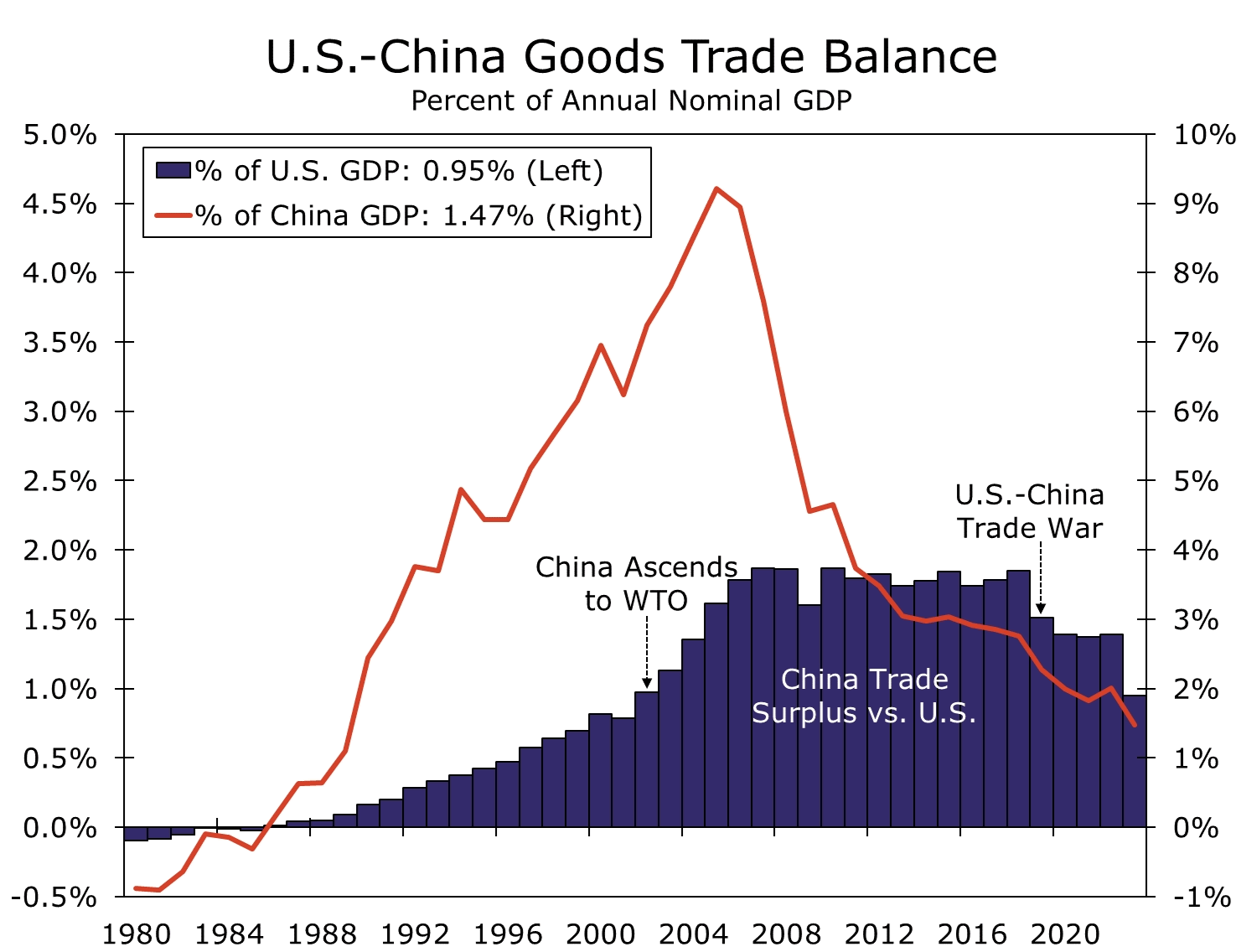
Over the last few years, we have written extensively about the deterioration in the trade relationship between the U.S. and China. More recently, we explored how tensions between the two nations have spread and are upending trade relationships around the world and rewiring global trade patterns. U.S.-China relations have been tense for some time due to diverging strategic priorities and geopolitical differences; however, we can pinpoint the inflection point—at least for trade—as the implementation of Trump-era tariffs and the broader trade war that originated in 2018. To that point, China's trade surplus with the United States saw a meaningful dip when tariff rates ramped up over the course of 2019 (Figure 1). Successive years have seen China's trade surplus slip even further, and as of the end of 2023, China's trade surplus with the United States was essentially half of what it was relative to before the trade war—both in terms of U.S. and China GDP. We can point to many other metrics to indicate the U.S.-China trade linkage is not as robust as it once was; however, a deeper dive into global trade flows tells an interesting story. One that suggests the overall U.S.-China trade relationship may not necessarily be weakening as much as data suggest. The same global trade data also suggest that China may be circumventing U.S. tariffs, and still benefiting from U.S. demand and the United States as a final export destination.
As background, President Trump first imposed tariffs directly on Chinese exports in 2018. Over the course of the next few years, tariffs were imposed on a majority of Chinese exports to the U.S., while the tariff rate being applied was ratcheted higher. China responded with retaliatory tariffs on all U.S. exports to China, and matched tariff threats emanating out of the United States. Eventually, the U.S. and China reached a “Phase 1” trade deal that saw future tariff hikes suspended and the tariff rate imposed on select goods lowered. For the time being, the “Phase 1" trade deal remains intact; however, the Biden administration has imposed additional tariffs—along with broader restrictions—on certain exports to China over the course of the last four years. While Chinese authorities have not responded with new tariffs, China has erected other forms of trade barriers with the U.S. that contribute to the complications surrounding the U.S.-China trade relationship. As far as tariff revenue, at least for the United States, the U.S. is collecting a sizable amount of revenue derived from the tariffs imposed on China. As of mid-2024, the trade-weighted average tariff rate (i.e. tariff revenue as a percent of the total value of U.S. imports from China) on China is ~9.5%, a notable step up from the tariff rate prior to the trade war (Figure 2). Excluding the distortion caused by COVID-19 in 2020, the average tariff rate on imports from China has slipped only modestly over the last few years. The moderate decline in this ratio is mostly a product of reduced U.S. demand for Chinese goods subject to tariffs, in particular.
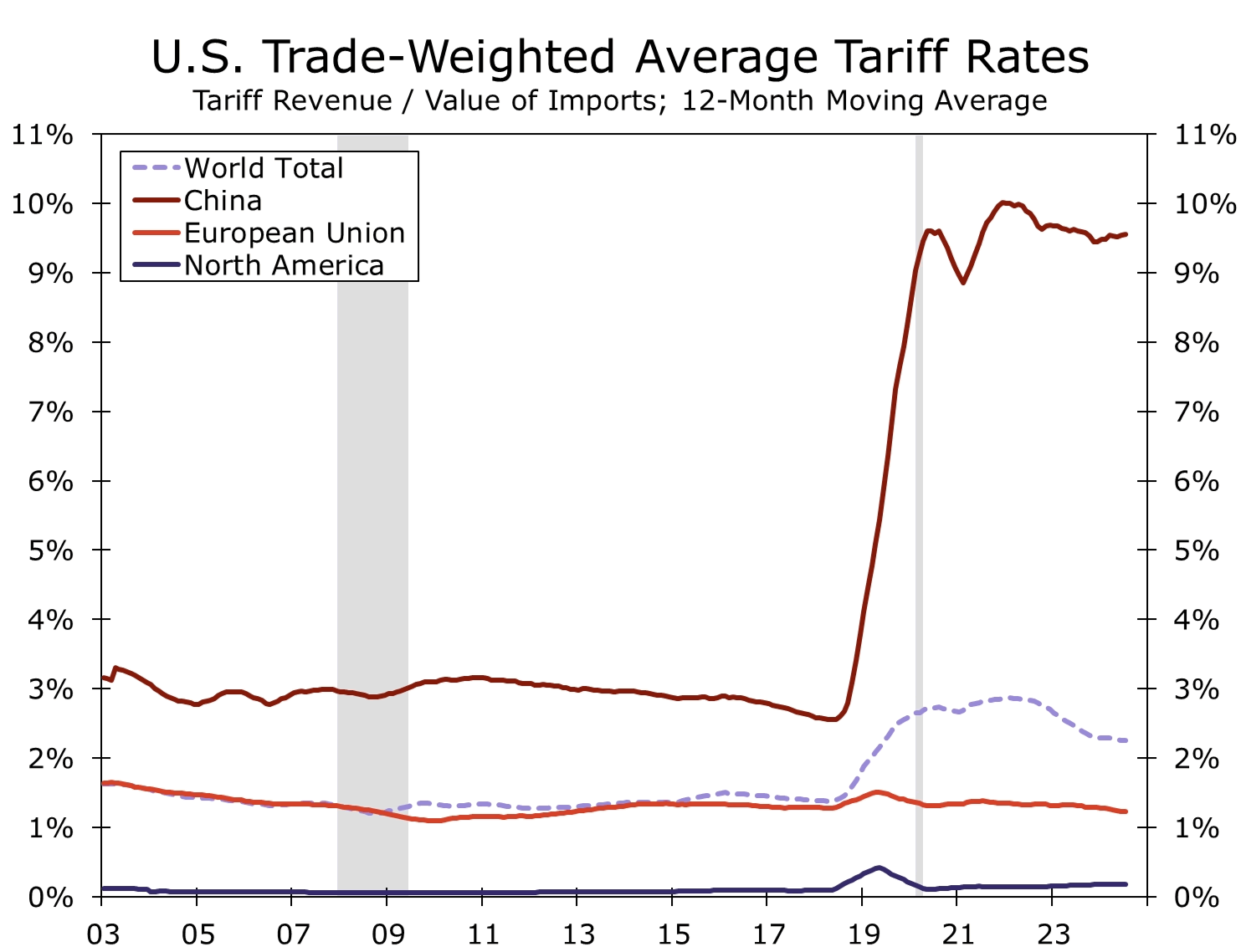
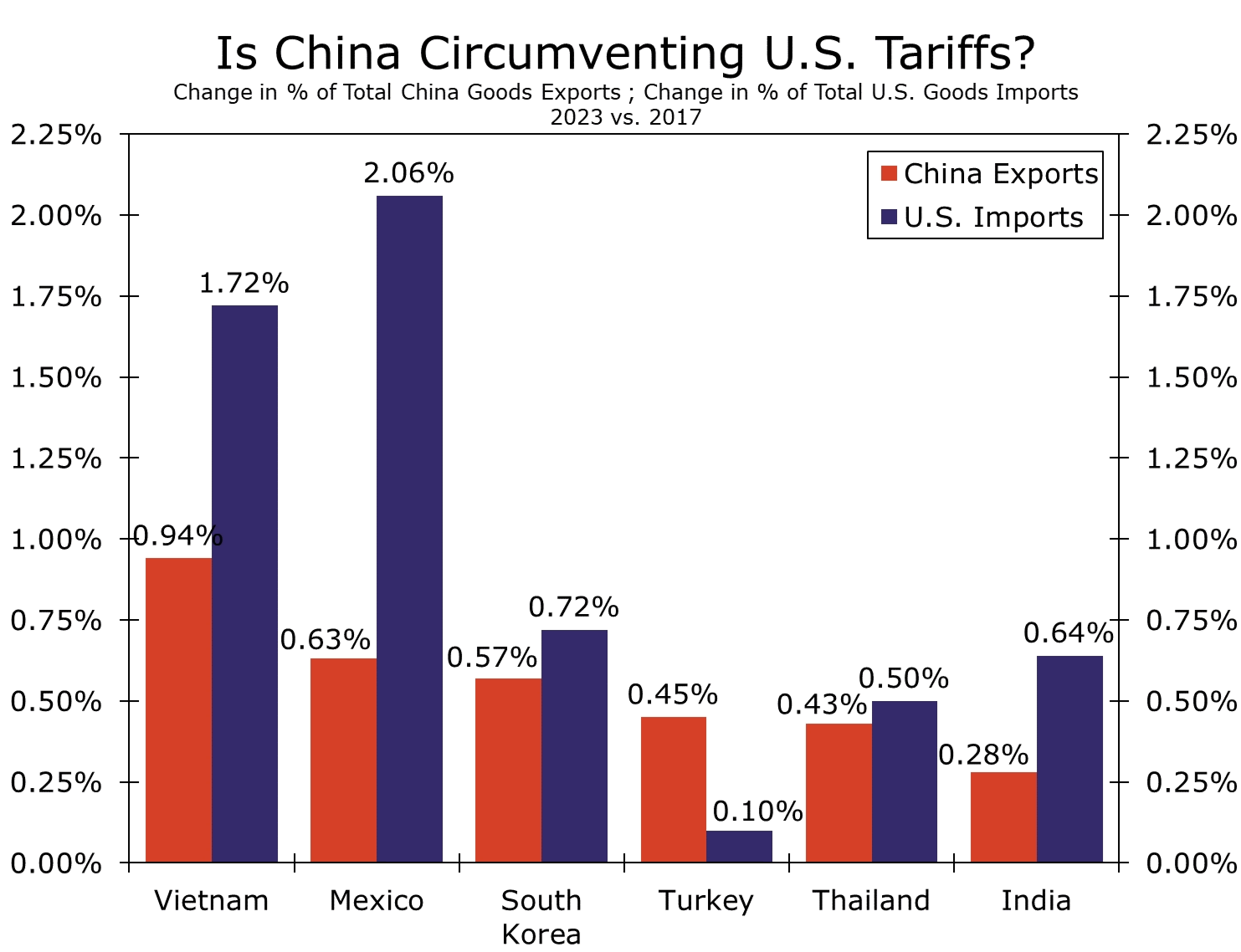
However, Figure 2 also shows an average U.S. trade-weighted tariff rate on imports from the entire world, which may be a more compelling data point as well as evidence that China may be circumventing U.S. tariffs. For clarity, when we say “circumventing U.S. tariffs”, we are referring to China using proxy nations as a way of avoiding U.S. import duties on goods produced in and sent directly from China. These “proxies”—either other low-cost economies in Southeast Asia, nations geographically or geopolitically close to the U.S. etc.—are used as intermediaries before Chinese manufactured products eventually reach U.S. soil. But as far as the world tariff rate and how that corresponds to China's use of proxy nations, the world tariff rate popped higher during the peak of the trade war, but has steadily fallen over the last few years. While the world tariff rate may be slightly diluted from the value of overall U.S. imports rising, the larger influence over the fall in the world tariff rate is less total tariff revenue collection in absolute dollar terms, given a compositional shift in U.S import partners. As reflected in the narrowing China trade surplus chart, the U.S. is importing less from China, the United States' main source of tariff revenue. Instead, the U.S. is sourcing an increased amount of goods from other nations in Asia as well as across Latin America and Europe. Relative to 2017, the U.S. is importing significantly more goods from countries such as Vietnam, Mexico, South Korea, Turkey, Thailand and India (Figure 3). Essentially, countries not subject to China-style tariffs. At the same time, global trade data reveal that China has also boosted trade relations with those same nations. As of the end of 2023, and relative to before the trade war started, China is exporting more goods to those very same countries.
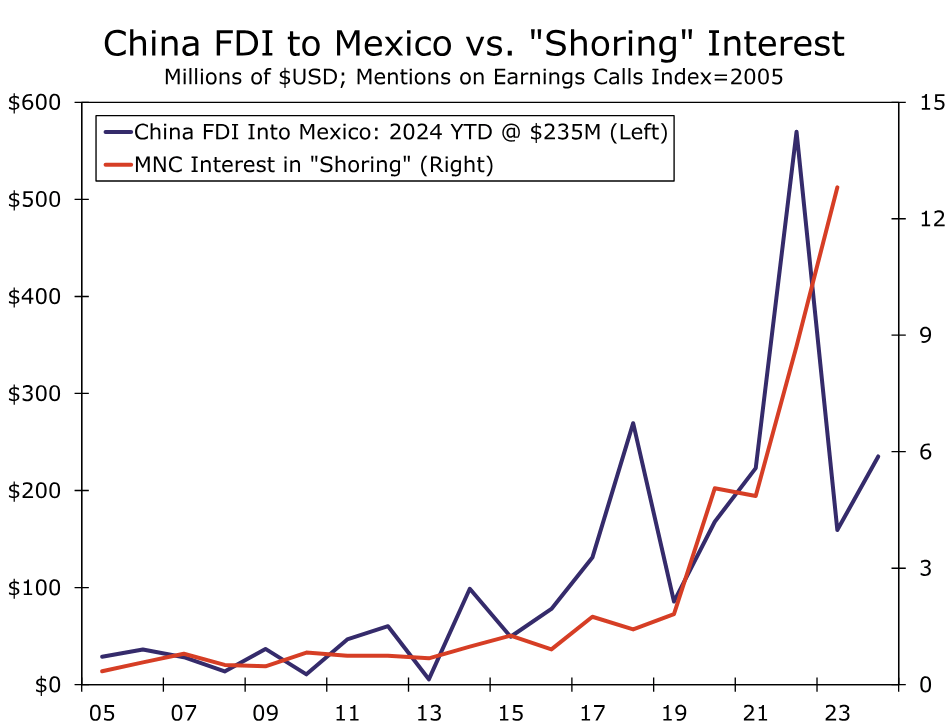
Coincidence? Probably not. Take Mexico for example. Mexico is widely considered to be one of the top nearshoring destinations for U.S. corporations looking to shift critical supply chain links out of China. As U.S. multinational corporation interest in nearshoring picked up after tariffs were imposed and surged again after COVID-19, so has Chinese foreign direct investment (FDI) into Mexico (Figure 4). Without knowing for certain, there is a high likelihood China is actively putting infrastructure on the ground in Mexico as an intermediary to accept Chinese made goods before ultimately sending on to the United States. Indeed, given the shifting composition of trade flows and China's increased foreign direct investment activity, we would argue the evidence strongly suggests that a perceptible portion of China-U.S. trade flows are being re-routed via proxy countries. The Biden administration indeed took notice of these tactics, and recently applied tariffs to certain Chinese goods making their way into the U.S. via Mexico. China using proxy nations as means to avoid U.S. tariffs will likely retain the attention of the current administration and a potential Democratic administration post-elections, but could also be at the core of former President Trump's proposed “global tariff.” Should a tariff on all exports to the United States apply to all nations, the ability for China to completely circumvent export duties would be diminished. While a U.S. global tariff would place downward pressure on global growth and upward pressure on global inflation, as well as potentially damage relations between the U.S. and most trading partners, the genesis of former President Trump's global tariff proposal could still be aimed at disrupting China's rise. Combined with Trump's proposed 60% tariff on exports to the U.S. directly from China, China's ability to tap U.S. consumer demand could be at risk should U.S. trade policy turn more protectionist in the near future. With exports propping up China's economy for the time being, a global tariff alongside tariffs imposed directly on China could have a more severe impact on China's economy relative to existing tariffs. While we are not assuming any new tariffs or changes in U.S. trade policy in our global economic forecasts, we do feel comfortable saying that U.S.-China tensions will persist for an extended and ongoing period of time, even in a scenario without new tariffs. We also feel comfortable sharing our view that U.S.-China decoupling that has been underway for a period of time, as well as the fragmenting of the global economy to align with either the U.S. or China, is likely to continue for the foreseeable future.