Sample Category Title
Canadian Dollar Rises, Markets Eye BoC
The Canadian dollar is showing some strength in today’s North American session. USD/CAD is trading at 1.3649, down 0.41%.
Bank of Canada expected to hike rates by 0.75%
This week’s calendar is unusually light, with only two events out of Canada. Both releases, however, could have a significant effect on the movement of the Canadian dollar. The Bank of Canada will make its rate announcement on Wednesday, with the August GDP release on Friday.
What can we expect from the BoC? The Bank has not been shy about raising rates, having hiked some 325 points this year. Similar to the case in the United States, inflation has proven to be stickier than anticipated, as the sharp rate-hike cycle is yet to cause a peak in inflation. In September, headline inflation ticked lower to 6.9%, down from 7.0% in August. Still, the reading was higher than the consensus of 6.8%. Core inflation remains even more stubborn and rose unexpectedly to 6.0%, up from 5.8% and above the forecast of 5.6%.
Until a couple of weeks ago, the markets had been expecting the BoC to deliver a 0.50% hike at tomorrow’s meeting, but the September inflation data has raised the likelihood that policy makers will come out with guns blazing and increase rates by 0.75%. This would bring the cash rate to an even 4.0% and would be the highest rate level in the G-7.
The steep rise in rates may not have curbed inflation, but it has caused significant economic pain to households and businesses and raises the likelihood of a recession. The BoC would love to ease up on oversize rate hikes but has made clear that inflation is public enemy number one and until inflation shows signs of peaking, it will continue to raise rates. A 0.75% hike will help the Canadian dollar keep pace with its US cousin, as the Federal Reserve is almost certain to deliver a 0.75% hike next week.
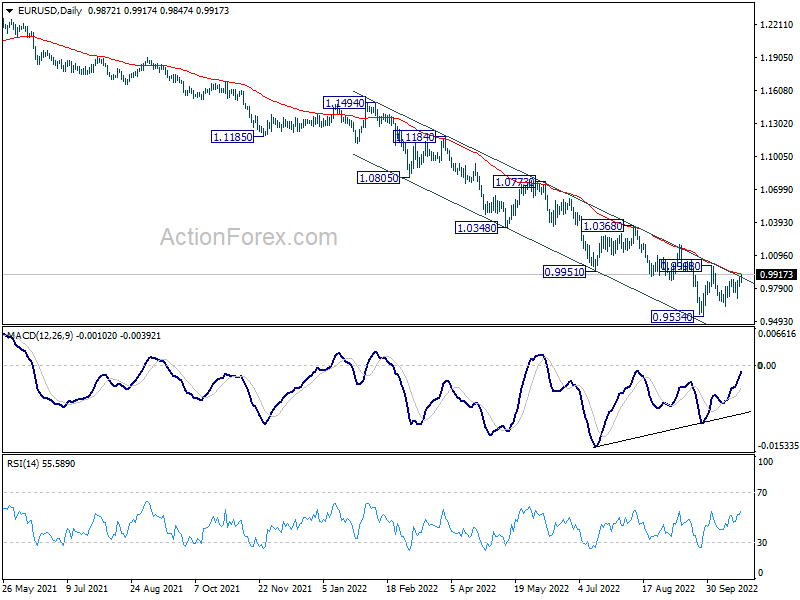
USD/CAD Technical
- USD/CAD is testing support at 1.3656. Below, there is support at 1.3467
- 1.3718 and 1.3807 are resistance lines
EUR/USD: Bulls Keep Traction and Eye Parity
The Euro remains at the front foot on Tuesday and rises to the highest since Oct 6, as better than expected German Ifo data added to positive near-term sentiment.
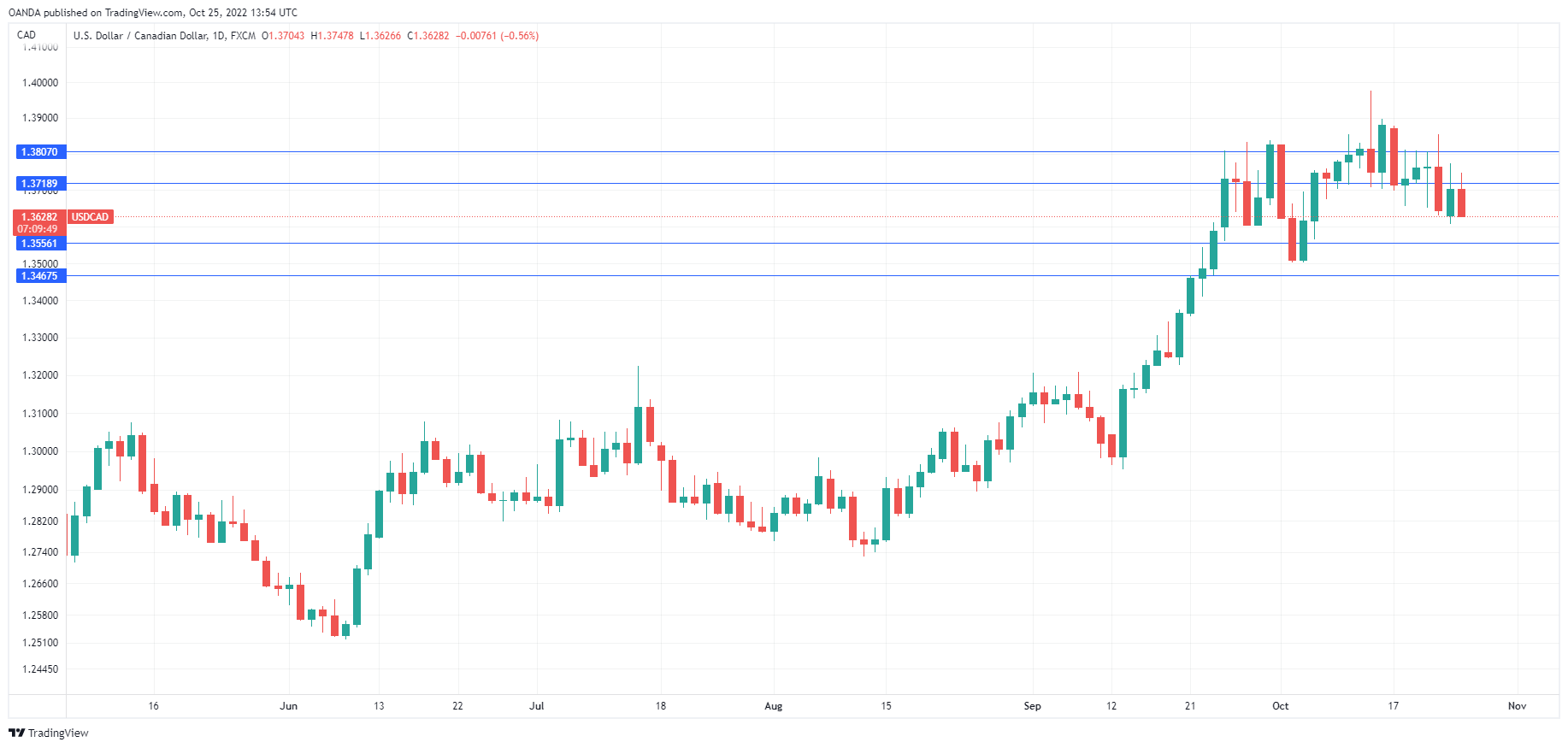
Bulls hold for the fourth straight day, with long lower shadows on daily candlesticks in past two days, signaling that the downside was so far well protected.
Probe through Fibo barrier at 0.9912 (76.4% of 0.9999/0.9631 bear-leg) would open way for extension towards key resistance at parity level (also Oct monthly high), with possible break here to generate strong bullish signal.
The single currency benefits from weaker dollar on signals that Fed is likely to consider slowing the pace of rate hikes, though the target of 5% by the end of Q1 2023 remains in play.
Technical picture on daily chart is improving as rising 14-d momentum is entering positive territory and north-heading Tenkan-sen is on track to form a bull-cross with Kijun-sen.
Today’s close above 0.9912 Fibo level and falling 55 DMA ( 0.9925) is needed to confirm bullish stance for attack at parity.
Today’s low at 0.9848 (reinforced by 5DMA) marks next support, guarding pivots at 0.9800 zone.
Res: 0.9959; 1.0000; 1.0050; 1.0086.
Sup: 0.9875; 0.9848; 0.9815; 0.9789.
US consumer confidence dropped to 102.5, concerns about inflation picked up again
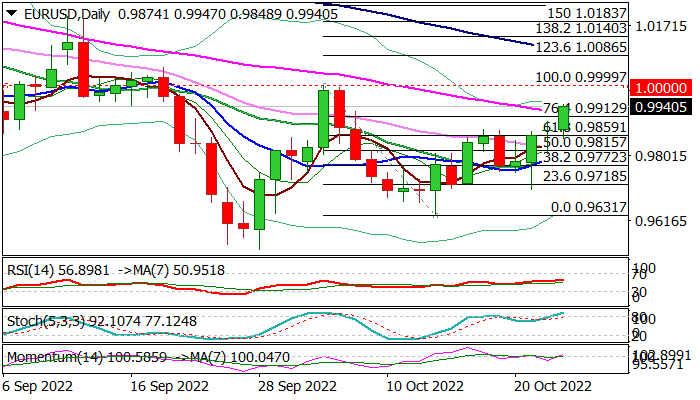
US Conference Board Consumer Confidence dropped from 107.8 to 102.5 in October, below expectation of 105.6. Present Situation index declined sharply from 150.2 to 138.9. Expectations index fell slightly from 79.5 to 78.1.
"Consumer confidence retreated in October, after advancing in August and September," said Lynn Franco, Senior Director of Economic Indicators at The Conference Board. "The Present Situation Index fell sharply, suggesting economic growth slowed to start Q4. Consumers' expectations regarding the short-term outlook remained dismal. The Expectations Index is still lingering below a reading of 80—a level associated with recession—suggesting recession risks appear to be rising."
"Notably, concerns about inflation—which had been receding since July—picked up again, with both gas and food prices serving as main drivers. Vacation intentions cooled; however, intentions to purchase homes, automobiles, and big-ticket appliances all rose. Looking ahead, inflationary pressures will continue to pose strong headwinds to consumer confidence and spending, which could result in a challenging holiday season for retailers. And, given inventories are already in place, if demand falls short, it may result in steep discounting which would reduce retailers' profit margins."
Bank of Japan Unlikely to Rescue the Collapsing Yen
With the Japanese yen in freefall and direct FX intervention unable to stop the bleeding, the spotlight is squarely on the Bank of Japan's upcoming meeting on Friday. While the central bank is expected to revise its inflation forecasts higher, it is unlikely to deliver any meaningful policy changes, keeping the devastated currency under heavy pressure.
Yen pain
It has been a painful year for the yen, which has lost a staggering 30% of its value against the US dollar. At the heart of the problem lies the Bank of Japan's refusal to even consider higher interest rates, in contrast to other major central banks that have been tightening policy at incredible speeds.
With interest rates surging everywhere except for Japan, rate differentials have widened, crushing the yen. Capital is essentially leaving the country, looking for higher returns abroad. The energy shock added fuel to the yen's depreciation too, by turning Japan's trade surplus into a deficit, depriving the currency of its main historical advantage.
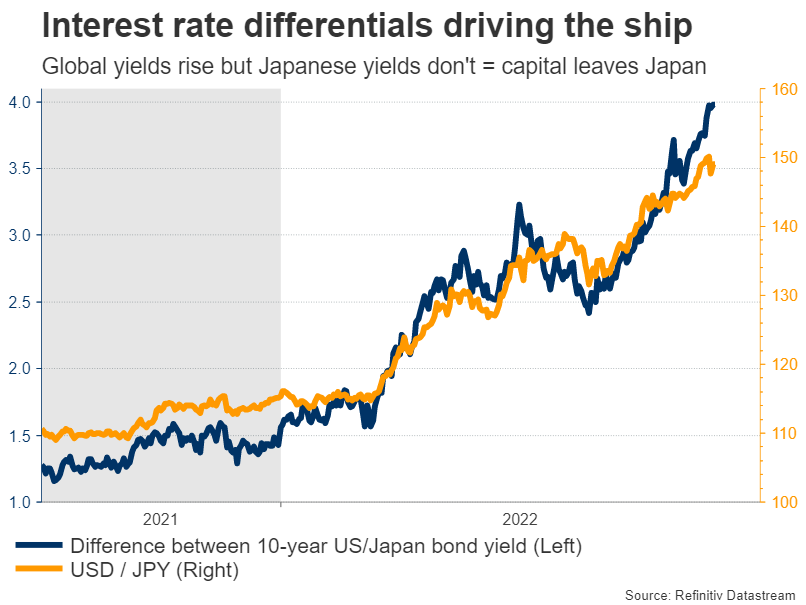
Direct intervention in the FX market to shore up the sinking yen has been wildly unsuccessful, merely slowing down the pace of depreciation. Traders know that solo intervention without the help of the Americans or Europeans is unlikely to have any lasting impact, as long as the underlying force of interest rates is acting against the yen.
No (real) changes yet
Market participants don't expect any policy shifts at this meeting either. While inflation has fired up and is currently running at 3%, wage growth and inflation expectations remain muted, reinforcing the BoJ's view that the current inflation wave is driven mostly by supply factors that will fade away soon.
The only change that is expected is an upward revision of inflation forecasts for the coming years. However, the same 'sources' suggest the BoJ will also slash its forecasts for economic growth amid concerns of a global recession, nullifying any speculation about future policy tweaks.
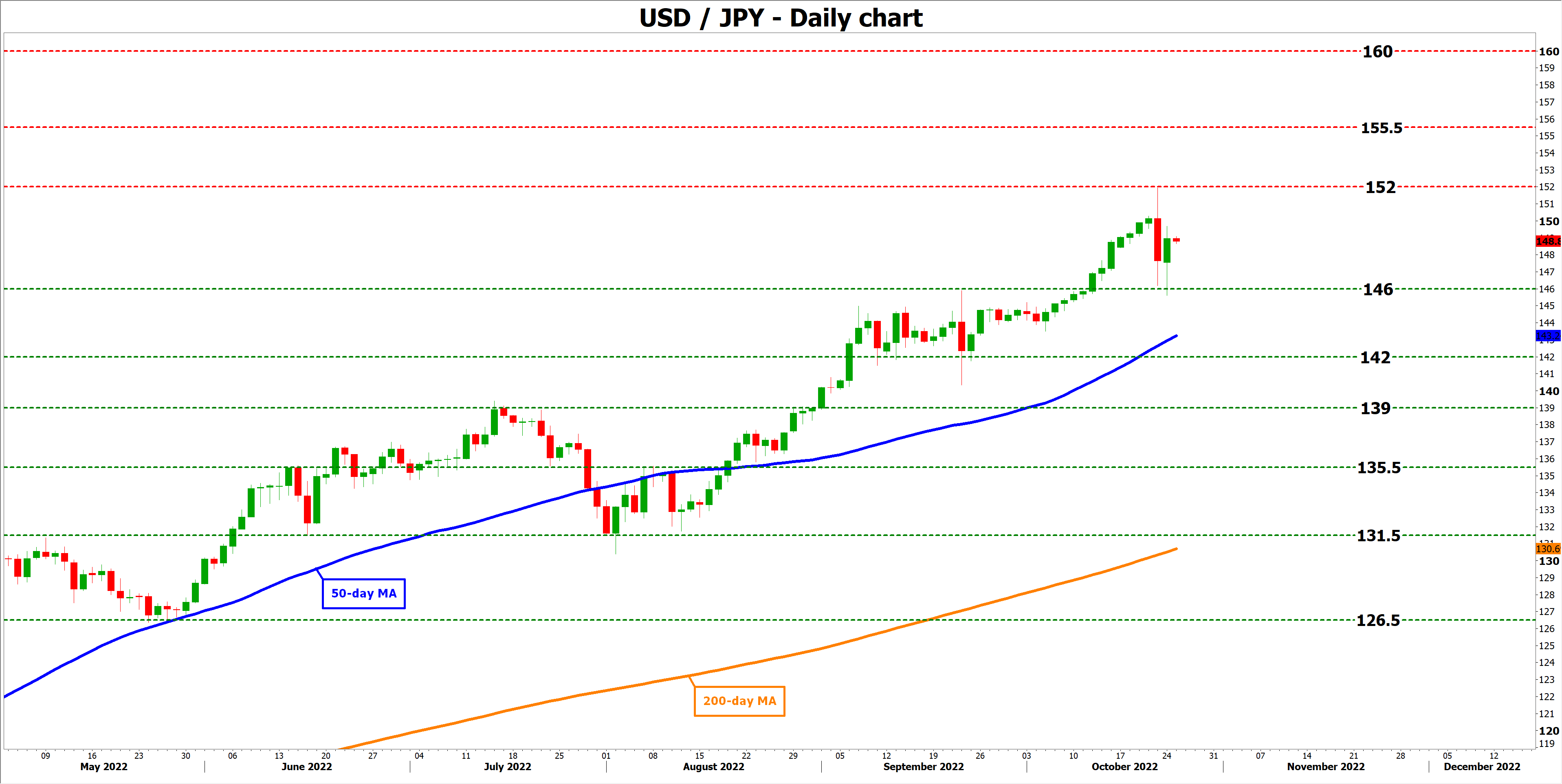
Such an outcome could bring the yen under renewed selling pressure. In this case, dollar/yen could encounter resistance around the 152.00 region.
If there is any shift, it will probably be in tone only. The central bank could adjust its language to indicate it is open to future tightening, which would be a welcome sign but not a game-changer. Such an outcome could spark a short squeeze in the yen, sending dollar/yen down for another test of 146.00.
Big picture
All told, it's difficult to say where the bottom is for the yen. With the BoJ refusing to play the tightening game and the Fed keeping its foot heavy on the rate increase pedal, there are no fundamental grounds for a trend reversal.
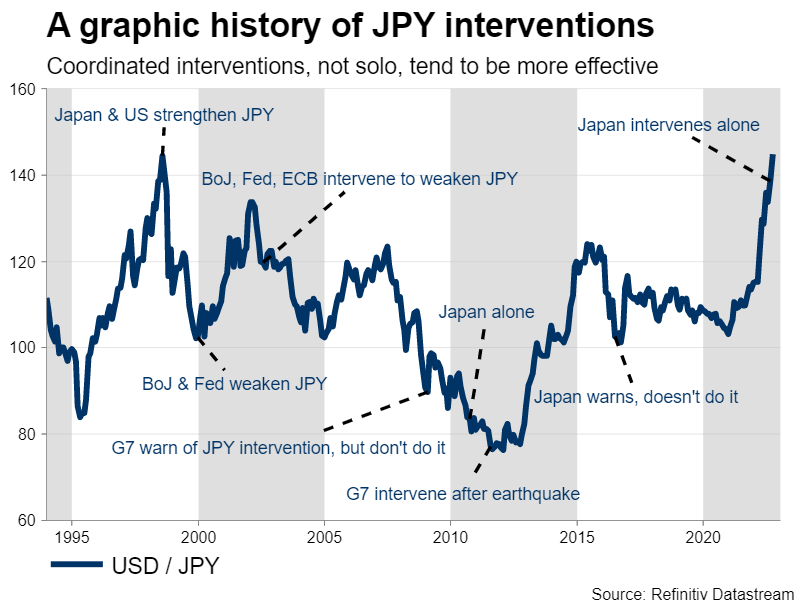
The outlook remains negative and unilateral FX intervention by Japanese authorities won't change that. Threats of intervention might be enough to chase away some speculators, but they cannot alter economic gravity. Interest rate divergence is the variable that needs to change in this equation to turn dollar/yen around.
There are two ways that can happen - either the BoJ or the Fed have a change of heart. An acceleration in wage growth would be the early signal that a BoJ pivot is coming, while the Fed would need to see a very significant slowdown in inflation. At this stage, neither seems ready to blink.
GBP/USD Jumps as Sunak Takes the Reins
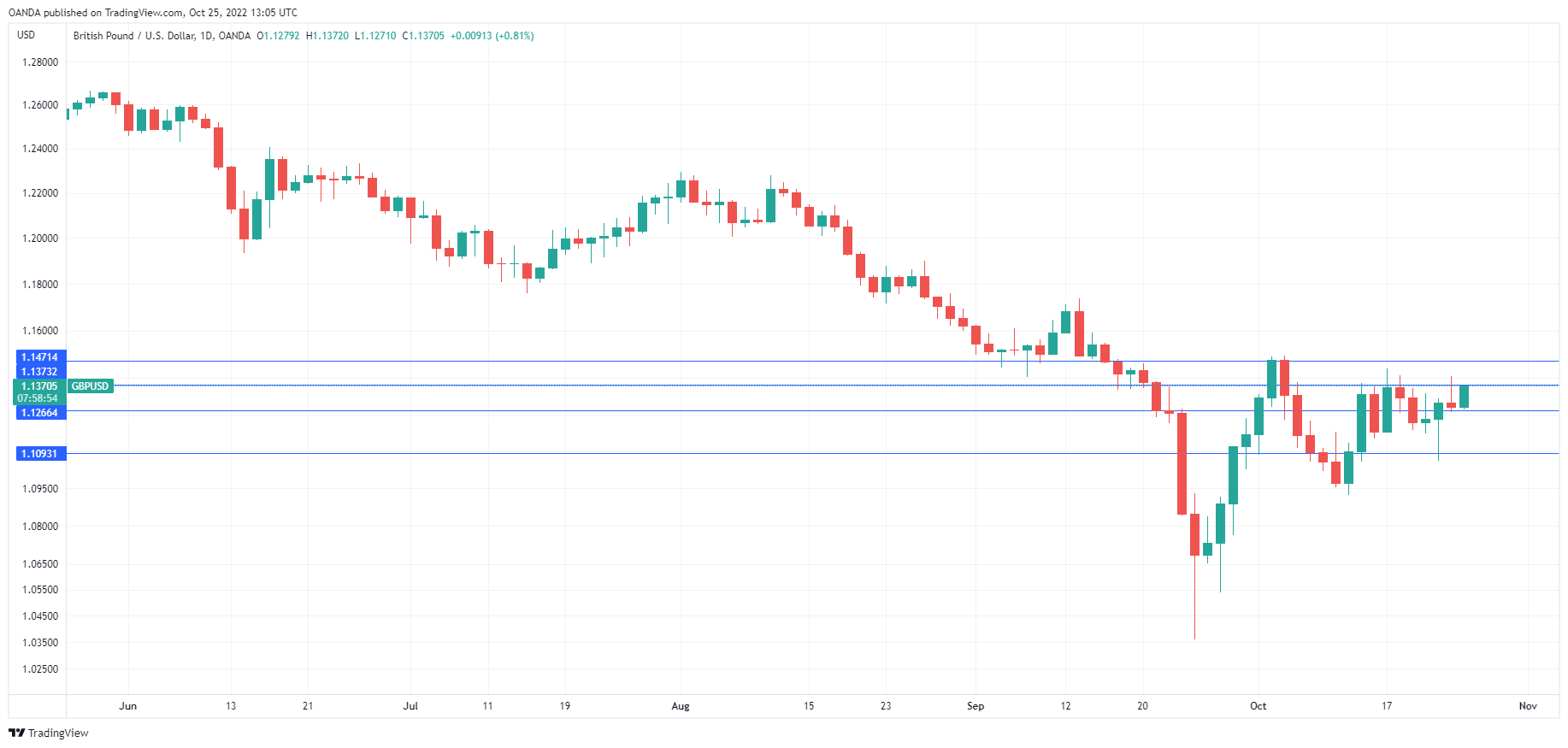
The pound has posted sharp gains today. In the European session, GBP/USD is trading at 1.1353, up 0.66%.
Will Sunak be up to the job?
Rashi Sunak is the new Prime Minister of the UK, the latest move in what has been a dizzying pace of political developments in the UK. Lizz Truss managed to stick around 10 Downing Street for a mere 44 days, after a mini-budget with unfunded tax cuts was a disaster and forced her to pack her bags. Sunak, a former finance minister, should fare better, but all agree that he faces an uphill battle in righting the leaky economy. Given all that has transpired over the past few weeks, if Sunak can re-establish a feeling of normalcy in the government, that will be a modest achievement.
The challenge for Sunak will be immense. Inflation is running at 10% and the weak UK economy may already be in recession. The most recent data shows consumer spending, manufacturing and business activity on the decline. The cost-of-living crisis is getting worse and real earnings are falling, which could lead to worker unrest.
Sunak has shown he is a capable politician but will need to keep the Conservative party united behind him if he is to succeed, with the opposition hoping they can capitalize on the political havoc and force a general election. The markets have reacted favorably to Sunak taking over as Prime Minister, as the British pound and UK gilts are higher today.
Next week will be anything but dull, as the government is scheduled to deliver a budget on October 31st and the Bank of England holds its policy meeting on November 3rd. With inflation showing no signs of peaking, the BoE is widely expected to deliver an oversize interest rate in order to curb inflation. A 0.75% hike is most likely, although there is an outside chance of a supersize full-point increase.
GBP/USD Technical
- GBP/USD tested resistance at 1.1373 earlier in the day. The next resistance line is 1.1471
- There is support at 1.1266 and 1.1093
BOC, BOJ Rate Decisions This Week
The consensus among analysts is that the BOC will raise rates another 75bps, leaving the target rate at 4.0%. Lately, Canada has been "leading" the Fed since its meetings are scheduled before its southern neighbor's. Since both countries are facing similar situations, what the BOC does is often interpreted as a little foreshadowing of what to expect out of the Fed. Therefore, if the BOC doesn't deliver on expectations, it could shake confidence in the consensus that the Fed will also raise rates by 75bps.
Canadian economic data has been doing relatively well over the last couple of weeks, which is seen supporting a strong move by the BOC. But there just recently was a fly in the ointment: US flash manufacturing PMIs fell into technical contraction this month. Canada doesn't have a comparable flash reading, meaning that the situation there could be similar, but it just isn't known.
Canada first to pivot?
Another difference is that Canada has had core inflation slowly falling unlike the US, but still above expectations. That has raised expectations that even though the BOC is expected to hike, it will do so "dovishly". That is, after the rate hike, Governor Macklem will tone down expectations of further aggressive hikes during his post-rate decision.
The BOC releases the monetary policy report (MPR) at the same time as the rate decision, and that's likely to be poured over to find any clues about when the "pivot" will happen. If the bank lowers its economic projections, then that is likely to be taken as a sign that the next rate hike won't be as aggressive. Or that the BOC might even pause in December.
How long can the BOJ stay put?
Despite all that's been happening with the yen lately, the BOJ is expected to keep monetary policy unchanged when it meets later in the week. Inflation has been rising in Japan, but not enough to shake the banks' extreme easing position.
But that doesn't mean that Kuroda couldn't influence the market in his extensive press conference following the meeting. As the yen has weakened over the last several months, calls have risen for the BOJ to do something. There have been at least two interventions so far to stop the slide in the currency. Although it's the BOJ who does the intervention, it's at the direction of the Ministry of Finance, which has allowed the central bank to remain aloof from the currency situation.
What can be done
The BOJ is currently applying a series of easing tools, from negative rates, to yield curve control to buying bonds. Although it could reverse course on any of those, should the BOJ decide to take measures, it most likely would come with first removing yield curve controls, since they are the least orthodox policy and would likely be interpreted as the least change in policy.
However, it's not likely that will be decided at this meeting. But it could be something that Kuroda hints at during the press conference that could finally move the yen in a more permanent direction. Otherwise, smaller interventions might be the course, which would only increase speculation of coordinated action in the future.
USD/JPY Mid-Day Outlook
Daily Pivots: (S1) 146.49; (P) 148.10; (R1) 150.62; More...
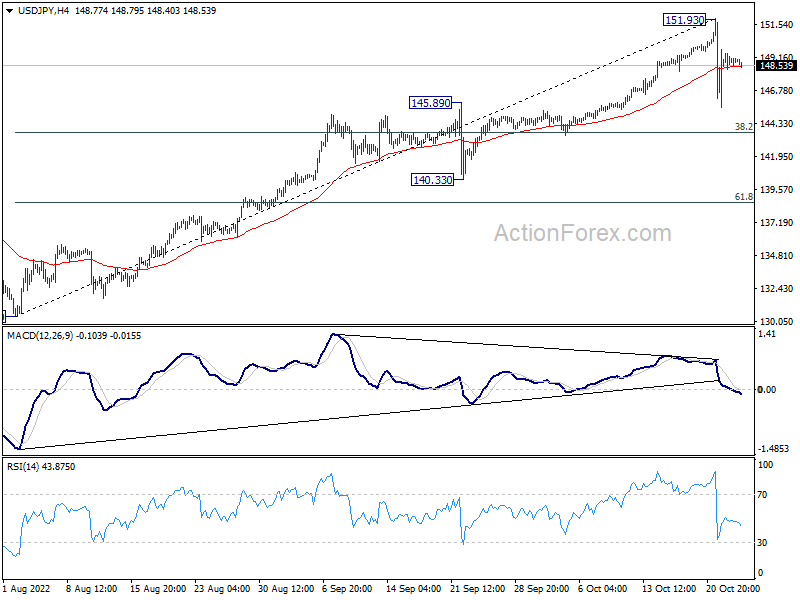
USD/JPY is staying in consolidation from 151.93 and intraday bias stays neutral. More consolidation would be seen for the near term. In case of another fall, downside should be contained by 38.2% retracement of 130.38 to 151.93 at 143.69 to bring rebound. Upside of rally attempt should be limited by 151.39 resistance.
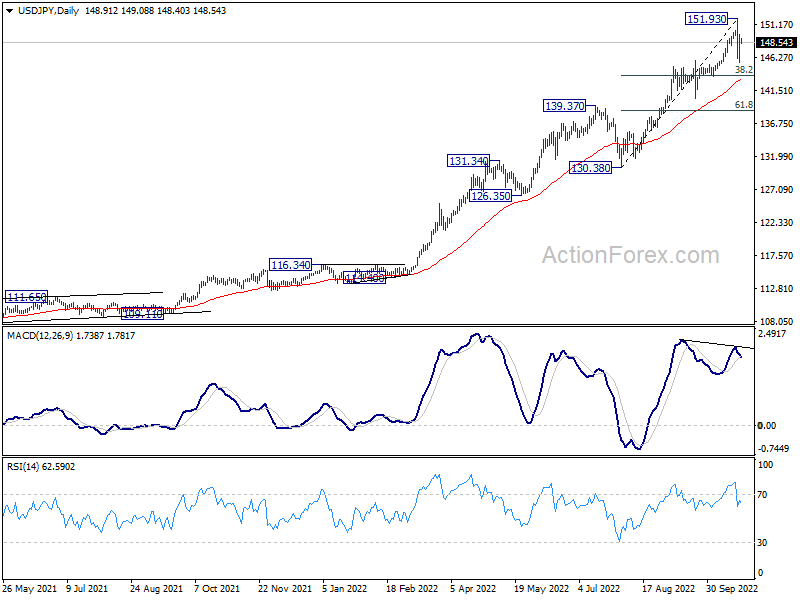
In the bigger picture, up trend from 101.18 is still in progress, as part of the whole up trend from 75.56 (2011 low). 147.68 (1998 high) was already met and there is no clearly sign of topping yet. In any case, break of 140.33 support is needed to be the first sign of medium term topping. Otherwise, further rise is in favor to next target at 160.16 (1990 high).
USD/CHF Mid-Day Outlook
Daily Pivots: (S1) 0.9961; (P) 0.9996; (R1) 1.0047; More...
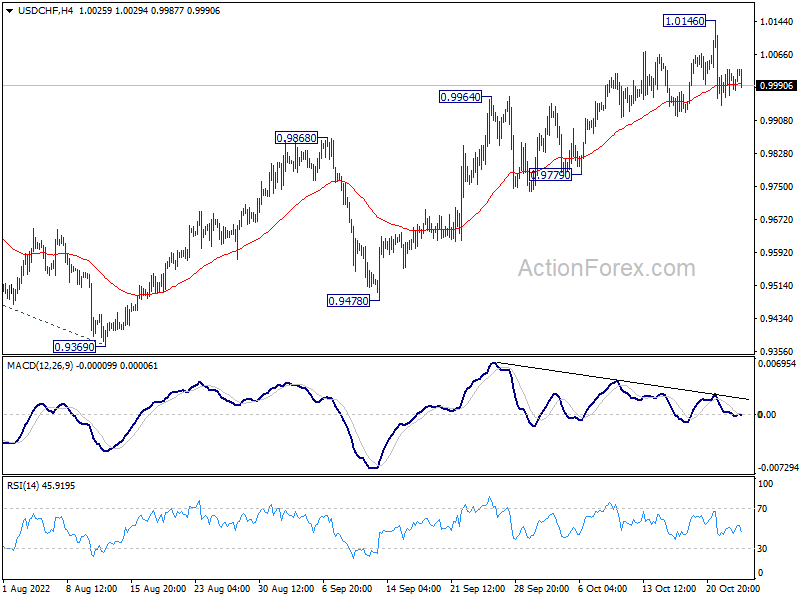
Range trading continues in USD/CHF and intraday bias stays neutral first. Deeper retreat cannot be ruled out, but downside should be contained above 0.9799 support. On the upside, break of 1.0146 will resume larger up trend to 1.0283 projection level.
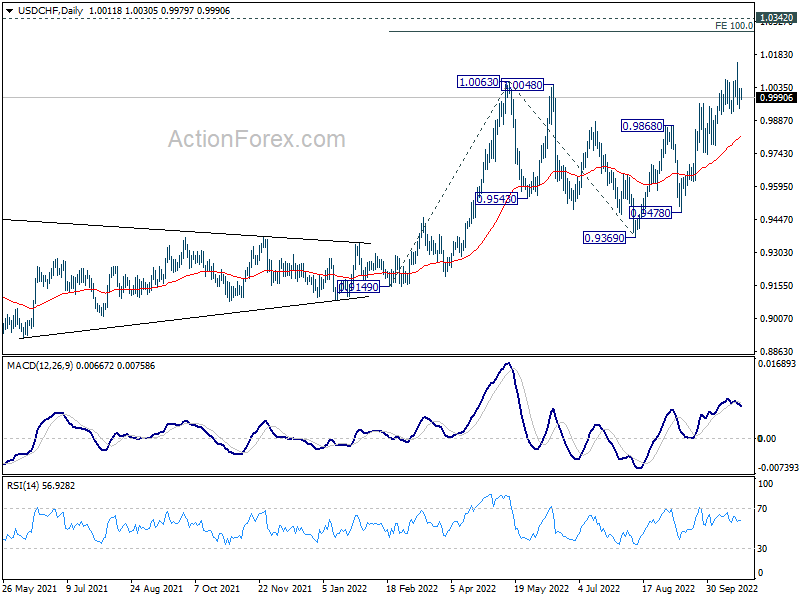
In the bigger picture, current development suggests that up trend from 0.8756 (2021 low) is still in progress. Sustained break of 1.0063 will target 100% projection of 0.9149 to 1.0063 from 0.9369 at 1.0283, and then 1.0342 (2016 high). For now, this will remain the favored case as long as 0.9779 support holds, even in case of deep pull back.
EUR/USD Mid-Day Outlook
Daily Pivots: (S1) 0.9821; (P) 0.9860; (R1) 0.9913; More...
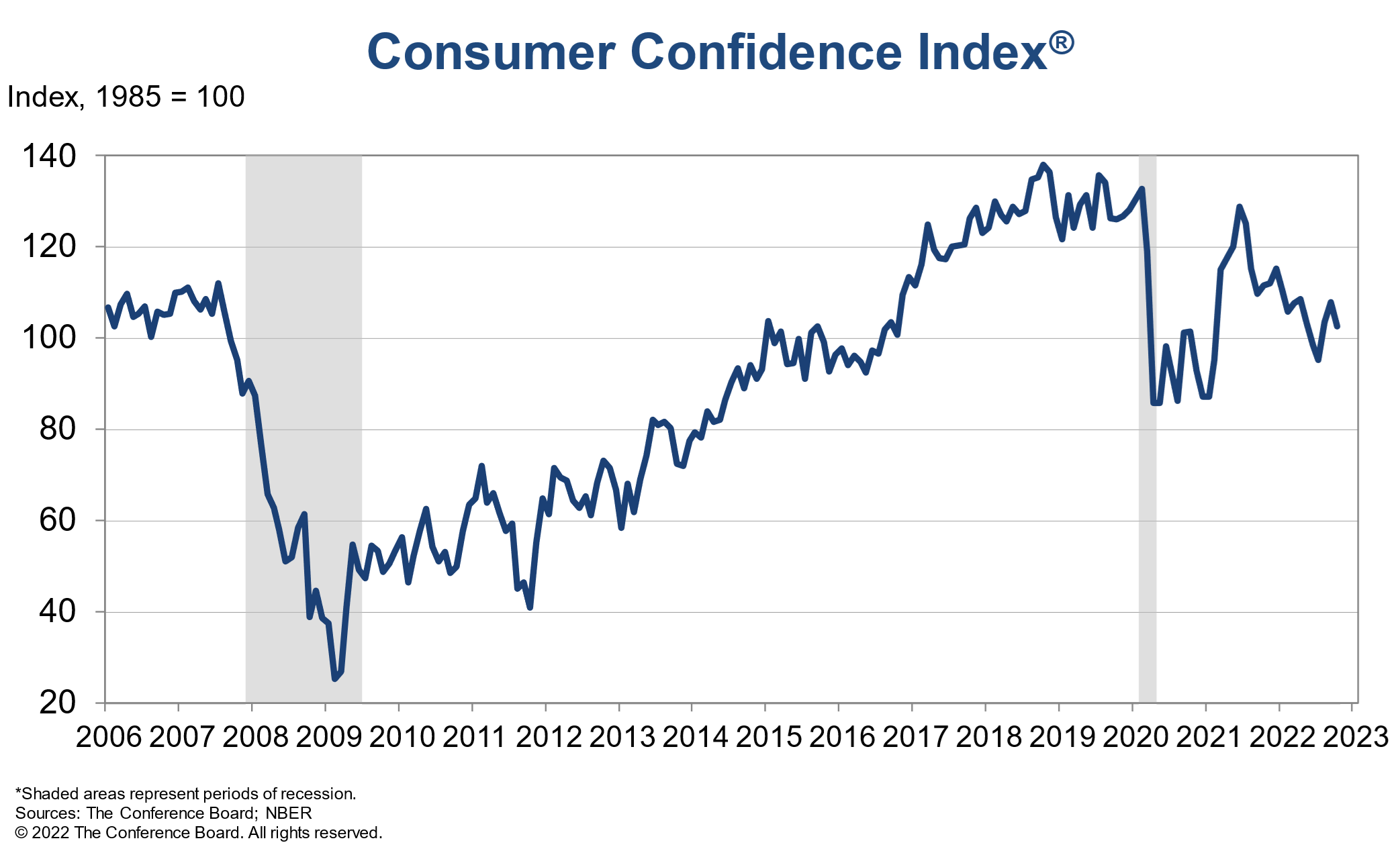
Range trading continues in EUR/USD and intraday bias remains neutral. On the upside, break of 0.9630 bring retest of 0.9534 first. Firm break there will resume larger down trend. However, break of 0.9998 resistance will resume the rise from 0.9534, and carry larger bullish implications. Next target will be 1.0368 in this case.
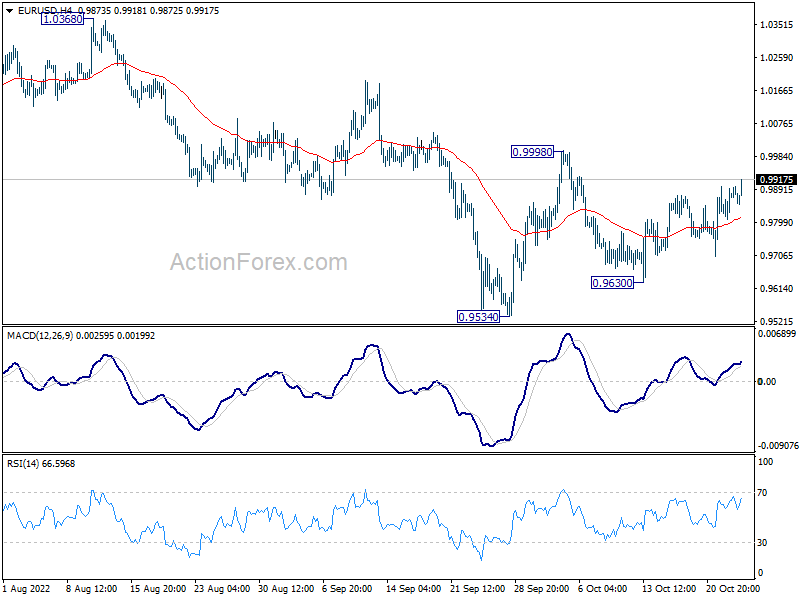
In the bigger picture, down trend from 1.6039 (2008 high) is still in progress. Next target is 100% projection of 1.3993 to 1.0339 from 1.2348 at 0.8694. In any case, break of 0.9998 resistance is needed to be the first sign of medium term bottoming. Otherwise, outlook will stay bearish even with strong rebound. However, considering bullish convergence condition in daily MACD, firm break of 0.9998 will confirm medium term bottoming, and bring further rise back to 1.0368 resistance first.