

Sample Category Title
USD/JPY Daily Outlook
Daily Pivots: (S1) 144.06; (P) 144.67; (R1) 145.17; More...
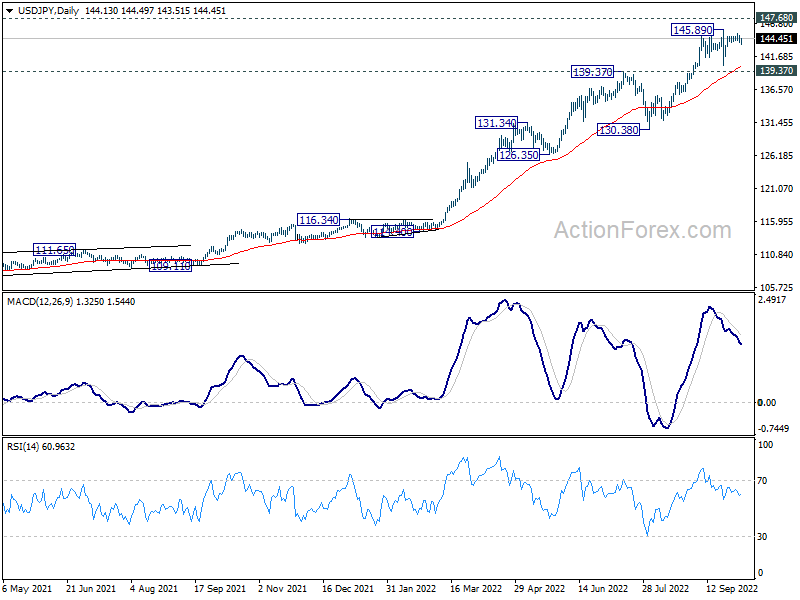
Intraday bias in USD/JPY remains neutral and consolidation from 145.89 could extend further. Further rally is expected as long as 139.37 resistance turned support holds. Break of 145.89 will target 147.68 long term resistance. On the downside, however, decisive break of 139.37 will confirm short term topping. Deeper decline would be seen back towards 130.38 support.
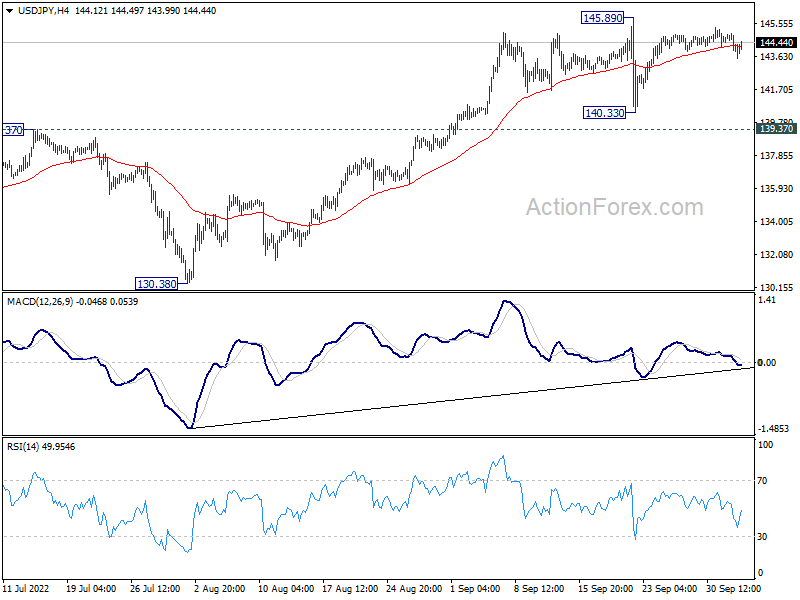
In the bigger picture, up trend from 101.18 is still in progress, as part of the whole up trend from 75.56 (2011 low). Further rise should be seen to 147.68 (1998 high). For now, break of 130.38 support is needed to be the first indication of medium term topping. Otherwise, outlook will stay bullish even in case of deep pull back.
USD/CHF Daily Outlook
Daily Pivots: (S1) 0.9741; (P) 0.9842; (R1) 0.9898; More...
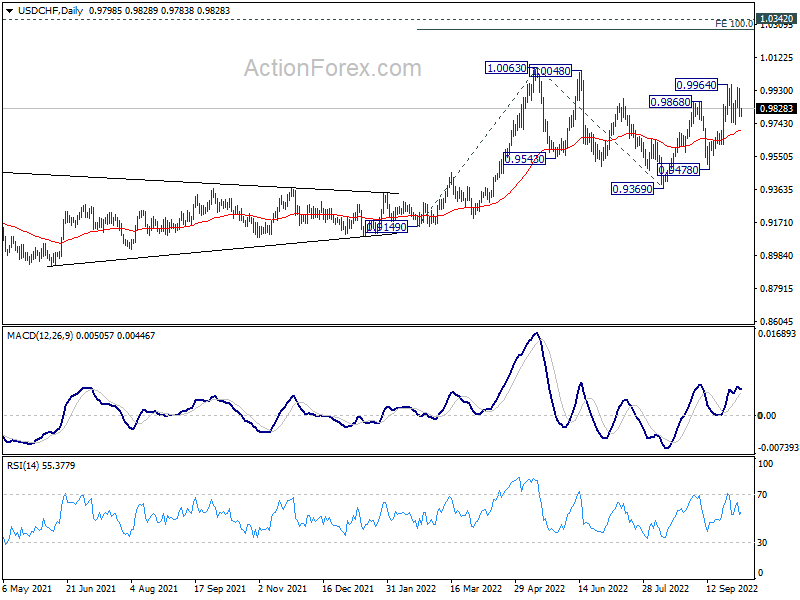
Intraday bias in USD/CHF remains neutral at this point, as consolidation form 0.9964 is still extending. Further rally is in favor as long as 0.9694 support holds. On the upside, above 0.9964 will resume the rally from 0.9369 to retest 1.0063 high. On the downside, however, break of 0.9694 support will extend the corrective pattern from 1.0063 with another falling leg, towards 0.9478 support first.
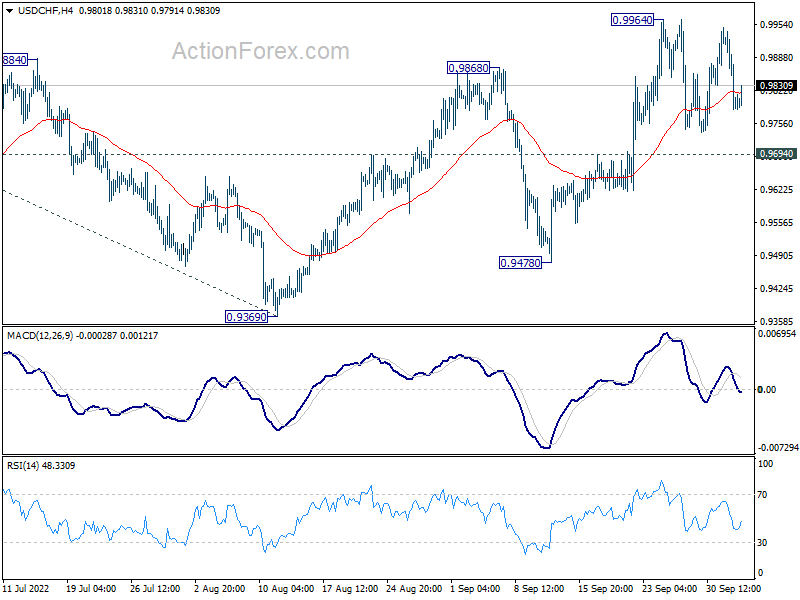
In the bigger picture, current development suggests that up trend from 0.8756 (2021 low) is still in progress. Sustained break of 1.0063 will target 100% projection of 0.9149 to 1.0063 from 0.9369 at 1.0283, and then 1.0342 (2016 high). For now, this will remain the favored case as long as 0.9369 support holds, even in case of deep pull back.
GBP/USD Daily Outlook
Daily Pivots: (S1) 1.1159; (P) 1.1247; (R1) 1.1408; More...
Intraday bias in GBP/USD stays on the upside. Rise from 1.0351 short term bottom would target 61.8% retracement of 1.2292 to 1.0351 at 1.1551. Strong resistance could be seen around 55 day EMA (now at 1.1614) to limit upside on first attempt. But sustained break there will pave the way to 1.2292 resistance. On the downside, below 1.1023 minor support will turn intraday bias back to the downside for 1.0351 instead.
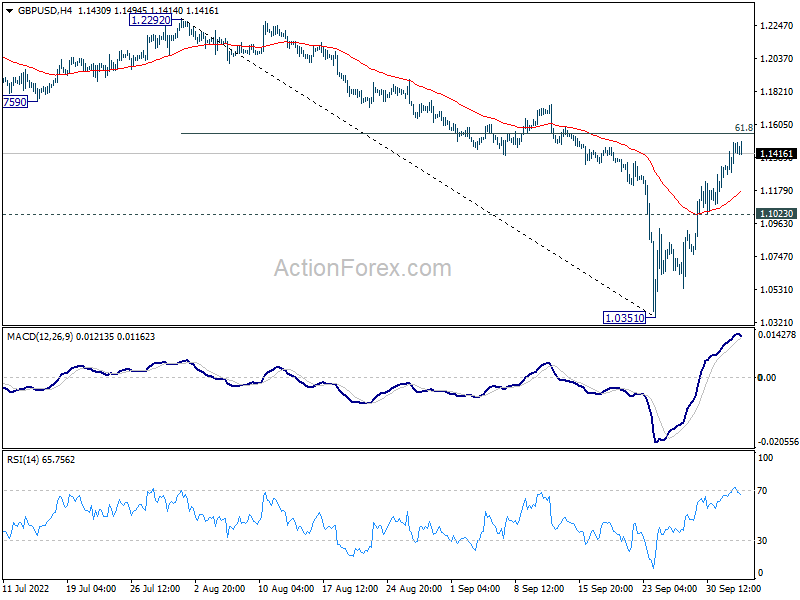
In the bigger picture, fall from 1.4248 (2018 high) is resuming long term down trend from 2.1161 (2007 high). Next target is 100% projection of 2.1161 to 1.3503 from 1.7190 at 0.9532. There is no scope of a medium term rebound as long as 1.1759 support turned resistance holds.
USDJPY Fails Several Times to Jump Above 145.00
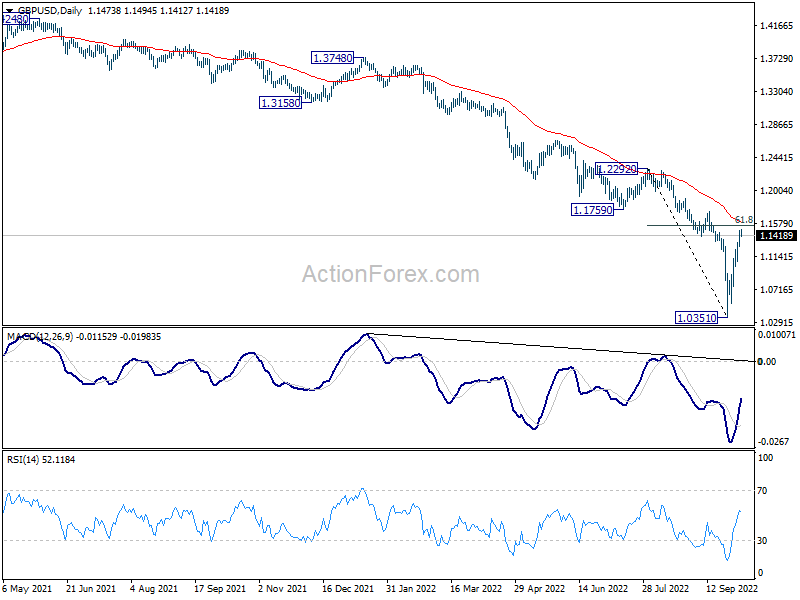
USDJPY is struggling to surpass the 145.00 psychological mark and have a closing day above it, switching the short-term picture from bullish to neutral.
The technical oscillators are suggesting a bearish move as the stochastic is moving towards the oversold zone, while the MACD is standing beneath its trigger line. The 20-day simple moving average (SMA) is acting as a strong support level and any bearish movements may push the market towards the long-term ascending trend line.
More declines may challenge the 50-day SMA near the 139.35 barrier and a break beneath these lines could open the way for the 137.40 and 135.55 barrier, changing the outlook to negative.
On the other hand, a successful climb above the 145.00 round number could add to the optimism for a retest of the previous peak of 145.90, which is a 24-year high. If buying interest intensifies then the pair may move towards the 146.83-147.70 restrictive zone.
All in all, USDJPY has been in a consolidation area since September 7; however, the broader outlook remains strongly bullish.
Nasdaq 100 Breaks Resistance
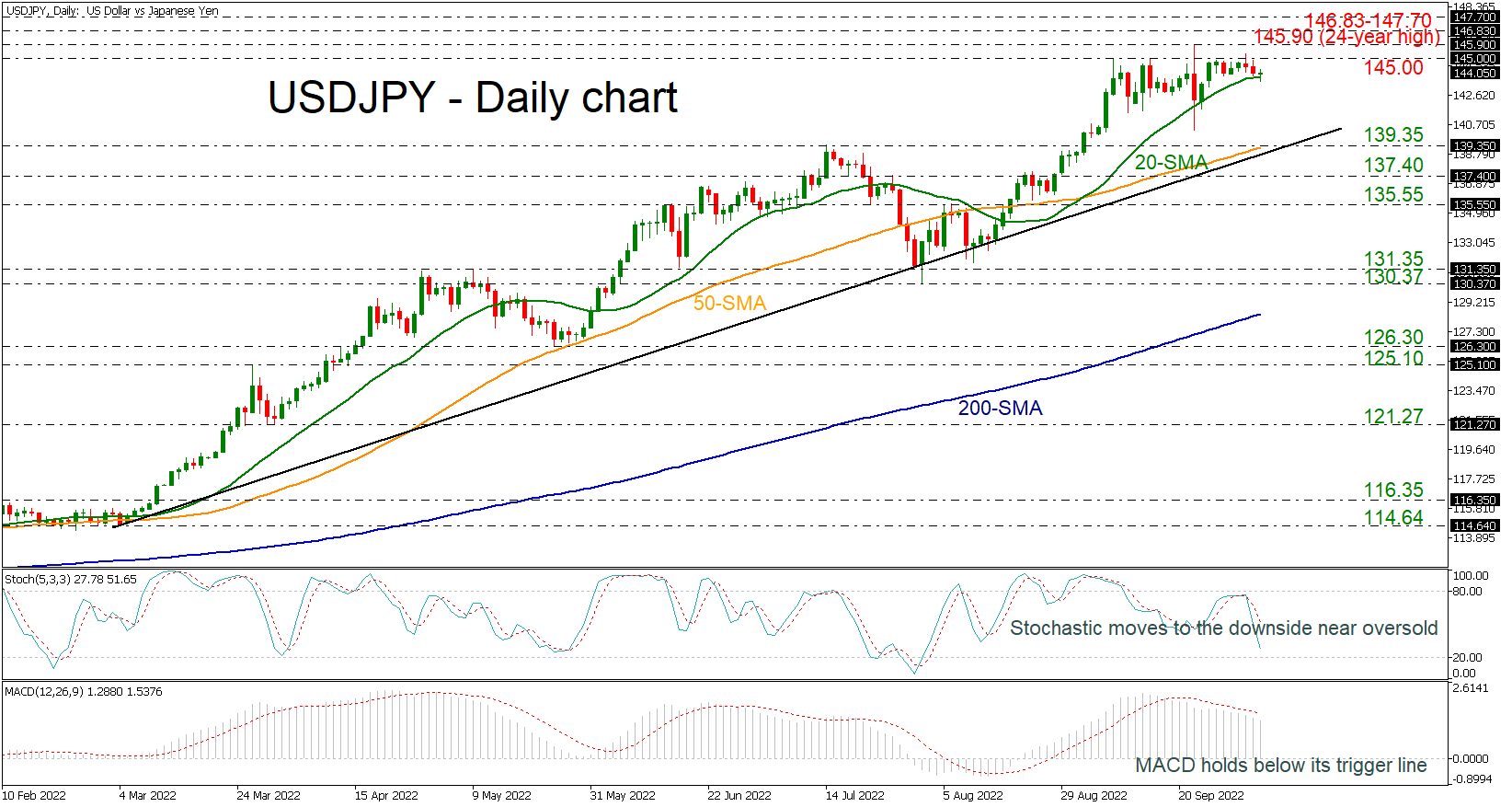
The Nasdaq 100 climbed after a decline in US job openings in August. The index bounced off a two-year low (10800) and a close above 11300 prompted short-term sellers to cover their positions. A rally above 11500 would further squeeze the short side and amplify the volatility. The support-turned-resistance 12010 near the 30-day moving average is a major congestion area where stiff selling could be expected. A failure to break free would indicate that the path of least resistance is still down with 11220 as a fresh support.
NZD/USD Finds Support
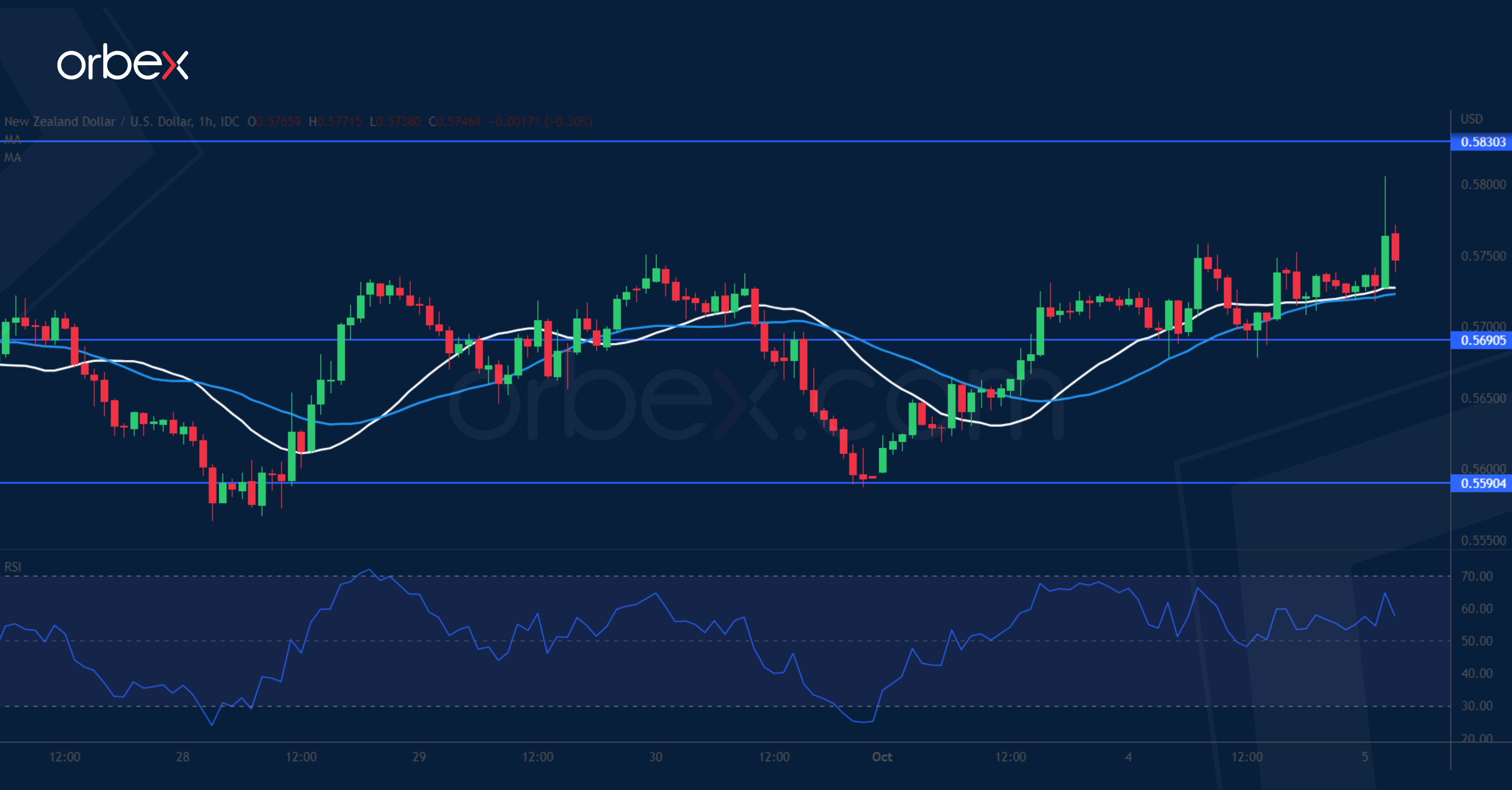
The New Zealand dollar rallied as the RBNZ raised its cash rate by 50bp. As the pair hovers above March 2020’s lows around 0.5500, the RSI’s oversold condition triggered a ‘buy-the-dips’ behaviour. Recent highs are a sign of waning selling pressure as the bears start to take profit. 0.5830 on the 20-day moving average is the resistance and its breach may put the psychological level of 0.6000 in sight. The recovery could gain traction from higher lows with the closest one being 0.5690, or a revisit of 0.5590 would reveal weakness.
AUD/USD Bounces Back
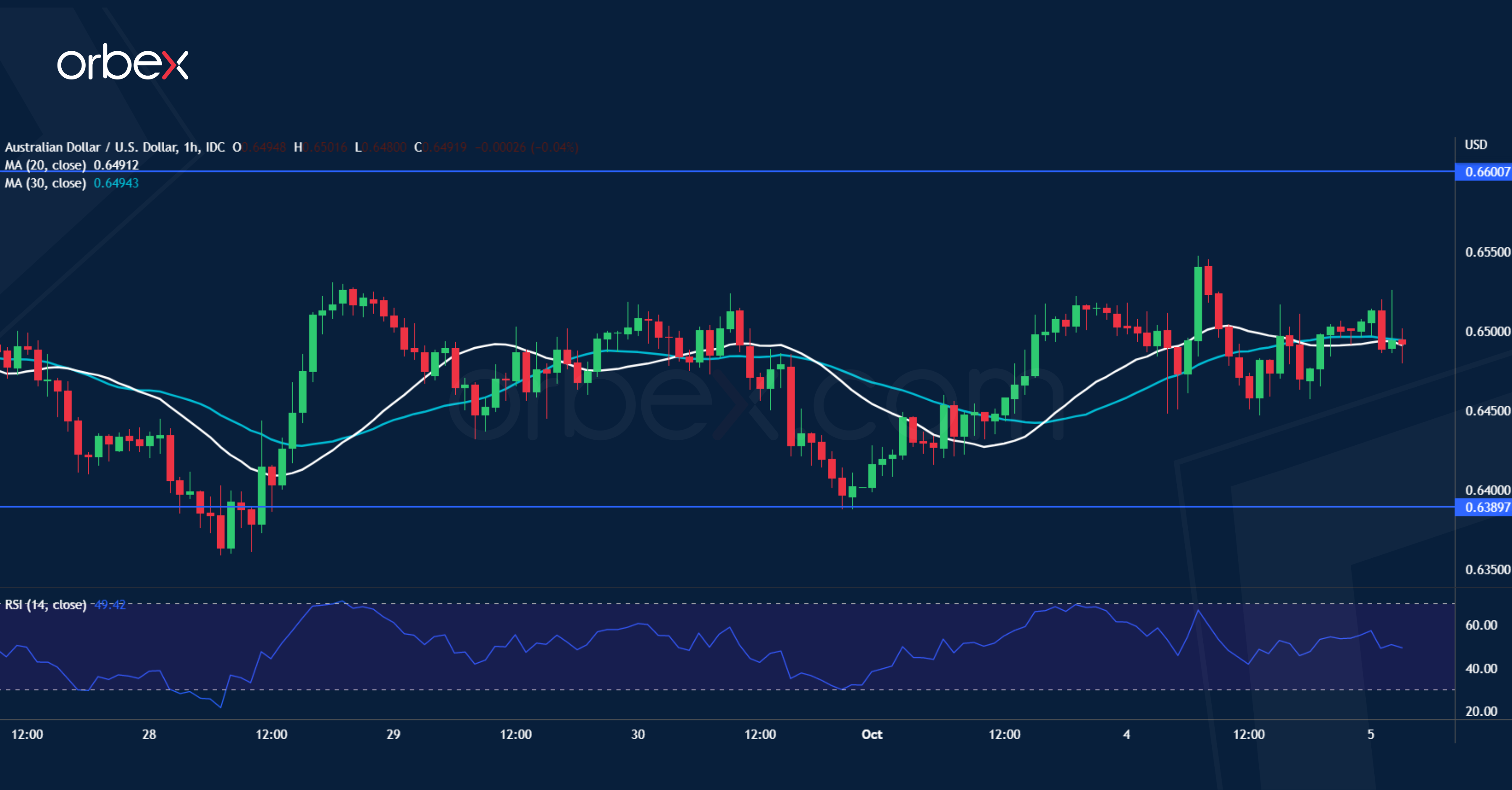
The Australian dollar struggled as the RBA slowed the pace of tightening with a mere 25bp hike. A previous break above 0.6500 flushed out some selling interests and gave the aussie a little breathing room. The price action has since secured a footing over 0.6390. The current consolidation may lift offers to 0.6600 next to the 20-day moving average. But sentiment remains cautious and trend followers may look to sell into strength. However, a bullish breakout could open the door for an extended recovery towards 0.6800.
Markets Again in Some Kind of ‘Bad News is Good News’ Modus
Markets
Monday’s strong corrective rally on core bond markets initially continued as the RBA slowed down its tightening pace from 50 bps to 25 bps as downside economic risks grab more attention. It polished global central bank expectations though this morning’s RNBZ verdict (see below) shows that this probably is premature. The (US) eco calendar seemed to be irrelevant in between ISM releases, but August JOLTS job openings drew attention. Job vacancies dropped at the second sharpest pace in two decades (1.12mn), with only the height of the pandemic lockdowns (April 2020) recording a bigger plunge. It’s a first sign of a potential cooling of a red-hot US labour market. Today’s ADP employment report and Friday’s payrolls will be looked at with JOLTS in the back of investors’ minds. This week’s disappointing US eco numbers don’t hold back the hawkish Fed rhetoric for the moment with new Fed governor Jefferson stressing that reducing inflation is the number one priority and SF Fed Daly vowing for continued action in the inflation battle. The intraday rally in core bonds was at least partially stopped by rallying oil prices ($89/b to $92/b) on rumours that OPEC+ will consider a reduction its production limit of 2m barrels/day. Daily changes on the US yield curve ranged between -2 bps (2-yr) and +1.6 bps (30-yr). The German yield curve bull steepened with yields falling 1.5 bps (30-yr) to 6.6 bps (4-yr). The corrective trend reversal at the beginning of this week remained visible on stock and on FX markets. The big difference is that Monday’s action centered around bond moves, while yesterday’s outsized action took place in equity and the dollar. Main European indices rallied by around 4% with the big three US indices closing around 3% higher. The dollar extended its correction lower with the trade-weighted index (DXY) losing almost two big figures to 110 in a steady move south. EUR/USD rallied from an open at 0.9826 to nearly parity. The topside of the long-standing downward trend channel kicks in at around 1.0050 and is important resistance. EUR/GBP finally found its footing following the UK government/BoE-induced volatility since mid-last month. The pair currently trades around the previous YTD high at 0.8721. From this point onwards, sterling might be up for a more gently weakening path again. US ADP employment and services ISM feature today’s agenda. We don’t think that corrective market action is over yet with markets again in some kind of ‘bad news is good news’ modus as a worsening economic situation could tilt central bank tightening plans.
News Headlines
The Reserve Bank of New Zealand hiked by 50 bps this morning. The policy rate now stands at 3.5%. In contrast with the RBA yesterday, which raised rates by an amount smaller than expected (25 bps), the RBNZ even considered going full force with a 75 bps move. More tightening is underway, the central bank signaled, citing too high inflation (7.3% in Q2), resilient household balance sheets and consumption and a very tight labour market. The kiwi dollar has weakened in recent months. If sustained, it poses further upside risks to inflation, the RBNZ added. Despite the RBNZ’s clear message, government bond yields tumble 17-19 bps across the curve. It is testament of (broader) markets consolidating. New Zealand money markets currently price in a terminal rate of 4.5% compared to the 4% penciled in by the RBNZ in its August forecasts. The currency strengthened following the decision to NZD/USD 0.58 but pared gains soon enough.
South Korean headline inflation slightly eased from 5.7% y/y to 5.6% in September thanks to declining energy prices. Core inflation on the other hand ticked higher to 4.5%, highlighting the strength of underlying price pressures. The Bank of Korea said CPI growth is likely to hold in a 5-6% range for a considerable time. It raised the policy rate since August last year to 2.5%. Unlike many others and with the July meeting as the sole exception, it stuck to a gradual 25 bps hiking pace. Today’s inflation print combined with the weakening won raises pressure on the BoK to pick up the tempo again Friday next week. USD/KRW gapped lower this morning to trade at 1418.8. That’s still near the strongest (weakest for the won) level since 2009.
Big Cut from OPEC Could Backfire
Global equities, bonds, commodities and currencies rallied, as the US dollar eased further yesterday. Soft US JOLTS data, and softer-than-expected Reserve Bank of Australia (RBA) hike sent a wave of optimism across the global markets. But the downside risks persist with further US jobs data due today, and OPEC – which may announce a big cut in oil production.
First, the rally
The S&P500 rallied more than 3% and recorded its best two-day rally since the beginning of 2020 and jumped above a minor Fibonacci retracement of 23.6% on the latest selloff. Nasdaq gained 3.34% to finish a touch below the minor 23.6% Fibonacci level, as well.
A part of the rally was due to a short squeeze, as the most-shorted stocks were among the best performers of yesterday’s trading session. They rallied more than 5%.
Apple gained more than 2.50%, as Tesla recovered nearly 3% even though Elon Musk threw the towel in and announced that he would finally buy Twitter for the price he originally proposed, meaning for $54.20 a share.
It’s needless to say that Twitter was one of the best performers of yesterday trading. The stock jumped to $52 a share, just $2 below the bid price, as the Twitter saga is finally over! It is said that Elon Musk’s lawyers understood that the judges won’t rule in favour of them, so they just wanted to cut short, and avoid the heavy trial costs. That’s 1 for Twitter, 0 for Elon!
Winds of optimism
The US dollar index slid to 110 mark, the EURUSD advanced to parity, where it met the 50-DMA which has been acting as a solid resistance since more than a year now, and Cable advanced to 1.1490. The USDCAD fell to the 1.35 on the back of softer US dollar and firmer oil.
In commodities, gold tested the 50-DMA to the upside ($1730 per ounce,) while Bitcoin consolidated above the $20K mark.
The winds of optimism were triggered by a set of favourable factors.
First, the softer than expected RBA rate hike has been taken as a sign that the central banks may be slowing the pace of their rate hikes, to avoid sending the world economy into a deep recession without even being able to tame inflation as fast as they wish. (But Reserve Bank of New Zealand didn’t sing the same song, it hiked by 50bp as expected).
Second, the US JOLTS data smelled like a first victory for the Federal Reserve (Fed). US job openings plunged by 1 million in August, the largest drop since April 2020, the peak of pandemic lockdowns.
However, unfortunately for the Fed, not many people quit their jobs, or were laid off.
Hopefully for the Fed’, Amazon also announced to freeze corporate hiring, after Facebook’s Meta, Apple, Tesla, Ford, Google, and many other names in the last few months.
So, it is possible that the US jobs market cools down in the next few months. It’s yet to be seen how fast the job losses could help tame inflation in the US. We hope, fast enough!
Today, the ADP report is expected to print 200’000 new private job additions in the US. A soft figure is what every investor is secretly praying for. If the soft jobs data is what could stop the Fed from battering the world, well, then, soft data is what people want.
Further rally?
Soft US jobs data is good, strong US jobs data is bad.
Any strong figure could easily hammer the early optimism and send the stocks back to where they were … to the year lows.
Also, we shouldn’t forget that the big gains, like the ones we saw yesterday, aren’t stable, simply because they are ‘too big to be stable’.
In fact, a 3% jump in the S&P500 is almost as disquieting as a 3% fall, because it is sign of high volatility. And high volatility is a characteristic of bear market. The good news is, the VIX index eased below 30 yesterday. The bad news is, it’s still very close to the 30 level.
OPEC & Russia vs. the West
According to the latest reports, OPEC could announce cutting oil output by 2 million barrels today.
Oil gained more than 3.50% toward the $87, and consolidates near $86 per barrel this morning.
A big decline in OPEC supplies may not necessarily trigger a price rally, as no one is happy to see energy prices spike again.
Higher energy prices are bad for the central bank expectations as they fuel the inflation expectations.
The higher the energy prices, the sharper the central banks must kill demand to pull the prices lower.
Therefore, a big cut in OPEC production could well backfire, and trigger profit taking and fall in oil prices today.
OPEC+ Plans Larger Output Cuts
Market movers today
Today, we get the final September service PMIs globally and the ISM service index in the US. Earlier in the week, the US ISM manufacturing index disappointed by falling to 50.9 vs. 52.0 expected. However, the service sector momentum remains strong with the index deep in expansionary territory sending no signals of a recession.
Swedish September Services PMI looks set to take a further step down from the relatively high 59.4 print in August.
The OPEC+ meeting in Vienna is expected to agree on output cuts.
Also, the US ADP employment report is published today ahead of the non-farm payrolls on Friday.
Poland's central bank is expected to raise its policy rate by 25bp to 7% amid high inflation which creeped up to 17% in September compared with a year ago, while the economy is clearly slowing.
The 60 second overview
First sign of the US labour market cooling? Yesterday's weak US JOLTs report sparked speculation of an earlier end to the Fed hiking cycle than previously anticipated. Job openings fell broadly across sectors to 10.1 million, the lowest since June 2021. The overall level still remains above pre-covid trend, and Fed's Daly commented yesterday that there is still 'a lot of room' for demand to cool in order to ease the current inflation. In any case, together with the ISM manufacturing new orders now below 50, the figures send a clear signal that the economy is moving in the right direction for the Fed. In addition, the recent rise in real yields and declining inflation expectations suggest that the hawkish post-Jackson Hole narrative has worked as intended. However, with oil prices recovering, we think it is still too early for the Fed to signal a 'pivot', and continue to look for further hikes in the last two meetings of the year. Friday's jobs report will gather a lot of attention as it will be the last one before the November meeting, a combination of modest employment growth, easing wage inflation and recovering labour force participation would be the optimal mix for the Fed and the risk markets.
OPEC+ plans larger output cuts: Brent rebounded above USD90/bbl ahead of today's OPEC+ meeting, where a large production cut of potentially 2mb/d could be in the cards. An output cut of 1-2mb/d should lead the market to rally further and Brent to eye the USD100/bbl mark, but it depends on the details, e.g. what is the baseline output level for the cut, what is the time horizon for implementation, is it contingent on market development etc. After the OPEC announcement we will watch out for reaction from US, e.g. will US accelerate selling of strategic reserves ahead of mid-term elections, speed up revival of Iran nuclear deal and reconsider lifting sanctions on Venezuela. Regardless, it looks like OPEC+ aims to floor oil prices around current levels, which supports our view that Brent trades close to USD100/bbl in Q4.
New Zealand central bank hikes rate as expected: This morning the Reserve Bank of New Zealand (RBNZ) hiked the official cash rate by 50bp to 3.50% overnight as widely expected. RBNZ continues to see domestic core inflation pressures elevated, as the local economic outlook still remains modestly positive despite the global recession fears. While the statement itself stuck to the hawkish narrative seen in the past meetings, recent comments by the RBNZ governor Adrian Orr suggest that the hiking cycle is nearing its end.
Equities: After a strong session yesterday where US and European equity markets surged, US futures are pointing lower this morning. Hence, it does not look like a sustained rally in risk.
FI: Global bond yields rallied on the back of a softer than expected Australian central bank that raised rates by "only" 50bp rather than the 75bp expected. Furthermore, US economic data was also softer than expected combined with bond buying from BoE. All contributed to lower yields. We expect that the major central banks will try to dampen the volatility in the market as they tighten monetary policy in order to bring down inflation.
FX: EUR/USD has risen close to 5 figures in little over a week and equally, many other asset classes have shown 'momentum reversal' e.g., Brent is back above USD90/barrel and equities have seen quite the lift over a few sessions. Overall, we view these as short-term and continue to see a strong outlook for the USD into next year. Today's focus turns to the OPEC+ meeting, where a large production cut of potentially 2mb/d could be in the cards. In our view, downwards pressure on EUR/DKK is of persistent nature and warrants a wider spread between DN and ECB policy rates. We now expect DN to hike 10bp less than ECB.
Credit: Credit saw a very strong session yesterday, with iTraxx Xover and Main tightening a massive 37bp and 9bp, respectively.
Nordic macro
Swedish September Services PMI looks set to take a further step down from the relatively high 59.4 print in August. This is evident looking at Swedish Manufacturing PMI, Eurozone flash services PMI and Swedish NIER private services sector confidence indicators. This should signal a move closer to recession in coming quarters. The Debt Office issues 1061 and 1065 Govies, SEK 1bn each. Kommuninvest (munis) potentially issues bonds in 2024-2029 maturities.
In Denmark, Danmarks Nationalbank (DN) resumed FX intervention selling of DKK in September to floor EUR/DKK. DN intervened for DKK 23bn. Given that the EUR/DKK continues to hover at the lower end of the FX target band, we now expect DN to hike 10bp less than ECB on 3M, i.e. hike the key policy rate to 1.80% by the end of the year and 2.30% in February next year.