

Sample Category Title
EUR/JPY Daily Outlook
Daily Pivots: (S1) 136.10; (P) 137.02; (R1) 137.65; More....
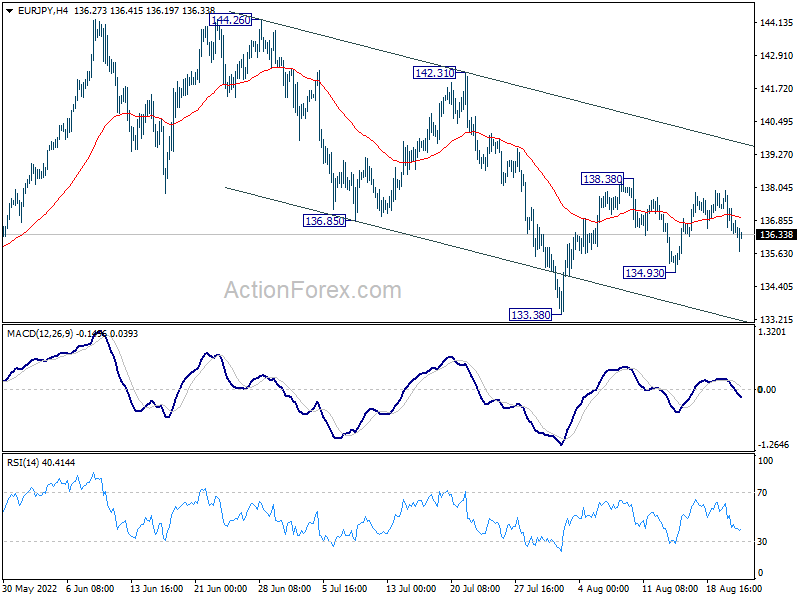
Intraday bias in EUR/JPY remains neutral as sideway trading continues. On the upside, break of 138.38 resistance will resume the rebound from 133.38 towards 142.31 resistance. On the downside, break of 134.93 will turn bias back to the downside for 133.38 support. Overall, corrective pattern from 144.26 could extend further with more choppy trading.
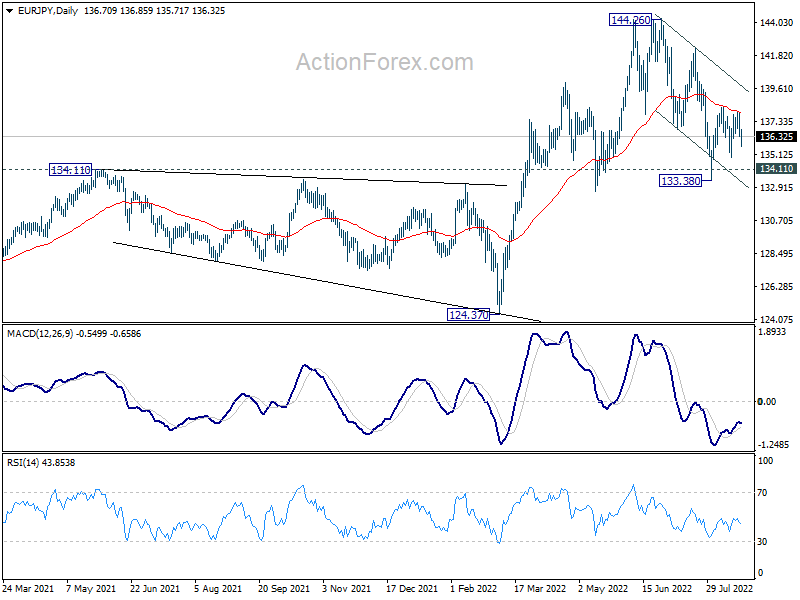
In the bigger picture, up trend from 114.42 (2020 low) is seen as the third leg of the pattern from 109.30 (2016 low). Further rally is in favor as long as 134.11 resistance turned support holds, even in case of deep pull back. Next target is 149.76 (2015 high). However, sustained break of 134.11 will be a sign of medium term bearish reversal and turn focus to 124.37 support for confirmation.
EUR/GBP Daily Outlook
Daily Pivots: (S1) 0.8425; (P) 0.8460; (R1) 0.8484; More...
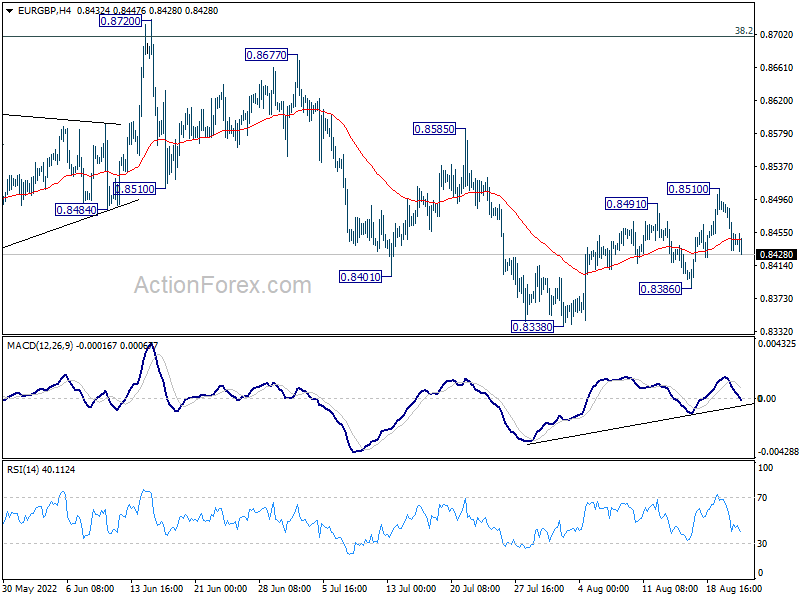
Intraday bias in EUR/GBP is turned neutral at this point. On the downside, break of 0.8386 minor support will resume the choppy fall from 0.8720 through 0.8338. On the upside, above 0.8510 will resume the rebound to 0.8585 resistance next.
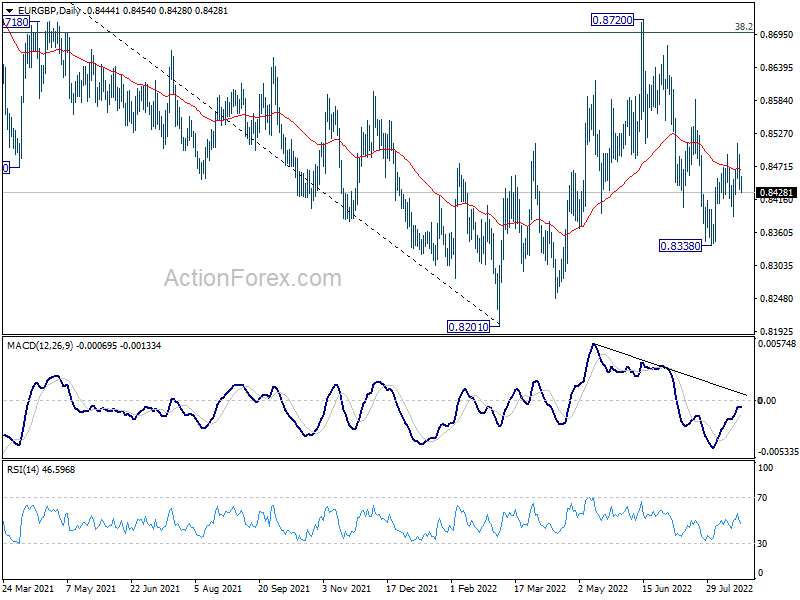
In the bigger picture, medium term bearishness is maintained with prior rejection by 38.2% retracement of 0.9499 to 0.8201 at 0.8697. Break of 0.8201 will resume larger down trend from 0.9499 (2020 high). Nevertheless, sustained break of 0.8697 will affirm the case that rise from 0.8201 is a medium term up trend itself.
EUR/AUD Daily Outlook
Daily Pivots: (S1) 1.4388; (P) 1.4506; (R1) 1.4571; More...
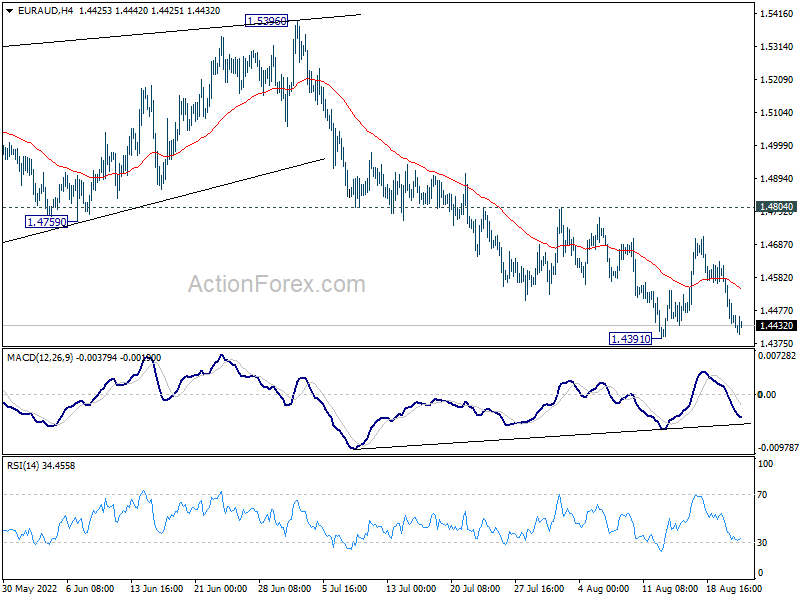
Range trading continues in EUR/AUD and intraday bias remains neutral. Further decline is expected as long as 1.4804 resistance holds. On the downside, firm break of 1.4318 low will resume larger down trend to medium term projection level at 1.3623. However, break of 1.4804 will delay the bearish case and turn bias to the upside for stronger rebound first.
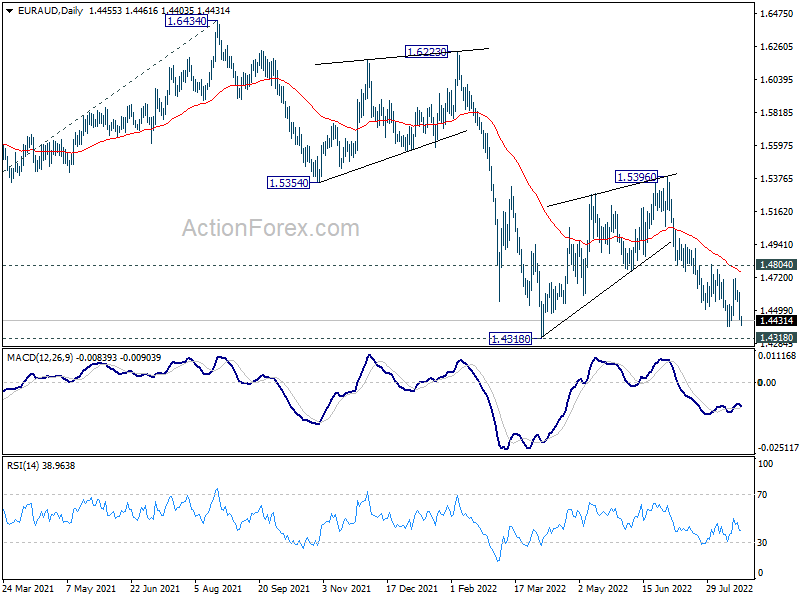
In the bigger picture, down trend from 1.9799 is still in progress. Break of 1.4318 low will target 61.8% projection of 1.9799 to 1.5250 from 1.6434 at 1.3623, which is close to 1.3624 long term support (2017 low). This will remain the favored case now as long as 1.5396 resistance holds.
EUR/CHF Daily Outlook
Daily Pivots: (S1) 0.9563; (P) 0.9597; (R1) 0.9624; More....
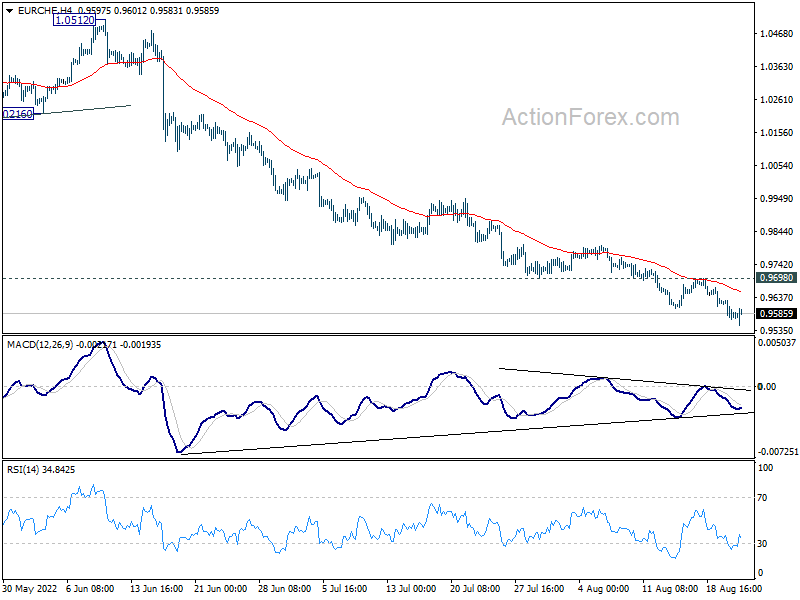
Intraday bias in EUR/CHF remains on the downside at this point. Current down trend should now target 100% projection of 1.1149 to 0.9970 from 1.0513 at 0.9334. On the upside, break of 0.9698 resistance will indicate short term bottoming, and turn bias back to the upside for stronger rebound.
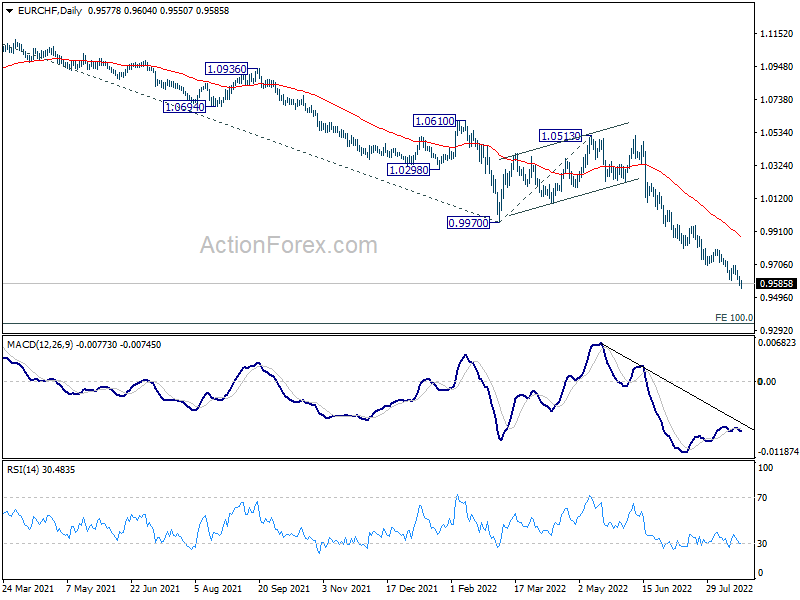
In the bigger picture, long term down trend from 1.2004 (2018 high) is still in progress. Next target is 138.2% projection of 1.2004 to 1.0505 to 1.1149 at 0.9033. On the upside, break of 0.9970 support turned resistance is needed to be the first sign of medium term bottoming. Otherwise, outlook will stay bearish in case of strong rebound.
UK PMI manufacturing dived to 46 in Aug, services ticked down to 52.5
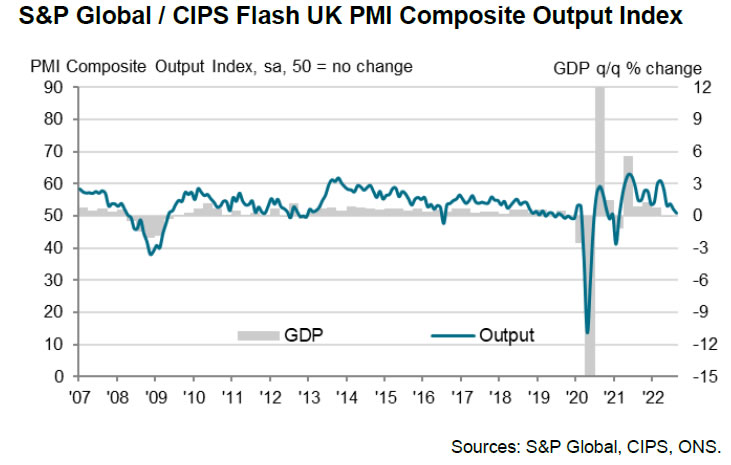
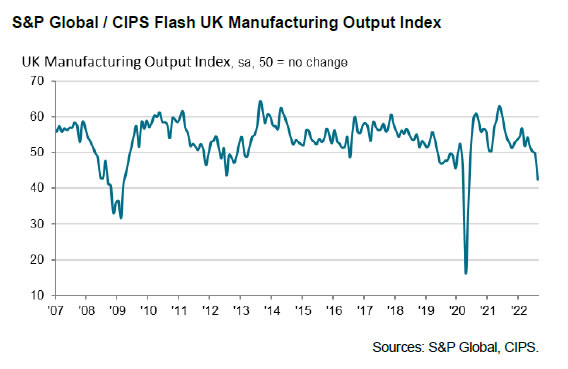
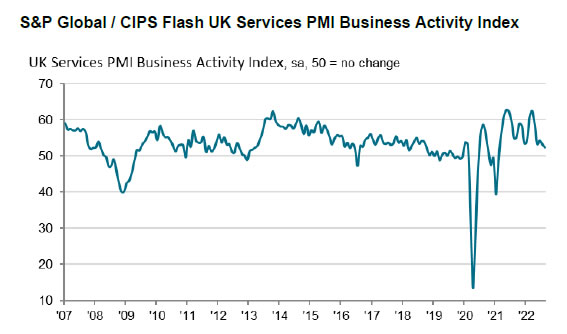
UK PMI Manufacturing dropped sharply from 52.1 to 46.0 in August, well below expectation of 51.3. That's also the lowest level in 27 months. PMI Services ticked down from 52.6 to 52.5, above expectation of 52.0, an 18-month low. PMI Composite dropped from 52.1 to 50.9, an 18-month low.
Annabel Fiddes, Economics Associate Director at S&P Global Market Intelligence said:
"The UK private sector moved closer to stagnation in August, as mild growth of activity across the service sector only just offset a deepening downturn at manufacturers. Waning customer demand amid the weaker economic outlook, and shortages of both staff and inputs, were reported to have hit goods producers hard, with firms registering the quickest drops in output and new work since May 2020.
Excluding the initial phase of the pandemic in early-2020, the reduction in manufacturing output was the quickest seen since the start of 2009. Meanwhile, the service sector registered the weakest increase in activity since the recovery began in early 2021."
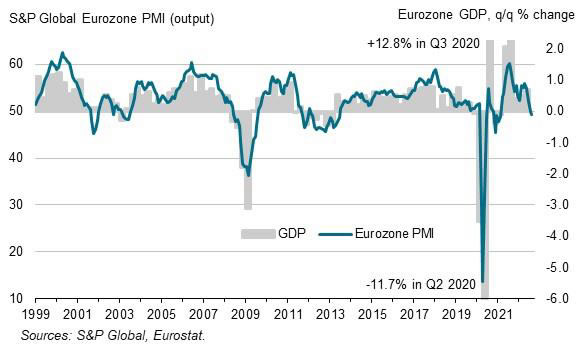
Eurozone PMI composite dropped to 49.2 in Aug, economic contraction in Q3
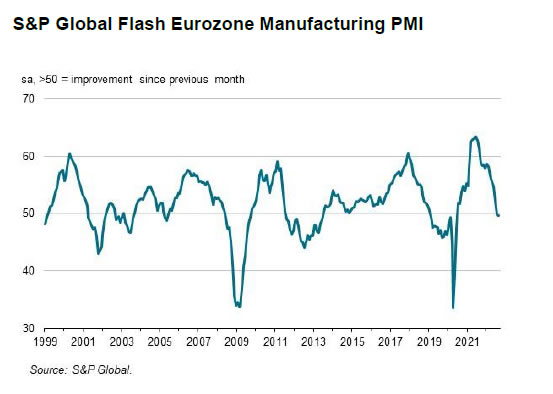
Eurozone PMI manufacturing dropped from 49.8 to 49.7 in August, above expectation of 49.0, a 26-month low. PMI Services dropped from 51.2 to 50.2, below expectation of 50.5, a 17-month low. PMI Composite dropped from 49.9 to 49.2, an 18-month low.
Andrew Harker, Economics Director at S&P Global Market Intelligence said: "The latest PMI data for the eurozone point to an economy in contraction during the third quarter of the year. Cost of living pressures mean that the recovery in the service sector following the lifting of pandemic restrictions has ebbed away, while manufacturing remained mired in contraction in August, seeing another record accumulation of stocks of finished goods as firms were unable to shift products in a falling demand environment. This glut of inventories suggests little prospect of an improvement in manufacturing production any time soon."
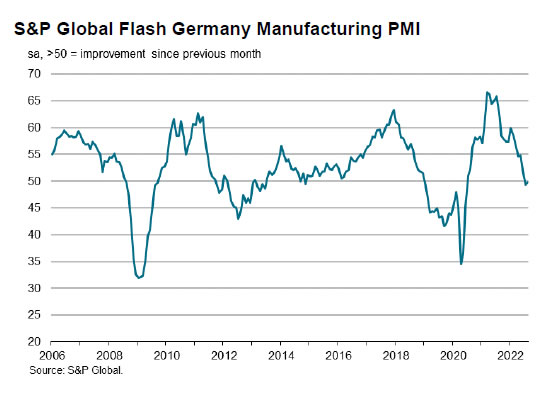
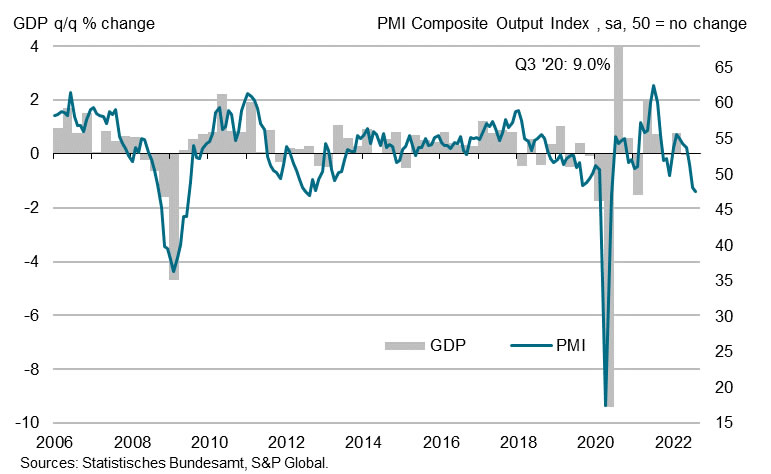
Germany PMI composite dropped to 47.6, continued weak manufacturing and slowdown in service
Germany PMI Manufacturing recovered from 49.3 to 49.8 in August, above expectation of 48.1.PMI Services dropped from 49.7 to 48.2, below expectation of 49.0, an 18-month low. PMI Composite dropped from 48.1 to 47.6, a 26-month low.
Phil Smith, Economics Associate Director at S&P Global Market Intelligence said: "The PMI data paint a bleak picture of the German economy midway through the third quarter, showing a deepening decline in private sector business activity. Continued weakness in manufacturing is being compounded by a slowdown in the service sector, with surveyed businesses reporting a growing strain on demand from high inflation and increased interest rates."
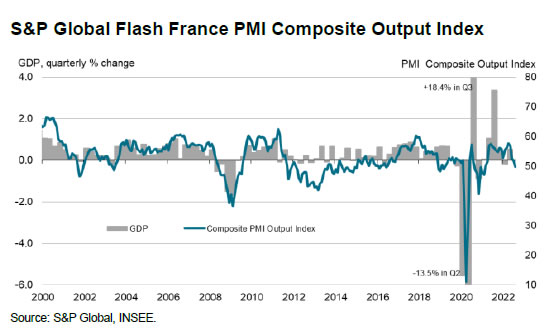
France PMI composite dropped to 49.8, entered into contraction
France PMI Manufacturing dropped from 49.5 to 49.0 in August, above expectation of 48.8, a 27-month low. PMI Services dropped from 53.2 to 51.0, below expectation of 53.5, a 16-month low. PMI Composite dropped from 51.7 to 49.8, an 18-month low.
Joe Hayes, Senior Economist at S&P Global Market Intelligence said: "August flash PMI data for France suggest the economy has now entered into contraction for the first time in a year-and-a-half as a sharp manufacturing downturn more than offset only a marginal increase in service sector activity...
"High inflation has squeezed purchasing power among consumers and businesses alike, although we saw further signs to suggest we have passed peak price pressures... The downward trend in the France PMI may well persist now demand for goods and services is falling."
GBPUSD Inches to 29-Month Low; Bears Dominate
GBPUSD inched to a new 29-month low of 1.1716 early on Tuesday, increasing the risk for a downtrend extension below July’s trough of 1.1758. The ongoing bearish correction follows the pullback from February’s resistance line.
The RSI is close to its 30 oversold level and the stochastics are near spring’s lows, making a rebound in the price possible. Yet, as long as the indicators keep sloping downwards and the MACD gains negative momentum below its red signal line, the base scenario is for the pair to keep diminishing.
Once the 1.1758 support gives way, the price could initially take a breather around 1.1670 last active in March 2020 before plummeting towards the channel's lower boundary and the 2020 bottom of 1.1500 – 1.1408. Additional declines from here may next pause near the 1.1300 psychological mark.
In the event of an upside reversal above the 1.1820 barrier, the spotlight will turn again to the resistance line currently around 1.2000. Slightly higher, the 20- and 50-day simple moving averages (SMAs) both at 1.2073 could then immediately tease any further improvement towards the previous high of 1.2292 and the 1.2300 number.
Summarizing, GBPUSD is still under bears' control in the short- and long-term picture. A decisive step below 1.1758 is expected to generate additional selling pressures.
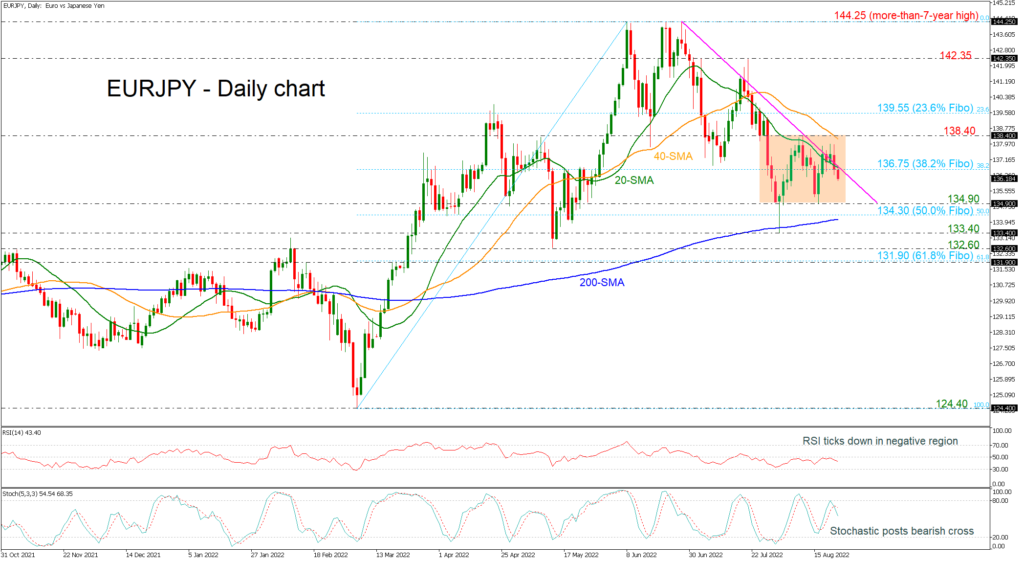
EURJPY Still Consolidating Below the Downtrend Line
EURJPY is diving back below the near-term falling trend line and the 38.2% Fibonacci retracement level of the down leg from 124.40 to 144.25 at 136.75. The neutral to bearish picture in the short-term looks to last for a while longer after prices failed to break above the descending line and the 138.40 resistance.
The negative bias in the near term is supported by the deterioration in the momentum indicators. The %K line of the stochastic oscillator has fallen sharply after the pullback from the overbought region and posted a bearish crossover with the %D line. The RSI is flatlining below the 50-neutral level, suggesting any upside correction will be weak.
If prices continue to head lower, support should come from the 134.90 barrier before tumbling to the 50.0% Fibonacci of 134.30 and the 200-day simple moving average (SMA) at 134.07. A drop below these lines would reinforce the bearish view and open the way towards the 132.60-133.40 support zone.
However, should an upside reversal take form, immediate resistance will likely come from the 38.2% Fibonacci of 136.75 ahead of the 40-day SMA at 138.40. A break higher could shift the bias to slightly bullish with the next resistance coming from the 23.6% Fibonacci of 139.55.
All in all, EURJPY has been neutral to bearish in the short-term timeframe and any moves beneath the 200-day SMA would endorse the bearish scenario.