

Sample Category Title
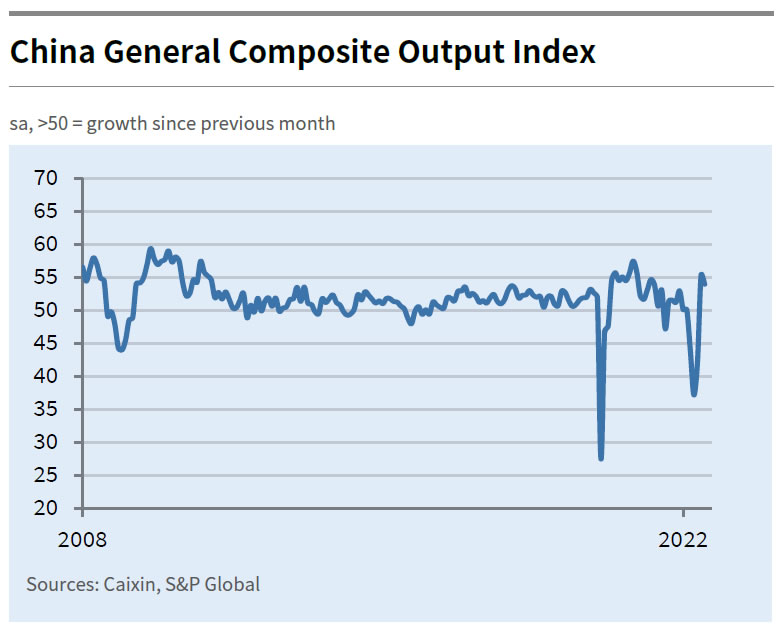
China Caixin PMI services rose to 55.5, composite dropped to 54.0
China Caixin PMI Services rose from 54.5 to 55.5 in July, above expectation of 54.0. That's the highest level since April 2021. PMI Composite dropped from 55.3 to 54.0.
Wang Zhe, Senior Economist at Caixin Insight Group said: "In general, the eased Covid situation and restrictions facilitated a continuous recovery in the economy. The services sector, which had been previously hit harder by the outbreaks than manufacturing, showed stronger improvement. Supply and demand continued to improve with supply stronger than demand. The labor market shrank greatly, adding to employment pressures. Business costs steadily climbed while prices charged remained stable, posing challenges for company profits. The market held on to positive sentiment, even with concerns about the outlook for Covid and the economy."
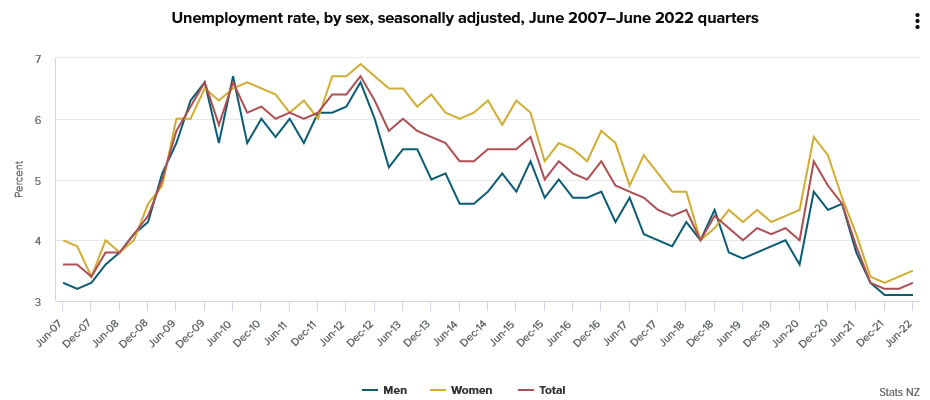
New Zealand employment flat in Q2, wage grow strongest since 2008
New Zealand employment was essentially flat in Q2, below expectation of 0.4% rise. Unemployment rate ticked up from 3.2% to 3.3%, against expectation a fall to 3.1%. Labor force participation rate dropped -0.1% to 70.8%.
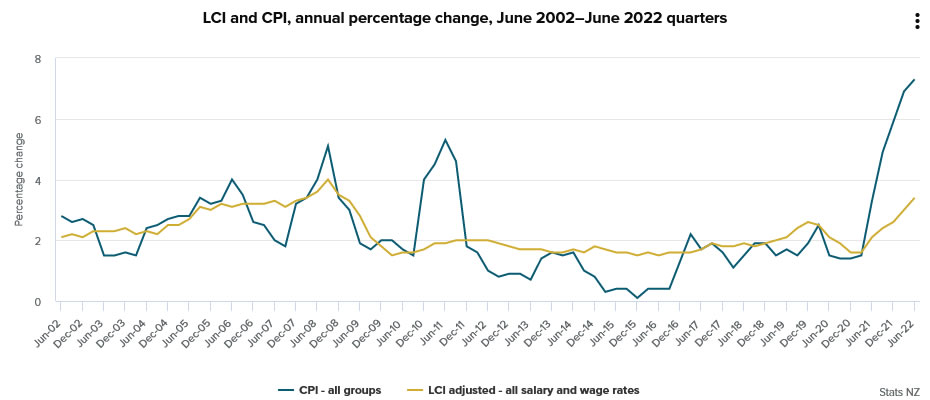
Wage inflation (salary and wage rates, including overtime) in all sectors rose 1.1% qoq, 3.5% yoy. It grew 1.3% qoq, 3.4% yoy in private sector, and 0.6% qoq, 3.0% yoy in public sector.
"Measures of spare labour market capacity have fallen over the year and remained low for several quarters, continuing to show a tight labour market," work and wellbeing statistics senior manager Becky Collett said.
"The June quarter had the largest increase in LCI salary and wages rates since late-2008. Over the year, a steadily increasing number of wages have been raised to better match market rates, as well as attracting or retaining staff," business employment insights manager Sue Chapman said.
Australia AiG construction dropped to 45.3, RBA tightening will end the boom
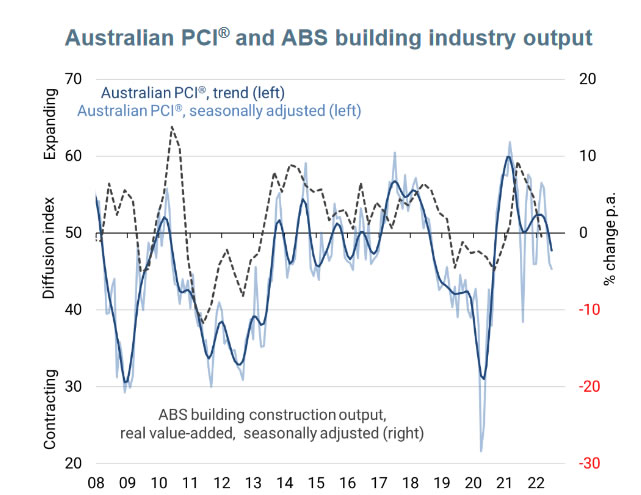
Australia AiG Performance of Construction Index dropped -0.9 to 45.3 in July. Activity dropped -3.5 to 42.7. Employment rose 2.2 to 53.0. New orders dropped -2.7 to 43.1. Supplier deliveries rose 3.2 to 42.2. Input prices dropped -2.2 to 93.8. Selling prices rose 4.4 to 87.1.
HIA Economist, Thomas Devitt, said: "Confidence in the housing sector has been adversely impacted by rising rates which will compound the rise in the cost of construction. This has not yet materialised in slowing sales or approvals of new homes and there is still a large volume of building work in the pipeline to complete. Recent declines in confidence, as shown in this month's Australian PCI®, reflect an anticipation on the part of builders of less new work entering the pipeline in coming months as the RBA's current tightening cycle will, inevitably, bring an end to the boom.
Fed Bullard: Rates need to go a bit higher than I said before
St. Louis Fed President James Bullard said yesterday that inflation has "come in hotter" than he expected during Q2. Thus, "I think we're going to have to go a little bit higher than what I said before." He added that the federal funds rate will have to go to 3.75-4.00% by the end of the year, comparing to the current 2.25-2.50%.
"Since modern central banks have more credibility than their counterparts in the 1970s, it appears that both the Fed and the ECB may be able to disinflate in an orderly manner and achieve a relatively soft landing," Bullard also noted.
Fed Mester: We’re not in a recession, have more work to do on inflation
Cleveland Fed President Loretta Mester said in a Washington Post interview yesterday, "I don't believe we're in a recession... We don't have a slowdown in labor markets, and that's two key factors that go into calling a recession."
"Our policy has been to raise interest rates in order to cool down the demand side of the economy.... but certainly it hasn't slowed enough, (a), to call it a recession; and (b), to even see that moderation in demand showing through yet to a moderation and a cooling-off of price increases and inflation," she added.
"We have more work to do because we have not seen that turn in inflation. It's got to be a sustained several months of evidence that inflation has first peaked - we haven't even seen that yet - and that it's moving down," she also noted.
Gold Price Gains Bullish Momentum, $1,800 Presents Resistance
Key Highlights
- Gold price gained momentum after it broke the $1,740 resistance.
- It surpassed a key bearish trend line with resistance near $1,755 on the 4-hours chart.
- EUR/USD is still struggling to clear the key 1.0280 resistance zone.
- The US ISM Services PMI could decline from 55.3 to 53.5 in July 2022.
Gold Price Technical Analysis
Gold price started a decent upward move from the $1,680 zone against the US Dollar. The price was able to surpass the $1,700 and $1,720 resistance levels.
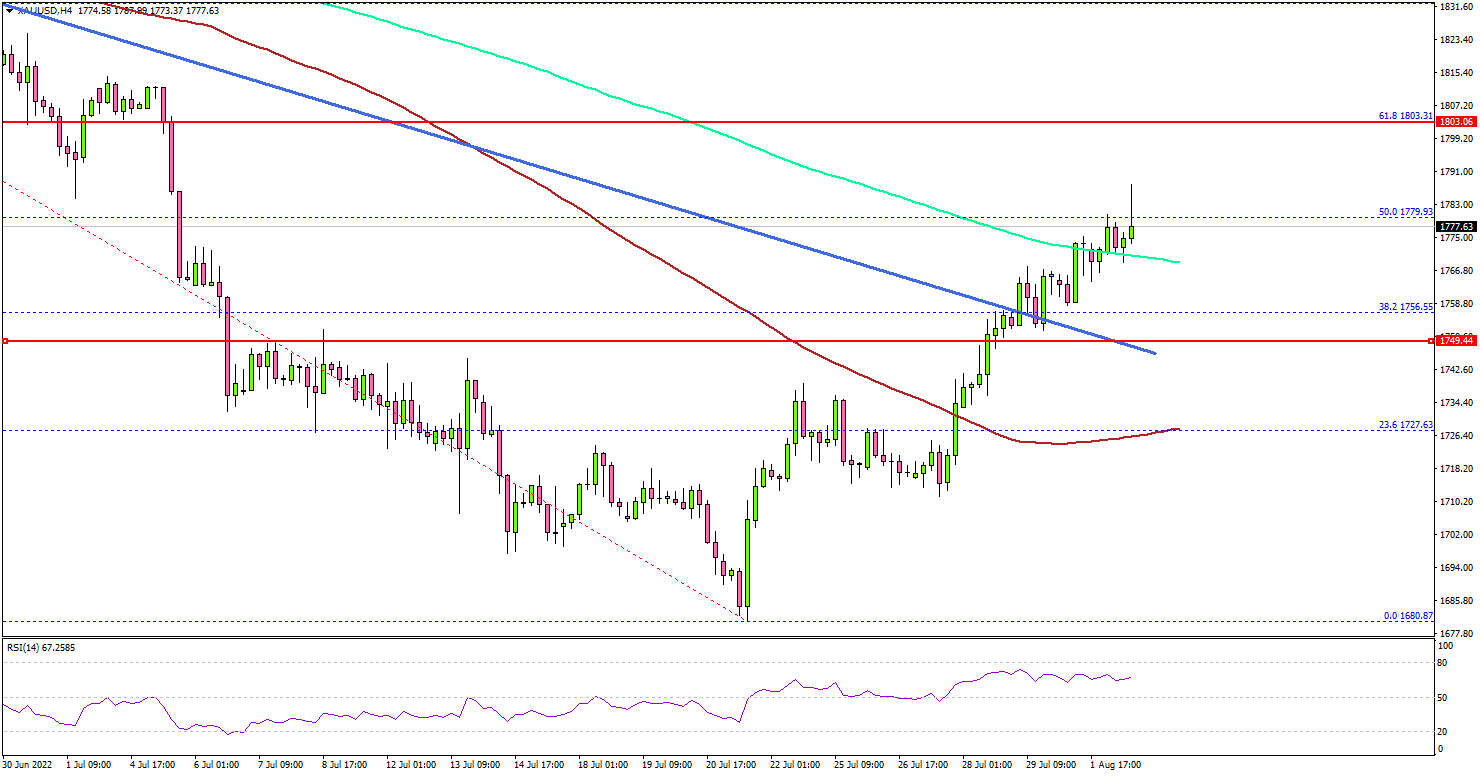
The 4-hours chart of XAU/USD indicates that the price gained pace after it broke the $1,740 resistance. There was a clear move above a key bearish trend line with resistance near $1,755.
Besides, the price spiked above the 50% Fib retracement level of the downward move from the $1,879 swing high to $1,680 low. The price even settled above the $1,750 level, the 200 simple moving average (green, 4-hours), and the 100 simple moving average (red, 4-hours).
The next major resistance is near the $1,800 level. It is near the 61.8% Fib retracement level of the downward move from the $1,879 swing high to $1,680 low.
Any more gains might send the price towards the $1,825 level. On the downside, an initial support is near the $1,765 level and the 100 simple moving average (red, 4-hours).
The next major support is near the $1,750 level, below which the price could accelerate lower. In the stated case, the price may perhaps decline towards the $1,720 level.
Looking at EUR/USD, the pair is still facing a strong resistance near 1.0280. Besides, GBP/USD corrected lower from the 1.2300 zone.
Economic Releases to Watch Today
- Germany’s Services PMI for July 2022 - Forecast 49.2, versus 49.2 previous.
- Euro Zone Services PMI for July 2022 – Forecast 50.6, versus 50.6 previous.
- UK Services PMI for July 2022 – Forecast 53.3, versus 53.3 previous.
- US Services PMI for July 2022 – Forecast 47.0, versus 47.0 previous.
- US ISM Services PMI for July 2022 – Forecast 53.5, versus 55.3 previous.
NZ First Impressions Labour Market Update June 2022 Quarter
The New Zealand labour market remains extremely tight. While the unemployment rate rose slightly to 3.3%, the other details point to major capacity constraints and intensifying pressure on wages.
Key results
- Unemployment: 3.3% (Prev: 3.2%, exp: 3.1%)
- Employment: Flat (Prev: +0.1%, Exp: +0.4%)
- Wages (LCI, private, ordinary time): +1.3% (Prev: 0.7%, Exp: 1.1%)
Commentary
The New Zealand labour market remained extremely tight in the June quarter. While the unemployment rate bucked expectations with a slight increase, the other details point to an economy that is running up hard against capacity constraints, and the pressure on wage growth is intense.
The unemployment rate rose slightly to 3.3% in June, against our forecast of a slight decline to 3.1%. That still leaves it at a very low level – the previous reading of 3.2% was the lowest in the history of the survey going back to 1986.
The other notable surprise for us was a second quarter of zero employment growth, coupled with a surprising drop in the participation rate. There has been solid growth in youth employment and participation, as we expected, but that appears to have been outweighed by a sharp rise in the number of people moving into retirement during the quarter.
In contrast, the underutilisation rate dipped slightly for the quarter to 9.2%. That was accompanied by a large shift from part-time to full-time employment. That may have been due to people working closer to their ‘normal’ hours, with less Omicron-related disruption compared to the previous quarter. But it’s also part of a long-running trend, with part-time work increasingly falling out of favour.
With such a tight labour market, wage growth is clearly gathering a head of steam. The Labour Cost Index rose 1.1% overall, with a 1.3% rise in the private sector. That was substantially above our forecast (given that it’s a relatively slow-moving measure), though it was close to the Reserve Bank’s most recent forecasts. The share of jobs receiving large pay rises continues to increase, and notably the most common reason cited is to match market rates and/or retain staff, rather than cost of living increases.
Average hourly earnings, a closer measure of what workers are actually receiving, rose 2.2% for the quarter, which was also much stronger than we expected. This measure is up 6.4% on a year ago, while consumer prices rose 7.3% over the same time. That still indicates that real wages have gone backwards in the last year, but not as badly as thought.
For the Reserve Bank, the strong wage inflation outcomes will likely be the most significant part of today’s reports. The risk for the RBNZ is that wage pressures provide an avenue for the recent bout of price shocks to turn into sustained inflation over time. We’ll review our OCR forecasts later today, but the risks are clearly towards a higher peak than the 3.50% that we have been forecasting for some time.
EURUSD Wave Analysis
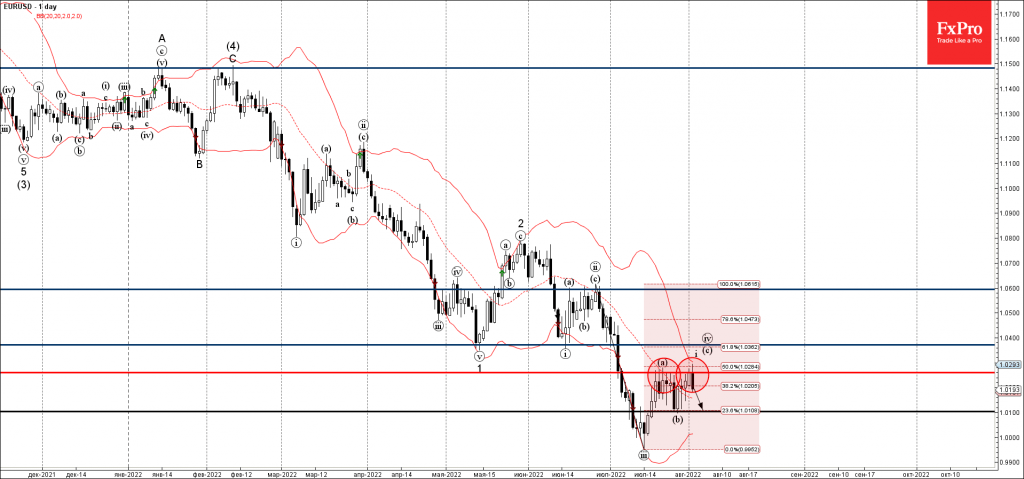
- EURUSD reversed from resistance level 1.0260
- Likely to fall to support level 1.0100
EURUSD currency pair recently reversed down from the resistance level 1.0260 (which has been repeatedly reversing this currency pair from the middle of July).
The resistance zone near the resistance level 1.0260 was strengthened by the upper daily Bollinger Band and by the 50% Fibonacci correction of the downward impulse from June.
Given the strong daily downtrend, EURUSD currency pair can be expected to fall further in the next support level 1.0100 (low of wave (b) from last month).
CADCHF Wave Analysis
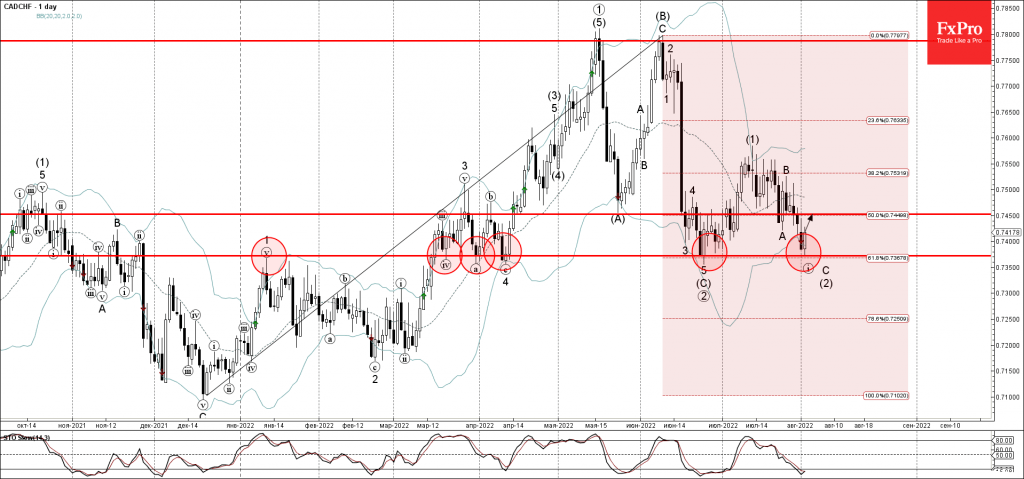
- CADCHF reversed from long-term support level 0.7375
- Likely to rise to resistance level 0.7450
CADCHF currency pair recently reversed up from the long-term support level 0.7375 (former resistance from January, which has been steadily reversing this pair from March).
The support zone near the support level 0.7375 was further strengthened by the lower daily Bollinger Band and by the 61.8% Fibonacci correction of the uptrend from December.
Given the oversold daily Stochastic, CADCHF currency pair can be expected to rise further in the next resistance level 0.7450.
Eco Data 8/3/22
[php_everywhere instance="1"]