

Sample Category Title
Bitcoin May be Near the Bottom But Not Yet Ready to Rise
The tug of war in Bitcoin near the psychologically important $20K continues. After losing 4.7% to $19.9K on Wednesday, the first cryptocurrency returned to $20.4K on Thursday morning. Ethereum is down 1.2% to $1085 in 24 hours, with the top 10 altcoins trending from a 2% drop (Tron) to a 3% rise (Solana).
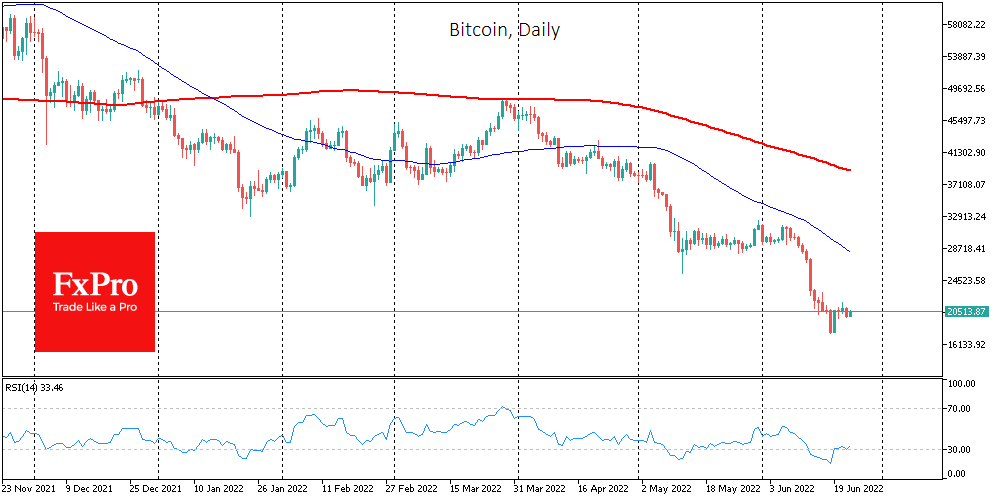
Total crypto market capitalisation, according to CoinMarketCap, was unchanged overnight, remaining at $900bn. Bitcoin’s dominance index fell 0.4 points to 43.1%.
By Thursday, the Cryptocurrency Fear and Greed Index stood at 11 points (“extreme fear”).
Ian Harnett, a co-founder of Absolute Strategy Research, has suggested that bitcoin will collapse to $13K this year, as it is characterised by a drop of 80% from the historic highs it reached.
Arcane Research noted that in 2013 and 2017, BTC fell 85% and 84%. If history repeats, bitcoin’s downside potential persists to the $10,350 mark.
However, we note that in previous bullish cycles, the strengthening of BTCUSD has been many times stronger. For example, in 2013, it was more than 90 times. In 2017, it was 20 times, while in a year-long growth cycle through the highs of 2021, we saw “only” a tenfold increase in price.
In our view, it is much more reliable to estimate that Bitcoin finds a long-term bottom near the highs of the previous 4-year cycle, where the first cryptocurrency has already rolled back. Even so, it may not be the best time to buy, as it may take considerable time before the crypto market digests the recent turmoil and enters a new phase of sustained demand from broad segments of investors, not just stressed asset hunters.
The ECB chief has called for regulating the cryptocurrency lending sector amid growing activity on crypto lending platforms and problems with Celsius and Finblox.
SEC Commissioner Esther Pearce believes that a bearish crypto market would benefit the industry and create a more sustainable foundation for its development.
Tesla CEO Elon Musk has said that he has never encouraged anyone to invest in cryptocurrencies and all accusations of him promoting a “Dogecoin pyramid scheme” are unfounded. Musk has recently sued for advertising DOGE for $258bn.
Tether, the issuer of the largest USDT stablecoin by capitalisation, announced the release of a GBPT “stablecoin” pegged to sterling.
AUDUSD Ticks Down Below 0.6900; Next Support at 2-Year Low
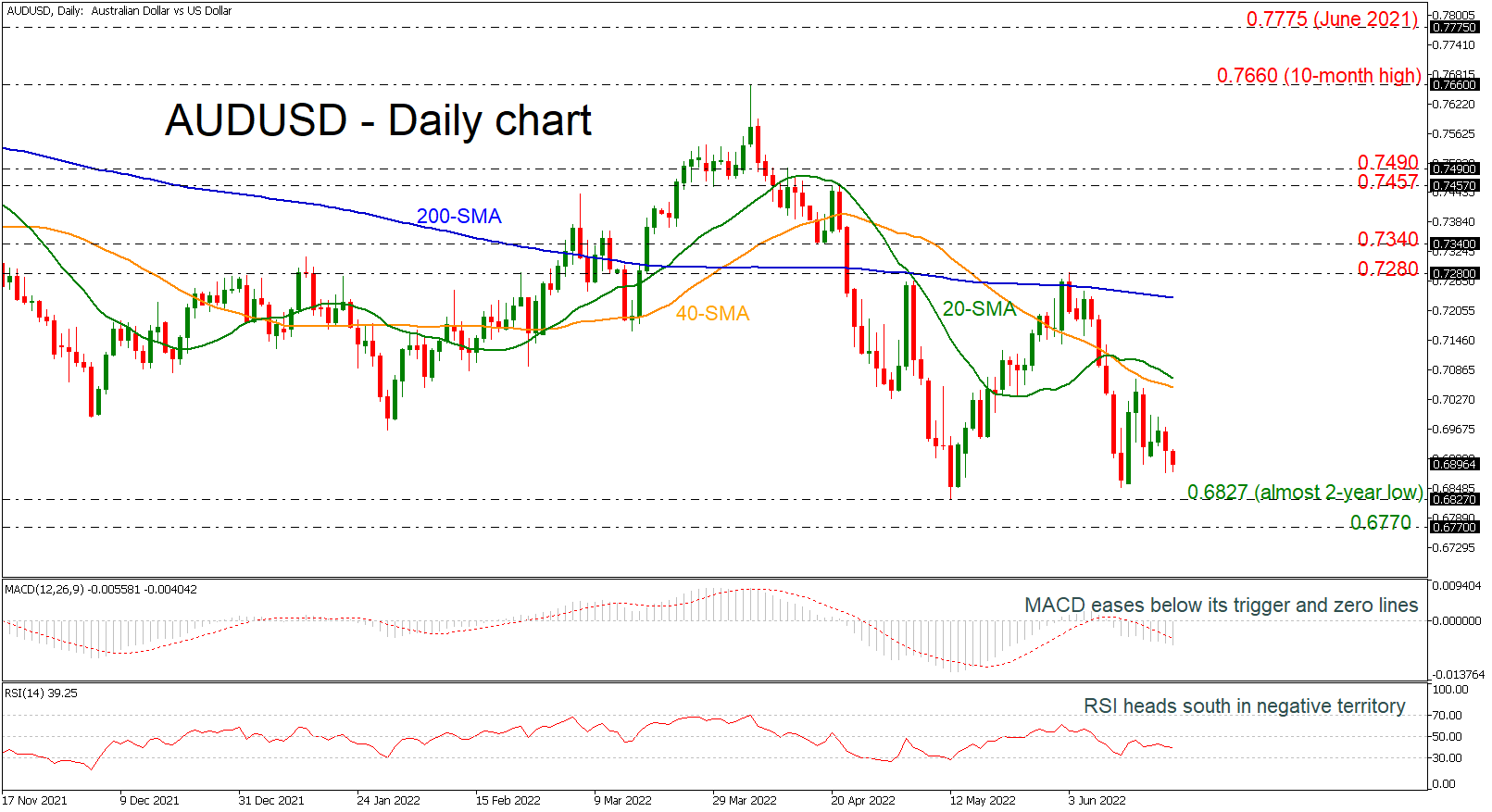
AUDUSD has been underperforming over the last week as it failed to surpass the short-term simple moving averages (SMAs). The price is currently diving beneath the 0.6900 round number, and it appears ready to retest the almost two-year low of 0.6827. Even lower, the market may find strong support near the 0.6770 level, taken from the low in June 2020. Breaking these obstacles, traders may take the pair until the April 2020 inside swing high at 0.6570, confirming the long-term bearish outlook.
Turning to the technical indicators, the MACD oscillator is moving lower below its trigger and zero lines, while the RSI indicator is losing some momentum in the negative region.
If the market corrects higher, the bullish action may pause initially near 20- and 40-day SMAs around the 0.7060 before attention shifts to the 200-day SMA at 0.7234. A rally on top of the latter and, more importantly above the 0.7280 would probably generate fresh buying pressure, with the price moving next to the 0.7340 resistance and then towards 0.7457.
In brief, AUDUSD is bearish in the short- and medium-term timeframes and only a climb beyond the 200-day SMA may change this outlook to bullish.
WTI Oil Futures Trade with Bearish Bias as Trendline Breached
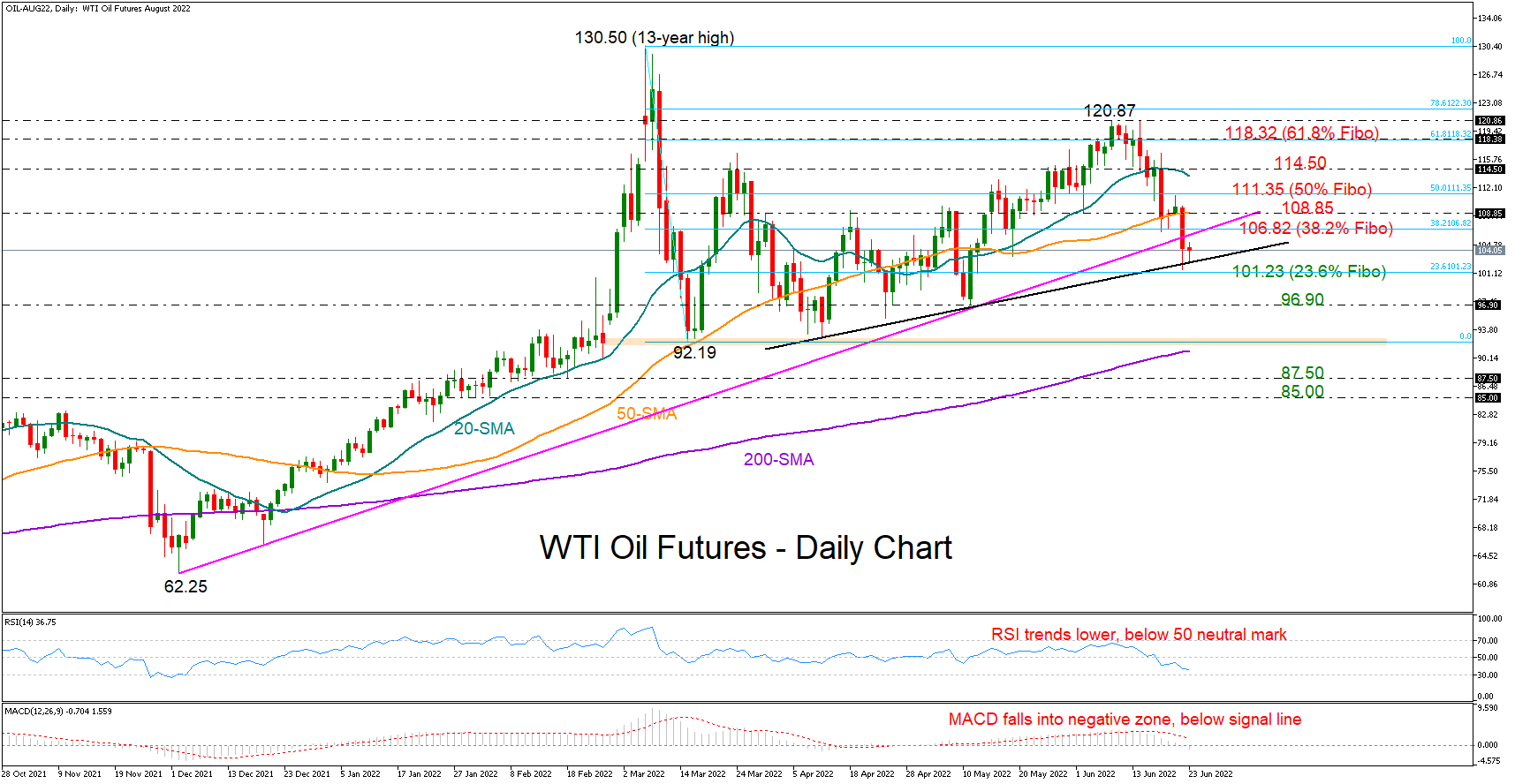
WTI oil futures (August delivery) lost almost 5% on Wednesday, tumbling to a six-week low of $101.53 before closing the day off its lows.
The bearish action breached the support trendline, which joined the lows from December’s bottom of $62.25, sending a warning signal that selling tendencies may escalate in the coming sessions. The clear negative trend in the RSI and the MACD, which have dipped back in the bearish area, is backing this narrative too.
That said, there is another shorter-term ascending trendline from April, which is still valid at $102.43, while the 23.6% Fibonacci retracement of the $130.50 – $92.19 downfall at 101.23 is adding extra importance to the region. Hence, sellers may wait for a decisive close below those obstacles before they aggressively squeeze the price towards the previous trough of $96.90. Then, all eyes will turn to the bottom of the three-month-old range area at $92.19. Notably, the 200-day simple moving average (SMA) is approaching the same territory. However, if it proves fragile, the decline could stretch towards the crucial constraining zone of $87.50 – $85.00.
Shifting to the upside, the price will need to crawl above the $108.85 – $111.35 region to retest the 20-day SMA and the $114.50 constraining zone. Higher, the $118.32 mark could reinforce some consolidation before the door opens for June’s high of $120.87.
Summarizing, WTI oil futures may remain under pressure in the short-term. A significant move below $101.23 could to set the stage for another sharp decline towards $96.90.
Daily Technical Analysis
EUR/USD
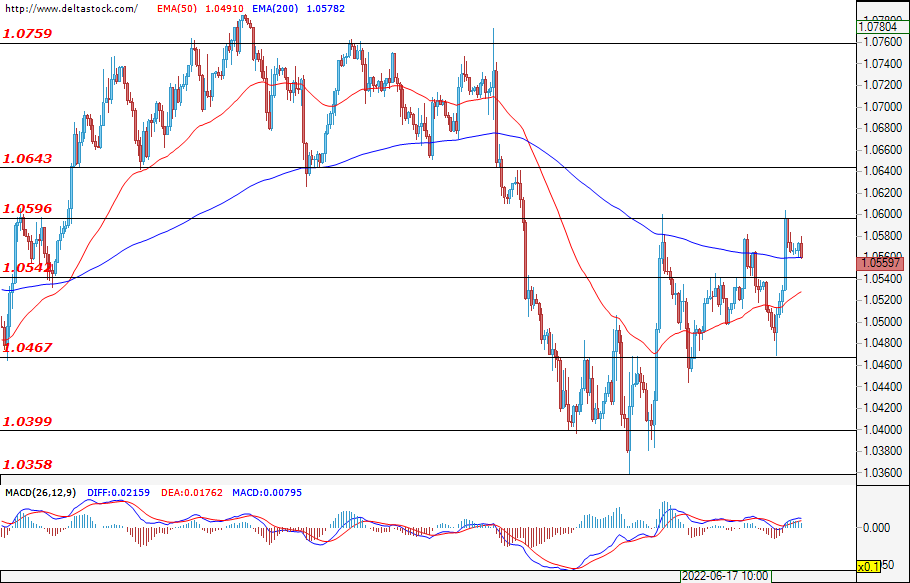
Following the unsuccessful test of the support level at 1.0460, the bulls entered the market and we witnessed an impulsive upward movement that was limited at the psychological level at 1.0600. If the EUR/USD manages to breach this level, then it would further rise towards the next key resistance at 1.0643. In case the resistance at 1.0600 withholds the bullish pressure, then the most likely scenario would be for the pair to continue trading in the range of 1.0540 – 1.1060. The most important news for investors today is the initial jobless claims data (12:30 GMT), which may lead to higher volatility.
USD/JPY
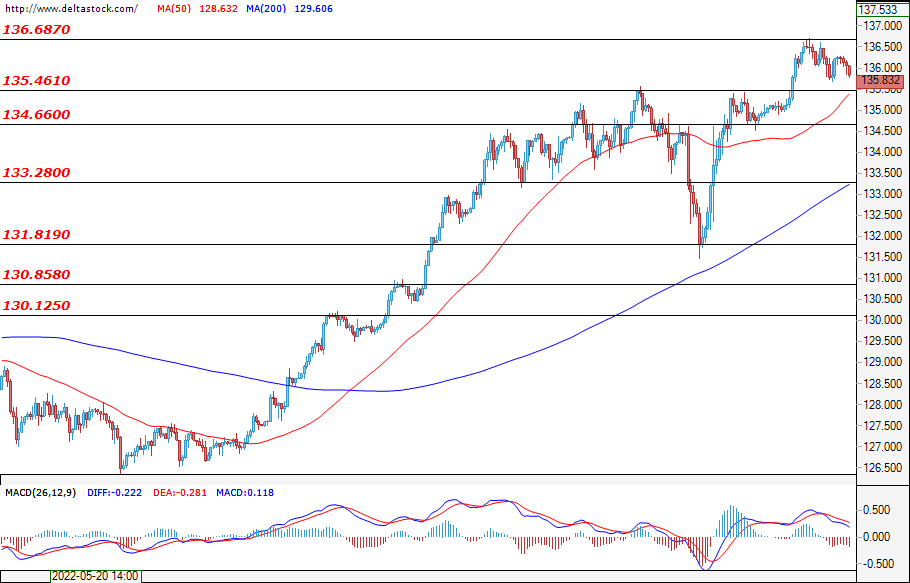
The resistance level at 136.70 managed to limit the upward movement of the currency pair and the expectations for today's trading session are for the USD/JPY to enter in a corrective phase and target the support at 134.66.
GBP/USD
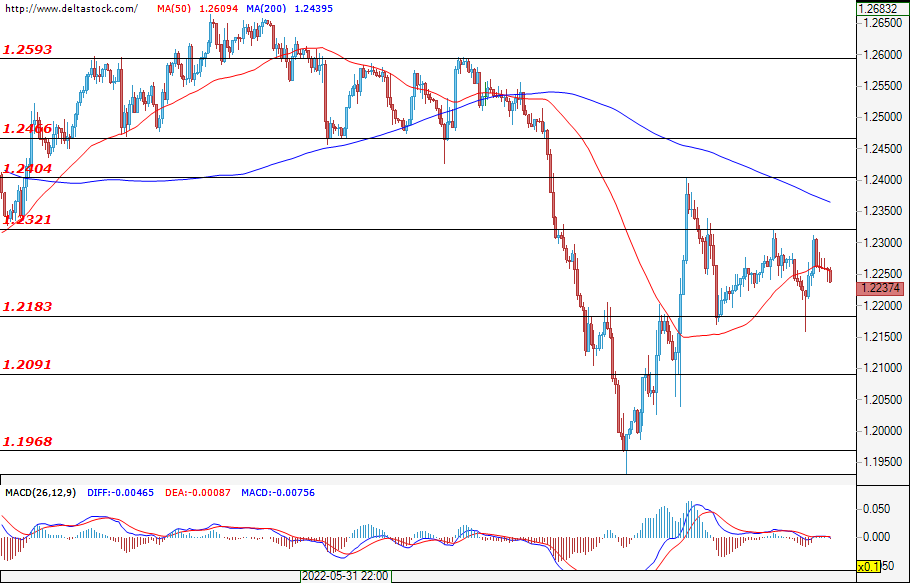
During yesterday's trading session, the currency pair continued to trade in the range of 1.2320 – 1.2180, and in the early hours of today’s trading, it is headed towards a test of the support level at 1.2180. In case of a successful breach of this support, the pair would most probably head towards the next key one at 1.2010. If the bulls re-enter the market and manage to violate the resistance at 1.2320, then an upward movement towards the next one at 1.2400 is highly possible.
EUGERMANY40
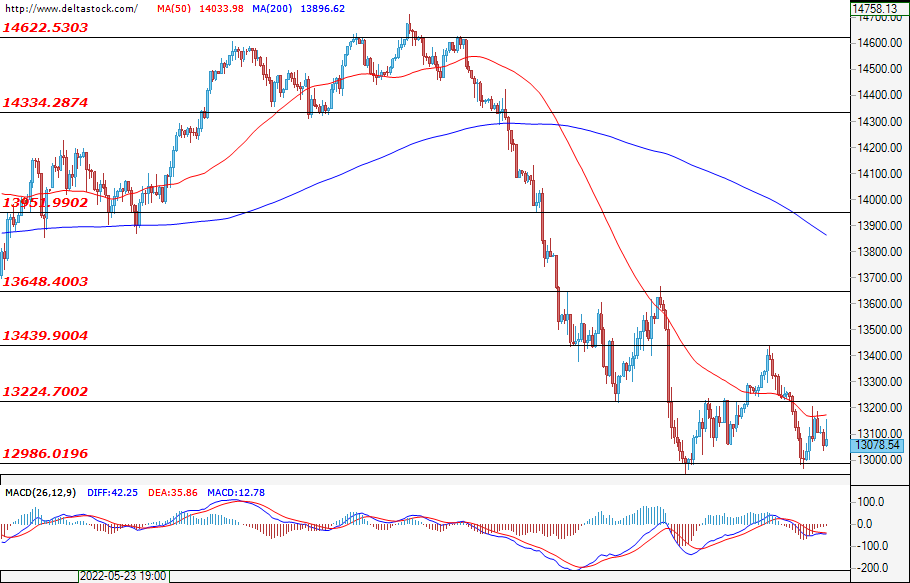
During the previous trading session, the German index managed to stay above the psychological level at 13000, and at the time of writing, it is traded in the range of 13000 – 13220. The forecasts for today's trading session are for the bulls to attack the resistance at 13224, and a successful breach of this level may lead to an increase in the price towards the resistance at 13440. A possible decline below 13000 could deepen the sell-offs towards the next support at 12470.
US30
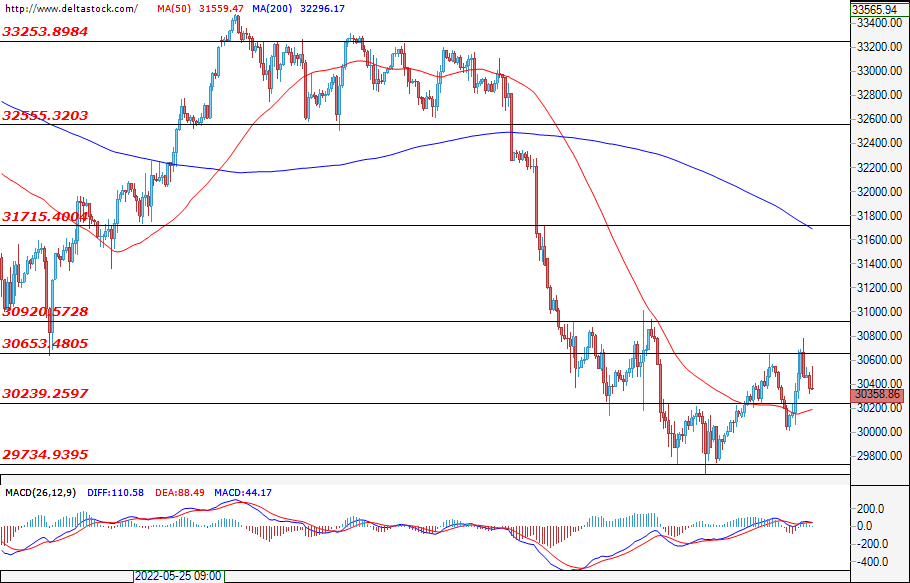
Yesterday, the bulls could not gain enough momentum to violate the resistance at 30650 and the expectations for today’s session are for the bears to try and take control over the market in order to lead the price towards another test of the critical support at 29734. In case the bulls re-enter the market, then their target would be the resistance at 30920.
USDCAD Forms Head and Shoulders after Strong Canada Inflation Fata
American stocks wavered on Wednesday as Jerome Powell testified before a Senate committee. In the statement, Jerome Powell warned that the battle to fight inflation could lead to higher interest rates and even a recession. He also said that the bank will continue hiking until it sees clear proof that inflation is slowing. His remarks underscored the challenging situation that the Fed finds itself in as it seeks to fight inflation which has surged to the highest point in over 40 years. Still, there are concerns about whether higher interest rates alone will lower inflation since it has been caused by supply and demand imbalances.
The Canadian dollar strengthened slightly against the US dollar after the latest strong consumer inflation data. According to Statistics Canada, the headline consumer price index rose from 6.8% to a multi-decade high of 7.7% in May. It rose from 0.6% in April to 1.4% in May. Excluding the volatile food and energy prices, the country’s inflation rose from 5.7% to 6.1%. These figures will also put more pressure on Bank of Canada, which has continued tightening. They came a day after the same agency published strong retail sales numbers.
The economic calendar will have some important data today. Markit will publish flash manufacturing and services PMIs from several countries. The data will provide a gauge of how these companies performed this month. Meanwhile, Jerome Powell will continue testifying in Congress. Historically, the second day of testimony does not cause significant market action. The Energy Information Agency will publish the latest inventories numbers. The data will come as the US moves to remove the Federal gas task, a move that analysts believe will not have an impact on oil prices. The rail strike in the UK will enter the third day as negotiations go on.
EURUSD
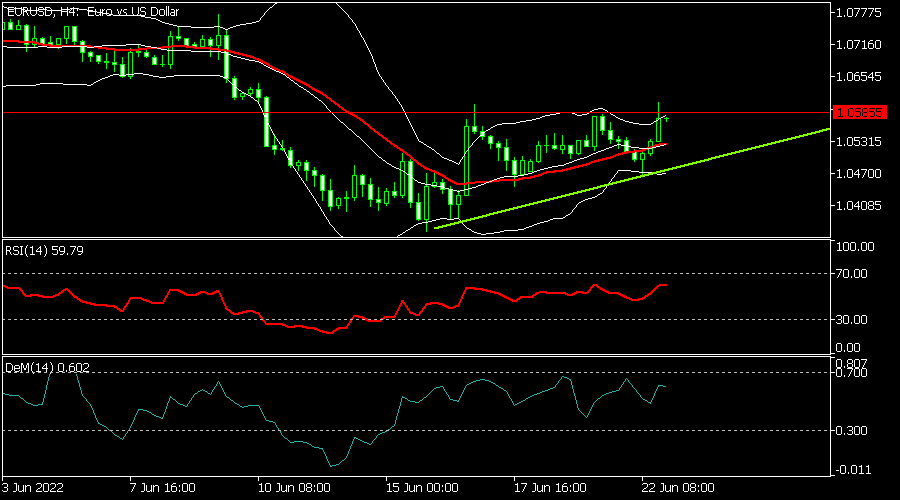
The EURUSD pair bounced back as Jerome Powell testified in Congress. It rose to a high of 1.0590, which was the highest point since Friday last week. It moved above the ascending green trendline and the 25-day moving average. It is also along the upper side of Bollinger Bands while the Relative Strength Index (RSI) has continued rising. Therefore, the upward trend will likely continue in the coming days.
USDCHF
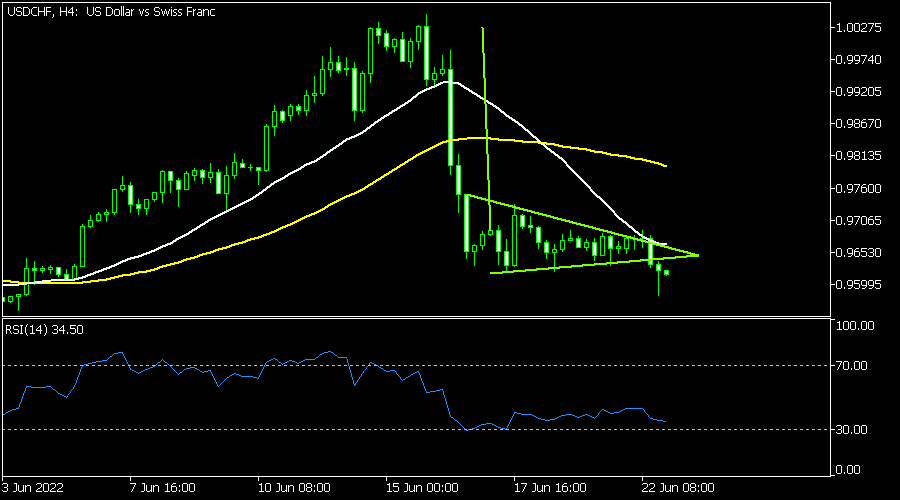
The USDCHF made a bearish breakout after the hawkish statement by the SNB governor. The pair dropped to a low of 0.9570, which was the lowest level since June 6. It moved below the lower side of the bearish pennant pattern and the short and longer moving averages. The Relative Strength Index has moved close to the oversold level. Therefore, the pair will likely continue falling today.
USDCAD
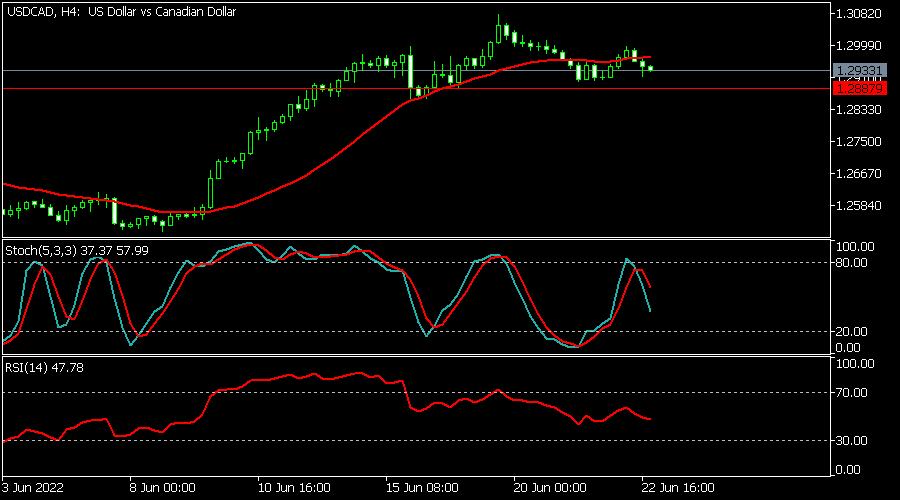
The USDCAD pair tilted lower after strong Canadian inflation data. It dropped to a low of 1.2931, which is lower than this month’s high of 1.3080. It has formed a head and shoulders pattern and moved below the 25-day moving averages. At the same time, the RSI has formed a bearish divergence pattern while the Stochastic Oscillator has moved below the overbought level. The next key support to watch will be at 1.2887.
US Oil Nears Critical Support
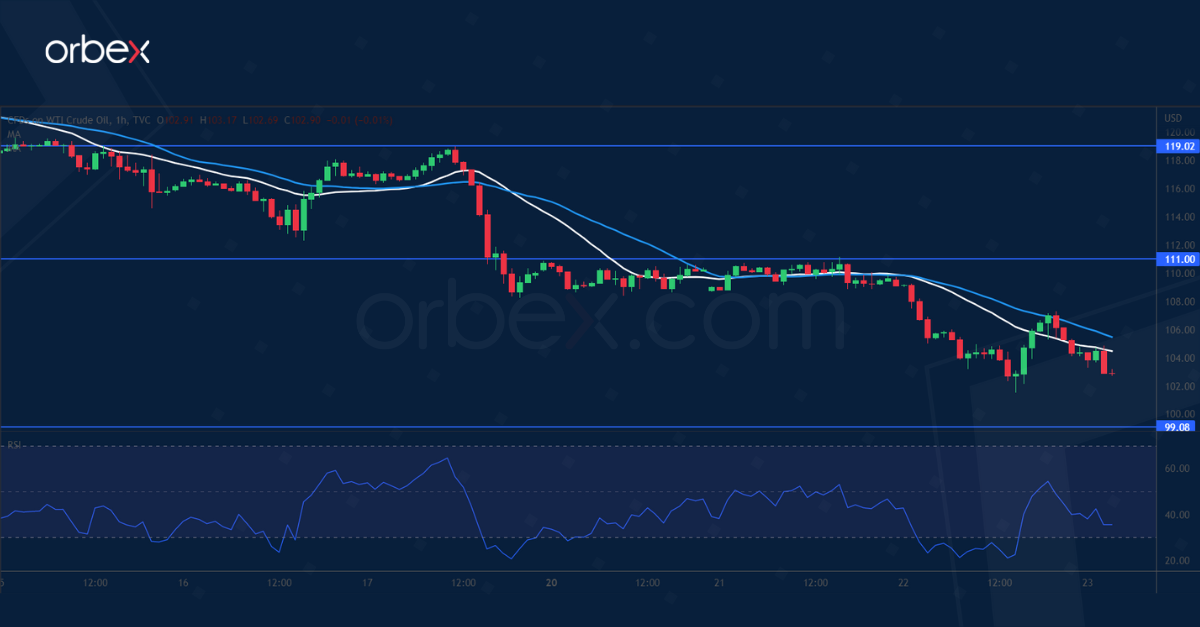
WTI crude remains under pressure over fears of recession. A fall below the daily support at 109.00 triggered a new round of liquidation. After a clean cut through the 30-day moving average, the demand area between May’s lows (99.00) and the psychological level of 100.00 is critical in keeping the price afloat in the medium-term. The RSI’s triple dip into the oversold zone caused a rebound as the bears’ profit-taking met the bulls’ buying the dip. 111.00 is the first obstacle to remove before the commodity could bounce back.
USD/CAD Tests Support
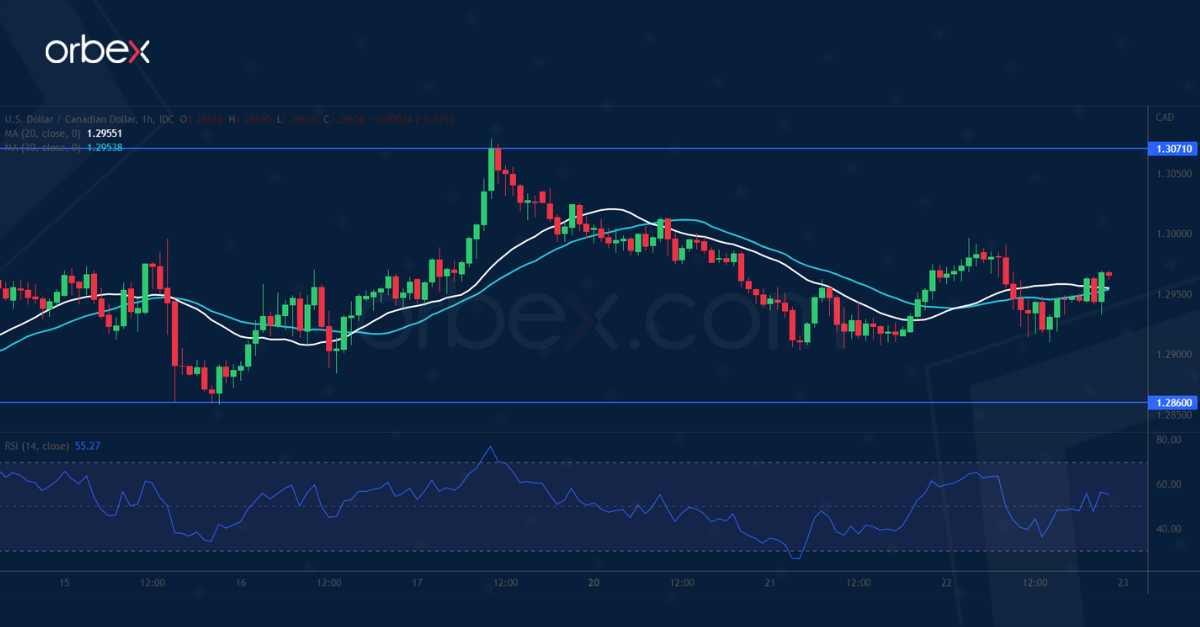
The Canadian dollar bounced higher after May’s CPI exceeded expectations. The greenback is struggling to consolidate its gains after a tentative break above last month’s peak at 1.3070. The bulls have bought the pullback around 1.2860. A rally above 1.3070 would trigger a runaway rally as selling interests become scarce, paving the way for a recovery above 1.3300. However, a bearish breakout would dent the mood in the short-term and force leveraged buyers to bail out. Then 1.2700 would be the next support.
GBP/USD Consolidates Gains
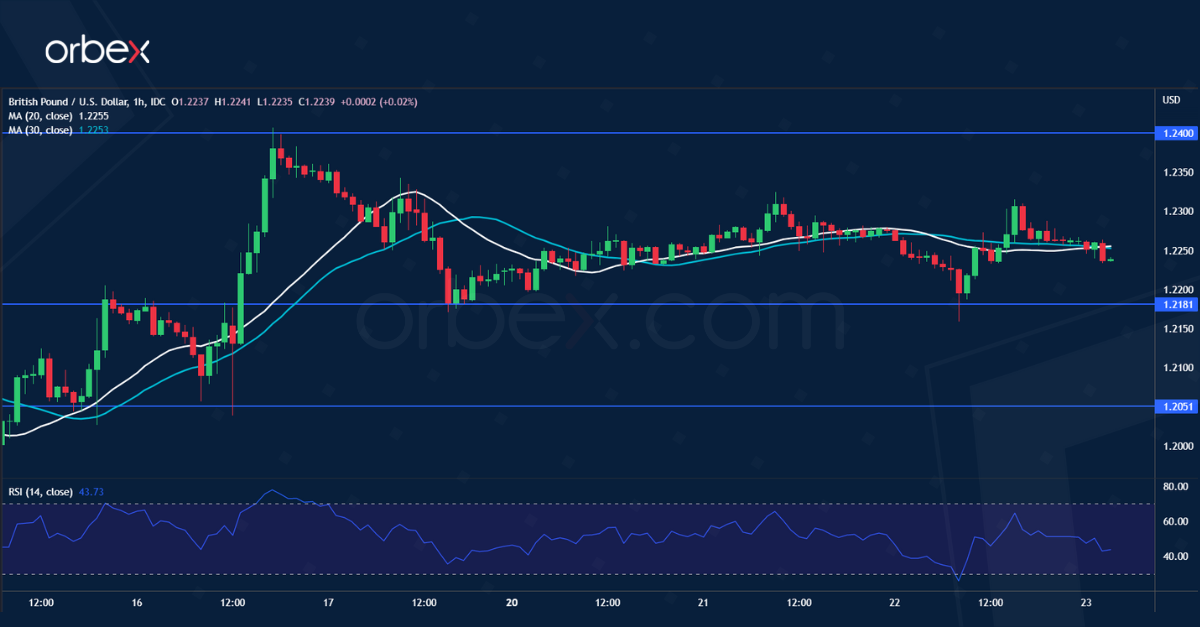
Sterling edged higher after the UK’s CPI accelerated to 9.1% in May. A previous surge above 1.2200 prompted sellers to trim their positions, reducing the downward pressure. The former supply zone has turned into a demand one (1.2180) where buyers would look to hold onto their gains. A close above 1.2400 may bring the pound to June’s high at 1.2600, a major resistance on the daily chart. 1.2050 is an important support to keep the rebound valid. Otherwise, the pair would resume its bearish course.
Fed Chair Powell Did Little to Alleviate Recession Concerns
Markets
It was outright risk-off yesterday. The inflation scare traded for recession fears – a pattern we’ve observed before. Fed chair Powell did little to alleviate these concerns. In his testimony before Congress he reiterated a strong commitment to fight inflation but added that a recession as a result is “certainly a possibility”. The data remain the needle in the compass for future hikes. The Fed needs to see a significant slowdown in inflation before easing the pace of tightening, effectively rubberstamping a 75 bps hike in July. Fed’s Evans later confirmed that “75 is a very reasonable place to have a discussion” and he thinks that by the end of the year the Fed will be doing 25s. Harker said he would like to see rates above 3% but he doesn’t think the Fed has to accelerate rapidly beyond that level. The Philly Fed president said it is important to gauge the effects of quantitative tightening first. Both Evans and Harker were basically narrating the Fed’s dot plot as well as confirming market expectations.
Market expectations for future rate hikes were thus unchanged even as US yield curves tanked up to 14 bps at the front end of the curve. The US 10y yield lost intermediate support at 3.20% (May interim cycle high). European swap yields shed between 9 (2y) and 13.3 bps (10y). European equities slumped 2.5% but capped losses to less than 1% eventually with sentiment improving gradually. US stocks recovered nearly all opening losses.
UST outperformance combined with equities leaving intraday lows behind, helped EUR/USD a bit higher. The pair tested 1.06 but closed at 1.057, up from 1.053. The Swiss franc strengthened further (EUR/CHF 1.016) after SNB president Jordan repeated it may need to hike rates again after the shocker 50 bps last week. Sterling traded in the defense. Quickening inflation and more forceful BoE action hangs in the balance with dire growth prospects. EUR/GBP jumped north of 0.86 while UK Gilts outperformed peers (yields down 17 bps in the 2y/5y). The Japanese yen staged a minor comeback that stretches into current Asian dealings. USD/JPY still trades above 135 though.
Moves in other currencies muted this morning. Core bonds catch a breather after yesterday’s surge higher. We think their downside remains better protected as long as growth is the dominating market theme. This may well be the case with PMI business confidence scheduled for release today. Beneath the still-solid headline figure expected at 54 for the euro zone, we’ll look for signs of easing of momentum in subseries including new orders or production. It may be tricky for the euro to sustain this week’s cautious upward trend in such circumstances. Powell’s testimony continues today with an appearance before the House. The EU meanwhile holds a summit in Brussels.
News Headlines
The Czech National Bank raised its policy rate yesterday by 125 bps, from 5.75% to 7%. They took the decision with 5 members in favour while 2 argued for unchanged rates. One of them will be CNB president at the next, August, meeting. Three of the 5 members who voted in favour of the significant rate hike will leave the CNB by then, suggesting scope for a potential pause or at least a significant deceleration in the tightening cycle. Czech money markets discount a policy rate peak at 7.5% in the near term. The Bank Board assessed the risks and uncertainties of the spring forecast as being markedly inflationary. In particular, higher price growth at home and abroad is having an inflationary effect. This is mainly due to a sharp rise in energy and commodity prices. Upside risks include a weaker CZK FX rate, the threat of inflation expectations becoming unanchored from the CNB’s 2% inflation target and the possibility of a less restrictive fiscal policy this year and next. The Board decided to keep its strategy of FX interventions to avoid an unwanted CZK weakening, unchanged. EUR/CZK in the wake of the decision held near 24.75 which over the past days popped up as an area where the CNB is active with its intervention regime. Czech swap yields fell by 32 bps (2-yr) to 40 bps (30-yr) yesterday as the statement no longer mentions the need to tighten further at coming meetings. This guidance is replaced by data dependence. The general market climate added to the drop in yields as well.
‘Very Challenging’, Indeed
Market optimism couldn’t survive to Jerome Powell’s testimony yesterday, as he said that a recession is possible, and that calling a soft landing is ‘very challenging’ under the current circumstances.
More worryingly, Powell mentioned another risk: the risk of the Federal Reserve (Fed) not managing to restore price stability and allowing inflation to get entrenched in the economy.
Major US indices closed the session slightly in the negative. The S&P500 lost 0.13% and Nasdaq slid 0.15%. The US 10-year yield eased however, as a sign that Powell’s testimony was already mostly factored in. The US dollar index eased.
Powell will testify today, as well, but most of the negative pricing is certainly done by now.
Finally falling?
The barrel of American crude extended losses below $103 yesterday, as Powell’s speech pointed at a possible recession. The next important test for the oil bears is the $100 level. Many investors don’t expect a downturn in oil prices below this level, pointing at a tight global supply, and the resilient demand. Joe Biden’s 3-month gas tax relief could only increase demand and have no material impact for the overall market trend.
Other commodities suffer, as well, as the recession fear takes a toll on demand prospects and bring investors to liquidate their long positions in preparation of a further downside correction. iShares Diversified Commodity index fell below the 100-DMA for the first time this year, and deeper decline is possible, given the risks of tighter monetary policies to the global economy.
In this respect, the British FTSE index, which has a high concentration of oil and mining stocks, could lose its ytd advance versus its US peers.