Sample Category Title
GBP/USD Mid-Day Outlook
Daily Pivots: (S1) 1.2453; (P) 1.2476; (R1) 1.2515; More..
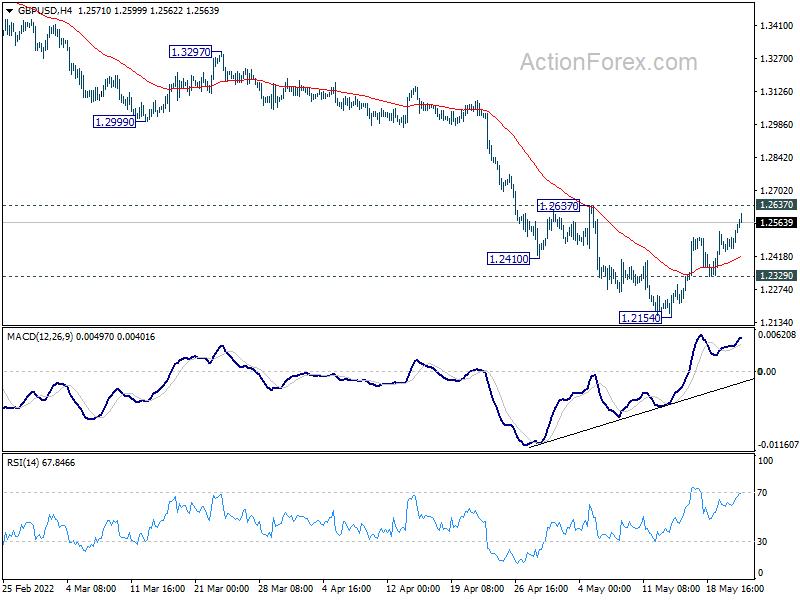
Intraday bias in GBP/USD remains neutral for the moment. Considering bullish convergence condition in 4 hour MACD, break of 1.2637 will confirm short term bottoming at 1.2154. Intraday bias will be turned back to the upside for 55 day EMA (now at 1.2781). On the downside, below 1.2329 minor support will bring retest of 1.2154 first. Break there will resume larger down trend from 1.4248.
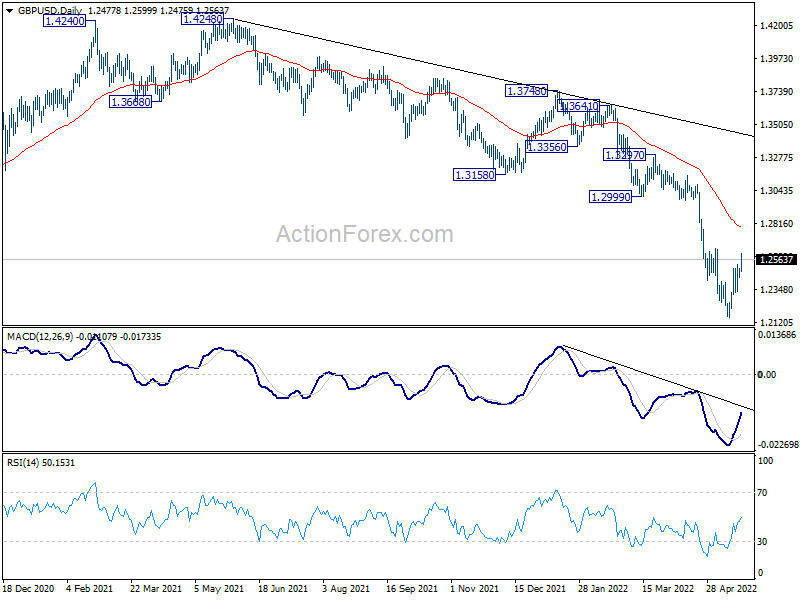
In the bigger picture, based on current momentum, fall from 1.4248 (2018 high) at least at the same degree as the rise from 1.1409 (2020 low). That is, fall from 1.4248 could be a leg inside the pattern from 1.1409, or resuming the longer term down trend. In either case, deeper decline is expected as long as 1.2999 support turned resistance holds. Next target is 1.1409 low.
EUR/USD Mid-Day Outlook
Daily Pivots: (S1) 1.0529; (P) 1.0564 (R1) 1.0595; More...
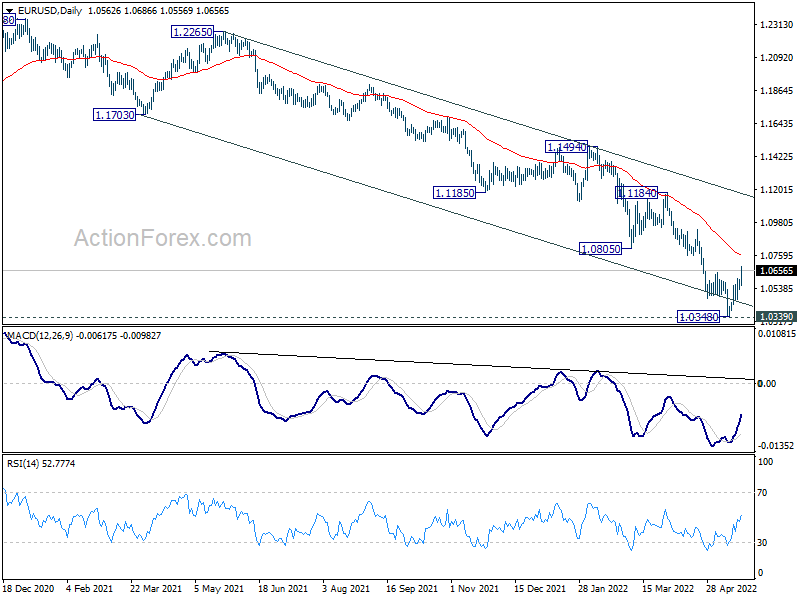
EUR/USD's break of 1.0641 resistance should confirm short term bottoming at 1.0348, just ahead of 1.0339 long term support. Intraday bias is back on the upside for 55 day EMA (now at 1.0766). Break there will target 1.0935 resistance next. On the downside, however, below 1.0532 minor support will turn intraday bias back to the downside for retesting 1.0348 low instead.
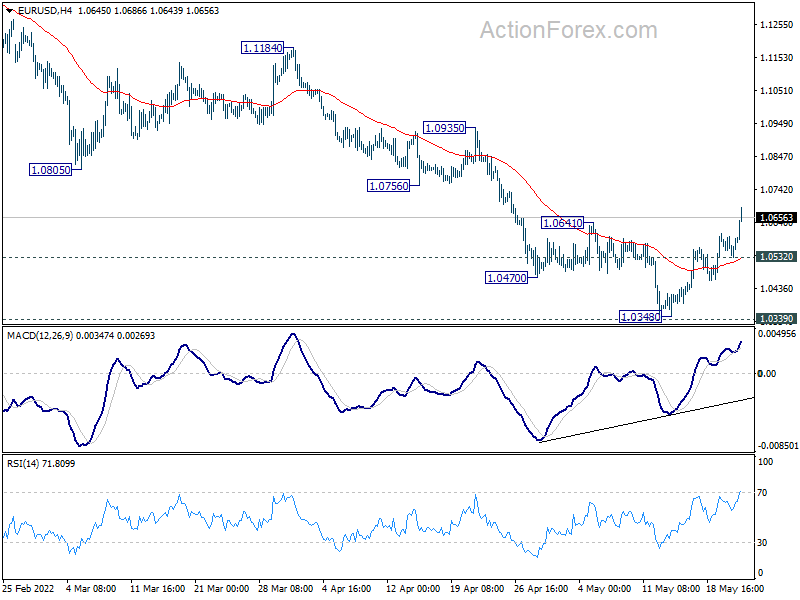
In the bigger picture, focus stays on 1.0339 long term support (2017 low). Decisive break there will resume whole down trend from 1.6039 (2008 high). Next target is 61.8% projection of 1.3993 to 1.0339 from 1.2348 at 1.0090. However, firm break of 1.0805 support turned resistance will delay this bearish case and bring medium term corrective rebound first.
Euro Boosted by Hawkish ECB Lagarde, Gold Rebounding Further
Euro rises broadly today after hawkish comments from ECB President Christina Lagarde. But so far, Aussie and Kiwi are even stronger on positive risk sentiment. On the other hand, Dollar and Yen are both trading generally lower. Sterling, Swiss Franc and Canadian are mixed for now.
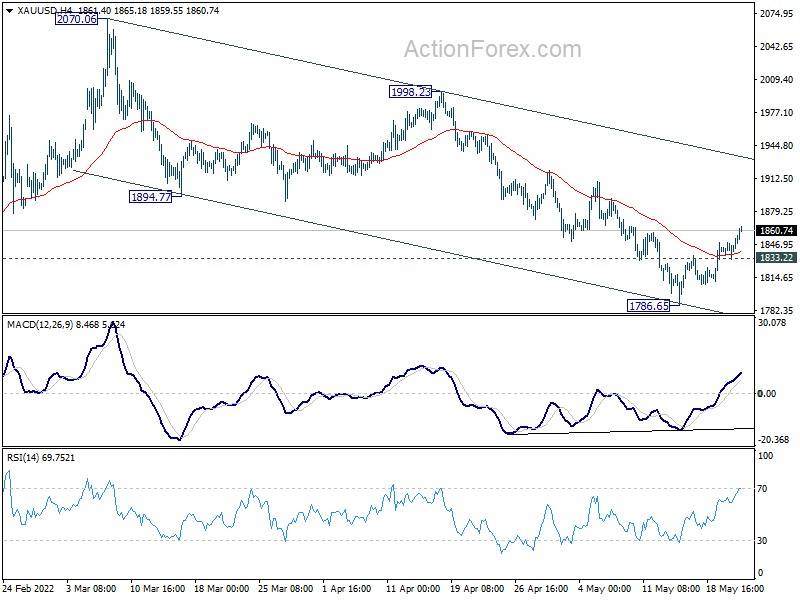
Technically, Gold also extends the rebound from 1786.65 short term bottom. For now, further rise will remain in favor as long as 1833.22 minor support holds. Sustained break of 55 day EMA (now at 1886.00) will pave the way to channel resistance at around 1933. Current development is in-line with more Dollar weakness for the near term.
In Europe, at the time of writing, FTSE is up 1.19%. DAX is up 0.95%. CAC is up 0.45%. Germany 10-year yield is up 0.0040 at 0.981. Earlier in Asia, Nikkei rose 0.98%. Hong Kong HSI dropped -1.19%. China Shanghai SSE rose 0.01%. Singapore Strait Times dropped -0.83%. Japan 10-year JGB yield rose 0.0002 to 0.240.
Lagarde: ECB Likely in a position to exit negative rates by end of Q3
In a blog post, ECB President Christine Lagarde said she expects net asset purchases under the APP to "end very early in the third quarter". "This would allow us a rate lift-off at our meeting in July, in line with our forward guidance," she said.
Also, "based on the current outlook, we are likely to be in a position to exit negative interest rates by the end of the third quarter," she added.
Looking forward, the "next stage" of monetary policy normalization would "need to be guided by the evolution of the medium-term inflation outlook".
"If we see inflation stabilizing at 2% over the medium term, a progressive further normalization of interest rates towards the neutral rate will be appropriate," she said. "But the pace and overall scale of the adjustment cannot be determined ex ante."
Germany Ifo rose to 93 in May, no observable signs of recession
Germany Ifo Business Climate rose from 91.9 to 93.0 in May, above expectation of 91.4. Current Assessment index rose from 97.3 to 99.5, above expectation of 97.2. Expectations Index ticked up from 86.8 to 86.9, above expectation of 85.8.
By sector, manufacturing rose from -0.7 to 2.8. Service rose from 5.5 to 8.1. Trade rose from -13.2 to -10.8. Construction rose from -20.0 to -13.4.
Ifo said: "The German economy has proven itself resilient in the face of inflation concerns, material bottlenecks, and the war in Ukraine. There are currently no observable signs of a recession."
RBA Kent: Gradual QT also plays a role in stimulus removal
RBA Assistant Governor Christopher Kent said in a speech that while most observers focuses were on the central bank's 25bps rate hike this month, it also decided to proceed with "quantitative tightening".
"As the Bank now takes steps to remove the considerable monetary stimulus, increases in the cash rate are the tried and tested measure that will do most of the work...," he said. "the gradual process of QT will also play a role in this task, but a predictable and modest one."
"Because the Bank's bond portfolio will mature gradually, the Bank's balance sheet and commercial banks' ES balances will remain large for some years. This means that the cash rate will continue to trade slightly below the cash rate target, but above the rate paid on ES balances. Most importantly though, the Bank will continue to be able to maintain effective control over the cash rate as it withdraws monetary policy stimulus in the period ahead."
EUR/USD Mid-Day Outlook
Daily Pivots: (S1) 1.0529; (P) 1.0564 (R1) 1.0595; More...
EUR/USD's break of 1.0641 resistance should confirm short term bottoming at 1.0348, just ahead of 1.0339 long term support. Intraday bias is back on the upside for 55 day EMA (now at 1.0766). Break there will target 1.0935 resistance next. On the downside, however, below 1.0532 minor support will turn intraday bias back to the downside for retesting 1.0348 low instead.
In the bigger picture, focus stays on 1.0339 long term support (2017 low). Decisive break there will resume whole down trend from 1.6039 (2008 high). Next target is 61.8% projection of 1.3993 to 1.0339 from 1.2348 at 1.0090. However, firm break of 1.0805 support turned resistance will delay this bearish case and bring medium term corrective rebound first.
Economic Indicators Update
| GMT | Ccy | Events | Actual | Forecast | Previous | Revised |
|---|---|---|---|---|---|---|
| 23:01 | GBP | Rightmove House Price Index M/M May | 2.10% | 1.60% | ||
| 08:00 | EUR | Germany IFO Business Climate May | 93.0 | 91.4 | 91.8 | 91.9 |
| 08:00 | EUR | Germany IFO Current Assessment May | 99.5 | 97.2 | 97.2 | 97.3 |
| 08:00 | EUR | Germany IFO Expectations May | 86.9 | 85.8 | 86.7 | 86.8 |
Euro Surges to 1-Month High
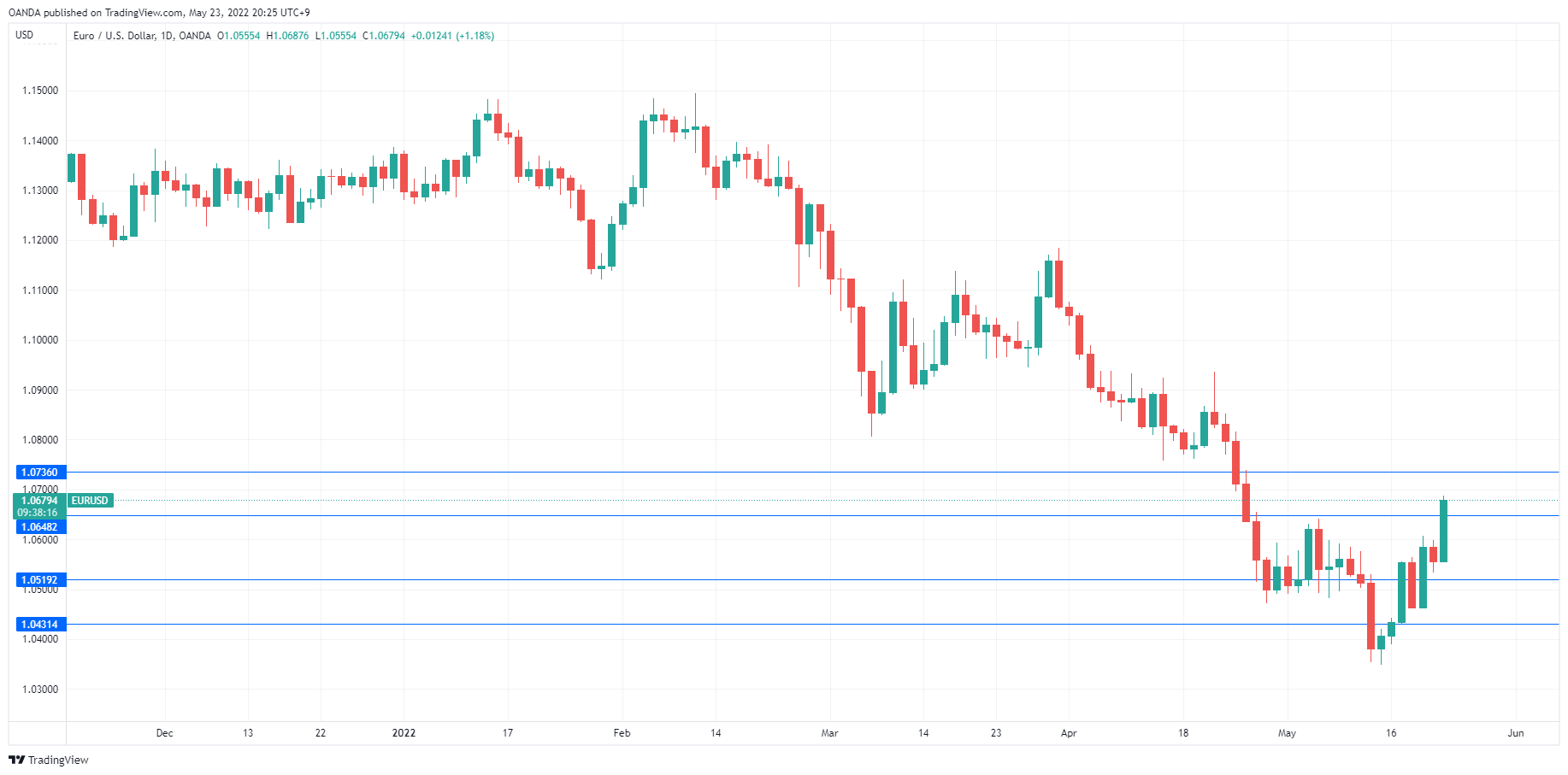
The euro has jumped out of the gates on Monday with sharp gains. In the European session, EUR/USD is trading at 1.0673, up 1.12% on the day.
Euro rebounds
The euro looked hopelessly lost earlier this month, when it dropped to 1.0349, its lowest level since January 2017. There was increasing speculation that the euro was heading to parity with the US dollar. EUR/USD has rebounded back in impressive style, gaining 1.42% last week and extending the rally today. However, the upswing will be difficult to sustain above the 1.07 line, as the euro’s rally is more a story of US dollar weakness rather than euro strength.
The dollar has fallen out of favour as fears of a US recession are weighing on sentiment towards the dollar. US yields were above the lofty 3% threshold just two weeks ago, but nervous investors have snapped up US Treasury bonds, sending yields lower. In turn, the US dollar has also retreated.
Despite the euro’s turnaround, the medium and long-term picture is bearish for the currency. The ECB remains in dovish mode, and upcoming Fed rate hikes will widen the US/Europe rate differential and weigh on the US dollar. The ECB might raise rates in July, but will clearly lag behind an aggressive Fed, which is likely to deliver 50-bps hikes at the July and August meetings.
The euro faces a persistent headwind coming out of Ukraine, as the war between Russia and Ukraine continues. Heavy fighting has been reported in the east of the country, and a ceasefire, let alone an end to the fighting, appears unlikely anytime soon. That means oil and wheat prices will remain elevated, contributing to high global inflation and weighing on risk appetite, which is bearish for the euro.
EUR/USD Technical
- EUR/USD is testing resistance at 1.0648. Above, there is resistance at 1.0736
- There is support at 1.0519 and 1.0431
AUD/USD Moved into a Positive Zone above $0.7000
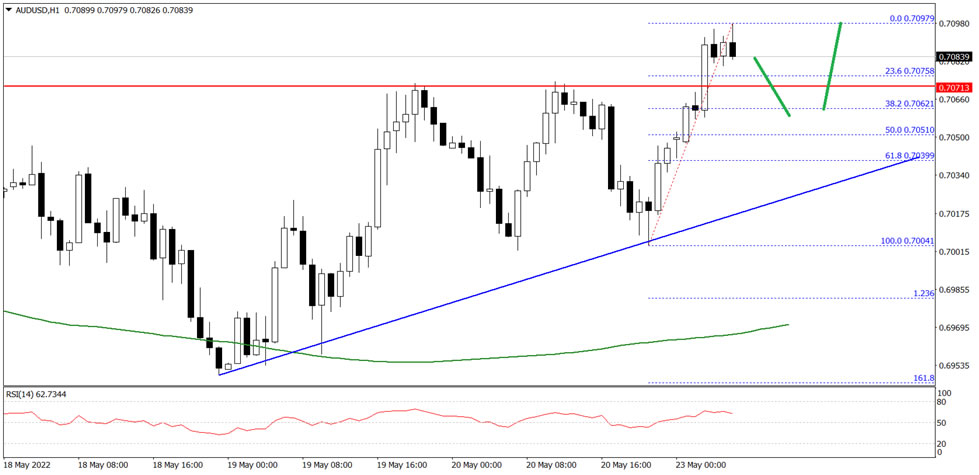
The Aussie Dollar started a fresh increase from the 0.6950 zone against the US Dollar. The AUD/USD pair traded above the 0.7000 resistance zone to move into a positive zone.
The pair gained pace for a move above the 0.7050 and settled above the 50 hourly simple moving average. It traded as high as 0.7097 and might continue to rise steadily. The next key resistance on the upside is near the 0.7120 level.
If there is an upside break above the 0.7120 level, the pair could rise steadily towards the 0.7165 level in the near term. Any more gains could send the pair towards 0.7200 on FXOpen.
An immediate support on the downside is near the 0.7050 level. The next key support is near the 0.7040 level and a connecting bullish trend line. A downside break below the 0.7040 support could lead the pair towards the 0.6980 support.
RBNZ is Expected to Raise Rates; Kiwi Dollar Surges
Early on Wednesday at 02:00 GMT the Reserve Bank of New Zealand will begin its monetary policy meeting and it could be significant as it is expected to raise interest rates again. The New Zealand dollar is in a positive mode and the next step is to wait-and-see the reaction of the pair on a new rate hike.
Will RBNZ hike rates again?
It is anticipated that the Reserve Bank would increase the Official Cash Rate by an additional 50 basis points to 2.0%. There is also an expectation to provide a clear signal that further tightening is forthcoming. The RBNZ has determined that more decisive action early on will prevent the need for an even more excruciating interest rate peak in the future. This pushed them to hike the cash rate by 50 basis points in April, paving the way for future significant increases.
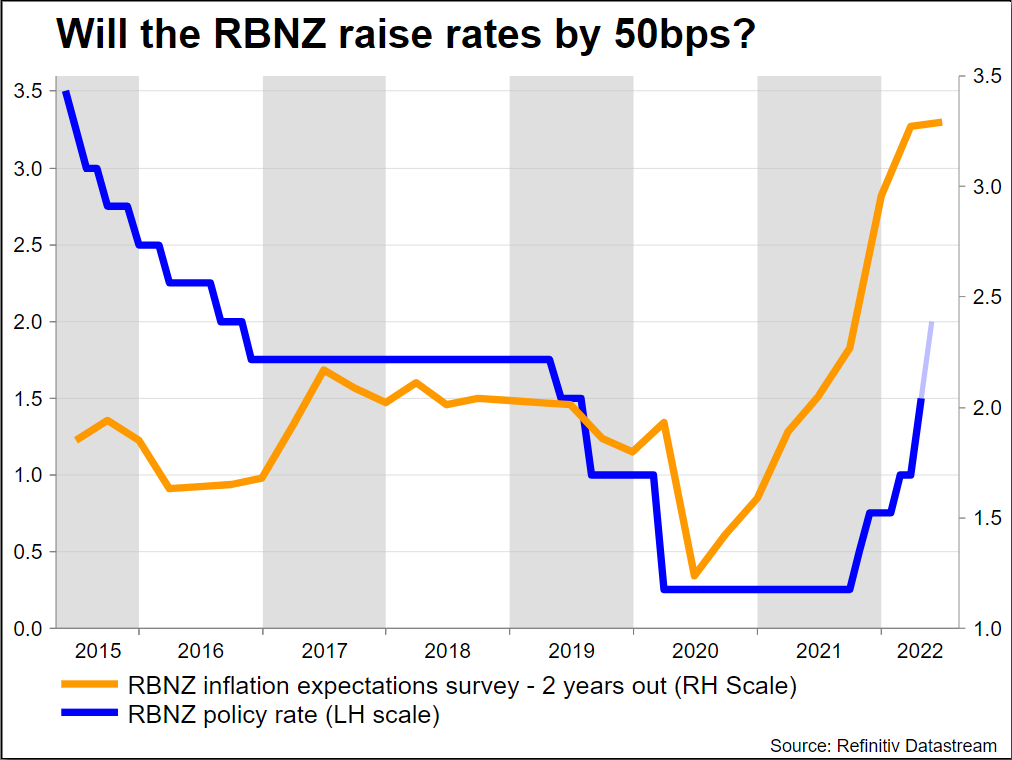
The bank raised interest rates for the fourth time in a row because of rising inflation. A rise in the OCR now, rather than later, will help prevent inflationary expectations from soaring in the first of half of 2022, the board said, citing a forecast of an annual CPI increase of roughly 7%. Policymakers said they'll keep an eye out for signs that high prices for consumers are becoming ingrained in people's long-term expectations. COVID-19-related supply concerns are continuing to raise inflationary pressures around the world. Commodities and energy costs have increased as a result of Russia's invasion of Ukraine. It was pointed out by the board that the OCR is now stimulating. On the subject of property prices, they have decreased from their previous peak and are now at a more sustainable level.
RBNZ’s predictions for next months
As evidence of declining demand grows, the expectation is for the RBNZ to return to its more normal pace of 25bp rate increases beginning in July. However, if inflation continues to surprise on the upside, a second 50-pointer in July is not out of the question.
The RBNZ's expectations for New Zealand's economic data have been met although global news is still very unpredictable. However, there are several strong reasons to go on another 'big' hike. At 6.9%, CPI inflation is clearly out of control, but the OCR is still stimulating the economy at 1.5%. Core measures have risen, with the RBNZ's sectoral factor model reaching a record high of 4.2% in Q1. Inflation printed at 6.0%, close to 6.1% of the RBNZ's projection. One-year inflation predictions continued to rise, reaching 4.9%, while two-year inflation forecasts appeared to level off at little under 3.3%. Therefore, it is possible that officials will hint at a slower rate of rate hikes following the May meeting.
There were stronger wage increases in Q1 than projected. Instead of next year, the forecast is for more positive wage growth in the second half of this year. This will ease the pinch on households' budgets a little sooner, but it will do nothing to allay RBNZ's concerns about an upward spiral in prices and wages.
Kiwi surges ahead of the policy meeting
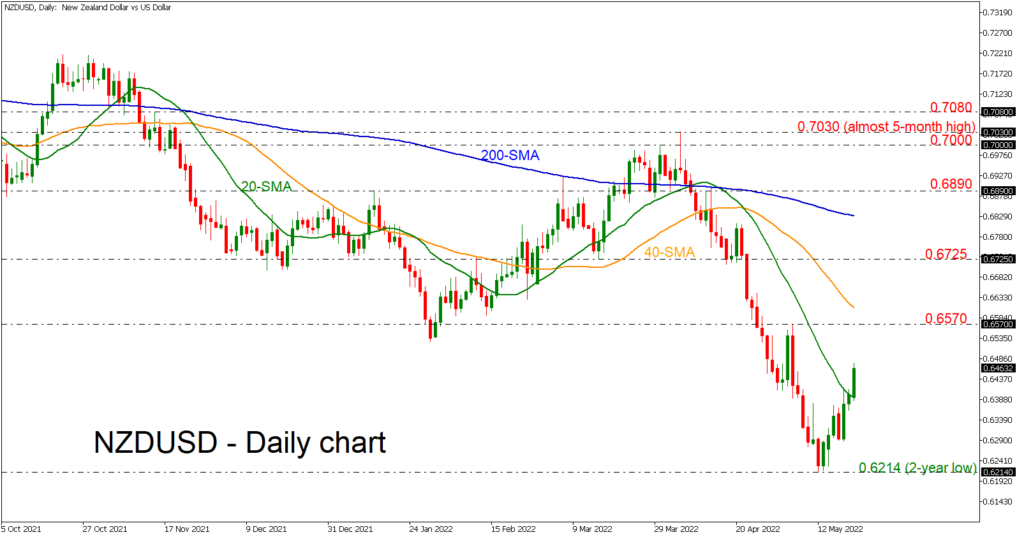
Even if the RBNZ has hinted at another 50 bps, the New Zealand dollar is likely to appreciate at first should they happen. From a technical perspective, the outlook for kiwi/dollar is currently positive in the very short-term. The pair is advancing above the 20-day simple moving average (SMA) after the rebound off the two-year low of 0.6214. The next resistance could come from the 0.6570 barrier and the 40-day SMA at 0.6610.
Alternatively, the pair will need to tumble below the 20-day SMA to generate more losses until the 0.6214 low. Even lower, the price would endorse the negative structure in the medium-term, meeting 0.5920, taken from the troughs on May 2020.
EURUSD Creates Headways in Broader Bearish Outlook
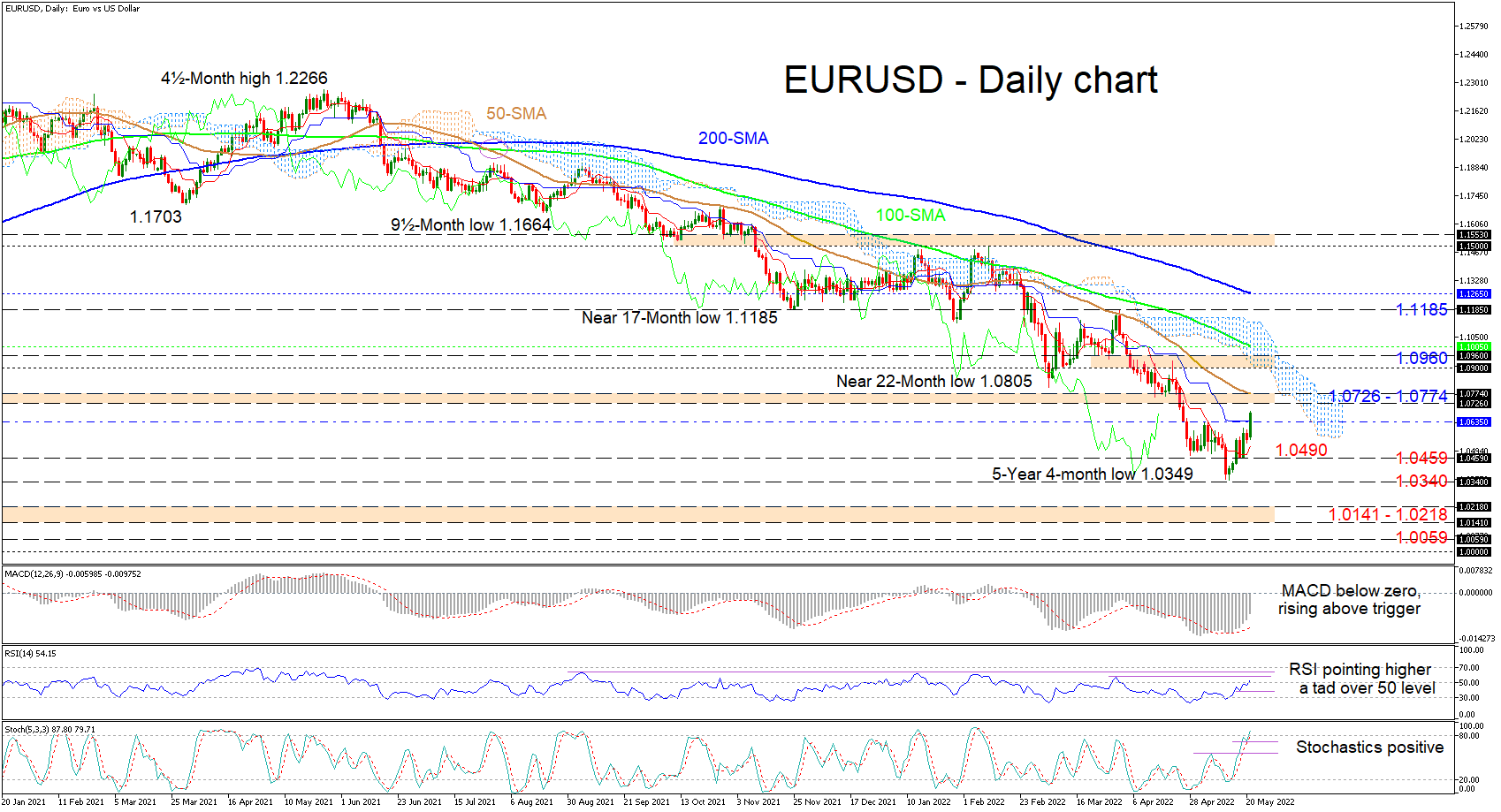
EURUSD has breached the key March 2020 trough of 1.0635 after recently acquiring positive legs from the more than five-year recorded low, which came just shy of the January 2017 low of 1.0340. The simple moving averages (SMAs) are nurturing the one-year prevailing downtrend in the pair.
The Ichimoku lines are mirroring a pause in the latest downward driving forces. Simultaneously, the short-term oscillators are indicating a clear dwindling in negative momentum. The MACD has detached itself from its red trigger line and is climbing towards the zero threshold, while the rising RSI is looking set to improve even further into the bullish territory. The stochastic oscillator is holding its positive charge and the %K and the %D lines are flirting with the overbought 80 barrier.
If the pair manages to close above the 1.0635 obstacle, nearby upside limitations could commence from the 1.0726-1.0774 resistance band that extends back to the base formed over the early April to mid-May 2020 period. Overstepping this deterrent, which is fortified by the falling 50-day SMA, the bulls may then target the 1.0900-1.0960 resistance region, coinciding with the Ichimoku cloud, and the approaching 100-day SMA presently at 1.1005. Piloting higher, the spotlight shifts toward the 1.1185 high.
Otherwise, if the price recoils beneath the 1.0635 barrier, and further fading in positive pressures develops, initial support could stem from the red Tenkan-sen line at 1.0490 and the 1.0459 low. This realignment with the broader downtrend may direct the pair to battle the newly recorded low of 1.0349 and the 1.0340 mark related to the January 2017 trough. If sellers achieve a dive past these obstacles, the 1.0141-1.0218 support barricade that stretches back two decades to mid-July 2002 could heighten concerns about negative tendencies should it fail to curb selling interest. Any additional moves lower may then be aimed at the 1.0059 low and the parity level.
Summarizing, EURUSD buyers are fighting back in a heavily lopsided bearish picture. For positive prospects to grow, the price would need to climb over the 1.0726-1.0774 obstacle. Meanwhile, for optimism to be restored in the pair, a hike above 1.1185 may be necessary.
Is Bitcoin Leading or Following Global Demand for Risk?
Bitcoin is down 3.6% over the past week, ending near $29,900. Ethereum lost 5.8%, while other leading altcoins in the top 10 fell from 5.4% (XRP) to 9.2% (Cardano). The exception was Binance Coin (+3.3%).
According to CoinMarketCap, the total capitalisation of the crypto market has changed little over the past seven days at 1.29 trillion, as the decline at the beginning of the last week was largely reversed by its end.
By Monday, the cryptocurrency fear and greed index is down 4 points to 10.
Bitcoin has declined for seven consecutive weeks amid a sell-off in stock markets. Bitcoin is in its 13th day of trading through the $30K level. Over the weekend, we saw almost traditional buying by retail investors, but their strength only allowed them to bounce back from Friday’s losses.
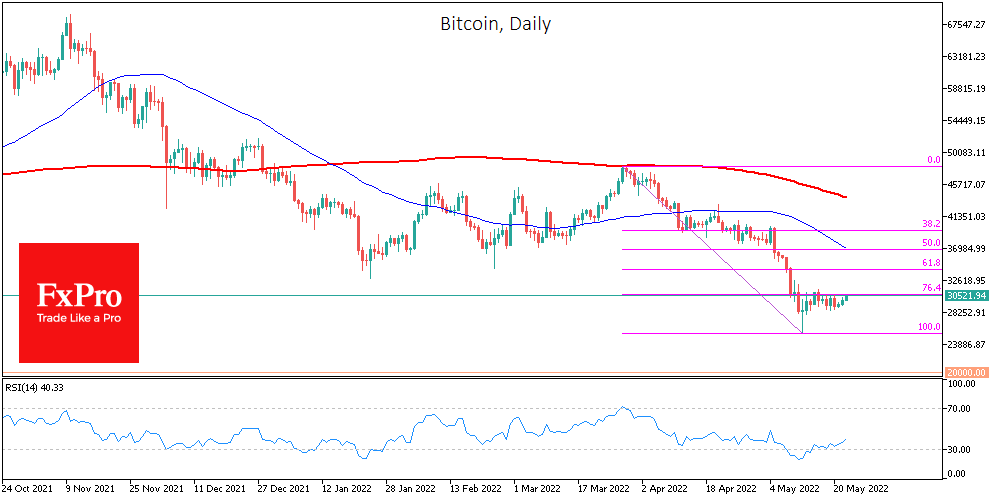
If we look at Bitcoin as a leading indicator of risk demand rather than tailing off moves in the S&P500 or Nasdaq, we may well be in a situation where the tail rules the dog.
Galaxy Digital CEO Mike Novogratz said that the altcoin market will collapse by another 70% with US Fed policy and a bearish trend.
Microsoft co-founder Bill Gates said he only invests in assets that “deliver returns”. In his view, cryptocurrencies do not fall into that category.
Billy Marcus, one of the creators of Dogecoin, said the cryptocurrency market is a mix of unhealthy optimism, FOMO, panic, scams, gambling, and widespread stupidity. He said he has not been involved in the DOGE project for more than 7.5 years but describes himself as a coin supporter.
ECB head Christine Lagarde said that, unlike central bank digital currencies, cryptocurrencies have no value and are not based on anything.
A group of G7 finance ministers pointed to the importance of accelerated legislation to regulate digital assets following the collapse of the UST stable coin and LUNA cryptocurrency.
GBP/USD: Cable Extends Recovery on Fresh Risk Appetite, But Overall Picture Negative
Cable rose to the highest in over two weeks in early Monday, lifted by improved risk sentiment on comments from the US President Biden about possible reduction of tariffs on China.
Fresh strength signals an extension of last week’s 2.05% rise (the biggest weekly advance since July 2020), adding to initial reversal signal, generated by weekly bullish engulfing pattern.
Improving daily techs (ascending 14-d momentum broke into positive territory and double bull-crosses of 5/10 and 5/20DMA’s underpin the action) while fresh strength broke through important Fibo barrier at 1.2512 (38.2% of 1.3090/1.2155) and eye pivotal level at 1.2622 (50% retracement / daily Kijun-sen), close above which would add to positive signals.
On the other side, fundamentals remain negative, as high inflation slows the growth, with growing threats that the economy is sliding into recession, darkening the outlook.
Near-term bias is expected to remain positive while the price action holds above 20DMA (1.2423), but failure to clear 1.2622 barrier would increase risk of recovery stall, as larger picture remains firmly bearish (weekly & monthly chart).
Res: 1.2622; 1.2637; 1.2697; 1.2733
Sup: 1.2512; 1.2469; 1.2423; 1.2368

S&P 500 Nears Bear Market as Earnings Growth Slows to 9.1%
The Australian dollar rose slightly on Monday morning as investors reflected on the weekend. In it, the Labor Party led by Anthony Albanese won the election, beating the incumbent Scott Morrison. Albanese has promised to help transition the economy into a clean energy superpower. He also promised to push companies to pay more salaries in a bid to boost the economy. His election comes at a time when wage growth has been a bit slow in the past few months. The Reserve Bank of Australia has also started hiking interest rates.
American futures declined as concerns among corporate profits rose. Last week, American retailers like Target, Walmart, Home Depot, and Lowe’s showed that the biggest retailers were struggling to find growth as the cost of doing business rose. The same picture is seen across the sectors. According to FactSet, 95% of all companies in the S&P 500 index have published results. 77% of these have reported a positive EPS surprise while 73% have reported a positive revenue positive. The blended earnings growth has been 9.1%, which is the lowest since Q4 of 2020. The top companies that will publish their results are Zoom Video, Faraday Future, AutoZone, Intuit, Nordstrom, Toll Brothers and Best Buy among others.
The economic calendar will be a bit muted on Monday. The most important event will be a speech by Andrew Bailey, the Bank of England (BOE) governor. In it, he will likely talk about last week’s data dump by the ONS. The data revealed that the country’s retail sales rose in April while inflation jumped to the highest point in years. The unemployment rate declined to the lowest level in years. Other important data will be the German business confidence data.
XBRUSD
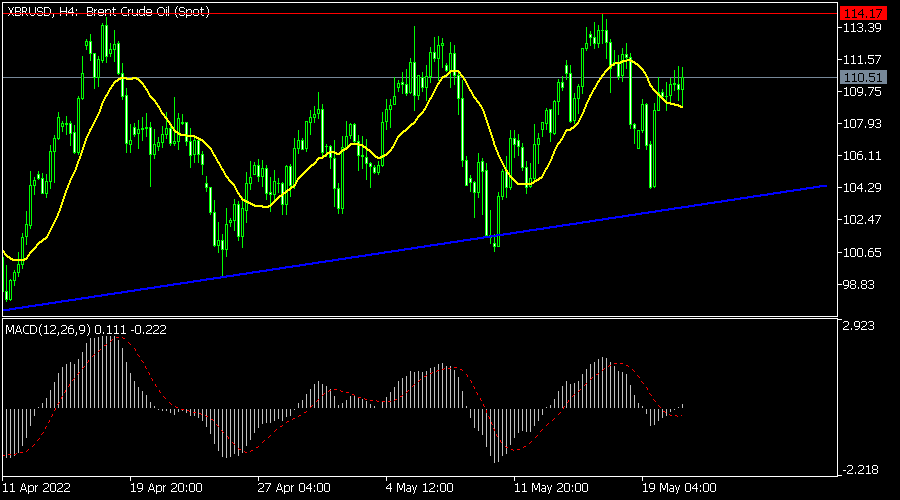
The XBRUSD pair rose to a high of 110.51, which was above last week’s low of 103. On the four-hour chart, the pair is above the ascending trendline shown in blue. The pair is also below the important resistance at 114.17. It has also moved slightly above the 25-day moving average while the MACD has moved slightly above the neutral level. Therefore, the pair will likely keep rising as bulls target the key resistance level at 112.75.
EURUSD
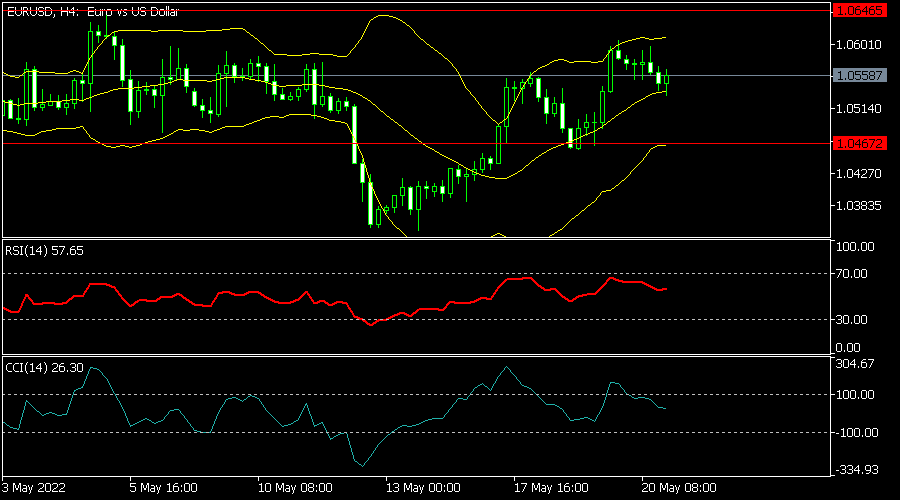
The EURUSD pair is trading at 1.0560, which is slightly below last week’s high of 1.0600. On the four-hour chart, the pair is between the upper and middle lines of the Bollinger Bands while the Relative Strength Index and the Commodity Channel Index have moved from the overbought level. The pair will likely hold steady as bulls target the key resistance at 1.0625.
GBPUSD
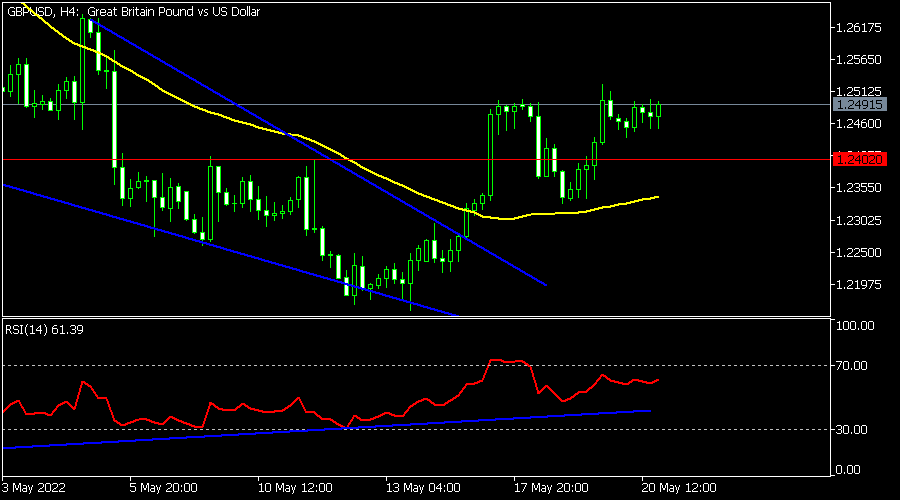
The GBPUSD pair has been in a strong bullish trend in the past few sessions. It is trading at 1.2492, which was slightly above the important support level at 1.2400. It has moved above the 25-day moving average while the Relative Strength Index (RSI) has moved above the blue trendline. However, it has also formed a double top pattern. Therefore, the pair will likely pull back today.