Sample Category Title
S&P 500 Nears Bear Market as Earnings Growth Slows to 9.1%
The Australian dollar rose slightly on Monday morning as investors reflected on the weekend. In it, the Labor Party led by Anthony Albanese won the election, beating the incumbent Scott Morrison. Albanese has promised to help transition the economy into a clean energy superpower. He also promised to push companies to pay more salaries in a bid to boost the economy. His election comes at a time when wage growth has been a bit slow in the past few months. The Reserve Bank of Australia has also started hiking interest rates.
American futures declined as concerns among corporate profits rose. Last week, American retailers like Target, Walmart, Home Depot, and Lowe’s showed that the biggest retailers were struggling to find growth as the cost of doing business rose. The same picture is seen across the sectors. According to FactSet, 95% of all companies in the S&P 500 index have published results. 77% of these have reported a positive EPS surprise while 73% have reported a positive revenue positive. The blended earnings growth has been 9.1%, which is the lowest since Q4 of 2020. The top companies that will publish their results are Zoom Video, Faraday Future, AutoZone, Intuit, Nordstrom, Toll Brothers and Best Buy among others.
The economic calendar will be a bit muted on Monday. The most important event will be a speech by Andrew Bailey, the Bank of England (BOE) governor. In it, he will likely talk about last week’s data dump by the ONS. The data revealed that the country’s retail sales rose in April while inflation jumped to the highest point in years. The unemployment rate declined to the lowest level in years. Other important data will be the German business confidence data.
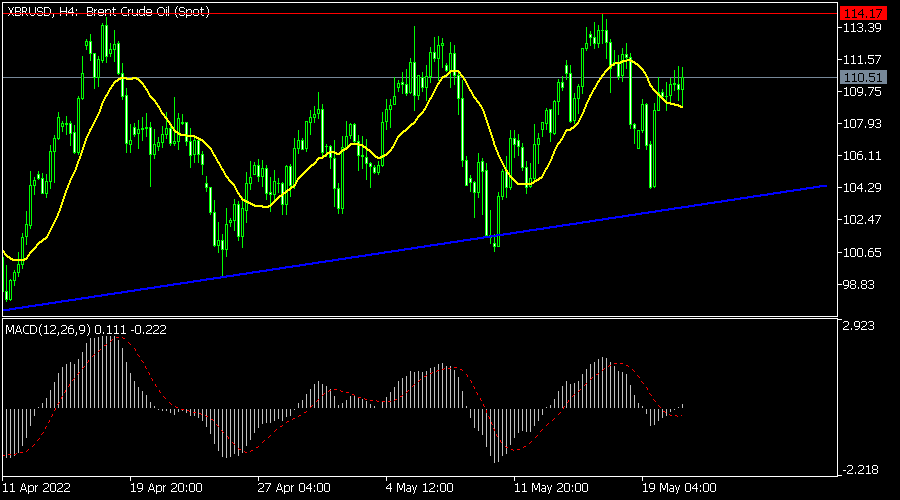
XBRUSD
The XBRUSD pair rose to a high of 110.51, which was above last week’s low of 103. On the four-hour chart, the pair is above the ascending trendline shown in blue. The pair is also below the important resistance at 114.17. It has also moved slightly above the 25-day moving average while the MACD has moved slightly above the neutral level. Therefore, the pair will likely keep rising as bulls target the key resistance level at 112.75.
EURUSD
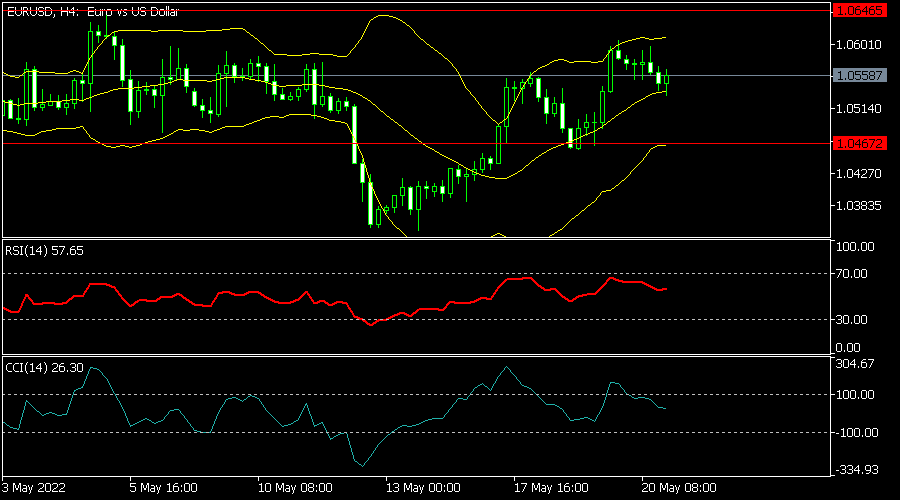
The EURUSD pair is trading at 1.0560, which is slightly below last week’s high of 1.0600. On the four-hour chart, the pair is between the upper and middle lines of the Bollinger Bands while the Relative Strength Index and the Commodity Channel Index have moved from the overbought level. The pair will likely hold steady as bulls target the key resistance at 1.0625.
GBPUSD
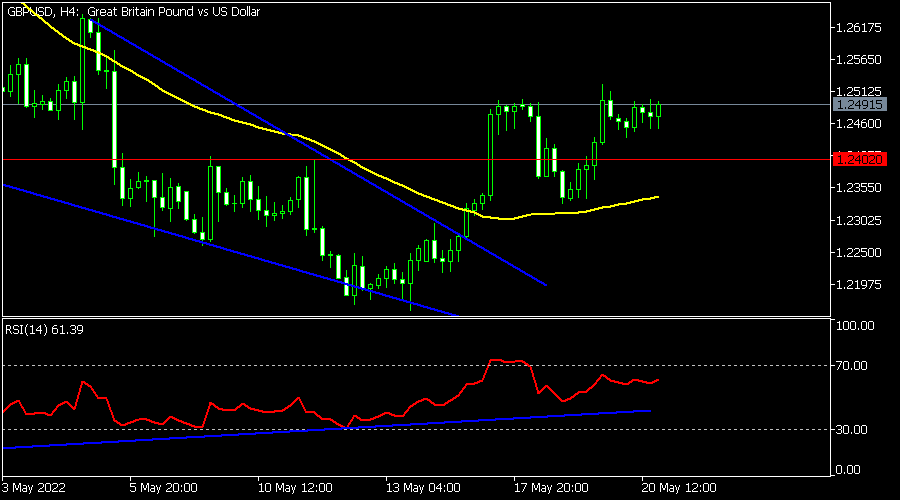
The GBPUSD pair has been in a strong bullish trend in the past few sessions. It is trading at 1.2492, which was slightly above the important support level at 1.2400. It has moved above the 25-day moving average while the Relative Strength Index (RSI) has moved above the blue trendline. However, it has also formed a double top pattern. Therefore, the pair will likely pull back today.
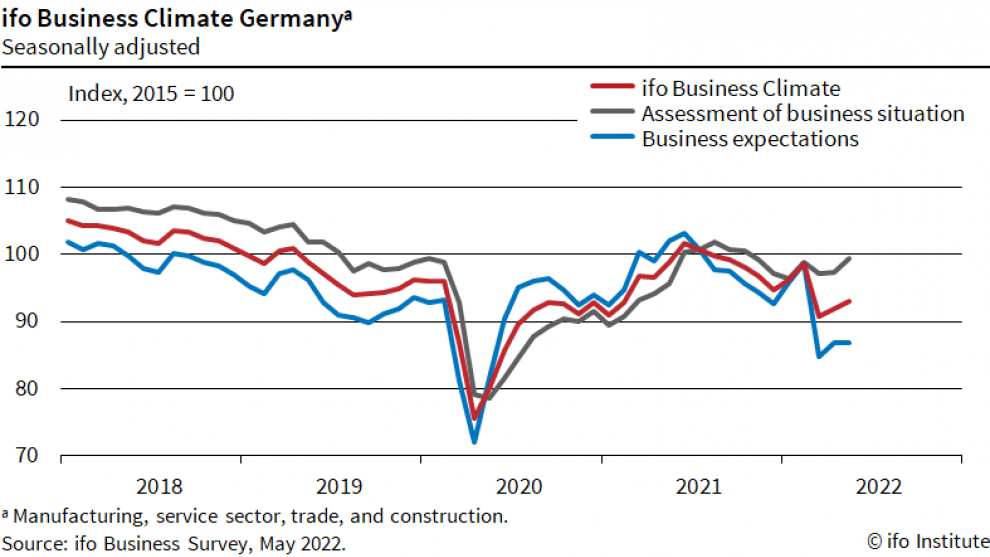
Germany Ifo rose to 93 in May, no observable signs of recession
Germany Ifo Business Climate rose from 91.9 to 93.0 in May, above expectation of 91.4. Current Assessment index rose from 97.3 to 99.5, above expectation of 97.2. Expectations Index ticked up from 86.8 to 86.9, above expectation of 85.8.
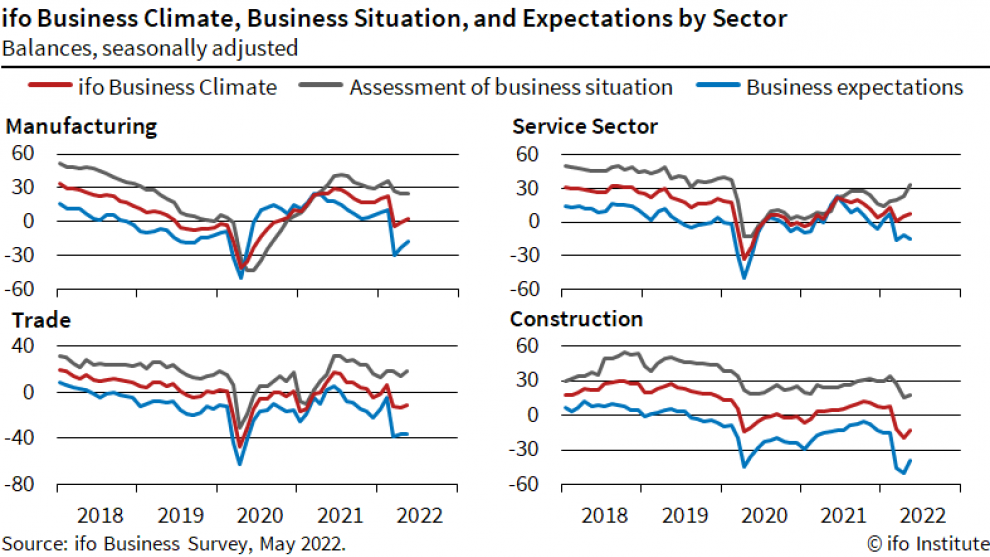
By sector, manufacturing rose from -0.7 to 2.8. Service rose from 5.5 to 8.1. Trade rose from -13.2 to -10.8. Construction rose from -20.0 to -13.4.
Ifo said: "The German economy has proven itself resilient in the face of inflation concerns, material bottlenecks, and the war in Ukraine. There are currently no observable signs of a recession."
Lagarde: ECB Likely in a position to exit negative rates by end of Q3
In a blog post, ECB President Christine Lagarde said she expects net asset purchases under the APP to "end very early in the third quarter". "This would allow us a rate lift-off at our meeting in July, in line with our forward guidance," she said.
Also, "based on the current outlook, we are likely to be in a position to exit negative interest rates by the end of the third quarter," she added.
Looking forward, the "next stage" of monetary policy normalization would "need to be guided by the evolution of the medium-term inflation outlook".
"If we see inflation stabilizing at 2% over the medium term, a progressive further normalization of interest rates towards the neutral rate will be appropriate," she said. "But the pace and overall scale of the adjustment cannot be determined ex ante."
Daily Technical Analysis
EUR/USD
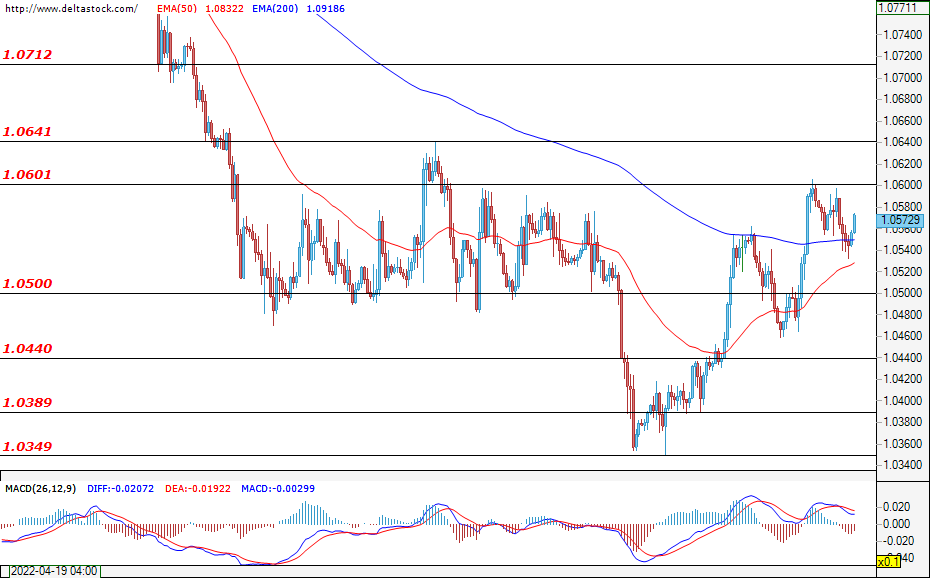
The euro managed to consolidate some of its sharp declines and amassed nearly 200 pips against the dollar last week. On the last trading day, the single European currency failed to maintain its weekly high of 1.0605 and ended the session with a daily correction to 1.0560 at the closing bell. This week, traders' attention will be focused on the data from managers’ assessment of the German production on Tuesday at 7:30 GMT. The expectations are for rates, lower than last time, and if they are negatively received, then we could see a new attack from the bears on the level of 1.0500. However, if the data inspires the bulls to buy the euro even more, then the resistance at 1.0605 could be easily breached and we could expect to witness new local peaks above it.
USD/JPY
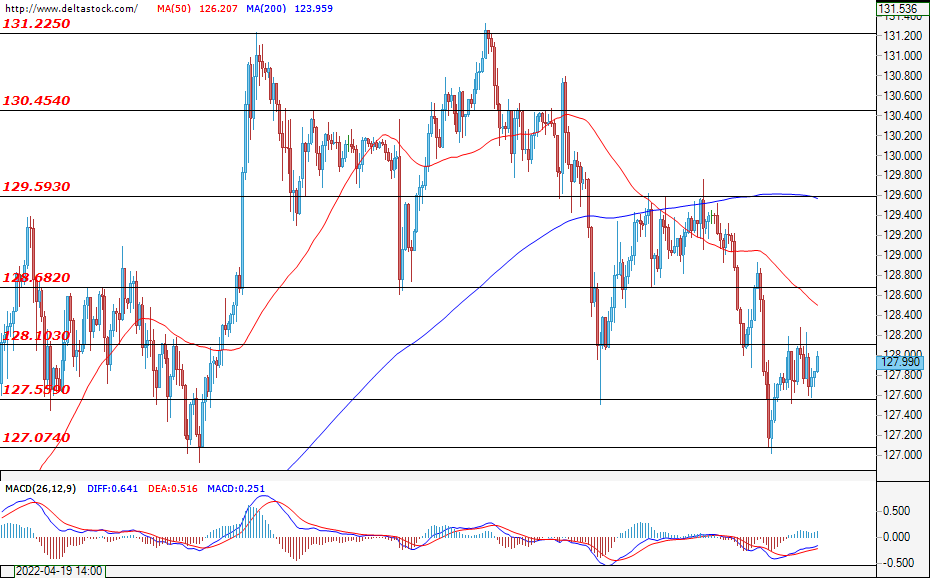
The dollar suffered losses against the yen all week long, but on Friday it managed to stay in a range which did not allow the pair to breach the key level at around 127.55. After a rather hesitant day with weak swing movements, the session ended at around 127.80. Whether the downward trend will continue depends on the statements of Fed governor Jerome Powell, scheduled for Tuesday at 16:20 GMT. If we hear more comments pointing at a further interest rate increase, then the reaction could raise the dollar above 128.10 and continue its monthly uptrend. The opposite scenario, in which the correction deepens below 127.05 in search of a new bottom, should not be ruled out, either.
GBP/USD
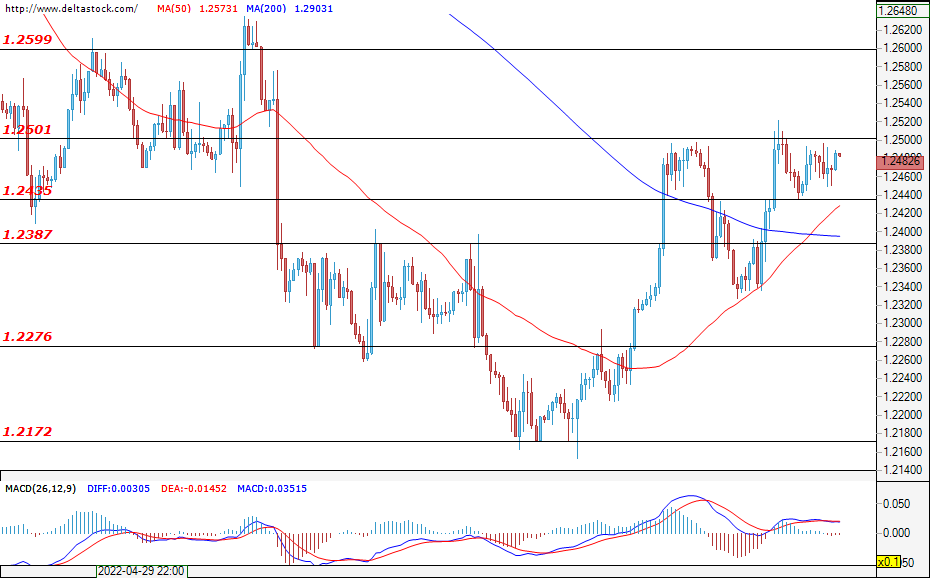
Last week, the pound also managed to accumulate around 200 pips against the dollar, but on the final day failed to maintain its weekly peak of 1.2522 and ended the last trading session within a range that did not allow it to move below 1.2435. As early as Monday, the head of the Bank of England Andrew Bailey will hold a speech at 16:15 GMT, which may set the tone for the price movements throughout the week. Whether his comments on the recession and the even higher inflation will continue and how they will be received by traders remains to be seen. The likelihood of continued growth is significant and prices of 1.2600 could again be reached quickly. Of course, the opposite scenario, in which traders don’t like what they hear and seek a new bottom below last week's range, should not be ruled out, either.
EUGERMANY40
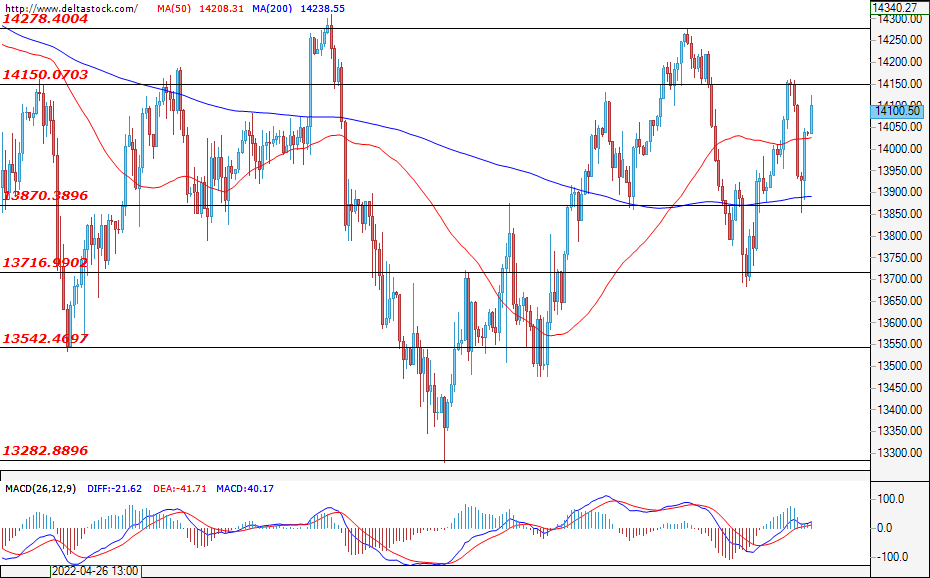
The German index was certainly not lacking in the volatility department over the past week. However, we saw strong upward movements, which were later halved, followed by a second bullish attack, which helped the EUGERMANY40 close at around 14050. The European session helped it rally with 160 points, but the peak was corrected when the U.S. stock market opened. Whether the index has the strength to continue to grow depends on the data for the production evaluation of German managers to be released on Tuesday at 7:30 GMT. If the results are better than expected, then this may motivate the bulls to seek a new peak above 14280, but if the situation in Ukraine and the energy crisis are both holding back any future developments in the rally, then aggressive adjustments below 13870 should not be excluded.
US30
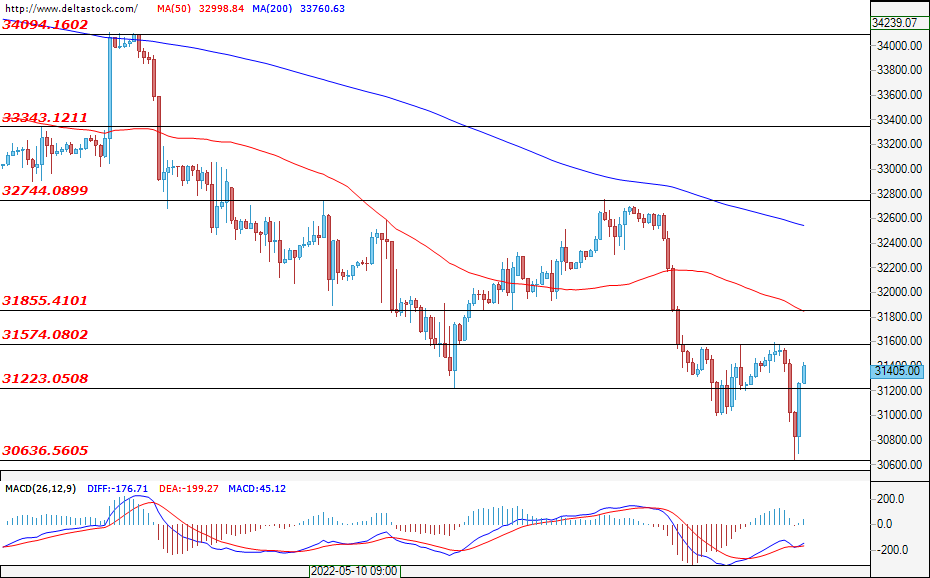
The blue-chip index fell for yet another week due to high inflation in the United States and the more hawkish Fed did not help.. On Friday, the session was quite volatile, characterised by a strong bearish attack that resulted in a new weekly low of 30635, where traders found good prices to enter the market. The session ended with an increase to about 31250 – a key level from last week. The direction of the price trend for the index is expected to become clear after a set of statements and data that include the FOMC meeting on Wednesday and a preliminary census of the U.S. GDP on Thursday. The downward trend has so far remained strong, but movements towards the levels at 32750, where the bears would seek to once more enter the market, are not to be excluded.
USDJPY Rangebound as Bearish Bias Wanes
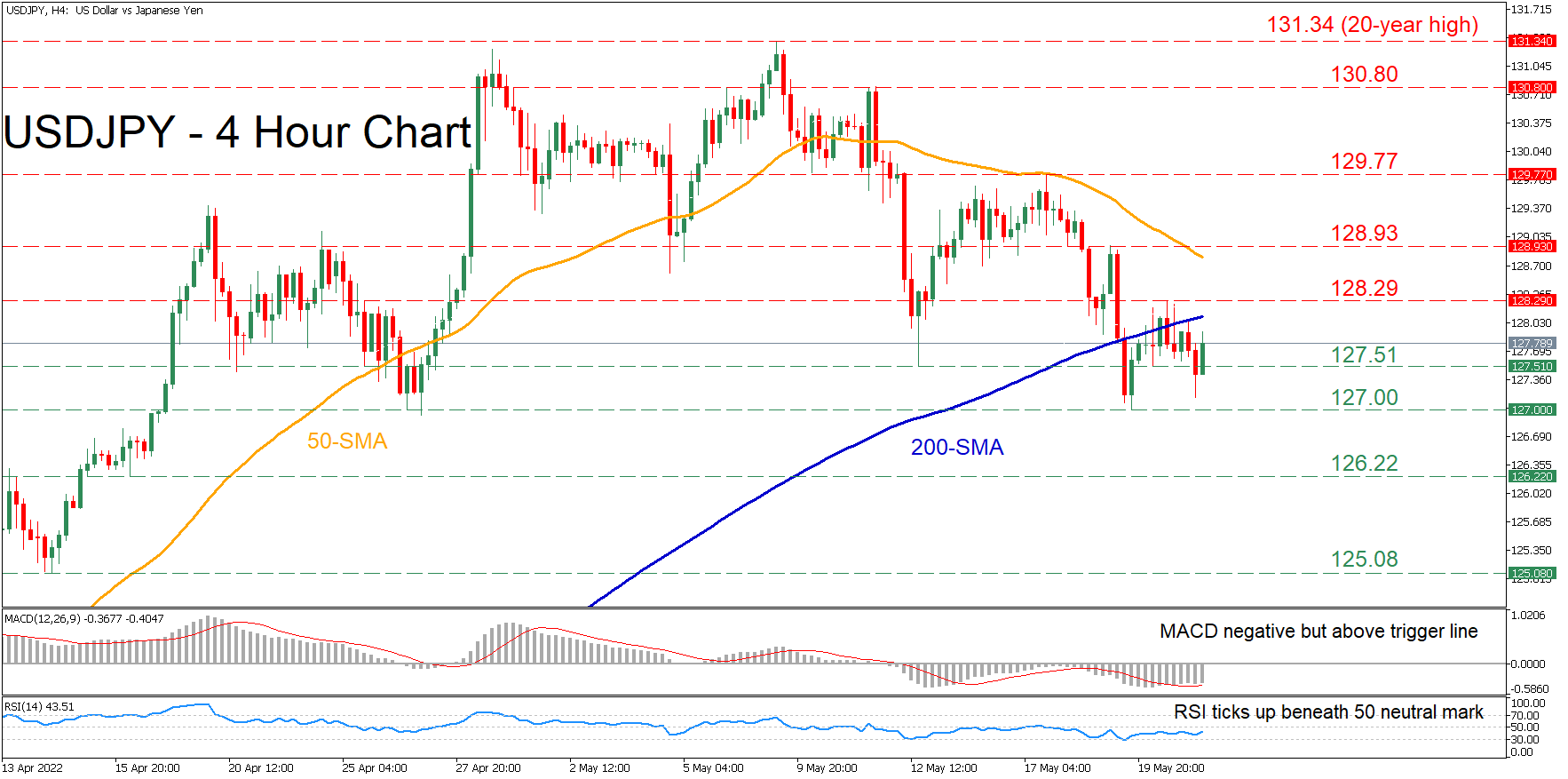
USDJPY has been trending downwards after peaking at the 20-year high of 131.34 in early May. Nevertheless, in the past few four-hour sessions, the pair has managed to halt its decline and is currently moving sideways.
The momentum indicators also suggest that negative momentum is cooling off. Specifically, the MACD histogram has jumped above its red signal line but remains in the negative territory, while the RSI is ticking upwards beneath its 50-neutral threshold.
Should positive momentum intensify, the pair could encounter strong resistance at the 128.29 region, which is the upper boundary of its recent sideways pattern. Piercing through this region, the price advance could then stall at the 128.93 before 129.77 appears on the radar. Higher up, the 130.80 barrier may prove to be a tough obstacle for the bulls.
Alternatively, bearish action could send the price to initially test the 127.51 hurdle. Should that floor collapse, the spotlight might turn to the 127.00 psychological mark. Divining below this level, the price could descend towards 126.22 or lower to challenge the 125.08 barricade.
Overall, USDJPY appears to be on a consolidation phase since its downtrend failed to push lower. Therefore, a jump above the 128.29 ceiling might turn the short-term picture back to positive.
Dollar Continues its Correction, EUR/USD Testing 1.06 Area
Markets
On Friday, markets closed a volatile week in a calm fashion. China reducing the 5-year Prime Loan Rate more than expected gave some comfort that authorities still have some ammunition left to address the economic slowdown. At the same time, it’s evident these measures won’t solve the broader threat of a global cost of living crisis, persistent supply chain issues and other central banks trying to engineer the difficult balance of a soft landing while trying to arrest runaway inflation.
European, and to a lesser extent, US equities tried to regain part of the losses recorded earlier last week. However, it would be an exaggeration to label the move as an outright risk rebound. US equities closed little changed to marginally lower (Nasdaq). Technical factors were also in play. The S&P 500 tested bear market territory (-20% from January top and the 38% retracement of the post-pandemic rebound). Both levels survived in the close, but the battle continues. European indices at the end also only preserved a gain of 0.45% (EuroStoxx 50).
Interest rate markets showed a mixed picture. The US curve bull flattened with yields declining 2.7 bps (2-y) to 6.3 bps (30-y) mainly driven by lower inflation expectations. German yields eased between 3.7 bps (5-y) and 0.5 bps (10-y) while the 30-y rose 4.6 bps. Uncertainty on economic growth further down the road is keeping interest rate markets in a (ST) consolidation pattern after the previous steep rise in yields earlier this year.
The dollar remains strong, but stays away from the cycle peaks reached mid-May. DXY gained marginally (close at 103.15). EUR/USD (close 1.0564) lost a few ticks despite growing consensus on an ECB July rate hike and a mild risk-on. USD/JPY gained marginally (close 127.88). Sterling profited from better than expected UK April retail sales (EUR/GBP close 0.8456 from 0.8487) and signs from BoE governors earlier last week that the BoE will have to raise rates further, even if this is highly uncomfortable given the poor growth outlook.
This morning, Asian equities are trading mixed with Japan outperforming, but China underperforming. A further rise in Beijing Covid cases fuels speculation on further lockdowns with negative impact on growth. US and European equity futures apparently prepare for a corrective rebound. (futures are gaining about 1.0%).
Later today, German IFO business confidence is expected to ease from 91.8 to 91.4. However, tomorrow’s PMI’s probably will be more important for markets. US yields already reversed an important part of Friday’s decline. Even so, we expect more sideways trading as interest rate markets look out how CB’s will react to further signs of cooling in economic activity.
The dollar also continues its correction. DXY (102.69) nears the 102.35 support. EUR/USD is testing the 1.06 area. A sustained rebound north of 1.0642 would be a first sign that downside pressure is easing. I
n an interview with Dutch television this weekend, ECB’s Lagarde again suggested an ECB rate lift-off in July (starting a few weeks after ending APP) but downplayed the chances on a 50 bps hike as was suggested by Dutch ECB Member Knot last week.
News Headline
Rating agency S&P Global reaffirmed South Africa’s rating at BB-, three notches below investment grade but raised the outlook from stable to positive. S&P Global warned that rising inflation and global monetary tightening could accelerate foreign portfolio outflows. However, recent structural reforms, contained fiscal expenditures and favorable terms of trade (leading to a net external creditor position) along with a flexible currency and deep capital markets will help mitigate those external risks, S&P added. The South African rand strengthens in a first reaction this morning though there’s at least as much general dollar weakness involved. USD/ZAR trades around 15.80.
Australia’s center-left Labor Party ousted now-former PM Morrison’s conservative coalition at Saturday’s general election. The new prime minister, Albanese, was sworn in during a short ceremony today even as the tally has not yet been concluded. Albanese is expected to fly out to Japan later on Monday to have one-on-ones with some of the country’s most important partners, including the US, India and Japan. It is currently unclear whether Labor has secured a majority in the 151-seat House of Representatives or if it will have to work with newly-elected minor parties and independent lawmakers. AUD/USD extends its recent bottoming out this morning, also on general USD weakness. The pair moves closer to the 0.71 big figure.
Gold Rises Back above 200-day SMA
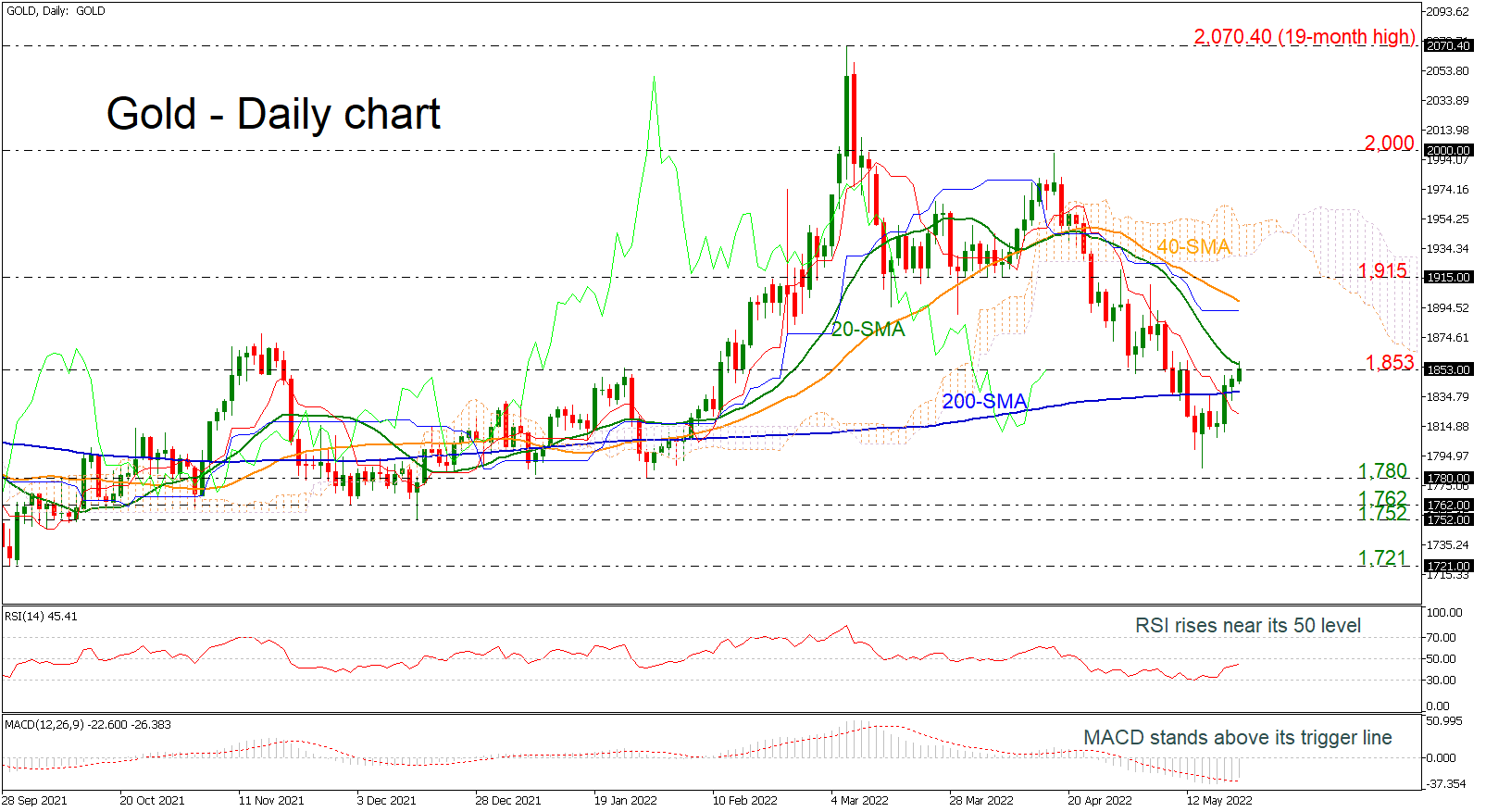
Gold prices are advancing above the 200-day simple moving average (SMA) and find resistance near the 1,853 level and the 20-day SMA at 1,857. The technical indicators are showing some signs for more positive actions. The RSI is approaching the neutral threshold of 50, while the MACD rises above its trigger line.
Should the pair manage to strengthen its positive momentum, the next resistance could come around the 40-day SMA at 1,900 ahead of the 1,915 barrier. A break above this area would shift the bias to a more bullish one and open the way towards the upper boundary of the Ichimoku cloud at 1,960 and the 2,000 psychological mark.
However, if prices are unable to break above the 20-day SMA, the risk would shift back to the downside, with the 200-day SMA at 1,837 coming into focus, as well as the 1,780 support. A drop lower would signal a resumption of the two-month declining movement, meeting the 1,752-1,762 support zone.
All in all, the yellow metal has been developing within a descending movement since March 8 and only a jump above the 2,000 round number may shift the outlook back to bullish again.
A Mixed Picture on the Markets
Market movers today
The week is starting slowly on the data front with no major releases today apart from the IFO survey for May in Germany.
This week, focus will turn to the PMIs tomorrow, FOMC minutes on Wednesday, and the personal consumption expenditure report (PCE) which both will give insights into the goods and service consumption as well as the Fed's preferred inflation measure, PCE core.
Markets will also follow signals on the Monkeypox, a type of viral infection, which the WHO sounded alarm over during the weekend as 92 cases have been identified in 12 countries which are normally not detecting this infection.
The 60 second overview
In China, Beijing has seen a record number of Covid cases and thus the risk of a lockdown in Beijing is rising, The zero Covid policy has hit economic growth in China and focus continues to be on easing monetary policy in China. So far, the Chinese central bank cut the key interest rate for long-term loans from 4.6% to 4.45% on Friday last week. However, the Chinese stock indices are still down this morning, while other Asian markets are rising.
The focus on inflation is likely to rise given the combination of a possible food crisis as well as very hot weather. In South Asia the temperature has been rising and scientists are expecting a significant heat wave in the US. A similar picture is possible also in Europe and power use will surge as homes and businesses will increase the use of air conditioners. Hence, both food and electricity prices are likely to remain high and the possible base effect may take longer to recede.
ECB seems set on the first rate hike in July after Lagarde's comments on Dutch television during the week-end. She said that a hike may come "weeks" after net bond-buying ends early next quarter. However, the risk of a 50bp rate hike was "downplayed" given the uncertainty regarding the economic outlook.
Equities: Another volatile week came to an end Friday. US stocks ended close to unchanged but looking at the intraday moves equities were higher by more than 1% and lower by more than 2% during the trading session and hence the intraday vol is far from over. Healthcare a clear outperformer and consumer discretionary clear underperformer in a defensive rotation. In US Dow +0.03% (down for eighth-straight weekly decline, longest since 1923), S&P 500 +0.01%, Nasdaq -0.3% and Russell 2000 -0.2%. Asian stocks this morning mostly higher but China tech is dragging Hong Kong and mainland China lower. US and European futures higher this morning in the ball park of 1%.
FI: It has again been a very volatile week in the global fixed income markets with some significant moves in global yields. 10Y US treasuries have moved between 2.78% to 3% and the curve 2-10Y flattened some 11bp. The German yield curve also flattened between 2Y and 10Y, but from the short-end of the curve. 5Y5Y US inflation forward remains very volatile, while the 5Y5Y EUR inflation forward have declined some 10bp.
FX: USD/JPY finished last week below 128 and EUR/USD close to 1.06 as USD suffered a rare setback. EUR/SEK traded around the 10.50 level and EUR/NOK around the 10.20-10.35 level.
Credit: Although initially having been in risk-on mode on Friday, credit markets ended in a mixed mood following the opening of US equity indices. Itraxx Europe widened 0.7bp to close at 98.9bp while Itraxx Xover widened 2.7bp to close at 480.5. Both markets ended the week below their intraweek highs of 101.4 and 493.2, respectively.
Gold Rallies, as US Dollar Falls
The week starts with an improved sentiment. The S&P500 just avoided to close in the bear market last Friday, but the index sank its teeth into the bear zone for the first time since the pandemic selloff, and fell for the seventh straight week, for the first time since 2001.
US futures are in the positive this Monday, as some investors see opportunity in the actual market dip. But the trading conditions will likely remain choppy, and gains may remain short lived.
In the medium run, there is a stronger case building for a further retreat in the S&P500 stocks. Investors now eye a return to the 3500/3600 range, according to the latest Bloomberg survey.
FOMC minutes
On Wednesday, investors will hunt for any hints of an eventual 75bp hike from the FOMC in the coming meetings.
At this point, most of the Federal Reserve (Fed) hawkishness has already been broadly priced in - including a small chance of a 75bp hike in next meeting. Therefore, we should not see a significant, further erosion in the market mood post-minutes.
But again, that doesn’t mean that the mood is good enough for a sustained market recovery.
Oil rebounds
The possible end of the Shanghai lockdown, and the European reluctance to ban Russian oil are driving oil prices higher this morning. US crude is preparing to test the 113pb mark at the of writing.
It’s difficult to say that there is a solid upside potential in oil at the current levels, as the recession worries, and China’s zero Covid policy remain serious threats to the global demand. Therefore, the $115pb should continue act as a solid short-term resistance, and we shall see the rally fading into the $120pb, if the $115 level is cleared.
On the downside, the 50-DMA, near $105 per barrel, should continue providing a solid support to any price pullback.
Gold clears 200-DMA offers
Gold cleared the 200-dma to the upside. The latest positive push paves the way for a further rise toward the $1875/1880 range. The recent retreat in the dollar and the US yields are what support the higher valuation in gold since last week, therefore any change of direction on the dollar, and yields front could stop the rally.
GBP/JPY Daily Outlook
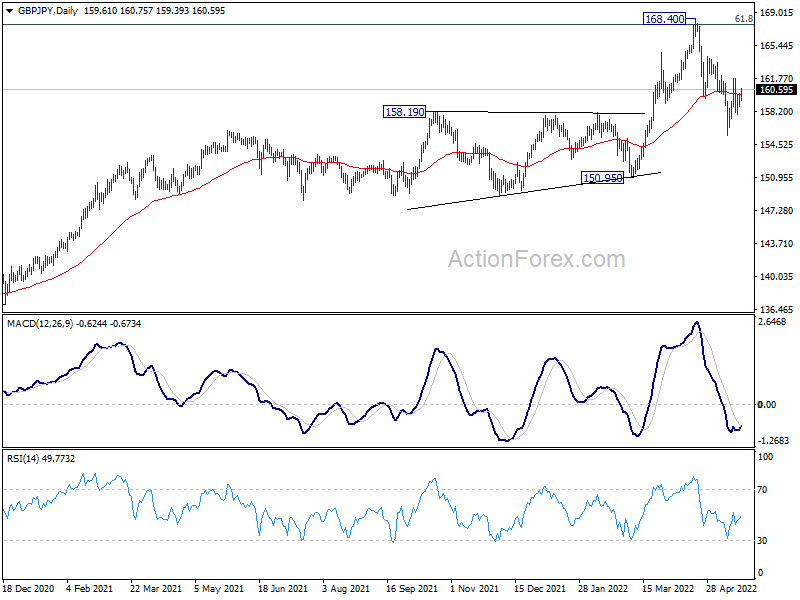
Daily Pivots: (S1) 158.96; (P) 159.58; (R1) 160.42; More...
Intraday bias in GBP/JPY remains neutral at this point. On the downside, break of 155.57 will extend the correction towards 150.96 key structural support. Nevertheless, on the upside, firm break of 162.16 will indicate that the correction has completed, and bring retest of 168.40 high next.
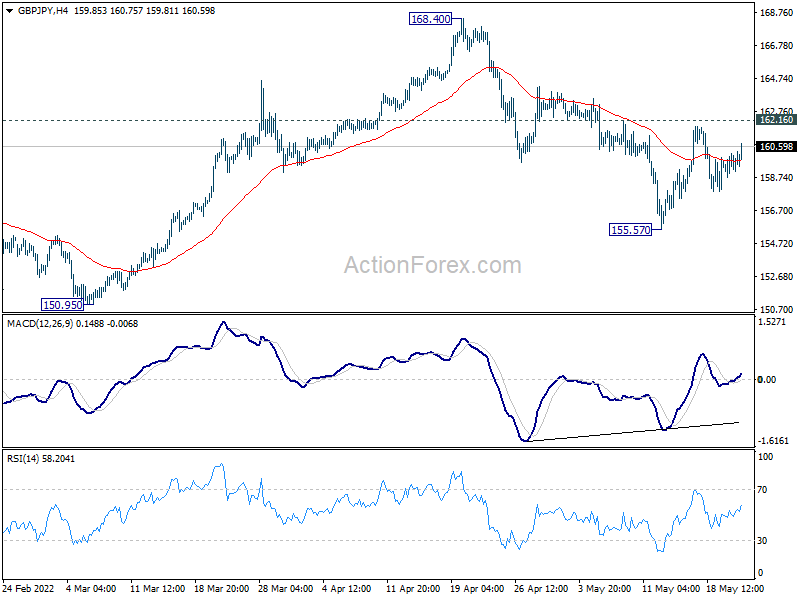
In the bigger picture, up trend from 123.94 (2020 low) is still in progress. Sustained break of 61.8% retracement of 195.86 (2015 high) to 122.75 (2016 low) at 167.93 will be a long term bullish signal, and could pave the way back to 195.86 high. This will now remain the favored case as long as 150.95 support holds, even in case of deep pull back. However, firm break of 150.95 will indicate rejection by 167.93, and bearish trend reversal.