Sample Category Title
GBP/USD Daily Outlook
Daily Pivots: (S1) 1.2454; (P) 1.2511; (R1) 1.2550; More...
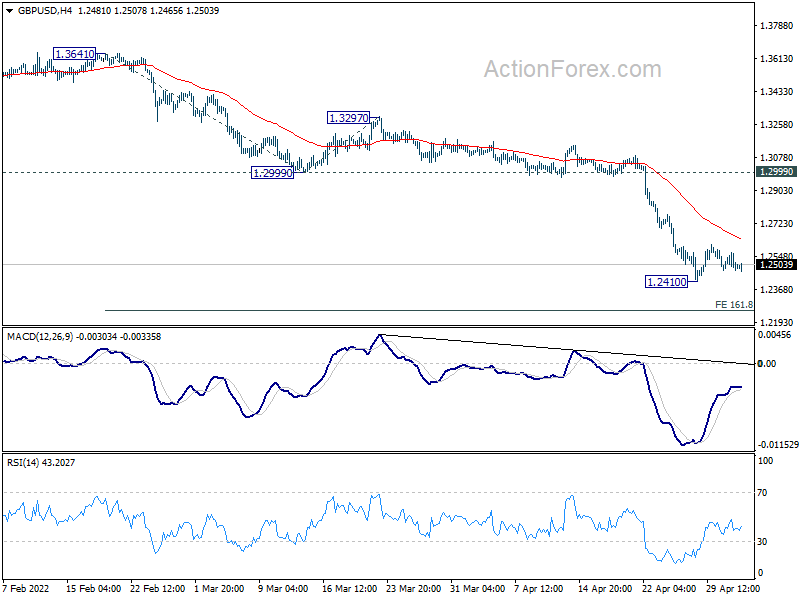
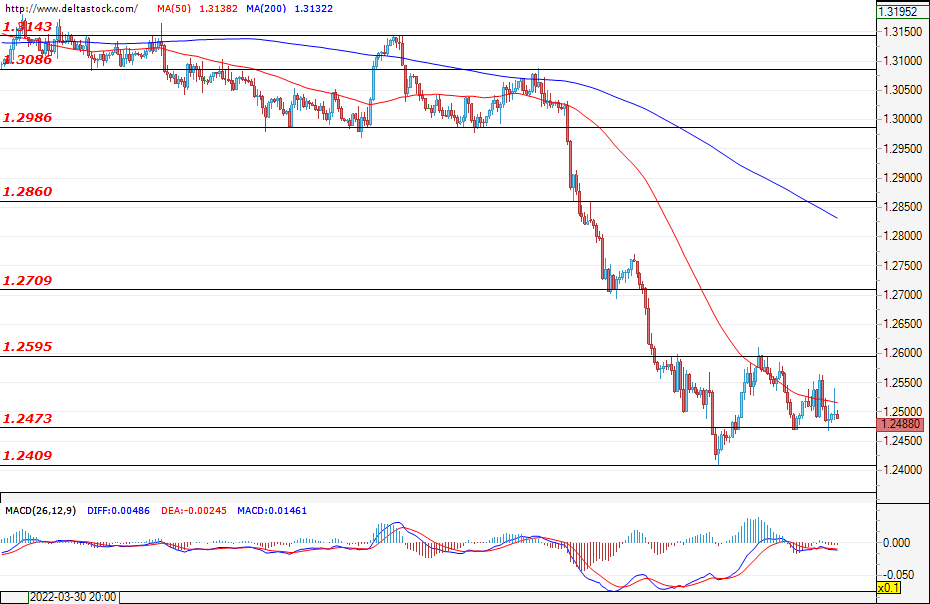
GBP/USD is staying in consolidation from 1.2410 and intraday bias remains neutral for the moment. In case of stronger recovery, upside should be limited below 1.2999 support turned resistance. On the downside, break of 1.2410 will target 161.8% projection of 1.3641 to 1.2999 from 1.3297 at 1.2258.
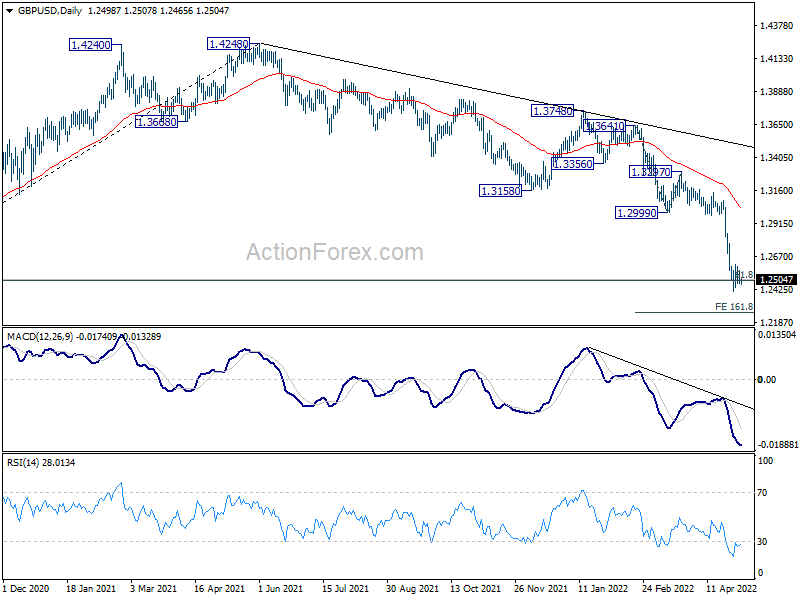
In the bigger picture, rise from 1.1409 (2020 low) has completed at 1.4248, ahead of 1.4376 long term resistance (2018 high). Based on current momentum, fall from 1.4248 is probably the start of a long term down trend. The break of 61.8% retracement of 2.1161 to 1.1409 at 1.2493 is affirming this bearish case too. For now, deeper decline would be seen as long as 1.3158 support turned resistance holds. Next target is 1.1409 low.
USD/CHF Daily Outlook
Daily Pivots: (S1) 0.9740; (P) 0.9770; (R1) 0.9819; More....
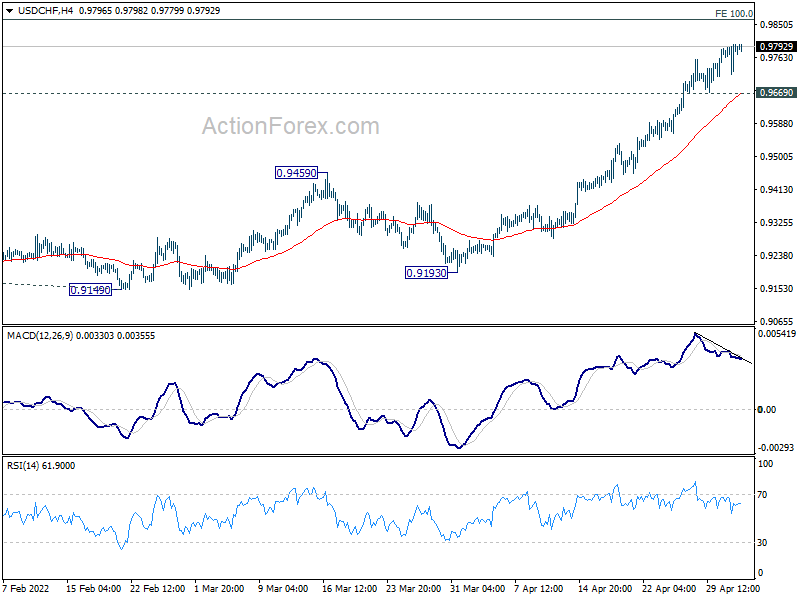
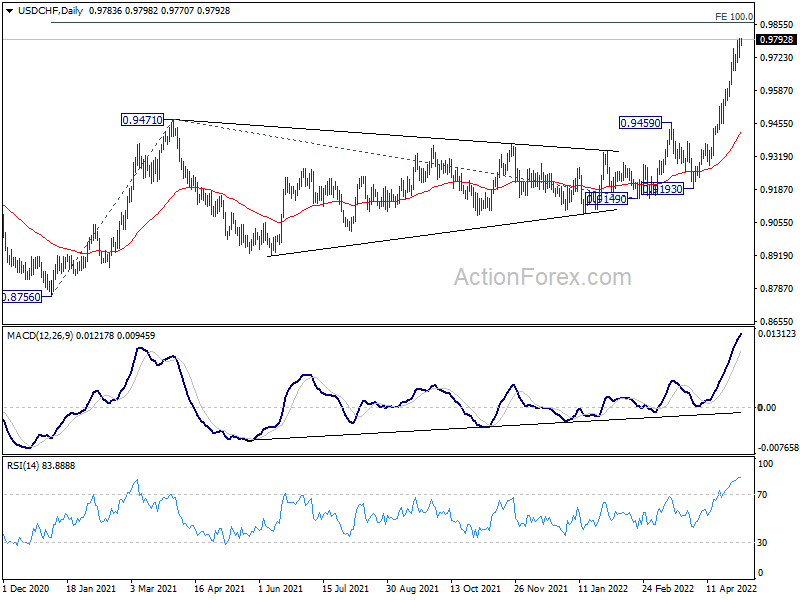
Intraday bias in USD/CHF stays on the upside despite loss of upside momentum. Current rally should target next medium term projection level at 0.9864. On the downside, however, considering bearish divergence condition in 4 hour MACD, break of 0.9669 minor support should indicate short term bottoming, and turn bias back to the downside for deeper pull back.
In the bigger picture, down trend from 1.0342 (2016 high) should have completed with three waves down to 0.8756 (2021 low) already. Rise from 0.8756 is likely a medium term up trend of its own. Next target is 100% projection of 0.8756 to 0.9471 from 0.9149 at 0.9864. This will now remain the favored case as long as 0.9459 resistance turned support holds.
USD/JPY Daily Outlook
Daily Pivots: (S1) 129.79; (P) 130.04; (R1) 130.38; More...
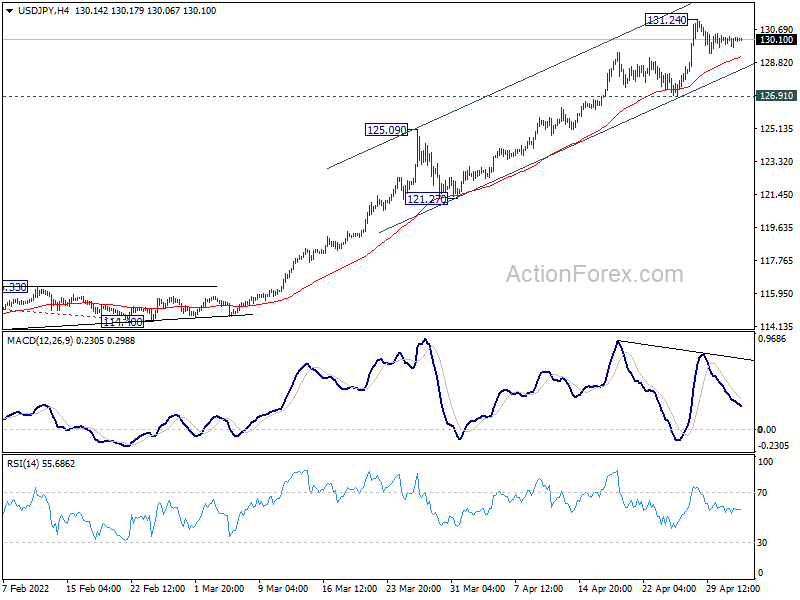
USD/JPY is staying in consolidation from 131.24. Intraday bias stays neutral at this point. Near term outlook remains bullish with 126.91 support intact. Break of 131.24 will resume recent up trend to 261.8% projection of 109.11 to 116.34 from 114.40 at 133.26. However, considering bearish divergence condition in 4 hour MACD, break of 126.91 will confirm short term topping and turn bias back to the downside for a correction.
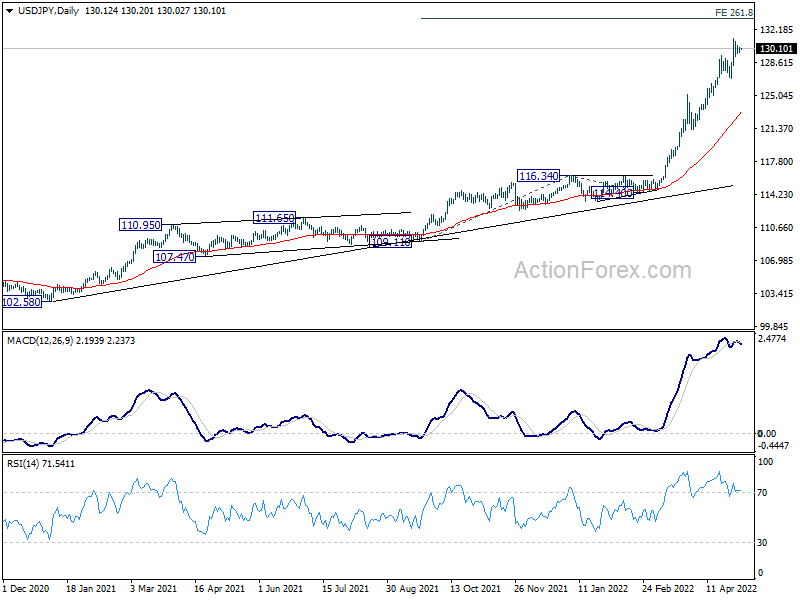
In the bigger picture, current rally is seen as part of the long term up trend form 75.56 (2011 low). Sustained trading above 61.8% projection of 75.56 (2011 low) to 125.85 (2015 high) from 98.97 at 130.04 will pave the way to 100% projection at 149.26, which is close to 147.68 (1998 high). For now, this will remain the favored case as long as 121.27 support holds.
USD/CAD Daily Outlook
Daily Pivots: (S1) 1.2841; (P) 1.2878; (R1) 1.2915; More...
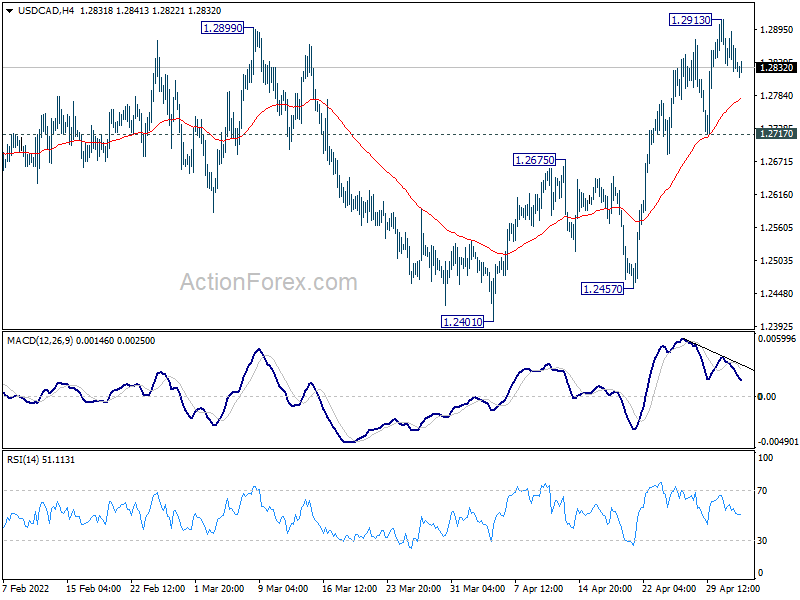
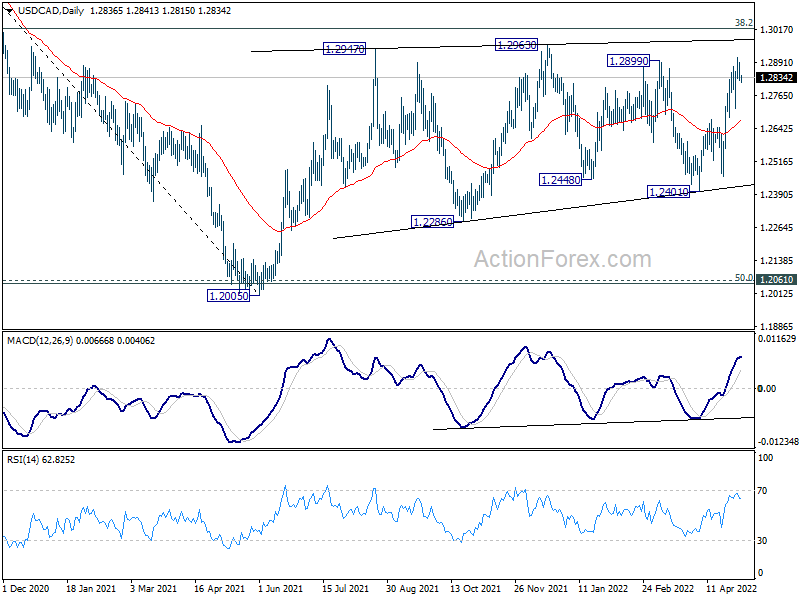
Intraday bias in USD/CAD is turned neutral as it retreat after hitting 1.2913. Some consolidations could be seen but further rally is expected as long as 1.2717 support holds. Above 1.2913 will resume recent rally to 1.3022 fibonacci level next. Decisive break there will carry larger bullish implications.
In the bigger picture, focus stays on 38.2% retracement of 1.4667 (2020 high) to 1.2005 (2021 low) at 1.3022. Sustained break there should confirm that the down trend from 1.4667 has completed after defending 1.2061 long term cluster support. Further rise would then be seen towards 61.8% retracement at 1.3650. However, rejection by 1.3022 will maintain medium term bearishness. Break of 1.2005 will resume the down trend from 1.4667 and that carries larger bearish implications too.
Too Early to Anticipate a USD Correction
Markets
Yesterday’s RBA U-turn as it raised the policy rate by a bigger than expected 25 bpn inaugural rate hike, set the tone for global bond markets. European yields continued their journey north with the Euro 2-y swap and the German 10-y yield touching the psychological barrier of 1.0%. The upward momentum eased during the day. Even so, European markets continue to push the ECB for a similar U-turn as taken by the RBA and the Riksbank recently. The German yield curve flattened with the 2-y rising 3.3 bp while the 30-y lost 5.2%.
Later in the evening, ECB’s Schnabel in an interview with Handelsblatt newspaper spoke more hawkish than her colleague de Guindos. She said ‘It’s not enough to talk now, we have to act’. She sees a July rate hike as possible as the ECB must prevent high inflation from taking hold of expectations.
US bond markets held a similar intra-day pattern as investors were counting down to the Fed policy decision. The US 2-y yield rose 5.1 bps. The 30-y declined 2.4 bps. So markets apparently don’t expect Fed Powell to backtrack on his hawkish tone. Record high JOLTS job openings also provided further ‘anecdotical’ evidence the labour market still allows the Fed to continue its frontloading approach.
Equity investors were cautious to put strong directional bets ahead of the FOMC decision. Major US equity indices gained between 0.2% and 0.5%. The Euro Stoxx 50 slightly outperformed (0.77%).
The dollar held strong within reach of recent peak levels. However, the DXY index (close 103.46) failed to clear last week low while EUR/USD still avoided a break below the 1.0472/1.05 support area. However, the picture remains fragile.Today, eco data including the US ADP labour market report, the services ISM or EMU retail sales most likely will be overshadowed by this evening’s Fed policy decision. Anything below a 50 bps rate hike would be a big surprise and more similar steps are expected to follow at least in the next 2-3 meetings. The FOMC will also provide the details of its balance sheet roll-off that will start in the very near future and soon reach a cruise speed of a $95bn monthly reduction.
The market currently sees a peak in the Fed rate hike cycle near 3.25% in H1 2023. So quite some tightening is already discounted. That said, with inflation at current high levels and a red hot labour market, we don’t see any reason for Powell to already rein in market expectations on policy tightening.
So we expect US short-term yields to stay at current elevated levels. LT yields still might feel support from a further rise in real yields due to QT. In this context, it’s also too early to anticipate a USD correction, especially against the likes of the euro and the yen where CB’s still have to bring clarity on their commitment to address inflationary risks.
News Headlines
The New Zealand Q1 labour market report showed a stable seasonally adjust unemployment rate at 3.2%, one of the lowest on record since the series began in 1986. The number of employed people rose marginally by 2k to 2 826 000, but the number of actual hours worked fell. More people stayed away from work due to sickness with the Covid-pandemic to blame. The labour force participation rate declined from 71.1% in Q4 2021 to 70.9%. Annual wage inflation measured by the labour cost index rose to 3% in Q1 2022, up from 2.6%, the highest level since Q1 2009. The kiwi dollar didn’t profit from the decent data which strengthen the case for a continuation of the RBNZ’s tightening cycle. NZD/USD is broadly stable around 0.6430. The pair last week lost key support around 0.6530 (previous YTD low) and 0.6467 (50% retracement on 2020/2021 upleg). In a separate report (semi-annual financial stability report), the RBNZ warned for a potentially sharp correction in house prices with broad economic implications because of rising interest rates and higher living costs.
The March JOLTS (Job Openings and Labour Turnover Summary) report showed the number of US job openings at a series high of 11.55 million compared to 11.35 million at the last business day of February. The job openings rate (number of job openings divided by employment plus job openings) was little changed at 7.1% (equal to December 2021 high). The number of new hires cooled slightly to 6.7mn (hires rate at 4.5%) while the number of workers quit their jobs rose to a record 4.5mn (quits rate 3%). The data continue to point to an extremely tight US labour market, allowing the Fed to embark on an aggressive tightening cycle..
Will NZDUSD Confirm a Bullish Star Doji Pattern?
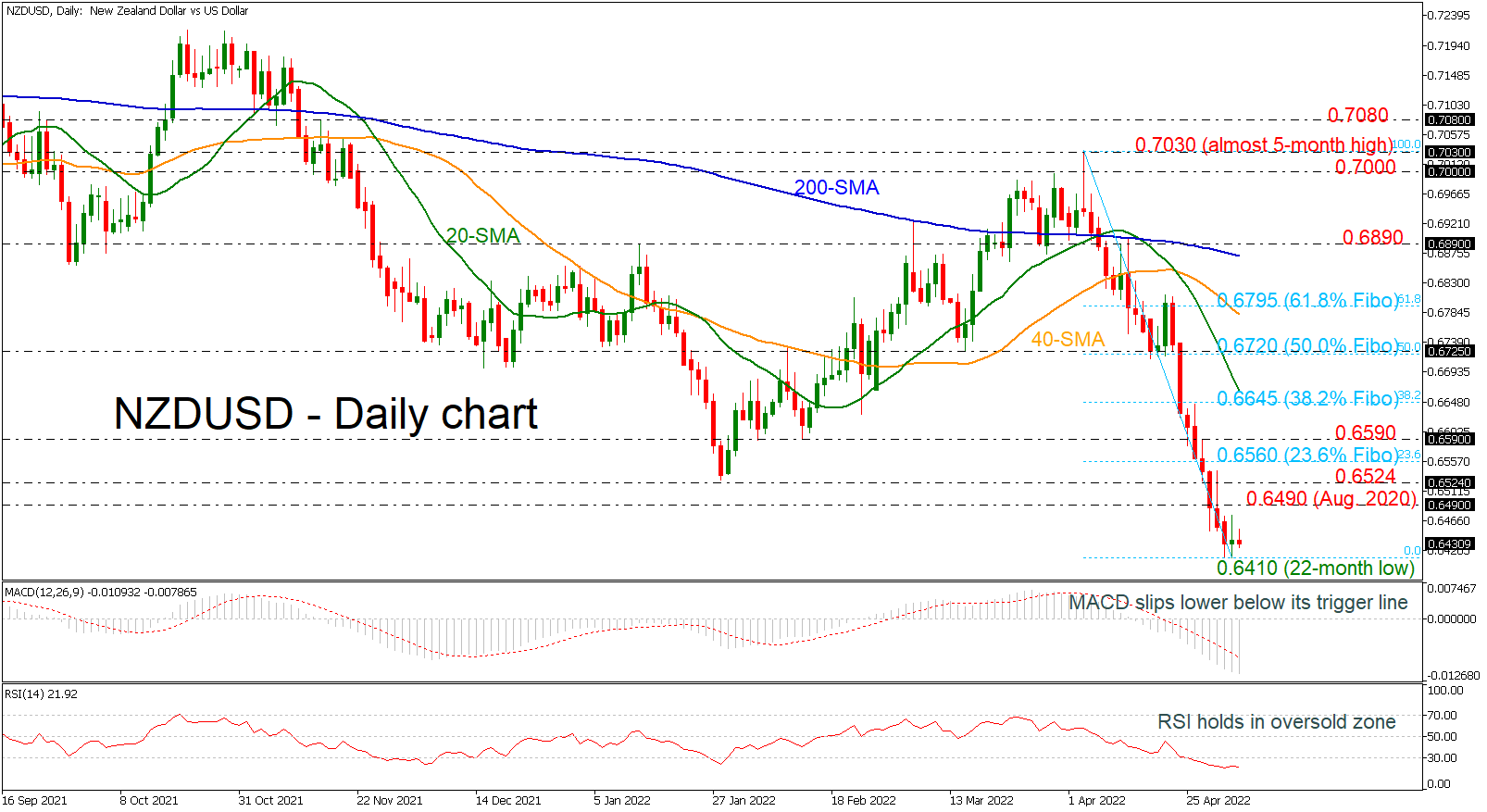
NZDUSD is creating a bullish star doji on Tuesday after it dropped to a new 22-month low of 0.6410 and if the price heads higher, it could confirm a positive move in the short-term timeframe.
However, the technical indicators are still suggesting a negative bias. The MACD oscillator is still strengthening its bearish move below its trigger and zero lines, while the RSI is standing in the oversold territory and is sloping down.
Should prices decline, immediate support could be found around 0.6370, an area which has provided as strong support in the past, taken from the trough on June 2020. Then a leg below that level, the pair could meet the 0.6175 barrier, achieved in April 2020.
However, if the market manages to pick up speed, the 0.6490 level could offer nearby resistance ahead of 0.6524. A significant close above the latter would break the 23.6% Fibonacci retracement level of the down leg from 0.7030 to 0.6410 at 0.6560 before jumping to 0.6590, raising chances for further increases. In this case, prices could climb towards the 38.2% Fibonacci of 0.6645.
In the medium-term, the outlook remains negative since prices hold below all the moving average lines and the bearish cross between the 20- and the 200-day SMA stays in place.
Daily Technical Analysis
EUR/USD
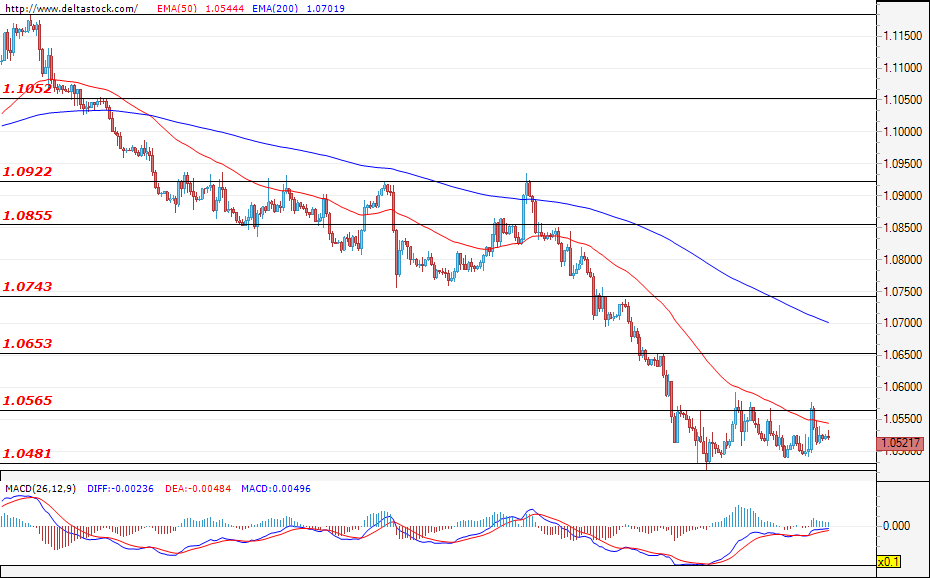
After the strong depreciation of the euro against the U.S. dollar from 1.0910 to 1.0520, the currency pair entered a consolidation phase in the narrow range of 1.0480 – 1.0565. During yesterday’s trading session, the bulls unsuccessfully attacked the resistance at 1.0565, which led to additional losses for the EUR towards the level at around 1.0510. The market is still failing to find a clear direction and the expectations for today’s trading session are for the bears to attack the critical support at 1.0480, where a breach would most probably lead to a resumption of the long-term downtrend. In case this scenario is realised and the pair holds its position below 1.0480, then the next target for the sellers should be the support at 1.0450, followed by the psychological level at 1.0400. In the opposite direction, only a successful breach of the resistance at 1.0565 may lead to a corrective movement towards the next resistance at 1.0653. The most important news for investors today is the expected Fed Interest Rate decision (today; 18:00 GMT) and the follow-up press conference at 18:30 GMT, as well as the data regarding the change in ADP non-farm employment for the United States at 12:15 GMT.
USD/JPY
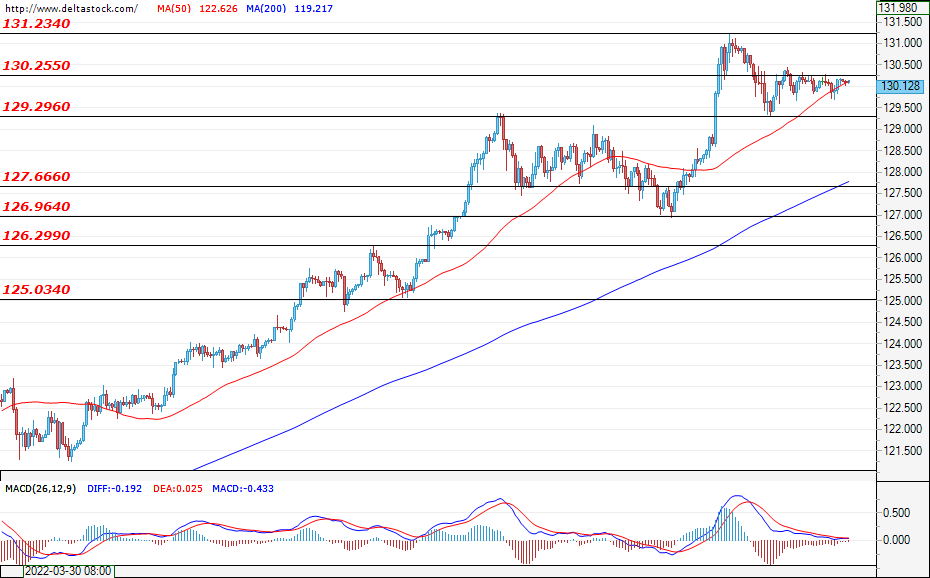
Low volatility is observed since the beginning of the week and the pair is trading in the narrow range of 129.70 – 130.30. A breach of the local resistance at 130.30 may lead the pair towards a test of the next important resistance at 131.23. A successful breach of the mentioned resistance may resume the uptrend and inch the price towards the level of 133.00, which was last reached in 2022. On the other hand, if the bears prevail, then a correction and a deepening of the sell-off towards the support at 127.66 is not excluded. However, such a decline could be expected only if the support at 129.29 is breached.
GBP/USD
The situation with the GBP/USD is similar to that of the EUR/USD, and at the time of writing, the pair is situated just above the key support at 1.2473. In case the bears take control and overcome this level, then an impulsive downward movement and a test of the next support at 1.2400 could be expected. However, if the mentioned support resists the sellers’ pressure, then we could expect an upward movement towards 1.2600.
EUGERMANY40
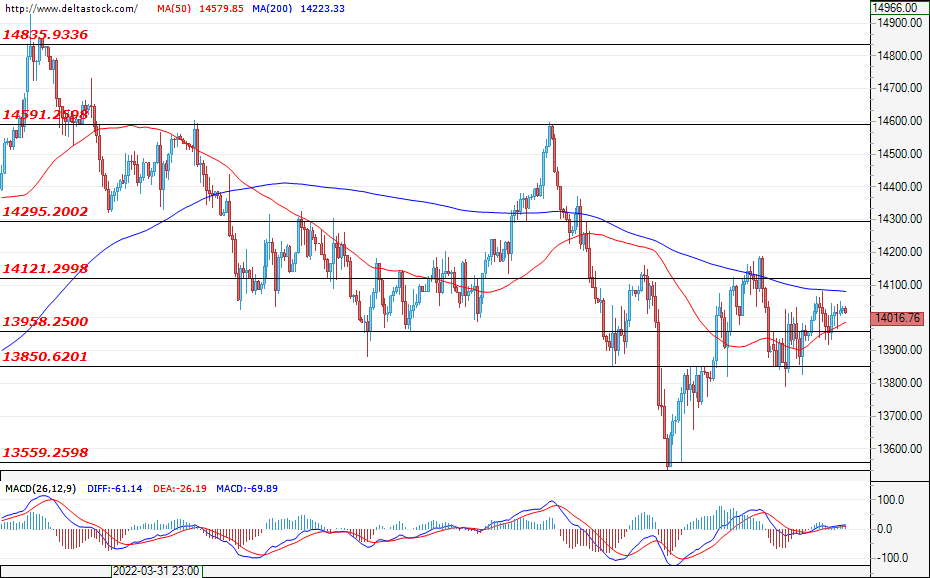
During the previous trading session, the German index managed to remain above the support at 13958, but the buyers could not gain enough momentum to reach the resistance at 14121. The current market sentiment is rather neutral and the expectations for today’s trading session are for the price of the index to fluctuate in the channel of 13958 – 14121. However, in case the bulls manage to take control over the market and violate the support at 14121, then an appreciation towards 14295 may be expected. In the downward direction, only a successful breach of the support at 13958 could possibly head the price towards the next support at 13850.
US30
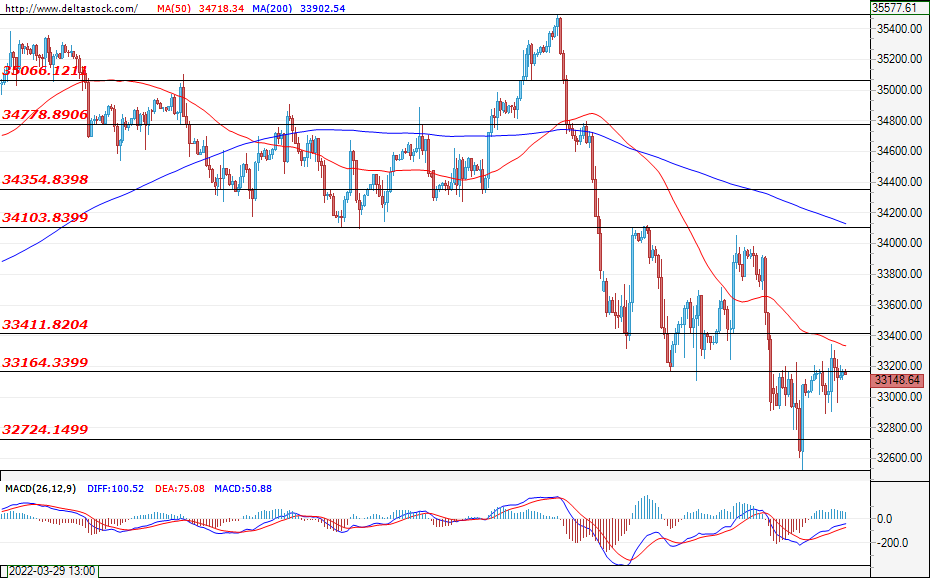
At the time of writing this analysis, the index is headed towards a test of the support at 33164 and an eventual breach of this level would head the price towards a test of the next support at 33411. However, the market sentiments remain negative and the forecasts are for this support to resist the buyers’ pressure and for the sell-offs to resume, heading the index towards a new test of the critical support at 32724. Today, an increase in market volatility can be expected around the announcement of the Fed Interest Rate Decision (18:00 GMT), as well as during the follow-up FOMC press conference (18:30 GMT).
UK 100 Grinds Resistance
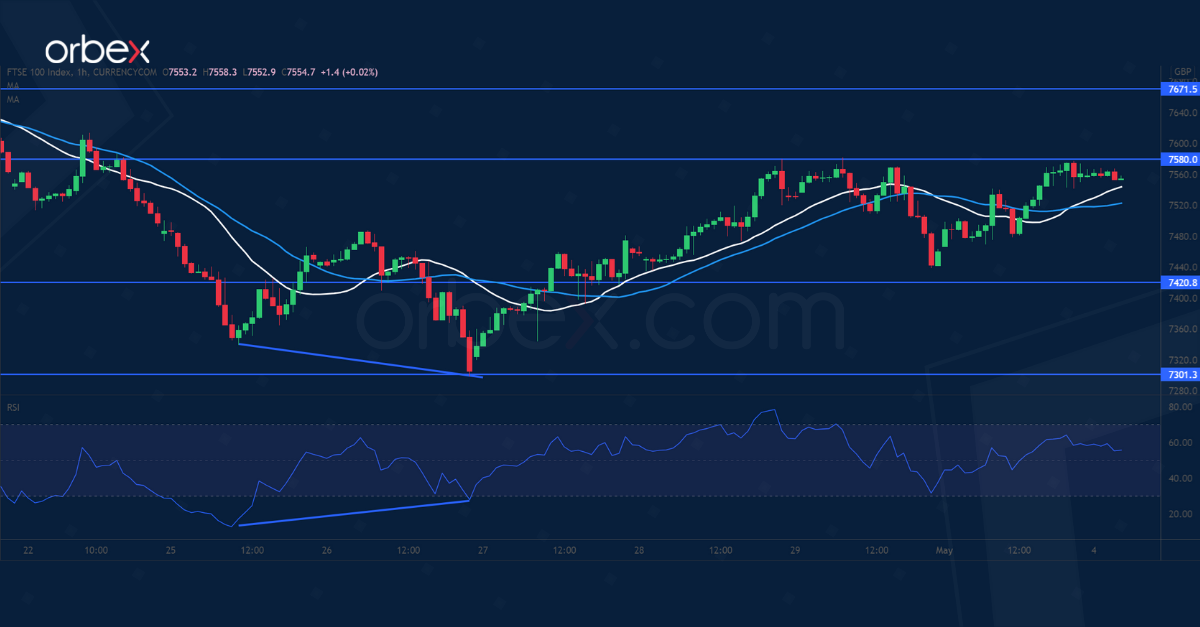
The FTSE 100 rallies ahead of the BOE meeting on Thursday. A bullish RSI divergence could be a soothing sign for the bulls as it indicates a slowdown in the sell-off.
A bounce above 7490 prompted sellers to cover their positions, further easing the downward pressure. 7580 is the next hurdle and its breach would bring the index back to the double top at 7670, where a breakout could resume the uptrend in the medium-term.
7420 is immediate support and 7300 an important level to keep the recent rebound intact.
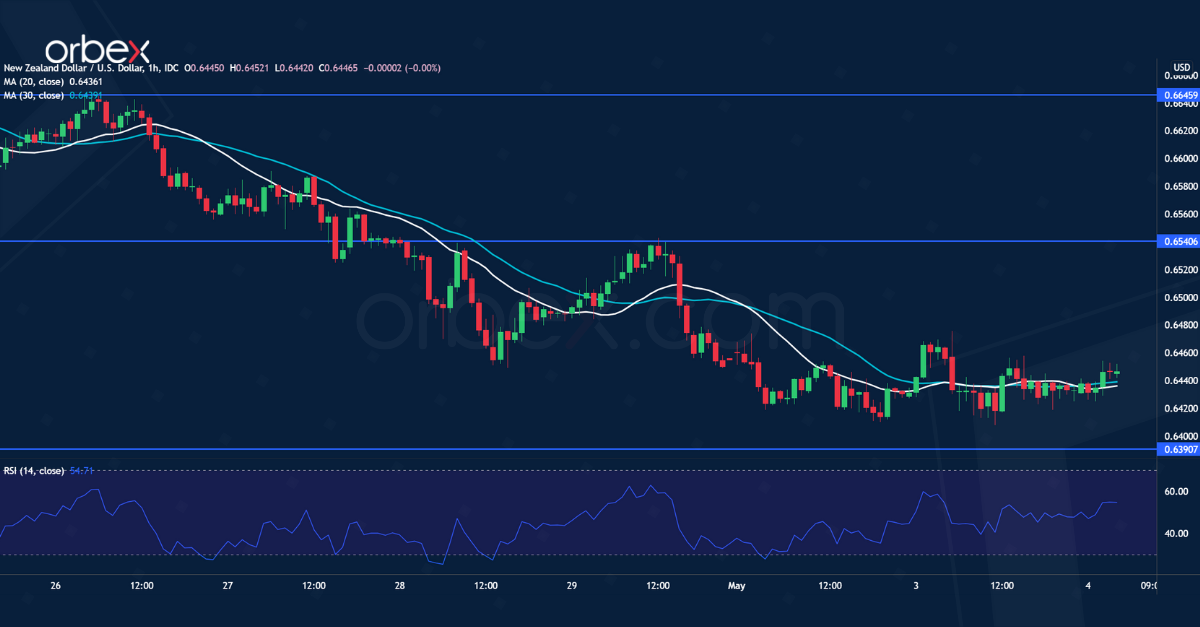
NZD/USD Becomes Overextended
The New Zealand dollar steadied after the Q1 jobless rate met expectations. The break below January’s lows at 0.6540 sent the kiwi into a free fall.
On the daily chart, a bearish MA cross exacerbated the downward pressure, though the RSI’s incursion into the oversold area may temper the bearish drive.
A rebound to 0.6540 may be necessary to recover from the overextension, which could be an opportunity to sell into strength. June 2020’s low at 0.6390 would be the next target when momentum returns.
AUD/USD Struggles to Rebound
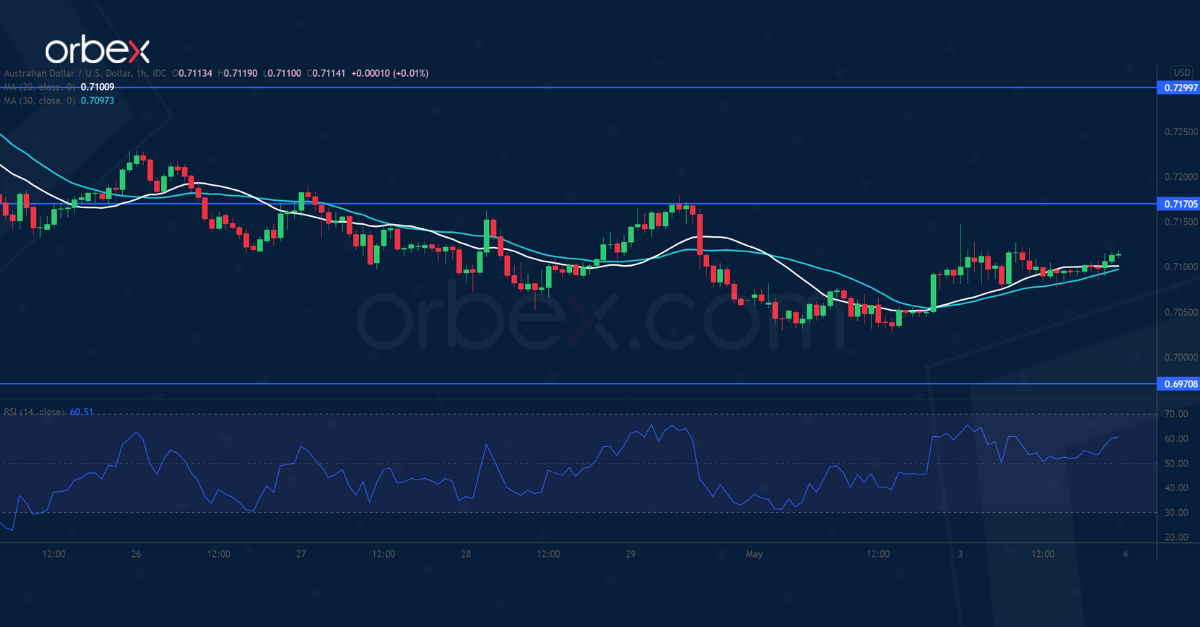
The Australian dollar recovered after the RBA raised its cash rate for the first time in over a decade. A break below 0.7100 further weighed on sentiment.
Caution still prevails as buyers are wary of catching a falling knife. The RSI’s oversold condition on the daily chart may attract increasing buying interest, notably some short-covering.
Nonetheless, the bulls need to lift offers near 0.7170 before a reversal could gain a foothold. This year’s low at 0.6970 is a critical floor and its breach could send the Aussie into 0.68s.