Sample Category Title
EUR/USD Mid-Day Outlook
Daily Pivots: (S1) 1.1842; (P) 1.1874; (R1) 1.1914; More….
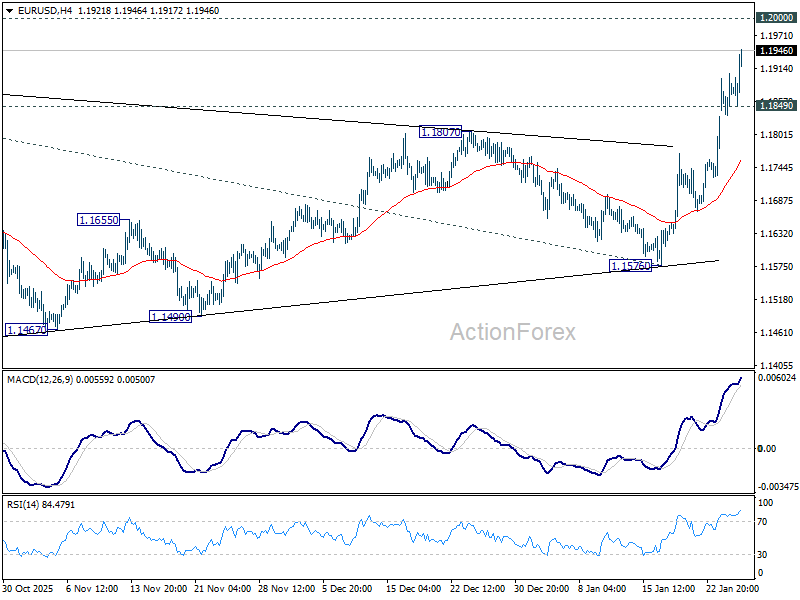
EUR/USD's rally continues today and intraday bias stays on the upside, with focus on 1.2000 key psychological level. Decisive break there will carry larger bullish implications. Next near term target will be 38.2% projection of 1.0176 to 1.1917 from 1.1576 at 1.3434. On the downside, below 1.1849 minor support will turn intraday bias neutral first.
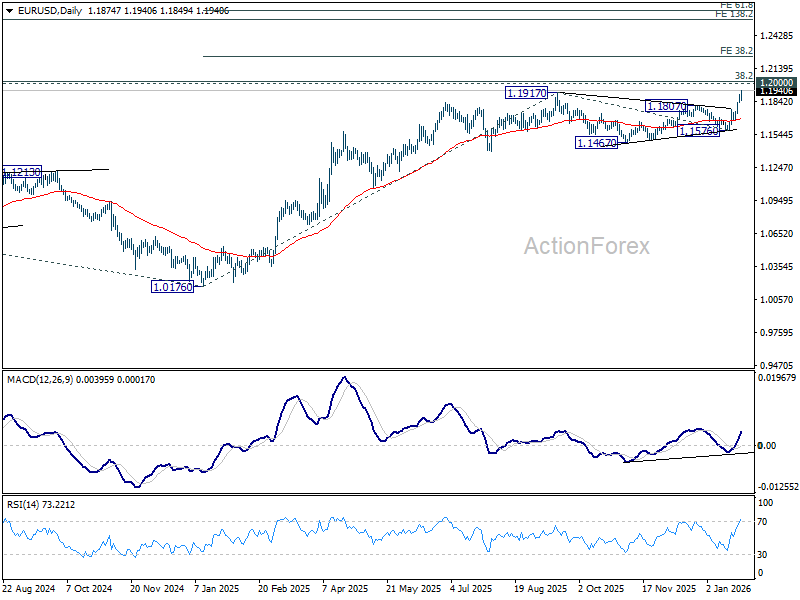
In the bigger picture, as long as 55 W EMA (now at 1.1443) holds, up trend from 0.9534 (2022 low) is still in favor to continue. Decisive break of 1.2 key psychological level will add to the case of long term bullish trend reversal. Next medium term target will be 138.2% projection of 0.9534 to 1.1274 from 1.0176 at 1.25841. However, sustained trading below 55 W EMA will argue that rise from 0.9534 has completed as a three wave corrective bounce, and keep long term outlook bearish.
GBP/USD Mid-Day Outlook
Daily Pivots: (S1) 1.3644; (P) 1.3678; (R1) 1.3714; More...
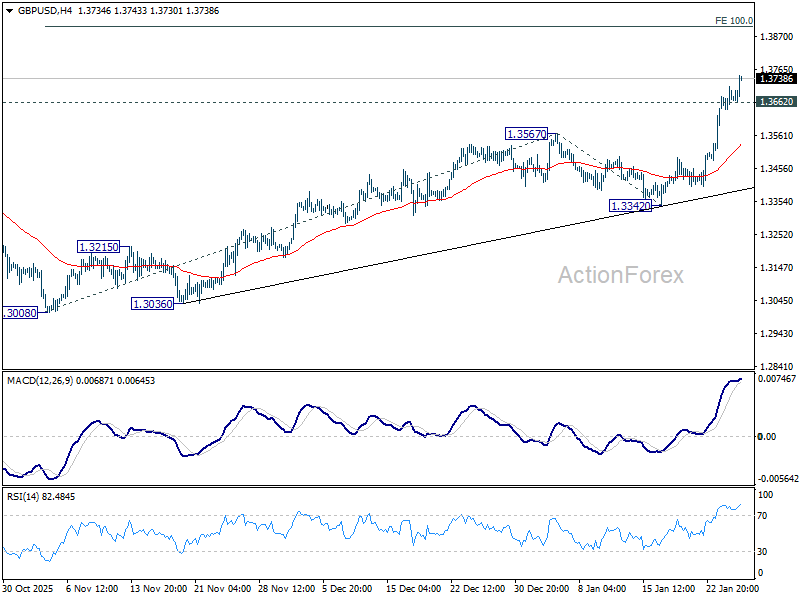
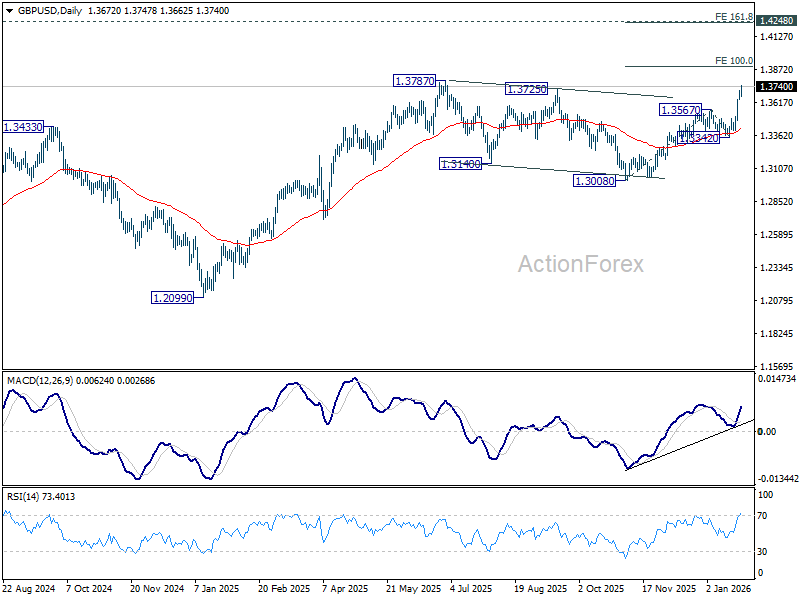
GBP/USD's rally continues today and intraday bias stays on the upside. Firm break of 1.3787 resistance will confirm larger up trend resumption. Next near term target is 100% projection of 1.3008 to 1.3567 from 1.3342 at 1.3901. On the downside, below 1.3662 minor support will turn intraday bias neutral. But retreat should be contained by 1.3567 resistance turned support to bring another rally.
In the bigger picture, price actions from 1.3787 (2025 high) are seen as a correction to the larger up trend from 1.3051 (2022 low). That might have completed at 1.3008 already. Firm break of 1.3787 will confirm up trend resumption. Next target is 1.4284 key resistance (2021 high). This will remain the favored case as long as 1.3008 support holds.
USD/JPY Mid-Day Outlook
Daily Pivots: (S1) 153.23; (P) 154.29; (R1) 155.27; More...
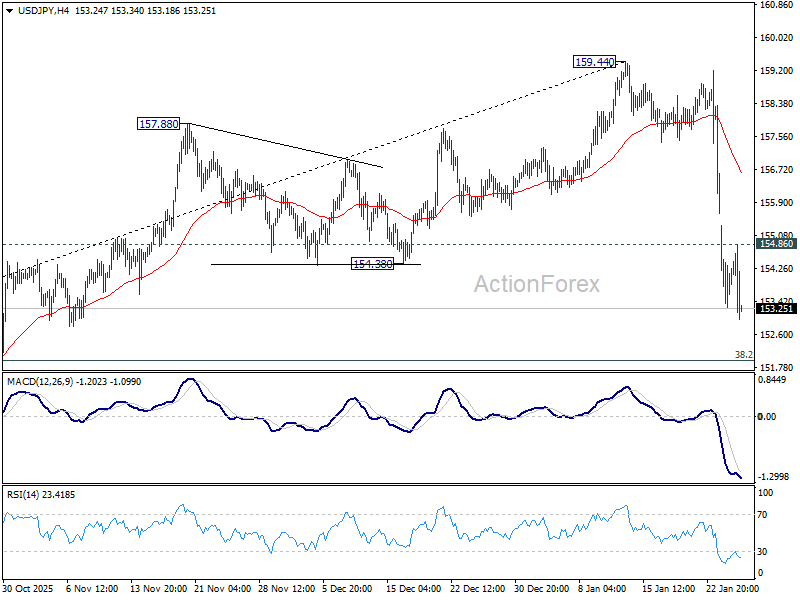
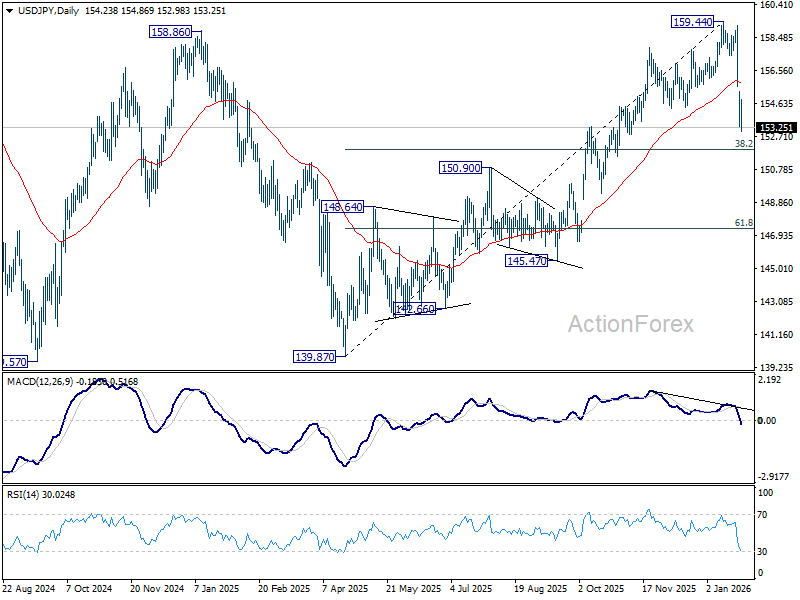
USD/JPY's fall extends lower today and intraday bias stays on the downside. Current decline from 159.44 is seen as correcting the rise from 139.87, and should target 38.2% retracement of 139.87 to 159.44 at 151.96. Strong support should be seen there to bring rebound, at least on first attempt. On the upside above 154.86 minor resistance will turn intraday bias neutral and bring consolidations first. However, decisive break of 151.96 will argue that it is reversing whole rise from 139.87. Deeper decline would then be seen to 61.8% retracement at 147.34.
In the bigger picture, outlook is unchanged that corrective pattern from 161.94 (2024 high) should have completed with three waves at 139.87. Larger up trend from 102.58 (2021 low) could be ready to resume through 161.94. This will remain the favored case as long as 55 W EMA (now at 151.35) holds. However, sustained break of 55 W EMA will argue that the pattern from 161.94 is extending with another falling leg.
USD/CHF Mid-Day Outlook
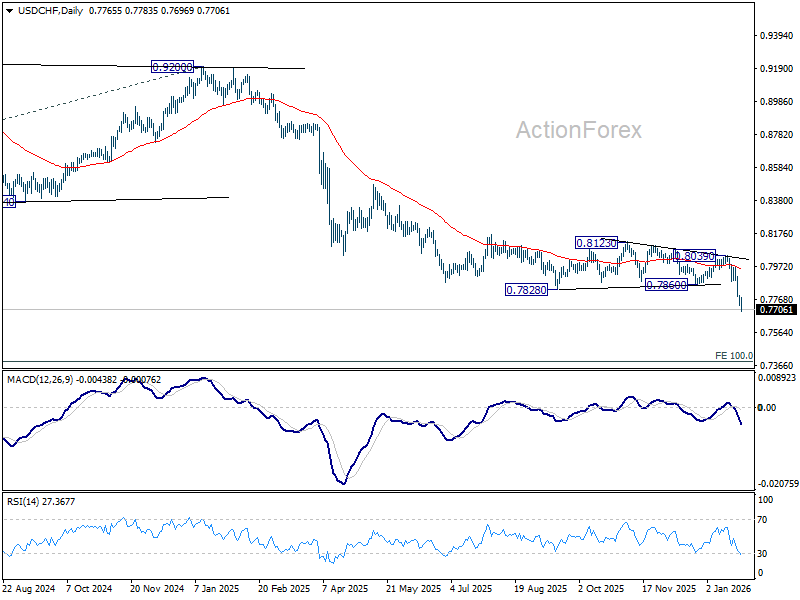
Daily Pivots: (S1) 0.7736; (P) 0.7765; (R1) 0.7799; More….
USD/CHF's fall resumes after brief consolidations and intraday bias is back on the downside. Current fall is part of the long term down trend and should target 0.7382 projection level next. On the upside, above 0.7283 minor resistance will turn intraday bias neutral again first. But outlook will continue to stay bearish as long as 0.7860 support turned resistance holds, in case of another recovery.
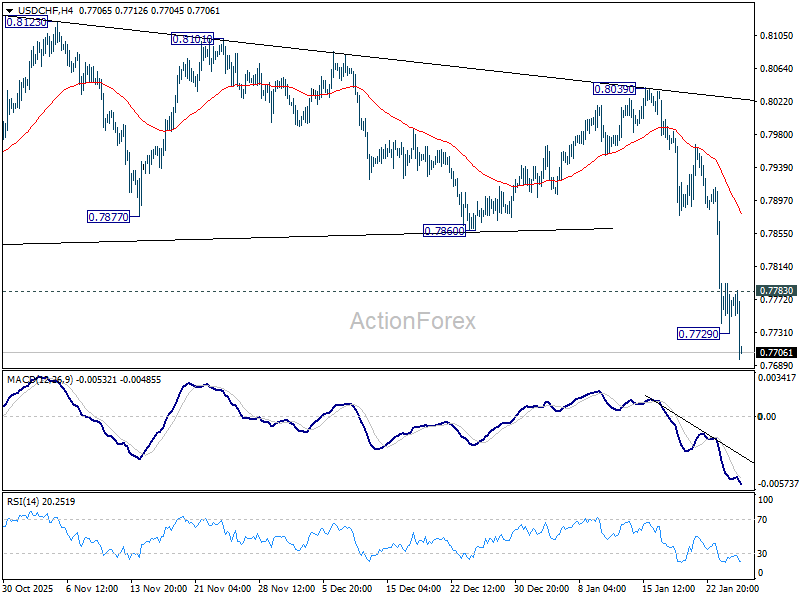
In the bigger picture, larger down trend from 1.0342 (2017 high) is still in progress and resuming. Next target is 100% projection of 1.0146 (2022 high) to 0.8332 from 0.9200 at 0.7382. In any case, outlook will stay bearish as long as 55 W EMA (now at 0.8184) holds.
Dollar Reprieve Fades as Risk Aversion Reasserts, Swiss Franc Jumps
The brief reprieve for Dollar has already faded. As markets move into the US session, the greenback is once again under broad selling pressure, undoing the tentative stabilization seen earlier and returning to a defensive footing. There is little in the way of fresh fundamental catalysts today. Instead, the renewed pressure appears to reflect positioning fatigue, with traders increasingly unwilling to wait until tomorrow’s FOMC rate decision before re-engaging against the Dollar.
Nevertheless, a key question is whether Fed policymakers deliver any slightly hawkish twist in language alongside the widely expected rate hold, and whether such a signal would be sufficient to spark a durable Dollar recovery. Even if the Fed leans marginally firmer, expectations for a sustained rebound remain muted. With geopolitical uncertainty surrounding the US still elevated, markets may be reluctant to chase Dollar higher on nuance alone.
Also, the renewed strength in Swiss Franc, which is outperforming both Euro and Sterling, points to some underlying risk aversion rather than a purely Dollar-specific adjustment. Hence, while geopolitical noise has softened somewhat. Several developments continue to hover in the background, capable of unsettling sentiment if mishandled.
In Europe, UK Prime Minister Keir Starmer’s visit to China is one such event to pay attention to. The trip, the first by a British leader in eight years, signals London’s desire to diversify partnerships and ease reliance on the US at a time of growing unpredictability. That sensitivity stems from recent precedent. After Canadian Prime Minister Mark Carney’s China engagement, US President Donald Trump threatened 100% tariffs on Canadian goods should Ottawa proceed with a China trade deal. Similar rhetoric toward the UK cannot be ruled out.
A second focal point is Trump’s response to the India–EU free trade agreement. The "Mother of All Deal", announced by Prime Minister Narendra Modi and set to be detailed alongside President Ursula von der Leyen, represents a major step in global trade integration outside US-led frameworks. That sense of fragmentation was echoed by German Economy Minister Katherina Reiche, who warned that trusted alliances are fraying, forcing nations to balance cooperation with the pursuit of new partners in a more uncertain world.
In FX markets, Dollar is currently the weakest performer on the day, followed by Loonie and Kiwi. Swiss Franc leads, with Yen and Aussie also firm. Euro and Sterling sit in the middle. Aussie stands out as a potential mover in the next session. With Australian CPI due shortly.
In Europe at the time of writing, FTSE is up 0.69%. DAX is down -0.11%. CAC is up 0.36%. UK 10-year yield is up 0.036 at 4.534. Germany 10-year yield is up 0.013 at 2.885. Earlier in Asia, Nikkei rose 0.85%. Hong Kong HSI rose 1.35%. China Shanghai SSE rose 0.18%. Singapore Strait Times rose 1.28%. Japan 10-year JGB yield rose 0.04 to 2.288.
Australia NAB business survey reinforces solid backdrop for RBA
Australia’s NAB business survey showed a modest but broad-based improvement in December, pointing to resilient momentum into year-end. Business Confidence edged up from 2 to 3, while Business Conditions rose from 7 to 9.
The details underline that improvement. Trading conditions climbed from 13 to 16, while profitability rose from 4 to 7. Employment conditions were unchanged at 4, suggesting hiring demand remains steady rather than accelerating. Capacity utilisation eased slightly to 83.2%, down from its recent peak but still well above its long-run average.
Cost pressures also edged higher, with purchase costs rising from 1.3% to 1.4% in quarterly equivalent terms, labour costs from 1.5% to 1.8%, and product prices from 0.6% to 0.9%, even as retail price growth slowed to 0.4% from 0.8% in November.
Overall, the survey suggests the economy ended the year on a firm footing, with most indicators sitting modestly above late-Q3 levels. Meanwhile, NAB noted that for the RBA, the small pullback in capacity utilisation is unlikely to materially ease concerns that the economy remains close to capacity.
USD/CHF Mid-Day Outlook
Daily Pivots: (S1) 0.7736; (P) 0.7765; (R1) 0.7799; More….
USD/CHF's fall resumes after brief consolidations and intraday bias is back on the downside. Current fall is part of the long term down trend and should target 0.7382 projection level next. On the upside, above 0.7283 minor resistance will turn intraday bias neutral again first. But outlook will continue to stay bearish as long as 0.7860 support turned resistance holds, in case of another recovery.
In the bigger picture, larger down trend from 1.0342 (2017 high) is still in progress and resuming. Next target is 100% projection of 1.0146 (2022 high) to 0.8332 from 0.9200 at 0.7382. In any case, outlook will stay bearish as long as 55 W EMA (now at 0.8184) holds.
Chart Alert: Silver 13% Flash Crash Has Not Damaged Its Bullish Trend
Key takeaways
- Silver’s bullish trend remains intact despite volatility: A sharp 13% flash crash failed to break the ascending trendline from early January, with prices holding above the key US$99.39 support, preserving the short-term bullish bias.
- Top-performing asset YTD, driven by macro tailwinds: Silver is up ~52.5% YTD, outperforming gold by a wide margin, supported by a weaker US dollar and heightened geopolitical risk that amplifies its higher-beta characteristics.
- Momentum and relative strength still favour upside: RSI indicators remain above key support levels, while Silver continues to outperform Gold on a relative basis, keeping higher resistance targets in play unless US$99.39 decisively breaks.
Silver is the top asset performer so far
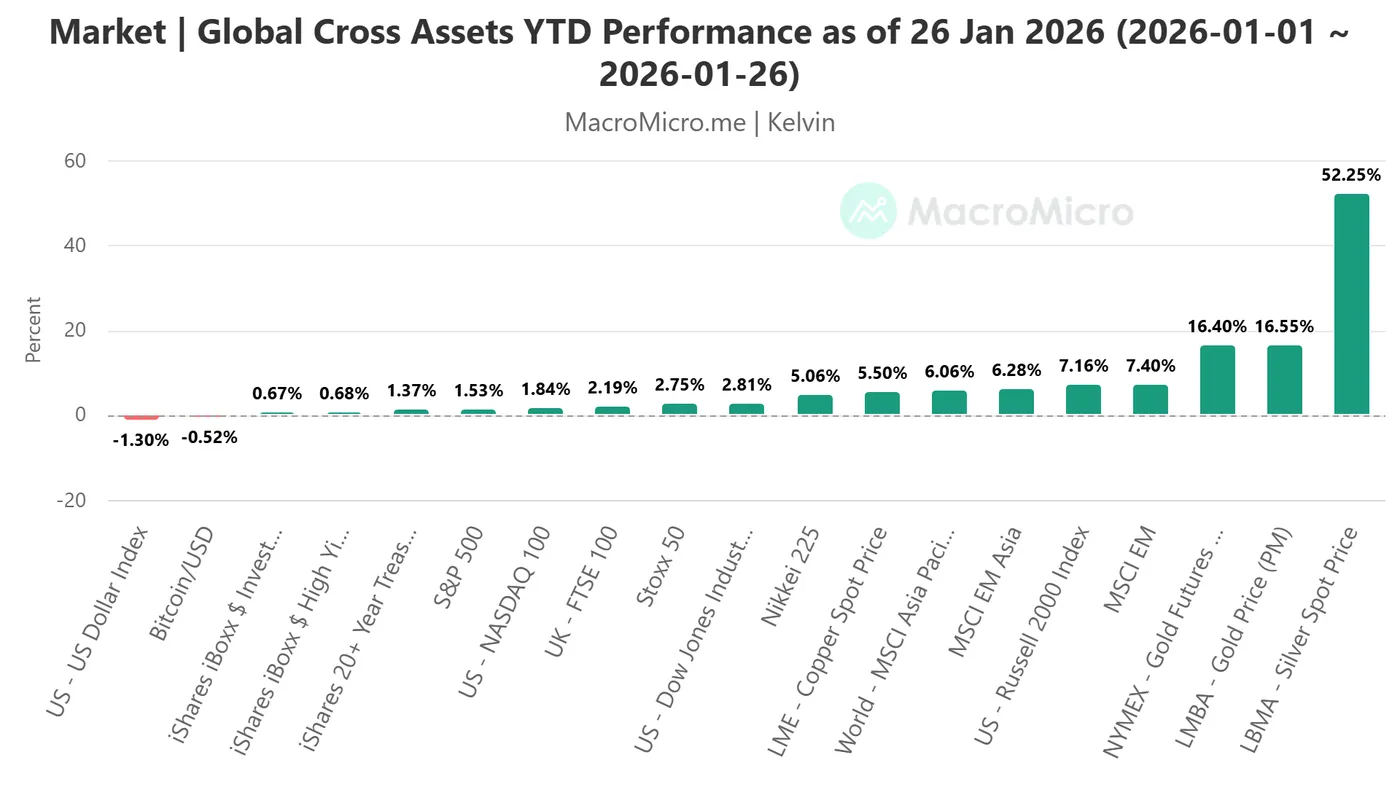
Fig. 1: Year-to-date performances of major cross assets as of 26 Jan 2026 (Source: MacroMicro)
Silver (XAG/USD) has soared as expected, cleared above the highlighted US$90.90 trigger level, and hit our intermediate resistance level of US$101.15 as highlighted in our previous analysis.
Among the major cross-asset classes, Silver has emerged as the top-performing asset. Based on year-to-date performance as of Monday, 26 January 2026, spot Silver (London Bullion Market Association) has recorded a stellar gain of 52.3% (see Fig. 1).
It even surpassed spot Gold (+16.6%) by around three times due to its higher beta factor, supported by a continuation of the weakening US dollar trend since 15 January 2026 and elevated geopolitical risk premium reinforced by an expansionary/aggressive US White House’s foreign policy.
On Monday, 26 January US session, Silver (XAG/USD) soared to a fresh intraday all-time high of US$117.54 before it tumbled swiftly 13% in the next four hours to hit an intraday low of US$102.52 on Tuesday, 27 January Asian session.
Silver (XAG/USD) has recovered partially with an intraday gain of 8.6% to trade at US$112.72 at the time of writing.
Let’s now dissect the latest short-term (1to 3 days) trajectory of Silver (XAG/USD) from a technical analysis perspective.
Short-term trend bias (1 to 3 days): Bullish; remains supported by ascending trendline
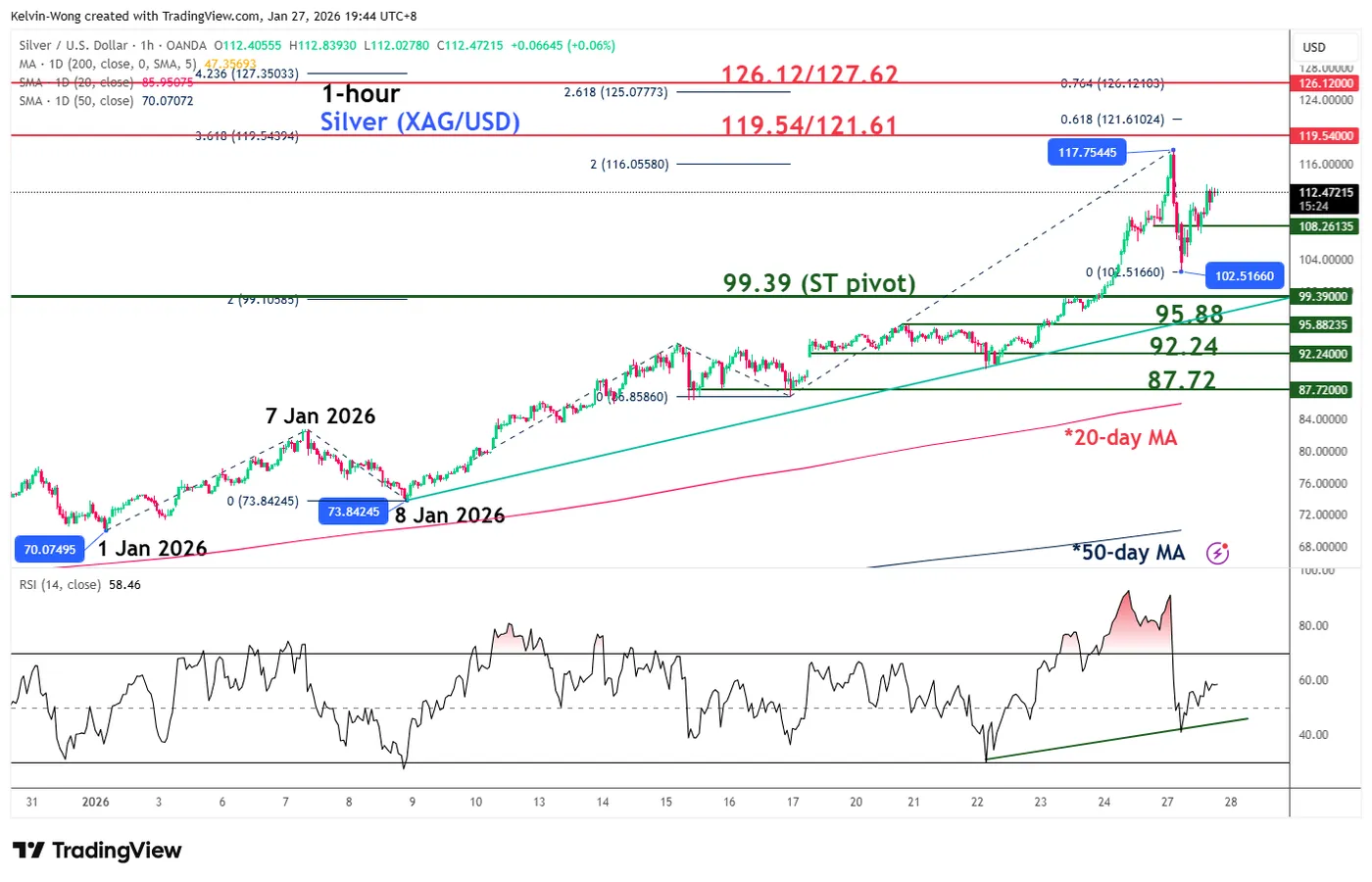
Fig. 2: Silver (XAG/USD) minor trend as of 27 Jan 2026 (Source: TradingView)
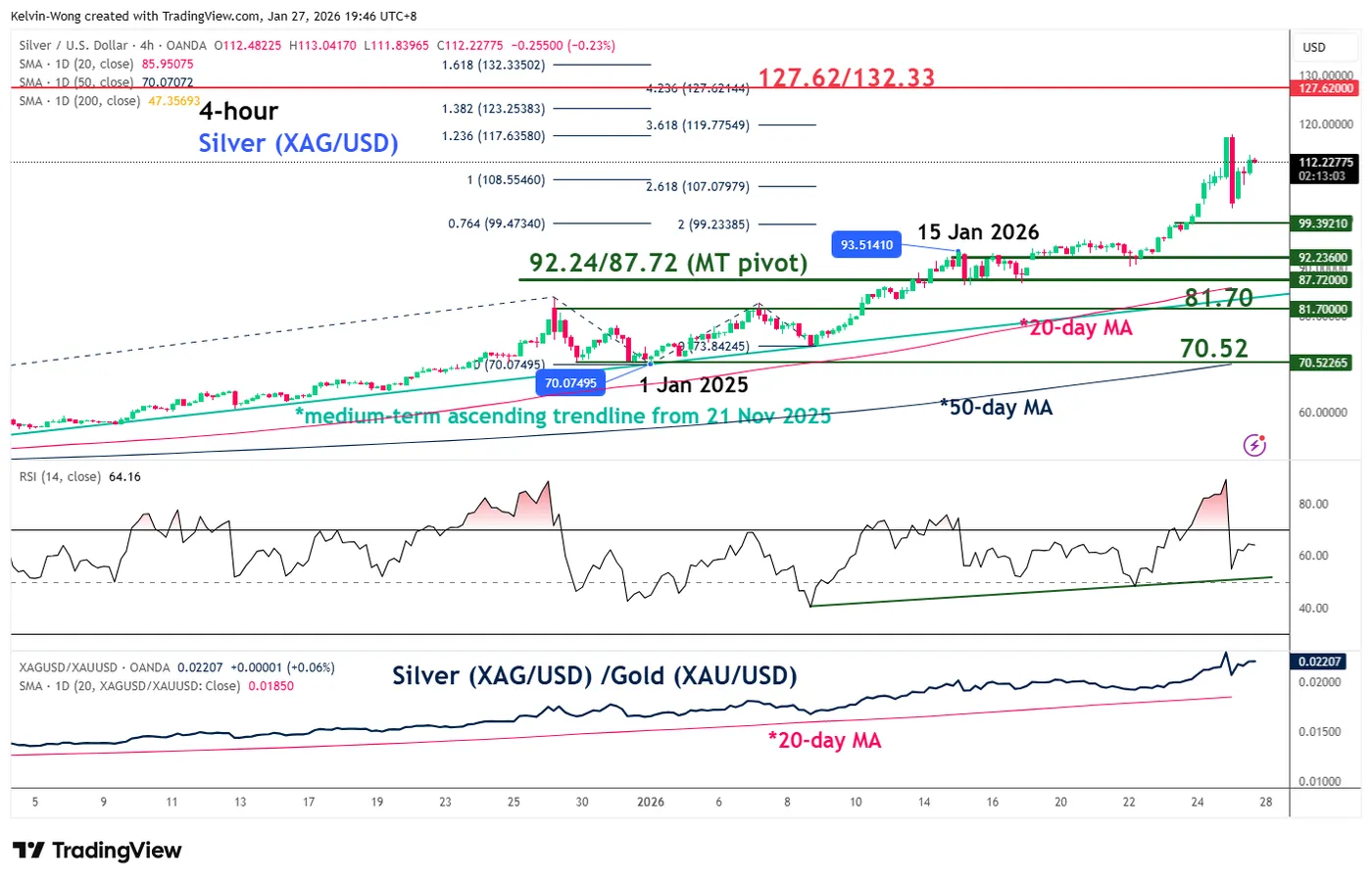
Fig. 3: Silver (XAG/USD) medium-term trend as of 14 Jan 2026 (Source: TradingView)
Despite the latest 13% plunge, Silver (XAG/USD) has continued to trade above a key minor ascending trendline in place since the 8 January 2026 low of US$73.84, now acting as a support at around US$99.39.
Hence, watch the 99.39 short-term pivotal support to maintain the minor bullish impulsive up move sequence for the next intermediate resistances to come in at US$119.54/121.61 and US$126.12/127.62 (Fibonacci extension clusters) (see Fig. 2).
On the other hand, a break and an hourly close below US$99.39 invalidates the bullish tone to open scope for a deeper minor corrective decline sequence to expose the next intermediate support at US$95.88 before the medium-term pivotal support zone of US$92.24/87.72 (also the 20-day moving average).
Key elements to support the bullish bias
- Both the 1-hour and 4-hour RSI momentum indicators of Silver (XAG/USD) have continued to remain above their respective key ascending supports, holding above the 50 level. Bullish momentum remains intact.
- The 4-hour relative strength ratio of Silver/Gold has continued to trend higher above its 20-day moving average, which suggests potential continuation of Silver’s outperformance against Gold in the medium-term time horizon (see Fig. 3).
USD/JPY on Pause: Yen Slows After Sharp Rally
USD/JPY settled at 154.29 on Tuesday, with the yen pausing its rally after a notable surge of nearly 3.2% in the previous two sessions. This move was driven by growing concerns about a possible coordinated currency intervention between Japan and the US.
The market was boosted by news that the Federal Reserve Bank of New York had requested USD/JPY levels from dealers on Friday. At the same time, Japanese officials confirmed that they were in close communication with the US on currency policy and potential market actions.
However, Bank of Japan (BoJ) data suggested that the sharp yen appreciation on Friday was unlikely to be due to direct intervention. This speculation intensified the market’s reaction and speculative positioning.
The yen continued to receive support from the broader weakness of the US dollar, driven by rising geopolitical risks and trade uncertainties, as well as expectations that US President Donald Trump might replace Fed Chairman Jerome Powell with a softer candidate, further pressuring the US currency.
Technical Analysis
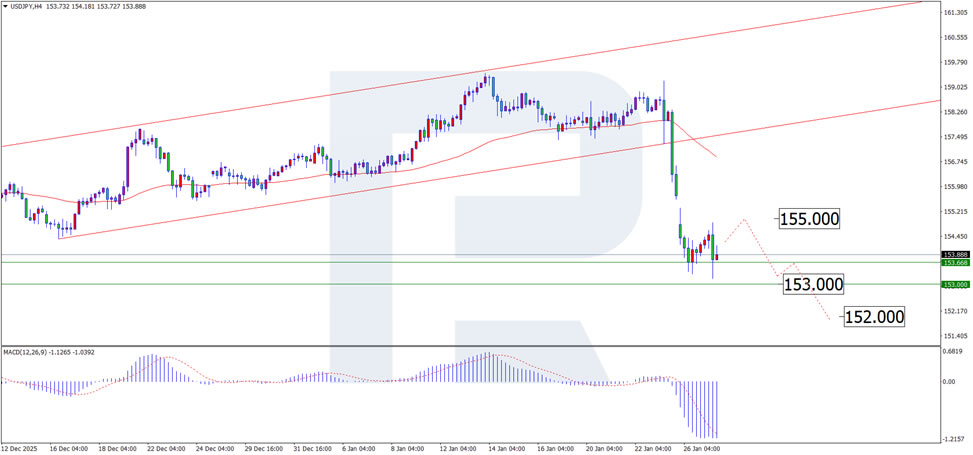
On the H4 chart, USD/JPY has formed a correction wave following the previous decline. A continuation of the growth wave to the 155.00 level is possible today. After this rise, a rebound from the resistance level is expected, with the first target for a further decline at 153.00, followed by 152.00. This scenario is confirmed by the MACD indicator, as the histogram is below zero and rising, with the signal line likely to cross the histogram and turn upwards soon.
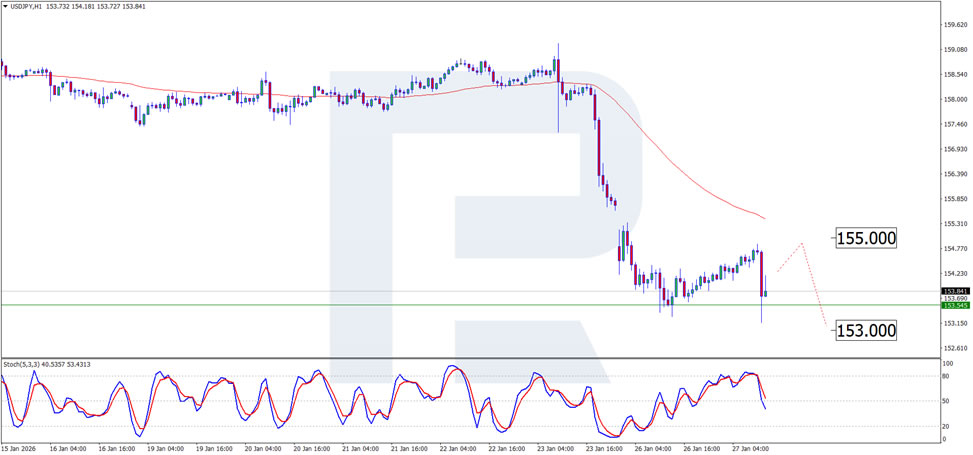
On the H1 chart, USD/JPY is testing the 153.80 mark and forming a growth wave. If the price tests the 155.00 level and rebounds, further declines could be expected, with the first support at 153.00 USD. The Stochastic oscillator supports this, as its signal lines continue to decline towards the 50.0 level. A break of this level would signal a continuation of the downward trend.
Conclusion
USD/JPY has paused its rapid ascent amid speculation of potential currency intervention. Despite a weaker US dollar and geopolitical risks, the yen’s recent strength is being tested. Technically, while the immediate outlook points to a possible short-term rise to 155.00, a rebound and subsequent decline towards 153.00 could be on the horizon, depending on how market sentiment evolves.
GBP/JPY Daily Outlook
Daily Pivots: (S1) 209.68; (P) 210.88; (R1) 212.15; More...
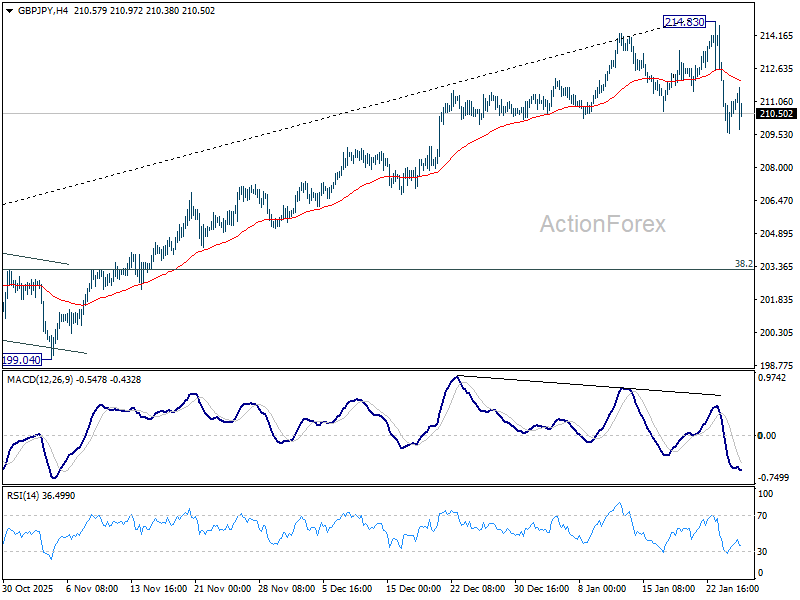
Intraday bias in GBP/JPY stays on the downside for 55 D EMA (now at 208.99). Sustained break there will argue that it's correcting whole rise from 184.35 and target 38.2% retracement of 184.35 to 214.83 at 203.18. For now, risk will stay on the downside as long as 214.83 holds, in case of recovery.
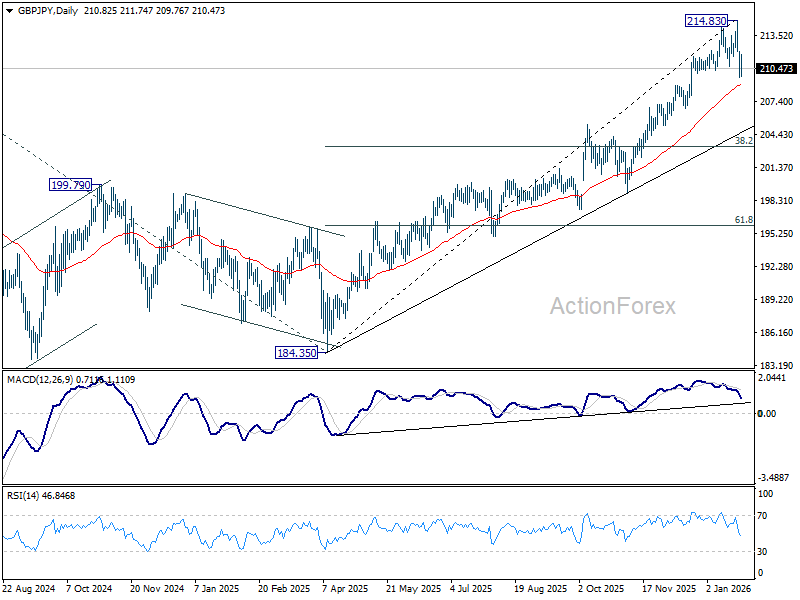
In the bigger picture, up trend from 123.94 (2020 low) is in progress. Next target is 61.8% projection of 148.93 (2022 low) to 208.09 (2024 high) from 184.35 at 220.90. On the downside, break of 205.30 resistance turned support is needed to indicate medium term topping. Otherwise, outlook will stay bullish even in case of deep pullback.
EUR/JPY Daily Outlook
Daily Pivots: (S1) 181.95; (P) 183.03; (R1) 184.26; More...
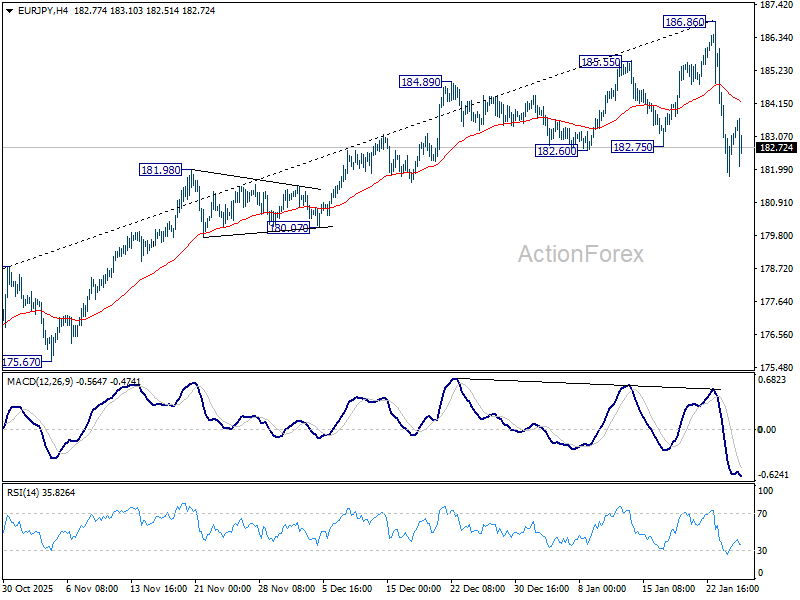
Intraday bias in EUR/JPY remains on the downside for the moment. Sustained trading below 55 D EMA (now at 182.10) should solidify the case that fall from 186.86 medium term top is correcting whole rise from 154.77. Deeper decline should then be seen to 38.2% retracement of 154.77 to 186.86 at 174.60. For now, risk will stay on the downside as long as 186.86 holds, in case of recovery.
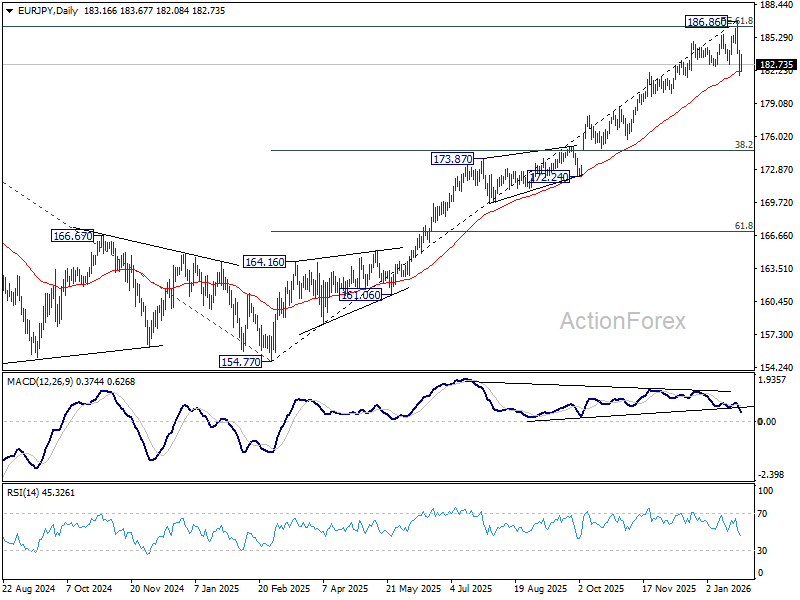
In the bigger picture, up trend from 114.42 (2020 low) is in progress and and met 61.8% projection of 124.37 to 175.41 from 154.77 at 186.31. Considering bearish divergence condition in D MACD, upside could be capped by 186.31 on first attempt. Still, outlook will stay bullish as long as 55 W EMA (now at 173.32) holds, even in case of deep pullback. Sustained break of 186.31 will pave the way to 78.6% projection at 194.88 next.
EUR/GBP Daily Outlook
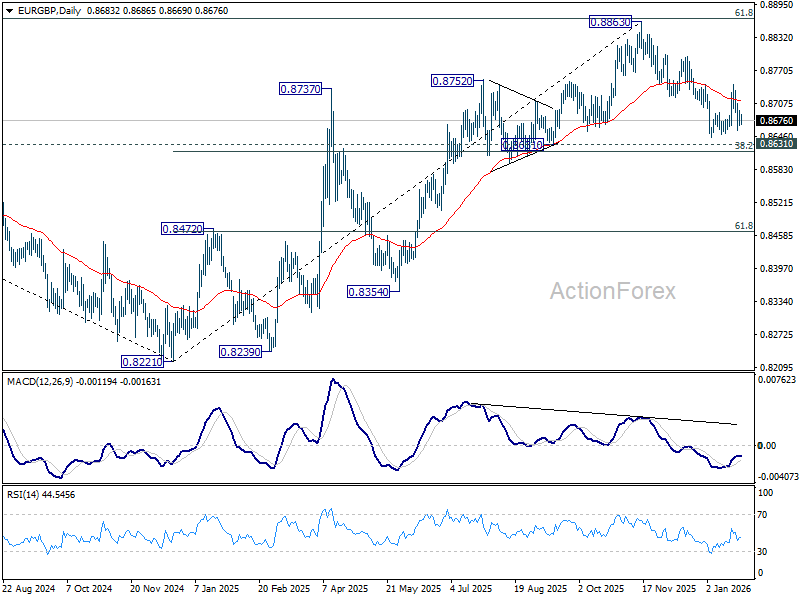
Daily Pivots: (S1) 0.8670; (P) 0.8683; (R1) 0.8699; More…
Intraday bias in EUR/GBP is turned neutral first with current recovery. But risk will remain on the downside as long as 0.8744 resistance holds. Further decline is expected to 0.8631 cluster support (38.2% retracement of 0.8221 to 0.8663 at 0.8618). Decisive break there will carry larger bearish implications and pave the way to 61.8% retracement at 0.8466.
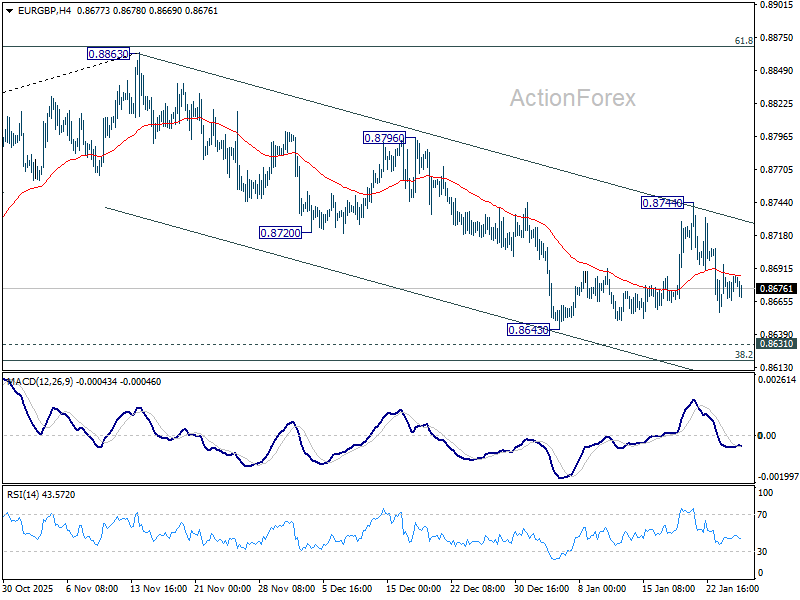
In the bigger picture, rise from 0.8221 medium term bottom (2024 low) is seen as a corrective move. Upside should be limited by 61.8% retracement of 0.9267 to 0.8221 at 0.8867. Sustained trading below 55 W EMA (now at 0.8625) should confirm that this corrective bounce has completed. In this case, deeper fall would be seen back to 0.8201/21 key support zone. However, decisive break of 0.8867 will suggest that EUR/GBP is already reversing whole decline from 0.9267 (2022 high). That should pave the way back to 0.9267.