

Sample Category Title
EU Contemplates New Sanctions Against Russia Because of War Crimes in Ukraine
Markets
Record-high EMU inflation (7.5% Y/Y in March) and stellar US payrolls (431k; 3.6% unemployment rate) hijacked headlines last Friday. They kept the US bear flattening trend in place even if oil prices remained near recent lows after the US SPR release announcement. A lower, but still elevated, US manufacturing ISM (57.1 from 58.6) had no impact either. It was exemplary for the situation we’re in: a red-hot labour market, inflation spiraling out of control and a grimmer eco outlook.
Daily changes on the US yield curve ranged between -1.5 bps (30-yr) and +12.3 bps (2-yr). The US 2-yr yield is about to take out the 2.5% mark. SF Fed Daly confirmed in an FT interview that the case for a 50 bps rate hike in May has grown, barring any negative surprise between now and that meeting. She stressed awareness to get (at least) neutral policy levels this year. Heavyweight NY Fed governor Williams also joined that chorus.
German yield gains were limited to 1 bp across the curve. The CPI-print was well anticipated by national inflation releases earlier on the week. EUR/USD couldn’t recover from the end-of-quarter setback and rather stabilized near 1.1050. The same goes for EUR/GBP around 0.8420. Stock markets ended the week on a slightly positive note, gaining up to 0.5% in both Europe and the US. Asian stock markets are mixed this morning with Hong Kong outperforming and mainland China closed. The Aussie dollar regains the 0.75-handle after monthly inflation numbers (4% Y/Y) which raise the stakes of a hawkish swing at tomorrow’s RBA meeting
The EU contemplates new sanctions against Russia because of war crimes in Ukraine. It could set the tone for trading in absence of important eco data today.
Speeches by Bank of England governors Bailey and Cunliffe are wildcards. The UK central bank is very concerned about UK household’s disposable income and warned before to take a more cautious (tightening) approach going forward. The jury is still out as UK inflation again got ahead of the BoE’s inflation forecasts. Risks are nevertheless tilted towards outperforming UK gilts and renewed weakness in GBP.
Central bank comments remain wildcards for trading throughout the week. The eco/event calendar is rather thin, apart from tomorrow’s US non-manufacturing ISM and Minutes of the previous ECB and Fed meetings. The latter will be an interesting read given internal divide on the pace of normalization processes. Developments since suggest that the more hawkish views could turn rapidly into reality at coming meetings. That’s also what (rate) markets continue to discount.
News Headlines
Hungary’s Orban and his Fidesz party scored a landslide victory in Sunday’s parliamentary elections, securing a fourth consecutive term as prime minister. The party maintained its two-thirds majority, defying polls that had predicted a much tighter race after opposition parties united themselves in an attempt to oust Orban. With Orban again at the helmet, sharp U-turns in Hungary’s policies, from fiscal to political (eg. rule of law dispute with EU), are unlikely. The Hungarian forint is trading stoic in low-volume trading this morning around EUR/HUF 367.54. Front-end Hungarian swap yields rise 12.5 bps (2y). Germany’s defence minister Lambrecht on Sunday said the EU must discuss a Russian gas embargo. Germany up until now always resisted calls for a Russian energy import ban, arguing it and many other European countries are too dependent on it and cannot wean itself off it entirely straight away. Economy minister Habeck also on Sunday repeated that stance. But pressure is growing on and within the government to take more radical steps after accusations of Russian forces having committed atrocities near Kyiv. German Chancellor Scholz later said that Western allies would agree to further sanctions on Russia in the coming days.
FTSE 100 Consolidates Gains
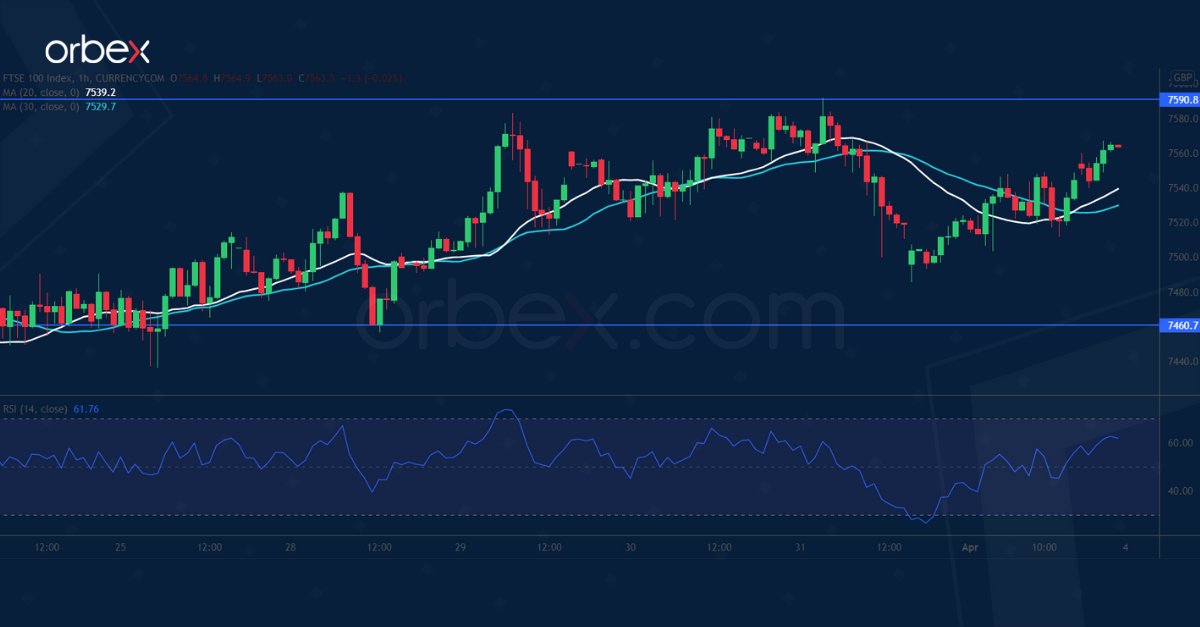
The FTSE 100 treads water dragged by weaker energy stocks. A bullish MA cross on the daily chart suggests that the index could be back on track in the medium term.
The intraday direction is still up despite its choppiness. A close above 7590 would extend the rally to this year’s high at 7690. Trend followers may see pullbacks as a bargain opportunity.
The RSI’s oversold condition attracted some buying interest over 7460. A deeper correction would send the index to 7380 which coincides with the moving averages.
XAU/USD Builds Support
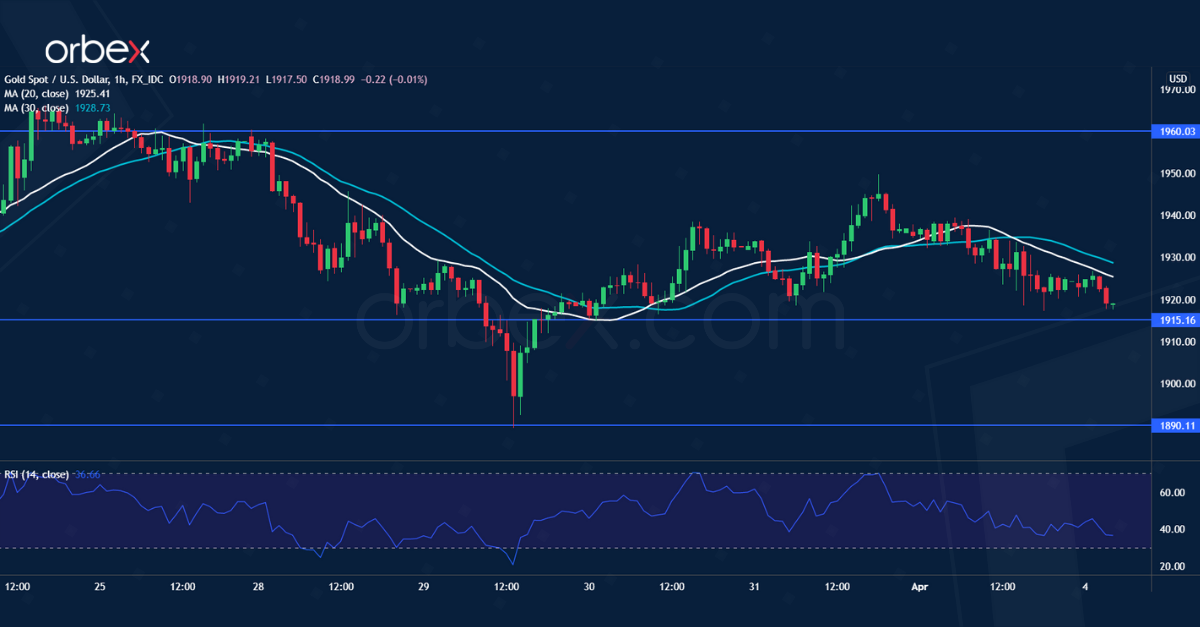
Gold retreats as the US dollar finds support from a fall in the jobless rate.
On the daily chart, price action still holds above the demand zone between 1890 and 1900 which is a sign of strong buying interest. A break above 1940 forced sellers out. This may also foreshadow a reversal.
Sentiment would improve if the precious metal stays above 1915. A bullish close above 1960 could extend the rally to the psychological level of 2000. On the downside, 1890 is a critical level to maintain the bulls’ optimism.
EUR/USD Seeks Support
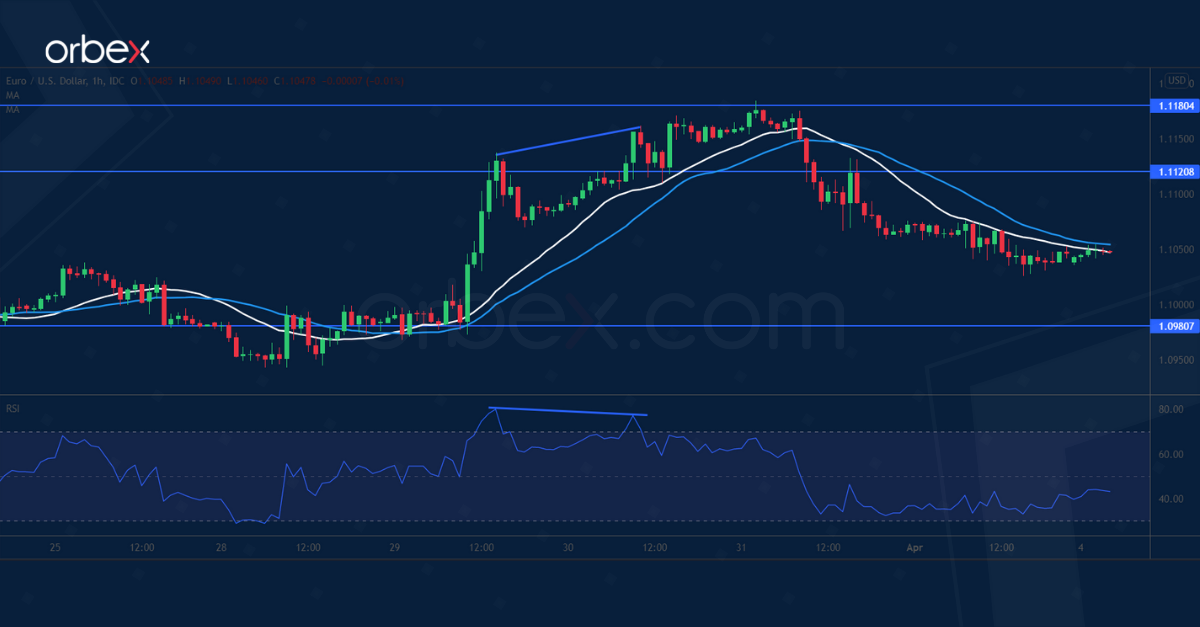
The US dollar rallied after March’s average hourly wages jumped by 5.6%. The euro came to a halt in the supply zone at the origin of the March sell-off (1.1180).
A bearish RSI divergence pointed to softness in the rebound. A fall below 1.1120 then 1.1070 prompted buyers to bail out, further weighing on overall sentiment.
1.0980 at the base of the recent bullish impetus is major support. Its breach could invalidate the recovery and trigger a new round of sell-offs. The bulls need to clear 1.1120 to regain the upper hand.
Gold Price is Now Consolidating Losses Near $1,915
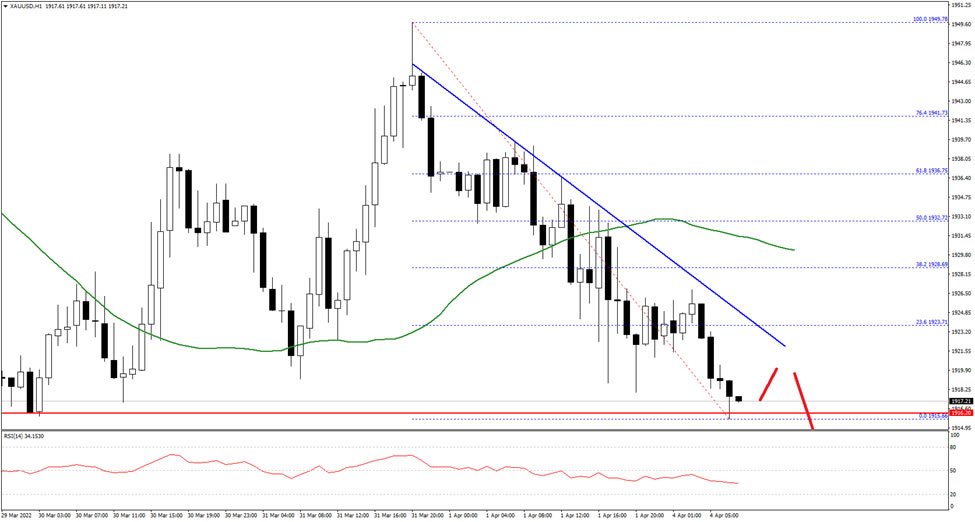
Gold price started a fresh decline from the $1,950 zone against the US Dollar. The price broke the $1,940 support level to enter a short-term bearish zone.
The price even declined below $1,925 and the 50 hourly simple moving average. It is now trading near the $1,915 support and consolidating losses. An immediate resistance is near the $1,922 level.
There is also a key bearish trend line with resistance near $1,922 on the hourly chart. The next main resistance could be near the $1,930 level, above which the price could start another steady increase. In the stated case, it could rise towards $1,950 on FXOpen.
If not, the price could decline below $1,915. The next major support is near the $1,900 level, below which the bears might gain strength. In the stated case, the price could even decline below the $1,880 support level in the near term.
EURUSD Creates Bullish Correction in the Short Term above 1.1000
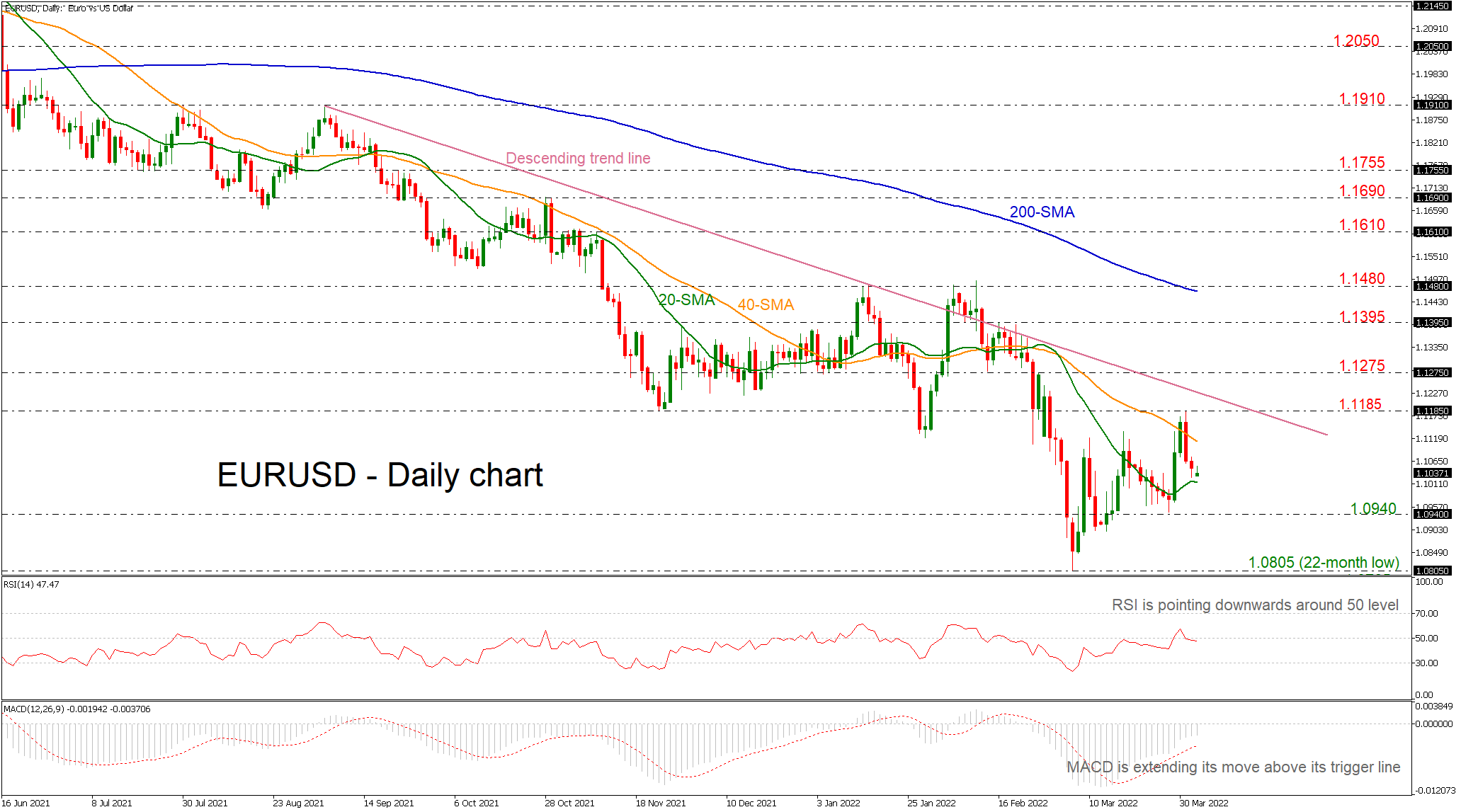
EURUSD is showing some positive signs in the short-term after the rebound off the 22-month low of 1.0805. Currently, the market is consolidating within the 20- and 40-day simple moving averages (SMAs), while the technical indicators are suggesting more upside movements. The RSI is trying to overcome the neutral threshold of 50 and the MACD is strengthening its positive momentum above its trigger line in the negative region.
If the market manages to pick up speed, the 40-day (SMA) at 1.1113 could offer nearby resistance ahead of the 1.1185 resistance level. A significant close above the latter, the next obstacle could come from the descending trend line around 1.1220, while more increases would raise chances for an up-trending market. In this case, prices could climb towards the 1.1275 barrier.
Should prices decline, immediate support could be found around the 20-day SMA at 1.1016 from October to December. Then a leg below that level, the pair could meet the 1.0940 support before tumbling to the 22-month low of 1.0805.
In the long-term, the outlook remains negative since prices hold below the descending trend line. However, in the short-term picture, EURUSD is creating a bullish correction.
Images of Massive Civilian Ukrainian Causalities Trigger Calls for Stronger EU Sanctions
Market movers today
A quiet start of the week in terms of economic data. Focus remains on the war in Ukraine and increasing calls for stricter sanctions on Russia after Ukrainian forces reclaimed the city of Bucha over the weekend and unveiled images of massive civilian casualties left behind by the Russian troops. Russian-Ukrainian peace talk negotiations to continue Monday.
Reserve Bank of Australia (RBA) will have a meeting early tomorrow morning, we expect no changes to the monetary policy.
Later in the week, we will get minutes from the March meetings of FOMC (Wednesday) and ECB (Thursday) alongside several speeches from both central banks throughout the week. March services PMIs will be released for the US by ISM on Tuesday and for China by Caixin on Wednesday.
The 60 second overview
Pictures of civilian casualties in Ukraine trigger calls for stronger EU sanctions against Russia: Horrific pictures showing civilian deaths in the aftermath of withdrawal of Russian troops in the town of Bucha outskirts of Kyiv led to a flurry of calls from EU leaders to tighten the sanction regime against Russia. Estonia's Prime Minister Kaja Kallas said a fifth round of "strong EU sanctions" should come as soon as possible, while Polish Prime Minister Mateusz Morawiecki called on EU leaders to hold an emergency summit soon to discuss the events in Bucha.
Decent non-farm payroll report in the US on Friday: Job growth in the US economy was decent in March with 431k jobs created despite uncertainties and rising commodity prices. In addition, there were positive revisions the past two months (+95k). The unemployment rate fell further to 3.6% from 3.8%, suggesting a very tight labour market. Wage growth was strong, increasing 0.4% m/m. Overall the report supports our call for tighter Fed monetary policy over the course of the year (including front-loading), although there was no big market reaction.
US manufacturing sector continues to be in expansionary territory amid strong price pressures: ISM manufacturing fell slightly to 57.1 in March from 58.6, but is still well in expansion territory. Weaker new orders growth drove the decline (53.8 from 61.7). Prices paid took another leap higher (87.1 from 75.6) and employment also continues to rise (56.3 from 52.9). The bottom-line is rising stagflationary forces, but labour market is doing ok.
FI: It has been a volatile week in the global bond markets with 10Y US Treasuries trading between 2.30% and 2.55% and Bunds between 0.55% and 0.70%. The oil price has declined from USD 110bn per barrel and is now trading at USD 100 per barrel. However, we are seeing food prices rise and the risk of Russia closing for the gas to Europe can lead to significantly higher gas prices as the war continues in Ukraine. Furthermore, Europe warns Russia on more sanctions given the possible war crimes in Ukraine. Hence, the war between Ukraine and Russia will continue to dominate markets this week.
FX: EUR/USD is likely to continue to shift lower over coming quarters. SEK to be unaffected by dividend flows. Structural liquidity is turning for NOK (-rates).
Credit: Credit markets had an uneventful day Friday with modest movements. ITraxx Main was 0.7bp tighter at 72.2bp while Xover was unchanged at 338.4. Also cash bonds saw modest movements with Investment Grade 0.4bp wider at 63.7bp while High Yield was 2.2bp tighter at 328.7bp.
Nordic macro
This weekend the wage negotiations in the Norwegian manufacturing sector, which sets the bar for all sectors, ended with an overall result at 3.7 % in 2022, including overhang and expected wage drift. This is exactly in line with Norges Bank's estimate from the March MPR, and should reduce the risk of more than four hikes this year.
Technical Outlook and Review
DXY:
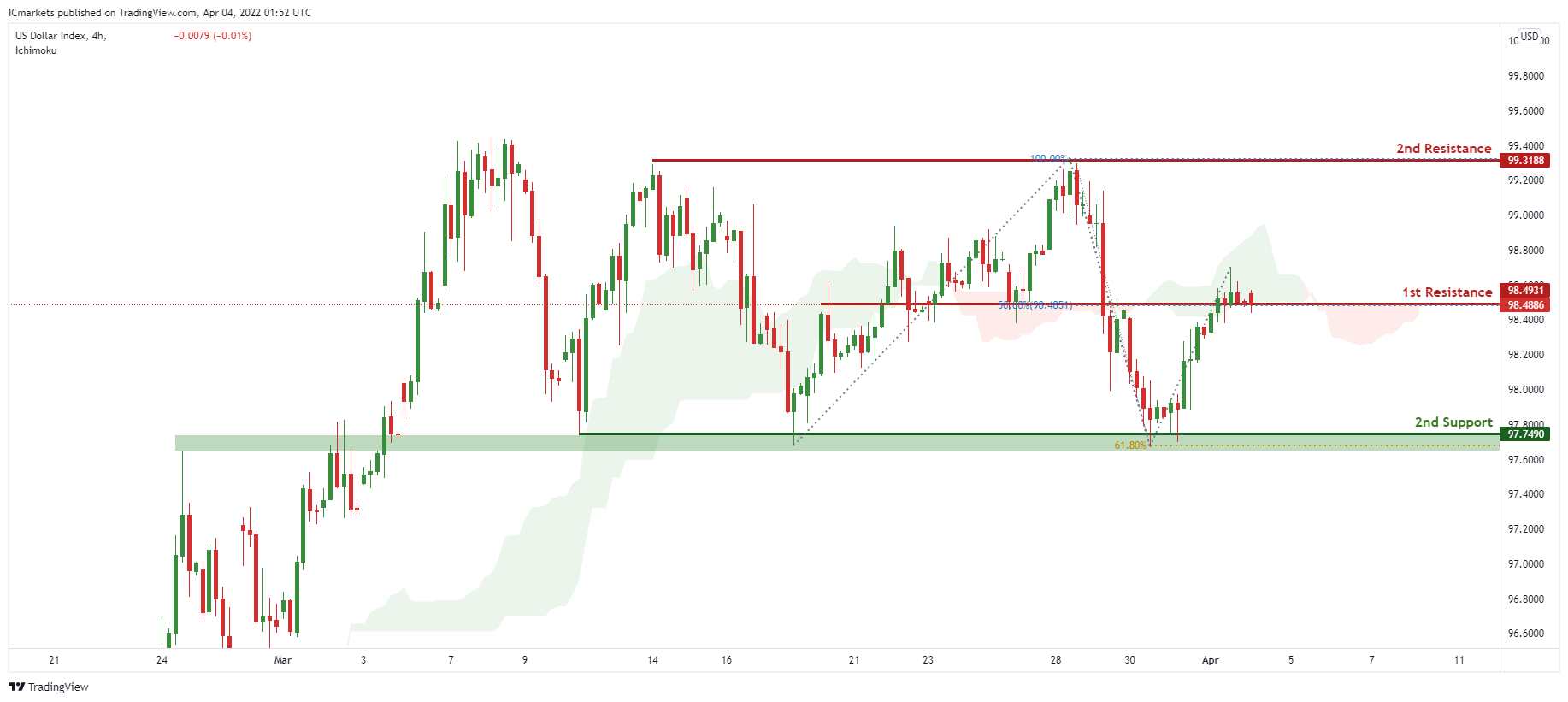
On the H1 timeframe, prices are approaching a pivot. We see the potential for a dip from our 1st resistance at 98.4931 in line with 50% Fibonacci Retracement towards our 1st support at 97.7490 in line with 61.8% Fibonacci Projection. Prices are trading below our ichimoku clouds, further supporting our bearish bias.
Areas of consideration:
- H4 time frame, 1st resistance at 98.4931
- H4 time frame, 1st support at 97.749
XAU/USD (GOLD):
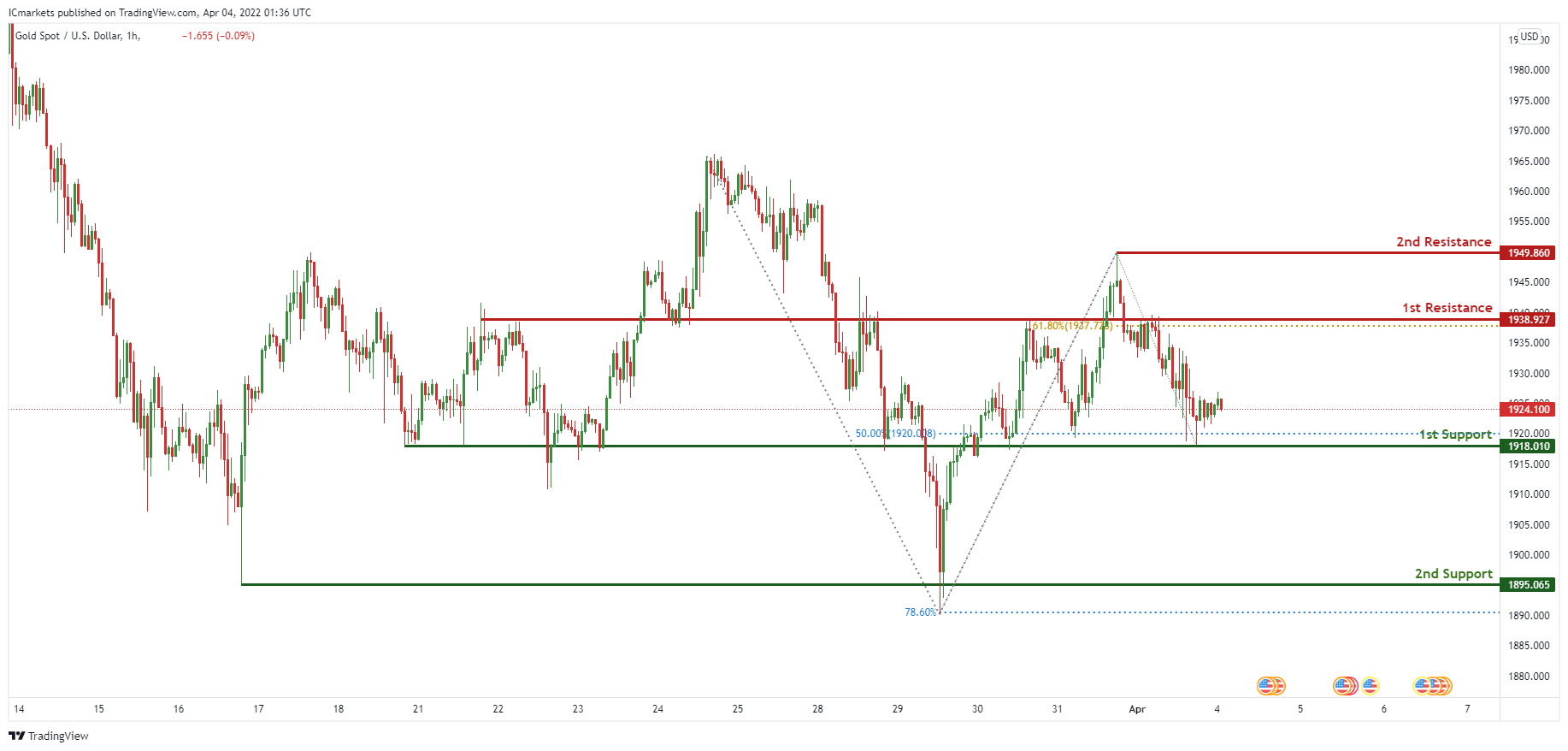
On the H1, prices are abiding by our support. We see the potential for further bullish continuation from our 1st support at 1918.010 which is in line with 50% Fibonacci retracement towards our 1st resistance at 1938.927 in line which is a graphical overlap.
Areas of consideration:
- 4h 1st support at 1918.01
- 4h 1st resistance at 1938.927
GBP/USD:
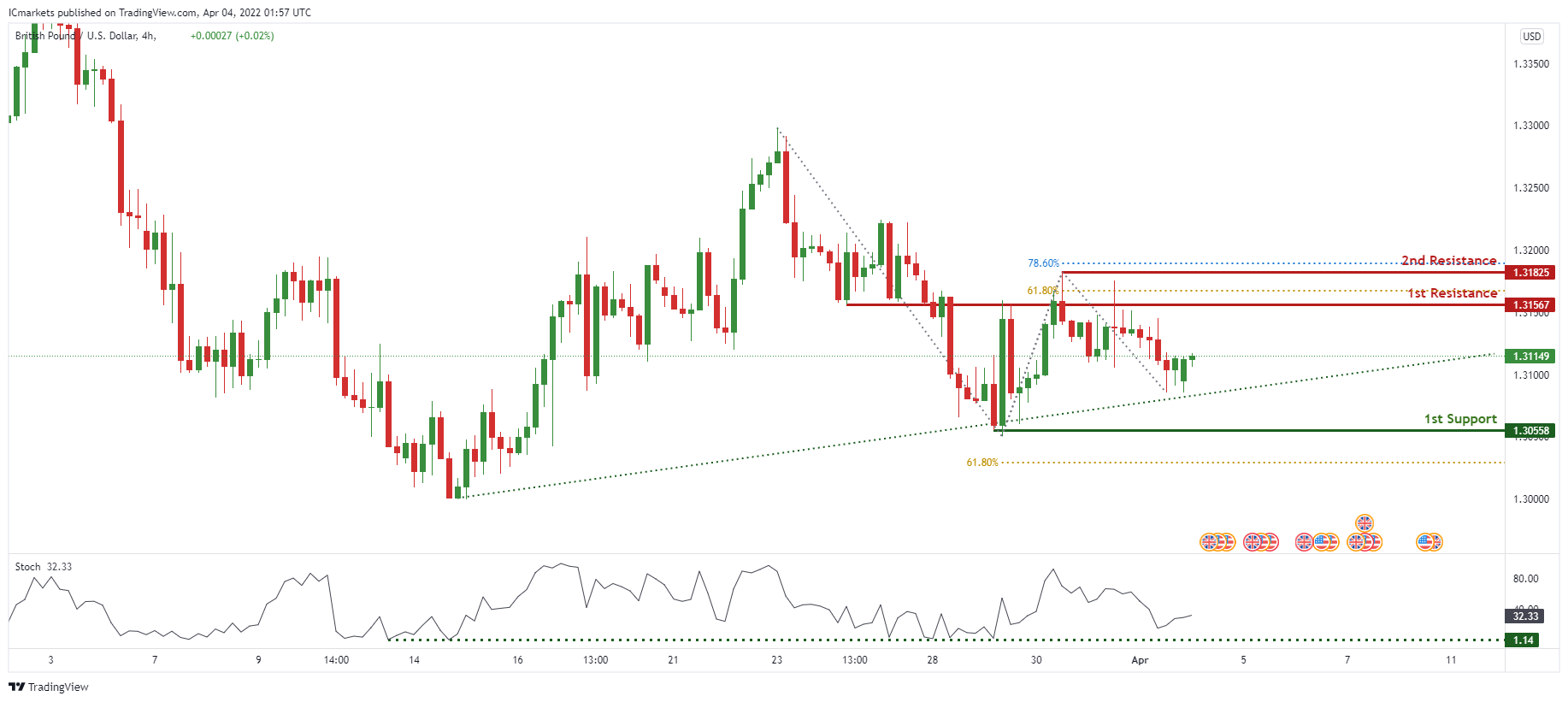
On the H4, prices are abiding by an ascending trendline support. We see the potential for a dip from our 1st resistance 1.31152 at 23.6% Fibonacci retracement towards our ascending trendline support. Breaking our ascending trendline support will find prices dipping towards our 1st support at 1.30558 in line with 61.8% FIbonacci retracement. Our bearish bias is further supported by prices trading below our ichimoku cloud resistance. Alternatively, prices may climb towards our 2nd resistance at 1.31622 in line with our graphical swing high.
Areas of consideration:
- H4 1st resistance at 1.31152
- H4 1st support at 1.30558
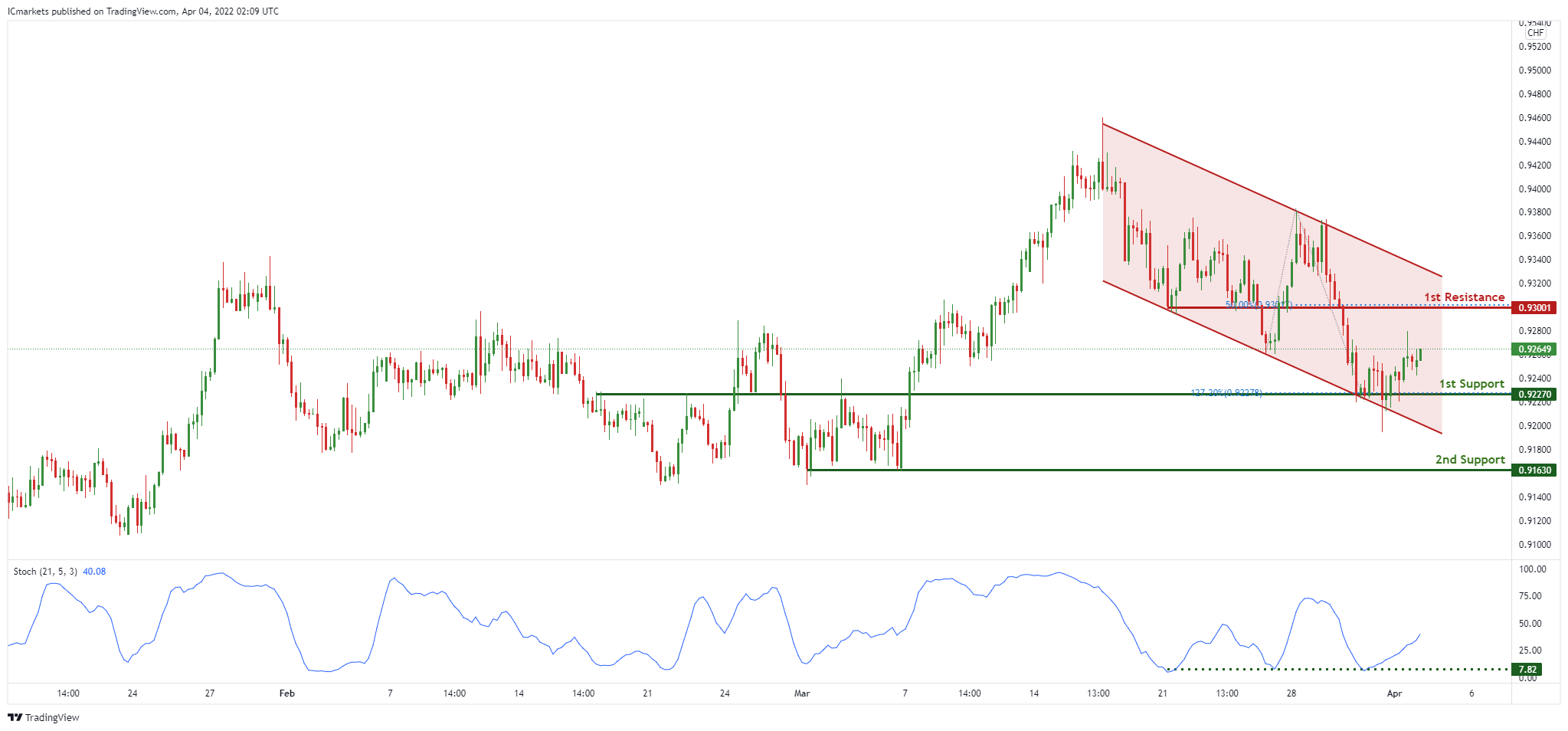
USD/CHF:
On the H4, with price expected to bounce off the support of the stochastics indicator, we have a bias that price will rise to our 1st resistance at 0.93001 in line with the 50% Fibonacci retracement from our 1st support at 0.92270 in line with the horizontal overlap support and 127.2% Fibonacci extension. Alternatively, price may break 1st support structure and head for 2nd support at 0.91630 in line with the swing low support.
Areas of consideration
- 1st support level at 0.92302
- 1st resistance level at 0.93001
EUR/USD :
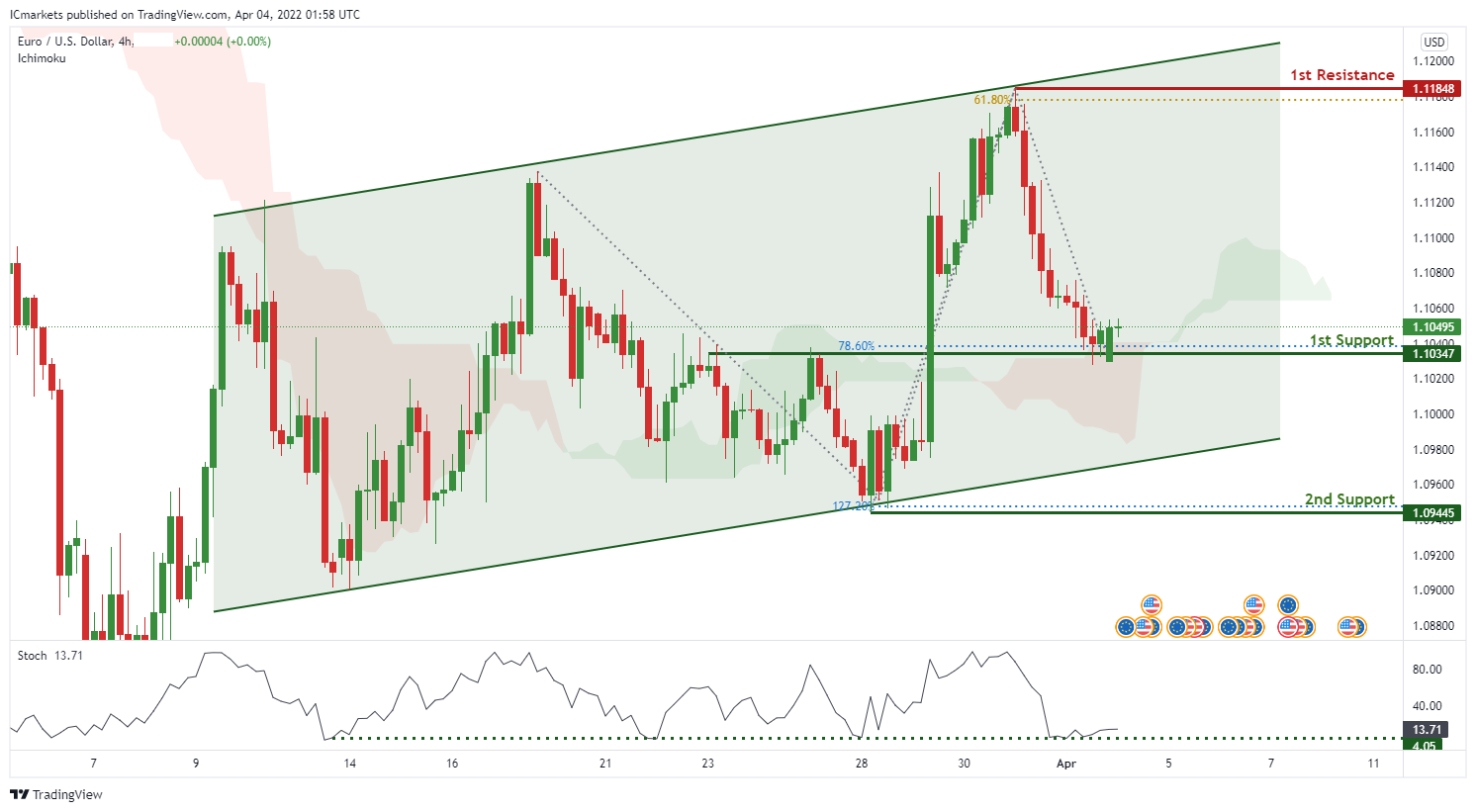
On the H4 timeframe, prices are consolidating in a parallel channel. We see the potential for a bounce from our 1st support at 1.10347 in line with 78.6% Fibonacci retracement towards our 1st resistance at 1.11848 in line with 61.8% Fibonacci Projection. Stochastics are at levels where bounces previously occurred, further supporting our bullish bias.
Areas of consideration :
- H4 1st resistance at 1.11848
- H4 1st support at 1.10347
USD/JPY:
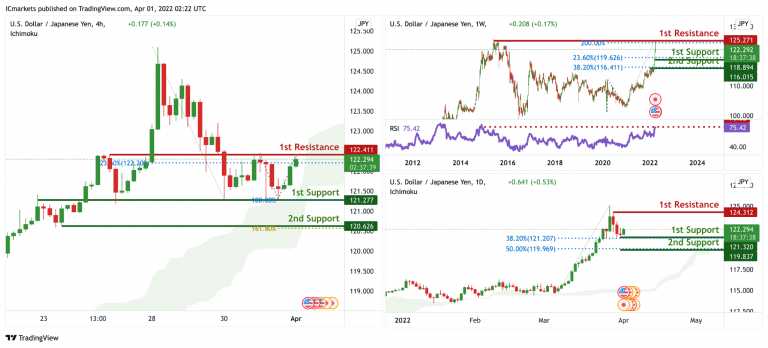
On the weekly, prices have approached an all time high. We see the potential for a dip from our 1st resistance at 125.271 in line with 200% Fibonacci Projection towards our 1st support at 118.894 in line with 23.6% Fibonacci retracement. RSI is at levels where dips previously occurred. On the daily, prices are on strong bullish momentum. We see the potential for a bounce from our 1st support at 121.320 in line with 38.2% Fibonacci retracement towards our 1st resistance at 124.312 which is a swing high. On the H4 timeframe, prices have approached a strong resistance. We see the potential for a dip from our 1st resistance at 122.411 in line with 23.6% Fibonacci retracement towards our 1st support at 121.277 in line with 100% Fibonacci Projection. Prices are testing the ichimoku clouds, supporting our bearish bias.
Areas of consideration:
- H4 time frame, 1st resistance at 122.411
- H4 time frame, 1st support at 121.277
AUD/USD:
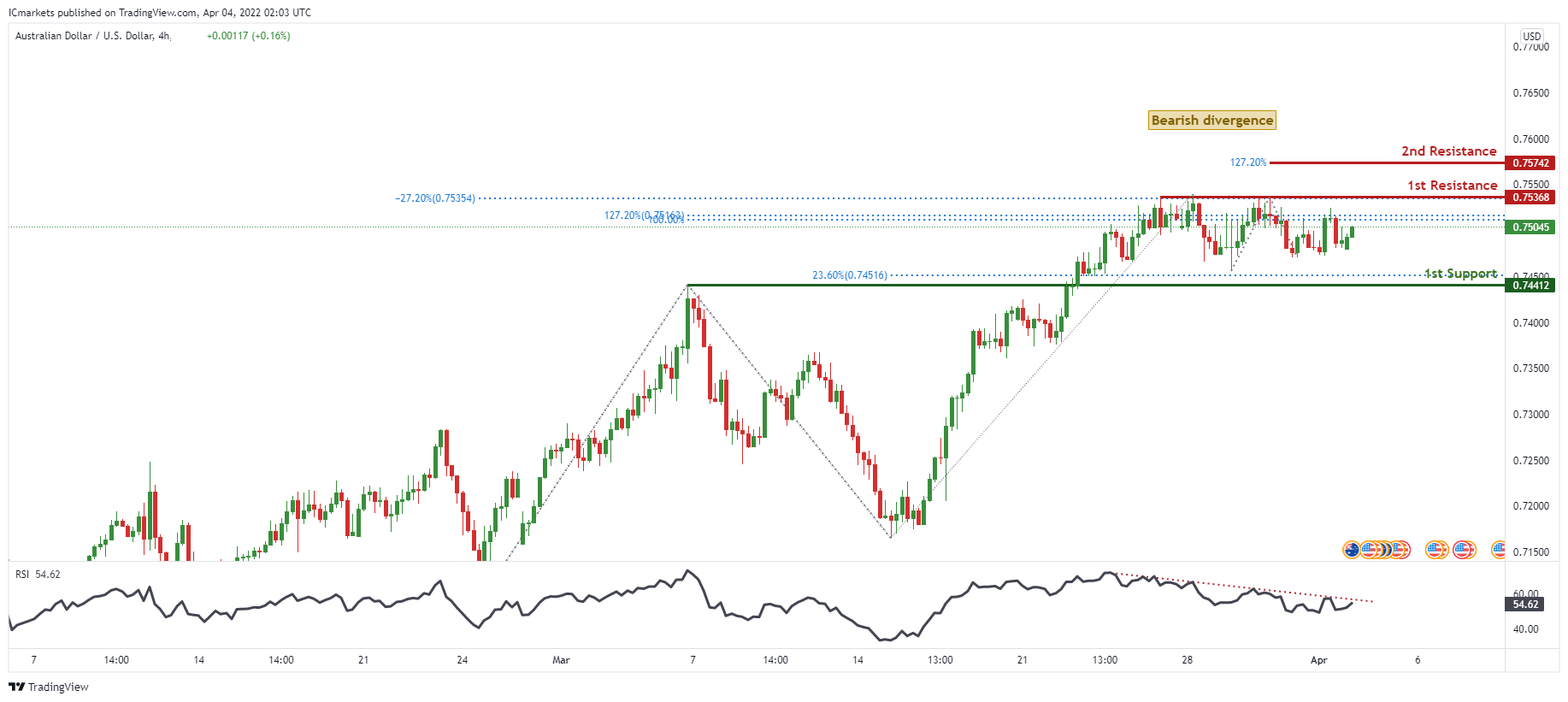
On the H4 timeframe, we see the potential for a dip from our 1st resistance at 0.75368 which is an area of Fibonacci confluences towards our 1st support at 0.74412 in line with 23.6% Fibonacci retracement. Our bullish bias is supported by price trading below the Ichimoku cloud indicator.
Areas of consideration
- H4 1st resistance at 0.75368
- H4 1st support at 0.74412
NZD/USD:
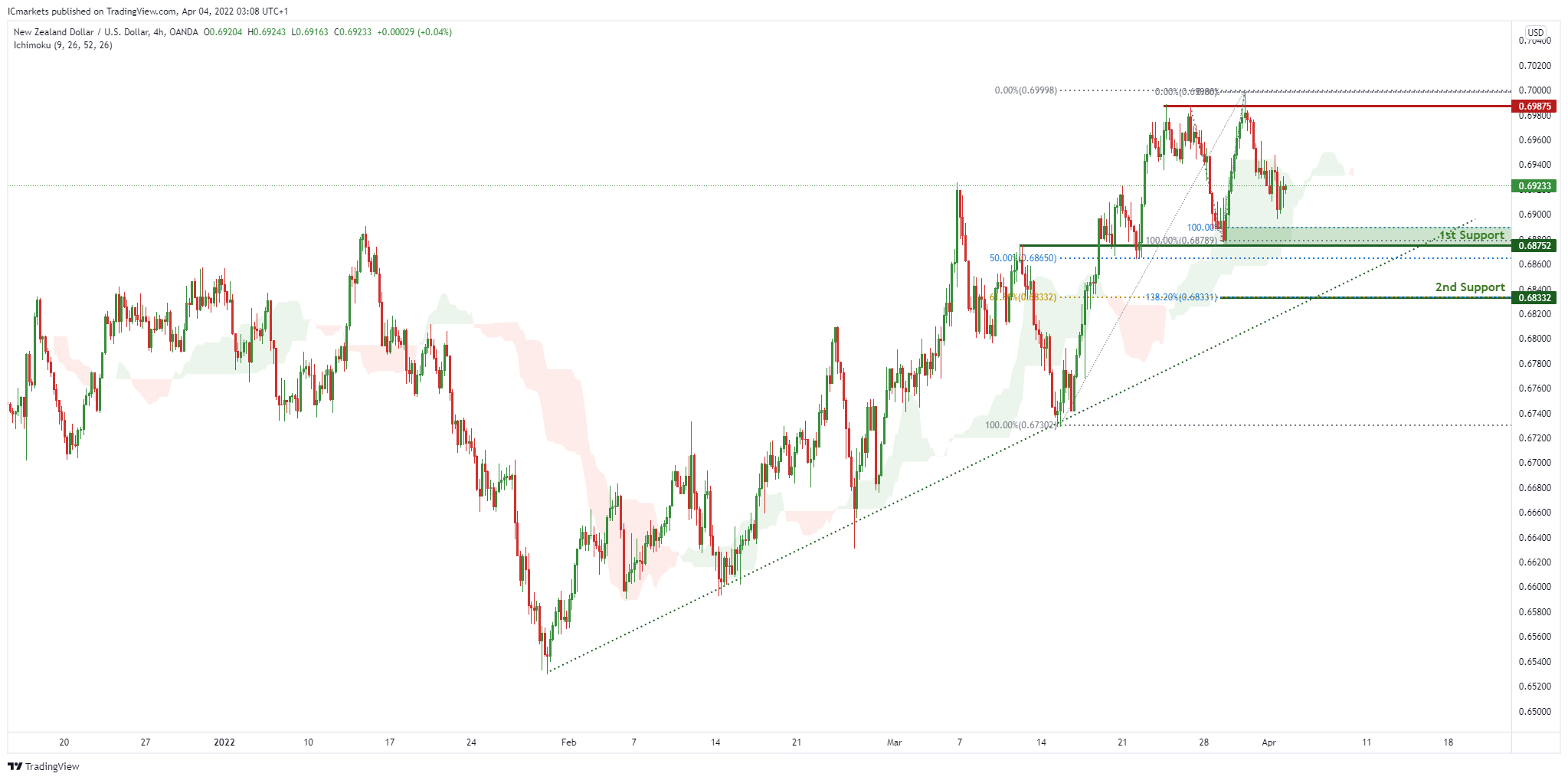
On the H4, with price expected to bounce off the support of the ichimoku cloud, we have a bias that price will rise to our 1st resistance at 0.69875 in line with the swing high resistance from our 1st support at 0.68752 in line with the horizontal overlap support, 50% Fibonacci retracement and 100% Fibonacci projection. Alternatively, price may break 1st support structure and head for 2nd support at 0.68332 in line with the 138.2% Fibonacci extension and 61.8% Fibonacci retracement.
Areas of consideration:
- H4 time frame, 1st support at 0.68752
- H4 time frame, 1st resistance at 0.69875
USD/CAD:
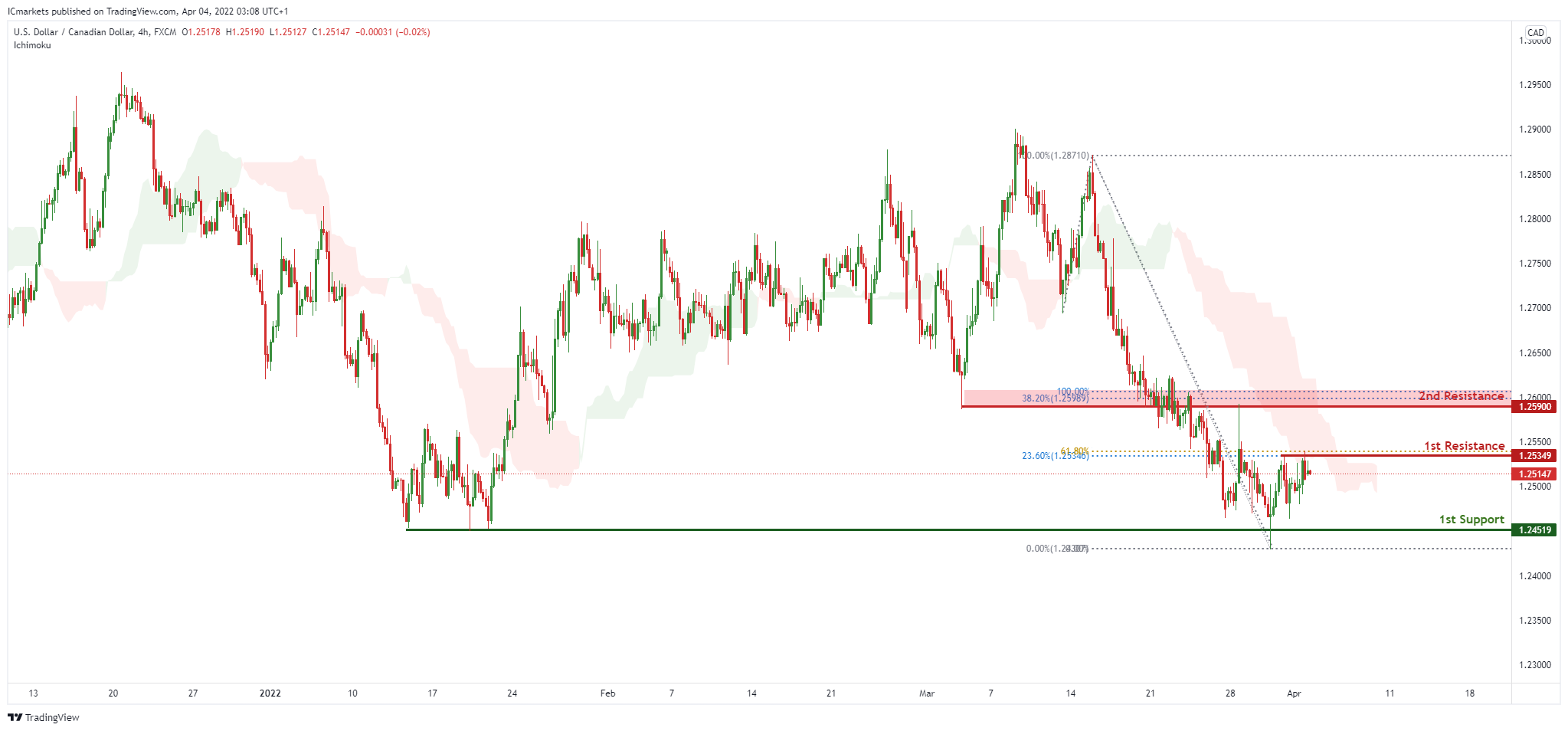
On the H4, with price moving below the ichimoku cloud, we expect to see a potential for bearish drop from our 1st resistance of 1.25349 in line with the 23.6% fibonacci retracement and 61.8% Fibonacci projection towards our 1st support level at 1.24519 in line with the swing low support. Alternatively, If price breaks out, it can potentially move towards our 2nd resistance level at 1.25900 which is in line with the 38.2% Fibonacci retracement and 100% Fibonacci projection.
Areas of consideration:
- H4 time frame, 1st support at 1.24519
- H4 time frame, 1st resistance at 1.25349
OIL:
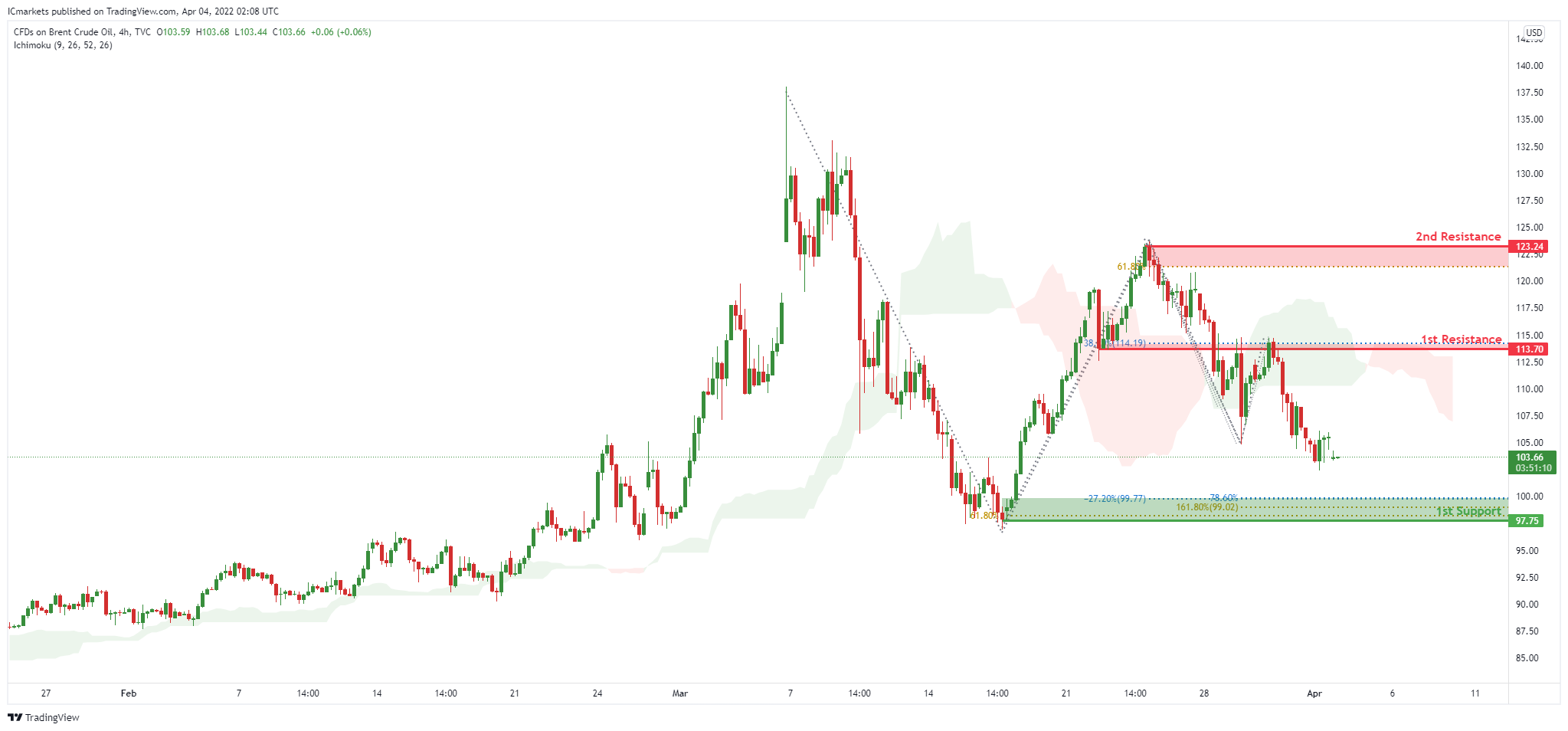
On the H4, with price moving below the ichimoku cloud, we expect to see a potential for bearish drop from our 1st resistance of 113.70 in line with the pullback resistance and 38.2% Fibonacci retracement towards our 1st support level at 97.75 in line with the 61.8% and 78.6% Fibonacci projection, 161.8% Fibonacci extension, -27.2% Fibonacci expansion. Alternatively, If price breaks out, it can potentially move towards our 2nd resistance level at 123.24 which is in line with the swing high resistance.
Areas of consideration:
- H4 time frame, 1st resistance of 113.70
- H4 time frame, 1st support of 98.14
Dow Jones Industrial Average:
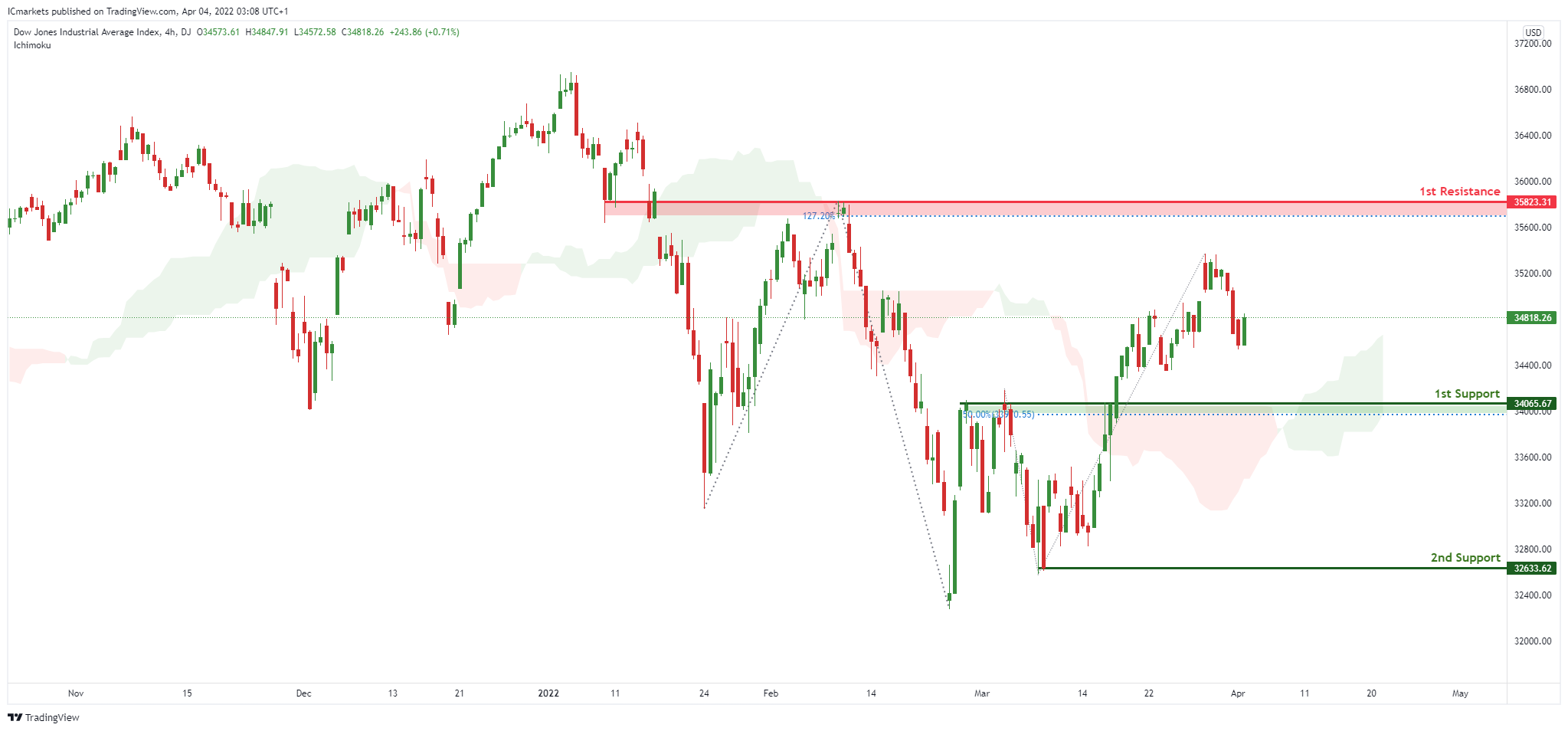
On the H4, with price moving above the ichimoku cloud, we have a bias that price will rise to our 1st resistance at 35823 in line with the 127.2% Fibonacci extension from our 1st support at 34065 in line with the horizontal pullback support and 50% Fibonacci retracement. Alternatively, price may break 1st support structure and head for 2nd support at 32633 in line with the horizontal swing low support.
Areas of consideration :
- H4 1st support at 34065
- H4 1st resistance at 35823
AUD/USD Daily Report
Daily Pivots: (S1) 0.7474; (P) 0.7499; (R1) 0.7526; More...
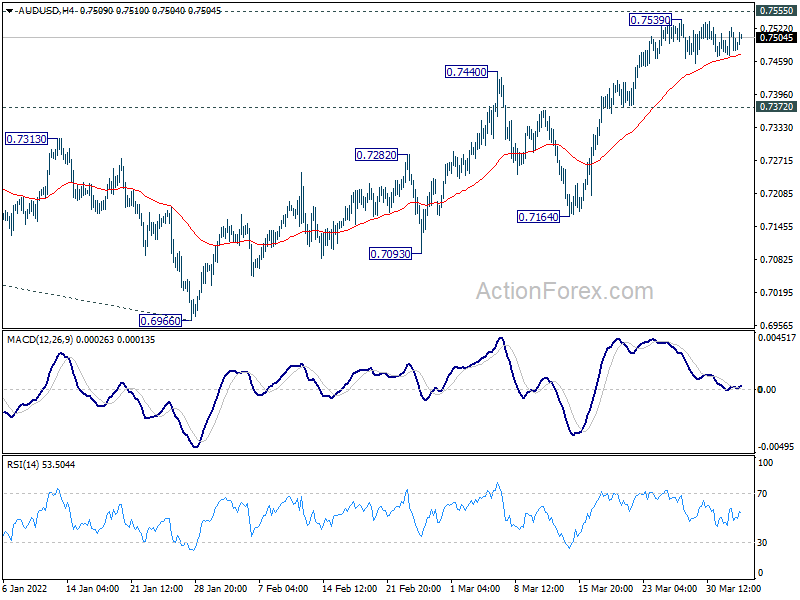
Intraday bias in AUD/USD remains neutral for consolidation from 0.7539. Further rally is expected wit h 0.7372 minor support intact. On the upside, decisive break of 0.7555 should confirm that whole corrective decline from 0.8006 has completed at 0.6966. Further rise should then be seen back to retest 0.8005. However, break of 0.7372 will dampen this bullish view and turn bias back to the downside for 0.7164 support instead.
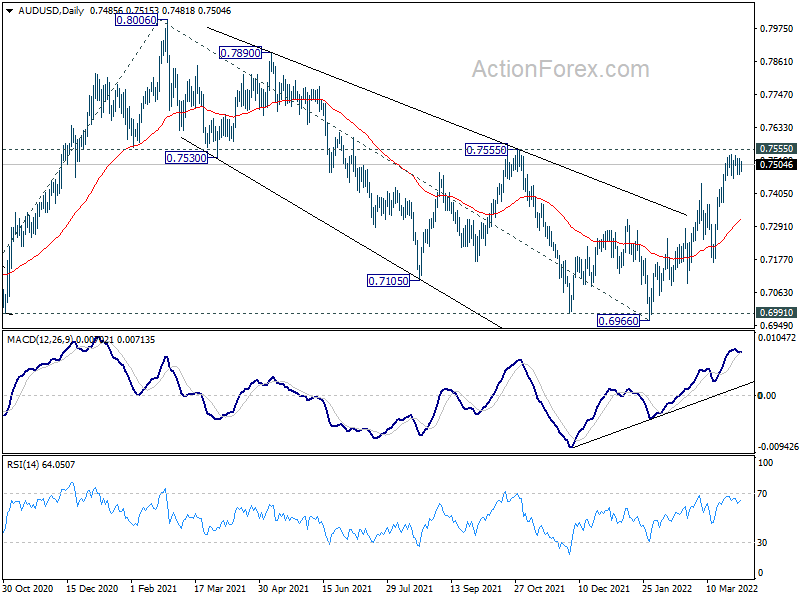
In the bigger picture, correction from 0.8006 could have completed at 0.6966, after drawing support from 0.6991. That is, up trend from 0.5506 (2020 low) might be ready to resume. Firm break of 0.8006 will target 61.8% projection of 0.5506 to 0.8006 from 0.6966 at 0.8511 next. This will remain the favored case as long as 0.7164 support holds.
Aussie Mildly Firmer in Quiet Trading, Awaits Tomorrow’s RBA
Overall, the financial markets are very quiet in Asian session today. Commodity currencies are trading mildly firmer in very while Swiss Franc and Yen are softer. But major pairs and crosses are stuck inside Friday's range. Gold dips mildly after prior rejection by 1950 and it could be heading back to 1900 handle. WTI crude oil is staying in narrow range above 100, giving little reaction to news that EU is considering fresh sanctions, including gas embargo, on Russia for its intensifying war crimes in Ukraine.
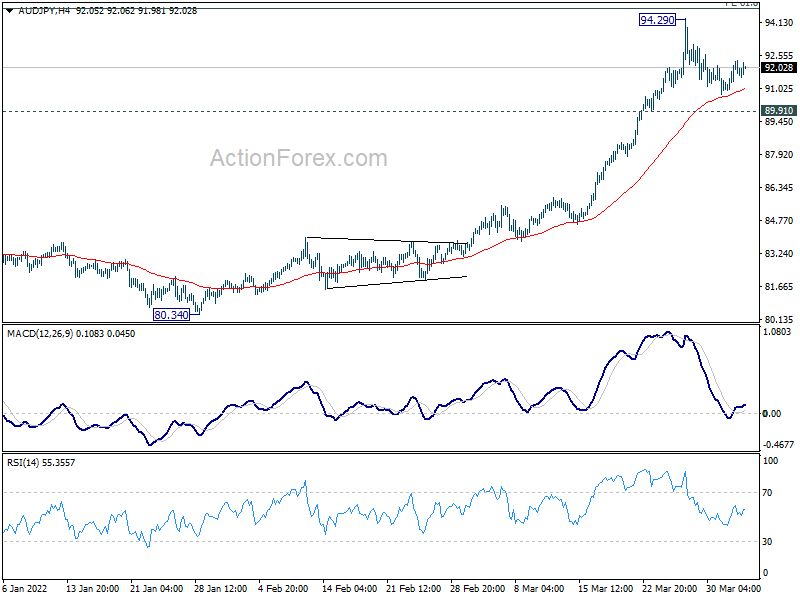
Technically, some attention will be paid to Aussie pairs ahead of tomorrow's RBA rate decision. AUD/USD consolidating below 0.7539 for now and further rise is expected. Decisive break of 0.7555 resistance would solidify the near term momentum back towards 0.8006 high. AUD/JPY is also holding well above 89.91 minor support as consolidation from 94.29 extends. Further rally is expected through 94.29 at a later stage as larger up trend resumes.
In Asia, at the time of writing, Nikkei is up 0.08%. Hong Kong HSI is up 0.94%. China is on holiday. Singapore Strait Times is up 0.11%. Japan 10-year JGB yield is down -0.0053 at 0.211.
ECB Schnabel: Continuing policy normalization path is appropriate course of action
ECB Executive Board member Isabel Schnabel said in a speech over the weekend, "a considerable part of inflation is likely to prove more persistent, however – to an extent that, without monetary policy adjustment, inflation risks settling above our 2% target over the medium term."
There are three factors that could make inflations "sticky". Firstly, strong demand is contributing to rising pipeline pressures. Secondly, supply-side shocks are turning inflationary. Thirdly, wage catch-up is becoming more likely.
She added that continuing the path of policy normalization is "the appropriate course of action." But, "the speed of normalisation, in turn, will depend on the economic fallout from the war, the severity of the inflation shock and its persistence."
"We have stressed the importance of optionality and data dependence in our March Governing Council decision: we expect to conclude net asset purchases under our asset purchase programme in the third quarter, as long as the incoming data support the expectation that the medium-term inflation outlook will not weaken. We will hike interest rates some time after, as appropriate in light of incoming data," Schnabel reiterated.
Fed Daly: The case for 50bps hike has grown
San Francisco Fed President Mary Daly told FT, the case for 50bps rate hike in May has grown. "The case for 50, barring any negative surprise between now and the next meeting, has grown," she said. "I'm more confident that taking these early adjustments would be appropriate."
Daly noted the US labor market was "very strong" and "tight to an unsustainable level".
"If you want a job in the United States, you can get one and you can probably get multiple jobs at this point," she said. "If you're an employer looking for workers, it's hard to both hire them and retain them."
Fed Williams: Balance sheet reduction can begin as soon in May
New York Fed President John Williams said in a speech that FOMC communicated "two important message" about the likely future course of monetary policy during March meeting, along with the rate hike.
Firstly, it expects that "ongoing increases in the target range will be appropriate" and "the median assessment of the appropriate level of the federal funds rate at the end of next year is expected to be somewhat above the median assessment of its longer-run level".
Secondly, FOMC expects to "decide at a coming meeting when to begin reducing its holdings of securities". He added, "I expect that this process of reducing the size of the balance sheet can begin as soon as the May FOMC meeting".
"These actions should enable us to manage the proverbial soft landing in a way that maintains a sustained strong economy and labor market," Williams said. "Both are well positioned to withstand tighter monetary policy. In fact, I expect the economy to continue to grow this year and for the unemployment rate to remain close to its current level."
RBA to stand pat, Fed and ECB to release minutes
RBA will keep interest rate unchanged at 0.10% this week. It's repeated many times by Governor Philip Lowe that there is room to be patient on rate hikes. Currently the markets are expecting RBA to wait until having Q2 growth and inflation data before acting on rates in August. It's possible that RBA would act earlier than that, but at least, it will wait for Q1 data. On the central bank front, Fed and ECB will release meeting minutes too.
On the data front, the calendar is relatively light. Eurozone Sentix investor confidence, US ISM services; Canada employment and China Caixin PMI services will catch most attention. Here are some highlights for the week:
- Monday: Germany trade balance; Eurozone Sentix investor confidence; Canada building permits, BoC business outlook survey; US factory orders.
- Tuesday: Australia AiG construction, RBA rate decision; Japan average cash earnings, household spending; France industrial production; Eurozone PMI services final; UK PMI services final; Canada trade balance; US trade balance, ISM services.
- Wednesday: China Caixin PMI services; Germany factory orders; UK PMI construction; Eurozone PPI; Canada Ivey PMI; FOMC minutes.
- Thursday: Australia AiG services, trade balance; Japan leading indicators; Swiss unemployment rate, foreign currency reserves; Germany industrial production; Eurozone retail sales, ECB meeting accounts; US jobless claims.
- Friday: Japan current account, consumer confidence; Canada employment.
AUD/USD Daily Report
Daily Pivots: (S1) 0.7474; (P) 0.7499; (R1) 0.7526; More...
Intraday bias in AUD/USD remains neutral for consolidation from 0.7539. Further rally is expected wit h 0.7372 minor support intact. On the upside, decisive break of 0.7555 should confirm that whole corrective decline from 0.8006 has completed at 0.6966. Further rise should then be seen back to retest 0.8005. However, break of 0.7372 will dampen this bullish view and turn bias back to the downside for 0.7164 support instead.
In the bigger picture, correction from 0.8006 could have completed at 0.6966, after drawing support from 0.6991. That is, up trend from 0.5506 (2020 low) might be ready to resume. Firm break of 0.8006 will target 61.8% projection of 0.5506 to 0.8006 from 0.6966 at 0.8511 next. This will remain the favored case as long as 0.7164 support holds.
Economic Indicators Update
| GMT | Ccy | Events | Actual | Forecast | Previous | Revised |
|---|---|---|---|---|---|---|
| 23:50 | JPY | Monetary Base Y/Y Mar | 7.90% | 7.60% | ||
| 06:00 | EUR | Germany Trade Balance (EUR) Feb | 11.3B | 9.4B | ||
| 08:30 | EUR | Eurozone Sentix Investor Confidence Apr | -9.7 | -7 | ||
| 12:30 | CAD | Building Permits M/M Feb | 2.30% | -8.80% | ||
| 14:00 | USD | Factory Orders M/M Feb | -0.60% | 1.40% | ||
| 14:30 | CAD | BoC Business Outlook Survey |