

Sample Category Title
Gold Climbs above the MAs and the Ichimoku Cloud
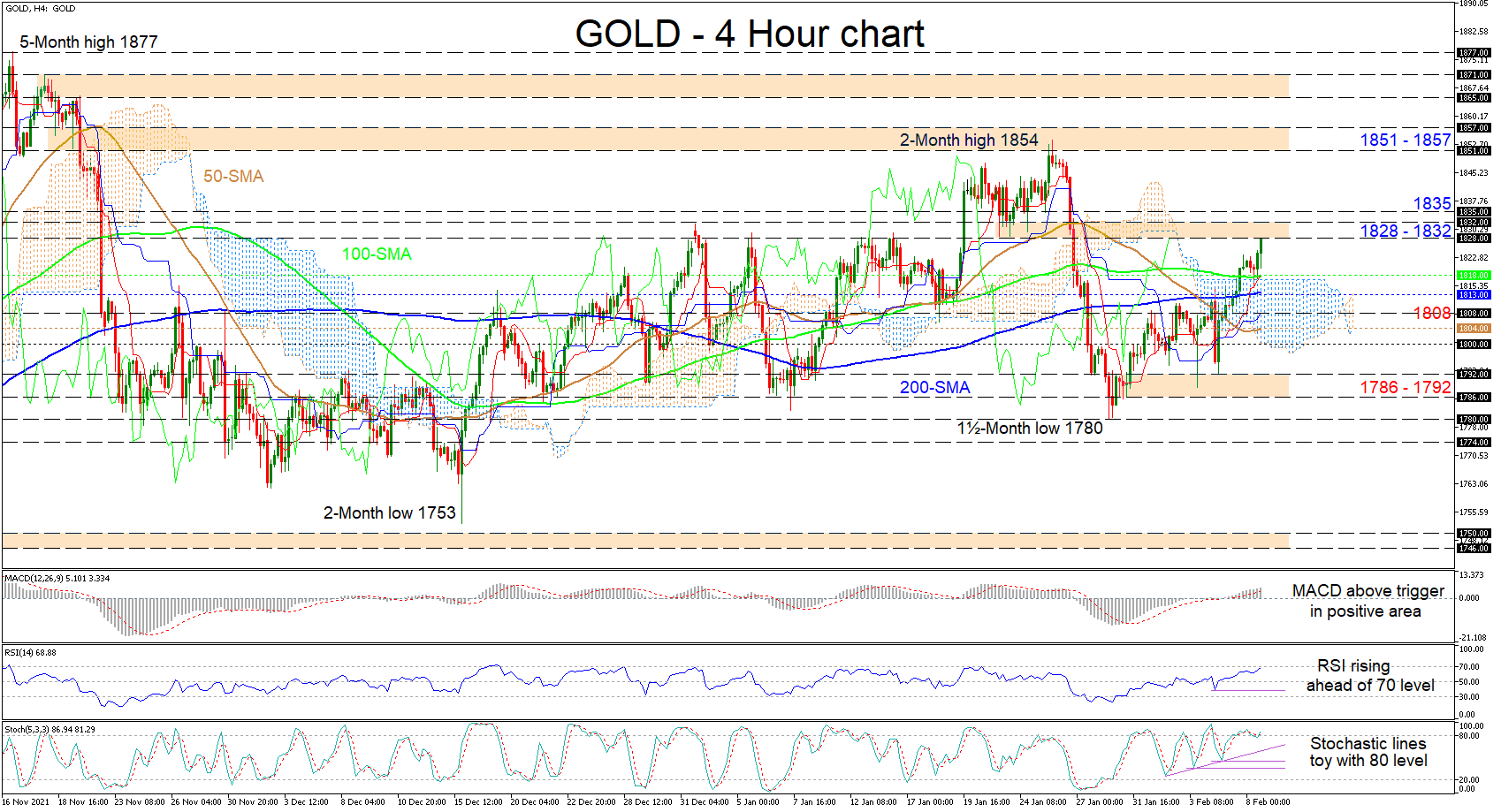
Gold recently breached the 1,800 handle and has extended beyond the simple moving averages (SMAs) and the Ichimoku cloud. Although the longer-term averages are endorsing a more neutral trend, the upturn of the 50-period SMA, is suggesting upside momentum is gaining the upper hand.
The short-term oscillators are indicating a positive preference in the price. The MACD, in the positive section, is sustaining its gradual climb above its red trigger line, while advances in the RSI have neared the 70 overbought level. The stochastic %K line has steered back above the 80 level and is sponsoring positive price action in the commodity.
In the positive scenario, gold may struggle to gain further ground past the 1,828-1,832 resistance border, crowded by another barrier overhead at 1,835. If buyers manage to conquer these obstacles, the price may then propel for the 1,851-1857 resistance barricade, extending back to mid-November 2021, which encapsulates the recent two-month high of 1,854.
If the commodity’s price falters at the key resistance, sellers may face an initial tough support zone from the 100-period SMA at 1,818 until the 200-period SMA at 1,813, which includes the cloud’s upper surface. If negative pressures persist, the bears may then meet downside limitations from the support zone from the 1,808 low until the 50-period SMA at 1,804. From here, if gold continues to lose its shine, a dive below the cloud and the 1,800 hurdle could have the price target the 1,786-1,792 support section.
Summarizing, gold is exhibiting a bullish mood above the SMAs and the cloud. That said, the broader neutral bias still prevails.
AUDJPY Wave Analysis
- AUDJPY broke key resistance level 82.00
- Likely to rise to resistance level 83.00
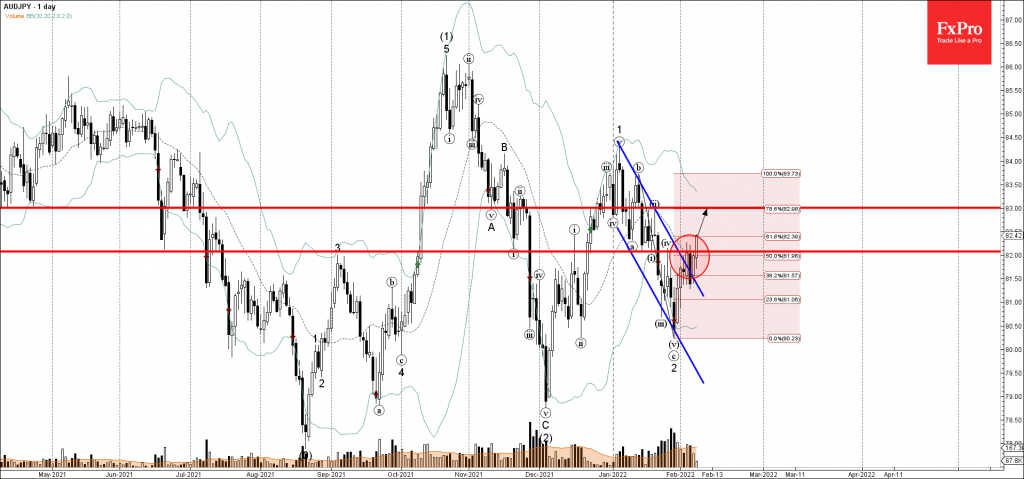
AUDJPY currency pair recently broke the key resistance level 82.00 (which has been reversing the price from the middle of December).
The breakout of the resistance level 82.00 coincided with the breakout of the daily down channel from January and the 50% Fibonacci correction of the previous wave 2.
AUDJPY currency pair can be expected to rise further toward the next resistance level 83.00 (top of wave (iii) from the end of January).
Eco Data 2/9/22
[php_everywhere instance="1"]
Digital Revolution: Will Cryptocurrencies Take Over the World? Part III
Part III: Central Bank Digital Currencies
Summary
- Paper money is a risk-free asset for an individual or business that holds it and a liability of the central bank that issues it. Paper money works well as a medium of exchange for small value payments that are made "in person," but it does not work as well for payments that are large in value or need to be made remotely.
- Many central banks are contemplating the issuance of their own digital currencies. Similar to paper money, these so-called central bank digital currencies (CBDCs) would be a liability of the central bank and a risk-free asset of the public. Large value payments and remote payment could be made easily with CBDCs, and payments would clear essentially instantaneously.
- But there are complex design issues associated with CBDCs. Bank deposits, which are the liabilities of private sector commercial banks, constitute the vast majority of the money supply of most economies. A CBDC could compete with bank deposits, which could lead to disintermediation from the banking system, especially in times of financial stress. Disintermediation could have devastating consequences for economic growth.
- The People's Bank of China (PBoC) recently issued the Digital Currency Electronic Payment (DCEP) on a limited basis, making it the first major central bank to launch a digital currency. The DCEP is a liability of the PBoC, but the public acquires it from commercial banks, not directly from the central bank. The DCEP does not pay interest, which should limit the potential disintermediation effects of the digital currency in the Chinese banking system.
- Advanced economies are lagging behind in terms of CBDC issuance. Work on a CBDC in Sweden, which increasingly has become a "cashless" economy, has been underway for more than four years. The Swedish central bank completed a test of an e-krona last year, but no decision has been reached yet about whether to actually issue a CBDC in Sweden. The European Central Bank expects to have a prototype of a digital euro ready for testing sometime in 2023.
- The Federal Reserve recently published a report that lists some basic principles regarding the potential issuance of a U.S. CBDC. But the Fed essentially kicked the decision about the creation of a digital currency back to the executive branch and Congress.
NOT A DEPOSIT. NOT PROTECTED BY SIPC. NOT FDIC INSURED. NOT GUARANTEED. MAY LOSE VALUE. NOT INSURED BY ANY FEDERAL GOVERNMENTAL AGENCY
This commentary is provided for information purposes only and does not contain any recommendations or investment advice. The Firm makes no recommendation as to the suitability of investing in digital assets, including cryptocurrencies. Investments in digital assets carry significant risks, including the possible loss of the principal amount invested. It is only for individuals with a high risk tolerance who can withstand the volatility of the digital asset market. Investors should obtain advice from their own tax, financial, legal and other advisors, and only make investment decisions on the basis of the investor's own objectives, experience and resources.
Central Banks Are Getting in on the Digital Act
In Part I of this series, we discussed some benefits and drawbacks of digital currencies. One of the notable drawbacks of some cryptocurrencies is their extreme price volatility. For example, daily swings in excess of 10% in the price of Bitcoin are not uncommon, which raises questions about its use as a store of value over short periods of time. There is a category of digital currencies, which are known as stablecoins, that tend to have stable values. But as we discussed in more detail in Part II, a drawback to stablecoins is that they are liabilities of private issuers. They function well normally, but they can be susceptible to "runs" when the public turns risk averse and begins to question the financial viability of the issuer(s).
But there clearly are some desirable characteristics of digital currencies. For starters, digitization allows payments to be made essentially instantaneously, whereas it can take days for checks to "clear." Additionally, individuals without bank accounts (the "unbanked") can easily make payments with digital currencies as long as they have a mobile phone. It is for these reasons that central banks, which play a vital role in the traditional payment systems of most economies, have shown a keen interest in potentially developing their own digital currencies. The Bank for International Settlements (BIS) defines central bank digital currencies (CBDCs) as "a form of digital money, denominated in the national unit of account, which is a direct liability of the central bank."1
Parts of the payment systems of most economies are already digitized. For example, commercial banks in the United States have accounts at the Federal Reserve, and the Fed digitally clears trillions of dollars of payments every day for these banks. Moreover, the process of clearing payments is speeding up. The Target2 system of the European Central Bank, which provides real-time gross settlement on most days of the year for banks and other central banks, has been operational since 2007. The Federal Reserve plans to implement its FedNow Service, which will provide real-time clearing on a 24/7 basis, beginning next year.
Essentially all central banks issue their own form of paper money that can be used as a medium of exchange. Paper money is a risk-free asset for an individual or business that holds it and a liability of the central bank that issues it. However, most economies do not yet have a digitized form of their national currency that individuals and businesses can use to make payments. So many central banks are currently focused on the development of "retail" digital currencies. But there are complex design issues underlying the creation of CBDCs, and ill-design could have negative consequences for the banking system in many economies. We will begin by discussing some benefits and drawbacks of CBDCs before turning to a discussion of the work that is underway at some of the world's major central banks regarding potential issuance of digital currencies.
Potential Benefits of CBDCs
Let's start with the potential benefits. Paper money (e.g., U.S. dollar bills) serves well as a medium of exchange for small value payments that are made "in person." For example, using dollar bills to buy a few items at a convenience store is routine. But paper money does not work as well for large value payments and for payments that need to be made remotely. An individual probably would not want to carry $70,000 in cash to a car dealership to buy an expensive new car, nor would he or she want to send cash through the mail to pay for an item, regardless of the price of that item.
A CBDC would be a superior way relative to paper money for individuals to make payments. Similar to paper bills, a CBDC would be a liability of a central bank. But digitization would make it much easier to use a CBDC rather than paper bills because the former would be accessible via a mobile phone. An individual could easily make large payments as well as remote payments with a CBDC. Furthermore, these payments would settle essentially instantaneously; no more waiting for "the check to clear." This would be especially important for international transactions, which can often be time-consuming and expensive. The World Bank estimates that the cost of sending a $200 payment to another country currently averages nearly $13 in the G-20 economies. CBDCs could potentially be available to "unbanked" individuals as well.2
Additionally, CBDCs could solve some privacy issues that arise with stablecoins, which we briefly discussed in Part II. Private sector issuers of stablecoins have data on the payments that individuals who use their tokens make. Although numerous privately-issued stablecoins exist today, "network effects" could lead to a winnowing process in which only a few stablecoins survive. For example, the BIS notes that 94% of mobile payments in China today are made by just two big tech firms.3 Is it good public policy to have significant amounts of personal data concentrated in the hands of just a few private companies? Of course, a CBDC could give government authorities access to private data, depending on how it is designed.
CBDCs could also offer some benefits to central banks in terms of monetary policy options. Central banks presently are constrained in their ability to take interest rates into negative territory, which may be warranted when economic conditions weaken significantly. Some major central banks (e.g., the European Central Bank and the Bank of Japan) have implemented negative interest rates, but these policies apply only to the interest that central banks pay on the reserves that commercial banks hold at the central bank. (Under negative interest rates, commercial banks pay interest to the central bank.) But most commercial banks are hesitant to pass these negative rates on to their depositors and creditors. Consequently, negative interest rates at present do not have much stimulative effect on aggregate demand.
But a CBDC could give a central bank the ability to directly reduce the digital assets of a household or a business by the appropriate interest rate. Faced with the prospect of "paying" the central bank, household and businesses may opt to spend some of their CBDC holdings, thereby giving a boost to aggregate demand. Alternatively, a central bank could stimulate aggregate demand with "helicopter money," by which the monetary authorities could credit the digital balances of household and businesses.4
Some Notable Drawbacks of CBDCs
But there are also some clear drawbacks to CDBCs. Let's return to the example above in which an individual wants to buy an expensive new car. In the current payment environment, that person could pay for the car by writing a check, which is a liability of a commercial bank. But before transferring ownership of the car, the car dealer probably would want to verify that the funds are "in the bank" or wait until the check "clears." Both options can be inconvenient and time-consuming.
In a world in which CBDCs existed, the individual could authorize payment to the car dealer using his or her mobile phone and the funds would be transferred instantaneously. In that sense, the CBDC would work like a debit card. But with a debit card, the individual's assets are a liability of a commercial bank that the bank uses to finance its loans. The existence of a CBDC could potentially induce individuals and businesses to substitute the liability of a commercial bank for the liability of the central bank. That is, a CBDC could potentially lead to disintermediation from the banking system. Loans account for roughly 80% of the credit that is extended to the non-financial private sector (i.e., households and non-financial businesses) in the United States. This proportion is even higher in other economies that do not have well-developed corporate bond markets like the United States. CBDCs could potentially lead to shrinkage in the balance sheets of many commercial banks, which could have devastating consequences for economic growth.
This disintermediation problem could become particularly acute if central banks paid interest on CBDCs. After all, why would an individual want to keep deposits at a commercial bank if they could hold risk-free assets that earn interest at the central bank? Consequently, most central banks may choose to not pay interest on CBDCs. But this disintermediation problem could still persist during period of financial stress if individuals and businesses choose to move their assets from the commercial banking system to the safety of the central bank. Therefore, a cap on the amount of CBDCs that an individual or business could own may be warranted to minimize the potential risk to the commercial banking system.
Furthermore, central banks do not have the resources to handle all the tasks that the commercial banking system undertakes. For example, according to the FDIC, there are approximately 124 million American households with bank accounts, representing roughly 95% of American households.5 The Federal Reserve simply does not have the resources available to onboard and maintain the accounts of millions of American households, a task that currently is being handled by the nation's 4,800 insured commercial banks. Central banks in most other economies are also ill-equipped to handle these tasks.
Progress on CBDC Issuance in Major Economies
Despite these drawbacks, some central banks have already launched their own digital currencies with many other central banks actively exploring the potential to do so themselves. According to The Atlantic Council, there were nine countries as of December 2021 which had already launched a CBDC, and 69 others in which a pilot program existed or active development or research was ongoing.
China, which began work on a digital currency in 2014, in recent weeks became the tenth country to have issued a CBDC.6 The digital currency of the People's Bank of China (PBoC) is known formerly as Digital Currency Electronic Payment (DCEP). Similar to paper yuan, the DCEP is a liability of PBoC, but the public acquires the digital currency only from commercial banks, not directly from the PBoC.
The DCEP was designed with small transactions in mind. That is, it is not based on blockchain technology, as are some cryptocurrencies such as Bitcoin, because that technology would make it cumbersome to handle a high volume of small transactions. In that regard, China's system reportedly can process 300,000 transactions per second. The DCEP does not pay interest, which should limit the incentive of individuals to switch out of bank deposits and into digital yuan. Therefore, any harmful disintermediation effects on the commercial banking system in China should be limited. The PBoC has rolled out the DCEP on a limited basis, at least for now, and it potentially could evolve over time if circumstances warrant.
Sweden, where the amount of currency in circulation peaked in 2007, has become an increasingly "cashless" economy. Although the outstanding value of coins and bills has stabilized over the past few years, the amount of currency in circulation relative to the size of the economy is only 1%, a record low (Figure 1). The Swedish Riksbank (the country's central bank) says on its website that "in response to the increasingly marginalized role of cash, the Riksbank is investigating whether it is possible to issue a digital complement to cash, the e-krona."
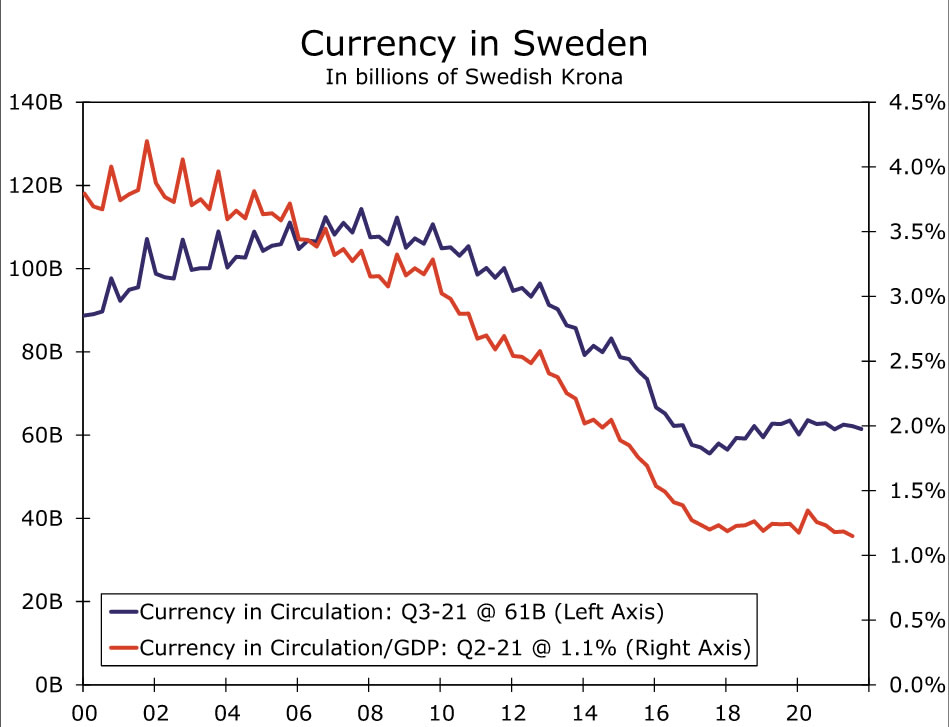
Preliminary work on the design of an "e-krona" began in 2017, which made Sweden one the first central banks among the advanced economies to conduct research on the feasibility of issuing a CBDC, and the central bank completed a test of the e-krona last year. That said, launch of a CBDC in Sweden does not appear imminent, because the central bank continues to state that "at yet no decision has been taken to issue an e-krona." At the completion of the test, Riksbank Governor Ingves said that Sweden could have CBDC "within five years."
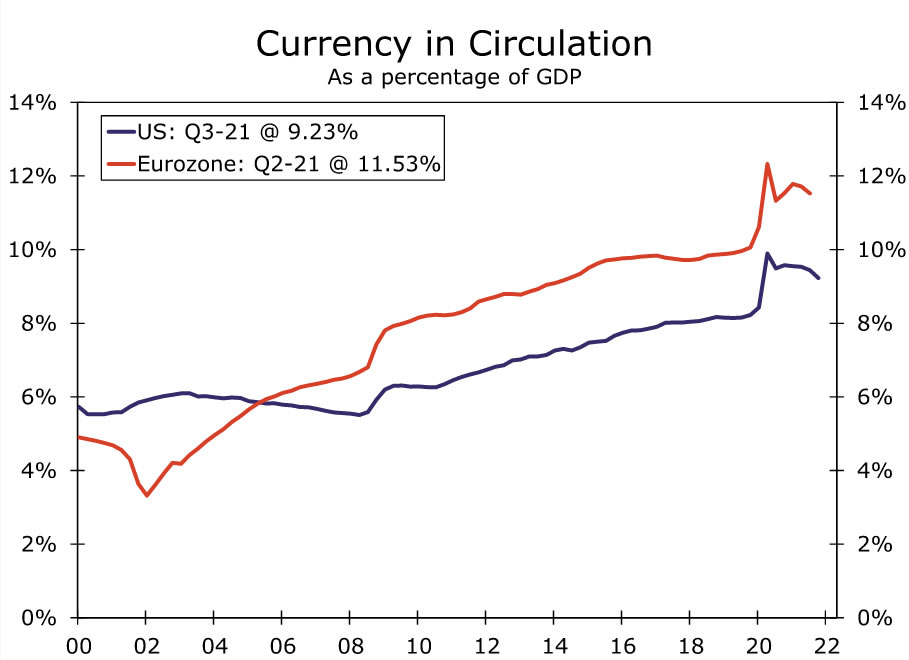
Unlike the circulation of the Swedish krona, which has declined markedly over the past decade or so, the amount of euros in circulation continues to rise, not only in absolute terms but relative to the size of the Eurozone economy as well (Figure 2).7 Nevertheless, the European Central Bank (ECB) established a task force in January 2020 to consider the implication of a digital euro that "could support the Eurosystem's objectives by providing citizens with access to a safe form of money in the fast-changing digital world." The ECB published a report on the task force's findings in October 2020, and it moved to the "investigation phase" of a digital euro in October 2021. According to the ECB's website, this phase is projected to last 24 months. In testimony to the European Parliament in November, ECB Executive Board Member Panetti said "we expect to narrow down the design-related decisions by the beginning of 2023 and develop a prototype in the following months." Presumably, it will take more time to test any prototype of a digital currency that the ECB may develop. In short, potential issuance of a digital euro by the ECB appears to be a few years away.
Work on a CBDC for the United State is also underway, and the Federal Reserve recently released a report on its preliminary conclusions. The report does not go into specific design features of a potential digital dollar, but rather highlights some broad principles. Specifically, the report notes that "a potential U.S. CBDC, if one were created, would best serve the needs of the United States by being privacy-protected, intermediated, widely transferable, and identity-verified."
"Intermediated" means that the Federal Reserve would not issue a digital dollar directly to the public. The digital currency would be a liability of the Fed, but "the private sector would offer accounts or digital wallets to facilitate the management of CBDC holdings and payments." These holdings would need to be "readily transferable between customers of different intermediaries." That is, an individual with a CBDC account or wallet at a specific commercial bank should be able to easily send a payment to a person who can then make a deposit in his or her CBDC account or wallet at another commercial bank. Intermediaries would need to verify the identity of their CBDC depositors to protect against money laundering, although "any CBDC would need to strike an appropriate balance between safeguarding the privacy rights of consumers and affording the transparency needed to deter criminal activity."
The Federal Reserve concluded its report by asking for public comments until May 20, 2022 on the benefits, risks and policy considerations related to a U.S. CBDC. However, the Fed also said that it is not taking a position on the ultimate desirability of a U.S. CBDC, and it kicked the decision back to lawmakers by stating that it "does not intend to proceed with issuance of a CBDC without clear support from the executive branch and from Congress, ideally in the form of specific authorizing law." But should lawmakers decide to proceed with a CBDC for the United States, some preliminary research on technical issues has already been done, which the Federal Reserve Bank of Boston and the Massachusetts Institute of Technology explain in a recent report.
Conclusion
As we noted in Part I of this series, the dominant form of money that societies have used has evolved over centuries, and there is no inherent reason to believe that its current form (i.e., paper bills and bank deposits) is the last step in the chain of monetary evolution. In that regard, there are some clear benefits to digital currencies that would make their issuance on a "retail" basis attractive to central banks. But the desirability of a CBDC for the public in a specific economy is not entirely clear-cut. There are some complex design issues that require careful considerations, and ill-design of a CBDC could potentially contribute to monetary and financial instability which most central banks strive to avoid.
China recently became the first major country to issue a digital currency for public use, and many other central banks are working to determine whether the potential benefits of a CBDC outweigh the potential costs. Sweden has already tested a prototype CBDC, but the country has not yet determined whether to move forward with actual issuance. The ECB plans to introduce a prototype some time in 2023, but actual issuance of a CBDC in the Eurozone, if it indeed occurs, still looks to be a few years in the future. The Federal Reserve is studying the issue, but it does not intend to proceed with issuance unless specifically authorized to do so by U.S. lawmakers. In short, a world in which CBDCs are circulating widely does not look to be imminent. In the meantime, the digital currency environment will continue to be dominated by private issuers. We will return shortly with some concluding thoughts regarding digital currencies in our fourth and final report in this series.
Endnotes
1 BIS Annual Report 2021, Bank for International Settlements, Basel, SZ, June 2021 (Return)
2 Remittance Prices Worldwide: Issue 38. The World Bank, June 2021. (Return)
3 BIS, op. cit (Return)
4 Milton Friedman first wrote about "helicopter money" in 1969 when he wrote about the effects of a hypothetical helicopter dropping $1000 bills from the sky that were "hastily collected by members of the community." Ben Bernanke resurrected the term in 2002 when he wrote about potential policies to fight deflation. (Return)
5 "How America Banks: Household Use of Banking and Financial Service" FDIC, 2019. (Return)
6 For further reading on China's digital currency see Ma, Gene, Conan French and Vanessa Sun, "China Spotlight: The Digital RMB is Still a Form of Cash," Institute of International Finance, December 2020 and Lowery, Clay, "China's Digital Currency: National Security Concerns?", Institute of International Finance, May 2021. (Return)
7 Unlike the Swedish krona, both the euro and the U.S. dollar are used widely outside the Eurozone and the United States, respectively. The Federal Reserve estimates that more than 40% of U.S. dollars are held by foreigners, while the ECB estimates that non-Eurozone residents hold 20% to 25% of outstanding euros. The increase in U.S. dollars and euros in circulation may reflect, at least in part, foreign demand for these major currencies. (Return)
European Central Bank Starts Heading More Hawkish
Summary
- Eurozone economic growth softened around the turn of the year, and although consumer fundamentals should support continued expansion, GDP growth should be slower in 2022 than in 2021.
- In contrast, CPI inflation remains elevated, with January's 5.1% year-over-year increase the largest on record. While much of the increase has been driven by energy, price pressures are becoming more broad-based, and neither headline nor core inflation have likely peaked.
- These persistent price pressures have attracted the attention of European Central Bank (ECB) policymakers, who delivered a hawkish monetary policy announcement in early February. ECB President Lagarde said inflation risks were tilted to the upside, and did not take the opportunity to repeat that a 2022 rate hike is very unlikely.
- The ECB appears to be laying the groundwork for an eventual rate increase, which we think the central bank will build further at its March meeting by announcing a faster tapering of bond purchases. In March, we expect the ECB to signal €40B per month of bond purchases during Q2-2022, €20B per month of purchases during Q3-2022, and to say it intends to end bond purchases in September.
- Beyond March, we expect the ECB to start raising its Deposit Rate shortly after it completes its net bond purchases. Specifically, we see an initial 25 bps Deposit Rate hike in December 2022 and another 25 bps hike in March 2023. Beyond that, we see ongoing, but slower hikes, with 10 bps increases expected in June 2023, September 2023 and December 2023
Eurozone Economy Subdued Around Turn Of The Year...
The Eurozone economy slowed noticeably in late 2021 as a resurgence of COVID cases saw some European governments reintroduce restrictions (albeit not as stringent as those earlier in the pandemic), as well as induce voluntary caution on the part of consumers. New COVID cases across the Eurozone peaked at just over 1,000,000 per day in late January, and have only receded slightly since. As one might expect, the service sector has borne the brunt of the COVID-related restrictions and caution. The Eurozone services PMI has dropped markedly for the past two months, falling to 51.1 in January. The manufacturing PMI has held up better and indeed rose to 58.7 in January, though is still down from the highs seen last summer. However, with the service sector being a much more substantial portion of the economy, overall GDP growth has also slowed significantly. Eurozone Q4 GDP rose just 0.3% quarter-over-quarter, a bit less than expected, down from growth of 2.3% in Q3 and 2.2% in Q2. With respect to Q4 GDP growth for the region's largest economies, German GDP shrank 0.7% quarter-over-quarter, while French GDP rose 0.7% and Italian GDP rose 0.6%.
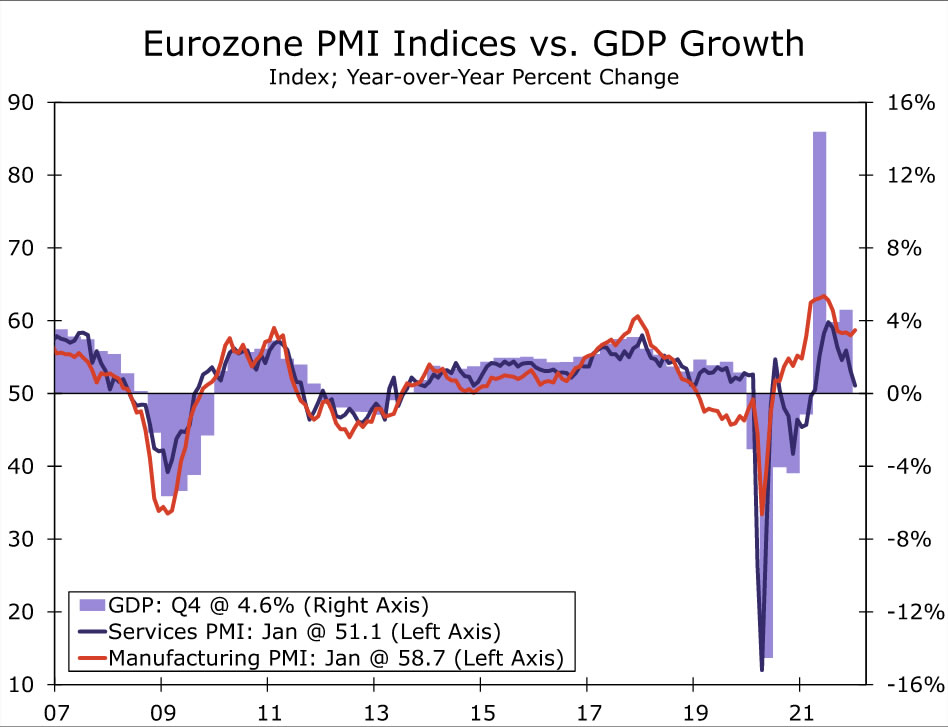
The COVID-induced slowdown will likely prove temporary, and Eurozone consumer finances remain in decent shape. In nominal terms, Eurozone household disposable income rose four out of five quarters through Q3-2021, now up 3.4% year-over-year. Meanwhile, although the household saving rate declined in Q3 to 15.0% of disposable income, it remains above pre-pandemic levels. Overall, these fundamentals suggest that a consumer-led recovery—and an overall economic recovery—can continue. That said, we acknowledge higher inflation is chipping away at consumers' purchasing power and, accounting for the recent pickup of inflation, Eurozone real household disposable income was up only 0.8% year-over-year in Q3-2021. Therefore, while we see continued Eurozone economic growth in 2022, we think it will be slower than 2021, and forecast Eurozone GDP growth of 3.7% for this year.
...But Inflation Heating Up, Central Bank Becoming Hawkish
On the price front, the latest figures showed an unexpected quickening of inflation in January. The Eurozone January headline CPI firmed to 5.1% year-over-year, well above the consensus forecast for a 4.4% increase, and the fastest pace of increase on record. Much of the increase was driven by energy prices, which rose 28.6%, while the increase in the January core CPI (of 2.4%) and services CPI (of 2.3%) were much more moderate. Still, even the more moderate increases in these underlying inflation measures appear to have been artificially depressed by base effects stemming from a large January 2021 increase. Adjusted for seasonality, both the core and services CPI appears to be advancing faster than a 4% annualized pace over the past six months. As a result, it is likely that neither the overall nor core rate of Eurozone inflation has yet peaked, and it's possible core inflation could peak close to or around 3% during the current cycle.
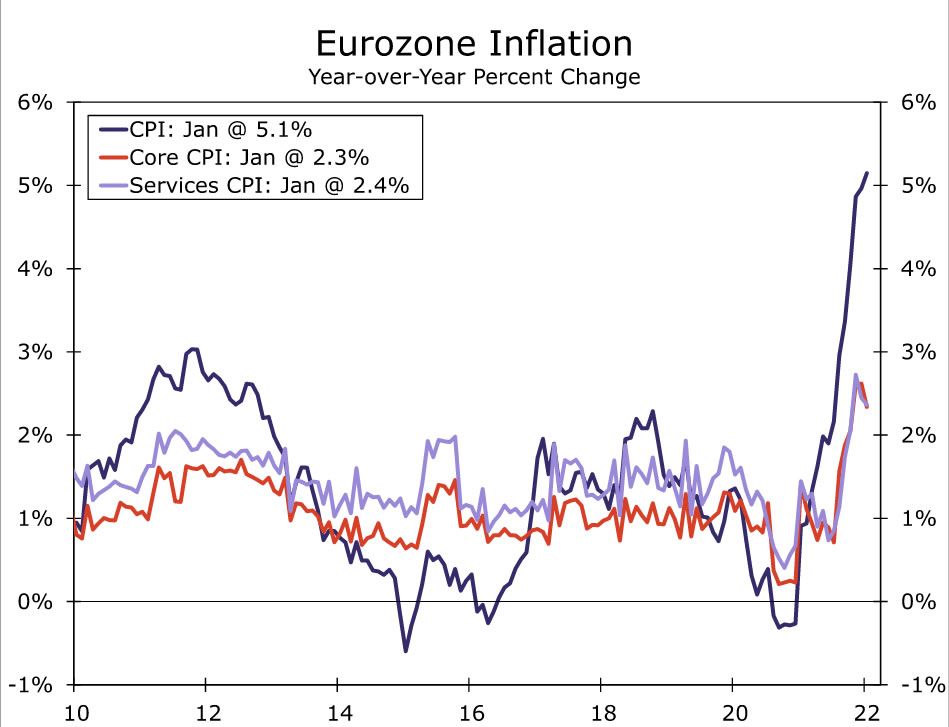
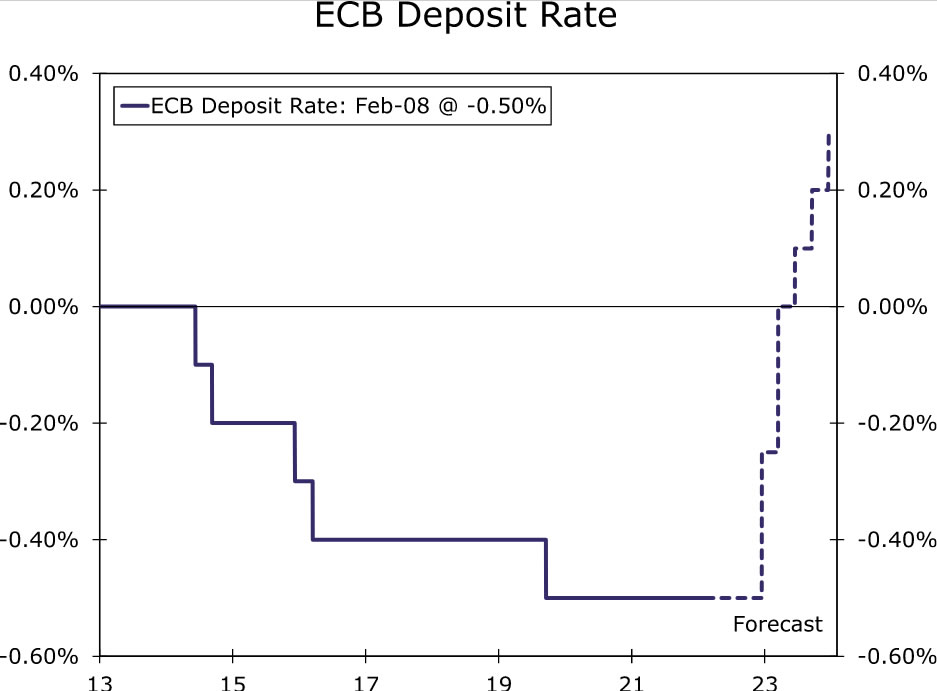
It was certainly these persistent price pressures that attracted the focus of European Central Bank (ECB) policymakers at their early February monetary policy announcement. The ECB did not adjust its monetary policy stance at that meeting, keeping its Deposit Rate at -0.50% and maintaining its existing plans to gradually wind down its asset purchases. However, compared to prior announcements, ECB President Lagarde's post-meeting press conference was distinctly more hawkish in tone. Lagarde said that while energy prices were still the main reason for elevated inflation and price increases having become more widespread, risks to the inflation outlook were tilted to the upside. She said that policymakers expressed unanimous concern about that inflation outlook, and that updated economic forecasts due in March would provide an opportunity to thoroughly discuss the outlook. Lagarde said one can't prejudge the March forecasts and ECB decision, but also that the central bank would decide about the future pace of bond buying at that meeting. Importantly, ECB President Lagarde did not take the opportunity repeat the comment from the December press conference that a rate hike in 2022 is "very unlikely".
Along with recent more hawkish comments from other ECB policymakers, to us the ECB announcement is clearly laying the groundwork for an eventual rate increase from the central bank. We expect the central bank's signaling come into clearer focus at the March 10 monetary policy announcement, at which time we expect the ECB to:
- Say it will conduct asset purchases at a monthly pace of €40B per month during Q2-2022, slowing to €20B per month during Q3-2022.
- Signal that it intends to end its asset purchases in September 2022, and repeat that it expects net asset purchases to end shortly before it starts raising the key ECB interest rates. In other words, we expect the ECB would repeat that interest rates will start increasing shortly after asset purchases end, though we would not expect the central bank to provide more precise guidance than that on the timing of an initial rate increase at this time.
Beyond March, consistent with the contours outlined above, we expect the European Central Bank will take the opportunity to start moving its Deposit Rate away from negative territory by late 2022. Specifically, we now forecast an initial 25 bps Deposit Rate increase to -0.25% at the December 2022 announcement, with another 25 bps hike to 0.00% to follow at the March 2023 announcement. Beyond March next year, we expect the Eurozone economic environment will be one of moderate growth and slowing core CPI inflation, but perhaps still above 2% at that time. Accordingly, we expect the ECB will continue raising interest rates beyond March 2023, though at a reduced pace. Specifically, we also forecast 10 bps Deposit rate increases at each of the June 2023, September 2023 and December 2023 meetings, which would see the Deposit rate end next year at +0.30%. Finally, although we believe the ECB will adjust its interest rate stance more rapidly than we previously forecast, it will lag behind the pace of rate hikes from the Federal Reserve, and also fall slightly short of the pace of ECB rate hikes currently priced in by market participants. Accordingly, we still view this more timely path for ECB interest rate increases as consistent with moderate weakness in the EUR/USD exchange rate over the medium-term.
Here Comes Another US Inflation Spike
The latest US inflation report will be released on Thursday at 13:30 GMT. Forecasts suggest inflationary pressures continued to heat up, pushing the yearly CPI rate to its highest level in four decades. Markets are already pricing in more than five Fed rate hikes this year and a hot inflation print can add more fuel to those bets. That could help the dollar get back on its feet, although the overall uptrend may be on its last legs.
Fed gets serious
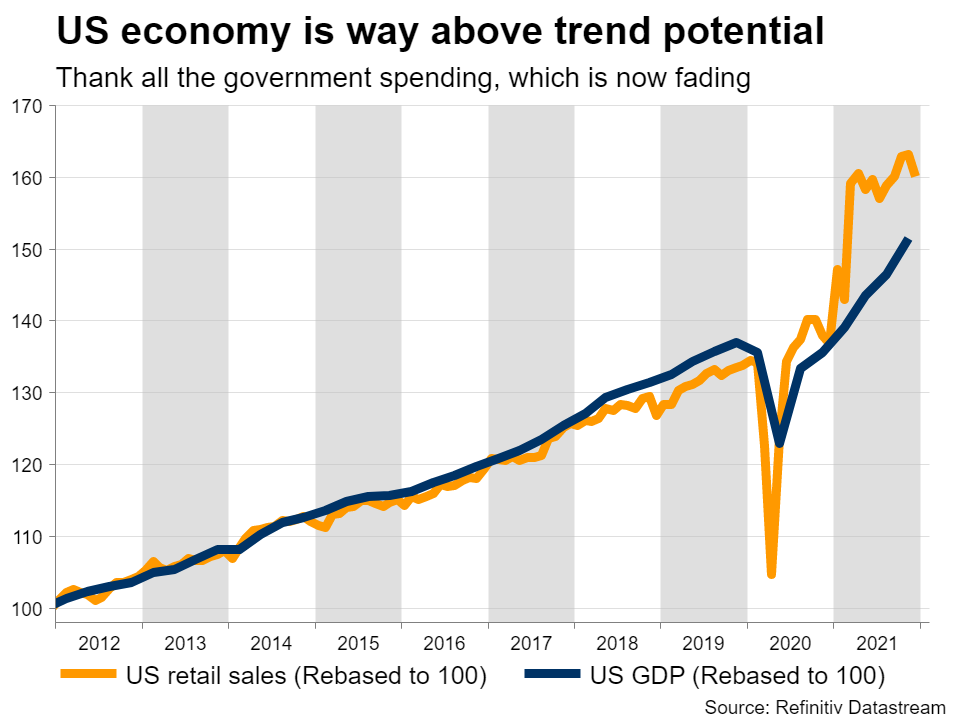
The US economy has bounced back from the crisis with incredible force. Consumption has gone through the roof and remains comfortably above its pre-pandemic trend, boosting economic growth. Meanwhile, the labor market is almost back to full employment, which has started to push wages higher.
With wages firing up, the Fed is worried inflation might not cool even after supply chains normalize. As such, policymakers are preparing to raise interest rates, to slow down the economy and drag inflation lower. Money markets are currently pricing in five rate increases for this year and have started to entertain the idea of a sixth.
In fact, incoming data has been so strong that traders now assign a 36% probability for a ‘double’ hike of 50 basis points at the March meeting amid speculation that the Fed may need to resort to more drastic measures. The upcoming inflation numbers could decide whether that’s realistic or not.
Still heating up
In January, the yearly CPI rate is expected to have risen to 7.3%, from 7.0% previously. Similarly, the core rate that strips out volatile items like energy and food is seen at 5.9%, up from 5.5% in December.
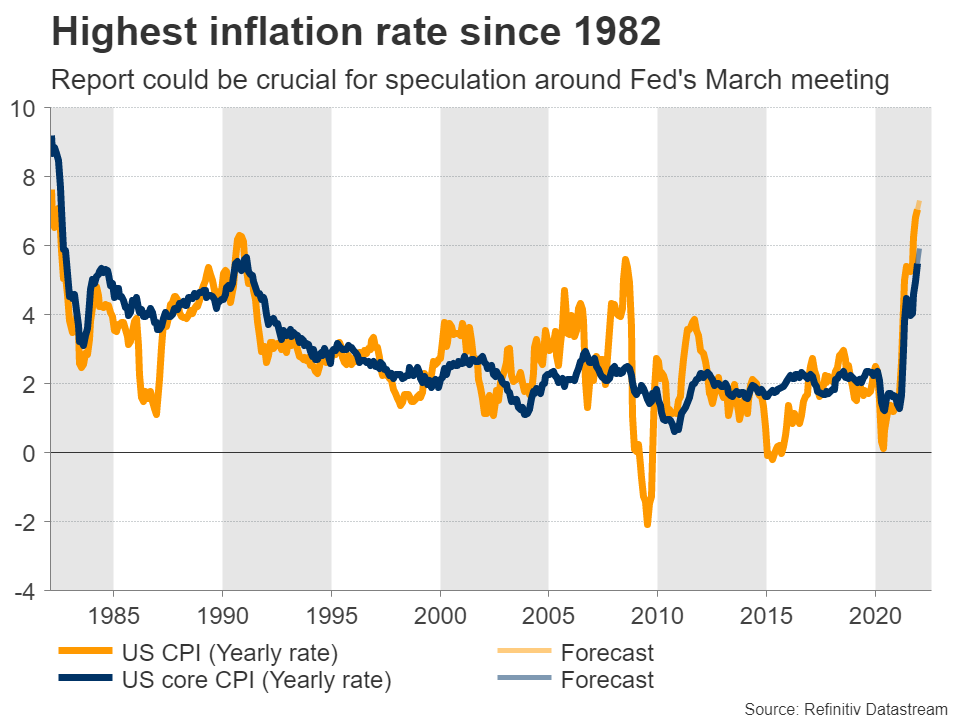
These forecasts are supported by the latest Markit PMI business surveys. They showed that US companies raised their selling prices at about the same pace as last month, which corresponds with the forecast for the monthly CPI print.
A positive surprise seems more likely than a negative one considering that oil prices rose around 17% during the month. That said, the ‘elephant’ in this report will be rent prices, which account for about one third of the entire CPI basket.
One last ‘hurrah’ for the dollar?
In the markets, another positive inflation surprise this week could fuel speculation that the Fed needs to roll out the big guns and raise the odds of a ‘double’ rate hike in March, helping the dollar to recover some of its recent losses.
Taking a technical look at euro/dollar, a positive CPI surprise might push the pair lower, with initial support likely to be found around the 1.1370 zone.
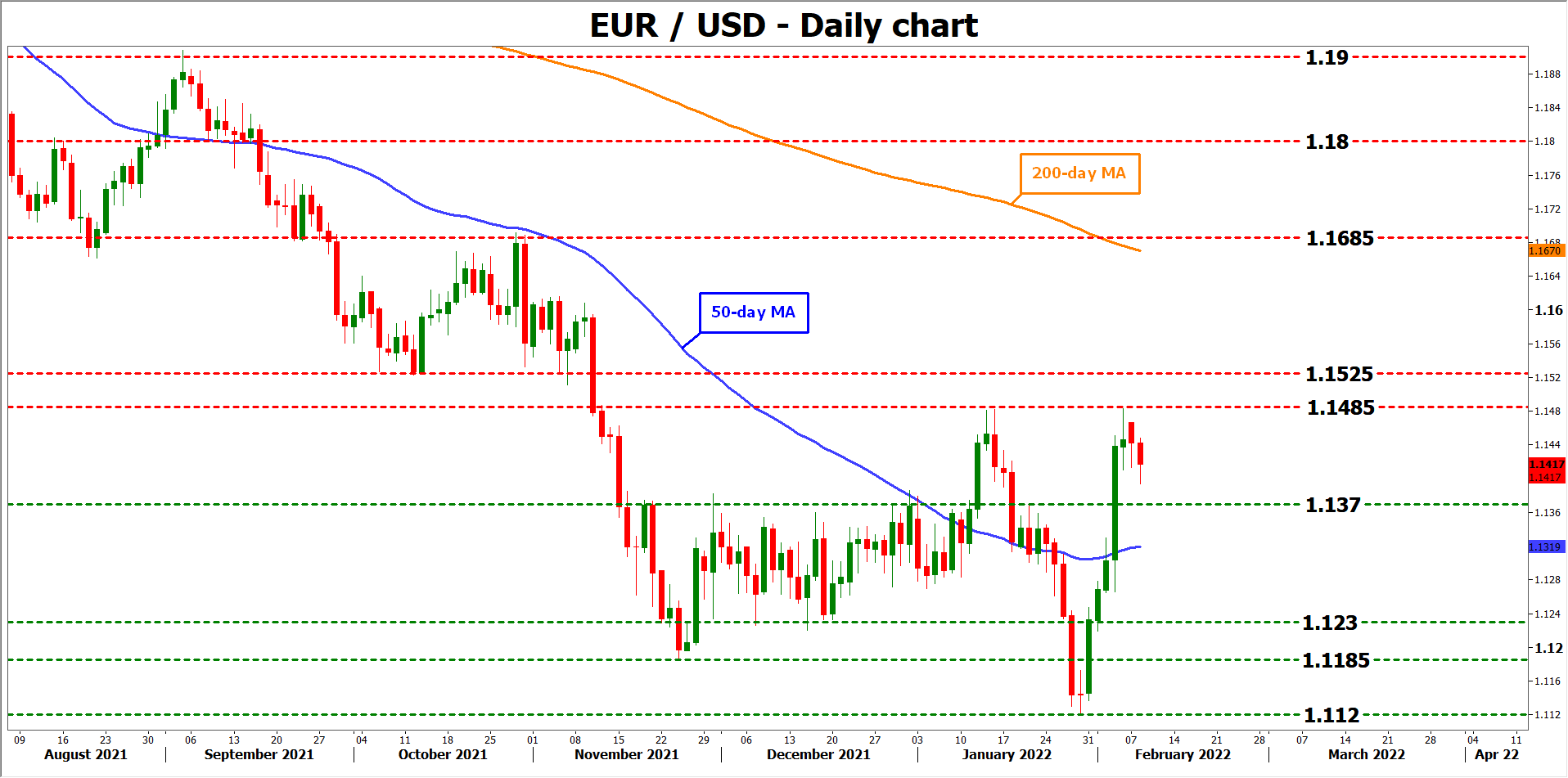
In case of a disappointment, the pair could shoot higher to challenge the 1.1485 region.
While expectations for faster Fed increases and the volatile environment in global markets may keep the dollar supported in the near term, the overall rally may be approaching its final stages. The US economy is booming right now, but ‘peak growth’ is likely behind us.
Government spending - which did all the heavy lifting during the crisis - is now fading and will become a drag on economic growth this year. The year already started on a soft note thanks to the Omicron wave, with the Atlanta Fed GDPNow model pointing to real growth of just 0.1% in the first quarter. Nobody is calling for a recession, only for a slowdown after two years of above-potential growth.
There’s also the prospect of ‘peak inflation’ soon. Some early signs suggest that supply chains are correcting and the year-over-year comparisons will become much tougher from March onwards. That means the yearly inflation rate could peak this quarter already, causing traders to pare back bets for shock-and-awe Fed hikes.
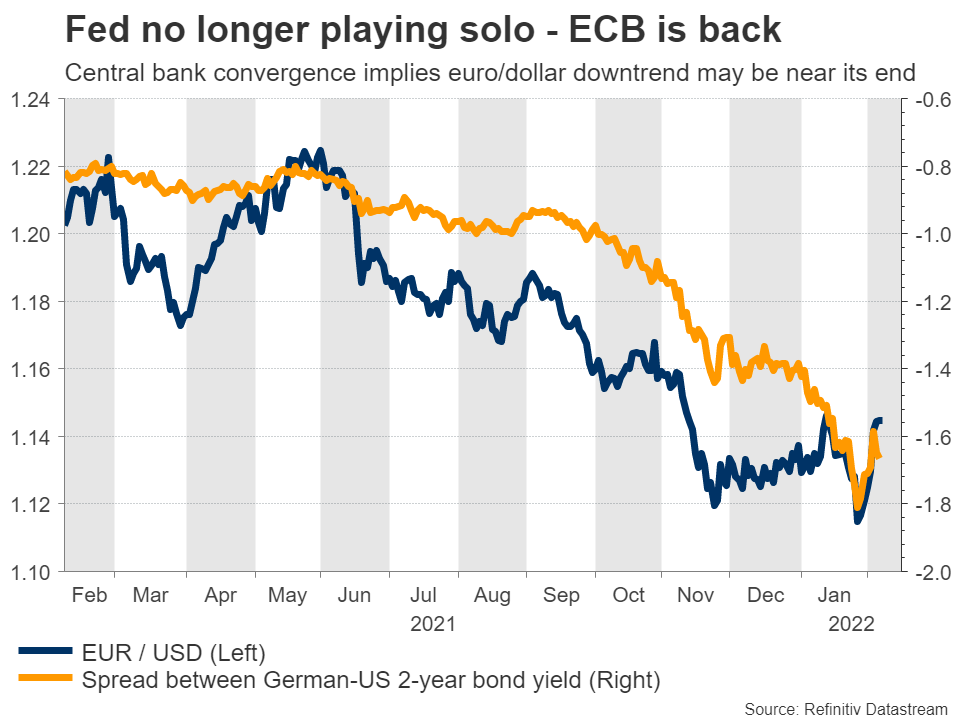
The final arc of this argument is foreign central banks, which have started to follow the Fed in signaling rate increases. Therefore, we are no longer in an environment of monetary policy divergence that clearly favors the dollar, but rather of policy convergence as yields are moving higher globally.
All told, the near term outlook for the dollar remains favorable, yet the longer term picture seems to be turning. The overall uptrend may be on its final legs.
Sunset Market Commentary
Markets
It’s another news thin trading session with huge central bank meetings behind us and counting down to Thursday US inflation print. Underlying dynamics on bond markets doesn’t change though with persisting selling pressure. The US yield curve bear steepens ahead of 10-yr and 30-yr bond sales by the US Treasury. US yields add 3 bps (2-yr) to 4.6 bps (10-yr). The US 10-yr yield trades at 1.96%, eyeballing the psychologic 2% barrier for the first time since early 2019. The German yield curve moves in similar fashion with very long Bunds even underperforming US Treasuries. Obviously, there’s quiet some catching up to do assuming that net asset purchases could already end somewhere early H2 2022 while the ECB’s reinvestment pledge (at least 2024 for PEPP) probably also looks unsustainable given normalization paths of the BoE (natural balance sheet run-off to start now) and the Fed (run-off somewhere in June?). German yields add up to 6.7 bps for the 30-yr. The German 30-yr yield closes in on 0.50% resistance which is the 2021 top. 10-yr yield spreads vs Germany face more widening pressure especially for Italy (+6 bps). The Italian spread moves north of 160 bps for the first time since July 2020. The Kingdom of Spain announced a new 30-yr syndicated deal (likely to be launched tomorrow) before the window of opportunity really closes. UK Gilts underperform both Bunds and US Treasuries, rising by 7.1 bps (2-yr) to 8.8 bps (30-yr) across the curve. The UK National Institute of Economic and Social Research (NIESR) took a swipe at Bank of England governor Bailey. He last week urged pay restraint in order to avoid a wage-price spiral. NIESR deputy director Mortimer-Lee stressed that it’s not an individual employee’s job to the do the BoE’s job for it. He thinks that the BoE has fallen behind the curve by 6 to 9 months and has to play catch-up. The MPC left too much fuel around and all it needed was an inflationary spark to light it up. NIESR raised its inflation forecast for UK inflation to 5.9% in 2022 and 3.3% in 2023. Sterling can’t really profit from this rising (ST) yield differential with EUR/GBP sliding gently from 0.8450 towards 0.8420. It’s a more or less parallel move with EUR/USD. The pair changes hands in the low 1.14 area from an 1.1442 open. Stock markets manage to keep their composure despite the new bond sell off with most European and US equities currently trading with minor losses. In other markets, Brent crude declines from $92.5/b to $91/b after French President Macron said that he got assurances from Russian president Putin that the Ukrainian conflict won’t escalate further. News Headlines
The European Union today announced that it intends to invest €43bn via its Chips act. The initiative will enable €15bn in additional private and public investment by 2030. This comes on top of €30bn of public investments that were already in the NextGeneration EU budget. The Plan intends to support the building of new semiconductor factories in order to reduce the EU’s dependency from Asian and US markets. In this context, the EU also will adapt its state aid rules under strict conditions to ‘allow - for the first time – public support for European 'first-of-a-kind' production facilities, which benefit all of Europe’. The EU wants to double in market share in semiconductors to 20% in 2030. The US government also already announced a $52bn plan to support the national chips production
According to data published by the Czech Statistical Office, retail sales in December slowed quite substantially. Seasonally adjusted real sales printed at 2.1% Y/Y from 9.9% in November. Sales excluding motor vehicles even eased from 13.0% to 3.3%. For both series a substantially higher figure was expected. The jury is still out on the reason for the weaker than expected performance. Higher inflation eroding purchasing power might be part of the explanation. In a different report, the December unemployment rate rose from 3.5% from 3.6%.The Czech koruna was little affected by the data and trades stable near EUR/CZK 24.30.
Gold Could Shine on a Repeat of Eurozone Sovereign Debt Problems
Tightening monetary conditions in developed countries are not hurting gold so far, and investors’ switch from buying risky stocks generates demand for the safe-haven.
The daily charts also clearly show gold being repurchased in downturns. Since late last year, impulsive drawbacks on hawkish Fed comments are pushing the price down, but this momentum is not turning into a trend. Buyer support comes from higher and higher levels, although these purchases are measured and tempered, typical for long-term buyers.
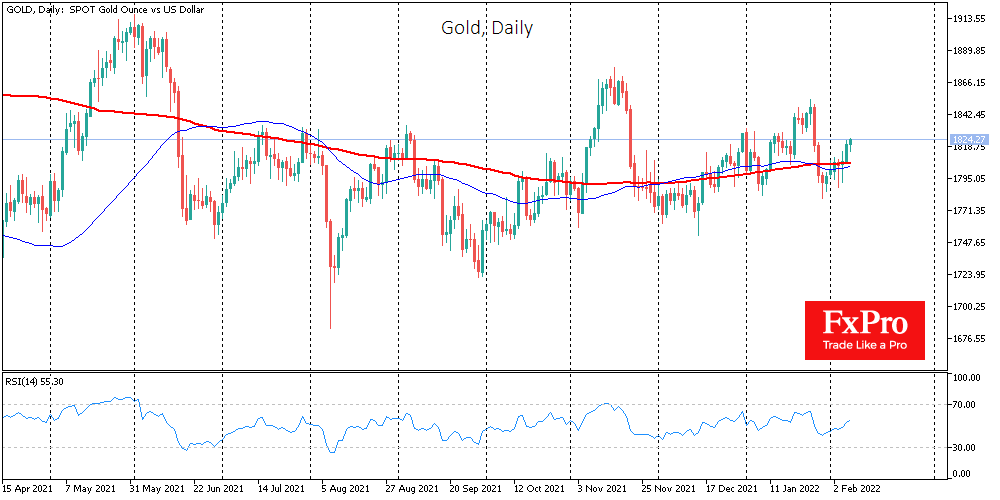
Such buyers could be central banks, which could diversify away from the dollar and the euro. But there could also be funds that want to stay away from bonds falling in price (on rising yields) at a time of steep rate rises.
We can see the increasingly higher lows from August last year on the monthly candlestick charts for gold. So far, high inflation rates and market caution have not allowed a sustained upward trend in the price. However, the presence of solid buyers could revive buying very soon.
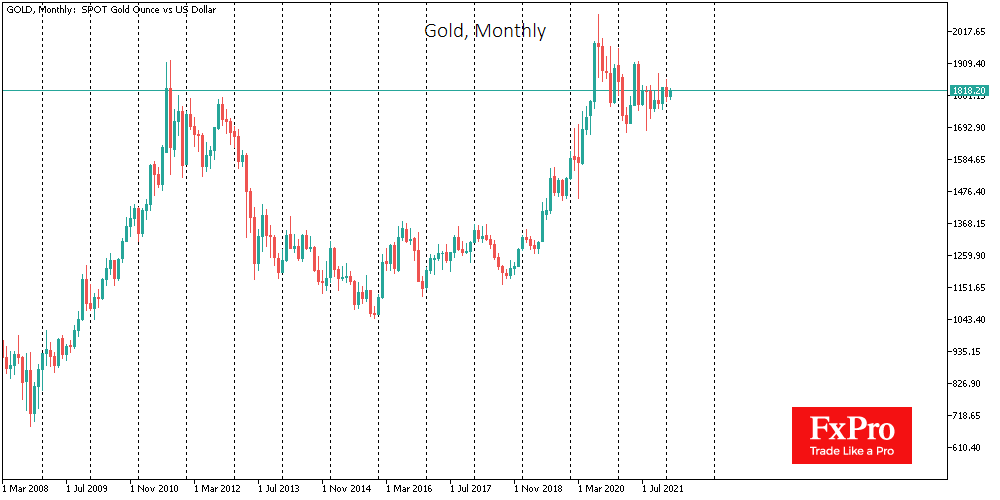
An important reason for this could be developments in the Eurozone. Rising market interest rates are hitting the region’s debt-laden periphery countries twice as hard. Investors may be worried about a repeat of the sovereign debt crisis of 2009-2011. Back then, investors used gold as a protective asset, losing confidence in the debt of almost half of the eurozone countries.
It is too early to say that a repeat of the debt crisis is imminent, but early signs of a jump in Greek and Italian bond yields are forming a support for gold. If this trend turns into a problem, active buyers of safe havens promise to become many times more numerous.
Canada’s Trade Balance Returns to Deficit in December
Canada's merchandise trade balance slipped back into a deficit of $137 billion in December from a $2.5 billion surplus in November. Merchandise exports were down 0.9% (month/month), while imports rose 3.7%.
Imports rose in 8 of 11 industries, led by electronic and electrical equipment and parts, which rose 16.2%, mainly due to imports of smartphones, slowed by supply chain disruptions earlier in the year. It was a similar story for imports of motor vehicles and parts, which rose 5.1% on a seasonally-adjusted basis.
On the export side, 8 of 11 categories saw increases, but this was offset by a large decrease in exports of energy products (-5.9%) due to a decline in prices (energy export volumes were up in the month). The decline in energy exports was partially offset by a 4.3% increase in consumer goods, mainly reflecting exports of pharmaceutical products packaged and labelled in Canada.
Key Implications
International trade has been increasingly volatile in recent months due to the combination of supply constraints and still-buoyant demand for goods. December's return to trade deficit came as some of the constraints on imports lifted (smart phones and auto parts) at the same time that energy prices pulled back.
Overall in 2021, Canada benefited from greater price gains on the items it exports than what it imports. A positive terms of trade shock implies real gains in the purchasing power of Canadian businesses, households and governments. This was enough to push the Canadian merchandise trade balance into positive territory on an annual basis in 2021.
U.S. Trade Deficit Widens Slightly in December, as Activity Picks Up
The U.S. trade deficit widened to $80.7 billion in December from $79.3 billion in November. Total exports (goods and services) increased by 1.5% (+0.3% in November), while imports rose 1.6% (+4.6% in November).
Goods exports rose 1.3% in December (-1.7% in November). The gains were broad based. Automotive vehicles, parts and engines (+6.5%), consumer goods (excluding automotive, +6.0%), capital goods (+2.0%), and industrial supplies and materials (+0.8%) all advanced. Foods, feeds and beverages (-7.1%) and other merchandise (-2.0%) pulled back. Accounting for price changes, real goods exports rose by 3.2%.
Goods imports increased by 2.0% (compared to a 5.1% increase in November). The results were mixed across product categories. The gain was powered by automotive vehicles parts and engines (+8.4%), consumer goods (excluding automotive, +7.8%), and capital goods (+3.6%). Excluding price changes, real imports rose 2.3% in December.
Exports of services expanded by 2.0% on the month (+5.3 % in November), while imports of services fell by 0.7% (+2.5% in November).
Key Implications
Well, another month of data showing America's monster appetite for goods powering the trade deficit. Widening from November, the deficit is now the second deepest on record, just short of September's record $81.4 billion.
That said, there appears to be some relief on the horizon. We have been anticipating a rotation from goods to services expenditures as the economy reopens and households become more resilient to waves of the pandemic. Indeed, December's personal consumption expenditures showed real goods consumption had fallen 6.5% since peaking in March 2021 – now at its lowest level since February 2021. Signs point to the rebalancing of the consumption basket being well under way and as price gains for goods moderate, so too will the trade deficit.