

Sample Category Title
Stocks Under Pressure on Faster Stimulus Withdrawal Signals
Global bond yields hit fresh highs; stocks retreat
The Fed’s new message, which sparked fears that inflation could be tough to contain, and hence could require faster-than-expected rate hikes during the year, continued to weigh on market sentiment on Monday, elevating global bond yields to fresh highs.
A couple of Fed policymakers have already urged the need to move towards normalization ahead of Powell’s testimony before the Senate Banking committee on Tuesday, making four rate hikes an increasingly likely scenario this year. As a result, investors withdrew funds from the safe-haven bond markets, sending the 10-year Treasury yield up to 1.80%, the highest in a year.
Global stock markets came under pressure too as the massive liquidity, which has been feeding the record rally the past two years was about to vanish soon, with energy and financials being the only sectors to survive with minimal gains in the pan-European STOXX 600 index. Unlike its other European counterparts, the British FTSE 100 has barely lost ground, hovering around last week’s one-year high.
Wall Street could join the bearish mood later in the day, according to US futures. Note that the Nasdaq 100 has already slid below its 100-day simple moving average (SMA), opening the door for the 15,000 round level. The S&P 500 is also eyeing the key support area at 4,600 following the close below its shorter-term SMAs, whereas the soft decline in the Dow Jones has yet to create any caution.
The Fed has been carefully guiding investors towards monetary tightening since the end of summer. Hence, the removal of stimulus is not something new to investors’ ears. The puzzling part of the story is whether the Fed will manage to contain inflation without raising interest rates above 2.0%. Despite the drop in the unemployment rate in December, the elevated debt levels, the persisting pandemic supply jitters, and inflation pressures could leave the US economy vulnerable to a faster stimulus withdrawal. Hence, fluctuations in growth concerns could make the Fed’s mission a challenging one.
Yen best performer; European currencies, commodities in doldrums
Turning to the FX space, the Japanese yen is the best performer so far in the day, probably on the back of risk aversion, as the BoJ is not expected to abandon its accommodative stance anytime soon. Dollar/yen has erased Friday’s rally, retreating into the 115.45 – 115.25 restrictive region. The Swiss franc could not follow suit as a slight increase in the SNB’s sight deposits raised speculation that the ECB’s muted stance could motivate more intervention from the SNB. Dollar/swissie and euro/swissie are currently in a bull run, trading around three-week highs.
In other major pairs, pound/dollar turned red after touching the 1.3600 psychological mark, while euro/dollar is currently looking for support around the 1.1280 key level after giving up Friday’s pickup around the 50-day MA.
The pullback in the euro helped the dollar index to bounce back above the 96.00 mark.
In commodities, oil futures are trading slightly weaker for the second consecutive session. Gold is capped by the $1,800/once mark.
EUR/USD Mid-Day Outlook
Daily Pivots: (S1) 1.1312; (P) 1.1338; (R1) 1.1387; More...
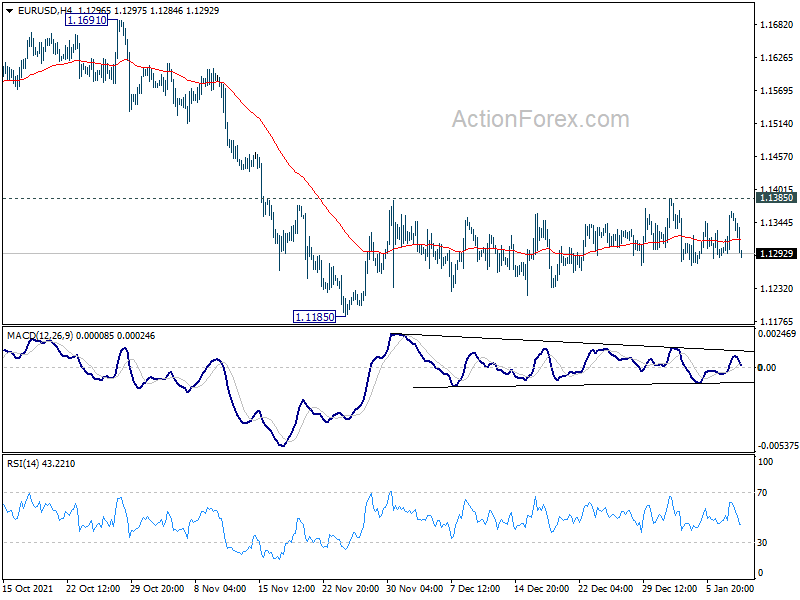
No change in EUR/USD's outlook as range trading continues. On the upside, sustained trading above 55 day EMA (now at 1.1385) will bring stronger rise back to 1.1663 support turned resistance. On the downside, break of 1.1185 will resume larger decline from 1.2348. Next target is 161.8% projection of 1.2265 to 1.1663 from 1.1908 at 1.0934.
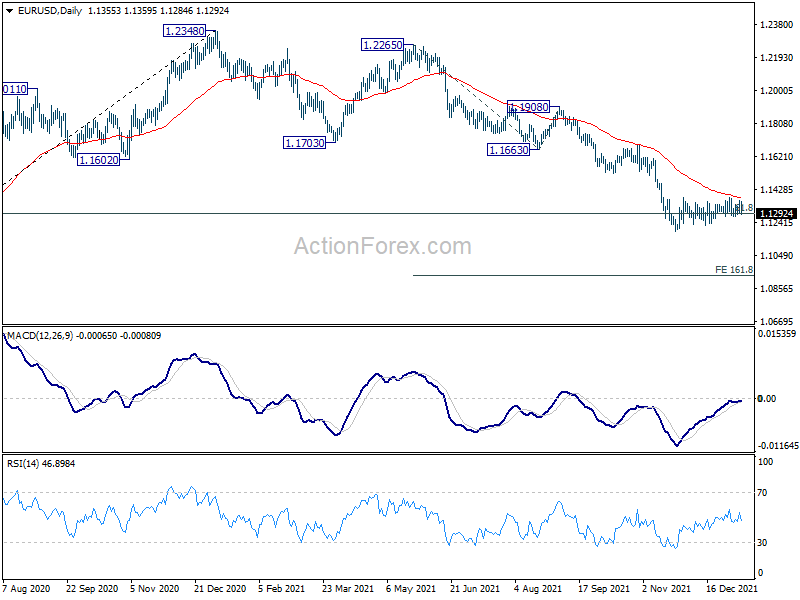
In the bigger picture, there are various ways of interpreting the fall from 1.2348 (2021 high). It could be a correction to rise from 1.0635 (2020 low), the fourth leg of a sideway pattern from 1.0339 (2017 low), or resuming long term down trend. In any case, outlook will now stay bearish as long as 1.1703 support turned resistance holds. Sustained break of 61.8% retracement of 1.0635 to 1.2348 at 1.1289 would pave the way back to 1.0635.
GBP/USD Mid-Day Outlook
Daily Pivots: (S1) 1.3546; (P) 1.3572; (R1) 1.3617; More...
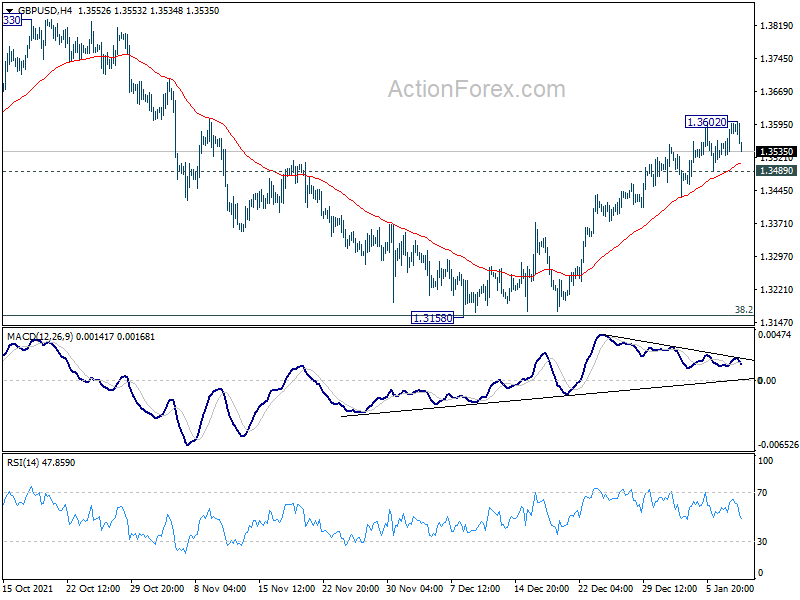
With 1.3489 minor support intact, further rise is still expected in GBP/USD despite some loss of upside momentum. Corrective fall from 1.4248 could have completed with three waves down to 1.3158, after hitting 1.3164 medium term fibonacci level. Sustained trading above 1.3570 will pave the way to 1.3833 resistance next. On the downside, though, break of 1.3489 minor support will mix up the outlook and turn intraday bias neutral first.
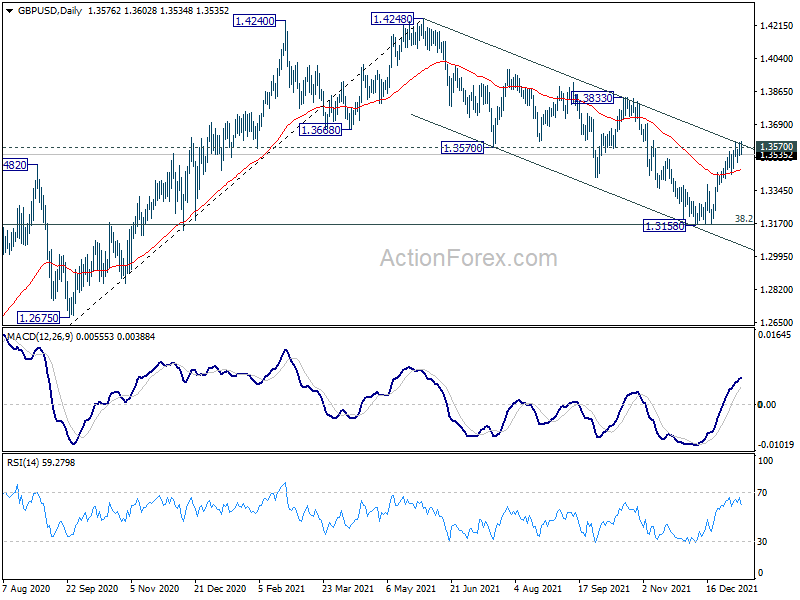
In the bigger picture, strong support was seen from 38.2% retracement of 1.1409 to 1.4248 at 1.3164. The development suggests that up trend from 1.1409 (2020 low) is still in progress. On resumption, next target will be 38.2% retracement of 2.1161 to 1.1409 at 1.5134. Nevertheless sustained break of 1.3164 will argue that whole rise from 1.1409 has completed and bring deeper fall to 61.8% retracement at 1.2493.
USD/CHF Mid-Day Outlook
Daily Pivots: (S1) 0.9167; (P) 0.9200; (R1) 0.9217; More....
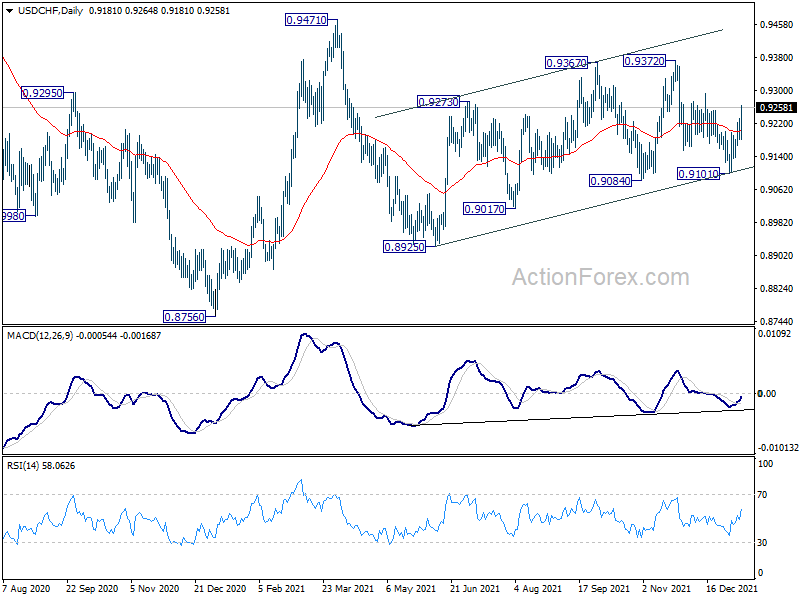
USD/CHF's rebound from 0.9101 resumed by breaking 0.9231 and intraday bias is back on the upside. The corrective fall from 0.9372 has completed with three waves down to 0.9101. As long as 0.9084 support holds, choppy rise from 0.8925 could still extend higher. Further rise should now be see to 0.9293 first, and then 0.9372.
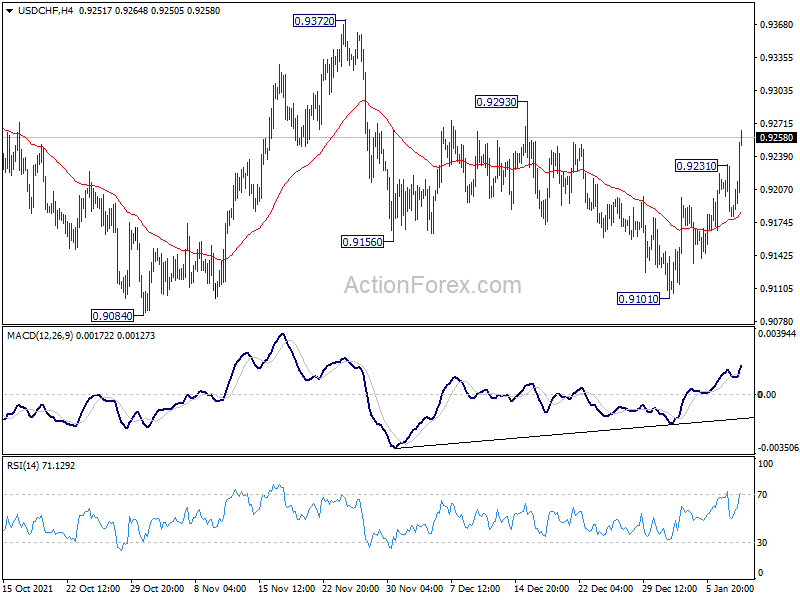
In the bigger picture, the corrective structure of the rebound from 0.8925 argues that fall from 0.9471 is not complete yet. It could either be the second leg of pattern from 0.8756 (2021 low), or resuming larger down trend from 1.0237 (2018 high). We'd pay attention to the downside momentum and assess the odds later. But for now, medium term outlook will be neutral at best as long as 0.9471 resistance holds.
USD/JPY Mid-Day Outlook
Daily Pivots: (S1) 115.39; (P) 115.71; (R1) 115.89; More...
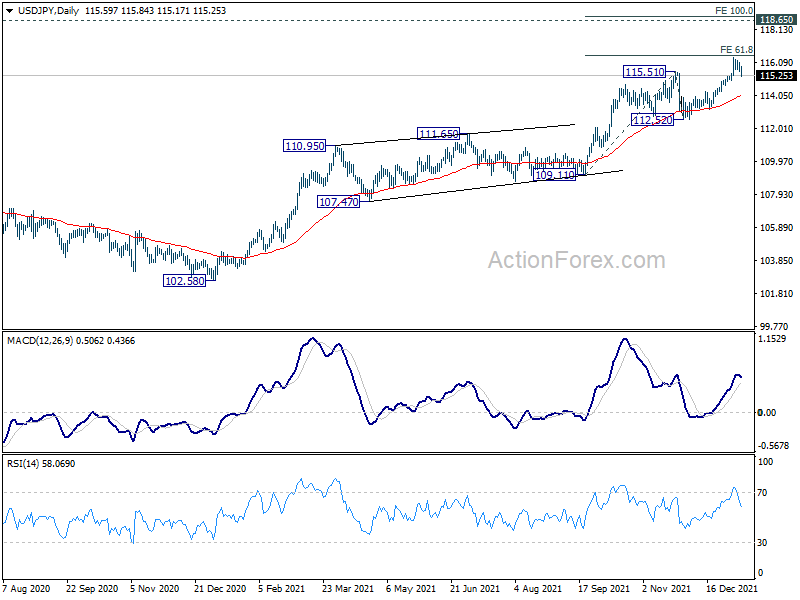
USD/JPY's pull back from 116.34 extends lower today but outlook is unchanged. Downside of retreat should be contained well well above 114.26 resistance turned support to bring rally resumption. On the upside, firm break of 61.8% projection of 109.11 to 115.51 from 112.52 at 116.47 will pave the way to 100% projection at 118.90, which is close to 118.65 long term resistance.
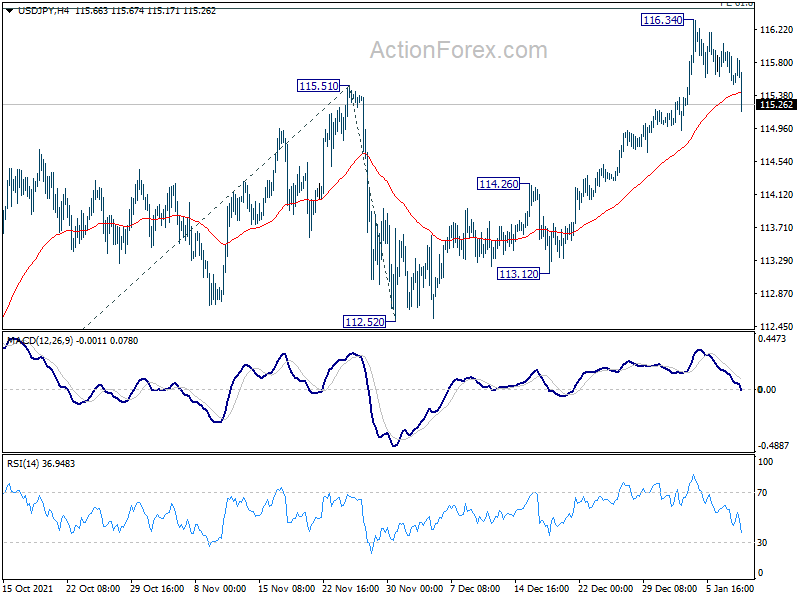
In the bigger picture, no change in the view that rise from 102.58 is the third leg of the up trend from 101.18 (2020 low). Such rally should target a test on 118.65 (2016 high). Sustained break there will pave the way to 120.85 (2015 high) and raise the chance of long term up trend resumption. For now, this will remain the favored case as long as 112.52 support holds, in case of deep pull back.
Yen Striking Back as Stocks Take a Dive
Yen rebounds notably as US futures take a dive just ahead of North American session, while European index also reverse earlier gains. While Dollar is dragged down by Yen, it's somewhat still resilient against others. Selling is mainly seen in Swiss Franc and, to a lesser extent, Euro. Commodity currencies are mixed. We'll have to see how the overall risk sentiment plays out. Yet, more volatility is anticipated ahead with Fed chair Jerome Powell's testimony, and US inflation data featured later in the week.
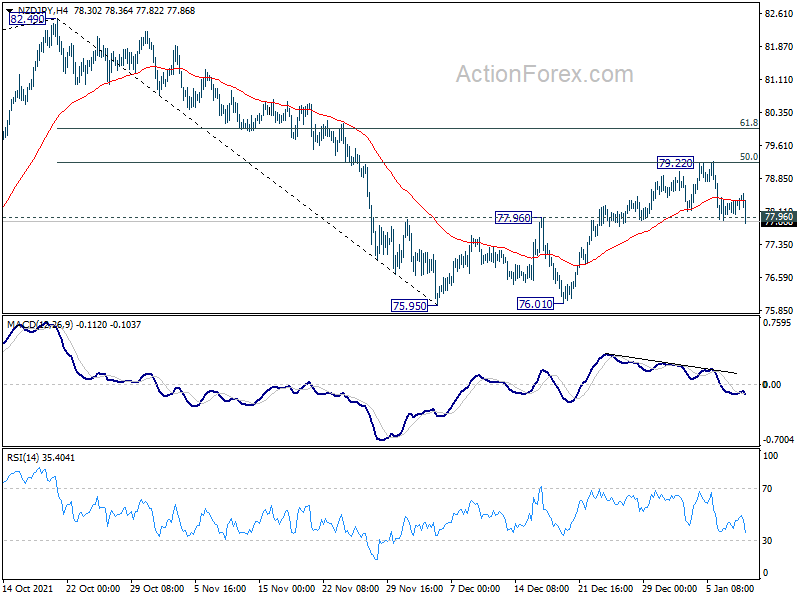
Technically, it's too early to claim that Yen is reversing. But we'll keep an eye on some commodity Yen crosses. NZD/JPY's break of 77.96 resistance turned support argues that corrective pattern from 75.95 has completed with three waves up to 79.22. Deeper fall would be seen back to retest 75.95/76.01 zone.
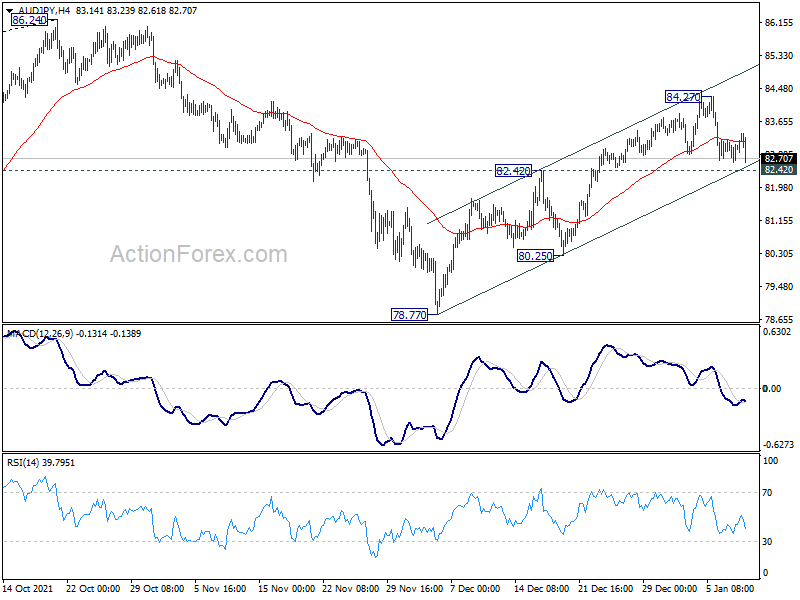
We'll also keep on eye on 82.42 resistance turned support in AUD/JPY. Break there will argue that the rebound from 78.77 is over, and bring deeper fall back to 80.25 support and possibly below.
In Europe, at the time of writing, FTSE is down -0.29%. DAX is down -0.65%. CAC is down -0.74%. Germany 10-year yield is down -0.0087 at -0.048. Earlier in Asia, Hong Kong HSI rose 1.08%. China Shanghai SSE rose 0.39%. Singapore Strait Times rose 0.68%. Japan was on holiday.
Eurozone Sentix rose to 14.9 in Jan, fundamentally constructive outlook with an Achilles' heel
Eurozone Sentix Investor Confidence rose from 13.5 to 14.9 in January, above expectation of 12.0. Current Situation Index rose from 13.3 to 16.3. Expectations Index dropped slightly from 13.8 to 13.5.
Sentix said, "our fundamentally constructive outlook for the economy in 2022 (especially the first half of the year) has an Achilles' heel: The support of expansive central banks is threatening to run out faster than expected.
"The sentix topic barometer 'Central Bank Policy' indicates an increasing burden for the bond market and thus for the real economy. The burden on this is estimated to be greater than in 2018, when the monetary guardians also adopted a more restrictive course.
"Fiscal balancing impulses must therefore be put in place swiftly to cushion the weakening monetary impetus from the central banks."
Eurozone unemployment rate dropped to 7.2% in Nov, EU down to 6.5%
Eurozone unemployment rate dropped from 7.3% to 7.2% in November, matched expectations. EU unemployment rate dropped from 6.7% to 6.5%.
Eurostat estimates that 13.984 million men and women in the EU, of whom 11.829 million in the euro area, were unemployed in November 2021. Compared with October 2021, the number of persons unemployed decreased by 247 000 in the EU and by 222 000 in the euro area. Compared with November 2020, unemployment decreased by 1.659 million in the EU and by 1.411 million in the euro area.
IMF Blog: Faster Fed hike could rattle financial markets
In an blog post, senior IMF officials said the continued to expect "robust US growth". Inflation will "likely moderate" late this year as supply disruptions ease and fiscal contraction weighs on demand. Fed's indication that it would raise interest rate more quickly "did not cause a substantial market reassessment of the economic outlook".
"Should policy rates rise and inflation moderate as expected, history shows that the effects for emerging markets are likely benign if tightening is gradual, well telegraphed, and in response to a strengthening recovery," the post noted.
However, "broad-based US wage inflation or sustained supply bottlenecks could boost prices more than anticipated and fuel expectations for more rapid inflation".
"Faster Fed rate increases in response could rattle financial markets and tighten financial conditions globally. These developments could come with a slowing of US demand and trade and may lead to capital outflows and currency depreciation in emerging markets."
USD/JPY Mid-Day Outlook
Daily Pivots: (S1) 115.39; (P) 115.71; (R1) 115.89; More...
USD/JPY's pull back from 116.34 extends lower today but outlook is unchanged. Downside of retreat should be contained well well above 114.26 resistance turned support to bring rally resumption. On the upside, firm break of 61.8% projection of 109.11 to 115.51 from 112.52 at 116.47 will pave the way to 100% projection at 118.90, which is close to 118.65 long term resistance.
In the bigger picture, no change in the view that rise from 102.58 is the third leg of the up trend from 101.18 (2020 low). Such rally should target a test on 118.65 (2016 high). Sustained break there will pave the way to 120.85 (2015 high) and raise the chance of long term up trend resumption. For now, this will remain the favored case as long as 112.52 support holds, in case of deep pull back.
Economic Indicators Update
| GMT | Ccy | Events | Actual | Forecast | Previous | Revised |
|---|---|---|---|---|---|---|
| 00:00 | AUD | TD Securities Inflation M/M Dec | 0.20% | 0.30% | ||
| 00:30 | AUD | Building Permits M/M Nov | 3.60% | 3.20% | -12.90% | |
| 09:30 | EUR | Eurozone Sentix Investor Confidence Jan | 12 | 13.5 | ||
| 10:00 | EUR | Eurozone Unemployment Rate Nov | 7.20% | 7.30% | ||
| 15:00 | USD | Wholesale Inventories Nov F | 1.20% | 1.20% |
Euro Edges Lower at Start of Week
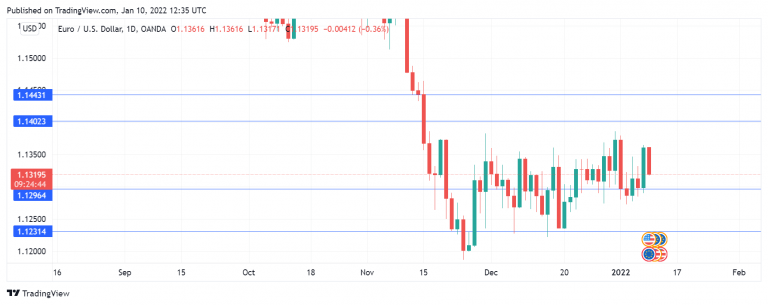
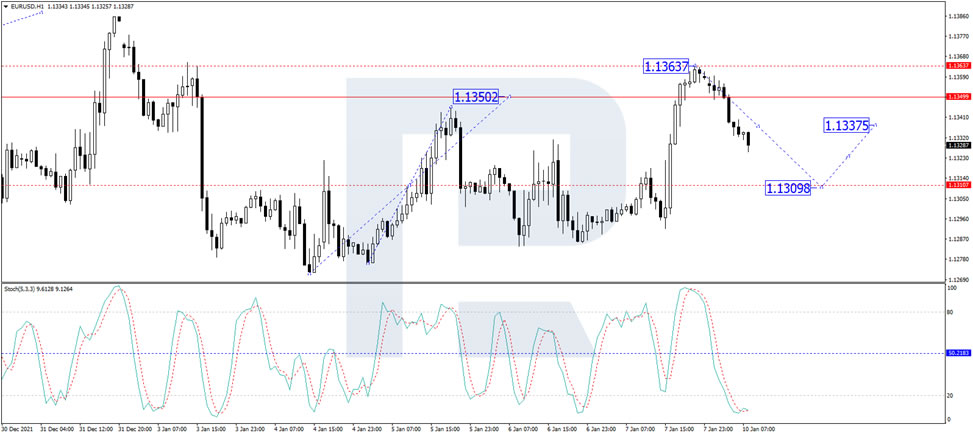
The euro is in negative territory at the start of the new trading week. EUR/USD is trading around 1.1320 in the European session.
Investment confidence up, unemployment down
The week kicked off with positive European events, although the euro was unable to gain any ground. Investor Confidence in the eurozone rose to 14.9 in January, up from 13.5 beforehand. It was a similar story for Germany, which also saw investor confidence improve. The eurozone unemployment rate dipped to 7.2% in December, down from 7.3% a month earlier. Unemployment has been steadily dropping over the past year, as the economy continues to improve despite the lockdowns and Covid-related restrictions. A year ago, eurozone unemployment stood at 8.3%, and the decline in unemployment should continue in the coming months, barring a major economic downturn due to Covid.
The week ended with a disappointing US nonfarm payroll report, with a gain of just 199 thousand. This was well off the consensus of around 425 thousand. EUR/USD posted gains of 0.55% on Friday, its best one-day showing in a month. Still, there was some positive employment news, as unemployment dropped from 4.2% to 3.9% and wage growth climbed 4.7% y/y, above the estimate of 4.2%. The mixed jobs report is unlikely to change the Fed’s lift-off date from mid-2022, although that could change based on inflation and strength of the economy.
What was unusual after the soft nonfarm payroll report was that although US Treasury yields rose, the dollar nonetheless retreated against the major currencies. The dollar index slipped to 95.74 on Friday, but has recovered on Monday to 95.93, right around its mid-range. The index has support at 95.50 and resistance at 96.50 – a break through one of these barriers would signal the US dollar’s next directional move.
EUR/USD Technical
- EUR/USD has support at 1.1296. Below, there is support at 1.1231
- There is resistance at 1.1402 and 1.1443
EUR/USD Keep Falling
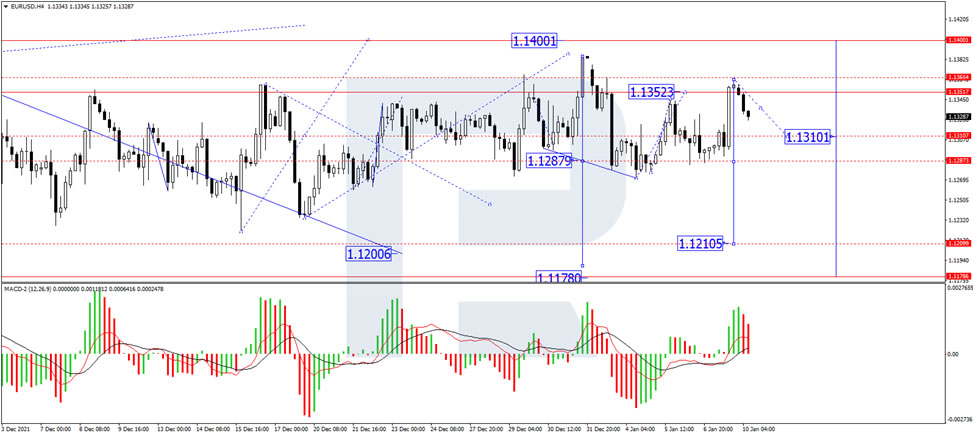
The major currency pair is falling after demonstrating some growth last week. The asset is mostly trading at 1.1330.
Market players are still processing the FOMC Meeting Minutes published last Wednesday. The document says that the benchmark interest rate may be raised sooner than expected earlier due to constantly increasing inflation. It also mentions that the QE programme may be closed as early as March instead of June as it was announced in the past.
Investors also paid attention to the regulator’s comments that it didn’t exclude a possibility of decreasing its own balance right after the rate hike. In fact, it may happen in the first half of 2022, which means that the liquidity ratio will drop.
In the H4 chart, EUR/USD has finished another ascending wave at 1.1363. Possibly, today the pair may correct to reach 1.1310 and then grow towards 1.1333, thus forming a new consolidation range. If later the price breaks this range to the upside, the market may resume growing towards 1.1400; if to the downside – start a new decline with the target at 1.1200. From the technical point of view, this scenario is confirmed by MACD Oscillator: its signal line is moving above 0 and may later resume falling to return to this level.
As we can see in the H1 chart, after completing the ascending wave at 1.1361 and rebounding from this level, EUR/USD is correcting and the first correctional wave is expected to reach 1.1310. Later, the market may grow towards 1.1333. From the technical point of view, this idea is confirmed by the Stochastic Oscillator: its signal line is moving below 20, thus indicating a further downtrend in the price chart.
EUR/USD and Gold Still Look Lower: Elliott Wave Analysis
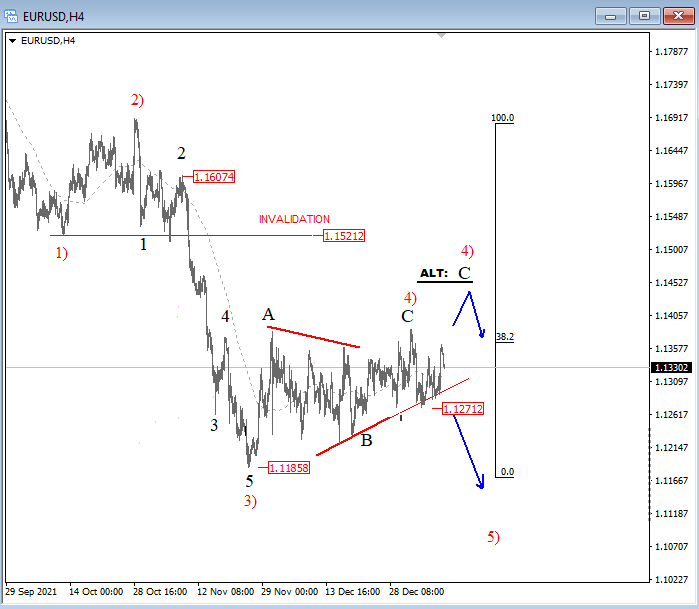
EURUSD was higher on Friday, but stopped at key 78.6% Fib resistance so for now bearish interpretation is still valid and it may produce a really strong breakdown if we see a new impulse down to 1.1270 bearish level.
EUR/USD 4h Elliott Wave analysis
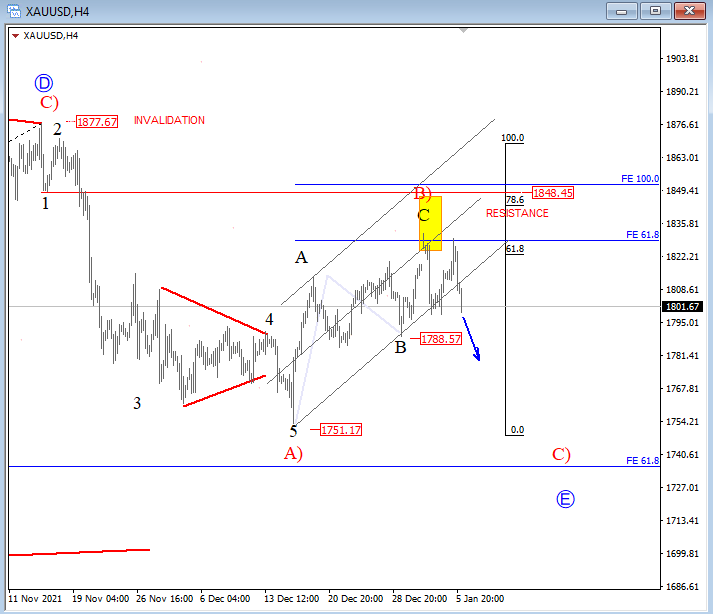
Gold has been in a recovery mode on 4h chart, away from 1751, but only in three waves that we see as wave B) into 1820-1848 resistance. Therefore, we should be aware of another leg down, into wave C) of E to complete a higher degree triangle. Current break below trendline support puts more weakness in play.
Gold 4h Elliott Wave analysis
Will 2022 be the Year of the Bitcoin Bear Market?
The cryptocurrency market received moderate support from retail buyers over the weekend. Over the past 24 hours, the capitalisation of all coins rose 0.22%, according to CoinMarketCap, approaching $1.97 trillion. The top altcoins lost 11-19% over 7 days but found buyers over the weekend. The $2 trillion mark in total crypto valuation turned into local resistance last week, from where pressure has intensified. However, a strong buy-the-deep mood has kept the market from forming a downward spiral.
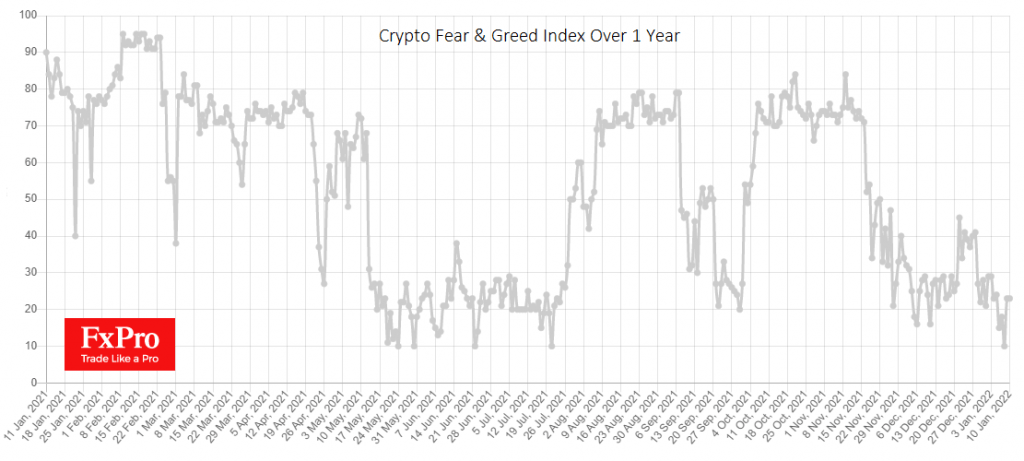
The cryptocurrency Fear & Greed Index was stuck at 23 over the weekend, indicating extreme fear. The index has been hovering at the lower half of the scale since November 18th. Optimists, however, may note that the indicator has bounced back from the 10 level. The dip here in May and July coincided with the lows within the impulse, hinting at the potential for some technical rebound.
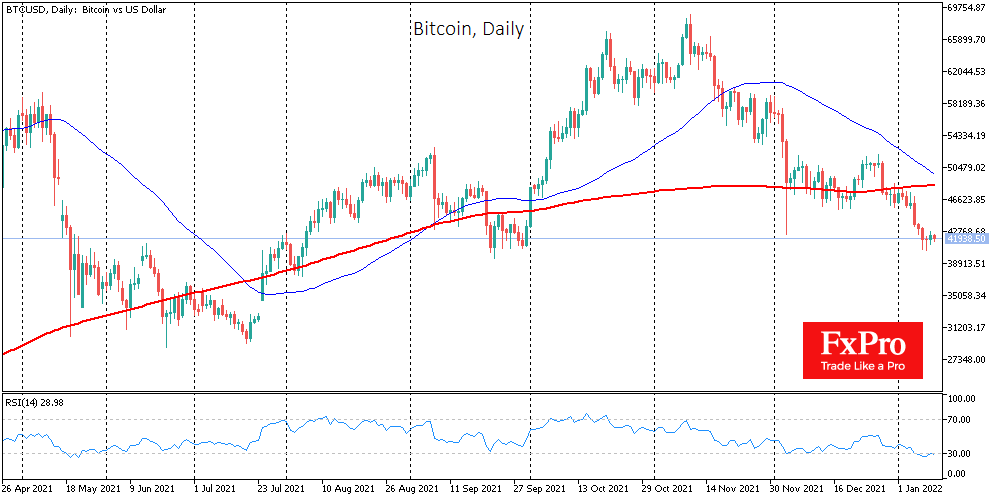
Technical analysis also suggests a rebound in BTCUSD, with the RSI on daily charts showing attempts to move up from the oversold area below 30 and the price hovering near the reversal area in September.
A longer-term view of the cryptocurrency market makes one more cautious about its prospects. Bitcoin has been in a downward corridor since November last year, having fallen to its lower boundary by the end of last week. Local overselling is a chance for a rebound, but the overall trend is still downwards.
Cryptocurrency investors should not dismiss the idea of 4-year cycles in Bitcoin affecting the entire sector just yet. According to this hypothesis, 2022 could turn out to be a repeat of 2018 and 2014 – bear market years after a surge in the previous two years. Thus, it is worth paying increased attention to whether the crypto market manages to return to growth in the coming days and weeks. A strong start to the year will put these fears to rest.